Weekend’s Over. Tomorrow’s an EVIL School Day! “Monday Morning” reviewed! (MVD Visual / Blu-ray)

Pick Up a Copy of “Monday Morning” Now on Blu-ray!

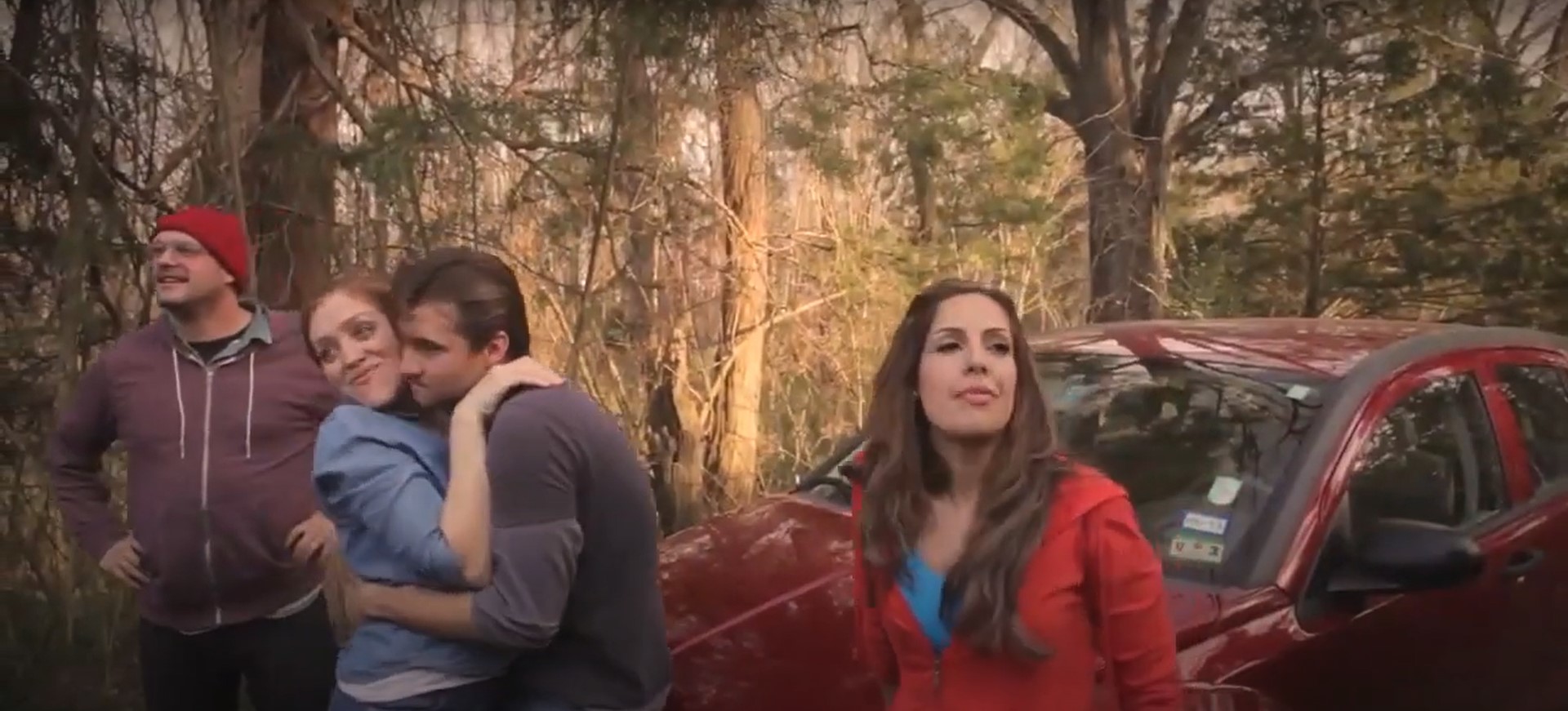
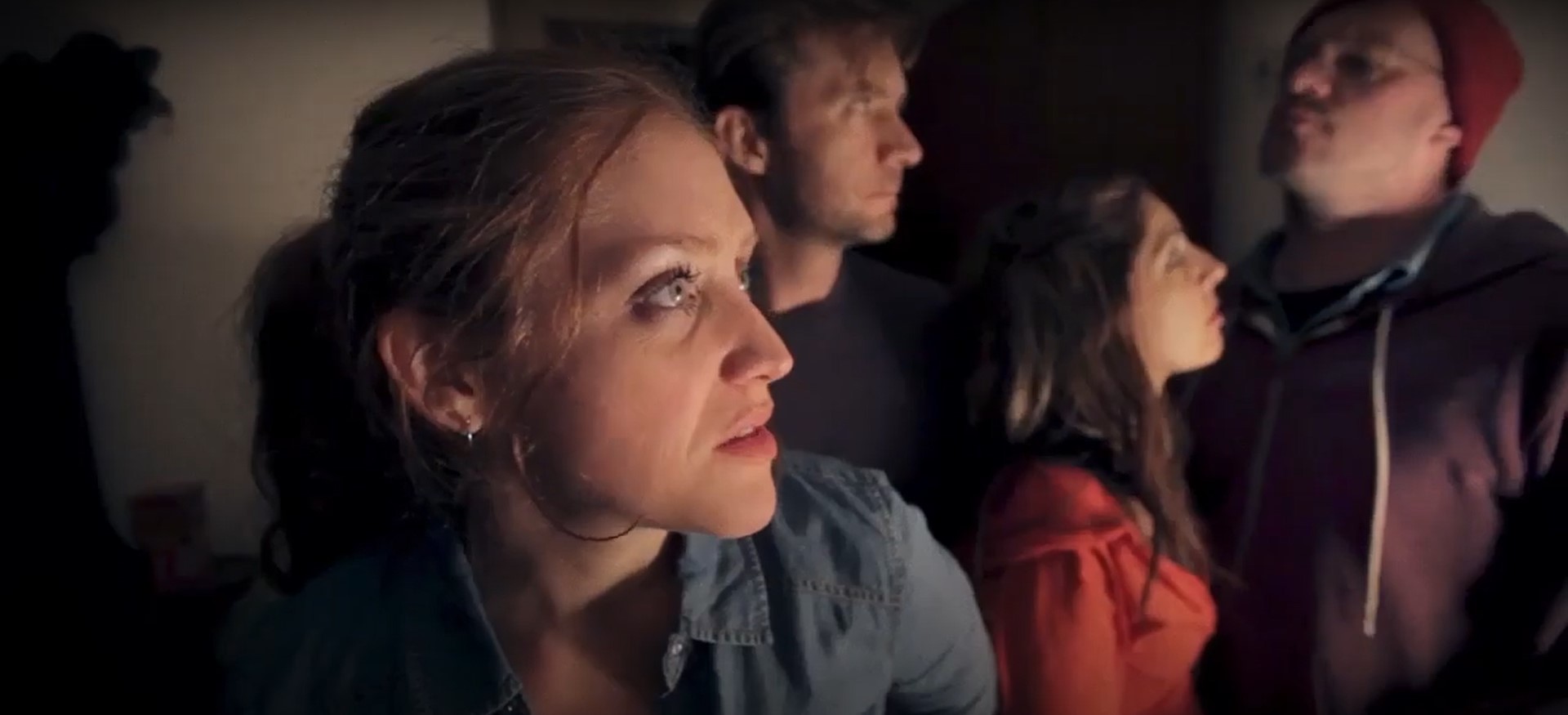
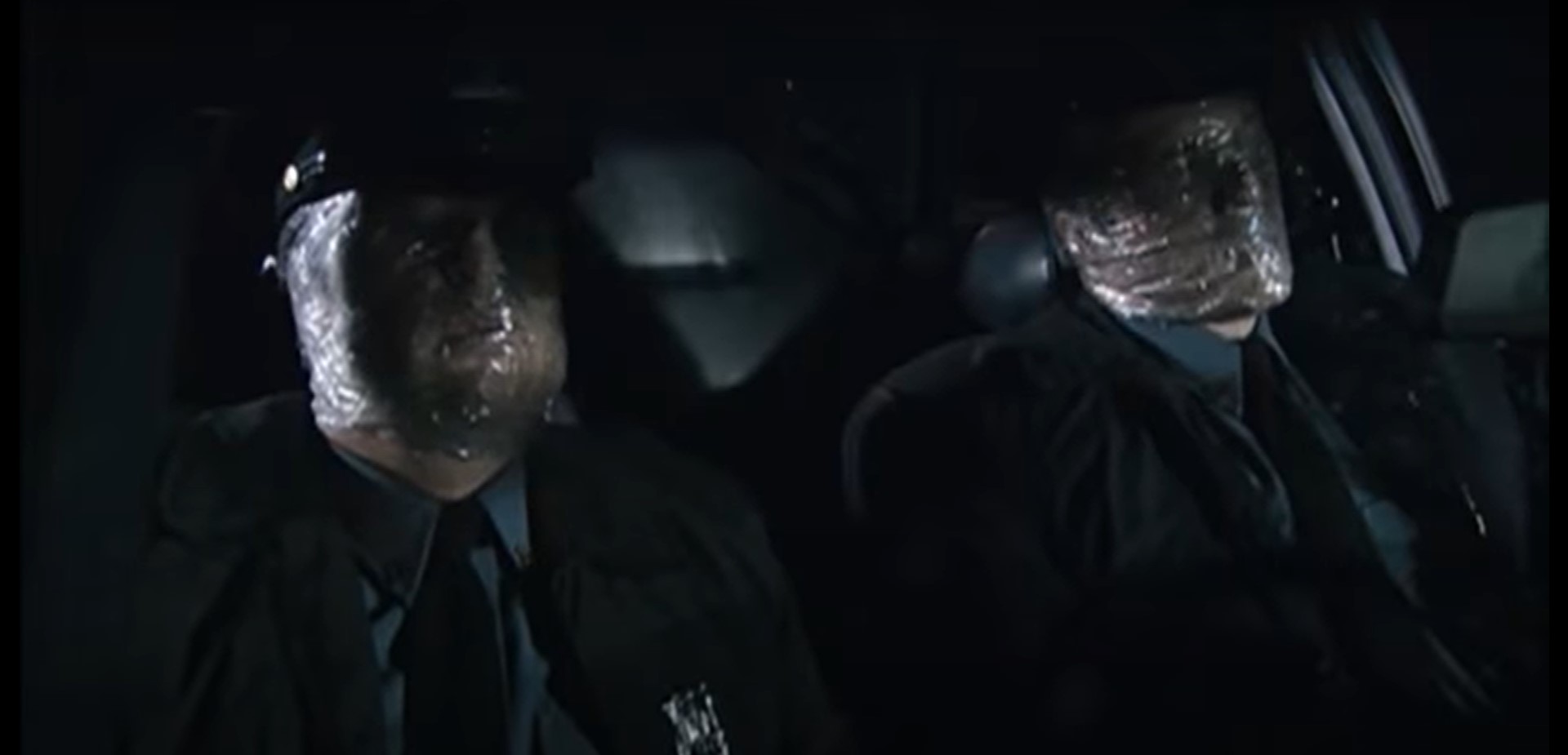
At Oceana High School, you’re either one of the local kids or you’re nothing. That’s how the aspired musician Bobby Parker and his friends are treated when their parents are transferred into town to build a powerplant. Shunned, ridiculed, and bully, Bobby can’t seem to catch a break even when he steals the heart of Noreen Hedges, a popular local and the sister of most bigoted bully of them all, James. To James who has essentially the entire town behind his way of obnoxious, intolerant thinking, Bobby Parker is no better than scum and is unwelcome anywhere in town, even at the local waterhole called The Shandy. After sneaking into The Shandy to see Noreen, Bobby is left in a heap of trouble with the law when a near fatal accident lands one of the local girls, James’s girlfriend, in the hospital. Looking to teach him a lesson he’ll never forget, James and his lackeys bring a gun to school to scare him but when a teacher is shot and James finds himself holding hostage his homeroom class with the gun, he’ll need to prove his innocence to his narrow-minded classmates as well as the police with itchy trigger fingers.

Mondays are the worst. When you’re a teenager coming off a weekend, that bell ringing at the start of the week is worse than fingernails on a chalkboard. When you’re a teenager who’s constantly bullied by popular jerk and the entire prejudging town that only sees you as an outsider, Mondays could shoot anyone’s nerves. Shoot being the key word in Don Murphy’s 1990 release feature film debut, or rather his only feature film credit, “Monday Morning.” Also known as “Class of Fear,” the cult drama with a classroom shooting at centerstage of the narrative feels awfully relevant in today’s tumultuous time of school and mass shootings. Where the topical issue of gun control is on the edge of every Red and Blue politician’s lips. For Don Murphy, who went on to produce notable blockbusters such as the “Transformer” films as well as cult hits with “Apt Pupil” and “Natural Born Killers,” “Monday Morning” is just a movie without any kind of political or social commentary behind the surface. In fact, Murphy has stated that production was initially a student film that evolved, but the theme behind reality and fantasy are the same in that children-bullying-children can push fragile minds beyond a breaking point. First A.D. of “Caged Heat 3000” Sheila Lightfoot produces the film alongside Murphy as executive producer under the production banner Team Angry Filmworks, Inc.

Noah Blake, the son of child star turned accused wife-murderer Robert Blake, steps into the constantly ragged on shoes of ostracized struggling high schooler Bobby Parker.  Bobby’s a never-say-die, never-give-up good guy given a cruddy hand in life as he’s dealt blows not only by his school peers, but also by his father who throws him out of the house for not living up to expectations and even by his band of like misfit friends for being traitorous for trying to live outside the confines of his unwanted status.  Bobby’s an extremely likeable and evolving character to almost a fault as he walks into foreknowledge adversarial situations without so much a clue on how to handle unprovoked hostility other than head on.  Perfect in the role that’s aggravatingly inspirational on how everyone should be pigheadedly neutral and able to see the good in everything, the “Piranhaconda” actor Blake takes Bobby Parker by the reins and lets the character be a subject of unbridled victimization.  One of the more conspicuously unhinged and douchey performances, landing this actor on the opposite end of the spectrum in contrast to Noah Blake, goes to Brandon Hooper as pretty boy bully James Hedges.  You really want to just punch James square in his pointy nose because of his incessant nitpicking and tunnel vision on making a crusade out of tormenting Bobby Parker for being in the platonic presence of his girlfriend (Shannon Absher, “Blood Nasty’) and having a romantic relationship with his sister Noreen (Julianne McNamara, “Saturday the 14th Strikes Back”).  What’s curious about “Monday Morning” is its ability to drop Bobby Parker’s friends from the principal lineup, with the exception of Bobby’s ride-or-die bestie Bill (Karl Wiedergott, a “The Simpsons” utility voice actor) though initially saturating the narrative with their bickering and turn the attention more on the town’s chief of police, played by “Sorority House Massacre’s” Fitz Houston fitting into his usual typecast role in law enforcement, by introducing one of the classroom hostages as his son (Vincent Craig Dupree, Julius from “Friday the 13th Part VIII:  Jason Takes Manhattan).  Rickey Dean Logan (“Freddy’s Dead:  The Final Nightmare”), Marta Marin (“Mindwarp”), Nicole Berger (“American Cyborg: Steel Warrior”), Jason Lively (“Night of the Creeps”), Brian Cole (“Mortuary Academy”), Paul Henry Itkin, Annie O’Donnell, and Lisa Rinna round out the cast.

How writer-director Don Murphy describes his film is “The Breakfast Club” with guns.  Granted, Murphy’s firsts draft contained more angst as an angry student holds the whole class hostage at gunpoint for the near entirety of the story, but “Monday Morning” is more akin to “Pretty in Pink” with A gun, isolating teenage cliques, trying to overcome their pressuring biases, and exposing differences in social classes and mistook attitudes.  Most of the film is building up to the clinching climatic classroom moment with Bobby trying his damn hardest to be a bridge between the gaps in a “Romeo & Juliet” type relationship that connects spurned outsiders with the spurning locals.   “Monday Morning” is a very contained narrative with only a handful of locations, primarily Oceana High and The Shandy, grounding the scale to a much more condense and story friendly design that’s easy to follow and digest.  That design isn’t turf war central.  We’re not talking about an all-out war between the Jets and Sharks.  Murphy, who often co-credits the final script to another screenwriter, rains down a supercell storm cloud’s rain and lightning on the downtrodden outliers to garner a tremendous amount of sympathy and to really beam lasers of hate into the local louts that essentially becomes a turf war just from their perspective for fear of losing their lionization over Oceana and the town.  “Monday Morning” embodies that quirky 1980’s teen melodrama with a very real, very terrifying, and very present-day topic that bumps Don Murphy’s movie up into the cult category.

We all agree that Mondays suck, but “Monday Morning” is a Monday associated gem of a film that is now available on a high definition 1080p Blu-ray from Angry Films and MVD Visual as part of MVD’s Rewind Collection banner.  The new transfer, taken from the original camera negative of a European based filmstock, is presented in a widescreen 1.85:1 aspect ratio.  The transfer release is reasonably well-dressed in color, with an ever so slight teal or gray tinge, and a good enough, above average decompression rate around 28mbps.  The transfer does display flashes of damage that look very much like tracking lines, but also could be light exposure on the negative.  The audio remains at an English LPCM 2.0 mono and contain static throughout with hissing in portions of the dialogue; however, the tracks are relatively clean enough for discerning dialogue.  Bonus features include a high-def, near feature length interview with writer-director Don Murphy doing a deep dive into his background, the film’s backstory, and his recollection of events throughout his career, a high-def, 24-minute Don Murphy from 2019 that looks at the producing career of the filmmaker, and the standard definition VHS version (1.33:1 aspect ratio) of “Monday Morning” under the alternate title “Class of Fear.”  The physical release comes with a reversible case cover art with alternate “Class of Fear” and a collectible mini-poster insert housed inside a clear Blu-ray snap case with a cardboard slipcover of the same primary cover except with faux cover damage to resemble a worn-torn rental.  Both versions of the film run at 105 minutes and is rated R.  A timely release for “Monday Morning” as a film that’ll reexamined and rethought of from its original entertainment purposes to be said that the issue has long since been prevalent and in the back of our minds.

Pick Up a Copy of “Monday Morning” Now on Blu-ray!

A 10-Year-Old Girl Pieces Together an EVIL Tragedy. “Martyrs Lane” reviewed! (DVD / Acorn Media International)

Purchase ACORN Release of “Martyrs Lane” on DVD

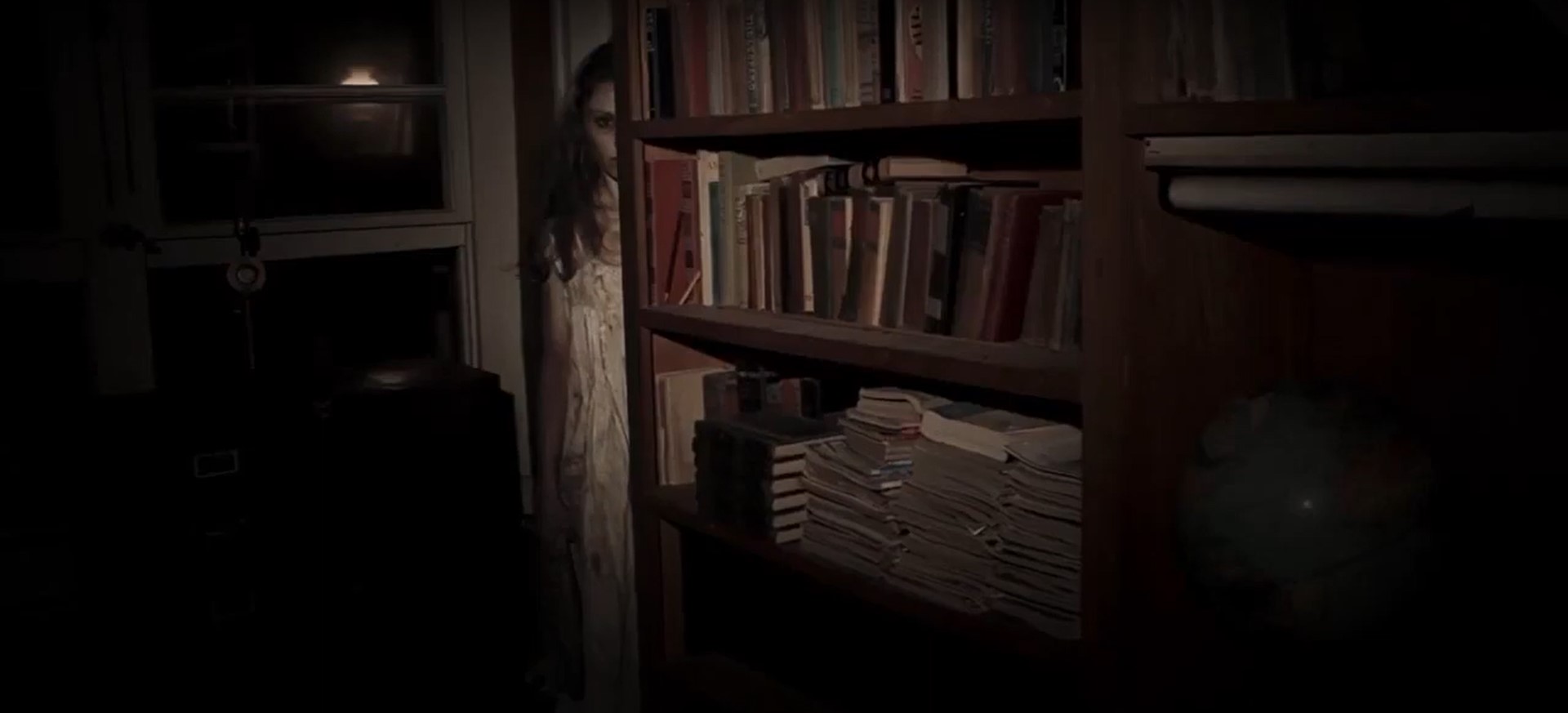
10-year-old Leah is a curious, quiet child, living in a vicarage household.  Her nightly nightmares surrounding her mother’s necklace locket and her mother’s stern conduct along with her constant obsession with her necklace locket leads Leah into an interest in the ornament’s contents.  Inside is a lock of hair and Leah takes it and loses a day later, sending her mother into a tailspin of anxiety.  That same night, a little girl knocks on Leah’s window and provides Leah momentary comfort and friendship until every visit after that, the little girl grows sicker and more ominously enigmatic in her play, providing clues and the whereabouts of thought-lost items that will open up the truth about the mystery girl’s identity as well as her family’s dark secret.

“Martyrs Lane” is a thoughtful and empathetic drama with supernatural delicacies surrounding complexities in loss and grief of bottled-up family secrets.  The British film is the third feature film, second in horror, for actress-writer-director Ruth Platt (“The Lesson”) who has commented that “Martyrs Lane” is a plucking of aggregated events from her own childhood woven into the very fabric of the story. Platt’s 2021 release is a fined tune extension upon her 2019 short of the same title that recasts the core principal roles from original actresses Indica Watson, Phoebe Lloyd, and the live action adaptation of “Beauty and The Beast’s” Hattie Morahan and turned the short into a 96 minute closed book feature about a scrutinized and consuming locket and a slowly decaying little girl playing two truths, one lie with the main character during bedtime hours who then has to unravel the mystery behind it all. Ipso Facto Productions’ Christine Alderson, who also produced “Valhalla Rising,” “Alpha Alert,” and even Platt’s original short film, produces “Martyrs Lane” alongside Katie Hodgkin and partly funded by the British Film Institute (BFI) in association with Sharp Films, Lypsync, and LevelK.

Recasting the short’s linchpin framework actresses took an audition to bring to light exactly the kind of talent Platt needed to express the different levels of somber ambivalence toward a family obviously struggling to deal with something more than just the day-to-day tasks. Kiere Thompson took over for Indica Watson as Leah in her feature performance debut and Thompson smashes a complex role and gains high marks on the voyeur scorecard as the youngest child who watches as her mother ebbs and flows in various states of anxiety while serving a milder, yet vastly different, dish of dynamics with the levity being around her vicar father and to be always primed to deal with her tormenting much older sister Bex (Hannah Rae). The best chemistry is between Thompson and age-appropriate counterpart Sienna Sayer, taking over Phoebe Lloyd’s role from the short as the strange visiting little girl. You can see two youngsters’ genuine play and natural innocence come through their smiling faces, wide eyes, and contagious giggles and when the winch of fear washes over them, called for by the story’s puzzling rising of events, mirthless moments are quickly produced, snapping us back into Platt’s eerie cold quandary. Hattie Morahan is replaced by Denise Gough as the mother Sarah and though her performance is fine, there just wasn’t enough of the mother’s side of the story to evoke a sense of empathy or sympathy and ultimately just falls into right into apathy even though Sarah is a pivotal piece to the theme. Catherine Terris, Charlie Rix, Donna Banya, Anastasia Hille, and Steven Cree as the vicar and Leah’s father rounds out the cast.

A blend between “Let the Right One In” and “The Babadook” but with less blood and less malevolent atmospherics, “Martyrs Lane” offers an imposing exhumation of a secret told in a way that doesn’t carry the sensation of something being hidden from Leah or even the audience in general.  Instead, Platt invests into the thematic subtleties with the bigger picture on the supernatural element of a strange, orphaned girl who knocks on the outside of Leah’s second story window, wearing dress up angel wings and is slowly deteriorating health wise with each passing night.  Yet, despite her appearance and reluctance at times, Leah’s peculiarly drawn to opening her window, letting her in, and even play childish games with her and tell jokes but soon those games become clues, near riddle-like, for Leah to push the envelope that link her mother, the locket, and this strange girl together.  Platt tacks on a silent and tenebrous after-hours backdrop during Leah’s sleepless nights and the stillness is greatly encroaching upon into the terror senses that you find yourself holding your breath and jumping at the breakneck editing aimed to momentarily scare you until a sigh of relief for when it’s over.  “Martyrs Lane” is externally melancholic and mood driven from outside Leah’s perspective as she, herself, internalizes and absorbs the emotions of others, studies them, and puts the pieces together to unravel the truth.

Ruth Platt’s “Martyrs Lane” is a wistful, and often eerie, entry into the creepy child subgenre. UK distributor, Acorn Media International, releases the Shudder exclusive-streaming film onto a PAL encoded region 2 DVD.  Presented in a widescreen 1.85:1 aspect ratio, there’s virtually no issues with the compression as even the night sequences retain the thick and obscuring black levels with almost unnoticeable banding, and it’s a clean dark too with balanced contrast to really home in on and define the shadows.  Details and textures are good for Platt’s dreamy-presented cinematic approach of slight overexposure and blur are more a stylistic attribute than an issue with the imagery.  I liked the tactile details in the loose strands of hair around Leah and the mystery girl that plays on their differences, and sometimes similarities, really well.  The English Dolby Digital 5.1 surround sound retains no significant issues.  Dialogue track perceives slightly muted or distant in some scenes and clarity, though free from audio blemishes, can be straining.  English subtitles are available.   Bonus features include a behind-the-scenes with snippets of interviews from Ruth Platt and the cast, an interview with Ruth Platt (which contains the same segments pulled for the behind-the-scenes), and a behind-the-scenes photo gallery.  The Acorn DVD is certified 15 for strong supernatural threat and injury detail.  In the end, “Martyrs Lane” is a dead-end road to melancholy, a family-affecting affair that peripherally chronicles not only one person’s struggle to maintain a slither of normalcy but also profoundly hits innocent youth who know nothing of the skeletons kept in the closet.

Purchase ACORN Release of “Martyrs Lane” on DVD

To EVIL, Death is Only the Beginning. “Girl With a Straight Razor” reviewed! (Darkside Releasing / Blu-ray)

“Girl With A Straight Razor” available on Blu-ray and DVD at Amazon.com!

A placid woman waits in her modern chic apartment until dark. She ritualistically dresses elegantly and exits her apartment building wearing sunglasses, a bright red coat, and an unsheathed straight razor. As she wanders the streets, she locates a target, another woman, and stalks her with a bloody thirst in her eyes. When approaches from behind to only turn around her victim and come face-to-face with an exposed neck, she slashes away at the jugular, slicing crudely a blood-splattering spree that manifests a smile across her face. She returns to her apartment where she’s visited in between her straight razor murders by a lady dressed and veiled in black, priming the elegantly dressed woman for the next kill. The blade continues to slash through napes nightly, memories of the woman’s past seep into her psyche to a terrifying outcome of how she became a killer.

“Girl With a Straight Razor.” Simple, yet effective. The eye-catching, razor-sharp title certainly has a couple of key words combined together audiences often drool over just by the very straight-forward approach and appealing word sequences that make the appearance of an idiosyncratic title that much more desirable. Canadian horror-filmmaker Chris Alexander seizes advantage writing-and-directing a script that’s a numbing-gaze reminiscent in homage to giallo by assembling the trademark motifs of stark red coloring, gloved hands shot in a first-person view, and the use of a melee blade familiar to the Italian-made mystery-thriller genre for a fever dream highlighted as a pain-pleasure principled purgatory. The “Female Werewolf” and “Necropolis: Legion” director also composes the film and controls the overall look of the colorfully prone to epilepsy cinematography that jars sense the visual cortexes. “Girl With a Razor Blade” is the first feature production of the Vancouver based Molemen Entertainment and is produced by Vince D’Amato, the founder and managing partner of Darkside Releasing who released the film on home video this year.

If you want to make a low-budget film and keep a lot of change in your pocket, hire only a handful of decent, well-rounded actors and actresses to maintain the spirit of independent filmmaking that balances the budget as well as balances the filmmaker’s creativity with semi-creditable performances. If you want to make a low-budget film and keep dollar bills in your pocket, hire two actresses where one only has two to three scenes max with no dialogue and the other have them play four different versions of themselves with very little dialogue. The minimal dialogue forces Alexander into a creative environment where express the principal’s emotional deluge, or lack thereof, can be displayed in a range of camera angles, his musical composition, and the variegated kill scenes contrasted against contrasting black and white visuals. In these scenes are a pair of Chris Alexander regulars. Having had roles in some capacity 2019 re-imagining of Bruce Hickey’s “Necropolis” from 1986, Thea Munster finds herself again in front of the director as a ghostly, haunting figure costumed in an old-fashioned lacy black dress as if going to a funeral, to which she’s properly playing a character called Lady Death so there’s no ambiguity about the status and intentions from the grim reaper concept, and Ali Chappell who isn’t foreign to leading lady role with Alexander and has the nearly the entire story on her shoulders with scenes of her as the lady in red cutting the throats of window shoppers on a nightly basis that becomes reverse engineered into the deconstruction of her as a killer with humanizing sympathy. Despite not much dialogue, both Munster and Chappell hit their marks and cater to Alexander’s idea of posturing expression that mostly involves Chappell laying topless in an egg-shaped chair, an animal skinned carpet, or on a black mannequin chair.

“Girl With a Razor Blade” is cutting-edge existentialism and novel re-imagining around the idea of death’s plans for us all. Alexander dives into the depths of mortal consequences that limbo the soul into a loop of insensible pain and suffering.  As we learn more about this woman and her marital troubles, presumably separated by legal force and a resentfully angry husband, from her child, Chappell’s character has no other place to go than down into darkness, mentally and physically.  Its during that time Lady Death approaches to become a harbinger of death, puppeteering her subject’s will to conduct more self-harm as the villain and the victim in a mind warping illusion that’ll fool the viewers’ perception of the woman’s insatiable lust for red jugular juice.  Alexander’s cinematography style is simply ethereal and elegant with a touch of precise choreography in the characters positions and movements to reflect a vivid dichotomy between the present stillness of surrealism and the past’s stressful reality. “Girl With a Razor Blade” is grim bordering the line of certain religious doctrines in condemning oneself to an unsavory existence, if you can even call it an existence, of facing yourself, your fate, over and over again until no longer the feeling the need to spill blood is gnawing at the marionette strings and waking up to the truth, facing it, can be free. There are moments the blade is a sexual object, almost like an obsession with what it represents, which would be death, that can be addicted, can’t be ignored, and won’t let you forget it.

Stylish, cryptic, and thought provoking, Chris Alexander’s seventh film “Girl With a Straight Razor” cuts onto a high-definition, AVC encoded, Blu-ray home video courtesy of Darkside Releasing. Two versions of the film are available – a Darkside Releasing expanded cut with a runtime of 67 minutes and a director’s original cut of the film with a runtime of 57 minutes. Both produced during the pandemic films are presented in a widescreen 1.78:1 aspect ratio. Picture quality wasn’t the best for Darkside Releasing with a shaky, often banding, image mostly throughout due to compression issues. You can see the blurry splotches in the darker portions of the scenes. Delineation is also difficult during rainbow strobe effect when the woman slices at away during a kill moment in a fit of haziness that leaves barely an outline of the contours. In fact, Alexander’s style is all over the map with filters, lens flares, and gel lighting that can be a little too much and gaudy to digest. The English language 5.1 surround sound has a lossy framework that’s more of a soft crunch than a sharp crisp. There isn’t much dialogue to be hand in the film, but the clarity is there, it’s just not robustly defined. Aside from two versions available of the film, bonus features also include an audio commentary on the director’s cut, three short music videos by co-star Thea Munster and her band “Night Chills” as she spotlights her niche playing of the theremin instrument, and Darkside Releasing 2021 Giallo and Surreal trailer reels. A character-driven and introspective “Girl With a Razor Blade” laments as an acquiescent nightmare breaded lightly in giallo features and fried heavily in the abstract qualities of surrealism. Don’t expect Chris Alexander’s film to be straight forward giallo with a straight blade razor and you’ll come out with only a close shave nick into your expectations.

“Girl With A Straight Razor” available on Blu-ray and DVD at Amazon.com!

Mama’s EVIL Little Boy. “Mother” reviewed! (SRS Cinema / DVD)

A boy’s best friend…is his “Mother.”  DVD at Amazon.com

In the deep pocket of rural America, a son is born in a country home and over the years, the baby of the house lives a cossetted life by his mother.  Warped by her mollycoddling ways and unaffected by the death of his father, the now young man apathetically bends to his mother will whether she’s conscious of it or not.  He responds in unkind to overprotect his mother when an envious older brother derides their special son and mother bond and is murdered in cold bold.  As more years pass and his mother succumbs to her health deterioration, the son, now the last of his family, remains in solitary at the family home and the absence of his beloved mother haunts him as he processes his unnurtured and unhealthy sexuality onto the unwilling living and the unresponsive dead. 

In 2003, the NY-based indie horror filmmaker Michael P. DiPaolo gave us “Daddy,” an undead rape-revenge zombie-thriller that brought the corpse of an abusive father back from the grave to exact a fate far worse than death on his daughter and her friends who put an end to drunken state defiling of his little girl.   Three years later, DiPaolo releases to us “Mother.”  However, don’t expect this to a companion film connected to “Daddy.”  Instead, “Mother” is a whole new story with a whole new stylistic approach, including zero dialogue in a black and white frame – much like a silent movie but with more Foley and no corresponding continuous piano tunes. Ed Gein became the core inspiration for DiPaolo who retells the Plainfield, Wisconsin described Ghoul‘s horrifying deeds of exhuming corpses, creating trophies out of the remains, and even the slaying of two women, a tavern owner and a general hardware store clerk. DiPaolo self-produces the film under this Black Cat Cinema productions along with associate producer Zachary Balog and shoots the film most of the homestead around Cropseyville, New York, near Albany, and the surrounding area.

Comes no surprise that the actor who once portrayed the former Republican Vice President, Dick Chaney, for Damon Packard’s Fatal Pulse also plays the details likes of one of America’s most notorious murderers. The Buffalo, New York born John Karyus, who had a minor role in “Daddy,” reteams with DiPaolo to present a dialogue-less version of the life and death of Ed Gein by stepping into virtually his skin – that’s an Ed Gein joke in case you were paying attention. Karyus and DiPaolo don’t hold anything back in the peculiar biopic that dives deep into dismemberment madness, fascination killings, and the loss of motherly love. Half of the praise should be awarded to Nina Sobell as the son’s mother. Sobell not only plays mommy dearest but also the hardware store clerk and the tavern owner in an unrecognizable fashion. The up-in-age actress’s comfort level was high enough even for a nude scene in which Karyus has to dress her approaching older age and invalid body. Karyus might be on centerstage as the star of the show, but Sobell’s in the backstage manipulating the pullies, curtains, and supporting Karyus with different angles that give way to the avenues of an aggressor’s cloistered milieu. Other minor characters quickly come and go amongst the silence feature with costars in Jason McCrea as the bigger brother, Phil Sawyer Jr. as the best friend, Adam Zaretsky as the father, and Svetlana as the exhumed corpses brutally hacked away for her bone-afied trophies.

The distorted mind of Ed Gein must have been a surreal inverted world. I think Michael DiPaolo encapsulates a similar essence of the upside-down perspective seen through the eyes of a killer with what can be said to be his woven auteur’s arthouse tapestry. You would think no dialogue would drag the film through the monotonous much and show signs of repetitive tiresome, especially dressed in a colorless monochrome but the crafty cinematography and grisly gestures never waver interests as we’re along for the fall of man beheld as not only mother’s baby boy but also as her ardent admirer. Her presence was a tattered thin tether that kept him secure to reality and once she checked out, the abnormal fascinations that always laid dormant now flourishing with full force like an unchecked weed in an immaculate garden of prize-winning roses. The son goes from a chaperoned teetering-maligned individual to full-fledged grave robber and skin suit tailor, raping and ripping the flesh from dead bodies over the course of years, denoting just how psychologically paramount a mother’s care is for a boy in the balance of good and evil. DiPaolo more-or-less hits every note in the book in regard to Ed Gein’s past, tweaking a few historical moments for dramatization or budgetary limits, while still maintaining a professional code of conduct despite constructing the film on the cheap. DiPaolo definitely knows and understands what he’s doing and how to work the system as clearly seen between the tone and expression differences of 2003’s “Daddy” to 2006’s “Mother.”

First, there’s was the back form the dead “Daddy.” Now, there’s the spoiling to sociopathic “Mother.” A match made in Hell and both available on a region free home video DVD from SRS Cinema. The “Mother” release is presented in black and white on SOV 1.33:1 aspect ratio, reconstructed in an impressive 6-7 megabytes per second due partly because there is nothing to decode from a RGB color signal. Contrasting is good as you can greatly appreciate the spectrum between light and dark patches. Sporting no dialogue, the LPCM 2.0 stereo features slightly exaggerated Foley and a dissonant vocal score, some in the Russian language nonetheless, from the Moscow born, New York residing folk instrumental artist LJova (Lev Zhurbin). There’s clarity over ambiguity to the action-destined soundbites being conveyed even if a bit over-the-top as if to compensate for the no dialogue. The 76-minute film is coupled with a DiPaolo short film “Brutal Ardor” about a woman trapped inside her small apartment and an immense amount of despair living with a sexually overbearing and jealous husband. Also included in the bonus material is a making of featurette voiced over by DiPaolo as he goes through his creative process and techniques (and is also somewhat of a comedy track), a director’s commentary, the feature trailer, Michael DiPaolo film trailers, and other SRS trailers. Perfect for a double bill with DiPaolo’s “Daddy,” “Mother” is a cynical and desolation ark of biblical proportions adapted from a horrid torrent of truth.

A boy’s best friend…is his “Mother.”  DVD at Amazon.com

Fixing the Tracking on Those EVIL VHS Cassettes! “Snuff Tapes” reviewed! (MVDVisual / DVD)

Ready to be Recorded?  “Snuff Tapes” now available at Amazon.com!

Marcela Arkaino investigates a Talca, Chile rapist and murder who has been drugging and abducting women for years to record aberrant tapes of his cruel exploits.  Marcela takes a special eager interest in this particular assignment as she was one of those unfortunate women.  As a silver lining out of an extremely bad situation, she is one of three women left alive by her brutal sex-sadist aggressor.  As the reporter in her garners the difficult stories from the other two survivors, Cataline and Jesus, abused by the same masked man, she inches closer to his whereabouts by triangulating attacks and connecting similarities but her scouring of roadside market, unlabeled VHS tapes became the smoking gun needle in a haystack that produces not just any depraved tape of his victims but of her own ordeal, turning now an inch into a mile in finding him.  Bring the other two women into the fold, Marcela devises a plan of revenge to direct a snuff film of her own, starring their rapist and torturer.  

Hailing from Talca, Chile, the same location where the story is set, comes the shock-slamming, VHS-inspired thriller “Snuff Tapes,” aka “Cintas Tapes,” from the Chilean born independent filmmaker, Vito Garcia Viedma.  The writer-director’s prior two zombie-influenced short films, the 2012 “Bajo el sonido del tren” and the 2017 “Escape from Zombie City,” along with the criminal underbelly 2017 feature, Los culpables,” displays a course change deviation that wouldn’t prepare the average Viedma film fan for his 2020 venture into the dark underworld exploitation of indie snuff.  While the title highlights the concept around videotaping the misuse of a person’s trust and vulnerability for one’s own disturbing profit, in this case to get one’s jolly’s off, much of Viedma’s story skirts around the edge with just mentioning the nixing of captured and consumed of vivacity women, saving the story’s climax for more detailed death dealing in a vengeful perspective rather than a videotaped one. “Snuff Tapes” is created under Viedma’s ZineFilms production company in association with Cabro Chico and Trippas Productions.

“Snuff Tapes” is no “8MM” with a mega-Hollywood budget and Nic Cage doing Nic Cage antics. “Snuff Tapes” is no “Effects” with cult icons Joseph Pilato and Tom Savini helming sordid scenes from fantasy to non-fiction. “Snuff Tapes” isn’t even on the same level as “A Serbian Film” and, to be honest, I don’t think any film anytime soon will ever be on the same level as that twisted picture. What all three of those successful and notorious films have in common and what Viedma lacks in separating itself from the rest are in two very important details: a budget and an array of talent. Viedma’s film humbles in comparison with not only a microbudget but also in a cast makeup of essentially five actors with withering substance. Valentina Soto Albornoz stars as the retribution-reporter, Cataline Ibarra, who for the last decade has been piecing together clues of her kidnapper’s whereabouts by purchasing random video cassettes tapes from Talca street vendors and when Ibarra strikes gold unearthing her own ugly tape, she understandably feels overwhelmed reliving visually the nightmare and subsequently gravitates toward being hellbent for revenge. Ibarra recruits her survivor carbon copies in the tattooed Jesus Mayano (Camila Medina) and aspiring photography model Marcela Arkaino (Camila Carreno Arancibia) for a little payback, but Ibarra, aside from her good friend Esteban (Hugo Villar) providing her a PAL encoded VHS player and rewatching her tape to catch clues missed, she virtually does all the legwork in pinpointing the one responsible, drugging him, abducting him, and committing herself to the nitty-gritty, fantasy plan for whenever she got her hands on him. I’m not sure what roles or business Arkaino or Mayano actually had to just stand there moping other than maybe bear witness to the end of their lifelong torment, to see the boogeyman parish once and for all? Reinaldo Aravena plays the man behind the mask who initially puts up a strong showing as the camera operator and stud of his homemade videos but then quickly fizzles disappointingly on the opposite side of the camera due to a lack of scaled down combating in what becomes just a one-woman show without much to show for it.

Viedma paves an interesting structural path for his film, taking the audience an extended 36-minute introduction of voiced over VHS recordings of survivor stories before entering opening credits to what then becomes a dichotomy narrative between backstory and present day. This also speaks to the visual cinematography as well that jumps back and forth between being shot on the VHS’s boxed-in format (found footage) to a wider lens of the digital world, capturing past and present in two distinct formats as well as capturing the past that isn’t glossy, pretty, and is an inescapable prison where the walls, the horizontal pillars, are closing in on the world.  Appearances, no matter how apt to the subject, do not give the movie soul and “Snuff Tapes” misses that poignant shock value target with poorly written characters and a misaligned connect-the-dots investigation that doesn’t make much sense.  Ibarra examination of the evidence, or really lack thereof, points to one man, but like a cheating slacker in high school, she does not show her work to come up with that result.  Instead, she repeats, at least in a couple of instances, her gut knows she has the right man.  In Viedma’s world, a gut feeling is factual evidence for stringing someone up to face judgement.  In reality, that’s a severe boo-boo case of miscalculation that would get you jail time.  Circumstantial street justice on little-to-no proof separates the empathy from what an audience is supposed feel fired up against an unspoken truth and gives them satisfaction in a just cause to see the obliteration of scum from the face of the Earth. In the first half, “Snuff Tapes” is undeniably graphic and cuts deep with a veridical, degenerate villain, but falters with a lazy second half approach and gratuitous revenge.

MVD Visual in association with Danse Macabre and Jinga Films release “Snuff Tapes” on a North American DVD release. The region free DVD is presented in a VHS format of 1.33:1 when looking cassette camera lens with the rest of the film in a widescreen 1.85:1 aspect ratio. As expected, the VHS quality has semblance of overuse and age with a fuzzy display and muted, boxy sound. Outside of that, the picture quality is not much better in reconstituting a playback on lower end of the DVD spectrum – approx. 3-5 Mbps. Compression artefacts are heavily present with poor clarity around the edging and blacks shimmer and appear blotchy. The lossy Spanish language Dolby Digtial 5.1 Surround Sound loses some of it’s fidelity in the compression but is the overall highlight amongst the DVD’s A/V scorecard; however, the subtitle transcription is the worst I’ve seen in quite some time with duplicated segments, spelling errors, and a timing that equates to a microsecond blip of dialogue on some occasions. The release comes with another version of the film as the sole bonus feature with an entire VHS 1.33:1 (4:3) VHS Cut for an immersive effect. As always, snuff features can be difficult to digest but they are becoming more and more prevalent and popular in a highly accessible home video market and director, Vito Garcia Viedma, tries his creative hand at creating disturbing content only to defile the genre with a subpar entry sullied by deficient storytelling.

Ready to be Recorded?  “Snuff Tapes” now available at Amazon.com!