Blind, Witchy, EVIL! “Beezel” reviewed! (Epic Pictures / Blu-ray)

“Beeze” is the Witchiest Blu-ray of 2024! Get it here!

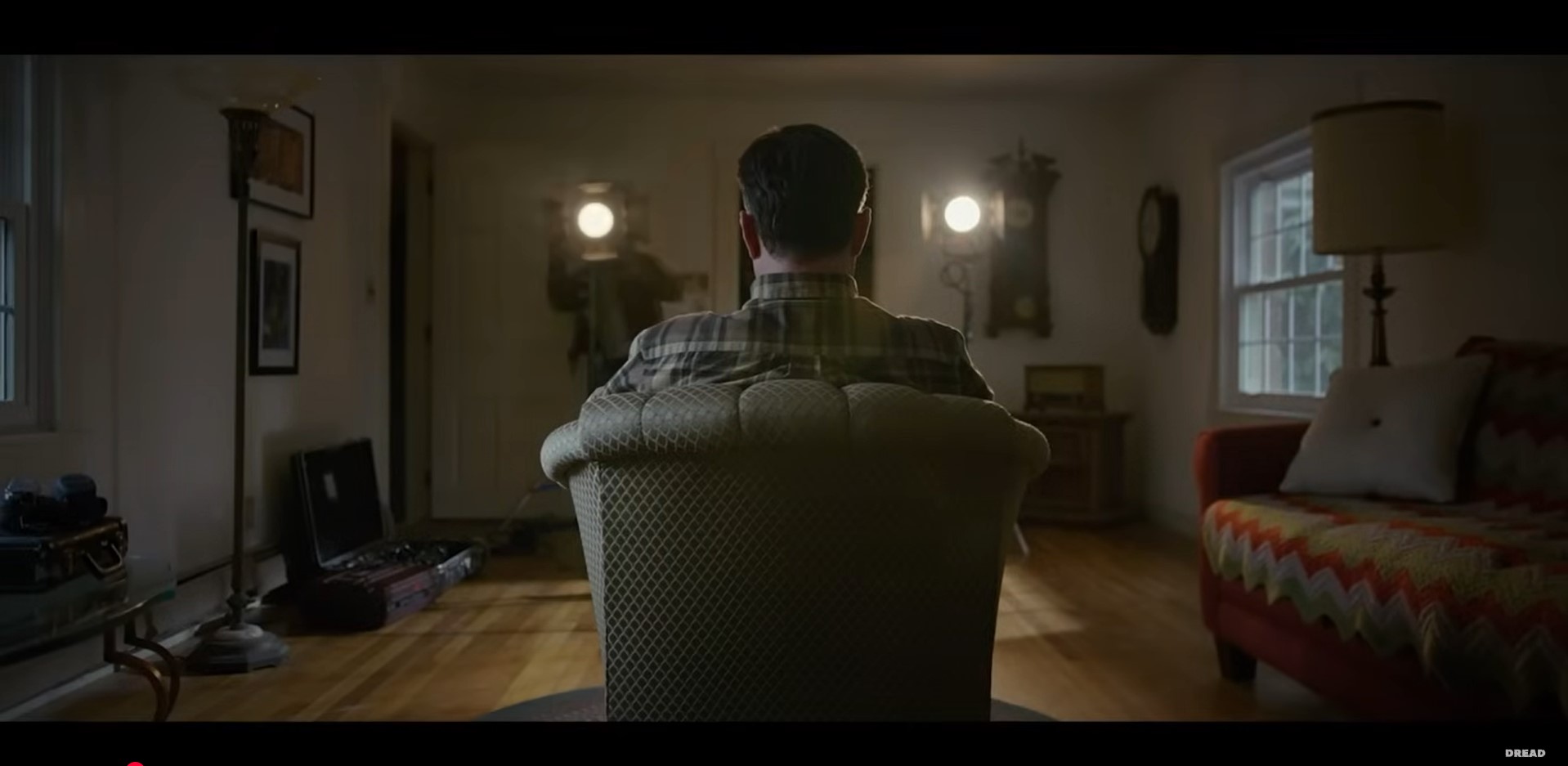
May, 1966 – a young boy is murdered, eaten, in his Northeast home.  Nearly six decades later and a series of disappearances and strange deaths in between, a young couple inherent the property that the locals have feared haunted, cursed, and possibly even inhabited by a witch.  As the house-inheriting husband is eager to sell the house to get rid of the reminder of his mother’s abandoning betrayal, the wife is equally eager to keep the house, settle in, and start a family.  The house possesses a presence captured by the corner of the eye, the hairs on the back of the necks, and the overall sense of dread that lies heavy in the pit of the stomach as the more the couple stay in the house, the more the Beezel, a blind evil witch lurking and hiding in the basement, influences their dreams and reality.  Beezel also wants a child and will take what it desires and kill anyone standing the way. 

What the horror genre needs nowadays is a ferocious witch film and I’m not talking the spellcasting, broom-riding, cauldron-congregating kind of witches with black pointed hats, large warty noses, and catty familiars.  I’m talking about hardcore old and ugly broads with an extreme hunger for not just children but for all of humanity, capped off with, perhaps, a good, solid cackle that’ll redefine the iconic figure from the traditional sense to a reverse revolutionized hag rooted in folklore but scorned by life itself.  A few filmmakers have tackled the idea and filmmaker Aaron Fradkin has taken a stab at it with “Beezel,” a 2024 Northeast-shot, visceral supernatural witch tale that was originally a short film expanded into a full-length feature film based on the short’s positive feedback.  The “Val” director cowrites with wife and fellow “Val” actor-writer, Victoria Fradkin under their cofounded independent film production company Social House Films. 

Because “Beezel” was first a short film, to flesh out a full length, the Fradkins smartly built around the short story an episodic series around it that spans decades.  Different actors are casted to reflect different periods, circumstances, and develop a variety of reactions to keep with and keep going a timeline of change, connected all by one single element, the carnivorous blind witch lurking in the basement shadows.  1966 starts off with more of child’s perspective who opens a secret bathroom hatch to the basement to see his pleading-for-food mother before his arm is snatched and he’s rip-to-shreds off camera.  The vicious and quick opener doesn’t leave open the door of development and we don’t get a real sense of anything or anyone until LeJon Woods (“The Hangman”) meets Bob Gallagher (“I Don’t Want to Drink Your Blood Anymore”) about 20 years later outside the home as the documentarian and homeowner, Apollo and Harold Weems.  Having seen now three films his this year, LeJon Woods feels very much like a one-note actor playing the same person throughout those roles.  Gallagher dips into a more sinister cover as the seemingly Mr. Rogers or Ned Flanders neighbor that drops breadcrumb clues of his dark secret and its one scary in-character conversation he has with Apollo.  From there, we jump another 20 years into the early 2000s with what was initially the original short film of an at-home nurse named Naomi (Caroline Quigley) replacing another nurse who disappeared in the Weems house.  This leads into the third act really sets up nicely Harold Weems second wife, Deloris (Kimberly Salditt Poulin), who’s on her deathbed in hospice care and solidifies the tone with a girth of suspense that leads into what would be the final moments left unseen of young couple Lucas and Nova (French actor Nicolas Robin and the director’s wife Victoria Fradkin).  Lucas, who inherited the neighborhood blighted house from his mother Delores, is eager to remove all denotations of his mother from memory, the free-spirited and more forward Nova wants to settle, have children, and start living her life.  Their bond sours overtime with the witch influence invading the subconscious and conscious body for her own ravenous gain in a blood-spilled buffet of knives, guts, and videotape.  The film rounds out with Elise Manning, Leo Wildhagen, and Aaron Fradkin dons the makeup and prosthetics to play the blind witch Beezel.

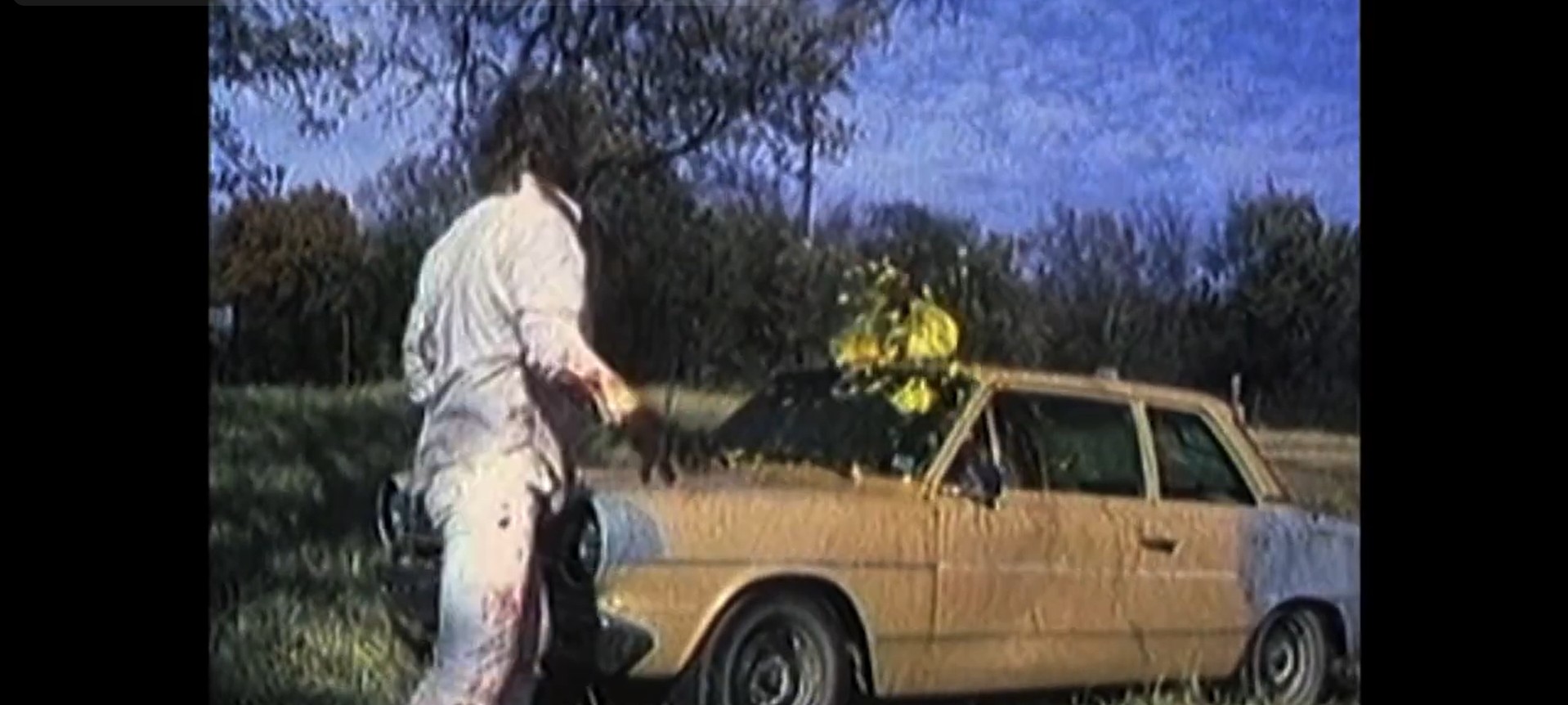
Fradkin’s able to capture desolate mood with limited production sets.  Most of all the “Beezel” story is set inside Fradkin’s childhood home in Massachusetts and with real, cold, New England snow that latter half of the story takes place.  Every tight and cobwebbed crawl space, every radiator-induced floorboard creak, and every outdated, antiquated, and obsolete feature of his parent’s home gave every ounce of spooky energy to “Beezel,” which, ironically enough, is what Beezel actually inflicts upon the current residents of the house.  Editing and the practical witch effects build the tension and suspense without giving too much away of Beezel’s hideous figure, cherishing Beezel for timely appearances rather than relying on its overuse which often leads to exposing too many rubbery and prosthetic flaws.  The episodic nature also keeps the story from being stale by jumping years, if not decades, that shepherd new characters and new scenarios into the fold as the story evolves through the difference lens of technology, in a half-ominous and half-found footage perspective with the latter being shot in super 8, VHS, and digital handheld camcorder and the original short breaking up the pattern with a microcassette tape deck.  “Beezel” perfects the blend of live-action and found footage without feeling forced and unnecessary with a truly frightening approach to the witch trope that’s worth devouring whole. 

The Social House Films brings the meanest witch this side of 2024 and Dread, the subsidiary label of Epic Pictures Group, who also pushes their own boundaries with “Beezel’s” visceral path, as well as sport some uncommon nudity in one of their films, has the Blu-ray for you! The AVC encoded, 1080p resolution, single-layer BD25 manages to scare through the lower end of capacity format with really no issues with compression. No banding, no blocking, nor any other noticeably ostentatious artefacts to speak about as the rendered image, despite its softer detailer markers, pulls off a passable and potent portentous story through a digital, anamorphic 1.78:1 aspect ratio lens, often switching between media parallels of POV Super 8mm, VHS, and DVX camcorder that vary in levels of detail and grain. Dread Central presents two English audio options, both lossy: a Dolby Digital 5.1 and a Dolby Stereo 2.0. Surrounding, multi-level house atmospherics, various media equipment, in-and-out of the dream subconscious, and, of course, the blend witch herself, create an unfaltering, ample, and competent sound design although the format doesn’t reproduce true fidelity. Back and side channels flourish with frightful house creaks and other environmental elements while basking in the silence for a solid jump scare or building palpable tension. English subtitles, as well as Spanish subtitles, are available for selection. Special features include an in-depth look at the making of the film, Aaron Fradkin’s short films “Doctor Death” and “The Sleep Watcher,” and other Dread Central distributed film trailers. I had aforementioned Beezel not being shown too much in the film but her rather grotesque, bloodied-mouthed face captured in still image, glammed up and embellished for public consumption, graces Epic Pictures’ one-sided, front cover image, warmly soaked in a reddish-orange glow. The disc is pressed with a Scolopendra, or Giant Centipede, coiled over the title. No other tangible items come with the release. The not rated release has a runtime of 82 minutes and is region free for all!

Last Rites: As we close out 2024 with an evil old hag, “Beezel” is one hell of a movie to close out on. Soul-tattering story that spans decades, “Beezel’s” the witch with an incredible insatiability and her hunger will have you recoil in fear of being the main course.

“Beeze” is the Witchiest Blu-ray of 2024! Get it here!

EVIL Doesn’t Want You to Be All That You Can Be! “Despiser” reviewed! (Visual Vengeance / Blu-ray)

The “Despiser” Collector Edition Blu-ray Is a Must Own!

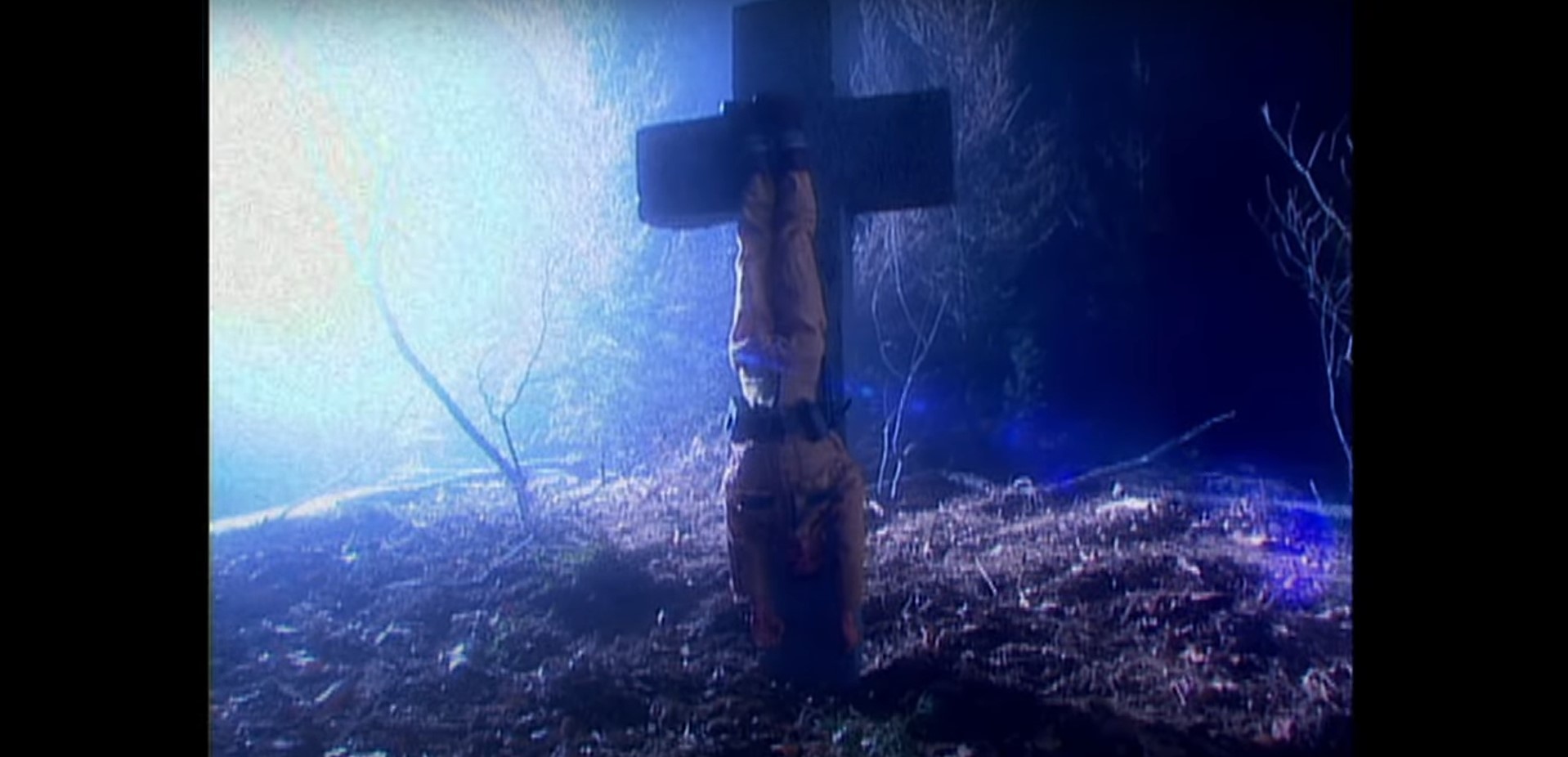
Gordon Hauge is an inspirating artist with little motivation.  Having just lost his contract work, being evicted from his home, and his wife leaving him, Gordon is left with virtually nothing, even no purpose.  While speeding home late a night, Gordon swerves to avoid pedestrians in the road and crashes his car, waking up in a nightmare-scape purgatory reigned by a malevolent monster known only as The Despiser.  The Despiser’s ragmen minions, governed by The Shadow Men, wreak havoc on the land by stealing nuclear warheads with the objective to rip a dimensional, absconding hole in their world that’ll lead into Gordon’s.  The Despiser’s only obstacle is a ragtag group of pious, historical fighters stuck too in purgatory after sacrificing their lives for a greater good and now are missioned to release everyone from The Despiser’s malicious hold over the Ragmen souls, as well as escape limbo themselves.  When The Despiser threatens his wife, Gordon joins the fight against evil and takes the battle head on.

Unlike anything you’ve ever seen before in the movie category, “Despiser” is the dark fantasy, action-thriller from 2003.  “Beyond the Rising Moon” and “Invader” Philip J. Cook’s own written-and-directed sci-fi odysseys distill the genre game by challenging the visual inside a unique story on a low-budget.  “Despiser” is no different digging into the horror building blocks of a soul-swallowing netherworld with a goliath creature having dominion.  Testing the waters with computer generated scenes still in their infancy and shot on the stringent, temperamental, and ever quality fluctuating video tape, the pre-millennium feature was shot in Cooke’s own home and makeshift production studio in Virginia of 1998, running against the wind and against the odds of coming out top with a promising product that audiences will like.  Cooke’s Eagle Film’s serves as the production company that naturally puts the filmmaker in the producer’s chair. 

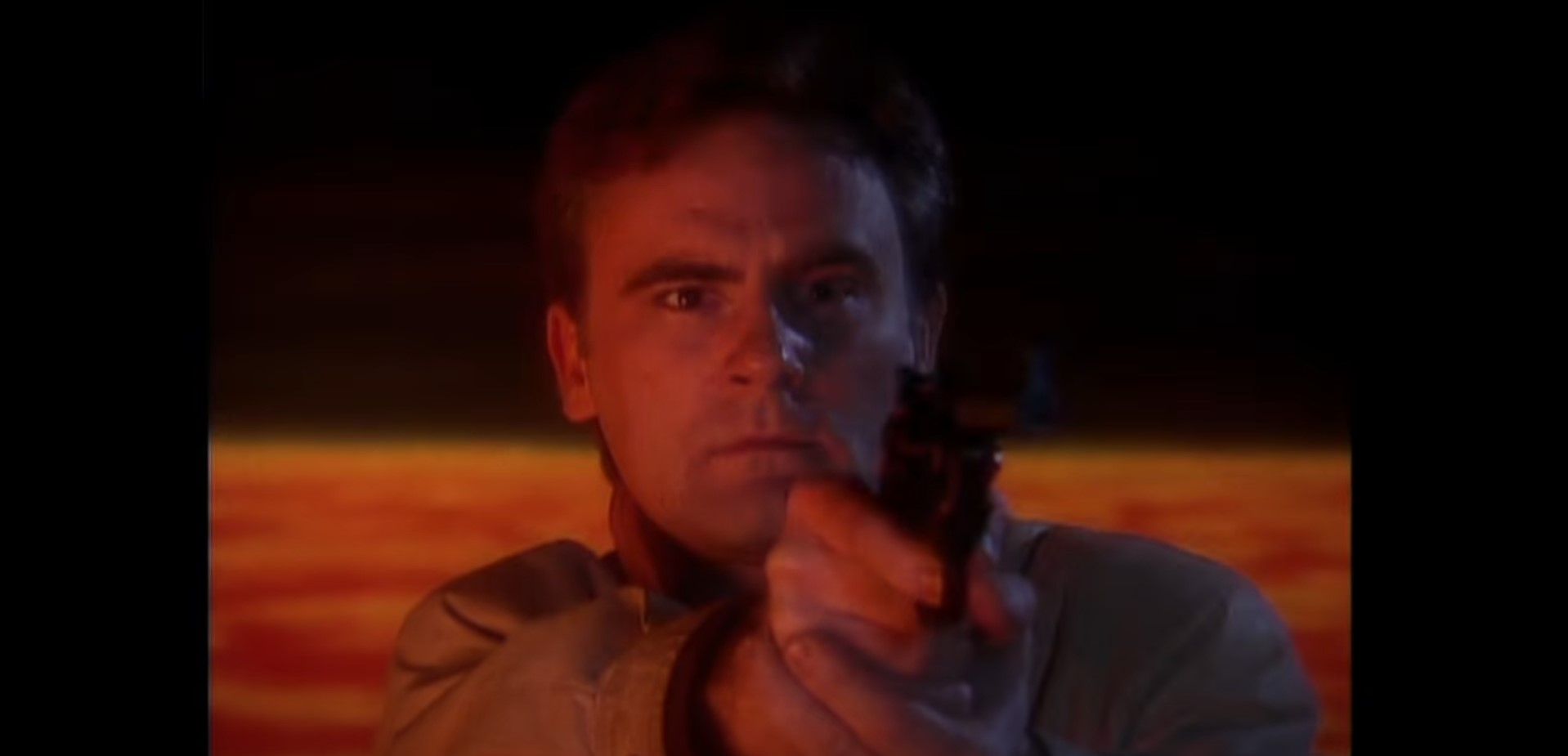
In the role of the disoriented artist down on his luck Gordon Hague is Mark Redfield (“Dark and Stormy Night,” “Chainsaw Sally,” and the producer of the Redfield Arts Audio Podcast “The Midnight Matinee”).  Brassy and cocky, Gordon Hague feels very much like a classic character browbeaten into being cheap ground coffee, diluted by his own lack of ambition with a flavorless future.  That is until Gordon dies unexpectedly and becomes the prophesized champion of gung-ho, gun-toting good doers at the edge of oblivion and obliteration.  Guided by Carl Nimbus, an early 1900s cavalry soldier played rather convincingly cool by Doug Brown, the group is contrived with different era, different walks-of-life, and different skillset individuals fighting the good fight against a soul-damning manipulator, whom in itself is alien to the purgatory topography of fire, brimstone, lave, and apparently littered with nuclear missiles.  Fumie Tomasawa (Frank Smith), Charlie Roadtrap (Tara Bilkins), and Jake Tulley (Michael Weitz) form what’s left of the crusading squad, and each have their own personalities, backgrounds, and views toward eliminating the threat of otherworldly damnation. On the opposite side of the spectrum are the Shadow Men, the Despiser’s right hands overseeing the mindless henchmen known as the Ragmen. Shadow Men inhabit corporeal bodies and are a wild bunch of frenzy determination. In the story, there are only two individualized Shadow Man but one of those goonish souls sees three embodiments in a variety of acting styles by Dan Poole, Richard Dorton, and Mark Hyde with Jeff Rathner giving us first taste for the Shadow Men’s near indestructibility. Gage Sheridan, Mike Diesel, Chris Hahn, and Brian Neary fill in the supporting cast.

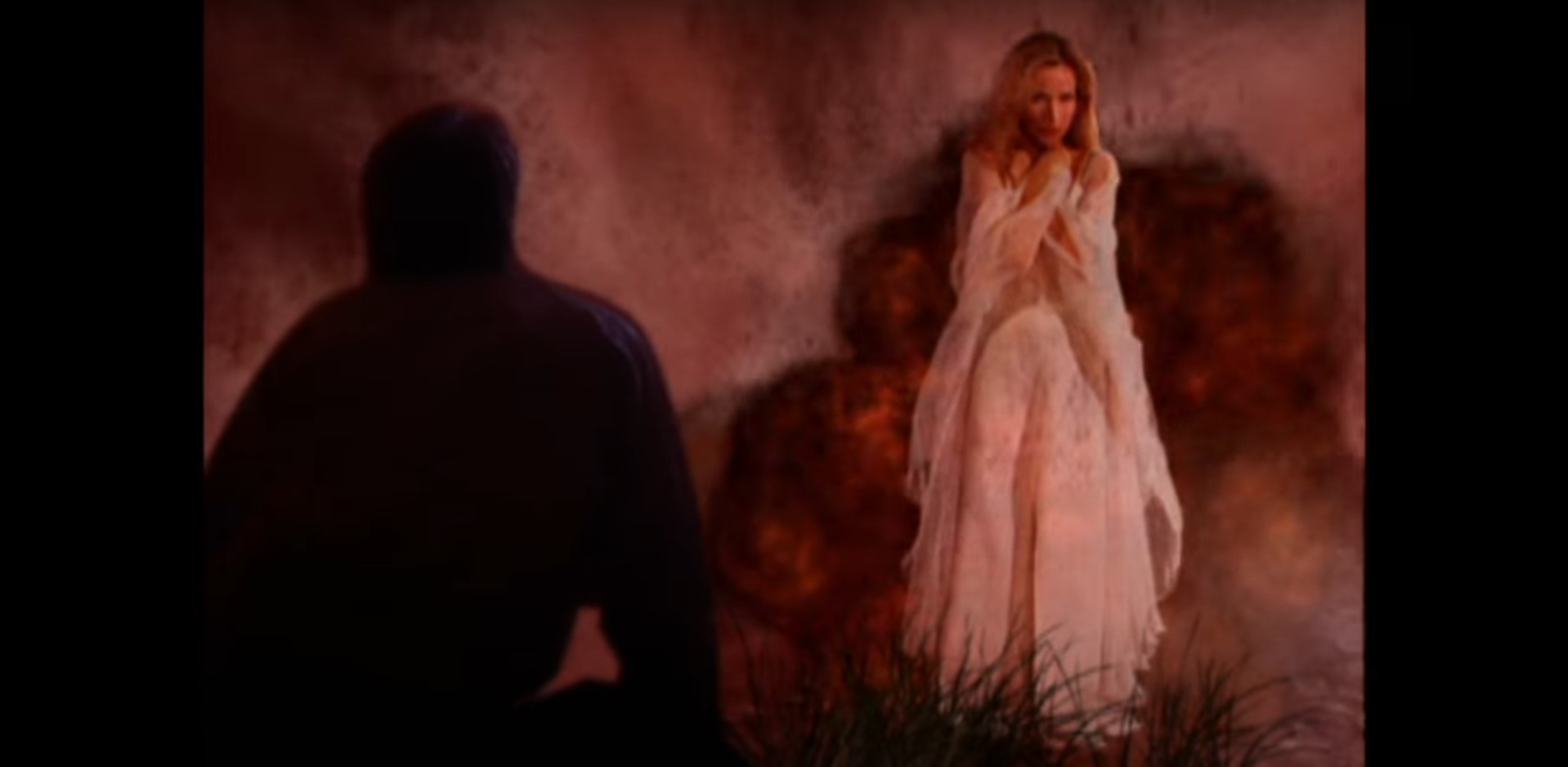
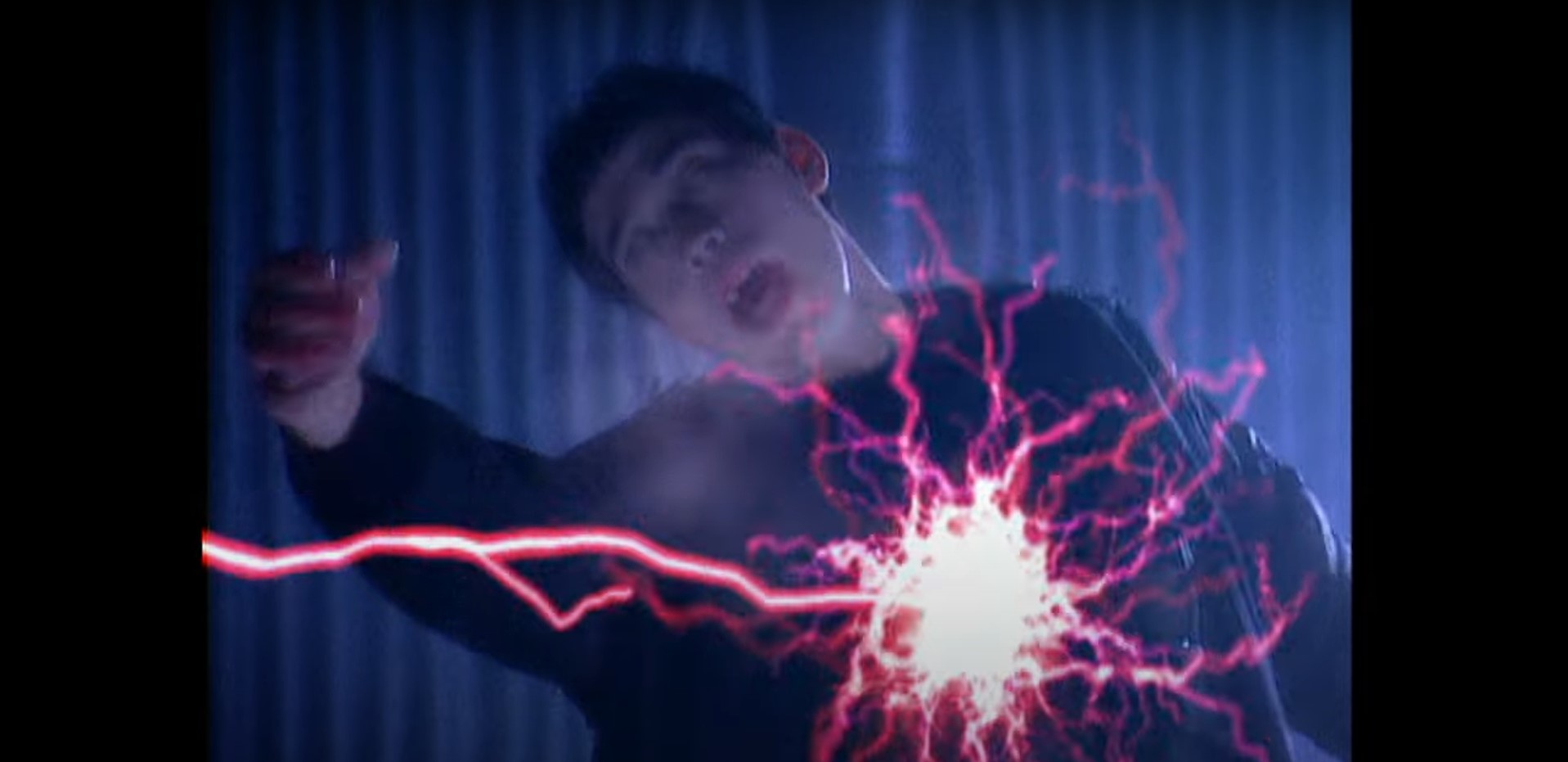
Early PlayStation graphics interlaced and spliced with live action shots of a doom and gloom purgatorial world is great way to surmise “Despiser.”  Just on the precipice of fine tuning the gaming-changing visual effects at the turn of the century, movie worlds go from tangible mattes, practical backgrounds, and hand-painted compositions to simply a green or, in “Despiser’s” case, a blue backdrop screen that allows actors to do their thespian work without anything around them to interact with or bounce off a certain emotion or reaction and visual effects artists will add-in and blend worlds, creatures, and effects in post-production.  Cook, along with Cory Collins, chiefly constructed an anhedonia embodied layer in between the plane of existence and the eternal beyond without losing a step with a seamless live actor application.  The whole film feels like the introduction prologue short in the first “Resident Evil” game, a mix exchanging edit of virtual and physical, but Cook doesn’t just switch frames between the two formats to tell the story, the imaginative animator and filmmaker adds life into his virtual landscape without being terribly clunky or be an ostentatious show his stitchwork.  Naturally with early VFX graphics, not every computer modeling element is forgiving and much of that expression lies with the antagonist, the Despiser himself.  The water-dwelling, dungeon being with limited movements and remains mostly in the shadows and for good reason with a scale that likely couldn’t be conceived or achieved in a technology that hasn’t yet be refined for the desired quality and public acceptance, and while the limited scope of the Despiser is bothersome, especially having to sit through it’s same motions over and over, Cook’s engaging story eases the pain tremendously with a suicide mission enlisted with likeable characters you really don’t want to see perish in purgatory. 

Evil Dam Trolls, holy light ammunitions, and nuclear missiles are only the tip of the iceberg in the new Visual Vengeance Blu-ray release of “Despiser.”  The Wild Eye Releasing subsidiary label prologues with the usual A/V disclaiming but the director-supervised transfer from the standard definition master of the original tape element holds up remarkably well on an AVC encoded, 1080p, BD50.  Perhaps a little radiantly effervescence, the frothy-rimmed and delicate in detail final product enhances the presentational submerged in sardonic storyline.  Besides, much of the early computer-generated imagery is smooth anyway and, in contrast, the palpable pieces often standout with deeper, textured nuances.  Bood spurts and muzzle flashes are, too, fashioned neatly into the frames.  Presented in a pillarbox full screen 1.33:1 aspect ratio, Cook balances the coloring and lighting inside the CGI world to roughly match the out-of-the-CGI-box steely tones of blue, green, and silver tints under softer shadows.   The lossless LPCM stereo mix offers up a pretty true to self fidelity that could, one day, receive an extensive channel and refining upgrade.  Machine gun fire, and there’s a ton of it, spatters off with an ingrained rat-a-tat force that’s more polished than your typical indie production whose discharges sound more like cap guns.  Dialogue plays to the makeshift setting strengths, providing echoes where needed in more cavernous locales to the muffled notes of long-range speak.  Optional English subtitles are available.  With a Visual Vengeance release you know you’re getting topnotch exclusive special features and packaging as well as archival goodies encoded onto the larger capacity disc, including two commentary tracks with director Philip J. Cook and actors Gage Sheridan and Mark Redfield on one and cult movie enthusiasts Sam Panico and Bill Van Ryn on the other, a making of “Despiser” featurette with Cook and Mark Hyde that goes deep within the nuts and bolts of it all, a handful of deleted scenes with title cards, a running blooper reel, outtakes, a storyboard to animation, the original lava-road DVD animated intro menu, a behind-the-scenes and art gallery, “Despiser” trailers, the Visual Vengeance advert trailer, and Cook’s “Outerworld” and “Invader” film trailers just beyond the fluid, cardboard cutout animated menu. But wait, that’s not all! Andrei Bouzikov’s illustrated compositional machine guns, mushroom clouds, and the four-armed Despiser, nearing Ghana-poster level but keeps in line with the filmic material, is a sight to behold on the cardboard O-slipcover. Inside, on the primary cover of the clear Blu-ray Amaray case, you get even more new art from Stefan “STEMO” Motmans that’s less tapestry art and more iconic as it is epic. The reverse side holds “Despiser'” original poster arrangement that’s simple yet effective. The disc is whimsically labeled with encircling blue, purple, green, and red evil trolls while the opposite, insert side has a folded mini poster of Bouzikov’s art, a colorful, dual-sided synopsis and Blu-ray acknowledgement sheet, and no release would be complete without the retro VHS sticker sheet. The 16th Visual Vengeance release is region free, unrated, and has a runtime of 105 minutes.

Last Rites: The soul wants what the soul wants and that is “Despiser” on a Visual Vengeance, collector’s edition Blu-ray. An out of pocket, retro-modeled, and portentous hell on Earth from beyond the stars movie too good to skip the bad parts.

The “Despiser” Collector Edition Blu-ray Is a Must Own!

An EVIL Assassin Battle Royale! “Mean Guns” reviewed! (MVD Visual / Blu-ray)

“Mean Guns” on MVD Rewind Collection Blu-ray! Purchase Here!

A Crime syndicate mid-level enforcer named Vincent Moon invites professional hired killers and syndicate affiliates to a new, urban-centric prison constructed by the organization the day before grand opening.  The reason for this elaborate invitation is simple:  all those invited have betrayed the syndicate in one way or another and are brought into the locked down prison to battle royale to the death.  The rules of the competition clarify no one will leave the premises, unless being gunned down by a rooftop sniper is acceptable to them, and three contestants must survive the game to claim the prize, the prize being a three-way split of ten million in cash.  As guns, ammunition, and melee weapons are dumped onto the battle grounds, a scramble ensues, and factions are made with 6-hour clock to kill nearly everyone in sight to live and be rich or to be slaughtered by Vincent Moon.  However, there’s no honor amongst thieves and thugs and the rules bend in a rigged high-stakes game of kill-or-be-killed.

The late director Albert Pyun was an ambitious, fast-paced, and prolific director who dominated the late 1980s through much of the 1990s with eclectic, science-fiction action.  The “Cyborg” and “Nemesis” writer-director severed the line between reality and the alternate that brought science fiction to a more grounded realism, such as we see in the aforementioned films, mostly because Pyun was always short on funds and short on time to deliver a final, finished feature.  With his 1997 actioner “Mean Guns,” Pyun severed into another layer on the existential plane and took hold of different kind of alternative reality, one that is plagued by an all-powerful crime syndicate that has its insidious hands in everything, even in the personal and professional lives and secrets of its own employees and hired contracts.  Andrew Witham wrote the script that was produced by longtime Pyun collaborating producers Tom Karnowski (“The Sword and the Sorcerer,” “Cyborg”) and Gary Schmoeller (“Hong Kong 97,” “Omega Doom”), together the trio founded Filmwerks which became the production company under “Mean Guns.” 

Pre-“Law & Order: SVU,” which would define his career in the film and television industry, rapper Ice-T worked himself in from behind a mic to in front of a camera mostly beginning in the 1990s with “New Jack City,” an urban gangster film that matched his on stage musical presence and starred opposite Wesley Snipes (“Blade”), Chris Rock (“Jigsaw”), and Mario Van Peebles (“Jaws:  The Revenge”).  Ice-T found cult status in more pulpy thrillers with exploitation “Surviving the Game” as a homeless man hunted down by a group of rich sport hunters and playing a post-apocalypse beast in the graphic novel adapted “Tank Girl,” but his gangster persona had stuck with him, leaving him the legendary rapper seemingly encircled in the same kind of urban gangster films. This is the case with “Mean Guns” as he portrays a philosophical, upper-level syndicate criminal Vincent Moon spearheading a game of wetwork for the unscrupulous wetworkers associated with his organization.  Not the most prolifically dialogued or screen timed role, Ice-T does what he can to bring Vincent Moon into the fold of much more colorful characters.  “Highlander’s” Christopher Lambert receives co-top of the bill as a psychotic assassin looking to atone for a careless sin.  Lambert is wonderfully unhinged while calculating as he integrates his “Highlander” sword skills and maniacal grin into his character of Lou, who through flashbacks had accidently killed a child on one of his hits and retrieves his biological daughter for an abusive stepfather to start life anew.  More pragmatic is Lou’s rival Marcus, stoically portrayed by Albert Pyun regular Michael Hasley (“Dollman,” “Nemesis 2”).  Together, Lou and Marcus must team up, along with the coldhearted D. (Kimberly Warren, “Blast”) and syndicate accountant turned informant Cam (Deborah Van Valkenbugh, “The Warriors’), to survive against the fray of likeminded killers.  “Mean Guns” cast fills out with Tina Cote (“Nemesis 2”), Thom Mathews (“Return of the Living Dead”), Yuji Okumoto (“Robot Wars’), Jerry Rector (“Vampire’s Kiss”), James Wellington (“The Evil Inside Me”), and introducing Hunter Doughty.

Like many of Albert Pyun’s caffeinated action films, “Mean Guns” is the epitome of vehemently slick dipped in a 90’s glaze of an alternative, unchecked free-for-all of bad hairdos, trench coats, and guns.  Lots of guns in a pre-computer-generated muzzle flash with real recoil and really bad, but good, one-liners.  What’s more surprising about this Pyun is that, unlike his previously mentioned films, “Mean Guns” is virtually bloodless albeit the shoot’em up melee violently lays waste to nearly 100 bad guys.  Pyun integrated a liberal use of blood squibs in his other guns-blazing and contentious conflicts, but “Mean Guns” takes a step back to a less severe tile like “Unkind Guns” with a comically coated film pulled straight out of a cheesy graphic novel.   For example, a combatant, thinking they just scored the briefcase full of millions, finds their head aflame and their face covered in black powder loony toon style after the opened briefcase explodes offscreen.  These moments provide a reality check to the already outlandish, yet highly entertaining, every man for himself game of death made willingly subjectable by its limited principals and Pyun style action. 

Getting ready to kill for this new Blu-ray of Albert Pyun’s “Mean Guns.”  The MVDVisual release, a part of their MVD Rewind Collection, is presented in a 2.35:1 aspect ratio, AVC encoded onto a 1080p, high-definition BD50.  Pyun and director of photography George Mooradian, who collaborated on many of Pyun’s films, such as “Cyborg” and “Nemesis” as well as standalone projects with “Bats” and “K-911,” utilized a spherical lens with steep drop-offs around the edges of the frame, almost looks like everything around the left and right sides should be falling.  IMDB states anamorphic lens but judging from the complete focus of the background and the severe oval-like nature of the frame, I’m leaning toward a spherical lens. For vast landscapes where length is nearly limitless, a spherical lens would be ideal to unify depth and main focus but since confined to a prison interior, compact hallways are squeezed in beyond a reasonable limit and often side-stance characters are warped in frame.  Details are generally fine with the hi-def pixel count that translates skin tones naturally pleasing with a few moments of corrective coloring aside from the occasional red hot temperature flashbacks that bath everything in color-varied reversal exposure.  The transfer isn’t perfect either with a couple of noticeable damage blips on the 35mm print.  The uncompressed English LPCM 2.0 stereo is a mambo-ladened, bullet-whizzing, melee-skirmishing, and depth-exacting design that’s well balanced and layered.  Dialogue remains free of audible blights and courses prominent throughout.  Optional English and French subtitles are available.  Special features, including an Albert Pyun introduction that’s encoded into the Play Film as well as the bonus content and to which had to be shot well before his death judging by the appearance of his rather healthy person in the video, includes an audio commentary by the director, a new interview with producer Gary Schmoeller, a new interview with executive producer Paul Rosenblum, and a new interview with composter Anthony Riparetti..  The original theatrical trailer is also included. I’m always elated to see the MVD’s throwback package design and the 59th Rewind Collection release continues the theme with a cardboard slipcover in mock disrepair with a corner edged torn and exposing the corner of a VHS tape cassette. Not to forget to mention the designed rental stickers to heighten the effect. Underneath the slipcase is a clear Blu-ray Amaray case with reversible cover art, each side promoted with a scaled down poster art bordered and backgrounded with a similar coloring shade. Inside, the disc is smartly pressed with a VHS-façade while the insert side has a mini-folded poster of the primary cover art. The region free release comes rated R and has a runtime of 104 minutes, which when watching the feature one can see perhaps some cuts were made for timing. Perhaps, Pyun had a longer version and had to edit and cut down for time.

Last Rites: A romping mayhem, “Mean Guns” is ballistically ceaseless and entertaining, if not also the touchstone of 90’s cheesy action, and is presented well here with in the latest, and greatest, MVD Visual Rewind Collection Blu-ray.

“Mean Guns” on MVD Rewind Collection Blu-ray! Purchase Here!

Congratulations! You Won an All-Inclusive EVIL Trip to “Terror at Red Wolf Inn” reviewed! (Cheezy Movies / DVD)

Come for the Dinner, Stay to be Eaten at the Red Wolf Inn on a Cheezy Movies’ DVD!

When riffling through her mail, Regina McKee opens a letter informing her she has won a marvelous prize, an all-expenses paid vacation at the quaint resort of Red Wolf Inn.  The young college student is escorted on a charter plane to a quiet town where the historic 1891 resort house resides and to greet her re hosts Evelyn and Henry Smith along with their grandson Baby John Smith.  Occupied with two other guests, Regina finds the old house luxuriously relaxing, her hosts cordially jovial, and the food as about as fantastically delicious as it is seeming endless when the Smiths introduce course-after-course of beautifully cut fillets and delectable desserts.  The Smiths don’t like to skip a meal.  When the other guests’ planned departure feels abrupt without them saying goodbye, Regina begins to suspect something isn’t quite right with The Smiths, something hidden behind the doors of the walk in refrigerator and is being incorporated into all those fatteningly delicious meals. 

Before Papa Jupitar and his children terrorize and cannibalize the Carter family on their way to Los Angeles through the rural, desert roads of Nevada in 1977 and even before a group of young friends stumble upon a demented family abiding by the slaughterhouse rules of people in the backwaters of Texas in 1974, there was the elderly couple and resort owners named The Smiths who entertained young women for dinner to wet their appetites by plumping those same young women into dinner in 1972.  The Late director Bud Townsend, who helmed a limited filmography in his short feature film tenure between 1970 and 1985 with such titles as “Nightmare in Wax” and “Alice in Wonderland:  An X-Rated Musical Fantasy,” took the only credited Allen Actor script and fashioned it into a dissembling macabre for the silverscreen.  Also known as “Secrets Beyond the Door,” “Club Dead,” “Terror on the Menu,” and “Terror House,” which the latter was likely the version experienced for this review due in part to cuts made, “Terror of Red Wolf Inn” is a production of Far West Films and Red Wolf Productions LLC with “Count Yorga, Vampire’s” Michael Macready producing and Allen Actor and Herb Ellis associate producing.

Would you ever answer the letter to a strange solicitation about winning an all-expenses paid vacation in a sleepy little town?  No, neither would I, but that’s what the heroine principal Regina McKee (Linda Gillen, “Black Rain”) did on a whirlwind, excited whim during a time when scammers had only the United States Post Office to importune their tricks upon the gullible.  The 1970s are obviously not as clued in or as technological savvy as the modern times of today with caller Ids, tall tell signs robo-recordings, and all the news stories and documentaries about telemarking boiler rooms; instead, we’re transported back in time where the gift of deceit can be achieved too terribly easy.  Linda Gillen, a freckled face, auburn-haired actress looks like the girl next door with a realness about her modest appearance as a leading lady and when compared to the likes and looks of Mary Jackson (“The Exorcist III,” “Skinned Alive”) and Arthur Space (“Mansion of the Doomed,” “The Swarm”), as innkeepers Evelyn and Henry Smith, the elderly couple reel in that realness even further by being not overly ruthless in their confidence game of cooking with cannibalism and instead bring warmth and hospitality that results in a slow burning dread that can be just as terrifying as an open cookbook cannibal.  The one character I struggle with is Baby John Smith played by John Neilson (“Honky”) and is method toward an unhinged grandson Regina recklessly falls for in record time of knowing him.  Baby John Smith very much plays into his moniker with childlike tantrums and glistening eye wonderment under a tall and chiseled frame of a man, but his infatuation with Regina, that ultimately plays deeper into the story and to foul up his family’s usual dinner plans, feels ingeniously forced as a device just deployed without justification as there is nothing inherently special about Regina compared to the two other lovely guests with more interesting backgrounds and appearances in characters played by Janet Wood (“Ice Cream Man”) and Margaret Avery (“Night Trap”). 

Allen Actor’s script is overall just plain ludicrous.  Who in their right mind would jet off to an unknown small town for a vacation getaway they won out of the blue from a resort that somehow, someway received their name and address?  Was it just a name randomly picked by pointing to that person in the national phonebook?  Who knows because the exact why and how doesn’t see light within the framework that has Regina be the crab who doesn’t know they’re boiling in a pot of hot water until it’s too late.  There are also two good-looking female guests who are also invited for a 2-week staycation until a party and celebration are given by the host for what is ultimately their guest’s last meal to become a meal for the remaining, unsuspecting guests and the devious entertainers.  Aside from a questionable story setup, I found “Terror at Red Wolf Inn” to be well-made and acted.  Townsend obviously knew what he wanted and how to do along with cinematographer John McNichol (“Private Duty Nurses”) to effectively turn around a fly-by-the-seams script into something far more polished on the surface and that adds that layer of suspense when our heroine discovers the truth about her hosts and her newfound love interest.  There’s also an interesting angle of letting Regine free range the house and grounds after the unveiling of anthropophagy because the whole town is essentially in own the caper or the town’s just  one big family, the character pilot who dropped off Regina and the police offer who turns out to be Baby John Smith’s brother or cousin.  Not a lot of detail explores this angle but enough is said and done to know that Regina is trapped without being shackled to her room in a pretty surreal and scary variable of the Inn’s history.

The USA thriller has many titles, been released on many formats, and now Cheezy Movies and Trionic Entertainment presents “Terror at Red Wolf Inn” on a standard definition DVD.  The 480p transfer print is an anemically graded rip from the VHS, digitized to DVD with all the excessive noise, speckled dropouts, mistracking, and blocking included and on top of the original 35 mm print that had typically celluloid grain and, perhaps, its own age and wear issues by the time this print made it to tape.  The print used for VHS appears visibly clean if removing the VHS defects but with the lower resolution, the Cheezy Movies DVD looks pale and dark with very little detail in what is basically slapping together a DVD without any augmentation and restoration to the print.  This is very conventional for this distributor so no I’m not surprised.  The English language mono mix has an enervated strength being ripped from the VHS audio track. Dialogue meets bare standard being out-front and intelligible and can be rambunctious at times with the unpropitious parties for every guest sendoff but doesn’t have space or depth around them under the brittle unbridled bitrate that offers crackling and some hissing throughout. There are no subtitles available with this release. With most of Cheezy Movies’ catalogue, only within the static menu is a chapter selection in its near-nude dressing. The region free release comes with a, supposed cut, R-rated print and has a runtime of 90 minutes. Behind the exemplar 1970’s color graded and arranged poster art for the front cover, one of Evelyn and Henry Smith looking stern over a girl laid out in bikini, inside the standard Amaray DVD case is a disc printed with the same artwork, but title and tagline cropped with just the elderly Smiths and the bikini-bottomed gal. There is not an insert included. “Terror at Red Wolf Inn” is the precursor to a family of cannibal crazies subgenre that has, for the better part of its existence, exploded rather than imploded all due in part to Bud Townsend and his modest directorial.

Come for the Dinner, Stay to be Eaten at the Red Wolf Inn on a Cheezy Movies’ DVD!

Prancing Forest EVIL Will Seduce You to Death! “Devil Times Two” reviewed! (SRS Cinema / DVD)

“Devil Times Two” on DVD from SRS Cinema

A forest encircled convent hidden away from the Milan population undertakes an occult responsibility to keep bloodthirsty and callous demons from entering the human world.  On the verge of retiring, Father Ernesto Taro, a once formidable force for good who exorcised a powerful demon decades ago that cost the lives of many in his fellow cohort except for Mother Dolores, takes on a younger understudy to be his replacement, the ambitious Father Chuck Bennet.  Father Taro and Bennet were summoned by Mother Dolores when grisly body of a young hiker is discovered.  A pair of former Nazi sadists turned Netherworld demons come to Father Bennet in a vision and are suspected to be the carnage culprits.  Souls are at stake and the world is on the brink of falling into darkness as the Returnees are only the right hand of a more profound evil itching for complete and utter omnipotence. 

“Devil Times Two” is an Italian-made, demonology-contextualized horror from Italy writer-director Paolo del Fiol.  Having purveyed grindhouse horror in anthological means with previous films “Connections” and “Sangue Misto,,” del Fiol branches out into his solo feature-length narrative set in the 1970s as a faux lost film recovered onto VHS from the only known syndicate televised program on Telelaguna to account the terrible tale full of profane hostilities, sexual stimulating supremacy, and, of course, gore in the interlacing recognition between the popular devil, demon, or hell on Earth inspired movies and the obscenities connected to eurotrash and sleaze movement of the 70s topped a hint of Japanese adulation, a motif heavily sprinkled into the film carried over from the director’s previous work as well.  Underscored by the tagline Quado le Tenebre escono al Bosco, or When Darkness comes out of the Woods, “Devil Time Two” once again pits religious good versus irreligious evil in this Himechan Movie Production self-produced by Paolo del Fiol.

Characterized as the titular pair, Returnees Jasmine and Umeko are the ethereally evil duet of diabolical detriment who seemingly float in and out of the material world as alluring succubi, seducing prey into their web of demonic lust and languish.  Some turn up grotesquely inside out while some others disappear, saved for later for special ritualistic planning.  Erika Saccà, an Italian fitness instructor in her debut role, plays the blonde Returnee Jasmine in a sleeveless, lowcut gown and with nearly ever kill, exposes and massages her augmented bosom with underboob scarring in a change to showoff her toned physique, and Reiko Nagoshi (“Re-Flesh”) wears a kimono without any unveiling of skin but does a bit of thrust-damage on her quarry that initially and inexplicable appears to be a strange phenomena when everyone in the scene is a woman but becomes apparent there’s something unholy and very “War of the World’s” alien under that traditional Japanese garb.  Saccà and Nagoshi wear many hats in this product but also don’t have the dialogue to hoist their demonesses higher.  The dialogue is left with the trio of convent gatekeepers in Father Taro (Enrico Luly), Father Bennet (Paolo Salvadeo, “Occultus”), and Mother Dolores (Amira Lucrezia Lamour, “Re-Flesh”) in what becomes a deeper understanding of their backstories around Father Taro’s deadly bittersweet exorcism decades ago, his on the sly and subtle affection for Mother Dolores, and Father Bennet’s questionable rise to supersede Father Taro, laying a foundation of doubt within the current gatekeeper.  While I like the contrasting dynamics of the two factions within the cast, I found the discourse overly bulk and tedium between the trio of piety that strung on scenes way too long with way too much talk that it ultimately suppresses the pacing when every little detail has been uncovered and explained. All the casted bits in between are slaughter fodder with Denise Brambillasca, Alessandro Carnevale Pellino (“The Wicked Gift”), and Martina Vuotti in non-defying death roles.

Paolo del Fiol’s unaccompanied and independent deluge of demonian debut has doses of phantasmagorical imagery sublet by its more shocking and odd immolation of incognizant individuals unlucky enough to cross paths with the Returnees. Likely to have never seen, Fiol’s film very similarly compares to James Sizemore’s “The Demon Rook” by creating unique mythos not reliant on a religious bedrock and use independency as an advantage for showcasing practical makeup and effects and while “The Demon Rook” would overwhelm with prosthetic made-up characters, “Demon Times Two” focuses attention more on the guts of the matter, the gore, but though not pernicious enough to the story, the eyeball sucking, throat lacerating, or intestine exposing bloodshed is prosaic panoply that won’t outshine in the sea of subgenre synonyms. Aforementioned dialogue scenes can be a slog to get through with many exchanges overstaying its course between the pious gatekeepers, especially between Father Taro and Dorlores, and that hurts the pacing to pick up the gore more frequently for more potency. Instead, exchanges are more elucidations that go around-and-around to where we’re lost on the mounting reveal of the Returnees’ mission and master which turns out to be visually more stimulating and visceral in the last ten minutes than in the first 100 minutes of runtime. The backlot lore is Fiol’s greatest achievement simulating a 70’s style grainy movie caveated as only broadcasted once on December 8th, 1983 (a few days before this reviewer’s birthday) and never seen again until it’s VHS recording is recovered.

Under a pretense of being a buried lost film, under the tribute of a grainy and scratched psychotronic celluloid, and under the falsity of genuine huge knockers, “Devil Times Two” is twice baked into a classic contemporary dish served by SRS Cinema on DVD. Arriving on the SRS Cinema: Extreme and Unrated Nightmare Fuel label, “Devil Times Two” is nothing short of being a modern-day emulator of once was with suitable grain overlay, a hazy, if not washed, overcast grading, and trope-laden atmospherics with dense fog, unnerving dissonances within earshot, and blood brilliantly cut with pseudo Telelagua commercial programming of brief adverts until returning to regular scheduled programed checked in and out by a gondola and it’s gondolier in dusk silhouette. Presented in a pillar box 1.33:1 aspect ratio, the fuzzy and non-delineated details are not a punch to the salient gut as the intent here is to be obscure, opaque, and ominous in nature and in technique bathed in 480p. The Italian PCM is the exact recreation of a time period post-dubbing with the actors re-dialoguing their performances as it was common practice in most motion picture industries, especially Europe, at the time. ADR is clear but not necessarily clean to recreate that shushing and crackling of an older recording. The subtitles are also forced or burned into the film with the sole Italian audio option. Bonus content includes what is called Backstage, a raw filming look into the production shoots and behind-the-scenes footage with no real direction or cosmetics, a photo gallery, a trailer with English subtitles, and other SRS Cinema released trailers. The SRS Cinema DVD front cover resembles mock-70’s, thick-red font with a bare woman’s back dressed in a painted Satanic symbol within the border of a VHS-esque rental casing with rental stickers. Inside the amaray case is a pressed disc with an extreme close up and crop of the same front cover with no insert in the adjacent slot. Pacing burdens this release, especially in its near 2-hour runtime with a clock-in at 114 minutes which is approx. 24-minutes too long in my opinion and the film comes not rated and has region free playback. No matter how much arcane the content is, or how grotesque the horror show, or how much perversity and skin can be unclothed, “Devil Times Two” has difficulty retaining a flow of fascination in a rather windbag approach to a rather devilishly good salvo construction.

“Devil Times Two” on DVD from SRS Cinema