After EVIL Was Executed, A Movie Was Released! “Monster” reviewed! (Second Sight Films / Blu-ray)

Own Second Sight Films’ Blu-ray of “Monster.” Order Here!

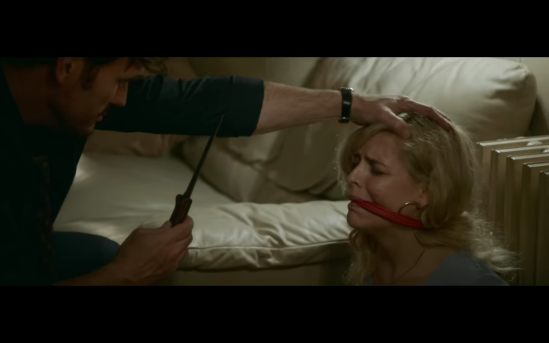
Aileen had big dreams and big ambitions to be someone in life.  Growing up, she did what she had to do to get ahead, even if that means selling her body at a young age when she had no advantages unlike her peers.  Now getting longer in the tooth, Aileen still unhappily hooks to live hand-to-mouth, day-by-day, just to survive cruel circumstances.  When she meets Selby, a young, lonely lesbian looking for friend, the two become attached at the hip becoming exactly what each other need at that moment.  The two become intwined was not only friendship but passion as Aileen promises to quit the streets and make a better life for her and Shelby but when one of the last nights of prostitution winds up almost killing her and her unloading bullets into attacker, Aileen succumbs to a taste for murdering sleazy men in order to satisfy Selby’s love.  How far will Aileen go to achieve her dream?

The sad story of Aileen Wuornos life is much more than the serial killer segment she’s most infamous for.  Wuornos unlucky dealt hand could be considered the archetype of white trash narratives being born to teenage parents, practically raised without role models or stable parents, sexual and physically abused by those close to her, impregnated during the middle of her high school teen years, kicked out of her grandparents’ house, and learned to survive through the old profession of prostitution.  Yet, all that tragedy is not in the story that is about to unfold before you in “Monster,” the 2003 biopic thriller from “Wonder Woman” director Patty Jenkins.  Mostly authentic with bits and pieces adjusted to protect individuals from the public eye, “Monster” accounts for what Aileen is responsible for, the multiple slayings of clients who were accused by Aileen as rapists and abusers during their sexual transaction.  Also touch upon, and in a very heart-rending sense, is Aileen’s love for another woman and how their relationship crumbled under the stress of life’s tremendously unfair hard knocks.  Jenkins writes-and-directs the film with Wuornos’ blessing under the multiple production umbrella of Media 8 Entertainment, New Market Films, Denver & Delilah Films, K/W Productions, DEJ Productions, and, in association with, MDP Worldwide. 

To play labeled America’s first female serial killer, Patty Jenkins sought after Charlize Theron who, at that time of the early 2000s, was hitting the height of her career having starred alongside Keanu Reeves and Al Pacino in “The Devil’s Advocate,” Johnny Depp in “The Astronaut’s Wife,” and Mark Wahlberg in the remake heist film “The Italian Job.”  Theron, a stunning woman who became the epitome of glamour and beauty in the eyes of Hollywood, put herself through a transfiguration for the role of Aileen Wuornos.  Gaining weight and capturing Wuornos mannerisms and thoughts-process to play, as close as possible, the woman who would go on to murder 7 men in late 80s, early 90s.  Play is perhaps too broad of term for Theron who depicts a drastic overhaul of her looks and her idiosyncrasies to recreate Wuornos in the flesh and in the mind, creating a lifelike illusion of Wuornos on screen that garnered her an Oscar.  Theron’s costar, however, did not dress the part of Aileen’s real-life lover who opted to remain in the shadows of a private life, disconnected from her past sordid by true life crime.  That costar is none other than Christina Ricci.  The “Addams Family” and “Sleepy Hollow” star adds a slender, petite, fictional companion as lonely-lesbian Selby Wall against, who we know more about today, was a heavier set and butch woman that was Aileen’s romantic partner, Tyria Moore.  Jenkins invokes a sense of loneliness between the two women who find each other when they need each other the most, at the lowest point in their lives, and when their journey together seems hopeful, bright, and prosperous, life’s muck and judgement comes raining down life hellfire.  Aileen’s series of johns make up the rest of the cast and a few have familiar faces, such as Pruitt Taylor Vince (“Identity,” “Constantine”), Scott Wilson (“The Walking Dead”), Marc Macaulay (“Wild Things”) and Lee Tergensen (“The Texas Chainsaw Massacre:  The Beginning”) with Tim Ware, Brett Rice, Marco St. John, and the Oscar winner Bruce Dern (“The Burbs’) rounding the cast out. 

Having been released over two decades ago, “Monster” still retains relevance even when the real-life Aileen Wuornos no longer breathing after her execution in 2002.   “Monster’s” focus isn’t about the episodic killings of a laundry list of varietal behavioral clients who either seek sex out of loneliness or seek it for other devilish, wicked means as Patty Jenkins hones in on a more strung along motif of loneliness that connections not just our principal characters but, in a way, most of the Aileen’s men, the clients.  Baked and weathered by the hot Floridan sun and about as vocally turbo-charged as they come, Aileen isn’t the most beautiful street girl, and not even the most pure and refined soul, but provides a service, a service of warm skin, closeness, and pent-up relief.  In turn, that same service becomes her jailor and her undoing, shackling and imprisoning her growth form an early age, stemmed by a childhood she didn’t have, that didn’t allow her to become somebody and to make something of her downtrodden existence.  The murders are in a backseat, second fiddle to that blossoming love story between her and Selby that engulfs and drives the violence that seeks no end.  Itty-bitty details shine through into Aileen’s humanity, as a perk of the person rather than the monster she’s perceived after the fact, after the trail, and after her capitalized death.  Patty Jenkins sought to make an homage as the reason rather than just the basic news coverage of Aileen Wuornos and achieved eye-opening success.

Second Sight Films invests into a new Blu-ray release with new content encoded onto AVC, 1080p resolution, 50-gigabyte disc, scanned in 2K from the original 35mm film and presented in a 1.85:1 widescreen aspect ratio.  What’s impressive about the Second Sight release is retaining the natural looking grain of celluloid film.  Hues are approached organically without an overabundance of grading and this release sees to preserve “Monster’s” hard-edge and enough definitional nooks-and-crannies, especially around the weathered skin and fibrous features of Aileen Wuornos biological appearance.  The Blu-ray comes with two lossless, English audio options:  DTS-HD Master Audio 5.1 and a LPCM stereo 2.0.  Both offers true fidelity through the layers of range and depth but whichever A/V setup you have will dictate the format you choose.  However, the Stereo option is a good, well-rounded, full-bodied option for all as “Monster” is more a talking narrative than a caffeinated spear of action, but the rear and side channels due funnel a nicely diffused environmental ambience of highway traffic and some supplementary crowd noise underneath a well-verbose and amply clean and clear dialogue track.  New, exclusive content line the special features option on the fluid menu, such as a new interview with Patty Jenkins Making a Murderer that goes into depth about her relationship with muse Aileen Wuornos through conversation and letters as well as Charlize Theron’s transformation and performance, a new interview with producer Brad Wyman Producing a Monster, and a new interview with Director of Photography Steven Bernstein Light from Within that captures a late 80s-early 90s without infusing artificial concealer.  Other supplementals available are an audio commentary with director Patty Jenkins, actress Charlize Theron, and producer Clark Peterson, the evolution of the score featurette, deleted and extended scenes with Patty Jenkins commentary, a making-of featurette that bases the film out of being a true story, and the original theatrical trailer.  For a standard Blu-ray release, Second Sight provides a ton of content; however, there are no physical goodies, nor does the standard release come in a rigid box.  Inside a green Amary case, the single sided front comes, in what has become a prolonged motif amongst Second Sight releases, with a two-tone of black and blue or black and purple and austere cover art of Theron’s portrayal of Wuornos looking worn down.  The UK certified 18 release for strong violence and sexual violence has a runtime of 109 minutes and is hard encoded region B locked so you’ll need either a region B or region free player for playback in the Americas.

Last Rites: A beaut of a Blu-ray for the now over 20-year-old “Monster” that sees new content and insights that cast less shade over a troubled existence that inflicted real life killer Aillen Wuornos. Patty Jenkins and Charlize Theron do the story justice and Second Sight Films just follows suit with enhancing its story told quality.

Own Second Sight Films’ Blu-ray of “Monster.” Order Here!

EVIL Expressionism in “The House That Jack Built” reviewed!


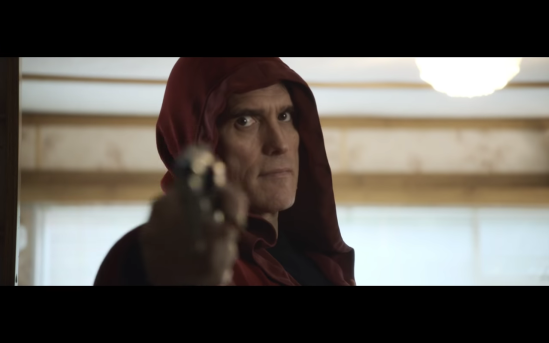
Over the span of 12 years from the 1970’s to the 1980’s, wannabe architect Jack is an accomplished engineer living in serene of the Pacific Northwest and with a lack of empathy and an internal repository of compulsive and narcissistic traits, Jack is able to be a highly successful and intelligent serial killer who seeks mastering his craft as highly artistic and divine. Over the same period of time while butchering nearly countless people, including his own family, Jack obsessive compulsive disorder not only assists his longevity of his creative expression, but also dwindles down another social expected goal of designing and engineering his own home isolated at the edge of a lake. As the body count rises, Jack compulsive restrictions loosen and he begins taking greater and greater risks of being caught. Jack narrates his voyage of viscera and macabre to a literary listener in a back-and-forth to explain and justify his murderous methods and craft.

Unlike anything you’ve ever seen before, auteur writer-director Lars Von Trier (“Antichrist” and Nymphomaniac Vol. 1 and 2″) crafts his very own artistic expression delineation with the 2018 “The House That Jack Built,” a two and half hour venture into the deconstruction of a serial killer’s personality traits as well as the flourishing experience of murder through years of repetitive brush stroke practice and self-preservation knowledge done in a self-portrait form. Graphically violent and supercharged with coarse and visually stimulating visual effects and editing, all the hallmarks of a Von Trier film, “The House That Jack Built” blends an abundance of fine arts with religion and mythology that develops into a soaring renaissance piece of art in the modern times and would inspire the most closeted psychopath to revel themselves in a heap of aesthetic and picturesque horror.

As if Matt Dillion isn’t already an entertaining and diverse actor, the “Wild Things” and “Crash” star excavates a vile and dumb luck Jack from deep within, crafting the character as so smart, he’s sometimes stupid, but with each murder subsequently gone scot-free, the confidence builds, the trade becomes tangible, and the narcism washes over ever so slightly. Dillion arcs Jack so well that the character no longer becomes the villain but an anti-hero of sorts as rooting for the slaughtering of innocents becomes a painful necessity rather than an empty desire. The titular character converses with a mysterious companion named Vergel in a way as if Jack was anecdotally telling his own biopic. Vergel symbols multiple conceptual and tangible beings, from Jack’s moral conscious to Vergil, the Augustan period Roman poet, Vergel, or Verge as Jack simple calls him, crudely interviews and thoroughly analyzes Jack’s so-called art. Verge’s off-screen presence is heartily brought to life by Bruno Ganz, an actor who once portrayed Adolf Hitler in 2004’s Academy Award nominated film, “Downfall.” Ganz takes an expected backseat to the title carrying Jack, but doesn’t succumb to being underneath’s Jack’s critical and narcissistic viewpoints, making Verge a level playing field character alongside Jack. Ganz, who passed earlier this year, is equally masterful under a relatively underwhelming role paired with pure evil and while the contrast’s magnitude should be starkly poignant, Jack and Verge are equals in the eye of the viewers and that’s how powerful Lars Von Trier’s filmmaking can really be. Jack’s chaptering stories include co-stars such as “Kill Bill’s” Uma Thurman, Siobhan Fallon Hogan (“Men in Black”), Sofie Gråbøl (“Nightwatch”), Riley Keough (“It Comes At Night”), Jeremy Davies (“Ravenous”), and David Bailie of “Pirates of the Caribbean” franchise.

In my experience with film from Lars Von Trier is that those who patron his films have polarizing affections; you either love his work or you absolutely loath his style of film. My experience consists of only one, yes one, of projects and that being “Antichrist,” and while I was not entirely enthralled with the film’s sexual themes, “The House That Jack Built” provided a plethora of philosophies to pick apart and to continue to digest even way after viewing. For those who might forego themes, philosophies, and theologies, many will bore themselves through the filmmaker’s American serial killer thriller for over two hours long, clocking in a 153 minutes, and finding themselves disoriented in a segmented tale that’s chaptered by five incidents and an epilogue over a 12 year span. Others will bang their hands over Trier’s use of repeat scenes, purposefully rolling them slow and in a calm disposition, allowing Jack to deliberate how and why he does what he does in his discussions with Verge, but these soft touches are nice pillow talk touches to the main, punchy action of Jack’s self imposed duresses under his murdering moniker, Mr. Sophistication, that palpably places the narcissistic cherry on top of misanthropic persona. The devil in the details are punchy themselves and a keystone to Trier’s overall narrative to explore the impulses of a killer’s mind. “The House That Jack Built” is a great accompaniment to shows like “Mindhunter” on Netflix or other films like “Silence of the Lambs” where serial killers vocalizes intricacies of their niche trade is very fascinating for morbid loving sympathizers.

Umbrella Entertainment releases “The House That Jack Built” onto Blu-ray home video. The full HD, 1080p, region B, uncut disc is presented in a widescreen, 2.35:1 aspect ratio, and is fully operational in all sense of the phrase with a generous color palate lacing through more natural lighting than assumed there would be in comparison to “Antichrist,” but the raw tone by Manuel Alberto Claro debases the stylized techniques of “Antichrist’s” Anthony Dod Mantle to virtually a hardline and graphic depiction of reality in the 1970’s. The English language 5.1 DTS-HD Master Audio is respectfully verbose and robust. Trier’s loquacious exposition is actually great exposition of the crystal clear kind and the director shows off his depth and range, splicing edits together like a madman that still convey the overall theme without disregarding audio accounts. While technically sound, the Umbrella release comes regretfully with no bonus features. Brilliant, musing, and intense, “The House That Jack Built” is a Lars Von Trier legacy film breathed with unadulterated violence and sharp with superb writing potent that’s potent on every level. Trier just gets better and better with every film and look forward to his next project!

The House That Jack Built on Blu-ray!

A Hell Ride in the Recreational Evil! “The Toybox” review!


An estranged and recently widowed grandfather purchases a used RV to take one last family road trip with his two sons, daughter-in-law, and granddaughter to rekindle a broken relationship. On an isolated stretch of desert highway, the family decides to pull over to assist two stranded motorists and offer them a ride to the next town. Suddenly, the RV veers out of control, steering itself to the middle of the dangerously sweltering desert. The group now finds themselves all stranded and alone with a RV that outputs a strange vibe, displaying vividly horrific secrets inside the RV’s enclosure. One-by-one, the RV kills them off and soon they realize that their ride to family fun is no more than a reincarnated recreational vehicle with a long lineage for death and thirsty for new blood.

Fan crushes are a strange phenomena. Once an actor or an actress imprints their image, their voice, or their one-time portrayal of a charismatic character onto you, the unexplainable captivation never releases the firm grip around the psyche. Denise Richards has had a long impression on this reviewer, resulting in a severe case of fan crush. The Illinois actress won my heart as the determinedly beautiful starship pilot Carmen Ibanez in Paul Veerhoven’s “Starship Troopers,” one year before her anticipated and unforgettable champagne popping nude scene in the convoluted thriller “Wild Things.” Twenty years later, Richards, an ageless beauty, co-stars in the Tom Nagel supernatural horror, “The Toybox.” Nagel (“Clowntown”) directs his sophomore film penned by screenwriter Jeff Denton and, together, the pair of filmmakers toy with and present an idea of a detestable serial killer leaving his twisted soul in the under the rusted hood of a his torture chamber, a beat up old RV camper. A killer RV story that sounds to be right up horror-comedy’s alley is actually a rather earnest narrative that has a solid kill count with an innovative, outside the box villain and a no one is safe attitude.

I’ve already mentioned that the goddess Denise Richards co-headlines “The Toybox” and though I have yet to experience her more recent work over the years, “Valentine” was the last horror film that I can recall with Richards in the cast and her role in Nagel’s film as a loving, yet undisciplined mother and wife in “The Toybox” puts her at the opposite spectrum of her roles in the late 90’s/early 2000’s career. Still, the now recently re-married mother of two still has her unrivaled hots and still has her acting chops as a leading lady despite the lack of Hollywood glam and stardom. Her co-star, Mischa Barton, has been an upcoming figure in the b-horror community. “The O.C.” actresses has starred in a string of horror films in recent years such as “The Hoarder,” “L.A. Slasher,” and “Apartment 1303 3D.” Barton tackles a tomboy Samantha whose picked up, along with her brother, by the RV traveling family and while Barton has a fine performance, she doesn’t quite sell the intensity as a final girl. Greg Violand (“The Devil’s Toy Box”), Matt Mercer (“Contracted”), David Greathouse (“Yoga Hosers”), writer Jeff Denton, director Tom Nagel, and introducing Malika Michelle round out of the remaining cast.

“The Toybox” loosely aims to unravel the inner turmoils of the characters mainly focusing around the estranged relationship of the father and his two sons. The trio can’t quite shake the secret inducing uneasiness that boils inside their broken relationship, making a situational cakewalk for the killer RV to pit them against each other as a deranged therapy session to unsheathe their kindred issues. The bickering and the blaming hurts those they love the most around them first, a very relatable and unfortunate circumstance in beyond the sensational borders of movie magic. However, no matter how much movie magic Nagel constructs to gore-out “The Toybox,” a stiflingly story rears an ugly head via undercooked characters pivotal in being the heart of the narrative. Samantha, Barton’s character, has soft, buttery edges that don’t take shape to ultimate purpose for being a focal point and the same can be said for David Greathouse’s serial killer character Robert Gunthry whose RV-inhabiting backstory is whipped swiftly a single anecdote.

Skyline Entertainment and Steel House Productions present Tom Nagel’s “The Toybox” onto Blu-ray home video in high definition 1080p and a widescreen, 2.39:1 aspect ratio. Image is quite sharp despite lacking vivid coloring and going more for a dusty western-horror, exhibiting the rocky arid landscape of the pacific coast. The English Dolby Digital 5.1 audio track is nothing to write home about, but offers a clean dialogue track, ample ambience, and balance. Depth’s slightly weak, but won’t hinder the experience. Bonus material on the single layer BD-25 includes a behind the scenes of various takes throughout production, the theatrical trailer, and a feature commentary with cast and crew. “The Toybox” is no child’s plaything. A RV serial killer with the homicidal motivations stemmed from pure evil and, in a fair opinion, only director Tom Nagel could have poised a coherent film without making it out too, for a lack of a better word, campy and that’s not my weird obsession with Denise Richards talking.

Oscar Wilde’s Not-So-Evil…”The Canterville Ghost” review!


An ambitious physics professor Hiram Otis obtains a research grant that requires him to study in England, pulling his wife, daughter, and two young boys from their Indiana home into a strange new world. In an age of obsolete aristocracy, the Otis family is able to afford rent at the grand Canterville Hall, a legendary castle with an infamous tale of death and suspicion that also might have resulted in being an affordable estate for the American family. Legend records have it that the lord of the castle, Sir Simon de Canterville, had subsequently killed his wife due to his obsessions and became the victim of his wife’s family spiteful vengeance by being chained to a dungeon cell. For 400 years, Sir Simon remained in that cell and his ghost haunts Canterville Hall, but despite their beliefs in the supernatural, the physics professor and his wife can’t see the ghost and only their teenage daughter and two young boys are able to witness him roam the halls, haunting those who live within the castle walls.

Every once and awhile, we’ll thoroughly review a light-hearted fantasy, horror, or sci-fi film and since we’re hot off the heels of the review for Wes Craven’s “Summer of Fear,” the made-for-television train might as well keep chug-chug-chugging alone with the 1996 TV movie adaptation of the Oscar Wilde novella, “The Canterville Ghost.” Distributed by ABC, the Sydney Macartney (as Syd Macartney) directed and Robert Benedetti teleplay written installment tries to differentiate itself and standout amongst a plethora of adaptations that span across the globe, but the American Broadcast Company, a subsidiary of the great and powerful Disney, aimed to separate from the masses by adding star studded power and the result brought a rejuvenation to the ye old tale over two decades ago.

The big name headliner is none other than Captain Jean-Luc Picard himself, Patrick Stewart, two years after his 7-year stint on Star Trek: The Next Generation. Stewart, who co-produced the film, adds his theatrical flair and is absolutely brilliant shaping drama monologues into dense thickets that define Sir Simon de Canterville’s ghost, but there’s an issue; the problem doesn’t lie with Patrick Stewart, but with how Benedetti’s teleplay expos from the story as a continuous, if not slightly jumbled, stream of old English that just feels like rambling. To alleviate that strain is Stewart’s co-star Neve Campbell to add a softer, glassy-eyed touch to the story with a pinch of plain jane American girl insecurities, characterized in Wilde’s story as Virginia Otis. Perhaps in the beginning portion of the height of her career, Campbell finds herself between “Party of Five” and hitting scream queen status as Sydney Prescott in “Scream,” but the “Wild Things” actress wasn’t that sultry or that chased in “The Canterville Ghost” who only took upon an annoyed teenage girl persona, wishing her life was back in America up until the mysterious spirit of Sir Simon de Canterville allured a spark into her dull life. Alongside Stewart and Campbell, Daniel Betts, Ciarán Fitzgerald, Raymond Pickard, Cherie Lunghi, Donald Sinden, Joan Sims, and the late Edward Wiley, who died shortly before the film’s premiere, costar.

Going into “The Canterville Ghost” was nothing short of knowing nothing other than the fact the Patrick Stewart and Neve Campbell were in the lead roles of a Disney backed, family film and to be completely honest, Macartney’s vision completely underwhelms. Along with the verbose nature of the script-to-teleplay alterations, the magical supernatural portions are inarguably cheap, even for television. The simple superimposing of Sir Simon de Canterville offered no stimulation as the the two scenes just didn’t splice together well to seamlessly make the grade. Firecracker explosions and party store cobwebs dilute even thinner the already slim pickings of special effects that top when Virginia Otis crosses over into a dense fogged ghostly realm thats chopped, cropped, and edited with such disorganization, the entire scene feels more lost than Virginia trying to escape the other side back to the living.

Sydney Macartney’s “The Canterville Ghost” is presented for the first time ever on Blu-ray courtesy of the U.K. distributor Second Sight Films. The Blu-ray is presented in the Academy ratio of 1.33:1 with 1080p resolution on a MPEG-4 AVC BD 25. Second Sight’s release will have the best looking version of this film, if the quality is anything like the screener sent to me, with a strong color palette, minor digital noise, and rich in great detail; so detailed in fact that the blemishes on Neve Campbell and Daniel Betts can be seen. The English DTS-HD audio track is lively, but not entirely boastful with more thematic and dramatic elements. Dialogue track is clean and clear and the score by “Dead Heat” and “Tremors” composer Ernest Troost augments his fairy tale rendition into the mix. Bonus material includes new interviews with director Sydney Macartney and producer-writer Robert Benedetti. Second Sight’s presentation of Hallmark Entertainment’s “The Canterville Ghost” has strong Blu-ray technical potential, but despite the big names of that time period and a visually stimulating setting, the fantastic adventure through a cursed ghost’s melodrama and a bored young girl’s tenure of self discovery unfortunately didn’t rivet with excitement or wonder, losing steam with it’s important message that life is more than being in a bubble of stagnant disappointment and guilt.