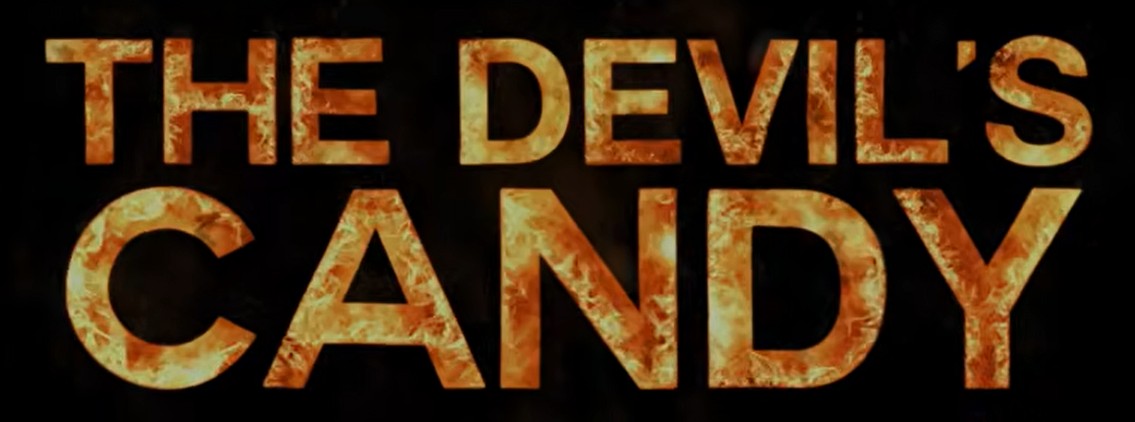
EVIL Has a Sweet Tooth for Children! “The Devil’s Candy” reviewed! (Second Sight Films / 4K UHD and Blu-ray)

“The Devil’s Candy” 4K UHD and Blu-ray Is Now Available from Second Sight Films!

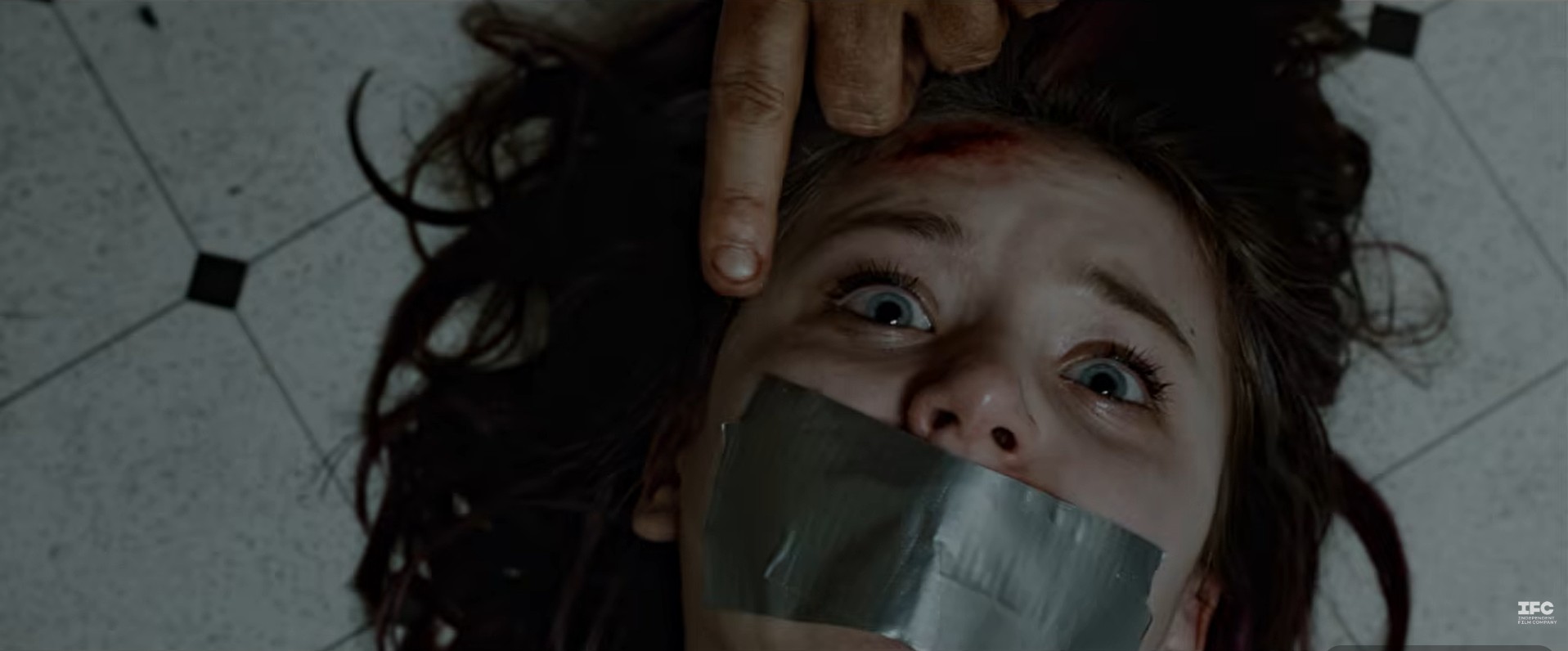
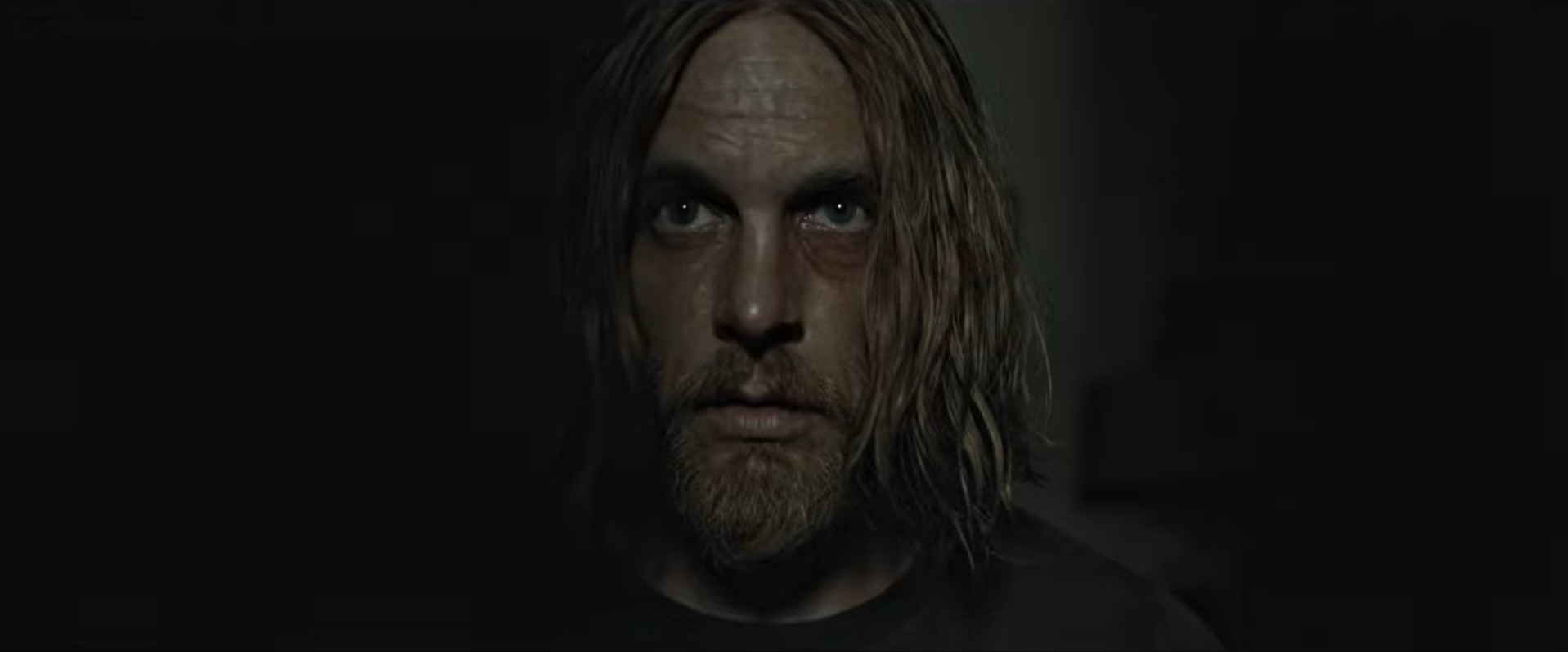
A financially struggling, heavy metal inspired painter buys a bargain country house with an adjacent studio to work toward commissions and to home his wife and daughter in a bigger, lighter space.  When an unstable man with a child-like intellect disability arrives at their doorstep, wanting to come home to play his electric axe guitar to drown out the Satanic chants he continues to hear, he becomes the beginning of the family’s nightmare in their new home.  The man is a child serial killer, an unwilling agent of the Devil, who believes children are the Devil’s candy and when he can’t muffle out the continuous chanting in his ear, he must obey the commands to supply his master with more hacked up adolescence.  A couple of near miss encounters with the painter’s young daughter put the family on edge and into police witness protection but that won’t stop him from coming for her.

Sean Byrne, the Australian filmmaker who debuted with the insane prom queen killer in “The Loved Ones” and who turned Jai Courtney into a shark-obsessed serial killer in “Dangerous Animals,” directed “The Devil’s Candy” in between those two productions and is his only solely U.S. produced film to date.  The 2015 film that mirrors the Satanic Panic era with its heavy metal and its unspecified yet strongly suggested 1980’s motif is written by Byrnes to symbolize the contentious efforts to divide family bonds in the best and worst of times with the killer representing the invasive and dangerous wedge when the painting father suddenly develops a muse for his work, losing track of time while working and neglecting his family responsibilities.  “The Devils Candy” is produced by Jess Wu and Keith Calder (“You’re Next,” “The Guest”), Chris Harding (“You’re Next,” “The Guest”), and Roxanne Benjamin (“Southbound”) under HanWay Films and in association with Snoot Entertainment.

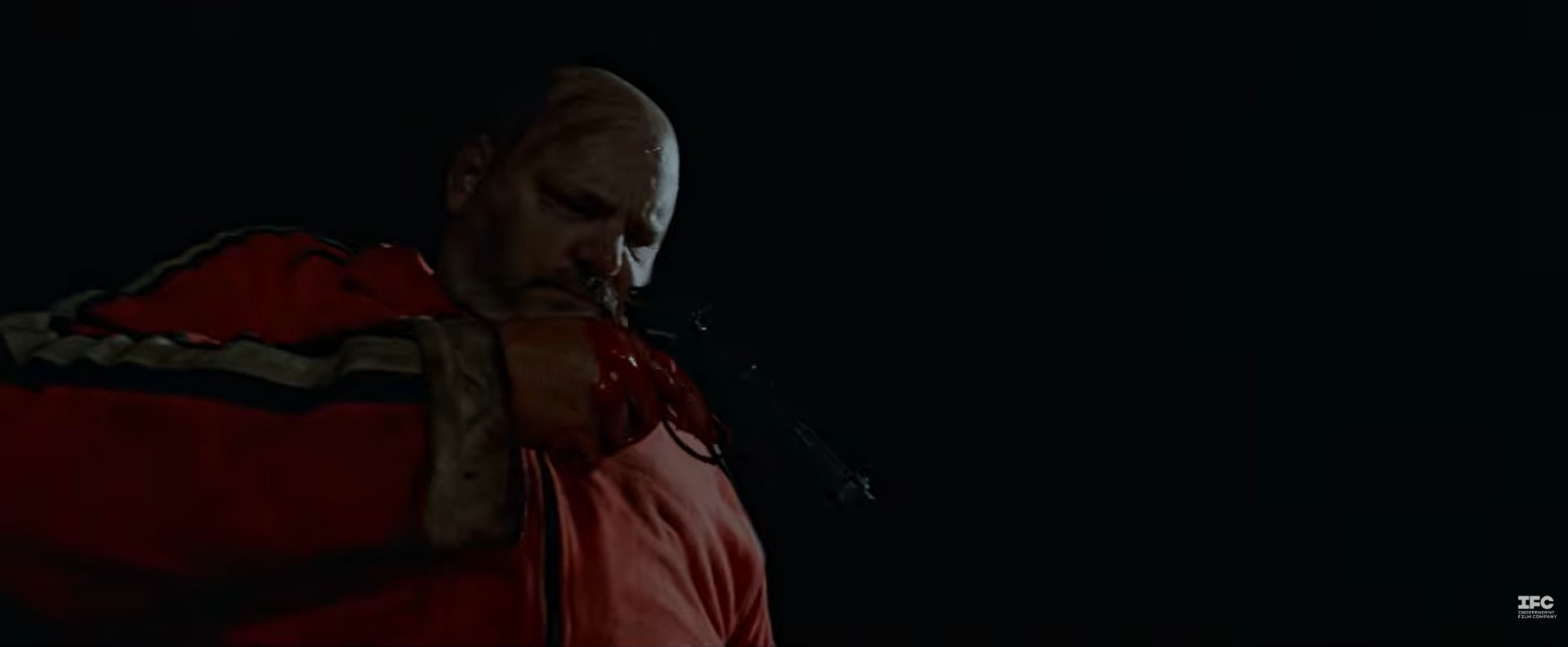
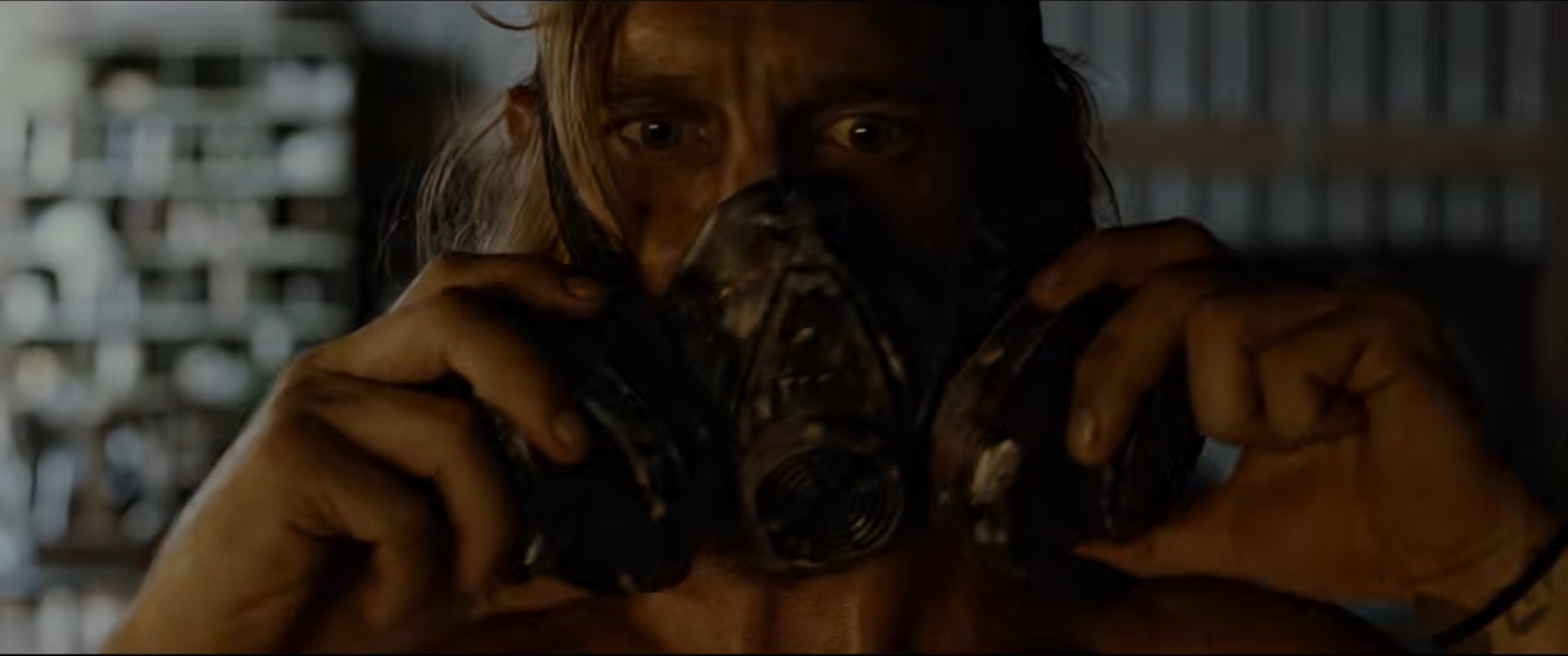
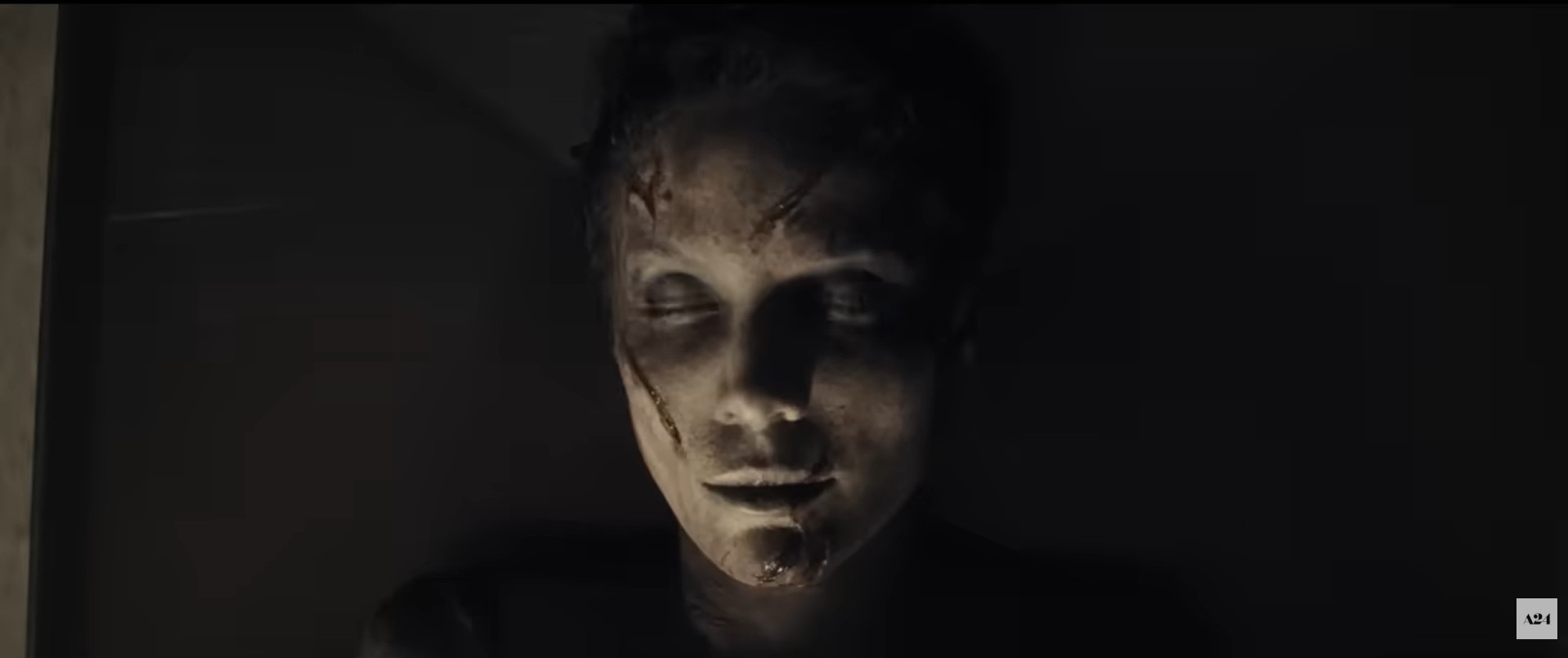
Ethan Embry is an interesting casting choice to be play principal father Jesse, a father-painter with a heavy metal music edge who becomes possessed to paint disturbing images of upside crosses and children burning.  Embry, who has the softest, puppy-dog eyes in the industry, fits remarkably as the likeable Jesse, sporting a long hair wig overtop his scruffy facial hair and athletic and muscular toned body that becomes a character in itself to display his intensity as a normal painter and more so as a possessed painter but never leaning toward being malevolent under the influence of possession, just a bad dad to daughter Zooey (Kiara Glasco, “Maps to the Stars”) that jeopardizes their close bond.  I found it curious that Shiri Appleby, “The Killing Floor”) is mostly out of the narrative picture as wife Astrid.  There are a couple of heart-ot-heart scenes between her and husband Jesse but from the most part, Astrid is absent working across town and leaving much of the family relationship strain in the hands of Zooey and Jesse without Astrid weighing on Jesse’s lapse in judgements:  forgetting to pickup Zooey from school, leaving the door open late at night while painting, etc.  Astrid is written with too much understanding and not enough mother bear ferocity.  My personal favorite supporting actor, who has been around for decades and here has a bigger antagonist role, is Pruitt Taylor Vince finding and exhibiting his inner calling to kill children.  “The Identity” and “Mississippi Burning” actor with noticeable nystagmus that moves his eyes involuntarily, mostly side to side, has in his firm grip one of the more subtle yet disturbing characters with layers, struggling with the Devil’s speak commanding his ear and becoming violent went his attempts to subside the viperous, chanting tongue hit roadblocks.  “The Devil’s Candy” rounds out the supporting pars with Tony Amendola (“The Curse of La Llorona”), Leland Orser (“Alien Resurrection”), Craig Nigh (“Terror Birds”), Oryan Landa (“Hollow Scream”), Jamie Tisdale (“From Dusk till Dawn:  The Series”), Mylinda Royer, Marco Perella, and Sheila Bailey Lucas.

Satan and heavy metal are nearly synonymous in the horror assemblage – Charles Martin Smith’s 1986 “Trick or Treat,” John Fasano’s 1987 “Rock ‘n’ Roll Nightmare,” Jason Howden’s “Deathgasm,” and even “Bill & Ted’s Bogus Journey” blends Hell with Rock ‘n’ Roll! – and all give a villainy credit to the God antithesis known as the Satan.  “The Devil’s Candy” is a poster child for the Metal and Satan genre, as part of the dubbed “Metalsploition” or “Rocksploitation.”  Yet, the Sean Byrne film plays a different kind of setlist, one that doesn’t slap Satanic right into your face but rather plays to the tune of possible mental illness with a subtle flavor of supernatural forces at work, behind the veil of derangement and delusion.  Hell and brimstone, corporeal demons, or any kind of the depths emerging from the fiery pits of the underworld are greatly and purposefully omitted from “The Devil’s Candy” and that is a welcome change from the aforesaid films, grounding this terrifying exchange more onto the fabric reality, as seen in news reports of child kidnapping and murder.  This instability doesn’t only apply to the Pruitt Taylor Vince’s Devil whispered, child-killing character but also applies to Embry’s Jesse, a family man with a metal edge who flirts with temptation, tempted to the darker side of metal, by being influenced with a malevolent muse to draw disturbing images and skirting responsibility that threatens the stability of his family, causing trust severing discord.  He also toys getting in bed with an artist curator who thrives and lusts after dark, provocative, profane art, with his gallery name being Belial – another name used for Satan in other cultural and religious beliefs.  Jesse must resist fame, fortune, and the guile techniques of Satan on Earth, another pointblank theme mentioned in the movie with a televangelist and return to his roots of connecting with his daughter and wife instead of selling his soul, or selling out, to the Devil. 

Second Sight Film’s dual format, 2-disc, 4K UHD and Blu-ray set of “The Devil’s Candy” is a tremendous gift to the physical media world.  The HVEC encoded, 2160p resolution, BD100 and the AVC encoded, 1080p resolution, BD50 are strikingly peak picture quality for their respective formats.  The limited edition contains a new, producer-approved 4K restoration of the original digital print and, while there’s likely not a massive different between the digital master and the restoration, Second Sight’s imaging for the release is superb, nonetheless.  Hovering a settled moody and low-key tone, creating an abundance of shadows and underexposure, Simon Chapman’s cinematographer creates the necessary anxiety that nowhere is safe away from a maniac driven by the dark Lord.  There’s beauty in the hard contrast with a cooler tone in more lit areas with details coming through greatly in these scenes that warrant them.  Skin tones and fabric textures have organic tactile and reflective presence.  Both formats are presented in a widescreen 2.40:1 aspect ratio that gives it a tighter yet lengthier exhibition for the high-def resolution.  The English audio on the both discs is an encoded lossless DTS-HD 5.1 Master Audio and it rocks!  Metal is master for the metalsploitation picture with great emphasis on the low-tone and harsh electric guitar strumming while a heavy rock soundtrack, consisting of metal band tracks from Metallica, Goya, Slayer, Pantera, and Machine Head to name a few, is infused with the satanism scenario and Jesse and Zooey’s metalhead lifestyle.  Dialogue is clean and clear with prominence above the layers where appropriate, never conflicting with the metal rock.  Range and depth play a factor with off-screen action told through key non-diegetic sounds that can almost paint a picture in your head, and this also goes toe-to-toe with the non-diegetic chanting inside the mind/ear of our principal characters because of its omnipresence, which seemingly engulfs the entire space in frame and then some.  Optional English subtitles are available.  All the special features are encoded on both discs, which is quite unusual for a UHD to have the full list of extras and perhaps suggests a more efficient HVEC compression.  These extras include an audio commentary with director Sean Byrne, Into the Fire a new intro interview by director Sean Byrne, new interviews with actor Ethan Embry Those Fragile Things, director of photography Simon Chapman Devil in the Details, editor Andy Canny The Cutting Room, production designer Thomas S. Hammock A Big Step Forward, and Sean Byrne’s short films: “Advantage Satan” and “Work?”  Like other limited edition sets from Second Sight Films, “The Devil’s Candy” receives a rigid slipbox with warm illustrated art by graphic artist Huan Do that extends beyond the slip box onto the bi-fold UHD and Blu-ray tall jewel case, a front and center lobby card of six with the rest being images from the film, and the book, a 120-page read of new essays from Aton Bitel, Reyna Cervantes, Becca Johnson, Joe Lipsett, Mary Beth McAndrews, and Zoe Rose Smith.  The book also includes production artwork of potential paints, cast and crew credits, and physical media acknowledgements.  This is a heavy (metal) set!  The UK certified 15 release for strong threat, violence, and language has a region free UHD and a region locked B standard Blu-ray with a runtime on both discs clocking in at 79 minutes.

Last Rites: “The Devil’s Candy” is a hard-rocking, hard-hitting thriller on the cusp of Satanic Panic but submerged fully in dangerous mental illness surrounding the welfare of children.

“The Devil’s Candy” 4K UHD and Blu-ray Is Now Available from Second Sight Films!

Cinderalla’s Beauty Evokes an EVIL of Jealously, Obsession, and Beauty Standards. “The Ugly Stepsister” reviewed! (Second Sight Films / Blu-ray)

“The Ugly Stepsister” on 4K UHD Blu-ray from Second Sight!

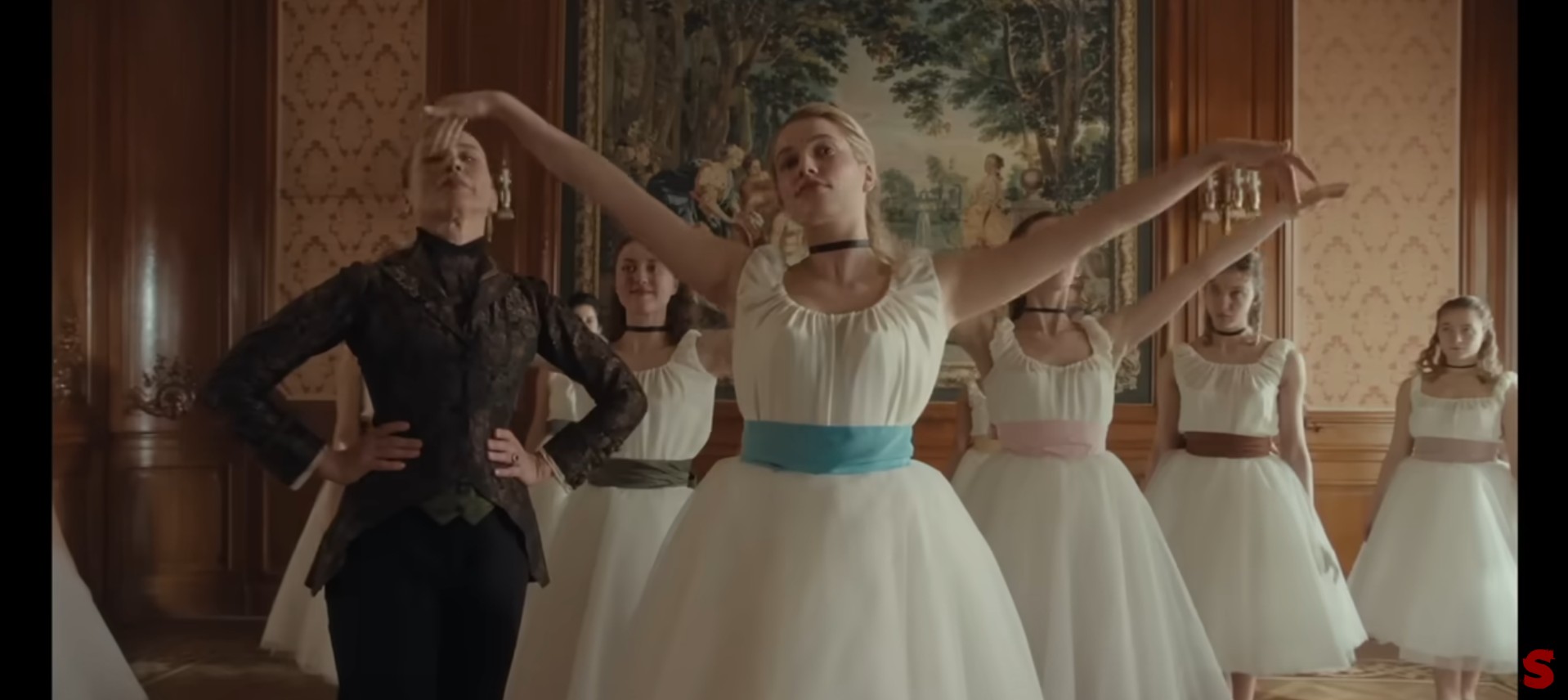
Elvira’s mother weds a wealthy estate owner to re-establish life and permanence in high society.  Alongside living with her sister Alma and her new, beautiful stepsister Agnes, Elvira keeps on smile on her braced teeth though she’s passively mistreated by those around her.  When Agnes’s father suddenly passes away and it’s unearthed the estate has no money to its name, the opportunity to attend the monarchy ball for the prince to select a wife from a pool of available the virginal maidens is Elvira’s persistent dream to marry a prince and get her family back in wealth and power.  Elvira attends finishing school to learn proper lady etiquette but her braces, round nose, and pudgy exterior pushes her aside of teacher’s attention in favor of the beautiful, blond Agnes.  Primeval cosmetic surgeries, tape worms, and no sympathy from her mother send Elvira down a path of obsession despite the harm to herself as she eyes the prize of landing the prince of her dreams over her stepsister. 

Based off the classic folk and fairy tale Cinderella, debut feature film director Emilie Blichfeldt takes a different perspective on the story that retains its roots in happily ever after but redirects the core narrative to the eldest stepsister in immense obsession, pain, and suffering to obtain the seeming unobtainable, to marry a prince.  “The Ugly Stepsister” the 2025 dark comedy and body horror from Norway that emphasizes the lengths one will take to become noticeably perfect in every aesthetic way.  Blichfeldt regularly visit the concept of a deranged perception of beautiful in her short films from the 2013 documentary “Do You Like My Hair?” that aims to spin a reinvention on beauty standards by finding it from within and the more body fantastical “Sara’s Intimate Confessions” that follows a big and tall disproportional woman exploring what it means to be feminine with her overly talkative vulva.  “The Ugly Stepsister” also tackles beautiful in a more painfully, cathartic way in order to achieve, much the same way a cheerleader sustains a lower body weight to make the squad or the self-harm models put themselves through to stay thin and beautiful.  The film, entitled in it’s native Norwegian as Den stygge stesøsteren, is a coproduction between Lava Films, Film i Väst, Scanbox Entertainment, Zentropa International Sweden, and Mer Film with Lizette Jonjic, Ada Soloman, Mariusz Wlodarski, and Maria Ekerhovd in the role of international producers. 

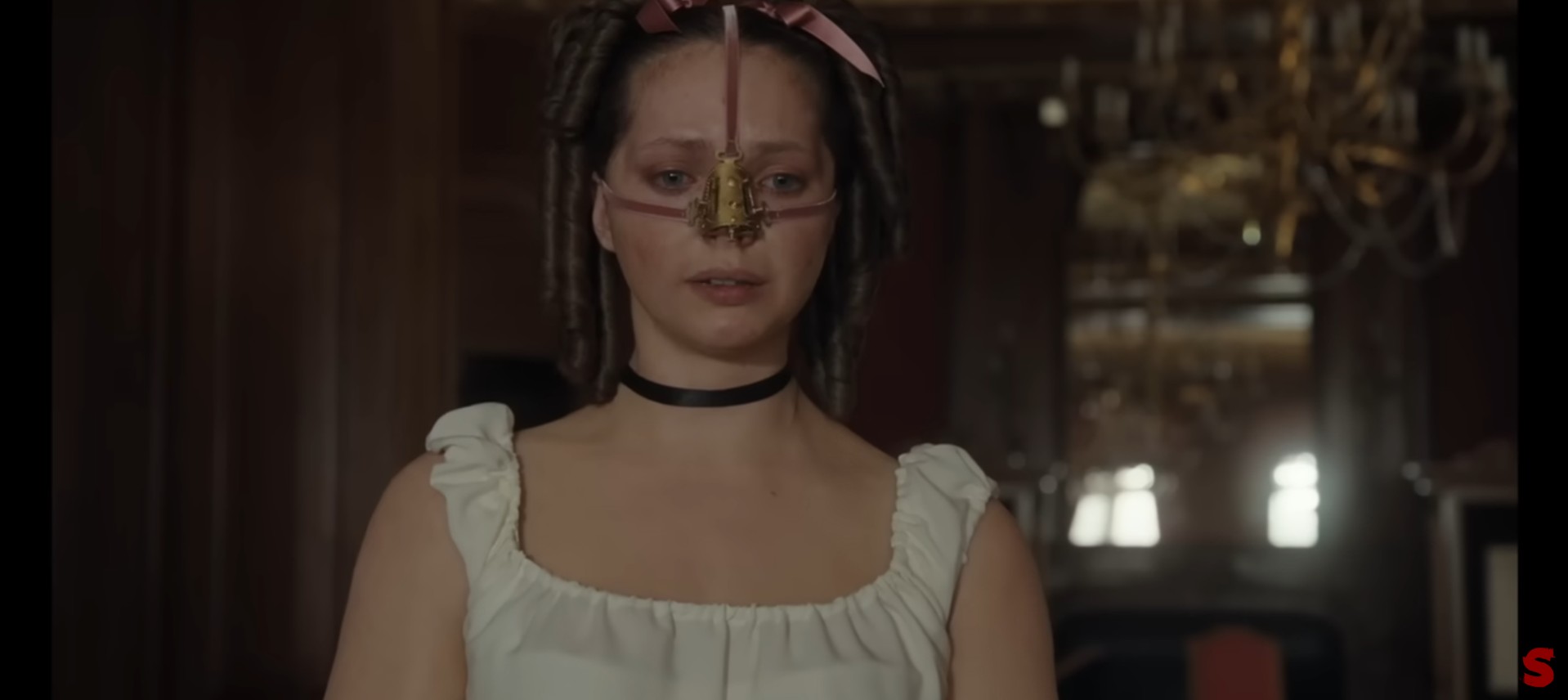
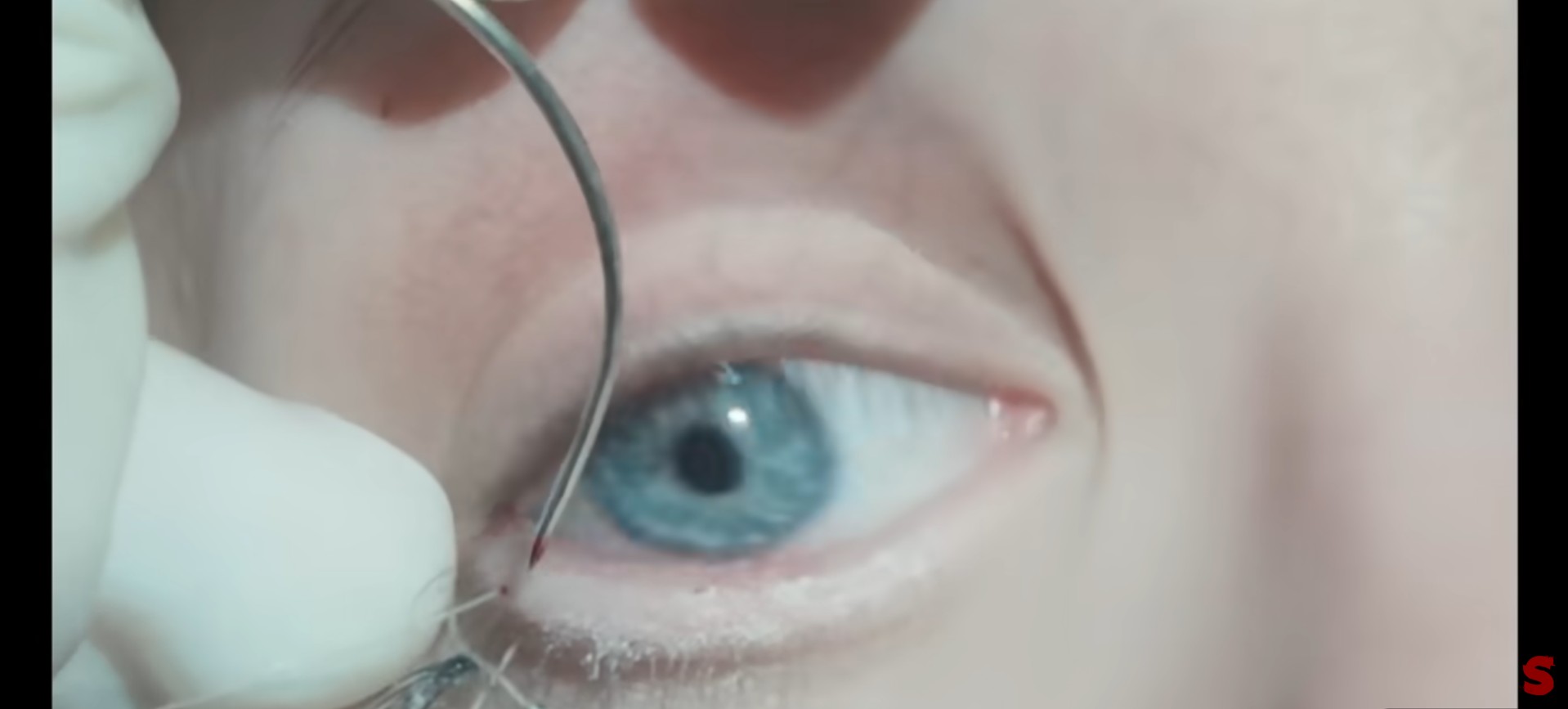
Though a beauty already in her own right, Lea Myren donned prosthetics and makeup for the titular Elvira to make the appearance of later teen, early 20s woman just on the verge of losing the baby fat.  Other personal traits added to Elvira’s character are braces, dark corkscrew curls, and muted toned outfits to further and contrast as a perceived ugliness within the context of the era, but in reality, Elvira’s beautiful young woman already with soft, large eyes, a curvy physique, and a natural gift of goodness within her that’s twisted by exterior conventions on what is defined as beauty. Shedding some of those elements, like the braces and weight, transform Elvira into a more desirable young lady now visible to all, from her draconian etiquette teacher who initially wouldn’t give her the time of day to the Prince who first looked upon Elvira with disgust in her natural state before become an exquisite creature stemmed from surgery and other unnatural body manipulations.  Myren wonderfully careens the character right into the dirt as Elvira cuts off her nose to spite her face, damn near literally, on the quixotic quest to change her outer shell that ultimately changes her from the inside.  Constants in Elvira’s life, or way, are Agnes, who’s only referenced as Cinderella once in a look that isn’t too cinder-y, played by Thea Sofie Loch Næss (“Arctic Void”) who doesn’t struggles with her character’s looks but contends with her new family’s acute empowerment, mostly rooted in family favoritism and jealousy, as well as Alma, Elvira’s younger sister with a by far majority much more comfortable in her own skin despite having dressed similarly with frizzier, unkempt hair by way of Fo Fagerli’s approach. Loch Næss doesn’t portray the as pure and innocence of the Disney classic, with her passionate romance with the stable boy in the hay barn, but the character is fairly close in all other regards with the more significant change to the characters being the stepsisters, especially Elvira’s reserved notions turned bitter when being compared to Agnes.  Alma is altogether out of the equation with no bitterness in her heart nor with any malice whatsoever to anybody but tends to her sister’s rise and downfall with little pushback.  Ane Dahl Torp (“The Wave”) is in the role of the mother Rebekka who will do anything to advance her daughter in society, mostly for selfish reasons as we’ll gather later on through a course of characters, such as the Prince Julian (Isac Calmroth), stable boy Isak (Malte Gårdinger), brutal plastic surgeon Dr. Esthétique (Adam Lundgren), and finishing school head mistresses/lesbian lovers (Katarzyna Herman & Cecilia Forss) who have contrasting approaches, both negative, toward Elvira’s waistline. 

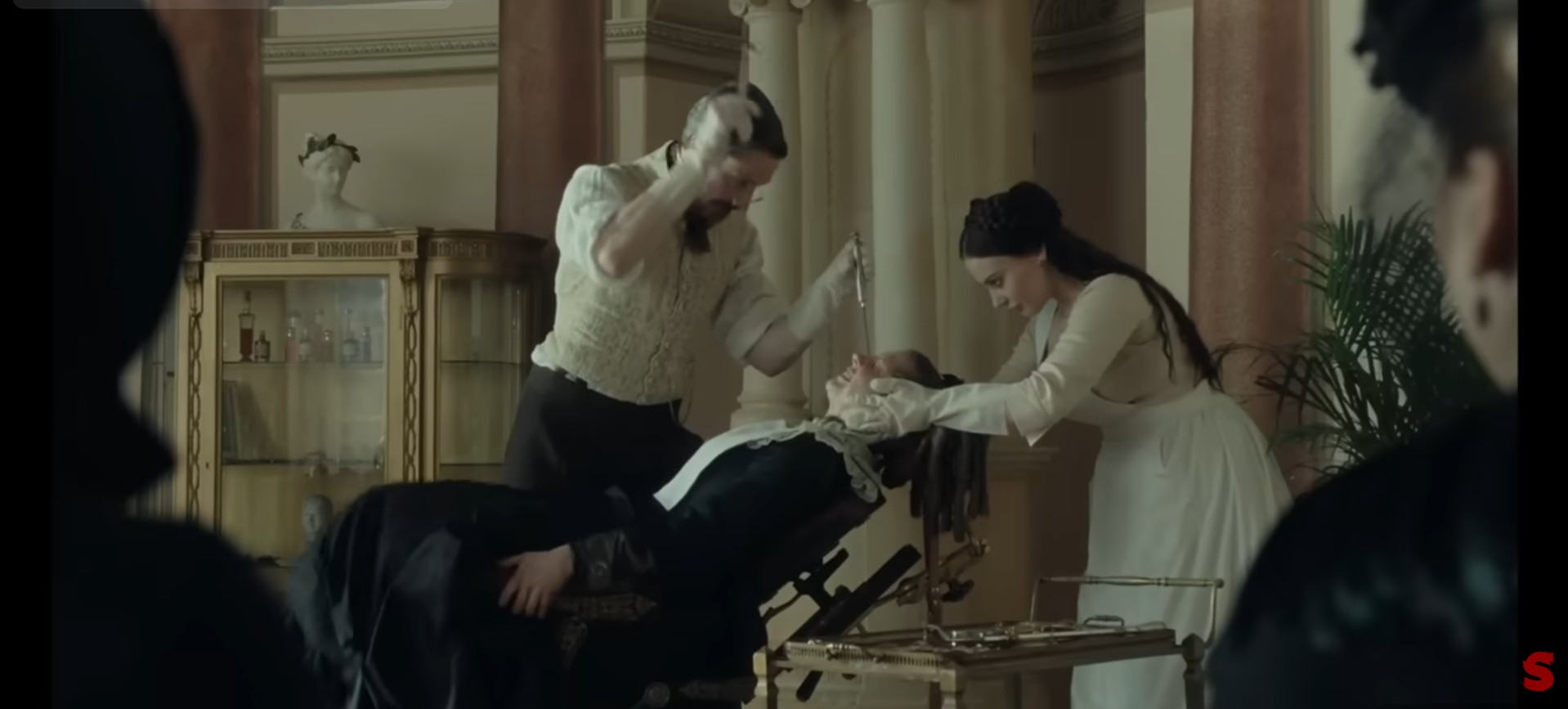
“The Ugly Stepsister’s” body horror is more than just a serious manipulation in losing weight and cutting more than corners toward image perfection.  The real horror is in the shame, the shaming of the body that’s overlooked, called out, and humiliated and to make matters worse for Elvira, her body type is by all of today’s standards curvy in the right places and beautiful albeit a body double was used for her pre-trim down nude scene.  Prosthetics are in place around the face and arms to make Lea Myren appear a little weightier, but the difference is extremely negligible and that’s the real power of horror when it’s terribly subtle, an already beautiful young girl succumb to peer and societal pressures that induces crazy self-harm for opinionated ideals and appearances.  Blichfeldt’s ideas of body-shaming extreme measures done by Elvira are not a far stretch from what self-conscious people do today about their weight.  Instead of swallowing a tape worm egg, one can stick a figure down their throat to achieve the same effect.  Instead of breaking a nose to re-mold with a hammer and chisel, surgery and medicines are abused ot be the new, easy, fast weight lost solution.  Blichfeldt comparative shots linger on Agnes with Elvira seething with envy and with the director’s bold choice of provocative nudity, exposing genitalia and depiction of X-rated acts, engages an alluring perversity that sheds light on a superficial world of beauty and sex, shielding the core, deeper problem of societal shame. 

Second Sight Films brings the Shudder and Vertigo Releasing North American marketed  “The Ugly Stepsister” to 4K UHD Blu-ray.  The ultra high-definition release is HVEC encoded onto a BD66 and presented in HDR10 with Dolby Vision, at 2160p, and in it’s the original aspect ratio, a European 1.66:1 widescreen.  Match the dark toned nature, the grading also exacts a somber coating with mahogany and ebony wooden structures and dimly lit castles of a Victorian era to bask in an austere state were, more so with personal happiness, is hard to come by.  Details are hard to stomach, in a good way, with proximate detail in the special effects closeups, such as in the mutilation scene where a nearly severed toes are hanging on for dear life by what little skin in left tethered to the foot, that go into macrolevel detail and is accentuated by the additional pixels.  Skin tones appear natural and unique to each individual in a purposeful contrast of fair and tanned skin along with different layers of texturing between organic qualities and the fabric outfits they wear, such as Agnes more single block outfit with a smoother design compared to Elvira’s multiple layers and pattern garb.  The Norwegian DTS-HD Master Audio 5.1 has an eclectic powerhouse soundtrack of synth and string orchestra from John Erik Kaada and Vilde Tuv.  The story doesn’t have a great deal of direction use for the 5.1 mix with mostly a conversating piece with mostly diegetic ambience, leaving the 5.1 less immersive than required, but there is vitality and strength behind the dialogue and action, clear and unobscured in its clean presence.  The multitude of squishiness, again the severed toes and also the removal of the tape worm through an orifice, is highly emphasized more max effect.  Areas of depth mostly lingers around the front but there are opportune moments in medium shots for audio expression.  English subtitles are clean, accurate, and well-paced.  Special features on the standard 4K release include a new audio commentary with director Emilie Blichfeldt and filmmaker Patrik Syversen, a new audio commentary with critic Meagan Navarro, a new interview with Blichfieldt This is my Ball, a new interview with star Lea Myren Generational Trauma, a new interview with Cinderella actress Thea Sofie Loc Naess Take Up Space, a new interview with special effects artist Thomas Foldberg Character and Gore, a special effects featurette The Beauty of Ugly:  The Effects of the Ugly Stepsister, a visual essay from Kat Hughes A Cinderella Story, deleted scenes, and both the Blichfiedt short films mentioned earlier in this review:  “How Do You Like My Hair?” and “Sara’s Intimate Confessions.”  The review here is for the standard 4K UHD Blu-ray set but there is a limited edition set that includes the 1080p Blu-ray as well.  The black Amaray case features a character still of Elvira on the front cover in all her dark maiden and sweet-faced glory.  There are no physical extras inside.  UK certified 18 for strong sex, nudity, and gore, “The Ugly Stepsister” from Second Sight Films is region free and has a runtime of 109 minutes. 

Last Rites: “The Ugly Stepsister” is a yarn not yet explored in other Cinderella tales, especially when it involves body horror and a sexually explicitness that that will forever make watching the Disney classic now uncomfortable when a recalled thought from Blichfeldt’s film pops into the visual cortex. Yet, it’s a remarkably twisted story from a different perspective that isn’t magically fantastical but grim and tragic.

“The Ugly Stepsister” on 4K UHD Blu-ray from Second Sight!

To Be a Star, the EVIL Past Must Be Erased! “MaXXXine” reviewed! (Second Sight Films / 4K UHD Blu-ray)

Grab Your Limited Edition Set of “MaXXXine!”

After the harrowing events in Texas, Maxine moves to Hollywood where she finds tremendous success as a famous 80’s adult film star but that’s not enough for the pious-raised Maxine who has an ambitious eye to make it big as a legitimate movie actress.  The crossover won’t be easy as her past creeps up on her after being awarded a role in an upcoming horror sequel, and not just any role but the leading role that’ll solidify her name as an actress.   When those close around her wind up brutally murdered and a seedy private detective hounds her for more than he’s paid for, Maxine juggles her ambitions with a tough director with trying to stay alive in a cutthroat town that’ll spit her out of the golden opportunity as soon as it swallowed her up into it.  Having already survived a deranged bloodbath in Texas, nothing will stop Maxine from being a silver screen star. 

Ti West’s “X” trilogy concludes with a sequel directly tied to the aftermath of “X” but years later, bringing back the hard-fought and harden survivor of a Texas porn shoot gone waywardly wild and a few people end up dead.  That sequel is known as “MaXXXine,” focusing entirely on the titular character’s drive to get out of triple-X films and into the elusively lustrousness of Hollywood acting set in the lively grime of a neon-torched 1980s Tinseltown.  The “House of the Devil” and “The Sacrament” director writes-and-directs the 2024 released, giallo-inspired suspenser, keeping in suit with the first two films, that takes a backlot tour of the sordid side of newfangled fortune and possible fame.  The roundup film behind “Pearl” and “X” in the trilogy is produced by series star Mia Goth as well as Jacob Jaffke, Harrison Kreiss, Kevin Turne, and Ti West with musician Kid Cudi serving as one of the film’s executive producers, all of whom were involved in “X.”  A24 presents the Motel Mojave and Access Entertainment coproduction.

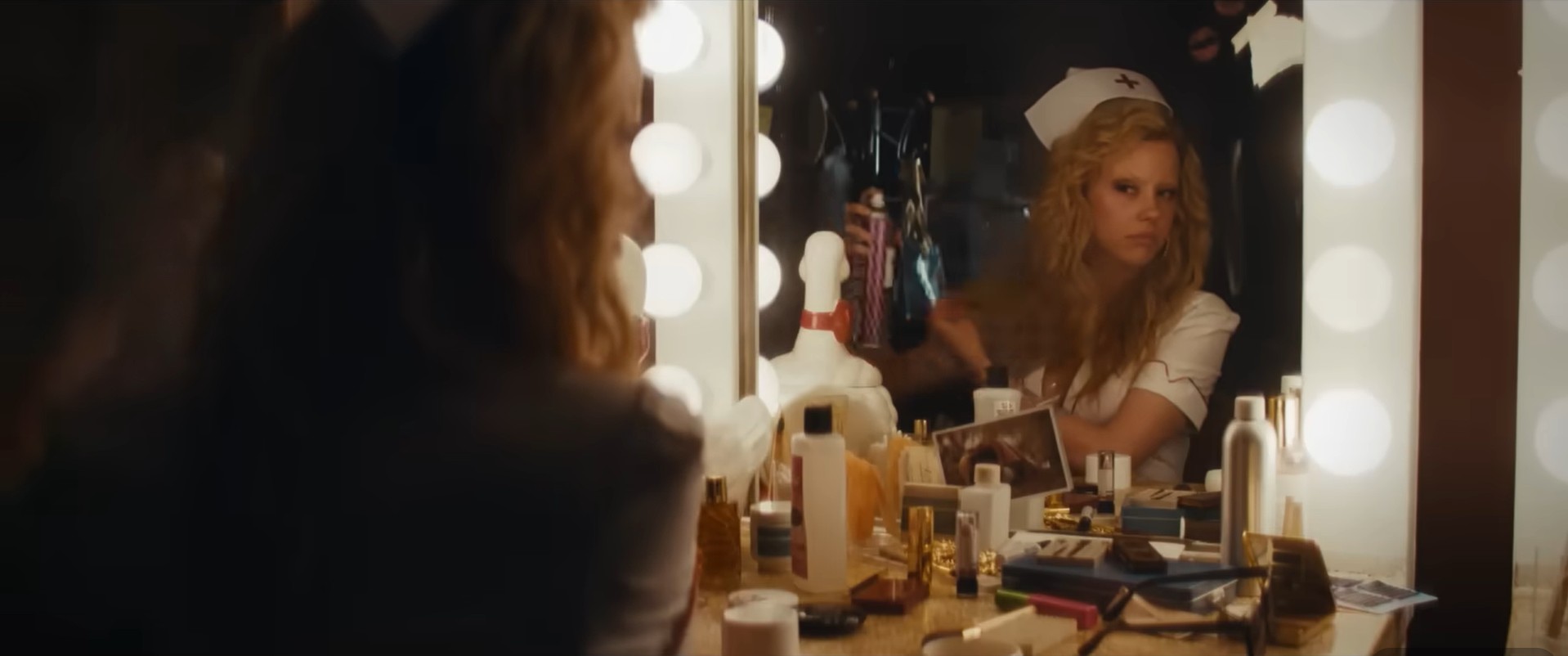
Mia Goth, who broke onto the scene in Lars von Trier’s hypersexualized art film “Nymphomaniac” and as a fellow dancer at a prestigious ballet school with a dark, witchy secret in the 2018 remake of “Suspiria,” has quickly become a household name amongst genre and cult film fans, especially in the last four years thanks to Ti West’s “X” trilogy.  Unabashed in pushing the envelope with her performances, as the titular character Maxine, Goth immerses herself in the starlet’s ambitious arrogance and libertine lifestyle with resolution.   There’s so much determination in Maxine that it takes mysterious VHS tapes and dead bodies to recollect a deadly past and for first time audiences unaware of the trials and tribulations the character went through in Texas; that historic side of her life from “X” contains threadbare context in “MaXXXine,” nearly splintering the third film into an isolated entity without reliant on “X” to be a crutch into Maxine’s next traumatic chapter full of decade appertaining characters, unsavory underbelly types, and it can’t be the 80’s hair metal and video nasty period without the fervent of satanic panic.  Kevin Bacon (“Tremors,” “Hollow Man” ) plays a prominent opposite in an unscrupulous Cajun private detective John Labat, hired to do track down the untrackable Maxine Minx and even catch himself in her cobweb of strife when she breaks his nose for snooping too close for comfort.  Labat brings the physical manifestation of an omnipresent threat that not only targets Maxine but terrorizes the entirety of Hollywood with a serial killer known Night Stalker who kills, maims, and even dismember victims at random.  While Labat isn’t the Night Stalker himself, he certainly could be the hired hand behind the serial killer or an entirely different danger riding the fear wave in tandem.  The cast rounds out with kill fodder, entrenched accomplices, and stubborn vocation types that include Elizabeth Debicki (“The Cloverfield Paradox”) as the dedicated live by the film director, Giancarlo Esposito (“Harley Davidson and The Marlboro Man”) as Maxine’s do-anything talent agent, Moses Sumney as Maxxine’s video store clerk friend, Simon Prast as Maxine’s zealot father, singer Halsey as Maxine’s unfortunate adult industry friends, and Sophie Thatcher (“Companion”) as Puritan II’s SFX mold caster. 

“MaXXXine” is no churn-and-burn, fly-by-night, 80’s inspired horror.  Ti West puts in the aesthetic work to build the decade with a production value that extends above colorfully tacky outfits, teased hair, and bold and geometrical VHS visual graphics and into entire sets of building facades and concreted avenues, boxy-shaped cars upon cars, and the quintessential performances accompanied by gum smacking and antiquated gestures in this well thought out and well adored decade design surrounding Maxine.  The story plays out like an Italian giallo, Americanized for the licentious space nestled in the protest of prejudicial morality that sets the state for the satanic panic movement of the time where the belief that rock music and horror movies had insidiously, devilish intentions toward America’s youth.  West firm leans into that setup with historical footage of musicians as defendant or advocates for their and their peers’ music in courtrooms, broadcasts sponsoring the harmful effects of these entertainment outlets, and others that build a background stage in conjunction with the factual attacks of the greater Los Angeles serial killer, the Night Stalker.  An obscure killer with masked gloves, a cloak-and-dagger danger of dalliance between the shadowy figure and our heroine Maxine, violent and sexy, and plenty of dread building surrealism and creative artistry are all subgenre hallmarks used by West to flavor “MaXXXIne” differently by adding his own gritty 80’s seasoning.  There’s enough back alley and dim-lit ambience to set the treacherous atmospheric tone that quickly immerses the titular starlet into nearly being a victim of her own unintended instigation but the story eventually loses steam near the climatic apex, faltering just at the precipice of a perfect suitor to accompany “Pearl” and “X” in a new age, throwback trilogy for the horror genre.  The stumble comes when West tries to do something too ambitious with Maxine’s mental approach with an outer body experience that helps her see her true North, a vision that isn’t preluding by much or at least provided an inkling of starry eyed connection through the entire harrowing ordeal that’s put her life on the line for a career she’s willing to die for, and that scene, that moment, just seems too far out of place. 

Lout and proud, gory and storied, “MaXXXine” is a fitting finale for female badass survivalism.  Now available in the UK on 4K UltraHD from Second Sight Films, “MaXXXine” receives the HVEC encoded, 2160p ultra high-resolution treatment, presented in a widescreen 2.39:1 aspect ratio on an encoded BD50.  With 24 frames per second and equipped with DolbyVision, Second Sight’s release can keep up with “MaXXXine” whipping narrative and fast-paced editing, especially in the variety of media clipped montage opening.  The encoding appears to sustain compression excellently, leaving no issue hanging for audiences and cinephiles to catch notice.  Details are fine and distinct of a showy, gaudy 80’s texture, fabric, and skullduggery with a slight color desaturation toward a grindhouse aesthetic layer of grittiness for its exploitational exerts.  The English language audio tracks included are a Dolby Atmos 7.1.4 and a DTS-HD Master Audio 5.1.  Both have a quantitative immersion to provide the best all-around surround sound, filling in the side and back channels with ambience direction that drop you right into the bustle L.A. city scene as well as the quiet touch of more intimate atmospheres between a single character to a handful in a single space.  Dialogue is brutally present, meaning all is clear as it clears away for “MaXXXine’s” genuine curtness and confident demeanor, as well Kevin Bacon’s emulated Cajun accent.  The decade-specific, medley soundtrack, which includes tracks from Animotion,  ZZ Top, Frankie Goes to Hollywood, Judas Priest, and New Order, embarks on a journey of synth and what is now considered classic rock interspersed between Tyler Bates more cinematic, if not innocuous, notes.  English subtitles are available for selection.  Second Sight includes an abundance of new special features, including a new commentary by Bill Ackerman and Amanda Reyes, a new interview with writer-director Ti West Back to the Blank Page, a new interview with producer Jacob Jafftke Money on the Screen, an interview with director of photography Eliot Rockett B-Movie Aesthetic, an audio interview with production designer Jason Kisvarday Curating Space, Kat Hughes’s MaXXXine video essay The Whole World’s Gonna Know My NameBelly of the Beast and XXX Marks the Spot are behind the scenes look at the making of the film, Hollywood is a Killer dives deeper into the special effects, and rounding out with a nearly half-hour Q&A with writer-director Ti West.  Second Sight releases a limited-edition box with rigid slipbox and the standard release, the latter of which is reviewed here, and that includes the standard 4K UHD black Amaray with an illustrated front cover art of the titular character that’s a slight variant to the film’s real character-driven theatrical poster.  There are no other physical contents.  The UK certified 18 film for strong bloody violence, gore, sex, and sexualized violence has a runtime of 104 minutes and is region free for all players.

Last Rites: “MaXXXine” is powerful feminism, a powerful maverick, and a powerful throwback to a great time to be alive, to listen to music, and to be a star of the 1980’s. “MaXXXine” overcomes a troubled past that’s more personal and heavily influential in its noir world, but determination is a powerful drug, matching perfectly for an equally powerful decade of sex and stardom.

Grab Your Limited Edition Set of “MaXXXine!”

Enjoy The Last Night in EVIL’s Hotel. “The Innkeepers” reviewed! (Second Sight Films / 4K UHD Blu-ray)

Book a Copy of “The Innkeepers” on 4K Ultra High-Definition!

The Yankee Pedlar is a historic hospitality hotel with over 100 years of service that comes with its own notorious past and haunted tidings.  On the verge of closing for good, the Yankee Pedlar has one more weekend to remain open and house guests but with only a handful of rooms occupied, there’s not much else to do for the two innkeepers, Claire and Luke.  As a way to pass the time, Claire is eager to video capture spooky events to feed into Luke’s website based off the hotel’s history in the death of Madeline O’Malle, a bride to be who committed suicide on her wedding day when the finance no-showed and her corpse was left to rot for 3 days in the basement as hotel owners feared for bad publicity, but when eerie begin to plague, call for her, with visions of a bloodied O’Malle in a white gown, Claire finds herself in the dangerous company with a permanent guest at the dying hotel. 

Ti West, the established genre director with the famed “X” trilogy, kept audiences pale in fear and the hairs on the back of their neck stiff and straight up with his written-and-directed horror films that retained staying power amongst fans.  2009’s “The House of the Devil” is considered one of the more recent better throwback horrors of our time surrounding classic tropes like a satanic cult and a home alone babysitter.  West’s 2011 film  “The Innkeepers” comes at a rebound time when his commercial picture, “Cabin Fever 2:  Spring Fever”, sequel to Eli Roth’s breakthrough hit from 2002 about a flesh-eating virus, didn’t quite feel like his film and “The Innkeepers” also hit a little different by shielding audiences from any type of horrific, on screen splatter violence and be concentrated on pure fear of the senses.  Though narratively set in perhaps Pennsylvania due to some references of towns an hour outside of Philadelphia, “The Innkeepers” was actually filmed more North in Connecticut with the real-life Yankee Pedlar building.  Larry Fessenden (“The Last Winter,” “Rehab”) of Glass Eye Pix and Derek Curl of Darksky Pictures co-produce the film along with Peter Phok and Ti West. 

In the two principal roles of Claire and Luke is “Barbarian’s” Sara Paxton as an unmotivated hotel clerk coasting until the very, bitter end and “Cheap Thrill’s” Pat Healy as a blasé and uninterested front desk colleague interested in getting on the popular haunted house train with his own website about their employer’s centenarian hotel.  Paxton inarguably shoulders much of the screentime as the girl who cried wolf when she experience’s the sounds of a wolf, aka the spooky serenades of one Madeline O’Malle, and the visual eviscerations of her bloodied corpse that would scare the bejesus out of anyone.  However, the frights are not enough to seemingly strike fear in Paxton’s shield of composure or even enough to put West’s story to rest with a simple I’m outta here as most of us chickens would flock toward the exit on the first instance waking from a vivid dream too real for comfort.  Healy ultimately steals the primary performance away from Paxton with his own gruff and irritated by everything:  the hotel, the guests, his own pitiful existence.  Healy does a nice job creating that subtle tension between Luke and Claire, knowing Luke’s own hangups lie somewhere in between and haven’t been exposed yet, all the while being a sarcastic boor for most of the time.  There are also side characters in the form of random guests occupying the skeleton-crewed hotel bringing with them their own set of baggage.  One of guests is Kelly McGillis and the “Top Gun” actress, in a bit of a meta-role of an aging actress turned mystic.  There’s also Alison Bartlett (Gina from various Sesame Street shows and specials) and Jake Ryan (“Asteroid City”) as scorned wife and her son and the peculiar older gentlemen, played by George Riddle, who requests a special room and will not take no for an answer.  One of the more curious castings is Girls’ Lena Dunham as a coffeeshop barista in a one and only brief scene that doesn’t add really anything to the whole in a pointlessly random interaction with Claire that, perhaps, plays off Claire’s repetitiveness and stasis life of going there everyday but not really knowing much about the barista, who is apparently always there too. 

Juggling between the blended tones of comedy and horror, Ti West doesn’t commingle the two directly into one scene, keeping distinction for one or the other in their individualized moments.  This leaves little room for alleviating dread levity inside the scare moment after building tension and fear of being chased or waiting for the silence to be broken but an unsuspected jump scare.  Outside the context of the fright-filled moment, back and forth quips and playful antics between Luke and Claire as two bored and starved for company innkeepers in the hotel’s waning days are delivered in brightly lit rooms and mostly shared with another person to be a telltale safe space against the malevolence of serrating spook-house intensity that often lingers and waits on with bated breath.  In the innermost between is Claire’s internal struggle to cope with the impending outcome that there is nothing on the horizon for her.  No secure job, no ambitions, no plans of any kind are seemingly providing the character with no hope and in that stagnation, she desperately holds onto what’s nearby – Luke’s interest in the Yankee Pedlar’s hauntings.  Enhanced by the odd actions and placement of the modicum of guests – McGillis as a crystal charm intuitive and Riddle as a strange-enough older man with a specific room fascination – Claire motivation to reveal Madeline O’Malle becomes tenfold because of her unconscious lack to move forward in life, which then spurs the question, is Claire’s experiences grounded in truth or are they just a downspout of manifestations induced compensation?  You’ll have to be the judge.

Like “House of the Devil,” another of Ti West films makes the Second Sight Film cut onto a newly restored 4K scanned UHD Blu-ray release.  “The Innkeepers” HVEC encoded, 2160p ultra high-definition, BD100 has the true presence of quality video with a gradual improvement in the finer details of a greater pixel count inside the HDR with Dolby Vision.  Though digitally recorded with a no imperfections to note from previous releases, Second Sight’s release does appear sharper and deeper around the black levels that often improve with better resolution and suitable compression and with a good portion of the story taking place in the dark recesses of a hotel basement and the in the shadows of unlit rooms, there’s no visual compression issue or loss of expected detail.  Contrastively, darker scenes appear more lit by a lower contrast but still, the details are there in depth and in closeup.  The English DTS-HD 5.1 surround sound audio track diffuses the spread of atmospheric creepiness – ghosts whispers, nondiegetic bangs and clangs, and a Jeff Grace building orchestral score that keeps the heart bumping (think Richard Band’s “Re-Animator” but with more lulls”).  Dialogue is prominently clear and in front of the aforesaid layers with depth mostly between Claire and Luke’s conversing in the lobby and range limited to, again, the aforesaid.  English subtitles are available.  Though this review is catered to the limited edition, rigid slipbox release full of tangible goodies, the standard release does have encoded a small army of special features that has two audio commentaries with the first including Ti West, producer Larry Fessenden of Glass Eye Pix, producer Peter Phok, and sound designer Graham Reznick and the second commentary also West but with principal actors Sara Paxton and Pat Healy.  A slew of new interviews provide a well-rounded, in-depth look at the creative design as It West A Lasting Memory, Pat Healy Let’s Make This Good, Larry Fessenden Our Dysfunctional World, director of photography Eliot Rockett Living in the Process, composer Jeff Grace Cast a Wide Net, and line producer Jacob Jaffke A Validating Moment contribute to the retrospective.  Special features round out with archival behind-the-scenes and the trailer.  The physical presence of Second Sight’s “The Innkeepers” keeps in-line with previous standard edition 4K releases with a black Amaray case and a monochromic grayish illustrative cover art setting audiences up for ghostly expectations.  The UK certified 15 release contains strong horror, gore, language, and sex reference – though the gore is subtle and definitely not over-the-top or even explicit.  This particular UK release, that has a runtime of 101 minutes, is region free and presented in a widescreen 2.40:1 aspect ratio.

Last Rites: “The Innkeepers” works, if not wriggles, into the brain, much like the invasive worthlessness inside Claire’s swirling mind, and the Second Sight Films’ 4K UHD Blu-ray is an ultimate celebration of not only the film itself, but also the venerable work of the horror genre’s freshest master Ti West.

Book a Copy of “The Innkeepers” on 4K Ultra High-Definition!

Rash Decisions Permeate EVIL’s Presence. “When Evil Lurks” reviewed! (Second Sight Films / 4K UHD Blu-ray)

“When Evil Lurks” 4K UHD Blu-ray for Purchase!

Two brothers in a small, remote community discover a neighboring man infested and rotting with a demon inside the body.  Fearing evil will spread once the birthed demon is free from the bloated and pus-oozing human host, they move the body miles out of town with the help of an impatient and bellicose farmer, but when they lose the body, a dark violent force spreads across their rural outlook, beginning with the horrendous death of the farmer and his pregnant wife.  Escaping to the city, the two brothers hightail out of town, picking up family along the way, only to unintentionally spread evil from contamination by the rotting body.  Local folklore has a set of established rules, seven rules in fact, when face-to-face with a demon and they enlist a reclusive woman, a proper cleaner of the rotten, to help them against the clinging evil determined to never let their family go unscathed. 

The 2023 released, heavy demonic and folkloric horror from Argentina, entitled “When Evil Lurks,” tells the whole story of a family’s past regrets, the road-splitting life choices they make, and the consequences that follow using graphic, unabashed violence and a campiness that’s corrosive to the soul.  Demián Rugna writes-and-directs “When Evil Lurks,” aka “Cuando acecha la maldad,” after his breakout hit “Terrified” from 2017.  The Buenos Aires filmmaker continues to push a singular amalgamate of wide-range tradition and horror to the extent the world has never seen, and he continues to shoot on location from his own country, mostly in or around his home municipality.  Fernando Díaz of Machaco Films alongside Roxana Ramos under her founded production company Aramos Cine with the support of the national cinema institute, the Instituto Nacional de Cine y Artes Audiovisuales or the INCAA, and the streaming horror service and productions, Shudder.

“When Evil Lurks” primarily follows Pedro and Jimi, two brothers living on the outs of their own lives stagnantly inside their rural family home.  Ezequiel Rodríguez (“Legions”) sports a grizzly beard as the lead, older brother Pedro who frantically and desperately needs to get his family away from the spreading evil while returning to collaborate with Rugna “Terrified” actor Demián Salomón tracks as a more youthful footloose, Jimi, not tied down by a family or even a girlfriend but rather is dialogued as free lover amongst women.  Every character they encounter exposes them to the evils that lie ahead, or generally around the vicinity, as the this rotten, as they label the formless rotten presence that is solely an inhabitant of people and animals alike, can jump to another host if the rules are not followed, with the most common rule being broken is using gun powder to kill the possessed rotten.  Up for to be demonic fodder is Pedro’s estranged family who have alienated him because of his ambiguities’ surrounding possible unforgivable crimes and family abandonment.  The latter speaks more specifically to his severely autistic son Jair (“Emilio Vodanovich, “Fever Dream”) Pedro once hated himself for spawning, per his ex-wife and restraining order enacting Sabrina (Virginia Garófalo, “La Vagancia”), but his Pedro’s pre-narrative occurred change of heart sends him frantically into the fire to save his children Jair and younger brother Santino (Marcelo Michinaux, “Fever Dream”).  Also demonically targeted is Jimi’s once city affair now turned socially isolated former cowwoman-turned-rotten cleaner Mirta (“Silvina Sabater, “The Wrath of God”).  Mirta pivotally provides audiences insight by solidifying what other characters only know by hearsay or try to understand intuitively about the rottens, or the possessed, and how it spreads and what rules to follow.  Without Mirta, a lot of the supernatural circumstances involving children, the insidiousness, and the mindset of evil.  Other cast members interlocked with the gruesome violence and gut-wrenched storytelling is Luis Ziembrowski (“The Rotten Link”), Paul Rubinstesztein (“Portraits of the Apocalypse”), Isabel Quinteros (“High Heels”), Lucrecia Nirón Talazac, Ricardo Velázquez, Desirée Salgueiro (“Luciferina”), Federico Liss (“Portraits of the Apocalypse”), and Berta Muñiz (“Plaga Zombie”) as the voice of the bloated rotten Uriel.

“When Evil Lurks” accompanies with it a strong theme of children replacing their parents or adults in a metaphorical, supernatural demon enriched context.  Children are drawn to the demon as the demon is drawn to children, a verbatim more-or-less statement said by Mirta about the rotten, or demon, that shows children as it’s bewitched devoted servants and protectors, like little underage Renfields, who try and trick adults off the rotten’s hidden location or carry out for more sinister acts.  One of those acts is literally devouring adults which becomes a regular theme throughout seen with Jair and Eduardo, and even in anecdote told by Mirta about a previous witness to a rotten’s case of regurgitation.  In a way, the demon is a child itself being birthed into the world under a swelling and oozing Uriel’s sinew and viscera and indulges in childish acts of fibbing, mischievous tricks, and playful portents that happen right under our noses and can be shocking to the system as we want to believe what our children, our flesh and blood, have to say but there’s always that inkling of untruthfulness in our minds. Rugna couples the manipulation with bold, visceral violence, even some on children, and a grotesque folklore inflamed by poor and naïve choices by those who don’t understand or are unwilling to fully comprehend the extent of consequences that follow because of their hastiness to act, solve, and be rid of a threat.  “When Evil Lurks” clearly points out our innate flawed existence and makes abundantly clear our mortality with our progeny to dominate the world. 

Second Sight Films emerges “When Evil Lurks” onto a 4K UHD Blu-ray.  The BD66 is HVEC encoded with an ultra high-definition, 2160p resolution and presented in the original widescreen aspect ratio 2.39:1.  Second Sight Films produce the high dynamic range with Dolby Vision, approved by director Demián Rugna.  The result is immense image immersion that inarguably has the wherewithal for a fluently stable color timing, a range of depth, and phenomenal detail.  Every aspect of what is on screen is crisp to the bone and Rugna’s violence, under Mariano Suárez’s eclectic cinematographer eye that builds toward suspense, benefits from the grisly faced display.   Audio fidelity through a Spanish DTS-HD 5.1 Master Audio holds and delivers exact reproduction.  Plenty of back and side channel clinks and clunks to establish a presence created coincidingly with the image.  Dialogue is unobstructed, confidently paced, and above the layers whenever appropriate with Pablo Fuu’s score sneaking int folkloric tones and a despairing timbre and tempo there in the mix but subconsciously eats away the soul of the viewer.  Optional English subtitles are available and accurate but in moments of great hasty dialogue, the rhythm of display can be quick.  Special features include a new audio commentary by cinematic academic Gabriel Eljaick-Rodriguez, four new interviews with director Demián Rugna It Was Always There, actor Ezequiel Rodríguez Tragedy is Inevitable, actor Demián Salomón We Made a Movie, and actress Virginia Garófalo Stripped to the Bone, and a video essay by UK film podcaster Mike Muncer Terror and the Unknown in When Evil Lurks.  There are no during or after credit scenes.  The 4K UHD Blu-ray release comes in a black UHD Amaray with a new monochromatic art rendition of young Vicky holding the leach of the French Mastiff, same as the pre-release promo still for the film.  There are no internal supplements with the region free release that has a runtime of 100 minutes and is UK certified 15 for Strong Horror, Bloody Violence, Gore, and Language.

Last Rites: There’s no stopping death. Our children will replace us no matter how hard we try. A seemingly evil accursed death will come for us all and the choices that are made will be the design to our destruction. Director Demián Rugna sees the path and knows “When Evil Lurks” it has us completely encircled with no escape, no hope, and no compassion. How soon we choose to parish depends on how rash and unwise our decisions are in the grand scheme of life.

“When Evil Lurks” 4K UHD Blu-ray for Purchase!