Luther the Berserk has EVIL Plans in the Bayou! “The Naked Witch” reviewed! (VCI / Blu-ray)

A string of horrific murders of beautiful women becomes the study of a six-person team of paranormal researchers who head down to the Louisiana swamplands surrounded by notorious superstition and urban legend for once being the home of witchcraft.  One of the researches, Tasia, is a sensitive, a highly psychic receptive woman and student of team leader, Dr. Hayes, to sense the area’s extrasensory waves thought to be behind the murders, especially the ones of a satanic ritualized nature.  On the isolated island, encircled by swamp and gators, a powerful Satan acolyte known as Luther the Berserk seeks to spellbound Tasia to complete his coven of witches and evokes the help of Jessie, a haggard crone with the ability of mind control over those with sensitive abilities.  One-by-one, the researchers are being picked off for the blood ritual and it’s up to the survivors to stop Luther before it’s too late.
A bold psychotronic of the 1960s, “The Naked Witch” has a tingly macabre aura about it that’s not swinging, swanky, nor is it groovy.  Also known primarily as “The Witchmaker,” there’s a thick circumference of dread and darkness surrounding the William O. Brown written-and-directed picture.  Brown’s sophomore film behind the 1965 “One Way Whaine” comedy about Hawaiian babes and bank robbers is a stark 180 degrees four years later that showcased the filmmaker’s range from laughs to terror on the cusp of the early days of the Satanic scare.    “The Naked Witch” has also been reissued as “Witchkill,” The Witchmaster,” and “The Legend of Witch Hollow” and while Brown’s film goes by many monikers, one thing is for certain is the film was shot partially on location in the mucky swamps of Louisiana during exterior locations whie the remaining interiors were in a Los Angeles studio.  The U.S.A. made film was produced by Brown with L.Q. Jones serving as executive producer and released independently under LQ/JAF Productions.

Personally, horror films like “The Naked Witch” that were produced through the 1950s and into the 1960s always share mixed feeling that can only be described as from “the content is revolutionary for Americana horror post-World War II cinema” to “the stiff, exposition acting just doesn’t work with the grim nature of the ahead of its time story,” and as Marty McFly once said back in 1955, “I guess you guys aren’t ready for that yet.”  There’s nothing inherently bad about “The Night Witch’s” acting other than the lack of emotional weight from the troupe needed to lift up and be on the same level as the story that includes hanging half-naked women upside, slitting their throats, and drinking their blood out of chalices in a coven on satanic confluence.  “Revenge is my Destiny’s” John Lodge is the exception that goes against the stagey type of stilted acting grain as lead satanist apostle Luther the Berserk, flashing devil hand gestures and acting like a wild man in his ravaging role that’s ambitiously true to character and subtly perverse in blood and in lust. The same passion portrayal of character is not extended the principal leads of “Green Acres’” Alvy Moore and “Deep Space’s” Anthony Eisley playing a pair of opposing scientists – Moore as the more supernaturally open-minded Dr. Ralph Hayes and Eisley has the rigid in rationality Dr. Victor Gordon.  Their conflict of beliefs creates another subplot satellite that abides by superstition and lore as well as the division it produces, a decent representation of the overall contrarianism inside people as a group, then you have Tasia, a medium struggling with her powers being pulled in two different directions.  The European heritage and Canadian born blonde knockout Thordis Brandt steps out of the saucy side role and into one of her more prominent performances as the Sensitive who is manipulated by Luther’s unholy powers over the coven.   The coven and researcher cast rounds out with Shelby Grant, Tony Benson, Robyn Millan, Burt Mustin, Warrene Ott, Helene Winston, Carolyn Rhodimer, Larry Vincent, Patricia Wymer, Del Kaye, Diane Webber, Valya Garanda, Gwen Lipscomb, Nancy Crawford, and Sue Bernard. 

“The Naked Witch” is not as graphic as one would assume with such a scandalous, provocative title.  Again, you must remember, the film is originally titled “The Witchmaker.”  Yet, for a 1960’s horror, William O. Brown’s satanic sorcery picture is too advanced for the era’s mostly puritanical audience.  I’d even go as far as saying “The Naked Witch” borders the line between the foggy and gloomy atmospherics and set productions of Gothic Hammer and the ever-close-to-the-edge designed no nudity or graphic death coverups of an early Russ Meyer production sans the zany cartoon sounds and the rapid-fire editing.  An abundant of dread hangs in the air of starched collars and secretary skirts that conjures more than just the Devil’s presence in the bayou but a heavy dealt hand of a no-win situation full of desperation and death.  The story itself evolves from the brutal, ritualistic killings of strung up and stripped naked young, beautiful women to a more focused objective of converting Sensitive Tasia into a full-fledged witch that completes Luther’s coven and resurrects his master for a diabolical Hell on Earth.   The broader strokes of “The Naked Witch’s” narrative places the fate in the hands of a group of students and naïve ignoramuses playing catchup to what’s really happening under their noses.  Of course, alarm bells never go off and panic never really sets in for the group of survivors after each death in what is more like an aw-shucks and move on reaction.  Granted the team is stuck on the island for a few days with no way to call for help but that doesn’t mean being not proactive or being crippled by fear doesn’t have a place amongst them and in the story, especially missing opportunities within the researchers to turn on each other by way of Luther’s manipulating witch, Jesse, who herself has her own drastic motivation with a blood ritual that make her young again. 

“The Naked Witch” is fairly cladded with atmosphere and ghoulish intentions instead of the mentioned nudity but the new VCI 2-Disc Format Blu-ray and DVD release provides the bare essentials with a restored 35mm archival print into 4K-UHD scan.  Presented in a widescreen 2.35:1 aspect ratio, the grading is rich and overall image and details look pleasing with depth in most scenes and grain is era appropriate appeasing.  Skin tones shade a little more toward orange but maintain within spec but on the higher end of a RGB.  The print has sustained some damaged with a slew of scratches, dust and dirt, and cell burns peppered throughout and can be a nuisance but nothing terribly critical to warrant narrative loss or a complete loss of viewing pleasure.  The English Dolby Digital Mono track offers little to try and immerse viewers into the swampy bayou and that’s a real shame since visual elements are detailed.  There’s minor background noise is palpable but not distinct to warrant attention.  Dialogue and the Bolivian born and “The Town that Dreaded Sundown’s” Jaime Mendoza-Nava’s gypsy-esque and minor key brass and percussion score are the heavy hitters in this presentation.  Dialogue has insignificant hissing and crackling but as a whole, the track comes over clean enough to firm pass well over grade.  Option subtitles are available.  The only encoded bonuses are a 2024 commentary track by film enthusiast and artist Robert Kelly and a poster gallery that include not just “The Naked Witch” but other 60’s horror pictures.  VCI’s standard Blu-ray incasement has one-sided still picture and illustrated compositional artwork that roughly produces the madness incarnated with the DVD on right and the Blu-ray on the left inside, individual pressed with images from the front cover.  The region free disc has a runtime of 99 minutes and the film is rated R.

Last Rites: “The Naked Witch” has no skin in the game in its necromancy ways but finds the fog of dread easy to become lost in with interesting characters and a ghoulish witch and ritual vise gripping it on both ends on a verge of being something more.

“The Naked Witch” on Dual Format DVD/Blu-ray from VCI!

Blind, Witchy, EVIL! “Beezel” reviewed! (Epic Pictures / Blu-ray)

“Beeze” is the Witchiest Blu-ray of 2024! Get it here!

May, 1966 – a young boy is murdered, eaten, in his Northeast home.  Nearly six decades later and a series of disappearances and strange deaths in between, a young couple inherent the property that the locals have feared haunted, cursed, and possibly even inhabited by a witch.  As the house-inheriting husband is eager to sell the house to get rid of the reminder of his mother’s abandoning betrayal, the wife is equally eager to keep the house, settle in, and start a family.  The house possesses a presence captured by the corner of the eye, the hairs on the back of the necks, and the overall sense of dread that lies heavy in the pit of the stomach as the more the couple stay in the house, the more the Beezel, a blind evil witch lurking and hiding in the basement, influences their dreams and reality.  Beezel also wants a child and will take what it desires and kill anyone standing the way. 

What the horror genre needs nowadays is a ferocious witch film and I’m not talking the spellcasting, broom-riding, cauldron-congregating kind of witches with black pointed hats, large warty noses, and catty familiars.  I’m talking about hardcore old and ugly broads with an extreme hunger for not just children but for all of humanity, capped off with, perhaps, a good, solid cackle that’ll redefine the iconic figure from the traditional sense to a reverse revolutionized hag rooted in folklore but scorned by life itself.  A few filmmakers have tackled the idea and filmmaker Aaron Fradkin has taken a stab at it with “Beezel,” a 2024 Northeast-shot, visceral supernatural witch tale that was originally a short film expanded into a full-length feature film based on the short’s positive feedback.  The “Val” director cowrites with wife and fellow “Val” actor-writer, Victoria Fradkin under their cofounded independent film production company Social House Films. 

Because “Beezel” was first a short film, to flesh out a full length, the Fradkins smartly built around the short story an episodic series around it that spans decades.  Different actors are casted to reflect different periods, circumstances, and develop a variety of reactions to keep with and keep going a timeline of change, connected all by one single element, the carnivorous blind witch lurking in the basement shadows.  1966 starts off with more of child’s perspective who opens a secret bathroom hatch to the basement to see his pleading-for-food mother before his arm is snatched and he’s rip-to-shreds off camera.  The vicious and quick opener doesn’t leave open the door of development and we don’t get a real sense of anything or anyone until LeJon Woods (“The Hangman”) meets Bob Gallagher (“I Don’t Want to Drink Your Blood Anymore”) about 20 years later outside the home as the documentarian and homeowner, Apollo and Harold Weems.  Having seen now three films his this year, LeJon Woods feels very much like a one-note actor playing the same person throughout those roles.  Gallagher dips into a more sinister cover as the seemingly Mr. Rogers or Ned Flanders neighbor that drops breadcrumb clues of his dark secret and its one scary in-character conversation he has with Apollo.  From there, we jump another 20 years into the early 2000s with what was initially the original short film of an at-home nurse named Naomi (Caroline Quigley) replacing another nurse who disappeared in the Weems house.  This leads into the third act really sets up nicely Harold Weems second wife, Deloris (Kimberly Salditt Poulin), who’s on her deathbed in hospice care and solidifies the tone with a girth of suspense that leads into what would be the final moments left unseen of young couple Lucas and Nova (French actor Nicolas Robin and the director’s wife Victoria Fradkin).  Lucas, who inherited the neighborhood blighted house from his mother Delores, is eager to remove all denotations of his mother from memory, the free-spirited and more forward Nova wants to settle, have children, and start living her life.  Their bond sours overtime with the witch influence invading the subconscious and conscious body for her own ravenous gain in a blood-spilled buffet of knives, guts, and videotape.  The film rounds out with Elise Manning, Leo Wildhagen, and Aaron Fradkin dons the makeup and prosthetics to play the blind witch Beezel.

Fradkin’s able to capture desolate mood with limited production sets.  Most of all the “Beezel” story is set inside Fradkin’s childhood home in Massachusetts and with real, cold, New England snow that latter half of the story takes place.  Every tight and cobwebbed crawl space, every radiator-induced floorboard creak, and every outdated, antiquated, and obsolete feature of his parent’s home gave every ounce of spooky energy to “Beezel,” which, ironically enough, is what Beezel actually inflicts upon the current residents of the house.  Editing and the practical witch effects build the tension and suspense without giving too much away of Beezel’s hideous figure, cherishing Beezel for timely appearances rather than relying on its overuse which often leads to exposing too many rubbery and prosthetic flaws.  The episodic nature also keeps the story from being stale by jumping years, if not decades, that shepherd new characters and new scenarios into the fold as the story evolves through the difference lens of technology, in a half-ominous and half-found footage perspective with the latter being shot in super 8, VHS, and digital handheld camcorder and the original short breaking up the pattern with a microcassette tape deck.  “Beezel” perfects the blend of live-action and found footage without feeling forced and unnecessary with a truly frightening approach to the witch trope that’s worth devouring whole. 

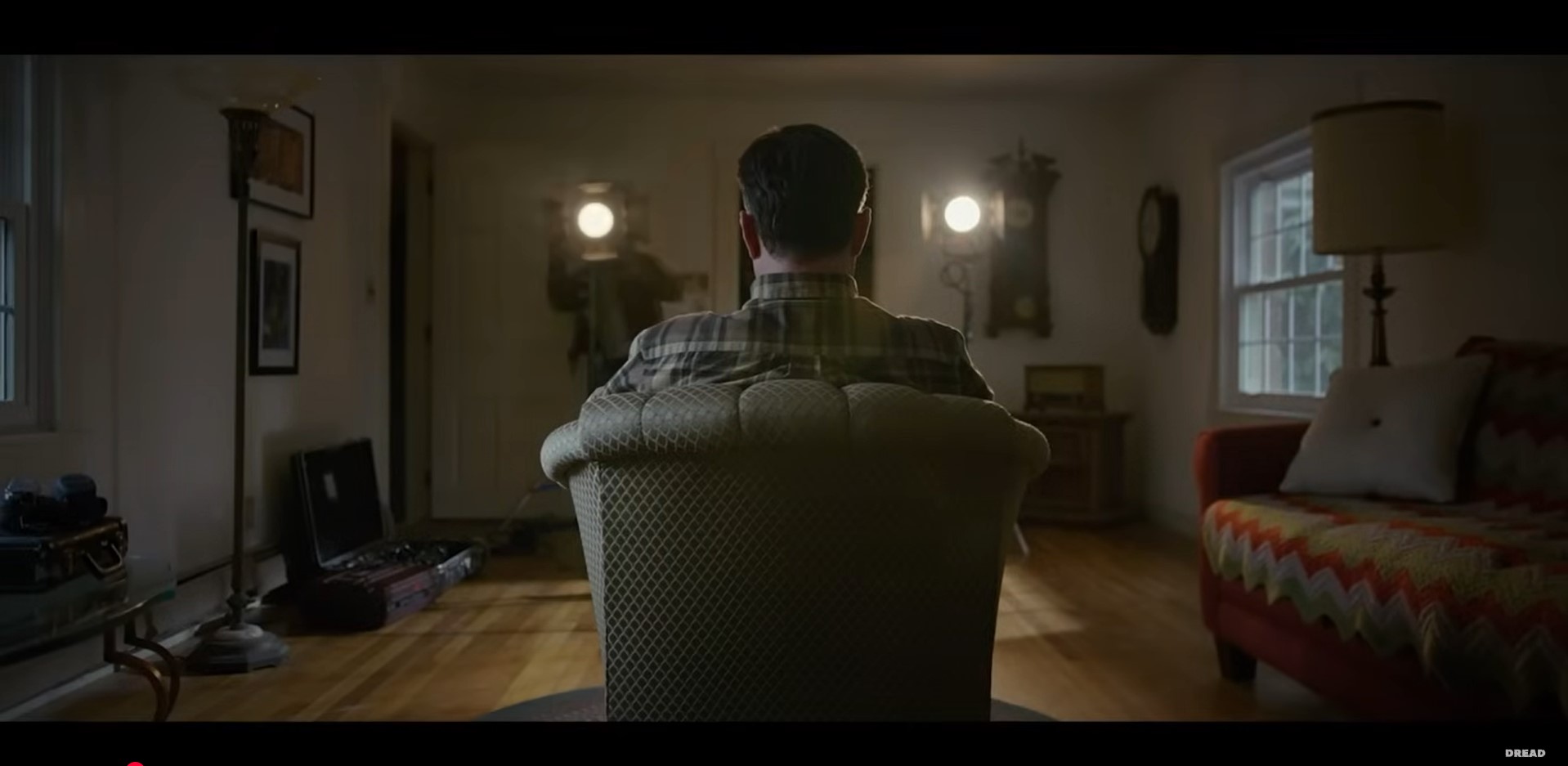
The Social House Films brings the meanest witch this side of 2024 and Dread, the subsidiary label of Epic Pictures Group, who also pushes their own boundaries with “Beezel’s” visceral path, as well as sport some uncommon nudity in one of their films, has the Blu-ray for you! The AVC encoded, 1080p resolution, single-layer BD25 manages to scare through the lower end of capacity format with really no issues with compression. No banding, no blocking, nor any other noticeably ostentatious artefacts to speak about as the rendered image, despite its softer detailer markers, pulls off a passable and potent portentous story through a digital, anamorphic 1.78:1 aspect ratio lens, often switching between media parallels of POV Super 8mm, VHS, and DVX camcorder that vary in levels of detail and grain. Dread Central presents two English audio options, both lossy: a Dolby Digital 5.1 and a Dolby Stereo 2.0. Surrounding, multi-level house atmospherics, various media equipment, in-and-out of the dream subconscious, and, of course, the blend witch herself, create an unfaltering, ample, and competent sound design although the format doesn’t reproduce true fidelity. Back and side channels flourish with frightful house creaks and other environmental elements while basking in the silence for a solid jump scare or building palpable tension. English subtitles, as well as Spanish subtitles, are available for selection. Special features include an in-depth look at the making of the film, Aaron Fradkin’s short films “Doctor Death” and “The Sleep Watcher,” and other Dread Central distributed film trailers. I had aforementioned Beezel not being shown too much in the film but her rather grotesque, bloodied-mouthed face captured in still image, glammed up and embellished for public consumption, graces Epic Pictures’ one-sided, front cover image, warmly soaked in a reddish-orange glow. The disc is pressed with a Scolopendra, or Giant Centipede, coiled over the title. No other tangible items come with the release. The not rated release has a runtime of 82 minutes and is region free for all!

Last Rites: As we close out 2024 with an evil old hag, “Beezel” is one hell of a movie to close out on. Soul-tattering story that spans decades, “Beezel’s” the witch with an incredible insatiability and her hunger will have you recoil in fear of being the main course.

“Beeze” is the Witchiest Blu-ray of 2024! Get it here!

Ancestor’s Didn’t Quite Incinerate All the EVIL. “The Ones You Didn’t Burn” reviewed! (MVD Visual / DVD)

Burn While You Got’em. “The Ones You Didn’t Burn” on DVD home video!

Siblings Nathan and Mirra are reunited at their childhood farm home after their father suddenly passes away from drowning.  The self-well-kempt Mirra handles the business end of their father’s farmland estate as the recovering drug addict Nathan struggles with his past urges while also helping with the cleanout of their father’s things.  They meet farmhand Alice who still maintains the crops and who is close to her unusual and quieter sister Scarlett.  Soon after, Nathan begins experiencing vivid nightmares on drowning and an unknown woman crawling out from the depths of the ocean.  He also feels the presence of malevolent forces around him and digs into his father’s past only to find that his ancestors were once witch burners and that the farmhand and her sister’s family lineage had settled from Massachusetts long ago.  In the midst of piecing the clues together, the siblings find themselves in the lingering black cloud of darker forces seeking retribution of a fiery ancestral past.

“The Ones You Didn’t Burn” is the 2022 released, independent horror from writer-director-and-costar Elise Finnerty.  The first-time feature film director from Long Island, New York infuses a slow dread of psychological thrills with a painted American folklore maquillage where past imprudence and costly mistakes catch up with the future generations stuck in a rut of their own problems. Filmed in and around Finnerty’s hometown, “The Ones You Didn’t Burn” is a family affair film with the filmmaker producing her first film co-produced by the immediate Finnerty family of father Dennis, mother Diana, and brother Sean.  Nicolas Alvo and Brett Phillips also co-produce with executive producers lined up with Estelle Girard Parks, Maxine Muster, Shannon Gallagher, and Alec Phillips financially footing the feature under the banner of Red Booth Productions, founded by Estelle Girard Parks and Elise Finnerty.

With the smaller production comes an intimate cast working in a handful of public locations and only a couple of home interiors and about a third of the cast are also working multiple roles in front and behind the camera, such as Elise Finnerty and Estelle Girard Parks not only the chief governors of “The Ones You Didn’t Burn’s” creative process but also as the inscrutable sisters Alice and Scarlett.  In principal roles, you receive exactly what writer-director Finnerty intends with her happy-go-lucky helping hand farm manager that strikes a small odd chord within the adrift Nathan, son of the drowned father who never recalls his father mentioning Alice.  Nathan, played by Nathan Wallace, is clearly exhibited and stated as a habitual user attempting sobriety but the more delineated the dreams become and the uneasiness that washes over him, mixed with the sudden, subconscious grief of a lost father and being peer-pressured by an immature, drug-fueled, and degenerate high school buddy Greg (Samuel Dunning), Nathan becomes mentally bombarded to the point of using again and breaking, though ambiguity leads us to believe that some witchery might be subverting his faculties.  Wallace shows great range in a downward spiral character arc, complimented by sheer intensity when that strangeness takes hold and shape.  Also feeling the pressure, in a different manner, is Nathan’s sister Mirra, sequestered by Jenna Rose Sander to make Mirra go solo sorting all the postmortem to-dos of her father’s belongings, extending out any hope or chance of Nathan and Mirra to reconnect in light of death.  In fact, the siblings become even more estranged and tensions simmer, especially when Mirra finds comfort in newfound friends, such as Alice and Scarlett, lending to more loss and disconnect for Nathan and other, again, possibly witchery waywardness to divide and conquer in the name of rancorous retribution.

“The Ones You Didn’t Burn” certainly is a slow burn filled with more fluff and reoccurring scenes than desired in an intriguing face value premise of a pair witches setting the wheels in motion to rid the land of witch burning descendants.  Insidious dreams and ubiquitous tarot card dinner flavor the film’s underlining horror but there’s not a ton of dynamics between characters as progression evolves almost without interactive sway, relying heavily on those dream sequences and Nathan’s zippy scrutiny into his father’s past as he comes up with not a lot, or rather circumstantial, evidence to deduct Alice and Scarlett as witches.  Finnerty certainly parallels Nathan’s supernatural trepidation with a more relatable one, drugs, stress, and lack of purpose that could be instigating a false drive to put a stop to the evil at work, affecting the only family he, a money-less addict, has left to rely on.  Finnerty provides some lucratively strong visuals with the stark night beach scenes of an unfaced woman crawling from out of the surf toward a bewildered Nathan in only what could be described as psychosexual and ominous.  Does Nathan fear beautiful women who have influence or authority over him and his family now that the patriarch is gone?  Mirra loaned him money and is successful professionally that initiated a denotation of inferiority only aggressively exaggerated by Alice and Scarlett’s inclusion of Mirra into a trifold takeover that will inevitably exorcize his junkie backside for good.  In any case, whether you believe Finnerty’s intention is to ride a fine line between witchcraft payback, and one being cut loose from his threadbare support system, “The Ones You Didn’t Burn” is a character-driven story that needed more character development and story devices but has tuned in performances and some eerie dreamscapes. 

MVD Visual in partnership with Jinga Films and Danse Macabre release “The Ones You Didn’t Burn” on DVD.  Presented in a widescreen 1.85:1 aspect ratio, the MPEG2 encoded, single-layered DVD5 settles for mostly natural grading in the exteriors with interiors being hard-lit by the natural light blocking features with the low-lit nightmares casting tenebrous drapes with key lighting techniques to isolate main objects.  Compression on here is decent with pleasant detail to show for it and only a few patches of softer nuances around skin layers.  The back cover lists a 5.1 stereo audio mix but the sole English language available, per my player technical readings, on the DVD is a 2-channel Dolby Digital stereo and I do believe the latter over the former as there is no singular output from the multi-channels; however, what’s render is par for the course and suits the release well with ample volume in all regards:  range, depth, dialogue, and a brooding, melancholic, and, at time, tension building soundtrack from composer Daniel Reguera.  Dialogue renders clean and clearly throughout.  English subtitles are optionally available.  Only other MVD and Jinga Films trailers, along with this feature’s trailer, are listed on the static menu in regard to bonus content with trailers of “After,” “Midnight Son,” and “Gnaw.”  On the standard DVD Amaray case front cover is an illustrated and portrait compositional of Elise Finnerty’s Alice character overlapping with yellow and black branches that give it that folklore and woody-witch coating.  The disc is pressed a same art but cropped and there is no insert or reversible cover included.  The region free DVD has a runtime of 70 minutes and is not rated.  “The Ones You Didn’t Burn” debuts Elise Finnerty as a competent filmmaker with a retrained witch tale with payback overtones and dysfunctional family undertones. 

Burn While You Got’em. “The Ones You Didn’t Burn” on DVD home video!

EVIL Secluded is When EVIL is Most Dangerous. “Hellbender” reviewed! (Acorn International Media / DVD)

Izzy is sheltered from the outside world, living isolated with her mother in the Catskill mountains.  Izzy’s been told all her life that at a young age, she was diagnosed with an autoimmune disease that warrants her from staying away from people.  When a lost hiker stumbles upon Izzy, his friendliness and niceties inform her of his niece who lives nearby and is around the same age as Izzy.  the lonely teen, who spends most of her time rocking out with her mother in a two-person band, curiously ventures away from the safety of her home and meets the niece, Amber, a freethinker and free-spirit very opposite in comparison to Izzy’s protected life.  The interaction ignites a hidden family secret form within Izzy that ties her family lineage to witchcraft, revealing the true intentions of her mother’s overprotecting behavior and an unleashing growing pains of power coursing through Izzy’s thirst for independence. 

No cackling.  No broom.  No familiar black cat.  No pointy black hat.  “Hellbender” isn’t your typical witch and witchcraft reel of dark magic spells.  The family owned and operated, produced and crafted, feature film, released in 2021 and hailing straight from upper New York State’s Catskill mountains, is indie folk horror of coiled family complications in the coming-of-age aspect of a daughter finding herself outside the confines of mother’s safety net as well as the adverse effects on a child because helicopter parenting. “Hellbender” is a family affair as the writers and directors of the film are a nuclear family consisting of father – John Adams, mother – Toby Poser, and their daughter – Zelda Adams. The Adams family, as they like to punningly like to credit themselves, have collaborated, along with their oldest daughter, Lulu Adams, together since 2010 and released their first film, a drama feature from 2014 that was written and directed by John Adams and Toby Poser, known as “Rumblestrips” of essentially mother and daughters playing themselves going on one last RV trip before cannabis cultivating mom’s incarceration. Since then, the unstoppable family unit have been perfecting their craft on the indie circuit with short films, such as with the “Kid Kalifornia” shorts, and such as with their previous horror film, “The Deeper You Dig,” which became Zelda’s debut directorial. As their 6th feature film, “Hellbender” is clearly self-produced by the troupe, specifically Toby Poser who must control the family purse strings, and is a production of their own company, Wonder Wheel Productions.

Being right on the heels of watching “While We Sleep,” an Ukranian-U.S. demon-possession collaboration with an actual family playing a fictional one on screen, “Hellbender” doesn’t feel so terribly unique with its layered, dual roleplaying, but the performances in “Hellbender” are far superior with a richer, robust dynamic and better character progression that leads to terrifying results. Up in the principal forefront playing mother and daughter are mother and daughter, Toby Poser and Zelda Adams, who have made a sustainable and simple life for themselves on the mountainside.  Passing time by forming their own lo-fi garage punk band (tracks recorded and used from their actual band of the same title but with 6s replacing the Es – H6LLB6ND6R), Mother and Izzy entirely live off the land, avoiding strangers, and substituting meat for twigs and berries.  Poser and Adams deliver a real sense of kinship between a caring and shielding mother and a daughter naïve to the rest of the world in an allegorical sense of parents defending their children from the spoils of a loose culture.  Inevitably, an outsider opens the door that now can never be closed and one of two of those outsiders is played by father John Adams as lost hiker.  Subsequently, his presence spurs Izzy to another outsider which is played by Zelda’s sister Lulu Adams as the residential mountain neighbor and individualist Amber.  Zelda admires Amber’s cavalier gamut that includes accepting Zelda into her friendship circle without condition.  The feeling profoundly impacts and alters Zelda’s way of life, way of thinking, and grows the seedling of sorcery inside her.  Watch Zelda flow through Izzy’s blossoming arc is subtle, ambiguous, and slightly volatile – a frightening combination to the best degree.  “Hellbender” rounds out the cast with Rinzin Thonden, painter/model Khenzom Alling, Rob Figueroa, Shawn Wilson, Tess McKeegan, and adding one more Adams to the cast with John Adams Sr. in a cameo role.

It’s been established that “Hellbender” is classic without being conventional but does that necessarily make the film worth watching.  The answer is resounding yes.  “Hellbender” has a spartan wit of etching out enough character-driven resolve balanced with soft-pedaled special effects around the spellcasters’ craft that’s intertwined more with nature. Their special blood mixed with twigs, berries, or leaves are the special recipe for conjuring charms and incantations and while the mother’s intent is to keep on a low profile and away from people, the teen daughter who was held back from who she really is, held back from her own life even, has been rewired as the monster with a spasmodic surliness seen through her deceivingly wide smile and chipper attitude. The love and psychopathy are a symbolic combination of a stereotypical tumultuous mother and daughter relationship stemmed from being two peas in a pod. The darkness within them yearns to be free and much like a teenage girl eager to spread her wings, Izzy tastes the power of individuality on her lips and develops an incognito ruse in learning more about her powers, her family history, and all her mothers’ secrets to be what all parents fear – to be replaced by their children. “Hellbender” has an immense sense of seeing our own mortality right before our eyes with the very presence of our children and as the idiom goes that knowledge is power, Izzy plans to learn the whole ins and outs of her true self. “Hellbender” never lets up and never doubts the story with implementing a charade within a charade to keep audiences on their toes up to the fiery finale point of no return after opening Pandora’s box.

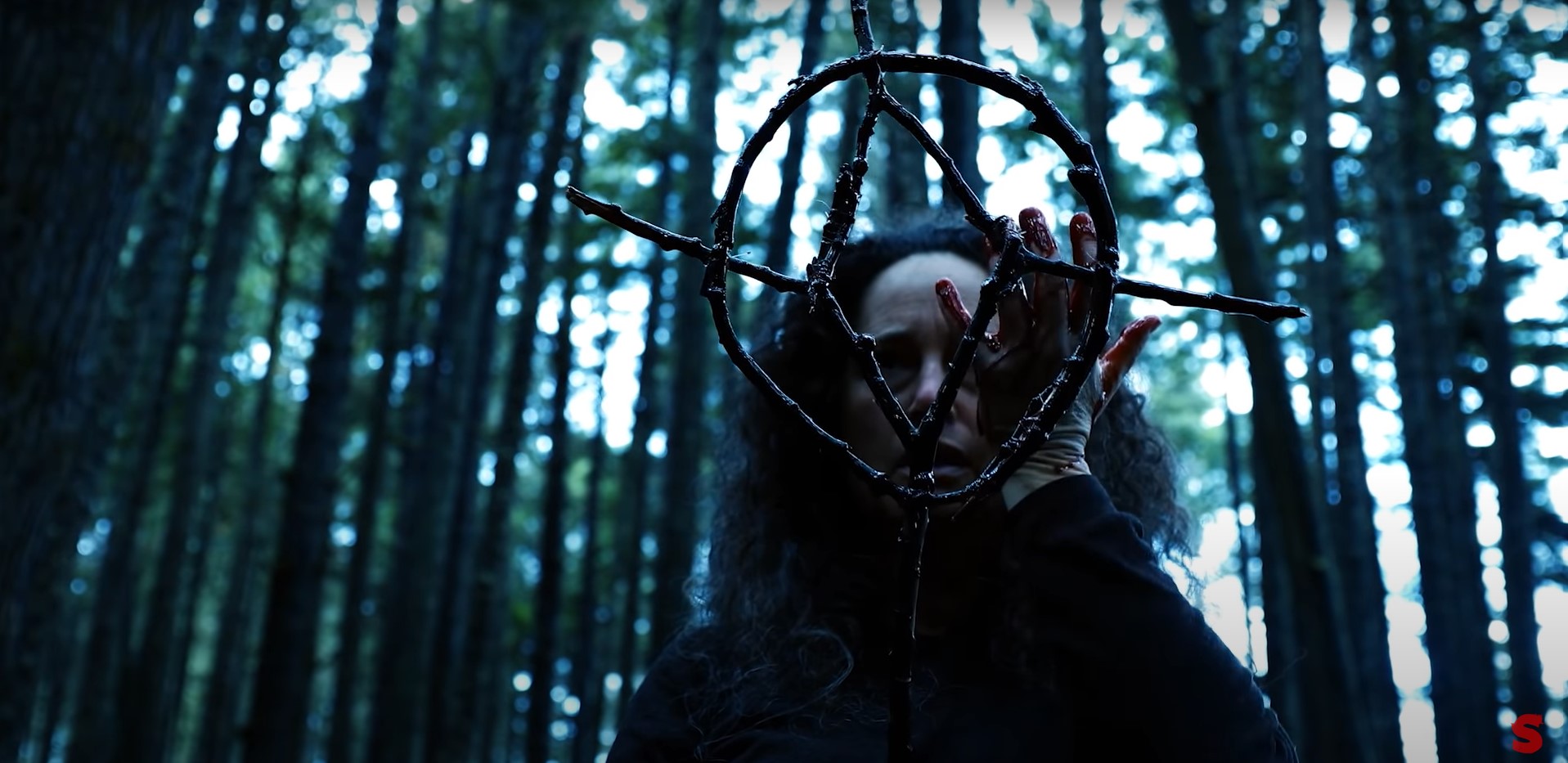
The Yellow Viel Films distributed “Hellbender” is a witches’ brew unlike anything ever concocted in the genre and the Shudder Original film has a new UK DVD release from Acorn Media International. The region 2, PAL encoded, DVD is presented in a widescreen 1.85:1 aspect ratio, has a runtime of 83 minutes, and has a certified 15 rating for very strong language, strong bloody images, violence and threat. Running at a higher level DVD9 bitrate of 8-9 Mbps, the image presentation is phenomenal for the format with no compression issues and the visual details are seamless. Catskill mountains invoke a tactile dampness throughout, and the foliage enlivens with a primary green with good contrasts against the darker brown and forestry emerald shades. The English language Dolby Digital 5.1 surround sound also has little to complain about with a maxed-out output of 192kbps that provides an unsullied soundtrack to H6LLB6ND6R’s discography. Dialogue renders perfectly as well. The only flaw is with the ambient overlays that distinctly felt exaggerated to a fault. Even when Izzy is walking through the forest, the Foley had an extra 200% crunch underneath her feet being one among the examples. Bons features included a visual FX breakdown by FX artist Trey Linsdsay that goes over layer-by-layer the visual heavy effect scenes to see how they were created, a handful of blooper scenes, behind-the-scenes footage of the Adams family shooting scenes and testing lynched dummies, H6LLB6ND6R band music videos, travelling with Wonder Wheel productions, and a short, very short, slice of film of Zelda Adam’s alter ego, Eville Adams in an odd artificial scope. Unflinching folkloric horror with a pinch of overparenting gone awry, “Hellbender” is hell-spawn defiant and a perfect, LoFi witch film that isn’t a witch film.

At 42,000 Feet, EVIL Can Hear You Scream! “Row 19” reviewed! (Well Go USA / Blu-ray)


Don’t Miss Your Connection For “Row 19” on Bluray!  

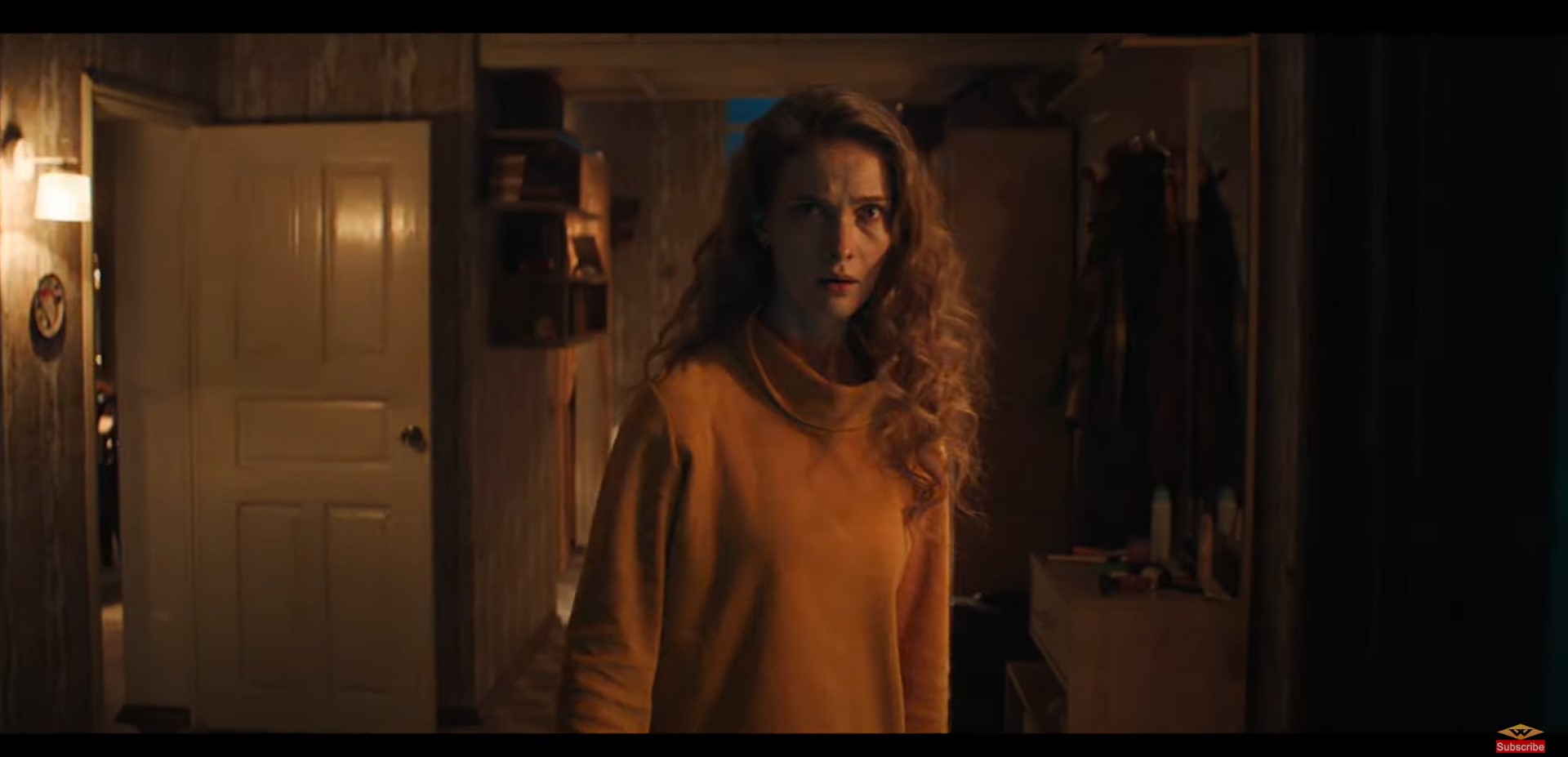
Young Katerina survives a deadly commercial plane crash that killed her mother.  As the only survivor to miraculously to alive, she becomes the center of the public and media attention over the next 20 years.  Now as a grown woman with a young daughter of her own, around the same age of her deadly tragedy, Katerina is about to embark on a plane for the first time to visit her mother and though past feelings leave her tense and scared, her daughter and her being a psychologists help soothe her fears…to an extent.  The late-night flight during a snowstorm leaves half the cabin empty with only a few passengers and the flight dwindles the numbers even more when passengers begin to die off in mysterious random misfortunes.  Lines blur between reality and the past for Katerina who’s about the relive the worst day of her life. 

I consciously realize that all things Russian is likely on everyone’s blacklist at the moment with the unfounded war Ukraine, but anything not created by the authoritarian Russian governing body could be, more-or-less, independently controlled by the people of Russia who are, again more-or-less, against the bloody and unnecessary Putin-fueled conflict outside their country.  So, when I sit and analyze Russian native Alexander Babaev’s latest film, a mile-high horror known as “Row 19,” I’m objectively looking at the artist and his craft rather than the possibility of a stalwart countryman just doing his propaganda duty for the motherland.  In fact, there’s none of that latter statement present in Babaev’s paranormal 2021 thriller that touches upon regret and facing fears, penned in the debut feature film screenplay by James Rabb. “Row 19,” or “Ryad 19” and, in South America, “Passenger 666” is the high-flying, dark mystery of the air film from multiple production studios in KIT Film Studio (“Mermaid: Lake of the Dead”), Central Partnership, Monumental Film, and Red Media.

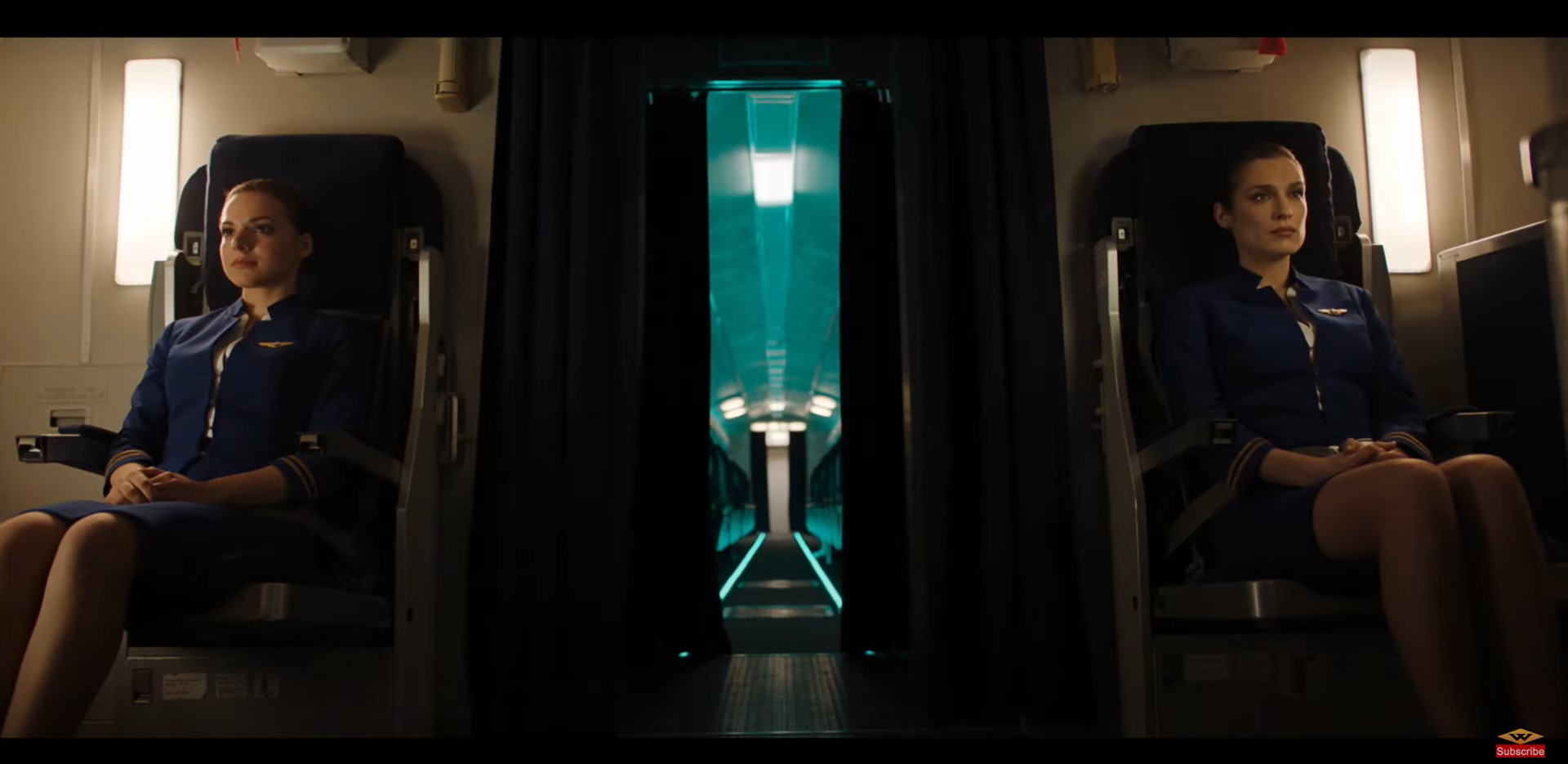
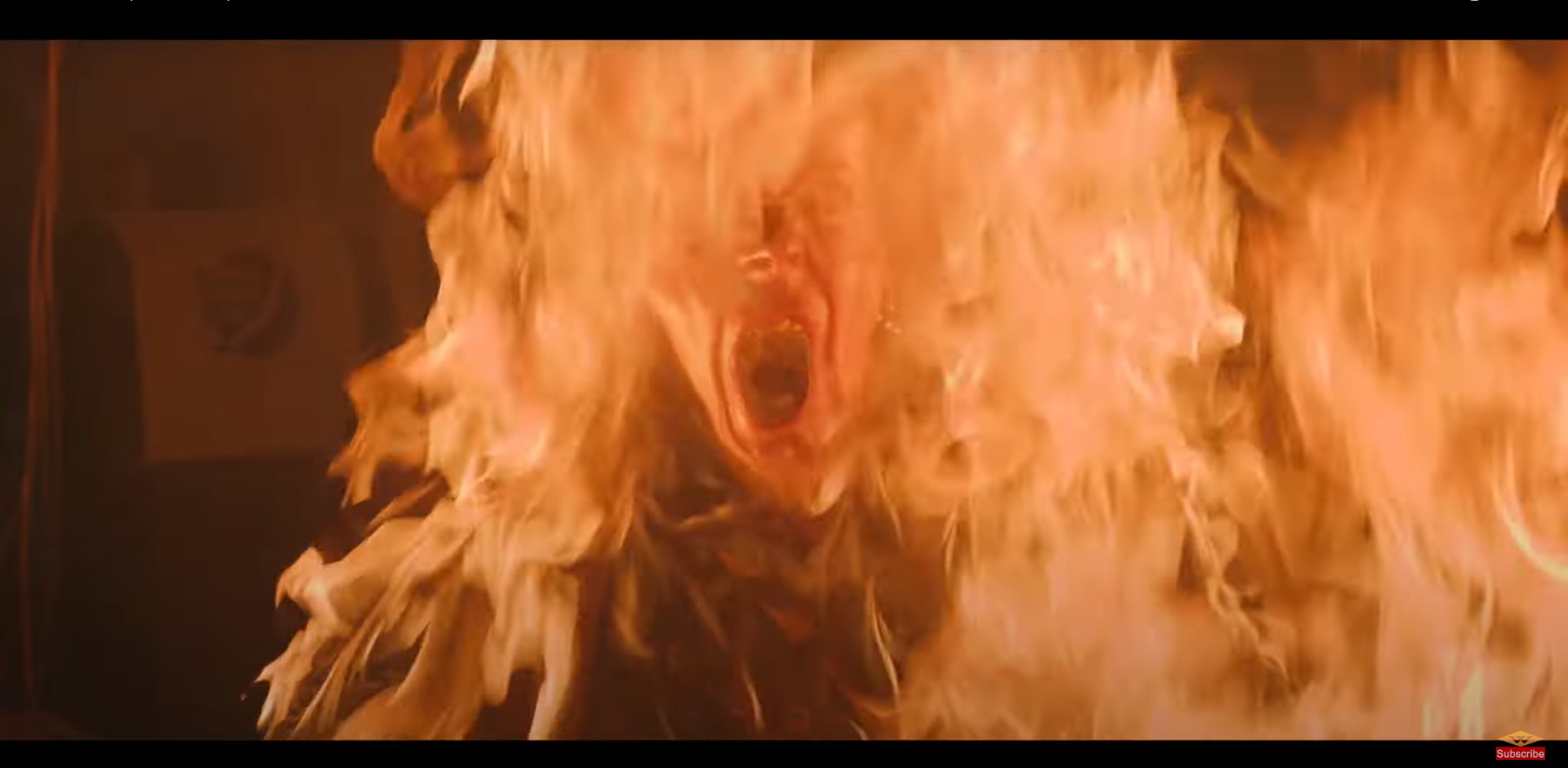
“Row 19” sets the stage with a handsome cast of ensemble characters boarding a sole frostbitten and nearly vacant plane bound for a destination that audiences know all too well will be a landing zone that is anywhere else, but the destination printed on their purchased tickets. A variety of character flavors is always a classic touch when elucidating an unexplained threaten situation. At the yoke is Svetlana Ivanova (“The Blackout”) playing the adult version of the Katerina who bested death being the only survivor of a deadly plane crash 20 years ago. Scarred not only on her leg but also in her head, Katerina vouchsafes herself into getting back on than massive flying steel horse with an internalized pep talk by way of her psychologist vocation who she also helps people with their own internalized issues. However, Katerina is not a very good psychologist when the cabin goes into a tailspin of unexplained death and disappearances. The impression from the film is that the script, at one point or another, had Katerina as a medical physician as she’s often called upon and looked toward by the other passengers to know what to do when a passenger faints or another passenger is burnt to a crisp. She also doesn’t help the matter when she claims to be a doctor (and neglect to mention she’s a mind doctor. I believe that warrants a case for malpractice.). In the adjacent row is the hunky former combat news reporter Alexey (Wolfgang Cerny, “The Red Ghost”) who makes small talk with Katerina and her daughter Diana (Marta Timofeeva) and yet, the suspected sexual tension between them became never present and never materialized. Instead, Katerina and Alexey go back and forth on their mental blocks that causes drug use and shaky hand syndrome, a welcoming change to a rather routine love interest path that’s been overtrodden in other films in similar plots. However, there’s never a full understanding of Katerina’s role in this topsy-turvy spin through realities that only suggests that Katerina has a mighty will that can’t be contained even for her own good. Anatoliy Kot, Denis Yasik, Irina Egorova, Viktoriya Korlyakova, Ivan Verkhovykh, Anna Glaube, and Yola Sanko as the Witch (yes, there is a regular Baba Yaga-esque in the character list!) round out of the cast.

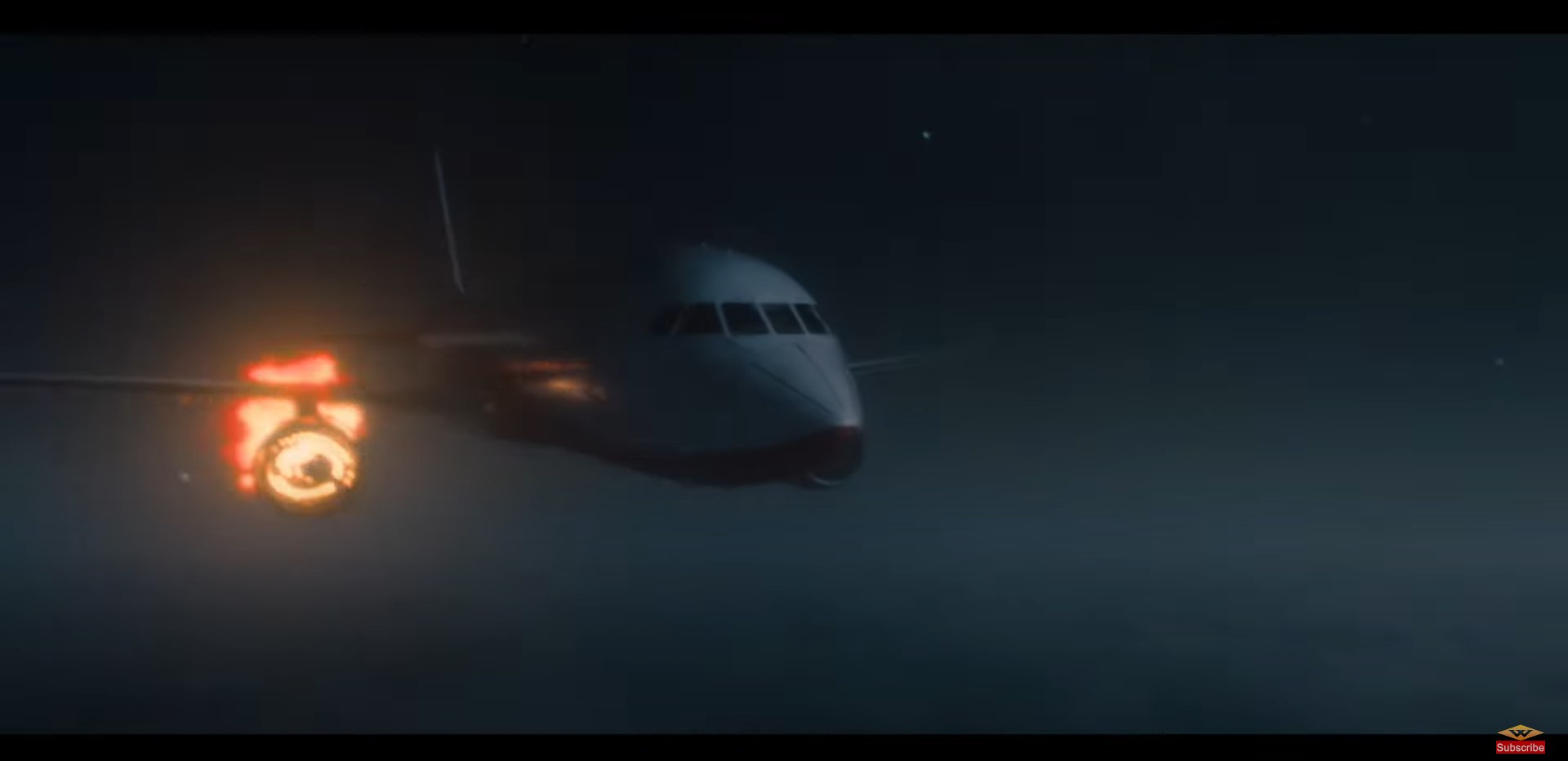
The sky is the limit with airplane horror as the concept of inescapable terror above the clouds can be the most frightening experience for not only acrophobia or claustrophobic individuals, but for average joe passenger looking to earn extra flyer miles on their fear membership cards.  We’ve seen zombies on a plane (traditional and Nazism), we’ve seen gremlins on a plane, and, hell, we’ve seen snakes on a plane.  Now, Babaev introduces the spell-casting witch confined to the rows of the tightly packed, small, and uncomfortable airplane seats and served the Salisbury steak with a side of rancid bag peanuts.  I can see why a witch would be pissed off as well.  However, there’s more than what meets the eye in Babaev’s witch that isn’t just on an obvious killing spree because her inflight cocktail was a little watered down or because of something a little more worthy of a massacre.  “Row 19” aims for misdirection in trying to get the audiences thinking one way by using sleight of hand but really a behind-the-scenes motive is kept in the dark for most of the runtime.  Babaev keeps the momentum fairly charged by setting up individual character personalities with just enough of a touch of odd behavior to make the atmosphere feel foreboding and keep interest in the next key scenes of story progression and at the climatic reveal is where the director’s momentum takes a nosedive, losing the altitude and the cabin pressure of smooth flight with a bow-wrapped-gift exposition that takes all the air of the suspension. 

Fasten your seat belts. Secure all lose items. Lift your tray table and lock it in the upright position. “Row 19” is about to take off and take flight on a Blu-ray home video release from Well Go USA Entertainment. The not rated, region A Blu-ray is presented in a widescreen 16:9 aspect ratio with a decompression of around 20-26 Mbps, rendering picture quality of this AVC encoded release better than expected from Well Go USA. Image is sharp, well-delineated, and abundant with the right amount of color, appropriately denoting flashbacks with a filtered color reduction with only the slightest of change by director of photography Nikolay Smirnov. The Russian language 5.1 DTS-HD master audio track is crisp and clear. A solid track, well-established, full-bodied fidelity track that hits all the right channels with the right balance. There is an option English dub as well as available English subtitles on the Russian track. The subtitles synch well, though fast, and are transcribe with no errors detected. The 79-minute feature comes with a static menu, scene selection, and zero bonus features, which is typically the case with these U.S. distributed Russian releases. “Row 19” is visualized phobic fear, a self-flagellation of trying to change the past with what ifs, and director Alexander Babaev instills a shadowy creepiness inside the cockpit of consternation, but stalls at the height of the film’s storytelling success with a wrap-it-up quick and loose ending.

Don’t Miss Your Connection For “Row 19” on Bluray!