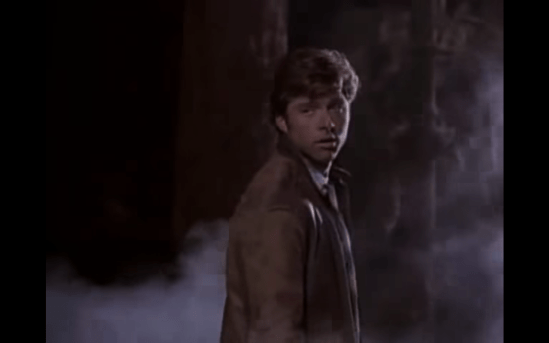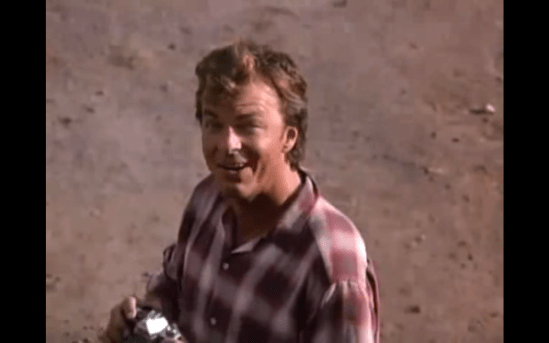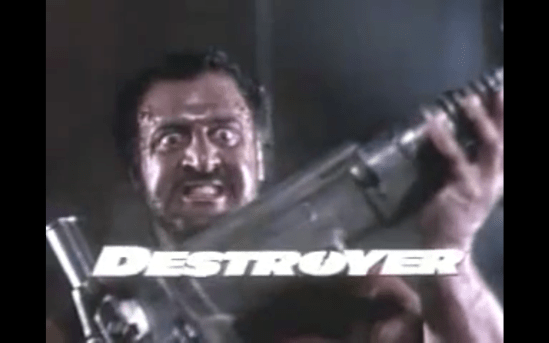
The unspeakable 23 rape and murder crimes of psychopath Ivan Moser grant him a seat of honor at the electric chair. As soon as the switch is thrown, a massive prison riot ensues and what happens next becomes unexplainable, confusing, and indeterminable. One thing is clear, the prison’s Warden Kash loses his position as the trashed penitentiary is forced to shut down. Eighteen months later, a film crew acquire permits to shoot a women-in-prison exploitation film inside the prison with the help of it’s one time custodial employee, Russell, who is just as creepy as the abandoned maximum security penitentiary that housed the infamous Ivan Moser. As production grapples with townsfolk opposition, electrician’s timing miscues, and some seriously bad acting, there’s one unexpected obstacles not accounted for…a living, breathing Ivan Moser still living inside the iron cladded prison.

Horror fans from all walks of life to the age gaps of multiple generations can all agree on one thing, that the 1980’s is the gilded age of horror to which inspired and/or captivated us all. The decade was also an industrious change for political climates that saw the fall of the Berlin and saw musical artists like Michael Jackson break the conventional molds of how music was orchestrated, sung, and danced too. For movies, the change came with technical innovation in elaborate special effects, such as in John Carpenter’s “The Thing,” and undogmatic view of how we perceive plots which opened the flood gates to a slew of unexplored ideas no matter how far-fetched they may seems. One plot such as this would be from the 1988 prison massacre film, “Destroyer,” directed by Robert Kirk as is one and only non-fictional feature before an extreme career solidifying shift to historical movie and television documentaries. Written by Peter Garrity (“The Forgotten One”), Rex Hauck, and Mark W. Rosenbaum, “Destroyer’s” a gritty tale of endless, black obsession fueled by insanity, revved up with inexplicable half-alive malice, and juiced with strength of an indestructible force without being overtly supernatural.
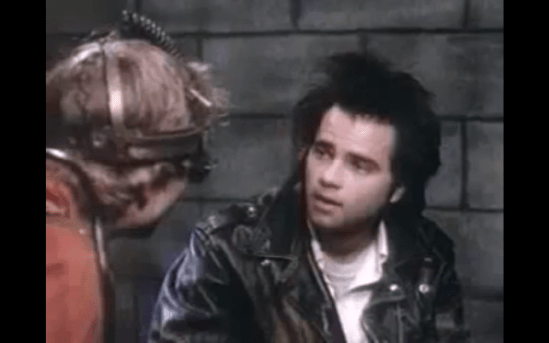
With an 80’s movie comes an 80’s cast and the popular reteaming of Clayton Rohner and Deborah Foreman from 1986’s holiday themed horror, “April Fool’s Day.” “Destroyer” isn’t based on a certain holiday, but converges more toward meta approach where Clayton Rohner and Deborah Foreman play the romantic couple, grindhouse screenwriter David Harris and stuntwoman Susan Malone, on film set of their women in prison movie – Death House Dollies. A typecast switcheroo is engaged as the physicality falls upon the female role while Rohner takes a reserved backseat as a writer and that entails Foreman to face off against Lyle Alzado as the unspoken titular character Ivan “Destroyer” Moser. Alazdo’s crazy eyes and muscular football build provides the suitable basic elements of a crazed killer; probably doesn’t hurt that Alzado was also juiced up on steroids throughout his career in the NFL and beyond his exit from sports entertainment. Alzado has been quoted in Sports Illustrated having uncontrollable anger from roid-rage and that pressurized anger seethed, one could assumed, in the eyes of Ivan Moser, forging a superhuman monster under the parental guardianship of Richard Brake lookalike, Tobias Anderson (“Harvest of Fear”). “Psycho’s” late Anthony Perkins co-stars a the director of the WIP film as an unusual placemat only to serve as a hot moniker in horror to be contextual candy for one big scene and not providing much else. Lannie Garrett, Jim Turner (“Pogrammed to Kill”), Pat Mahoney (“Strangeland”), and four Death House Dollies in a gratuitous shower fight scene co-star!
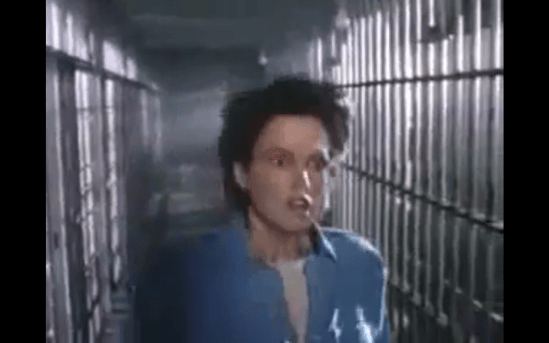
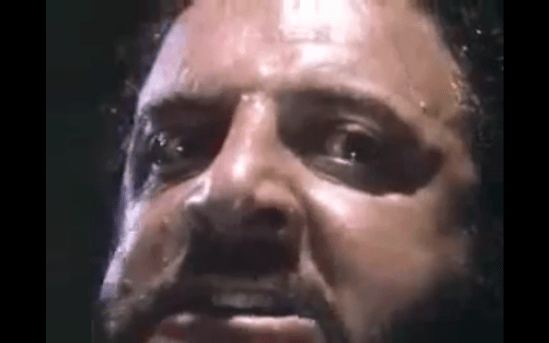
A purebred American slasher of eccentric electrifying devices, “Destroyer” chooses punitive measures against the concept of capital punishment, sending the cryptic message that the dead will haunt you and those that you touch forever in some warped guilt trip nexus. The message is only further hammered in by the embossed haunting atmosphere of Robert Kirk’s opening sequence of a priest walking down the hazy cellblocks toward Moser’s cell, sitting with twitchy Moser while he madly raves and rambles about the game show that plays on a television set in front of his cell, and going through the steps of a chaired electrocution echoes a utilitarian dystopia that fathers in the cold, ungenial tone of the prison and Moser’s psychotically feral thirst to kill. Ivan Moser’s vitality is infectious, a hail-mary shot you’ll be rooting toward the finale, as the serial killer undertakes undertaker duties with extreme perversity while chocking up his body count with unsystematic eliminations, such as with a conveniently placed jackhammer in the prison basement. The jackhammer’s scene is “Destroyer’s” bread and butter, the showpiece of the whole film, but Moser only snag a couple of some real good on screen kills. All the rest are off screen or channeled through another device, such as an electric chair, and that softens and stiffens Moser’s, if not also Alzado’s, ultimate larger-than-life presence. Still, “Destroyer” rocks Lyle Alzado’s short-lived indelible monster making movie talent and confines the space to a breathless solitary confinement death house ready to devour more victims.
“Destroyer” shocks onto DVD home video release distributed from Cheezy Movies, MVDVisual, and Trionic Entertainment, LLC. If you’re not willing to shell out big bucks for “Destroyer” on Blu-ray from Scream Factory, check out Cheezy Movies’ economy region free DVD presented in an academy ratio, full frame 4:3. A beginning title card mentions that Cheezy Movies attempts to find the best transfer available when searching out titles and I believe that was done here with this release, but unlike Scream Factory, funds were not poured into an expensive upscale as moments of banding start right at the title credits. The transfer instances of dirt and cigarette burns are immaterial enough to not falter viewing, but there’s a bit of hefty color posterization in the basement scene that nearly blends the entire white scheme together and causing difficulties defining individual objects. The English language single channel mono mix maintains a lossy connatural sell topping out at the it’s as good as it gets ceiling with an economy release, but the dialogue is surprising clear, soundtrack sounds good, and the ambience, though needing a fine tuning, shapes out depth and range nice enough. With this release, no special features are available. Much like “Destroyer’s” tagline, Robert Kirk’s feature won’t shock you, but will give a great buzz with a nightmare coiling around your brain performance from Lyle Alzado and a super 80’s execution-from-the-grave slasher that’s just a guilty pleasure to behold.
Author Archives: Steven Lewis
It’s EVIL That Can Truly Bring Love Back Together. “By Day’s End” reviewed! (Breaking Glass Pictures/DVD)

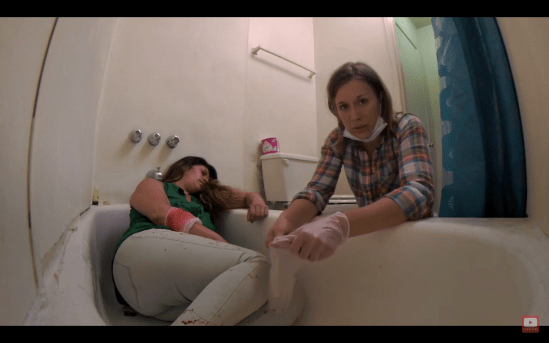
Down in the relationship dumps, Carly and Rina struggle with sustaining the love between them. Carly recently dropped out of medical school to pursue a videography career, Rina, whose a battling bulimic, can’t secure a job, and, together, the financial strain and their respective personal issues is pushing them apart as they indolently work toward a seemingly futile plan for the future in a rundown motel recently purchased by a college friend named Wyatt. As if things can’t get any worse, an infectious pandemic turns the diseased into flesh hungry zombies and has quickly engulfed their area shortly after devouring Europe before anyone knew what hit them. With all communications down and surrounded by the infected, Carly and Rina rely on each other for survival, armed with only a couple of handheld cameras and a knife, but one Rina becomes sick, how far will Carly go to save the love of her life.

Love and zombies. Never has there been a more catalytic experience when the fate of an undead ravaged Earth becomes the tinder box for rekindling affection of a broken relationship. That’s the surmised premise of Michael Souder’s director debut, a found footage horror entitled “By Day’s End,” released onto DVD by the Philadelphian home video distributor, Breaking Glass Pictures. The LGBTQ aware zombie horror is based on Souder’s short marketing preview entitled “Hunger” that involved a man and woman couple rather than two women and was set at a motel site with Souder acting as narrator in explaining his vision. While “Hunger’s” financials didn’t gain footing through crowdfunding, Sounder was able rework his vision that incorporates a different breed of zombie that can learn at a rapid pace, shot his film in 2015, and finally hitting the retail markets in 2020. Sci-Fi-fantasy writer, Justin Calen-Chenn, co-writes the script with Sounder and serves as co-producer with the director along with another co-producer, Alicia Marie Agramonte, in her first feature produced production. Joe Wasem serves as executive producer for this complicated love story in the midst of a zombie Armageddon.

The rocky romance between Carly and Rina land praise for Lyndsey Lantz (“Lore”) and Andrea Nelson (“I Spit On Your Grave: Déjà vu”) in being a convincing complex couple with tons of baggage including relationship singeing secrets from one another and an underlying passion that has grown a little stale from a future strained of financial collapse. The chemistry between the blonde haired Carly and the dark browned Rina sizzles with tension that steams like when hot water hits a freezing cold surface. Lantz provides Carly’s bubbly optimism of a woman in love that finds climbing Rina’s colossally icy barrier a frustrating feat despite an immense amount of devout love and loyalism for her partner. The one character that isn’t very convincing is the former military turned motel host Wyatt Fremont played by Joshua Keller Katz. Katz’s rigid performance falls into the stereotype category of a bad script read, overplaying Wyatt’s previous life with a smug thinning effect on the whole zombie chaos and Wyatt sticking out of place like a giant sore thumb. Rounding out the cast is Diana Castrillion (“Godforsake”), Umberto Celisano (“First House on the Hill”), Devlin Wilder (“Grizzled”) and die-hard horror fixtures Maria Olsen (“Starry Eyes”) and Bill Oberst Jr. (“3 From Hell”) with the latter providing his voice only.

Rina’s unceasing eating disorder has staked a claim as one of the spurs affecting Carly and Rina’s declining relationship and, yet, when another eating disorder where mankind craves the taste of each other, the once quarreling lovers reignite the warmth that was once their bond in an amusing parallel of events. Character analogies are not the only nice touches provided by Souder who tweaks the zombie, extending upon George Romero’s evolutionary concept of a learning and pliant zombie while also creating a big world apocalyptic problem with small world capabilities, with the undead playing possum – how very “Resident Evil.” The 74 minute runtime offers ideal pace to not linger in exposition, which some horror love stories tend to do, balancing the backstory and the instantaneous chaos into a smooth transition of events. The camera POV style renders the same objective with also a bit of tranquility that’s like a calm before the storm rather, as some ambience is muted by security cameras. The effect results a frightening, breath holding silence which is a nice, eerie touch of cinematography and uncluttered audio.

“By Day’s End” is the motel mayhem zombie movie you’ve been hungry for and comes to you on a DVD home video being released March 17 courteously from Breaking Glass Pictures. The DVD9, region 1 release is presented in a widescreen, 1.78:1 aspect ratio, that splices together handheld camera and security cam footage. The image quality respectively shares the diverse filming tactics used to interlace a story. Handheld footage features a bright, natural appeal whereas the security footage purposefully instills as ashen approach and softer, fuzzier details with the horizontal lines created by direct light The English language 2.0 stereo mix has clean and forefront dialogue; the creature gutturals cast a more over-the-top and tawdry vocal disappointment that wasn’t fear invoking. Ambient depth and range are sizable and balanced. Special features include a behind-the-scenes, a quaint blooper reel, and Souder’s short film “Hunger.” “By Day’s End” marks the first indie horror success story of a 2020 release with a delicately modeled blend of romance and horror and a surge of lasting captivation on both of those fronts.
EVIL Knows No Off-Limits! “Restricted Area” reviewed! (ITN Distribution/DVD)

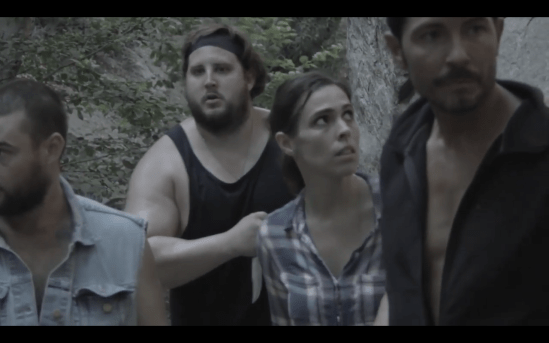
Four blue-collar friends are being laid off from their steel mill jobs; family generations are engrained with the blood and sweet of the mill, but the somber moment is humbling and harsh when responsibilities come to collect. They decided to throw one last hurrah, a boozy camping trip into the rocky wilderness, before life hits them hard. The calm and tranquil getaway turns deadly when acolytes of Unionology, a cult secluded to the restricted areas, sets sights on trespassing campers with the four friends right in the middle of the hunt. After teaming up with another hiker and the disappearance of one of the friends, a fight for survival ensues against armed masked men and an unhinged cult leader along the mountainside where it’s not only man versus nature, it’s also man versus man.

The great outdoors continues to be synonymous with a hot spot for murder, mayhem, and overall doom and gloom in Christopher M. Don’s debut backwoods cult thriller of survival entitled “Restricted Area.” Dons pens as his second script behind the savagery, snowy slopes of his ski-sploitation horror, “Minutes to Midnight,” where masked men with a cryptic agenda hunt down patrons of a ski lodge set upon a mountain. Don must have an fondness for producing screenplays where masked killers stalk in wilderness elements as “Minutes to Midnight” plot is essentially the same as “Restricted Area” without the sound-damping snow. Produced by Gear Up Productions, which I assume is Christopher Don’s company, climbs very little up to being a modest budget feature and retains around camping along the super low financial terrain based off the already exaggerated beliefs of Scientology that, if at all, lightly treads to more escalating and thrilling heights.

With being an indie feature on a microbudget, Don implements his cast to being his actors as well, including himself as Cody, the nearly silent onscreen brother to his real life brother, Robert Don, as the film’s lead, Tyler. Tyler’s a rough and tough steel mill worker with his biceps bulging from his sleeveless, black puffer jacket and hunting knife strapped to his waist side, but as far as depth goes, Tyler lacks significant worth from little backstory and no character arc. Whatever Tyler does isn’t exactly bursting with energy by Robert Don’s deadpan manner. Who recoils from inexpressiveness is West Murphy playing Axel, the goofy and boastful friend whose really blowhard, and though Murphy sprinkles flavoring upon and around most of the monotonically adrift slop, Axel’s one-trick pony can’t even offer much else to the story, not even a glorious death that would be redeeming for such droll stereotypes. “Restricted Area” houses random entries and exits of characters that can make viewers anxious, concerned, and down right frustrated with the arbitrary fates of Harold (“Big Bad Bugs’” Phillip Andrew Botello) who disappears with only a little sliver of where he might be in the closing scene and the blank white masked cultist with a machete who leaves more intrigue of a boss level villain than is actually divulged in the story. Paige Lindsay Betts, Ross Britz (“Ozark Sharks”), Emily Gardt (“Satan’s Seven”), Nicholas Cole (“Stripped”), Randy Wayne, Gus Moore, Wilmer Hernandez, and schlock horror internet pundits and, Shawn C. Phillips and Danny Filaccio fill out the cast list.

“Restricted Area” already has a zillion things going against the meek and humble feature albeit the aforesaid above from the mishandling of characters, but the bearings, picked from the litter of many categories, never comes into focal clarity and shimmy their way to eek by toward a rather enigmatic end. Out of the 112 minute runtime, Christopher Don’s screenplay couldn’t consists of more than 60 to 70 pages of dialogue and scenes with the remaining footage for the feature being supplemented with overkilled filler scenes of Tyler and his band of survivalists wandering around an idyllic traipse, dysfunctional and unnecessary segue edits repeat nearly themselves and just extend into filler scenes themselves, and the bombardment of landscapes – lots and lots of landscapes. There was even one faux pas of a wooded mountainside that was shamelessly shot straight from a magazine advertisement with the advertised site text very visible in the scene. There’s also a scene with a real rattlesnake that, by chance, wandered into production and Don decided misplace this miracle amongst inside another wandering group montage. To continue on the script, the convoluted nature of the cult wanted to kill a young boy becomes lost as this boy comes and goes as he pleases, pleading without any dire sense of urgency for Tyler to save his life. Yet, this dubious boy never seems to be frightened, frantic, or even in cahoots when considering the cult’s dastardly plan to end his time on this Earth.

ITN Distribution and Mill Creek Entertainment’s call to the wild is a survivalist nightmare in Christopher Don’s “Restricted Area,” pitching a tent into the DVD market with a home video release. The DVD is presented in a widescreen 1.78:1 aspect ratio on a single layer, region one disc. Perhaps one of the worst presentations I’ve seen lately with the low bit rate, big compression artifact issues that denounces detail clarity right from the get-go, settling into a fuzzy and blotchy 112 minute, from start-to-finish, runtime. The color palette doesn’t pop either inside the parameters of a faded natural scheme that bares no attempt to use any shade of tint to offer more than just the bare minimum to survive. The English language Dolby Digital stereo dual channel mix plays the same rugged tune with lossy quality in dialogue, ambience, and Michael Levinson’s synthy soundtrack, which is perhaps one of the film’s few highlights in lieu of his debut. Still, a harsh feedback echo on the dialogue dampens the authenticity of the ordeal and poor mic placement dilutes the fidelity even more. Optional English SDH is available. Bonus features includes an audio commentary, trailer, and a quaint blooper and outtake reel. “Restricted Area” doesn’t have the authority required to be a gouging survival horror as all sides of the cinematic terrain are too rough for an visual and audio trek and the script lays to waste with drone dispositions and careless considerations that needs to be post noted and restricted from itself.
Evocation of EVIL in “The Girl In the Crawlspace” reviewed! (ITN Distribution / DVD)

Jill escapes from the grip of a kidnapping-serial killer who kept her confined in a crawlspace under the house. Her courage brings lethal justice to the captor when the local marshal shoots and kills him upon confrontation. Jill struggles to reintegrate back into her local community in the aftermath, sleeping unconfined in the outdoors and withdrawing herself for social interaction, including from her weekly role playing game with friends. When Kristen moves back into her hometown from college, she aims to set up her therapy practice to assist families impacted by the serial killer as well as Jill by special request from the marshal, but Kristen’s rocky relationship with her substance abusive, off-Hollywood screenwriting husband on the mend drags out Jill’s much needed treatment. With Jill and Kristen preoccupied, they’re oblivious to the concealed threat that plots the next terrorizing exploit of kidnapping and tormenting young, beautiful women.

From under the grubby wooden floorboards to the strategic folding table of a role playing game, “The Girl in the Crawlspace” is the Midwest direct-to-video suspense thriller that tackles post-traumatic stress and marital strife while submersed in a looming trail left by a notorious mass murderer, written and helmed by first time director John Oak Dalton. Dalton, who has penned several low-budget grindhouse titles over the last decade and half, including titles such as “Among Us,” “Sex Machine,” and “Jurassic Prey,” returns once again to the genre with the repercussions of Podunk psychopath upon small town America, filmed in Indiana and release in 2018 hitting the ground running with film festival circuits. Indie filmmaker Henrique Couto, schlock horror director of “Scarewaves” and “Marty Jenkins and the Vampire Bitches,” signs on as producer, stepping back from his usual productional duties, and letting an occasional collaborator Dalton to completely engulf himself as the omnipotent auteur. Midwest Film Ventures serves as the production company, shot in Farmland, Indiana.

Erin R. Ryan has continuously sustained a low level hover on the indie horror radar after taking her in Dustin Mill’s “Bath Salt Zombies,” based on the Miami incident based on a naked man eating someone’s face induced by being high on bath salts, and the gooey-gory body horror, “Skinless,” that’s also a Mills production. Ryan expands her portfolio outside physical horror with Jill, a traumatized recluse derived from her abduction and torture, as a subdued component that’s contrary to previous roles, but Ryan capitalizes the opportunity of a scared kitten, recoiling from public gatherings, and slowly and silently emerging back into society while recalling chilling moments as the story progresses. However, there’s difficult pinpointing the head lead as the protagonist roles are shared between Ryan and depicted married couple, a pair of more Henrique Couto casted actors, in Joni Durian and John Bradley Hambrick as Kristen and her husband, John. Between the three, chemistry clicks better than cooking meth in a chemist’s unsanctioned laboratory and offer ample contention without the attending killer’s presence hanging over the whole town’s head. Rounding out the remaining cast is Chelsi Kern (“Scarecrow Count”), Joe Kidd (“Ouija Room”), Jeff Kirkendall (“Sharkenstein”), Clifford Lowe (“Scarecrow County”), and re-introducing Tom Cherry as the good old boy town officer, Marshal Woody.

With a title like “The Girl in the Crawlspace,” I would be remiss if I didn’t say there were some expectations of bodily torture, psychological terror, and teeth-clinching tension when sitting down to watch. The hype was high considering the post-after-post amount of positivity for “The Girl in the Crawlspace” on my Twitter feed. The catchy name and optimistic comments provided real temptation, but Dalton steers in another direction, the what follows in the state of everlasting shock and the reliving of moments seared into your psyche. The direction wasn’t as expected, but that’s necessary a bad thing. “The Girl in the Crawlspace” is exposition heavy with considerable amount of movie referencing peppered with some current event topics, such as the brief mentioning of killing of migrant children, throughout and continuously wanders off point, strolling more into Kristen and John’s crumbling marriage. Jill, the supposed centerpiece of the story, feels more like an afterthought, despite being the “girl” in “The Girl in the Crawlspace.” The cantankerous marriage supposedly jeopardizes those personally involved in Jill’s well-being as John exploits Jill’s idiosyncratic experiences from being a captive by turning them into inspirational junk food for his fading screenwriting career, but the catalyst incident doesn’t stick, becoming more of a weak opening for a more pronounced return of Jill’s haunting past.

From ITN Distribution and Mill Creek Entertainment, “The Girl in the Crawlspace” lands onto a not rated DVD home video release. The single layer DVD is presented in a full frame widescreen of an 1.78:1 aspect ratio. In a framing sense, Henrique Couto’s cinematography distinctly places small town in a spectrum view that highlights the soybean fields and farms, the rustic brick infrastructures, and the simplicities of a relaxed, old-fashioned town, using some drone shots to expose the green belt greenery. For an indie feature, the agreeable bitrate has a frank, clear image despite some consistent overexposure that softens details, especially on faces in the outside scenes. The Dolby Digital stereo 2.0 mix has also agreeable dual channel output. Some of the dialogue scenes suffer through an echo, but for the majority, the lines have clarity and unobstructed by ambient layers or the soundtrack. The depth discloses some distant ambiguities, such as in a train shot that’s not rendered in the background as it should, but the amount of range is palatable. English SHD subtitles are available. The only bonus features available on the release are the theatrical trailer and an commentary with producer Henrique Couto and director John Oak Dalton regarding their history together and going through the shot techniques as well as touching upon the actors. The road to recovery is paved in nightmares, psychological terror, and Midwest psychopaths in “The Girl in the Crawlspace,” but pitches away from the principal concern that turns second fiddle to one struggling screenwriter’s difficult assimilation into rural life while simultaneously rethreading a floundering livelihood and a tattered marriage.
All a Broken Family Needs to Mend is a Demented EVIL Backpacker! “Mind Games” reviewed! (MVD: Rewind Collection / Blu-ray)
On the surface, the Lunds are picturesque of everything that represents the perfect family. Under the surface, Rita and Dana Lund can barely skim the surface with their marriage dangerously ebb and flowing toward sharp, jagged rocks. In an effort to save their relationship, they take their preteen son on a RV camping trip along the coast line of California to try and rekindle their affection for one another. In one of their trip’s initial stops, a hitchhiker named Eric befriends Dana and the boy; they’re fondness for the charismatic and young Eric is so great that he’s invited to ride along with the family on their vacation. Rita’s suspicions of Eric are blinded by her immense loathing for Dana, suppressing Eric’s true maniacal, psychopathic behavior as he infiltrates the Lunds to conduct his only psychological behavior experiments by shifting the boy’s jovial persona, exploiting Rita’s sexual regression, and further alienate Dana from his family.

As if a fable that warns the dangers of picking up hitchhikers no matter how friendly and beautiful they appear to be, “Mind Games” dug into the psyche and had continued the trend of violently unstable roadside travelers that yearn to harm the hospitable, the compassionate, and just the plain old lonely. In Bob Yari’s first of two directorial efforts, the 1989 “Mind Games,” also once titled as “Easy Prey” is a thriller from the mind of screenwriter Kenneth Dorward and co-produced by screen actress turned financier Mary Apick, teaming up with Bob Yari after their work together on the sovereign nation standoff drama, “Checkpoint,” under the MTA/Persik Production Company banner. As the idyllic project for a low-budget thriller with a limited cast and barely any special effects required, “Mind Games” wound up being the first entry for the MTA/Persik affair that sought to stir conjugal strifes with outsider influence and how sometimes the grass is not always greener on the other side.

For an independent film with such a small, sharpened cast, well known actors from the 80’s step into the humblings of lesser grandeur, starting with Maxwell Caulfield. The young, promising star from the sequel to John Travolta’s “Grease” had his career nearly derailed with the critically panned big budget “Grease 2”, but luckily for horror genre fans, the English born actor channeled his talents toward such films as “Waxwork II” and “Sundown: The Vampire in Retreat.” Yet, “Mind Games” was essentially his second break into the film business that opened doors for the former titles and being the unhinged hitchhiker Eric couriered a necessary change from his stage performance to his ability to be warped-minded person looking through the eyes of a totally different and charmed individual. The role absolutely challenges the actor who, from analyzing his performance across the screen, finds breaking in the role more difficult than presumed. Edward Albert is a name you might not remember, but his face will strike some chords as “The Galaxy of Terror” actor steps into the self-deprecating husband role of Dana. Dana is just one of those individuals worth slapping across the face to wake them up and Albert amplifies his unintentional waning from his wife and child with such dismissal and disassociation, I, myself, found Dana’s lack of courage to be unsettling, but his rouse-less attribute fades slowly into man searching, if not clinging, for what’s left of his life. Caught between Eric’s snarky sensationalism and Dana’s lofty air is Dana’s angst wife, Rita, played by “Shadowzone’s” Shawn Weatherly. The blonde hair, blue eyed former Baywatch beach lifeguard sure knows how to be a wild card, an unknown friend or foe in this mental game of chess, as Rita staggers between hating to being extremely amicable with her husband, Dana. This is where Dana and Rita’s son, Kevin, fits in as the deciding factor pending the successfulness of Eric’s testing. Matt Norero didn’t have nearly the extensive career as his co-stars, but deliveries some great, if not zealous, scenes and cold-hearted glares that break up the sometimes monotonous tone of “Mind Games” would routinely find itself stuck.

To frankly put it, “Mind Games” bares the prosaic essence of a run of the mill thriller with a thin strip of riveting tension to cling onto. The film impresses comparably with a cheap suspense novels you’ll find multiple copies of collecting dust bunnies on Dollar Tree shelves where the paperwork backs lavished in a cheap bait title and cover art only provides a quarter of the entertainment value of its marketed worth. However, for a low budget production, Yari manages to pull off impressive aerial shots, eerie dim lit atmospherics of a fog machine heavy night scenes, and tack on flashes of so bad, it’s good meme worthy moments – i.e. the garbage day kill scene in “Silent Night, Deadly Night: Part 2” to reference what I mean. The score is conducted by “Night of the Comet” composer David Richard Campbell with an uncharacteristic upbeat and happy-go-lucky number weaving in and out of the film’s storyline, and coarsely out of place during the RV stop-a-long montage that proceeds after setting up Dana and Rita’s turbulent marriage and Eric’s understated malevolencies, but rather speaks to the overall spirit of the film that’s a rated-R labeled PG-13 thriller, hard on the language, but soft on the violence with more of an implied application of offscreen kills and virtually no blood from an anemic plotline.

Still, “Mind Games” can be considered a cauldron of cynicism and now that the release receives the royal treatment with a full HD, 1080p special collector’s edition Blu-ray from MVD’s Rewind Collection label spine #21. The retrograde cardboard slipcover harnesses a powering transfer that supplies vitality into the well-preserved 35mm source material and presents a 1.78:1 aspect ratio. Perhaps the best this transfer looks to date, a plush matte that’s pleasing and without the drab bleakness that typically coincides. Natural grain remains upon a softer side delineation that’s not heftily indistinct and, in fact, adds to the glow of the product’s decade. The English LPCM 2.0 stereo audio mix has inviting qualities, but taper more on the lossy side of the spectrum. The soundtrack is powerful, especially on “The Writing on the Wall” single by Raven Kane. Dialogue is clear and untarnished, the range is adequate, and the depth is sound. No audio or video hiccups or blights to note nor any dubious enhancements detected. Option English subtitles are available. Special features are aplenty including a new MVD exclusive, retrospective look at the Making of Mind Games that clocks in at 108 minutes of interviews with director Bob Yari, producer Mary Apick, and stars Maxwell Caulfield, Shawn Weatherly, and Matt Norero. Also included a featurette on the producing career of Bob Yari who helmed award winning films such as “Crash,” and concludes with the original theatrical trailer, a reversible sleeve with alternate art, and a collectible mini-poster in the insert slot. “Mind Games'” message to the world is never knowing how good you have something until nearly being ripped from your hands. Director Bob Yari finagles the point across with an unexceptional joyride, but a solid first film from an indie startup hungry enough to take a chance on a practical psychological thriller.