EVIL Wants You to Be Mindless! “Night Feeder” reviewed! (SRS Cinema / Blu-ray)

“Night Feeder” Is a Brainless Trip Through the New Wave Eighties! 

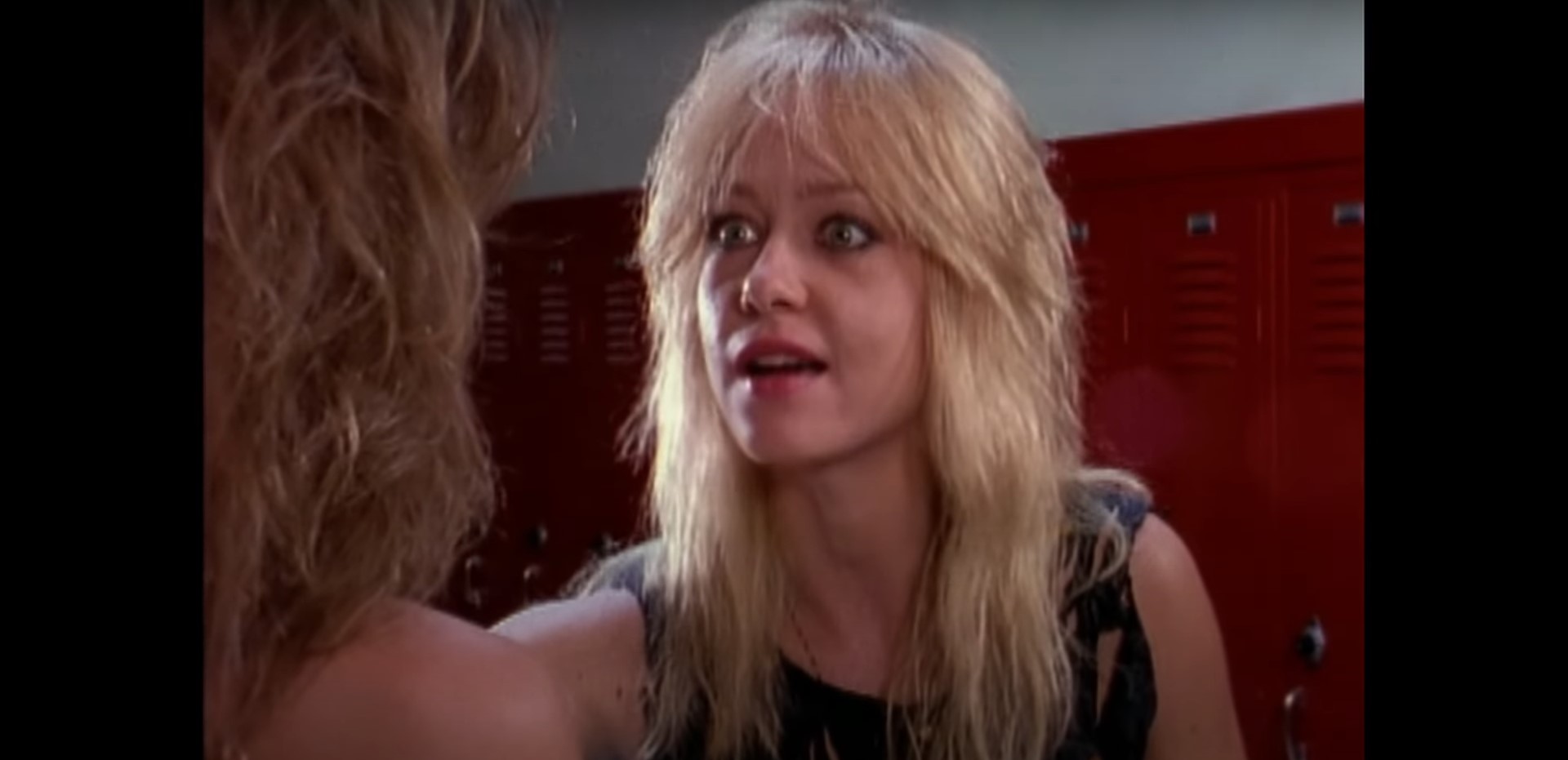
A woman is found dead on the city streets.  The cause of death is the same as two others before with similar wounds; their brains are sucked out completely through a slit in the eye socket.  As the neighborhood community cowers in fear, Jean Michaelson, a female magazine journalist and who also just moved to the residential city district, takes it upon herself to uncover the truth before her new home becomes an unlivable nightmare.  At the center of suspicion is Bryan Soulfield, a musician a part of the band Disease, previously involved in the death investigation of three women groupies who overdosed on a drug called DZS that shares the same phonetic name Soulfield’s band.  Inspector Alonzo Bernardo spearheads the investigation with an ever-watchful eye on his best suspect, Bryan Soulfield, and an even keener interest in Jean Michaelson as they both feel the grip of public pressure and come intimately closer to each other and to the unsuspecting and shocking truth as the bodies become more frequent around Jean’s apartment.
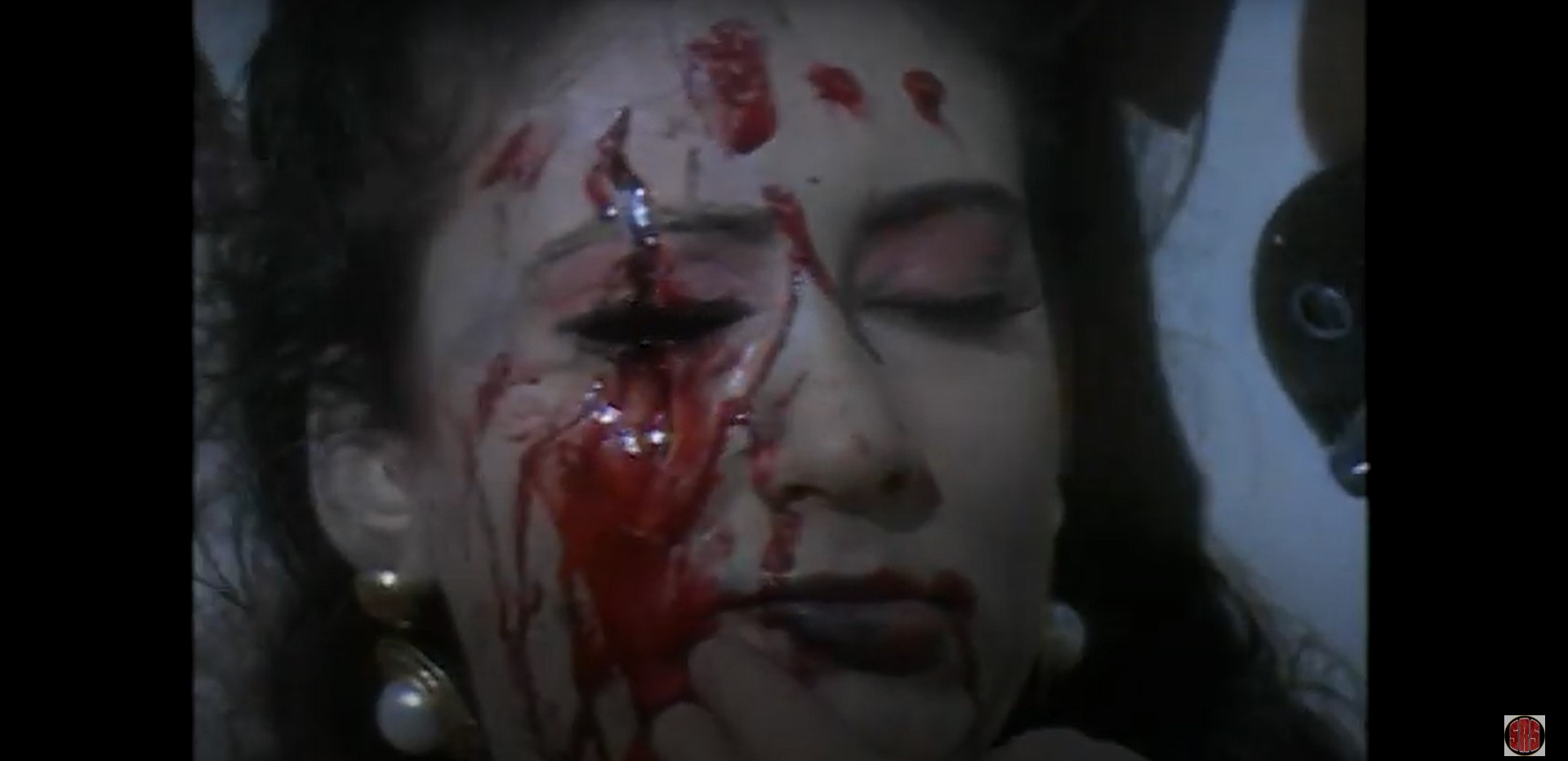
Obscure, one-and-done horror can often be worth the viewing calories and 1988’s “Night Feeder” is definitely the epitome of those hidden gem genre films from America’s exploration into the video format and stemming into another branch of liberal arts.  “Night Feeder” was the result of an assemblage of a painter and a pair of novelists who, out of the blue, decided they wanted to make a movie.  A gouache and oil painter of portraits, often nude, Jim Whiteaker tries his talented brush stroking hand at directing a full length shot-on-video feature with mystery writers Linnea Due and the late Shelley Singer crafting a murder whodunit in a grisly brain slurping fashion that conveys heavily on the theme of misjudging a book by its disfigured and notorious cover and end with a killer you never see coming – because it’s sucking out your brain through your eye socket!  “Night Feeder” is also emblematic amongst other spoiler-inducing concepts that we’ll dive into later in the review.  Shot in the dark corners of the San Francisco Bay area at the liberal arts focused Dutch Boy Studios, “Night Feeder” is glam horror ripe for attention, produced by James and Jo Ann Gillerman under the production banner of Gillerman-Whiteaker-Gillerman.

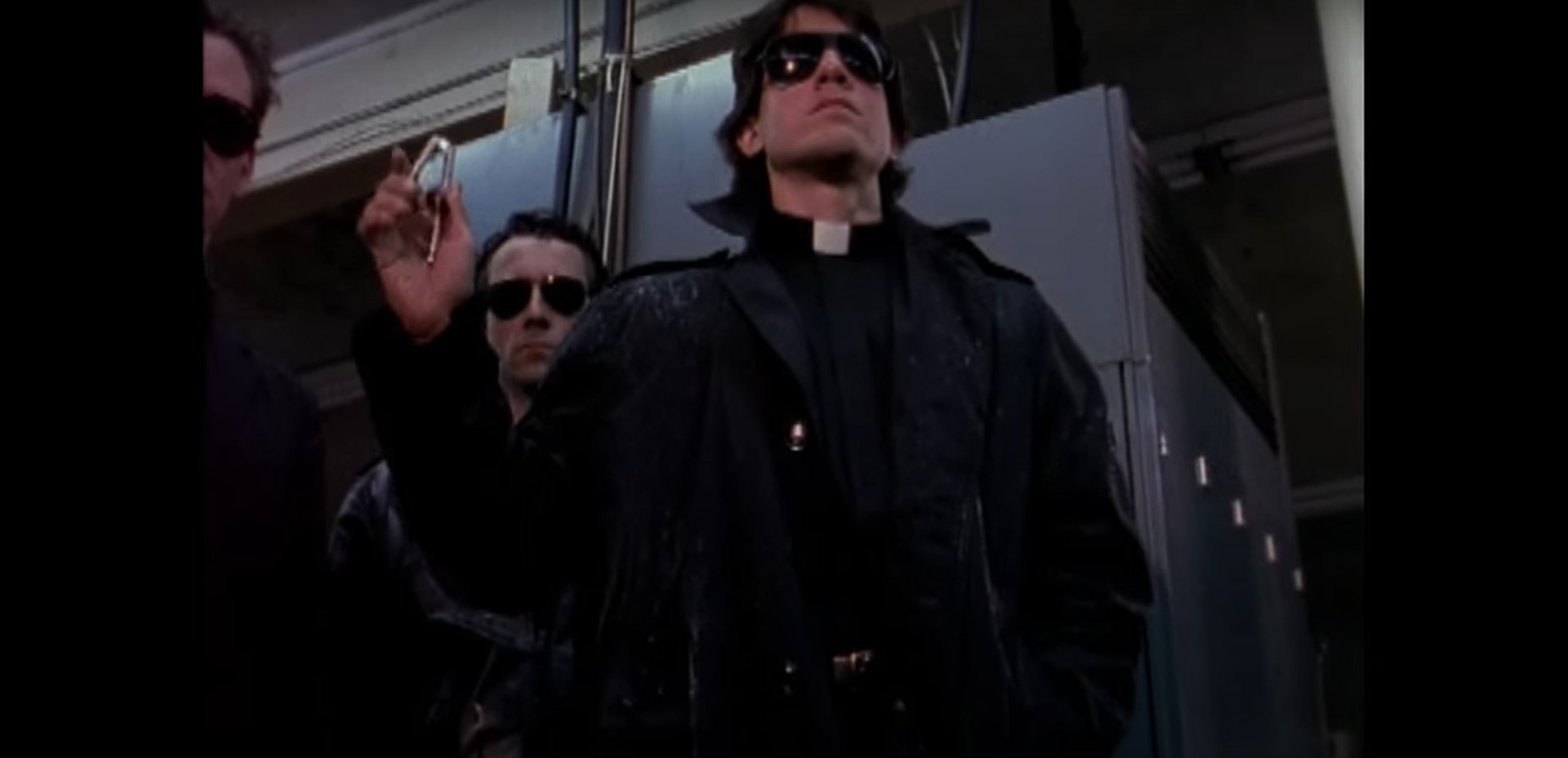
For an investigative horror-thriller in the crevices of a phasing new wave and post-punk era, the low-budget production has a remarkably versed cast of unknown, likely hyper regional, actors.  Kate Alexander (“Kamillions”) cut her teeth as principal character, journalist Jean Michaelson, and instills a healthy dose of raw emotion into an unlikely B-flick, tamping her performance firmly into the role caught in a love triangle between punk musician and prime brain-sucking suspect number one, Brian Soulfield  (Caleb Dreneaux) and by-the-book police inspector, Alonzo Bernardo (Jonathan Zeichner) confounded by killer’s strange methods.  Not to forget to mention the ominous presence that possible lurks around every corner that drives shivers up Michaelson’s tattered spine, making her vulnerable and blind to what’s really in front of her, romantically and threateningly.  We’re briefly introduced to support characters, aka soon to be victims, and then eventually snowball into the quickly dispatched before having a chance to steal or swallow the protagonist predicament for their own, but these support characters are engaging enough to be either drug pushing scoundrels, intolerant jerks, or spaced-out mothers so you can tell from the beginning their level of likeableness before their fatal end, but at least they’re not benign, vanilla cogs in the machine. The cast fills out with Lissa Zippardino, Jac Trask, Ginger Seeberg, Roger J. Blair, Robert Duncanson, Robert Hogan, and the Bay-born cultural critic Cintra Wilson and a special soundtrack performance by the new wave rock band, The Nuns as the fictitious band, Disease. On top of that, Dutch Boy artists fill the gaps in minor roles like waiters, party guests, and concerns citizens as a public gathering.

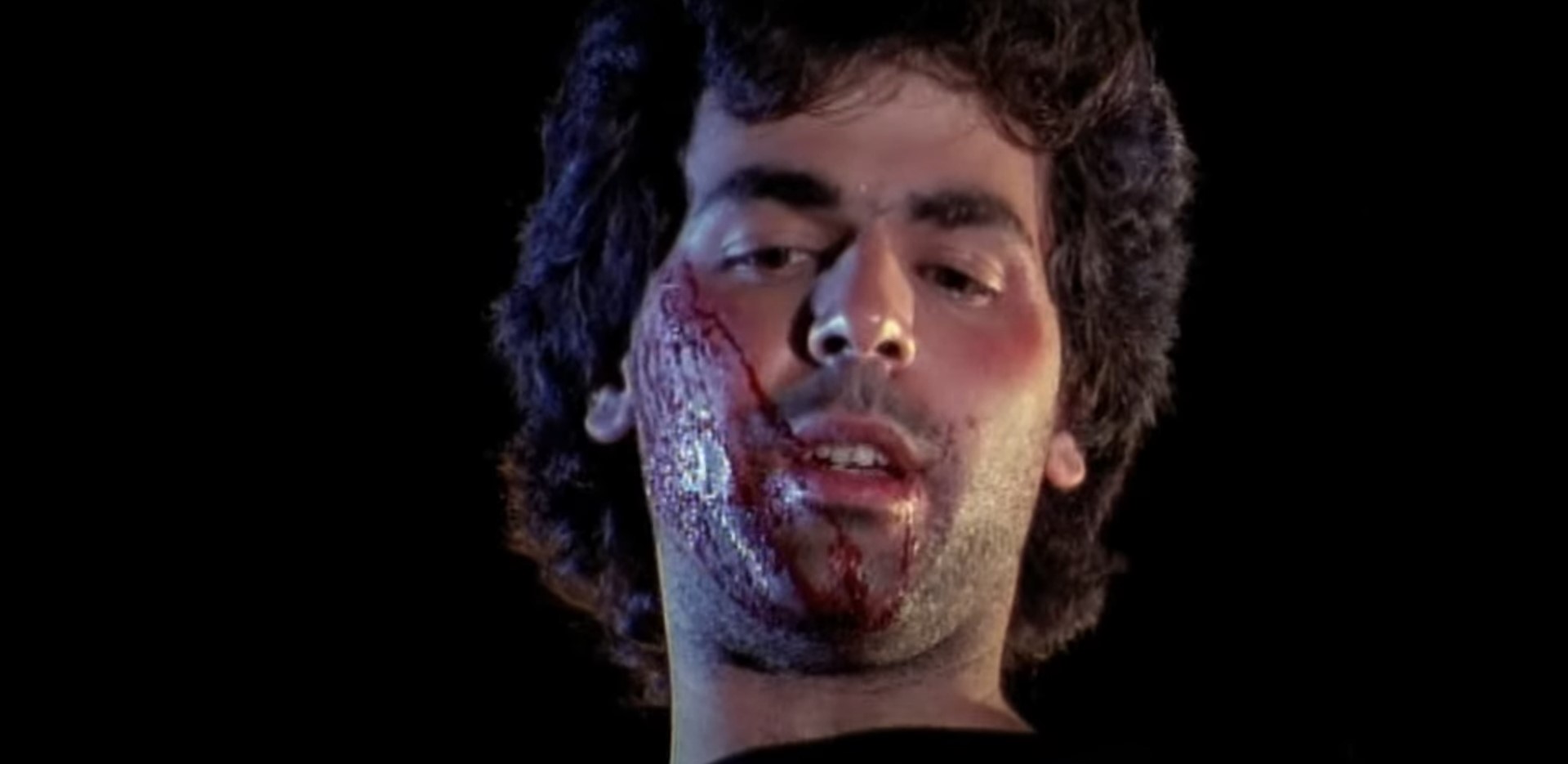
Despite playing out like a police procedural investigation that narrows down suspects until the killer is unearthed and either arrested or gunned down in a harrowing, desperate moment, we all know ahead of time “Night Feeder” is cladded with more than just plainclothes of cops and robbers.  The big tell is the brain being liquified and sucked out from the eye cavity like a Slurpee minus the brain freeze because, well, there’s no brain!  “Night Feeder” sounds like a mindless Z-grade film and while the narrative involves mindlessness in a way, the 80’s creature feature is anything but a ponderous film with an immense underground punk presence, eccentric personalities, and a standoffish and reticent romance brewing in the background sandwiching the strange deaths of unconnected murders piling up around the heroine’s noir-esque, urban jungle neighborhood and perplexing the lone law authority on the case.  Whiteaker and his writing team thoroughly include the residents and residents’ concerns which makes “Night Feeder” bigger than it really is as it is often with lower-budget creature features will neglect to include the angry, scared mobs into the conversation.  The narrative intends to spark public fear and uses it to drive Jean into a rabbit hole of truth that has now become more personal than professional since her space has been affected by an invading killer.  Her best friend ending up dead in the tub of her apartment during a neighborhood party and with her ex-husband found slumped out of the driver’s seat of his car shepherds violently out her old life into a new, scary territory of relationships.  A director having an artistic background and working with creative storytelling minds lends to a more than average physical special effects and becomes a Jonathan Horton (“Enemy Mine”) showcase of skill that removes “Night Feeder” from the average pool of shoddy effects films and into a higher class of eye-catching, detailed creepiness that is unique and can’t be unseen with an autopsy that’s all too realistically educational and with its climatically exposed humanoid creature and it’s protruding cerebral sucking device.

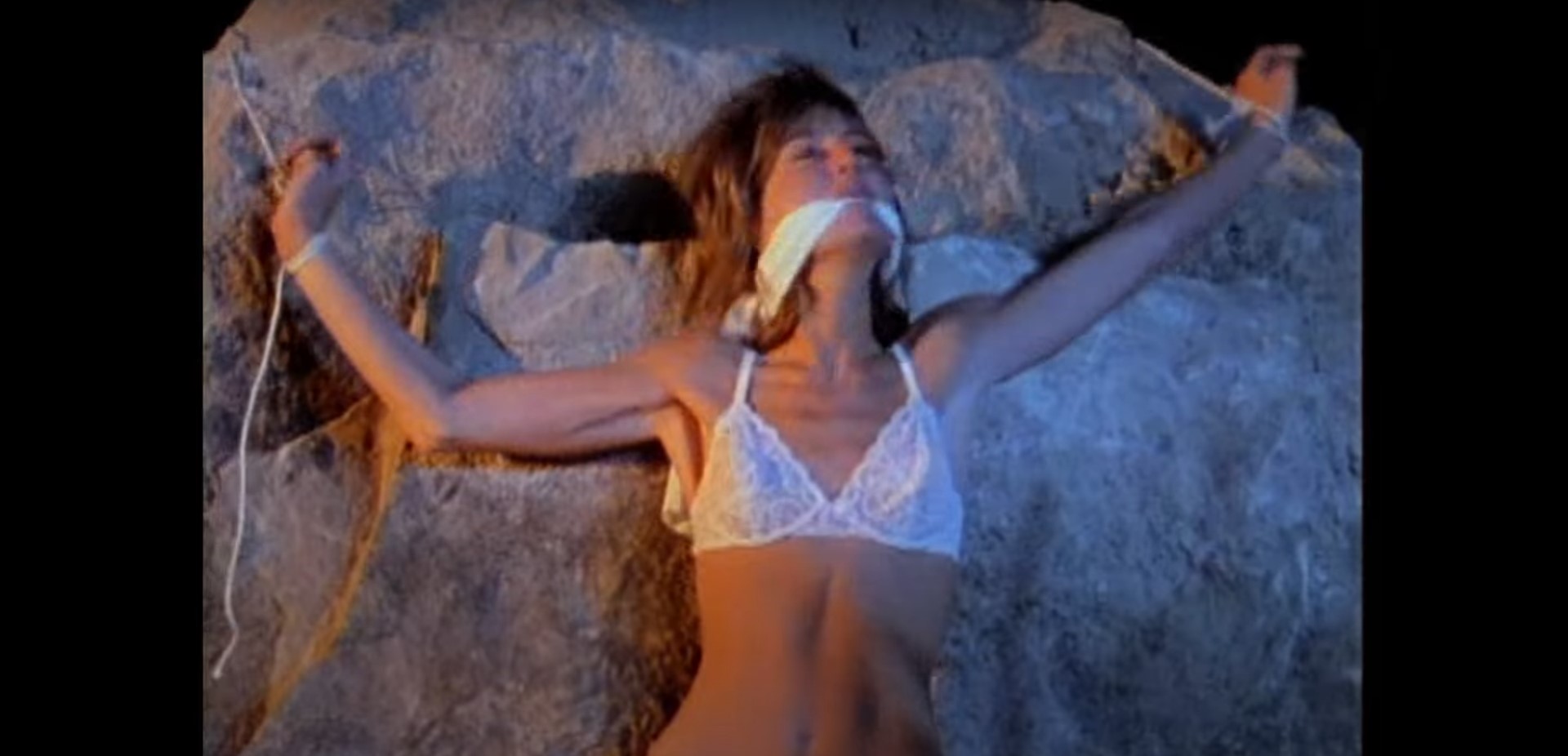
Strong effects, strong story, and a strong female character serve the “Night Feeder” as a secret menu item in the SRS Cinema catalogue!  The Cursed to Crave Forbidden Flesh tag lined film is presented on a single disc, AVC encoded, 1080p high definition Blu-ray with a letterboxed full frame aspect ratio of 1:33:1.  One of the better looking 80’s film on a budget, “Night Feeder” is tremendously insignificant SOV interference, which makes me believe Whiteaker and director of photography, Paul Kalbach, had their hands on non-commercial grade video camcorder and after doing some research, the camera used was a BetaCam SP that increased the horizontal likes to over 340, likely from to Whiteaker and Gillermans’ artistic music videos and seemingly at the advantage of Kalbach’s Artichoke Productions in the Bay area that gained him a reputation as a visual artist and “Night Feeder” very much plays into being a vision of New Wave horror with a glowing aura, vibrant warm, almost neon-like lighting hues, and, of course, the two semi-music videos of The Nuns making their way in front of the camera.  Virtually no technical issues with the image albeit a flat coloring, a blip here and there with a brief blip screech, and softer details with the glow haze outline that provides the movie a prolonged dreamy coating or an inescapable nightmarish ethereal within the context of the scene.  The English language Dolby Digital 2.0 stereo carries a lo-fi but sustainable level that celebrates the dialogue and divvies the other tracks to accommodate the little depth it can muster with the BetaCam recording. English subtitles are not available on this release.  Special bonus features include a commentary by director Jim Whiteaker who provides the genesis of the film and gives background on the characters and actors, a movie still slide show, and SRS trailers that include “Day of the Reaper,” “Garden Tool Massacre,” “The Son of the Devil,” “Hellbox,” “Truth or Dare?” Physical features are housed in a traditional Blu-ray snapper case with new composition artwork with the original embossed title and a still one of the more gory-ladened victims, but the reversed side carries the one of the original key arts that embodies the true essence of “Night Feeder” in illustration of a monstrous hand in the foreground of skyscrapers, reaching up and over a sensuously positioned lifeless woman who resembles the lead actress. The disc art is printed with the same illustrated image. The region free Blu-ray has a runtime of 95 minutes and is region free but is listed as a 2020 film in the same design grouping where usually the date listed is in the production release date, which in this case would be 1988. Tidied up and polished, SRS Cinema Blu-ray of “Night Feeder” is a quarried gem by a group of diverse artists bringing their leathery inlaid and new wave touch of artistic licenses to develop a subgenre standout in the 80’s creature feature category.

“Night Feeder” Is a Brainless Trip Through the New Wave Eighties! 

EVIL’s Blight is Captured off and on Film. “Cursed Films” reviewed! (Acorn Media International / Blu-ray)

“Cursed Films” Now Available on Blu-ray in the UK!  Purchase at Amazon.com By Click the Cover Below.

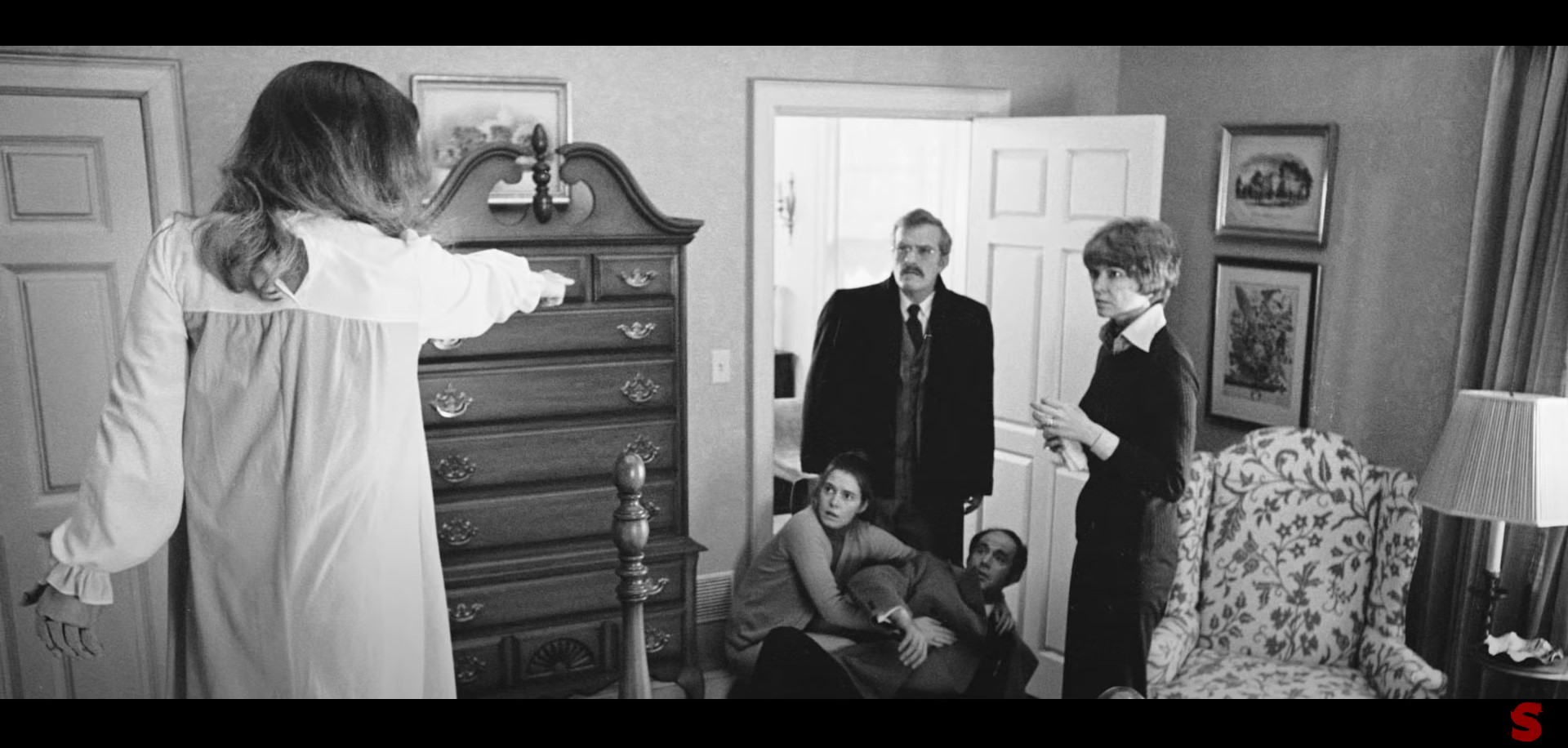
What do “Poltergeist,” “The Omen,” “The Exorcist,” “Twilight Zone: The Movie,” and “The Crow” all have in common? They’re just not successful horror-thrillers with extraordinary actors and directors, they’re also tagged as some of the worst cursed movies of our time. Severe ailments, planes struck by lightning, bombings at previously booked restaurants, egregious injuries, and even death, lots of death, have surmised belief that the otherworldly powers or the omnipotent universe has waged warnings and, if gone ignored, has blown the kiss of the death. For years, these films held power of people because of a string of unfortunate incidences that link back to rumors that possibly incite mystical retribution for using real corpses, telling stories about the birth of the antichrist, and even family lineage curses by ancient Chinese spirits. There’s no shortage of superstition in the world, a country practically built on the idea of a martyred Jesus rising from the grave, and Hollywood is no exception that the bad things that happen in life will always course people to find a reasonable explanation even if that explanation is an untenable supernatural one.

When we think of curses as a whole, we’re generally point and look to the obvious occult brewing with black magic of vindictive witches, ancient incantations to evoke demonic bidding, Gypsy ill-wills that have lycanthropy teeth, or ominous warnings inscribed by long-ago Egyptian priests keep mummified remains from being marauded by intruders.  These hexes and jinxes are storylines popular in movie culture since the beginning of the first movie pictures, used to entertain, excite, and thrill to the furthest extent of the means.  Who would have known there is a reality bound, darker side to the curse mythos that has been insidiously rooted in the illustrious and dream making film industry?  Cursed films have been the talk of Tinsel town, ambulance chasing tabloids, and the short-lived internet fandom for years, decades now even, surrounding the mysterious misfortunes of certain films.  The Shudder 5-episode docuseries, “Cursed Films,” goes into the weeds with retrospective interviews from cast, crew, religious experts and even mavens of black magic and witchery.  Jay Cheel wrote, directed, and edited the series removes the characters from the story and focuses on building the humanity of the affected, dives into possible reasons for the film or individuals involved to be cursed, and the unfortunate outcomes that have resulted in the loss of life surrounding the project.  Muse Entertainment Enterprise, one of the companies behind CBS hit U.S. comedy “Ghosts,” serves as the production company behind the 2020 released Shudder exclusive series.

With any documentary, the cast are plucked right out of history, fast-forward into the present, to tell their firsthand account of events. Directors, producers, special effects and makeup specialists, and those beyond the realm of the film industry recollect and provide their own interpretation of a beleaguered saga with an interviewer, assumed to be “Cursed Films'” writer-director Jay Cheel, posing the questions to get open access to the inner thoughts of the grieved and impressed to give in full detail their wholehearted accounts. Cheel is able to nab different perspectives that play into the divisive nature of the whole cursed narrative, such as with those, mostly cast and crew, who don’t invest into the transcendental nonsense that has sense become either a minor or major stain on their careers. Others see the unexplainable coincidences to be godsent and beneficial to the production. For example, “The Omen’s” star Gregory Peck’s plane and producer Mace Neufeld’s plane were both struck by lightning in route to the London set only a few days apart. Neither plane sustained life-threatening damage and, thus, strokes of good luck and fortune seemed to be attached to the project along with other instances of death and destruction that averted harm from those involved with the film. Still, many still feel “The Omen” is a cursed film, mostly on the internet horror communities where conspiracies, misinformation, and false narratives run rampant like COVID in the early years. Often when Cheel obtains the perspective a black magician or a witch, Cheel’s attempting to gain not only an understanding of that world from real world practitioners but also to embellish a great melodrama into the episodes. Then, there’s the emotionally poignant Richard Sawyer segment. As the production designer on John Landis’s “Twilight Zone: the Movie,” Sawyer saw firsthand the tragedy that befell one of the film’s segment stories. Lead actor Vic Morrow (“Humanoids of the Deep,” “1990: The Bronx Warriors”) was cut down, along with two children, during a scene with a helicopter that went terribly wrong, and Sawyer’s account is powerfully traumatizing and great representation of how this series should be affect and chill viewers to the heart and to the bone.

“Cursed Films” reveals the terrible mishaps and misfortunes of limelight. If a private person is dies due to illness, accident, or foul play, there’s usually not a major production made out of the occurrence and no grand, “Final Destination” design beyond our understanding is erected to give it all meaning. Under the public eye and recorded by every entertainment medium known to mankind at the time of filming presents public scrutiny, public panic, and public speculation that plots points and charts graphs toward a giant, flashing sign that says, in big bold letters, CURSED! To any given horror fan, much of Jay Cheel’s docuseries is already common knowledge for the most part with the fresh and emphatic take from at the scene interviewees who add compassion and empathy as a shield against those who still think the sweet-faced Heather O’Rourke was doomed by some malison brought to fruition by India-removed skeletons. To the non-horror fan, much of Jay Cheel’s docuseries will have that new car smell and can be engrossed by Cheel’s spin of oppositions that never lay claim to either side as truth but only further what Zelda Rubenstein and Richard Sawyer tried to dispel with reason and tangible accounts is that there is some underlying curse reaching up and grabbing the throats of these films to point of choking the very goodness out of the cast and crew’s souls and only provide morbid curiosity to those seeking out the works stuck in a perpetual cycle of occultism.

Become reeled in by the notorious historical compendiums of “Cursed Films” in the first season that aired in 2020 and is now finally on Blu-ray home video in the UK from Acorn Media International. Though listed as a PAL release, the AVC encoded Blu-ray is presented in a 2.39:1 aspect ratio and is in 1080p, high-definition resolution, so a PAL encoding description would be inaccurate for a HD release. Image quality varies between the clean digital recordings with the interviews in interiors and exterior settings, polished transfers snipped from your favorite classic (and “cursed”) movies, and the raw, unpolished frames or clips that were cut from the film or remained as behind-the-scenes supplemental. All-in-all, picture quality is fine and clear in any regard with no issues of compression on the various mediums. The English language DTS-HD 5.1 surround sound stakes prominences on the dialogue for this is a docuseries reliant on firsthand accounts. Some historical footage can be staticky and flat but fits into the documentary design that pulls clip examples from the archives. “Cursed Films” isn’t going to be actioned packed or atmospheric but the composing duo of “Kicking Blood,” Justin Small and Ohad Benchetrit, offer an engaging soundtrack that could tell the story without the interviewee’s tale of sadness, mysticism, etc. English subtitles are available. For each episode a director’s audio commentary is available as a special feature. The physical feature comes in a slightly thicker Blu-ray snapper with the cover art, which is the same as the U.S. RLJE release, of an unspooling film reel displaying iconic tokens from each movie. The 141-minute and region B playback release houses the film’s certified 15 rating for strong horror, strong language, strong injury detail, sex references, domestic abuse, suicide, and bloody images. Whether you believe in curses or not, “Cursed Films” is a peradventure that’s powerful and uncanny to this very day that’ll have you straddling the fence of labeled condemned films.

“Cursed Films” Now Available on Blu-ray in the UK!  Purchase at Amazon.com By Click the Cover Below.

Michelle Yeoh Versus the EVIL Japanese Imperial Army! “Magnificent Warriors” reviewed! (88 Films / Blu-ray)

“Magnificent Warriors” Now on an Amazing Blu-ray from 88 Films!   Click The Poster to Purchase!

Ming-Ming is an adventurous, mercenary pilot unafraid to herself mixed up in the worst of trouble and against the tremendous odds.  When her patriotic grandfather and military uncle present Ming-Ming a mission of resistance against the Japanese Imperial Army during World War II, the odds, again, will be stacked up against her as she must track down China’s top-secret agent to extract the City Lord of Kayi City, a fortified Chinese city on the outskirts under Japanese control with ambitions to build a strategic, poisonous gas plant.  When Ming-Ming’s is shot down by a Japanese fighter pilot and the mission proves to be more difficult than expected, a small band of unlikely heroes become resistance fighters that inspire Kayi City to rise up against an oppressive, super nation threat to take back their home.  The city of spears and arrows must defend its people from an overwhelming army of rifles, mortars, and tanks in a fight to the death.

Michelle Yeoh is so hot right now.  The Malaysian-born, long-time actress has been under the U.S. mainstream radar for decades up until recently.  Before now, she was well enough for her roles in Ang Lee’s four-time Academy Award winner “Crouching Tiger, Hidden Dragon” without Yeoh receiving a nomination.  Twenty-two years later, Yeoh receives her first Academy Award nomination for “Everything Everywhere All at Once,” but we all knew she deserved the coveted U.S. award well before now.  U.S. audience never got to experience Yeoh earlier in her career as an Asian action star that rivals the likes of male counterparts Jackie Chan and Chow Yun-Fat.  In “Magnificent Warriors,” Yeoh’s diligence to the demanding workload foretells a superstar in the making.  The David Chung directed Hong Kong picture is relentless and action-packed with stunning and intense choreographed martial arts and having a large-scale showmanship of numerous grand explosions and a vast production pocket that include countless background actors.  The script is penned by frequent Stephen Chow collaborator Kan-Cheung Tsang who has wrote many of Chow’s directorial films, such as “Kung Fu Hustle,” “Shaolin Soccer,” and “The Mermaid.”  “Munificent Warriors,” also known as “Dynamite Warriors” is produced by Linda Kuk (“Hard Boiled”) and David Chung’s “Royal Warriors” producer John Sham and executive producer Dickson Poon under the D&B Films banner.

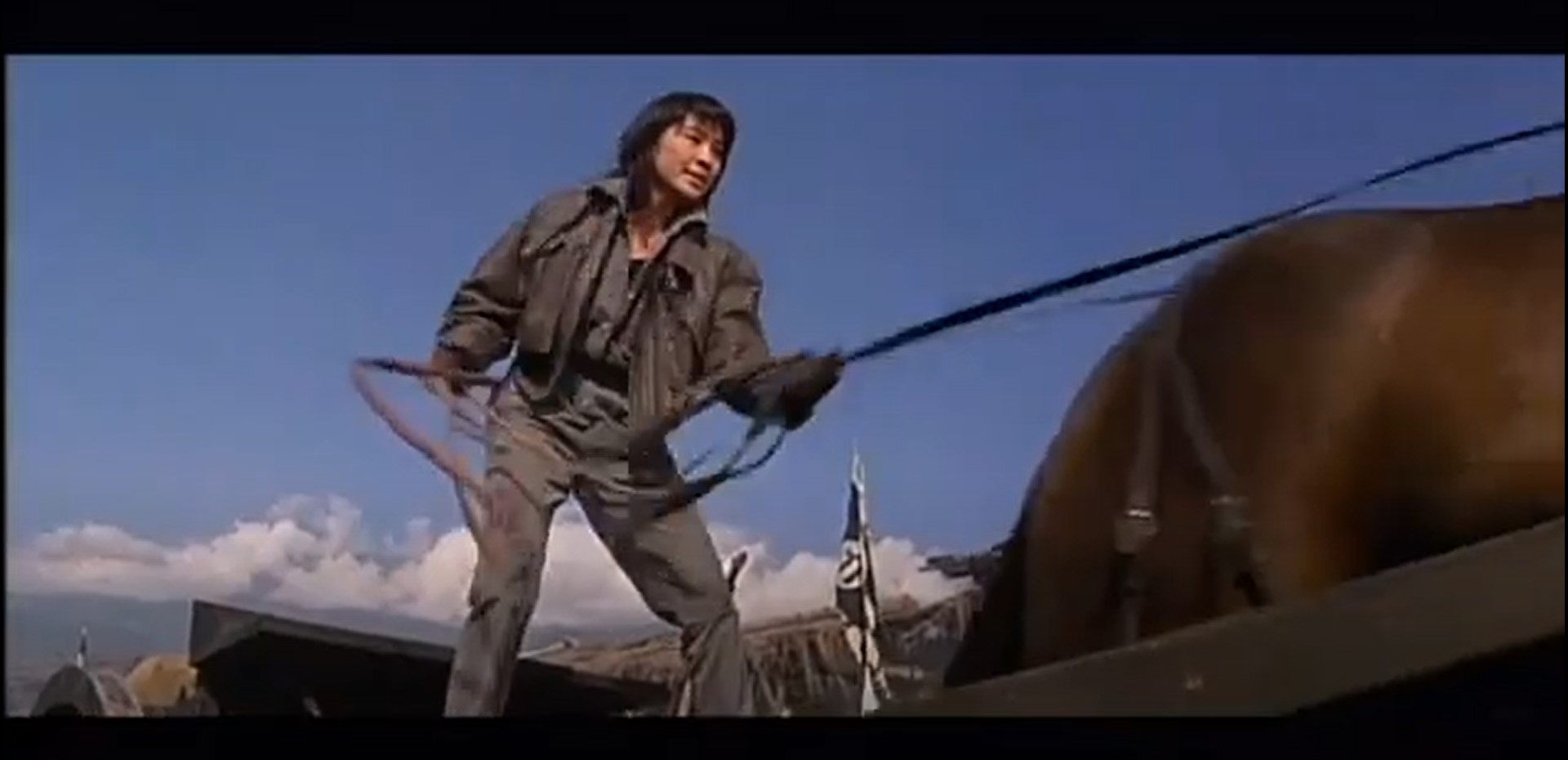
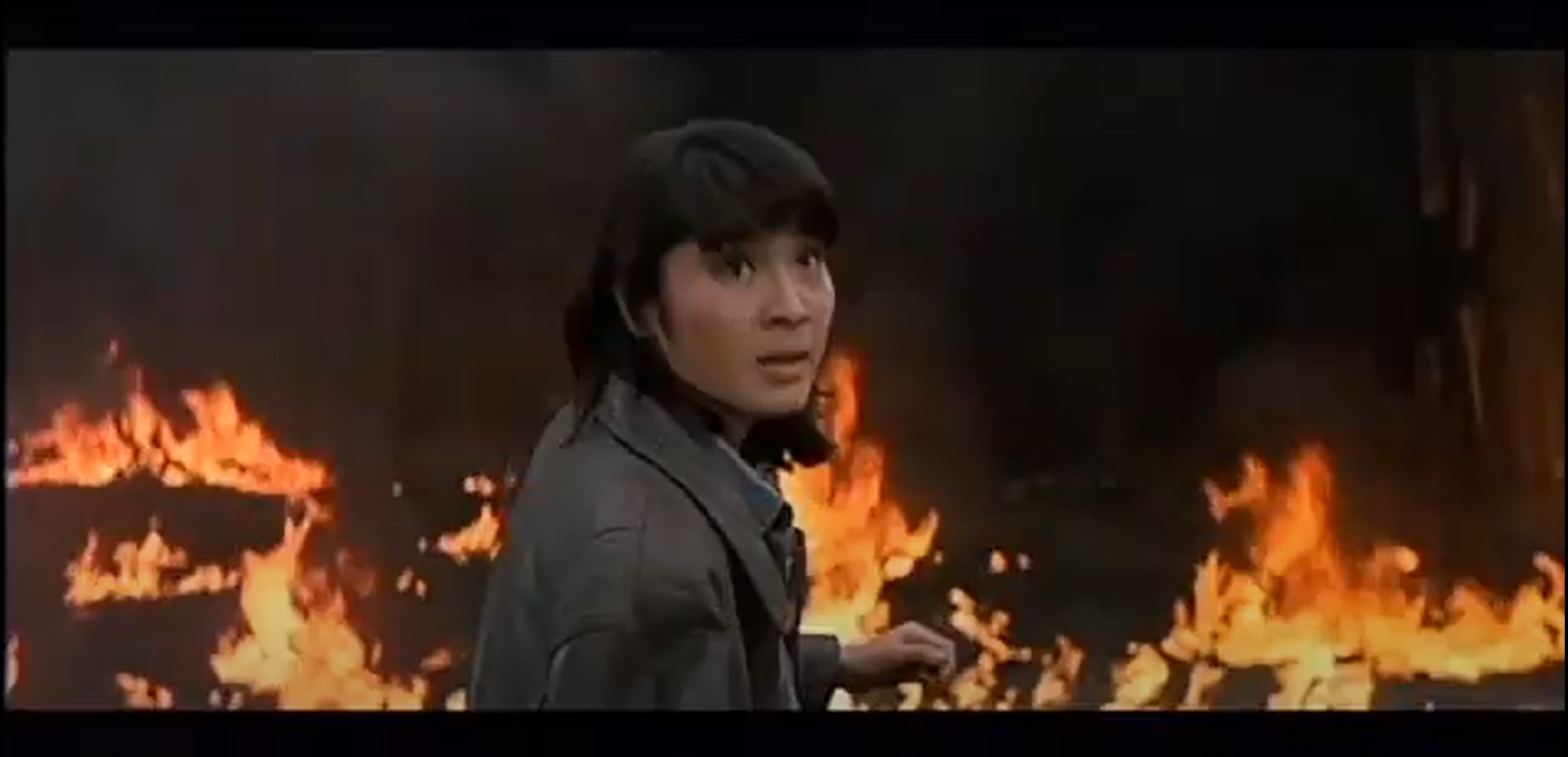
In a career that spans decades plotted by a number of strong female characters, Michelle Yeoh has embodied strength, intelligence, and beauty for this generation.  Under her early credited name of Michelle Kahn, the actress, who in the last five years has entered the Marvel Universe, the Star Trek Universe, and is slated to be in the upcoming James Cameron “Avatar” sequels,” is the driving force behind what makes “Magnificent Warriors” so engrossingly magnetic.  Trained to use a bullwhip and able to accomplish major stunts, unsafely I might add, on her own, Yeoh pulls off the demanding role with sheer confidence radiating from her performance.  So much confidence that the quality beams from her eyes to the point that her gaze nearly appears to be a sadistic grin of her own masochism.  Yeoh seizes Ming-Ming’s adventurous spirit, fully embraces it even, and stands out, but meshes well, amongst the mix of characters, including a hapless and bumbling drifter played by Richard Ng.  The “Mr. Vampire Part 3” star has a recognizable and distinguishable face as a well-known Hong Kong actor from China.  In “Magnificent Warriors,” Ng’s character is clearly the odd man out with zero ambitions and zero fighting skills, providing roughhouse comedic relief with lucky escapes with his life, but as far as character arcs go, the drifter, who cheats and scams gamblers for money and thinks about saving his own skin, succumbs to the resistance call of helping China and becomes one of the leaders of the core Kayi City defenders.  There are three others in this band of five with the City Lord (Lowell Lo, “Spider Woman”) who has a similar character arc as the drifter in being a bit of a scaredy-cat as a traitor against the Japanese Imperial Army but sees the light of his people needing his boiled down bravery and leadership, and his involvement with Shin-Shin (Cindy Lau), a daughter of a Japan loyalist who is obsessed romantically with the City Lord and can kick ass as well that surmises a feminism theme that women are just as strong as men and can have a better moral compass, especially compared to the bumbling man in power, the City Lord, and the drifter con artist.   The weakest fifth character, with an equally weak performance, in the group is Secret Agent No.1, as he’s described in the subtitles, played by Derek Yee (“Black Lizard”).  Though pivotal to the resistance operations to succeed, Secret Agent No. 1 fails to make his impact like the others, character divulging a vague history of his climbing to be China’s best secret agent and also teetering on the supposedly feelings for Ming-Ming that doesn’t ever come despite blatant suggestions to the contrary.    Matsui Tetsuya, Hwang Jan Lee (“The Drunken Master”), Meng Lo, Fung Hak-on, Jing Chen, and Ku Feng round out the “Magnificent Warrior’s” cast.

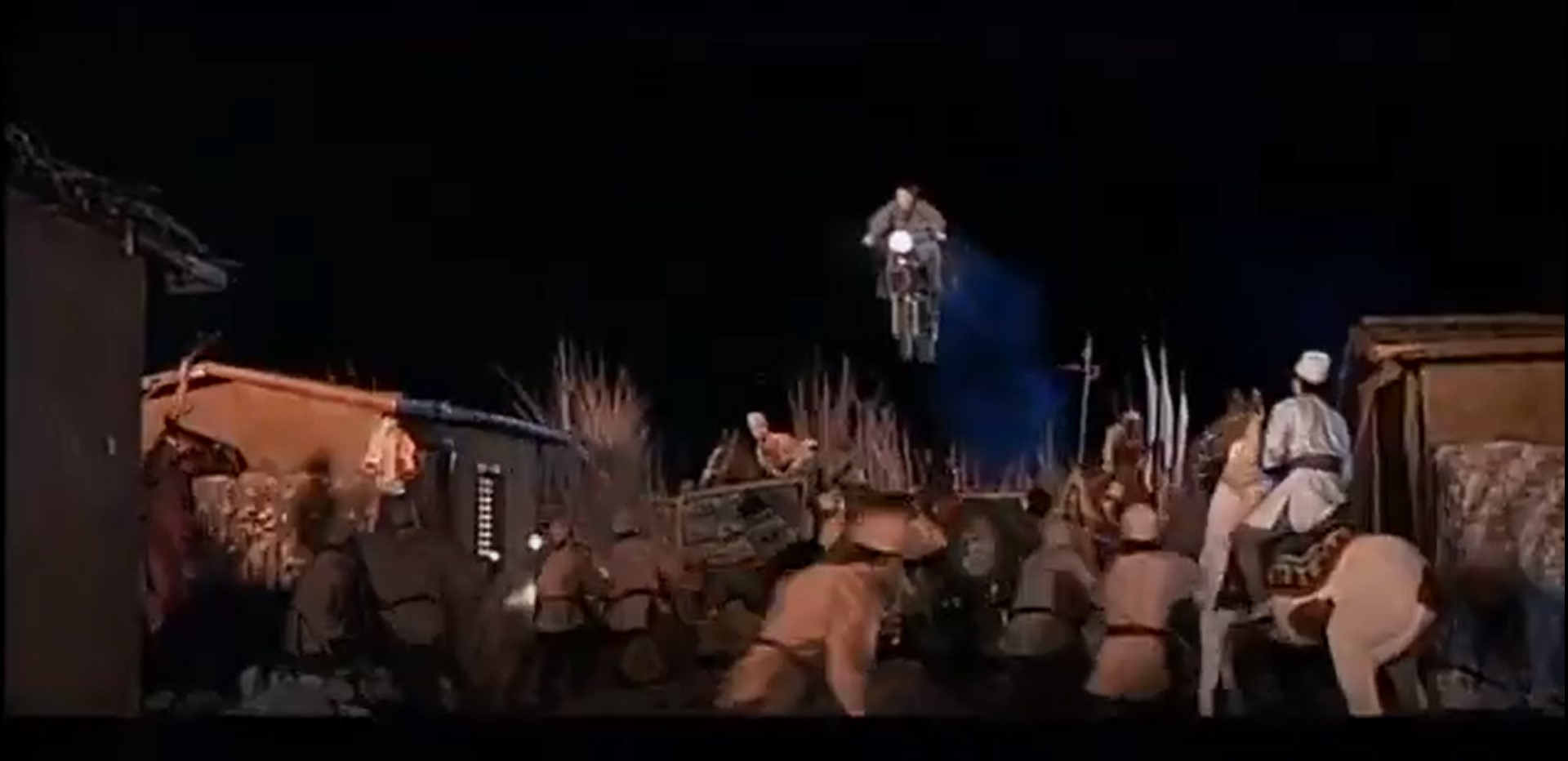
With extraordinary martial arts choreography, the impossible become possible in what can be experienced as an epic ballet of fists, kicks, and dueling weapons.  Every battling moment translates perfectly on screen without the flinch of error, though I’m sure many takes were took.  Back when outside Hollywood film studios relied on their determination and skill, with a pinch of luck, to get them through tough and rigorous stunts without the aid of wire, pads, or any union approved safety measures for that matter in what feels remarkably alien, like being on a whole other world where the rules of physics and safety do not apply.  “Magnificent Warriors” is truly a magnificent stunt-driven, wartime story revolving around revolutionism, a contemplation of the relationship between a home and its people, and a principled life of standing up for what’s right.  Director David Chung manages to massage out the numerous themes under the façade of a great thrust of nonstop action.  The set pieces, locations, and wardrobe are all fitting for the late 1930s-1940s era, especially with the Japanese uniforms that extend into their armored vehicles, such as in the brief, for show, scenes of its war plane and handful of Type 95 Ha-Go tanks. It’s refreshing to see an older film have a different angle on the overplayed World War II narrative; instead of the typical European or Asian Pacific campaigns involving American troops, “Magnificent Warriors” goes granular into The Second Sino-Japanese War during the Second Great War the world has ever experienced. Japanese implemented chemical warfare into their strategy of expanding their dominating military advances and establishing a footprint in China. “Magnificent Warriors” embellishes the poisonous gas narrative with the imperial army seeking to use Kayi City as a chemical producing plant, steering the film’s epic grapple over the city from out of underlying truth of the actual conflict. Every stage of story progresses into a larger scale of the previous skirmish which bottles up the grossing pressure between the imperial army, the resistance fighters, and the collateral damaged city folk caught in the middle. Sprinkled with comedy and charisma, and an ever so delicate dark tone, “Magnificent Warriors” is impeccable Hong Kong cinema and exposes the world to an underrated performance by Michelle Yeoh who kicked ass then in this film and still kicks ass today.

UK distributor 88 Films releases the “Magnificent Warriors” onto an AVE encoded, 1080p, high-definition Blu-ray, presented in a 2K restored transfer of the original theatrical cut on the company’s USA line. Exhibited in the original 2.39:1 aspect ratio, the anamorphic picture can appear globular at times, resulting in a packed image but more on so on pan shots than anything else. The overall picture quality suggests a pristine original print of the theatrical cut with a clean presentation from start-to-finish. Mostly warm with a flaxen degree of a desert background within a Mongolian Mountain valley, when the story does transition to a night shot or to interiors, the grain roughly sustains the change to keep a unified picture consistency that lives in a low contrast field without any deep shadow work or hard lined delineation. Compression issues are non-existent and there’s not obvious, unwanted touchups here to note. The release comes with two audio options: A Cantonese DTS-HD Mono and an English dub DTS-HD Mono. Preferrable choice is always the original intended language; however, this film’s audio options are both dubs but the Cantonese synchs better with grammatically suitable English subtitles albeit their breakneck speed to keep pace. Dialogue is clean, clear, and the action sound design is audibly potent with pinpoint precision on the homogenous strike. There are moments I thought the quick editing, especially during the plane chase, would hinder the ambient effects to keep up but I was pleasantly surprised, and the prop and gunfire intensity presents a nice exchange of open aired depth, range, and dynamisms. Software bonus features an archive interview with Michelle Yeoh (circa early 2000s), an archive interview with stunt coordinator Tung Wai, an English credits opener, the Hong Kong and International trailer, and still gallery. The hardware features are a tad better with a double-sided A3 poster, a 35-page color picture booklet with historical and filmic essay by Matthew Edwards, a limited cardboard slipcase featuring new art by Sean Longmore, and a reversible cover art in which shares its illustration with the booklet. The case isn’t the traditional slim Blu-ray snapper as it’s thicker to handle the booklet and poster. The release comes not rated, region A coded, and has a runtime of 92 minutes. Drawn into a big war shieled and overlooked by a bigger war, “Magnificent Warriors” not only time capsules a piece of Asian history but does it with fantastical fight and character that delivers one Hell of a timeless film with Michelle Yeoh at the helm.

“Magnificent Warriors” Now on an Amazing Blu-ray from 88 Films!   Click The Poster to Purchase!

Copperton Cult Commands You to be EVIL! “Heartland of Darkness” reviewed! (Visual Vengeance / Blu-ray)

Own Your Copy of the Lost Linnea Quigley Film “Heartland of Darkness” by Purchasing at Amazon!  Click Here to Amazon.

Copperton, Ohio – a quaint and quiet, unsuspecting small town if looking to downsize from the big city hazards.  However, beneath the provincial veneer lies a satanic cult spearheaded by the local Reverend Donovan and his flock of townsfolk worshippers.  Donovan’s grip reaches far beyond just the local municipality as the insidious cult schemes to turn the state’s top officials into devoted followers of Satan.  Copperton’s new local newspaper editor, Paul Henson, along with eager reporter, Shannon Cornell, use their journalistic gut instincts to unearth and expose the corruption by Donovan up to the ladder of the town’s sparse governmental hierarchy, but with only a few residents unsubscribed to Donovan’s fanatical sermons, Paul and Shannon have nowhere to turn in order to protect themselves, Paul’s daughter Christine, and the entire state of Ohio from succumbing to Satanic domination. 

Once lost in limbo for three decades, “Heartland of Darkness” finally sees the light of retail shelves day!  Left unfinished for many years, director Eric Swelstad, then an Ohio State film student, supervises the completion of the horror thriller that revolves around satanic cults, grisly sacrifices, and sheep mentality based on the 1980’s satanic panic craze that swept the nation.  Penned by Swelstad, who moved on with this lift and helmed a handful of direct-to-video titles, such as “The Curse of Lizzie Borden 2:  Prom Night” and “Frankenstein Rising” in the early 2000s, and filmed in and around Columbus and the Granville village of Ohio, the 1989 principal photographed production was thought to be ultimately completed by 1992 but due to funding and production constraints, that was not the case.  The film also went through a couple of other titles, beginning with Swelstad’s original script title “Fallen Angels” and then changed to “Blood Church” at the behest of a possible financier that eventually fell through.  In the end, the film settles on “Heartland of Darkness” as a privately ventured production Steven E. Williams (“Draniac!”), Wes Whatley, Michael Ray Reed, Thomas Baumann, Mary Kathryn Plummer, and Scott Spears (“Beyond Dream’s Door”) serving as producers.

One of the reasons why the obscurity adrift “Heartland was Darkness” was so sought after by horror fans is because the title became one of the lost films of scream queen Linnea Quigley.  Standing at only 5’2’’ tall, the “Return of the Living Dead” and “Night of the Demons” actress was a hot commodity during the late 80’s and a genre film giantess who ended up having a fairly prominent, written-in role just for her hire in what is, essentially, a student film.  Quigley’s role as the town’s high school teacher, Jessica Francine, makes the hormonal boy in me wish my teachers actually looked than beautiful and provocative in high school, but in the same perspective, Quigley doesn’t appear or is barely older than Sharon Klopfenstein as Paul Henson’s daughter, Christine.  The two share a high school hallway moment while sporting crop tops, tight bottom wear, and discussing paganistic occultist Aleister Crowley and Nazi mass murderer Adolf Hitler and while the additional scene gives Quigley screen time, it evokes risibly campy optics.  Dino Tripodis defines the principal lead Paul Henson, a former Chicago Tribunal editor having left the midwestern journalism powerhouse after the death of his wife.  Stepping into a world of cultism, Paul’s eager to save what’s left of his family at all costs by exposing grisly murders as more than just drug-related collateral damage (I didn’t know drug wars were such a big thing in Ohio).  The debut of Tripodis’s performance fairs well enough to solidify himself as the marginalized hero against a Goliathan opposition that’s deep rooted and backed by powerful leaders, but hands down, Tripodis is outdone by Nick Baldasare as the dark featured, maniacally calm Reverend Donovan.  Baldasare has such a tremendous presence as a fire and brimstone agent of the most notable archfiend that his performance swallows the shared screen moments with Tripodis.  A few principals come off as rigid and flat in their efforts.  As the sheriff of Copperton, Lee Page is the biggest offender with an obvious staged act of busting Tripodis’s balls for a better part of the story.  “Heartland of Darkness” is a mixed bag of showings from a remaining hyper-localized cast compromised of new to little experiences actors including Shanna Thomas, Sid Sillivan, Ralph Scott, Dallas Dan Hessler, Ray Beach, Mary Alice Dmas, and with the John Dunleavy in a magnetic role of a cult-crime fighting preacher.

Hard to fathom why but still completely understandable how “Heartland of Darkness” remained in celluloid purgatory for so many years.  Swelstad had tremendous ambitions for a student film that included a visual effects storefront explosion, but the money well dried up to finish shooting, touch ups, effects, and digitizing the filmmaker’s efforts onto a marketable commodity to distribute.   At last, here we are, 33 years later with a finished copy of the “lost Linnea Quigley film” and, boy-oh-boy, does not disappoint, living up to the expectational hype surrounding the film’s once stagnant, hidden from the world existence.  Swelstad creates the illusion of vast world from the small town of Copporton to the big cities where the District Attorney and Governor reside.  Car chases, rock quarries, a church nave, animal intestine smeared ditches, and a slew of constructed sets, an array of offices, and an abundance of diverse exteriors. “Heartland of Darkness” might have a lot going on and is often repetitive in the scenes with Paul and Shannon pleading their case to multiple officials to probe into gruesome deaths and the cult’s leadership but not to the story’s detriment as all the progressive storyline dig Paul and his small band of investigators into a deeper danger hole with Donovan and his Devil devotees under the guise of God’s Church. Scott Simonson’s entrail splayed and blood splattering special effects culminates to a shotgun showdown at a virgin sacrifice and an impressive full-bodied impaling that is, frankly, one of the best edited shots of the film. “Heartland of Darkness” is rayless and scary, callous and cold, formidable and shocking with a pinch of sex and is finally within our grasp!

Visual Vengeance, a pioneer in curating the lost, the forgotten, and the technically shoddy indie cult and horror films, releases for the first time on any format ever “Heartland of Darkness” on Blu-ray. Coming in as VV08 on the spine, the Wild Eye Releasing banner strays their first seven SOV features to bring aboard a 16mm negative transfer, director-supervised from original film elements of the standard definition masters. Visual Vengeance precautions viewers with the usual precursing disclaimer that due to the commercial grade equipment and natural wear of aging, the presentation is the best possible transfer available, but, honestly, the full screen 1.33:1 aspect ratio presentation looks outstanding without much to critique. Obvious softer details were expected but with the celluloid film, there’s not much in way of macroblocking or tracking complications as common with shot-on-video tape features. Compression verges to a near perfect reproduction of the picture quality. Skin coloring and overall grading is congruously natural in grain and stable image. The English stereo mono track doesn’t pack a punch but isn’t also frail with strong mic placement and the dialogue is clean and clear of imperfections as well as major hissing or popping. The faint 16 mm camera whir can be heard but isn’t distracting, adding a comforting churr to the footage. Optional English subtitles are available. Special features include a new 40-minute behind-the-scenes documentary Deeper into the Darkness, an audio commentary by writer-director Eric Swelstad, actor Nick Baldasare, cinematographer Scott Spears, and composer Jay Woelfel, a new interview with cult icon Linnea Quigley, commentary with Tom Strauss of Weng’s Chop magazine, an archival Linnea Quigley TV interview, the complete “Fallen Angels” 1990 workprint, the same workprint with audio commentary with Swelstad, vintage cast and crew Ohioan newscast interviews in the Making of Fallen Angels, the original promotional video for “Blood Church,” a behind-the scenes image gallery and footage, and the original TV spots and trailers, of this feature and other Visual Vengeance films, from the static, composite menu. Ready for more? “Heartland of Darkness” comes with just as much physical bonus swag with a limited-edition prayer cloth, a six-page liner notes from Tony Strauss complete with color beind-the-scene stills, a folded mini-poster of a leather-cladded Linnea Quigley’s high school hallway scene, and retro Visual Vengeance stickers inside a clear Blu-ray latch snapper with new, illustrated cover art that also has reversible art of the original “Blood Church” promo art, sheathed inside a cardboard slip cover with a different and new illustrated cover art. The region free, 101-minute release is unrated. Visual Vengeance continues to pump out gilded, undiscovered treasures and giving them the royal treatment. For “Heartland of Darkness,” this sublime release was 33 years in the making and is one Hell of a bounty!

Own Your Copy of the Lost Linnea Quigley Film “Heartland of Darkness” by Purchasing at Amazon!  Click the Cover Below.

Vengeance Knows No Price on EVIL’s Head Alive. “L.A. Bounty” reviewed! (Scorpion Releasing / Blu-ray)

“L.A. Bounty” on Blu-ray and Available to Purchase at Amazon.com

When a Los Angeles mayor candidate is kidnapped from his home at gunpoint, suspicions immediately turn to the incumbent mayor in what seems cheap move to remove a rival, but the abduction is no snatch and grab for a quick buck and political advantage.  All-around prevailing bad guy Tim Cavanaugh is the spiritually unhinged mastermind orchestrating the scheme behind the scenes.  When the police don’t have a clue what to do next other than to wait for kidnapper demands, bounty hunter Ruger steps into the fold with a coerced hot tip about the kidnapping plan.  With a score to settle in the death of her ex-partner, Ruger is hot on Cavanaugh’s tail, foiling multiple assassination attempts on a witness, the mayor candidate’s wife, by Cavanaugh’s men, and determined to put an end to Cavanaugh once and for all.

If you’re a Sybil Danning fan whose had enough of seeing the blonde genre film icon in skimpy, or even sans, clothing, then “L.A. Bounty” should be your next upcoming feature with a leather-cladded Danning, in a nearly dialogue silent performance, blasting away henchmen left-and-right with a pump action shotgun.  The 1989 action thriller is penned by Michael W. Leighton (“Rush Week”), based off a story from the “Chained Heat” and “Howling II …. Your Sister is a Werewolf” cult actress and directed by “Power Ranger” franchise director Worth Keeter.  Before made-for-TV round house kicks, Zordon, and Kaiju monsters and machines that has become the mega “Power Ranger” franchise, Keeter had made a modest life out of obscure indie horror with “Dogs of Hell,” worked with buxom blondes such as Pamela Anderson in the thriller “Snapdragon,” and even dabbled in the exploitation ventures of Earl Owensby productions with “Chain Gang.”  Filmed in and around the Los Angeles area, “L.A. Bounty” is the ex-con gone vigilante with a vendetta from the production team of the Danny, Robert Palazzo, and S.C. Dacy founded Adventuress Productions International as well as a production of Leighton & Hilpert Productions, with Michael Leighton producing, and presented by the Noble Entertainment Group.

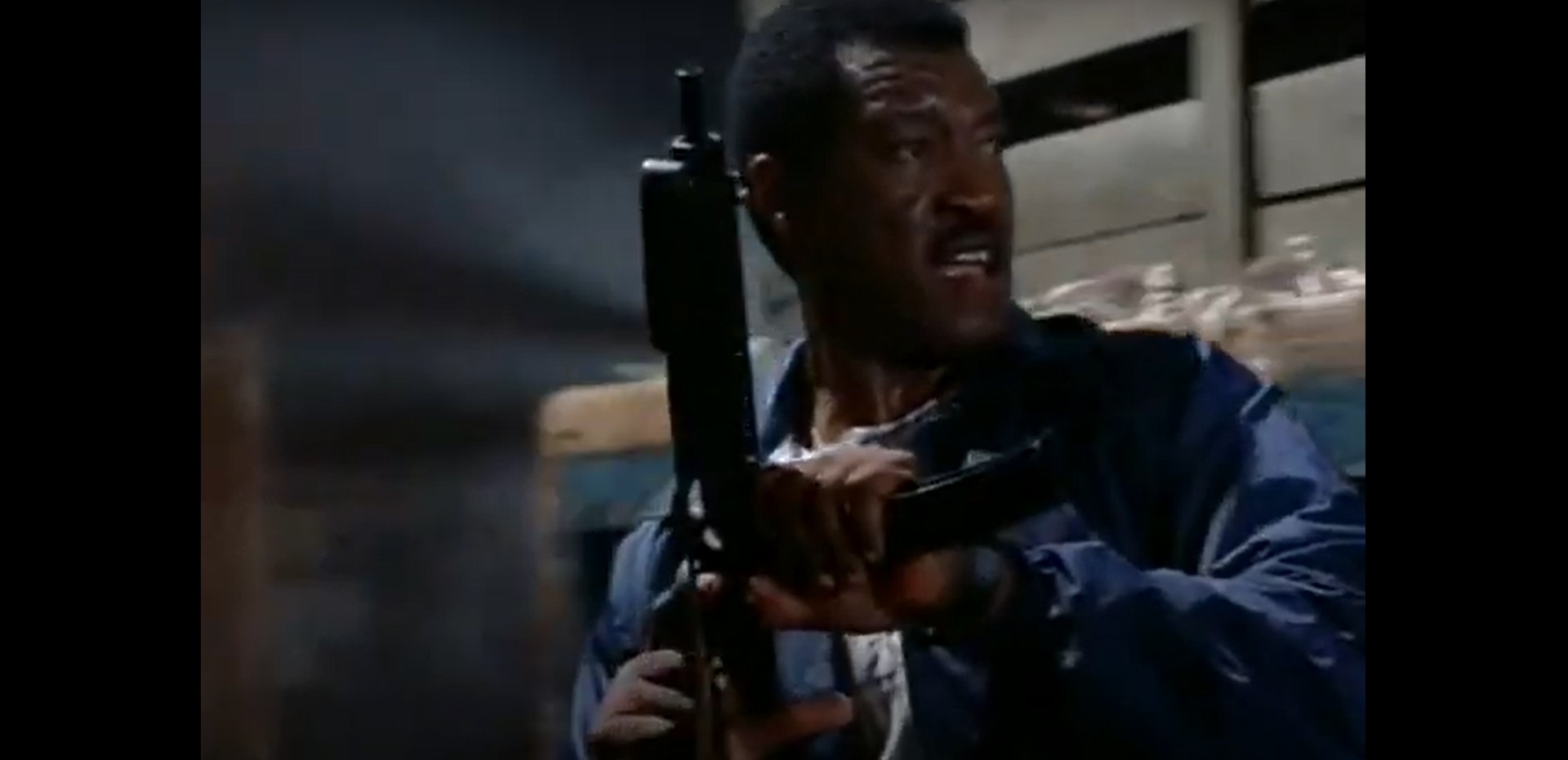
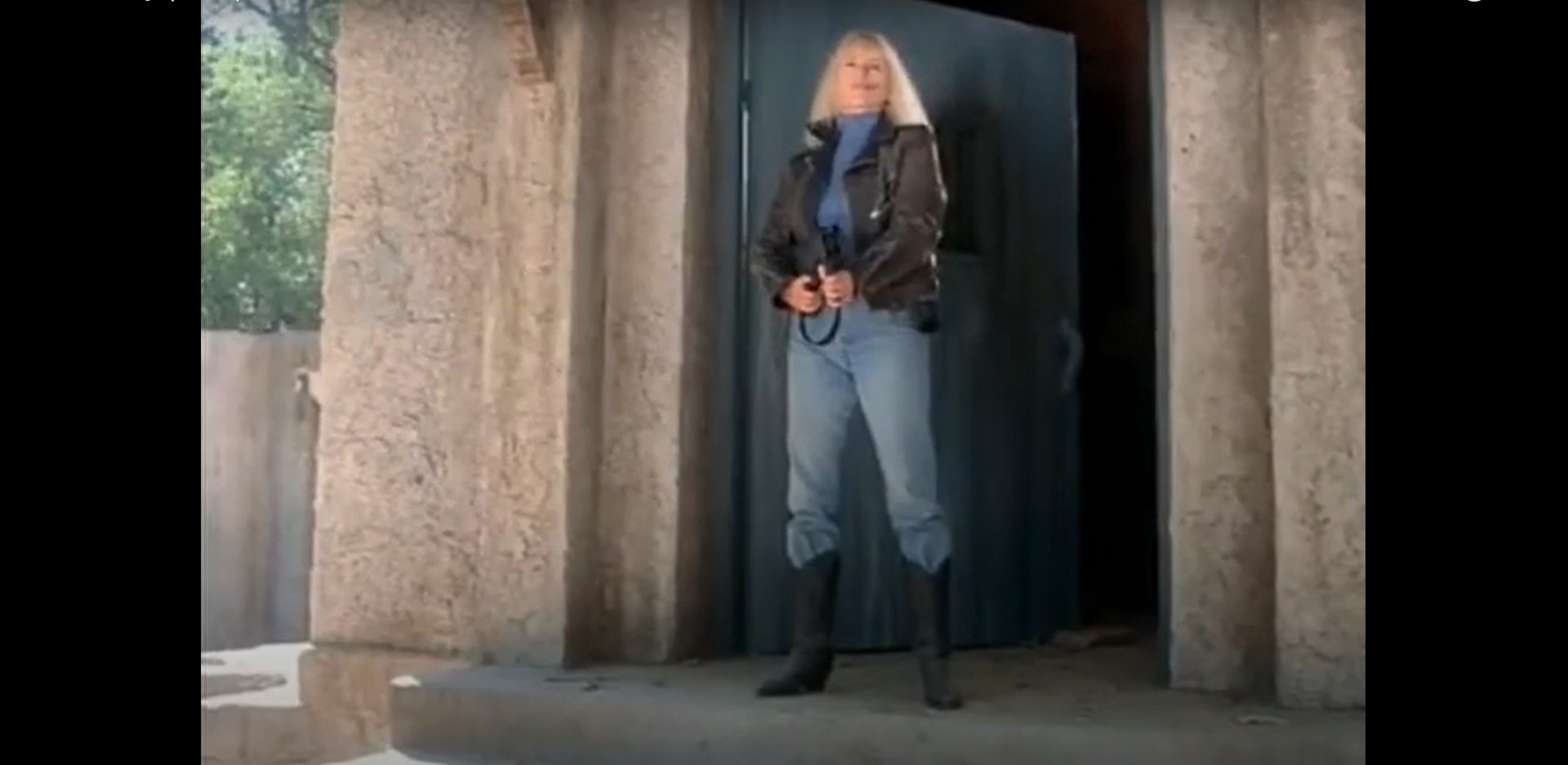
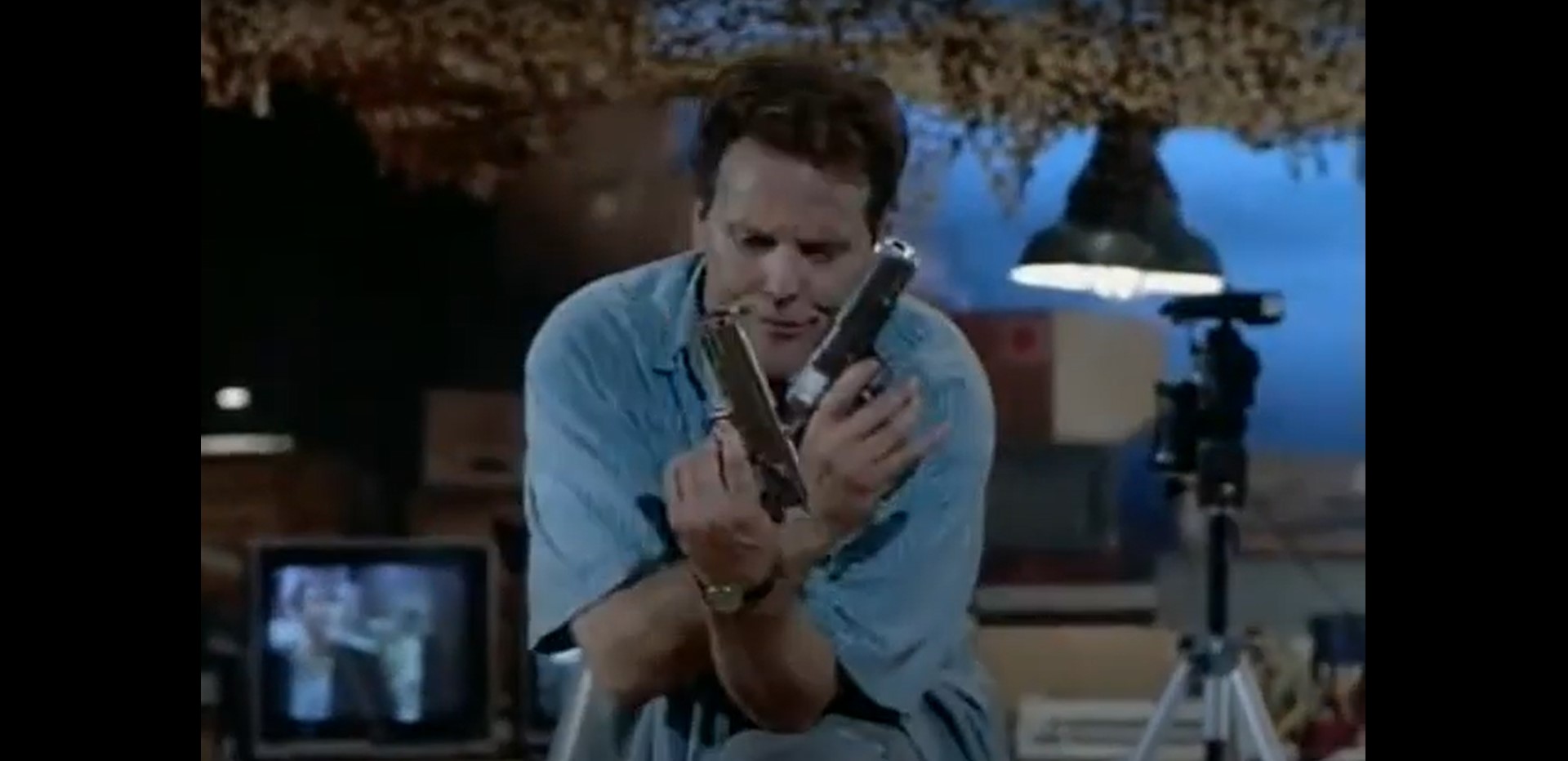
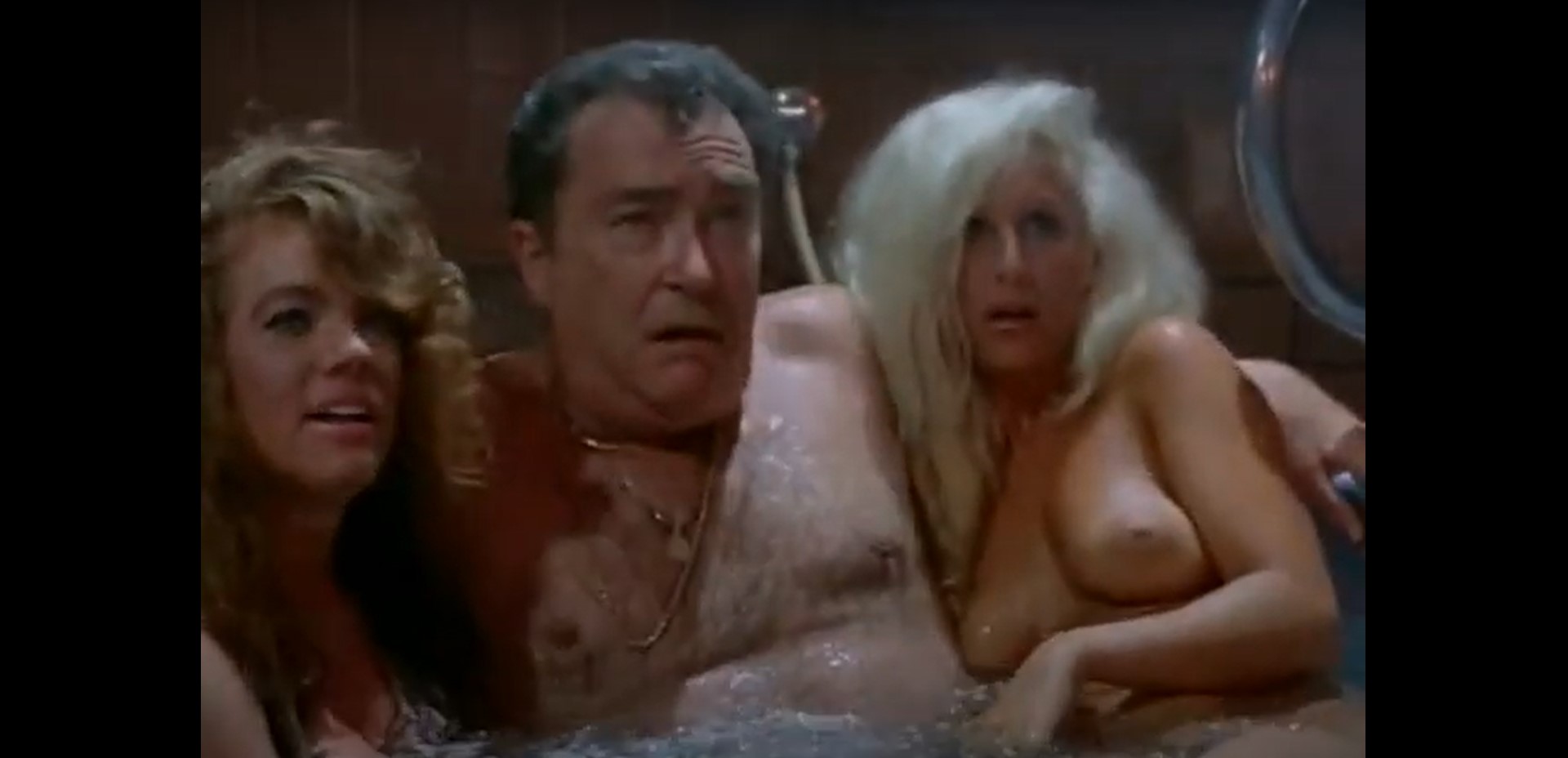
As one of renowned queens of scream, Sybil Danning, is a recognizable icon amongst low-budget horror fans as well as cheap thrill actioners and sexy thrillers.  So much so, that her fame has granted her the opportunity to work on a passion project where she can be the Sylvester Stallone or Chuck Norris shoot’em up action hero that was a popular juggernauting ilk in the 80’s.  Cladded in leather and denim, Danning plays the silent, strong type with emphasis on the silent. Her character, an ex-cop named Ruger now a bounty hunter looking to even the score with Cavanaugh who ruthlessly wasted her partner, has roughly three lines in the entire 1 hour and 25-minute runtime, but Ruger is in full blown view of being badass with a large gun and unafraid to use it on mindless grunts. Danning coldness compliments the contrary with Wings Hauser’s babbling, manic psychopath. The “Mutant” and “The Wind” actor’s sordid bad guy Tim Cavanaugh has a special relationship with God, warped by his twisted nature for organized chaos, but is unable to keep trusted entourage due to the fact he keeps killing them for not being able to nix Ruger. Hauser is fantastic to watch as the unconventional villain of unpredictability. For instance, Cavanaugh never leaves home base, a storage warehouse full of crates and containers and apparently inside those crates and containers are mechanism and gadgets to thwart off unwelcomed guests. As Hauser improves dancing through the hallways and displays erratic behavior while painting, we’re starting to realize Cavanaugh’s mindset is one we’ve seen before but without the Joker face paint and the act is entertaining and pairs well with Danning’s stoicism. While Ruger and Cavanaugh are obviously the main course, veteran TV actor Henry Darrow (“Tequila Body Shots”) and a slightly younger veteran TV actress Lenore Kasdorf (“Amityville Dollhouse”) appetize in between with sticking to the script of a routine kidnapper scenario, offering little to motivate the direction the story itself works toward itself. Robert Hanley, Van Quattro (“Agnes”), Bob Minor (“Commando”), Frank Doubleday (“Escape from New York”), Robert Quarry (“Count Yorga, Vampire”) and Maxine Wassa (“No Strings 2: Playtime is Hell”) as Cavanaugh’s nude muse for his art.

“L.A. Bounty” is about a bounty hunter tracking down an old adversary for retribution but other than a few pieces of wanted paper notices, there’s really no other indication that Ruger is like Dog Chapman the Bounty Hunter although the platinum blonde hair would suggest otherwise.  Sybil Danning is definitely sexier in leather and denim than Dog and sure does talk a whole lot less but as a part of general audience pool and with a title that suggest such a profession, wouldn’t it make more sense to build up Ruger’s caseload with a few introductory chases before we’re chin deep in the Cavanaugh obsession?  Also, that motivational drive that sends Ruger down a path of payback lacks substance and is sullied by a script snafu of Ruger having a flashback of Cavanaugh executed her partner despite not being present.  Fortunately, “L.A. Bounty” is not a feeble farce of an action flick.  Danning is a striking, statuesque presence, the squibs exhibit a bloody gun blazing firefight, and if you’re a disappointed perv in Danning keeping her clothes on this time around, there are a handful of brief nudity scenes from other actresses sprinkled throughout.  One of the other highlights is the eclectic score arrangement by then “Heart” guitarist Howard Leese and John Sterling of “Revenge of the Cheerleaders.”  With a Jan Hammer-esque synth-tense wave, a cop melodrama guitar riff, presumably provided by Leese, and a contemporary tribal beat, “L.A. Bounty” has immense range for every scenario with its own personal composition that’s high energy, catchy, and fits the action.

“L.A. Bounty” differs from any other role in the Sybil Danning canon that’s mostly action and barely any talk and is dead set on broadening the cult actress into the popular rogue cop role of the late 80’s-early 90’s. Scorpion Releasing presents the original MGM vault material of “L.A. Bounty” on a high definition, 1080p, AVC encoded Blu-ray release with an anamorphic widescreen 1.85:1 aspect ratio. The 35mm stock has retained its blue-ribbon quality from over the years and the transfer really accentuates the near timeless picture with a brilliant, well-balanced, color palette, an even contrast for production lighting to properly illuminate around the faint and dense shadows, and no noticeable meddling against a natural grain with a pleasant texture scheme. The English DTS-HD stereo mix is mighty donkey that might be lite but packs a punch when it kicks. The release could benefit from a multi-channel surround sound output to give a tumultuous sense of melee gun battles. Dialogue is clean, clear, and ample with good depth definition and plentiful range in ambience. Optional English SDH subtitles are available. What’s essentially a bare bones release, the Blu-ray only comes with chapter selection and setup options. The physical attributes echo the supplementary material with a traditional Blu-ray snapper with outer latch and cover art based off the film’s original one sheet. The film is rated R, is region A hard coded, and has a runtime of 85 minutes. “L.A. Bounty” remains a step or two above the Andy Sidaris guns, girls, and giant explosions fare with gilt-edge performances and stylistic avenues representing the best of the originating decade in what is the most divergent film of Sybil Danning’s typically typecasted career.


Hunt down “L.A. Bounty” into Your Sybil Danning Collection! Purchase here!