One Man Tries to Reclaim his Life When EVIL Suddenly Invades! “The Unthinkable” reviewed (Magnet Releasing / Digital Screener)

Out in the country of Vånga, Sweden, Alex endures his ex-military Father’s demanding and verbally abusive posture.  His only relief is spending time with Anna who is in a similar circumstances with her mother.  The two spend many of their days together amusing themselves on the church piano until Anna is forced to move away to Stockholm, leaving Alex to face his father’s wrath alone.  Alex runs away for his childhood home and, years later, becomes a popular piano recording artist influenced by his time with Anna.  When he returns to Vånga during a time of countrywide unrest to purchase that same church piano of his fond memories, Sweden comes under attack by an unknown force as major roadways out of the country have been blown to smithereens, every power station is the target for destruction, and the rain is contaminated with an airborne chemical that makes people lose their memories and become disoriented.  Alex has to reconnect with his father in order to save Anna, the love of his youth, to survive the unthinkable. 

An invasion on the scale that you’ve never seen blitzes with explosive stunt work and stunning visual effects.  Victor Danell’s action-drama “The Unthinkable” comes out of nowhere with a hard stop pivot of a love story turned survive at any cost as the film’s country of origin becomes warzone raided without mercy.  Under the original title “Den blomstertid nu kommer” in the native tongue, Danell directs and writes “The Unthinkable” along with co-writer and star Christoffer Nordenrot, though credited as their collective production group, as the two team up again after nearly a decade after working on the comedy “Soundcheck,” directed by Danell.  What started as a crowdfunded Kickstarter campaigned ended up being a multi-million dollar production and with such growing fascination amongst eager fans, the 2018 found more financial backing from the former Swedish cinema chain company, SF Bio AB, now known as Filmstaden and is presented as the first feature film of a filmic collective known as Crazy Pictures in co-production with CO_Made and Film I Väst.

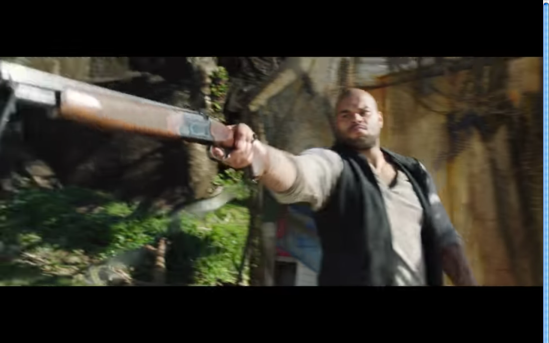
As mentioned, writer Christoffer Nordenrot finds himself at the center of the story as Alex, a passionate pianist fighting back against well-armed, well-supplied unknown militant forces all the while processing a dam breaking flood from the rebuilding of shattered emotions when returning to his quaint hometown after abruptly escaping his overbearing father (Jesper Barkselius).  Socially awkward with an obsessive proclivity, but wielding an intellectual thought pattern, Alex appears to be a person likely on the spectrum, but bottles much of his emotions internally, biting his lip at every moment his father disparages him or his absconding mother. When his only friend in the world, a girl named Anna (Lisa Henni, “Haunted Evil Dead”) whose roughly the same age, is being pulled away from Vånga to live in Stockholm with her mother, Alex undergoes a rapid descension of one heart ache to another that leads to him able to flourish and exceed on his own as a new wave pianist, engineering a combination of electronic beats of sound machines with the simplicity of soul from the piano to arouse his repressed emotions for an grandstand audience. Alex finds his way back Vånga for personal gain, a childhood piano him and Anna shared making music over, and to attend the sudden death of his mother from a previous, individual attack in Sweden, but what he stumbles into is avoiding his father at all costs, being swept into a returned Anna’s radial allure, and, oh yea, a massive proclamation of war by an aggressive, chemical warfare and shoot-on-sight enemy of the Swedish people. This is where I find Alex to have a chip-on-his-shoulder complex unhealthy for everyone around him as he doesn’t look past the past and punitively causes discord with his father, who is trying to save not only the last standing power station in all of Sweden himself, but essentially trying to save his entire country, and Anna when Alex finds out she has a husband and child after an afternoon of rollicking in the hay and sharing various moments around town. Performance wise, Nordenrot might not be the action star of tomorrow in his character’s one note of early on narcissism and bad judgement, but challenges himself in the role by losing and gaining weight to accomplish years of age appearances from teenage boy to mid-30’s man and is good enough to swashbuckle against relentless military helicopters and a slew of men capping of M60 machine guns in his direction. Pia Holverson, Krister Kern, Alexej Manvelov, Magnus Sundberg, and Ulrika Bäckström round out “The Unthinkable’s” cast.

With a runtime of 129 minutes, “The Unthinkable” has a lot of story to tell with an ample amount, practically divided in evenly, imparted into two stories – one forgotten romance and family squabbles rekindled and the other a bombardment of annexing Sweden from the country’s own residents by deadly force. The pivot also never feels gradual as act one is all about teenage Alex and Anna growing more than just accustomed together despite lingering family troubles. Once completing the transition from boyhood to successful music man, an irksome sensation still nags in the back of Alex’s mind as he can’t find happiness in all of the boo-koo-bucks his albums and concerts afford him. This leads “The Unthinkable” into a territory of complete selfishness by waterlogging a Red Dawn offshoot concoction, teetering on speculation of Russian invaders eroding the memories in some aspect of chemical weathering, with Alex being one hell of a selfish guy and he’s the supposed hero of the story, but for the sake of me can’t explain his inabilities look past his father’s conspiratorial obsessions and anger issues, his muse’s moving on her with her life with a family after he fled his hometown, and he definitive choice of unable to live with the fact that she’ll never be with him despite all the adversity raining down upon him at the same moment he internally crumbles at his pent up emotions. Cynicism drives the story to a tainted sham ending that’s supposed to be touching and full of heartfelt sacrifice on the part of the hero, yet how can a hero commit himself to an irreversible without an inkling of danger against those he’s doing this for? I, personally, feel cheated by “The Unthinkable’s” character arc, but one thing is for sure is the seamless practical and visual effects action of top shelf quality. Between the great stunt work of remote control tractor-trailers to the computer generated helicopter crashes, reality and fantasy blur to the point where your brain can’t tell the difference. “The Unthinkable” excels in heart-racing action and thrills with narrow escapes from disasters.

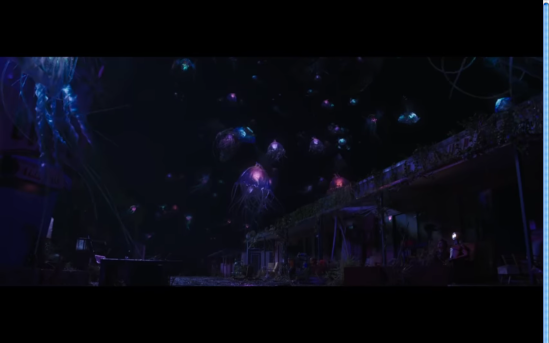
An assault on not only the soul of the country of Sweden, but also on it’s people’s memory banks as Crazy Pictures’ spins Russian meddling into an extreme aggression with an epic imperious campaign in “The Unthinkable” that attacks the visual cortex with jaw-dropping affray. Magnet Releasing, a subsidiary of Magnolia pictures, presents “The Unthinkable” in a widescreen, 2.39:1 aspect ratio, and has made boots on the ground showings in theaters and on-demand this month on May 7th. Hannas Krantz, another member of the Crazy Pictures collective group, delivers the war at home on Swedish soil with hard lighting, greyly somber moments of confusion and fleeing, and yellow gunfire illuminated nights after an airy love story, basking in warm, inviting yellows and pleasing in comfortable locales, crumbles to harden our narrative hero. Krantz leaves just enough negative space for the VFX team to implement their movie magic in the makings of a clandestine assault. There were no bonus scenes during or after the credits. Becoming lost in “The Unthinkable’s” high powered effects can become enthralling when climbing the latter of every scene being just as intense and bigger than the last; however, Alex’s arc of a lovesick boy never fully exits from the grown up version of himself, thwarting any kind redemption and respect because of very unlikable and intense egomania.

Rent “The Unthinkable on Prime Video!

77-Minutes of Nonstop EVIL Combat! “Crazy Samurai: 400 vs 1” reviewed! (Well Go USA Entertainment / Blu-ray)

The Yoshioka clan has been dishonored by the death of two of their samurai warriors in an attack that has left the clan in desperate need for revenge.  Yoshioka clan’s sensei devises a plan to gather the clan’s best 100 samurai and 300 mercenaries and set an ambush for the one they call the crazy samurai, Musashi Miyamoto.  But Miyamoto strikes first, killing two Yoshioka clan members, sparking a torrent of warriors and mercenaries to besiege upon the crazy samurai and bombard him with attack.  The long sword combat stretches for over a hour as Miyamoto defends himself in an impossible task of standing alone while an entire clan’s army of swordsmen come at him from every angle, but Miyamoto is no ordinary master samurai, leaving the 400 to 1 odds in his favor. 

Journey back to Japan’s bushido era when honor and courage reign supreme during times of conflict and unrest with Yûji Shimomura’s nonstop, way of the sword, battle royale skirmish, “Crazy Samurai:  400 Vs 1.”   Originally titled “Crazy Samurai Musashi,” changed only for the home video release and on streaming platforms, the samurai film from Japan sticks out amongst the countless in the genre not for being filmed nearly a decade ago and finally receiving a theatrical and at-home release, but with a one particular, grand feature in being cinema’s first non-stop, one-take action shot for approx. 77-minutes, bookending between a story-functioning epilogue and prologue that clocks the film’s runtime at a total of 92 minutes from start to finish.  Shimomura, who directed the fantasy-action “Death Trance” in 2005 and the covert war drama “Re: Born,” helms a script penned by first timer Atsuki Tomori that bares little dialogue and even less plot to unreservedly place the juggernaut shot into the main spotlight.  The film is a production of the action enrapturing company, Uden Flameworks, based in Tokyo and with the North American streaming rights funded exclusively as a Hi-Yah! original film.

Reteaming with Yûji Shimomura in their third collaboration together following “Death Trance” and “Re: Born” if you follow each film’s sequential release date and if not following the release dates, then, more accurately, “Crazy Samurai:  400 vs 1” would be their second collaboration, Tak Sakaguchi, who cut his teeth in the cult favorite “Versus,” becomes a one-man show as the titular principal samurai, Musashi Miyamoto, slicing-and-dicing his way through a village horde of sword-wielding antagonists.  Kudos must be given to Sakaguchi with the stamina of a workhorse who carries the entire production on his back with a seamless performance without ever breaking stride, or taking a break for that matter, as you can see the sweat beading from his face and weariness in his eyes during the 77-minute long performance that takes a natural exhausting toll on his body, but the actor’s spirit to go on never breaks in any regards.  Sakaguchi fortitude for Musashi is unquestionable, but the backstory quivers at the knees with a character whose unable to be deciphered whether a hero or the villain.  The latter feels like the befitting choice as the plot begins with a Yoshioka clan ploy of arraigning a honorable duel between Musashi and the clan’s child prince after killing two of the dojo’s promising members in an act of defacing, but the ruse is an ambush to swarm Musashi upon arrival and execute him on sight.  Known for being a madman, Musashi comprehends Yoshioka’s deception and penetrates their defenses to immediately strike down the innocent child prince, who is only a pawn following council’s guide to be there, in the first blow that would set off a chain reaction of swordplay events.  Is Musashi that much of a cold-blooded lunatic to kill anyone, even children, and that is why he’s the villain who must be stopped by any means possible?  Or are the Yoshioka so dishonorable that Musashi will take on 400 or more well-armed men, and sacrifice one child, to slaughter them all for the sake of mankind?  Where Musashi motivations lie teeters into well after the credits roll, making the Crazy Samurai an enigmatic means to an unsatisfactory end.  Kento Yamazaki, Yôsuke Saitô, Akihiko Sai, Ben Hiura, and Fuka Hara round out the cast.

The possibilities of something going wrong is extremely high when attempting to film one long scene without breaks that include not only harmless slipups in choreography or dialogue, but also fatigue and risk of injury are likely to be greater.  Luckily for Tak Sakaguchi, and the production’s insurance company, there were enough water bottle and rest breaks strategically placed in between each pocket battle.  On the other side of the katana, the breaks frequent into improbability that there will be a full water bottle and a new sword just laying about in a Japanese village in the exact path of Musashi’s bore.  While most of the wardrobe and scenery feels authentic to the Edo-esque period and each actor puts in the effort to complete the scene, the unthought out choreography cheapens “Crazy Samurai’s” straight-gimmick concept by rotating out Musashi attackers who stumble off screen after being “killed” and rejoining the ranks on the backend.  More than once you’ll see the same faces go toe-to-toe with Musashi.  Rarely do the extras fall and lay dead at Musashi’s feet and only do so when the time at the present scuffle location comes to an end, but when the camera turns in a 360-motion around Sakaguchi, the bodies that had lain fallen previously where the fighting was held have now mysteriously disappeared. And the buck doesn’t stop there as Shimomura’s action film fails to impressive with the swordplay, outlandishly flaunts no blood other the visual effects spray in a blink-and-you-miss-it style, certain samurai have specialized wigs on to absorb Musashi’s signature Three Stooges-style bonk the enemy on the head move, obviously squaring off against more than 400 bodies, and, bluntly, the 77-minute runtime was tediously too long. You can also tell that the opening scene and ending scene were spliced into fold around the story’s trunk, probably shot years later from the original uncut scene, as we’re never able to connect the main characters from the opening and ending to the extended midsection in a slight of misdirection, obscure camera angles, and connecting only a pair of characters in act one and two.

Don’t be remiss to check out Yûji Shimomura’s see-it-to-believe-it “Crazy Samurai: 400 vs 1” on Blu-ray courtesy of Well Go USA Entertainment. Unrated, region A, and presented in a widescreen 16:9 aspect ratio, Well Go USA’s Hi-Yah! original film allures solely by the idea of the stunt, but hones in on two contrasting cinematic styles. The opening and ending scenes are consistent with conventional action flicks with fast edits, slow motion, and purpose with what’s seen in the scene whereas the midriff feels like a third person videogame that dodges and turns around Musashi, rarely taking the focus off him, and “Jaws in Japan’s” Yasutaka Nagano’s near entirely mobile steady-cam is quite an impressive feat considering the amount of moving objects in the frame, even capturing a manufactured lightning storm with rain while the camera then attaches to a boom for an areal shot; however, aside from the post-visual blood and embroidered sound effects, there was little touchup work done to polish the outwardly raw appearance. The Japanese language DTS-HD Master Audio is solid and holds up during the action though having barely much dialogue to play with during the fight. Ambient levels elevate a little louder above norm to put the sounds of a struggle right in your lap, or your ears, while the percussion of traditional Japanese instrumental, in the tune of war, plays erratic at times on the soundtrack. The Blu-ray is encased in a cardboard slipcover of the same illustrations and pictures as the snap case. Bonus material only includes the international and domestic trailers of the film. Yûji Shimomura and Tak Sakaguchi’s ambitious feat deserves a master stroke commendation for pulling off a historical and strenuous deluge of action, but “Crazy Samurai: 400 vs 1: fails to muster much more than that with threadbare editing and tip-toe choreography too dishonorable for the likes of feudal Japan.

Own or Rent “Crazy Samurai: 400 vs 1” on Blu-ray and Other Formats. Click to Poster to go to Amazon.com.

EVIL is a Giant Cockroach Trying To Bite Your Head Off…Man! “Love and Monsters” reviewed! (Paramount / Blu-ray Review)

For seven years, monsters have ravaged the human race to nearly extinction after nuclear nations destroyed an planet killing meteor in space, but the radioactive debris that fall back to Earth mutated the smallest creatures into monstrous killing machines.  Humans have been divided into colonies forced into underground bunkers.  Joel Dawson has been barely surviving with bunk mates who see him as a liability in his inability to act when faced with a monster situation and has been unable to connect, romantically, with another person.  When Joel discovers his high school sweetheart is 85 miles away in another colony, Joel decides to leave the bunker safe haven and journey across the dangerous surface for seven days for the sole purpose of love.  Forced to face his fears and adapt to survive a perilous land full of giant centipedes, hungry massive toads, and a crusty crab the size of a two story building, Joel must rely on his instincts and the help of rule-following topside survivors to see again the girl he thought he lost.

Add “Love and Monsters,” a monstrously romantic creature feature, right up there with “Warm Bodies” as this decade’s version of horror and love dancing the tangled tango in this kill or be eaten comedy-love pursuit directed by Michael Matthews.  The 2020 release is Matthews’ sophomore directorial from a script co-written between Brian Duffield and Matthew Robinson off a Duffield’s original “Monster Problems” script.  Duffield is best known for penning last year’s water leviathan success, “Underwater,” starring Kristen Stewart, with “Monster Trucks’” Robinson coming aboard to finesse the grand adventure mechanism that makes “Love and Monsters” a singular trek through heart-thumping terrorland.  The Canadian production filmed in the amalgam terrain of Australia is produced by Dan Cohen and Shawn Levy, who both know a thing or two about doomsday premises in producing Netflix’s “Stranger Things” and the Denis Villeneuve sleeper sci-fi first contact film, “Arrival,” under 21 Laps Entertainment in association with Entertainment One and Paramount Pictures distribution in North America.

A singular journey of bushwhacking and survival falls upon the shoulders of a young man who hasn’t yet transitioned to be an adult. From the time he was 16 years old, Joel Dawson knew love, but didn’t know how to fend for himself when life gets tough….really tough, like, full of carnivorous creatures in an end of humanity and heading to extinction tough. Yet, as adults, we thrive on challenges as our brains have learned to adapt with each new level of adversity and obstacle. For Joel, being stuck in the past, reliving a swift romance, has suspended him in nowheresville as he struggles to find love and age-appropriate interaction with of his kind peers. Dylan O’Brian captures Joel’s inability to see the clearly world around him because, literally, he hasn’t seen or experienced the world for about a third of his young life. Portrayed early on in young adult fiction with his feet firm in the heartthrob remake of “Teen Wolf” television series and coming out of adapted for film “The Maze Runner” trilogy, O’Brien discovers that being feeble and lonely can be just as powerful as being a werewolf or a dystopian survivalist; instead, O’Brien up-plays the quirky, quick-witted, outcast with delusions about his solitary and unpopularity as he finds fortitude by trekking seven days through a monster-riddled hell to rekindle his relationship with Amiee, the last person he personally felt a connection to who hasn’t been squished under the foot of a Granddaddy Long Leg. “The Head Hunter” and “Underwater” star, Jessica Henwick, retunes her vocal chords to present her best American English accent in order to be Joel’s live-or-die love interest, if she hasn’t changed in the last seven horrible years. Yet, before Joel and Amiee reunite in what’s a finger-crossable moment of love again at first sight, the meek Joel Dawson needs to go through, what half the monsters outside have already gone through, is a metamorphosis of sorts to be bigger, tougher, and more self-reliant. This is where MCU alums, Michael Rooker (“Guardians of the Galaxy”) and Ariana Greenblatt (“Avengers: Infinity War”) step in. As Clyde, Rooker’s the Bear Grylls of monster land, knowing all the tips and tricks of topside survival all the while sporting a Richard Simmons perm, whereas Greenblatt, as the orphaned Minnow traveling in companion with Clyde, is just rugged despite her pintsize. “Love and Monsters” really focuses on these four individuals that mainly perpetuate only one of them, Joel, to be the best survivor he can be at the bottom of the food chain, but other minor characters do arise and nudge brash action that requires the solidity of an unbroken community chain. Dan Ewing (“Occupation”), Ellen Hollman (“Asylum”), Pacharo Mzembe, Tre Hale, Senie Priti, Amalie Golden, and “The Road Warrior’s” Bruce Spence makes a cameo appearance as Old Pete.

What I find interesting about “Love and Monsters,” that’s more prevalent in most post-apocalypse themed plots, is the lack of dog-eat-dog between humans.  While the story mainly skirts around the concept with a running gag that the real reason Joel left his colony is because he’s a no-good food stealer, Joel’s interactions with his and Amiee’s colonies, plus in his travels with Clyde and Minnow, showed no sign of deception or greed, a rare and humbling dynamic when starved, weary, and scared people are backed against a wall and cutthroat advantages are at arm’s length; instead, a real sense of community and compassion is committed that brings a sense of hope, not for just Joel in a world conquered by monsters, but for also audiences with pessimistic views about the volatility of man.  Even with all the fears of A.I hostile takeover, tender moments of man face-to-face with machine seals that threat into inexistence as Joel comes across a damaged MAV1S unit, an anatomical automaton built for servicing humanity, borders that plane of complex human emotions with all the right things to say and able to read what Joel needs to here to keep him moving in a sacrificial scene of the androids’ last hurrah before complete battery drain.  “Love and Monsters” doesn’t do a complete withdrawal from the hypodermic needle of inhuman poison, but the concept is certainly not the emphasis.  With a title like “Love and Monsters,” you want the monsters to be, at the very least, half of the story, as promised, and we’re treated to a slew of different monsters with different personalities and with different innate weapons. Not all the monsters are blood thirsty. Some are gentle, but judged for their immense size and scary physical attributes and Matthews points this important theme out in a trope about-face, signifying that just because this is a monster movie, doesn’t mean all monsters have been unjustly deemed vicious and terrorizing. In a way, these monsters parallel in being judged just as inaccurately as Joel is by his survivalist peers without so much as the benefit of the doubt and only when a trust evolves from out of being scared is when judgements wash away with sheltered conventional thinking. Diminutive inside a fantasyland of behemoth horrors, “Love and Monsters” has a tremendous heart with an interpersonal message about understanding connections with people inside the mixed-messaged confines of coming into adulthood.

If we don’t nuke ourselves out of existence first, the lifeforms underneath the soles of our shoes will gladly seize dominance for an easy, human-sized, snack in Michael Matthews’ “Love and Monsters” now released on Blu-ray plus digital, as well as 4K Ultra HD and DVD, courtesy of Paramount Pictures. The PG-13 action-adventure creature feature is presented in high definition, 1080p, widescreen 2.35:1 aspect ratio. Australia is already a futuristic land of gorgeous overgrowth and untouched wonder, Lachlan Milne trades in the practical (zombie horde) aesthetics of “Little Monsters” to a transcending larger types of monsters to scale an open world environment to eventually be combined with post-production visual effects of Kaiju-sized myriapods, crustaceans, and amphibians to just name a few. Award winning VFX company, The Mill, has seamless and organic creations that blend truth and deception with the scariest of ease as creatures explode out of the ground or lumber above head with no angle left uncovered or underdeveloped in giving audiences unmistakable visuals of our nightmares. The English language 7.1 DTS-HD master audio mix is the epitome of well balanced with clear dialogue, a complimentary soundtrack, and a long range and diverse depth of sound engineered monsters being monsters from low, sonorous gutturals to the high cracks and pops of creature movements. Inside a cardboard slipcover, The Paramount Pictures Blu-ray comes with a digital movie code to add to your digital movie collection to watch anywhere, but the release also comes with deleted scenes, a “Bottom of the Food Chain” featurette feature snippet interviews with the cast and crew, and “It’s a Monster World: Creating a Post-Apocalyptic Landscape” that dives into the natural preserve combined with production design to create the apocalypse illusion. Adventurously invigorating and outside the norm of telling story patterns, “Love and Monsters” romanticizes the post-apocalypse with a self love theme in a hope-inspiring and fun creature-crammed monster movie.

Blu-ray of “Love and Monsters.” Click poster to purchase at Amazon.com!

EVIL is Undead…And Rides a Shark! “Sky Sharks” reviewed (Umbrella Entertainment / DVD)

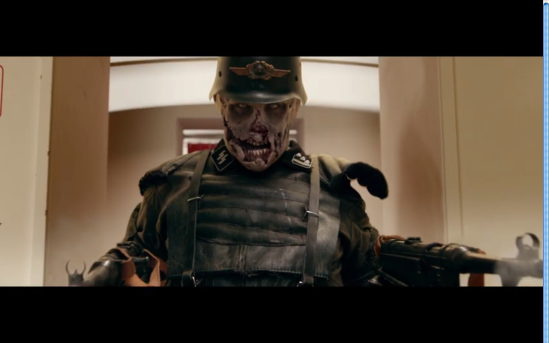
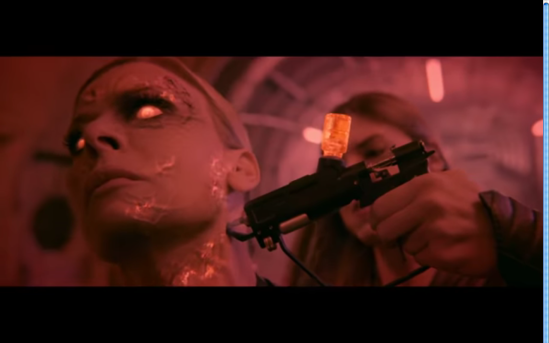
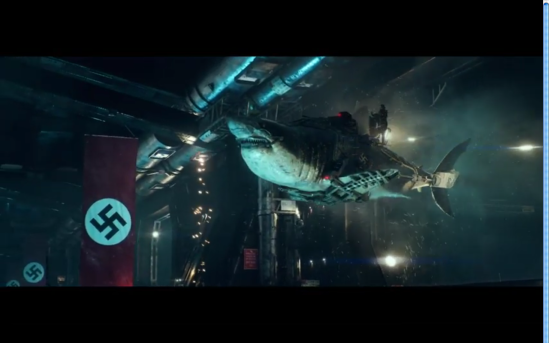
Former Nazi scientist Dr. Klaus Richter’s past has finally caught up with him after 70 years when a clandestine German laboratory, disguised as an aircraft-battleship hybrid, thaws from behind a globally warmed sheet of frozen ice and rock, releasing Dr. Richter’s regenerated legion of undead Nazi super-soldiers piloting genetically engineered flying battle sharks complete with guided missiles alongside their razor sharp jaws.  Loyal to the Third Reich, the sky sharks continue their master race patronage with a blitzkrieg in the skies, attacking commercial aircraft, boarding the cabins, and slaughtering every last person on board before crashing.   Now contractually working for the U.S. Government as the biggest name in technological advancement, Dr. Klaus, with the help of his two daughters, has a plan to nullify the sky sharks’ defenses to make them vulnerable to his latest newest experiment in warfare, Dead Flesh, under the guidance of his fellow covert government agency heads.

Apex predators of the waters are now apex predators of the skies in Marc Fehse’s ridiculous, frenzied, and utterly mad ultra-violent Nazi-exploitation, “Sky Sharks.” Soaring through the heavens soaking fluffy white clouds with blood, the Carsten Fehse and A.D. Morel co-written film took off virally in 2020 with the promise to the internet, especially horror fans, of zombified SS soldiers mounted standing on humungous Great White, Hammerhead, and Megalodon jet-propelled sharks. Fehse’s team delivered. “Sky Sharks” has not one single serious bone in all it’s cartilaginous gory-glory body in what’s Fehse’s second film behind the 1999, straight to video, “Mutation” involving the what-if factor of a surrealistically free reigning and sadistically unbridled Nazi force hellbent on winning World War II no matter how many lives needing to be sacrificed for the sake of the Führer’s dominion. The Germany-made production is a Fuse Box Films and Fantom Films.

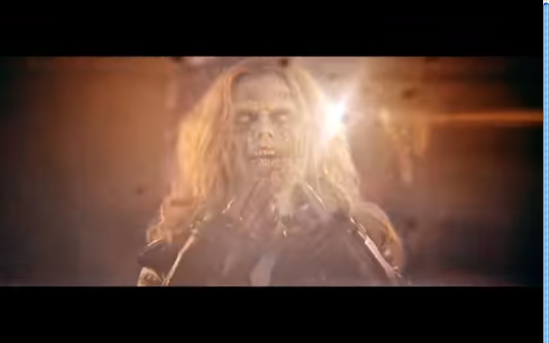
“Sky Sharks” is studded with cult stars, but those studs pop out mostly after the carnage-laden opening scene of passengers on a commercial flight being ripped to shreds by undead super-soldiers hog-wild about killing. Robert LaSardo (“Strangeland”), Lynn Lowery (“Model Hunger”), Tony Todd (“Candyman”), Diana Prince (“The Last Drive-In with Joe Bob Briggs”), Mick Garris (director of “Critters 2”), Dave Sheridan (“Scary Movie”), Amanda Bearse (“Fright Night” ’85), Asami (“Gun Woman), Naomi Grossman (“American Horror Story” franchise), Lar Park-Lincoln (“Friday the 13th Part VII:  The New Blood”) and “Mortal Kombat’s Shang Tsung himself, Cary-Hiroyuki Tagawa, make an appearance in some minor way, shape, or form, but since “Sky Sharks” is a German production, much of the cast is geared toward German and Austrian actors with Thomas Morris spearheading the lead role of the inverted mad scientist, Dr. Klaus Richter, a centenarian mastermind behind the birth and, hopeful, destruction of his monstrous airborne jaws of death experiment.  The role itself isn’t very exciting that refrains Morris to be nothing more but a talking head who recounts his failed World War II and Vietnam resurrection serum to turn the tides of war.  While Dr. Richter has immense blood on his hands from a long and rich background, the present day Richter has lackluster appeal and Morris doesn’t provide much zest either.  More complexities reside in Richter’s two tech-savvy and kickass daughters, Diabla and Angelique.  Their signifying names alone provide some foreshadowing of events, but the close sisters are boots on the ground with their father being the eye in the sky; yet, Diabla and Angelique have been kept in the dark from their father’s horrid past that factors little into parting ways from being daughter’s little girls.  Blonde beauties Eva Haberman and Barbara Nedeljakova successful roles in Germany and the U.S. include “Hostel” and the sci-fi tele-series “Lexx,” but their blind obedience to the patriarch roles downscales any moments to shine individually as free thinking agents of good.  Any other character factored into “Sky Sharks’” whiplash narrative come and go without a single ounce meaningful impact becoming background noise for the fray. There’s not even a singular villain to speak of as a focal point to direct a challenger against forces of good.

As much as the concept excites me on an obscurely dysfunctional level, a real telling tale of who I am as a person, who also praises “Snakes on a Plane” as cult candy, “Sky Sharks” has atrocious issues with pacing and story quality.  The opening scene sets up what to expect of gore drenched Nazis yoking back on genetically mutated sharks, zipping through high altitude to acrobatically infiltrate commercial planes for complete and total annihilation of every passenger onboard.  Tickles me in all the right places.  Yet, the sky sharks’ unveiling background whizzes past right into death from above world apocalypse, skipping keynote details resolving the giant warship beached on the Antarctic ice.  Fehse decides to redirect our focus with a bunch of explicit violence and sex and while that’s all nice and good…really good…the misdirection can’t coverup the necessities needed for a good story even if the story is absolutely bonkers. The visual effects are not distinct from the ream of shark-sploitation films that have become popular over the last decade in a cheaper slaved effort to capitalize on the majestic beasts of the sea…who sometimes mistake a surfer for a sea lion. The flying sharks swim in a stiffly pattern and move inorganically through their uncharacteristic ecosystem as they rocket in a school of steampunk nightmares. Not all visuals fall short of satisfaction when they’re appropriately blended with practical effects. Under that hood of tangible horrors is “Iron Sky: The Coming Race’s” Martin Schäper and, the legendary, Tom Savini, who we haven’t seen special effects work from since 2012’s “Death from Above” (an also fitting title for killer sharks in the sky). Schäper and Savini bring it with blood. Each plane sequence, there’s two of them, exhibit different deaths with each one more outrageous than the next. My favorite is the inverted periscope through a guy’s cranium and having a looksie at the screaming, bloodied passengers. “Sky Sharks” is, literally, an over-the-top scream of slice’em and dice’em fun.

Cresting through the blue yonder and painting the sky blood red is the deadliest gang of shark riding Nazi’s to ever grace a cinema platform in “Sky Sharks,” coming to DVD in Australia, no stranger to large, deadly sharks, courtesy of Umbrella Entertainment in association with Raven Banner. The NTSC encoded, region 4, rated R release will present the film in a widescreen 2.35:1 aspect ratio. “Sky Sharks” is a turbulent wonderland of rustic computer generated visual effects with a Marco J. Riedl and Olaf Markmann cinematography, typifying a clashing style, of keeping actors tightly in focus to sell a futuristic fluorescent environment. A few scenes give a sense of layered paper mâché sitting in front a green screen as the forefront images seemingly pop out of their backdrops. The English and German Dolby Digital 5.1 surround mix falls victim to an overpowering score of a weak dialogue track that washes key pieces of exposition that might explain more as the scenes fleet away in the rushed paced 103 minute runtime. Aside from a brilliantly detailed DVD cover robust with a glowing eyed, half-decaying Nazi soldier as centerpiece amongst flying, weaponized sharks and Robert LaSardo and Lynn Lowry cameoing off to the left side with a half-naked female warrior on the right, the DVD has no bonus features included. After the credits, a fake commercial for “Sky Frogs,” starring that half-naked female warrior I just mentioned, is a satirical happy ending full of even worse, 80’s caliber, visual effects worlds and frogs. Though not at the top of the food chain being one of the grossly ostentatious and shoddily visual effects films ever, the mindless, search and destroy, crudeness of “Sky Sharks” chums our oceans of entertainment with some of the bloodiest fun we’ve seen in a long time from a Nazisploitation.

Own Umbrella Entertainment release of “Sky Sharks” on DVD! Click the poster!

To Unearth a Lifesaving Plant, You Must Survive EVIL! “Yeti” reviewed! (High Flier Films / Digital Screener)

When a medical research team scouring the Himalayan mountains for a miracle plant that can cure cancerous cells disappears without a trace, a second team, armed to the teeth, venture up the harsh terrain to locate them and recover any evidence of the mythical plant dubbed the Yeti plant.  They discover the research station has been abandoned with examination equipment and notes left behind.  With a storm brewing and the topography jamming their radio signals, the only thing to do is push themselves to setup a triangulated perimeter in order to boost the radio strength and comb the mountainside for the plant before hunkering down from the storm, but little do they know that they’re being hunted by a primordial and fabled creature, the Yeti, stalking prey to protect his uncharted, stuck in time territory.

As the third film to be titled “Abominable” in the last 15 years, this particular 2020 creature feature on the ever elusive and mysterious Himalayan Yeti is helmed by the 2018 released scurrying little feet of those mischievously cursed “Elves” director Jamaal Burden might not be at the top of your search engine results, but if you search “Yeti,” you’ll see High Flier FIlms aims to detach from the previous moniker inhabitants.  Burden’s modestly budgeted, internationally shot, sophomore film returns the filmmaker right back into the mythic subhuman category with yet another timeless storybook creature living in legends slithered within the shadowy veil from a script written by J.D. Ellis (“The 13th Friday”) that’s of indie caliber with a touch of jaw-ripping, blood-sprayed snowy carnage in this post-Holiday, winter-horrorland super beast feature.  “Yeti” is the latest in a long line of horror schlock produced by Justin Price, Khu, and Deanna Grace Congo under Pikchure Zero production company and is filled in St. Petersburg, Russia. 

Confronting opposite the terrible Yeti is a cast of alien talent without so much as a recognizable genre name or face to anchor “Yeti’s” marketing success, beginning with Katrina Mattson in her debut lead performance as a young scientific assistant to the terminally ill-fated Dr. Helen whose played by Seattle born Amy Gordon.  The body of dialogue or visual communication didn’t flesh out Mattson’s assistant’s strong yearning to support Dr. Helen’s obsession in rooting out the never before seen Yeti plant other than stating she will do anything to help the Glioblastomas-doomed doctor by whatever means possible.  The disconnect in dynamic between the two supposed friends is not well established and completely melts away faster than the Himalayan snow on a Summery day when the two barely reunite after separating from the abandoned research station.  They’re each accompanied by a couple of mercenaries hired to be an armguard, for a reason why scientists needed M16 assault rifle toting ex-special forces types is beyond me, but actors Robert Berlin and Brandon Grimes serve as such, adding a tinge of military machoism that could have been amped up more against a Jason Voorhees worthy disappear and reappear act Yeti with the given inherent superhuman strength. Berlin wildly over performs at times just spouting out his lines as if reading off an instruction manual. Plus, his character is poorly developed as a money hungry Yeti hunter with an extremely naïve and arrogant personality to the point of yelling in the Yeti’s face when the Yeti is clearly not dead or incapacitated.  Victims pile up with the remaining cast becoming Yeti chow, including supporting performances from Justin Prince Moy, Magdaln Smus, Victir Ackeev, J.D. Ellis, and with Timothy Schultz passing as the scraggily titular abominable snowman.   

The reason why Burden’s “Abominable” might not be numero uno on your search engine results shouldn’t be total surprise, but even “Yeti” may not produced the same desired outcome.  Aside from not having any grade of star power attached to it, audiences will be awkwardly thrusted right into a perplexing point in the story of dropping us right into complication with a rescue team entering the abandoned Himalayan station and, from then on, a straight forward, uncompelling path of infinite chase with the ball incessantly in the Yeti’s corner trounces on any kind of hope or resistance for survival.  The man-in-a-suit Yeti and makeup effects are not too bad as an admissible effort for an indie production and what’s even more impressive is how Burden felt confident enough to actually show the creature. There have been Yeti, bigfoot, sasquatch, etc., films aplenty of that stray away from displaying much of the hairy beast, only providing glimpses of the large feet, ape-like hands, or fanged teeth to represent a presence, but for “Yeti,” the creature is proudly displayed in all it’s full glory despite being half hairless with patchy spots of snow-stuck fur. Joe Castro, an effects guru for off-the-wall horror for the past three decades with credits including “Night of the Demons III” and “Blood Feast 2: All U Can Eat”, created the Yeti suit while also dishes out some surprisingly decent gore effects that have a real palpable face mangling fetish and so bloody great. On the other hand, the visual effects and props are an abomination in themselves with obvious toy guns and lack of continuity and cause and effect visual effect givens.


Is “Yeti” another filmic miss on the missing link or can there a slither of entertaining gore with creature lucidity amid a trite script? I do think the latter in Jamal Burden’s “Abominable” from High Flier Films slated for a January 11th DVD release in the United Kingdom. Producer Khu is also the director of photography, using the steady and handheld cams to capture a heap of medium and closeup shots without seizing the opportunity to get a lay of the actual snow covered forest which the characters are heaving hot breaths in the frozen air. Khu does exude the fact of actual frigid conditions with the use of a bluish tint in every outdoor scene. “Rave Party Massacre’s” Matt Jantzen composes a tense-situated, industrial epic score that doesn’t fit “Yeti’s” marginal story structure and can be nearly rave-like and repetitive at times while overpoweringly robust. Sound design is another favorable aspect in “Abominable’s” chaos with a discernible range and depth, especially when working with crunchy snow and a lot of bulky clothing that can be heard rustling when characters move around frantically. Gore scenes are laced nicely with gooey, gushy sounds that can be tangibly slimy. There were no bonus material included with the digital screener nor where there any bonus scenes during or after the credits. The great Yeti adaptation still eludes our ever curious eyes as “Yeti” quenches a only blood thirst through an over-trekked, over-defiled snowy path of the subhuman subgenre.