Starve EVIL With Unseen Faith. “A Banquet” reviewed! (Second Sight / Blu-ray)

After the long-term care of her terminally ill suffering husband, he suddenly commits suicide right in front of her and right in front of their oldest daughter who just came home.  Holly must now pull it together for her two teenage daughters, Betsey and Isabelle.  Drowning in debt to maintain a wealth front of normalcy, Holly puts on the facade to juggle life’s adversities to order to keep the family above water, but when Betsey is overcome by an apocalyptic vision that intermittently possesses her behavior, Holly’s unsure of how to cope as any threats of committing Betsey for treatment is rebutted by talks of suicide.   Betsey goes into deep trances, deep sleeps, and won’t eat despite not losing any weight and as imaginations run wild of what’s driving her unusual behavior, Holly must contend to survive and triumph not only in her daughter’s wellbeing but in all of the seemingly insurmountable problems threatening to tumble down and crush her spirit.

If you’re a fan of elevated horror then Ruth Paxton’s debut dysfunctional family drama horror, “A Banquet,” will tickle your thinking pickle.  While some would argue there is no need for elevated horror in the genre, sometimes exercising the old thinker can be immensely stimulating as well as scary in the same breath.  The 2021 psychological thriller-horror hailing from the United Kingdom was one of the first productions shot in the thick of government issued pandemic lockdowns that tossed the moviemaking job market into a frenzy, scary void of uncertainly and, what seemed like, an eternal limbo, similar to what “A Banquet” offers in its multifarious themes and interpretations that involve faith and religion, family hierarchy, and postural image.  With many departmental crews and cast out of a job and unable to find work during forced lockdowns, “A Banquet” became a beacon of hope and a chance to indulge a passion no matter how little it paid.  “A Banquet” is penned by Justin Bull (“Merge”) and was secured by first time producer Leonora Darby with Nik Bower (“Replicas”), James Harris (47 Meters Down”), Mark Lane “Cockneys vs Zombies”), and Laure Vaysse (“A Dark Place”) co-producing the conglomerated production from HanWay Films, Riverstone Pictures, Tea Shop Productions, and Reliance Entertainment Productions 8 LTD.

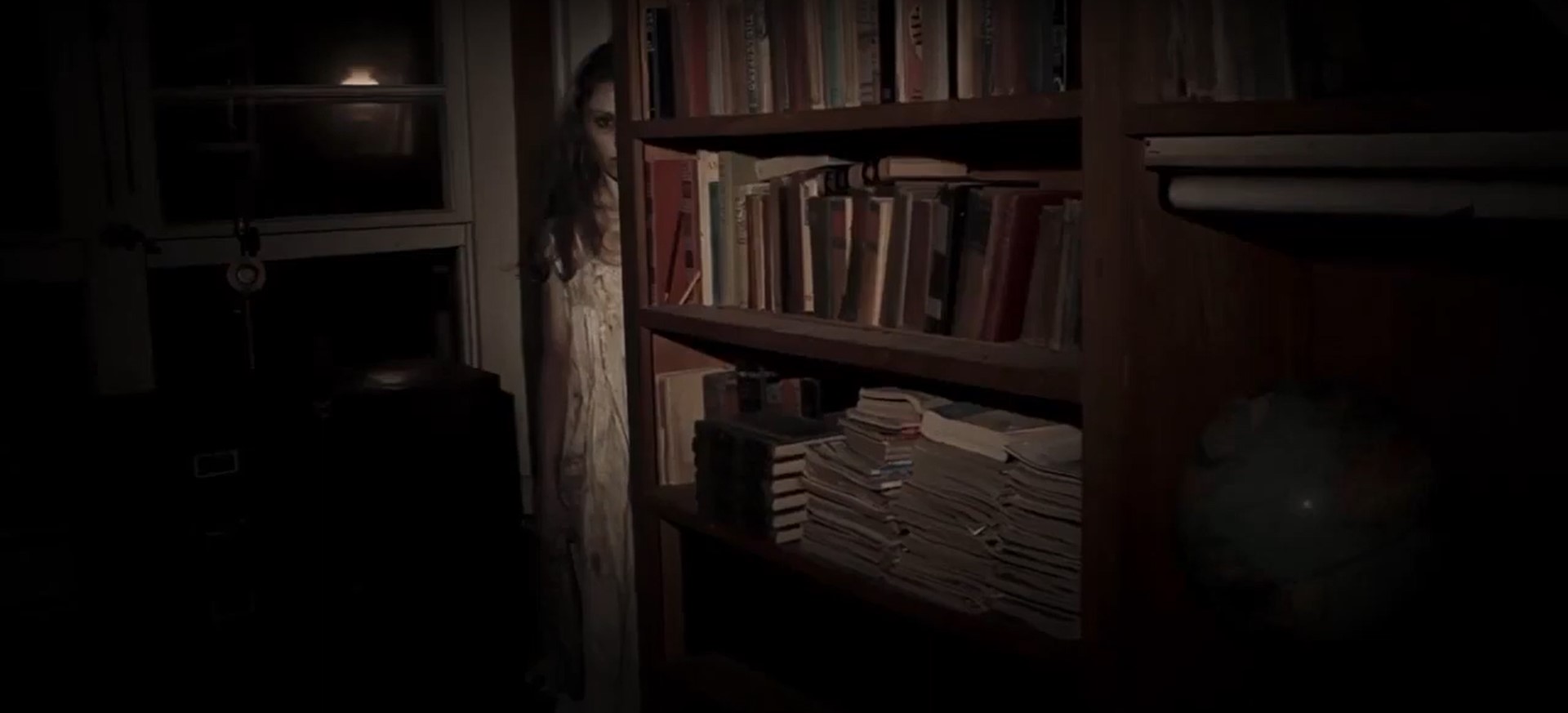
“A Banquet” surrounds around a nuclear family minus the patriarch who immediately removed from the picture within the first five-minute opener in a powerful scene of weary difficulty, distressing pain, and a harsh untethering of a burden that begins the inklings of the uncanny to come. Enter mother Holly (Sienne Guillory, Paul W.S. Anderson’s “Resident Evil” franchise) and her two daughters, Betsey (Jessica Alexander) and Isabelle (Ruby Stokes), into the frame weeks, maybe months later, and resided to the loss. Playing the center of concern is the raven-haired Jessica Alexander in what is one of her first feature film performances and it’s a doozy.  As Betsey, a mild-manner older teenage girl at the forefront of adulthood, Alexander earns the chance to showcase herself in a variety of ways with a role that transcends from a docile daughter to a variable vessel of unknown origin that’s haunting and unpredictable as you can never tell what’s taken control over Betsey is naturally good or evil.  Alexander even gets to dip her toes into, or rather dig her fingers into, gross and horrifying practical effects with brilliant results.  Opposite Alexander in the role of the mother, Holly, is Sienna Guillory, a beguiling veteran actress now in the throes of maintaining the routine and keeping appearances aggregated up to snuff.  Guillory exudes a bottled-up pressure that’s so immense it can be translate right off the screen and into the viewer.  There’s plenty of tension in the story but most of it is concentrated right on Guillory’s embodiment of a mother treading desperately in deep waters.  A maelstrom of frustration, fear, loathing, and neglect eviscerate Holly open to shoulder her family’s bleeding and she claws frantically, with poise, to cauterize the fissure.  Isabelle is a fascinating and almost unintentionally forgotten character that is meant to evoke that effect as the neglected younger sister.  While we’re constantly orbiting Holly and Betsey’s, we lose track of Ruby Stokes’s Isabelle yet the upcoming star for Netflix’s “Lockwood and Co.” Stokes paints a potent psychological picture of Isabelle being on the backburner.  Raw and tragic, Stokes subtly pushes Isabelle, who initially is the more cavalier and disobedient of the two sisters, to strive for attention in her own way whether be that longing glance into the stands when her mother isn’t paying her mind during figuring skating instruction or wanting to reluctantly engage in alcohol and sex just to outlet that notice me energy elsewhere.  Concluding this bloodline of women is the more draconian matriarch, Grandmother June, with an uncompromising and plain-spoken fascia erected by Lindsay Duncan (“Body Parts”).  Duncan’s fine snide performance compounds the pressure on Holly and is a cold bucket of ice water to her granddaughters when speaking her mind, telling them simply stop pretending, and remind them of their mother’s own historical mental problems in a matter-of-fact tone.  Between the four, there’s individualistic dominance over each of their domain without an ounce of withdraw or relief until the bitter end and that dreadful dynamic sets the tone for the “A Banquet” austere veneer and tone.

“A Banquet” is a lot to unbox and chew on in this women-driven created film.  Open for a many number of interpretations, based on one own’s spiritual outlook or personal opinions, Ruth Paxton tees up a broader theme of centrical growth of stepping outside another’s shadow.  The message can be applied to Holly and her two daughters as each one of them attempts to move forward or past a routine of some form of contempt.  Isabelle is trying to get out of her sister’s shadow, Holly bristles against her overbearing mother, and Betsey is being supernaturally guided through a symbolically painful transition of growing up into an adult as if the process came naturally. Blunt defiant moments shine Betsey’s overall separation from mother’s control, such as threatening to kill herself if her mother institutionalizes her or in during the number of elaborately prepped dinners that Holly slave over are just pushed aside and untouched by Betsey. Those dinners, in themselves, are a sign of privileged with fine dining right at their fingertips with no sign of hot dogs or sloppy joes in sight. Holly strives to maintain that sense of luxury, which is another form of control but, in this case, is Holly’s mother June whose elitist fundamentals enslave Holly to live up to the hype. Systematically, each member of the family, working up the ladder from youngest to oldest, breaks the inherent status quo. What Betsey undergoes is mystically charged after she emerges from the woods a changed woman and what might seem like a possession of sorts, we don’t exactly know if the extent of what inhabits her is wicked or actually good as the pendulum sways constantly between being enlightened and being cursed. There’s plenty of allusions toward a religious experience with encouragement of faith and rapture talk that not only spooks Holly but also makes her the primary subject of Betsey’s claim to save. When the time does come, and Betsey passes through a substitutionary atonement, the end scene shows Holly being embraced by a candescent light that illuminates from within her. Is it being saved or is it something else? Ruth Paxton smashes her first feature with an elevated deconstruction of a family obliviously rotting at the core and attacks the film with dispirited ambiance sewn to dread.

Feast your eyes on the new limited-edition Blu-ray set of Ruth Paxton’s “A Banquet” from Second Sight films. The region B, PAL encoded UK boxset presents the film in 1080p widescreen 2.39:1 aspect ratio with a frame rate of 23-24 fps. David Liddel’s deep and encroaching cinematography of somber is highly effective in dulling out any kind of hope that might try to sneak in and with Liddel’s close-to-mid shots of macro-sized foods of all fresh and decaying varieties and in the middle of the more volatile struggles between mother and daughter opens up “A Banquet” to a plethora scene being uncomfortable moments. Details are sharp and colors are about as rich as Liddel can make them inside a grey-covered world. The English language set comes with two audio options: a DTS-HD 5.1 and a LPCM 2.0 stereo. DTS is clearly more robust through the various channels with a well-balanced mix. Other than a few outlier moments in the forest that disperse the dialogue in a naggingly boxy echo that doesn’t fit the environment, dialogue is discerningly clean and clear of obstructions and damage, as if there would be any on a digital record. Optional English subtitles are also available. Bonus material includes an interview with director Ruth Paxton Deformity of the Flesh on creating her first film during the height of the pandemic, an interview with star Jessica Alexander Improvised Exorcism in which she discusses her experience soup-to-nuts from hiring to completion, an interview with producer Leonora Darby Producing a Feast who notes about the difficulties of being a first-time producer in pandemic time, an interview with cinematographer David Liddel Dark Edges on how he creates “A Banquet’s” gloomy aura and creative shooting angles, the Q&A from Glasgow Film Festival with Paxton, Alexander, and Sienna Guillory, and a making of featurette. The limited-edition physical boxset is a sturdy vessel of beauty with a rigid slipcase with new artwork by Jen Davies, a 56-page soft cover picture and essay book with thoughtful examinations by novelist Alexandra Heller-Nicholas (“1000 Women in Horror”), film critic and writer Jennie Kermode, and Heather Wixsn, the managing editor of the Daily Dead. The contents round out with 6 collectable art cards. The film has a runtime of 97 minutes and is certified 15 for strong threat, language, suicide, self-harm, and drug misuse. “A Banquet” is lavishly cataclysmic as a divinely damning dish of a broken, dysfunctional family made to order by first time director Ruth Paxton with more to say.

Four Kids to Stop EVIL From Wiping Out The Rest of Mankind. “The Walking Dead: World Beyond” final Season reviewed! (Acorn Media International / Blu-ray)

The last time we saw the four Colony Campus travelers trekking across country, Hope and Huck were helicoptering back to the Civic Republic Military, Iris and Felix find Will to learn their home has been wiped out, Silas sacrifices himself up to the CRM for his friends to get away, and Elton discovers Percy alive but severely injured after uncovering Huck’s deceit.  Separated and deeply rooted into their own difficulties and dilemmas, the long-term goal is to survive and find each other again while unearthing clarity around the CRM’s true top-secret military operations – wiping out neighboring alliance colonies with lethal gas.  Hope reunites with her father to assist in how to quickly eradicate the dead but the advancement in their works comes across CRM immoral hurdles that force the group into radical action against the most powerful and well-organized military faction known to what remains of mankind. 

“The Walking Dead” spinoff series, “World Beyond,” comes to a close on the two-season arc that aims to die up bits and pieces of connective elements into the ever-expanding universe that is “The Walking Dead.” Showrunners Scott Gimple and Matthew Negrete return to season two with a drive to give fans a broader sense of the enigmatic Civic Republic Military (aka CRM), to supplement a main series character’s hand in the fate of the human race, and to take continue to reach across the domestic planes to show that there’s more than just Georgia-Virginia heat and TexMex dead and drama. Gimple and Negrete’s “World Beyond” is the little brother of the series two predecessors but offers same amount of drama under a blanket of undead gore. Friendships will be tested, moralities will be checked, and the dead will still walk in this ancillary limited series that runs from 2020 to 2021, totaling 20 episodes. David Alpert, Brian Bockrath, Maya Goldsmith, Gale Anne Hurd, Ben Sokolowski, and also across the TWD universe and graphic novelist co-creator Robert Kirkman return to season two as executive producers under the presentation of American Movie Classics (AMC) with Idiot Box, Circle of Confusion, Skybound Entertainment, and Valhalla Entertainment serving as production studios.

Season one regulars Aliyah Royale, Alexa Mansour, Hal Crumpston, Nicholas Cantu, Nico Tortorella, and Annet Mahendru return to see their characters through the waves of the flesh-biting undead and the unbridled, unchecked power trips to the bitter end. Performances from season one into season two two retain individual natural orders of progression within the slogging imbroglio surrounding one ultimate thematic goal – to survive without sacrifice. From the regular cast, Aliyah Royale, Alexa Mansour, and Nico Tortortella step up in the rapid-fire series of blistering complexions based on the known and unknown facts of the environments or colonies that influence them. Tortorella actually showcases some of his fighting choreography unlike what we’ve experienced in the first season, making his Felix character that much more bad ass. Hal Crumpston, Nicholas Cantu, and Annet Mahendru don’t necessarily provide inedible takes of their equally thrust in turmoil characters but also don’t take their themselves to the next level. I still find Huck, played by Mahendru, to be average in a key role of double-edged duplicity. Plus, that forced deep Southern accent doesn’t do Huck justice, forged to contend with her military trained and tough cozenage. Crumpton remains flatlined with Silas’ two-toned solo-pot of emotions and Nicholas Cantu, who I consider the philosophical voice of reason for the group, isn’t provided enough screen time substance in season two to make an impact as his personal tribulations, such as learning Hope killed his mother during day one of zombie fallout, are dropped with barely a mention. New series regulars come aboard stemmed from their provisional season one stints. Joe Holt becomes more involved as Iris and Hope’s scientist father, Ted Sutherland reoccurs as Percy being found injured and is nursed back to health to seek revenge on Huck as well as become Iris’s love interest, Jelani Alladin returns with a fulltime status as Felix’s partner and has more of security role pivotal to the rebellious efforts against the CRM, and Julia Ormond returns as Huck’s mother and as Lt. Colonel Kubleck aimed to do what must be done in order to achieve mankind’s longevity. The new regulars, with the addition of new newcomer Maxmillian Osinski, breathe new life and new complexities of a narrative’s David and Goliath’s approach with added poignant distress as well as subdued hope. The cast rounds out with Natalie Gold, Anna Khaja, Will Meyers, Madelyn Kientz, Robert Palmer Watkins, Gissette Valentin, and “The Walking Dead” crossover Pollyanne McIntosh as Jadis filling in as a CRM head honcho with a new and approved queerish haircut.

The second season promises a whole new set of perils through the world of the undead and, to be more specific, “World Beyond” pivots the focus from the dead to the cruelty of man, keeping up with the “TWD” universe’s majority themes of staggering scruples and survival barbarity.  “World Beyond” trades decaying dentures for military might as Hope, Iris, Elton, Silas, Felix and Huck exhaust their trek to a divisive end after season one’s from West to East’s coming-of-age, growing-in-ghouls expedition that leads them to step outside their comfort zones and into the real world from the safety of the Campus Colony.  We learn early in season one that going back home is not an option as the Campus Colony has been wiped off the map by the CRM, but that hidden truth runs deep into the new season’s storyline and becomes this paradox notion that causes division amongst the principal characters.  Much of the belief the CRM committed genocide is founded on gut-feelings and hunches, as Iris continues to arduously state and even going as far as killing one of the CRM soldiers without proof of ice-cold facts of CRM’s hand in murdering the close-knit survivalist friends back at the Campus Colony.  On the subject of killing, one of the initial gripes by “World Beyond” was that the first season was gory-lite and lacked a concerning amount of undead rapaciousness for flesh.  The same can be said for the second season that saw little bite from the zombie contingent and, instead, focused more of the dynamics of conflicting groups trying to get the upper hand on each other, but also mirroring the layout of season one, gore and that inherent blood-n-guts cornerstone that, as we all know, makes audiences return show-after-show, season-after season to the “TWD” behemoth.  The latter episodes feature a crimson blood-splattering display of head shots, throat rips, and eviscerations that can sate fans toward forgiveness on being reserved in grisly gaudiness.

If you can’t get enough “The Walking Dead” or “Fear of the Walking Dead” then “The Walking Dead: World Beyond” can help fill that void with a short-lived arc in other parts of the dead-riddled planet and the final season comes to Blu-ray home video with a 3-disc, 10-episode set from Acorn Media International. The PAL encoded UK set is presented in an unmatted 1.78:1 aspect ratio which comes standard for U.S. television programming. Picture image comes from the HD AMC premiere and the noticeable dull details and banding in the digital compression codec. The quality won’t cause eyestrains or be a breaking eyesore as many viewers will notice little difference between television and the Blu-ray data output. The English Dolby Digital 5.1 surround mix has no flaws in the digital recording that provides a high bit clarity on each isolating channel and funneling them into one well-blended mix. Range and depth are on point and come through in a tumultuous world of gunfire and that recognizable growling dead. Optional English subtitles are available. With a runtime of 439 minutes and certified 15 or over, “World Beyond” has plenty of content and violence to salivate over but just in case you crave more, bonus features include the Comic-Con@Home 2021 Panel hosted by “Talking Dead’s” Chris Hardwick and includes showrunners Scott Gimple and Matthew Negrette as well as cast members Aliyah Royale, Alexa Monsour, Annet Mahendru, Jelani Alladin, Joe Holt, Hal Crumpston, Nico Tortorella, and Nicolas Cantu in the Hollywood Square-like Zoom panel. “World Beyond” scratches “The Walking Dead” itch for more with a Martial Law look and lockdown theme of military oppression over what remains of the civilian population, an aspect we haven’t seen extensively before in the franchise and slips into the timeline as a needed gap-fill, stretching over a new place and new set of people.

When the Heart Loses is When EVIL Invades the Head! “The Twin” reviewed! (Acorn Media International / Blu-ray)

After the tragic car accident that claims the life of their son Nathan, grieving Rachel and Anthony move from New York City to a sublime region of Finland, a place where Anthony’s lineage lies and where he spent time as a child. Nathan’s twin brother, Elliot, is frequently overprotected by his mother after the loss. When Elliot begins to exhibit troubling signs in his behavior that links to his deceased twin brother, Rachel grasps out for explanations, looking for a rational and irrational answer that could contribute to such erraticism in her son. One possibility, paved by a local outsider with her own personal demons, is the Finnish community is beholden to a supreme darkness that seeks to possess the child from the beyond. With nowhere to turn for help, Rachel relies of her motherly instinct to protect her child at all costs and from all malice from all forms. but what the evil that plagues Rachel and Elliot might be closer to her than she realizes.

Identical twins are already at about a 10 on the creep factor scale. Margot Kidder in the dual psychotic role of Brian De Palma’s “Sisters”, the unnerving Jeremy Iron performance of manipulation and cruelty in David Cronenberg’s “Dead Ringer,” and even those Grady twin sisters from Stanley Kubrick’s “The Shining” are an eerie extract overlooking the fact that two people can look so exactly alike. The biological phenomena goes against what proclaims us to be human in the first place – our individuality – and to be regularly utilized as a factor of the strange and unusual in a horror film just fills the cup up with a whole bunch of, and I quote Jordan Peele, nope! Finnish writer-director Taneli Mustonen is the next filmmaker to implement the oddity of identical siblings in his latest horror-thriller entitled simply “The Twin.” Co-written with Aleksi Hyvärinen, “The Twin” is the sophomore horror feature behind 2016’s “Lake Bodom” to emerge from the writers who have found cadence writing, producing, and directing comedies. Spun from Mustonen and Hyvärinen’s production company, Don Films, Don as in the title of respect, along with collegial line producer Mika Pajunen. Responsible for funding “The Twin” are returning “Lake Bodom” executive producers Fabian Westerhoff, Joris van Wijk, and Toni Valla with Shudder’s Emily Gotto acquiring distribution rights with financial backing.

Like most films about twins, the 2022 released twists and turns of a back-and-forth intrapersonal thriller uses one person to Eddie Murphy the roles. That person in “The Twin” is the pintsized Tristan Ruggeri who made his television debut as young Geralt in the hit Netflix book-adapted dark fantasy series “The Witcher.” Unlike most films about twins, Ruggeri really only has to play one but teeter the personality of the other in a symbolic showing of painful sorrow manifested to sorely miss what’s essentially your exact self. Imagine you’re a twin of a deceased sibling and you look at yourself and see your brother or sister. Rugger’s able to capture that emotional payload at such a young age despite being rigid as many child actors typically unfold early in career. Much of the story is seen through the eyes of Rachel, a distraught mother coping with the tragic loss, and the audience experience darkening, supernatural plot that’s unravelling a Satanist cult’s clandestine desires to bedevil her now only son Elliot.  “Warm Bodies” and “Lights Out” star Teresa Palmer plays the now the mature and safeguarding motherly role in the grand horror scheme alongside fellow “Discovery of Witches” costar Steven Cree (“Terminator:  Dark Fate’) playing her novelist husband, Anthony. For “The Twin” to actually work for the viewer to understand on a sympathetic level, you need to feel the love between them and finding love between Palmer and Cree is about as loveless as a platonic relationship. Aside from sharing a bed and a child, the romance and amorous has been removed from play, but that of frigid factor could have very well been intentional for the story. The principal casting concludes with Barbara Marten (“The Turning”) and the town eccentric, a foreigner who Rachel relates to and latches on to when the crisis with Elliot worsens.

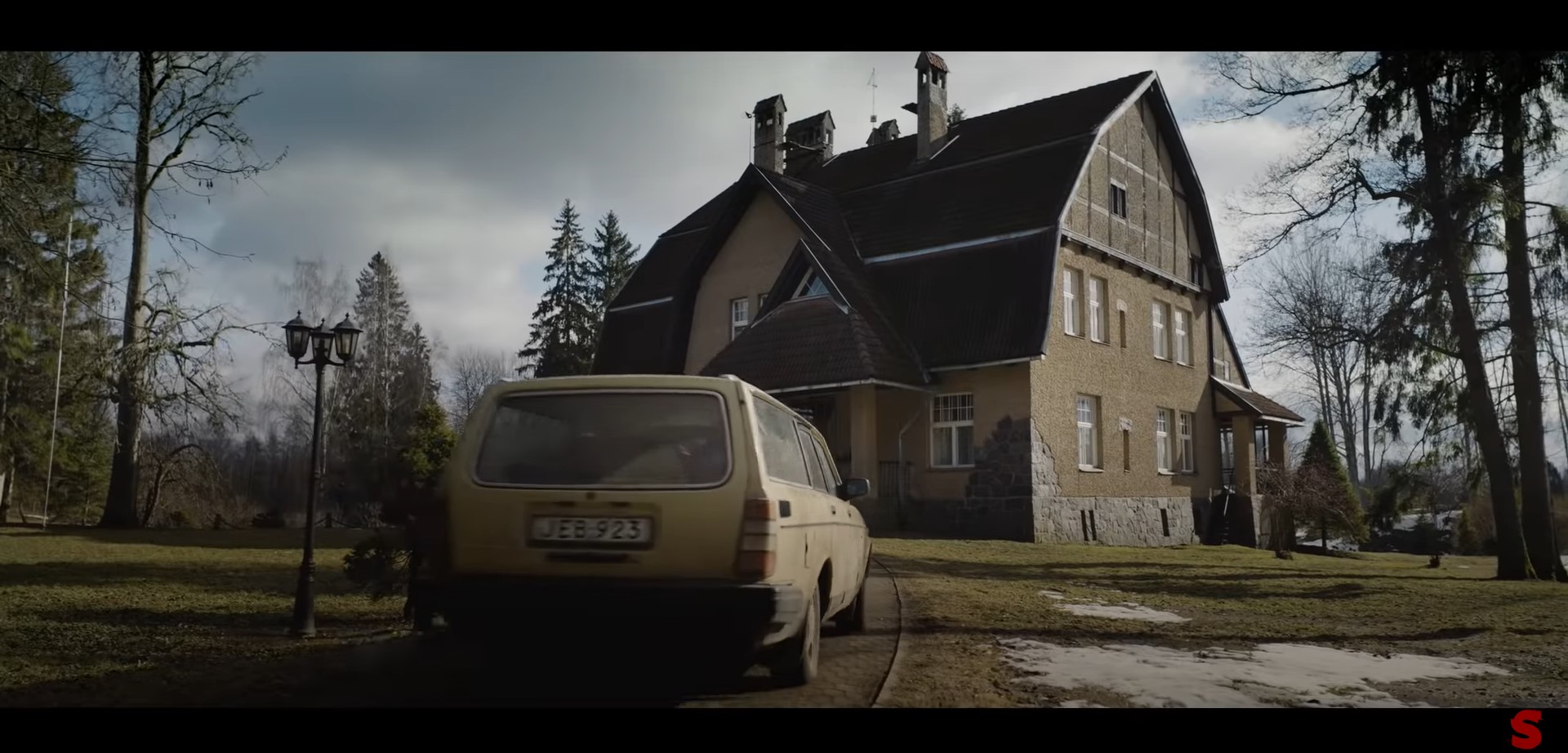
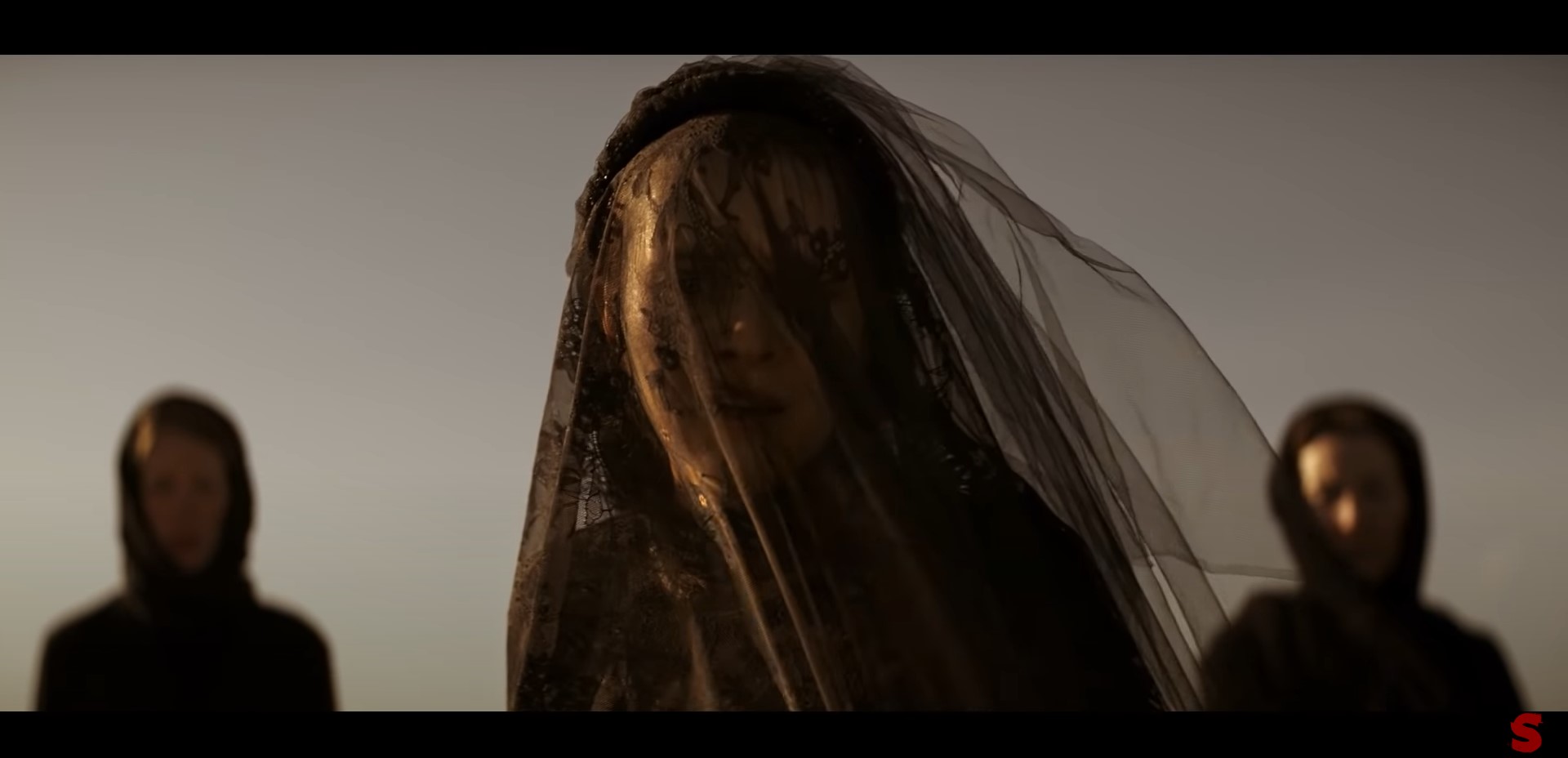
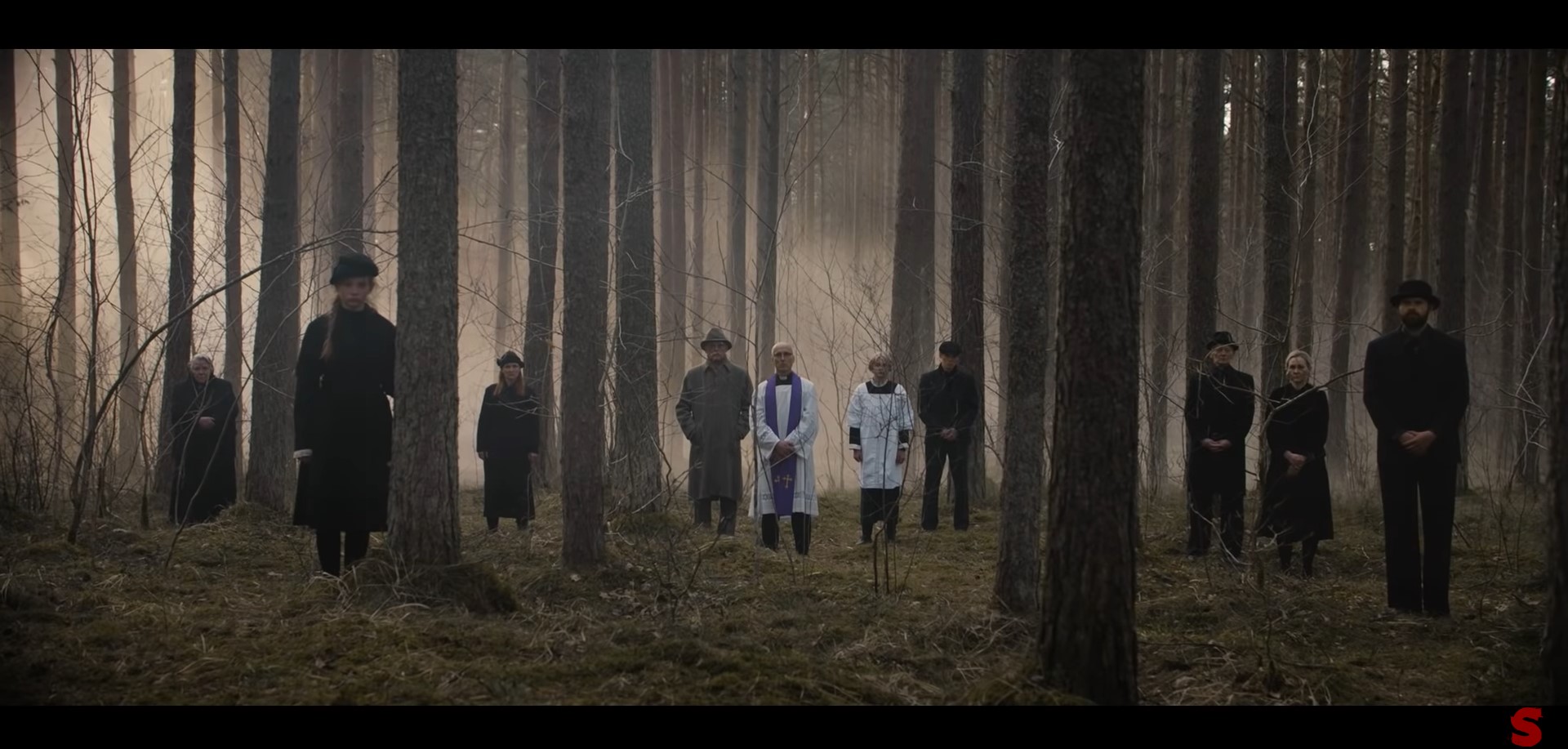
“The Twin” is small principal cast with big background actors that menacingly swallow nonconformers alien in nature to their surroundings. Foggy atmospherics, looming, creaky wooden house, and the dissociative difficulties that put Rachet through a tizzy compound the fear and the affliction of anxiety that turns everything close to you against you in a heap of isolation. All the dead silence and surreal nightmares build tension effectively, keeping the audience on the edge for that peak moment. Mustonen and Hyvärinen throw in a capacious curveball that lets characters wander and explore then develop and action against before pulling the rug from under our one-directional firm footing for a twist. That twist, however, is a play fake we’ve seen before in recent years with the armor of horror shielding the true trepidation. When the peeling begins and the revealing shows us more complicated layers beneath the rotten onion, the once randomized vectors formulate a picture and within the systematic process of slowly uncoiling initial perceptions and believed facts, the story takes on a whole new meaning and, sometimes, even begs the question if what we just watched is still a horror picture after all? “The Twin” very much fits into this goose chase genre but fits like a size two times too small. The path Rachel follows is a yellow brick road to Oz. Oz being the satanic cult is scheming kid-snatch in place of the Beast more vigorous. Mounds upon mounds of hearsay, circumstantial evidence, and even a factoid or two lead the film by the nose to an unwittingly demise of its importance to the story as a whole once all the cards are laid out before us. “The Twin” then goes into heavy exposition to try and explain much of what Rachel experiences and it really felt like a bunch of hot air, a passive attempt to briefly summarize the last 109 minutes without really telling us much about anything. There’s still lots of questions concerning Anthony’s wealth, background, and mental fortitude. Questions also arise about the story’s hook that suddenly drives the characters to make radical changes in a blink of an opening montage eye. “The Twin” has shuddering moments of stillness suspense and a disorienting subcurrent that severs safety at every turn but flirts with unoriginality too much for exhilaration in an all-been-done-before dogleg…with twins.

Acorn Media continues to be the leading UK home video rights distributor for exclusive Shudder releases as “The Twin” makes it’s Blu-ray debut in the region. The PAL encoded region 2 Blu-ray is presented in 1080p high definition with a 2.40:1 aspect ratio. Retaining mostly in gray and blue hue to convey melancholia to the fullest extent possible, the picture quality doesn’t retain a terrific amount of detail. Textures are often softer during gel-night scenes with no well-defined lines and when compared to day-lit scenes, the details are starkly steelier. The English language Dolby Digital 5.1 surround sound caters to a sound design that can differentiate between the bumps in the night as well as the stock-still silence that strikes at the nerves. Dialogue amplitude is on the softer side but very clean and very clear to comprehend. English subtitles have optional availability. Special features include a making-of featurette with cast interviews spliced in. The standard Acorn physical releases for Shudder remain the same for “The Twin” with a common blue case snapper with one-way cover art of uninspired creation. The film is certified 15 for strong horror, threat, bloody images, and violence. As far as doppelgänger bearing horror, “The Twin” is nowhere near identical to others but as for its fraternal individuality, there’s little unique about the Taneli Mustonen picture involving paranoia and primal maternal instinct.

Everything is EVILLER in Texas. “The Hoot Owl” reviewed! (Brink Vision / Blu-ray)

“The Hoot Owl” on Blu-ray is Slasher-iffic! Available at Amazon.com!

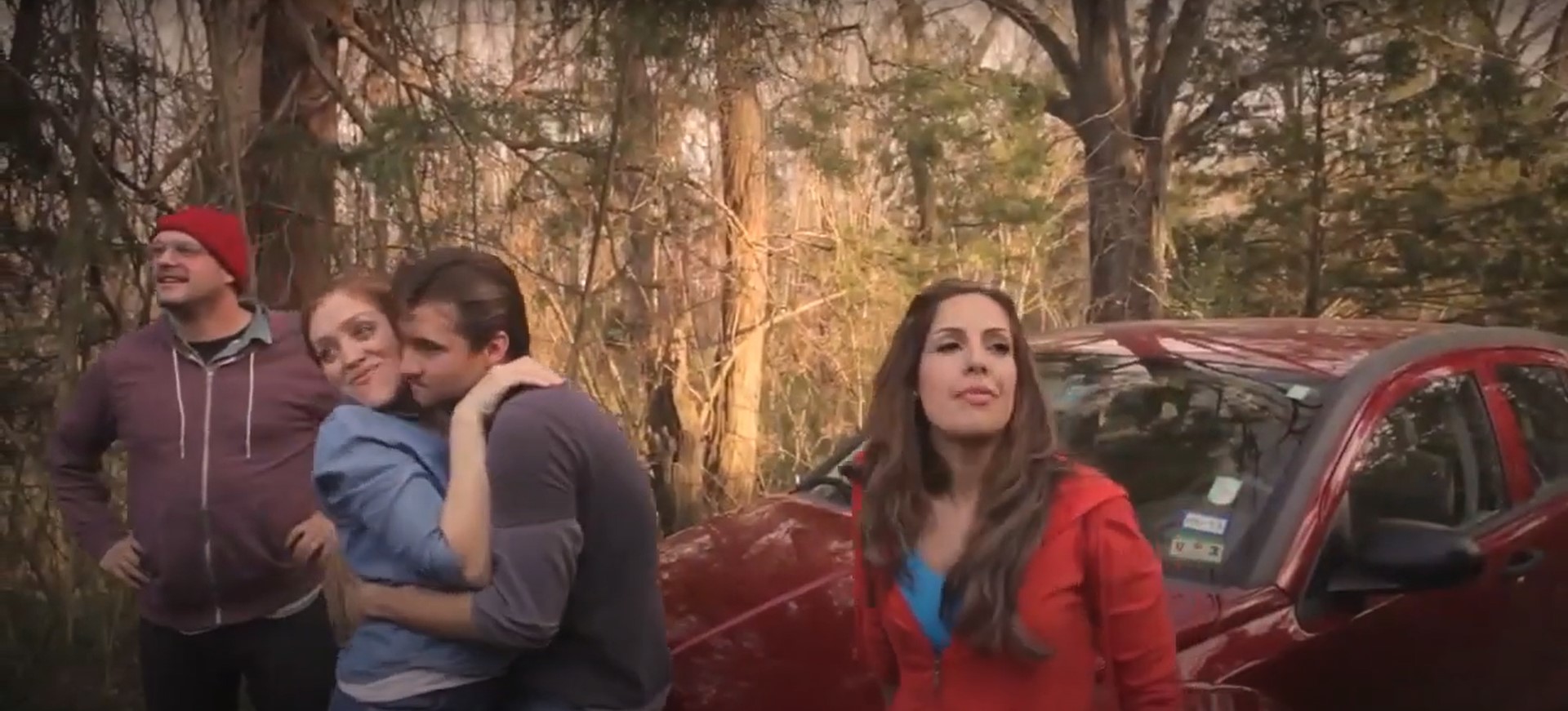
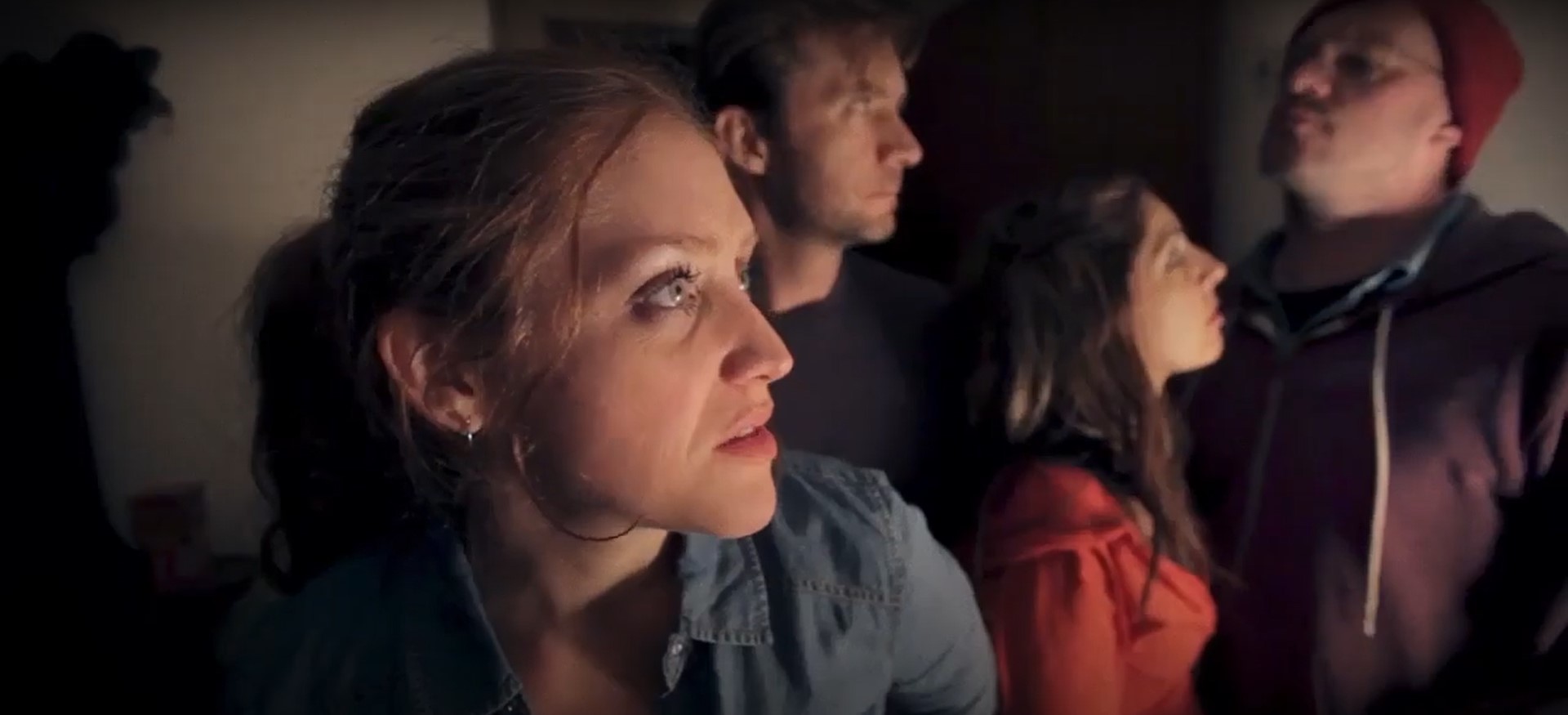
Blind buying a house is never good idea.  Blind buying a murder house in the middle of nowhere should be on the list of if you bought it, you deserve what’s coming to you.  Scott and April do just that as the recently troubled couple start afresh with a purchase of a fixer upper after suffering a late term miscarriage.  Deciding to not have Chip and Joanna Gains to rehab the dilapidated new residence set deep in the woods, the couple invite a small group of friends and family to assist in the much-needed repair and cleanup.  Interrupting their pass-the-doobie high and their positive high spirits while renewing an old house into a home, death and destruction erupts as a pair of demented squatters don’t take too kindly to the new homeowners. 

As far as debut feature films go, “The Hoot Owl” is a gory practical effect driven, true-to-form independent slasher film born and bred out of the great state of Texas.  The co-directing, co-writing Jasons, Jason Rader and Jason Von Godi, are the masterminds behind the cow head-boned masked killer and the very pregnant and very inbred wild woman lying in wait for the naive trespassers to drop their guard and thin out before the slaughter.  Having worked together for years making short films together, the 2022 released slasher was setup by Rader and Godi as a crowdfunding campaign on Indiegogo, but out of the filmmakers’ flexible 20K goal, “The Howl Owl” concept received a measly $275 from four backers.  That roadblock was only temporary and didn’t stop the aspiring retro-slasher artists to complete their foot-in to the passion project that took over 9 years to complete from pre-production-to-post-production under their co-created company banner, Vanishing Twin Productions, in association with Rise Above Productions and producer Raymond Carter Cantrell.

If you’re going all out to make a slasher film, then you’re going to need victims to slash! Most indie slashers nowadays have a synopsis that begins something like this, “a group of teens go into the woods…,” and just by those few key introductory words, we know perfectly well what to expect as the drinking, smoking, and sex-crazed youth meet the homicidal maniac with a bloody machete in one hand and a decapitated head in the other. There’s a rhythmic comfort in that classic symbiosis. The downside to the structure always boils down to the shot in the dark cast and cast of characters that can make or break a slasher film’s success. Scott (Jason Skeen, “By the Devil’s Hands”) and wife April (Augustine Frizzell) bring along Scott’s longtime good friend Drew (J.D. Brown, “Cross Bearer”) and April’s estranged sister Suzy (Katharine Franco, “The Inflicted”) offer a little bit of everything in a hodgepodge of backstories that don’t quite become reinforced in the end with the exception of April whose miscarriage and loss transcends into twisted maternal madness. Frizzell’s glow for the first two acts doesn’t really yell grief but when the ardency takes over, stemmed by her vivid gruesome dreams of her miscarriage, the Texas-born actress steps up to the plate of a psychotic break. Suzy’s also interesting enough character to spark curiosity with the enigmatic contentiousness in a heartfelt scene of two sisters rekindling their bond while actually actioning those same emotions on screen; instead, Franco enjoys the blithe nature of Suzy’s indecisiveness about school and about her family but discovers a quick and sudden fascination with Drew, the least interesting principal that hires two colorful buddies: Hank (Carl Bailey, “A Ship of Human Skin”), a father of two who a penchant for sexual harassment, and an obvious long hair wig-wearing oddball Bugs (Roger Schwermer Jr.). Bailey resembles pure Texan posture but is stiff as a board in his sleazy contractor role. “The Hoot Owl” rounds out the cast with Joshua Ian Steinburg playing the boned-face killer and Johnny Wright reaching inside to extract his inner Neanderthal-like wild woman ready to emulate a putridly picturesque birth.

“The Hoot Owl” is a by-the-numbers man-in-a-mask slasher riddled with familiar tropes and conventional clichés.  Baseline fact is that the film is not breaking any molds here and won’t be a contender for horror picture of the year.  With that said, and as harsh as that may sound, what “The Hoot Owl” represents is pure spirit and appreciation for what the film ultimately represents – a love for the heyday horror. Rader and Godi firmly believe in their film with a sincere attempt at a feature and pulling all the material together during a near decade-long process to get the film released out into the world. Far from perfect, “The Hoot Owl” relies heavily on the gruesome practical effects and there are some good gory terminations with a piledriving beartrap, a split-head decapitation with a large chain, and a long, rusty drill bit through the eye socket that ends in a spurting splatter of blood. The expo is an impressive effort from Allan David Caroll in his first go-round with the effects trade that could rival the early works of Tom Savini or Greg Nicotero. What breaks up the story most of all are the secondary shoots used to swell and cut into the first-round material shots to beef up a feature production. For instance, the opening credit chase sequence of a maniac cop (at least I think it was a cop) hunting down a man and his pregnant wife is a moment that is never clearly referred backed to, but the assumption is that the pregnant woman is the encountered savage later on in the unveiling climatic and the bone-head killer is her child from the rundown who then impregnates his own heathenized mother…? Connectively, it’s all unclear in unfused ends, causing a break in the signal from the lead-in to the trunk of the story, and that underdevelopment pursues throughout with loops never coming to a close.

In my first brush with Brink Vision since reviewing their DVD release of the 2008 alien transmitted dead-resurrecting bacteria film, “Evilution,” a tinge of satisfaction embraces my little heart to see Brink Vision come back across with a Blu-ray release of their latest “The Hoot Owl,” distributed by MVD Visual. The quick-paced 72-minute film is presented in a widescreen 1.78:1 aspect ratio, is not rated and is region free. Video quality doesn’t represent the best-of-the-best of the 1080p high-def resolution with a commercial standard definition equipment and know this mainly because compression that doesn’t display a myriad of issues. Details are not as sharp and there is banding more obvious in one scene of negative space, but the picture is otherwise free of artefacts and other data loss issues. The English Language 5.1 surround mix fairs much of the same albeit the electrostatic noise. While not overwhelming the dialogue to a point of murkiness, the steady shushing combined with the poor audio recordings can vary the quality and depth with a blunt flatness. Bonus features includes a commentary with directors Jason Rader and Jason Von Godi, a second commentary with Creepy Peepy Podcast, a featurette of Rader and Godi looking back at their 9-year pilgrimage to completion, Godi’s short film ‘The Voyeur,” trailer and still gallery. The physical release has beautiful artwork of the Hoot Owl killer in a throwback, almost Scream Factory-esque, illustration. The back cover is a little wonky with a composite that’s hard to read with deep purple lettering on the credits and bonus material listing almost invisible amongst the black background. “The Hoot Owl” endears the slasher fandom with a callback to the brute strength of a wanton villain and if only the script was smoothed over, this little indie film from Texas could have better laid a stronger foundation.

“The Hoot Owl” on Blu-ray is Slasher-iffic! Available at Amazon.com!

Hypothermia is EVIL’s Coldest Best Friend. “Frost” reviewed! (Cleopatra Entertainment and MVD Visual / Blu-ray)

Get the Bluray and Soundtrack for “Frost!”

Seeking to reconnect with her estranged father, Grant, after five years, pregnant Abby drives up the mountainous rural cabin.    Though not the warmest welcome she was expecting with the sudden pregnancy announcement dropped into her father’s lap, the two manage to find common ground and connect again while reliving memories of Abby’s mother.  Their threadbare bond sparks an impromptu finishing trip to the local creek and as the begin to open up a little more with each other, their car accidently runs off the road and declines down a gradual mountain decline before becoming wedged in a thicket of tree branches.   Abby, stuck in the passenger seat facing a steep cliffside dropoff, is trapped and injured.  As Grant goes for help up the mountain, a severe storm rolls in bringing harsh weather and freezing temperatures down upon Abby who desperately tries to keep warm and prays to not go into early labor before emergency rescue can come to her aid. 

Snowy winter thrillers can be harrowingly exciting as much of the plot is fused with the icy and treacherous environment that make lives at stake higher. The snow and the ice become threatening characters and when combined with, at times, a more conventional and concentrated story antagonists, foreseeing path for survival can often feel frigidly impossible. There’s little room for error, there’s little room for warmth, but there’s always an unpredictable heap of bone-chilling snow as far as the eye can see and the elements are only but nature’s natural attributes man has yet to confidently conquer. “Frost” plays into mother nature’s strength when squalling down below freezing wind and snow upon a woman trapped in her own car. The 2022 released, Brandon Slagle (“Attack of the Unknown”) directed “Frost” goes for the jugular in a woman versus nature survival suspenser penned by frequent Slagle aide-de-camp Robert Thompson. The “Aftermath” and “Crossbreed” screenwriter adapts “Frost” from a story by “From Jennifer” writer-director James Cullen Bressack. Shot during the winter in the San Bernardino mountains, “Frost” is produced by the film’s star Devanny Pinn and Cleopatra Music’s Vice President Tim Tasui under the bankroll and production support of Bressack’s JCB Pictures, Inc., Snow Leopard Entertainment, Sandaled Kid Productions, Multiverse Cinema, and Cleopatra Entertainment founders Brian and Yvonne Perera along with Pinn’s co-star Vernon Wells and The Asylum’s Jarrett Furst serving as associate producers.

“Frost” fits into the solo survivalist subgenre category and only characterizes with three actors and a trained wolf. At the tip of the cast spear is independent film producer and broad-brush horror actress and filmmaker Devanny Pinn (“Nude Nuns with Big Guns,” “The Dawn”) in the principal role of Abby, a woman seeking to rekindle her relationship with her reclusive father living in the mountains because of her pregnancy. Genre legend actor Vernon Wells (“Innerspace, “Commando”) opposites Pinn as Abby’s estranged father who’s happy to see his daughter but feels initially threatened by the pregnancy announcement. Understanding the dynamic between Abby and her father was easy as we’ve seen this type of teetering relationship before from a slightly rebellious, new age child returning home to find familiarity with a widowed and waning parent. Pinn and Wells pull off the several stages of reconnecting from the heated exchanges to the sappy moments of loss to the unexpected joy the two characters can bring out of each other, but what’s more difficult to comprehend is the source material. What causes the father and daughter to divide in the first place and how does that division’s role play out in the perilous predicament of an isolating car crash during a severe winter storm? For the sake of critique, one could say that their dissolving disputable divisiveness ends in irony as if the cosmos ultimately pulls them a part in a fitful storm of rage. Wells does what he can to make the initial crash scene comforting while exuding a positive outcome, but the veteran actor appears blank to severity, especially as a woodsman father soon to be a grandfather. Much of “Frost’s” edge of your seat trepidation is shouldered upon Devanny Pinn to take reins of providing the emotional embattlement against the unforgiving weather elements and animal food chain. Armed with nothing more than the dwindling car’s battery to provide heat and a charged lighter as well as whatever lures and first aid accompaniments in her father’s tacklebox, a rather lightly dressed, nearly to term pregnant Abby is pinned to her seat, backed to the edge of a cliff, and must face the cold and wolves until her father retrieves a rescue party. Pinn does what she can to fill in a quivering battle between life and death with a story that’s heavily reliant on a cigarette outlet to ward off a snarling wolf and can burn through seat belts in a single charge. That’s independent move magic for you, folks!

Any kind of solo act surrounding a single location, remote at that, with no other actor or other mobile organic object to feed off and bounce off its energy is a difficult task to undertake, especially on a hyper cost-efficient production.  Slagle’s “Frost” is certainly not immune to the difficulties and the filmmakers, and his crew and cast are well aware of the challenges to make the survival thriller engaging despite fluffing and padding the story with filler clichés and needless setup.  The production and location value are comparatively impressive against the limitations of the budget with a practical and computer-generated encroaching tundra of snow, ice, and wind that can insidiously invade a cold snap into the viewers bones, creating that intended atmospheric of a hell freezing over complete with the teeth of a hungry wolf, a biting rime, and deadly falling icicles.  More obvious than what perhaps Slagle and creative team realize is that “Frost” relies terribly on the shocking climatic scene, a scene so unimaginable and so appalling that it hits all the right gut-checking spots, but the setup to the scene and all the trials and trepidation Abby has to endure doesn’t quite mesh with a well-rounded plight that usually cradles an emotional pull string for the viewer to continuously root for and support those in the thick of the predicament.   Honestly, that heaviness for empathy never provides the emotional weight toward the character and never sparks that flame of hope to keep us warm and fuzzy on the inside to then quickly be extinguished by merciless mother nature. There’s also the plausibility of survival and the way that survival instinct is applied that makes “Frost” too far-fetched to be a strong contender in the subgenre. At near subzero temps, Hypothermia can set in in under an hour. In “Frost,” three days of severe snowstorm pummeling has past, segued by scene time stamps, before Abby becomes a popsicle and is delusional. I’m pretty sure with almost nothing to eat and very little warmth, Abby would have expired in under 48 hours. Yet, the 72-hour mark becomes the most chilling, literally and figuratively, in “Frost’s” invigorating third act snack that’s more abominable than it is nutritional!

Cleopatra Entertainment, the cinematic subsidiary of Cleopatra Records delivers a 2-disc Blu-ray set for Brandon Slagle’s icy thriller “Frost.” Presented in a widescreen 2.35:1 aspect ratio, the 91-minute film has a crisp, lively picture compressed without much to complain about. Banding issues are held to barely any and the details don’t whiteout during the wintery whiteout, leaving key delineations to be present in bold contrasts, especially during the severe snowstorm scenes. Foliage looks thick and green before for the storm with a lot of good textural details on the impaling branches that perforate the car and Abby. The English language 5.1 surround mix conveys the problematic sound design issues that have been consistently found in many of Cleopatra’s releases. Mostly in regard to the dialogue tracks, the dialogue tracks pick up static and other minute ambient noise during microtonal intervals, creating an unwelcoming and stark contrast with a dialogue mix that cuts obviously cuts in and out between character speak and isn’t simultaneous with the score. However, much like with other Cleopatra releases, the score is production and distributor company’s best trademark with a full album including music from various artists, such as L. Shankar, Big Electric Cat, Terry Reid, Rick Wakeman, and amongst others. The 2nd disc, an audio CD, contains the 15-song soundtrack. Other physical noteworthy aspects of the release include the double-sided cover art – one filmic and the other CD listing with both include different variations of the front cover as well as a translucent Blu-ray snapper cast that adds to the snowy theme. Software bonus features include only the theatrical trailer and a still gallery slideshow. Exposure to “Frost” is deep freezing frills for most of the picture but if able to withstand the coldshoulder of cliches, the mare peaks with a blood-filled and tasty horrific morsel that makes the frippery first half worth the wait.

Get the Bluray and Soundtrack for “Frost!”