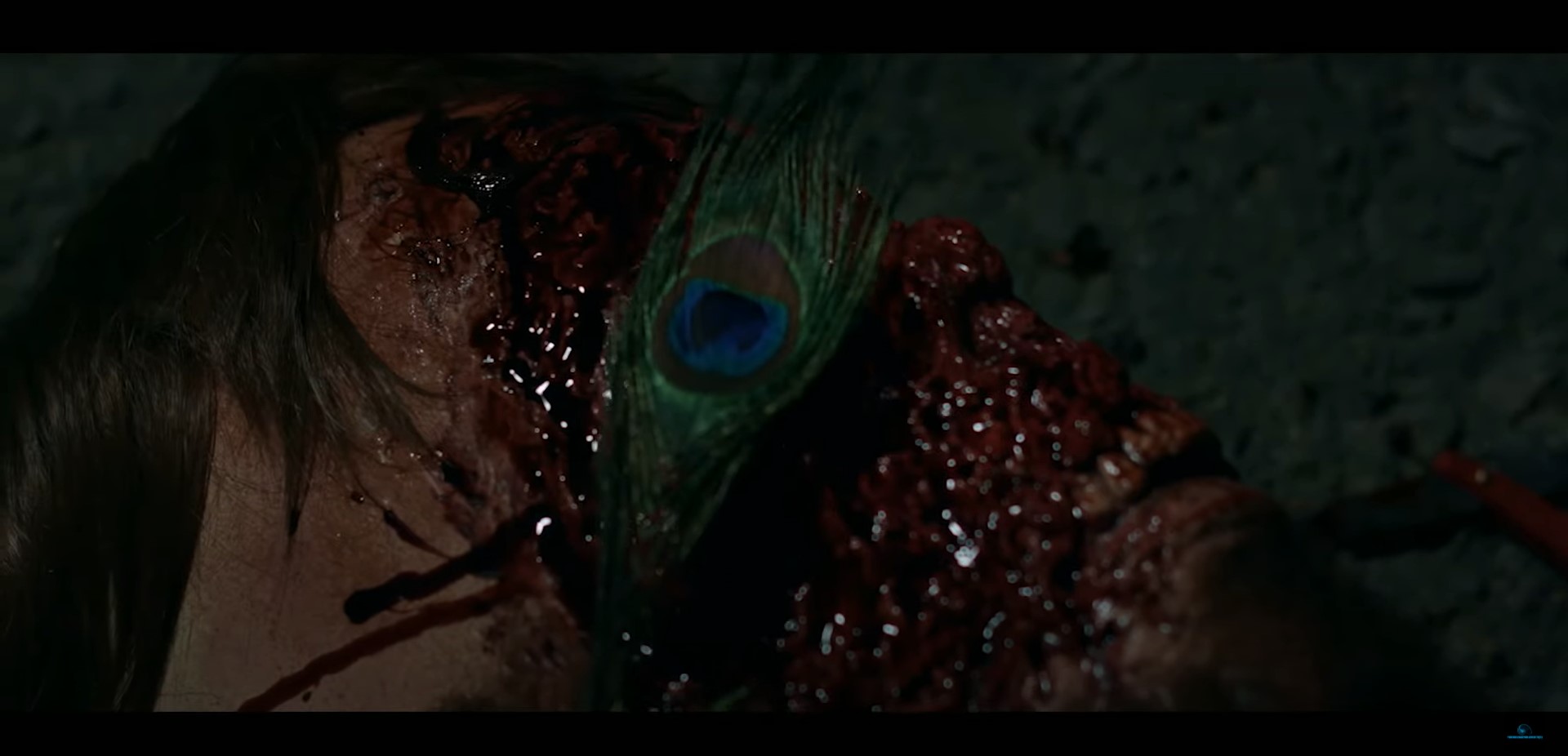
EVIL’s Blight is Captured off and on Film. “Cursed Films” reviewed! (Acorn Media International / Blu-ray)

“Cursed Films” Now Available on Blu-ray in the UK!  Purchase at Amazon.com By Click the Cover Below.

What do “Poltergeist,” “The Omen,” “The Exorcist,” “Twilight Zone: The Movie,” and “The Crow” all have in common? They’re just not successful horror-thrillers with extraordinary actors and directors, they’re also tagged as some of the worst cursed movies of our time. Severe ailments, planes struck by lightning, bombings at previously booked restaurants, egregious injuries, and even death, lots of death, have surmised belief that the otherworldly powers or the omnipotent universe has waged warnings and, if gone ignored, has blown the kiss of the death. For years, these films held power of people because of a string of unfortunate incidences that link back to rumors that possibly incite mystical retribution for using real corpses, telling stories about the birth of the antichrist, and even family lineage curses by ancient Chinese spirits. There’s no shortage of superstition in the world, a country practically built on the idea of a martyred Jesus rising from the grave, and Hollywood is no exception that the bad things that happen in life will always course people to find a reasonable explanation even if that explanation is an untenable supernatural one.
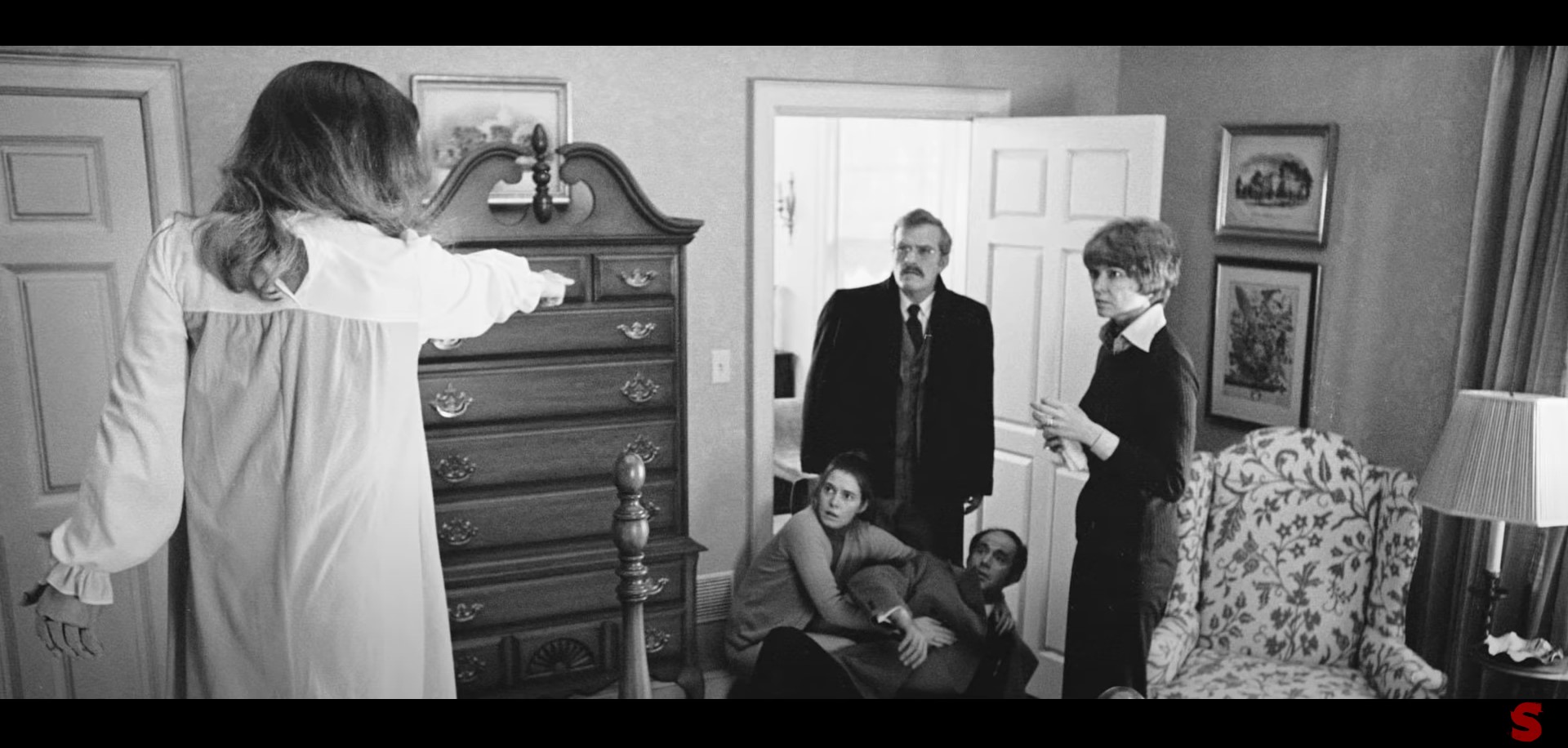
When we think of curses as a whole, we’re generally point and look to the obvious occult brewing with black magic of vindictive witches, ancient incantations to evoke demonic bidding, Gypsy ill-wills that have lycanthropy teeth, or ominous warnings inscribed by long-ago Egyptian priests keep mummified remains from being marauded by intruders.  These hexes and jinxes are storylines popular in movie culture since the beginning of the first movie pictures, used to entertain, excite, and thrill to the furthest extent of the means.  Who would have known there is a reality bound, darker side to the curse mythos that has been insidiously rooted in the illustrious and dream making film industry?  Cursed films have been the talk of Tinsel town, ambulance chasing tabloids, and the short-lived internet fandom for years, decades now even, surrounding the mysterious misfortunes of certain films.  The Shudder 5-episode docuseries, “Cursed Films,” goes into the weeds with retrospective interviews from cast, crew, religious experts and even mavens of black magic and witchery.  Jay Cheel wrote, directed, and edited the series removes the characters from the story and focuses on building the humanity of the affected, dives into possible reasons for the film or individuals involved to be cursed, and the unfortunate outcomes that have resulted in the loss of life surrounding the project.  Muse Entertainment Enterprise, one of the companies behind CBS hit U.S. comedy “Ghosts,” serves as the production company behind the 2020 released Shudder exclusive series.

With any documentary, the cast are plucked right out of history, fast-forward into the present, to tell their firsthand account of events. Directors, producers, special effects and makeup specialists, and those beyond the realm of the film industry recollect and provide their own interpretation of a beleaguered saga with an interviewer, assumed to be “Cursed Films'” writer-director Jay Cheel, posing the questions to get open access to the inner thoughts of the grieved and impressed to give in full detail their wholehearted accounts. Cheel is able to nab different perspectives that play into the divisive nature of the whole cursed narrative, such as with those, mostly cast and crew, who don’t invest into the transcendental nonsense that has sense become either a minor or major stain on their careers. Others see the unexplainable coincidences to be godsent and beneficial to the production. For example, “The Omen’s” star Gregory Peck’s plane and producer Mace Neufeld’s plane were both struck by lightning in route to the London set only a few days apart. Neither plane sustained life-threatening damage and, thus, strokes of good luck and fortune seemed to be attached to the project along with other instances of death and destruction that averted harm from those involved with the film. Still, many still feel “The Omen” is a cursed film, mostly on the internet horror communities where conspiracies, misinformation, and false narratives run rampant like COVID in the early years. Often when Cheel obtains the perspective a black magician or a witch, Cheel’s attempting to gain not only an understanding of that world from real world practitioners but also to embellish a great melodrama into the episodes. Then, there’s the emotionally poignant Richard Sawyer segment. As the production designer on John Landis’s “Twilight Zone: the Movie,” Sawyer saw firsthand the tragedy that befell one of the film’s segment stories. Lead actor Vic Morrow (“Humanoids of the Deep,” “1990: The Bronx Warriors”) was cut down, along with two children, during a scene with a helicopter that went terribly wrong, and Sawyer’s account is powerfully traumatizing and great representation of how this series should be affect and chill viewers to the heart and to the bone.
“Cursed Films” reveals the terrible mishaps and misfortunes of limelight. If a private person is dies due to illness, accident, or foul play, there’s usually not a major production made out of the occurrence and no grand, “Final Destination” design beyond our understanding is erected to give it all meaning. Under the public eye and recorded by every entertainment medium known to mankind at the time of filming presents public scrutiny, public panic, and public speculation that plots points and charts graphs toward a giant, flashing sign that says, in big bold letters, CURSED! To any given horror fan, much of Jay Cheel’s docuseries is already common knowledge for the most part with the fresh and emphatic take from at the scene interviewees who add compassion and empathy as a shield against those who still think the sweet-faced Heather O’Rourke was doomed by some malison brought to fruition by India-removed skeletons. To the non-horror fan, much of Jay Cheel’s docuseries will have that new car smell and can be engrossed by Cheel’s spin of oppositions that never lay claim to either side as truth but only further what Zelda Rubenstein and Richard Sawyer tried to dispel with reason and tangible accounts is that there is some underlying curse reaching up and grabbing the throats of these films to point of choking the very goodness out of the cast and crew’s souls and only provide morbid curiosity to those seeking out the works stuck in a perpetual cycle of occultism.
Become reeled in by the notorious historical compendiums of “Cursed Films” in the first season that aired in 2020 and is now finally on Blu-ray home video in the UK from Acorn Media International. Though listed as a PAL release, the AVC encoded Blu-ray is presented in a 2.39:1 aspect ratio and is in 1080p, high-definition resolution, so a PAL encoding description would be inaccurate for a HD release. Image quality varies between the clean digital recordings with the interviews in interiors and exterior settings, polished transfers snipped from your favorite classic (and “cursed”) movies, and the raw, unpolished frames or clips that were cut from the film or remained as behind-the-scenes supplemental. All-in-all, picture quality is fine and clear in any regard with no issues of compression on the various mediums. The English language DTS-HD 5.1 surround sound stakes prominences on the dialogue for this is a docuseries reliant on firsthand accounts. Some historical footage can be staticky and flat but fits into the documentary design that pulls clip examples from the archives. “Cursed Films” isn’t going to be actioned packed or atmospheric but the composing duo of “Kicking Blood,” Justin Small and Ohad Benchetrit, offer an engaging soundtrack that could tell the story without the interviewee’s tale of sadness, mysticism, etc. English subtitles are available. For each episode a director’s audio commentary is available as a special feature. The physical feature comes in a slightly thicker Blu-ray snapper with the cover art, which is the same as the U.S. RLJE release, of an unspooling film reel displaying iconic tokens from each movie. The 141-minute and region B playback release houses the film’s certified 15 rating for strong horror, strong language, strong injury detail, sex references, domestic abuse, suicide, and bloody images. Whether you believe in curses or not, “Cursed Films” is a peradventure that’s powerful and uncanny to this very day that’ll have you straddling the fence of labeled condemned films.

“Cursed Films” Now Available on Blu-ray in the UK!  Purchase at Amazon.com By Click the Cover Below.

EVIL is Released When the Rent is Due! “The Dead Girl in Apartment 03” reviewed! (Wild Eye Releasing / Blu-ray)

Get Spooked by “The Dead Girl in Apartment 03” on Blu-ray!  Purchase at Amazon.com!

Massachusetts native Laurel has been living in New York City for a few months with a roommate she barely knows or sees because of their opposite work schedules.  When Laura discovers her roommate’s dead body in their shared apartment, the living space no longer feels comfortable, and the uneasiness keeps her awake long after the police and coroners remove the body that has left them baffled with a cause of death.  The mystery of her roommate’s demise, the agony splayed on the corpse’s face, and knowing her lifeless body has been undiscovered for at least a couple of days just next door to her room leaves Laura shuddered to the point of reaching out to her ex-boyfriend to hear a friendly, comforting voice, but bizarre and supernatural occurrences slip Laura in a state of panic and fright with a presence that has suddenly haunted her urban home and with the unearthing of her roommate’s black magic paraphernalia and a demonic symbol under her bed, Laura just uncovered a hidden nightmare that would have been a life saver if listed in the roommate wanted newspaper ad.

Atmospherically creepy and part of the reason I don’t like having roommates, “The Dead Girl in Apartment 03” is the little known, highly effective supernatural haunt horror from writer-director Kurtis Spieler.  Spieler has crossed our paths previously with the 2013 released lowkey thriller under the guise of a werewolf with “Sheep Skin” distributed by Unearthed Films and the review came out on top with a positive write up that noted the film as “a fresh suspenseful spin on lycanthrope mythos.”  Since then, the American filmmaker has re-directed and completed the 1984, John Liu unfinished cult and martial arts actioner, “New York Ninja,” for a Vinegar Syndrome exclusive release and has also preceded his dead girl paranormal enigma model with “The Devil’s Well” that has a similar plot but with a found footage medium.  Spieler’s latest venture provides the opportunity to work again with a couple of actors from “Sheep Skin” under the banner of Invasive Image with the director co-producing alongside longtime collaborator and Invasive Image co-founder, Nicholas Papazoglou, and one of the film’s principal leads and “The Sadist” screenwriter, Frank Wihbey. 

“The Dead Girl in Apartment 03” is one of those indie films that snags and headlines a genre icon to thrust the title into the spiraling coil of a massively oversaturated low-budget horror pool in the hopes that the film sticks to the now desensitized fans who have been burned too many times too often by radioactive junk.  The tactic is not always necessarily nefarious or a fool’s paradise to lure in fans into a schlock storm of insipid independent media as “The Dead Girl in Apartment 03” proves that though the original “Friday the 13th” actress and scream queen, Adrienne King, might be the top billed, the actress is definitely not the star and the film still manages to provoke a keen spine-tingler with a lesser known and younger cast dipping their toes into the what King has already lapped twice, if not three times, over for decades.  King’s name becomes the proverbial foot in the door for new, upcoming talent for audiences to be exposed to, such as with Laura Dooling playing as, well, the spookily chipped away, panic-induced Laura.  Dooling immerses us into her character’s complete physical cutoff from friends and family as a woman stewing in an uncomfortable sixth sense that surrounds the disturbing faculties of her roommate’s death.  Dooling nails the superb chiller despite the one-sided act with no other cast to react off of for the majority of the runtime, paralleling her character’s isolation with her own to root out goosebumps unaccompanied.  King and Frank Wihbey head up the detective detail as the around-the-block Detective Richards and the fresh understudy Detective Miller.  The older woman, younger man character dynamic rides a similar trajectory to their professional colleague one and I’m not talking about cougars, if that is where your mind take you.  Though she certainly can be a cougar if she wanted to, King is more of a mentor on camera than she is off camera, playing the seasoned detective who warns the ambitious Miller not to get involved with active case women.  Wihbey’s a suitable fit as the double-edged sword eager rookie to King’s cooler, calmer approach to bestow path-treaded wisdom for a reason.  One of the highlighted performances stems from “Sheep Skin” actor Michael Shantaz, a tall and intimidating presence that sizes up Dooling’s terror tenfold from the very first scenes of the deceased’s dazed boyfriend Derrick crossing the threshold into Laura’s apartment.  Subdued and stony-faced, Shantaz adds to the tangible terror in contrast to the paranormal one at hand, yet both are ostensibly woven from the same thread.  Fellow “Sheep Skin” actor Bryan Manley Davis along with Jasmine Peck and Jennie Osterman (“Dickshark”) fill out the cast.

I’m always intrigue, or maybe just easily entertained, by titles that goad into viewership for the simple fact of fulfilling title-spurred questions with answers.  The title “The Dead Girl in Apartment 03” elicits many unexplained uncertainties that become an itch you can’t scratch until the end credits fade to black.  I want to know who is the Dead Girl?  Why is she dead?  What’s terribly important about the specified Apartment 03?  Do the Dead Girl and Apartment 03 correlate more significantly somehow in the story?  All these internal queries, prompted by a non-generic, puzzling title, are just cascading through the mind in a deluge of I-gotta-knows and for the most part, the team behind the quaint thriller does rub the itch to a smoothed over satisfaction while also working the edits, the angles, the sound design, and the lighting toward a decent scary movie.  What’s fascinating about the story is the exploration of the immediate after when Laura is left shivering in shock, solitude, and a sense of grim thought knowing she’s been living with a corpse for the last 48 hours.   She hits all the stages of a post-traumatic situation by reaching out to family and friends, diving into comforts like making tea or taking a shower, and even finding ways to keep busy and remove the macabre image from her mind by cleaning up the crime scene herself.  That portion of etching into Laura’s psyche distracts her in an ironic, detrimental way because as she attempting to self-soothe by any means possible, she oblivious to the grotesque presence coming and going and in-and-out of the negative space with its body jerking as it glares at Laura with blood running down it’s shirt.  Laura is also not cognizant of the things that go bump in the night as they barely make a blip on her radar or trigger her into a deeper stage of fright until it’s too late.  The climatic ending stretches the story further into love hexes and demonic contracts that perk up the ears in interest as the story gets into the nitty-gritty of details of what’s happening and why but doesn’t quite reach the finish line of resolve with a deflated conclusion that supposed to leave you shocked when it really just leaves you. 

Not your typical bottom-of-the-barrel budgeted or gore-drenched debauchery Wild Eye Release, “The Dead Girl in Apartment 03” looks and feels like a big-budget ghost film with all the muscle-seizing suspense.  The bold independent home video distributor delivers the Kurtis Spieler picture onto a Blu-ray collector’s edition, which, again, is atypical for the label.  The AVC encoded, high-definition, 1080p Blu-ray is presented in a 2.35:1 widescreen aspect ratio.  Spieler has defined himself as a master of the negative space and, fortunately, there’s no lossy image from a deficient compression, leaving a crisp view of the lurking, crooked dead entity soon to fill the void or not as the director tends to position the camera for an uncertain possibility.  Details are relatively good within a muted color scheme and many of scenes are dark lit, bordering on a neutral to high contrast with a palpable delineation, with only the dead girl’s room projecting a stony mustard illumination and spotted moments of candle and hand torch lighting.  Other scenes, more so involving Detective Richards and Miller, dip into the cop-noir with gel and back lighting that looks vivid and mysterious on screen.  The surprisingly backwards tech of the English language LPCM stereo relies heavily on dialogue than ambient jolts of jumps scare sounds though there are a few, effective examples about and is balanced well with the dialogue that is a little on the mumbling side but comprehensible and free of obstruction, interference, sound design, or otherwise. The dual channel stereo works and is adequate for the size of the picture that doesn’t require a multi-channel audio format as there are no explosions, whirring bullets, or a large cast to create depth range.  Soundtrack composed by Connecticut based, VHS-inspired synthwave artist, Brian Burdzy – aka Satanic Panic ’81, delivers a low and lively and often deadened (pun intended) but rhythmic sound reminiscence of John Carpenter scores that gives Spieler’s film a very “Halloween” vibe. Aforesaid, Wild Eye Releasing doesn’t accompany a ton of special feature material with their releases unless on their Visual Vengeance sister label but the seemingly new special edition line, in conjunction with a regular standard release, bears more supplementals for the storage.  An audio commentary with filmmaker Kurtis Spieler , a behind-the-scenes featurette featuring cast and crew retrospective interviews of their time on the film, Spieler’s 2011 short western thriller “No Remorse for Bloodshed” (though mistitled on the back cover as “No Remorse Bloodshed,” Take 3S Video – a montage of actress Laura Dooling humorously pretending to be clipped by the marker clapper on third takes, an image gallery, and Wild Eye Releasing trailers of “Smoke and Mirrors,” “Wicked Ones,” and “The Bloody Man.”  The physical aspects of the release include a clear Blu-ray latch snapper with a macabre illustration of the titular dead girl holding a knife on the front cover, as you’ll see in the image below for the trailer.  The cover art is reversible with a still image of Laura Dooling in one of the more thrilling scenes on the reverse side.  Inside the snapper insert is a folded mini poster of the SE’s O-case slipcover with another illustration of two more characters in a 70s inspired retro design.  The region free, unrated film clocks in with a 72-minute runtime – an easy, breezy thriller with punch.  “The Dead Girl in Apartment 03” is a perfect selection for a Halloween night movie. An eerie apparitional residuum that’s character-driven, tense, and thoroughly carried by the small cast.

Get Spooked by “The Dead Girl in Apartment 03” on Blu-ray!  Purchase at Amazon.com!

Survival Doesn’t Always Rely on the Obvious EVIL. “Among the Living” reviewed! (Dread / Blu-ray)

“Among the Living” on Blu-ray home video at Amazon.com.  Click the Blu-ray Cover to Purchase!

In a post-viral outbreak world, Harry and his little sister Lily backpack from their mother’s house to the father’s rural home.  The journey requires a long hike through the English countryside and mountainous terrain, avoiding marauding thugs and the savage infected who have a keen sense for sniffing out a single drop of blood.  Pitching a tent every night becomes their only way of shielding them from the hungry eyes of both sides of the outbreak spectrum.  When Lily becomes injured, they bump into the rigid survivalist Karl and boy Tom who provide them refuge for a few days.  Harry can’t scratch the itch that Karl isn’t a good man and pursues out into the woods looking for a new place to take shelf with Lily.  Harry has various run-ins with the infected and the unaffected that possibly clue him into who Karl really is and why the man with the hammer has been terribly obstinate and hardnosed.  Suspicions and tensions spill out between them that leave Harry no choice but to take matters into his own hands and save Lily and Tom from a suspected killer. 

Let’s preface this review by saying “Among the Living” is one of the bordering maybe undead, maybe not genre flicks that will continue the polarizing debate amongst fans on whether the infected are just that, infected and crazed, or are akin to the sprinting-zombie-like flesh-eating thing that Danny Boyle has put on the table ever since “28 Days Later.”  “Among the Living” is very similar to the successful 2002 film that is also bred from the United Kingdom and began, or at least put in high gear, the running zombie revolution that continues to this day.  Writer-director Rob Worsey, who was approx. 8 years of age when “28 Days Later” was released theatrically, channels his best Danny Boyle energy while on a budget with the first feature film released last year.  As the short film cinematographer transitions into his first feature directorial, Worsey challenges himself to on a large-scale story done on a minimalist level of one brother and sister’s perilous venture to dad’s house and still sustain, to the viewer, that world-ending impression without a ton of background actors, a handful of principal characters, and a wooded, rural location away from large cities or even small municipalities or villages.  “Among the Living” is also the first full-length producing credit for Worsey along with fellow producers Oliver Mitchell and Kate Humphries, Worsey’s Wife, under Worsey and Mitchell’s cofounded Relic Films production company.

“Among the Living’s” cast is centered around four characters in an intimate show of dichotomous dynamics between the age differences. Dean Michael Gregory and Melissa Worsey perform in their introductory feature film roles as on the younger side brother and sister, Harry and Lily, who have departed home in search for their dad living in the English countryside. Melissa Worsey, along with Leon Worsey, as the boy Tom, are director Rob Worsey’s younger siblings who both have had roles in their older brother’s short films. The fourth amongst the living is the acting veteran of the bunch by the name of George Newton. “The Slayers” and “Tales of Creeping Death” actor brings forth Karl’s harden chops to be a wary survivalist, especially when coming across Harry who immediately is dishonest with Karl about his own situation. A triggered defense mechanism activated by his inexperience to survive outside the comforts of routine, Harry must use what’s at his disposal in order to protect his younger sibling, Lily, from the horrors she’s seemingly insouciant to, but with Lily’s hurt leg and Karl’s seasoned ability to see through lies, Harry has no choice but to bunk with Karl and Tom, a pair we don’t initially know yet if related or otherwise. Like most older brothers, Harry has something to prove not only to Karl but to himself when it comes to protecting his family and that leads to the constant suspicion of Karl with his ability to setup minor, debilitating traps, handle himself in combat against the infected, and modestly peacock his confidence and surety to handle what’s thrown at him. George Newton’s style is perfect for this type of resolute survivalist and Dean Michael Gregory pairs well the lesser, inferior model of protection perfection as he struggles, mentally and physically, to care of what needs to be done. Lily and Tom often feel like a waste of value story space as their teenage antics are not mischievous or even hormonally driven but the way the characters are written and the way Melissa and Leon Worsey address the minor half can only be described is innocently nonchalant. Instead of sheltering in place, staying safe from the infected, or being curious about the cataclysmic change that is happening all around them, Lily and Tom throw the ball around in broad daylight, sneak out at night to check out a beautiful light display, or just dawdle around the forest in a contrary manner until something bad comes their way. “Among the Living” rounds out the supporting cast with Alexander King (“Chesterberg”), Rob Humphries, Gary Stead, Emily Rose Holt, and Emma Wise.

Much like the shark with their rapierlike olfactory, Rob Worsey’s infected can smell a droplet of blood from a faraway distance.  The scent sends a guttural roar of excitement into the air before they run full speed to track down the injured prey, but this doesn’t mean the infected are incapable of seeing or hearing the unaffected; the blood scent is an additional hunt tactic Worsey supplements one of the more frightening genre creatures to existed – a wild-eyed, running and rampaging, flesh-eater.  For Worsey’s world where chaos reigns with savagery from all sides, there didn’t appear to be a significant threat from the infected as Harry and Lily, as well as Lily and Tom, tramps through less-thicket forests, setup their flimsy camping tent in conspicuous places, and the infected a scarce despite their instant presence as soon as blood is spilled.  To the viewer, survival seems easy-enough as there is no sense of a Darwinian theory or a predatory hierarchy to warrant concern – just don’t scrape your knee and everything will be dandy.  Of course, scraping the knee comes easy to accident prone Lily as she becomes the device to ring the dinner bell and put her and her brother into constant danger.  Where Worsey succeeds better is within the interactive drama between young, green-horned survivalist Harry and older, saltier survivalist Karl as Worsey’s able to delineate suspicion and misdirect assumptions to create a barrier that Harry can’t climb over in order to befriend Karl to the fullest and like a new to the force detective trying to solve his first case, Harry eager wants the pieces to fit despite not completing before his due diligence of gathering facts, truths, and evidence.  A dubious Harry keeps the viewers on the edge until the very end when the revelation is known what kind of man Karl really is among the living.  As far as zombie/infected films go, “Among the Living” doesn’t offer much in the way of something new, especially with the same adult man and teen girl narrative we’ve seen before but is only the backdrop to the bigger picture of trust and betrayal when faced with desperation and we get more of the latter from Rob Worsey’s debut film than really anything else. 

Dread Central presents an Epic Pictures’ Blu-ray release of “Among the Living.”  The AVC encoded, 1080p, high-definition BD50 carries with it an IMAX extended widescreen 1.90.1 extended aspect ratio and the image is lush with foliage bursts, leaving the contours of the terrain clearly visible as much of the narrative takes place in the forest or the picturesque rolling hills of the English countryside.  Muted colors often run the show to convey a darker toned theme but are graded naturally.  Jordan Lee’s cinematography isn’t exactly exciting but delivers a balance of contrast between brilliant lighting and keeping the black voids nice and inky, leading to note no obvious compression issues on the disc as well.  The Blu-ray comes with two audio options – a UK English Dolby Digital 5.1 surround sound and a Dolby Stereo 2.0. I couldn’t really distinguish between the two channels suggest that the girth of soundtrack, ambience, and dialogue are primary funneling through a two-channel output, leaving depth confined to the same space, and there’s hardly any range to speak of when it’s just characters in the woods for the length of the film with only their wits about them. Dialogue is clean and clear despite some hard to follow regional dialect, but there are English SDH, as well as Spanish subtitles, available. Special features include a director’s commentary, a behind-the-scenes featurette with cast and crew interviews, Rob Worsey’s “Bee Sting” short film horror, the theatrical trailer, and Dread trailers for “Tiny Cinema,” “Midnight,” “Bad Candy,” and “Tin Can.” The physical release comes in a standard Blu-ray snapper with a composite cover art of characters in mute greys, blacks, and blues. The region free release comes not rated and has an 85-minute runtime. Rob Worsey’s bland, derived horror doesn’t impede the complexities of social disorder during a state of anarchy as the filmmaker seeks to subtly show the world crash and burn and those unwittingly turning a blind eye to the unconventional compassion until it’s too late.

“Among the Living” on Blu-ray home video at Amazon.com.  Click the Blu-ray Cover to Purchase!

EVIL Inspires a New Concert. “Nightmare Symphony” reviewed! (Reel Gore Releasing / Blu-ray)

“Nightmare Symphony” is a Falsetto of Praise for Lucio Fulci.  Purchase the Blu-ray Below!

Unable to cope with another large box-office failure, the American indie horror director, Frank LaLoggia, is in the travails of a make-or-break psychological thriller overseas in Kosovo.  With an executive producer forcibly pulling LaLoggia’s creative marionette strings and the film’s screenwriter displeased and disapproving LaLoggia’s arm-twisted version of the story, the struggling director finds himself frantic and in the middle of a breakdown caught between a rock and a hard place with a postproduction from Hell.  Those around him, the conceited producer, the upset screenwriter, the pushy wannabe actor, and more, are being hunted down and brutally murdered by a masked killer and the imaginary line between Frank’s reality and paranoia grows in intensity coming down the wire of completing his career-saving, or rather lifesaving, film.

Long time since I’ve heard the name Frank LaLoggia enter the dark corners of my brain as it relates to the horror genre.  The director of 1981’s “Fear No Evil” and 1995’s “Mother” had seemingly vanished from the director’s chair spotlight and more-or-less, or rather more so than less so, vanished from the broader film industry altogether.  Then, Domiziano Cristopharo’s “Nightmare Symphony” suddenly drops on the doorstep and there’s Frank LaLoggia, starring in the lead role of an Italian horror production.  Domiziano, known from his entries of extreme horror, such as with “Red Krokodil,” “Doll Syndrome,” and “Xpiation,” engages LaLoggia to act in an unusual role, as himself, and turns away from the acuteness depths of uber-violence and acrid allegories to a toned down, more conventionally structured, narrative inspired by the Lucio Fulci psychological slasher “Nightmare Concert,” aka “A Cat in the Brain.” Co-directed with first time feature director Daniele Trani, who also edited and provided the cinematography, and penned by the original screenwriter of “A Cat in the Brain,” Antonio Tentori, “Nightmare Sympathy” plays into questioning reality, the external pressures that drive sanities, and weaves it with a meta thread and needle. The 2020 release is produced by Coulson Rutter (“Your Flesh, Your Curse”) and is an Italian film from Cristopharo’s The Enchanted Architect production company as well as companies Ulkûrzu (“Cold Ground”) and HH Kosova (“The Mad MacBeth”).

Much like “A Cat in the Brain,” Frank LaLoggia depicts his best Lucio Fulci representation as a horror filmmaker whose storyline production mirrors the individual slayings surrounding him. As a character, LaLoggia is not entirely aware of the murders as the peacock headed slasher’s string of sadism runs parallel to LaLoggia’s post-productional workload. Cristopharo pays a simultaneous tribute to not only Fulci but also LaLoggia with a built-in brief, off-plot moment of the editor, Isabella, a good friend and longtime partner of LaLoggia, running a reel of “Fear No Evil” to reminisce over his debut picture. Antonella Salvucci (“Dark Waves,” “The Torturer”) plays Isabella but also LaLoggia’s pseudo film lead actress Catherine in a dual role performance with the latter marking Salvucci’s topless kill scene that hits and sets up the giallo notes. Isabella denotes the director’s only real friend with everyone else, from the screenwriter to the executive producer, push their own self-gratifying wants onto the American filmmaker from all angles. A vulgar herd of personalities descend upon LaLoggia to exact their strong-willed ideas on how the film should appear and be marketed. From the screenwriter Antonio (Antonio Tentori, ‘Symphony in Blood Red”), the imposing desperate actor David (Halil Budakova, “Virus: Extreme Contamination”), to the uncultured and pushy executive producer Fernando Lola (Lumi Budakova) and his aspiring actress Debbie (Poison Rouge, “House of the Flesh Mannequins”), they all look to exploit LaLoggia’s modest career for their own benefit. Performances vary with a range of experience, and we receive more noticeably rigid recites and acts from the Kosovo cast in a clashing pattern with the Italy cast that has worked with Cristopharo previously. Ilmi Hajzeri (“Reaction Killers”), Pietro Cinieri, and Merita Budakova as a chain-smoking lady stalker that has glaring eyes for Frank LaLoggia.

While not necessarily thought of as a remake, “Nightmare Symphony” is certainly a re-envision of the Fulci’s “Cat in the Brain.” What Cristapharo and Trani don’t quite well connect on is connecting all the pieces of the psychotronic puzzle together into what is meant to be expressed. The giallo imagery is quite good, a praise of the golden era period in itself, with a mask and glove killer, the closeup of gratuitous violence, most of the score, and the stylistic visuals imparted with ominous shadow work, foggy and violent dream sequences, and with congruous cinematography and editing of earlier giallo. Plus, audiences are treated to not only the aforementioned Antonio Tentori, screenwriter of “Cat in the Brain,” but also have composer Fabio Frizzi score the opening title. Frizzi, who has orchestrated a score of Lucio Fulci films, such as “Zombie,” “The Beyond,” “Manhattan Baby,” and even “Cat in the Brain” just to select a few notable titles, adds that proverbial cherry on top to evoke Fulci directing “Nightmare Symphony” vicariously through Cristapharo and Trani. There are some questionable portions to reimagining’s take on the original work that are more the brand of the contemporary filmmakers. The presence of death metal prior to one of the kill moments puts the overall giallo at odds with itself in a fish out of water aspectual scene composition. Another out of place component are the external characters that are not directly involved with LaLoggia’s peacock-head themed slasher; the ironical venatic of an animal hunting down people is the reversal of a Darwinism theory that instead of sexual selection, the beautiful and elegant peacock forgoes using grace to attract and aims to survive by natural selection and thus the killer kills to remain alive. However, the story and the directors never reach that summit of summation and with the oddball characters adrift from the core story – such as the stalking woman and the eager actor – “Nightmare Symphony” flounders at the revealing end with its severe case of blinding mental delirium.

With a cover art of an upside skull overfilled with film reels and unfurling celluloid through the soft tissue cavities, “Cat in the Brain” continues to be reflected in “Nightmare Symphony” up to the release’s physical attributes on the Reel Gore Releasing’s Blu-ray. Presented in on a AVC encoded BD25, with a high definition 1080p resolution, and in a widescreen 2.35:1 aspect ratio, the Reel Gore Releasing espouses the Germany 8-Films’ Blu-ray transfer for a North American emanation, which might explain some of the complications with the bonus features that’ll I’ll cover in a bit. Situated in a low contrast and often set in a softer detail light, “Nightmare Symphony” doesn’t pop in any sense of term with a hazy air appearance and a muted color grading that goes against the giallo characteristics, especially when the clothing and set designs have the same desaturation or are colors inherent of low light intensity. Despite appearing like a slightly degraded transfer on a lower BD storage format, compression issues are slim-to-none with artefacts, banding, or blocking and this results in no tampering edge enhancements or digital noise reduction. The release comes with three audio options: A German DTS-HD 5.1, German DTS-HD 2.0 Master Audio and an English and Italian DTS-HD Stereo 2.0 all of which are Master Audio. The German audio tracks are a dub from the 8-Film Blu-ray and the 5.1 offers an amplified dynamics of the eclectic soundtrack and limited environment ambience. Dialogue remains outside the dynamics on a monotone course but is clean and clear with good mic placement and a neat, fidelity fine, digital recording. The German dub has a distinct detachment from the video because of its own layer environment, sounding a little sterile than the natural English or Italian, but works well enough as expected with the supplement multi-channel surround sound. English SDH and German subtitles are optional. Bonus contents feature a behind-the-scenes which is entirely just a blooper reel, an English language interview with co-director Domiziano Cristopharo whose secondary language is English, the original soundtrack playlist, and the teaser and theatrical trailer. I mentioned an 8-Films’ transfer complication with the bonus content because there’s is also an interview with Italian screenwriter Antonio Tentori that’s only in German dubbed and subtitled with no option for English subtitles or dub. When you insert “Nightmare Symphony” into your player, an introductory option displays to either pick German or English and I considered this to be the issue for the German only interview with Tentori; however, that is not the case as both country options are encoded in German for the interview, so at the beginning option display, I would recommend the German selection because the setup will have contain all audio options for the feature whereas the English selection will only contain the English 2.0. Reel Gore Releasing’s Blu-ray comes housed in a red snapper case, the same as the company’s release of “Maniac Driver,” and has a less tributing reversible cover art with more revealing and illustrated aspects of the narrative. The release is region free, unrated, and has a runtime of 78 minutes. Another little fun fact about the release is the incorrect spelling of the director’s name on the back cover that credits his surname as Christopharo instead of Cristopharo. Influenced by Lucio Fulci beyond a shadow of a doubt, “Nightmare Symphony” proffers the Horror Maestro’s less notable credit with a companion piece that punctuates both films love for the giallo genre, love for the violence, and love for the morbidly unhinged human condition.

“Nightmare Symphony” is a Falsetto of Praise for Lucio Fulci.  Purchase the Blu-ray Below!

The Doctor’s Out. EVIL Will Make this “House Call!” reviewed! (Wild Eye Releasing / DVD)

“House Call” on DVD home video and Available to Purchase at Amazon!  Click the Cover Art to Buy.

Eager to prove to her parents she is responsible and old enough to undertake the babysitting duties of her little brother all by herself, 16-year-old Miriam is reluctant to phone her parents when little brother Vince becomes highly feverish in fear that they will take away future responsibility opportunities.  Instead, Miriam makes a late-night call to the family’s primary physician and begs for a discreet house call.  Hours go by and Miriam becomes increasingly concerned about Vince, but when the doctor is found dead on her doorstep, her brother’s welfare acutely alters from his feverish illness to the maniacs outside looking to score big on the family home.  The night turns into a fight for survival as the home alone siblings must outwit two murderous thieves who have their lustful eye on the teenage Miriam as well. 

Based off the novella of the same title from horror writer Ty Schwamberger, “House Call” is the first Schwarmberger piece to be adapted and completed into a full-length feature film.  The 2013 production’s script is adapted by Shannon Casto and while the credits list accompanying partner Michelle Henderson as the director, IMDB lists Casto as co-director the film. Both have worked alongside each other between 2005-2013 under their House, Texas-based independent film production company, Little Oak Film Group, which has churned out modest range of low-budget horror with “Sinner,” “Gut Instincts,” and “Protégé” to note as a select few.  They’re joined by Parrish Randall as the third wheel in the director’s chair, – again, a credit that IMDB list but the film doesn’t but wouldn’t surprise me knowing a little more history between the trio.  “The Quick and the Undead”-starring and “Slaughter House”-directing Randall essentially helped segue Casto and Henderson into their own production company having the aspiring filmmaking duo under his wing in various crew and cast capacities as the owner of PRP Motion Pictures.  The Little Oak Film Group cofounders serve as executive producers on this self-made, little-known home invasion, survival thriller. 

Parrish Randall not only serves as co-director and provides the foundational support Casto and Henderson used to jumpstart their careers as filmmakers, but the platinum blond actor with dark facial hair from Groesbeck, Texas is also one of the lead principal characters, playing the nefariously nurtured John who has ambitions to live up to his mentor’s unfettered insanity and depravity.  Randall evokes his lite version of Bill Mosely’s Otis Driftwood without the full support of the deranged family.  There are inarguably many issues with how John is portrayed with an overflowing amount of dialogue despite Randall stealing the story with a magnetic presence on screen.  John’s expositional to a fault and is continuously repeating the same dialogue over-and-over, such as pointing out and elucidating again-and-again that Rock is his mentor.  Rock, played by Bill Dubois (“His Will Be Done”), features in a flashback of a cowardly John aiding and abetting Rock in the murder-robbery of a young couple and Rock is supposedly grooming pupil the way of psychopathy, but there really is not clear instruction from Rock other than provoke gun-drawn offices while your partner flees for his feared life. Now, after that character defining moment, John has become Rock incarnate and has also taken a student under his wing to invade, rob, rape, and murder in the family home of Miriam, played by Rachel Paul in her debut lead role, and Vince, played by Vincent Galyean. “House Call” deploys not only neighborhood disturbances but also disturbing undertones of the rape and murder of children as Miriam is 16 years old and Vince is ballpark 6-9 years of age. As kids under distress, tonal precision might not be Paul and Galyean strong suit, but their cues of delivery are on point where often times child actors tend to be forced or uncertain in conviction to sell the act. “House Call” rounds out the cast with James McCreight (“The Caretaker”), Troy Reynolds, Paul Moomey, Alison Esparza, Roger Dunn, Kristopher Smith, Chelsea Turcheck, Chi and the most experience and credited actor on set, Joe Grisaffi (“Doll Factory,” “Axe Murdering with Hackley”), as the creepy-glaring neighbor, Mr. Henderson, with the receding hair line and large hair.

While many issues come to the front of the mind regarding “House Call’s” poor longevity status, to be retained as a solid source of entertainment, and to be a total thrill at the edge of your seat home invasion horror film, the one major issue that egregiously needs mentioning is the lack stimulus surrounding John’s gut-stirring need to be as brutal as possible at this specific spot. Unlike Bryan Bertino’s “The Strangers” where the masked intruders mark their presence as simply just because, “House Call” drops the ball on even the most basic of unscrupulous principles amongst the villains. In fact, the flash back with mentor Rock puts John into a completely different, greatly sympathetic, and concerned light without ever exhibiting that epiphany of realization into becoming the crime’s worst-of-the-worst. John also mentions on multiple occasions how the scoped-out house is full of the nicer things, but once we’re inside, it’s all upper-middle class, mediocre monied valuables that don’t justify the cause. An implied reason for John’s obsession for pillaging is to solely have his way with teenage Miriam who, in another over explained bit of exposition, saw her outside washing down the family roadster. What’s baffling about his Miriam anecdote is that we the scene played out live as in a flashback sans the moment John set eyes on Miriam. Instead, we’re treated to the introduction of creepy neighbor Mr. Hendersen who gives Miriam an up-and-down once over and the scene is definitely more piquant than John’s drive by but misses a crucial plot point that drives the story to the moment of John’s and his accomplice’s introduction. Perhaps, the flashback serves to misdirect Mr. Henderson’s sleaze toward a pre-judgy determination that flips the script later in the last act. “House Call” doesn’t quite nail where it wants to be emotionally with lightly peppered comedy, oversalted exposition, and a sepulchral tone of child rape and murder that yearns to break the surface of its under seasoned bake.

In what’s likely interchangeable functions between Michelle Henderson, Shannon Casto, and Parrish Randall to oversee this adapted film to completion, as aspect that can be easily assessed when seeing their names credited multiple times under various roles, one thing is for certain – “House Call” is the epitome of independent horror moviemaking spirit. It all culminates to this point, an at home DVD release that can now stretch across the global in a region free decoding format. Wild Eye Releasing, in association with TomCat Films, presents “House Call” onto an unrated DVD with a widescreen 1.78:1 aspect ratio. A modern day, handheld SOV film, “House Call” crusts over with numerous blocks of noise interference, details are lost in the inferior resolution, the contrast between blacks and adjacent hues mesh together without firm delineation of objects, and the color palette, which is really the only thing good about the presentation’s lossy source material, has a handful of moments of vibrancy but for the most part is flat. The English language Stereo 2.0 audio mix has better integrity in reproduction. Slightly boxy through the two-channel output but dialogue remains clear and clean without crackling, popping, or hissing and has a meager but manageable, successful depth with no real range to note. Wild Eye’s standard releases normally go big on the bonus features and “House Call” is no exception to the route with only a handful of Wild Eye preview trailers of other films and I still applaud the distributor’s trailer creator because that craftsman (or craftswoman) can splice-to-sell a D-grade movie in under a minute. Release’s physical appearance comes in a standard black DVD snapper with a tenebrous cover art of a man silhouette front facing an every-room-lit stately manor and holding an axe by the side. A bit misleading but the gist of the story is there. Repeatability on the Ty Schwamberger adapted novella is time better served reading, or re-reading, the author’s original story as “House Call” is a 70-minute busy signal that will fail to connect with audiences.

“House Call” on DVD home video and Available to Purchase at Amazon!  Click the Cover Art to Buy.