When the EVIL Hammer Strikes. “Student Body” reviewed! (1091 Pictures / Digital Screening)


“Student Body” now available on digital from Prime Video

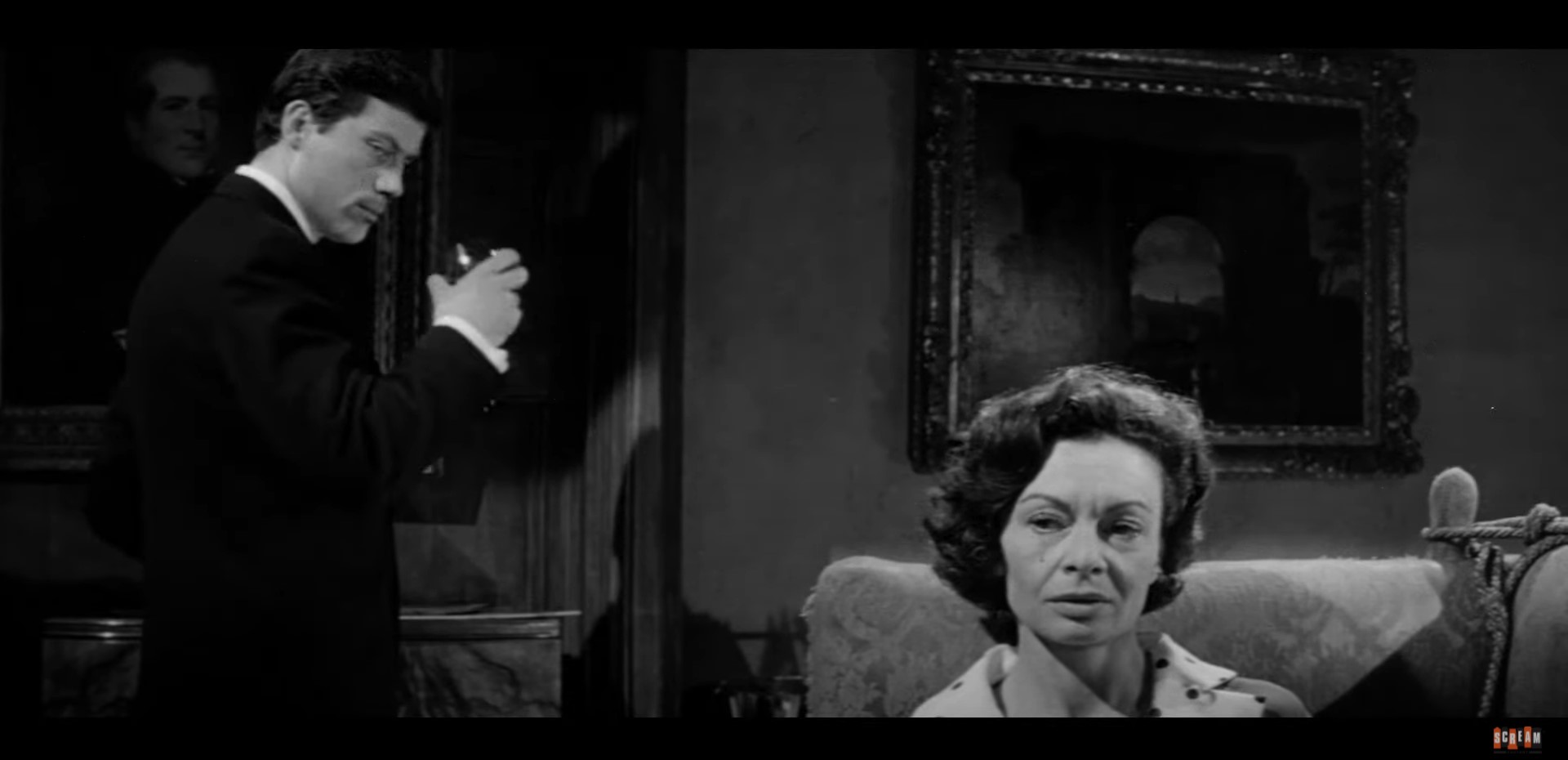
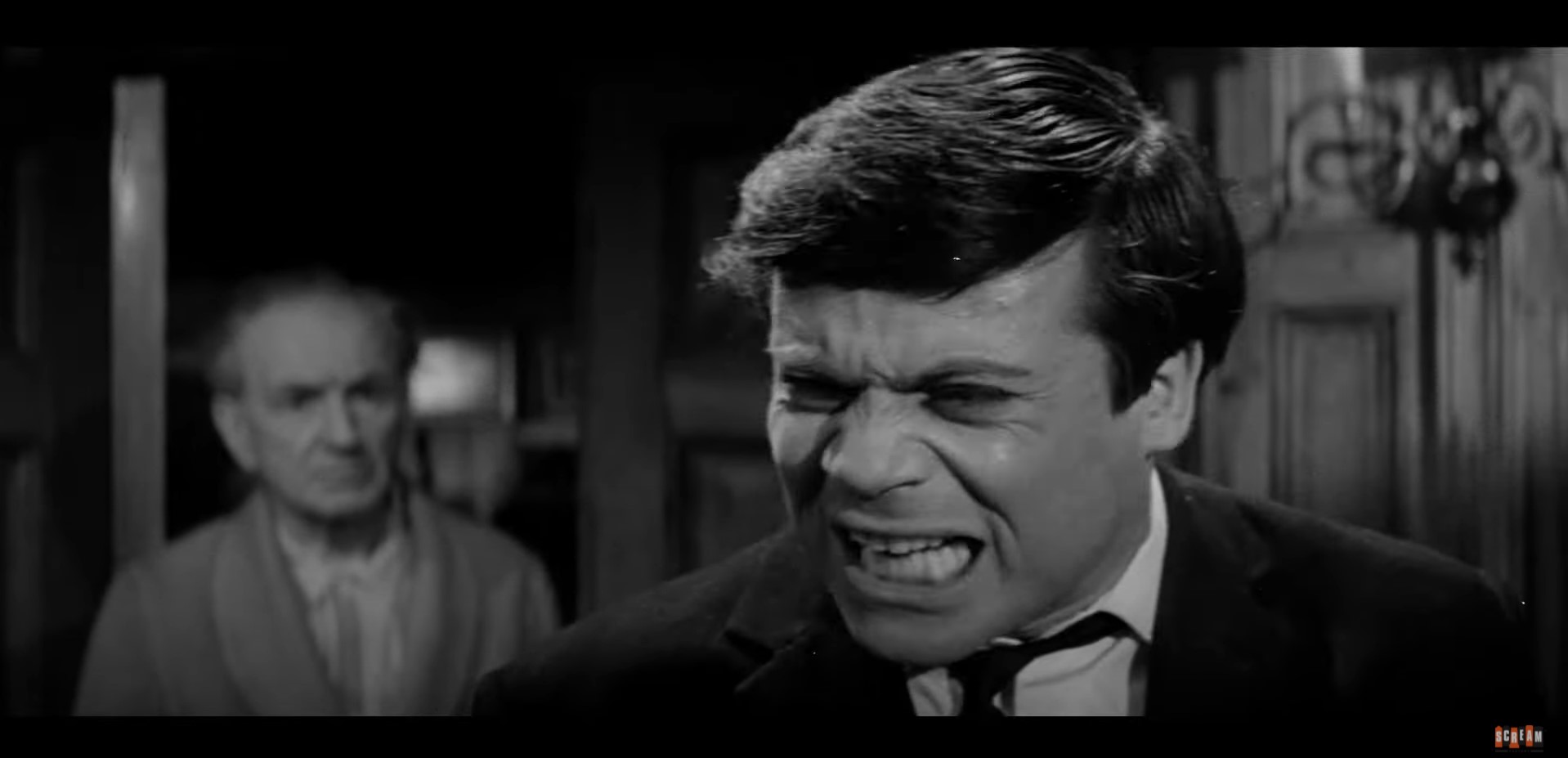
Trying to integrate herself into a close group of slacker friends, high school genius Jane Shipley can’t seem to win with neither her friends nor her passionate for hard work teachers as she has a foot in both contrasting worlds. When peer pressure forces Jane to convince a stern calculus teacher into a re-test her friends had flunked and fails, Jane is forced into another uncomfortable and injustice situation by her friends with exploiting the teacher by turning their meeting into an overstepping of boundaries with a student. The administration, threatened with school board interference, dismisses the teacher that gives the five friends freedom to think they can do whatever they want, including sneaking around school at night and raiding the gym teacher’s liquor stash for some fun. The night not only strains close relationships within the group but also brings a reign of terror when a killer, dressed as the high school sledgehammer-carrying mascot, hunts them down one-by-one.

In her feature film directorial debut, writer-director Lee Ann Kurr hits the ground running with a subgenre all horror fans should be familiar with, the high school slasher. “Student Body” is led by a crew of female filmmakers telling female-driven story about two close, yet very different, best friends with diverging goals about their relationship, touching upon the fluid complexities of growing up and growing apart. Kurr’s classical acting trained background and her music video experience guides Kurr to develop an austere narrative with a sleek contemporary look while expressing relatable themes of school-aged fears, such as never meeting other’s expectations and envy driven intentions. “Student Body” is produced by Rachel Liu, whose comedy romance-horror “Bite Me” is currently on the press release circuit as it releases the same day as “Student Body,” under her Hyberbolic Media production company and Sandra Leviton in her first feature film product credit under her production company, Under the Stairs Entertainment.

In the role of the vacillating Jane Shipley is the Texas born Montse Hernandez. Jane, set sometime after the passing of her mother’s terminal illness, leans solely on her childhood best friend turned the snobbiest and most popular girl in school, Merritt Sinclair, on keeping up her personal upkeep and social connection to others. Played by Cheyenne Haynes, Merritt’s the most equivocal character with trust fund motivations that steer her decisions, gaining reluctant confidence by playing people against each other. Haynes is very tight on Merritt’s conceited and resentful green-eyed behavior that has been stowed away in hopes to keep her image above all else’s whereas Jane wears a few imperfections, and many perfections, on her shoulders. Hesitant in displaying her gifted talents, yet obliviously showy in her unkemptness, Jane submits to Merritt’s whims and plans based off what once was a longtime friendship. Through only a pair of Polaroids and a few lines of dialogue, we’re led to assume at one point in time, pre-high school perhaps, their bond was extremely close but since then, Merritt embroiders herself into high school popularity status that creates a wedge from being authentic to Jane. Hernandez plays well into being the agreeable patsy as she’s coerced throughout the story by not only Merritt but also by her daunting teacher (Christian Camargo, “Penny Dreadful“) with straining persuasion to show off her to intelligence and her other friends, the class clown (Austin Zajur, “Scary Stories to Tell in the Dark”), the brutish athletic competitor (Harley Quinn Smith, “Once Upon a Time….in Hollywood”), and the level-headed and confident hunk (Anthony Keyvan). While nothing to flaw with the cast performances, the characters themselves fall into tired tropes of the high school slasher with the token goof, the token jock, token good guy, and token self-centered snob that eats into any of the novelty Kurr attempts to put forth into her film.

“Student Body” is held back in after school detention by the very same stumbling blocks that trip up its banal and flat character body. The one-dimensional narrative hardly strains any effort into the possibility of other outcomes within its formulaic slasher design and even struggles with its own thematic voice of internalized growing pains in angsty youth that usually run the spectrum of emotions. Kurr cradles to cautiously Jane’s development from a smart, weak-minded follower to a smart, self-respecting person by thrusting the leading principal, who’s unable to bloom being stuck in tug-a-war limbo, into a do or die situation, hinging her growth solely on the masked killer to draw it out with a murderous spree that’s a metaphorical kick in the pants to unravel an undercurrent of problems. In other shades, the killer represents Jane’s subconscious desires for growth and confidence, eliminating the suppressing influences that serve as a roadblock against her ability to move forward and flourish naturally without social consequences and setbacks. The problem that plagues “Student Body’ boils simply down to fine tuning themes, especially revolving around sacrifice, as well as rounding the jagged edges of backstories and the hammering of disrespectful teenager’s heads to be not terribly black and white for Jane’s extrication into maturity.

When we use to get bad grades in school, the typical automatic response from most of us, usually in our heads, was the self-punitive expression, our parents are going to kill us! In Lee Ann Kurr’s “Student Body,” receiving a F can literally be deadly as the slasher arrives onto digital platforms today, February 8th. The independent film distributor 1091 Pictures, the company behind the releases of “What We Do in the Shadows,” “Verotika,” and “10 Minutes to Midnight,” distributes the film for purchase and rent on Apple TV and Amazon’s Prime Video. Since the release will be digital, the audio and video aspects will not be covered in this review; however, Luka Bazeli’s hard lit cinematography often times feels very soft while also commanding the space, providing a rich depth, especially in more confined hallway scenes, with a longer lens on the ARRI camera that encroach upon a constant sense of dread. Alex Liberatore’s score offers a low-toned and pulsating centric theme that sticks tension into you like a knife alongside a complimentary string instrument accompaniment piece in the overwrought buildup. There’s a bit of teen synthpop-rock to bring you down. If you’re looking for bonus scenes, in or after credits, there are none. “Student Body” has strong and arduous performances from Montse Hernandez, Cheyenne Haynes, Christian Camargo and among the others, but sleeps on its own message of growth and has a soporific slasher surface under its sleek cinematography and diverse soundtrack.

Rent or Purchase “Student Body” on Prime Video!

Crawling Through the Bavarian Forest is an Eight-Legged, Seething EVIL Spider. “Venom” reviewed! (Twilight Time / Blu-ray)

Own the Limited Edition of “Venom” aka “The Legend of Spider Forest” on Blu-ray!

On holiday in a small sawmill town located in Bavarian countryside, artist and photographer Paul Greville seeks to capture the serenity of nature’s bountiful beauty. When he comes across a strange, wild woman with a spider scar on her shoulder, known as the “Spider Goddess” to the townsfolk as a curse individual, his curiosity sends him poking around the quaint, sleepy village that leads him into discovering also a rare and priceless painting thought lost after World War II. The deeper Greville digs into the mysteriously beautiful, unfettered girl and the valuable lost artifact, the more the town begins to resent his nosiness into their hidden agenda of a former Nazi scientist extracting deadly venom from the lethal forest spiders for noxious nerve gas weaponization.

Screenshot from IMDB.com

Better known as “The Legend of Spider Forest,” or “The Spider’s Venom” in the States, director Peter Sykes pulls from the madcap story cache a sticky, wacky web of lies and deceits with the unwinding-arachnid thriller “Venom” that involved mad scientists, creepy-crawly spiders, a half-naked wildling girl, and a plot planned from a World War sore loser shot in the United Kingdom as the backdrop for a Bavarian woodland. Five years before directing Christopher Lee and Denholm Elliott in “To the Devil….a Daughter,” the Australian-born Sykes was outfitting his sophomore UK feature with real, untrained, bird-eating tarantulas to be the basis of his visual terror in a mind baffling labyrinthine screenplay from the filmic exploitation brothers Derek and Donald Ford who, when not selling sex with their erotica celluloid (“Suburban Wives,” “The Swappers”), they were dappling in low-rung independent horror as such with the psychotronic “Venom” which is a co-business affair between Cupid Productions and Action Plus Productions with Michael Pearsons and Kenneth Rowles producing.

Screenshot from IMDB.com

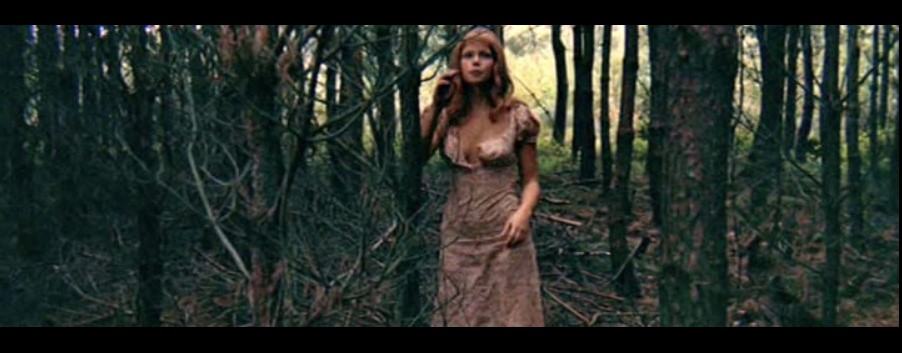
The unlucky sap caught in the village scheming drama is liberal arts enthusiast Paul Greville understood in his thirst for solving the case of the missing medieval art by English actor Simon Brent. The “Love is a Splendid Illusion” Brent, who left acting a few years after “Venom,” finally lands a significant lead man role albeit in a rather stretch of post-war German antics horror that has more twists in the narrative than there are actual spiders. Brent exudes an uncomfortable amount of a curious confidence as he charges through the forest to track down, or rather just happen to run into by chance within the vast area of a mountainous forest, “Erotomania’s” Neda Arneric, a Serbian rugged beauty playing wildling Anna with red-hot hair atop her short frame. We are first introduced to pixie cut Anna during a flashback of a full-frontal skinning dipping frolic in the river with a young, also naked, man and while the unknown man and Anna gaze with an effervescent stars of love in their eyes, the chemistry between Brent and Arneric is about as sparkless as a dud sparkler in a warehouse full of dud fireworks as their characters are too far apart and unalluring to fall for each other at first sight; instead, Brent casts such a demanding go-getter presence with his amateur investigation into the village’s little secret, his murky intentions toward the locally feared Spider Goddess is nothing more than nearly a figment of formulaic structure. We, as the audience, literally attempt to use our own mental will power against them in order to fall in line, or in love. More infatuation buzz surrounds the sawmill boss’s cloak-and-dagger daughter Ellen with “Children of the Damned’s” Sheila Allen as a willing and brazen femme fatale that seduces the hapless artist more than once, especially during one intimate session that restores him back to full health. Although an English production shot in an English forest despite being backdropped in Germany, there is one German actor that gave “Venom” that je ne sais quo toward locale authenticity, beginning with the sawmill boss and self-proclaimed first village resident Huber, played by Gerard Heinz (“Devils in Darkness”) in his last feature length film before his death one year later in 1972. The rest of the cast predominately is English with Derek Newark (“Fragment of Fear”), Terence Soall (“Theatre of Death”), Bette Vivian and one sole Czech actor Gertain Klauber (“Octopussy) giving it all with his very convincing German accent as the village Alps only pub and inn owner Kurt.

Screenshot from IMDB.com

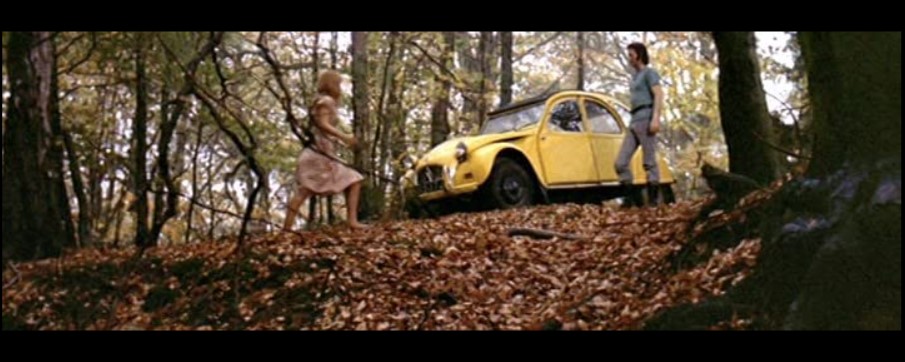
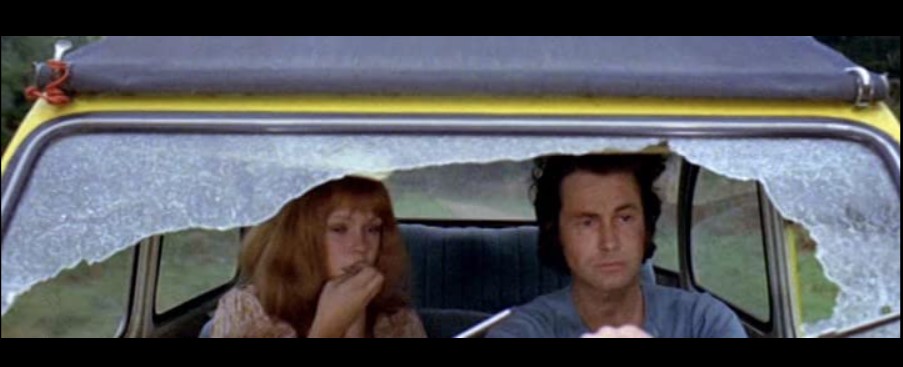
The sting of “Venom’s” unavailing characters is dangerously potent to a near effect of paralyzing the narrative. From Huber’s ireful small talk foreman with his own entourage of blue collar lackies to the mad scientist who doesn’t actually arrive onto the screen until the very last 10 minutes of story, in who is also perhaps the most interesting character garnering deadly spider venom and doing a little crossdressing on the side, “Venom” bears the brunt of unnecessary and disproportionate figures to be an implemented stopgap in managing Simon Brent’s screentime. Sykes teeters away from the majority of Greville’s point of view with little windows outside his perception that drop more diversional obscurity in who Huber and his operatives think Greville really is, why Greville is really there, and how can they handle Greville once he’s become too close to Huber and company’s operations. “Venom” slips unintentionally into the being a low-rent, haphazard Bond film or, better yet, a Scooby-Doo mystery without the Scooby Snacks, but there is ascot fashion. The story implies some exploitation of the mentally instable, using the “Spider Goddess'” strange behavior and her ominous ill-repute to be a warning to outsiders but Sykes conveys the latter allegorically with the destruction of pure, free love by an oppressive governing head, spreading lies about being cursed and deadly, only to find it again in a similar person, a person like Graville seeking to subvert the old wives’ tales and explore his unwaning curiosity no matter the consequences of bodily harm. I just like that Paul Greville drives off-road with a conspicuous bright yellow fiat through the forest shrubby and muck without getting stuck and without blending in.

Screenshot from IMDB.com

The skirmishing climatic finale quickly wraps up loose ends and, at the same time, is an intoxicating delirium of madness and suspense. Twilight Time delivers another Screen restored eldritch mystery onto Blu-ray home video as part of the limited-edition series licensed for a U.S. release from the UK’s Screenbound Pictures and distributed by MVD Visual. Presented in a 1080p, high-definition widescreen 2.35:1 aspect ratio, this is a good-looking transfer with soft, dream-like overtones stemming from a well-preserve original negative with the only drawback being the edge of the 35mm stock occasionally being visible in perhaps a mishandling or misaligning of the film reel that may have also been exposed to light slightly. Other than that, only a few hardly noticeable blemishes are on the image. The English language 2.0 LPCM Dual Mono that separates the dialogue and the ambient/score tracks. You’ll find a robust vocal channel, discerning very nicely from the action, but there’s still quite a bit of hissing and popping on the tail end that denotes more attention needed for better clarity. The film is rated PG but that doesn’t mean much of anything in early 1970’s with Anne Arneric going full-frontal, along with young beau Ray Barron, in emerald green tint as well as other brief flesh scenes from Arneric, arthropod terror, some blood, and the quickest flash edit I’ve ever seen of the lower half of a post-sawed torso. Much like the “Seven Deaths in the Cat’s Eye” release, “Venom” also has zero special features and, as a more tangible replacement, is a 11-page booklet with color and black-and-white stills, various poster art, and an essay by author Mike Finnegan. The Blu-ray cover art is also reversible with a color still on the backside. Don’t expect to contract arachnophobia after watching “Venom” in this high concept, poor execution of cheap boscage thrills.


Own the Limited Edition of “Venom” aka “The Legend of Spider Forest” on Blu-ray!

Hide Your Children! EVIL Comes For Them! “Achoura” reviewed! (Dark Star Pictures / Digital Screener)


“Achoura” now available on Prime Video!

Broken by witnessing the kidnapping of their friend Samir, Ali, Nadia, and Stephen’s lives are plagued by the past and turmoiled in the present as adults.  When Samir is miraculously discovered alive, a realization of truth begins to flood back into their memories as the kidnapper’s intentions were to stop a malicious, child-devouring entity by stowing the demon away in Samir’s body as an encapsulating prison.   The demon, known as the Bougatate, uses the joyous celebration of the Muslim holiday Ashura to snack on beguiled youth and is now free to feed upon ripe, happy children once again, especially Ali and Nadia’s young son.  The four friends must band together and seek to destroy Bougatate on his own turf, a decrepit rural French house engulfed in nightmarish lore. 

Nothing says originality and mind-broadening concepts more than when international filmmakers weave the fabric of their folklore, the sequin of traditions, and the raw materials of cultural customs into their fabrication of creativity.  Director and co-writer Talala Selhami takes us on that very journey through Morocco with a tale based off the concepts of a shifty Djinn-like urban legend terrorizing children of the Ashura celebration with a shadowy, jaw-opening and jowl-extending monster devouring children like a snake in this 2018 released supernatural, child-be-vigilant thriller, “Achoura.”  Selhami’s sophomore film comes 8 years after releasing the cutthroat hiring practices of Corporation authority over the applying individual in “Mirages.”  The French-born director helms a script penned by Jawad Loahlou and David Villemin showcasing the horrors of loss, sometimes forgotten, amongst the Arab-Berber population.  The half-crescent coast of Casablanca becomes the main shooting location for the Moroccan-French co-production under Moon & Deal Films, Overlook Films, Orange Studio, and Black Lab VFX produced by Selhami and Lamia Chraibi with executive producers in Caroline Piras (“Among the Living”) and Rachida Saadi.

“Achoura” has been described as the Moroccan “IT” where four childhood friends reunite to face a preadolescent predator known as Bougatate.  That analogical sentiment is extremely on-point to the detriment of “Achoura’s” North American release; I, myself, before reading any other external comments, had thought “Achoura’s” story walked the same line as the 2017 remake and strongly resembled Pennywise in intentions and, in some ways, specific ways he – or rather it – tricks and consumes children.  The four friends are also similar to certain characters in the Loser Club, but the Sofiia Manousha is the least affected by her past, reimagining what happened to her friend, Samir (Omar Lotfi), as nothing more than being an abducted whim of a pervert’s fantasy.  Samir is the younger brother to Nadia’s estranged husband Ali (Younes Bouab), a brooding, sleepless detective ceaselessly on his brother’s case as he dives deep into old investigative interview footage and cigarette packs he continuously bites the filter off of each cancel stick.  The pain Ali bottles up is complete poison wonderfully conveyed as well as the interpretation of trauma from the last friend of four in painter, Stephen or Stéphane as the character is credited.  Played by the Spanish born Iván González, whose worked on a pair of intense thrillers – “The Divide” and “The Crucifixion” with director Xavier Gens, Stephen singles himself the only person that remembers what actually happens as González glosses the artist with starry eyes and a verbally shaken recollection of monstrous images.  The one performance thought to be the weakest link was Omar Lotfi’s Samir, an imprisoned man-child imprisoning a demon with him, and Lotfi’s infantility as a grown man freed from confinement and a demon crossed too intractable goofiness, leading the Samir away from being a sympathetic character into more of a cartoon of one.  The cast is relatively comprised of the four friends with minor parts here and there in roles from Mohamed Wahib Abkari, Jade Beloued, Abdellah El Yousfi, Celine Hugo, Gabriel Fracola, Mohamed Choubi, Noé Lahlou, and Moussa Maaskri as The Guardian incarcerating Bougetate inside Samir, who we assume is the same boy from the film’s prologue setup but never actually verified.

While “Achoura” draws many comparisons to “IT,” Selhami sepulchers itself into an overwrought, yet hugely overworked subgenre of shrouded gangly presences lurking from the darkest corners of the room to bring antagonism toward children.  “The Babadook” comes to mind with the manifestation of grief descending upon a single mother and her child.  Same theme can be extracted from “Achoura’s” grief and trauma over the loss of their friend and how they represent the condition in different ways:  Nadia chooses to reimagine the event to a safer, saner memory, Stephen expresses his horror through painting, and Ali’s guilt drives him to unhealthy habits in looking for his brother.  The Bougatate is akin to a pedophile robbing children of their innocence, a motif that extends from the very beginning of the story with a preteen boy expressing his affection for a girl his own age before Bougatate seizes upon them.  Their innocent and charming clandestine affair is kept from her betrothed husband, who’s creepily decades older, in a mind-boggling and unpleasant idea of children arranged marriages that sets the misguided tone for a sordid underlayer that sparks Bougatate’s resurgence into the world.   Though I like the tone of the film albeit a vague carbon copy of others like it, what I find to be tone deaf is the often clunky special effects surrounding the entity’s polished look.  One attribute belonging to Bougatate is the legion of flies that constitute his form in what has diminutively become just a bunch of nano byte specks moving in menacing unison and swallowing (or being swallowed) anything in their path. The non-linear format that double culminates the unravelling in present and in flashback past retains a sustainable 90-mystery.

One of the last horror films to be released in 2021, “Achoura” came to digital platforms and DVD home video this past December from Dark Star Pictures, the same company who released the phenomenal Veracruz folklore and Bruha horror, “The Old Ways,” and the Mickey Reece’s perfectly subtle nod to vampires and depression in “Climate of the Hunter.” Since a digital screener was provided, commenting on the DVD audio and video quality is a no-go, but the Mathieu De Montgrand offers harsh hard lit scenes vast in depth, a breadth of landscape between the countryside of France and Casablanca shoreline, and excellent action and tracking shots to instill the appearance of a big-time movie. Montgrand is definitely not just a point and shoot cinematographer as he can build suspense purely on his angles along with Julien Foure’s editing of the flashback montage that tells a bigger side of the four friends’ history yet to be revealed. “Achoura’s” bleak analogy of children’s innocence being consumed by the complexities of adulthood problems understands the unstoppable crossbreeding crisis of blending youthful naivety with seasoned reality to the point of no return that one day all unspoiled exuberance will simply be eaten into oblivion.

“Achoura” now available on Prime Video!

Kissing Cousins and a Foreboding EVIL Feline in “Seven Deaths in the Cats Eye” reviewed! (Twilight Time / Blu-ray)


“Seven Deaths in the Cat’s Eye” now available on Limited Edition Blu-ra from Twilight TIme!

Set in the 1970s, the aristocratic McGrieff is on the verge of collapse with financial ruin that’ll cost the once respectable family their castle set in a small Scottish village.  Full of intrigue and ominous mystique, foreboding supernatural superstitions surrounding the McGrieff name, but that doesn’t frighten the young London residing Corringa from visiting her aunt Lady Mary’s castle.  Not before too long, Corringa’s mother, Lady Mary’s sister, mysterious dies in her bed and in the wake of her death more bodies are found with their cut throats all in the presence of the Castle’s roaming domestic feline.  Suspects range from Lady Mary herself in desperation for her sister’s sudden fortune to her unstable, gorilla-saving son James to also her in-house doctor lover who’s also sleeping with a live-in promiscuous woman intended for the young James.   Melodrama runs rampant and so does a killer who cuts down McGrieff Castle residents one-by-one in the dark corridors and gothic-laden rooms.

The Gothic-“Clue” of the 1970’s, “Seven Deaths in the Cat’s Eye” is the wildly entertaining Italian-produced giallo horror from the “Castle of Blood” and “The Long Hair of Death” director Antonio Margheriti credited under his more English-sounding pseudonym of Anthony Dawson.  Otherwise known with more animal ferocity as “Cat’s Murdering Eye,” as well as simply “Corringa, or in the native tongue as “La morte negli occhi del gatto, this mad family murder-mystery thriller is speculatively based off a novel by Peter Bryan, an extremely English sounding author whose original novel has yet to be revealed as the adapted base for Margheriti’s film or if a book even ever actually existed on what is more than likely, in my opinion, based off an obscure Italian author’s oral narrative or short story since the country at that time had laxed or nonexistent copyright laws – a method that produced a mass amount of unauthorized piggyback sequels for quick cash in on the popularity.  Either way, “Seven Deaths in the Cat’s Eye” is a thrilling, uncontained, and verbose black letter giallo co-written by Margheriti and Giovanni Simonelli (The Crimes of the Black Cat), produced by Luigi Nannerini (“A Cat in the Brain”), and is filmed in Italy under Capitole Films who appealed to westernized audiences with low-budget popular genre films at their peaks. 

At the heart of the story is Corringa, a progressive and modern Londoner travelling to join her mother and aunt at Castle McGrieff a few days earlier than expected after being kicked out for sneaking out on late nights from her all-girl Catholic boarding school and consorting with boys.  The “Dark Places’” English actress Jane Birkin embodies Corringa’s free-loving and innocent spirit becoming the white sheep amongst the Castle’s broody and plotting inhabitants.  Corringa is thrusted into the happenstance heroine of unravelling a mystery that causes her to freak out upon every discovery whether be the gruesome and distressing visual she walks into to the mere mention of someone’s throat being sliced open that sends her running and screaming into the arms of her cousin James, played confidently cool with a hint of madness in a red herring role by American actor, Hiram Keller.  The “Smile Before Death” actor had a small stint working in the Golden Age of Italian cinema with “Seven Death’s in the Cat’s Eye” being one of those projects, but his role of James is an interesting one as the Lord of the Castle who is considered mad, uninterested in either women or continuing the family lineage, and keeps a former circus gorilla caged up in his room.  One other at a loss and gross side of James, and also of Corringa, is their incestuous affair.  Yes, that’s right, the first cousins get it on like Donkey Kong as they share the bedsheets whilst embroidered in another arcana that’s more in the life and death taboo category.  Yet, all the characters are essentially in some wanton fashioned relationship with each other.  While cozying up to the Lady of the Castle, French actress Françoise Christophe (“Fantômas”) in order to gain favor within lordliness, physician Dr. Franz (Anton Diffring, “The Man Who Could Cheat Death”) also porks the “French Tutor” Suzanne on the downlow for some lust and relaxation.  German actress Doris Kuntsmann plays nomadically alluring to the dark-haired red herring outlier who is hired off the streets from her solicitating sex position by Lady Mary and Dr. Franz to be James’ break from his internal shell, bedfellow companion.  Meanwhile, the promiscuous Suzanna tries to sack up with Corringa in this full house of varied sexual appetites.  The ensemble cast continues with Dana Ghia (“My Dear Killer”), Serge Gainsbourg, Luciano Pigozzi, Venantino Venantini, Konrad Georg, and Bianca Doria. 

With an international cast, “Seven Deaths in the Cat’s Eye” enlists heterogeneous talent to continuously keep one on their toes surrounding every dead body that winds up throat mangled or moved from the original death stroke spot and Margheriti certainly has a firm grip on our attention between the polyamorous and dissolute sexual anarchy and the tension toned suspiciousness that ceaselessly keeps not only the characters on edge of each other but also rattles audiences anxiously squeezing their pressurized minds wrapped tightly around a castle-sized amount of distrust and suspects. “Seven Deaths of the Cat’s Eye” evokes the mad family subgenre with Margheriti’s family contending to be one of the most psychosexually and depraved group of backbiters and backstabbers of its time. Margheriti and Simonelli’s story is sensationally complex without being terribly complicated by beginning with the death of an unknown man where rats gnaw and eat away his decaying flesh. From then on, the narrative works ever so hard to purposefully not touch upon or identifying the mystery man’s demise until the bitter encounter end with a revealing finale exposure of a shocking killer that speaks volumes on the filmmakers’ intrinsic misdirection, a machination that keeps characters endlessly on the fence with their motives, and a conversation that is indecorous in a gothic setting.

If you’re looking for a different kind of giallo, “Seven Deaths in the Cat’s Eye” is that atypical wild card and now the Antonio Margheriti 1973 film has been released onto a limited-edition Blu-ray from Twilight Time and distributed by MVD Visual. The unrated, region A Blu-ray runs 95 minutes long in a 1080p high-definition resolution, presented in a widescreen 2.35:1 aspect ratio. I wouldn’t say the image is a complete polished look, but the transfer restoration from Rewind Film and the Screen Archives Entertainment has excellent detail surrounding the textural complications of the cast, interiors, and exterior settings, especially the graveyard. There are minor instances of banding around the skin in low lighting and the illuminating contrasts is rather low, leaving quite a few frames in the dark so to say. Although an Italian production, English is the language spoken and amongst an international cast, dubbing over certain performances was more than likely done, but the overall dialogue track didn’t match precisely the image in about a quarter of a second delay on the English LPCM 2.0 stereo track which also very muffled like being underwater. However, the “Cannibal Holocaust” composer Riz Ortolani has a score of majestically inspirational proportions as far as horror soundtracks go with a tingling guitar riff that sits heavy in the pit of your stomach as the master of orchestration compositions brings this feature to ahead with this arrangement. The Italian LPCM 2.0 is a more obvious lips out of synch dub but offers an equally robust Ortolani soundtrack. While there are no bonus features on the release, the Blu-ray package itself comes with a 11-page color booklet with images and an essay by author Mike Finnegan along with a reversible Blu-ray cover art containing images from the film and a snazzy disc cover art designed by Twilight Time. Much deserved and sorely underrated, “Seven Deaths in the Cat’s Eye” is back on the prowl with a new limited-edition release to sink your teeth into.

“Seven Deaths in the Cat’s Eye” now available on Limited Edition Blu-ra from Twilight TIme!

Gather Around. We Must Call Forth EVIL For the Sake of Our Lives! “Seance” reviewed! (Acorn Media International / Blu-ray)

A practical joke in summoning a spirit sends one girl to die of mysterious circumstances at the isolated and elite all-girls boarding school of Edelvine Academy. At the top of the wait list is Camille Meadows who finds herself in mid-semester adversity with not only her studies but also the deceased girl’s group of browbeating friends as Camille replaces their friend’s now vacant opening. When another friend disappears and another dies in a freak accident, differences and quarrels are put aside before one of them becomes the next victim. The group conducts a seance to call their friend from beyond to discern whose taking them out one-by-one and the spirit’s cryptic response determined one thing evident, a killer, whether supernatural or real, will stop at nothing until every last one of them is dead.

In what feels like an extremely unquantifiable amount of time that has passed since the last high school teen slasher has graced our once beholding subgenre, “You’re Next” and “The Guest” screenwriter Simon Barrett ends up sneaking one into the fold before the grand fourth sequel release in the “Scream” series come mid-January 2022. “Seance” is the first feature length film directed by Barret who pens the supernatural slasher encrusted with snarky teenage melodrama agitated by a mysterious, unknown killer wreaking havoc upon the catfighting girls of Edelvine Academy. The adolescent cutthroat temperaments give way to actual throat cutting macabre in this whodunit thriller lessoned with a mix of the power of friendships and an attenuated lesbian aura presence throughout up until the very affirming finale in an allegorical show representing hiding in plain sight. The snowy and serene Manitoba-shot Canadian film is a production of HanWay Films (“The Guest”), Ingenious Media (“Unhinged”), and the Gothically-inclined Dark Castle Films (“Thirteen Ghosts”) with select producers Adam Wingard, who has a long his filmic history collaborating with Barret, Tomas Deckaj (“The Green Knight”), and Devan Towers (“Day of the Dead” television series).

For High School girls, all the actresses with the exception for Ella-Rae Smith are mid-to-late 20’s with lead actress Suki Waterhouse (“The Bad Batch,” “Pride, Prejudice, and Zombies”) tipping the pendulum nipping at her 30s. However, Waterhouse and the others defy their actual corporal ages portraying teenagers in the throes of adolescent social clique.  Waterhouse plays the cool as a cucumber newcomer Camille to Edelvine Academy, befriending right off the bat with her personal Academy introductory host, a solitary Xanax-popper Helena (Smith).   Immediately, new girl Camille becomes public enemy number one with Edelvine’s most smug impractical prankers led by Alice played by Inanna Sarkis. On paper, Alice might have been the group’s ringleader, but the character doesn’t throw around a lot of power or is admired by followers, albeit Sarkis role permanency as the uptight and sarcastic bully or rad bad gal. Following Alice are ancillary player pieces to the group’s effort as a whole to be a thorn in Camille’ side just for being the unfortunate replacement of their dear dead friend. Between the brainy Bethany (Madison Beaty, “The Clovehitch Killer”) and the more elegant Yvonne (Stephanie Sy, “Tales from the Hood 3”) vie the potential right hands of Alice deduced from the dialogue and screen time hierarchy of their roles but they are definitely more interesting than Alice with a punch of flavor in the personalities, especially in Bethany who is built to be a master-whiz in conjuring up devilish pranks to play on her friends and enemies. Furthermore, there’s also the hint of pizzaz that is shamefully cut short and slidden under the radar with the last two in the coterie with the playgirl subtilties of Lenora (Jade Michael, “Fatal Friend Request”) and the unexplored suggestions of Roselind’s (Djouliet Amara, “Tales from the Hood 3”) sexuality, leaving their arcs unfulfilled. “Seance” cast fills out with “Books of Blood’s” Seamus Patterson in the single speaking male role in the entire film, “Cult of Chucky’s” Marina Stephenson Kerr as Edelvine’s firm-handed headmaster, and Megan Best playing the narrative’s lamented backbone of mysterious tragic circumstances.

Portions of where “Seance” flourishes are within the parameters of the teen slasher, a subgenre that lingers on into severe tedium much like the zombie films of the early 2010 decade. The late 90’s and well into the 2000s saw a slew (pun intended) of killer adolescent atrocities in film. Moviegoers were intrigued by the allusive masked killer that, for most of the time, had a palpable-to-satisfying twist ending after roughly 90 minutes of frantic chases, dooming nudity clauses, merciless kills, and one stupid decision to go back into that ominous house after another. Then, when 2010 came along – poof – teen slashers were now a thing of the past, literally. Attempts were poor renditions of previous successes, rehashes of the once was, and didn’t quite tickle the right places. Slowly and surely, the wheels are turning on a rejuvenation of a new generation and Simon Barrett’s “Seance” serves a prime candidate for admittance. Isolated in the stillness of a snow-covered all girl school sets the intended mood for a campus killer, the girls have a warring dynamic mended by a need to survival commonality, and the what or the who that is slaying them is well kept out of sight with misdirection cues to make audiences think they have it all figured out. Plus, the climatic finale has not one twist, but two in its full of blood and surprise double twist spectacular. “Seance’s” character development is one annoyingly flawed aspect that bends the elbow at the wrong angle at times is how characters wonder off alone having just filled their youthful, spongy minds with knowledge that something or someone malevolent is after them. “One friend is missing. My other friend has mysteriously died in an accident. The Ouija board spells out certain doom and gloom. Yet, I’m going to practice my recital routine alone on a dimlit stage with my noise cancelling headphones on,” says nobody ever. “Seance:” “hold my beer!

“Seance” is more than a teen slasher, it’s Simon Barrett’s genre-bending good time and this Shudder-streaming 93-minute horror from Edelvine Academy is coming to Blu-ray home video courtesy of Acorn Media International come January 17th. The Region B UK release, PAL encoded, BD25 is certified 18 for strong bloody violence and presents “Seance” in a widescreen 2.39:1 aspect ratio. Many of the scenes circulate through repeatedly – the snow-covered school, the drab hallways, the quaint rooms, and the bleak storage room – that don’t offer a ton of vivid aesthetics within a limited range, but quality-wise, there’s a dour, shadowy coating accompanying the coarsely, unpretentious realism. However, the fishbowl lens on certain scenes poorly captured smaller spaces, leaving already thin actresses looking anorexic, and for some reason, the decision to position the actresses shoulder-to-shoulder does antagonize that realism as those, who were mischievous back in the day and sent to the principal’s office, never sat right up against a fellow classmate. The English Dolby Digital 5.1 surround sound has favorable qualities with a well diverse mix of ambience, a strong dialogue track, and a Sicker Man aka Tobias Vethake laying down a spectrum from brooding synth string pops, piano, and cello bass that stands out with profound poignancy to a lo-fi hip-hop beat and EDM noise of embroiled sounds. Special features include a commentary with Simon Barrett, a behind-the-scenes with select cast, minor outtakes, deleted scenes, a crude pre-production setup for the VFX decapitation scene, and a behind-the-scenes still gallery. “Seance” isn’t all Ouija boards and flickering candles as there’s more obscurity to the slasher than what meets the eye with its mania-driven motives and orientational undertones making this little-known film worth a look.