EVIL Does Not Sit and Rollover. “Good Boy” reviewed! (Visions Home Video / 4K UHD Blu-ray)

“Good Boy” Now Available on 4K UHD Blu-ray from Visions Home Video

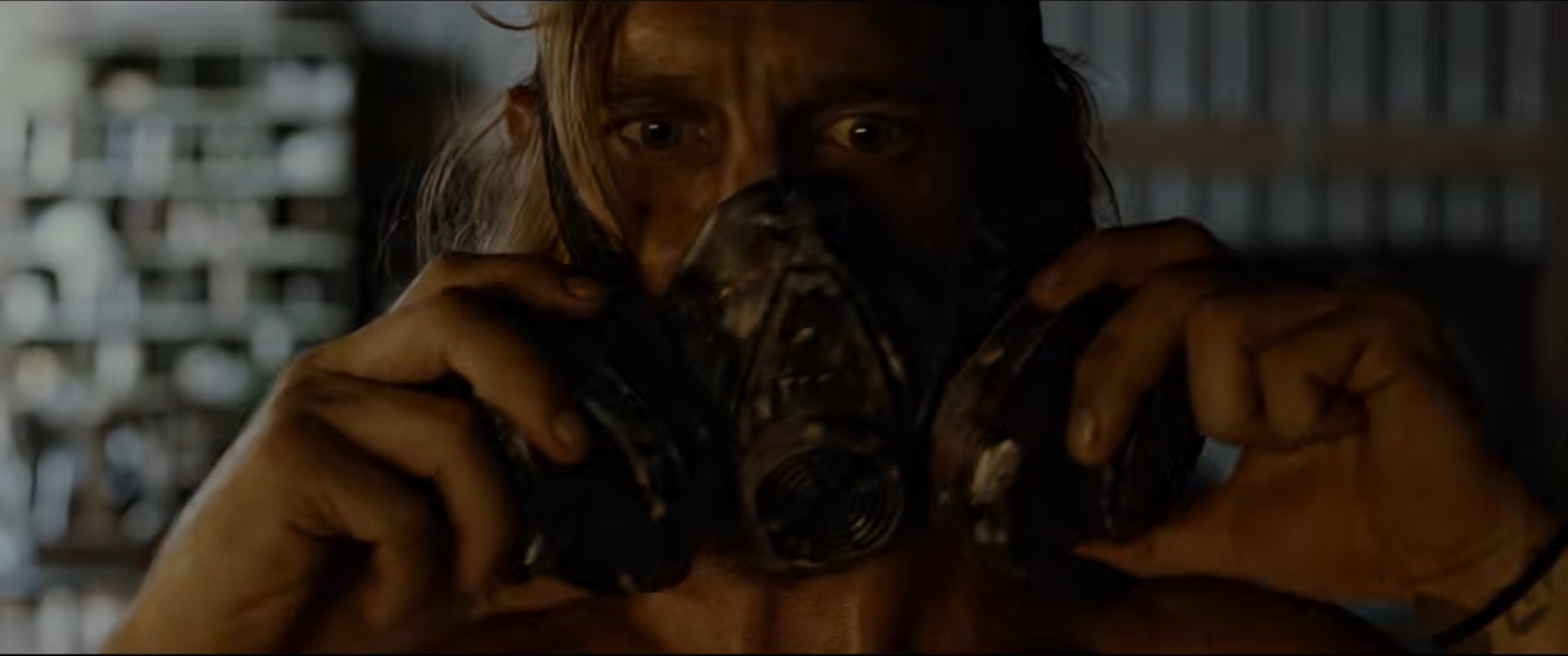
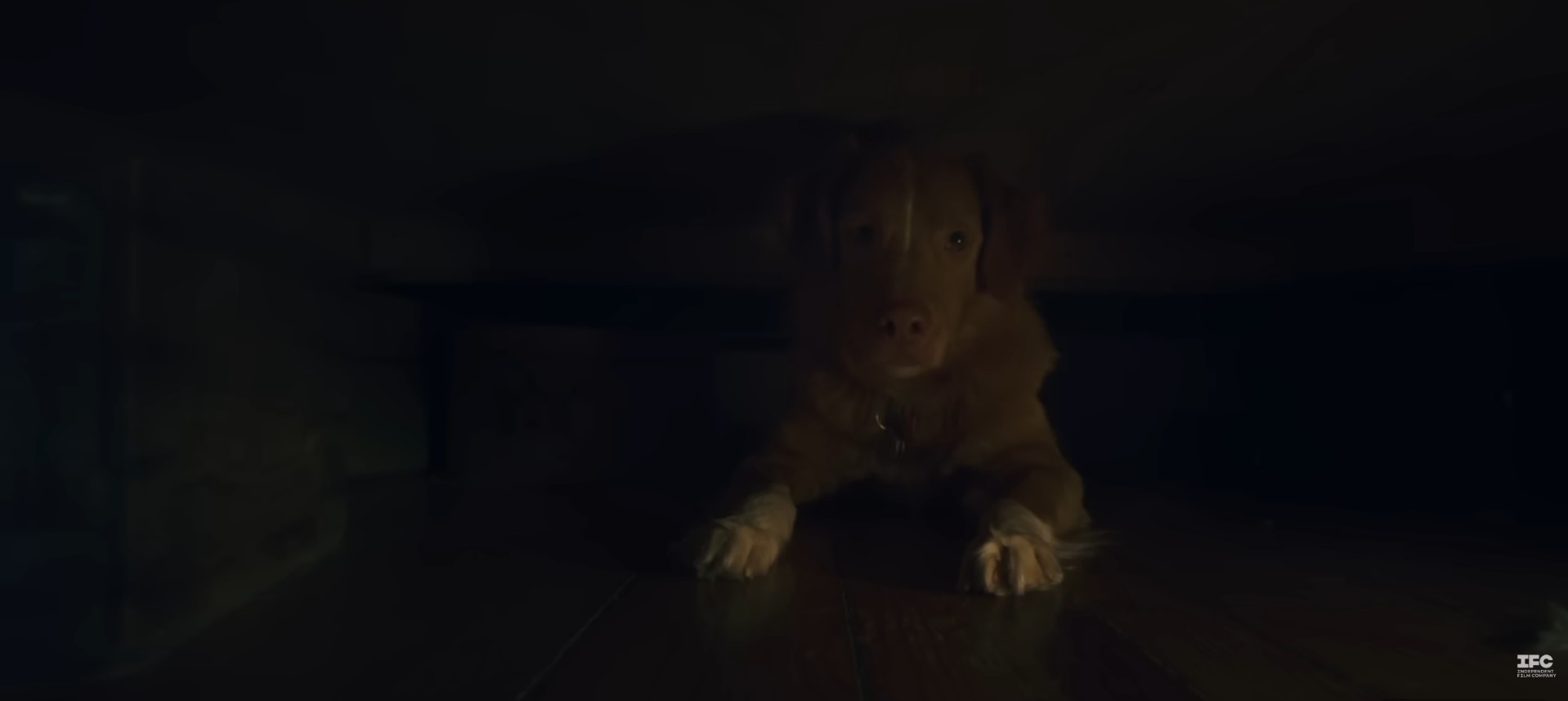
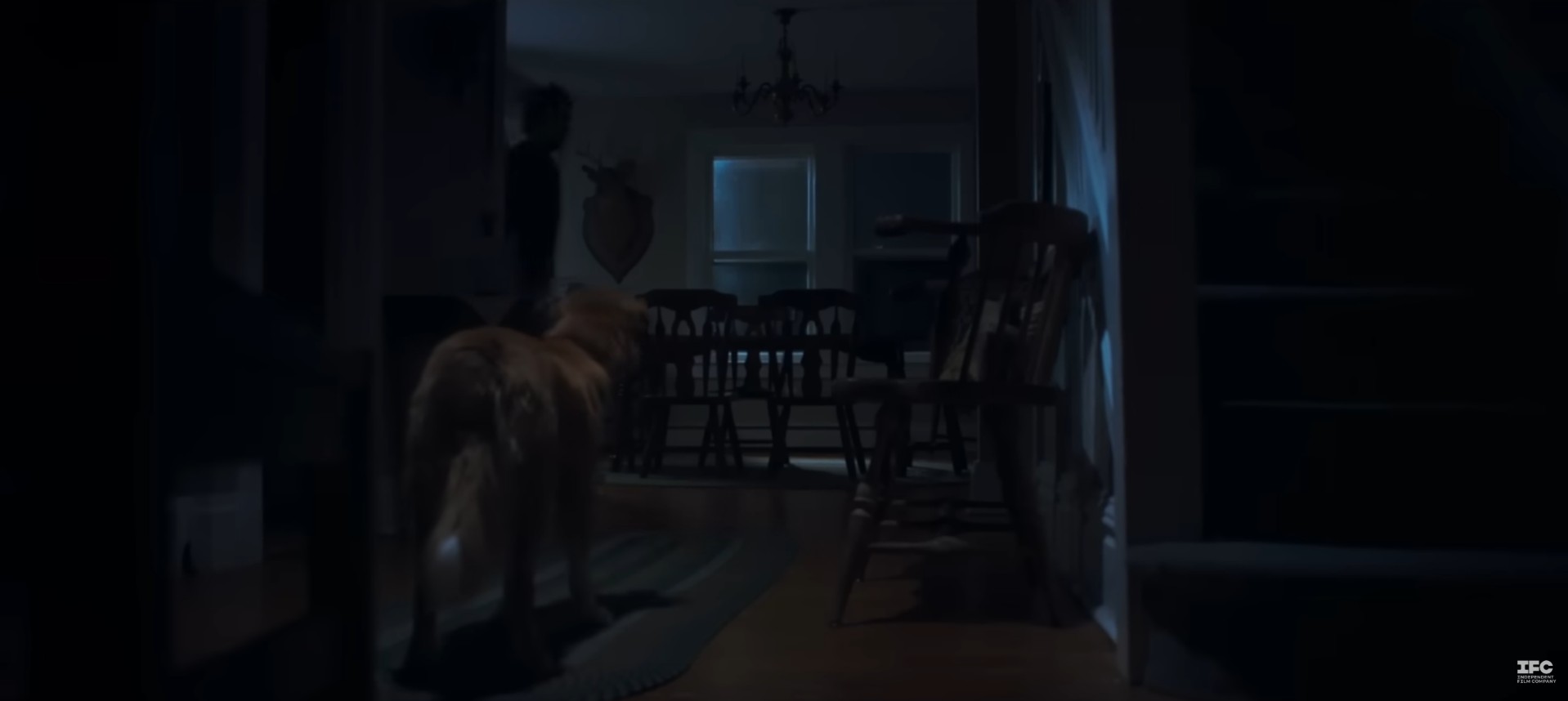
Indy is a good boy, a loyal nova Scotia Tolling Retriever pet and friend to his owner Todd who’s had him since being a puppy.  When Indy senses trouble, a troubling shadowy figure lurking and following his owner, he tries to do all that he can to protect the one he loves the most.  Struggling with a chronic illness, Todd retreats to his grandfather’s isolated cabin deep within the woods for a little rest and relaxation after a medical scare that put him in the hospital.  Indy senses the supernatural force has followed them away from the city and into the rural family home.  As the presence moves about the house, moving closer and closer toward his friend, Todd’s chronic illness becomes increasingly worse, and Indy’s nightmares bend reality as the shadow begins to take a horrifying shape.  Todd’s disease has him nearly incapacitated and unaware of the dangers that surround him, leaving Indy as the last line of defense against the looming dark force that wants to take him.

Pet owners rejoice!  A horror movie with a story from the perspective of its star, a dog.  The 2025 supernatural thriller “Good Boy” has Indy, the then 8-year-old dog’s real name, headlining the film, directed by Indy’s owner Ben Leonberg, horror short filmmaker with such recent credits as “The Fisherman’s Wife” and “Dead Head” from within the last decade.  Leonberg also wrote the script alongside Alex Cannon and took over three years to make due to the complexity of working with untrained animal actors, a task that’s easier said than done, to accomplish Indy’s character narrative from his point of view, and, of course, the rigorous A-to-Zs of creating a feature length film. Leonberg coproduces “Good Boy” with Kari Fischer and Brian Goodheart.  “Good Boy” is a self-referential studio made film with the company name called “What’s Wrong With Your Dog?”

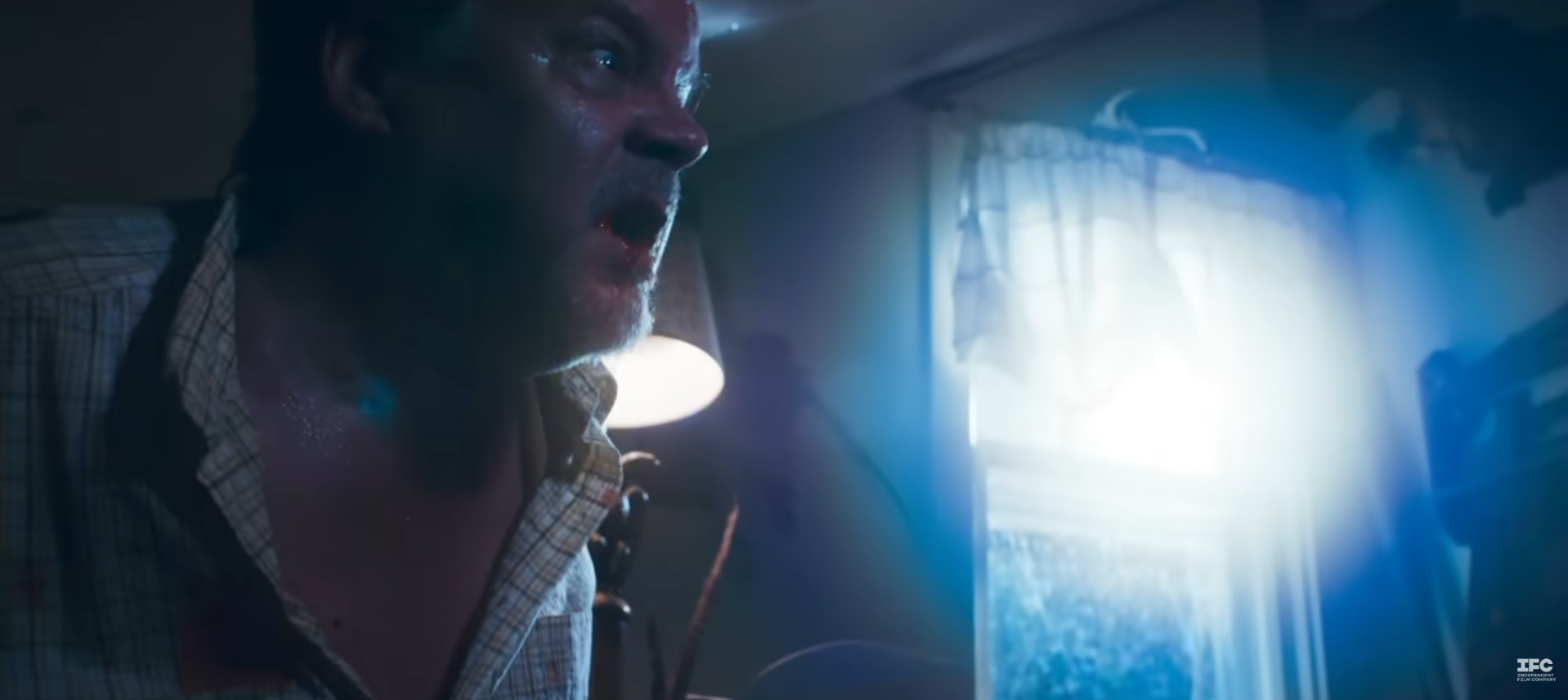
If casting an animal with a hesitation stillness and pensive piercing eyes, Indy is the four-legged fur baby on the short list.  This specific Nova Scotia Tolling Retriever, a breed known for his hunting qualities and retrieval of gunned down carcass and not acting, is an untrained thespian by all means but has a multitude of expressions that work toward the menacing supernatural sense of dread and uneasiness.  When Indy stares into a dark corner, it’s shadows expanding slow across the walls and floors, the stare does convey concern.  When Indy cries and whimpers in apprehension of being left alone or his owner unaccompanied outside the house, those high-pitched cries and frantic movements from window-to-window bring narrative tension to unsafe separation from man and his loyal best friend-protector.  It’s clear that director Ben Leonberg treats his star pup with star focus, providing a dog-level perspective view that incepts and evokes a reaction just like any human character.  This applies even to the interactions with Todd (Shane Jensen) and his swaying, emotional reactions working through his own ebb-and-flow pain of a mysterious illness that plagues him.  Our first scene with Todd has him sitting motionless on the couch, in the dark, and drooling blood from his mouth in an indistinguishable view of his face, a motif amongst all human characters in frame to keep the focus on Indy’s facial Rolodex of emotions.  We never do know what’s wrong with Todd, whether be cancer, organ failure, or perhaps even the supernatural’s malevolent exposure, but it’s made clear he’s on death’s door in more ways than one.  The only human face shown is through the VCR playback of Todd’s grandfather and it’s the unique bone structure of horror friend Larry Fessenden (“Habit,” “Jakob’s Wife”) who often seems to be in, in some way, shape, or form, in a number of Shudder distributed films recently.  Arielle Friedman and Stuart Rudin bring up the small cast rear. 

“Good Boy” is simply not a novel concept.  There have been a few animal centered and perception movies throughout the decades, to name a few we start with “Babe,” the loveable little pig who finds friendship with a barn spider, then there was the tearjerking one with an orphaned bear cub who hitches to an adult male to avoid game hunters in “The Bear,” and, lastly, “Homeward Bound” was an adventurous return home with human voiceovers for two dogs and one cat team.  The element “Good Boy” does differ from those aforesaid examples.  Aside from giving Indy a voice, the non-personified canine is dropped into an intensely atmospheric horror framework that removes the safety net of having opposable thumbs and the misunderstanding between man and animal that makes the tense situation that much more riveting when Indy can’t express to his human the danger that lurks.  There’s a heavy theme of animal sensing danger or something amiss with someone carrying an unseen disease, that disease in “Good Boy” manifests as the shadowy figure that acts like the harbinger of death, or to the dark tune of a grim reaper, lying-in-waiting and eventually reaching for Indy’s human pal, Todd.  In this concept is the tragic downhill of Todd and the heartbreaking care Indy tries to protect and care for his unsuspecting master but in between all of that concern and drive for Indy is a steady fear something isn’t right, looking past Todd’s ailment toward a showier threat that, to an extent, plays like a device of ignorance for Indy, one that truly distracts him for the real danger plaguing Todd that bets the question, do dogs cope with trouble by creating a diversion? 

Visions Home Video, a premium home media label from UK’s Vertigo Releasing, retrieves “Good Boy” for a UK-Ireland 4K UHD Blu-ray release that’s supported on a HEVC encoded, 2160p ultra high-definition, BD100.  Through surreal nightmares, inky darkness, and graded with primarily dark gray and bluish tones, “Good Boy” faces images challenges with an indie production attempting to instill atmospheric fear and subtle bumps in the night.  That challenge is ultimately met its match with DolbyVision that’s able to decode those type, often blocky, negative spaces and darker color scheme in its high dynamic range.  Texturing works to fiber explicate Indy’s golden coat but much of the other details are kept in the dark as Indy’s, with his coloring, is represents almost like a bright spot amongst the color palette, even Todd is obscured in darkness, rain, or mist, but the details that do show do emerge.  Two English audio tracks are encoded with a 5.1 DTS-HD Master Audio and a LPCM 2.0 Stereo.  In regard to the surround mix, back and side channels diffuse the atmosphere non-diegetic sounds to create an immersive environment of a creaky old house pitter-pattered by rain and gusts of wind.  Coupled with the front work dialogue and the forceful jump scare moments creates a cinematic bubble that puts viewers right into the dark and stormy eeriness while sitting in their living room, if the viewer has the appropriate audio setup.  Dialogue is clean, clear, and prominent albeit ambiance tries to nudge it out of the way at times to but unsuccessfully.  Minor instances of depth of Indy, or even the presence, scurrying about the house have leveled balance in what is mostly a still air progression of Indy’s voiceless communication efforts. English is the only available subtitles. Special features include a making-of featurette Making an Indy Film and the theatrical trailer. There are more attractive physical features within Visions Home Video’s black and silver two-toned cardboard O-ring slipcover that leans into the shadow motifs. The same image art is also on the Scanova one-sided sleeve but inside, in the insert, is a double-sided folded mini poster with the same art plus an additional design. There are also four post cards with stills from the feature. The UK 15 certified release has strong horror and bloody images in its brisk 72-minute and region free runtime.

Last Rites: In horror, animals are mostly the perceptive ones, able to see and sense danger that can’t be seen with the human naked eye, and Ben Leonberg captures that phenomena through a fear-induced illness metaphor, one that lies and waits until terminal lucidity knows there’s no escaping the inevitable. Not even man’s best friend can stop it.

“Good Boy” Now Available on 4K UHD Blu-ray from Visions Home Video

Cinderalla’s Beauty Evokes an EVIL of Jealously, Obsession, and Beauty Standards. “The Ugly Stepsister” reviewed! (Second Sight Films / Blu-ray)

“The Ugly Stepsister” on 4K UHD Blu-ray from Second Sight!

Elvira’s mother weds a wealthy estate owner to re-establish life and permanence in high society.  Alongside living with her sister Alma and her new, beautiful stepsister Agnes, Elvira keeps on smile on her braced teeth though she’s passively mistreated by those around her.  When Agnes’s father suddenly passes away and it’s unearthed the estate has no money to its name, the opportunity to attend the monarchy ball for the prince to select a wife from a pool of available the virginal maidens is Elvira’s persistent dream to marry a prince and get her family back in wealth and power.  Elvira attends finishing school to learn proper lady etiquette but her braces, round nose, and pudgy exterior pushes her aside of teacher’s attention in favor of the beautiful, blond Agnes.  Primeval cosmetic surgeries, tape worms, and no sympathy from her mother send Elvira down a path of obsession despite the harm to herself as she eyes the prize of landing the prince of her dreams over her stepsister. 

Based off the classic folk and fairy tale Cinderella, debut feature film director Emilie Blichfeldt takes a different perspective on the story that retains its roots in happily ever after but redirects the core narrative to the eldest stepsister in immense obsession, pain, and suffering to obtain the seeming unobtainable, to marry a prince.  “The Ugly Stepsister” the 2025 dark comedy and body horror from Norway that emphasizes the lengths one will take to become noticeably perfect in every aesthetic way.  Blichfeldt regularly visit the concept of a deranged perception of beautiful in her short films from the 2013 documentary “Do You Like My Hair?” that aims to spin a reinvention on beauty standards by finding it from within and the more body fantastical “Sara’s Intimate Confessions” that follows a big and tall disproportional woman exploring what it means to be feminine with her overly talkative vulva.  “The Ugly Stepsister” also tackles beautiful in a more painfully, cathartic way in order to achieve, much the same way a cheerleader sustains a lower body weight to make the squad or the self-harm models put themselves through to stay thin and beautiful.  The film, entitled in it’s native Norwegian as Den stygge stesøsteren, is a coproduction between Lava Films, Film i Väst, Scanbox Entertainment, Zentropa International Sweden, and Mer Film with Lizette Jonjic, Ada Soloman, Mariusz Wlodarski, and Maria Ekerhovd in the role of international producers. 

Though a beauty already in her own right, Lea Myren donned prosthetics and makeup for the titular Elvira to make the appearance of later teen, early 20s woman just on the verge of losing the baby fat.  Other personal traits added to Elvira’s character are braces, dark corkscrew curls, and muted toned outfits to further and contrast as a perceived ugliness within the context of the era, but in reality, Elvira’s beautiful young woman already with soft, large eyes, a curvy physique, and a natural gift of goodness within her that’s twisted by exterior conventions on what is defined as beauty. Shedding some of those elements, like the braces and weight, transform Elvira into a more desirable young lady now visible to all, from her draconian etiquette teacher who initially wouldn’t give her the time of day to the Prince who first looked upon Elvira with disgust in her natural state before become an exquisite creature stemmed from surgery and other unnatural body manipulations.  Myren wonderfully careens the character right into the dirt as Elvira cuts off her nose to spite her face, damn near literally, on the quixotic quest to change her outer shell that ultimately changes her from the inside.  Constants in Elvira’s life, or way, are Agnes, who’s only referenced as Cinderella once in a look that isn’t too cinder-y, played by Thea Sofie Loch Næss (“Arctic Void”) who doesn’t struggles with her character’s looks but contends with her new family’s acute empowerment, mostly rooted in family favoritism and jealousy, as well as Alma, Elvira’s younger sister with a by far majority much more comfortable in her own skin despite having dressed similarly with frizzier, unkempt hair by way of Fo Fagerli’s approach. Loch Næss doesn’t portray the as pure and innocence of the Disney classic, with her passionate romance with the stable boy in the hay barn, but the character is fairly close in all other regards with the more significant change to the characters being the stepsisters, especially Elvira’s reserved notions turned bitter when being compared to Agnes.  Alma is altogether out of the equation with no bitterness in her heart nor with any malice whatsoever to anybody but tends to her sister’s rise and downfall with little pushback.  Ane Dahl Torp (“The Wave”) is in the role of the mother Rebekka who will do anything to advance her daughter in society, mostly for selfish reasons as we’ll gather later on through a course of characters, such as the Prince Julian (Isac Calmroth), stable boy Isak (Malte Gårdinger), brutal plastic surgeon Dr. Esthétique (Adam Lundgren), and finishing school head mistresses/lesbian lovers (Katarzyna Herman & Cecilia Forss) who have contrasting approaches, both negative, toward Elvira’s waistline. 

“The Ugly Stepsister’s” body horror is more than just a serious manipulation in losing weight and cutting more than corners toward image perfection.  The real horror is in the shame, the shaming of the body that’s overlooked, called out, and humiliated and to make matters worse for Elvira, her body type is by all of today’s standards curvy in the right places and beautiful albeit a body double was used for her pre-trim down nude scene.  Prosthetics are in place around the face and arms to make Lea Myren appear a little weightier, but the difference is extremely negligible and that’s the real power of horror when it’s terribly subtle, an already beautiful young girl succumb to peer and societal pressures that induces crazy self-harm for opinionated ideals and appearances.  Blichfeldt’s ideas of body-shaming extreme measures done by Elvira are not a far stretch from what self-conscious people do today about their weight.  Instead of swallowing a tape worm egg, one can stick a figure down their throat to achieve the same effect.  Instead of breaking a nose to re-mold with a hammer and chisel, surgery and medicines are abused ot be the new, easy, fast weight lost solution.  Blichfeldt comparative shots linger on Agnes with Elvira seething with envy and with the director’s bold choice of provocative nudity, exposing genitalia and depiction of X-rated acts, engages an alluring perversity that sheds light on a superficial world of beauty and sex, shielding the core, deeper problem of societal shame. 

Second Sight Films brings the Shudder and Vertigo Releasing North American marketed  “The Ugly Stepsister” to 4K UHD Blu-ray.  The ultra high-definition release is HVEC encoded onto a BD66 and presented in HDR10 with Dolby Vision, at 2160p, and in it’s the original aspect ratio, a European 1.66:1 widescreen.  Match the dark toned nature, the grading also exacts a somber coating with mahogany and ebony wooden structures and dimly lit castles of a Victorian era to bask in an austere state were, more so with personal happiness, is hard to come by.  Details are hard to stomach, in a good way, with proximate detail in the special effects closeups, such as in the mutilation scene where a nearly severed toes are hanging on for dear life by what little skin in left tethered to the foot, that go into macrolevel detail and is accentuated by the additional pixels.  Skin tones appear natural and unique to each individual in a purposeful contrast of fair and tanned skin along with different layers of texturing between organic qualities and the fabric outfits they wear, such as Agnes more single block outfit with a smoother design compared to Elvira’s multiple layers and pattern garb.  The Norwegian DTS-HD Master Audio 5.1 has an eclectic powerhouse soundtrack of synth and string orchestra from John Erik Kaada and Vilde Tuv.  The story doesn’t have a great deal of direction use for the 5.1 mix with mostly a conversating piece with mostly diegetic ambience, leaving the 5.1 less immersive than required, but there is vitality and strength behind the dialogue and action, clear and unobscured in its clean presence.  The multitude of squishiness, again the severed toes and also the removal of the tape worm through an orifice, is highly emphasized more max effect.  Areas of depth mostly lingers around the front but there are opportune moments in medium shots for audio expression.  English subtitles are clean, accurate, and well-paced.  Special features on the standard 4K release include a new audio commentary with director Emilie Blichfeldt and filmmaker Patrik Syversen, a new audio commentary with critic Meagan Navarro, a new interview with Blichfieldt This is my Ball, a new interview with star Lea Myren Generational Trauma, a new interview with Cinderella actress Thea Sofie Loc Naess Take Up Space, a new interview with special effects artist Thomas Foldberg Character and Gore, a special effects featurette The Beauty of Ugly:  The Effects of the Ugly Stepsister, a visual essay from Kat Hughes A Cinderella Story, deleted scenes, and both the Blichfiedt short films mentioned earlier in this review:  “How Do You Like My Hair?” and “Sara’s Intimate Confessions.”  The review here is for the standard 4K UHD Blu-ray set but there is a limited edition set that includes the 1080p Blu-ray as well.  The black Amaray case features a character still of Elvira on the front cover in all her dark maiden and sweet-faced glory.  There are no physical extras inside.  UK certified 18 for strong sex, nudity, and gore, “The Ugly Stepsister” from Second Sight Films is region free and has a runtime of 109 minutes. 

Last Rites: “The Ugly Stepsister” is a yarn not yet explored in other Cinderella tales, especially when it involves body horror and a sexually explicitness that that will forever make watching the Disney classic now uncomfortable when a recalled thought from Blichfeldt’s film pops into the visual cortex. Yet, it’s a remarkably twisted story from a different perspective that isn’t magically fantastical but grim and tragic.

“The Ugly Stepsister” on 4K UHD Blu-ray from Second Sight!

To Be a Star, the EVIL Past Must Be Erased! “MaXXXine” reviewed! (Second Sight Films / 4K UHD Blu-ray)

Grab Your Limited Edition Set of “MaXXXine!”

After the harrowing events in Texas, Maxine moves to Hollywood where she finds tremendous success as a famous 80’s adult film star but that’s not enough for the pious-raised Maxine who has an ambitious eye to make it big as a legitimate movie actress.  The crossover won’t be easy as her past creeps up on her after being awarded a role in an upcoming horror sequel, and not just any role but the leading role that’ll solidify her name as an actress.   When those close around her wind up brutally murdered and a seedy private detective hounds her for more than he’s paid for, Maxine juggles her ambitions with a tough director with trying to stay alive in a cutthroat town that’ll spit her out of the golden opportunity as soon as it swallowed her up into it.  Having already survived a deranged bloodbath in Texas, nothing will stop Maxine from being a silver screen star. 

Ti West’s “X” trilogy concludes with a sequel directly tied to the aftermath of “X” but years later, bringing back the hard-fought and harden survivor of a Texas porn shoot gone waywardly wild and a few people end up dead.  That sequel is known as “MaXXXine,” focusing entirely on the titular character’s drive to get out of triple-X films and into the elusively lustrousness of Hollywood acting set in the lively grime of a neon-torched 1980s Tinseltown.  The “House of the Devil” and “The Sacrament” director writes-and-directs the 2024 released, giallo-inspired suspenser, keeping in suit with the first two films, that takes a backlot tour of the sordid side of newfangled fortune and possible fame.  The roundup film behind “Pearl” and “X” in the trilogy is produced by series star Mia Goth as well as Jacob Jaffke, Harrison Kreiss, Kevin Turne, and Ti West with musician Kid Cudi serving as one of the film’s executive producers, all of whom were involved in “X.”  A24 presents the Motel Mojave and Access Entertainment coproduction.

Mia Goth, who broke onto the scene in Lars von Trier’s hypersexualized art film “Nymphomaniac” and as a fellow dancer at a prestigious ballet school with a dark, witchy secret in the 2018 remake of “Suspiria,” has quickly become a household name amongst genre and cult film fans, especially in the last four years thanks to Ti West’s “X” trilogy.  Unabashed in pushing the envelope with her performances, as the titular character Maxine, Goth immerses herself in the starlet’s ambitious arrogance and libertine lifestyle with resolution.   There’s so much determination in Maxine that it takes mysterious VHS tapes and dead bodies to recollect a deadly past and for first time audiences unaware of the trials and tribulations the character went through in Texas; that historic side of her life from “X” contains threadbare context in “MaXXXine,” nearly splintering the third film into an isolated entity without reliant on “X” to be a crutch into Maxine’s next traumatic chapter full of decade appertaining characters, unsavory underbelly types, and it can’t be the 80’s hair metal and video nasty period without the fervent of satanic panic.  Kevin Bacon (“Tremors,” “Hollow Man” ) plays a prominent opposite in an unscrupulous Cajun private detective John Labat, hired to do track down the untrackable Maxine Minx and even catch himself in her cobweb of strife when she breaks his nose for snooping too close for comfort.  Labat brings the physical manifestation of an omnipresent threat that not only targets Maxine but terrorizes the entirety of Hollywood with a serial killer known Night Stalker who kills, maims, and even dismember victims at random.  While Labat isn’t the Night Stalker himself, he certainly could be the hired hand behind the serial killer or an entirely different danger riding the fear wave in tandem.  The cast rounds out with kill fodder, entrenched accomplices, and stubborn vocation types that include Elizabeth Debicki (“The Cloverfield Paradox”) as the dedicated live by the film director, Giancarlo Esposito (“Harley Davidson and The Marlboro Man”) as Maxine’s do-anything talent agent, Moses Sumney as Maxxine’s video store clerk friend, Simon Prast as Maxine’s zealot father, singer Halsey as Maxine’s unfortunate adult industry friends, and Sophie Thatcher (“Companion”) as Puritan II’s SFX mold caster. 

“MaXXXine” is no churn-and-burn, fly-by-night, 80’s inspired horror.  Ti West puts in the aesthetic work to build the decade with a production value that extends above colorfully tacky outfits, teased hair, and bold and geometrical VHS visual graphics and into entire sets of building facades and concreted avenues, boxy-shaped cars upon cars, and the quintessential performances accompanied by gum smacking and antiquated gestures in this well thought out and well adored decade design surrounding Maxine.  The story plays out like an Italian giallo, Americanized for the licentious space nestled in the protest of prejudicial morality that sets the state for the satanic panic movement of the time where the belief that rock music and horror movies had insidiously, devilish intentions toward America’s youth.  West firm leans into that setup with historical footage of musicians as defendant or advocates for their and their peers’ music in courtrooms, broadcasts sponsoring the harmful effects of these entertainment outlets, and others that build a background stage in conjunction with the factual attacks of the greater Los Angeles serial killer, the Night Stalker.  An obscure killer with masked gloves, a cloak-and-dagger danger of dalliance between the shadowy figure and our heroine Maxine, violent and sexy, and plenty of dread building surrealism and creative artistry are all subgenre hallmarks used by West to flavor “MaXXXIne” differently by adding his own gritty 80’s seasoning.  There’s enough back alley and dim-lit ambience to set the treacherous atmospheric tone that quickly immerses the titular starlet into nearly being a victim of her own unintended instigation but the story eventually loses steam near the climatic apex, faltering just at the precipice of a perfect suitor to accompany “Pearl” and “X” in a new age, throwback trilogy for the horror genre.  The stumble comes when West tries to do something too ambitious with Maxine’s mental approach with an outer body experience that helps her see her true North, a vision that isn’t preluding by much or at least provided an inkling of starry eyed connection through the entire harrowing ordeal that’s put her life on the line for a career she’s willing to die for, and that scene, that moment, just seems too far out of place. 

Lout and proud, gory and storied, “MaXXXine” is a fitting finale for female badass survivalism.  Now available in the UK on 4K UltraHD from Second Sight Films, “MaXXXine” receives the HVEC encoded, 2160p ultra high-resolution treatment, presented in a widescreen 2.39:1 aspect ratio on an encoded BD50.  With 24 frames per second and equipped with DolbyVision, Second Sight’s release can keep up with “MaXXXine” whipping narrative and fast-paced editing, especially in the variety of media clipped montage opening.  The encoding appears to sustain compression excellently, leaving no issue hanging for audiences and cinephiles to catch notice.  Details are fine and distinct of a showy, gaudy 80’s texture, fabric, and skullduggery with a slight color desaturation toward a grindhouse aesthetic layer of grittiness for its exploitational exerts.  The English language audio tracks included are a Dolby Atmos 7.1.4 and a DTS-HD Master Audio 5.1.  Both have a quantitative immersion to provide the best all-around surround sound, filling in the side and back channels with ambience direction that drop you right into the bustle L.A. city scene as well as the quiet touch of more intimate atmospheres between a single character to a handful in a single space.  Dialogue is brutally present, meaning all is clear as it clears away for “MaXXXine’s” genuine curtness and confident demeanor, as well Kevin Bacon’s emulated Cajun accent.  The decade-specific, medley soundtrack, which includes tracks from Animotion,  ZZ Top, Frankie Goes to Hollywood, Judas Priest, and New Order, embarks on a journey of synth and what is now considered classic rock interspersed between Tyler Bates more cinematic, if not innocuous, notes.  English subtitles are available for selection.  Second Sight includes an abundance of new special features, including a new commentary by Bill Ackerman and Amanda Reyes, a new interview with writer-director Ti West Back to the Blank Page, a new interview with producer Jacob Jafftke Money on the Screen, an interview with director of photography Eliot Rockett B-Movie Aesthetic, an audio interview with production designer Jason Kisvarday Curating Space, Kat Hughes’s MaXXXine video essay The Whole World’s Gonna Know My NameBelly of the Beast and XXX Marks the Spot are behind the scenes look at the making of the film, Hollywood is a Killer dives deeper into the special effects, and rounding out with a nearly half-hour Q&A with writer-director Ti West.  Second Sight releases a limited-edition box with rigid slipbox and the standard release, the latter of which is reviewed here, and that includes the standard 4K UHD black Amaray with an illustrated front cover art of the titular character that’s a slight variant to the film’s real character-driven theatrical poster.  There are no other physical contents.  The UK certified 18 film for strong bloody violence, gore, sex, and sexualized violence has a runtime of 104 minutes and is region free for all players.

Last Rites: “MaXXXine” is powerful feminism, a powerful maverick, and a powerful throwback to a great time to be alive, to listen to music, and to be a star of the 1980’s. “MaXXXine” overcomes a troubled past that’s more personal and heavily influential in its noir world, but determination is a powerful drug, matching perfectly for an equally powerful decade of sex and stardom.

Grab Your Limited Edition Set of “MaXXXine!”

EVIL Versus EVIL to the Death! “Mad Foxes” reviewed! (Cauldron Films / Limited Edition 4K UHD and Blu-ray)

“Mad Foxes” LE 4K UHD and Blu-ray Still Available to Get Before X-Max!

Playboy Hal drives fast cars and enjoys a good time.  While driving his girlfriend out for a night on the town, a road rage run-in with a Nazi biker gang leaves one of biker’s dead and Hal continues on his way to the nightclub for bubbly and music.  The bikers track him down, beating Hal to a pulp and raping his date as the night ends.  Not to roll over and be passive take to insult, Hal recruit’s a friend’s dojo class for an all-out brawl during the outside funeral ceremony for the biker’s fallen comrade, taking violence to the extreme by castrating the gang leader.  In retaliation, the entire dojo class is gunned down in a vengeful massacre days later.  Hal and the biker gang continue their back-and-forth as they embark on a short-term blood feud aimed to annihilate each other’s lives, spilling violence beyond friends and into family ties without mercy. 

A tale of perpetual revenge and exploitation from Spain, “Mad Foxes” takes one-upping to a whole new grotesque level.  After production manager Paul Grau worked on the tantalizing pictures “Secrets of the French Maid,” “Caged Women,” and “The Amorous Sisters” and before helming the comedic sexploitation “Six Swedish Girls in the Alps,” the Nordic born filmmaker debuted with tit-for-tat terror in the streets film cowritten between Grau and softcore, erotic film producers Hans R. Walthard (“Six Swedes in Paradise”) and Jaime Jesús Balcázar (“The Couple’s Sexual World”), leaving no surprise to the shocking and provocative nature of this Euro-nasty that castrates Nazi bikers, shotguns old ladies in wheelchairs, and blows up entire apartment buildings all in the name of spite.  Erwin C. Dietrich and Hans R. Walthard serve as producer and executive producer under the production collaboration of Jaime Jesús Balcázar’s  Balcázar Producciones Cinematográficas and Reflection Film.

A biker gang revenge story sounds right up there with “Death Wish” starring Charles Bronson, but instead of Bronson’s character going up against the impossible odds by way of an organized and self-controlled planning, executing, and removing the threat for good, “Mad Foxes” strikes impulsively while the iron is hot with such ferocity it’ll make your head spin right off the neck.  José Gras (“Hell of the Living Dead,” “Conquest”) envelopes himself to the solo side as Hal in contra the larger Neo-Nazi biker gang.  Hal’s a bit of a philanderer though it’s not entirely explicit but his raped date Babsy (Andrea Albani aka Laly Espinet, “The Hot Girl Juliet”) is a quickly and inexplicably out of the picture before he picks up free-spirited nomad Silvia (Laura Premic) and, by then, Hal seemingly doesn’t have any other care in the world though the aforesaid date Babsy, or perhaps it was his young girlfriend, was raped, and his good friend’s entire dojo, plus said friend (Paul Grau), are massacred in an open fire execution of bullets after they wipe the floor with the Neo-Nazis in a karate skirmish that ends in the gang leader being gratuitously castrated.  Having already cross paths with the gang at least four times, Hal hops in his fast car and drives to the countryside to get away from it all, picking up Silvia on the way, but he inadvertently leads the ruthless camo and leather-cladded gang, led by character played by Peter Saunders and Eric Falk (“Blue Rita,” “Ilsa:  The Wicked Warden”), to his wealthy, elderly, and impaired parents and their house servants.  From there you can imagine the bloodshed that quickly spirals into payback but all throughout the retaliatory strikes, one begins to question who the actually is the good guy in all of this because Hal actually initially ran one of the biker’s off the ran and to his death, driving away with speed and a serene sense of no remorse or concern.  Does Hal bring an ill-fated war upon himself?  One could argue a case for it.  “Mad Foxes” rounds out with Helmi Sigg, Brian Billings, Garry Membrini, Ana Roca, Hank Sutter, Iren Semmling, Hans R. Walthard, Esther Studer and Guillermo Balcazar.

“Mad Foxes” is a gratuitous showcase of trashy Euro cinema, the grindhouse champagne of Spanish sleaze, and has little worth toward elevated commentary or technical grandeur.  Yet, within our miniscule cinema-thirsty molecules and riding along our less trodden synapse highways, a spark of interest can’t keep our eyes off the lurid lunacy that’s unfolding before us.  Paul Grau has invested, produced, and released an entertaining indelicate that won’t bore, won’t tire, and won’t be a total waste of time in its eye-for-an-eye format.  Does one man’s need for revenge need to make self-preservation sense?  No.  Does a bike gang have the wherewithal to track down one man from city-to-rural without breaking a sweat?  No.  One aspect of the story that holds relatable consistency through the years, decades, or even millennia is that violence remains a universal truth, and “Mad Foxes” has plenty of teeth to tout when an act of pettiness turns into the next World War for one man and a biker gang.  The story is no “Death Wish” or “Death Sentence” but it does remove rationality from the shackles of a rancorous reality and plops viewers into the throes of an odd quarrel that won’t seemingly end until the very last standing have turned vertical, and all signs of life has ceased.  Hal’s no rogue ex-cop or former elite marine, just a regular playboy with friends in karate places and has a stubborn will to take on the gang singlehandedly on their own sordid turf.  Grau’s unabashed violence never stumbles or wanes to be implied with the Switzerland director helming a Spanish produce movie that churns out Italian-like shock with the closeup carnage and the cynical nature of a fatalistic bout. 

Cauldron Films proudly presents “Mad Foxes” Ultra High-Definition debut to the world featuring a new 4K restoration with Dolby Vision HDR color grading on an HVEC encoded BD66 with 2164p.  This limited-edition 2-disc set also includes a standard Blu-ray presentation that’s AVC encoded on a BD50 with a 1080p resolution.  The Dolby Vision HDR 10 offers extensive and immense saturation that’s balanced, stable, and more vibrant in it’s support of a wider pixel range.  Without compromising the story’s gritty nature with an unflexed amount of detail, textures retain their respective fabric types from the sheen of Hal’s silveresque bomber jacket to the taut leather of the neo-Nazi bikers.  The skin tones appear organic with a surface appeal that denotes and defines body hair, wrinkles, and other skin imperfections, more notably in close ups.  Focal depth does not completely wash out objects or landscapes with careful delineating a sandy beach and wavy ocean with distinction while the cityscape has the light and tone range in clarity of the object.  Only the UHD was covered for the image review, but the Blu-ray pulls from the same 4K restoration that I suspect has most of the same results but with a lesser pixel count in the quality that may be not as perceptible.  Both formats include an English DTS-HD 5.1 Master Audio, a DTS-HD 2.0 mono, and a Spanish DTS-HD 2.0 mono mix.  All include optional English subtitles in, what I consider horrendous, ADR mixing.  Dialogue has clarity and is clean throughout, but the voice acting is just beyond reproach with drab inflection to express the right emotion during the scene, its all fairly monotonic and automaton deliveries through the asynchronous matching of voice and mouth.  With no innate recording during filming, the milieu sounds are limited to the immediate action of post-production kick and punch skirmishes, a volley of gunshots, car and motorcycle engines, and murderous snikts of blade strikes.  This, in turn, limits and relegates the surround sound channels to mostly the front with only a flutter of immersive quality, mostly with the revving car engines and the occasional gunfire.  Special features on the UHD only include the commentary by film critics Nanni Cobretti and Merlyn Roberts.  The commentary is also on the standard Blu-ray along with additional content in The Untold Story of Robert O’Neal:  a near feature-length interview with leading man José Gras discussing his career in Europe, Erwin and the Foxes offers interviews with producer Erwin C. Dietrich and actors Eric Falk and Helmi Sigg discussing their roles and the production, an additional interview Mad Eric has a second interview with actor Eric Falk, and Troy Howarth provides a video essay with stills and video snippets in Nazi Fox Bikers Must Die.  The special features round out with an image gallery and a feature trailer.  The curated packaging comes in a rigid slipbox with new compositional artwork by Justin Coffee.  Inside, is a clear Amaray Blu-ray case that display same primary artwork and is accompanied with an adjacent folded mini poster, also of Coffee’s art.  The UHD is region free and the Blu-ray is region A for playback as both films carry an unrated designation and have na 80-minute runtime in their widescreen, 1.85:1 aspect ratio, presentation. 

Last Rites: Revenge films are often formulaic but “Mad Foxes” is no ordinary payback thriller that continues to the hit back well into last man standing. The new Cauldron Films’ limited-edition boxset pushes the media technology to max superiority sure to squash any rival, unlike Paul Grau’s ceaseless chaos.

“Mad Foxes” LE 4K UHD and Blu-ray Still Available to Get Before X-Max!

To Be or Not To Be EVIL? That is the Question! “#Shakespeare Shitstorm” reviewed! (Troma / 3-Disc 4K UHD and Standard Blu-ray)

A Wild and Crazy Shakespearean Parody of “The Tempest!” Own it here!

Inspired by William Shakespeare’s revenge and restoration themed play, “The Tempest,” the ostracized pharmaceutical scientist Prospero plots his revenge with whale laxative as gushes of multiple killer whale defecation shipwreck the excrement slathered global elite to the shores of Tromaville, New Jersey where Prospero owns a nightclub and laboratory for his mad experiments.  Miranda, his beautiful daughter blinded by the Trauma of her mother’s suicide, falls for Ferdinand, son of the rich pharmaceutical king Big Al who, along with Prospero’s twin sister Antoinette, betrayed Prospero to exile and displacement.  Revenge is a dish best served as cocaine tainted with mutant growth hormones concocted in Prospero lab.  With the help of a wheelchair bound crack-whore as his right-hand pusher, Prospero’s vindictive plan melds bodies and bodily fluids together in one flesh heap of disfigured dysfunction against the conglomerating corporate greed in the midst of two lovers formulating a bound beyond partisan lines.

Troma Entertainment president Lloyd Kaufman returns to the director’s chair to helm a classical rendition of William Shakespeare’s “The Tempest” with the NSFW eloquent title “#Shakespeare Shitstorm” and, as any self-respecting Tromaville fan knows, Troma titles can be extreme literally and, in this case, the adaptation is one big splash park of diarrhea.  “The Tempest” isn’t the company’s first re-imagining of a Shakespeare’s work with “Tromeo and Juliette” being the humble career beginnings of now mega-MCU and DCU director James Gunn (“Guardians of the Galaxy,” “Superman”).  For Kaufman, “#Shakespeare Shitstorm” might be one of the last directing efforts for the independent filmmaker and social justice warrior as he reaches into his 80th year of age, but that doesn’t stop the 50-year moviemaking vet from passionately wanting to create art from behind the camera to in front of it with this Brandon Bassham script based off a story between Kaufman, Gabriel Friedman (“Slashing:  The Final Beginning”), and, of course, the Bard of Avon.  While Shakespeare doesn’t foot the bill for the budget, him and Troma do have something wildly in common being masters of the low-cost arts as Kaufman, Troma cofounded Michael Herz, Doug Sakmann, Justin A. Martell, and John Patrick Brennan produce “#Shakespeare Shitstorm” on a shoestring budget put muster together a wild and crazy story and effects movie.

Kaufman’s so passionately about making art and filmmaking, and also watching his bottom line, that he also dons a dual role playing the revenge-seeking and masterclass scientist Prospero and crossdressing, which he’s done frequently and without a morsel of shame, to become the treacherous twin sister and marketing guru Antoinette.  Kaufman’s continues to throw caution to the wind in an unabashed performance that’s outrageously crude and lined with verbose dialogue that’s definitely memorized with monotonic intention but none of that should be surprising as Troma was built on fervor absurdity, and all the actors have a range of tactlessness that runs the gamut.  The eclectic personalities never conflict with overlapping or feel forced as sometimes they often do with Troma or with farce comedies in general.  Each character shines on an idiosyncratic level, such as Abraham Sparrow’s Big Al’s magnified pompous and drug-fueled pharmaceutical big shot, Amanda Flowers (“Werewolf Bitches from Outer Space”) crack-whore cripple Ariel, and Dylan Mars Greenberg (“Psychic Vampire”) as a social media influence and justice warrior.  Kate McGarrigle and Erin Patrick Miller, like Kaufman’s Prospero and Antoinette, play two characters from the Shakespearean play with Miranda and Ferdinand respectively.  Their opposite sides, Romeo & Juliet-esque affair has more an even keel, still absurd without a doubt, but better balances the stranger side of the deep character pool.  Let’s also note that “#Shakespeare Shitstorm” is also a musical that puts more effort in synching action and lyrics into a frame already filled with slapstick surrealism and socio-political satire.  The cast rounds out with Frazer Brown, Monique Dupree, Teresa Hui, Ahkai Franklin, Zoë Geltman, Zac Amico, Elizabeth D’Ambrosio, Nadia White, Dai Green, Vada Callisto, and special guest stars Ming Chen, Tommy Pistol, Bill Weeden, Julie Anne Prescott, Doug Sakmann, and Catherine Corcoran.

If afraid to get down and dirty with drowning in logs of whale feces, be offended by the large, and small, phalluses and other nudist behavior, be enraged by the comedic appropriation of the disabled, transgendered, and race communities, or just become upset at the smallest off-kilter behavior and uncouth conduct, then “#Shakespeare Shitstorm” should be on your top ten list of must watch because that’s Troma’s whole schtick is to challenge the uptight and corporate commercial narrative that has everyone on edge and afraid to walk on the permissible wild side, especially in art that’s supposed to covered by freedom of expression and speech.  Kaufman puts the light on the irony, the preposterousness, and the two-faced hypocrisy that is the dark side of social media, such as cancel culture, which is in itself is an ironical dig at far liberal thinking, a stance bred from the same gene pool that has supported Troma over the last half a century, but that doesn’t mean Troma stops parodying and caricaturing the gentrifying and oligarchical elite with their own brand of downright vulgarity, and being funny and rights advocating while doing it, such as an extreme deluge of whale feces being evacuated right onto a luxury yacht, shipwrecking the survivors onto the seedy shores where a tainted drug nightclub brings revenge to a fleshy, body-horror amalgam finale that is Brian Yuzna’s “Society” on steroids and Viagra.  Characters Miranda and Ferdinand represent the best parts of both worlds, restoring and evolving out from their parental trauma induced wormwood ways into love and hope, two core values Troma preaches from the rooftop.

“#Shakespeare Shitstorm” receives a huge 3-disc UHD Blu-ray and standard Blu-ray release that’s….not a shit storm.  The UHD is HEVC encoded, 2160p ultra-high definition resolution, BD66 with an HDR10 range and the standard Blu-ray is AVC encoded, 1080p resolution, BD50.  Troma pulls out all the stops for what could have been Kaufman’s last feature film directorial, leaving nothing to chance with detail and sound immersion to make sure audiences get into the sticky crevices of every mutated orifice.  Cloudy with haze, bathed in neon lighting, and lots of rough, low-lighting doesn’t provide the utmost specifics surrounding every textural aspect but there’s plenty to field in both formats that warrant squeamish reactions and repulsive states through the mound of transformative flesh that for the most of the time show their fabricated prosthetic qualities.  While both formats produce a vivid image, neither one of them really stand out above the other with only minor, insignificant detailing coming through the UHD.  The film is presented in a widescreen 1.78:1 aspect ratio.  An English DTS-HD 5.1 master audio mix is surprisingly utilized!  Environmental ambience, diegetic and non-diegetic, has isolated channeling, such as the pitter-patter of rain through the back channels, that provide a layered sound design and added depth to the picture.  The dialogue, through regular conversation and musical numbers, retains a clear understanding without any feebleness and often times with Troma productions, the audio can sound one-dimension, but this Kaufmann film is a multi-diagonal product with an abundance of surround sound through all the bodily fluids and it’s acts of secretion sounds.  Rob Gabriele, Filipe Melo, and Louise Aronowitz music and compositions run with the Troma tide in executing highlighted whimsical and comedically inclined numbers for the actors to either be engulfed by or lip-sync.  English subtitles are available.  Two discs packed with extras extend the endless absurdity.  First disc includes a typical introduction from Lloyd Kaufman, also available before running the feature, who teases the road ahead and shows enthusiasm for the film’s UHD properties, there’s also two commenter tracks – one with Lloyd Kaufman and fellow producers Justin Martell, John Brennan, and Mark Finch and the other with actors Zac Amico, Teresa Hui, Amanda Flowers, and Dylan Mars Greenberg, producer John Brennan and production designer Yuki Nakamura, who both also work on the Last Drive-in with Joe Bob Briggs, regaling their tales through production designing, a music video Tromatized featuring Abbie Harper, a Troma Now advert featuring two lone Tromettes bored and looking for something to do/watch when Uncle Lloyd gives them Troma streaming guidance before locking lips, and the teaser plus three theatrical trailers for the feature.  The bonus 2nd disc includes the full-length, behind-the-scenes documentary Brown is the Warmest Color (a riff on “Blue is the Warmest Color”) that follows the pre-principal-and-post production and all its departmental successes, problems, and day-to-day that though even shows how ardent Lloyd Kaufman is about his on-set direction for art, love, and expression, it also does show how tyrannical, at times, he can be on set with an impatient nature and rigorous time productivity.  Also including on the disc is Tromalbania as the production goes to Albania to finish the yacht sequence, Troma in Times Square is another video marketing maneuver for the company’s streaming service by having Toxic Avenger face off against the evil Netpix, isolated musical numbers from the film in #Shakespeare’s Shitstorm:  Musical Numbers, and the auditions for select roles, including but not limited to Dylan Greenberg Mars, Nadia White, and Amanda Flowers.  The encoded features are definitely good insight and tourist attraction beacons that depict movie magic, intent, and can offer comedic and cringeworthy states of independent filmmaking, but packing a punch as well is the packaging that offers embossed tactile elements of the O-slip with some sick (awesome) illustrative, back-and-front artwork by Sadist Art Designs  The black UHD Amaray sports a white trimmed version of the O-slip backside artwork and inside is a hinged flap that tightly secures discs 1 (UHD feature) and 2 (standard Blu-ray feature) with the third disc snapped securely onto the interior back cover.  Each disc displays a different story depiction with either the front O-slip art on the UHD disc with the standard Blu-ray and the bonus disc with memorable movie imagery.  The self-labeled comedy-epic, with gashes of unhinged body-horror, has a runtime of 94 minutes with the not rated 4K UHD disc is encoded as region free while the Blu-rays are region A.

Last Rites: “#Shakespeare Shitstorm” may be a lot of things – crude, offensive, over-the-top – but Lloyd Kaufman’s supposed last magnum opus seizes every opportunity to make a statement, one that’s literally on a crapload of sociopolitical and cultural renaissance level!

A Wild and Crazy Shakespearean Parody of “The Tempest!” Own it here!