Defy EVIL to Live! “Alone” reviewed! (Magnet Releasing / Digital Screener)

Six months after the suicide of her husband, Jessica struggles to cope living in the city that holds too many fond memories of her once happy life with her husband.  Jessica packs her things and quickly drives out to the wilderness, separating herself from the city as well as her unsupportive parents.   On the road, she encounters an incessant man following her every track before violently kidnapping her and hiding her away in a bare room of an isolated cabin deep within the woods.  Her escape opposes her not only against a calculating captor hot in pursuit, but also against nature’s unforgiving elements, showing little mercy to Jessica’s dire and desperate getaway. 

From eluding the flesh hungry, running zombies of Syfy’s “Z-Nation” and Netflix’s “Black Summer,” director John Hyams has us fleeing once again for our very lives against a more realistic monster in his upcoming abduction thriller, “Alone.” Screenwriter Mattias Olsson takes a backseat from directing “Alone,” which is a remake of his written and co-directed 2011 Swedish film, “Gone,” paralleling the premise about a woman fleeing a family tragedy only to be followed and kidnapped by a man driving a SUV.  Shot in Oregon’s silvan outskirts, “Alone” is a survival thriller with emerging themes of taking back one’s life in more ways than one and no more running from an unbearable past built into a conceivable terror situation that has unfortunately been a common episode all over the globe.  “Alone” will be the second feature film produced under Mill House Motion Pictures, under the supervision of founders Jordan Foley and Jonathan Rosenthal, the latter having a small role in the film, and is also a film from a second Jordan Foley company, Paperclip Limited, who has Lisa Simpson voice actress herself, Yeardley Smith, as one of the active partners, and, lastly, in association with XYZ Films.

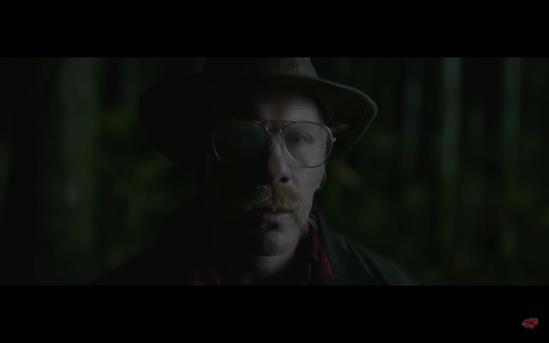
The up and coming young actress, Jules Willcox (“Dreamkatcher”) stars in the lead of Jessica who hasn’t have a friend in the world, alienating herself from her former life and her parents with a sudden escape to the Oregon wilderness.  The physically demanding role withstands the brunt of constant attack, whether from Marc Menchaca’s unnamed assailant character or the natural elements of the forest that include from the massive rapid rivers and torrential rains to the smallest of roots that spear her bare feet while on the run.  Willcox also brings to the role an indistinct mindset, jumbled with the lingering and complicated suicide of Jessica’s husband, paranoia, and an instinctual reaction to survive, especially through Willcox’s eyes that arch from fear to fortitude.  To really envelope Willcox in that unwarranted fear of harm and pushing her character into the unknown of the adversarial complex that is mother nature is Marc Menchaca as a conniving creep looking to do as much pleasurable damage on his bogus business trip as possible.  Menchaca also looks the part, resembling an out of place 70’s-80’s serial killer with round thin-framed glasses and a moderately bushy handlebar mustache overtop a sturdy frame.  Now while these attributes are not indicative to just serial killers, they sure as hell work well on screen to really sell the intensity that Menchaca delivers as a faux Ned Flanders type nice guy, a sheep in a wolf’s clothing so to speak, who acts a lure against his prey before venomously striking.  The small cast rounds out with Anthony Heald of the Anthony Hopkins “Hannibal” films in a small, yet uncharacteristic, good guy role as a hunter caught in the middle of Jessica’s situation.

While suicide might be the catalyst that compels Jessica to drive into the middle of nowhere, Matthias and Hymans only utilize the power theme as an instrument against Jessica’s psyche.  Jessica runs and hides from polite and comfortable society, but the recently widowed soon discovers that she can’t outrun her past as she hits a perverse wall constructed in the form of a man of sordid pleasures and sociopathic tendencies.  Her kidnapper becomes, in a way, her therapist who, at one point, pins her to the ground and scrolls through the personal photos on her tablet, forcing her to talk about her husband up to the point of his death, and consistently throughout the film that his actions were cowardly, removing the blame from her and onto him while emphasizing her tremendous guilt for not seeing the signs earlier.  “Alone” blossoms a wildly curative dynamic that encourages Jessica to then defend herself and her husband’s memory by standing up against not only the man’s relentless chase, but also her guilt.  The thick Oregon setting becomes a security blanket, sheathing her endless dismay, but the forest is actually does more harm than good for Jessica.  Only when does Jessica steps into a wide clearing of lumberjacked tree stumps does hiding from all the pain and torment become no longer an option as she makes her last stand against her attacker, unloading her fear, anger, and guilt upon the man by exposing him as an oppressive killer. While immersed in watching, “Alone” will deprive oxygen from your body that’s desperately gasping to fill your lungs with air in every harrowing chapter, but “Alone” is a breadth with a throng of digging out of despair overtones and a conduit for self-repair that’s unraveled symbolically through the afflictions of bona fide sadism.
“Alone” rises above the call of arms against predatory men in this thrilling remake from John Hyams, releasing into Theaters and VOD on September 18th from Magnet Releasing. The rated R, 98 minute feature will not have the A/V specs critique due to the digital screener, but Federico Verardi (“Z-Nation”) grasps the elegant threat of the woods by using drone shots to shoot the very tippy-top of the swaying trees that conceal the ground, as if obscuring the atrocity being committed below, and applying low-contrast to make insidious hard shadows against green lush that turn beauty dark and deceitful. *Director John Hyams has noted the rapid’s scene where Jessica temps fate to escape her pursuer was practical and performed by stuntwoman Michelle Damis and though looked a little off around the Jessica’s unsubmerged profile as she’s whisked away down the river, the effect is 100% legit. “The Pyramid” and “Becky’s” Nima Fakhrara scores a low-impact tremble for most of the feature with Jessica’s running through the woods is accompanied an equally low-impact drumming, letting the ebb and flow of resonating forest ambience engulf much of the soundtrack to solidify it as a correlative character; even the end credits is purely nature’s ambient noise. Since “Alone” is a brand new feature, there were no bonus material or bonus scenes during or after the credits. “Alone” knicks the core of vulturine power, but turns the tables toward more feminist revelation to fight and take back one’s life.

*Correction: Previously stated the rapids scene was CGI.


EVIL Doesn’t Joke Around. “Let’s Scare Julie” reviewed! (Shout Studios! / Digital Screener)


After the sudden passing of her father, Emma stays with her cousin, Taylor, along with her aunt and drunkard uncle. Taylor pressures Emma to be part of her prank habitual group of friends, trying to convince Emma how this is how things will be from now on while also trying to be a compassionate shoulder to her reserved cousin. With Taylor’s uncle passed on the sofa downstairs and her mother flying in from out of town, an impromptu sleepover encourages the group of girls to connive a break-and-entering prank to scare a new neighbor, a teenage girl named Julie, across the street. Emma half-heartedly participates by producing a way into the house, allowing her cousin and her heedless new friends onward on their scaring scheme, but when only two of the four girls return, the prank has turned terribly wrong as an urban legend about the house across the street might actually be true.

Breaking out from helming television documentaries and into the genre feature realm is filmmaker Jud Cremata debuting with his written and directed bloodcurdling slumber party, “Let’s Scare Julie,” premiering on in home theaters on digital and VOD come October 2nd, 2020. Starting off Halloween with an innovative filming structure and a good ole fashion horror tale, Cremata never eases on the reins of terror from nearly a single, continuous take of his mischievous teenage girls meet malevolent ghost story that occurs over a single night, condensed further to a time frame that’s almost parallel to the film’s runtime. Formerly known as “Let’s Scare Julie to Death,” the Santa Clara filmed, real time hijinks gone awry spook show is the first horror production from the Los Angeles and Moscow based Blitz Films in association with “Becky’s” Buffalo 8 Productions. Jud Cremata and Marc Wolloff produce the feature alongside Blitz Films’ Eryl Cochran and Nick Sarkisov.

Comprised with a small cast of new talent, “Let’s Scare Julie” focuses around a group of five teenage girls and one elementary grade school girl concentrated more so around a life rebounding Emma played by Troy Leigh-Anne Johnson, making her introduction into feature length films. What makes this a phenomenal role and performance for Johnson is the fact that the young actress has to maintain in-character for the entire length of the film with the camera rarely parting away from her in every moment of the nearly continuous take and she has to adjust her dynamics with a variety volume of characters ranging in temperament from meek, to obnoxious, to terrifying, to drunk, and to the perpetuance of adolescence behavior from her protective, yet peer pressuring cousin Taylor (Isabel May), the obnoxious goof Madison (“Ladyworld’s” Odessa A’zion), the unassertive duddy Paige (Jessica Sarah Flaum), and the confident showoff Jess (“Unearth’s” Brooke Sorenson). Individually, the characters are well developed, hinting more towards unravelling their true selves with each progressive moment their on screen, but not overly enough to have each figured out and that leaves their hopeful futures in ruin, offering more substance to their potential demise. Rounding out “Let’s Scare Julie” cast is Dakota Baccelli, Blake Robbins (“Rubber,” “Martyrs”), and Valorie Hubbard (“Resident Evil: Extinction”) as the evil spirit, Ms. Durer.

Uncomplicated with less fancy footwork adorned, “Let’s Scare Julie” is all about the story and less about the effects hoopla usually associated with vindictive phantasma creepers, especially ones like Ms. Durer who like to seep into her victim’s personal bubble using voodoo black magic dolls while wearing nothing more than her dirty nightgown and scathing glare on her face. The simplicity of the movie is almost refreshing in the inherent campiness of the anecdotal urban legend spieled by the girl living next to the house of ill repute, but one thing about the story that irks me is the marketing of “Let’s Scare Julie” being shot in one continuous take; yet, there are a few edits that not necessarily cut to a different scene, but rather just jump seconds of a frame and continue the moment. Whether the edit’s intent was because of timing, reducing frames in a scene to meet a certain runtime, or to give the actors a slight break, the expectation wasn’t fully met when the handful of edits are slipped in condemning that anticipated single take to just a still impressive compilation of long takes. Chuck Ozea’s maneuvering cinematography seamlessly tells the tale without so much of a hiccup as the veteran music video DP choreographs somewhat of a dance around Troy Leigh-Anne Johnson to capture her slow simmer into terror. “Let’s Scare Julie” does more with less as a round about ghost story, building up suspense above the guise of guilt-riddled themes without placing the perspective in the middle of the supernatural action.

Sometimes, pranks backfire and, in this case, this prank is to die for in the Shout Studios distributed “Let’s Scare Julie,” scaring up into home theaters on Digital and On Demand at the beginning of Halloween season on October 2, 2020. Being a brand new film, there were no psychical media specs to report nor would there would be any A/V if specs were available since this review copy is a digital screener of the film. As a digitally recorded production in this day and age, expect the found footage-like video and sound as faultless as expected, but the quality will be determined by your internet connection and streaming platforms. There were no bonus material with the screener nor were there any additional scenes during or after the credits. Five teens’ prank spree ends on a dark and stormy night of terror where urban legend trounces cruelty over shenanigans in the crafty and solid shiver-inducing “Let’s Scare Julie.”

Pre-order “Let’s Scare Julie” on Prime Video.

EVIL Is Everywhere. Even in Idyllic Alaska. “No Way Out” reviewed! (Baird Media & London Levine Pictures / Digital Screener)

3
A wilderness camping trip in the rural terrain of an Alaskan landscape becomes the serene backdrop for a pair of couples on a romantic getaway. With their backpacks in tow and a sense of adventure in hand, one of aspirations amongst the peaceful setting would be to create an ideal engagement spot for a happily affectionate couple while the other couple taps the trip as a therapeutic escape to rekindle or salvage a flailing relationship. Deeper and deeper they trek into the woods that begins to feel engulfing with a sense of lurking, ominous eyes voyeuristically peering at them from afar and as gunfire rings out in the distance and camping gear winds up missing, spine-tingling fear starts to set in for the couples eager to leave quickly as they came, but those in the woods, those menacing figures that have been keeping distance, are now toying with the campers’ very lives.
5
Impelled into a throng of horror films set with backpackers becoming lost on a camping trip with a mysterious figure in the midst, “No Way Out” struggles to find a distinct voice from writer and star Chris Levine and introducing Joe Hamilton in his very first feature length directorial. Following his 2017 “Anabolic Life,” a crime-injected thriller circled around bodybuilding, co-written alongside Cameron Barsanti and Landon Williams, Levine steps solo into the horror ring, penning a camping-gone-wrong 2020 released thriller that displays themes of secrecy, family, and the mentally unstable futile pursuit of happiness compounded by half-frozen isolation off of sideroad Alaska and a tactical gas mask wearing loom creeping through the thicket. “No Way Out” is an independent funded production by the Alaskan based companies, Baird Media (Charles A. Baird) and RocketJoe Films, which I believe “No Way Out” used the latter company’s monolithic humanoid props from a defunct film entitled “Seven Bones,” and in association with services provided by Levine’s own co-founded London Levine Pictures company.
2
The small cast is centrically focus around the four campers for approx. 98% of the film, only briefly swerving away from the core characters to interject some meaningless exchanges between backpackers and to also setup a lying-in-wait antagonist to build up prelude suspense. Leading the foursome is Chris Levine as a multi-hat contributor along with his written and co-produced thriller by playing Blake, a hands off, anti-woods boyfriend being dragged against his will to go camping in order to recoup his girlfriend’s goodwill in their sinking relationship. “Apocalypse Rising” and “President Evil’s” Johanna Rae is Blake’s contentious other half as girlfriend Jessica. The dynamics between Levine and Rae couldn’t push the turbulent couple’s interpersonal problematic parameters beyond the scope of vomiting their frustrations to the same sex individual of their camping buddies on the trip with only one minor other instance of a short-lived spat in an attempt pull in some kind of concerning emotion for either Blake or Jessica, but the scene falls flat and so does that thick air tension that repels any kind of bridging of the gap forcing Blake and Jessica to seem not like a couple with progressing relationship issues, but rather argumentative friends with benefits. On the other side of spectrum, Norah (Jennifer Karraz) and Kyle (Christopher McGahan of “Virus of the Dead”), portray parallel mirror opposites of a happy-go-lucky couple on the brink of engagement and parenthood and while the couple should be gleaming with affection, Norah and Kyle barely speak a couple of sentences to each other, marking their character profoundly shapeless and plain among the limited roles to root for survival.
1
Aside from not being able to relate to the characters, who more or less meander about asking each other what they should do or not do next, “No Way Out” can’t find a way out of the nonsensical design to shepherd audiences into the throes of character plight and make the hairpin turn toward revealing the abhorrent culprit of their situational terror. The story seems stuck in a rut in garnering not enough background or tidbits of intricacies to formulate a clear answer to the subtle hints being conveyed along the way about what’s unfolding before our eyes. Luckily, our brains start to take over, filling the gaps where needed, and coming to a haphazard conclusion that through the characters wavering suspense of the unknown encased around them, not everything is what it seems and that aspect really comes early on in the film, whittling down the complexity of the story to a low-effort thriller that can be solved by the time the four campers reach their terminus by car and have to hoof it aimlessly rest of the way. Unfocused editing of a fragmented story and misused ambience, such as the prolonged whooshing of highway cars when characters are supposed to be deep in the woods, added to the viewing friction. I liked the headspace of the story concept for “No Way Out,” where a shadowy, uncouth stalker sets a target on unsuspecting camping folk accessorized with a shrouded plot twist, but, ultimately, the execution flopped as a pitched tent overwrought thriller set in the icy, backwoods topography of Alaska.
4
From filmmakers Chris Levine and Joe Hamilton comes a brand a new backpacker thriller, “No Way Out,” premiering the last weekend of August in Alaska and then hitting VOD platforms in the next couple weeks, including Prime Video, Google Play, Pluto, Tubi, and more. Since “No Way Out” is a new, completed feature film and a digital screener was provided for review coverage, the typical A/V evaluation will not be done, but the debut of cinematographer De Gosh Reed’s hybrid found footage and observational shot style captures a pair of perspectives of not only an outsider, but also as the characters to join in as a terrified participant. Aforesaid, the English language audio mix is a bit wonky with some ambient missteps. The dialogue also comes and goes in an undiscernible pinpoint of depth that, at times, is trounced by the steadily vivacious soundtrack. The film felt very technically raw and unfinished, but, again, this is a digital screener of an unreleased film on the brink of debuting and maybe altered or adjusted for the premier/VOD. There were no special features included with the screener nor were there any bonus scenes during or after the credits. Though not my cup of flavored untamed tension tea, “No Way Out” has the bones to be a straight forward VOD thriller outlier despite being misshaped and disjointed around the particular edges.

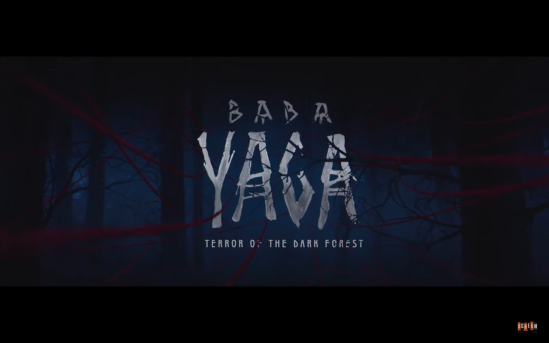
Slavic Folklore EVIL Goes Full Amber Alert in “Baba Yaga: Terror of the Dark Forest” reviewed! (Digital Screener / Shout! Studios)


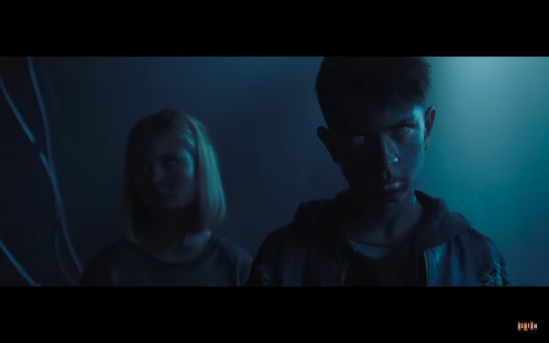
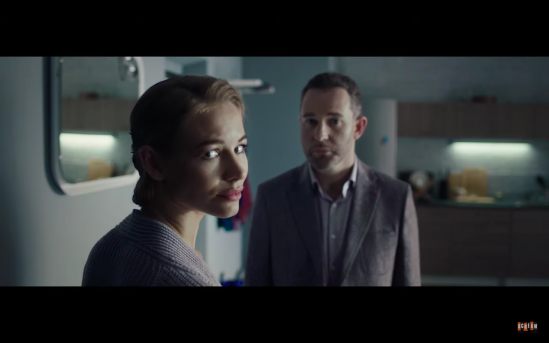
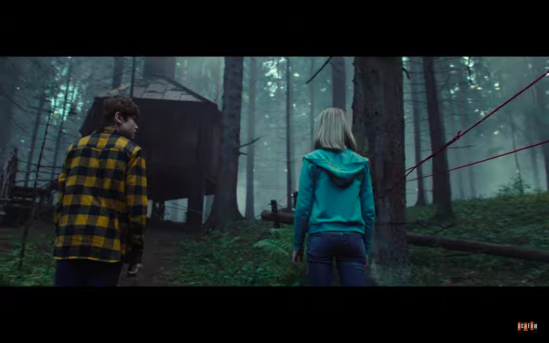
Still reeling over the loss of his mother, a disheartened Egor has moved to a new apartment on the forested outskirts of the city with his father, step mother, and infant half-sister. A nanny is hired for house upkeep and to look after him and his sister, but the nanny’s strange behavior borders hostility toward him while also bewitching his father with her beauty and charm. Since her hire, the nanny cameras alert Egor of movement in the nursey, projecting an unknown and disfigured woman in the room hovering over the baby. When his parents don’t believe him, there’s nothing more the older boy can do until his baby sister goes missing and his parents don’t remember her, as if she never existed. Egor, along with his friends, track down a man living in the woods who seems to have an inkling about the mysterious disappearances of children and why everyone forgets about them as he has experienced the loss of his daughter and can barely remember her. Based off the man’s ramblings, their search for Egor’s baby sister leads them to an old and abandoned power shack that serves as conduit to the world of Baba Yaga, a Slavic witch with the influencing ability in kidnapping and devouring children’s souls for power and Egor’s sister, along with the rest of the nearby children population, have been abducted to lure in the pivotal pure child to set her free into their world.

“Baba Yaga: Terror of the Dark Forest” is the second part of this unintentional two part Russian horror film appraisal following our extrospective look into Olga Gorodetskaya’s psyche serrating “Evil Boy” that just happens to have another protagonist by the name of Igor, but in this case, the spelling is Egor and, instead of a middle-aged doctor, Egor is a pre-teen boy with pre-teen issues – just to jazz it up a little. Also originally known as “Yaga. Koshmar tyomongo lesa,” the supernaturally Slavic folklore tale, directed by Snyatoslav Podgaevskiy (“Mermaid: The Lake of the Dead”), was released February in motherland Russia and is making a distributive second coming toward the States on September 1st courtesy of a collaboration between Shout! Studios and Leda Films. Penned by Podgaevskiey as well as Ivan Kapitonov and Natalya Dubovaya, the scribing trio pickup right where the wrote off form the gritty mysticism of fabled creatures beginning with “Mermaid: The Lake of the Dead” and into a classically frightening and morose villain salivating for juvenile souls spurred from one of the numerous variations of one of the more popular, if not grotesque, Russian mythological being. “Baba Yaga” is a production of the Cinema Foundation of Russia, Central Partnership Productions, Non-Stop Productions, and QS Films.

In much of the reverse from “Evil Boy,” Podgaevskiy’s “Baba Yaga” rocks the cradle in a “Goonies” approach with a condiment and courageous group of pre-teen, developmentally spongy, angsty, and hormonal driven children to solve the big bad witch mystery that not only afflicts the very lives of their brethren age group, but also the parental halfwits who have their minds erased like a chalkboard with nothing more than tiny dust particles to cling to to keep their missing children alive in their memories. From the visually powerful alien invasion thriller “The Blackout” (ItsBlogginEvil review here), Oleg Chugunov spearheads a trio of adolescents on the cusp of being witch-fodder. Chugunov plays Egor, a dispirited youth unhappy with his father’s remarriage to another woman and the target of bullies at his new school before becoming the chosen meal plan for Baba Yaga’s unholy escape for an ethereal world. Egor’s experience of an afterthought to a savior of child-kind isn’t represented well through Chugunov and how the character is written as Egor just falls into the “pure” child role without much explanation to why, staying flat on the personal growth scale for 113 minute runtime. Egor’s followed by a love interested in Dasha (Glafira Golubeva) and lead bully Anton (Artyom Zhigulin) who both have bouts with their parental caretakers; Dasha’s mother is a scorned beauty hellbent on controlling Dasha’s life form outside influences while Anton is a parentless brute with a guardian who is equally as callous as him, if not more. Svetlana Ustinova (“Hardcore Henry”) has two roles in this film and both are bad guys: Baba Yaga and Baba Yaga’s half-bird, half-human hench-thing. Ustinova shows immense range by fielding human to hybrid to full out witch qualities, inching the insidious intentions through the storyline that requires varying degrees of discourse with other characters along the way. The cast list rounds out with Aleksey Rozin (“Leviathan”), Maryana Spivak (“The Outbreak” TV series), Igor Khripunov (“The Bride”) and Marta Timofeeva (“Welcome to Mercy”).

Out of the two terror inducers from Russia, “Baba Yaga” inches out “Evil Boy” on the supernatural spectrum. Between Anton Zenkovich’s colorfully prismatic photography, Vlad Ogay’s sleek-straight and modernally tight architectural designs juxtaposed against a vastly rustic and chaotic woodland lore, and topped off with Podgaevskiy’s highly effective misdirection jump scares, “Baba Yaga” inveigles to a palatable lore horror invigorated by a two-timing enchantress with a sweet tooth for kid blood. Despite not being exact to the Baba Yaga’s tale, as the creature’s house is supposed to erected by actual chicken legs, Podgaesvkiy shoots a fear-laden heartstopper where anything can happen in any scene at any moment. Yet, something is indubitably missing from “Baba Yaga.” Perhaps, what’s missing is that meaningful message about rekindling that spark between parent and child, patching up the tears in the relationship that’s been strained by XYZ reason. Perhaps, what’s missing is the unsatisfactory ending of easily dethroning of a powerful and mighty mage. Perhaps, what’s missing is the explanation on why Egor is the key to Baba Yaga’s tyrannical freedom from cursed exile. I’d say all three contribute to the cause and not much, not even a wonderfully animated s storybook prologue depicting the phantasmal enterprise and downfall of Baba Yaga, could save the heartache in wanting more substance from the already loaded story but, then, we would be looking at another hour of runtime though its sorely warranted. In sum, “Baba Yaga: Terror of the Dark Forest” slips in a variant version dispersing a tingling tale of Russian folklore with stunning visuals and dutiful scares that ends deficiently and mediocrely.

Hide your children! “Baba Yaga: Terror of the Dark Forest” will be unleashed on VOD, digital, and on Blu-ray and DVD September 1st from Shout! Studios and Leda Films. You can look for it digitally or on-demand from the following providers: AppleTV, Amazon, VUDU, GooglePlay, PlayStation®, XBOX, hoopla, Fandango Now, DirecTV, Comcast Xfinity, Spectrum, Cox, Charter, and AT&T U-verse. Since the review is based off a digital screener, the A/V aspects will not be examined but the Scream Factory Blu-ray and DVD release will be region A/1, presented in a widescreen 2.35:1 aspect ratio, and will include a powerful Russian language Dolby Digital 5.1 audio mix with English subtitles and will also include a dubbed English Dolby Digital 5.1 mix. Unlucky for me, I had to screen the movie with the dubbed version. Lucky for you, I can confirm that though obvious, the dubbing isn’t horrendously overly-hyperbolized or too asynchronous. There were no bonus features or bonus scenes included nor none announced on the press release. Grab a bottle of Vodka, pop some Zefir candies, turn off the lights, and sink into an Eastern European mythos horror with Svyatoslav Podgaevskiy’s “Baba Yaga: Terror of the Dark Forest” that’ll scare the Ushanka right off your head.

Pre-order “Baba Yaga: Terror of the Dark Forest” on DVD or Blu-ray for Sept 1st release!

They Say There Are No Bad Children, But This is One “EVIL Boy” reviewed! (Well Go USA Entertainment / DVD)


Igor and Polina suffer through every parents’ worst nightmare; their son, Vanya, has gone missing. Three years later, Igor arranges an orphanage visit on the outskirts of Moscow to make Polina happy again by possibly adopting a young child, but their visit is cut short when Polina discovers the gruesome dead body of a basement keeper and a savage child barred away in a dungeon-like room. Polina is instantly imprinted by the child and convinces Igor to adopt him despite the difficult malnourishment and animal like behavior, but over the course of time, the child exhibits signs of behaving like their missing son and even starting to look like Vanya, their missing son’s name Polina has now bestowed upon the child against Igor’s wishes. As the feral child shows more signs of acclimating to his new life, Igor and Polina sense something more sinister from the child whose resembling more and more like Vanya every day and begin investigating into their adopted son’s origins, a well-kept dark secret guarded by the convent orphanage.

From examining horror films from our Northern neighbors in Canada to crossing the oceans and landing in Eastern Europe of the birthplace of Vodka, Russia, we’ll be taking a look at two recently released and storied dissimilar upcoming horror movies from Russia Federation, beginning with the belief that no country is exempt from the creepy kid genre in this Russian 2019 allegory entitled “Evil Boy” as the debut film from writer-director Olga Gorodetskaya. Also known as “Stray” world-wide or “Tvar” in the original dialect, “Evil Boy” is straight-forward, focus group approved, vanilla title of a story from one of Russia’s celebrated modern novelist and screenwriter, Anna Starobinets. Also dubbed as Russia’s “Queen of Horror,” Starobinets is a prolific adolescent thriller writer whose credits includes the compilation of short, chilling stories entitled “The Awkward Age” with the featured tale of a young boy’s life diary expressed through the voice of an ant colony living inside his body and the queen his brain as a conduit for her commands. “Evil Boy” is a production from a conglomeration of companies including Yandex Studio, Cinema Foundation of Russia, Dublab, and Reason 8 Films.

The titular character of Stray or Vanya allows no audience insight and we’re impelled into the perception of the grieved parents, Polina Belova (Elena Lyadova) and more so with the father, Igor Belov (Vladimir Vdovichenkov). While director Olga Gorodetskaya is new to the scene, the chemistry of Lyadova and Vdovichenkov have well been established from a baseline foundation set from their prominent collaborative roles in Andrey Zvyagintsev’s powerful small town corruption film, “Leviathan.” Their dynamic transcends a range of individual performances from crime into the horror realm with parents going through the stripping loss of a child that has compromised their marriage to the point of desperation to the eventual short term passion that has rekindled with the adoption of the Stray, a primal role befitting young Sevastian Bugsev in his introductory feature film. Giving Bugsev credit would be such an underwhelming praise as the eight year old not only nailed the savage child performance, but also endured an aggregation of makeup that gradually transforms his character over time. What’s interesting between the three actors is that they form this family love-triangle of sorts, where Polina embraces the child, but then is frightened of it and in a role reversal, Igor is skeptical of the child, but then tries to love him unconditionally. Just in that square footage, the amount of flux emotions and mindsets can favor one side over the other; yet, the actors pull it off, almost too well, creating a an unrest of feelings, conversations, and approaches to their characters. Key supporting roles include performances another fellow “Leviathan” thespian, Evgenly Tsyganov, as well as Roza Khayrullina, Konstantin Topolaga, Anna Ukolova, and Evgenly Antropov.

“Evil Boy” has some psychology behind it. Hell, even a few of the film’s posters are composited of Rorschach tests and what “Evil Boy” ultimately boils down to is how we interpret our grief of a loved one. Polina and Igor are written to exhibit multiple signs of the clinically coined Complicated Grief that follow the patterns of avoiding the reality of death, persisting nothing has changed, and a bleak numbness to the event. The motif of trying to replace something dear with something else, as a comforting mechanism, is consistently brought to attention and goes as far as leaving a forlorn image of the same motif as a finale twist to drop an atomic loop of melancholic isotopes on you. The psyche portion of the “Evil Boy” is as equally important as the evil boy himself as it’s only a representation of our characters’ will and grief, but whether it’s Starobinets story or Gorodetskaya’s script or both, “Evil Boy” has a yawning plot hole regarding the boy’s origins that’s briefly represented with a dialogue-less scene of cataclysmic and ritualistic images jumbled together for your mind to piece. This sort of passive logic translates equally to the unpalatable editing that plunges the story into a fit of turnaround key moments unable to linger and build upon and stress character developments and form audience relations. Much of the psychology the “Evil Boy” tries to impress is squandered by Gorodetskaya fleeting approach structure that can’t even be tied together by the genuine abstract creature itself when it’s grossly mutilated CGI blunder finally makes a grand entrance.

In the height of the “Sputnik” invasion that’s currently sweeping the Russian horror charts world-wide, explore into the inner space of an anguished mindset melded with conjured up changeling European folklore and you get “Evil Boy” on DVD courtesy of Well Go USA Entertainment come September 8th. The DVD is presented in a widescreen, 16:9 aspect ratio, that renders Ilya Ovsenev’s eerie and shadowy atmospherics, distinct in their own rite, between the sterile urban Moscow and the wooded outlier town where the parenting couple has a home in each to be alien to not only the child but also to the inhabiting parents. Ovsenev’s framing is poignant and harrowing, adding dread much needed to stir into the creature child. The image quality is relatively sharp, but there are moments of obvious color banding, such as around headlights, that suggests a lower bit compression that comes and goes with the nature of the scene. The Russian language Dolby Digital 5.1 surround sound rollicks in an immense range of sounds from the primal animal snarls of the young boy to car wreckage to the soft cries of a whimpering mother despite seemingly having a even-keeled tone storyline that should simmer with tension rather than overflow with nonstop action. The dialogue is clear and forefront available and the soundtrack lulls as a sleepy version of standard genre fare. English subtitles and dub track are available with the former show no sign of asynchronous harmony and no sign of errors in spelling or in timing. The only bonus feature available in the static menu is the trailer amongst trailers for other Well Go USA Entertainment releases. Perhaps, what could be construed as the Russian equivalent to Stephen King’s “Pet Sematary,” “Evil Boy” buries to reanimate suppressed grief through inclinations of folklore and psychosomatic ringers embodied by one creepy as hell kid.

Pre-order “Evil Boy” on DVD!