How Far Will Three Detectives Go to Stop Evil? “Memories of Murder” (Neon / Digital Screener)

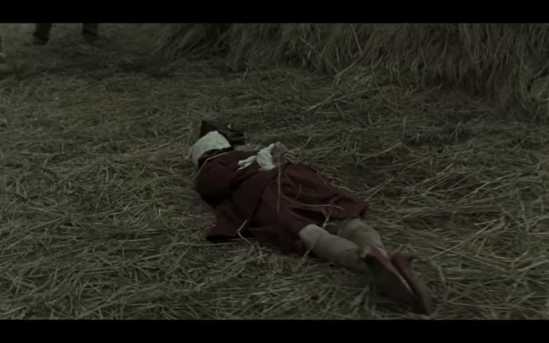
Two impractical detectives of the Gyunggi province of South Korea investigate a pair of rape and murder cases involving two beautiful and unrelated women found with their hands bound behind their backs, gagged with a rock tied into their mouth, and with their panties covering their heads.  Known around the province for their torturous interrogation tactics, the detectives bully a mentally handicap young man and the local pervert into confessing to the heinous crimes, but when a Seoul investigator arrives into the village, drawn in by the curiosity and coincidence of the murders, a larger scale serial rapist and murderer, calculating his every move, is unearthed, connected by series of events leading the small police force to reevaluate their handling of the murders that have become more gruesome than the next with every victim. 
Before his inevitable recognition from the 2019 Academy Awards for his socially skewed hierarchy thriller, “Parasite,” that historically won Best Picture, Directing, International Film Feature, and Original Screenplay categories, even before his breakout success amongst fans of the horror genre with the creature feature, “The Host,” and an introduction into the American film market with another social class commentary, the dystopian standoff that was “Snowpiercer,” starring the Captain America portrayer himself, Chris Evans, filmmaker Bong Joon-ho had an eye for crafting his vision on camera and a knack for nerve-shredding storytelling as a writer in the early 2000’s with his 2003 sophomore feature, a crime drama entitled “Memories of Murder.” Originally known as “Salinui chueok” and written by director, the film is an encryption of a murder mystery encoded from the real life serial crimes in the Hwaeseong province in the 1980’s, Bong Joon-ho’s film takes place in 1986, and renders an engrossing story structured like a modern day Jack the Ripper emerging out of the unpleasant anecdotes of Korea lore stirred with themes of consequences as a result of careless failures and the inadequacy of effort no matter the analyzed angle.  CJ Entertainment, Muhan Investment, and Sidus serve as production companies of this somber sleuth mystery.
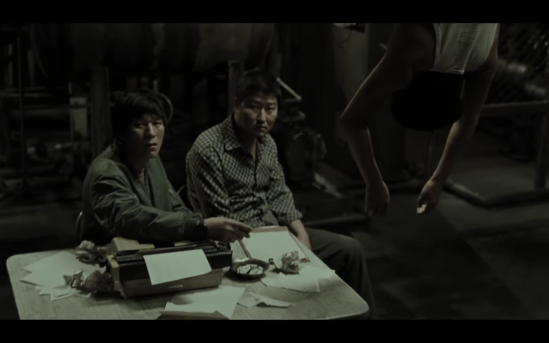
Despite their different methods of interrogations and investigation pursuits, the story hammers down on the three detectives’ across the board search for a methodical killer rather than a killer’s betokening perception of events as the detectives, individually flawed with ill repute and personally challenged, separately come unglued, make mistakes, and suffer the consequences of their public inanity, but when they click in harmony and rally on the same page, the truth almost hops into their laps rather than at a snail’s pace stemmed from internal competition for apprehension success. Song Kang-ho has played the constant, the unparalleled keystone, in Bong’s two decades of film credits, beginning his collaboration with the acclaimed director in “Memories of Murder” as the province’s ineffectual blowhard detective, Park Doo-man. With a deadpan stare, Song Kang-ho debones the Park Doo-man to his rudimentary base, a waggish con artist in an officer’s casual attire, and the actor defines Park’s arc so clearly, distinctly, and with ease that you can actually see Park Doo-man’s soul just become utterly crushed by not only the tough case but also when it’s clear that he must separate himself from his partner Cho Yong-koo (Kim Roe-ha) after a foolish bar fight of steadfast conviction and begin to accept his counterpart rival Seo Tae-yoon (Kim Sang-kyung) to no longer be the buffoon when bodies continues to pile up. “Memories of Murder” round out with Song Jae-ho, Byun Hee-Bong, Ko Seo-hie, Park No-shik, and Ryu Tae-ho.

In the battle to be top cop that nabs the worst criminal the province has ever seen, a disastrous paradox thwarts their oath to protect and serve the community as the two detectives, in their haste for swift justice, don’t see eye-to-eye on issues of evidence and actual detective work with a levelheaded outside investigator putting his foot forward delivering a working, if not more rational, model of a killer’s mind.  The innate detective, Park Doo-man, relies heavily on the circumstantial from gossip, relayed by the province investigator’s soothing nurse who he’s also seeing romantically, to superstition, visiting expensive shamans and claiming to have supernatural sleuth abilities himself, in order to cheat corners in hoping the information will present itself like an elegantly wrapped gift with a bow on top.  At the other end is the outsider, detective Seo Tae-yoon, from the metropolis area of Seoul and the big city detective, who sees more of these types of crime in his urban backyard, conducts a factual investigation based off research and relying on experience that gives him intuition into how the killer thinks.  Clarity in the contrast concedes more so when the third detective, another province resident, Cho Yong-koo, refuses to change his ways of brutal violence and torture as he continues his flying kicks right into the chests of suspects whereas his partner, Park Doo-man, relaxes his greed for admiration when the number of deceased women becomes unnerving and public trust in law enforcement rapidly diminishes; the reality sets when his counterpart, Seo Tae-yoon, produces results closer to an arrest based on fact.  Bong Joon-ho’s approach at the beginning would not be a conventional one that mingles rape and murder with the bumbling antics of a small town police force that’s outrageously zany at times.  The zaniness comedy subsides and is replaced with an air-letting dismal outlook of vulnerability and powerlessness in making little-to-no headway into a case that keeps getting grislier and grislier with the killer not inserting objects into his female victim’s vagina.  Trusting the system is even more disquieted so when the most latest and reliable crime solving techniques in the mid-1980s, from America none-the-less, proves to be astonishingly inconclusive, making the case seem like a no-win situation that then reverts back to the idea that sometimes even the most careful and meticulously handled cases, without the use of force, are not solvable. 
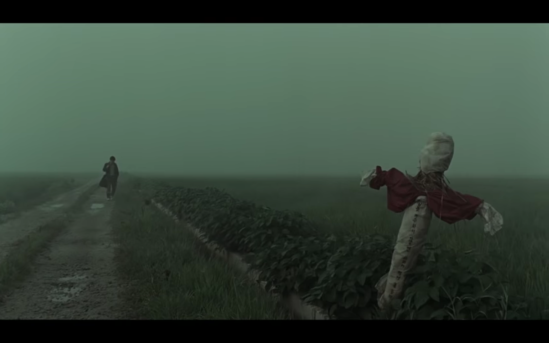
The powerful knuckle-biter “Memories of Murder” rattles with anxious tension and is chartered gracefully through the unrivaled eye of Bong Joon-ho.  Now making it’s grand return exclusively to theaters nationwide October 19th and 20th, “Memories of Murder” will be exhibited digitally remastered for U.S. audience for the first time since it’s initial release since 2003 courtesy of a partnership between Neon and Fathom Events.  The limited theatrical running with include exclusive content and a post-screening conversation between Bong Joon-Ho and “Shaun of the Dead” and “Hot Fuzz” director, Edgar Wright.  Since I’m unable to compare the digitally remastered with the initial release, all I can say is that the film presentation appears steady, tight, and clean with Bong’s sepia tone to incept a memory fragment of the past and shot to entice an unfathomable crime drama captured as beautiful gaslit dissonance between background societal unrest, the case at hand, and the audiences’ unsuspecting role as the potential suspect. The screener provided is a digital screening link and might appear different in a theater sitting. The English subtitles were clearly visible with some minor errors in spelling. Again, this might vary in theaters. There were no bonus material on this screener, but, remember, that the limited run event on October 19th and 20th will have the exclusive bonus content and the Wright and Bong conversation. Unforgettably wrung with wraith-like anecdotal properties, “Memories of Murder” can be labeled as Bong Joon-Ho’s exemplary film, even better than his current work that won him an Oscar.
EVIL Begins With A Simple Pizza Delivery in “Chop Chop” reviewed! (Kamikaze Dogfight / Digital Screener)

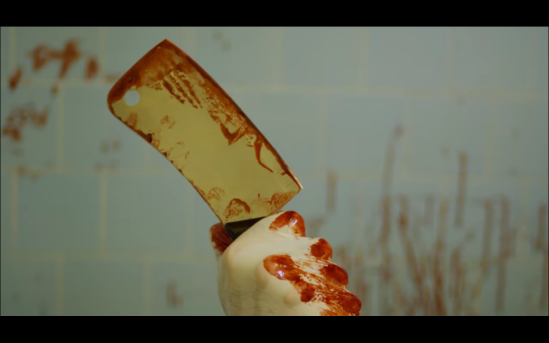
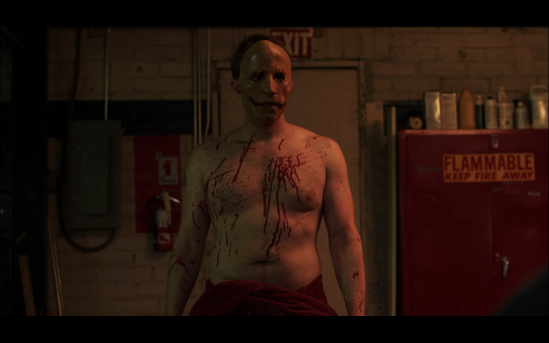
Married couple Liv and Chuck Matthews are enjoying a quiet and romantic night in at their apartment complex.  That is until a pizza delivering psychopath, who relishes chopping off the heads of his victims, knocks at their front door, interrupting the Matthews’ serenity with his own homicidal desires.  The skirmish puts forth the Matthews onto a series of misguided and bizarre encounters with an underground criminal syndicate that upends and jeopardizes their very lives, but the Matthews are not as innocent as they appear and harbor a dark secret of their own that just might get them out alive, barely. 

Flying under the October release radar this year, amongst a swarm of horror films that we thankfully have this unprecedented Halloween season, ekes in the debut feature film, a USA-made, independent horror-thriller entitled “Chop Chop,” from writer-director Rony Patel.  Co-written with Andrew Ericksen, the sleeper film echoes notes of Lynchian themes embroidered with idiosyncratic personas toiling uncomfortable tensions that are dryly humorous.  The Temple University educated in film studies Patel is no stranger to the metaphysics of the genre, pulling influences from and expanding upon his short film catalogue over the last decade with narratives that revolve around the dread of situational surrealism and detour from tropes of traditional tangible horror.  “Chop Chop” is a production of the Patel founded LA based company, Fairwolf Productions, LLC.

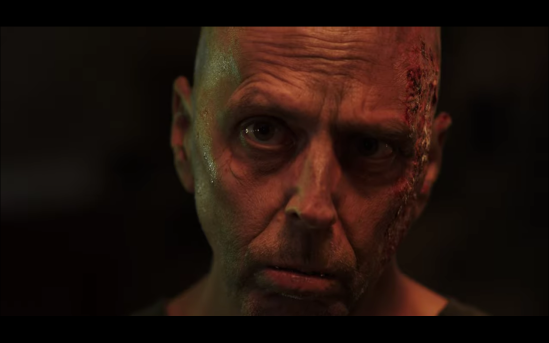
Jake Taylor and, the uncanny Zoe Saldana lookalike, Atala Arce, star in their first principle roles as a seemingly normal husband and wife, Chuck and Liv, who are introduced into the initial beginnings of date night that turns into a stay-at-home night of relationship bliss, but as the story progresses, even before the psychotic pizza boy’s entrance into their lives, setting off a string of deadly incidents, a latent secret itches within them as if toiling an escape plan from a previous unsavory life connected by the unexplained red spade symbol tattooed on both of their bodies.  Ambiguity fills the air between the mysterious tattoo and Taylor and Arce’s sanctum mind and side-eyed performances that convey very little of their unspoken plight and reveal very little about their existing purpose in an organization comprised of odd, but dangerous, jobs and dubiously offbeat and clandestine characters.  However, the face of “Chop Chop” draws an intense paroxysm of eye popping curiosity from the character actor David Harper (“Sick Boy”) in a dual performance as Teddy, the head chopping pizza delivery man, and Teddy’s mute twin brother who wields a samurai sword with a glaring look conveying malevolence.  Harper’s distinct face becomes transfixing when the scarred skin and bedecked with silvery braced teeth jut out from the bowed lips of a sinister smile.  To continue the trend of eccentric, quite rememberable, dark characters, Mikael Mattsson (“Scariest Night of Your Life”) and Nicholas Correnti contribute warped opposition encased inside an intermittent individual of horrid killer instincts reinforcing the already loaded with tension thriller.   “Chop Chop” rounds out with Jeremy Jordan, James McCabe (“Drifter”), Natasha Missick, and Lizzie Chaplin to wring Liv and Chuck’s out, whatever that might be from, even more life-and-death.

“Chop Chop’s” immensely cryptic diagram tones more evocatively by the uniquely rich characters planted from moment to moment inside Liv and Chuck’s inescapable conundrum of cascading misadventures.  Whereas Patel and Ericksen scribe persona diversity that’s interlinked to the fermenting innards of the scene, these characters would not be as fruitful if not exuberated by the actors who portray them, instilling a symbiotic coexistence of selling viperous rouges. Mysterious elements don’t solely lie with the veiled married couple, but also with Terry and his brother who are said, and is shown to an extent, to have powers with the abilities to walk through walls and be clairvoyant; yet, cliff notes of the beyond elemental are nixed and the omission of faculty talents are obliquely positive.  Where the characters flourish in a cesspool of strange and usual criminal activity, the story steps back as a murkier shadow game that’s about as translucent as pea soup and while understanding Liv and Chuck’s more exact role in the whole scheme of events isn’t a complete necessity, Patel and Ericksen’s narrative shell loses the cohesive glue to hold and sustain everything in into a diatonic cadence to the end.  Viewers will be kind of left stuck on the precipice by the finale led up by a perpetual tease of haphazard affairs thinly connected by one inexplicable common source that was surrounded by spies, murderers, and a malicious carcass disposer.  Evading a near total fumbling of the story, “Chop Chop” whips up fresh, new characters for the fray scattered throughout the playing field, keeping the loosely lassoed narrative structure from disastrously crumbling down into hollowed heap.

Ding, Dong! Pizza’s here! “Chop Chop” is a deliciously devilish dish from newcomer Rony Patel, landing onto Digital HD and Cable VOD on October 20th to rent or own on Amazon, iTunes, Comcast, Spectrum, Vudu and more, distributed by Kamikaze Dogfight in partnership with Gravitas Ventures. Since a digital screener was reviewed, critiquing the A/V aspects will not be covered. There was also no bonus material available and no bonus scenes during or after the credits. The cinematography scenes from Ryan Emanuel and Carter Fawcett produce striking setups that immediately dictate an artistry of vest-pocket anarchy that stick out gorgeously from the more darker laden respite between meetups. The English audio mix entangles the dialogue into murky territories underneath the swathed action, creating minor clarity issues to chase when trying to understand Liv and Chuck’s subdued spats that are telling of who they really are in “Chop Chop’s” lethal, but still trippy, Alice in Wonderland variation. Keep an eye on Rony Patel’s future cinematic endeavors as the young filmmaker’s tenebrous thriller, “Chop Chop,” has a meticulous sound design and a marvelously simple flare for character prototypes that energizes the rough enigmatic mystery.


The Dying Baltic Traditions Live in the Ashes of EVIL. “Cult Girls” (Umbrella Entertainment / DVD)

The pagan Cult, the Golden Path, remains nearly all that is left of the ancient practice as Lithuania becomes one of the last countries to be converted to Christianity in the late 14th century.  Led by an archaic, yet powerful, goddess named Ragana, the Golden Path promises to flourish once again with the power of death, reincarnation, and control through sordid misdeeds.  When Dalia and her two young sisters become prepped for a ritual of an important role in the cult, potentially leading them down the path of sex and sacrifice, a traitorous follower helps the sisters attempt to escape their emmeshing fate as the police raid the Golden Path compound ensuing a firefight that leads to the death Ragana and Dalia’s getaway, but her sisters are kidnapped and held captive by the remaining cult members.  Years later and riddled with guilt, Dalia must know what happened to her sisters and she tracks down a death metal cultist, Moloch, who seemingly has a connection to Golden Path, with the help of Samoth, a black metal fanatic, but Moloch forestry hermit lifestyle cuts off Dalia and Samoth from the rest of the world and the convicted arsonist against all things Christianity may have more up his sleeve than what meets the eye.

With a title that sounds like an all-girl goth band from the grunge era of the 1990’s, or maybe even more so from the “Scooby Doo” franchise (Hex Girls anyone?), “Cult Girls” summons the actuality of being an acute quasi-historical and dark fantasy thriller hailing from the Ozploitation capital of the world, Australia.  “Cult girls” is the second, non-documentary film from “The Matrix’ inspired “Narcosys” director, Mark Bakaitis, who directed, wrote, and edited his the multi-location sophomore film that has on location scenes from not only in Australia, but also in Lithuania, at the notable Hill of Crosses landmark, and in the indiscernible urban locations of Germany.  Bakaitis serves as producer alongside executive producer Douglas Kaplan of the diverse arts platform production company, All Edge Entertainment, based in Santa Monica, California. 

The Australian production casts an American to star as Ragana, the brood matriarch destined to rejuvenate Golden Path’s permanence, with “V’s” very own Jane Badler.  Badler brings an international presence to the feature and isn’t a stranger to films from the down under.  With the actress’s soul-seducing cutting eyes and demonic empress allure, the New York born Badler exacts Ragana’s clutching strength as an underground Pagan seeking unlimited decadent power.  However, Badler is overshadowed by the timorousness of Dalia whose polar opposite presence is granted a more favorable chunk of screen time.  Finnish born Saara Lamberg plays the humbled Dalia, living her life out of a covenant while searching out the cult that once almost stitched her into the sew of sleazy affairs to unearth the whereabouts of her younger sisters.  Dalia’s a bit of a dull principle with no substantiated efforts in finding her siblings and it isn’t until Samoth stalks her one night, recognizing the Golden Path’s symbol tattooed on her wrist and offering his manhunt services to find the expelled Moloch, an exaggerated black metal anti-Christianity anarchist in a saturating performance by Albert Goikhman.  In the middle, masked brutes, half naked women, and, fallen by the waist side, Dalia’s sisters in standalone plot point narratives that, as far as story structure goes, does nothing to motivate the narrative other than be an ostentatious aesthetic of locations and debauchery.  “Cult Girls” rounds out the cast with Tony Markulin (“MurderDrome”), Algias Karazija, Dean Kirkright, a handful of Bakaitis’s family, and Simay Argento, a distant relative to Dario Argeno playing a Cult Auntie in the film.

“Cult Girls” borders being avant-garde of an unfiltered auteur’s will in a mesh of artistic polishes and prose dialogue, but the film slides into being more of an 83 minute music video over staying it’s welcome and drudges through a repetitive stylistic cycle to an almost nearly unwatchable extent.  Yet, “Cult Girls” somehow manages to retain attention despite the chewy acting and it’s ambling story that hits a dam wall of uncertainly of where the script should head. Bakaitis shoulders the story for modern Gothicism tapped with half naked occultist, sometimes bathing in blood, and a plague of nightmare imagery that director of photography Trent Schneider tunes into well with noir vitality despite being the cinematographer’s debut feature film, but through the shiny exterior of a handful of solid mise-en-scene work, “Cult Girls” numbs the impact of the soul corrupting Pagan syndicate, that may or may not be shrouded with supernatural foundations, and the anti-Christian propaganda with half-baked violence from geriatric men, masked with Dia de los Muertos style masks, able to be kingpins of an untouchable prostitution ring façade for their occult sacrifices in broad public without a bat of an eyelash.  Granted, prostitution is likely legal in Germany and Lithuania so authorities might turn a blind eye, but brothels are a convenient opportunity for police investigations. “Cult Girls” treasures the fact of Lithuania’s languishing heritage without being overly filmic heresy by blending in shaded sleaze and death, but there lies no story in Dalia’s unenthusiastic search for her sisters in a much more preacherly themed death metal horror that confuses cult with religion.


Apocalyptic reincarnations and traditional folklores collide in Mark Bakaitis’s “Cult Girls” on DVD now from Umbrella Entertainment. The Australian release is a single layer DVD with region 4, PAL encoded format, presented in a widescreen 2.40:1 aspect ratio. Trent Schneider’s keen eye captures a grim fairytale surface of black magic masochism and, at the same time, breathtaking in the pure nature scenes, but the imagery is mostly in devoid of richer color that lingers around a bluish-gray monochrome tone and struggles with hazy details, especially around facial features, that smoothly fuzz over. The English, German, and Lithuanian Dolby Digital 5.1 surround sound mix battens down with shiplap genres of traditional Lithuania folk and modern metal from composing sound designer Erin McKimm, implementing the traditional songs of Lithuania sung by the Melbourne-Lithuania community singers, The Lost Clogs. Industrial action fills in every nook and cranny of the remaining score with decent range and depth of ambiance. While the dialogue is prominent and clear, there are spelling errors and tiny text issues with the English subtitles when the narrative lands in Germany and Lithuania. The DVD’s bonus features includes audio commentary, making of featurettes with cast and crew interviews, Bakaitis’s short film, “Mercy Kill” that serves one of the founding themes for “Cult Girls,” and music videos directed by Mark Bakaitis. For an Australian film, “Cult Girls” will feel more worldly, unlike anything else that comes out of Australia, and have partisan propaganda against Christianity, but in the end, the insidious Pagan evil, on the precipice of resurrecting, wearies on, like a tireless sermon of doom.

An Elite, EVIL Assassin Loses Herself as the “Possessor” reviewed! (Neon / Digital Screener)

Tasya Vos is the top professional assassin employed by a hire-for-murder agency who uses surgically implanted brain transceivers to insert agents’ consciousness into a person’s body who can get close to their intended kill target. The no contact procedure has been successful with some severe drawbacks, such as the potential for slipping out of your own identity in being, in one way, a part of many distinct personalities. When Vos’s next assignment is to insert herself into the mind of the soon-to-be son-in-law of a powerful tech CEO, her individuality begins to crumble, losing her grip as the primary inhabitant of the body. The commingled souls share thoughts and memories and when Vos takes a backseat in a body that’s no longer under her control, her life becomes vulnerable to a confused and unhinged man seeking vindictive measures to evict the assassin from his mind.

Like an existential extension of his father’s career, writer-director Brandon Cronenberg’s foothold within sci-fi horror is anchored by functional practicality, substantial social commentary, and a knack for exhibiting cynical undertones in his sophomore film, “Possessor,” a gripping tech-thriller avowing the soft-pedaled ambiguous identity and corporate invasiveness. “Possessor” is the blood soaked corrosion of individualism that strips morality and replaces it with unapologetic nihilism in a film that feels very much David Cronenberg’s “eXistenZ” merged with Paul Veerhoven’s “Total Recall” with that plug-and-play dystopian coat of paint that’s being brushed over the quickly disappearing free will. Studios involved in the making of “Possessor” include Rhombus Media (“Hobo with a Shotgun”) and Rook Films (“The Greasy Strangler”) in association with a WarnerMedia division company, Particular Crowd.

“Possessor’s” leading lady, Andrea Riseborough, is no stranger to idiosyncratic roles in equally atypical films having starred in “The Duffer Brothers'” “The Hidden” and played the titular character in the avant-garde horror, “Mandy,” across from Nicholas Cage; yet, from her experience with big-budget studio films, such as “Oblivion” starring Tom Cruise, the English actress felt the uneasy atmospherics to be pressurizing and uncomfortable Riseborough has thus exceled with films such as Cronenberg’s “Possessor” that’s pivots into an alcove just off the main halls of horror and science fiction. Riseborough looks nothing like herself from “Oblivion” by sporting a stark white hair on top of a thin frame, which could be said to be the very counter-opposite of what a typical, bug-budget assassin should look like, but Riseborough delivers stoic and uncharitable traits of a character on the brink of losing herself. Christopher Abbot delivers something a little more chaotic when his conscious retreats back into the depths of his psyche only to then seep back into his mind where he stumbles to catch up on current events. The “It Comes At Night” Abbott disembodies himself not once, but twice, becoming an avatar for Tasya Vos to play, picking up where Abbot’s Colin left off, and then Abbot has to regain control, splicing Colin back into the cockpit where Tasya commands the yoke. The dueling dispositions cease being unique as one attempts to control the other in a mental and corporeal game of chess, confounding audiences of who is in control during certain scenes, especially when Colin goes into a blackout murdering spree of people Colin himself knows and trusts. As a puppeteer moving a marionette, pulling as an influential strings behind company lines, is Girder, a poker-faced agent head seeking the absolute best in the company’s interest, who finds her thimblerigger in Jennifer Jason Leigh. Leigh, whose experience with David Cronenberg’s “eXistenZ” brought a high level of cognizance to “Possessor” having been an cerebral deep virtual reality trouper previously, folds in the nerve of any level of management that would guilt someone else into doing the work necessary to get the job done. Girder opposes Tasya’s external humanity in a silent, but deadly manner by appealing to the killer instinct in Taysa, letting red flags of the out of body experience fly by the waist side that ultimately wears away at her star pupils moral conscious and turn her into a stone cold killer. “Possessor” cast fills out with Tuppence Middleton (“Tormented”), Kaniehtiio Horn (“Mohawk”), Rossif Sutherland (“Dead Before Dawn 3D”), Raoul Bhaneja, Gage-Graham Arbuthnot, and “Silent Hill’s” Sean Bean in a worthwhile role just to see if his role will succumb to a typical doomed Sean Bean character as the undesirable tech CEO.

Its safe and sufficient to say that Cronenberg’s “Possessor” is not a feel good story; the amount of tooth-chipping, eye-gouging, and throat stabbing gore takes care of any hope and ebullient energy that one could misperceive. Yet, while the disgorged grisliness stands on it’s own, Cronenberg possesses a factor of tropes that multiply the film’s bleak, icy landscape inhabited by unpleasant characters that ultimately seek and destroy the little good exhibited. The obvious theme is the disconnect from one’s own identity. Tasya Vos mental capacity nears the breaking point being an inhabitant of numerous bodies and with each callous, bloodletting assignment, Vos’ indifference for the things she should hold dear strengthens immensely drowns in the persona of another person and the psyche breaking acts of violence. Her latest assassination attempt even blurs the lines of her sexuality as her feminine body parts merge with Colin’s masculinity in one of the craziest sex scenes to date. Colin’s individuality is too threatened but from Vos’ intrusion, equating the quiet, strange behavior to a sudden vagary toward a person’s dejection, being estranged from their own life, on the outside of “Possessor’s” alternate reality of science fiction’s hijacking of one’s brain. On the subject of intrusion, a not-so obvious theme, but certainly has a strong motif, is the severe invasion of privacy. Vos’ spying on Colin and his lover for personality intel, Vos’ inspection of the entire Colin body while inside inhabiting him, and the data mining of Sean Bean’s character’s tech company, which pries itself through the optics of people’s computer cameras to garner information, such as the fabric of window curtains in this case, divulge an uncomfortable message that privacy is a luxury we are unable to ever grasp. There’s even a scene where Vos, in Colin, becomes a voyeuristic participant of a couple’s explicit sexual intercourse during data mining work hours. Despite the breadth of technology that are brimming near our fingertips today, “Possessor” has a very analog approach with dials and switches of seemingly antiquated electronic circuits, thus rendering the story grounded in nuts and bolts rather than being lost in the overly saturated and stimulated advanced tech. Beguiling with a somber serenade, “Possessor’s” a highly-intelligent work of diverse, topical qualms seeded by years of body horror and existentialism and is released into a world that’s perhaps not ready to come to terms with much of the themes it will present.

Come October 2nd* to select drive-ins and theaters, “Possessor” will be distributed uncut by Neon, implanted in the midst of horror’s biggest month of the year. Since not a physical release as of yet, the A/V attributes will not be critiques, but the film is presented in 1.78:1 aspect ratio and is under the cinematography direction of Karim Hussain, who has previously worked with Brandon Cronenberg on his debut film, “Antiviral.” Hussain adds rich two-tone coloring for a symmetry of sterilization that is, essentially, white and black with every shade of both in between tinted slightly with a dull hue on the spectrum and with the blood being that much more graphically illuminated against the backdrop. There are moments of composites that could render a person disabled with epilepsy, so be warned. The audio is a smorgasbord of a jarring ambience and soundtrack, adding to “Possessor’s” fluxing turmoil, but the dialogue discerns a little less sharply across; there was difficulty in understanding characters’ monologues or discourse who came across mumbling through scenes of fuzzy earshot. There were no bonus materials to mention nor were there bonus scenes during or after the credits. Perhaps the best movie you won’t see this year, “Possessor’s” an impressive follow up feature that reaches out beyond the outlining border of a vast and prolific filmic shadow looming over the filmmaker, but Brandon Cronenberg contrives new vitiated wonderments and is capable of casting his own umbra that would eclipse to throw light onto his soon to be seen cathartic body of work.


* Release date correction (9/29/20)

See Through the Eyes of EVIL. “Dahmer” reviewed! (MVDVisual / Blu-ray)

On February 15th, 2992, Jeffrey Dahmer was convicted on murder, dismemberment, and sexual offenses on 17 young males.  Before then, Dahmer preyed on the desperate and the unsuspecting males living undisclosed in the then tabooed gay culture between 1978 and 1991.  Drugging, raping, killing, and then sometimes raping his victims posthumously became the Wisconsin serial killer’s unhinged obsession for companionship while working auspiciously as a chocolate factory warehouse worker.  Dahmer’s mind blossoms through the graphic dual prose narrative of events that circle around his lonely existence from a novice outcast drawn to kill to a calculating cold-blooded manhunter with deviant tendencies. 

Jeffrey Dahmer is one of those cerebral oddities you wish had a sight tube or a port hole to gape into and absorb the torrent of deranged thoughts in order to get a better understanding of how a serial killer’s mind functions and rationalizes vice and death as a sustainable life style.  Writer-director David Jacobson attempts to explain that very concept that sordid Dahmer’s visceral vision of the world around him in the 2002 interpretational blend of fact and fiction film, “Dahmer.”  Based on real events with some tweaks to protect the identities of real people, Jacobson’s crime biopic forces the uncomfortable measure of a bedeviled seduction, placing viewers in both the objective and subjective hot seat of Dahmer’s beginnings to his submersed praxis of his warped theoretical longings.  “Dahmer” is a production of a Peninsula Films, Inc., the same production company behind another serial killer biopic, Clive Saunders’ “Gacy,” a year later.

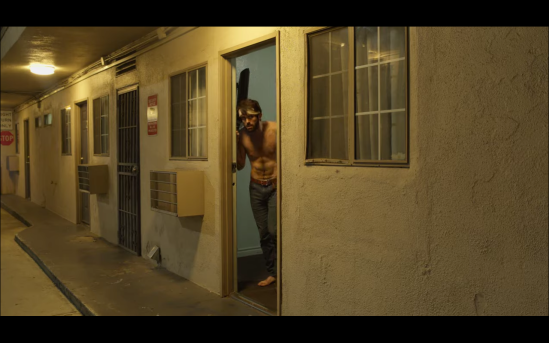
Surrounding the film, it’s been rumored that many actors don’t want anything to do with playing the titular sociopath; perhaps, Dahmer’s past scruples the filling of his size 10 shoes smeared with blood or, perhaps, exploring the dark caverns of his mind was too treacherous to traverse and come out unscathed from a crippling, crestfallen place of trauma.  Then, there’s Jeremy Renner.  Before his fame and fandom from “The Avengers” franchise, even before his breakout role in the pro-cop action blockbuster, SWAT, Jeremy Renner filled those monstrous size 10 shoes in the most quietest of ways, but the Hawkeye star’s skin-crawling version of a notorious killer he eerily takes a resemblance of provided that much more of a tactile insight into Dahmer’s inhuman nature.  Renner carries the film through two stages in Dahmer’s life, one being as an adolescent with homoerotic obsessions and deranged peculiarities whose living with his parents and grandmother while the other is paved by his own hands as an emotionless and manipulative rapist and murderer.  The distinct development is brilliantly illuminated by Renner’s understanding of Dahmer at certain stages of life.  Rounding out “Dahmer’s” cast is a fellow cinematic Marvel comics movie actor in Bruce Davison (“X-Men”) as Dahmer’s father, Lionel, Artel Great whose character is derived from real life Dahmer victim escapee, Tracey Edwards, and with Matt Newton, Dionysio Basco, and the late Kate Williamson adding their supportive performances.

Director David Jacobson didn’t want to explore and exploit the gory side of Jeffrey Dahmer’s tucked away carnage; instead, Jacobson dives into the psyche of Dahmer, molding human emotions around the sociopath who felt inadequate, if not also frightened, of his yearnings that propelled him to do the unspeakable acts of meticulous violence.  “Dahmer” obviously isn’t a true-to-fact biopic, regaling with colorful discourse and captivating with uncomfortable actions as filler to a near Hollywoodize stitching, but Jacobson did sprinkle with truth to fill in the mental gaps with interpretations of Dahmer’s connections with others, from family to victims.  Director of photography, Chris Manley, is able to capture the intensity with contrast lighting between young Dahmer and old Dahmer.  In Dahmer’s young life, the lighting is very natural, very bright, and very normal in a showcase of Dahmer’s mental space and, if we were not already enlightened about the serial killer’s, Dahmer would be just an usual misfit or a closeted homosexual with an obscure inkling to do more malevolency.  Only during scenes of mature Dahmer is the lighting saturated with hazy primary colors of blue, green, yellow, etc. that heighten madness and mark an ominous, dangerous presence inside the gay club or Dahmer’s apartment while everywhere else is in natural lighting.  A good companion piece to “Dahmer” is “My Friend Dahmer” directed by Marc Meyers that sought to visualize High Schooler Jeffrey Dahmer as an outlier spaz who desired attention to the point of making ruckuses in public places with other practical jokers and dived more into his obsession with eviscerating the local wildlife for curiosity and disolving them with his father’s chemistry concoctions, a nice little connective tissue between the two films. Watch Meyers’ “My Friend Dahmer” and Jacobson’s “Dahmer” in said order and while the two films are veritably different in style, each depiction captures a loner at heart with a minacious defense to feel, the very least, something by overpowering-to-death the unsuspecting prey.

Jeffrey Dahmer’s tactics were gruesome, perverse, and unsavory without question, but David Jacobson attempts the impossible of detaching the human from the monster in “Dahmer” that’s now being distributed onto Blu-ray by FilmRise and MVDVisual under their Marquee Collection. The High-Def, 1080p picture is presented in a widescreen, 1.85:1 aspect ratio, from the original 35mm negative film. While the upscaling looks fairly well achieved that seizes to put more life into the coloring, especially with those rich colorful shots in Dahmer’s later years, a good portion of 35mm negative sheens through with hairline scratches and the occasional blip of a cigarette burn. The overall delineation renders nicely with little-to-not soft edges and there doesn’t seem to be any cropping or edge enhancing. The English language DTS 5.1 Surround sound is as equally competent with clarity throughout the vocal track. There was too much depth or range to paint a picture, gaining a win by default with the conversing being held in tightly packed rooms or in extreme closeups of conversating duos. The musical score by Christina Agamanolis, Mariana Bernoski, and Willow Williamson haunts mostly like the caressing sounds of viper’s mellifluous tongue with breathy moans, irregular percussions, and a whisking uneasiness tune that sinks its teeth into you. The soundtrack is mixed with some monotonous club beats, doo-wop, and soft and classical alternative rock that include Patsy Cline, Gladys Knight and the Pips, and Freddie Cannon. Bonus materials are a little antiquated with a making of featurette from back when the film was closer being first released, a behind-the-scenes photo gallery, story boards, a red band and theatrical trailer, and an audio commentary by director David Jacobson and actors Jeremy Renner and Artel Kayaru. “Dahmer” doesn’t need to sell us on the diabolical nature of Jeffrey Dahmer, but what the film does do is formulate a systemic idea of who Dahmer disposes to be, as a loner, as a sufferer, and as a killer, underneath the skin of an average young white male.

Order “Dahmer” on Blu-ray!