

In the small rural community of Devil’s Gate, Oregon, a boy and his mother disappear without a trace. FBI Special Agent Daria Francis spearheads the investigating to atone for a regretful previous child disappearance case. She’s accompanied by a local deputy, Colt Salter, to assist her. During her brief investigation upon arriving at Devil’s Gate, Agent Francis comes to the determination that Jackson Pritchard, the father and husband of the missing boy and mother, is directly involved in their sudden disappearance. The investigation turns from a seemingly straight forward, open and shut case to a colossal mystery that’s beyond their comprehension when arriving at the religious dogmatist’s boarded up and disturbing cladded farm house where unearthly forces lay claim to the Pritchard family home for sinister reasons. With one of the beings caged in his basement, the desperate Pritchard seeks an exchange with the creatures he labels as the fallen angels in attempt to regain his wife and son, but as the night falls, trapping Agent Francis and Deputy Salter with Prichard inside the residence, they become surrounded by the fire in the sky creatures aimed to reap not only the world, but their souls.

Like an enigmatic report straight from the non-redacted portions of a nail-biting X-Files case, “Devil’s Gate” is a we are not alone sci-fi horror film from 2017 under the apocalyptic eye of director Clay Staub and co-written by video game plot scriber, Peter Aperlo. The considerably financed project is the first feature film for both filmmakers in their respective roles with Staub having served as an assistant director on other paranormal plotted projects like Zack Snyder’s heavily praised remake of George Romero’s flesh-eating zombie classic, “Dawn of the Dead,” and Matthijs van Heijningen’s underrated “The Thing,” a prequel to John Carpenter’s film of the same title. One quality that we can all can be pleased about is that Staub carries over from his previous experience as a genre filmmaker participate is the use of gore in the “Devil’s Gate” because, honestly just by looking at the cover and reading the plot, the bloodletting expectation was low on the totem pole. Staub doesn’t unload a gratuitous splatterfest of alien and human entrails, but subtly sanctions the right amount of extrasensory chest bursting and finger snapping goo that plays an ill-fated role of circular or motivational circumstances for the characters.

Putting the pieces of the Pritchard mystery together is Agent Francis who is a to the point and tough national law enforcement officer with a bleeding heart complex after her very first assigned case went tragically sour that looms an unexplainable root cause cloud over her straight blonde hair. Desperate to cure her past, Agent Francis rushes into Devil’s Gate, bypassing the notable chicken fried steak meal offered by Deputy Salter upon her tarmac arrival and defying the local Sheriff’s heed to not interview husband Jackson Pritchard, that sorely causes her to land in the virtually the same predicament of just trying to get the right thing done no matter the unclear ancillary evidence. “12 Monkey’s” television star Amanda Schull spearheads the character with the characteristics aforementioned with drab appeal, lacking the emotion and the intensity her character is supposed to be exhibit when trying to solve a case of personal redemption as well as the fear from an higher ominous power that can shoot lightning down from the sky and flash velociraptor toe-claw sized fangs. Colt Salter might be a small time, Podunk deputy, but the born and raised Devil’s Gate officer can match wit with his FBI counterpart. Salter strikes me as a character who doesn’t stray far from home, mentioning various times, in various ways, his parallel path to high school friend Jackson Pritchard. Shawn Ashmore, from Joe Lynch’s “Frozen,” opposites his costar Schull like Mulder and Scully type as well as an all-around good guy who happens to stray from his protocol path once Agent Francis puts her federal fingers into his already investigated investigation. Like his performance in “Frozen,” “X-Men” franchise, and even in FOX’s television thriller “The Following,” Ashmore is a pretty solid actor, showing a range of emotion that transcends him from easygoing deputy to mortality fearing when mankind’s on the verge of extinction comes into the equation. An equally solid performance by Milo Ventimiglia, who recently starred in “Creed II,” really sells the crazy portray by Jackson Pritchard, a God-fearing man with a long lineage of misunderstood family heritage that leads him to the uncanny bombshell that has been bestowed upon his family farm. Ventimiglia, in his roughest, toughest country twang, creates such an anxiety-riddled and frantic character that unravelling his fate is not too clear which is refreshing to be able to retain mystery to a role as we can kind of figure out how Agent Francis and Deputy Salter when fair in the end game. Rounding out the cast is Bridget Regan (“John Wick”), Javier Botet (“Slender Man”), and “Star Trek: The Next Genergation’s” Jonathan Frakes, still sporting that iconic beard even if it has grayed, as the town Sheriff.

In spite of some really cool visuals, especially of the man underneath the mask, Javier Botet, inside a ghoulishly white extraterrestrial suit that only his elongated and thin body (and perhaps also Doug Jones’) could snuggly fit into, “Devil’s Gate” tells a narrative that hails from a lot of re-spun material. Whether intentional or not, viewers more than likely won’t be able to help themselves as they’ll eagerly point to the television screen and say, ““Independence Day” did that first,” or exclaim, “didn’t Donald Sutherland star in the same kind of thing???” I know I did. However, Staub and Aperlo don’t completely ape the concepts that surely haven’t inspiring them, making the effort more endearing, and visually crafted a well-blended plot into an enjoyable and captivating story; a story that has been mostly devoid of underlining messages and symbolism other than the themes of religious zealots are extremely bad for the world and living with past regrets can be hazardous for your health if not properly accessed. “Devil’s Gate” focuses more directly on just entertaining another version of visitors from another world and how those no-so-little-green-men play an assimilating role into humanity.

Umbrella Entertainment releases “Devil’s Gate” onto a region 4 DVD presented in widescreen 2.35:1 aspect ratio. The vast Midwestern landscape with the foreboding rolling clouds stretches from top to bottom with an exact sharpness and crisp from the digital picture. The textures in the broad, yet barren-esque fields look especially detailed, more so with the wind and brownish-yellow color. Speaking of color, the hue is a filter of shadowed purple and on a sepia side that works the dread atmosphere. The English 5.1 Dolby audio track has ample range and depth. Lightning strikes boom equally from the five channels, alien shrieks trembles through, and the dialogue is not obstructed. Surprisingly, there are no bonus features with this release as the Stateside counterpart even has a trailer in the extras. There isn’t a static menu either as the film goes right into play feature mode. c
Category Archives: Chilly Thrilly
Time Travel to Stop Evil via Astral Projection! “Mandao of the Dead” review!

Astral projection defined per Wikipedia: an interpretation of an out-of-body experience that assumes the existence of an “astral body” separate from the physical body and capable of traveling outside it. The otherworldly experience befalls suddenly upon Jamison Mandao, a young man living off the royalties of his late father’s flailing popular cereal brand, and his recently discovered, and also bewitching, new astral plane exploring powers land him in a macabre laced predicament with his adult squatting nephew, Jackson, and his nephew’s blood hungry, murderous ex-girlfriend, Maeve. With a little help provided by Jamison’s astral enthusiast relative, cousin Andy, and Maeve’s recent victim whose ghost is stuck in limbo, Jamison must use his astral projection to travel back in time, rearranging the series of events in order to not only appease the desperate pleads of a ghost, but to also save his daft, but good natured nephew becoming her next hapless fatality before the stroke of midnight segueing into the Day of the Dead when their chance to live again will rest in peace for eternity.
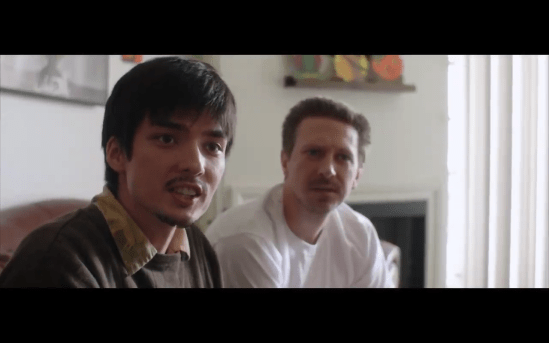
Here we go again with a time traveling genre film, the horror-comedy “Mandao of the Dead” from writer, director, and star Scott Dunn. Dunn’s sophomore feature film of 2018 dares the chances in being overly and, frankly, unnecessarily lambasted by internet trolls aiming to pick apart the film, hunting vigorously for time travel plot holes, but, and I reiterate this point again, that Dunn’s film is mainly a comedy where the laws of physics and ideas of probability have no bearing on Dunn’s grim fantasy loop. Despite the rather clichéd title suffix implying a facet from the zombie genre, “Mandao of the Dead” refers toward the post-Halloween, more traditionally Hispanic recognized Day of the Dead on November 2nd and while Dunn uses the day typically held for respect of past lives, the “Schlep” director conjures up a lively twist upon deathly circumstances that forms a cut-off date when that slither of twilight time for the dead ceases to be no more.

Alongside Scott Dunn as Jamison Mandao, Sean McBride buddies up as the freeloading nice nephew, Jackson. Dunn and McBride have previously worked together in Dunn’s first feature entitled Schlep and their rapport in “Mandao of the Dead” indubitably confirms a harmonious witty banter and a light-hearted dark comedy in fine, mechanical form. McBride’s spot on heartfelt halfwit Jackson nicely compliments Mandao’s knack for impatient contemplating. Throw a dude name Darth into Jamison and Jackson’s inert existence and things get dire and interesting. “2-Headed Shark Attack’s” David Gallegos isn’t portrayed as your friendly neighborhood ghost nor is he a malevolent one; instead, Darth begs for help and the cosmic universe delivers to him an astral projector and Gallego’s couldn’t be more sharply colorful with his spontaneous humor. Together, the three 30-something year-olds are pitted against the dark horse that is Maeve. Playing an incognito blood drinker, Marisa Hood has an innocence about her that renders a false sense of security and, in Jackson’s case, a pair of weak knees. Alexandre Chen, Sean Liang, and Gina Gomez round out the cast as characters finding their ways into the Day of the Dead debacle.

While we’ve seen where timelines become mangled by the interference of a time traveler and where the theme is fondled with in “Mandao of the Dead,” Dunn doesn’t over knead the narrative with it though certainly a centerpiece of the film as a whole. Mandao’s adventure with astral projection and his middling with the planes are only the beginning that have stirred a frenzy of unhappy campers in the spiritual world. The whole event of Mandao going back in time, twice, to save people is the proverbial tip of the iceberg and a welcoming taste of what’s to come from Dunn and his team. Shot in 10 days with a tight budget, Dunn, who also self-produced and edited the final product, has crystal clear storytelling abilities even with some of the rough, less glamourous edges encompassed within the world indie filmmaking. The characters are well written, from Cousin Andy, to Jackson, and to Darth, as their three various personalities colliding under a thin, blurry gothically influenced omen line.

“Mandao of the Dead” arrives onto Amazon Instant via Prime Video and presented in a widescreen, 2.35:a aspect ratio, and clocking in at a runtime of 74 minutes. No physical media specifications were provided now or for future release. With a budget around $13,000, the English stereo audio track and Panasonic GH5 image quality are finely calibrated and a flat out success for streaming platforms. No bonus features are included with this release. Vampirism, science-fiction, spirits, and astral planes, “Mandao of the Dead” is Scott Dunn’s golden genre-bending film of ghoulish and space and time continuum disproportions! So much so, a sequel has been announced, “Mandao of the Damned,” sparking a positive anticipated interest, by at least this reviewer, for the next chapter of a hapless, macabre adventures that Jay Mandao and Jackson will step into in the next astral plane!
Evil Asks, Why Haven’t You Checked the Children? “When A Stranger Calls” and “When A Stranger Calls Back” review!

High schooler Jill takes a babysitting job, overseeing two sleeping children while the parents have date night. The phone rings and an assumed prankster tries to scare Jill, either asking why she hasn’t checked the children or doesn’t say a word, but as Jill fields calls throughout the night with the same terrorizing voice, the terrified sitter phones the police whom trace the call from inside the house. Jill barely escapes the deadly encounter that left two children victims to a psychopath; yet the now happily married, mother of two small children is faced with the same killer seven years later after he escapes from a mental institution. Hot on his trail is detective turned private eye John Clifford who will stop at nothing from stopping a maniac who will kill again. Years later, Jill and Clifford team up once more to investigate a similar case of a co-ed being specifically terrorized by an obsessive stalker through the span of five years to the point where his next move could be her last.

Perhaps one of the best, if not the best, openings to a horror movie ever, Fred Walton’s “When A Stranger Calls” puts a freeze on the heart, forces to choke down the breath, and tightens the already painfully clenched fists with sheer, thick tension bred from an urban legend of the babysitter and the man upstairs. Walton, and co-writer Steve Feke (“Mac and Me”), develop two successful thriller from script to screen, spanning over the course of 14-years. Walton’s uncanny ability to invoke fear through a conduit of simple objects, such as a telephone ring or in the thicket of dead silence, and leading a direction of motivational hesitation or slowness to the story and through it’s characters is dread absolute. There’s similarities between Fred Walton and “The Driller Killer” director Abel Ferrara with a scent of realism and grittiest blanketed with a knack for the abstract in certain facets. Though slightly fluffier to Ferrara’s shock value, Walton builds anticipation in not just his hit first film in 1979, but also in his made for TV movie in 1993.

Starring as the lead in both films is Carol Kane. The “Scrooged” actress shells out a white knuckling performance in Jill, the terrorized babysitter phoned inside the house by man upstairs. The harrowing night that will scar for Jill for life will continue through into the sequel, “When A stranger Calls Back.” As Jill grows through both films, so does Kane who builds the character a tougher exterior to match wits with second psychopath stalking a hapless co-ed. She’s teamed with legendary actor Charles Durning. Essentially in Walton’s “When A Stranger Calls,” Kane and Durning never have any scenes together, performing in almost two separate stories until the climatic that intertwined that collaboration. During’s a fine actor and can be the bull of any detective and/or private dick lead, but, to be honest, Durning always carried a hefty, front-heavy load that didn’t quite fit his character, John Clifford, chasing on foot a much leaner foe. “When A Stranger Calls” cast also includes Ron O’Neal (“The Final Countdown”), Tony Beckley (“In the Devil’s Garden”), and Colleen Dewhurst (“The Dead Zone”) while “When A Stranger Calls Back” also includes Jill Schoelen (“The Stepfather”) and Gene Lythgow.

A fleeting glimpse of brilliancy can go relatively unnoticed in Fred Walton’s “When A Stranger Calls.” Much of what makes the film so effective is essentially obsolete; for example, rotary phones are dinosaurs or even landlines for that matter. Also, the way Walton breaks up the film into a definitive three separate acts perfectly stretches the urban legend much more than warranted and the director also completes the story and character arcs. Dana Kaproff’s sophomore score can be characterized as menacing, suspenseful, and aesthetically unfit to the point of inspiring dreadful sensations that heighten the story’s already engrossing nature. In “When A Stranger Calls Back,” the opening is basically a mirror image of the original film with a slight (of hand) change and the narrative itself is captivating enough to get engrossed with, but there’s something about the made for TV movie that doesn’t quite sit right. Perhaps, the killer’s underdeveloped motives doesn’t make things crystal clear or just maybe the killer’s use of a ventriloquist and body art into his perverted and obsessive arsenal is too zany. Despite being a made for television movie, Walton’s followup film was premiere on Showtime back in 1993, giving the movie a not-so-diluted and PG-13 appeal; instead, bits of grittiness and some strip club nudity rivals the tone of it’s predecessor.
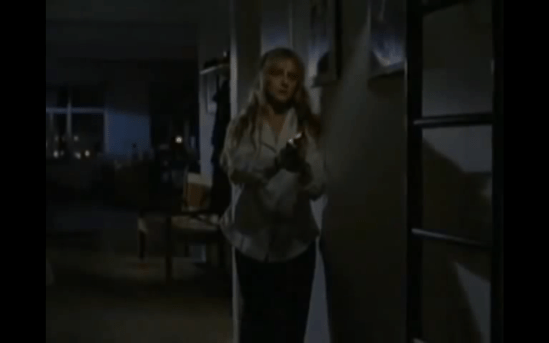
Second Sight presents “When A Stranger Calls” and “When A Stranger Calls Back” double feature on Blu-ray home video in the United Kingdom. Despite the upgrade, a DVD-R was provided for the review so technical aspects will not be reviewed. The disc did include bonus features such as Fred Walton’s inspirational short film “The Sitter” and interviews with director Fred Walton, Rutanya Alda, and Dana Kaproff, and Carol Kane. Carol Kane has more recently been the quirky and city-salty landlady that’s quick to whip sarcasms and clobber any hipster with a gentrifying agenda with a baseball bat in “The Unbreakable Kimmy Schmidt,” but Fred Walton saw Kane for how the actress could truly perform under a realistically terrifying moment, a moment that savors being on tenterhooks and frozen in time for almost the last 40 years as a classic and iconic scene in horror movie history. “When A Stranger Calls” and “When A Stranger Calls Back” is simple, yet deploys effective thrills with pure impending loom and dread in massive, lucrative quantities that may have been antiquated by time, but is epitomized as vintage and elegantly construed horror.
An Evil Stare Conjures a Peeping Tom! “Butterfly Kisses” review!
Struggling filmmaker Gavin York discovers a stowed away box full of film cassettes in his in-law’s basement. As York delves into the tapes, he becomes obsessed with the tapes’ contents involving two film students documenting the evoking of localized folklore phantom, known as Peeping Tom, as their thesis. Capturing Peeping Tom on their camera acting as a human lens, the two students can’t escape the malevolent presence that gets closer and closer to their reality with every shutting off the camera. York, himself, is also being documented by a group of filmmakers, attempting to capture the far-fetched story of Gavin’s unravelling of the historic legend as well as to turn a profit in revealing that Peeping Tom does, in fact, exist. The two tales of filmmakers ride a distressing parallel that spirals them into ghastly obsession and forces them to never, ever blink again!

“Butterfly Kisses” is the 2018 supernatural faux-documentary from writer-director Erik Kristopher Myers. The “Roulette” filmmaker finds inspiration in Ellicott City, Maryland’s, very own, staring contest champion in Peeping Tom; a 16th century labeled example of a Flickergeist, a shadowy image just on the edge of the peripheral vision, and Peeping Tom also goes by the monikers Blink Man or The Tunnel Man. “Butterfly Kisses” title comes as when Peeping Tom gets closer with every blink of an eyelid, his victim will need to painfully keep their peepers open for as long as they can, but when Peeping Tom is so close, close proximity to the face, flutter’s his eyelashes against her eyes forcing one to blink and succumb to his deadly motives. With Myers’ film, a little bit of this reviewer wanted to see Peeping Tom actually deliver the act of butterfly kisses upon a victim before mangling the poor soul into oblivion.

While both documentaries involve shedding light onto the exposure of a Flickergeist, the narrative harshly shines more of the starlight onto the characters making these films. Gavin York is essentially dissected while he being self-absorbed in himself and his dollar signs he thinks his project is worth to the word. Seth Adam Kallick does Gavin well though perhaps slightly overselling the performance; however, there never was a deeper rabbit hole for York to escape from, leaving not a lot of range for Kallick and his character to arc. York studies and analyzes the original thesis film spearheaded by Sophia Crane, played by Rachel Armiger, and her cameraman Feldman, played by Reed DeLisle. The dynamics are fine between Armiger and DeLisle whom poke the bees nest of folklore legends, but moments to reflect their humanity, why should we care about these two characters as people from abandoned or forgotten footage, didn’t quite translate. Rounding out the cast Erik Kristopher Myers, Matt Lake (Author of the “Weird” state book series), and Eileen del Valle.

The documentary inside a documentary is like looking into a mirror that’s facing another mirror, ping-ponging back and forth between parallel stories that are only set a part bestowed year their recorded while peppering Peeping Tom true to form, as a flicker of a shadowy figure. Myers does his due diligence in editing these two films together, meshing appropriately the intertwining, sometimes combating, docs to find common ground in a linear story. Sometimes the realism just didn’t hit the mark and creating that casual dialect or the valueless moments didn’t blossom, staying focus more on the task at hand. Also, this narrative has been told and rehashed before in some way, shape, or form, whether hunting the legend of Bigfoot or summoning the Slender Man, finding separation between Myer’s film and those other project proves difficult. What’s enjoyable about “Butterfly Kisses” are the welcoming jump scares and while only a couple of jump scares make the cut, the two are well-timed, well-scored, and well-placed to send a shockwave through out the nervous system. Even I jumped on these scenes.

Four-Fingered Films presents Erik Kristopher Myers’ “Butterfly Kisses,” a supernatural documentary that explores a national, Great Depression-born, folklore bred in Maryland and depicts a contagious obsession of stubbornness and worth. Unfortunately, an online screener was provided for this critique so the audio and video aspects will not be reviewed. There were also no bonus material with this screener. “Butterfly Kisses” is a quasi-found footage spook show surrounding another of America’s frightful urban myths, granting Peeping Tom more staying power just inside the corner of our peripheral vision, but the film doesn’t quite highlight and tour the reason or the rhyme to Flickergeist’s true power. Myers chose to detail the downward spiral of those consumed by the sight of his very questionable existence in more than one profitable fashion and that can be more frightening than the realism of a ghoul.
Did Evil Put You On It’s Will? “Next of Kin” review!

After the untimely death of her mother, Linda returns from her university studies to reacquaint herself with the inherited Montclare, a home for the elderly her mother owned and operated through the decades as a family business. As she internally debates about whether to sell the grand, yet antiquated estate, 24-year-old Linda shuffles through her mother’s left behind things that rekindle Linda’s faded memories of her youth and add a sense of melancholy about her mother’s mental condition. A seemingly quiet, if not quirky, home for the elderly quickly becomes shrouded with mystery after the discovery of one of the residents found dead in a bathtub. Soon after, Linda feels as if she’s being watched and toyed with inside the corridors of Montclare: candles found lit, bathroom fixtures overflowing and cascading with water, mysterious figures looming from inside her room’s window, and her mother’s belongings sprawled out about the room. Paranoia sets into Linda as she suspects the resident caretaker and doctor of a lethal plot against her inside an old, foreboding manor that troubled her mother into deathly consequences and she searches for answers inside her mother’s extensive diaries that reveal the ominous dread that overwhelmed her inside an evil house.

“Next of Kin” is Australian’s answer to Dario Argento’s hauntingly apprehensive and vividly hued classic, “Suspiria.” Directed by Tony Williams and co-written with Michael Heath (“Death Warmed Over”), “Next of Kin” embodies monolithic brooding merits of a gracefully shaped horror and palpitating anxiety unlike any other Australian horror film we’ve ever seen before. In fact, Williams 1982 film doesn’t feel very Australian at all that’s set chiefly in and around Montclar, a lavishly gothic estate with expensive fountains and floral garnishes. Aside from native accent and barely a dusty road to drive down, the country of origin could be anywhere, punching home the aspect that the incident at Montclar is universal. Looking into a couple of their techniques, Williams and cinematographer Gary Hansen (“Image of Death”) utilize slow motion and interlaced scenes to convey a surreal dread that transcends from film to senses, also involving disruptive audio cues and visual jump scares, to culminate every scene, ever moment, into a well thought out result on how to effectively reach out and affect that scared little boy or girl in all of us.

Primarily a television and mini-series actress, Jacki Kerin sets foot into the main actress Linda. Kerin’s able to flip emotions from emitting a passive quality while she seemingly annoyed by her mother’s death while switching gears into a hyper-tensive defender. The small screen actress translate well onto the big screen, accompanying well versed thespians in “Picnic at Hanging Rock’s” John Jarratt, who went onto to more notably the “Wolf Creek” franchise. There’s also Alex Scott (“The Abominable Dr. Phibes”) and Tasmanian-born actress Gerda Nicholson. Scott and Nicholson do a fine job of portraying un-trust worthy snoops with underlining knowledge yet to be exposed and with Kerin, the fear goes unopposed and spreads like wild fire. the remaining cast includes Charles McCallum, Bernadette Gibson, Robert Ratti, Vince Deltito, and Debra Lawrence.

Practical effects are minimal in “Next of Kin,” but are well integrated with a meticulous purpose. Williams maintains the gore to an infancy amount, but the New Zealand born director doesn’t nickel-and-dime the macabre. Much of the death displayed comes in at post-humorous, visually positioning the cold and blue hued, more at times ripped life from, bodies to vessel the story forward toward a shocking, what-the-hell, and oh glorious climax. Then, when all the proverbial cards on the table, Linda finds herself ensnared in a cat-and-mouse game where Chris Murray’s practical effects come to the forefront. Special effects maestro, Chris Murray, had the George Miller experience while working on “Max Max” in 1979, prepping him to be the adequate effects artist to create surreal and, also, brutal Giallo-like murder.
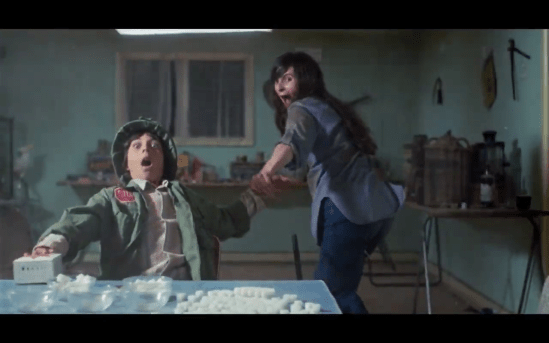
Umbrella Entertainment presents Tony Williams’ “Next of Kin” onto a region free, full HD 1080p Blu-ray home video. An Ozploitation classic in itself, Umbrella Entertainment puts the film on a home media pedestal with a remastered 4k transfer from the original 35mm interpostive and presented in a widescreen, 1.77:1 aspect ratio. Beyond gorgeous with lush grim colors and able to keep the natural grain of the 35mm nitrate, “Next of Kin” sees one hell of an upgrade that shows no wear in the transfer and no compression issues or edging enhancements. Even with the heavy blue tint at time, the amount and the use is appropriate alongside Gary Hansen’s vision. The new English DTS-HD master audio emphasizes the heavy synthesized score by German electronic music composer Klaus Schulze that meshes fine with the creepy house ambiance. Dialogue is properly forefront and crystal clear. Special features run amok with audio commentaries with director Tony Williams, producer Tom White, and with cast members John Jarrett, Jackie Kerin, Robert Rattie. Also on the release is a “Return to Montclar – Next of Kin” shooting locations revisited, extended interviews from “Not Quite Hollywood” director Mark Hartley, deleted scenes, original and VHS trailer, German opening credits and trailer, an image gallery, and a couple of Tony Williams’ short films: “The Day We Landed on the Most Perfect Planet in the Universe” and “Getting Together.” “Next of Kin” has a brawny Italian Giallo flavor with a gritty, distinctive core of Australian horror filmmaking; sheerly beautiful and indisputably morbid, director Tony Williams has garnished a choice horror favorite that’s been sorely passed over through the years.

