

Alkis Vidalis made friends while serving time in prison. Friends, in the very loose sense of the word, with a corrupt and wealthy businessman, Daniel Bezerianos. When Alkis’s freedom is granted, he’s quickly picked up by Bezerianos’ gangster enforcers to contrive a public viral video with Alkis delivering a verbal message that would exonerate the still imprisoned crime boss and put the blame solely on a rival kingpin, Joseph Forkou. Held in Bezerianos’ rural porn studio building, Alkis commits to the plan that will, for now, save his own skin and as he’s going through the numerous takes to get an absolute resounding performance that will surely free Bezerianos, in the back of his mind, he knows will be undoubtedly be disposed of once his use to Bezeriano has dried up. Alkis’s fight tooth and nail survival and plan-as-he-goes quick thinking must ensure his fate through a multi-level building and a slew of heavily armed henchmen from two criminal factions who all want him dead before the video is uploaded to the internet cloud.
Not many Greek films come across my desk as a reviewer, but when they do show up at the door or in the mailbox, extreme anticipation salivation to pop the disc in the player and hit play begins its rampant course through the core of my body and shoots straight up to my bloodshot eyeballs. Dimitris Tsilifonis’ “Do It Yourself” is no exception as the 2017 action-thriller challenges us to take matters, big or small, into our own hands when push comes to shove and backed into a corner. Written and directed by Tsilifonis, the filmmaker takes the point in his first feature opportunity, aiming high and executing a non-linear, non-formulaic storyline that will keep viewers guessing how, what, when, why and who. “Do It Yourself” seizes the system as a calculated thrill ride that’ll entertain, equaling the same amount of narrative hip-slinging causticity of the last Greek film ventured by Its Bloggin’ Evil, a zomedy known as “Evil: In the Time of Heros” starring Billy Zane and directed by Yorgos Noussias.
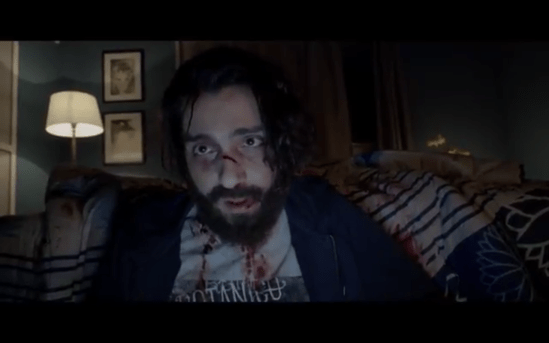
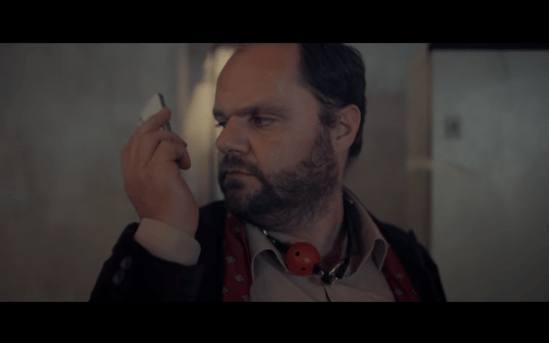
As a small time pawn, Alkis Vidalis has prowess in formulating plans quickly; they may not go accordingly and he may break a nose or a leg in the process, but Alkis, like a cat, always seems to land on his two feet when in a skirmish with hired henchmen, coming out bloody but on top. Alkis isn’t a killer but has to become one in order to survive and even though he’s the central character to the story, mystery shrouds around him in what drives the favorable anti-hero to not cower and stay alive other than pure, animal instinct. Konstadinos Aspiotis has the chops to bring Alkis to the screen and express that oxymoronic quality of unsure confidence in Alkis’s mob misadventure. Tsilifonis writes voice over monologue in Alkis’s voice, as if he’s telling a story to the audience, for exposition purposes that describe the setup and the characters which fundamentally weakens the film, but for this particular tale, the voice over monologue is warranted. Aspiotis has numerous interactions with various characters but more so with Makis Papadimitriou as Peter, a low-level enforcer trying to make a name for himself. More like a caretaker than an enforcer, Peter has one job: to make Alkis think they’re friends and then kill him. However, Peter, who isn’t necessarily a screw up, fudges his task and caught in one of Alkis’ fly by the seat of your pants plans. The character is etched with more a selfish attitude toward everything when the tables turn on him and Papadimitriou cultivates all of Peter’s self-regarding desires into the correct power and survival categories while his dynamic with Alkis is looking at himself in a mirror. They mirror so much so that both characters receive their own perspective of the same event. Other characters intertwine with the two leads and they’re played by Mirto Alikaki, Christos Loulis, Argyris Xafis, Panos Koronis, and Themis Panou.
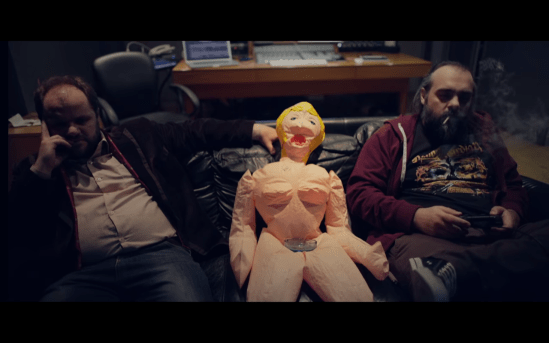
Tsilifonis script has an affinity for pop culture, referencing various films and TV shows by name, such as Martin Scorsese’s “Goodfellas” or HBO’s “Game of Thrones” for example, to juxtapose events and/or characters on a mafia level. Films and television shows are not alone in this homage of iconography as social media websites and their viral and trendy sensations are integrated into the script as table talk conversations. 4chan, Youtube, and The Fappening are particularly referenced when the editor of Alkis’s testimony, also a porn editor with an inflatable sex doll, finds the conservatively torrent side of Google’s acquisition of Youtube distasteful for edgy content and the humor in the bare exposures of star-studded private lives and photos with 4chan and The Fappening while thumb jockeying a Playstation controller in midst of conversation with Peter who seems relatively neutral about these things. Even though suavely placed, “Do It Yourself” frequently uses the pop culture tag words in excess that render them redundant and tiresome that when in retrospect, Tsilifonis could have completely omitted them and “Do It Yourself” can, well, do it itself. The only other gripe with “Do It Yourself” is if the plot takes place entirely in a porn studio, then where was the nudity? Am I wrong?
Artsploitation Films delivers another knockout thriller title from their eclectic catalogue with Dimitris Tsilifonis’s “Do It Yourself” on DVD home video, presented in an anamorphic widescreen format, 2.39:1 aspect ratio. Between Aggelos Papadopoulous’ depth defying photography and the impressive visual effects that flawlessly moves and puts a building in the middle of nowhere, the transcendence image quality is one with this release as it’s practically impossible to conclude what’s real and what a visual effect. Other visual effects of displaying Ikea like instructions on the side of a building, showing the cell phone screen next to Alkis, or having subtitles embedded into portions of the wall are unique and clever, but too far and in between that ends up being an inconsistent inconvenience. The dim tint sets the tone while still mastering the color palate. The Greek language Dolby Digital 5.1 surround sound allows you to hear every glass break, every ping of a bullet ricochet, and every guttural and verbal echo in the reverberating car garage through the five channels. The prominently Greek with little English dialogue is in the forefront amongst a well-balanced range and depth of sounds like hearing the muffled voices behind glasses, the soft moans and groans of porn actors behind the fake walls, and, on the other side, the high squeal of a racing tire wheel. Bonus features include a three small featurettes that revels how the camera shot elevated up from ground level to the top, another was the visual effects breakdown in creating the building structure, and the last being two deleted scenes. Dimitris Tsilifonis’ has a commentary track and 14 minute short film “The Way of Styx” is also available. “Do It Yourself” is no Bob Vila special on how to repair the seeping drips from a leaky sink with your own two God-given hands, but the Dimitris Tsilifonis film bustles with fun in a deluge of crime and betrayal and that, my friends, is a priceless enlightened experience.
Category Archives: Chilly Thrilly


Evil Loves a Good Plot Twist! “Open Wound” review!
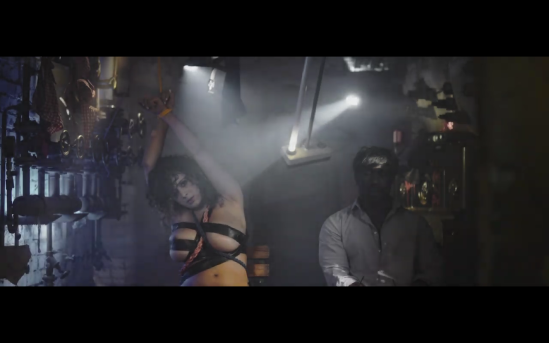
In the moments before attending a pool party, apparent strangers-to-acquaintances, a distinguished, if not quirky man and a promiscuous, self-involved German woman, withdraw to a secluded building in order for the brazen woman to shave the bikini line exposed excess hairs before strapping on a suit. Their intricately deep discussions about desires, sex, and kinky foreplay fair nothing more but course, blunt banter between two familiarities, but when the woman pretends she must be tied up and punished for playfully biting the man’s ear until bleeding, the next few moments after fall into a state of obscurity of a he said, she said rape accusation. As confounding declarations are made and fingers are being pointed to decimate lives, a sack of deceptions and an abundance of threats accrue through a blackmail scheme and an abduction based vendetta. Nothing can be certain and no one can be trusted between the two, but one thing is definite, a third man watching from afar has nefarious plans of his own.
Like sitting front row at a bastardized version of an off-broadway show, “Open Wound” is an immaculate stage performance of battered psychologies and visceral deceptions from writer-director Jürgen Weber. The thriller, also known as “Time Is Up” or “Open Wound: The Über-Movie,” measures extreme lengths of human bitterness while constantly shapeshifting into plot twist after plot twist aggregated with clusters of popup violence. The Chinese born Weng Menghan, under her moniker Tau Tau, is the financial backer of “Open Wound. The globetrotting author makes her breakthrough imprint into the feature film business that modestly begins with an opening scene about anal sex among other verbal sexual references before man versus woman fisticuffs and a pivoting third act that rapidly alters character compositions into, essentially, a free for all. So metaphorically speaking, a Chinese producer walks into a bar, sits onto a stool next to a German director, and orders one of the more absorbingly chic cocktail thrillers in English. “Open Wound” is a melting pot of cultural influences and a display damaged egos that’s simply brilliant.
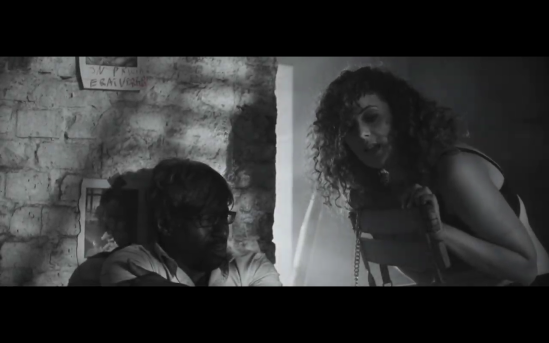
“Open Wound” has a short character list comprised of three characters. The first is woman who is introduced first, or rather her lips do when she declares her love anal sex and the parallel criteria for types of cars in one man’s garage, as she’s using a straight razor to trim the dark haired pubes from her bikini line. She oozes eroticism like a bodily fluid that gravitationally seeps from between the legs, spilling innermost desires, whims, and historical sex-capades with in a philosophical prose. #Nippelstatthetze advocate, German podcast expert, and stunning model, Leila Lowfire engrosses herself into the role of fierce, proud, confident, and strong woman. With an established vigorous sexual prowess, Lowfire culminates the femme fatales and breakneck show-stoppers female roles, notably similar in Quentin Tarantino movies, with high-brow tastes and a debasing reprove. Lowfire’s accent is low and thick and can be considered her weakness here as getting your brain to interpret the fluidity of the words, structures, and compositions is undeniable challenging at times, but acts upon fervor while in her lingerie or even topless throughout the film. The contrast against man is stark. His introduction paints him as unequipped, socially inept, and hopeless desperate. Man longs for Woman, but knows he doesn’t have a chance with her until she offers up a random game of role-play that inevitably leads to disarray. Jerry Kwarteng’s man performance is systematically peerless and a complete joy. Even if the character lacks depth, Kwarteng’s range is devilishly good with the only comparison coming to mind would be James McAvoy and his multiple personality disorder in “Glass.” Once Man and Woman comes to terms after a back and forth bout with dominance, the Suicide King’s grand appearance bestows upon the plot an even bigger, clunkier monkey wrench. The Suicide King’s an ex-con, looking for revenge in a small vat of acid, and his mark and him have a long, complicated history which parts personally shock the other. Erik Hanson’s raspy voice, feeble appearing physique, and lofty age has a second row seat to his character’s unwillingness to die, in a slick performance that’s part nihilist and part psychotic to which Hansen pulls off.

Weber’s choice toward “Open Wound’s” narrative layout conflicts with how the DVD release is specifically marketed. “Open Wound” rides the dark comedy pine that is peppered with black tongue-and-cheek dialogue and violence and as will be noted later in the review, the advertising depicts something far more extreme and graphic. On the shock value scale of one to ten, “Open Wound” hovers around a solid five and maybe a seven or eight for the casual popcorn viewer and, personally, I don’t believe “Open Wound” was intended to be a source of utter distress and visual barbarity. There’s brisk lighthearted comedy that softens the blunt force. For example, in the room with the Man and Woman, a record player will every so often, to comically assist in explaining the actions, play the cheesy tune of lounge background music with a singer narrating the character’s every move and also be the voice of between chapter contention or bewilderment. The singing is privy to only the audience just as the twelve chapter titles that offer a mixed bag of sequences that interchange between English, German, and Chinese title introductions, a toilet paper title card in reverse action, and an artistic rendering of chapters titles and just like his title card introductions, Weber also utilizes an assortment of styles to tell his story, whether be a 5 minute sepia, nitrate film burn effect, or day dream sequence, that peers the sudden twists and eruptive chaos between the characters. While the effects work to sensationalize the context, they tend to be equally be nauseating and annoying as a disruptive structure that seemingly doesn’t make sense to the naked eye.
MVDVisual and Wild Eye Releasing distributes Jürgen Weber’s “Open Wound” onto DVD home video as the the 11th spine feature under the Wild Eye Raw & Extreme sub-label. The DVD is presented in a widescreen format and the image quality holds up well, withstanding Weber’s bombardment of stylistic techniques of distortion, over exposure, sepia, and contrast. There’s a little softness around the skin, more noticeably during facial close ups, with a slightly lower bit rate in the compression but still very agreeable detail. The stereo two channel audio channel does the job, but has flaws with Weber’s score have an equal playing field with the dialogue tracks. The audience already has to manage Leila Lowfire’s thick German accent and their ears will also need to try and filter out the soundtrack that’s invasive upon the colloquy. Not much range to warrant mentioning, but the depth was well tweaked amongst Weber’s visual compliments. There are unfortunately no bonus material with the feature, but the DVD reversible insert is graced with a semi-naked and bound Leila Lowfire. “Open Wound” is dangerous, sexy, thrilling, and complicated to say the least, but stamped as a Raw & Extreme film it should not; however, see this film! Director Jürgen Weber’s visionary molotov cocktail of a story is an underground must for arthouse lovers and noir enthusiasts.


Being a Gracious Host Goes Well with an Accompaniment of Corkscrew Evil! “The House” review!

Set inside the conflict of World War II, a strayed former SS lieutenant and a German paratrooper must band together and escort a Norwegian captive through the snow covered forest of the frigid Norwegian mountains. Venturing through the cold and soulless landscape, the lieutenant is baffled by his bearings as his map doesn’t correlate with his surroundings, the sun is positioned at the opposite direction, and their compass points in the wrong direction. Faced with the possibility of gangrene and hypothermia, the lost combatants are forced to take up camp in a seemingly abandoned house that fly’s a hoisted Norwegian flag and has a pot of stew left simmering on a stove burner. Their already puzzling arrival into the residence is also met with unexplainable occurrences that place the extremely cold and weary soldiers even more so on an overwrought edge as they continuously search the house of presence telling life signs. Shadows and sounds trick their senses, soon realizing that the cozy confines are an inhospitable prison and with the deadly cold nipping at the doorstep, the soldiers are left with no choice but to face a sinister absence of time inside a hostile house that toys with their psyche and questions their own mortal existence.

Quickly becoming Norway’s prominent horror filmmaker, Reinert Kiil found success with his controversial and provocative “Whore” films and had a well-received review at Its Bloggin’ Evil for his cheerfully grisly, holiday slasher classic, “Christmas Blood.” Artsploitation Films continues to wholeheartedly support the Norway born director with his next venture, the supernaturally-charged possession of a home-sweet-home feature entitled simply “The House’ or “Huset” as titled in the original tongue. Kiil typically trends with shock horror, but with “The House,” there is an expansion upon his range as a filmmaker while remaining in a field he’s finds most endearing, pulling inspiration from his childhood memory vault of B-movie horror schlock and nostalgia grandeur, and dapples with replacing his guts and gory showmanship with slowly developing and instilling fear, especially with fear of the unknown and fear of change. Audiences are going to be attached to the hip and entrenched with the German soldiers, clueless to their predicament and anxious for them with the house’s uncanny and perplexing animosity, and Kiil doesn’t show much right away, slowly simmering the taut chills lined meticulously in the story.

Paratrooper Andres Fleiss is introduced in the preface attempting to save his mortally wounded friend and brother in arms, Max. Fleiss’s passion greatly motivates him as he jump out of a plane first rather than assess whether he has a parachute on first, willing to assign blame and kill Rune, Norwegian captive, right away without any provocation as instant relief and gratification. You see, Rune didn’t kill Max and, in fact, no exposition is provided about how the three men arrived at preface’s point in time, standing on a snowy side of a mountain just on the outskirts of a forest edge. Frederik von Luttichau (“A Room to Die For”) incites the paratrooper’s sense of duty and sense of irrationality. Luttichau’s able to quickly switch gears from confident combatant to a frightened bumbling idiot whose trapped inside a complete mind scramble of a situation. Fleiss is juxtaposed against the cooler head of a commissioned officer, Lieutenant Jurgen Kreiner. The former architect from Munich uses his SS training to tranquil the anxiety; so much so that Kreiner has a strange habit of protecting Rune from expiring much to the displeasure of Fleiss. Mats Reinhardt, in his sophomore film, is a juggernaut of emotional suppression. The rigid actor perfectly suits Kreiner’s stoic rationality toward not only the malevolent shelter, but also to Fleiss’s thin patience. Both characters’ melancholy is confounding as you start to feel for these Nazi soldiers stuck in a state of limbo and Kiil writes their roles down a personal level that expresses guilt, sadness, and shame that lets you know that they’re human too, humans who have done terrible things that have become their undoing. The Norway solider, Rune, is an important piece to the puzzlement. With his background unexplained and role in the house’s occurrences, Rune becomes an integrated symbol of subtle vengeance; even Rune, in the origin sense of the word, is defined as a secret mystery. Rune, or Runes, can also imply a set of symbols in archaic German languages much like the ones used on the closet door in the house or at the title screen. The mysterious Norwegian is subjected to being always hurt, whether a bout with gangrene or being shot, Rune ceases to cease. “Christman Blood’s” Sondre Krogtoft Larsen perforates the two opposes forces as a well-executed deceitful key to the mystery and though Rune doesn’t fully explain the entirety of the house’s backstory, Larsen simply quantifies the a potential reason with his the character’s simplicity role in it all. Other character flow in and out of the story as either a flashback or a vision and they include performances from Evy Kasseth Rosten (“Dead Snow”), Sigmund Saeverud (“Christmas Blood”), Ingvild Flikkerud, and Espen Edvartsen (“Dead Snow 2”).

There are other “House” reviews that compare Kiil’s film to the likes of “The Exorcist” or an exorcist type film and while the German soldier’s narrative is spliced with a flashback sub-story of a priest performance the rites of exorcism on a young girl inside the “House,” labeling the film as such warrants a rebranding. These flashback scenes, that are not consecutive, sluggishly rolls out a bit piece in the house’s backstory that almost predates the 20th century (the trailer suggests 1901), but doesn’t, in my opinion, obviously explain all that’s happening to the soldiers forty years later. Fleiss said it best during a frantic moment when the paratrooper comes to a full realization that the reason their stuck in an unescapable phenomena is because he and Lt. Kreiner are dead. Sometimes the more blatant reason is perhaps the more conclusive as Kiil offers a breadcrumb trail to point out these two Nazi soldiers are in oblivion of atonement. From the very beginning, the three men couldn’t explain how they came together, every facet of direction is obscured, time ceases to exist, their most inner desires and offenses bubble to the surface, and even Fleiss mentions the soup, the one simmer on the burner upon their arrive, is bland to the taste for the dead have no need for senses. In short, the momentary exorcist scenes are fathomable, perhaps in-depth more with the dated slideshow series of events in the Scandes, but, in context, cheapens the film slightly and could go easily as “The House” is inherently soul crushing and effectively atmospheric.

Artsploitation Films and Reel Suspects presents Rinert Kiil’s “House,” a product of Sanctum Films, onto DVD home video. The release is presented in an anamorphic widescreen, 2.35:1 aspect ratio, shot digitally that idyllically compositions Norway’s Norefjell snowy mountain range of the Scandes. The opening title sequence has some image instability with faint pixel fluttery in the compression, but doesn’t seem to go beyond the barely visible stage. “House” isn’t a flashy conceived concept that renders a lot of texture or detail warranted scenes, but darker scenes are overly rich with black that interpreting the visuals more difficult and as a note on one of Kiil’s visional techniques on being outside in or at night, like when Fleiss is hoisting the Nazi flag, the obvious tinted lens isn’t a reasonable substitute for dusk, dawn, and night. Skin tones are a pleasantly raw in appearance and, hey, the lighting in the snow is great for obvious reasons. The Dolby Digital 5.1 surround sound is hands down the past technical feature with an engrossing atmosphere track that has depth and range to send the audible senses hiding in fear underneath the comfy blanket. The intertwining German, Norwegian, and English language tracks holds strong and upfront with clear and precise synchronization of paralleling subtitles, offered solely in English, and Kim Berg and and Levi Gawrock Troite’s powerful score portrays a film bigger than it’s budget. Bonus features include a behind-the-scenes segment, an interview with Reinert Kiil who discusses his trek through Norway film and delves a little in each of his projects, a commentary track with Kiil, a short film by the director entitled “The Voice of One’s Conscience” (aka “Samvittighetens Rost”), and Artsploitation trailers. Reinert Kiil’s “The House” is non-exuberant horror diverging toward exploring the filmmaker’s unlimited possibilities and with “The House’s” diabolical descent into invigorating terror, Norway cinema has an abundance of sheer promise for the future of horror.


Evil’s Brewing in “Crucible of the Vampire” review!

When half of an archaic crucible is discovered while excavating in the basement of an old Victorian mansion, Isabelle, an assistant museum curator, is hastily dispatched to authenticate the finding and to confirm the analyst that the cauldron is, in fact, the missing second half to the one in the museum’s possession. Isabelle is greeted by the estate owner, Karl, his wife Evelyn, and their eccentric daughter Scarlet who welcome Isabelle to stay with them while she evaluates the crucible. The unnerving manor home keeps Isabelle awake at night as she frightfully witnesses silhouettes of a young woman wandering through the haunting corridors and the untended rooms. As Karl brushes Isabelle’s nightly concerns to the side, impatiently urging her to summon for the other half of the piece and finalize a match that would then focus on the crucible’s value, the young curator can’t shake the continuously dreadful sensation that danger lurks in every dark corner of the estate and that the residents are inherently grooming her for a sinister awakening of immortality and power.

Writer-director Iain Ross-McNamee has diffidently checked all the British-gothic horror boxes in his latest film, a brooding vampire macabre entitled “Crucible of the Vampire.” “The Singing Bird Will Come” director co-writes the script with Darren Lake and “I Bought a Vampire Motorcycle” screenwriter John Wolskel to reel in the once was, the gilded age of British horror that made a nick in time with the vehemently violent and boldly colorful enriched Hammer Horror. Like other genetic make-ups of horror bodies, Hammer Horror has a genome of a check list of self-defining attributes and “Crucible of a Vampire” aims to notch a few key elements including the Gothicism finesse, the sexually unchaste vampire, and, also, to deliver big horror on a small budget. Ross-McNamee places stakes not into the cold, bloodthirsty hearts, but more so into construing a film that isn’t a carbon copy of the old days, adding a contemporary digital presentation that’s laced generously with contemporary photography techniques even when the opening prelude is set in the 17-century and shot in a sepia style.

The story centers around the assistant curator, Isabelle, who has wearisome tendencies of 24/7 suspicion, being a pawn in every sense of the word. From the head curator to Karl’s family, Isabelle finds herself alone in tight spots and not many people she can count on. There are a couple of characters that are potential allies, but their feeble attempts in buffering Isabelle from the house’s evil secret are no thinker than a single sheet of college rule paper. Isabelle herself is her strongest defense and when push comes to shove, the curator turns ass kicker against a family of vampire acolytes. Katie Goldfinch handles Isabelle with reasonable composure, if not slightly timid at times, especially during fight sequences. Goldfinch sustains her lead performance of her sophomore feature film that is exposition heavy to formulate an isolating and intimidating dynamic between her and Karl’s family. Karl’s portentous cruelty is town-renowned, shaped by rumors and peppered with truisms and Larry Rew channels Karl precisely. The “Underworld: Rise of the Lycans” actor has traditional methods of able to creep one out by standing still and speaking with a vigorously commanding tone, but Rew feels significantly older compared to his wife and daughter. Karl’s wife, Evelyn, stammers as a wild card in a role that seems to go nowhere and Babette Barat can only strut her hippie performance of Evelyn so far until we’re wondering what’s significance as a mother, as a wife, and as part of the crucible grand scheme. Scarlet had the opposite effect as the daughter was overly forward with defining her intentions that toward Isabelle that involved stealing, desiring, and chastising. Scarlet’s predestined for villainy and actress Florence Cady provides a fringe heavy and tantalizing seductive performance. So much so, Cady nearly becomes the female lead, but certainly overshadows the crucible’s calling, a vampire named Lydia, a non-verbal role with barely much screen time given to wild-eye, teased haired, and paled Lisa Martin. Angela Carter, Brian Coucher (1995’s “Underworld”), Phil Hemming, Aaron Jeffcoate (AMC’s “The Terror”), Charles O’Neill (“Cripsy’s Curse”), and the UK Bob of “Bob the Builder” Neil Morrissey co-star.

If “Crucible of the Vampire” is supposed to be a reawakening of British gothic horror, Ross-McNamee went without the vibrancy of color and went without much of the fervent violence that Hammer Productions was keen on. “Crucible of the Vampire” sustains a dissimilar path focally toward more exposition to forefront a narrative until an action climax that’s initiated by awkwardly edited gratuitous nudity and weak character flaws. Like being brewed inside the ironclad enclosure of a crucible, the filmmaker simmered a story that quietly bubbled to the surface until it boiled over uncontrollably and extinguished itself, splattering onto the floor below in a heap of smoke. Act three is misshapen by the prior two acts with one issue being Isabella transforming in an instant into a complete bad ass when faced with death because of her pure, virgin blood. In a blink of an eye, she literally kills five acolytes with a melee weapons that include a rustic knife, the crucible, a metal pipe, and a fired filled chalice. The kill by fire chalice and other igniting instances during the film saw shoddy outcomes of superimposed, computer generated fire which really do speak the inane quality of the visual effects. Even with the practical effects, blood doesn’t spray or gush onto a wall when a vamp victim has his throat become the main course; instead, the effect squirts on the adjacent wall like from a condiment squeezer, losing a sense of convincing value.

ScreenBound Pictures presents “Crucible of the Vampire,” a Ghost Dog Films’ production, onto an all region PAL dual format, DVD/Blu-ray home video release. The Blu-ray is presented in 1080p with a widescreen, 2.35:1 aspect ratio. Picture looks absolutely gorgeous with the natural color palate, but slightly stodgy with the blood red vampire vision in only a couple of brief scenes. Details are fine and textures slice through, especially in the opening segments of Isabelle walking along the river line, and in conjunction with aesthetic wide shots that monolithic structures, like an old giant tree or the Victorian home. The English Dolby Digital 5.1 LCPM uncompressed audio track is not a film that necessarily needs five channels, but does utilize them when the night churns out bumps in the darkness. The dialogue has prominence, depth, and range without breaking or interrupting the audio lineage. The staid score by Michelle Bee and Amanda Murray floundered in the lossless audio as an unfortunate miscue to reel in and hammer away the gothic vision. This release came with no bonus features in a day and age where most Blu-rays do have some sort of extra content. “Crucible of the Vampire” has earned merit in the traditional British gothic horror sub-genre that’s been flailing over the years, reinvigorating the concept of dark arts and lesbian vampires, but loses footing at crucial moments that ultimately unglues the narrative.


Evil Rips through the Whitechapel District. “Jack the Ripper” review!
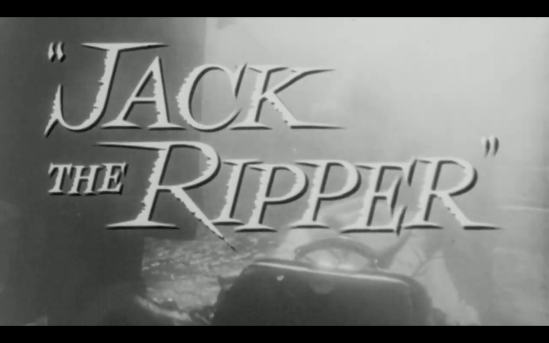
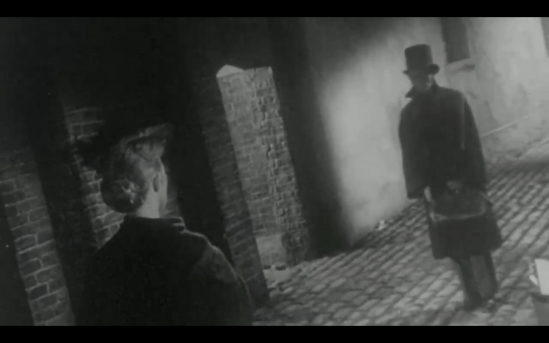
On the streets of London’s Whitechapel district, women are afraid to walk the streets alone at night and angry mobs have begun to turn their backs on the police’s ineptness on catching a killer. Jack the Ripper is what the people of London label the maniacal murderer who, with surgical precisions, guts his victims and leaves their lifeless bodies on the dark, dank cobblestone streets. Scotland Yard Inspector O’Neill is joined by his friend and American counterpart, a New York police officer named Sam Lowry, to hunt down and stop Jack the Ripper’s killing spree. Deeper into the investigation, the officers are informed that the suspect they track would have medical background with a skilled blade hand, but even with that information, Jack the Ripper alludes authorities. Lowry’s romantic involvement with a young woman named Anne Ford, whose under the ward of the notable Dr. Tranter, might be very connective tissue between the constabularies and the secretive medical society needed to crack the case of the notorious Jack the Ripper before he strikes again!
Jack the Ripper is a real and iconic villain that not only terrorized the streets of London, but had later graced the screen many times over from Bob Clack’s 1979 thriller “Murder by Decree” to the 2001 Allen and Albert Hughes gothic and graphic “From Hell,” starring Johnny Depp. Before the production of those films, before Jack the Ripper really had any kind of footprint in cinema, Robert S. Baker and Monty Berman directed the 1959 mystery-thriller “Jack the Ripper” from a screenplay by Jimmy Sangster and Peter Hammond based off the theory that Jack the Ripper had a medical practice history. Baker and Berman’s film hit the controversial market from right out of the gate with grisly and ghastly murders, for the circa 1950s, and bared topless actress frivolously to insinuate the lady drunkards, the showgirl dancers, and the lone walking women as ladies of the night. Prostitutes would have been burden the selling of an already certifiable X film from the BBFC and the MPAA. However, the filmmakers constructed alternate cuts, shorting the grisliness to just grim and sheathing bare breasts with articles of clothing in shot for shot censorship. Only on the continental, aka French, version does a truly uncut and complete film live to excite, but instead a complete feature, the unmolested scenes are only available on the bonus features of the Severin Films’ release. That’s not to say that the U.S. and British versions are a complete waste of time. The classic time is utterly timeless and gripping that offers up immense amounts of whodunit suspense, implied sensationalisms, and an adequate take on how incompetent law officials can be exhibited when politics and women are afoot. Plus, the U.S. version, bought and presented by legendary producer Joseph E. Levine, comes with a brassy score by Jimmy McHugh and Pete Rugolo. The British version, also known as more of the approved director’s cut of the film, is scored by Stanley Black.
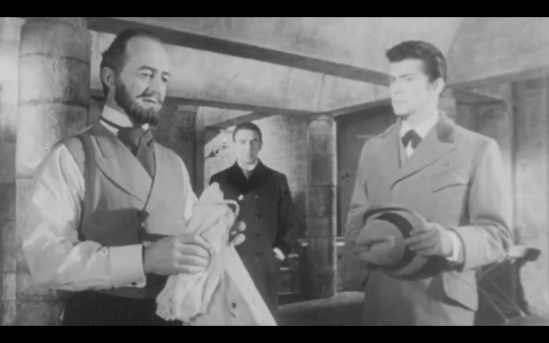
Tall, handsome, and walking into another country like he owns the land, detective Sam Lowry is introduced at about 10 minutes in, standing at a bar and reluctant to be rough and tough with a mob ready to lynch him for potentially being the Ripper because of his inquiries. Lowry’s charming persona with the women, like the bar maiden and Anne Ford, are only offset by his complete incompetence to be a police detective. Lowry does absolute zilch investigation and, instead, goes out on a date with Dr. Tranter’s niece and makes snarky comments at a merciless, ready to judge horde of scared Whitechapel residents. American hunk Lee Patterson stands out amongst the gothic rich atmosphere to the point where’s he, like his character, is an outcast and Patterson’s talents could only take him so far into a gloomy, morbid narrative that was unwilling to accept his chiseled chin and starry eyes. Eddie Byrne fit the mold better than Petterson as the Scotland Yard Inspector at rope’s end with not only Scotland Yard, but also the rest of London. As Inspector O’Niell, Byrne, who went on to star in “Island of Terror” and “Devil’s Darkness,” humbly accepts his restraint as the Irish born actor takes a wallop from all sides and still remains calm, collective, and ever present on the task at hand with a character being beat from all ends of the spectrum. Anne Ford opposites Lowry as the potential love interest who has come of age, as she notes a few times, to takeover temporary responsibilities at the hospital where her uncle performs dire surgeries. Being oppressed by her own family and seeing London being ripped a part by its own people, Anne latches onto Lowry, an outsider, to find a connection or a release from sullen cloud that hangs over Whitechapel. Unfortunately, Betty McDowall is sorely overshadowed by many of “Jack the Ripper’s” formidable characters and that Anne is not wholeheartedly written though her character is important to the story. Even the showgirls sizzle in more ways than one than does McDowall whose kept in check by Lowry, doused with someone’s problems, and only given an allusion of her worth in a moment of fright. Ewen Solon (“The Curse of the Werewolf”), John Le Mesurier (“The Jabberwocky”), Barbara Burke (“Blood of the Vampire”), Denis Shaw (“Curse of the Werewolf”), Bill Shine (“Burke & Hare”), and Anne Sharp (“Murder on the Campus”) round out the cast.
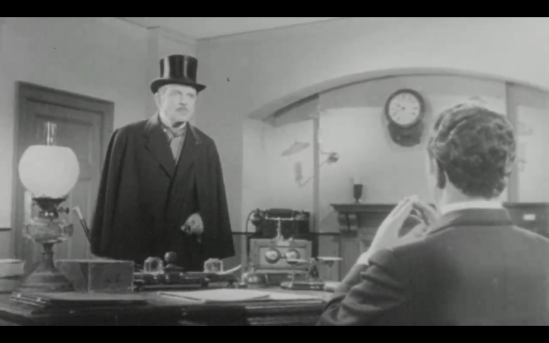
“Jack the Ripper” is a classic, literally and physically. The scaled down sets of the Whitechapel area bring to life the tenebrous soil of 19-century London. The elegantly painted backdrops of tall mast ships enshrouded by synthetic fog paint an archaic picture of how movie magic has progressed over the decades. Attention to detail in the set construction and the flavor of time period customers brought a sense of authenticity that nostalgically harps on the once was that now only exists as recorded cinema history. “Jack the Ripper” casts a forgotten beauty in the barbarism. By today’s standards, “Jack the Ripper” would be written off as banal and uninspired by critics and audiences, but if you can imagine yourself in 1959-1960, Robert Baker and Monty Berman just blew your mind with onscreen taboos and in America, Joseph Levine’s technicolor blood scene, with a duration of only a few seconds, would be the viral talk of the town.
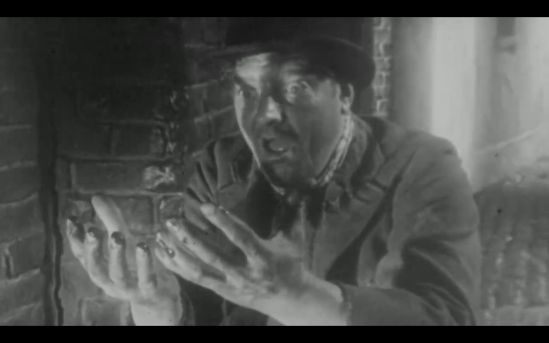
Severin Films presents “Jack the Ripper” onto a region free, 1080p Blu-ray for the very first time anywhere! Complete with two cuts of the film, the British and American version, Severin presents both in their released aspect ratios of a lossy standard 1:33:1 in the British version and 1.66:1 in the American version, both in B&W with a pop of technicolor in one scene in the American version. Severin’s transfer is perhaps the best we’ll see from an original print that’s laced with scratches, but a bit more light, or some brighter contrast, sheds some light in the inky corners while managing a rich appearance that’s not monochrome or sepia. The English 2.0 audio track maintains an equal quality with some static in dialogue and ambient tracks. Jimmy McHugh and Pete Rugolo’s brass-heavy score thunderously pack the scene that surely takes the lead amongst the tracks. Bonus features include snippets of the continental versions with the extended violence and nudity and the audio commentary with Robert S. Baker, screenwriter Jimmy Sangster, assistant director Peter Manloy is extracting and interesting helmed by horror historian Marcus Hearn. Also included is an interview with the author of “Jack the Ripper” The Murders of the Movies” Denis Meikle, “The Real Jack the Ripper” featurette, theatrical trailer, and poster and stills gallery. Exposed and disclosed, the various faces of Robert S. Baker and Monty Berman’s “Jack the Ripper” now have a hi-def upgrade and though a full continental version eludes this release, Severin provides the cliff notes in order to not overcook the same story a third time.

