EVIL Drugs Are Bad, Mmkay? “Beyond Hell” reviewed (Indican Pictures / Digital Screener)


A lowkey party experiments into a new drug called Changa, brought back from South America by one the friends but is no ordinary narcotic. After inhaled, Changa opens a conduit to an infernal dimension oppressively reigned by Belial, a trickster demon seeking to rule the world of man. Channeling his dark energy through the utterly wholesome Maryssa, Belial exploits her innocence to reach her friends and one-by-one their hallucinogenic and horrible deaths give way to releasing their souls to him. Once he obtains enough souls, Belial will be able to freely walk the Earth and damn everyone on the planet into servitude. Its up to Maryssa and her remaining friends to thwart Belial diabolical plans and send him back to Hell.

Is seeing disembodied, outreaching arms and shape-shifting demons covered in broken glass and tentacles to the effect of a gateway drug!? The invasively surreal and drug repercussion-themed “Beyond Hell” is the 2019, pre-apocalyptic. doom and damnation, survival thriller from writer-director Alan Murray in his first feature film production. The Cambridge, Ontario born filmmaker shoots in his home country to entertain and scare audiences with a version of religious text’s prime opposition to God, the Devil, in the form of the heavily prosthetic and dastardly theatrical Belial. “Beyond Hell” is a co-produced by Murray alongside Gavin Downes under the Dark Spirits Films banner with Don Smith, Jacqui Smith, and Christopher Lane serving as the film’s capital investments of executive producers.

“Beyond Hell” plays considerably into the slasher blueprint that aims to off, one-by-one, inept school students, whether they’re the self-stated part of the college body or, in a slight of confusion, sit in on classes and have row lockers like high schoolers, who stumble with defensives against a much darker scheme of soul extracting exploitation and world domination. Murray takes a full-on female primacy with strong heroine-performances by introducing Kearston Johansson and Natalie Jane to set aside their characters’ at-odds, find security in their flaws, and battle it out against an ancient evil. The respective roles in the goody two-shoes Maryssa and wildly eye-cutting Brook’s backgrounds are kept in a palpable line by Johansson and Jane’s drive to roleplay one-upping the other despite a petite background for character support and they’re anchored by Sebastian Deery (“Bad Dose”). The UK-born Deery plays the pursued rake, Jake, in a triangular love interest with Johansson and Jane’s characters. While Deery seemingly attempts to rein back his English accent without much success through his satisfactory presence as a level-headed, good-lookin’ guy, Jake’s acutely transforms into a wily coquet by initially buttering up Maryssa with good intentions and verbally loathe Brook for her derogatory attitude toward Maryssa only to then switch quickly to desiring a distraught Brook when Maryssa winds up in a mental institute for the criminally insane after the gruesome death of one of their friends. The off-putting dynamic pens a promiscuous casualness about these group of friends. Dominique Smith, Sean Rey, Chris Kapeleris, Shahrad Fredotti, Richard Collier, and Gavin Downes as the profaner Belial.

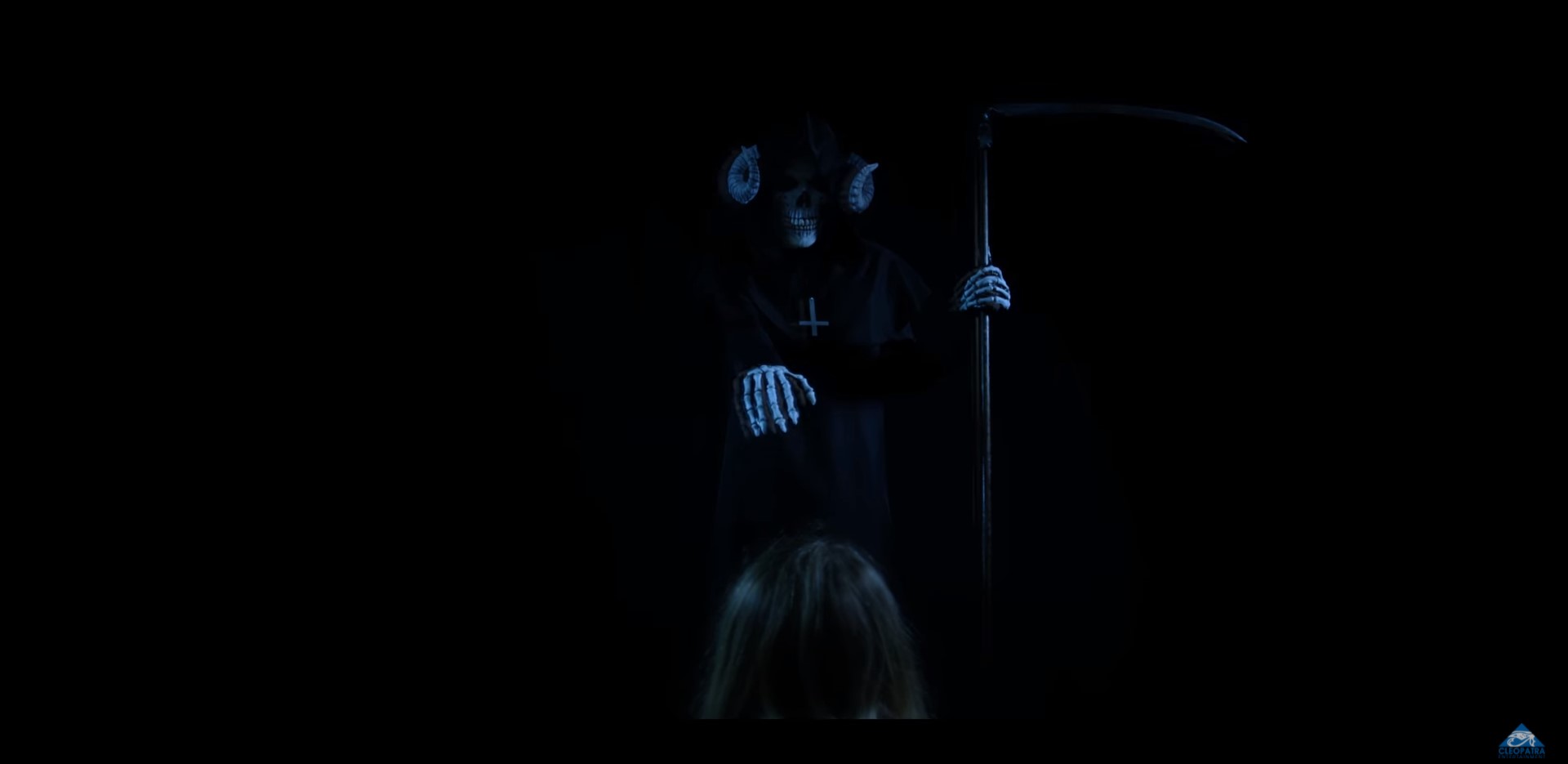
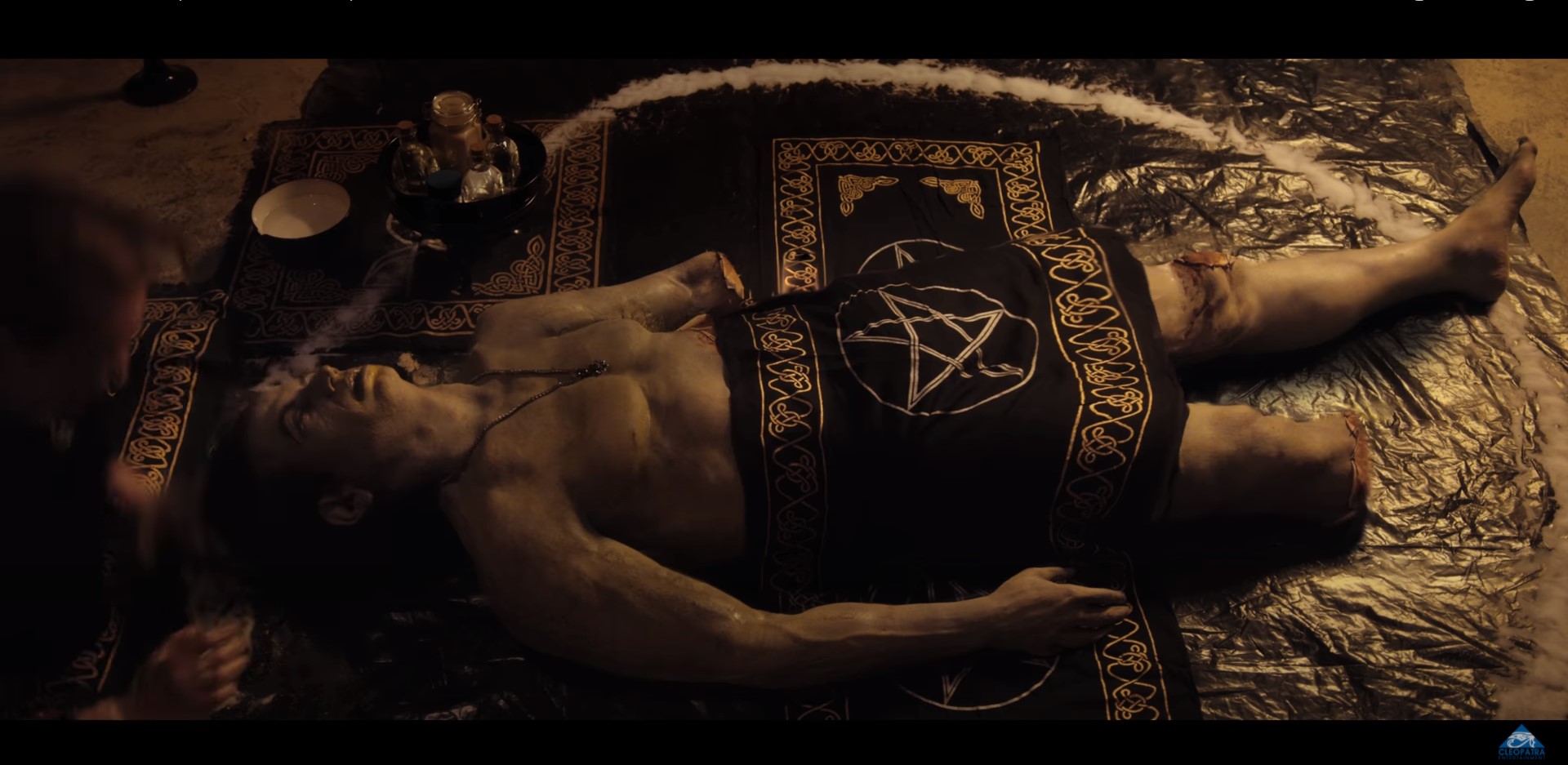
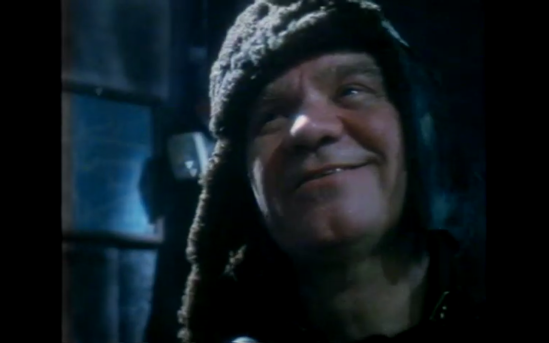
“Beyond Hell” conjures a sassy-mouth, wise-cracking demon, Belial, adorned in a black and white molten-rock shape skin with curved horns and rows of beaded sharp teeth, but the makeup effects, though strong in prosthetic effort, appear extremely rubbery to the point that even Belial’s teeth bend and flap when Gavin Downes tosses out sarcastic quips when ripping the souls from his victims.  This awkward stance of where our eyes and brains struggle to compute what make sense from the worst-of-the-worst of hell bound fiends is where “Beyond Hell” becomes forehead-rubbing frustrating because of how much time and application goes into the overall look of the creature that, in the end, just dips into disbelief.   The gory, but crude practical effects trend into the visual effects territory, going beyond the gates of hell to where Belial himself would be frightened by the sheer shock of shoddiness.  In one frantic scene where Brook attempts to escape Belial’s brimstone breath, decrepit arms breach a stairwell wall to grab her, but the arms, which are all of the same cut and move in the same motion, float like ghosts without ever puncturing through the drywall, or even breaking through that plane of narrative reality for that matter, that’s reminiscent of the horrendous flock of CGI birds, hovering autonomously as survivors try to whack at them in an awful reaction in James Nguyen’s “Birdemic:  Shock and Terror.”  Now, I’m not saying that “Beyond Hell” is as rough as intangible birdies behaving badly as Murray avails in manufacturing a stable low-spirited atmosphere of plague youth in between the real world and the underworld with their innocent lives hanging in the balance in a sordid enterprise off ill-will.

More laic than spiritual, “Beyond Hell” scratches the surface of narrative depth in a modest clash of “Hellraiser” meets “A Nightmare on Elm Street” from the celluloid plunging distributor, Indican Pictures. The 89 minute supernatural thriller has entered the digital platform realm, at least in the U.S., this December. “Beyond Hell” is Rhys Jones’ first director of photography venture filmed in 5K Raw on a RED Dragon that’s uninhibited in the illuminating details. While the shots are mostly natural, clearly capturing the pimples on the young actress’ foreheads, Belial is always casted in a semi-harsh blue tint to hide any part of the latex inflections and imperfections that might expose Downes even more as a man in a monochromic rubber suit. Dan Eisen and Norman Orenstein (“Diary of the Dead”) team-up to compose a single note and pennywise synth blended score that plays into a cleaved pop-glazing and survival horror video game and, can at times, be on the precipice of one of John Carpenter’s Lost Themes without evoking a soul-binding tension. Though the depth isn’t spectacularly precise and the dialogue disperses with echo at times, the range of audible effects is vast in echoing the unsettling cacophonies of a shrilling Hell, making the feature’s soundtrack and score a highlight in the rest of the mediocre quality. I applaud “Beyond Hell’s” ambitious, no holds barred concept, but the indie picture malnourishes a healthy dose of unconfined horror with bastardized acting and a haphazard flank of effects that make this Alan Murray film so bad it’s good to the very cringed tone ending.


Click Banner to Rent or Own “Beyond Hell” on Prime Video!

EVIL Trifles With a Vindictive Obsessed Cop in “Split Second” reviewed! (MVDVisual / Blu-ray)

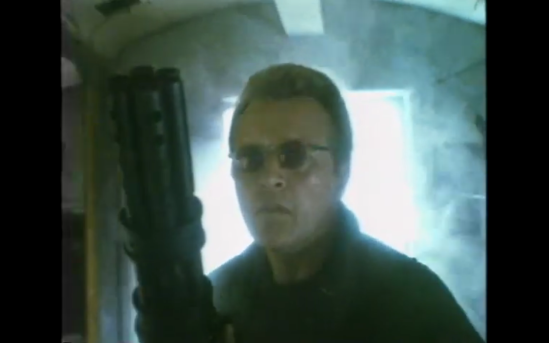
Global warming has taken a toll on the Earth’s polar ice caps in 2008 with cascading amounts of water flooding around the world bringing knee high waters to coastal cities.  London is hit hard with drenching sewer overflows and coastal run overs that result in an over infestation of rats to storm the streets, back alleys, and even resident homes, carrying a harmful disease in their occupation.  However, something else compounds the rat plague that slashes at random victims, tearing their hearts out violently from their chests without ever leaving a witness except for one, a rogue and paranoid detective Harley Stone whose partner was slain in one of the deadly attacks and himself marred by the killer. Partnered with a new hot shot know-it-all detective following the murders, an obsessed Stone confronts his haunting traumas as he continues to pursue the inhuman perpetrator who has a psychic connection to Stone, personally toying with the on-edge officer, and has kidnapped his girlfriend as bait.

Even though 2008 has come and gone now almost 12 years ago, Tony Maylam’s 1992 actionized-creature feature “Split Second” still holds water just like the rising tide pools on the streets of London.  “The Burning” director, Maylam, helms, with the finishing touches of the final sequences directed by Ian Sharp after Maylam’s sudden departure, a fast paced and snarky script penned by Gary Scott Thompson as one of the writer’s very first big budget outputs from nearly 30 years ago that was followed up with major studio films, including a little project you may or may not have heard of, “The Fast and The Furious” mega franchise.  Before nitrous suped-up cars hot-rodding on asphalt, jumping high speed trains, and flying off cliffs in a lap strap of criminal activity luxury, Thompson created a formidable, heart-devouring beast that became the trap-setting, trophy-hunting predator and the teeth-snapping, chest-bursting xenomorph all in one package to symbolize the irreversible and ignored effects of an overpopulated, warming planet.  “Split Second” is a production of Challenge Film Corporation and produced by Muse Productions with Chris Hanley, Laura Gregory, and Keith Cavele serving in a producer role.

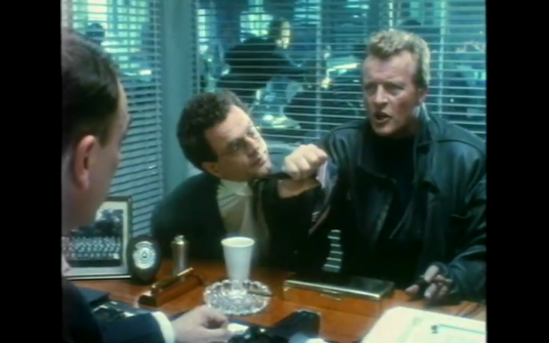
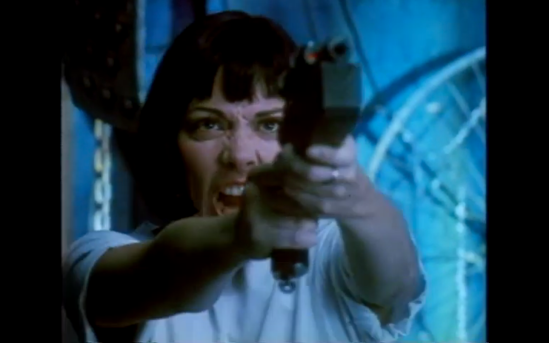
The Netherlands’ very own Rutger Hauer sheds his nice guy exterior for Harley Stone’s shell-shocked, rough and tough outer shell.  The late “Blade Runner” and “The Hitcher” actor brings a certain cinematic coolant to “Split Second’s” overheating fringe of disproportionate action and science fiction horror, a lop-sidedness typical of a Rutger Hauer production, by being larger than life in the little aspects that add to the dimensions of the scene, making every moment famished for Stone’s next eccentric and animated move.  Stone is partnered with an equally vigorous Detective Dick Durkin who starts out as a cultured drip of criminal activity and an astronomical proficient before quickly blooming into the same gritty mirror image of Stone.  Credited as Neil Duncan, the current vocational voice actor Alastair Duncan has a natural dynamic with Hauer despite their asymmetrical careers and endures an incredible character arc successfully turning Durkins’ relatively square image – though debatable with smart, good looking, and gets sex every day swagger – into a Stone acolyte after witnessing the human threatening existence of an unnatural ferocious monster.  The female love interest didn’t seem to fit the “Split Second’s” gentle steampunk lace and zany character scheme with Kim Cattrall as Stone’s estranged girlfriend, Michelle McLaine.  As much as love the “Big Trouble in Little China” actress’s late 80’s to early 90’s career, the girlfriend role feels sorely plopped into the film for the sake of having a love interest as much of the character is illuminated through exposition with McLaine being the wife of Stone’s former partner stemmed from her and Stone’s affair and then lingers her subsequent alienation from the rogue cop despite an inextinguishable flame between them. As Cattrall provides the sexiness in the city of London, McLanie iss aesthetically airy without tangible substance other than kick in the pants motivation for saving. “Split Second” rounds out with the late Pete Postlethwaite (“The Lost World: Jurassic Park”), Alun Armstrong (“Van Helsing”), Stewart Harvey-Wilson and “Scoorged’s” Michael J. Pollard as London’s the rat catcher.

“Split Second” is an early nineties junket spiraling with flashy facets of easily digestible, entertaining chewables that continuously hits all the right flavor sensations in terms of acting, dialogue, production design, creature design, and cinematography. The bonkers script and equally as bonkers visual concept inserts an extremely likable brazen world of the future in the form of a dank, or danker, London under one or two feet of water; in every moment Stone or Durkin hit the streets, they’re essentially swimming in brown street liquid and the overall effect places a blanket of filth glazing over my eyes and secreting out of my captivated body is a cold spine-shivering chill that’s immersive to Stone and Durkin’s slushing around. Stephen Norrington, who went on to direct “Death Machine” and “Blade,” slapped together a fairly effective creature design despite the creature rarely being in full exhibition and for very good reason. A brief flash of razor sharp fingers, a quick dash of unearthly skin, and the gruesome aftermath in it’s wake evolved a better rendition of the creature in our minds than perhaps the actual resulting appearance with result that tacked on one big mysterious allure that doubled down coinciding with the principle characters who also has never seen the killer before. “Split Second” is constantly suspended in action with little down time to reflect on the theme of global warming and it’s life-changing choking effects that not only rushes thousands of gallons of water onto the streets and increase the survivalist rat population up to nearly impossible control levels, but also tampers with the balance of astrometric forces, bringing evil to the world in the form of a heart-eating devil to the surface when astrology deemed the moon in position for such an event and that’s also perhaps the downside to Tony Maylam’s film. The monster bares little backstory to sink one’s teeth into and raises an immeasurable amount of unanswered questions relating to the fate that intertwined Stone into the creature’s inner sphere of extrasensory perception, the origins of the creature and it’s genetic makeup, and the relationship between it and the cult correlations.

A melting pot of feculent and bloodshed pother, “Split Second” arrives onto a high definition Blu-ray courtesy of 101 Films and on MVDVisual’s MVD Rewind Collection banner. The region free, R-rated feature is presented in 1080p with a widescreen, 1.85:1 aspect ratio with a newly 4K scan complete with restoration and coloring grading from the original 35mm negative. The inviting image, with adequate grain and a cigarette burn here and there, basks mainly in a steely blue among other primary colors rearing up while thick with a brightly contrasted neo-noir shadow wrung through. Skin textures are consistently and continuously glistening with sweat setting on top of the natural coloring and the facial follicules present a rather sharp image, making this release the best looking transfer to date. The English language 2.0 LPCM stereo mix doesn’t let up with a robust mix of forefront dialogue, a balance of range and depth, and a pulsating cheesy-action soundtrack Stephen Parsons and Francis Haines. English subtitles are optionally included. The heft bonus features package includes exclusive content such as an audio commentary by action film history Mike Leeder and filmmaker Arne Venerma, a new conversation entitled “Great Big Bloody Guns!” between actor Alastair Duncan and producer Laura Gregory, a “Call Me Mr. Snips!” interview with composer Stephen Parsons, a “Stay in Line!” interview with line producer Laura Borg, a “More Blood!” interview with creature effects designer Cliff Wallace, and a “Shoot Everything!” interview with cinematographer Clive Tickner. But, wait, there’s more! Also included is the original making of feature with stars Rutger Hauer, Kim Cattrall, Alastair Duncan, Michael J. Pollard, writer Gary Scott Thompson, original behind the scenes feature with effects creator Stephen Norrington and other cast and crew, the “Second Split” Japanese cut includes the deleted scenes and built in Japanese subtitles, 7 promotional TV clips, U.S. VHS home video promo, theatrical trailer, and a MVD exclusive reversible sleeve with artwork from The Dude Designs, cardboard slipcover, and mini-poster insert. The difficult decision to determine Rutger Hauer’s best work can be daunting as the man is King Midas with every project he touches, but “Split Second” reveals now more than just being pure gold with this MVD Rewind Collection Blu-ray release that’s a must own, must have, must see, and a must collect physical release of the rundown of a monster-run amok, neo-noir, steampunk, action-comedy-horror….in a nutshell.

Own this Rutger Hauer classic “Split Second” on Blu-ray!

EVIL Fillets Family Strife. “Broil” reviewed! (Well Go USA Entertainment / Blu-ray)

Chance Sinclair is a rebellious 17-year-old closeted lesbian and Catholic student.  After a couple of school related incidents she didn’t instigate, Chance’s parents send her to live with her despotic grandfather, August Sinclair, despite her parents’ reluctance.  August rules with an iron-fist not only with his grandchildren, but with his entire family of powerful elitists who have a dark secret – they’re actually soul harvesting demons preying on the malintents around the world and is headed by August.   When Chance’s parents want out of the family business and reclaim their daughter from August’s authoritative grip, they hire a culinary prodigy with a skill for assassinations for a grand dinner that’ll have the whole family in attendance.  Chance is ignorant of her family’s history and the balance of power is not the only stake served on the menu, but also Chance’s very soul hangs in the very midst of the Sinclair’s family game night of internal carnage. 

Like a Gothic storybook enclosed with deception, murder, and unhallowed demons at their last supper, “Broil” is a going to hell in a handbasket supernatural feast and an unholy coming-to-age sophomore feature from by the upcoming “Cosmic Sin” writer-director Edward Drake and co-written alongside Piper Mars.  The 2020 Canadian murder-for-hire thriller vies against the stylish similarities of the “Twilight” saga with well-groomed, well-off, and sophisticated groups of strangers bound as family from supernatural circumstances, but distills itself out the frivolous teeny-bop pulp and teen heartthrobs for a modestly R-rated cutthroat kindred melodrama by the netherworld’s most notorious soul-suckers, shot in Vancouver, British Columbia, Canada.  “Broil” Is produced by “Cabin Fever 2:  Spring Fever” executive producer, Corey Large, and first time producer Kashif Pasta with 308 Entertainment (“It Follows”) and Good Complex serving as production companies. 

“Broil” doesn’t denote a lead character at the heart of this story, but pinpoints principles along a chaptered structure, signifying their importance by following them with an objective point of view.  The whole setup begins with the granddaughter, Chance Sinclair, who a bit rough around the edge and doesn’t play with her schoolmates, especially having an affinity for the same sex while being a student in a Catholic school, but that factoid doesn’t blossom into thing though be noted a couple of times.  Instead, Chance, played by Avery Konrad in her first principle character role, struggles with her teenage angst and hormones like any more adolescent, but she finds her educational woes pale in comparison under her family’s archaic secret ruled by the patriarchal domination of August Sinclair, a ruthless enforcer and head of the family business brought to an autocratic fruition by Irish actor Timothy V. Murphy (“Snowpiercer” television series). While Chance and August strongly convey a presence in the first act, Jonathan Lipnicki reins in the latter acts in an unexpressed spectrum performance of Sydney “The Chef” Lawson, a calculating killer taking out the transgressional trash informed by a mentor and father-like man named Freddie Jones, “Jason vs. Freddy’s” Lochlyn Munro, who may or may not have ulterior motives in exploiting The Chef’s gift for murder. Lipnicki’s work is a culinary delight in as much as The Chef’s actually culinary expertise, braising the character to eventually be the mainstay character. There are other exigent roles that seem important, but are only keystones that hold more principles roles from crumbling, such as Chance’s parents, June (Annette Reilly “Chilling Adventures of Sabrina”) and December (Nels Lannarson “The Cabin in the Woods”) Sinclair, who initiate the murder-for-hire spark that set things in motion. Rounding out “Broil” is Corey Large, Megan Peta Hill, Abby Ross, Jenna Berman, Phoebe Miu, Alyson Bath, David Hennessey, John Cassini, and Kyra Zagorsky.

Playing out in chapters, “Broil” feels like a murder-mystery adapted from a on fleek novel written by a panache author from Switzerland, but from what I’ve researched, “Broil” is an original narrative only to be segmented to amass refined character details and redirect turn of events as they unfold. However, the chaptering aspect veers the narrative off course, careening “Broil” more toward edit oblivion that doesn’t layer the foundation properly causing as much confusion as the inhuman characters trying to decide whether the Sinclairs are either vampires, demons, witches, or some kind of incubus-succubus blend for a better part of the film. A theme that doesn’t withstand the pressures of Drake’s zigzag directional layout is the unholy atmosphere the Sinclair’s protrude into the world. Chance, who is ignorant of her lineage and of what she really is, turns crosses upside down, turns crucifix necklaces ablaze, and her family sends her unusual gifts like parceled decorated daggers as seen on sacrificial stones, but the satanic tropes cease to do little more than be hints bound to expose the Sinclair’s true selves and really nothing to do with Satan himself, leaving much of the Sinclair powers left unexplained, like their lightning speed and pulsating purple glow that illuminates in patches under the skin (another “Twilight” element?). The acting is palpable, even if it’s melodramatic and under a slew of unlikeable characters, and the story does throw a few notable curve balls, some wickedly diabolical knuckle curves involving eating a child, to intrigue an inch by inch progression of the story. “Broil” unsheathes moments of Gothic schadenfreude, but the moments are fleeting, too short and far in between, to swimmingly bask in the horror of demonic soul snatchers in the throes of a murderous coup d’état.

A delicacy unlike anything you’ve ever experienced, “Broil” is served onto a Blu-ray release as the plat de jour distributed by Well Go USA Entertainment. The unrated film is region A coded and presented in high-definition, 1080p, of a 16:9 widescreen format. Details on the image render very soft, undiscerning outlines that infuse where a person ends and the background begins, but as the lighting choices change from flared hues to more hard lighting, profiles are to take more shape. Director of photography Wai Sun Cheng, making his introduction into feature films, keeps the focus primary in the foreground, obscuring the backdrop just enough to make it still perceivable and mixes well in the extreme close ups with wide angled shots to not be a one trick cinematographer. The English language 5.1 DTS-HD Master Audio has severe troubles with Hugh Wielenga’s score tremendously overpowers everything else with a profound overlap. The composition is so unbalanced and loud that the resonating LFE completely drowns out the dialogue at times. “Broil” does not contain any feature specific special features other than a static menu containing upcoming previews of other Well Go USA films. Despite the title and the infernal nature, “Broil” is a dish served too cold with an unsavory plot of a young woman’s coming of age tribulations in midst of family squabbles and treachery that Edward Drake couldn’t quite fuse together.

Pre-order “Broil” at Amazon.com

Rock And Roll is the EVIL’s Music! “Dark Roads 79” reviewed! (Terror Films / Digital Screener)


Frontman Bobby Gray and his Southern rock band, Dark Roads, were supposed to be next big hit next to The Rolling Stones, but there fame and fortune started dwindling after some short-lived success. Barely surviving on a here-and-there gig in 1979, Dark Roads manager, Grace King, secures a secluded cabin in the woods for them to find their new sound before being dropped by their record label. Along with their female companions, chatty coach driver, their sensible roadie named Cash, and a handful of some hallucinogenic drugs, the trouble band members continue to squabble amongst themselves, especially more so against the vain and alcoholic Bobby Gray. Gray holds a terrible secret from his bandmates, a secret involving a pact he made with the Devil ten years ago and, now, the debt is due, placing the entire group in mortal danger…the price for fame and fortune.

Based loosely surrounding the tragic circumstances of the infamous 27 Club mythos, a moniker given for a collection of up and coming talented musicians who die unexpectedly and prematurely at the ripe young age of 27, “Dark Roads 79” incorporates into the fold the legendary tale of Blues musician, a 27 club victim named Robert (Bobby) Leroy Johnson, who sold his soul to the devil at a Georgia crossroads during midnight for to be the greatest blues musician, or so the story is told. The 2017 film is the fifth macabre picture from writer-director Chase Smith who co-wrote the film with documentarian filmmaker, Richard Krevolin, who no doubt kept the script on a historical accuracy path, as much as one supernatural storyline can stay on. “Dark Roads 79” is a production from Smith’s Georgia based independent filmmaking company, Spirit World Productions, and brought to viewers by “Old 37” executive producer “Jason Anderson” and co-executive producer Nicholas Frank Auger.

Already donning many hats, Chase Smith slips on one more broad brim and trashy cowboy mesh hat with Ian Cash, the level-headed, good natured roadie with a voice like an angel, but built like a Mack truck. Cash serves as narrator who sets up the story that swerves across the dotted line into spoiler territory just a tad, but Cash becomes the vehicle that brings the viewers up to speed on the legend of Bobby Johnson and the rise and fall of the Dark Roads, like a cowboy quick connect in case you needed help in establishing that Dark Roads’ success hinges on a fatal pact with the Devil himself. While Cash may seem like the focal point of the story, there’s a split with lead singer Bobby Gray (David A. Flannery, co-star from a few of the homoerotic thriller series “1313”) whose vanity flushes Dark Roads’s stardom down the toilet. Cash and Gray go toe-to-toe many times and Smith’s emits formidable tough guy appearance on screen while Flannery impresses with a complete loathsome veneer. Neither Smith or Flannery make top bill however as long as “Devil’s Rejects” Bill Moseley has a show stealing bit role as the wicked tongue Christian, Caretaker Williams. Moseley’s short, catchy tune of “Boys and Girls they’ll make some noise. They’ll all be burning in Hell” is a classic, archetypal Bill Moseley character idiosyncrasy. Though Moseley’s scenes are short, they’re definitely sweet and rememberable. “Dark Roads 79” rounds out with “Creature Feature’s” Austin Freeman, Lance Paul, Libby Blanton, and Chance Kelley alongside April Bogenshutz (“Attack of the Morningside Monster”), Jessica Sonneborn (“Never Open the Door”), Jennifer Masty (“Rabid”), Eddie George, Ramona Mallory (“Piranha Sharks”), and co-writer Richard Krevolin as the bands’ chatty driver, Thomas ‘Motormouth’ Jones.

“Dark Roads 79” is categorically a a mystery slasher with a supernatural edge that tinkers with blending lore and the theme of lost good times and friendships despite how unfriendly and uncouth they might be, but Smith and Krevolin purely tiptoe around the keynote of terrible, yet sense of family, camaraderie, failing to capture the coherency of the melancholic essence due to loss and despair built upon years of cathartic criticism, distrust, loathing, and continuous bickering between best buds. In fact, the band and it’s entourage displayed little love if it wasn’t under the influence of some drug, but we must remember that the narrative is told through the perspective of roadie Ian Cash who believed in the band, and, in so, believed in each band member albeit their merciless fair share of busting his balls. The editing, cuts, and transitions are, perhaps, some of the most interesting with “Star Wars”-like wipe transitions that effectively heightened as a hallmark of the swanky 1970s era and the emotion-extracting lingering shots, such as with the handheld super 8 cam that roams the room of an abiding jovial moment in time, capture more of the tender times between the group of bitter and weary druggies, alcoholics, and vain temperaments. Unfortunately, the positives do not outweigh the negatives with a scatterbrained and predictable story that comes off as another failed spawn of the 27 Club urban legend and shaves off the emotional baggage with cheap kills and too many unfulfilling characters.

Make a pact with the Devil himself by watching Chase Smith’s “Dark Roads 79” that’ll debut on stage with a wide digital release by the end of May from genre distributor, Terror Films. No set date has been announced. The film will be hosted on multiple digital platforms, such as TUBI TV, Google Play, Prime Video, ITunes, and various other streaming options. Since “Dark Roads 79” will be a digital release, the video and audio specifications will not be reviewed as it’ll be different for all personal devices, but I will note that some minor portions of the dialogue elements were echoey at times. The original soundtrack has strength behind it with Southern Rock tracks by Black Mountain Shine, Mark Cook, Benton Blount, and HK Jenkins, who composes the single “The Road You’re Going Down,” written by Chase Smith, for the film’s official music video. There were no bonus features with the digital screener. “Dark Roads 79” has the necessary ingredients of a backwoods-frat party gone awry slasher except with Southern Rock, but this Georgia based production is tuneless and tone deaf as it stutters through the Devil’s network of deadly deals.

EVIL Choo-Choo Choses You! “Infernum” reviewed! (Indican Pictures / Screener)


When Camille’s parents awake to an unknown and encompassing rumbling and what sounds like agonized wailing, they decide to go investigate not too far from their camping tent where their daughter, Camille, still sleeps. When Camille awakes, the rumbling is now deafening and her parents have disappeared into the night, leaving the young child frightened beyond belief. 25 years later and still haunted by the phenomena, art post-graduate Camille conducts recorded interviews with witnesses of the event along with James, a film studies student working on a documentary project. When the rumbling returns in the Nevada desert, Camille and James take a train to record research just outside the affected area and not become too close to the dangers that’s traumatized Camille, but when the train stalls in a tunnel halfway to the destination, Camille and James awake alone with no passengers or conductors in sight and a rumbling noise that isn’t the train’s engine. Camille finds herself once again in the midst of wailing and now something outside the train is trying to get in.

Stick “Infernum” into the sub-horror category of the great and fear-inducing unknown perhaps based loosely off the unexplained low-frequency hums, such as a Taos hum, stretching from the U.S. to the U.K., writer-director Dutch Marich sensationalizes the phenomena by adding the trimmings of tortured souls howling in torment as a rift opens up between Camille’s world and, supposed, Hell. Filmed primarily inside an antique rail train from the Northern Nevada Railway Museum and inside the railway tunnel west of Ely, Nevada, the “Hunting” and “Miserable Sinners” filmmaker, Marich, slow churns a low-budget friendly and simple plot into a materializing worst case scenario with the anxiety-riddle markings of being trapped, surrounded, and alone inside a dark and confined space with a cacophony of screams, as if in a dark-padded psychiatric cell. Mariach’s Luminol Entertainment and Vekinis Studios, headed by former Luminol Entertainment employee, Peter Panagiotis Vekinis, collaborate on the project.

Playing the traumatized Camille is “American Mummy” and “Dude Bro Party Massacre III” b-movie actress, Suziey Block, who has to not only struggle with coping against the hauntingly strange event plaguing her past, but also deal with an overprotective, yet also apathetic boyfriend in a role filled by who could very well be a young Christopher Meloni lookalike, “Happy Camp’s” Michael Barbuto. Block’s become something of a scream queen over the last few years and “Infernum” continues to make the Michigan born actress keep screaming her lungs out; however, its Camille and Hunter’s hot-and-cold relationship that topples the main theme here as Camille, through Block’s insensate performance, feels disinterested in unearthing what happened to her parents while being too engaged in Hunter’s desensitize, if not rightly justified, position toward her glazed over stress, but Block is engrossed by the fear just enough to sell it. Rounding out Infernum’s cast is Clinton Roper Elledge, Sarah Schoofs (“The Theatre of Terror”), and Rita Habermann.

“Infernum” can feel like a simmering slow burn of paranormal byproduct and resonates closely with Milla Jovovich’s extraterrestrial faux found footage thriller, “The 4th Kind.” The lingering scenes with tedious exchanges render a remote sense of terror that’s teamed with more tension from Hunter and Camille’s argumentative discourse. Yet, when things seem to be dwindling as Camille and her filmography friend, James, board the vintage train to the ghost town of Kimberly (and when I say ghost town, I mean an abandoned mining area), that’s when things go from a steadfast numb to a terrifying turn of the inexplicable circumstance kind. Camille finds herself in a familiar situation like 25 years ago, but the environments different with desolate train, an ominous presence over the loudspeaker, and though most passengers have disappeared, there are some who are found, blue as ice in the face, and lifeless. The tension is thick with the engine rumbling of an infernal-sounding machine that reeks havoc with cries and screams to amplify night jitters. The open ending leaves room for a wide berth of possibilities and interpretation, making “Infernum” metaphysically loiter in between the rifts of our minds.

“Infernum” is a spooky train ride to hell and back, pulling into the DVD home video and digital platform station from the independent film distributors, Indican Pictures. Unfortunately, the video and audio quality will not be covered because of the DVD-R screener, but I can say that the LFE audiophiles are immensely characteristic and behooves viewers to play on a surround sound system or quality headphones will also do the trick. The film’s innate hues are on the bleaker, gloomier side, backdropped by the frigid air of a wintery Nevada dessert. Other than Indican Pictures’ trailers for other films, including “The Lurker” among other films, there were no other special features beyond a static menu. I highly recommend “Infernum’s” spooky vibe and unlimited possibilities all aboard it’s simple, yet effective paranormal premise.

Watch “Infernum” on Prime Video!!!