EVIL Infiltrates to Seduce All Your Women! “The Vampire Lovers” reviewed! (Scream Factory / Blu-ray)

“The Vampire Lovers” Now Available at Amazon.com!

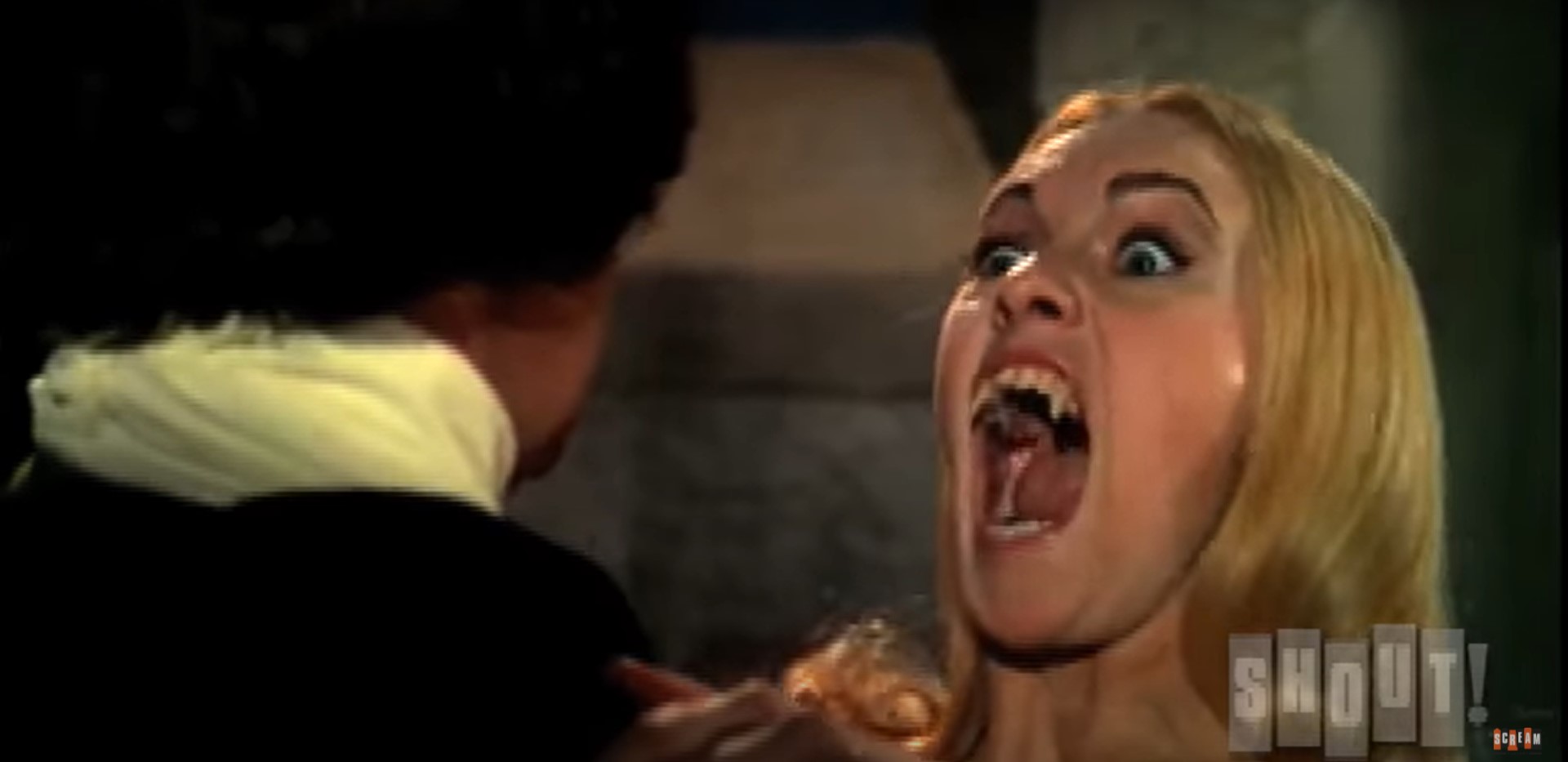
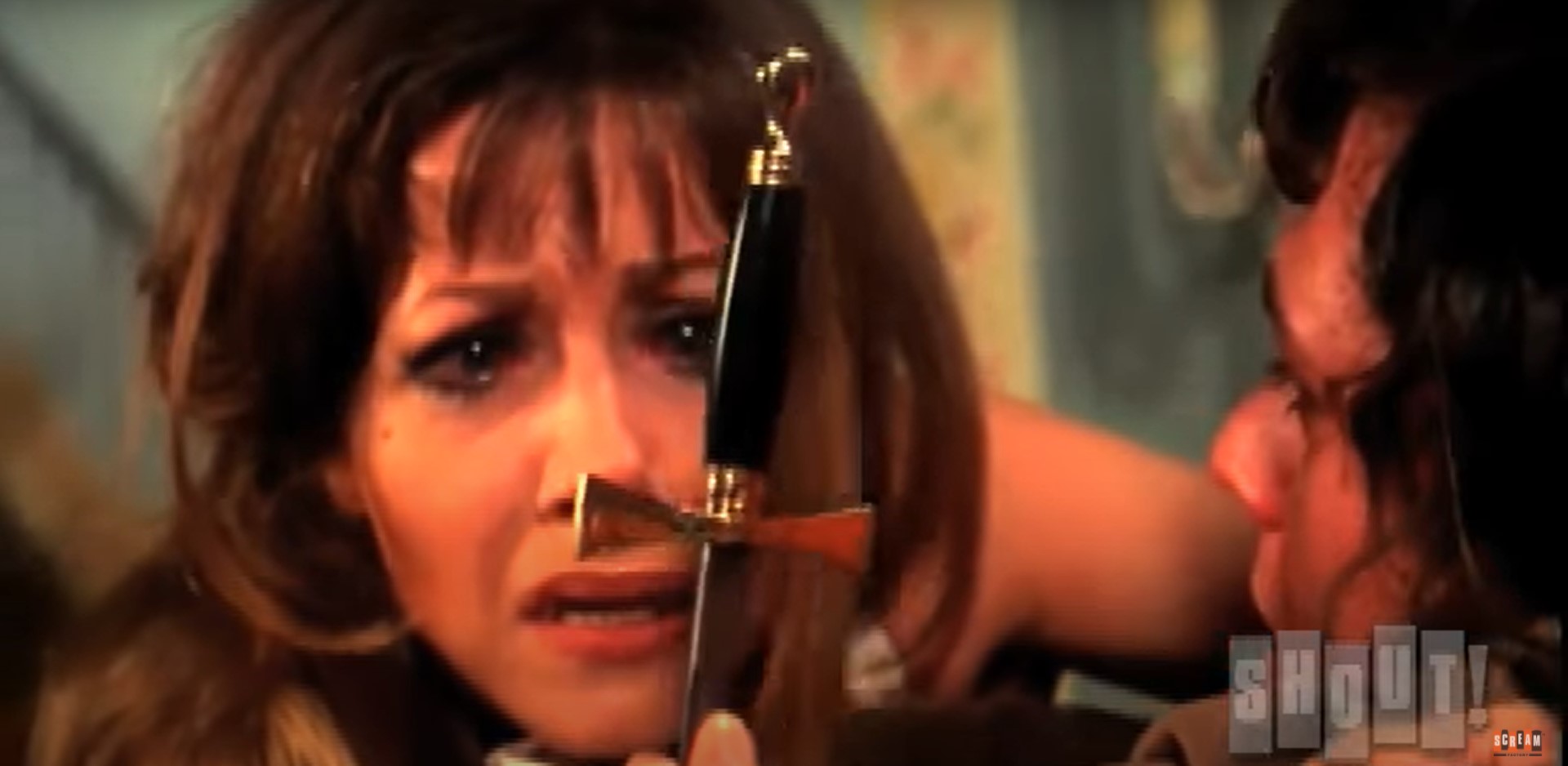
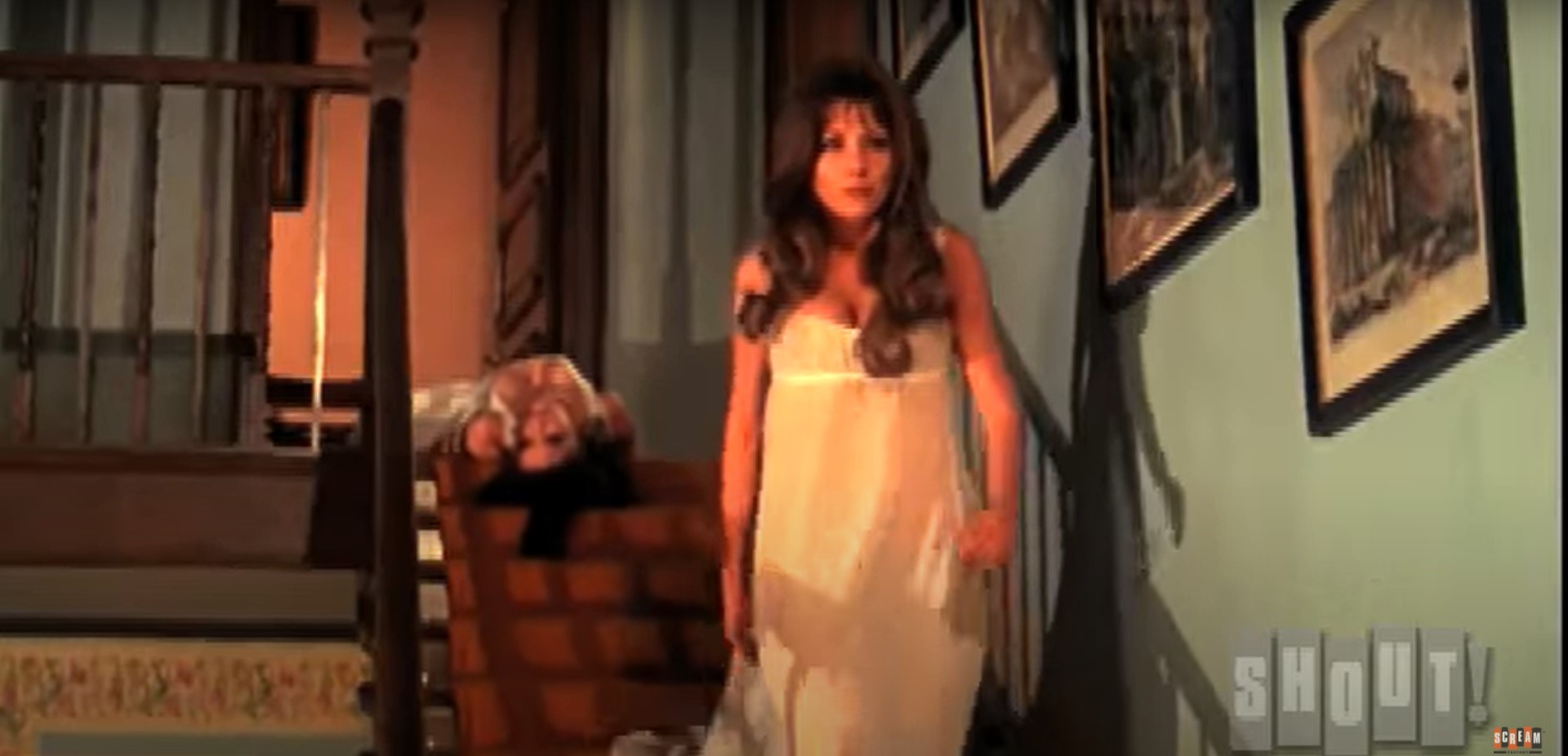
The Karnstein family’s notorious legends of evil spread vast throughout 18th century Germany. Once thought their wicked leeching of nearby villages exterminated after the Baron Joachim von Hartog dispatched all the villainous vampires after his sister fell victim to their seductive fangs. However, years later, the aristocratical General von Spielsdorf and his niece Laura find themselves in the unexpected company of a houseguest with Marcilla, the beautiful daughter of a new neighboring countess. Days later, Laura unexplainably dies from continuous nights that drain her of energy and flourish her mind full of nightmares of being strangled by a large wild animal. In the wake of her death, Marcilla also disappears. Sadden by the news of her friend’s death, Emma and her father take in the daughter of a travelling countess named Carmilla to provide Emma with cheery, distracting company in a time of distress, but the mysterious cycle of enervation and nightmares start back up all over again and it’s up to the survivals of Laura’s death to stop death before it’s too late.

Unlike any other Hammer horror film you’ve ever seen before prior to 1970, “The Vampire Lovers” blazed the trail for permissiveness of the era’s newly reformed certification system that moved the bar from 16 years order to 18 and kept in line with society’s leniencies toward the favoring sex and free love.  “The Vampire Lovers” opened up to not only a new line of exploitation and violence at the turn of the decade but also introduced the longtime fans to new faces, especially actresses, who would accumulate labels and prominence inside the genre that last until this day.  Based from the story of “Carmilla” from Irish writer Sheridan Le Fanu, relatively new at the time Hammer director Roy Ward Baker (“Scars of Dracula,” “Dr. Jekyll & Sister Hyde”) took the Harry fine and Michael Style adapted original story and ran the distance with the screenplay from Tudor Gates whose writing forte was not specifically well-known within horror genre nor was horror Gates’ personal interest, yet Gates tweaked the Le Fanu female vampire tale to accentuate more of lesbian themes in a very turmoiled time when lesbianism, or just being gay, was seen as a disease or an unstoppable influencing evil force amongst the young people.  Fine and Style serve as producers in this co-production between Hammer Films and American International Pictures.

“The Vampire Lovers” comes under an atypical rule of the protagonist role or roles.  Previous Hammer films oriented themselves with a male lead from Christopher Lee’s domineering monster Dracula to the fearlessly courageous vampire hunter played by Peter Cushing, but “The Vampire Lovers” has Hammer trade in the masculinity presence for femme fatale with the introduction of Ingrid Pitt (“Wicker Man”) in the role of the hungry Karnstein vampire, Carmilla as well as Marcilla and Mircalla as the sneaky creature of the night infiltrates estates. Pitt’s exotic look and uninhibited attitude discerns obvious sex appeal for the Polish actress who can also act with gripping emotion that develops compassion for her malevolent facade. Add another pretty face and innocently sensuous woman arm-to-arm to Pitt with then 20-year-old Madeline Smith (“Frankenstein and the Monster from Hell”) and you have a two-front protagonist made up of women. Tack on the dark features and piercing blue eyes of Kate O’Mara (“The Horror of Frankenstein”) and “The Vampire Lovers” evolves into the something unlike anything we’ve ever seen from Hammer horror trifecta as once the scene settles into the narrative’s girth, the dynamic turns into a love triangle of unspoken women intimacies and jealousy, under the guise of supernatural persuasion, rears its ugly head. The menfolk really do feel absent from the excitement despite being pivotal pieces to the story and despite being the iconic representation in face and name of Hammer films. Peter Cushing’s longstanding work with the company has branded him forever legendary in the eyes of horror fans young and new. As the benevolent General von Spielsdorf, “The Horror of Dracula” Cushing looks wonderfully regal, gentlemanly dashing, and epitomizes the very essence of a strong male figure who also takes a very noticeable backseat for much of the second and into the third act. Same can be said for that other vampire portrayer who’s not Christopher Lee, Ferdy Mayne (“The Fearless Vampire Killers”) as the village doctor with a scene plopped here and there to inch the story along as a motivational vessel and another player caught in the Karnstein fang-game. “The Vampire Lovers” sees through to move plot significant characters, played by notable actors, to and from the storyline with performances from George Cole (“Fright”), Jon Finch (“Frenzy”), Dawn Addams (“The Two Faces of Dr. Jekyll”), Pippa Steel (“Lust for a Vampire”), Harvey Hall (“Twins of Evil”), and Douglas Wilmer as the Baron Joachim von Hartog who give a great opening expositional prologue that sets the background and tone of the film.

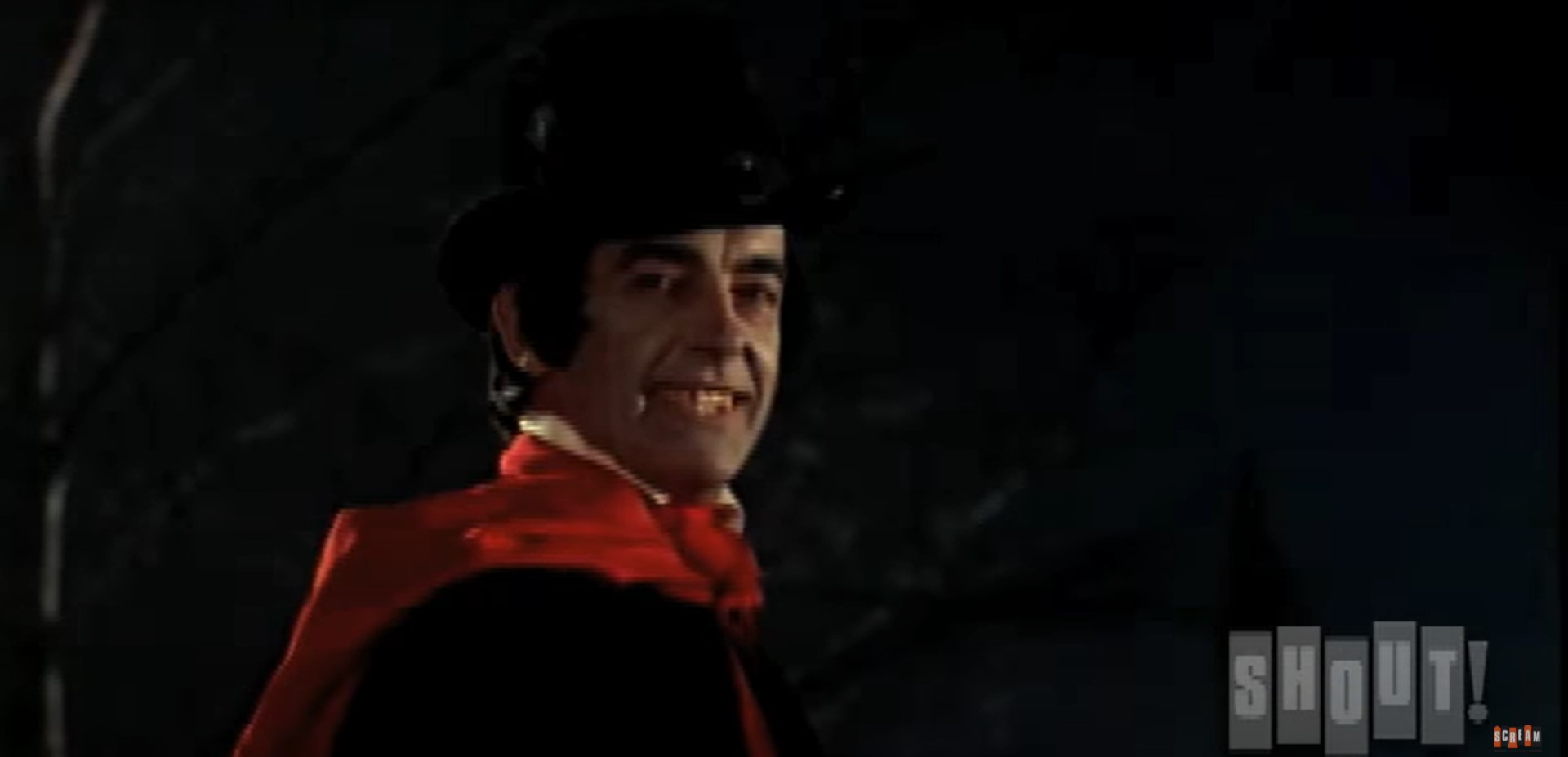
Laced in the traditional gothic style we all know and love from Hammer Films, “The Vampire Lovers” has grandiose late 19th century interiors and costumes with the latter gracing the starlets with strikingly bright tropical colored dresses that are elegant beyond the more stiff, and sometimes more imperialistic, outfits representing the period.  In a way, the outfits contrast against the brooding gothic prominence that speak of subversive liberation much paralleling the very thematic elements of lesbianism, sexual motifs, and a nearly an all-encompassing female lead.  If sex was ever a subtle insinuation in previous Hammer film it was not so subtle in “The Vampire Lovers” that consistently and constantly thickened the sexual tension and produced blunt scenes of eroticism between two or more women.  Even with the powerful commingle of womanhood desires, as much as it was depicted to be devasting to their lifeblood, Tudor Gates’ narrative still pit them up against nearly impossible odds when the male characters, no longer duped by the formalities of chivalrous intentions, figure out what’s really happening under their noses, in their households none the less, and band together to put a to a heart-staking stop to the macabre madness aka metaphorical lesbian evil.  The story has the women’s lusts and desires, whether their choosing or not, be an outlier from normalcy, yet on the other hand, nudity flourishes within the new laxed certification guidelines that see in some way, shape, and form four actresses baring skin in what what would have been considered risqué X-certificated scenes prior to 1970.  “The Vampire Lovers” is by far a perfect film with a lack of character context, such as with the male vampire on horseback indulging his penchant for observing Camilla’s attacks from afar and doesn’t proceed to explain further or with more insight to who he is and what his position may be within the Karnstein family ranks, as well as the narrative format with early on into the story being bit choppy and disorienting when Carmilla assaults nightly the General’s fair niece as a furry beast in the confines of a lurid nightmare.

Deserving of a collector’s edition, Shout Factory subsidiary horror label, Scream Factory, presents a new Blu-ray release of “The Vampire Lovers” scanned in 4K of the original camera negative.  Scream Factory should be extolled for their color grading toward Hammer transfers as the release looks stunning with quality stability and richness that brings the era alive.  Transfer also appears free from any kind of major blemishes and barely of any smaller ones. The English language DTS-HD Master Audio mono has resolute fidelity in the best possible audio offering “The Vampire Lovers” will likely see now and in future releases with a clear dialogue track and a Harry Robertson score that relives the classic studio orchestra in compelling fashion. The release comes with a slew of special features including an exclusive new interview with film historian Kim Newman, who also shows up again in archived interviews in the “Feminine Fantastique: Resurrecting ‘The Vampire Lovers'” (Scream Factory lists it as Femme Fantastique on the back cover) featurette commentary snippets from John-Paul Checkett and David Skal and other historians and collectors of Hammer Films. Audio commentaries with director Roy Ward Baker, star Ingrid Pitt, and Screenwriter Tudor Gates, audio commentary with film historians Marcus Hearn and Jonathan Rigby, two interviews, one of them new, with co-star Madeline Smith that span about 10-15 years apart, Trailers from Hell: Mick Garris on “The Vampire Lovers,” a reading of Carmilla by Ingrid Pitt, a single deleted scene of Baron von Hartog radio spot, still gallery, and the theatrical trailer round out the bonus material. The 89-minute, Region A encoded, R-rated version runs solo as the only main feature and the transfer Scream Factory uses, or licenses, is the edited version of Ingrid Pitt’s bath scene that cuts away to a medium closeup of Madeline Smith holding a towel for Pitt who’s standing up in the tub and then cuts back to Pitt’s bare backside. However, in the “Feminine Fantastique” featurette, you can experience the unedited brief full-frontal of Ingrid Pitt standing up in the tub if that tickles your fancy. The collector’s edition sports reversible cover art with original poster art on the inside and a newly illustrated, and superbly beautiful in its simplicity, front art by Mart Maddox sheathed inside a cardboard slipcover of the same Maddox art. Turning a corner into vast opportunities for more violence, explicit nudity, and unrestrained vampire gore became a new dawn for Hammer Films without entirely prostituting themselves with wayward tactics to the point of unrecognition as “The Vampire Lovers” still emitted gothic characteristics and a partial token cast and now made even more alluring with a feature packed collector’s edition from Scream Factory!

“The Vampire Lovers” Now Available at Amazon.com!

Two College Girls Are Subjected to EVIL’s Violations Below Deck. “White Slaver” reviewed! (Impulse Pictures / DVD)

Two college girls are abducted and brought aboard a small yacht by a sex trafficking white slaver. Bound and covered, the young girls have no idea where they’re being taken or what’s in store for them by their three kidnappers, but the captors’ perversities are clear when the girls are forced to strip naked and submit to multiple sexual depravities against their will. When one abductor sympathizes with their ordeal, he attempts a dangerous escape plan to save the girls from a sex slave fate, but his degenerate cohorts have other plans.

If you have an unallocated 60 minutes of your life to spare for a below deck X-rated roughie, “White Slaver” would be all-aboard lecherous pleasure cruise to kill time. The anonymously directed “White Slaver” is the quintessential 42nd Street fare regularly spanked to on every other corner theater established with luminous marquees or neon signs lighting up salacious keywords and acronyms, like Sex or XXX, inside the once infamous The Deuce stretch of New York City. Also known as “White Slavers,” the pornographic roughies, like the 1974 released feature, are typically scarce in background and information due in part to the pocket change budget and low on the totem pole unknown sex studs and starlets engaging in mediocre debauchery in the single sticky setting of steerage, an appropriate term for cheap seat patrons. Bookend by the title and the end title, “White Slaver” is claimed by none, recognized by few, and holds no designation for a production company or even who produced the one-hour fornication of the seas.

So, who is the cast that comprises up the porn that makes a debasing mockery of the severity of sex trafficking? Well, who the hell knows? Only half the cast is credit on the back of the DVD cover and same credits are listed on IMDB.com and a deep rooting search, inserting every possible name combination one can think, through the search engines of the world wide web has come up with exactly diddly-squat. While in the early beginnings of the gilded age of porn, “White Slavery” doesn’t exactly have the cream of the crop of the then industries top shelf A-listers like Joey Silvera or Vanessa del Rio. Instead, we there’s a guy with two first names, Bill Scott, a white slaver in a sweater with an average porn-stache. In the most rigid, uninterested, lack of enthusiasm performance I’ve seen from a male performer in a long time, Scott’s blank expression sums up his own bag of tiresome tricks as he slums through his scenes with brunette #1 (uncredited first kidnapped college girl) and brunette #2 (uncredited Jim’s sleazy, tits-out, beer drinking, bi-sexual boss). Frankly, the female cast are appealing with a variety of taste to accommodate. Brunette #1 is a slim figured beauty, toned in all the right places, with an innocent face. Brunette # 2 contrasts #1 with a more butch approach and a thicker physique. The third woman, listed as Devon Mayer, is a blonde bombshell with a small waist and buxom chest and while Scott gets his licks in with both brunettes, Mayer is sexing only, who I assume is her husband, Jim Mayer as the two share a couple exclusive bowline knots, if you get my sailing terminology drift. Mayer on Mayer is a better, more enticing, combination in its well-rounded package. There’s also another unknown character with the sexless scene sex slave trader who purchases the girls at a staggeringly deal at $1000/each. In the 1970s, inflation was at an all-time low.

If you’re the average wanker looking to get off by any means possible, even on old JCPenney lingerie circulars, “White Slaver” will do the job. If you’re like me, someone who needs a little more substance and depth in their viewing pleasure coinciding with their kinky pleasure, “White Slaver” is a sinking blow to the stern with little diversity and a shell of a premise. All the skin-on-skin action happens inside the small yacht’s tight quarters that houses two segregated rooms, containing two beds, and a couch in one of them and all being used for carnal embarking. This makes for crammed cinematography to limit shots to only a few positions and severe closeups of the of the hairiest and dimple-laden hind parts and though those scenes are inherently a part of porn’s shooting culture, as they are indeed the money shots, not every damn scene has to be the width and height of my television. At least believe in the illicit sex trafficking premise, despite the morally insensitive nature of trading people for purpose of sex-lining one’s pockets. The hapless girls of “White Slaver” initially vocally counter their abductors with verbal threats and pleas for an unharmed release, but when the clothes come off and boat starts to rock, the two female sex slavery victims are all about it. When everyone’s sexed out, the girls go right back to playing pawns. While watching this wishy-washiness transpire, the lost appetite of a struggle against a mean brute before he has his way with her kills the enticing narrative that now lacks crucial roles for its very own, stay afloat, survival.

Amongst a sea of countless pornographic celluloids, “White Slaver” is definitely an interesting commodity of low-end rarity unearthed in modern times than it ever was inaugurally for the pleasures of jacks looking to unload in the middle of a theater. The provocative Synapse label off-shoot, Impulse Pictures, releases “White Slaver” onto a region free DVD home video, presented in the original 1.33:1 aspect ratio of its 35mm film. Though I’m sure Impulse Pictures presentation is the best we’ll ever see of “White Slaver,” the transfer suffered moderate trauma of wear and tear with evident film lacerations, blemishes, dirt, scratches, and even some light infiltration during processing. Also, an indication of the process mishandling is the exposure of the perforations. The sprocket holes of the 35mm stock swerve in and out of the picture due to either the introduction of light during the process or a sever misaligning of the stock in the camera reel but, either way, it’s annoying to see a rounded-rectangle box enter the frame at varied points. Not much to gain here with a flat color palette with lower deck love surrounded by nothing but awfully antiquated wood paneling and cupboards. The English language Dolby Digital single channel whispers the limp and zestless dialogue not because of the mono layer but because the amount of camera roll and static interference by shoddy recording equipment dampens the entire vocal spectrum. Special features include feature chapters and 42nd Street Forever: The Peep Show Collection with the flipping of projection audible only reels of similar, rare, era-related porn, included peep shows are “Vogue,” “Good Help Isn’t Hard to Find,” and “Liquid Plumber.” Obscurity and obscenity can’t always be a substitute for quality, but Impulse Pictures remains a steadfast platform for the little guy, even if that little guy is a forgotten morsel of American sleaze, with their newest rediscovered relic, “White Slaver.”

“White Slaver” on DVD courtesy of Impulse Pictures

Bestiality. Borowczyk Pushes the Boundaries with EVIL Themes. “The Beast” reviewed! (Blu-ray / Umbrella Entertainment)

“The Beast” Available on Umbrella Entertainment’s Beyond Genre label at Amazom.com

Marquis Pierre de l’Esperance, a French lord on the brink of financial ruin, is able to swing a deal before the death of the well-off English tycoon Philip Broadhurst. Under the conditions of Broadhurst’s will, his daughter Lucy must marry I’Esperance’s introverted, and equestrian obsessed son within six months after his death. Lucy, and her aunt Virginia, travel deep into the French forest to the deteriorating chateau to do a first ever meet and greet between the two soon-to-be married. Marred by centuries old local legend of a lustful beast who sexually defiled the Lady of the estate’s family lineage, I’Esperance aims to restore order by marrying into fortune and leave old cockamamie tales behind him. Yet, Lucy can’t shake vivid and stimulatingly graphic dreams of the romping woman and beast, leading to speculation whether the legends are true or not?

Certain types of filmmakers push the limits and exude their provocative talents to blur the lines between arthouse cinema and pornography. Those same filmmakers would argue that arthouse cinema and porn are, in fact, nearly one in the same if complimented with an intriguing story full of subversive subtext sure to outrage the status quo. Walerian Borowcyzk is one of those auteur artists basking in the absurdity and the arousing aspects of his films. The Polish writer and director wrote and helmed “The Beast,” aka “La Bête,” a one-part sex-comedy and one-part fantastical horror that is one-whole bizarre beyond our wildest dreams. “The Beast” was once considered to be a part of Borowcyzk’s short film collection of erotic stories known as “Immoral Tales;” however, the short film shot was scrapped from the project and then reimplemented into a full-length feature with outer rim narrative built around it’s very thematical essences of bestiality and the corruption of man due to woman’s virtue, the latter inspired by the French novella “Lokis” by Prosper Mérimée. The France originated film was produced by Anatole Dauman under the French studio, Argos Films, which produced much of Borowyczk’s work.

“The Beast’s” ensemble cast play intrinsic notes toward the fullest extent of the narrative’s shell machination as well as the saturation of eroticism from the grifting lord l’Esperance to the chateau’s only manservant, who when not answering his Lord’s beck and call, is fooling around secretively and lustfully with I’Esperance’s daughter. Veteran actor Guy Tréjan unearths the very ill-humored presence of a struggling lord seeking to reclaim fortune and glory to his estate and family. Most of the time, we feel sympathy for I’Esperance’s inability to catch a break, but on the deeper, darker scope, I’Esperance hides many truths, keeps many secrets, and even black mails his uncle, Duc Rammendelo de Balo, played by legendary actor Marcel Dalio (“Super Witch of Love Island”), making the lord a villain of his own haphazard design. I’Esperance’s nitwit and reclusive son Mathurin is played by Pierre Benedetti, who has worked with Borowcyzk later his career in “Immoral Woman.” Not much of Benedetti is profoundly showcased, leaving much of Mathurin in the dark despite being a principle figure in the plot as the husband-to-be for the aspiring romantic Lucy Broadhurst from “Le diaboliche’s” Lisbeth Hummel. Hummel, along with 1995 “Castle Freak’s” Elisabeth Kaza as Lucy’s aunt Virginia, are supposed to be affluent English women travelling to France in order to settle future marital affairs with the I’Esperances, but Hummel and Kaza have such thick accents that no matter how proper their English may be, there’s still present the French and Hungarian elocutions in their English dialogue. Hummel does capture Lucy’s free-spirited, free-form sexuality so inclined by Borowcyzk as the director envisions her as the clairvoyant trigger that unsheathes an age-old curse to light, but Hummel is not the only participant in “The Beast’s” amativeness with Hassane Fall, Pascale Rivault, Julien Hanany, and sex-symbol Sirpa Lane (“Nazi Love Camp 27,” “Papaya: Love Goddess of the Cannibals”) paving a more perverse course with illicit affairs, object sexuality, and, of course, bestiality. Though none of these aspects were more than disturbing in comparison to Roland Armontel’s version of a local priest setting an uncomfortably affectionate dynamic with two of his alter boys that Borowyczk focused and lingered on when the chief characters have left the scene.

Trying to understand Walerian Borowyczk’s “The Beast” is akin to trying to understand the wanton complexities of the human psyche. In all its whirlwind of implications, “The Beast” is heavily and artfully abstract in a non-abstaining manner as sultry desires, no matter how forbidden, are the superior playthings utilized for Borowyczk’s totality of storytelling. The uber-sexual graphic tale invests little into the imagination with vivid imagery of genitalia in all shapes and sizes in organic and mythical forms. Yes, there is a lengthy opening scene of horse copulation with emphasis on each of the bulbous male and female’s sexual organs. Yes, there is also a satirical creature chase that transforms into a frolicking romp between a human woman and a dog-bear creature with a miniature representation of an erect horse member ejaculating like a geyser without an end. The excessive vehemence towards sex is Borowyczk’s gift to the audience toward feeling a flurry of mixed emotions from being a little bit peed, to a little bit put off, to even a little bit strangely turned on all in one sitting. Though sex is unusually celebrated in “The Beast,” the beast itself is also the representation of perversion, an animalistic and libidinous savage horndog lusting after the chastity of virgin women that’s allegoric to spoiled bloodlines and cursed households in a path of ruinous destruction, especially in the downfall of a crumbling aristocracy. Borowyczk injects and interjects comedy to lighten the socially disturbing atmospherics of paraphilia and the social consequences that follow.

As part of their Worlds on Film:  Beyond Genres banner, Umbrella Entertainment releases Walerian Borowczk’s “The Beast” as volume #13 on a region free, 2K scanned Blu-ray in full 1080p High Definition.  Presented in the original aspect ratio of what once was the European theatrical standard widescreen 1.66:1 aspect ratio, the 35mm transfer provides a relatively clean viewing free of aging and blemishes albeit the innate agreement of healthy amount of grain that comes standard with celluloid film stock.  While color grading definitely looks non-existent in the release, a once over would have sharpened the image immensely from the slightly flat and natural color scheme.  The tri-lingual French, English, and Italian DTS-HD Master Audio 2.0 mono track is a compressed version from the 2015 Arrow Film’s Blu-ray release with an uncompressed LPCM 2.0 audio.  Virtually no difference in the lossless audio with also no difference in the synchronizing between visual and audio elements.  Dialogue runs smooth and clear with little-to-no hissing or pops and the same can be said about the more than adequate ambient track, the lively French Harpsichord piano soundtrack, and even the outlandish foley of beast sounds through the limited parameters of the two channeled output.  Special features pale in comparison to previous Blu releases, but are none-the-less impressive including 16mm behind-the-scenes, archival documentary footage in the making of “The Beast,” an introduction by film critic Peter Bradshaw, a featurette of Borowczyk’s beast sketches, letter of confidence to the producer, and a treatment to a potential sequel that never materialized The Frenzy of Ecstasy, an philosophical interview with the director Walerian Borowczyk, the director’s biography, a still gallery, and theatrical trailer.  Illustrator Simon Sherry designs new and exquisite cover art for the cardboard slipcover and snapcase cover that perfectly represents the tone of the story.  The cover art is also reversible with Hispanic poster art and praising critic reviews and quotes.  The release is certified R18+ for high level sexual themes and sex scenarios. “The Beast” is an upfront, artful, and confrontational film about bestiality and sexual corruption bred to challenge the formulaic narrative with a call of unbridled seduction and a flamboyant flare for a firm erect furry.

“The Beast” Available on Umbrella Entertainment’s Beyond Genre label at Amazom.com

Expectations Lead to EVIL in “The Cool Lakes of Death” reviewed! (Cult Epics / Blu-ray)

Set in the early 1900s, Hedwig’s childhood is filled with love, wealth, and innocence, but when her mother dies suddenly at the hands of typhoid, life turns complicated as death, draconian religious teachings, and an uncompassionate home clouds Hedwig’s mind on what exactly her relationship with men and with God should look like.  Punished for self-pleasure and scolded for her belief in fantasies, Hedwig enters adulthood as a conformist seeking to marry a well off man and have children in what was supposed to be the perfect union that reveals in sexuality the secret to marriage.  Prim and proper on the outside but a child on the inside, Hedwig misjudges her affairs with men and indulges in a pretense relationship with them.   When she finally finds happiness with a renowned pianist and the two have a child together, Hedwig’s hold on reality snaps as the child dies a few days later, sending the once elegant Hedwig into a tailspin of unhinged mental stability, drug addiction, and prostitution. 

“The Cool Lakes of Death” is the adapted film based off the Netherlands novel from the dual profession novelist and psychiatrist, Frederik van Eeden, entitled Van de koele meren des doods, which closely translates to “The Deeps of Deliverance,” a psychological period piece and melodrama with themes on the antiquated God-fearing expectations of a 19th century young woman, the solidity of marital unions, and a woman’s sexual liberation.  “The Cool Lakes of Death” is the follow up directorial from “A Woman Like Eve” director, Nouchka van Brakel,” off a screenplay written also by Brakel and co-written with Ton Vorstenbosch.  The exquisite tragedy of a woman submerged in societal misconceptions of love that can’t be forced and the mutuality of pleasures is yet another Dutch production from producer Matthijs van Heijningen and his company Sigma Film Productions, who have overseen a handful of Brakel films including “The Debut” and “A Woman Like Eve.”

Understanding the mixed emotions of a young girl in the throes of self-discovery, with a pinch for the dramatic flair, Renée Soutendijk gives a prismatic performance, glistened in a stringent social dogma, of hope and pity.  The Netherlands actress, who had the role of Miss Huller in the 2018 “Suspiria” remake, the inundated Hedwig, friends call her Hetty, who has inexhaustible amount of hope in her search for passion, but insurmountable roadblocks and obstacles corrupt Hetty’s mental processor.  Soutendijk’s elegance has a soft innocence to it, a naïve virtue that contrasts bleakly against the subtle and not so subtle influencers of Hetty’s life and Soutendijk really opens our eyes when Hetty’s full blown crazy in a clear and precise moment of snapping her rationality like a dried and brittle twig.  The performance digs at you and Brakel exploits the worst (good cinematically) parts of Hetty’s break that has her be a wild, naked woman thrashing, spitting, and puking in a locked room of a psyche ward, injecting needles into her arm night after night after selling her body to unscrupulous men, or even stuffing her newborn baby into a duffel bag and heads off to sea to search for her husband Gerard, a subdued, appearance concerned gay man that never cared physically for Hetty, played by Adriaan Olree in his debut performance.  Hetty comes across two other lovers; one a flyby and compassionate artist Johan (Erik van ‘t Wout), who would have matched her passion, but not her social status, and, eventually, she finds much of what she seeks in a renowned concert pianist Ritsaart (Derek de Lint, “When A Stranger Calls” remake), who refuses to admit their relationship in fear of scandal and ruin of his career.  Along the way, Hetty listens more to her blinded heart than she does her logical mind when intaking sound advice from advocates of her wellbeing as Ritsaart’s best friend Joop (Peter Faber, “A Woman Like Eve”), her best friend Leonora (Kristine de Both), and a hospital nun (Claire Wauthion) attempt to steer her toward a happier existence. 

I really can’t get enough of Hetty unable to secure her ideal happiness.  That might sound a little inconsiderate but what is a perfect relationship?  Brakel explores how an sought ideal can turn into a damaging expedition for the white whale.  Instead of being the ill-fated, hellbent Captain Ahab, Hetty’s land based monomaniacal drive of fairytale love becomes her ultimate downfall, sinking her deeper into the depths of despair, loneliness, and a cataclysmic separation from reality.  Gerard wasn’t perfect because he secretly longed for men, Johan didn’t have the right social stature for a lady of her status, and Ritsaart kept their love hidden below the public eye.  There’s a quite a bit of feminism loitering around in that last statement with a touch of selfishness to no fault of Hetty’s and all circulate back to some sort of suppression whether it’s sexually or emotionally umbrellaed by patriarchal doctrine, discourse, and discipline.  The culture toxicity is so severe that the older generation of women are beguiled by it’s power to be controlling others themselves under the thumb of a male-dictated society as we see in Hetty’s Governess in tattling on her pupil’s every move to her wimp of a widowed father.  “The Cool Lakes of Death” is a beautiful disaster in almost a sing-songy narrative delivered by director Nouchka van Brakel’s mighty delicate touch. 

For the first time in North America and single in a trilogy of Nouchka van Brakel releases from Cult Epics, as well as in a trilogy boxset, the 1982 downcast drama “The Cook Lakes of Death,” arrives on DVD and Blu-ray home video.  The New 4k High-Def transfer is scanned from the original 35mm negative with an impeccable and nearly blemish-free restoration.  The film is presented in the European matted widescreen, 1.66:1 aspect ratio, with plenty of good looking natural grain and a softer image in the trashy romance first act then to a harsher, grittier quality during the time of her ruin under the eye of Theo van de Sande who ventured from the Netherlands to the U.S. later in his career and worked on Joe Dante’s “The Hole,” “Little Nicky,” and “Blade.”  A couple of whip pans into deep focus shots enrich the production, a technique that has served Sande in his later work.  The Dutch language DTS-HD Master Audio 2.0 lossy audio is as good as this title will ever see without an actiony framework.  Dialogue is completely discernible with well synched English subtitles.  A few pops in the span but no major damage to the audio to speak about in length.  Soundtrack has barrier moments of muffled penetration.  Not too many special features to touch upon with the theatrical trailer, a poster and sill gallery, a 1982 newsreel unearthed from the Polygoon Journal archive, and a reversible Blu-ray cover. “The Cool Lakes of Death” is young and naïve adolescence transitioning into womenhood only to be tripped up every step of the way; Hetty’s eager to blossom turns to withering as the underdog in life’s kennel and Brakel’s purificatory rite of passage beautifully disembowels hope and dreams in a dreamy fashion until finding faith in life come full circle, well almost, in commencing with both feet standing into adulthood.

“The Cool Lakes of Death” on Blu-ray Home Video at Amazon.com

Sometimes, The Choice Itself is EVIL. “A Woman Like Eve” reviewed! (Cult Epics / Blu-ray)


Eve is a stay at home mother of two who ensures the house is in tiptop shape and that dinner is promptly on the table for her working husband, Ad.  When Eve has a break down at the Mother’s Day family dinner table, Ad purchases her a train ticket to enjoy France’s sun and sand with her best friend, Sonja.  There she meets an alluring woman, Liliane, living freely and humbly in a commune.  An attraction flourishes between them after Eve returns to home to the Netherlands and can’t stop thinking of her time with Liliane.  Soon, they become romantically involved with Liliane travelling back and forth from France and that sets the stage for conflict as Ad discovers his wife’s yearning desires for Liliane to horrid and confusing for their young children not to mention also their marriage.  Eve is caught in the middle between the woman she desperately wants to be with who still lives in the commune and her children she can’t deal to part from in a tug-a-war of emotions wrought by a failing marriage, society perceptions on lesbianism, and damaging court room battles for children custody.

When thinking about the history of LGBTQ+ films and the filmmakers behind them, director Nouchka van Brakel’s “A Woman Like Eve” should be at the top of any film aficionado’s list despite flying, unjustifiably, under the radar for decades as the Dutch film makes a profound statement with, at the time, unmapped gender fluidity of the 1970’s timeframe that included the women liberation movement that sought to free domesticated women from the limitations of household responsibilities, it cracked the barriers on what constitutes as healthy union between two people, and dove into the intricate internal struggles of a keystone person being pulled between two very different lives of family dynamics.   Co-written alongside Judith Herzberg, the 1979 romance drama, natively titled “Een vrouw als Eva,” has a very different kind of evil than the werewolves, vampires, zombies, serial killers, and ghosts typically showcased in our reviews and that is those narrow-mindedly frighteningly submerged in antiquated traditions peered through the perspective of a feminist director in Brakel.  Matthijs van Heijningen, who produced Dick Maas’s elevator-horror “The Lift” and also Brakel’s prior work on “The Debut” and later work on “The Cool Lakes of Death,” produces the Dutch tale under his indie banner, Sigma Pictures.”

“A Woman Like Eve” would not have been as provocative with thickly layered nonconformist and spirited topics without the compelling performance of the film’s two leading ladies in Monique van de Ven (Paul Verhoeven’s “Turkish Delight”) as Eve and  Maria Schneider (“Last Tango in Paris” costarring Marlon Brando).  Van de Ven captures a woman tormented by not only what “proper” society, society being her friends and family, tells her to be, but also distresses going against the grain of her innate guilt and nurture for her two small children during a time of emotional transition that impels her to pursue a relationship with not just any other person but another woman.  That other woman being Liliane, an established outlier of what’s considered normal as a lesbian living how she wants in an outskirts commune, and while Schneider’s performance treads lightly through what should be mountains of emotions, especially in a role that has a foundation of someone been out of closet, doesn’t care what anyone thinks, and has tethered a line of security to her soul fulfillment center, Liliane still maintains as the steady constant that never wavers from who she is and what she wants.  Toss in the German born and “A Bridge Too Far” actor, Peter Faber, and you can see the gunpowder burn for miles in tense and uncomfortable discourse when Eve confides into Faber’s character, Eve’s husband Ad, about her proclaimed love for another woman and then we witness Ad patronize her with what he calls an epidemic of woman independence and shrugs her true feelings like scraping foods scraps from a dinner plate and into the trash. Faber can get downright ugly with the homophobic bigotry that begins to carousel Eve’s ebb and flow of having any kind relationship with her separated husband until justice system proceedings for children custody. Marijke Merckens, Renée Soutendijk, Anna Knaup, Truus Dekker, and Mike Bendig round out as the support characters caught is the web of Eve’s love affairs and legal issues.

Feminist filmmaker Nouchka van Brakel depicts tremendous themes of a woman’s status in what could have been a universal position for women all over the globe. Seen as only housekeepers, dinner makers, and children bearers or caretakers, women were placed at a standstill after suffragists fought for the right vote at the turn of the 20th century but that fire inside them stayed lit and you can see that with Eve in the opening scenes as she’s longing and looking for something more than to be a house wife. She eventually obtains something more with love for Liliane, the second theme Brakel implements extends upon unfettering women is with lesbianism. Lesbianism is shown to bring down shame upon family, friends, and even just society in general as Eve was offered no solace from those she had a prior relationship with after coming out, a choice seen as a radical and an integration part of that women’s independence movement. Brakel wanted to explore uncharted passion between woman and woman and, in doing so, lifted the curtain on on various foremost concepts that are still…still being talked about today where inequality in the workplace through sexism and salaries still wage a battle of the sexes and homosexuality is still too taboo for even the modern day system. “A Woman Like Eve” has surely inspired and been of homage in more modern pieces, such as “Blue is the Warmest Color,” and should be exhibited more educationally on it’s abundance of relatable themes and not just be another work of unseen cult fiction but be rather a praised film of realism based on nonfiction.

To watch Eve toil in her new life is like climbing Mount Everest; it’s a long, arduous journey with challenging, sometimes spirit crushing, obstacles to overcome in order to reach the top, but once above the cloud, the tooth and nail fight for what’s finally yours and yours alone can be worth it. Unfortunately for Eve, her cumulus glass ceiling is poignant. “A Woman Like Eve” importance is shamefully overlooked and that’s why I’m grateful Cult Epics has brought Brakel’s film, for the first time, on DVD and Blu-ray in North America. Basing this review off the Blu-ray release, clocking in with a 103 minute runtime, the newly restored high definition transfer from the original 35mm print, shown in 1.66:1 aspect ratio, looks respectable from a moderately preserved transfer. An occasion scratch and some real delineation issues with night scenes factor in only little impact when the story is shot mostly in bright daylight and is well light all around with lots of natural grain. No cropping, compression artefacts, or enhancing was detected and the coloring appears very natural without any overcorrecting or mistakes in the primary or secondary hues. The new Dutch/English/French language DTS-HD master audio 2.0 renders dialogue clearly and positioned as the foremost track with a solid sync with the error-free English captioning. There’s a slight lower key hum throughout and some crackling and popping but none of those are a hinderance to the viewing. As far as bonus material, the region free, unrated release contains a 2020 interview between Brakel and film journalist Floortje Smit at the Eye Filmmuseum, a poster and still gallery, and the theatrical trailer on a dual-layered disc. The limited edition package includes new and original cover art on a reversible case sleeve. Probably seen as antiquated celluloid, I see Nouchka van Brakel’s LGBTQ proud and woman empowering film, “A Woman Like Eve,” as historical treasure dug up by Cult Epics, carefully spit-shine restored, and encapsulated forever on physical media for all to enjoy.

Purchase “A Woman Like Eve” on Blu-ray or DVD