A Snapshot Celebration, Averting the EVILs of Typecasting, for the Iconic Actress “Sylvia Kristel: The 1970s Collection” reviewed! (Cult Epics / Blu-ray)

The “Sylvia Kristel:  1970s Collection” Available on Blu-ray and DVD at Amazon.com!  Currently on Sale!

Sylvia Kristel.  A name that is synonymous to eroticism.  Kristel paved the way in mainstreaming seductive romances of softcore exploits, helping to elevate the provocative genre out of the depths of sleaze and into a more exotic trashy novel for the big screen.   In her titular role in the “Emmanuelle” franchise coursed an arousing path of sexual freedom, uninhibition, and became the sumptuous and worldly window in private fantasies. Playing the role for nearly two decades didn’t stop Kristel from other high profile and lucrative projects with an array of filmmakers as well as her roles pre-“Emmanuelle” that molded the Netherlands actress into a sexual icon rather than object of male fantasies. Cult Epics acquires four films – “Playing with Fire,” “Pastorale 1943,” “Mysteries,” and “Julia” – that even though didn’t have Kristel set as a principal lead still showcased her range within the constraints of a minor, but certainly not insignificant, performance.

“Playing With Fire”

In a madcap Paris where sex trafficking is something of a sport, a wealthy French banker learns his daughter has been kidnap and threatened to be tricked out or burned alive if the kidnappers’ ransom isn’t paid.  Quickly learning that another woman has been mistaken for his daughter, a wave of relief bestows him to be cautious about future attempts on his daughter’s safety.  The banker hires a private detective to protect his loveliest of assets, offering to escort her to a local safehouse with the promise of sanctuary, but the P.I. is operating incognito being really one of the leaders of a surreal and lavish brothel who now has the banker’s beautiful daughter in his possession.  Or is it her who possesses him? 

Unlike any other exploitation-comedy you’ve likely ever seen, the 1975 released “Playing with Fire,” aka “Le jeu avec le feu,” is a wacky deep-dive of surrealistic sex trafficking from French writer-director Alain Robbe-Grillet whose obsession with prostitution rings and other filmic eroticism pursuits extends back within a decade later with “L’Immortelle,” aka “The Immortal One,” and “Successive Slidings of Pleasure.”  A French production of Arcadie Productions, Madeleine Films, and Cinecompany, “Playing with Fire” masters the avant-garde art of making light of a grim topic that results in a pull of emotions.  Robbe-Grillet draws out the shocking aspects of sex slavery while also encouraging a smirk or a chuckle at the whimsical characters and shooting techniques weaved throughout a burlesque narrative.  Robbe-Grillet also plays with the theme of dualities with a number of the principal characters having two or more versions of themselves:  Philippe Noriet plays not only the banker father Georges de Saxe but also a voiceless sleaze erotically interacting with the banker’s daughter in a very Freudian concept between father-daughter relations.  His daughter, Carolina (Anicée Alvina), disguises herself as the thin-mustached private detective to thwart future any attempt at an abduction and there’s also the identity mishap with the similar looking woman mistakenly kidnapped by the ringleader.  Leading us into Jean-Louis Trintignant as the ringleader Franz constantly in a revolving door switch-a-roo façade into the private detective.  The presence of duality doesn’t stop being a present throughout, continuing with the banker’s butler who is also a whorehouse patron without affirmation that they’re the one and same person.  Before their illegal banishment in the mid-20th century, Brothels were widely dispersed throughout Paris, but not until the Nazi occupation absorbed the houses of ill-repute that seared a bad taste of deviant humiliation and sordid disgust into the mouths’ of the French populace and Robbe-Grillet taps into that once time of unrest by splicing in a pair of isolating scenes of goose-stepping Nazi soldiers with one of the moments garmenting Anicée Alvina in uniform and marching in the ranks, suggesting a more sinister subplot afoot in the storyline.  Kristel plays one of the women snatched by Trintignant’s efficiently devious Franz with virtual a voiceless performance in what’s only a symbol of strength and beauty that sets perversion ablaze as she’s taken through the motions of essentially onboarding her into slavery whoredom. “Playing With Fire” can be at times difficult to keep up with the Alice in Wonderland-like surrealism and the character dualism but persists unwaveringly with a multi-faceted narration of deceit, eroticism, and comedy full of perversions and random outbursts akin to satirical skits that make this film unpredictable yet enjoyable to behold.

Pastorale 1943

During the Nazi occupation of the Netherlands, a quaint Dutch farming village lives day-to-day alongside soldiers and German sympathizers known as National Socialists (NSB) to the Nazis, traitors to their fellow Dutch countrymen.  When the Nazis learn of and round up all the dissidents and Jewish heritage people living in hiding on an adjacent, ferryboat island, a small band of unorganized resistant fighters determine the local pharmacist, a NSB member, to be the Nazi collaborator responsible for the treacherous leaking of information because his son impregnates an island village girl, teetering toward the fascist movement when mocked by her peers for her involvement with the pharmacist’s son.  Inexperienced in the execution of traitors, the bungling resistance fighters learn just how difficult planning a murder can be when their scheme falls apart in a small village where everybody knows everybody.

On this second of four Sylvia Kristel features is the Spieghel Filmproductiemaatschaappij of “Pastorale 1943” which makes more prominent the Nazi regime, is set with a backdrop of a Nazi occupied Netherland town and has a cameo role of young and dashing Rutger Hauer (“Blind Fury,” “The Hitcher”).  Netherland writer-director Wim Verstappen, whose had a few titles released previously from Cult Epics, such as “Obsessions” and “Blue Movie,” develops a script out of the World War II drama novel from author Simon Vestdijk with black comedic undertones and a tinge of corrosive sexuality and released the film in 1978.  Pastorale, or Pastoral, refers to the typically calm and idyllic country life which the complete opposite in 1943 Netherlands with all of Europe and East Asia engulfed in war; however, this story takes place in its own corner of the world with a mini, damn near microscopic, war waged between the Nazis occupation along with domestic NSB collaborators and the inhabitants resisting against the encroaching fascism that has plagued revenue crops and instilled an authoritarian culture, such as mandating the teaching of the German language to students in Dutch schools. Kristel’s involvement with Verstappen’s “Pastorale 1943” is about as much as her involvement in “Playing With Fire” with a minor role that’s still a keystone piece to the narrative. She plays Miep Algera, a local schoolteacher disparaged by her neighbors and colleagues for having romantic relations with a Nazi officer, but has she really fallen for the officer or is she secretly conducting counterintelligence for the resistance? “Pastorale 1943’s” two-part story plays heavily embroiling and embroidering characters in the first half to the point of instituting a cornerstone character but when the narrative pivots, to the darker side of implied Nazi exterminations and the fumbling through the execution of a rightfully innocent man, Verstappen homes in on Frederik de Groot as the artist Johan Schults whose Germanic surname causes him much strife amongst his Dutch brethren but to prove himself, Schults takes charge, along with an equally green execution squad of resistance politicians, to murder the NSB collaborator, a local pharmacist Poerstamper (Bernard Droog). The Academy Award submitted “Pastorale 1943” can be light and funny then turn quickly on a dime into wartime darkness and director Wim Verstappen’s vision pops with epic World War II fascism atrocities, confined to one part of the world and without the explicit voyeurism of genocide.

“Mysteries”

After the strange suicidal death of a man named Karlson, Johan Nagel arrives to the coastal town where the death occurred.  Immediately, Nagel stands out from the supercilious eccentric residents with his mustard yellow suit and fur coat, dispensing small cigars and money to everyone and every service as if they were infinite, and exhibits his own brand of strange behavior, especially with amorous feelings between two women and an unlikely friendship with a dwarf who has accepted his neighbors’ belittling jabs for humorous pleasure.  As his behavior declines, Nagel’s presence unravels the coiled, seemingly impenetrable, barriers around his friends, his enemies, and his romantic pursuits that reshape their properties for the better at the dangers of his own sanity and life.

Finally, we’re at a point in the Sylvia Kristel collection where the titular star is in a lead role with this demolition of concrete idiosyncratic personalities melodrama entitled “Mysteries” from Dutch filmmaker Paul de Lussanet, based off a novel “Mysterier” by Knut Hamsun, with Sigma Film Productions as the production company.  Kristel plays the steely Dany Kielland who becomes the infatuation of Nagel in an oppositional performance beautifully deranged and conducted by Rutger Hauer.  The hot-and-cold and on the brink of frustration relationship between Kielland and Nagel is as resolved as an unfinished breakfast left to waste and void of complete nutrition as both characters digest morsels of desire only to explode in a frenzy of loathsome disgust in an unsavory, brittle dynamic only Hauer and Kristel could produce on screen.  The other love interest involved, yet hardly feels as such until the last half hour, is an aged and more humble Martha Gude portrayed by “Last Night in Soho” British actress Rita Tushingham complete with a poor-looking frosty-colored wig.  Kielland and Gude represent the two-side of society – rich and poor respectively – stuck mastering a stanch stance of an indeterminate state that Nagel barrels into and knocks down the status quo, like a bowling ball to ten pins, for the better of the coastal town.  None of what Nagel does seemingly makes any sense and that’s very true to Hamsun’s novel in the unconventional, and probably unintentional, methods of Nagel’s erratic influence.  “Time Bandit’s” David Rappaport debuts in his first feature film as Grogard, an achondroplasia character bulled by most of the town’s residents due to his disorder.  Grogard anecdotally tells the story as “Mysteries” narrator, as if reading straight from Hamsun’s novel, the recollection of Nagel’s dichotomic behavior and, at the same time, Nagel also being a mentor, protector, and a friend that pained Grogard to watch his friend whither to death in fit of emotional exhaustion.  “Mysteries” borders arthouse cinema, adaptive faithfulness, and pristine melodramatic performance that sound good in theory but not always translate well to the screen, leaving more of a perplexing impression on the whole purpose of rendering Knut Hamsun’s novel into film in the first place.

“Julia”

Every year, Patrick departs his boarding school for a short holiday with his father and relatives at his grandmother’s idyllic lakeside house.  While riding the train en route to his grandmother’s, he encounters an older, yet beautiful, blonde woman inside the passenger carriage car and before he can firm up courage to act upon his sexual brimming hormones, the blonde is swept up by an older gentleman right from under his nose.  Come to find out, the blonde woman is actually his father’s girlfriend in a completely open relationship when it boils down to sex.  Anxious about his own insecure sexual appetite, Patrick finds himself surrounded by the perversions of his family and friends, leaving the young man hesitant and nearly impotent in bedding the woman he actually cares about, a longtime friend Julia who lives next door to his grandmother.

On the heels of “Emmanuelle,” Sylvia Kristel follows up with another licentious freedom film in Sigi Rothemund’s “Julia.” Also known as “Summer Girl” or “Die Nichte der O,” the German production from the Lisa-Film company is the earliest film on the 1970s collection with a release in 1974 and is the only other screenplay on the collection next to “Playing with Fire” that is not adapted from literature. Instead, “Julia” is a wild romp ride of young sexual exploration and the anxieties that accompany it from an outlandish and witty script by Wolfgang Bauer. “Julia” might not be based off a book, but the story is certainly an unapologetically open book about the insignificance of virginity, polyamorous affairs, lesbianism, voyeurism, and the sexual rite of passage into adulthood with the young and naive principal Patrick, or Pauli as credited, played by the late Ekkehardt Belle who passed away in January of this year. Opposite Belle, Sylvia Kristel obviously dons the titular role of Julia. Inexplicably voluptuously different from the other three films on the collection, Kristel radiates a sexual aurora perhaps infected by proxy of its release soon after “Emmanuelle” as Kristel obvious branches out to more sensible dramatic roles rather than the decor of a German sex comedy such as “Julia” that galvanized by its free-for-all eccentric caricatures including an operatic, overweight, and perverse uncle Uncle Alex (Peter Berling, “When Women Were Called Virgins”), a highly aggressive lesbian in Aunt Myriam (Gisela Hahn, “Devil Hunter”), the house maid Silvana who Myrian seduces with whipped cream and has piano-top sex (Christine Glasner), and his polyamorous father Ralph (Jean-Claude Bouillion, “The Sextorvert”) and girlfriend Yvonne (Teri Tordai, “She Lost Her…You Know What”). Comparatively flimsy next to “Emmanuelle” as a sexual journey and coming of age film but “Julia” is a hot-to-trot sex comedy with funny bits as well as sultry naught bits too.

Beautifully curated for the first time ever release in the United States of all four films is Cult Epics’ “Sylvia Kristel: 1970s Collection” on Blu-ray and DVD. The 4-disc, uncut Blu-ray, which was provided for coverage, is region free, limited to 2500 copies, and perfectly packaging to extol praise upon the robust early career of Sylvia Kristel. Presented in European widescreen 1:66:1 (with the exception of “Playing with Fire” which is displayed in an anamorphic 2:35:1), each film is newly scanned in 2K from the original 35mm elements as well as been restored. Transfers for the most part are exquisitely pristine, each harboring their own mise-en-scene mélange, but some are better than others with “Mysteries” sitting at the bottom rung of showing slightly a few more scratches and one-or-two single frame damages that flame up through the reel briefly. “Julia” also has minor scratches, but that’s really the extent of the issues with the image quality on this restored visual released with a rich color palette and textures redefined for a better palpability. Compression issues are virtually non-existent and there are no tinkering enhancements or cropping used to skirt transfer limitations. I am in awe of the audio output of the 1920kps bitrate, transmitting the highest audio quality possible for each release through either DTS-HD Master Audio 2.0 or a LCPM 2.0. Dialogue clarity comes through cleanly with French in “Playing with Fire,” Dutch and German in “Pastorale 1943,” and German in “Julia.” “Mysteries” sounds a bit muddle sometimes due to the consistently background popping interference, but the Dutch language still pulls through strongly and discernibly. Each film comes with optional English subtitles. Special features are aplenty with audio commentaries by Tim Lucas, Jeremy Richey, and Peter W. Verstraten, new and vintage interviews and promotional footage with cast and crew on ‘Playing with Fire,” “Pastorale 1943,” and “Mysteries,” a poster and still gallery on each release, and original theatrical trailers. Outside the disc contents, the collection’s rugged cardboard boxset housing unit consists of a 4-disc snapper case with vintage-still collage cover art, a 40-page illustrated booklet with color pictures and an essay on all four films written by Jeremy Richey, and a cover art poster by Gilles Vranckx. Total runtime is 429 minutes, enough to get your Syliva Kristel fill and then want more…much more. The “Sylvia Kristel: 1970s Collection” lauds the actress’s versatility of performances and ability to work with any director from any country and fans who love “Emmanuelle,” or of just Kristel, will undoubtedly fall in love with this Cult Epics comprehensive look at the Dutch icon’s outermost filmography.

The “Sylvia Kristel:  1970s Collection” Available on Blu-ray and DVD at Amazon.com!  Currently on Sale!

Sexual Asphyxiation is Just One of the Offered Services in EVIL’s Lavish S&M Prostitution Biz! “Tokyo Decadence” reviewed! (Unearthed Films / Blu-ray)


Own the new Unearthed Films Blu-ray of “Tokyo Decadeance” today!

Ai doesn’t believe she is not good at anything.  Her youth and beauty provide the early 20-year-old financial means of survival as a high class, Japanese prostitute with a fetish niche for clientele desiring sadism, masochism, or both.  Eccentrically demanding and various in age customers range their likes from total self-humiliation by pain and punishment to rape and necrophilia fantasies.  Unable to stop herself from accepting jobs because of her self-loathing cycle, Ai continues to endure most of the sexual whims no matter how outrageous or aggressive they may be during the sometimes hours long sessions.  What keeps her knocking on strangers’ doors is the pining for a former lover, a now famous celebrity she at one time dated pre-stardom, who has since married and left the memory of a fragile Ai in his life progressing wake.  After taking a gig alongside a fellow mistress in humiliating a real estate mogul like a dog, Ai’s invited back to the mistress’s elegant home where she’s exposed to a long night of unlabeled drugs that sends her into an uncontrollable high, looking for her former lover on the quiet streets of Japanese neighborhoods.

“Tokyo Decadence” makes “50 Shades of Gray” look like an inexperienced couple’s first time fumbling into cutesy foreplay.  Though both films are adapted literary works made into controversial features surrounding sultry nipple clips, whips, chains and other playthings, the 1992 Japanese psychosexual drama is the only one out of the two where the novel’s author, Ryu Murakami, has total creative control of his tale of one woman’s squirming through perversion land as the screenwriter and director.  Titled Topâzu in its originating country’s language, “Tokyo Decadence” opens up a carnalized world rarely seen amongst the daylighting fray and the price paying struggles of someone as meek as Ai in that position’s lustfully gripping vise that begs the question, is S&M obscurity an insatiable erotic hunger or is it a choking dangerous fantasy?  Shot mainly in the titular city of Tokyo, the film is a production of the JVD (Japan Video Distribution) with JVD’s Tadanobu Hirao (“High School Ghostbusters,” “Celluloid Nightmare”) as producer alongside Chosei Funahara, Yousuke Nagata, and Akiuh Suzuki.

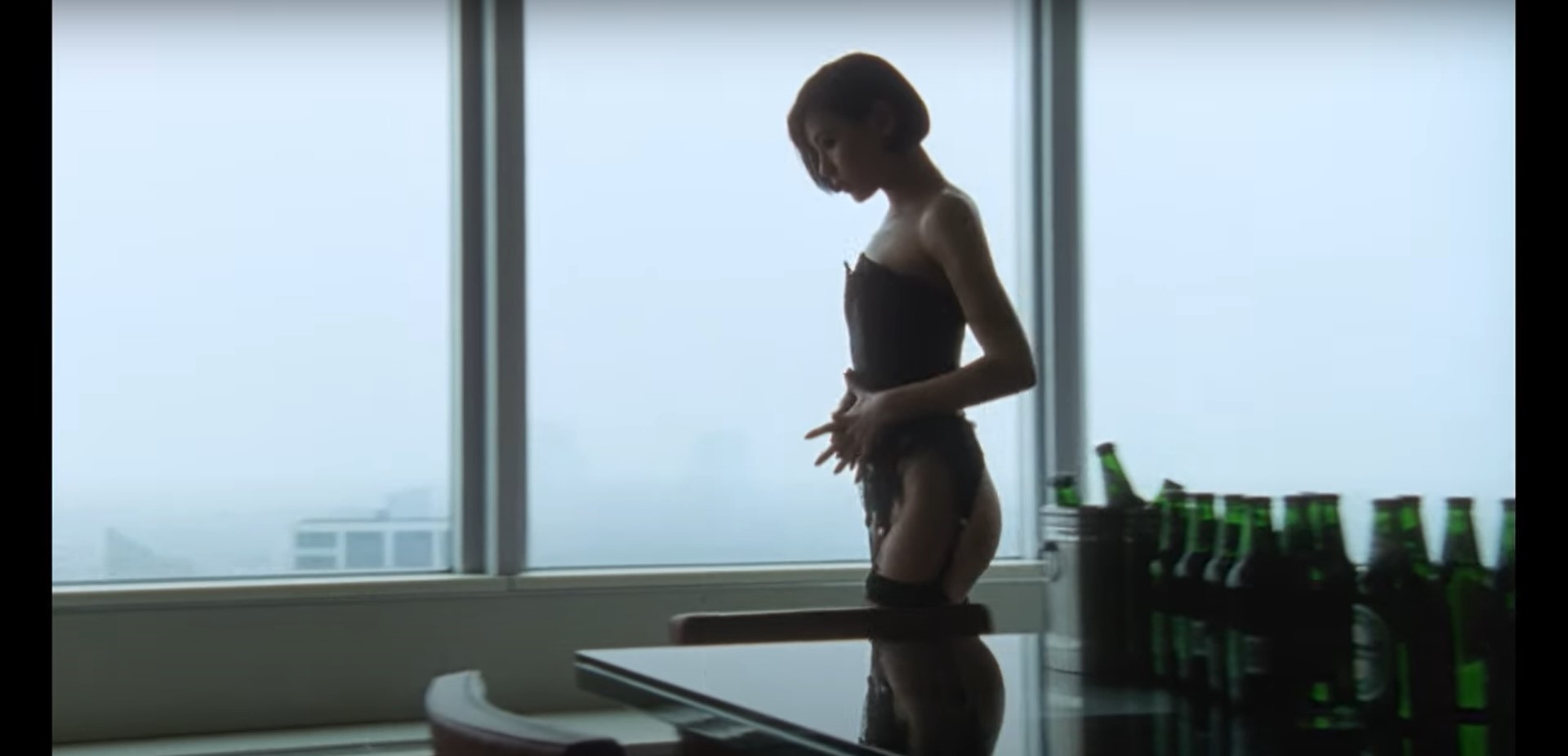
“Tokyo Decadence” is a sure-fire way to start the beginnings of an actress’s career with a rousingly provocative and difficult role that garners attention.  For Miho Nikaido at the very start of her career, the lead role looked like a Tuesday.  The then 26-year-old Nikaido, playing a 22-year-old Ai, stuns as a sympathetically shy S&M prostitute with underlining conflicting issues surrounding her social position, personal interests, and mental status.  The opening scene with her legs lifted and spread strapped into stirrups and her bold colored red lipstick mouth buckled with a black open mouth gag complete with matching blindfold diverts eyes away from the usual nudity focal point.  Instead, we’re more attuned to the happenings of a mild manner, smiling man, who we assume bound her down under professional servicing, as he stands over her, gently stroking her, and telling her to trust him and that he won’t hurt her.  Then, out comes the drug pouch and needle.  The jab sends shock waves of pleasure down Ai’s submissively fastened naked body, ending with Ryu Murakami’s extreme close up on Nikaido’s face after being released from the facial constraints.  Her slightly crooked teeth shiver just past her stark red lips, agape by ecstasy, and the single tear drops from her soft eyes express the gargantuan amount of pleasure coursing through her helpless corporeal temple in a look that says, I am in pure, undiluted heaven.  The opening sets the tone.  Funny enough, Nikaido would go on to have a role in another underground S&M inspired drama “Going Under,” but instead of acting like the subservient dog or humiliating customers by having them suck on her stiletto heels, Nikaido steps aside as the girlfriend to Geno Lechner’s dominatrix role. Sayoko Amano, Tenmei Kano, and Masahiko Shimada co-star.

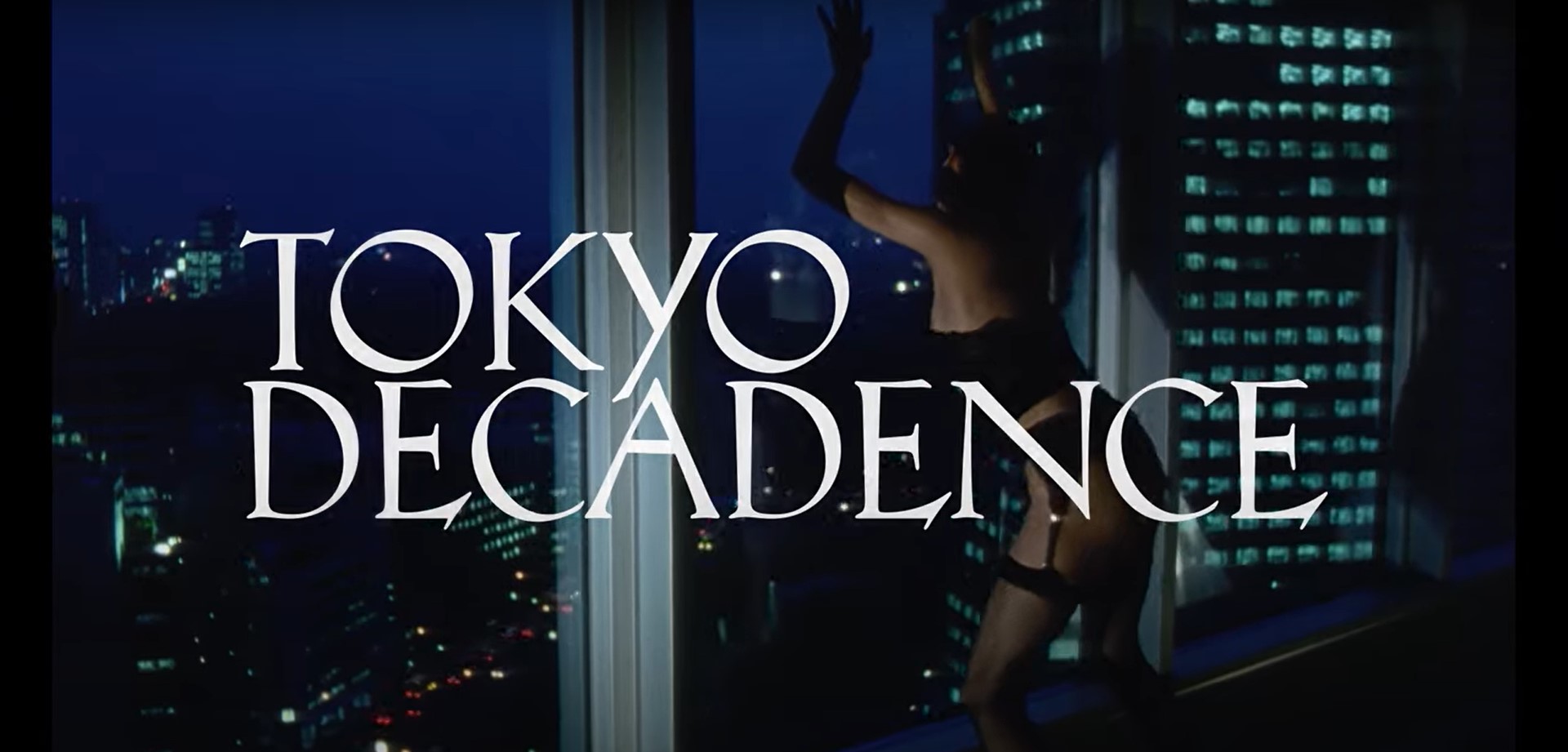
Perhaps one of the most noticeable or mainstream pink films from Japan because of its titillating and iconic cover art of Miho Nikaido arched forward and hands pressed high on the glass above her head, leaning against a tall and large window pane in a skimpy black lace and leather getup and overlooking the city lights and bustling residents,  The very image epitomizes erotica and taboo acts and the narrative itself is nothing short of that slight zing of sordid pleasure we all experience in our minds, bodies, and especially in our more private areas. Pulled straight from Ai’s first job encounter, post-opening credits, with a wealthy business type Mr. Satoh’s and his perversion in dominating and humiliating without much physically contact in the first few couple hours of their session. The long-standing stint pushes Ai’s sexual limits without breaking her spirit that solidifies a baseline for what’s to come and what came crushes Ai’s sexual stimulation beyond the means of pleasure with a petri dish of distinctive peculiarities outside her already fringed tastes. Ai’s self-dismissiveness keeps her plugging away at a profession that’s eating away her, coming close to death in many various forms involving clients’ perversions. When she’s hired by another mistress in a co-op of dominance on a client, an unveiling of empowerment and a lavish lifestyle promises potential happiness away from her fairytale dream of reconnecting with her former lover, but that ultimately becomes a hard pill to swallow after swallowing an unidentifiable pill popper provided by her newfound friend in the trade, a pill that inebriates her into wandering the streets in search for her ex-lover. “Toyko Decadence” is as somber as it is sexy with a paralleling dark trip down delusional happiness and demented fantasy for a young woman clinging onto a past that has completely forgotten her.

Landing in at number seven on the spine is the Unearthed Films release of Ryu Murakami’s “Tokyo Decadence,” receiving a Blu-ray release on the label’s Unearthed Classics line in a widescreen 1.66.1 aspect ratio. The region A release has a runtime of 112 minutes and is plainly evident in exhibiting no rating listed on neither the back of the Blu-ray case nor the cardboard slipcover. After doing some light digging, there is a longer cut of the film with more explicit scenes, especially with Mr. Satoh, that would have adorned the U.S. release with a X-rating. The Unearthed Films release is not that cut; nonetheless, the film before us is still just as decadently beautiful in content and in quality. Stable image and color under the 35mm stock, Tadashi Aoki flipflops between mood lighting and natural light, contrasting the duality of Ai’s worlds with a lightly softness reflecting off the focal subjects. Details extend the same softness as skin textures appear overly smooth most of the time albeit the design of natural color tones. One instance of continuation concern is a prominent scene miscut left in during post at the editing room table. Though the miscut, of a closeup on Miho Nikaido, doesn’t cause a continuity error in the narrative, it does break the integrity of the scene. The Japanese LPCM 2.0 mono sound has a phenomenal, 1920kps bitrate, sound design created around a lite soundtrack that doesn’t leave room for ambient and dialogue tracks to hide behind, as if this release needed to hide behind its brawny audio output. “Tokyo Decadence” is all about the experience and every breath and movement is as felt as it is heard with a discernible dialogue well synched with the English subtitles. An optional English dub track is also available. The Blu’s special features include a release-party featurette/promo trailer that has snippet interviews from the Ryu Murakami during the event, gallery stills, and trailers. An absolute ideal upgrade for one of the best pinksploitation films to ever walk that thin line between sadism and masochism; however, I do believe Unearthed Films insisted upon the safe word by not, whether by choice or other circumstances, retrieving, updating, and releasing the fully uncut and unedited “Toyko Decadence.”

Own the new Unearthed Films Blu-ray of “Tokyo Decadeance” today!

Mindy Robinson Takes on EVIL Strippers in “Brides of Satan” reviewed! (Dark Side Releasing / Blu-ray)


“Brides of Satan” available at Amazon.com!  DVD and Blu-ray!

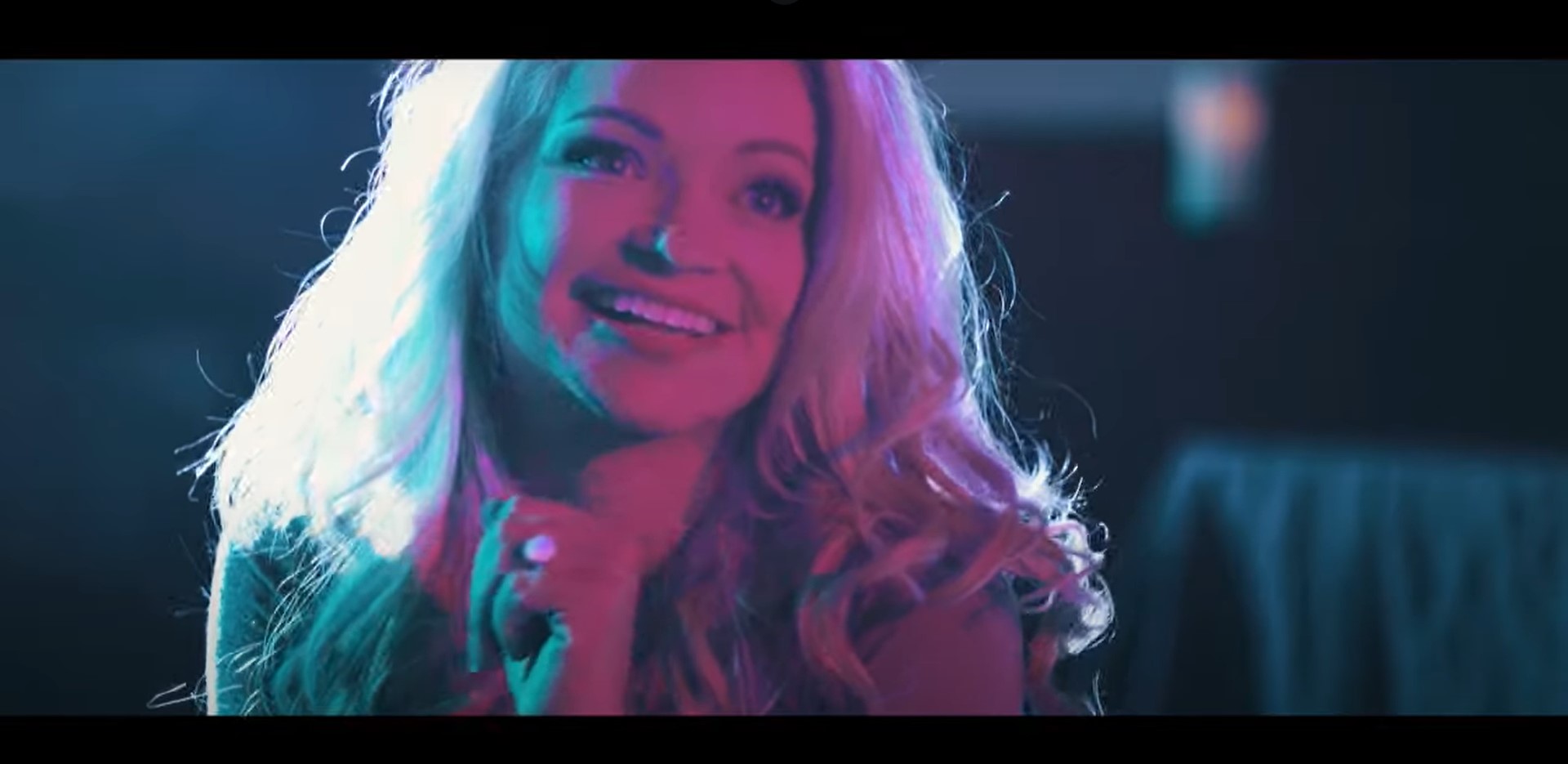
Engaged happy couple Mary and Charlie want to dip their toes into debauchery before tying the knot.  When they patron a dive strip club, looking to unwind a nervous Charlie down a notch with a sultry, on-stage lap dance, the club is suddenly seized by three well-armed Satanist strippers looking for quick cash and a virtuous sacrifice to conjure a demon.  Kidnapped for the dark ceremony, Mary and Charlie find themselves in their grip with Charlie being murdered to complete half the ritual, but Mary is able to escape when a rival gang claims rights over the territory that sidetracks the Satanists summons.  Mourning over her fiancé’s death, Mary is taken under the wing of a junkyard sensei who trains her to fight and to be fearless against all those in her path for vengeance. 

From horror enthusiast Joe Bizarro comes the filmmaker’s first written and directed feature film, the pastiche grindhouse revenge-thriller “Brides of Satan.”  Bizarro, who co-produced “Another Plan from Outer Space,” the Lance Pollard offshoot homage to the Ed Wood Jr.’s iconic science fiction-horror “Plan 9 From Outer Space,” co-writes his 2021 exploitation with “Take Shelter” cinematographer and first time screenwriter Noel Maitland penned to be a wild-and-strange ride through the various territories of genre landscapes.  Film in and around the greater Los Angeles area, “Brides of Satan” stitches the perceived strange and unusual charisma of L.A.’s alt-scene offerings around a familiar framework with a few arbitrary bits of bizarre.  Along with Bizarro and Maitland is fellow executive financier Lance Pollard, who we mentioned had previous dealings with Bizarro, and the jacks of all trades Victor Formosa (“Iron Sky:  The Coming Race”) along with William Wulff, Celeste Octavia, Lisa Mason Lee, and Mike Ansbach serving as producers on the Joe Bizarro Studios labeled production. 

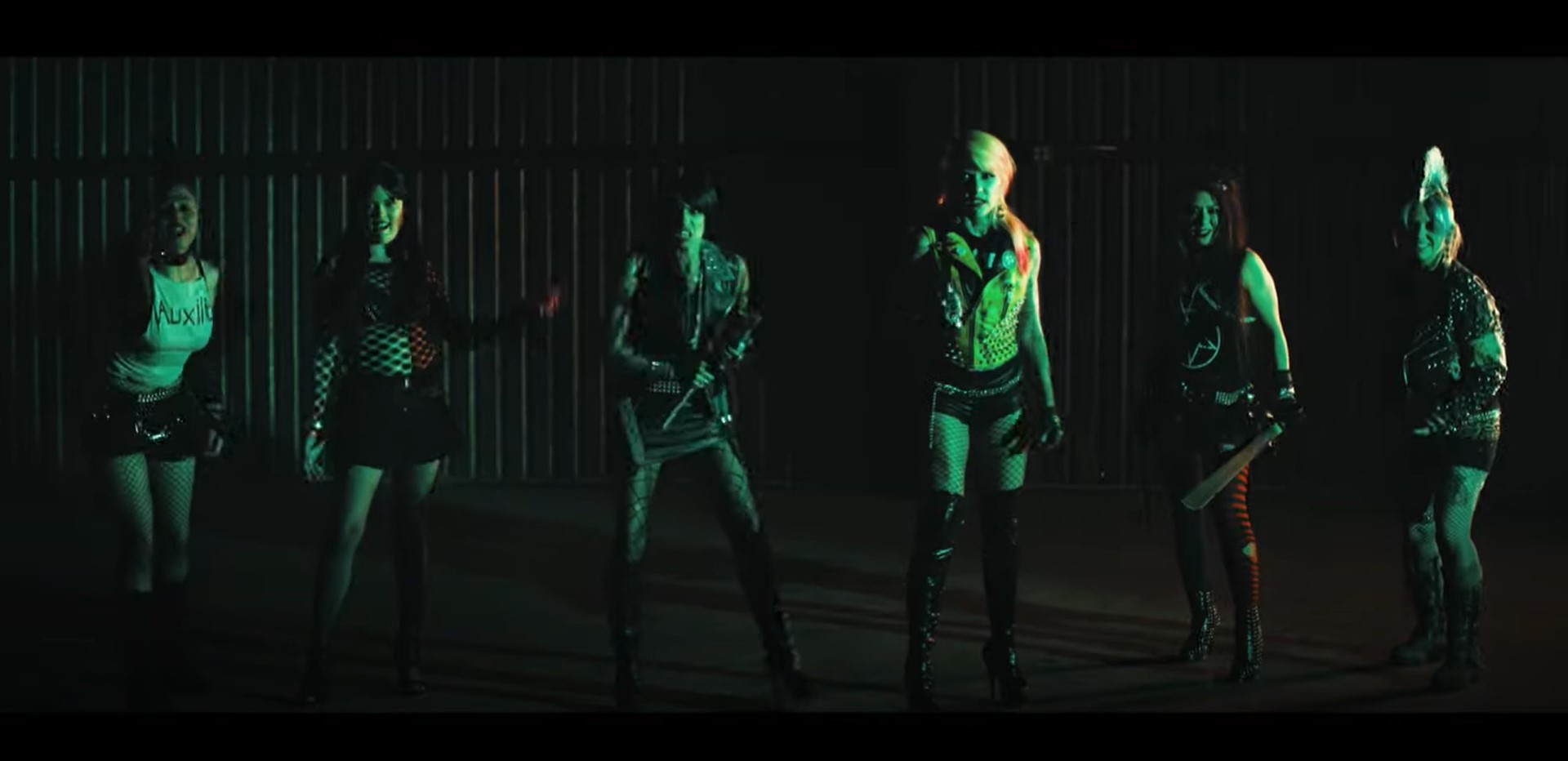
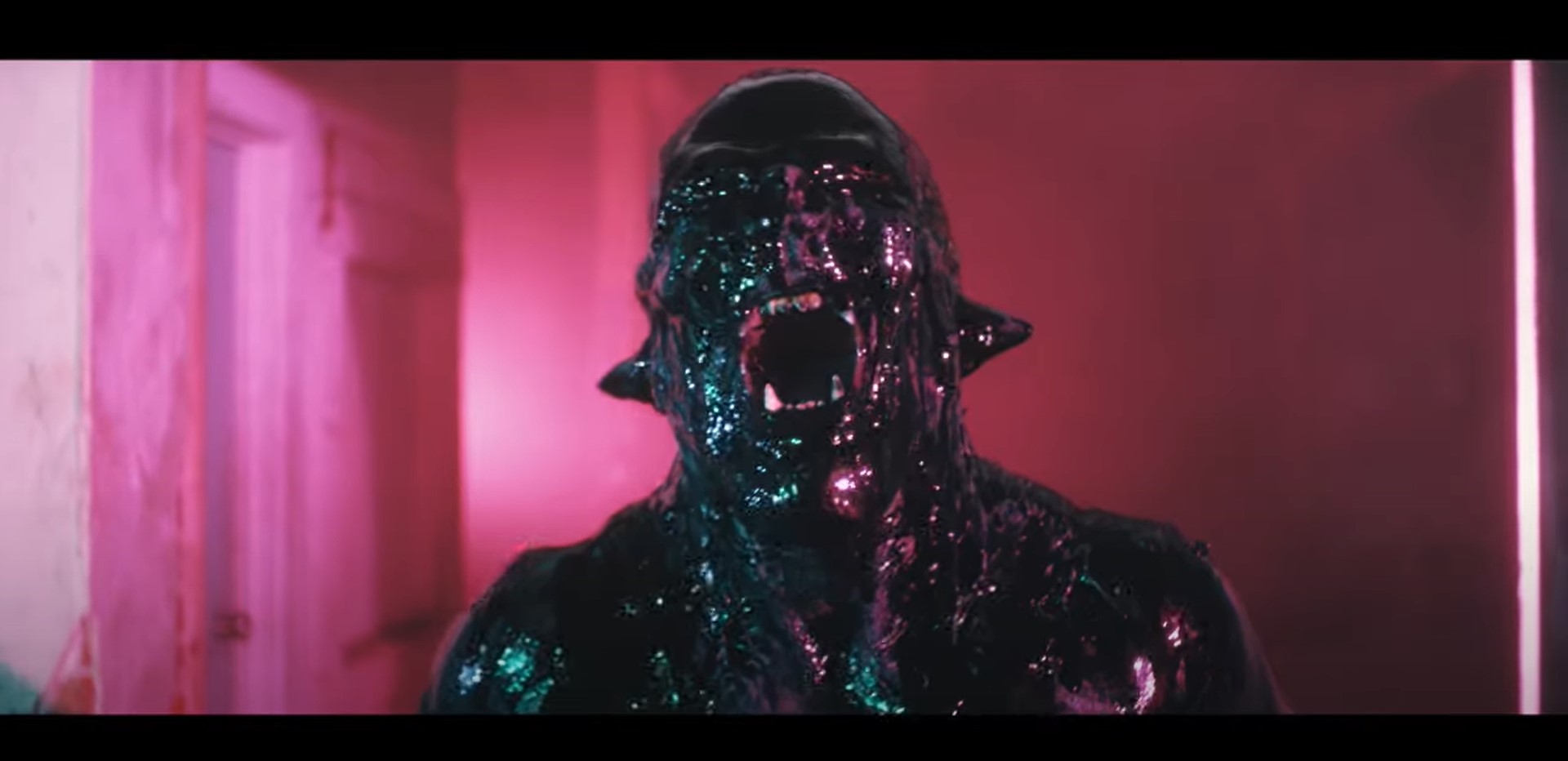
Right off the bat, the montage introduction of the tri-gang strippers, played by Alice McMunn, Joanna Angel, and Rachel Rampage, with sizzling eroticism and skin, seductively gazing into the camera and pole dancing captured in slow motion immediately sets the tone for the rest of the story. Laden from their colorfully neon-dyed hairstyles to their fishnet-led leathery platform heels with body ink, their focal opening is a bit of Joe Bizarro in a nutshell as well as an eclectic look into a cast comprised of goth, burlesque, body-mod, and fetish aficionados.  I was also hoping for a cameo from adult actress Joanna Angel’s husband Aaron ‘The Small hands’ Thompson, but alas, no such luck.  Though McMunn, Angel, and Rampage get the juices flowing and motivate the narrative into a plot point of character deconstruction, reconstruction, and revenge, neither of them are the top bill for lead role.  That responsibility falls solely on the “Evil Bong” franchise – wait, there’s an “Evil Bong” franchise? – actress Mindy Robinson that, through a (Joe) bizarro world, adds an interesting element of casting for the outspoken Republican commentator who happens to also be the girlfriend of former mixed martial artist and “Expendables” actor Randy Couture.  Robinson amiably plays a loving fiancé Mary to an equally amiably, yet unresolved, Charlie (Michael Reed, “The Disco Exorcist”). Eventually, Mary’s woman scorned vengeance becomes a juggernaut of kickass, learning geriatric kung-fu from a junkyard hobo, but Robinson disingenuously leaves her fluffy and bubbly self into a character who’s supposed to be this badass that beats half-naked Satan acolytes in one blow and can vanquish netherworld demons in the bat off an eyelash. Much of the film is Robinson promenading provocative and oddball locales, meeting more provocative and oddball characters, to track down her fiancé’s murderer in a forfeiture of commanding the scenes with scene-stealing presence. Though she bests an array of stud-cladded, garage punk baddies armed with arm drills, nail bats, and switchblades, their brief moments on screen leave more of an impact than the principal protagonist and much like the gang of three strippers, in which two-thirds of them cease to exist after approx. 15 minutes into the film, they’re built up as more prominent players in this psychos-ville showdown yet fizzle to literally just a passing moment in the narrative, giving way to a film full of nothing but near essentially cameos from Anatasia Elfman (“Shevenge”), Ellie Church (“Frankenstein Created Bikers”), Sarah French (“Art of the Dead”), and Damien D. Smith (“The Purge”). There are also true cameos from “Blood of the Tribades” filmmakers Sophia Cacciola and Michael J. Epstein, professional burlesquer Olivia Bellafontaine, and Madelyne Cruelly from the pirate punk band Yours Cruelly.

“Brides of Satan’s” gimmick is to live up to representing the yield of grindhouse cinema and for the most part, Joe Bizarro cultivates a passable resemblance by borrowing from the constructs and the ideals that came from them of the golden age of independent cinema decades between the 60’s and early 90’s and reworked them into his own passion project. “Brides of Satan” is undoubtedly derivative in most of designer elements, but I did find Bizarro’s concept of uniting the alternative network and B-movie troupers into a singular movement to be refreshing in it’s something you don’t regularly see or experience too often out of the shadows and living in the daylight. As disparaging as it may sound, the sensation becomes that carnival sideshow effect where the societal outcasted abnormalities entrance and pluck at your curiosity strings much to the same effect that ostentatious or surreal horror and sci-fi movies are a way to escape the harshness of one’s own bleak day-to-day reality. However, Bizarro didn’t quite achieve the paragon of his idea not because of his cast, who are mostly stupendously talented in their own rites, but rather more with a watery script barely sustaining flavor to its revenging aspects and supernatural rifts, the imbalance amongst characters, and a dialogue so intrusively oversaturated with hackneyed one-liners that the next words out of their mouths are predictable ones. That tiredness, that sparkless originality, that familiar taste again and again is what ultimately quells “Brides of Satan’s” fetching title and it’s weighted of promise.

Rowdy and burning with streaks of fluorescent colors, “Brides of Satan” is a come Hell and high-water tribute for exploitation film lovers and the Joe Bizarro debut is now on high-definition Blu-ray home video from Dark Side Releasing.  Presented in a widescreen 2.39:1 aspect ratio on a BD25, Bizarro and Maitland, whose technical trade in director of photographer is implemented here, opt for a tenebrously smoky and shadowy obscured grindhouse-noir that innately secretes tactile details but do offer that sense of mystique danger and a carnivalesque veneer at times, using lighting techniques to accomplish the desired look.  The English language Dolby Digital stereo has lossless quality from a 384kps bitrate that, despite its dual channel limitations, outputs decent robust tracks.  Dialogue is crisp and clear, ambient background noise and ransacking has ample range and depth, and the original soundtrack from Ausie Jamie Coghill (Jimmy C) of The Jimmy C Band offers a lounge-grunge-like Rock and Roll score hitting all the right notes apt to the narrative.  The opening monologue from Rick Galiher doing his best Vincent Price vocals.  If you closed your eyes and just listened to the tracks, you can distinctly hear every tone and note in everything from a wonderfully broad audible spectrum. The special features include an audio commentary with the director Joe Bizarro, a handful of deleted scenes and bloopers, a photo gallery of stills and alternate posters (which there are a ton of), and a short skit entitled “Rad Roommates,” a pseudo-sitcom produced by Bizarro about a man and his monstrous hairball of a lowlife roommate.  If you’re lazy and don’t feel like navigating through the menu options to the special features, wait until after the feature’s credits roll through as the special features will follow, beginning with “Rad Roommates.” The Dark Lord takes a bemusing backseat that drives “Brides of Satan” more toward solely being a revenge thriller with few incomplete spidering out subplots that belly up by its own creator. 

“Brides of Satan” available at Amazon.com!  DVD and Blu-ray!

Prostitution Might Be the Oldest Profession but Killing People on Camera is the Evilest! “Snuff Tape Massacre” reviewed! (SRS Cinema / DVD)


Pick Up This Nightmare Fuel of “Snuff Tape Massacre” on DVD at Amazon!

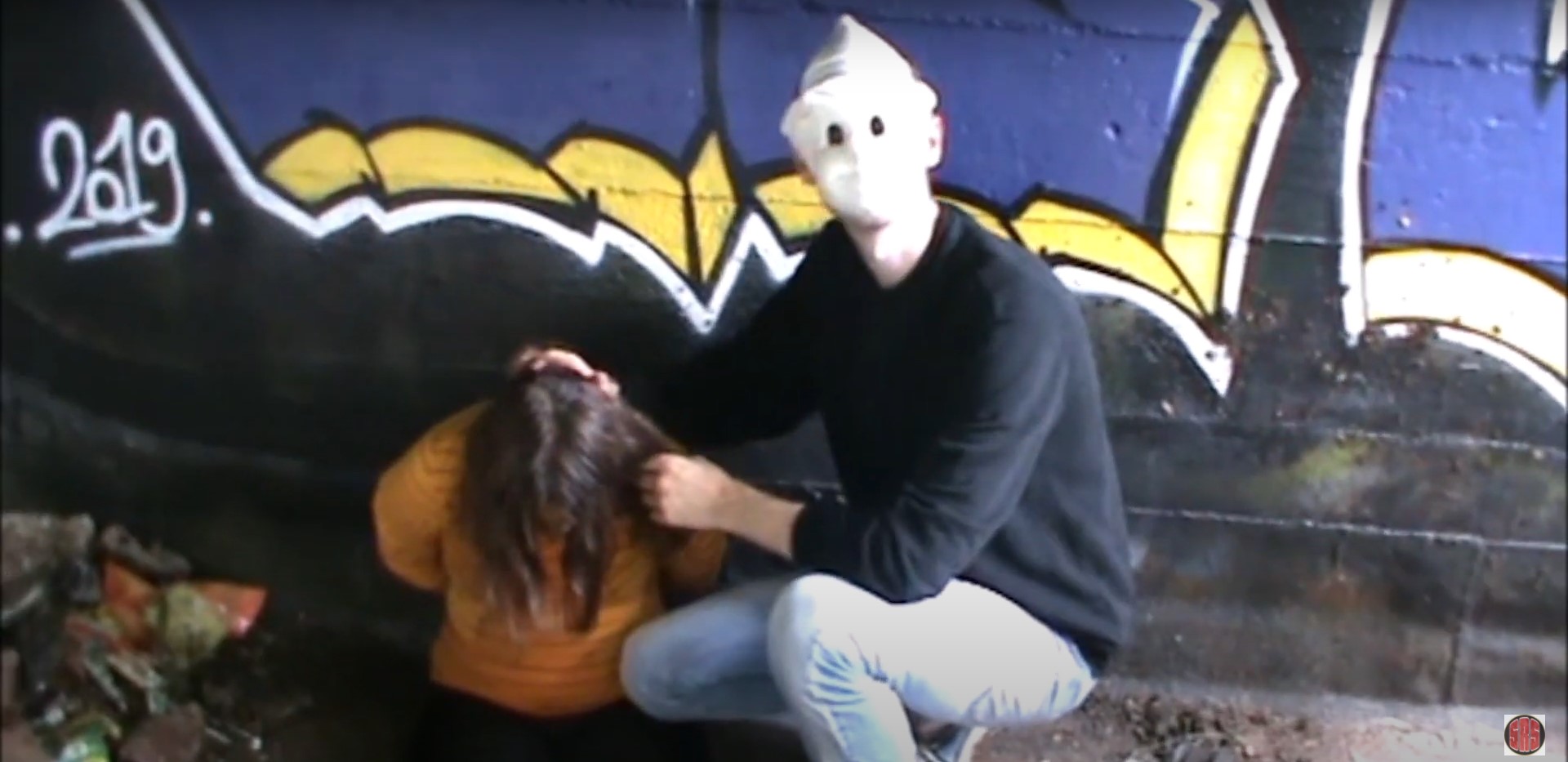
Two killers are employed to do what they do best, to make a snuff tape.  Brokering the deal is Brand, a middleman serving on the behalf of a unknown client and relaying the job’s details to his contracted filmmakers.  The casted stars of their next production is a young pregnant woman who works at the home for the disabled and one of the residents, a 15-year-old deaf-mute girl who can’t utter a single sound due to her extreme incapacitated condition.  Pretending to be making a documentary about the disabled, the two killers were able to gain the women’s trust, easily drug them, and move them to a secluded location where the sadistic torture and affectionless murder show begins.

Straight torture and gore with no cinematic style or undertone depth is not every moviegoers preferred cup of tea.  For this gore hound, I can take it or leave it but would enjoy the darkest recesses of human sadisms and fantasies more if something was more germane to the reason for gore, but as far as Juval Marlon’s “Snuff Tape Massacre” is concerned, what you receive is a single perspective propelled by unsympathetic maliciousness, nihilism, and a taste for that metallic sweetness of blood.  The Germans are fairly well known for their insensitive, uncouth, and extreme films from the likes of directors Olaf Ittanbach and Jörg Buttgereit.  Does Juval Marlon have the blood and guts to be on the same level?  His written and directed 60-minute independent feature, also known as “Stermgewehr,” (“rifle” in German), aims to be a gruesome shocker under Marlon’s own befitting Beheading Films banner.

Obviously, none of the following names will be a part of a familiar, household cast fixture.  These types of gorging gore films usually have a small and conversant with each other cast of at approximately a hand full of willing actors and actresses to possibly mar, or better yet castrate, their acting aspirations with needless disturbing content that’s ironically overstated as well as understated.  “Snuff Tape Massacre” has a total of five members in the cast and out of the five members, only one uses a first and last name. The others go essentially dark with their real or full names anonymous to the world because who would ever in their right mind want to be associated with a movie about a snuff film? Thomas Goersch is the only full name credited and the only actor who a respectable credit list. However, Goersch has had many publicly and critically panned low-rent features with “The Curse of the White Woman,” “Bloody Shadows,” and “Poltergeister Experiment” being just some of his most recent samples that fallen into the depths of unsalvageable dumpster fires (and this has perked my darkly morbid and unusual curiosity in bad, bad movies!). As businessman Brand, Goersch never gets his hands dirty, leaving the role and his name unscathed and to leave all death-dealings to his hired hands in a pair of automaton teenage terminators including the head Snuff Filmer (Navarro) and his unnamed companion on the trail of blood. At least Goersch has a bit of Bill Zebub underground star power in Germany, Navarro exists only in this film as the one of the two mostly shaded and masked killers who kidnap actresses Tanja and Maria V. to exploit. The ruse surrounding the kidnapping leaves what ever little effort there was to be, to make the ordeal more engaging and exciting, was left back on Brand’s phone call as the Snuff Filmer’s plan to be pseudo-interviewers for a documentary goes off without a hitch. Maria V. does find as an interviewee of a second-year social worker enthusiastic about helping but her fellow co-kidnappee in binds Tanja literally serves as a second body to humiliate, torture, and execute by two desensitized individuals that isn’t a far stretch from their rigid performances as high and tight killers.

The crux of the problem with “Snuff Tape Massacre” is that the movie is just too long. Right now, you’re sitting there, reading this, cross-eyed by confusion, and thinking to yourself, “Steven, didn’t you say this was a 60-minute movie?” The answer is, yes, I did say that, but Marlon’s previous work, of similar extreme fetishisms, have been short films and “Snuff Tape Massacre” feels very much like a short film that’s been mishappened by a rack, stretched beyond its limits to where the possibility of being recognized for what it is, an orthodox gore and shocker, no longer factors into the equation. Scenes run too long and are over kneaded to the point of losing its impactful rise. For instance, when the young 15-year-old mute-deaf girl is being threatened by the Snuff Filmer’s automatic rifle barrel as he stuffs it into her mouth in an unspoken, simulated act of fellatio, the scene drags on for minutes upon minutes. As aforementioned, “Stermgewehr” in Germain is rifle and so these scenes should have some significance importance but overall feels juvenile and executed with poor time management. Marlon obviously doesn’t have two Nickels to rub together to fund this film, using old compact, pocket-sized digital cameras to record the varying levels of video and audio quality, but the one thing us gore hunds can appreciate is the gore. We can certainly tell a fake leg, arm, and even penis when one comes on screen and “Snuff Tape Massacre” is not exempt from using more-so than obvious inner details with no arterial or vascular details whenever a leg or arm is chopped (or even sawed) off with a dull hatchet, but what can be admired is the seamless look of the leg and the arm to the actresses. We’re not talking about a mannequin’s appendages or a plastique digits here when the dragged-on interview has finally wrapped, and the real raw material begins with decent prosthetics and blood pumping mechanisms that squirt blood longer and for the duration. The most effective effect is dick-hole jab stuck on repeat until the snuffer hits what we all presume is the back off the prosthetic piece but in the back of our mind, we’re really thinking bone. It’s a crotch-grabbing, leg-crossing, dick mangling moment no guy will ever forget.

SRS Cinema is well-known for bringing schlocky shockers to the table under the guise of really fantastic and detailed artwork for the banner’s DVD covers. “Snuff Tape Massacre” is no exception here as Juval Marlon’s film is juicy enough to make the company’s Nightmare Fuel line with an unrated and extreme release presented in widescreen 1.85:1 (16:9) aspect ratio in a lower resolution of 720 pixels (due to the compact digital cameras). Though unable to tell what cameras are being utilized, there are two different cameras are being used based on the vast difference in picture compressions with one looking stronger and more detailed than the other. The onboard microphone for the English language dual channel stereo mix is a lossy MPEG audio format that really takes a hit with the inconsistent background noise and electronic interference with a straight hum throughout when Marlon’s industrial sampler score is not substituted for sole audio dominance. Like many other SRS titles, the only special features included are SRS trailers for their catalogue unless you count the aforesaid artwork design of an illustrated half-naked bathtub victim with eyes of kitchen knife-stricken terror as part of the special features package – see below. “Snuff Take Massacre” is considerably low for a repeat viewing, but there are enough scenes that will undoubtedly make you recoil and squirm and that, my gory compadres, is worth the sole price of admission.

Pick Up This Nightmare Fuel of “Snuff Tape Massacre” on DVD at Amazon!


Enter the Patron Saint of EVIL Cannibalism! “The Spanish Chainsaw Massacre” reviewed! (Wild Eye Releasing / DVD)

“The Spanish Chainsaw Massacre” now on DVD!  

A degenerate heavy metal rock band and their pressurized manager are cast off on their very first ever music tour by their financing dictatorial mogul eager to recoup his investment as quickly as possible.  While en route, their van breaks down at the edge of a small town who welcome them with open armed hospitality, warm accommodations, and a hot meal with the promise of a day turnaround on fixing their van for free.  The next day proves to be a joyous occasion for the villagers celebrating their patron saint and little does the band know they’re an unwittingly big part of the ceremony as every villager is a ruthless cannibal ready to devour to the bone their haplessly stranded guests. 

About as vile and gross as they come, “The Spanish Chainsaw Massacre” is a Spanish-bred, slop-house, comedy-horror that plucked from the horror history timeline an unfaithful and a stretch comparison to a portion of the iconic title from the 1974 “The Texas Chain Saw Massacre.”  Writer-director Manolito Motosierra helms nothing remotely familiar to the Tobe Hooper classic, there’s barely the sweet exhaust coughing sound of a chainsaw ripping and shredding through Motosierra’s actual film, but “The Corpse Grinders 3” director has brought one well-known component to his film, lots of crazy long pig action!  Originally titled more appropriately as “Carnivoros” – Carnivores –  in Spain, the 2013 release only saw a U.S. release date merely 5 years ago in 2017 with supplementary prologue footage from Scorpio Film Releasing’s Richard Griffin and his entourage that bares big breasts as well as the only big chainsaw under its unaffiliated storyline of a woman double-double crossing two men to get away with $30K only to find herself inside a seedy hotel room and the unsuspecting starlet of her very own snuff film.  Though I usually adore Griffin and Michael Thurber, who usually has a role in a Griffin release in some random capacity, the opening fits like a square peg being jammed into triangle hole, accumulating confusion more than making sense.  “The Spanish Chainsaw Massacre” is a Fantastika Team and Olga Underground production presented by Tyrannosaurus Entertainment. 

If you can get past all the fart and poop jokes, the band known as “The Metal Cocks” are the epitome of well-received degeneracy in their unromantic, polyamorous pansexual quickies, blatant addictive vices, and an overall uncouth behavior and appearances in a mockery of hair metal bands from the 80s.  Dani Mesado as Rasputin, Óscar Gilbert Escarabajal as Petete, Torete playing himself as Torete, El Capitan Almendra as Bull, and Nereida López Vilaplana as Penny Pussy are Las Pollas del Metal – The Metal Cocks – taking on a rocking tour de force against insatiable backwoods cannibals of Spain.  If you think the band is depraved, wait until you see the villagers’ madness for meat foul up the screen with a mangled dick scene (someone call the expert Felissa Rose!), an intestine eating contest straight from the gut, and the recipe with baking instructions for a popular diarrhea shake.  With viciously varicolored characters like the Spanish whore (“Vampire:  Hounds of Horror’s” Yolanda Berneguer), the unsanitary naked food prepping cook known as The Chef (“Fucking Bastard’s Tam Sempere Miro), and the murderous simpleton Guti (Michael Rodriguez) among others, a motley macabre bunch of crazed cannibals have systematic knowledge of separating and conquering their dinner, each involved in a role important to the façade that plays to the prey’s vulnerability before digging into their food with both hands clawing.  Everything and everyone are over-the-top and that really defines the line between the cold simmering terror family of Texas massacre and the wild family of maniacs of the Spanish massacre; though the idiom says everything is bigger in Texas, Spain certainly has the most peculiar of películas between the two territories.  “The Spanish Chainsaw Massacre” rounds out with Hilario Blas, Miriam Larragay, Ezequiel Campos-Zeta, Raul Dario Gandoy, Richardo Pastor, José Luís Tolosa, Mayama Lia, and Yolanda Diaz Dengra.

Gore aplenty!  “The Spanish Chainsaw Massacre” bathes in troughs of blood as well as other human body fluids that make your eyes sink deeper into the back of your head while your eyes lids slowly act like shutters trying to protect the vision and mind pure of only the blood and not anything else.  That task is a lost cause of impossibility as Motosierra lathers a thick, slick of sick onto every frame, leaving no grotesque rock unturned before and after the victims’ final curtain call.  Yet, in the end, what Motorsierra constructs is the Looney-Toons of descendental cannibalism that’s full of maniacal laughter and delusional actions with no rhyme or reason to determine causality.  The celebrated patron saint seems to require the villagers, or strongly encourages them, to act a fool, to put on a show, and to treat human meat as a delicacy to plunder.  Neither The Metal Cocks nor the villagers receive a proper introduction, backstory, or arc in what is basically a show up and be present for gratuitous slaughter in a variety of random pockets that not all necessarily have to do with the band.  In some scenes, an old military man is tied to a tree, sitting down, and being tossed firecrackers at this crotch while a clown eggs on the kids with frenzied laughter and, in another scene, two adolescent boys are tied to a tree standing and sliced across the belly so they’re intestines can be used for a food race.  Where these characters came from is never touched upon or explained but understood that they’re a part of the festivities toward the patron saint.  Like what AC/DC once said – if you want blood, you’ve got it! – with “The Spanish Chainsaw Massacre” having gallons of it. 

“The Spanish Chainsaw Massacre” is a DVD re-release for the indie distributor, Wild Eye Releasing, as spine number 54 on the company’s Raw & Extreme sublabel.  The DVD, distributed by MVD Visual, presents the 70 minute, 56 minutes of actual feature with 14 minutes of Richard Griffin’s snuff film preface, unrated film in a widescreen 1.78:1 aspect ratio.  I really like this transfer from Wild Eye because of the sole fact of virtually no compressions issues obviously present and that’s not just because of the lack of bonus feature, which is common amongst most of Wild Eye’s library, on the DVD’s limited capacity.  Previous studies on other single feature releases proved Wild Eye to be a mixed bag regarding quality.  With “The Spanish Chainsaw Massacre,” the image quality is highly detailed and lush in black areas and in texture that makes Motosierra’s stomach-churning content that much more stomach-churning. The warm color palette of yellows and reds provides an exaggerated tint of a rural Spanish village.  In contrary to the DVD back cover, the feature’s native language is not English but rather a Spanish 2.0 stereo track.  Much of the dialogue track is all yelling synched well with the English subtitles that are not entirely accurate.  The subtitles are extremely abridged and loosely translated.  A robust metal soundtrack plays into the whole metal brand, but the other tracks lack depth as all outputs, much like the characters on screen, are upfront and loud; yet the compression handling sustains an agreeable fidelity with little no popping or screeching within or on the tail end.  Bonus features include promo videos and the official trailer with a stretch into a credits gag reel of sorts with candid and shooting mistakes in crediting the cast and there’s also an end credit scene that setups the cannibal family’s return with a Christmas themed sequel.  However, 9 years has passed and don’t think Motorsierra is working on any drafts at the moment.  The snap case comes with reversible DVD cover art with a touched up-front cover not pulled from the film itself while the inside has a blown-up bloody aftermath still of the narrative’s first victim with a dislodged lower jaw and a hunk missing from her face.  Ultra-indulgent with biofluid glop, “The Spanish Chainsaw Massacre” is a ruthless, toothless puta de madre of a film if you can get past the stink of butt humor.

“The Spanish Chainsaw Massacre” now on DVD!