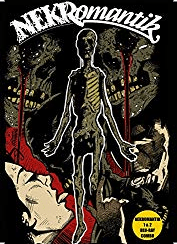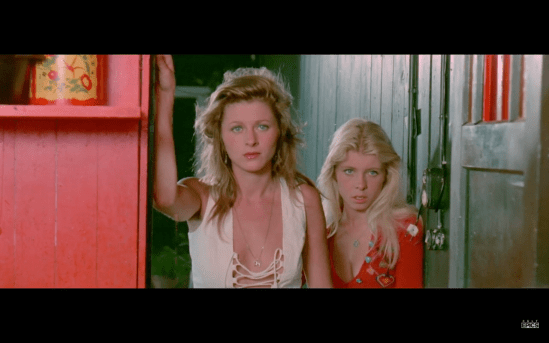
Necrophilia EVIL Will Love You Beyond Death! “Nekromantik” and “Nekromantik 2” reviewed!


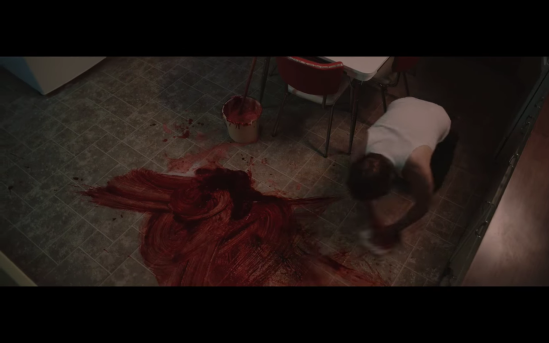
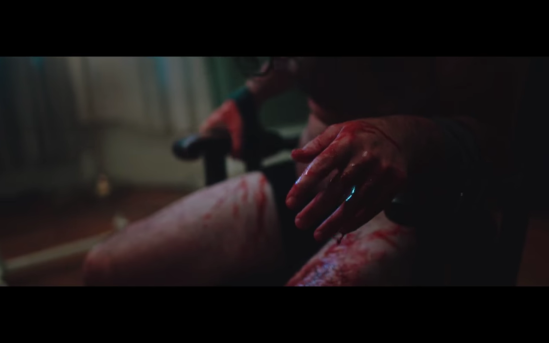
Husband and wife, Rob and Betty, enjoy the company of other people in their bedroom. Those other people are corpses. With Rob’s profession being a street cleaner after grisly accidents, he’s able to bring home bits and pieces of deceased individuals: eyeballs, hearts, hand, etc. When Rob is left in charge to dispose of half decomposed corpse fished out of a lake, the necrophiliac husband brings home a third party to his necrophiliac wife for play time, but when tensions between them rise with the loss of Rob’s position, Betty doesn’t want to waste her life with a deadbeat husband when she can have a dead man give her all the pleasures she desires. Feeling lost without the company of the corpse, Rob struggles to find his place in life and resorts to murdering animals and prostitutes to get his rocks off, leading to an extraordinary life alternating conclusion.

Necrophilia. Necrophilism. Necrolagnia. Necrocoitus. Necrochlesis. Thanatophilia. The act goes by many terms and divides into many segments, but the end result concludes to the same sexual attraction and acts, involving intercourse, with a lifeless corpse and writer-director, Jörg Buttgereit, aimed to exploit the exploits of grave robbers and murderers to stand against the strict censorship that was presently structured around German cinema in 1987. As Buttgereit’s first full length directorial filmed in West Germany and co-written by Franz Rodenkirchen, their censorship battling film, “Nekromantik,” is tinged heavily in necrophilia that, while obviously gross and illegal in the conventions of society, intertwines with the unwavering romantic gesture; a sensual disposition of tenderness and love for the other whether or not their eyeball is hanging out of a decaying socket or their covered in a think layer of body purging mucus. “Nekromantik’s” tragedy isn’t so much in the appalling acts, but in the defining human directions of grief and destruction that ultimately still make us human even if our acts are inhumanity.

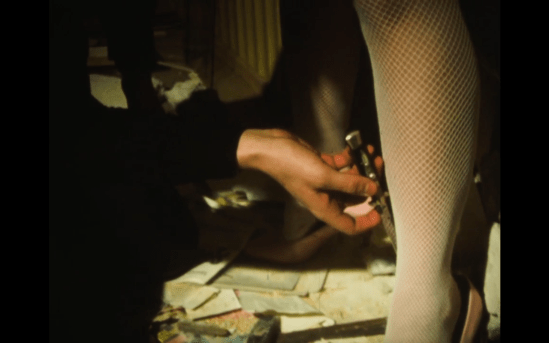
In “Nekromantik 2,” a female nurse named Monika digs up a freshly buried male corpse to be her sexual play thing, but as she questions her feelings for necrophilia, Monika tries to suppress those deviant desires by befriending-to-date a young man, Mark, whole also keeping limited parts of the body while cutting up and disposing the remaining pieces. Seemingly going well with her boyfriend, Monika’s relationship resembles a stint of normalcy, but her desires bubble to the surface as she fantasizes about the corpse and goes to great lengths to keep Mark lifeless as possible during their lovemaking. Mark’s suspicions about her girlfriend does deter him from beauty or his desires for her, but how long can Monika go without her beloved bloated and discolored carcass? What lengths will show go to secure her happiness while taking advantage of Mark warm body?

As an extension of Buttgereit’s “Nekromantik,” “Nekromantik 2,” also known subtitled as “The Return of the Loving Dead,” is a direct sequel in limited fashion with only the corpse being the connecting factor. However, the 1991, East Germany filmed “Nekromantik 2” aggregates and compounds the unsavory lust for the dead that depicts a stronger sense of violence at an explosive carnality in the final act. Along with Franz Rodenkirchen as co-writing, Buttgereit returns to co-write and direct the sequel of considerable unlawful content, according to German authorities that arrested and trialed Buttgereit for poisonous material that could affect the youth of Germany. However, Buttgereit comes unscathed by the tribunal in a justified win against censorship. “Nekromantik” and the sequel aren’t necessarily set in a platonically set society, but held within the confines of an invented world chockfull of ignorance and drenched in biodegradable bliss.

Daktari Lorenz stars as the hopeless romantic for putrid partners. Lorenz is a good look for the Joe’s Street Cleaning Agency employed Rob as Lorenz is a scrappy man with thinning wild hair set on top of a receding hair line and has a feral soul behind his wide eyes, fitting for a fellow who did a short stint in porn in later years, but starring as Rob, however inglorious he might portray the role, wasn’t Lorenz only contribution to Buttgereit’s “Nekromantic” as he became the special effects guru behind the corpse’s fruition – the corpse that would be Rob’s character’s rotten rival. Rob’s tragedy situation is a plight of villainy against villainy, leaving the role unsympathetic to audiences but still leaving a residue impression of sordid anxiety. Rob’s only rival to necrophilia is within Monika, played by Monika M., from “Nekromantic 2” who goes through a different kind of internal struggle. Whereas Rob struggles with loss of two companions, one living and one dead, Monika struggles oppositely with one living and one dead and the choice she must make between the two. Monika doesn’t long for a cold, slimy, dead body and she choices to dispose the one that was held firm in her embracing grasp; yet she has an inkling for normalcy, a urge to undercut her deviancy, and acts upon the reformation despite the addictive callings for necrophilism. There’s not much in terms of a supporting cast in his low-budget shock horror, but the few co-stars include Beatrice Manowski, Harald Lundt, and Mark Reeder.

Overall, the “Nekromantik” films can still produce shock systemically despite being antiqued from the ye ole days of Video Nasties from the 80’s. Director Jörg Buttgereit might be thought perverse or mental to pinch body parts or dead bodies for tales of romance, but no matter his intentions to bring to the cinematic table, Buttgereit could be considered a far-fetched genius delivering the very definition of necrophilia to the screen and hoisting up a narrative around a taboo and illegal stricken act in the name of anti-censorship. Both films are nearly dialogue-less and, perhaps, wouldn’t have been highly accepted in the cult world if the score wasn’t as poignant or powerful as it was. Composed by Hermann Kopp, John Boy Walton, and, again another hat, Dakari Lorenz, as well as Monika M. in the sequel, they compose a classical and new age soundtrack that’s neither obtrusive to the ears nor not necessarily out of bounds of being parallel with the explicit material, marking the tracks as much as a character and being the quintessential dialogue much needed for a virtual silent, and extremely graphic, social commentary piece.

Cult Epics has really outdone themselves with a fantastic re-release of their previous issues of the “Nekromantik” films, releasing a limited edition, only 500 copies, Blu-ray release of both films, sheathed not only in their individual slipcase with original artwork, but also housed fully in a larger, double-sided slipcase bundle with artwork by Martin Trafford whose been a long time collaborator with director Jörg Buttgereit. The two films are presented in their original aspect ratio, 1:33:1, with two cuts available of “Nekromantik”: a director approved, super 8mm restored transfer, blown up to 35mm, that’s of a relatively washed image, but is vastly superior and clean look with hardly any blemishes upon the reconstructed coloring, which looks great considering. The second cut, a 35mm “Grindhouse version,” is a HD untouched version that keeps in the burns and blemishes and emits a warmer image in comparison. The 16mm, director approved transfer of “Nekromantik 2” is also neat, clean, and infraction free with a more natural color scheme overlaying and not as stylized as Buttgereit’s first film. The German language Dolby Digital 5.1 surround sound with re-transcribed English subtitles puts the vigorous soundtrack on a pedestal in the midst of previous releases that saw lossy audio compositions. With hardly any dialogue and next to none excitable action in both films, the burden lies truly on the back of the score that’s riveting and powerful and the right call to improve amongst the options for tinkering. There are also German language 2.0 stereo mixes available. A wealth of new and old bonus material includes the new transfers mentioned above, plus introductions by director Jörg Buttgereit, Q and A with the director at the American Cinematheque, audio commentary on both films by Buttergereit and co-author Franz Rodenkirchen with Monika M. and Mark Reeder included in “Nerkomantik 2,” the making-of for both films, “Nekromantik” featurette, still galleries of both features, two isolated versions the films’ soundtracks plus a live version of “Nekromantik 2,” “Nekromantik 2” post cards, and a couple of Buttgereit short films entitled “Hot Love” and “A Moment of Silence at the Grave of Ed Gein,” plus music videos and live concerts from the director, Monika M., more. Cult Epics’ wrote the definition on the definitive release for “Nekromantik” and “Nekromantik 2” and if you thought the content couldn’t get any gooier, grosser, dissident, and vile, Cult Epics said hold my beer and went to grave and back with a phenomenal package bundle that’ll be a necrophiliac’s delight as well as a gory gem in the collection of any horror film enthusiast.

Visit Cult Epics for your copy!


Plus, the holidays are right around the corner and at http://www.cultepics.com you can gift yourself or gift to others their very own Messed Up Puzzles’ 1000 piece jigsaw set inspired by both “Nekromantik” and “Nekromantik 2!”  These NSFW puzzles are a limited run, with 50 out of the 300 signed by director, Jörg Buttgereit!  (Selected randomly through distribution).


Insemination EVILS in “Bigfoot: Blood Trap” reviewed!


The folkloric Bigfoot goes bananas on one man’s family, killing his wife and young daughter before leaving him crippled. Years later, the same beast rips the guts out of two tattooed women filming a girl-on-girl romp in the middle of the woods after mistakingly gunning down Littlefoot with their accompanying high powered rifles. Meanwhile, gun store owner, Shannon, receives news that’s she’s inherited land from her estranged, molesting grandfather that could be worth a small fortune. Before opting to sell the land, Shannon, her brother Billy, and her two uncles, Bob and Chester, aim to have a good old fashion hunt, but are viciously attacked by the monster. Barely surviving the ordeal, they managed to capture the creature with a tranquilizer gun and phone in an eccentric cryptozoologist, Dr. Corman, who presents a radical proposition: To prove his missing link genome theory, he wants to conclude that Bigfoot can, in fact, inseminate a human female to produce an offspring. Though crazed and inhumane, the wild idea could bring in loads of capital from all sorts of scientific angles, but the greedy captors soon learn that’ll it’ll take more than a pretty face to get the legendary and mysterious Bigfoot into the proper mood for lovemaking!

With the exception of a few films, the lesser known Sasquatchsploitation genre has been more schlocky exploitation than of Bigfoot doing some serious rampaging. Critics from around all outlets, small and big, have mercilessly dumped upon the hairy big fella, calling the flicks stinky as much as reeking Bigfoot in it’s natural habitat. Unfortunately, “Bigfoot: Blood Trap” sustains the same fodder and, perhaps, evens lowers the bar even further. Despite claims of the satirical motivations and plenty passion for the project, the John Orrichio directed film released in 2017 is a bit of giant mess. The New Jersey based Orrichio (“Paranormal Captivity”) collaborates with Edward X. Young, who was thrusted into scandalous controversy with this film as he was then an active candidate for a member on the New Township Board of Education. Safe to say, a storyline involving young women being kidnapped for rape and insemination didn’t go over well with parents, but Young and Orrichio sallied-forth to bring us a plot about an abomination from the abominable.

As aforementioned, Edward X. Young steps into the role of a creepy cryptologist named Dr. Corman whose obsessed with impregnating an abducted, innocent young women. With extensive credits in no-budget horror, including “Mold!” and themed holiday slasher “Easter Sunday,” Young is highly enthusiastic about his part, being one of the main fixtures of the overhauled production, evening tackling the special effects rich with blood soaked intestines. Another lasting cast member is “The Soulless” actor John McCormack as uncle Chester. Rustic as as he is rusty, McCormack bulldozers through his lines, never letting emotions and inflections carry his performance to fruition. Playing Chester’s nephew, Billy, is “Bloody Christmas’s” Dennis Carter Jr. With turbo energy and a high, if not zany, voice, Carter blossoms more of the satire from hiding, especially when contrasted against his sister, a gun-toting, possessive, money grubber named Shannon played by Chrissy Laboy (“Long Island Serial Killer”). Young, McCormack, Laboy, and Carter are the staple four that have the most scenes, but since the production spanned over the course of years, main characters came and went like yesterday’s bagel, introducing other characters into the fold from a supporting cast that included K.J. Hopkins (“Witches Blood”), Richard Szulborski (“Paranormal Captivity”), Gregory Stokes, and John D. Harris Jr.

As much as one can open their mind to all types of movies, across a vast spectrum of genres, sitting through “Bigfoot: Blood Trap” tested patience, will, and interests. The over-the-top gore, with strewn organs being, sometimes awfully blatantly, ripped from the bellies of Bigfoot victims did not turn heads away in disgust. The problem is more insidious with sloppy, shoddy technical gaffes with a brain seizing storyboard and choppy editing topping the lineup. Performances eek by without much scathing and one could even look past the joker in the “Trading Spaces” monkey suit passing as a vicious Bigfoot, but the lack post-production effort, especially with such a lengthy shoot, kinda says, “Hey! Let’s wrap this up! “Pronto!” and carry on with our lives without batting an eyelash in attempting at beautifying a hunk of ho-hum creature feature, but there is one positive thing about “Bigfoot: Blood Trap,” Orrichio manages to pull off 95 minutes in a sex with Bigfoot bonanza and I’m sure nobody else can claim that title.

“Bigfoot: Blood Trap” is released onto DVD home video courteous of Wild Eye Releasing on their Raw & Extreme label. The DVD is presented in a widescreen, 1.78:1 aspect ratio, that often looks stretched over a canvas with plenty of digital noise and low lighting woes. Colors look okay and same can be said for skin tones. There’s hardly any tinting so all, if not most, scenes are in natural lighting. Some lens cleaning wouldn’t hurt either on the drone for ariel shots. The English language stereo 2.0 lossy mix has hard stops when regarding quality. Swelling vocal tracks lack fidelity gusto and wander into the crackling territories often associated with poor mic placement or an unfinished track mix. Dialogue also comes and go from the forefront to the background. Bonus features include a production interviews, which are basically actors introducing themselves and being advocates for their characters. Also included is a segment entitled “Andy Girffith,” where little foot and Bigfoot reenact that rememberable son and father walk with a fishing rod with whistling that recognizable and catchy thematic tune. “Killing the Girls” is a true behind-the-scenes look into two of Bigfoot’s potential unwilling mates meeting their ends at the monstrous hands of the hairy beast; it’s a glimpse of Edward X. Young, wearing his special effects technician hat, gooey up the gore on the girls as the act out their best scream queen impersonations. Rounding out the extras is a music video and trailers. From the Wild Eye Raw & Extreme’s snarling, bloodied-teeth, Bigfoot faced DVD cover, high hopes created a false foundation leading into a John Orrichio’s Sasquatch breeding farm film! Yet, no matter how enthusiastic the cast, “Bigfoot: Blood Trap” unsavory independent charisma snared time that we’ll never get back into our precious lives ever again.

Own this Raw & Extreme film today!

Edna is EVIL According to the “Reform School Girls!” Reviewed!


After being apprehended for robbery, underage Jenny is sentenced to 3 years at Pridemore reform school where she immediately clashes with an iron fisted dorm administrator named Edna and her intimate inmate enforcer Charlie Chambliss. With a few friends on the inside, Jenny’s group becomes the target of Edna’s biased infraction system and Charlie sets her domineering sights on breaking the girls’ wills into submissive followers. The school is controlled by an equally sadistic, evangelically abusive Warden Sutter and Jenny’s multiple attempts at reforming the reform school with the assistance of a sympathetic psychologist staff member, and even her attempt to escape, have failed with torturous consequences. As Edna tightens her grip, Jenny and the girls seethe more violently as the weeks pass up to an inevitable uprising, snapping the young girls’ spirits when enough is enough.

Wet, wild, and womanizing, Tom DeSimone’s 1986 satirically women in prison film, “Reform School Girls,” is a cavity invasive good time all around! DeSimone, who also penned the script, has a revolutionary background as a male gay porn filmmaker, but made the crossover into cult genre films after his successful runs with “Chatterbox” featuring exploitation starlet Candice Rialson and “Hell Night,” starring “Exorcist’s” Linda Blair. Yet, “Reform School Girls” is hardly separation from the director’s once moonlit experiences other than the cast is almost entirely made up of beautiful, naked women showering together and when they’re not fully nude and wet, they might as well be wearing nothing while cladded in skimpy outfits and lingerie as a few characters copulate insinuatingly instead of explicitly. The only thing DeSimone was probably uncomfortable with was his last two WIP features, “Concrete Jungle” and “Prison Girls,” as they struggled to find an appreciative audience and thus “Reform School Girls” was constructed to be a mockery of the whole WIP market, exploding it violently, and sensationally, with the genre tropes that, ironically, skyrockets this film’s cult success.

The incarcerated characters offer a wide variety of individualities that are ultimately filled by big personalities themselves. Sometimes, those personalities come with a little head scratching questions. Such is the case with lead actress Linda Carol who isn’t the headliner of the “Reform School Girls,” but she’s certainly one of the main leaders, Jenny, of an imprisoned pack. Born in 1970, Carol had to be no more than 14 to 16 years of age at filming and was cleared for a number of nude scenes, especially around other nude women, but Carol had fire in her performance; in fact, the cast from specified roles to the undesignated titled roles were all highly stimulating in their presence and demeanor. When first entering dorm 14, teased hair and underwear was the unofficial name of the scene that spoke about the genre of the decade in a matter of a few minutes. This is where we meet Charlie Chambliss, a buff, scantily-cladded, totalitarian gang leader of dormitory 14, played fluorescently by rocker Wendy O. Williams. The then mid-30-year-old Williams was a bit of a duck out of water in a role that was for a teenage girl, but the front woman of The Plasmatics was awfully charismatic, brash, and a real illustrated performer who exaggerated dramatics to the next welcoming level in her knee high platform boots. While Williams had sexy hot-to-trot flair, Pat Ast leisurewear offered nothing more than a dull white coat over matron garb, but Ast punctures through anything matriarchal and goes full blown maniacal as dorm keeper Edna. Ast goes over the top and beyond with a love to hate – scratch that – kill character. If you think the evil that embodies Charlie and Edna ends there, you’re wrong! “The Howling II: Your Sister is a Werewolf’s” Sybil Danning’s apex of evil, Warden Sutter, struts around the school like a German commandant with a soapbox of vile and wretched women in a perverted Biblical sense and mastermind behind the abusive culture at Pridemore. The cast concludes with Charlotte McGinnis, Sheri Stoner, Denise Gordy, Laurie Schwartz, Tiffany Helm (“Friday the 13th: A New Beginning”), Darcy DeMoss (“Friday the 13th Part VI: Jason Lives”), and Winnifred Freedman.

Shooting from the hip on first viewing impressions, “Reform School Girls” is nothing like we’ve ever seen before. Sure, we’ve all see women in prison films, from “Big Bird Cage” to even making an argument on Netflix’s “Orange is the New Black,” and we’ve also see cheeky 1980’s comedy that if made today would be grossly lambasted with politically incorrect protestors. Yet, DeSimone’s satire take undercuts the stern nature of the WIP genre with great flamboyancy toward institutional exploitation and the ugly invasive issue of sodomy and rape that the themes can be easily pushed aside without so much of an inkling of consideration. Explosions, gunfire, skimpily dressed women, shower sequences, bitter tongue and cheek, and anything and everything that was omitted from grindhouse market place in this film constructs a smoke and mirrors effect that pivots sharply before getting ankle deep into the issues, no matter the severity just as long as Pat Ast crunches her face into a luffa shape and appoints a barely clothed inmate to a mandatory cavity search and the viewers would be just as captivated.

Umbrella Entertainment and Lakeshore Entertainment release the International Cinevision and New World Pictures production of “Reform School Girls” on a PAL 4 region DVD, presented in a widescreen, 1.77:1 aspect ratio; a slightly cropped version of the original film format. Whatever is cropped out is too trivial and the image picture supplies a palatable presentation with bold hues and bare, but naturally colored, skin tones, despite some fake tanning. One noticeable fleeting moment of an 35mm stock cigarette burn in the upper left corner of a scene, but in-and-out in a blink of an eye. The stereo 2.0 Dolby Audio mono track has balance that singles out the robust dialogue against a leveled down ambient and score recording. The range is good amongst all the reform girl chatter in the dorm rooms. A handful of shower and bathroom scenes have some muffled echoed moments, but the discord in these moments is still extremely low. Surprisingly, there isn’t one single bonus material on this disc, not even a static menu as the film goes right into play feature mode. “Reform School Girls” makes light of wretchedness, revels in the fun of unsavory fraternizing, and is unapologetic of a carnal and wicked tone on and off the screen, harboring one hell of a women in prison cinematic guilty pleasure.

Umbrella’s DVD is available for purchase at Amazon.com!

Two Undisciplined Girls Do EVIL in the Netherlands! “My Nights With Susan, Sandra, Olga, & Julie” review!


After years with struggling with fame, Susan finds solace in an idyllic and solitude Netherlands’ farmhouse near the waterfront. Her peaceful lodging transforms in a youth hostel as she welcomes three refuge women – Sandra, Olga, and Julie – and one man – Albert – into her life and in exchange for a place to stay, Susan embraces the company after her entanglement with loneliness. Despite Sandra and Olga’s sex-crazed psychopathy and an unhinged Albert’s voyeuristic habits, Susan has been able to maintain an even keel quality of life. That’s until the handsome Anton shows up. His arrival stirs the nest of sexual desires and has Susan questioning her reclusive lifestyle. Anton’s presence also riles up Piet, a crazed women living in a shed on the outskirts of the farmhouse. To make matters more complex, Anton becomes mixed into a murder mystery involving a dead American. Was it the mischievous sexual delinquents Sandra and Olga? Or did the wild Piet finally snap her moral conscious?

During the height of the 70’s sexual revolution, the Dutch seize the opportunity to piggyback their own free love films. Pim de la Parra’s 1978 “My Nights with Susan, Sandra, Olga, & Julie is an epitome example of the Dutch sex wave genre that shares the tantalizing groping, succulent squeezing, fornicating spooning, and …well, you get the idea. Originally titled as the longwinded My Nights with Susan, Olga, Albert, Julie, Piet, & Sandra (whew), this film is the last production of Pim de la Parra’s Scorpio Films from a script co-authored between Parra, Harry Kumel from Belgium, David Kaufman from America, Charles Gormley from Scotland, and Carel Donck from the Netherlands in a melting pot of cultural creativity. “My Nights with Susan, Sandra, Olga, & Julie” sizzles the screen with nudity in characters just walking around or riding on a child’s rocking horse stark naked that’s ostensibly organic for a story beginning with cold blooded, arbitrary murder.

Before partying the circumstantial matron of a youth hostel, Netherlands’ Willeke van Ammelrooy was Eva in “Frank & Eva,” another film by Pim de la Parra. She was also Alicia in “Blue Movie” director Wim Verstappen’s “Alicia” and also played Mira in Fons Rademakers’ “Mira.” As the evidence provides, Ammelrooy is very experienced as the leading lady role, portraying three titular characters from 1971-1974 by post-humorously acclaimed Netherland directors. Yet again, Ammelrooy plays a titular character in Susan, a country cloistered luminary seeking to be a forgotten face, but Ammelrooy steely performance of a woman pretending not to be hiding secrets is a fascinating insight into a character’s personal shielding; however, when Anton, “Wet Dreams’” Hans van der Gragt, their hot and cold dynamic creates a formidable hard love rigidity influenced by forces internal to Susan and external forces from those her immediate life at the farmhouse. Olga and Sandra have more intoxicating behaviors that run the story amok and what’s more interesting about the actresses, Franulka Heyermans and Marja de Heer, is that they’re amateur actresses according to Pim de la Parra. Cold and, yet, lively, Heyermans and Heer have mountainous ration and serve Parra genuinely. Marieke van Leeuwen, Serge-Henri Valcke, Jerry Brouer, and Nelly Frijda round out the small cast.

Pim de la Parra’s influences stem heavily from Alfred Hitchcock. The filmmaker implements voyeurism and the wrongfully accused that are essential to the Hitchcockian style. I also find it hard to believe that on the first day of shooting on Hitchcock’s birthday, August 13, that Pim de la Parra’s first scenes are that of birds on a beach. Coincidence or a little salute to the master of suspense, either way, the now retired filmmaker unifies a harrowing score with birds and a beach to not only by respects to Hitchcock, but also sets the tone of the film of an erotic thriller with blotches of dark comedy strewn in.

Cult Epics proudly releases “My Nights with Susan, Sandra, Olga, & Julie” onto a new high definition two-disc Blu-ray/DVD combo set. Presented in a widescreen, 2.35:1 aspect ratio, in a 1080p transfer from the original 35mm print, preserved by the Eye Film Institute in Amsterdam. The original print is nearly pristine with a palatable amount of stock grain and with only a minor amount of film wear. No observations of border enhancing or sharpening that would dilute the bona fide quality. The Dutch DTS-HD 2.0 Master Audio track nicely accompaniments the film with depth and range and the Dutch dialogue upfront and present and the very Hitchcock-esque soundtrack by Elisabeth Lutyens (“The Skull”) provided a perfect suspense drive score in her last composer post. Supplements includes an introduction by Pim de la Parra, poster and photo video gallery, Scorpio Films’ shorts that includes “Heart Beat Fresco,” “Joop,” and “Joop Strikes Again,” and Scorpio Films’ theatrical trailers. Cult Epic’s region 1 DVD and the all region Blu-ray release favors another Dutch sex wave cinema flavor with just modernization of an intertwinement of erotically charged lust and lives with repulsive and deadly temperaments and with Pim de la Parra at the helm, you’re going to get primo framing and angles sure to captivate.

Purchase by Clicking the Blu-ray Cover!

Bikini-Cladded Revenge on a Small Time EVIL Crime Syndicate! “Rondo” review!


Disturbed and dishonorably discharged Paul finds solace at the bottom of a glass bottle. As Paul falls deeper into dire depression with drugs, the drink, and cigarettes, Jill, his sister, lays down some ground rules while he crashes on her couch. At her advice and insistence, Jill schedules a psychological appointment for him and the doctor recommends sex as a release and not just any old sex, but the behind-the-doors, underground, Freak-a-leak kind of kinky encounters. Paul joins two other men in a high rise condominium, receiving instructions on how to treat and mistreat an affluent man’s wife, but Paul becomes the witness to an organized murder party and flees for his life, barely escaping the clutches of his captors, and returning home to his sister Jill to tell her everything. The only problem is, the killers know his address and now their business becomes a family affair loaded with straight razor slashing, crowbar bashing, and automatic weapon firing mayhem.

“Rondo” is an icy revenge thriller with bullets and blood galore from writer-director Drew Barnhardt. The “Murder Loves Killers Too” director reinvigorates a pulp noir approach into the independent film market that invokes woman power through all sorts of masculinity muck. Breanna Otts and Gena Shaw flourish as the anti-leading lady by wielding large assault rifles and being the kingpin of killers amongst a bunch of kneeling and broken men. “Rondo” is also about family, believe it or not. Whether bound in endless love or broken beyond repair,the theme of taking care of your own blood comes to the forefront, but before you go showing your kids, “Rondo” takes family to hell and back and then back to hell again for a rough ride of riveting vileness and hard-on revenge.

“Rondo” doesn’t necessarily have a lead character. In act one, the voice over utters over the pitiful existence that is Paul (“Galaxy of Horror’s Luke Sorge) who, at the persistence of his sister, tries to step outside the path of destruction by stepping into a sex den at the advice of a radical, and very pregnant, psychologist. The voice over is curiously used since pertaining to the fact that the narration, provided by Steve Van Beckum, becomes nearly Paul’s inner monologue by the end of his tenure. Act two transitions into a father and daughter reunion and then revenge plotters. No voice overs accompany the two, but Jill (“Westworld” and “SWAT” actress Breanna Otts) and her father Sam (“Rage of the Mummy’s Michael Vasicek) have an exposition fest involving what ifs and to dos. Sam felt to be a wasted character; an escaped VA patient returning to his children for revenge that doesn’t quite grow from there. On the other hand, Jill extends into act three as the sole protagonist and her thirst for vengeance is clunky and clanky, stirring up a halfcocked plan in the belly of the beast that happens to work in her favor and in our favor too as Otts ends up in lacy underwear in an episode of boobs and bullets. “Rondo” rounds out with Ketrick ‘Jazz’ Copeland, Reggie De Morton, Gena Shaw, Kevin Sean Ryan, Grant Benjamin Leibowitz and introducing Iva Nora in her first role and first nude scene.

Conceptually, Barnhardt’s tale of ravage savagery rouses out from the cobwebbed conventional anecdotal pathways and while “Rondo” might be a tale that’s rarely been told, apprising the plot into maturity bid Barnhardt with a far more difficulty, leaving to squash the answers to far more questions at the roll of the end credits. One of the more puzzling questions is why does the voice over only narrate for Paul? Kicking off with a voice over that explains Paul’s downtrodden life, then transitioning quietly into Paul’s inner thoughts, and then disconnected completely that literally leaves a punctuation question mark hover just over our scalps. There’s also the question of how deep this criminal organization roots in society? How did Cassie, wife of the barbaric boss Lurdell, get to assimilate herself into positions of power to influence poor souls to become meat for the grinder.

Artsploitation Films distributes an American bloodbath with “Rondo” onto DVD home video. The not rated release is presented in a widescreen, 1.77:1 aspect ratio, and despite some banding, the picture quality spruces a fine package with natural lighting and little-to-no filter use. The Dolby Digital 5.1 Surround Sound pitches perfectly without some much of a hiccup. Range and depth are fine, though the film isn’t necessarily a heavy hitter with action, and the channels are level amongst the LFE gun blasts in the cap your ass finale. Bonus features include a director’s commentary, deleted scenes, selected music commentaries with composer Ryan Franks, and an exhibition of the gritty pulp cover art and lobby cards set to a musical score. “Rondo” is a cult indie classic through the venomous teeth of white-collar Americanisms and a torrent of human immoral inclination that relentlessly shows no mercy scene after scene.

Own “Rondo” on DVD today!