Sooie EVIL Sooie! “Pig Killer” reviewed! (Breaking Glass Pictures & Darkstar Pictures / Blu-ray)

On This Farm There Was a “PIg Killer” now on Blu-ray!

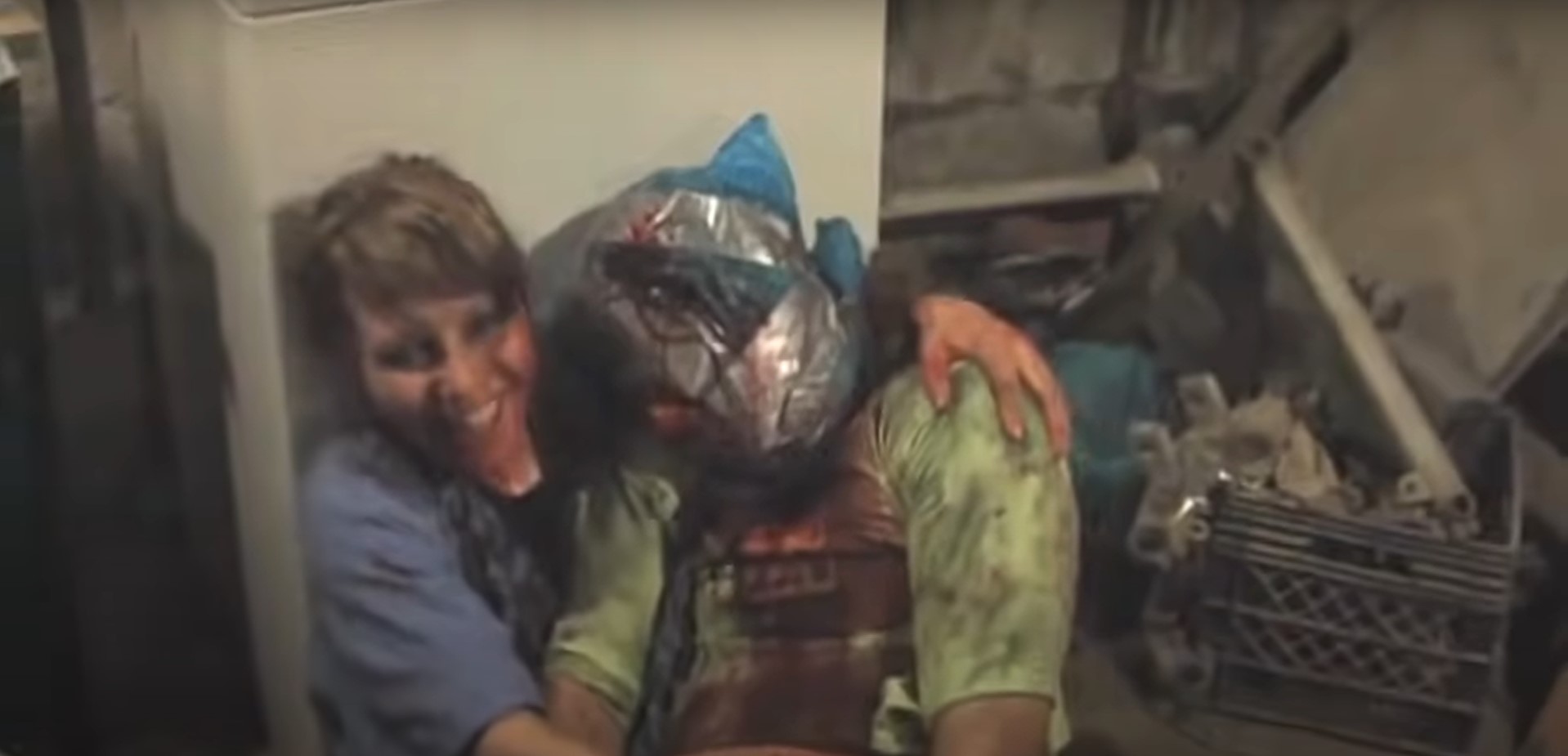
Pig ranching landowner Robert “Willy” Pickton’s compulsions to pick up unprincipled women involved in prostitution and drugs and horrifically rape and murder them in the name of salvation stems from a severely abusive childhood with the father’s physically and mentally tormenting as well as a scornful mother sexually assaulting him.  Willy’s fanatical obsession threatens his drug-fueled, orgy-laden, rock-n-rolling Piggy’s Powwow party, a regular throwdown held at his ranch that has elicited a cease and desist letter from the city, but Willy pushes the party forward despite his brother David and their lawyer’s stern opposition.  Paralleling Willy’s story is Wendy Eastman who almost dies of an accidental drug overdose.  The incident stirs more the already contentious bad blood between her uncompromising stepmother and insecure father that leads to storm out and bump into Willy at a bar with the feeling of destiny bringing them together only to horrifically discover Willy’s unsavory secret the hard way. 

Part one of my reviews on serial killer biopics, headfirst we go into the psychotic world of Robert “Willy” Pickton, a pig former turned one of Canada’s most notorious serial rapists and killers living in Port Coquitlam, British Columbia.  While the extent of his butchery is vague at best and even in some ways evolving over the course of the last two decades, Pickton was able to be the filmic inspiration for the Chad Ferrin brazen biopic “Pig Killer.”  The “Easter Bunny, Kill! Kill!” and “Someone’s Knocking at the Door” director wrote-and-helmed the interpretation of the egregiously presumed methods Pickton executed upon his female victims, mostly drug-addicted sex workers from the Eastside of Vancouver.  Once under the working ttile of “Pork Chop Rod,” Ferrin’s Crappy World Films, Girls and Corpses (of Robert Steven Rhine’s Girls and Corpses Magazine), and the post-production company Laurelwood Pictures served as co-productions with 50-year acting vet Robert Miano (“Malevolence,” “Giallo”) co-producing.

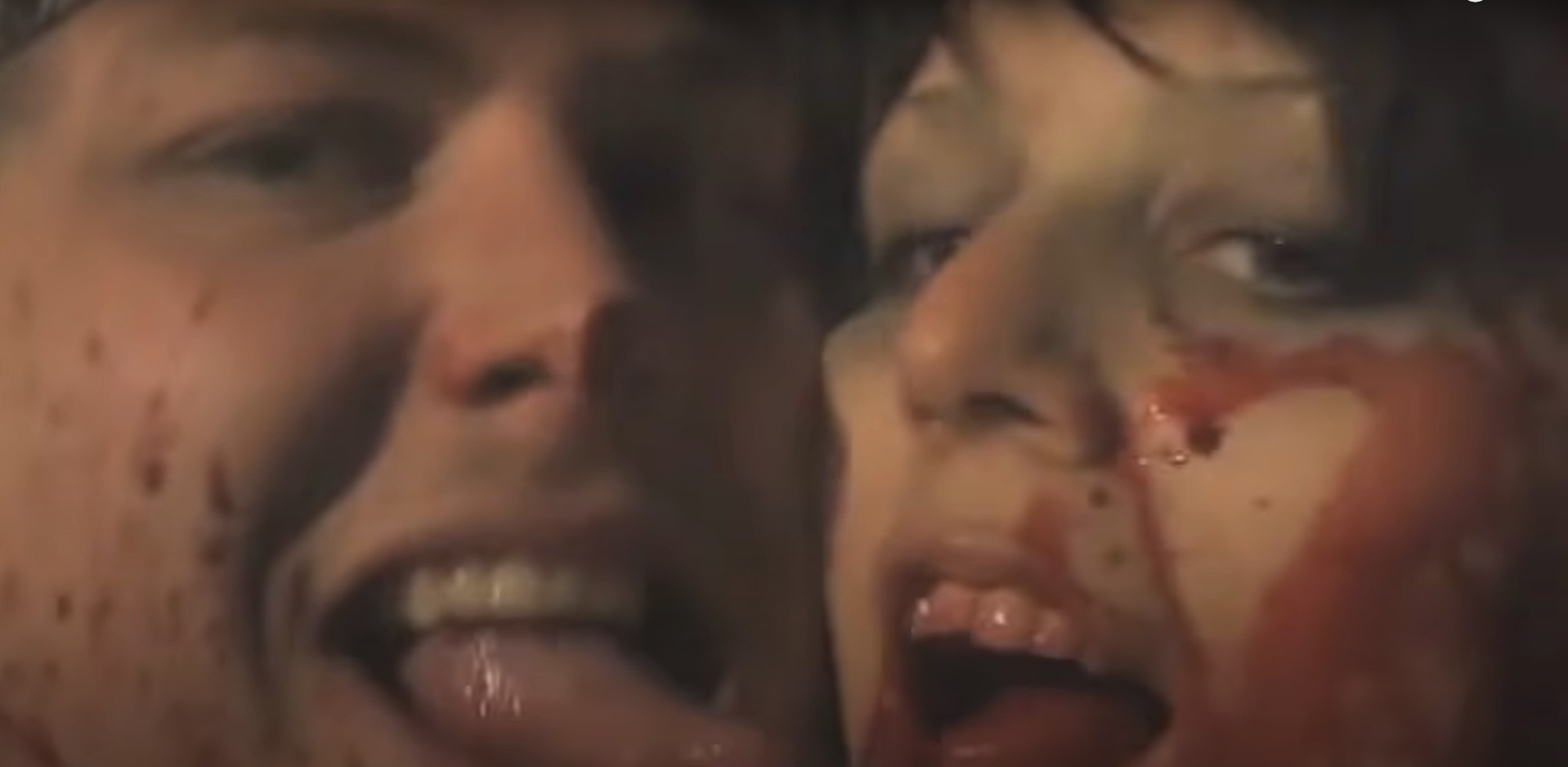
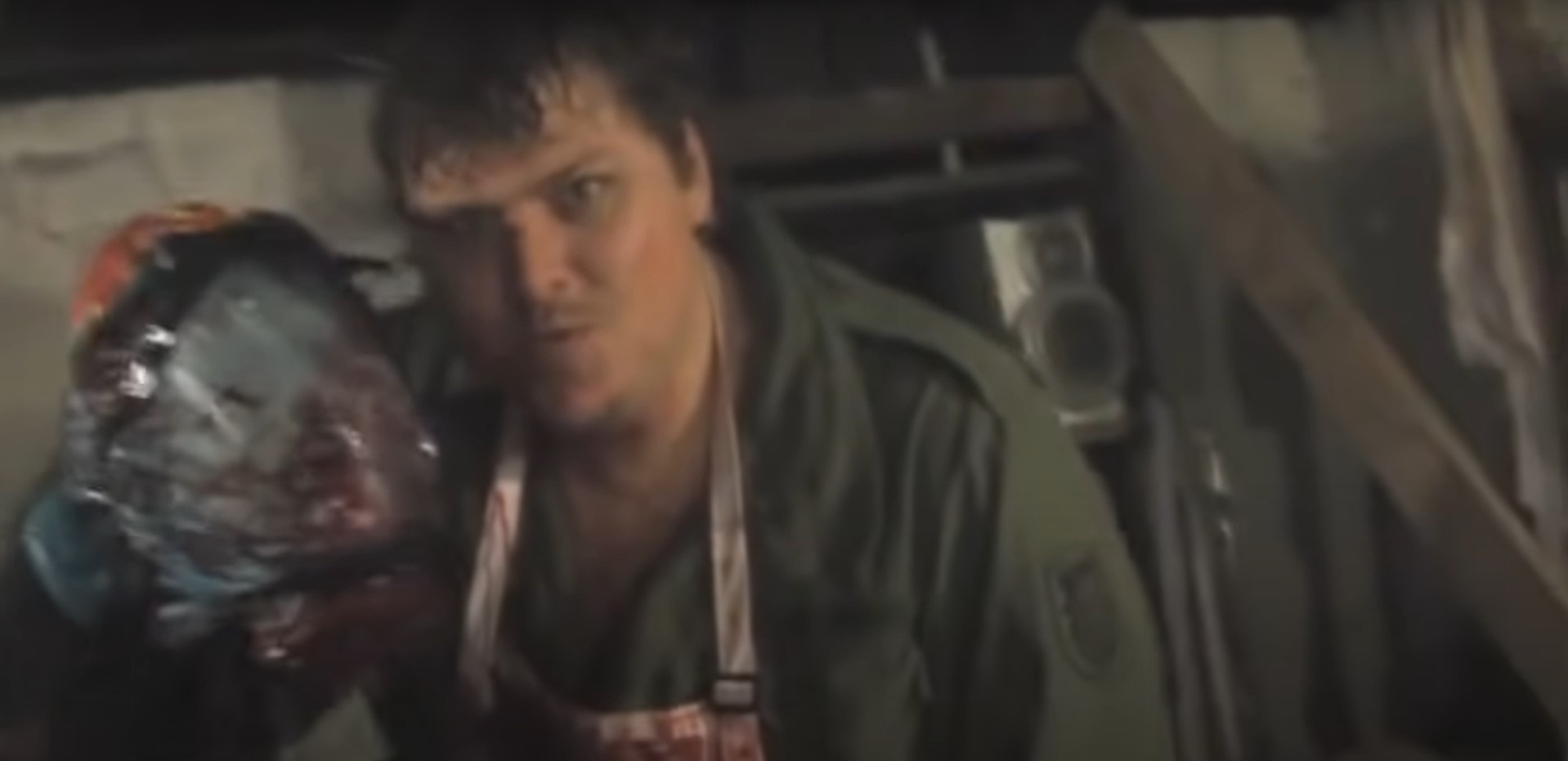
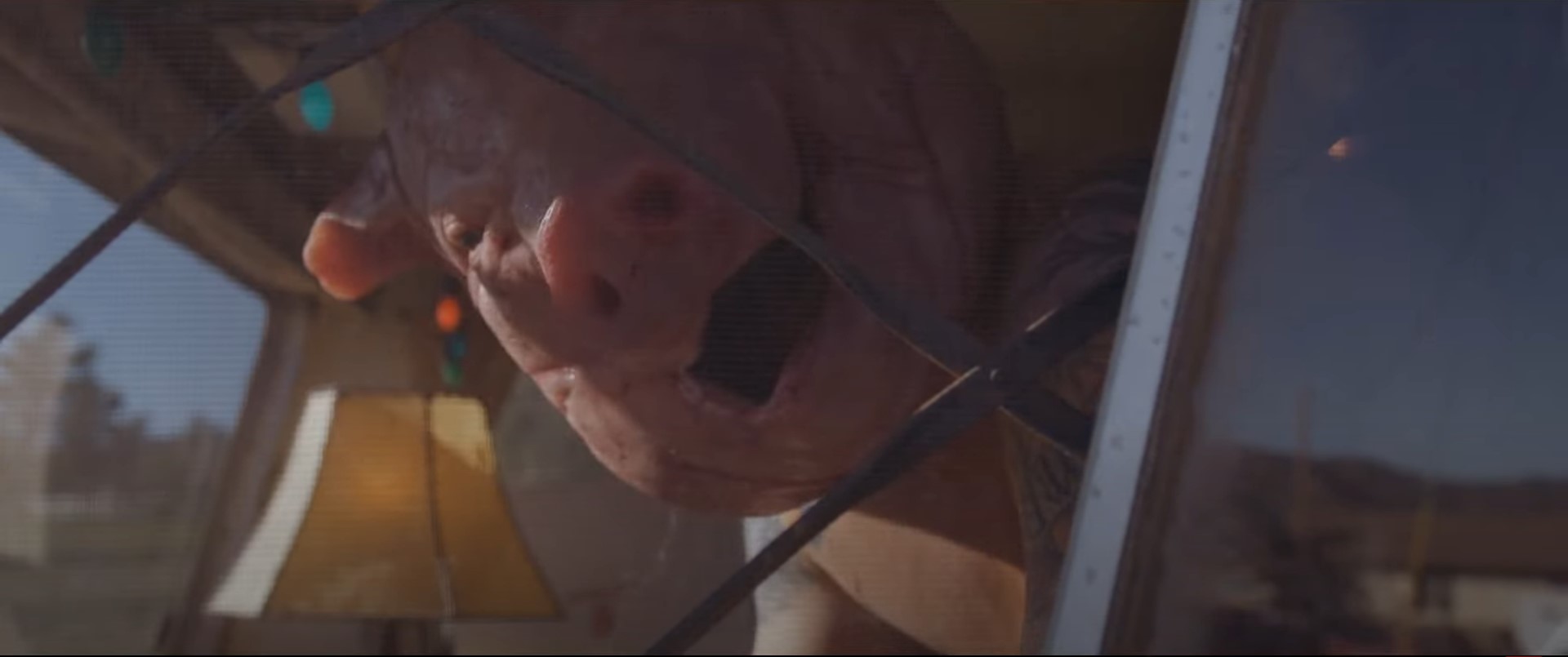
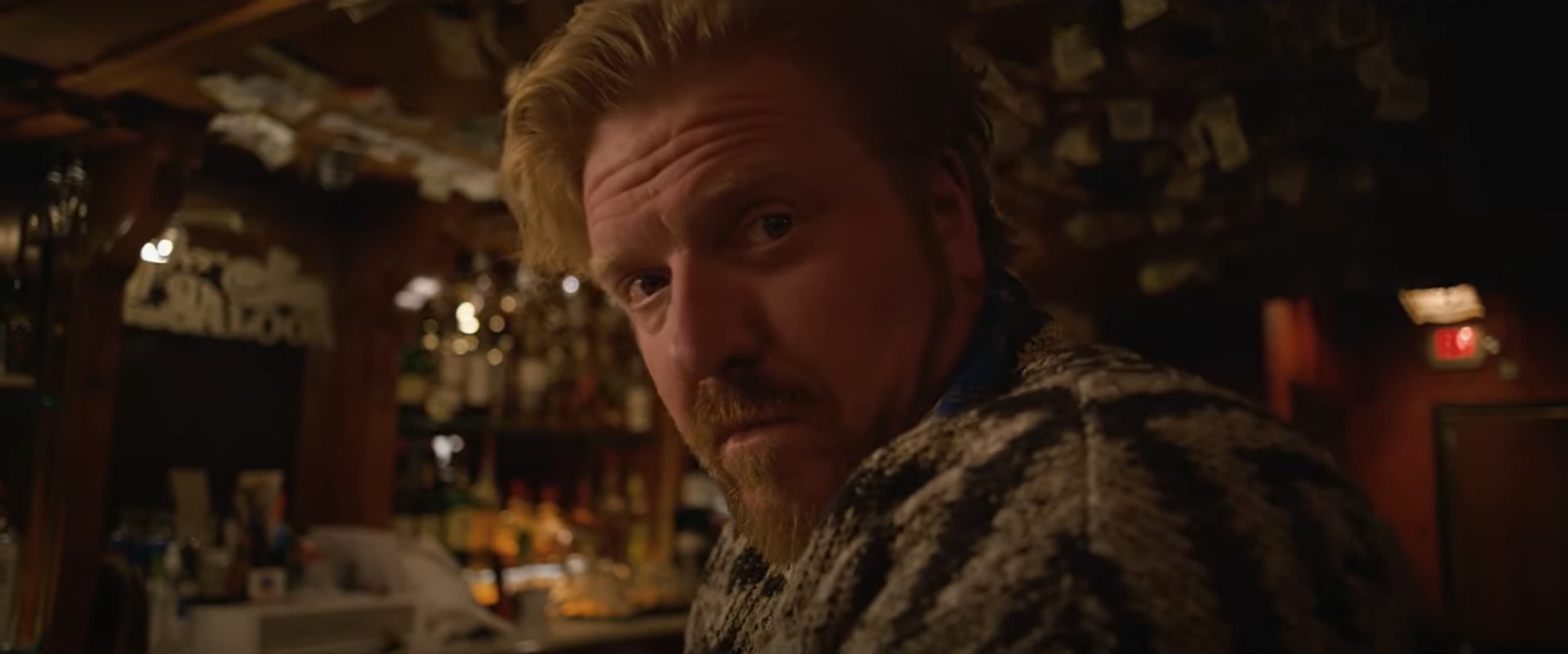
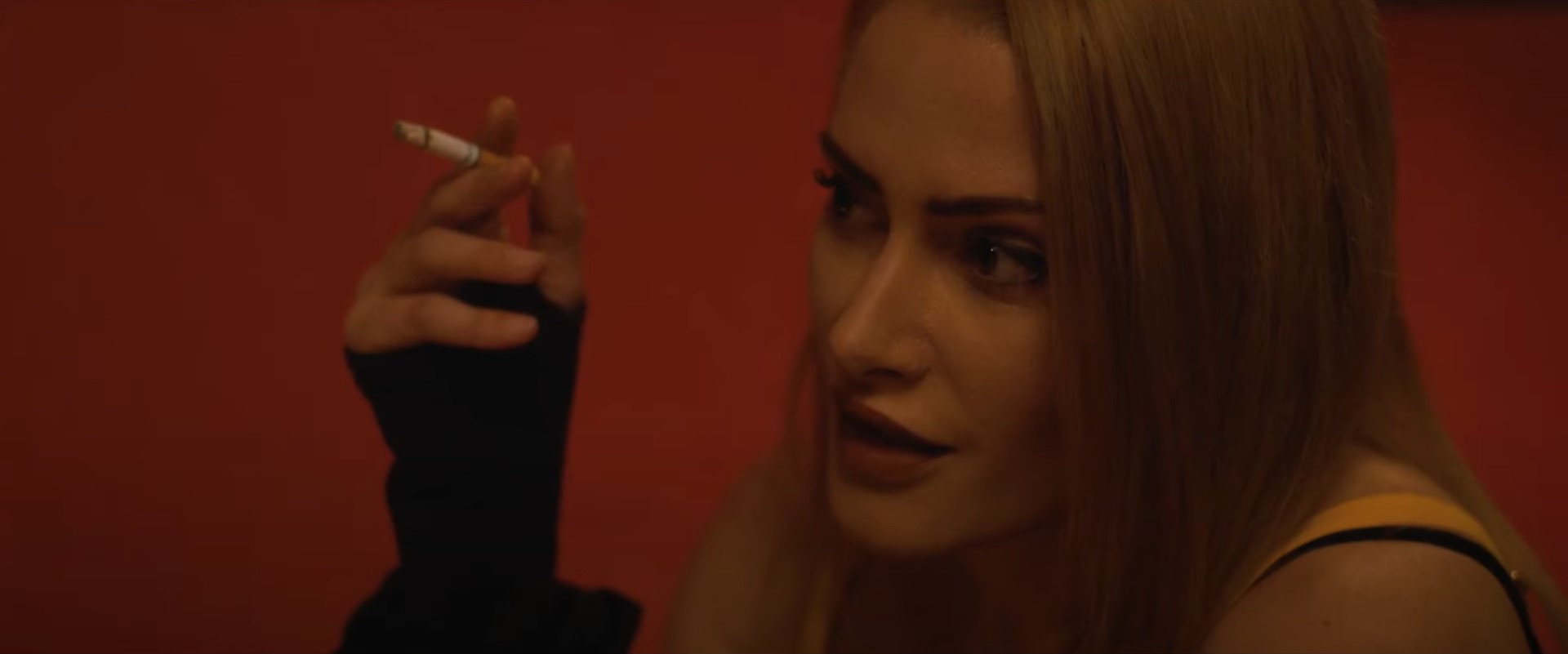
Even though this actor has portrayed serial killers in “Identity,” “The Hitcher II,” and “The Frighteners,” and even a deranged zealot in “Contact,” I would never have imagined in a million years “Starship Troopers” actor Jake Busey would have stepped into the sordid shoes of Willy Pickton in a Chad Ferrin production.  There’s something to be said for Jake Busey’s nerve in moving forward with eccentric and controversial and Willy Pickton is every fiber of those infamy traits and all that is in between.   Disheveled and dirty, maniacal and demented, prosthetic phalluses and dildo revolvers, pig masks and masturbation – Jake Busey doesn’t hold back on an exigent script important to Pickton’s state of mind.  Creepy and apathetic blanked by his deceased mother’s devout spitefulness and her incestuous sexual abuse, Busey secretes these irascible qualities held dormant in Pickton until the sleaze is sated and his patients runs out then it’s time to go hog wild, literally. Lew Temple (“Halloween,” “Devil’s Rejects”) plays Willy’s brother David who also has mother issues, but that avenue is not as profoundly travelled as Willy’s, both men see delusional visions of their mother’s tirades but definitely lopsided in disfavor of Willy and that leaves David left in the dust some to not have his mental faculties inspected.  Their flashback, foul-mouth, and Electral loving mother goes to an unabashed by former adult actress turned low-budget horror scream queen Ginger Lynn Allen (“Murdercise,” “31”) in what her scenes can only be described as uncut and uncomfortable lewdness as she bares it all at the ripe young age of 60 years old.  Another standout performance goes to Kate Patel as the debut actress, who in her own right is an Amazonian goodness buff beyond rebuff in black lace underwear, finds her voice as a young woman named Wendy Eastman in a complicated and dysfunctional household after the death of her mother, at odds with a wicked stepmother, and an insecure father with passive fortitude.  The only obstacle that can be rendered cleanly from her performance is how her character’s written to be drawn to Willy Pickton as because between age gaps and social differences, the two have nothing tangible to drawn them together mutually.  “Pig Killer” rounds out the cast with producer Robert Miano as Wendy Eastman’s father, Michael Paré (“Streets of Fire”) and producer Robert Rhine as Detectives Oppal and Schneer, Silvia Spross (“Parasites”) as Wendy’s disparaging stepmother, Jon Budinoff (“Someone’s Knocking at the Door”) as Wendy’s friend and drug source, Elina Madison (“Caged Lesbos A-Go-Go”) as a druggie sex worker, Bai Ling (“Exorcism at 60,000 Feet”) as also a druggie sex worker, and Kurt Bonzell (“Parasites”) as Willy’s disfigured and throat-cancer suffering friend Pat. 

Sensationalized for cinematic charm, the story behind the “Pig Killer” hits near the bullseye of all major bullet points from the escape of Wendy Eastman (actual person being Wendy Eistetter) and her coinciding her drug addiction to the wild gathers at the Pickton farm known as Piggy’s Powwow (actual title being Piggy Palace Good Times Society) where motorcycle gangs and prostitutes congregated for a drug-fueled good time.  If having viewed a few of Ferrin’s credits before, some of the unrestrained gore and shock will not come at a surprise.  The benumbing unconcern of misanthropy is poignant amongst Ferrin’s soft-pedaling of horror with a whimsical manner within a gritty film that doesn’t feel as gritty as it should be considering the subject and subject material.  Another mitigating moment, one that’s more counterproductive to the Pickton storyline, is the parallel melodramatics of Wendy Eastman that eventually rendezvous with the titular “Pig Killer” and become the rendition of Wendy Eistetter supposed personal backstory and escape from death.  Wendy’s overdose and family issues provide reason for her subsequent run away from home, but the extent of the backstory unnecessarily rivals Willy Pickton’s and the whole destiny meetup enlists some deeper rooted significance that isn’t neatly fleshed out, turning awkwardly impertinent that waters down their entanglement. 

Arriving onto a Breaking Glass Pictures and a Darkstar Pictures collab, “Pig Killer” oinks itself onto an AVC encoded, 1080p, High-definition Blu-ray.  Presented in an anamorphic widescreen 2.39:1 aspect ratio, “Pig Killer” under the warm glow and desert dry eye of cinematographer Jeff Billings (“The Deep Ones”) sundries the shot types in various techniques, such as closeup slow motion to be inside Willy’s moment of divination, to provide Ferrin’s feature with comely appeal even in the vilest of moments. Details are sharp and delineated nicely albeit the quick editing for intensity purposes and to float Willy in and out of psychosis. Coloring is more natural than anything else with a few gels scatter about to spruce up the vibrancy. The lossless English DTS-HD 5.1 master audio renders clear dialogue without any distortions or other audible disturbances; however, the strength of the dialogue favors an infirm conveyance to grasp a few exchanges, especially in the exterior. A maximal Gerard McMahon soundtrack scores the entire biopic from start to finish with a range of 80’s power ballads to 90’s pop rock; the 76-year-old not only scores the project but also has a concert performance role with his band G Tom Mac. Depth and range supplement greatly as sound design cater to the surrounding atmospheres, such as the echo vibrations under the Eastside bridge or the pig-pen oinks and frenzies when feeding bits and pieces of sex workers to his farmyard swine. English SDH is optionally available. Packed with extra content, supplements included are an interview intercut with scenes with Ginger Lynn as well as a few of her clothed adult industry spreads/modeling, a behind-the-scenes footage with Michael Paré, deleted and extended scenes, and Q&A from Cine Excess, the making-of the Pig Mask, a making-of the film entitled Canadian Bacon, an introduction to Spunky the Pig aka Willy’s pig, a screen test of Kate Patel in the role of Willy, which was considered before Jake Busey landed the role, “Pig Killer” auditions, and the trailer. The clear Blu-ray Amaray case sports a dark-and-dirty gilt image of a half-naked Kate Patel and a menacing pig-masked person holding a clever overhead. Reverse side contains a still image of the insides of Willy’s pigsty camper while the disc is pressed with the same menacing pig and clever but more prominent. The collab release has a region A playback, a runtime of 122 minutes, and is not rated. The back cover also lists a 2000 production date, conflicting with the 2023 release states elsewhere, but the 2000 date would be before Willy Pickton’s arrest and so that might be a misprint. Chad Ferrin and Jake Busey jointly tackling the monster that is brutal serial killer Willy Pickton with an inkling of lighter material coursing through its arteries, style secreting through the madness, and, of course, gore, the most important ingredient to the likes of a film entitled “Pig Killer.” 

On This Farm There Was a “PIg Killer” now on Blu-ray!

Playboy Discovers Vengeful EVIL’s Hidden BDSM Room A Little Too Snug. “Emanuelle’s Revenge” reviewed! (Cinephobia Releasing / DVD)

Emanuelle’s Revenge now on DVD from Cinephobia Releasing!

A wealthy businessman philanders his way through woman in a pursuit of satisfactory conquest.  The formidable challenge of bedding a hard-to-get woman arouses him and the chase is all that more thrilling and erotic.  His persistence and perfect man act pays off with up-and-coming model Francesca, but for the playboy, Francesca becomes another notch in his belt and quickly implodes Francesca’s romanticized relationship after a sexual tryst in the public eye.  A year later, he begins his surmounting quest again with Emanuelle, a renowned writer in a lesbian relationship.  The beautiful and darkly seductive woman catches his eye and the game begins as he uses every excuse to rendezvous with her despite the Emanuelle’s partner standoffish opposition, but as his tenacity appears to be paying off as she leads him on, awarding his constant charm with favorable kittenish returns, Emanuelle is actually leading him straight into the jaws of a deceitful plan.

Italian co-directors Monica Carpanese and Dario Germani are copiously inspired by the heyday of Italian Eurotrash cinema.  The actress-turned-debut director Carpanese has starred in a handful of erotic and horror thrillers of the prolific trashy filmmaker Bruno Mattei, such as “Dangerous Attraction” and “Madness,” while also having a principal performance in the 2022 sequel to Joe D’Amato’s notorious cannibalism film “Anthropophagus.  Her colleague Dario Germani is also the cinematographer for the spaced-out follow-up as well as establishing himself in the genre not as a filmmaker behind the lens but also a director with genre films under the belt with “Anthropophagus II,” a dissimilar lover’s anguish in “Lettera H,” and a snuff-slasher “The Slaughter.”  Carpanese and Germani’s next collaborating venture continues with another D’Amato influence mixed with the popular erotic series, and its tangent spinoffs, of Just Jaeckin’s “Emmanuelle” that has official and unofficial sequels spanning all through Europe with enticingly, titillating erotic stimuli and thrills.  Their explicit explication of the near 50-year-old sexy-laced franchise comes in the form of “Emanuelle’s Revenge.”  Dropping the second “m” along with the choice of similar story and title moves the film closer to being a remake of the Joe D’Amato “Emanuelle and Francoise,” aka “Emanuelle e Francoise” or “Emanuelle’s Revenge.”  Carpanese pens the Marco Gaudenzi and Pierpaolo Marcelli produced script under the production flags of Flat Parioli, Haley Pictures, and TNM Productions. 

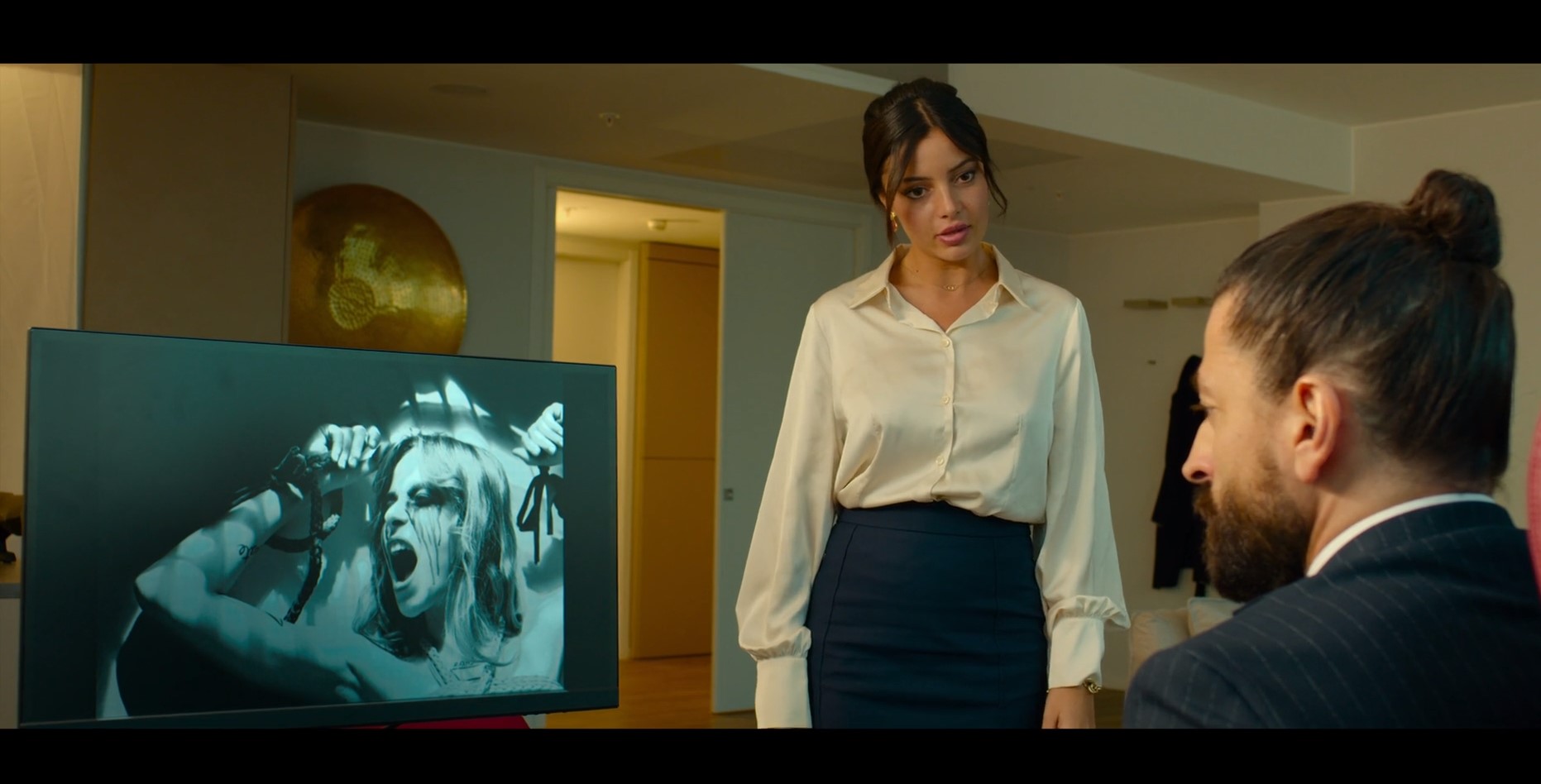
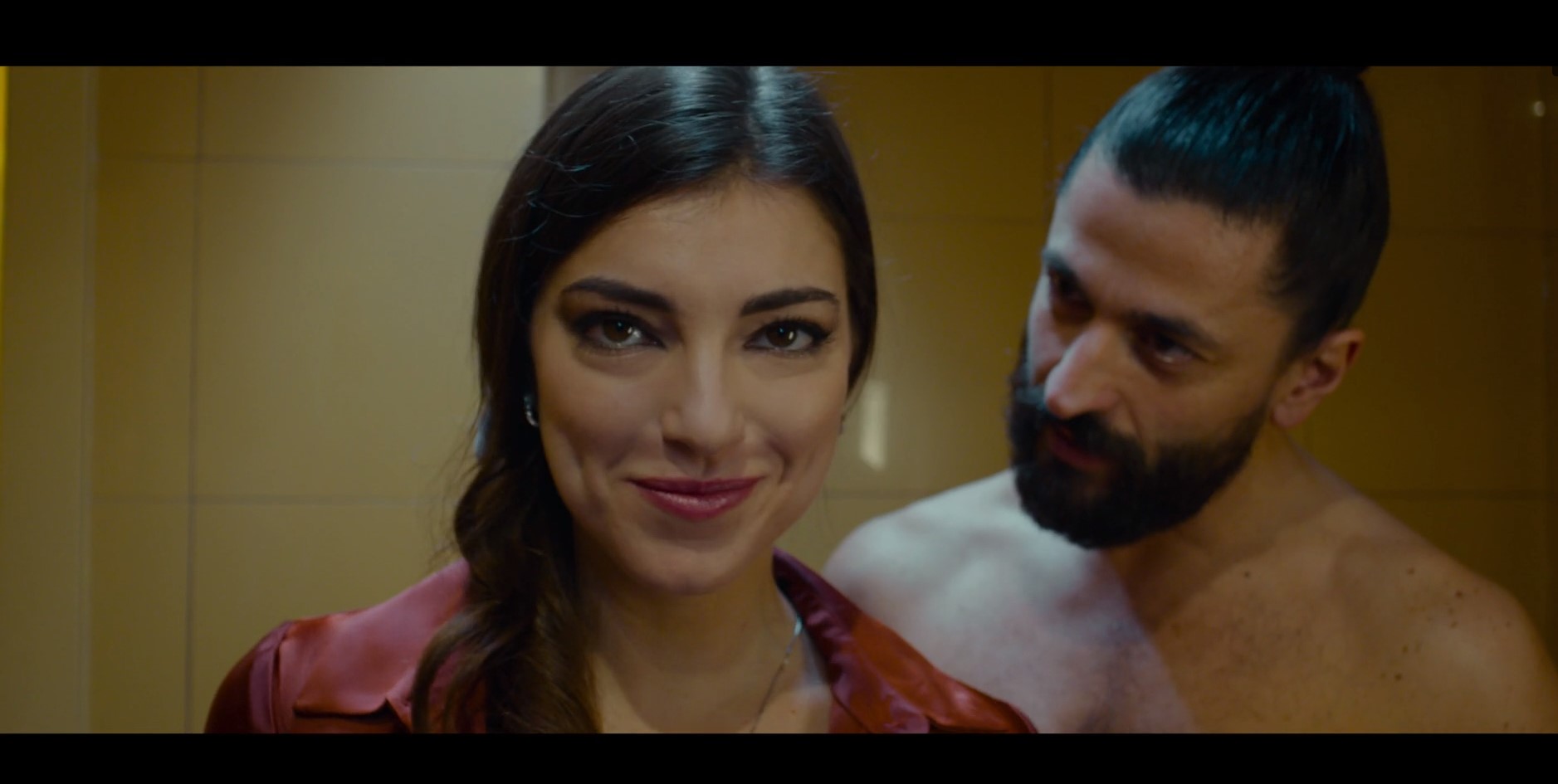
“Emanuelle’s Revenge” is carried by a small, four-person principal cast and half that for peripheral players within a dual-timeline story that provides the same cat-and-mouse game but with different, yet shocking outcomes on both of them.  At the tip of the spear is playboy Leonardo played by Gianni Rosato.  Sporting his best bandholz beard and pony bun, Rosato’s aggressive entrepreneurship extends beyond the working stiff hours and into the extracurricular activities of hunting down and dominating the opposite sex to sate his kicks for kink.  As the primary principal, Rosata receives the screen time that digs further into Leonardo’s psyche and what’s revealed about Leonardo’s nature is obvious trouble with an aggressive flirtation to the point where his whole game is akin to a stalker, showing up unannounced where he knows his targeted woman will be, obtaining their property that he has no right to, and essentially sucking their face with really bellicose kisses that look like they hurt.  Okay, maybe the latter is more overzealousness on Rosata’s part but certainly adds to Leonardo’s alarming behavior to which women seem to be attracted to as if giving into the idea that women prefer bad boys.  Such as the case in the first narrative with Francesca, a promising model with a now sex-relationship smart attitude after a previous relationship went terribly wrong with revenge porn.  Played by Ilaria Loriga in her own credited role, the young actress isn’t quite the epitome of innocence but is understandably weary to fall in love again with the persistent Leonardo but with all the foretell warnings of a disaster in the making, Francesca’s penned as sorely naïve and having learned not one single lesson of her past relationship with promiscuous men.  A year later, in the second act’s story, Emanuelle strolls into the picture under the olive-skin and deep eyebrows of Beatric Schiaffino who bats enticing eyes of the titular character’s hidden agenda. Schiaffino’s crafts a demeaner starkly different against her previous year counterpart as Emanuelle’s coquettishness doesn’t refrain from the fact she’s already in a hot-and-heavy relationship and matching Leonardo’s hot-to-trot escapade with a come-hither that’s just out of his reach. If a rake beckons a game of amorous desire, then Emanuelle enacts a game of her own, one of a lure to lead the blind right into her spider’s web and Schiaffino properly tightropes pleasure and purpose to a somatosensory stimulation level. “Emanuelle’s Revenge” rounds out with Luca Avallone as Leonardo’s licentious friend and business understudy, Ilde Mauri as Emanuelle’s lesbian partner, and Miriam Dossena as Leonardo’s 20-something daughter who suddenly pops into play in the Emanuelle story.

Even though “Emanuelle and Francoise” has never traipsed across my eyes, from what I’ve read the Joe D’Amato and the coproduction of Monica Carpanese and Dario Germani share a lot in common, but the modern-day version of this sordid tale of lust and revenge sticks to the venereal veneer only whereas D’Amato engages a cannibalism and other ghastly horrors. “Emanuelle’s Revenge” seduces with melodramatics, frisky fantasies, and contemptible thralldom because of one man’s wandering libido, focusing tremendously on the building game of mostly pavalar rather than diving into shock value. The narrative begins with a suicide of Francesca, jumping half nude off a busy passenger vehicle bridge, and this segues into Leonardo’s assertive activity into Francesca’s life and so the tale’s non-linear format is already incredulously fated with tossed in opening scene just to grab attention. When following Leonardo’s uncomfortable pursuit, and uncomfortable henpeck kissing, of Francesca, the audience is just along for the ride up to the point of incident where they’re abruptly blue-balled by cut-to a year later without knowing why Francesca decided to throw in her life towel. The brain and our movie-watching experience eventually catchup with the fact everything will be explained at the climatic, but the format jars the assimilating process a tad. Throughout the narrative, there’s plenty of a T&A to go around as I believe nearly every actress with speaking lines drops at least her top, living up to the long history of “Emmanuelle’s,” or “Emanuelle’s” fleshy affluence and erotic elements. Considering the plot twist, Carpanese’s approach doesn’t compel any creativity into the mostly remade erotic-revenger and makes contact with formulaic properties that poison any kind of novel ideas that might have been indited in the inner story layers.

Arriving at number 8 on the spine for Cinephobia Releasing, “Emanuelle’s Revenge” is now on DVD, presented in a widescreen 2.35:1 aspect ratio. The MPEG-2 encoded DVD9 has a sleek look albeit tumbling through a bitrate spread of 5 to 7 Mbps. Some surface coloring suffuse, especially on skin where similar tones seep into the adjacent due to block boundary artifact, but the amount is very little and doesn’t sully much to render the picture an admixed wash in the lion’s share of soft lighting. Details are okay here with the stunning urban landscapes and more opened metropolitan venues, such as a rooftop party, opening up audiences to the chic levels of high society’s profanation of control and sex. The release offers two Italian language audio tracks: A Dolby Digital 5.1 surround and a 2.0 stereo. If asked, I would suggest less channels as they are redundant and useless and go for the 2.0 stereo as there’s not much frequential range in what is essentially a talking head film with an exposition driven narrative. Dialogue is clearly and cleanly stated overtop other audio layers with a powerfully boosted stock file soundtrack in parallel unison to the theatrics. English subtitles are optionally available and the error-free translations keep up with dialogue pacing. Only other Cinephobia Releasing film trailers, including “Brightwood,” “The Goldsmith,” “The Human Trap,” and “Amor Bandido,” are available bonus content. The black background front cover delineates deliciously Beatric Schiaffino as the titular Emanuelle sitting open robed, in thigh-high laced stockings, and on her wicker chair throne. This image reminds me of a mistake in this revealing scene with the very first image of Emanuelle sitting in the oversized back chair resembling closely the front cover image, but the subsequent scenes have her once flesh exposed chest to midriff covered up with censurable continuity. Inside the DVD Amary case lie no insert and the same provocative front cover Emanuelle image more centrally cropped down and blow up to emphasize the seductive siren. The not rated, 83-minute feature is limited to a region one playback. “Emanuelle’s Revenge” spices up the contemporary franchise with erotic entails, exorbitant egos, and illicit indecencies despite its sacrificing of pacing and organization for sleaze, skin, and a side dish of kink.


Emanuelle’s Revenge now on DVD from Cinephobia Releasing!

The Home Recordings of a Pure EVIL! “August Underground: Mordum” reviewed! (Unearthed Films / Blu-ray/DVD combo)

“August Underground:  Mordum” Limited Collector’s Edition!

Uncompassionately deranged serial torture and murderer Peter Mountain is back.  Along with his maniacal partner Maggot and his depraved sister Crusty, whose also Peter Mountain’s girlfriend, the terrorizing trio videotape their exploits with no shame and with no end from no matter how mundane to no matter how gruesomely vile.  Rage and lust mix together with sociopathy and psychopathy, resulting in a dangerous combination for whomever crosses their path.  Shocking glimpses of their killing spree reflect through the lens of their camcorder, capturing every kidnap, imprisonment, confinement, rape, mutilation, torture, and eventually murder of their sadomasochistic onslaught onto every random, unlucky soul but with every moment of madness captured, their no so friendly friendship verges ever closer toward a volatile collapse when Maggot and his sister Crusty hook up from time-to-time and the perpetually aggressive juggernaut Peter Mountain is on the brink of breaking more beyond his broken mental state.

The return of Peter Mountain marks the return of shock and gore director Peter Vogel with “August Underground:  Mordum,” the 2003 sequel to Vogel’s unnervingly raw depiction of depravity and exploitation in “August Underground” released two years prior.  Not a traditionally subsequent sequel, “Mordum” is a standalone entry with only the presence return of Peter Mountain to connect the two stories together, but “Mordum” initially didn’t start out as a sequel and only morphed into a feature when Vogel was requested to shoot gruing material for the aptly named death/gore metal band Necrophagia and the band’s lead singer, Frank “Killjoy” Pucci, suggested to turn the material in a follow up film of “August Underground” with Killjoy co-wring alongside Toe Tag Picture’s Vogel, Christie Whiles, Michael Todd Schneider and Jerami Cruise.  What emerged felt like an organic chapter in Peter Mountain’s found footage mausoleum of bloodlust mayhem.  Shot in and around the Pittsburg, Pennsylvania area, “Mordum” is a production of Toe Tag Pictures under executive producer Jerami Cruise.

2001’s “August Underground” brought a terribly raw image to the independent cinema fold that house realistic depictions of the utmost evil and perversion.  So much so, a few of the cast members decided to not use their real names.  For Peter Vogel, a follow up film was like another day walking in the park as a proud papa of his villainous protagonist Peter Mountain, an eclipsingly large and laughing feverishly fiend of a man who preys on the cries and screams of his victims.  “Mordum” introduces us to two new actors into the fold with Christie Whiles, who would reprise Mountain’s girlfriend Crusty in the third Entry “Penance,” and Michael Todd Schneider (“I Never Left the White Room”) as Crusty’s brother Maggot.  It’s not exactly made clear if Maggot is a returning character, the hyena chuckling man behind the character played by pseudonym Allen Peters, or not.  In either way, Whiles and Schneider are equally as vicious on screen as Vogel but invite a whole of a hell a lot more nudity, non-simulated genitalia fondling, and induced vomiting to give “Mordum” that extra mile of stomach-churning, eye-adverting discomfort.  As the fluids deluge in scene-after-scene of massacre depictions, the triple threat come across a like-minded individual, played by the person who very much encourage and inspired for the sequel.  The late Frank Pucci, aka Killjoy, the front man for Necrophagia plays an equal with a slaughter shed full of rotting, putrid corpses, beheaded babies with maggots, and prime meat tied and lying in wait for him to butcher as his leisure.  “Mordum” offers up a slew of victims in different abattoir and snuff scenarios, casted with a rising makeup artist in a pre-crew acting role Midian Crosby (with makeup credits including “Halloween Ends,” “Cop Car,” and “Guardians of the Galaxy Vol. 3”) and Elmo Painter in the vomit and viscera evacuation scene, Rick Kundrach and Tim Grubjesik as unfortunate junkies, as well as Chris Shaw, Shelby Lyn Vogel, Allana Sleeth, Dave Brown, Erika Schultz a few pseudonyms in Daisy, M. Kadath, and E. Jay, and with Ultra Violent Magazine editor Art Ettinger.

Similar to the first film, “Mordum” has no plot in it’s a series of found footage flashes in the day in the life of a serial killer.  This approach makes what you’re having to behold for 70-minutes that much more plausible and realistic and what you’re seeing is quintessential gore porn.  “Saw” wasn’t the basis of the coined term.  No, my sanguine licking friends.  Fred Vogel pioneered that course three years earlier with his sick and twisted show of seminal underground.  The only reason why Vogel wasn’t at the top of the gore porn list was because none of his films had mainstream theatrical runs.  However, literally, “Mordum” contains that borderline porn element of exposed and molested nudity, the below the waste naughty parts that don’t see a tone of skin-to-skin action, and there’s certainly enough gore to go around and around and around and around again.  Some of those smaller gore elements were real, such as skin cutting.  Another element that makes “Mordum” effectively morbid is the special effects work by Vogel, Jerami Cruise (who has gone on to do major studio films from his extreme horror indies), and the late Ryan Nicholson (director of “Gutterballs” and who also was a special effects supervisor on a wide scope of studio and indie films) who provided many of the dismembered and grimed up dummy props framed through a standard definition, commercial camcorder for the Necrophagia music video.  If no story arises, one hell of a damn good show must come out of the horrific footage and Peter Vogel and the Toe Tag team achieve diabolical decadence with stomach content-emptying pizzazz.

Unearthed Films and Toe Tag Pictures have teamed up to release limited edition releases of Peter Vogel’s “August Underground” trilogy.  “Mordum” receives the royal physical release treatment with a 2-disc, Blu-ray/DVD, Limited Collector’s Edition.  The Blu-ray is an AVC encoded, 1080p high-definition, BD50 can only be so detailed with a shaky, consumer cam but the image could not look any better, or gruesome.  Presented in a pillarbox framed 1.33:1 aspect ratio, RGB color model leans more toward warmer reds, yellows, and greens so you don’t get an authentic color scheme on objects or skin tones.  Darker scenes render nicely enough despite the MiniDV magnetic tape’s e-interference compression artefacts and some tracking lines onto digital recording that makes the image jittery/jumpy, but all the in-your-face closeups, low-quality picture quality adds to “Mordum’s” rancid-sensing realism.  The English PCM 2.0 audio track has copious clarity for its unrefined, raw built-in mic recording that comes with some crackling and echoing if the decibels rise during screaming or shouting and the built-in can’t handle the received input. Depth is lossy with the range of the recording and range doesn’t factor into play as dialogue pushes through whereas the low-budget constraints leave the action audibility left to the imagination. Subtitles are not available on either format. The limited-edition regurgitation of the sequel warrants a ton of special features in its inauguration to the mainstream masses. Both formats share most of the extras but the Blu-ray features many more. Brief Dave Fogel touchpoints on certain aspects of “Mordum’s” obscure longevity Mordum Lives!, the climax’s most disturbing visuals The Most Disturbing Scene, and an ode to Necrophagia’s front man Remembering Killjoy dive into those specific nuts and bolts of involvement, a new interview with Michael “Maggot” Schneider A Family Affair of Love and Hate which also includes The Ravenous music video from Necrophagia, offering some more cut scene insight, a sit-down interview with between Unearthed Film’s Stephen Biro and Tog Tag’s Jerami Cruise on the gruesome special effects work on a budget of literally what was lying around, Necrophagia’s promotional video of Rue Morgue Disciple, a new Rue Morge Disciple Behind-the-Scenes gallery, deleted and extended scenes that prolong the violence of the most graphic, extreme scenes and add another level of behind-doors sexual deviation to near pornographic heights, the U.S. premiere from 2003, a brand new extensive photo gallery, original animation work, and trailers while the Blu-ray includes these features, also on the hi-def disc is a new interview with Ultra-Violent’s editor Art Ettinger and Allana Bleeth who both have small roles in the film, a new interview with Zobo With A Shotgun’s Zoë Rose Smith interview director Fred Vogel, filmmaker Dave Parker interviews Vogel as well, Severed Cinema interviews Vogel too in Snuff Purgatory, a new mockumentary and its trailer for Sickcess: A Necrophagia, and a Zombie Demo from Flashback Weekend circa 2004. On top of the special feature filth, the physical aspects of the release come in a clear and traditional Blu-ray snapper case housed inside a cardboard slipcover showcasing the infamously disturbing scene. The same scene is also illustrated on the Blu-rays cover art with reverse cover art providing a rough-and-ready composition alternative of the same scene. Both disc arts are pressed with camcorder blurry images of depicted carnage. The region A/Region 1 locked Unearthed Films combo set has a runtime 91 minutes and comes, obviously, not rated. If looking for the original 3 from Hell, Peter Vogel’s “August Underground: Mordum” assembles three monsters to ever savage the screen with their horrible, unspeakable acts of sadism. The unabashed Unearthed Films rightfully doesn’t lubricate our hole of curiosity, sodomizing our prurience with the metallic taste of blood and madness.

“August Underground:  Mordum” Limited Collector’s Edition!

An EVIL Re-Imaging of a Donald Farmer Classic! “Savage Vengeance” reviewed! (SRS Cinema / DVD)

“Savage Vengeance” now available on DVD home video!

Best friends and law students Tara and Meghan take a much needed depressurizing road trip and run into a Ronnie and Thom, a pair of locals with car trouble looking for assistance at the nearby gas station.  Hesitate to offer a ride, Tara agrees to their proposal of a life for sleep accommodations at Ronnie and Thom’s lake house in the Ozarks.  A serene lake and a drink in hand relaxes Tara’s foremost suspicions about the sketchy couple who seemingly chill and all about a good time catering to Tara’s stressed out needs.  The next thing Tara remembers is waking up to Ronnie and Thom standing over her, tied up, and her and Meghan threatened to become dinner for a pair of bloodthirsty cannibals who’ve just about wrapped up their previous viscera meal, but Tara isn’t as innocent as she appears as she shares the same killer instinct as her captors.  A struggle ensues, the tables begin to turn, and what was once prey has now become the predator!

A re-imagining of Donald Farmer’s 1993 original of the same title starring “I Spit On Your Grave’s” Camille Keaton, director Jake Zelch takes a pun-intended stab at “Savage Vengeance” with a twist in the schlocky sordid and dark tale by replacing Farmer’s original motivation for revenge for cannibalistic carnage.  “The Haunting of Mia Moss” and “The Dark Web Tapes” director helms Farmer’s story as a base while attempting a revamp and build upon with new characters and new plot devices along with contributing screenwriting by “Another Evil Night’s” Jason Harlow and “Lycanimator’s” Sébastien Godin.  Shot in Tennessee, “Savage Vengeance” is a production of Zelch’s Missouri based company, Unreality, and is produced by the filmmaker and headlining star Tamara Glynn (“Halloween 5:  The Revenge of Michael Myers”) with Donald Farmer and Curtis Carnahan as executive producers, marking the third feature film collaboration between Carnahan and Zelch.  Stratosphere Films handled the theatrical distribution.

Zelch’s “Savage Vengeance” has an identity problem.  Having reformulated the original premise, which doesn’t offend me as I think reinventing the wheel can sometimes be fresh and creative under the same directive title, the script has trouble nailing down a proper principal by shooting, by my count, three different segments disconnected from each other and with three different protagonists leading the charge in each.  Tamara Glynn receives top bill despite only garnering about 10 minutes of screen time in the beginning due to much of the opening footage being lost due to backup hard drive failure, according to Zelch on the director’s commentary.  The “Terrifier 2” and “Halloween 5” actress is essentially captured, chained, and trying to find a way out after waking up in a scarce-looking attic but because of her aforesaid credits, the DVD front cover banner head makes for a great advert sell point.  Instead, modern scream queen Roni Jonah (“Kill, Granny, Kill!,” “The Bloody Man”) becomes the runtime face of “Savage Vengeance” as Jake Zelch intends for the girth of the story.  Jonah, as Tara, paired with Jasper Evans as best friend Meghan heading toward an in schtook situation not only the cannibals on the road ahead but internally with rape, pregnancy, and a dysfunctional love triangle that has more to do with illicit lust than love with Tara’s boyfriend David (Dave Ivan), a theme much closer to the original essence of Donald Farmer’s rape-revenge exploitation.  However, what’s assumed is taken for granted and not utilized to all its pathways the concept could have complexed the characters rather than freezing them in a face value understanding.  That understanding comes a tool against cannibals Ronnie (Kat Underwood) and Thom (Cody Alexander, “Eat the Rich”) who are your typical crazed anthropophagus antagonists, as well as sadistic sodomist as we see with Adam Freeman’s (“Debbie Does Demons”) character, of film.  When these characters meet and try to be merge an acquaintance or friendship, in Tara’s shoes, I might just be a little more judgmental of two heavily tattooed wanderers, the male sporting a knife sheathed in holster around his backside as he walks around his wifebeater tank-top, handing out to me mysterious drinks on their isolated, rural property.  The whole setup doesn’t do the story justice to Tara’s decision making but then again, she’s not as pulled together as Zelch’s useable footage relays.  The third segment pops up after initial closing credits with Jessa Flux (“Debbie Does Demons”) to possibly offer up an imminent sequel “Savage Vengeance 2:  Better Off Dead, starring Flux.

Almost seems unfair to cover and review Zelch’s “Savage Vengeance” because of so much of the footage being forcibly cut and the shot narrative going through essentially restructured surgery to make pieces segue and make sense on screen.  Honestly, the recut doesn’t work, leaving too much unanswered and too much to decipher to put a solidified stamp on the series of events.  Thus pushing forward the abridged cut may warrant an impartial review until a more definitive, complete cut sees the light of day.  The material “Savage Vengeance” shows currently splices together the MPEG files that survived the great blue screen of death and transfer fail, such as with the Tamara Glynn opening that’s only connected by the brief present of Ronnie eating cat guts and Thom surprising and looming over Glynn before her deafening scream.  The additional footage explained by Zelch added context to the cannibals and provided a memorable kill to setup the tone of Zelch’s homage to late 70’s rural horror.  Fortunately for Zelch, horror fanatic brains are wired differently, able to fill in most of the gaps of a formulaic building blocks; however, the success of this can also be attributed to Zelch’s scramble editing to make a semi-intelligible story with what’s left contextless of the low budget nitty-gritty.  Another highlight is the blood with pretty-penny special effects from the multi-hat wearing Kat Underwood and her colleague Erin Felts who drum the gore the best they can with prop dummies for splitting in two, a whistle dogged dildo-penis gag, and saucy blood and guts to give the film the edge it needs to tribute Farmer’s ferociously.

I’ve said it once and I’ll say it again, I do applaud SRS Cinema’s time, effort, and creativity in the physical media artwork as the gorgeously dripping blood, sex, and horror pulp is quintessential eye candy for fans in what is typically a microbudget and mediocrity poor effort in the graphic cover art department of terribly arranged and hack job compositions. None of that rubbish here with many of the SRS Cinema titles, including “Savage Vengeance” on DVD.  The 1.85:1 widescreen and 720p standard definition presented DVD5 might have a deliciously illustrated cover but the film itself is marred by the artificial VHS overlay of tracking lines and macroblocking, especially when Zelch aims for a 70’s exploitation veneer that was mostly 16 or 35mm.  Instead of a grainy-laced, dirt-spotted, cigarette-burned, and scratched up celluloid frames, or a resemblance of something akin to it, “Savage Vengeance’s” aesthetics only bask in the softer details of lower resolution clarity and in the ethereal of a delicate lighting that eliminates shadowy contours that offer depth.  Frame rate also seems to be slow down some sporadically throughout as well as the erratic focus as if you’re coming out of sleep and trying to regulate your eyes from dark to light.  The English Dolby Digital 2.0 audio mix stems from the onboard, built-in camera mic that captures the surroundings which has pros and cons, such as diluting the dialogue to a subdued audible.  Not a ton of balance from the surrounding environment when augmented sounds, like the zaps of the electric fence or the overpower roar of chainsaw decibels that don’t change in closeups or wide shots, make their way into the fold.  No subtitles are available.  Bonus features include a Jake Zelch commentary with scene-by-scene backstory and explanation as well as the full explanation of his lost footage, actor Adam Freeman commentary that revolves around his acting craft, male nudity on screen, and his opinions of rape and sexual assault in general, a gallery slideshow, and the feature’s trailer.  Aforementioned, the illustrated cover of Tamara Glynn looking slyly and sexy holding a blood chainsaw is primo quality on front of the standard DVD case.  Inside lies no insert and with the same image on the disc art. Until a completely restored version of director Jake Zelch’s vision, the filmmaker’s “Savage Vengeance” can barely stand as perspicuous testimony of an uncalled for 30-year-reimagining.

“Savage Vengeance” now available on DVD home video!

The Only Fire This EVIL Monster is Afraid of is the One in His Pants! “Frankenstein ’80” reviewed! (Cauldron Films / Blu-ray)

“Frankenstein ’80” on Blu-ray from Cauldron Films!

At a renowned German hospital, Professor Schwarz has pioneered a new serum that has proven animal-testing results on stopping or reducing the process of organ transplant rejection.  Also, at the same hospital in another wing, a disgraced surgeon, now a posthumous examiner, named Dr. Otto Frankenstein toils away in the morgue, dismembering bodies and piecing together the limbs and organs into a new being he has named Mosiac.  The scarred and lumbering monster has an increase sexual libido and is always in pain from organ rejection, driving him to sexually assault and kill women in the shadows.  Frankenstein steals his colleague’s only batch of serum that could have saved reporter Karl Schein’s ill sister from organ failure.  Now, Karl is on the hunt for the thief along with hot headed police Inspector Schneider that have pieced together a connection between the stolen serum and the grisly deaths of young women. 

Straight from the pages of Mary Shelley’s timeless book, the Frankenstein monster was born out of mad science, or rather the fear of science gone too far, and the deep shadows of Gothic romanticism and tragedy.  The Italian took the creature and patchworked a new take on the reborn monster giving life from expired flesh and jolts of electricity.  Frankenstein took shape as a caricature, a wildly exaggerated shell of the original exterior with an increase sexual appetite and murderous rage that shifts the story from the conflictions of mad scientist to solely the exploits of his mad creation.  That’s what is Frankenstein and his creature succumb to in the 1972 Mario Mancini film “Frankenstein ’80.”  Also known by other various titles such as “Midnight Horror,” “Frankenstein 2000,” and “Mosaic,” the short stinted cinematographer, whose works include “French Sex Murders” and “Vengeance is My Forgiveness,” tackles his own directorial from a co-written treatment penned with Ferdinando De Leone.  M.G.D. Film banners as production company with Benedetto Graziani and Renato Romano (“Seven Blood-Stained Orchids”) producing the sewn-skin and flesh-exposed feature with a concupiscent creature. 

“Frankenstein ‘80” is full of colorful characters that clash literally and figuratively on screen with grandiose personalities that seek to topple over another.  The only normie of the bunch the truth-seeking reporter Karl Schein, played by British actor John Richardson (“Black Sunday,” “Torso”), in the aftermath of a criminal act and tragedy when miracle serum vanishes and his sister (Gaby Veruksy) dies on the operating room table due to potentially her unnecessary organ failure.  Bearing a lookalike tinge of schlock genre director Jess Franco, Roberto Fizz stiffens up to the be academic and scientific creator of the serum in Prof. Schwarz.  His mad science intending to make the world a better place is balanced by Dr. Otto Frankenstein’s sordid abomination and his own self-interest, a wonderfully portentous and arrogantly calm role filled to the brim by the distinguished faced genre veteran and America-born bodybuilder Gordon Mitchell (“Emanuelle, Queen of Sados,” “Malevolence”).  Mitchel doesn’t display his brawniness here as an extinguished gentleman, disgraced surgeon but his unique face with an 1000-yard stare and his tall height made him for a good imposing puppeteer on the brink of losing control of his erratically around and constantly in pain creation Mosaic by Xiro Papas.  With his behavior performance, Papas blended Golden Age horror with new wave violence by being voiceless face of stoic fear who would eventually ravage his beautiful prey.   With all these characters creating havoc and abnormalities, it’s Inspector Schneider that causes the most distress with a cocaine level high performance Renato Romano on the verge of stroking out with him and his men’s own incompetence sleuthing in solving the murder cases.  The diverse nationality cast rounds out with Dalila Di Lazzaro (“Phenomena”) as Karl’s love interest and adopted niece of Dr. Frankenstein, Inspector’s two leading investigators in Fulvio Mingozzi (“Deep Red”) and Enrico Rossi, Lemmy Carson as the suspicious male nurse, and Dada Gallotti (“The Sinful Nuns of Saint Valentine”) as the Bucher with hardly any clothes underneath the butcher frock.

Frankenstein of the future!  Or, at least, that was the idea for the 1972 released sleazy-schlocker to be conceived as “Frankenstein ’80,” a new generational and bastardized terror with speckles of the original Mary Shelley vision stuffed with horrid-sex aggression and grim depravity.  Blindly held together by it’s key actors, “Frankenstein ‘80” has a pervasive perversity against the unrationalized cowboy science.  We never know just why this particular Dr. Frankenstein is so keen on creating a jerry-rigged juggernaut of mixed-bag blood types and assorted body parts.  Is it because his discredited shame has driven him delusional and mad?  Or is Dr. Frankenstein hellbent on showing the world what abnormal science can accomplish?  Jolting electricity and hunchback henchmen are taken out of the equation altogether in his water version of Frankenstein; we don’t even know where Dr. Frankenstein’s disasterpiece is source from or how the body was brought to be assembled, dismantled, and assembled again over and over as there’s no mention of grave robbery or is just a slabbed soul who fell in the unfortunate hands of a crazed surgical practitioner.  “Frankenstein ‘80’s” has plenty of mania, sleaze, and misshapen aspects that not only include it’s scared and fragmentally pieced together monster that promote Italian ostentation inside the country’s own modern genre elements rather than originating English Gothicism. 

“Frankenstein ‘80” rises alive for the first time North American Blu-ray home video release from Cauldron Films.  The high-definition, 1080p, AVC encoded Blu-ray is pulled from a 35mm print restoration and is presented in a widescreen 1.85:1 aspect ratio.  Stored amply on a BD50, the original print is elevated to a rich color palette that buoys, never dipping below the natural appearing skin tones, compromising the vivid warm grading, or shying away from the inky black voids.  There are spot horizontal scratches that are transparently faint and infrequent.  The release comes with two audio ADR-produced options, an English DTS-HD 2.0 Master Audio and an Italian DTS-HD 2.0 Master Audio.  The ADR razes the spatial depth a bit but the overall general clarity and prominence is excellent albeit insubstantially faint hissing.  “Frankenstein ‘80” has a nationality diverse cast between the Italian majority and peppered with British and American principals and you’ll see the dub synch better with the native English or Italian proficient depending on the audio track selected.  Range concentrates around the immediate surroundings, limiting the environment to virtually around just the character actions. English subtitles and English SDH are optionally available. Special features include Dalila Forever, an Italian audio recorded message from actress Dalila Di Lazzaro over a still gallery of what is essentially her life as she reminisces about her career, Little Frankensteins, a featurette that pays homage through Italian audio host Domenico Monetti on the assortment of Italian-made Frankensteins that stray from the original story and into a culture phenomenon through a time warp of Italian entries surrounding the creature, and last is an English audio commentary by film historian Heather Drain. The Cauldron Films’ clear-cased Blu-ray displays new art on the front cover, or from at least I can tell without digging up only a handful of one sheets and original posters., with the reverse providing the art from previous DVD versions. Beautifully blood red macabre and psychotronic, both colorfully cover contrasted cover illustrations are a testament to the film’s era and living up what’s on the encoded disc inside, pressed in pure black with a dripping blood red title. The region free Blu-ray comes with an 88-mintue, uncensored final product. Forget what you already know of the stitched together flat-top with pale skin and towering stature of resurrection and death after life as “Frankenstein ’80” embarks on savagery pieced together in the natural stink of science’s putrid decay with an unnatural libido leap into the arms of the unwilling, unsuspecting woman.

“Frankenstein ’80” on Blu-ray from Cauldron Films!