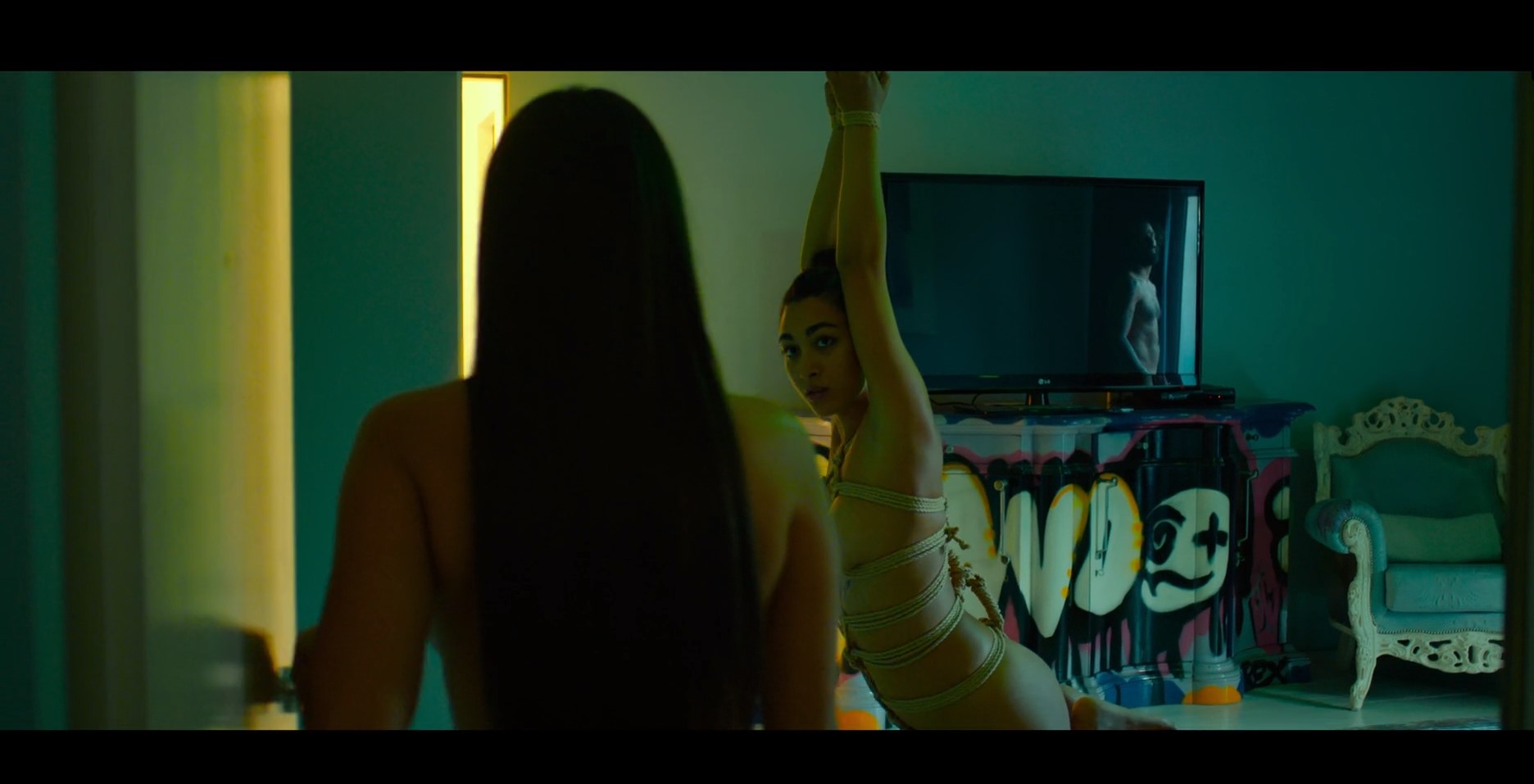
“The Girl Who Cried Her Eyes Out” Now Available on Blu-ray
Maddie’s reserved and loner behavior becomes frazzled when a promised small party in a wooded state park expands with invited surprised guests by best friend and roommate Kim. What was supposed to be a gathering of letting lose with booze and drugs, tensions rise with Maddie at the center of it all. A truth or dare game sends Maddie into the forest just after hearing a ghost story about a tragic young girl who haunts the woods, known as Caroline Woodsman, the girl who cried her eyes out. When Maddie comes across an unsettling girl sitting alone on a bolder, she’s becomes marked by Caroline Woodsman’s spirit and all of her friends are in mortal danger. After that night, they each are visited by the spirt and disappear, some found to have come to a tragic end, now Maddie and her friends that are left must find a way to stop the curse before Caroline takes them all.

Inspired by J-horror’s folkloric Onryō subgenre, the vengeful spirit, “The Girl Who Cried Her Eyes Out” is an original American-made Onryō story with heavy influences from “Ringu” or “Ju-on”. Fabrizio Fante and Debraoh Ricky were the top with the film is the feature length debut of co-writer and director Eugene John Bellida, known to dabble in the melancholic and horror affluent shorts with the tense-laden killer neighbor next door “Upstairs” in 2009 and the contemplative contra of an artist and a mental patient in “Empty Places” of 1999. The move to a major, yet Independent, feature challenges Bellida to build and retain a taught and haunting tale, filmed in the wooded rural areas of Connecticut and released in 2024. Like most notable vengeful spirit films, “The Girl Who Cried Her Eyes Out” has creepy children centerstage with a supernatural antagonist ready to curse the minding-their-business unfortunate who stumbles across them. Deborah Rickey, Fabrizio Fante, and Aurora Athame produce the film for Bellida’s Mimage Pictures.

The characters are comprised of mostly black-garbed, rock-enthused, group of friends, if you can even call them friends because of the unsavory way they treat each other between the cheating on one’s significant other, the physical bullying, the mental bullying, the emotional bullying, the betrayal of trust, the leaving of friends behind, and other plenty more examples of anti-comradery that make this group highly unlikeable amongst an evil ghost child with no eyes. Being a large cast of character is also detrimental to the narrative’s progression and success as there’s too many too many to pick off to pick off right in a slashersque horror. A slew of off-screen kills takes over as the core mortality rate, leaving hardly any character confirmed dead or alive in what is mostly hearsay fate from another character. The only time we know a character is in fact dead is when their ghost returns to play mind tricks on the living in a metaphorical medley of guilt. Mari Blake’s feature film debut as the lead protagonist Maddie has her inexplicably marked by the urban legend ghost when she stumbles upon in the woods. Blake’s angsty performance is akin to being an outcast, or the black sheep, amongst the character friends with a tie only to one friend, her roommate Kim (Suzanna Scorcia). The sight challenged apparition Caroline Woodman whose powers are immense and reaching is played by “V/H/S/Halloween’s” Hallie Ruth Jacob and Woodman terrorize, in an arbitrary manner Maddie’s so-called friends that represent, in their own idiosyncratic way, the worst of friends with Cort (Jason Schlaman), Selene (Aleis Work), Jess (Kelsea Baker), Goose (Chandler Reed), Mikayla (Mikaela Seamans), Max (Mark Ashin), Nikki (Lisa Naso), Lindsay (Meena Knowles), Greg, Tyler (Meteu Bryan), and Landon (H.K. Moore).

Bellida constructs a script that has an elimination process that not only literally purges the social toxicity out of one’s life, Maddie’s life, but also puts Maddie into a downward spiral with the vengeful spirit representing Maddie’s breaking psyche as she’s the only one who can see the ghost and hear the fabricated noises eats at her patience. Maddie also experiences the friend dysphoria as a trickster device by the spirit. “The Girl Who Cried Her Eyes Out” is a solid supernatural chiller but lacks tethering to keep the rising body count closer to the chest and the imprinting curse laid upon Maddie is a bit ham-fisted as the campfire ghost story is literally told by another friend and then sanctioned shortly after by a mere lone walk through the woods. There’s no story device that stirs up the conflict, it just happens. There’s no unearthed video tape, no discovery of bones, an cursed object, or some ancient spell spoken and without this spurring device that makes the woods instilled with evil, then this would happen to anyone but the woods, which is mentioned to be a state park, don’t come with a warning as surely others would have been affected by the apparitional affliction. The tale of Caroline Woodsman serves loosely as such catalytic crux. Considering the special effects, the budget limits the visuals as makeup effects take the lead with Caroline’s pale aura and the illusion of bloody eye sockets. Quick editing and opportunity sound bites, coupled with performances, provide the ghostly impulses over the group which also seems premeditated with taking the sullied friends out one-by-one in an isolated fashion, an interesting course for a child spirt to take in order to pluck souls just to invite Maddie back to where it all started, the woods, where her troubling, friend-induced psychosis began.

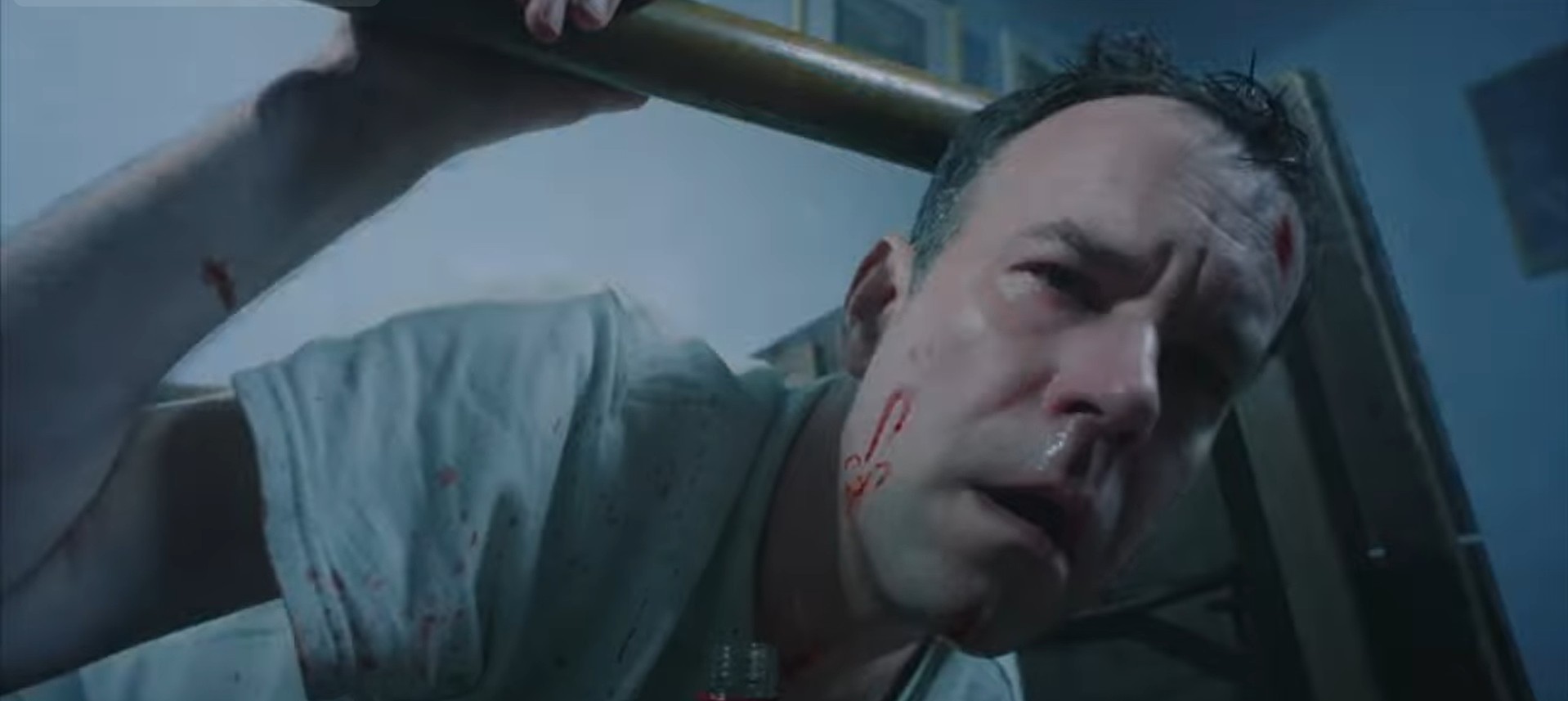
MVDVisual conjures “The Girl Who Cried Her Eyes Out” to Blu-ray home video. The AVC encoded, 1080p Hi-Def resolution, BD25 exhibits the film in a widescreen 1.78:1 aspect ration. The codec has fair reproduction value of the digitally shot film with a dark-natural saturation scheme that favors more natural lighting than key lighting, even the woods scenes utilize a more translucent tint that offers muted illumination rather than bright as day illumination. Details are a bit fuzzy and less defined but delineation objects and subobjects more than most indie valued releases. There are arranged characters in background and foreground that create measured depth but the lack of color reduces range to mostly blacks and grays of an achromatic color palette. The English surround sound has a compressed, moderate pop with a clear dialogue track that varies in strength, often times the speech stamina goes below other character dialogue despite being in the same scene and on the same depth level of which they’re talking, suggesting a singular or stationary mic placement. There is also a second English audio option of a 2.0 Stereo and, personally, this was option had a better fidelity that didn’t suppress the strength without compromising depth and range. Special features include an audio commentary with director Eugene John Bellida and producer Deobrah Rickey, “Sick Sick Sick” short film by Fabrizio Fante, behind-the-scenes video clips, and a photo gallery. The physical release is pretty bare with a standard Amaray Blu-ray case with a blow up image of Mari Blake’s bloodied and tear-stricken face. The unrated Blu-ray has a runtime of 94 minutes and is region free.
Last Rites: A busy American Onryō clutters, “The Girl Who Cried Her Eyes Out” is stifled on its fair stab on the subgenre but the themes of rocky friendships and the true nature of people become diluted by the sudden deluge of little ghost girl wrath and her pick of the litter within a large group of toxic friends.