Slavic Folklore EVIL Goes Full Amber Alert in “Baba Yaga: Terror of the Dark Forest” reviewed! (Digital Screener / Shout! Studios)


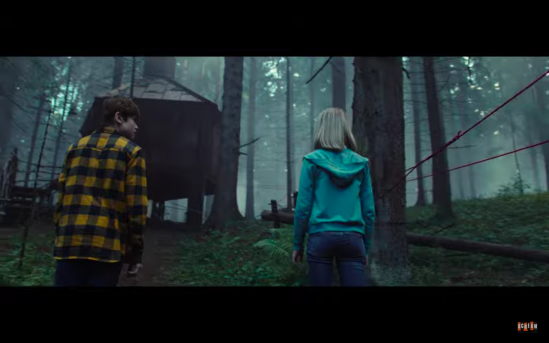
Still reeling over the loss of his mother, a disheartened Egor has moved to a new apartment on the forested outskirts of the city with his father, step mother, and infant half-sister. A nanny is hired for house upkeep and to look after him and his sister, but the nanny’s strange behavior borders hostility toward him while also bewitching his father with her beauty and charm. Since her hire, the nanny cameras alert Egor of movement in the nursey, projecting an unknown and disfigured woman in the room hovering over the baby. When his parents don’t believe him, there’s nothing more the older boy can do until his baby sister goes missing and his parents don’t remember her, as if she never existed. Egor, along with his friends, track down a man living in the woods who seems to have an inkling about the mysterious disappearances of children and why everyone forgets about them as he has experienced the loss of his daughter and can barely remember her. Based off the man’s ramblings, their search for Egor’s baby sister leads them to an old and abandoned power shack that serves as conduit to the world of Baba Yaga, a Slavic witch with the influencing ability in kidnapping and devouring children’s souls for power and Egor’s sister, along with the rest of the nearby children population, have been abducted to lure in the pivotal pure child to set her free into their world.
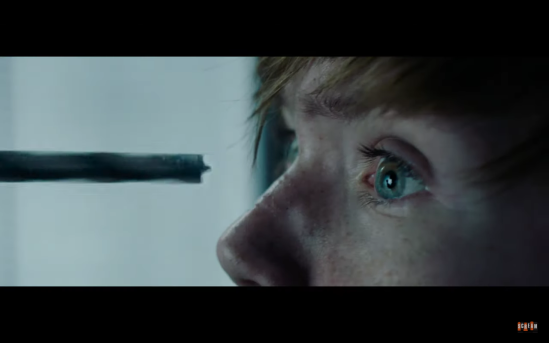
“Baba Yaga: Terror of the Dark Forest” is the second part of this unintentional two part Russian horror film appraisal following our extrospective look into Olga Gorodetskaya’s psyche serrating “Evil Boy” that just happens to have another protagonist by the name of Igor, but in this case, the spelling is Egor and, instead of a middle-aged doctor, Egor is a pre-teen boy with pre-teen issues – just to jazz it up a little. Also originally known as “Yaga. Koshmar tyomongo lesa,” the supernaturally Slavic folklore tale, directed by Snyatoslav Podgaevskiy (“Mermaid: The Lake of the Dead”), was released February in motherland Russia and is making a distributive second coming toward the States on September 1st courtesy of a collaboration between Shout! Studios and Leda Films. Penned by Podgaevskiey as well as Ivan Kapitonov and Natalya Dubovaya, the scribing trio pickup right where the wrote off form the gritty mysticism of fabled creatures beginning with “Mermaid: The Lake of the Dead” and into a classically frightening and morose villain salivating for juvenile souls spurred from one of the numerous variations of one of the more popular, if not grotesque, Russian mythological being. “Baba Yaga” is a production of the Cinema Foundation of Russia, Central Partnership Productions, Non-Stop Productions, and QS Films.
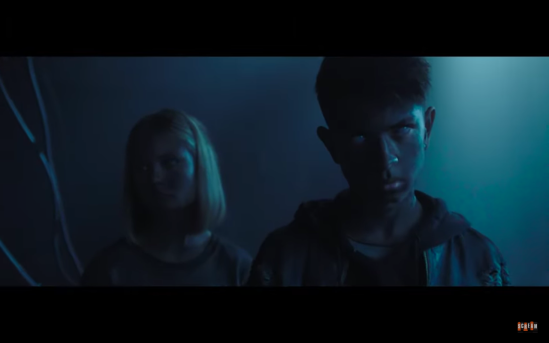
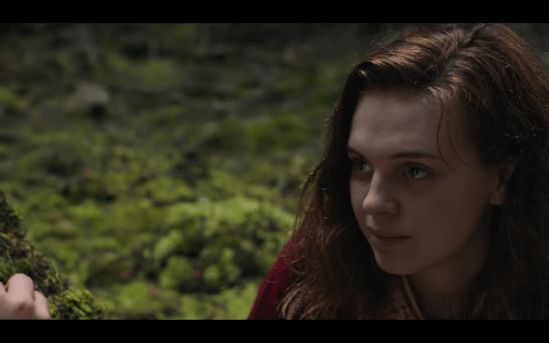
In much of the reverse from “Evil Boy,” Podgaevskiy’s “Baba Yaga” rocks the cradle in a “Goonies” approach with a condiment and courageous group of pre-teen, developmentally spongy, angsty, and hormonal driven children to solve the big bad witch mystery that not only afflicts the very lives of their brethren age group, but also the parental halfwits who have their minds erased like a chalkboard with nothing more than tiny dust particles to cling to to keep their missing children alive in their memories. From the visually powerful alien invasion thriller “The Blackout” (ItsBlogginEvil review here), Oleg Chugunov spearheads a trio of adolescents on the cusp of being witch-fodder. Chugunov plays Egor, a dispirited youth unhappy with his father’s remarriage to another woman and the target of bullies at his new school before becoming the chosen meal plan for Baba Yaga’s unholy escape for an ethereal world. Egor’s experience of an afterthought to a savior of child-kind isn’t represented well through Chugunov and how the character is written as Egor just falls into the “pure” child role without much explanation to why, staying flat on the personal growth scale for 113 minute runtime. Egor’s followed by a love interested in Dasha (Glafira Golubeva) and lead bully Anton (Artyom Zhigulin) who both have bouts with their parental caretakers; Dasha’s mother is a scorned beauty hellbent on controlling Dasha’s life form outside influences while Anton is a parentless brute with a guardian who is equally as callous as him, if not more. Svetlana Ustinova (“Hardcore Henry”) has two roles in this film and both are bad guys: Baba Yaga and Baba Yaga’s half-bird, half-human hench-thing. Ustinova shows immense range by fielding human to hybrid to full out witch qualities, inching the insidious intentions through the storyline that requires varying degrees of discourse with other characters along the way. The cast list rounds out with Aleksey Rozin (“Leviathan”), Maryana Spivak (“The Outbreak” TV series), Igor Khripunov (“The Bride”) and Marta Timofeeva (“Welcome to Mercy”).
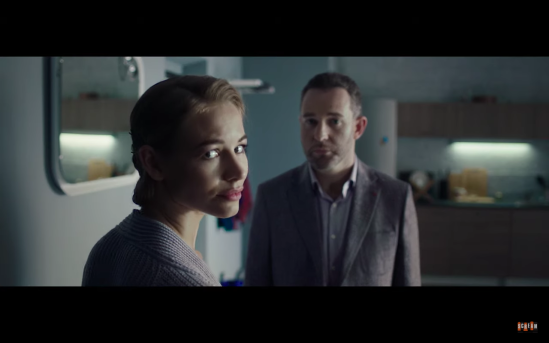
Out of the two terror inducers from Russia, “Baba Yaga” inches out “Evil Boy” on the supernatural spectrum. Between Anton Zenkovich’s colorfully prismatic photography, Vlad Ogay’s sleek-straight and modernally tight architectural designs juxtaposed against a vastly rustic and chaotic woodland lore, and topped off with Podgaevskiy’s highly effective misdirection jump scares, “Baba Yaga” inveigles to a palatable lore horror invigorated by a two-timing enchantress with a sweet tooth for kid blood. Despite not being exact to the Baba Yaga’s tale, as the creature’s house is supposed to erected by actual chicken legs, Podgaesvkiy shoots a fear-laden heartstopper where anything can happen in any scene at any moment. Yet, something is indubitably missing from “Baba Yaga.” Perhaps, what’s missing is that meaningful message about rekindling that spark between parent and child, patching up the tears in the relationship that’s been strained by XYZ reason. Perhaps, what’s missing is the unsatisfactory ending of easily dethroning of a powerful and mighty mage. Perhaps, what’s missing is the explanation on why Egor is the key to Baba Yaga’s tyrannical freedom from cursed exile. I’d say all three contribute to the cause and not much, not even a wonderfully animated s storybook prologue depicting the phantasmal enterprise and downfall of Baba Yaga, could save the heartache in wanting more substance from the already loaded story but, then, we would be looking at another hour of runtime though its sorely warranted. In sum, “Baba Yaga: Terror of the Dark Forest” slips in a variant version dispersing a tingling tale of Russian folklore with stunning visuals and dutiful scares that ends deficiently and mediocrely.
Hide your children! “Baba Yaga: Terror of the Dark Forest” will be unleashed on VOD, digital, and on Blu-ray and DVD September 1st from Shout! Studios and Leda Films. You can look for it digitally or on-demand from the following providers: AppleTV, Amazon, VUDU, GooglePlay, PlayStation®, XBOX, hoopla, Fandango Now, DirecTV, Comcast Xfinity, Spectrum, Cox, Charter, and AT&T U-verse. Since the review is based off a digital screener, the A/V aspects will not be examined but the Scream Factory Blu-ray and DVD release will be region A/1, presented in a widescreen 2.35:1 aspect ratio, and will include a powerful Russian language Dolby Digital 5.1 audio mix with English subtitles and will also include a dubbed English Dolby Digital 5.1 mix. Unlucky for me, I had to screen the movie with the dubbed version. Lucky for you, I can confirm that though obvious, the dubbing isn’t horrendously overly-hyperbolized or too asynchronous. There were no bonus features or bonus scenes included nor none announced on the press release. Grab a bottle of Vodka, pop some Zefir candies, turn off the lights, and sink into an Eastern European mythos horror with Svyatoslav Podgaevskiy’s “Baba Yaga: Terror of the Dark Forest” that’ll scare the Ushanka right off your head.

Pre-order “Baba Yaga: Terror of the Dark Forest” on DVD or Blu-ray for Sept 1st release!

The Maestro Delivers Us From EVIL! “P.O. Box Tinto Brass” and “IsTintoBrass” reviewed! (Blu-ray / Cult Epics)


Tinto Brass, whose very name is synonymous with erotica cinema, presents a tantalizing series of letters and videotapes, written and recorded for him by adoring women executing their most sensual fantasies, exploiting their carnal desires, and giving the director a peak into their wet dreams. Brass’s lovely young assistant retrieves numerous submissions from his P.O. Box and as Brass scours through the countless correspondences, attempting to penetrate through the mundane to find that special something from his female fans, the stories become animated from text to short film visuals that involve spread eagle voyeurism, reluctantly desiring wife swapping, and a little husband and wife role playing to spice up their drab marital sex life by incorporating home movies. Each woman is able to confide in the maestro who harbors a gift for delivering classy and joyous erotica to not only the cinema market, but also into his admirers’ private lives.

While America became gradually engrossed by the Showtime syndicated erotic drama series, “Red Shoe Diaries,” hosted by “X-Files” David Duchovny that showcased unconnected sensual stories from women who bared it all in heated encounters with male companions, the Italians’, who were experts in erotica cinema that this time, had their very own, slightly more explicit, version released in 1995 in full-length feature form, cleverly titled “P.O. Box Tinto Brass,” from director, and as titular presenter, the erotic master himself, Tinto Brass. Originally titled “Fermo posta Tinto Brass” in the native dialect,” “P.O. Box Tinto Brass” arrives on a new and restored 2-disc Blu-ray release from Cult Epics and acts as a celebration on not only the filmmakers’ immensely arousing body of work, but also a celebration on the director himself who has the uncanny ability to unearth the hidden away desires in all from his tongue-and-cheeky intimacy story arcs that relieve suppression for exploration of our natural sexual ambitions without the culpability instilled by taboo cultures. Granted, some of the material presented might feel dated and not as salacious as every John and Jane Smith can now utilize their God-given bodies to amass a modest fortune across the world wide web of sex, but to understand today’s culture, which still seems a fair share of sexually oppressive forces, we must look at Tinto Brass’s gift in normalizing what once was bedroom only material. Brass, who sport smoking a signature cigar throughout the film, uses his platform and becomes the vessel of expulsion to remove the privacy and shaming barriers that hinder healthy sexual appetites and, literally, creates a tactile representation of sexual jubilee with little-to-no seething judgement other than that of the character’s own restrictions. There are a ton of Brass trademarks shots that include, but not limited to, the hairy vulvas, a playfulness toward the vagina, exhibitionist flaunting, loads and loads of butt and breast angles in and out of clothes, elaborate location patterns on a grand, maybe art deco, scale, and, perhaps his most notable trademark, the expansive range of setting up elegant shots reflected off mirrors. As a whole, “P.O. Box Tinto Brass” brings a lighthearted and free atmosphere that’s uninhibited and sexy during and between each segment and while Brass is no doughy-eyed David Duchovny, I would be remiss in the lascivious eyes of Tinto Brass if I didn’t mention that after immersing ourselves in the “P.O. Box Tinto Brass” anecdotes, me and my wife had the most passionate, free verse sex we ever had since we’ve tied the knot 8 years ago, an experience that’s akin to an economically-friendly version of sex therapy. Thank you, Maestro!

This leads us into the second disc of this Cult Epics epic release with a 2013 documentary, entitled “IsTintoBrass,” from a longtime Tinto Brass colleague and good friend, Massimiliano Zanin, who delves more into Brass’s political, experimental, and monumental work compositions that shaped the director into who is now the renowned eroticism auteur with a belief and a slogan that the ass is the window into the soul. Thought being born, bred, and flourish as an Italian filmmaker, “IsTintoBrass” speaks volumes about his French influences and his life guiding time at the Cinémathèque Française in Paris where he met Henri Langlois and Lotte H Eisner who exposed Brass to rare, unseen films His time Cinémathèque Française afforded him praise on his first films, such as “Who Works Is Lost” and “Attraction,” that were to the likes of French directors like Jean-Luc Godard and were labeled as a blend of part French New Wave movement and pop cinema. Zanin guides us through Brass’s continuous battles with censorship boards whose biggest problem with his filmic formations was not the nudity, but the supposed transgressions against conventional cinematic norms, especially with “Salon Kitty” that was an atypical example against the latter half of his career and used sex as a means of power of another person. His entrenched struggles didn’t end there as the documentary also shed lights on filmmaker’s most controversial work, “Caligula,” which became not his work due to a an underhanded producer who decidedly desired more sex than story and fought Brass, in more than one court of law, for the rights. Notable friends, colleagues, and film critics go through the eclectic Tinto Brass timeline, recalling and reexamining his decisions and aspirations into a multinational praise of his work. Some of these speakers included Franco Nero (“Dropout”), Helen Mirran (“Caligula”), and Sir Ken Adams (“Salon Kitty”). Plus, there is plenty of T and A to go around,

If Tinto Brass didn’t have a stroke in 2010, Zanin’s documentary wouldn’t have been made three years later as it’s a highlighted tribute of one remarkable Italian filmmaker’s life achievements stemmed from something as terrible as a life threatening ailment; yet, that’s how these things usually go, right? A retrospective acknowledgement, usually overwhelming positive in general, of a great artist whose work is greatly admired, frequently in a posthumous manner. In this case, Zanin saw fit to encase a historical record on Tinto Brass before meeting his maker, beginning with a really vigorous look into his inspirations at the Cinémathèque Française, chalking up much of his earlier work to his time spent looking through reels upon reels of avant garde films, but then Zanin quietly fades out of the path that elevated Brass as the cherished erotic connoisseur. Zanin’s story takes this awkward tangent to only skim the surface of Brass’s erotic films, which is strange since Zanin’s known and collaborated with Brass the last 20 years, about 13 years when this documentary was released, and penned a pair of his Brass’s saucy scripts, “Cheeky” and “Monamour.” Yet, the last 20, if not 30, years is surprisingly fleeting in Zanin’s capsulated effort to immortalize Tinto Brass. Still, the overall film is perhaps more endearing than Tinto Brass would have ever imagined, especially as brash and as perverse as his image portrays him outside the parameters of the filmic dome. Inside that dome, Brass has obtained throughout the decades a following of professional admirers and adoring fans who see him for what he truly is, himself. “IsTintoBrass” isn’t a gratuitous or perverted exhibition of an old man’s horniness; it’s an intoxication of what it means to actually be free from the repressive nature of censorship, the rapturous high of being an unchained artist, and being an obsequious master craftsman of cinema.

Cult Epics delivers a 2-disc limited edition Blu-ray of Tinto Brass’s “P.O. Box Tinto Brass” and Massimiliano Zanin’s “IsTintoBrass.” “P.O. Box Tinto Brass” has been newly restored and re-mastered in 4K high definition from the original 35mm negative and presented is a widescreen, 1.85:1 aspect ratio. The picture is absolutely stunning that revels in the burst of primary colors Brass was keen to implement. The details and the tones on the naked skin flesh out every beauty mark, fiber of hair, and every pore. Typically, Tinto Brass films run purposely a little soft to create a dreamlike, if not fantasy-like, setting to obtain a jovial mood setting for the uninhibited moments, but the details are still strong throughout. “IsTintoBrass” is presented in a widescreen, 1.85:1 aspect ratio, from a 2K transfer scan of digital video, aside from the snippets of Brass’s work. Video presentation is like crystal that obviously wouldn’t distinguish any kind of transfer anomalies because there wouldn’t be any. The Italian language 2.0 Mono LCPM/DTS-HD Master Audio 2.0 Mono (“P.O. Box Tinto Brass”) and the DTS-HD Master Audio 5.1 Surround (“IsTintoBrass”) are clearly discernible in all regards, especially in the Tinto Brass directed feature form ’95 with a clarity in the speech, a softer ambience that supports the dialogue rather than be level with it or overwhelm it, a range that mingles to support the dialogue as well. English subtitles are available on both discs. To smooth off any rough edges is a score by Riz Ortolani (“Cannibal Holocaust”) with a vibrant, cheeky score that fits perfectly into Brass’s wheelhouse of curvy, adventurous women. Bonus features on the first disc includes a 2003 interview with Tinto Brass who gives a brief background on his cinematic start, poster and photo gallery, and the trailer. Disc 2’s bonus material includes an interview with writer-director Massimiliano Zanin providing his reasoning for this documentary, a Tinto Brass achieve photo gallery, a couple of short interviews praising Brass’s passion, and trailers The package is also a work of art sheathed inside a cardboard, black and blood red slipcover and inside the casing is a 48-page booklet of Gianfranco Salis stills from the Tinto Brass achieve which are beautiful and almost Playboy-esque. To experience Tinto Brass is invaluable enough, but to experience his films in high definition is without a doubt worth it’s weight in gold with the powerhouse release of “P.O. Box Tinto Brass” and a retrospective documentary “IsTintoBrass” from Cult Epics!

Check out the LIMITED EDITION “P.O. Box Tinto Brass” release!

Shooting Up EVIL May Cause Hellish-Hallucinations! “Ozone” reviewed! (Temp Digital / Blu-ay and DVD)


On a stakeout to meet an informant, Detectives Eddie Boone and Mike Weitz are ambushed by a drug dealer named Richter and become separated in the fierce firefight. While detective Weitz tracks down their traitorous informant into a decrepit druggie den, Boone wrangles with Richter who injects him with a new street drug called Ozone. Unable to locate his missing partner for days, Eddie breaks standard police protocols to find his longtime friend and partner by digging into Ozone’s grimy underworld filled with powerful hallucinogenic manifestations from the drug that turns users into mindless mutated addicts and killing machines. Eddie will have to go through Hell to stop the distribution of Ozone and to rescue his partner from an elevated and fully transformed drug lord with unconventional powers that believes Eddie is key to his world dominance.

First, “The Dead Next Door.” Then, “Robot Ninja.” Now, TempVideo and MakeFlix present the next super-duper, 2-disc collector’s release from the visionary B-movie director, J.R. Bookwalter, with his 1995 horror film, “Ozone.” Co-written with the visual effects artist from “The Talisman” and “Subspecies 4: Bloodstorm, David A. Wagner pens his one and only option in which Bookwalter immediately took a shining to following a string of very taxing and bargain titles for a flyby label. Able to by clairvoyant with how “Ozone” should be constructed, deep inside the creative process of his auteur mind, Bookwalter felt desire to oversee the production, taking the helm on just how he would make an ambitious project come to a life on a microbudget. “Ozone” parallels the subculture of powerful narcotics, like heroin or cocaine, and amplifies the conditions of the euphoria side effects to monstrous, unpredictable heights through a labyrinth of what the hell is going to happen next? Mostly shot in Akron, Ohio, “Ozone” is a production of Bookwatler’s own company, Suburban Tempe Company aka TempeVideo, on an astonishingly low-budget of $3500 and a handpicked cast and crew.

Comprised mainly of Ohio based actors, “Ozone” finds it’s star in James Black who has previously worked with Bookwalter on “Zombie Cop” and “Chickboxer.” Black went on to stardom, making a living off of the Hollywood limelight by having roles in such films as “Soldier” alongside Kurt Russell and “Out of Sight” with George Clooney among many other television and movie roles, but Black’s humble beginnings shouldn’t be overlooked. His performance as the lead character, Eddie Boone, highlights his attributes as a leading man. The physicality of the former professional football player with good looks catches the corners of eyes that the man from Lima, Ohio can act as well as do action scenes professionally and effectively despite budget limitations. However, “Ozone’s” talent doesn’t end there with Black’s co-stars who wear multiple hats in other roles or behind the camera. Case in point is Bill Morrison and James L. Edwards as the two makeup a total of five characters in the film as well as serving to be critical components as crew. Morrison dons two roles plus crafting the special makeup effects and miniatures. Edwards supports three roles, including the main antagonist in what looks like a hefty body suit. Morrison and Edwards going through the rigors of makeup to pull off various characters with polar personalities provide “Ozone’s” well-rounded, always interesting, idiosyncratic individuals Eddie encounters through his misadventures of drug-fueled nightscapes. Tom Hoover, Michael Cagnoli, Michael Beatty, Jerry Camp, Mark S. Bosko, Wayne Alan Harold, Neil Graf, Leo Anastasio, Parris Washington, and Lori Scarlett in an unforgettable birth of a mutant baby scene rounds out this cast of colorful characters.

“Ozone” is a gooey, gory, gumshoe of a horror film baked on narcotics laced with nightmares and for the budget price of a dime bag, J.R. Bookwalter injects a full-fledged, black tar, down the rabbit hole thriller that’s akin to a Clive Barker Faustian concept. “Ozone” draws similarities from “Hellraiser” as well as could find strong congruence with “Lords of Illusions,” a film which was released the same year as “Ozone” in 1995. Instead of magicians of the occult, the use of a more salt of the Earth drug is a powerful, tangible substance that reflects relevance more so than of fantasy. Audiences can relate more to the idea of the twisted wrenching of habitual use of not only illegal drugs, but with perhaps medications, alcohol, or any number of other addictions that seemingly take over one’s life and replaces it with the worst part of themselves. The mysterious encounters Eddie Boone is subjected to during his tour of the drug enlightens the hardnose detective to an out of body horror experience wretched with disfigured humanoid shells and countless mutants determined on cornering the market on living not sober not on their own volition. The use of the new morph special effects merged with the respectable practice effects by Bill Morrison and his team gorge on body modification and overpowering death as synonymous to being high.

Just like “The Dead Next Door” and “Robot Ninja,” “Ozone” receives the king’s treatment into a duel format, 2-disc Blu-ray and DVD Signature edition release. Shot on Super-VHS C videotape in 1995 and then transferred to DVCAM in 2002 for the DVD remastering, the 2020 upgrade used the DVDCAM masters were captured as ProRes 442 HQ QuickTime video files for a new and comprehensive color upgrade, additional deinterlacing, and amend any other Super-VHS C tape imperfections. What resulted for the Blu-ray release is a super clean and enhanced look presented in the original 4:3 (1.33:1) aspect ratio of perfectly color corrected hues, brilliantly effusing various colors to coincide with the artistic storytelling of Eddie Boone’s trippy trek through “Ozone’s” chthonic evil. Seldom do minor blemishes pop up; in fact, you won’t even really notice when godsmacked on “Ozone’s” uncanny use of budgetary limitations. The English language DTS-HD Master Audio 5.1 surround sound mix is equally as impressive. Pulled from the DA-8 tape achieve of the original audio masters on an eight-track cassettes, all of the dialogue and some original sound effects were used as the basis for the new restoration in which Maui Holcomb and director, J.R. Bookwalter enhanced over the course of 18 years. Dialogue cuts to the front of the line, mixed and balanced well with the explosions, gunfire, and other skirmishes, delivering a flawless and discernable product. Depth and range render nicely throughout. The DVD specs are the original 1994 VHS version also in the original aspect ratio with an English language Dolby Digital 2.0 stereo mix. Jens C. Moller grand score elevates “Ozone” to the “next stage,” as the street mutates would coin it, offering up a bountiful, robust score that simultaneous blends action and horror seamlessly. If you’re looking for every nook and cranny bonus material on “Ozone,” you got it with an extensive bonus package on the Blu-ray disc that include a 2020 audio commentaries from J.R. Bookwalter, a 2003 commentary with the director and star, James Black, 2003 commentary, entitled “Street Zombies” from Bookwalter, bloopers and outtakes, production art and stills, news’ topic reels from 1993, promotional gallery, “Ozone’s origins explained through “Paying for Your Past Sins” with J.R. Bookwalter, “Into the Black” with star James Black and how he became involved, a 2003 location tour with actor James L. Edwards, behind the scenes footage with the only audio available is a commentary by J.R. Bookwalter, early test footage, and Tempe trailers. The DVD has additional material, such as awesomely isolating the musical score, 2020 audio commentary with Doug Tilley and Moe Porne of the No-Budget Nightmares Podcast, scenes from the Spanish dubbed version, the 1992 B’s Nest Video Magazine Intro, the original trailer, the Japanese trailer, the “Street Zombies” trailer, and more Tempe DVD trailers. The not rated, 81 minute, region free release also has optional English and Spanish subtitles. Inside the casing, which has a reversible wrap cover with the original VHS cover, housed inside a cardboard slipcover of revamped artwork by graphic designer Timothy Rooker includes an eight-page color booklet with liner notes by Tempe historian Ross Synder; it’s a good read up on “Ozone’s” conceiving and a little history on SOV of the 1990’s. Exquisitely enhanced and lush with material, the Signature Edition of “Ozone” just might be the definitive one of the wildly insane and bloodied occult cop fiction of independent horror ingenuity.

Available for pre-order. Hit shelves August 11th!

Neglect. Rape. Christmas Birth. A Perfect Storm for EVIL to be Born! “The Curse of the Werewolf” reviewed! (Scream Factory / Collector’s Edition Blu-ray)


Set amongst the simple, yet sometimes divisively barbaric, culture of Eighteenth Century Spain, a beggar stumbles into the castle of a cruel king whose throwing a lavish wedding reception with his lords. The King’s young bride takes pity on the beggar as his force to be the occasion’s jester to obtain scraps of food and wine, but when the King retires with his new wife, he orders the beggar to be imprisoned. Forgotten to the point of insanity with his only visitor a lovely mute jailkeeper’s maid, the haggard and disheveled beggar goes mad with ravenous intentions and when the maid is punished for disobeying the now elderly, but still cruel, King, she is locked away with the beggar who rapes her. When the maid is released next morning, she kills the King and escapes into the woods to live like an animal until she’s barely found alive by a nobleman named Don Alfredo. Nursed back to health by Don Alfredo’s servant, Teresa, and discovering that the maid is pregnant, Don Alfredo and Teresa tend to the maid until the eventual birth on Christmas Day, an unholy time to give birth to a child according to superstition. The maid dies shortly after giving birth and the child, named Leon, is then raised by Don Alfredo and Teresa as their own, but carries with him a terrible curse stemmed from the maltreatment of his parents and being born on Christmas Day that transforms him into a bloodthirsty werewolf when the moon is full. When a priest advised that only love will restrain the beast from emerging, young Leon must be continuously shown affection, but when a young man, Leon leaves home to live his life, but the beast within him returns to ravage the village’s population.

Let’s travel back in time to the groovy year of 1961 when the renowned Hammer Horror direct, Terence Fisher (“Horror of Dracula”), was accelerating to the height of his career into what would be the United Kingdom’s very own colossally cult production studio, Hammer Horror, that economically constructed violent storied horror concepts splayed with a brilliant crimson blood inside an orgasmic gothic melodrama circulating around most of the classic monsters like Dracula, The Mummy, and Frankenstein, but, in this review of a new collector’s edition of Scream Factory’s Blu-ray release, Fisher wrestled with the hound from Hell, the werewolf, in “The Curse of the Werewolf” that was penned by Anthony Hinds, under the pseudonym of John Elder, as his sophomore credit behind “The Brides of Dracula.” English studio locations were transformed, not under the light of a full moon, to fabricate a mock village of Eighteenth Century Spain with the immaculate details to the sets and costumes, surely recycled from previous Hammer films, to offset the inherent English accents on a broken Spanglish vernacular. Fisher and Hinds upend common werewolf narratives, spinning a wildly tangent rendition of Guy Endore’s already highly taboo tricked out horror novel, “The Werewolf of Paris,” and drape it heavily with Gothicism.

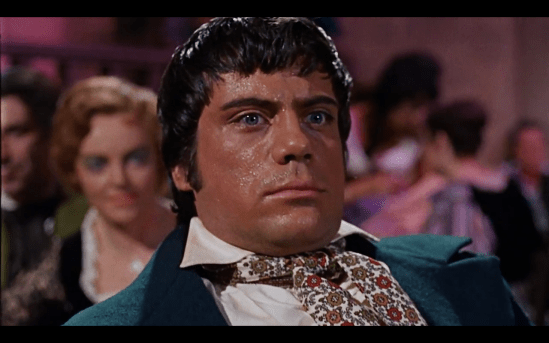
Playing the shapeshifter werewolf is Oliver Reed who at the time was relatively unknown, playing a few bit parts such Plaid Shirt (“Wild for Kicks”) or my personal favorite, Man With Bucket on Head (“No Love for Johnnie.”) Yet, Reed exuded animalistic qualities, such as his dark features and somber eyes, that made him ideal for the role by appearances alone. The thespian in him didn’t quite fit what I believe Fisher was trying to flush out for his beast as Reed held back with a stoic reserve rather than a man desperate for salvation or death, but no one could deny that Reed wore the werewolf makeup like no other, a fine tuned testament of makeup artist Roy Ashton’s creativity that intensified an already beastly framed actor. “The Kiss of the Vampire’s” Clifford Evans took the role of being the wealthy socialite and surrogate father, Don Alfredo, who took the responsibility of raising a cursed child as his own with much suppression love as he could muster to stave the beast from returning. The legendary actor who starred in countless crime-dramas step outside his niche and into horror, even if at the time horror was considered a schlocky exercise of distaste content for a cheap thrill. As Don Alfredo, Evans wages his worth solely on the prospect of being a gentled hearted father-figure doing the right thing even if it’s detrimental to himself and the veteran actor triumphs taking an aloof man with little responsibility to his village, let alone his home, and turning him into taking the matter of his adopted son’s affliction into his own hands when he fails to cobble another solution together. “The Curse of the Werewolf” holds many other fine support performances from “Circus of Horror’s” Yvonne Romain as the mute jailkeeper’s maid, Catherine Feller, Richard Wordsworth, Warren Mitchell, Anne Blake, and John Gabriel.

“The Curse of the Werewolf” is driven not by the snarling teeth action or the transformative body horror one expects of Lycanthropy features. Instead, Hammer’s film rides a story high without being arbitrary with nonsensical waning on the centerpiece of the story, the curse, coursing the path that led to Leon’s fate that was no fault of his own. Leon’s throat-ripping moonlight rendezvous was bred from cruelty and circumstance of severe class division that reaps the life from those in the same blue collar social class as Leon, leaving the higher, wealthy class virtually unscathed by the curse’s wrath in a cruel ironic twist of events. With the story leading the charge, special effects and makeup take a backseat without only some immature fangs and shadowy lurking to sate the need for creature presence. When Roy Ashton’s vision of the half-man half-beast does make a full presentation of Oliver Reed in the full hairy beast getup, complete with a furrowed brow, elongated lower canines, and large wolf ears that were connected with bristly, greyish brown hair down the side of his lower jaw, the werewolf is worth the wait for some of the best practical werewolf makeup from the mid-20th century and surely was the inspiration for future werewolf films, such as “Wolf” with Jack Nicholson. The novelty of “The Curse of the Werewolf” still remains ripe despite being nearly half a century young, giving the beast a meaningful, if not also pitiful, existence to empathize being damned on two fronts: a wretched, cursed soul and being the target of a village mob.

Can love soothe a killer heart? Find out in Scream Factory’s collector edition Blu-ray of “The Curse of the Werewolf” with a new 4K scan from the original 35mm negative and presented in a 1080p high-definition widescreen format of a 1.85:1 aspect ratio. Rendering with clean textures and superb details, the image has remarkable vibrancy and hue balance in it’s tinctured technicolor. The transfer is virtually blemish-free, suggesting that the original negative aged well, with agreeable natural grain to complement the film stock. Scream Factory has produced the best looking version of this classic Hammer release. The English language DTS-HD single channel Master Audio renders, again, scot-free of aged distortion with the high-definition eminent boost to providing even clearer dialogue and untarnished ambient clattering during more turbulent scenes of laughter or beastly disarray. English subtitles are optional. A collector’s edition wouldn’t be complete with a slew of bonus materials and, boy, does “The Curse of the Werewolf” have brand spanking new material for the special features that include a new Roy Ashton tribute piece by his friend and “Little Shoppe of Horrors'” writer Richard Klemensen and new audio commentary with film historians Steve Haberman and Constantine Nasr. Plus, interviews with actors Catherine Feller, Yvonne Romain, Mike Hill, art director Don Mingaye, art department member Margaret Robinson, and filmmaker Jimmy Sangster in “The Making of The Curse of the Werewolf” featurette, a look at Lycanthropy that discusses whether man’s inner wolf can be a transformative source of mental will, a still gallery, and the theatrical trailer. The package is illustrated with Oliver Reed’s snarling werewolf persona by Mark Maddox, who designed Scream Factory’s “The Thing” release, and comes in a nifty cardboard slip cover. All in all, Scream Factory brought new life into the re-originating and re-orientating “The Curse of the Werewolf” that is, perhaps inarguably, the best Hammer upgrade to date.

Own “The Curse of the Werewolf” today!

It Takes Evil to Write Evil. “Shirley” reviewed! (Neon / Digital Screener)


Backdropped inside the mid-1960’s of Bennington, Vermont, famed horror fiction writer, Shirley Jackson, and her husband, Stanley Hyman, a folk literary professor at the Bennington College, welcome a young newlywed couple, Fred & Rose, in their home, but the stay isn’t for social purposes as Fred stands to be the assistant professor aiming to achieve greater success under professor Hyman and Rose becomes the happy wife whose reluctantly willing to help with household chores as the surly Shirley flounders in a writer’s rut, sour around polite company, lethargic for most of the day, and at war with her cheating husband, but Shirley finds inspiration when taking a fascination to Rose, merging her with a news story of a missing local girl that leaves Shirley entranced, catatonic, and inhibited from writing her novel. Once disdained by Rose’s very presence, Shirley exploits Rose’s eager ambitions and trustworthy attributes by befriending her as an endless flood of literary muse offerings that breathe life into Shirley’s next masterpiece.

“Shirley” is a biopic allegory of half-truths and a tale of a grim waltz between common civility and the yearning, paralyzing pursuit of opus mastering from the “Madeline’s Madeline” director, Josephine Decker. From the creator of the “I Love Dick” television series, writer, Sarah Gubbins, who adapted the screenplay from the author of “Shirley: A Novel,” Susan Scarf Merrell, provides a textural interpretation of renowned horror and mystery fiction writer Shirley Jackson during the bitter final years of her and Stanley Hyman’s unusual, yet threadbare functional, relationship. “Shirley,” in itself, is like one of Jackson’s terrifically terrifying horror stories woven together with anecdotal fragments of Shirley’s flailing existence with the new energy of a fictional young couple to drain the life from for her own benefit and is cinematically arranged the story like a perverse thriller of intellectual capitalism. The Los Angeles Media Fund (“Dark Crimes,” “The Bye Bye Man”) and the biographical drama producing powerhouse, Killer Films (“Notorious Bettie Page,” “Infamous”) serve as the production companies behind “Shirley.”

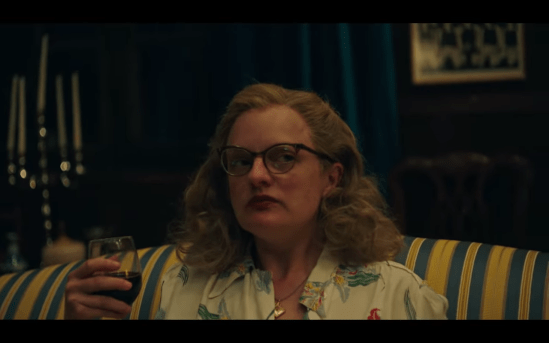
Hot off her success in the gender-dystopian television series, “The Handmaid’s Tale,” and in Leigh Whannell’s vision of a Universal monster classic, “The Invisible Man,” Elisabeth Moss embodies the titular role of Shirley Jackson with a fluid performance of a corkscrew soul. Moss aims to make Shirley as a detestable gorgon with nihilistic and agoraphobic intellect and a narcissistic view of her work she considers to be the holy grail. Moss is methodic and calculating in her character’s icy social skill set and floats half-seen above the water’s surface like an alligator hunting, ready to snap when a warm blooded meal doesn’t expect a thing. Shirley Jackson is only as interesting as her philandering other half, Stanley Hyman, who has a whole separate cache of quirks and callous intentions, though parading in a much more vibrant, lively, and gregarious manner. “The Shape of Water’s” Michael Sthulbarg has pitch perfect execution of Hyman’s managing tugboat who pulls and escorts this cruise liner-sized ego to port with an unorthodox show of a manipulation and affable disingenuous blend working tirelessly that ship to anchor after a long voyage on rough, stagnant seas. Fred and Rose enter like a parallelogram, a four-side rectangular where two sides pair together equally in length, of innocents wondering into a den of a pair of hungry lions. Then, the parallelogram flips and skews to form an twisted mirror of itself that has turned the sweet and loving Fred and Rose into a pair of awaken fragments of Shirley and Stanley. We don’t get to experience much of Logan Lerman as the assistant professor who shadows in Hyman’s overshadowing dominance, but we’re rather engrossed by Odessa Young’s onscreen reciprocity with Elizabeth Moss. Rose falls short of being the epitome of youthful innocence with a fast and loose shotgun marriage to Fred because of her pregnancy and her rendezvousing sexual appetite with Fred, but Rose’s delicate curiosity and naïve gives way for Shirley, Stanley, and even Fred to tread all over her. Young fully grasps Rose’s disadvantage in the viper’s pit that sizes her up for a great fall.

“Shirley” doesn’t bask in the spotlight of the biopic-ee’s celebrated work, like “The Lottery” or “The Haunting of Hill House,” even if it name drops the former; instead, Josephine Decker’s film is cut from the Susan Scarf Merrell cloth that disconnects and desensitizes intellect from moral conduct. Distinct lines are drawn between the couples Shirley and Stanley, whose dynamic teeters on alcohol, smokes, and a banter based on a fraction of love less, and Fred and Rose, who are teased with the taste of the good life, bow and scrape for the attention of their hosts. As the scrupulous infatuations begin to blur the lines and Fred and Rose become infected by Shirley and Stanley’s inceptive wicked cynicism, a metamorphosis occurs as the naïve newlyweds are now the bitterly tireless unable to cop with their shortcoming whereas Shirley and Stanley remain unaffected, if not, better off than from when they started, leeching the purity from the impressionable youngsters like a pair of scholarly vampires. Decker’s airy, dreamlike touch evokes another level of the already Freudian bombarded “Shirley” that’s laden with heavily schemed psychoanalytic foreplay and undercurrent human reaction to a string of unconventional occurrences.

Become the fly trapped in a web of deceits with “Shirley” heading to Hulu, VOD, virtual cinemas, and select drive-in movie theaters come June 5th, 2020 distributed from Neon. The rated R, 107 minutes quasi-biopic is presented a widescreen 1.78:1 aspect ratio. Unfortunately, a digital screener doesn’t allow me to critique the A/V quality. However, composer Tamar-kali’s subdued score lingers on the right side of brooding without feeling overly dreadful and with feeling more horrifically intrusive, complimenting Shirley’s aggressive mind rape of Rose’s psyche. There were no bonus features included with the digital screener nor was there any bonus scenes during or after the credits. Unlike the sullen, reality bending state as the titular persona, “Shirley” is an entertainingly cathartic glimpse into the worst side of erudition plagued upon those lesser informed that builds lustrous works of horror on the backs of perfidy.

Purchase the poster with Elizabeth Moss!