
Category Archives: Just fucking awesome
#Programming_Evil. “Nightmare_Code” review!

Brilliant programmer Brett Desmond has been hired at a tech start-up to quickly complete the groundbreaking coding of a previous programmer Foster Cotten who went on a murderous rampage at the start-up’s tenth floor office right before killing himself. Desmond, struggling with the federal government breathing down his and his family’s necks due in part of him leaking sensitive classified material, works night and day and around the clock to crack Cotten’s code for ROPER, a behavior recognition program. A small work group remains with Desmond during the day, but at night, Desmond sleeps at the office, working aggressively to make the deadline and get his life back in order. The further Desmond or anyone else becomes familiar with the code, the code starts to modify their behavior, twisting their thoughts, and succumbing them to it’s will of the dead programmer.

From time to time again, the film industry on the subject of pioneer technology relays information upon the fears and consequences of intertwining arrogant brilliancy and controversial technology. From the genres of cyber punk to Sci-Fi horror, decades old films such as the virtual reality plotted “The Lawnmower Man” and “Virtuosity” to the more recent “Transcendence,” transferring consciousness into the machine, have been outspoken against the use of behavior modification and recognition programs. The idea behind the notion can said that the person envisioning the possibilities of such software will become obsessed, power hungry, or vengeful if the creation is taken away from them to which all three can be attributed to director Mark Netter’s 2014 film “Nightmare Code.”

Shot entirely through a surveillance-like setup and notebook web cams, “Nightmare Code,” for most of the duration, is viewed through four screens as like security footage. Netter and cinematographer Robert Fernandez designed this structure not for the sole purpose of a novelty exhibition, but to also confine characters in a small box coded by technology, as explained in an DVD’s bonus featurette, and creating a sense of isolation and distant connections that make the life of a programmer very lonely and depressing which develops in the characters very thoroughly. The story is told through the virtual eyes of ROPER, using it’s self-awareness and advanced modules to voyeuristically watch the small group of programmers and manically motivate their actions by use of altered video projections. ROPER also accesses the past, filling in the gaps that only the infamous story of the genius Foster Cotton can fill, and by accessing the past, the dead programmer’s coding can be understood for it’s malevolent behavior modification.

“Nightmare Code” is complimented by an underrated cast whom work well together through the smaller ROPER displays in the small screen film industry. Andrew J. West, better known for his role as the Terminus cannibal Gareth on “The Walking Dead,” takes on the protagonist role of Brett Desmond who battles legal and family trouble and West epitomizes isolation by effectively taking a man with a moral conscious in leaking immoral government information and leading him down a path of legal morality, but at the same time, being unfaithful, deceitful, and prone to corruption. He becomes pitted against antagonist Foster Cotton, played by veteran actor and long time supporting actor Googy Gress, notably recognized as a NASA mission controller from Ron Howard’s “Apollo 13.” The two foes never have screen time together as their stories live separate lives, tangled by their connection to ROPER, and so without that nourishment from the other actor, West and Gress use their talents to virtually interact with one another, developing a realistic struggling relationship that isn’t really there. The characters that surround Desmond and Cotton are negatively affected by both main characters and Mei Melançon’s supporting character Nora Huntsman figures into that coded nightmare as she becomes affectionate with Desmond. Even though he’s married, Nora feels the urge to fulfill her needs after separating herself from addictions: gaming, abusive boyfriend, and drugs. Melançon, who had portrayed a minor role as a major character, Psylocke, in the mutant world of “X-Men: The Last Stand,” had another hugely important role as a side dish techie lover, but her role doesn’t seem very present and that might because of the editing technique to create the dooming cyber vision.

Netter’s resulting editing style inefficiently told the story, I thought. We’re well aware that ROPER can mislead the performance buggy human race, but ROPER, in my mind, wasn’t responsible for some of the delayed or fast forwarded actions of the characters seen through the security footage as it stylishly seemed unimportantly and pointless. Luckily, these particular editing moments are far and few in between and don’t exactly hinder the narrative. What does hinder the narrative are the quick, considerably choppy, edited scenes. Netter creates long, sometimes drawn out, scenes to convey the office solitude, but then transitions to the numerous and quickly implemented scenes that spawn a constant stop and go narrative that loses the ominous factor. The longer scenes tend to generate gloom, dread, and despair. Supporting characters become underdeveloped in the quickly edited in scenes, affecting not only life recovering Nora, but also the rest of Desmond’s team – Louis, Kevin, and Ray – who become the underdeveloped characters and they are worthless to the viewer, essentially. Still, check out the Tonya Kay scenes as you might care about hers.

The Indie Rights Inc. produced film and MVD distributed release has a clean and sleek 1.78:1 anamorphic widescreen presentation. Colors seem balanced and bright. There lies some minor noise, but that only adds to the security cam charm. The Dolby Digital 5.1 audio is clean and balanced in all channels and douses with Ari Balouzian’s synth soundtrack that embarks to terrorize. Balouzian’s score reminds me of Ennio Morricone’s “The Thing” theme, developing a soundtrack character that contributes to the intensity of “Nightmare Code.” Extras includes the film with commentary and a handful of featurettes explaining briefly the characters, the production, and the fear on the technology horizon. Mark Netter, along with the cast and crew, has good source material here and though this sort of tech horror isn’t exactly novel, “Nightmare Code” is fiercely entertaining and forebodingly frightening on a low-budget, startup scale.
Evil Lies and Waits Under A Blanket of Amnesia! “Deadly Revisions” review!

Popular horror screenwriter Grafton Torn wakes up screaming in a hospital room and suffering from amnesia, unable to recall how he ended up lying face down at the bottom of his stairs. His special effects friend, Deter, offers Grafton his woodsy cabin, isolated from town, to relax from the extreme nightmares that plague him. Soon Grafton’s nightmares become a blur between dream and reality, constantly causing him to question his sanity when movie prop objects go missing, unexplainable mental blackouts, and visions of people brutally murdered. Grafton must sift through the bitter memories of his separation with his wife Cat and ghastly manifestations of horror to seek the truth of his insanity or he’ll die trying.

I spent my New Years Eve night with Bill Oberst Jr. and his performance in the horror-thriller “Deadly Revisions” was better than gazing at explosively colorful fireworks. While the rest of the drunkard world partied stupidly away, counting down the year’s end, “Deadly Revisions” had been summoning me with a familiar “Evil Dead” cabin in the ominous woods gracing the front cover art. Honestly, I wasn’t expecting much from the Gregory Blair directed film because of the SGL Entertainment distribution company whom usually acquires and distributes low-end independent horror that’s generally amiss favorably. And even though that ominous front cover cabin in the woods wasn’t exactly ominous in the actual movie, this SGL production deemed to be a diamond in the most dirtiest of roughs; a shining example proving that all is not what is seems.

Just the mere name Grafton Torn sounds like name of a Bill Oberst Jr. character role, but the character seemed even keeled and intelligently acute to his surroundings which doesn’t usually fit the bill of Bill’s unusual characters. Just in recollecting previous films, Oberst played numerous zany characters such as a crazed werewolf in “Werewolf Rising,” a zombie news reporter in “Zombie World,” and a murderous child rapist in “Krampus: The Christmas Devil.” Though Oberst portrays lunacy frighteningly well, he outperformed his other more enthusiastic roles with Grafton Torn by composing himself properly and being more reactive to the possibility of insanity.

Where in the world did Gregory Blair come from? Blair certainly has a talented eye for the horror genre or at least an inspired taste to shape and mold a familiar setting with horror fans. The latter is more likely with minor characters suggestively named after horror icons; such characters are named Nurse Voorhees (Jason Voorhees reference) and Doctor Myers (Michael Myers reference). With no previous directorial credits to his name, “Deadly Revisions” is the freshman film for Blair under the direction and penmanship categories. Well edited, great angles, and quality effects contribute to a well received viewing. The long time actor also had a minor role in the film and helped produce the film in conjunction with PIX/SEE Productions, capturing a few awards during “Deadly Revisions” two-year journey to home video, including a win for Best Narrative Feature at the Los Angeles Movie Awards and Best Screenplay at the Terror Film Festival.

The story will keep one guessing and, technically, the ending goes unforeseen. Blair’s puzzling horror-thriller produces bluffs upon bluffs upon bluffs, manufacturing an unpredictable and murky ending. Blair quickly jabs in minor hints to the finale that don’t TKO until the end and his writing scheme and direction puts the unwitting protagonist Grafton, and the unwitting viewer, in a whirlwind state of total confusion and distressing fear that’s highly valuable for a film with restricted independent capacities. Even though “Deadly Revisions” took shape in 2013, the DVD didn’t hit shelves until 2015 and I can frankly state that “Deadly Revisions” has one of the best narratives I’ve seen this past year in independent horror.

“Deadly Revisions” makes the 2015 underrated list for sure. Technically and entertainingly, the Gregory Blair and Bill Oberst Jr. collaboration models a damn good thrilling story. Don’t be fooled by the generically tacky DVD cover art; instead, make the effort go forward with this reviewer’s positive recommendation and be pleasantly surprised and delightfully terrified. If a negative comment had to be made about this film, the DVD quality could use some work with the darker digitally shot scenes. Posterization and noise clout much of the night time scenes, annoying creating a speckled blob effect that briefly causes narrative loss – a familiarity with the likes of SGL Productions.
Evil Takes a Ride! “The Lady in the Car with Glasses and a Gun” review!

Dany Doremus, a lonely secretary roped in by her boss to work on a big project at his home, steals her boss’s car for a joyride to the sea as her boss and his family go away on holiday. When she makes numerous stops from town to town, the townsfolk approach her, claiming and swearing they know her even though she’s never been to this particular area before. If things couldn’t get weirder or even more suspenseful, a dead body is discovered in the car’s trunk. Dany wonders if she’s deranged and crazy or just a part of a some elaborate murder mystery conspired against her.
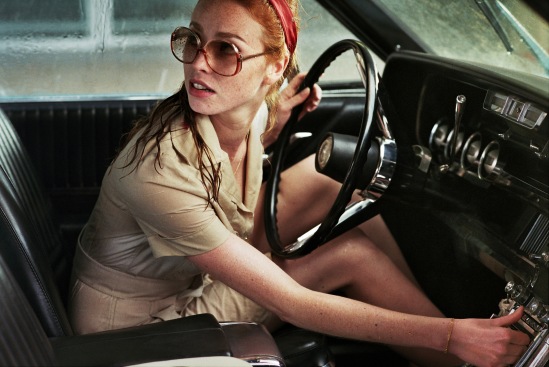
“The Lady in the Car with Glasses and a Gun” is a remake of the 1970 Anatole Litvak film of the same title. Though I’ve never seen the original Litvak film based off the award winning crime novel by Sebastien Japrisot, I’m sure director Joann Sfar’s film doesn’t stray much from the main artery that is the story, but Sfar spices up the tale through the addition of a young and feverishly heart-throbbing cast of actors and actresses. A murder mystery that sells sex more than thrills, Joann Sfar explicitly has Scottish born actress Freya Mavor and “Nymphomaniac’s” Stacy Martin do more than their fair share being sex symbol and straining the barrier of sexual tension, especially with a couple of highly eroticized topless scenes from both actresses. In a bombardment of thigh high mini skirts and tight at the waist dresses, the film setting is to reflect the 1960s to 1970s time period where if the story was in the technology age, “The Lady in the Car with Glasses and a Gun” might have had a totally different outcome.
Autosave-File vom d-lab2/3 der AgfaPhoto GmbH
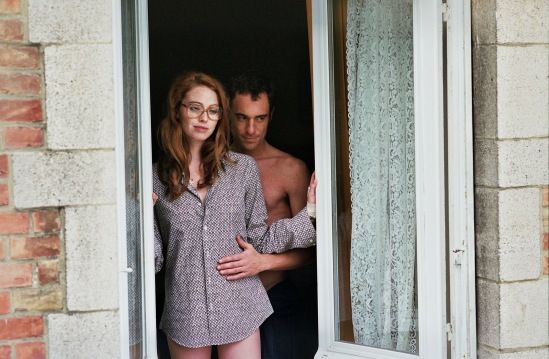
Like any good crime novels or films, noir plays a bit part and with the Sfar remake, noir is ever present from beginning to end. Dany’s noir scenario has her being plagued by a retraced trip she’s never initially taken, being roughed up by a glove-wearing mystery person in a duo of giallo familiar scenes, and discovering a dead body in the trunk of her boss’s Thunderbird. All the pieces come together to form one big elaborate undertaking with the big twist at the end and while I’m not sure if the novel and the Litvak film do marvelous work in the detail to wrap Dany’s adventure, I feel Sfar’s missed the mark by not filing in the holes that construct a twist ending. Maybe Japrisot’s novel a bit vague too, but there’s certainly multiple voids that needed to be filled to plausibly and logically explain the ending.
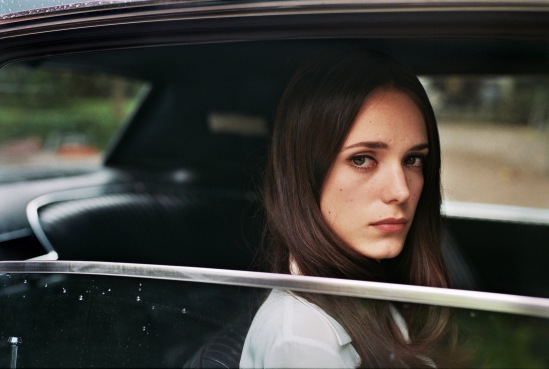
As I said before, Freya Mavor’s sexiness couldn’t be any more potent. The relatively young in the industry actress has tons of potential outside the European film market. Stacy Martin has been on that fringe of the industry since her controversial breakout role in Lars von Trier’s “Nymphomaniac.” Both Mavor and Martin work well together, creating the tension between their characters while pulling off a lustrous vision. The male lead playing Michael, Benjamin Biolay, reminds me of a young Benicio del Toro with a very reserved demeanor and calculating coldness about him.

Autosave-File vom d-lab2/3 der AgfaPhoto GmbH
Magnolia Pictures proudly releases the remake of “The Lady in the Car with Glasses and a Gun” in limited theaters across the nation today, December 18th, and will also be available on demand. Another variation of an award winning story with modern actors set in a time period that has been long forgotten, “The Lady in the Car with Glasses and a Gun” stimulates the whodunit objective that keeps you on the edge of your seat for every second.
Evil Revolts! “The Last House” review!

Erotic escort Love falls for on the side boyfriend Ned, a regular client with who she’s madly in love and with who she doesn’t charge a dime for her services. When Love wants out of the escort business, her controlling pimp Sunny says otherwise by sending her and two other girls on Love’s final trick, an all night mansion party. When the girls arrive at the gated mansion, they’re greeted by three strange hosts: Cleb, Selma, and Hate. Each of the three girls partner up with each of the hosts and move forward to their separate rooms where the escorts fall victim to sadistic tendencies, but Hate has more in store for Love. Ned, concerned when Love didn’t call once all night, sets out on a rescue mission to track down Sunny and gain information in means necessary on the whereabouts of the girl who love struck him.
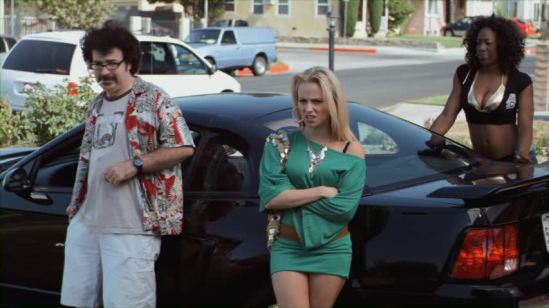
“The Last House” is a 2011 mixed subgenre film directed by b-horror director Sean Cain that was originally released under the title “Breath of Hate” and was penned by first time writer Wes Laurie. The ambitious story plays out cordially with a talented cast of actors behind the camera, but the story, though larger than life for a b-horror flick, follows a non-linear path that builds and builds for a grand finale and while that sort of tension usually creates a good setup, the ending nearly fizzles, not generating enough pizzaz and spark worthy the wait of the last five minutes of the total 91 minute runtime. However, the Laurie script fascinates and entertains throughout because of character structure through the aforementioned non-linear layout and because of the physical and emotional outpouring portrayed by the actors such as Lauren Walsch, Timothy Muskatell, Jason Mewes, and, especially, Ezra Buzzington.

“The Hills Have Eyes” remake actor Ezra Buzzington steals the entire movie as Hate, leader of the three sadistic maniacs, and Hate, in himself, is an interesting character who seeks to start revolutions against humanity through brains and brutality and maybe even something more. Buzzington embodies a “Die Hard with a Vengeance” Jeremy Iron’s type personality with a calm demeanor on one face and a ruthless side on the other, but he single handedly separates the character from the likes of any other and creates Hate, with the help of a Laurie twist ending, to be potentially a long time running franchise character. There is a fierce downside alongside Hate where his lackeys were served a overshadowed injustice. Monique Parent plays another sadist, Selma, and her time on screen didn’t add to the girth and felt unnecessary. The then 46-year-old actress, with more than 100 film credits to her name, looked absolutely stunning, sizzling with lust for her cougar age. That should be no surprise to fans of Parent who are mostly familiar with her previous work in a number of softcore porn films. Sadly, Parent has no nude scenes though the part strongly suggests it; “Evil Head’s” Joanna Angel and “Amateur Porn Star Killer 3’s” Regan Reece take the burden of skin diligently – thank you Joanna and Regan. The third sadist, Cleb, is portrayed by Jamaican native Ricardo Gray. Gray’s take made Cleb, frankly, my least favorite sadist as Gray went overboard with a character that could been a menacing psycho-sexual deviant to a half-witted, Jurassic role-playing pervert. If there was perhaps more of Cleb’s backstory, a better picture of this sadist’s mindset might have reversed the first unfavorable impression.

Jason Mewes has always played the part of the funny guy character. The same stereotype description can be laid upon other actors of similar character such as Hollywood studs Jim Carrey, the late Robin Williams, or the cult favorite Bill Murray. Mewes, a strong supporter of independent work, has most famously, for most of his career, teamed up with writer-director-actor Kevin Smith and produced some of the most notably comedic material to ever be released for about around a decade starting near the mid-1990’s. Not many audiences, aside from fanatical Mewes fans, are aware that the same Jay, of “Jay and Silent Bob” films, has had quite a few horror credits. From John Gulager’s “Feast,” to David Arquette’s “The Tripper,” Jason Mewes doesn’t just do comedy, but what makes “The Last House” unique from the other independent horror films is that Mewes is cast in a serious horror film whereas “Feast” and “The Tripper” are horror-comedies that still tap into Mewes endless vein of laughs. Instead, “Dead Girl” actor Timothy Muskatell takes the reigns on the comedy as a pot smokey, womanizing lackey and Muskatell is born for that type of part. Porn star Timmy Pistol also delivers some goofy laughs in a brief cameo with Jason Mewes and also, fun fact, Tommy Pistol and Joanna Angel were both in “Evil Head!”
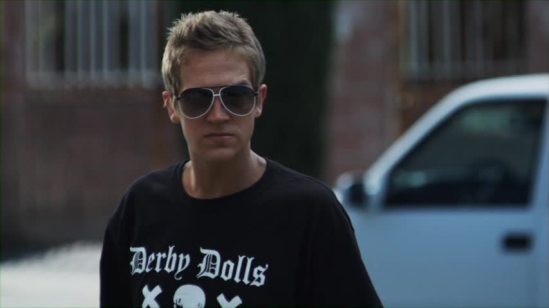
Mewes, Buzzington, and even Parent are major, recognizable names in the movie industry, big enough that even audiences so attached to Hollywood stardom would still be familiar with them. Two of the names mentioned headlining “The Last House” are accompanied by one more name that isn’t familiar to mainstream audiences, but any knowledgeable horror enthusiast would surely recognize. “Sleepaway Camp” actress Felissa Rose is that third headlining name and, unfortunately, shouldn’t have been exploited. Rose’s on screen appearance runs a total of around two minutes as the mansion realtor, but her presence falls from the face of “The Last House’s” universe after her single scene. Her iconic name alone will draw in the horror masses, but when she filmed the minor role, Rose was near popping at 9-months pregnant and she didn’t have one single story merit line or action.
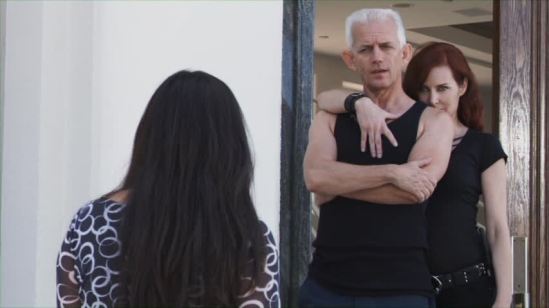
Distributed by Wild Eye Releasing, “The Last House” picture quality looks amazing presented in a detailed widescreen format. The audio quality comes and goes; at some points during outside scenes the ambience or the soundtrack plays at a whisper. When in more confined scenes, the tracks blare with some crackle. However, none of these will impact watchability nor take away from the film itself. “The Last House” aka “Breath of Hate” will make a deep gash into the independent horror scene and Wild Eye Releasing will help deliver Hate into your home entertainment on November 24th.
 It's Bloggin Evil!