EVIL Has the Right to Remain Dead! “Magic Cop” reviewed! (88 Films / Blu-ray)

No Two-Bit Magician In ‘Magic Cop” on Blu-ray!  

Hong Kong cops are confounded by a chaotic drug bust when learning that their female suspect, who had managed to overpower an entire unit of male officers and even take a bullet ambling deadpan into the streets, had died 7 days prior.  An outlying officer, and practicing Taoist, Uncle Feng is called to Hong Kong to not only quickly solve the narcotic crime but also investigate the unnatural properties of the case.  Feng is accompanied by his city eager niece Lin and two Hong Kong cops, a Taoist devotee and skeptic of Ancient Chinese spiritual mythologies.  Together, they track the drug trail to The Sorceress, a Japanese witch with powers that rival Feng and that can resurrect the dead into zombies and vampires to do her bidding, such as trafficking narcotics.  When the investigation closes in her business, The Sorceress and her right arm, skilled fighter plan to remove the only man worthy of stopping her.

Fans of Ricky Lau’s “Mr. Vampire” will once again be amazed and entertained by the fantastical and mystical action of Stephen Tung Wai’s “Magic Cop.”  Tung, a fellow martial artist and stunt man who had roles in “The Fatal Flying Guillotine” and John Woo’s “Hard Boiled,” helms his debut directorial penned by Chi-Leung Shum (“Vampire vs Vampire”) and the longtime Stephen Chow script writer Kan-Cheung Tsang (“Shaolin Soccer,” “Kung-Fu Hustle”).  The screenwriting duo brought lighting quick comedy to the mostly fictionally invented yet sprinkled with slivers of hard-pressed veracity and definitive entertaining occultism and what resulted resurrected “Mr. Vampire” semblance out of the being a period piece and into the modern day, backdropped in the year of 1990 when the film was released.  Long rumored to be the fifth sequel of the “Mr. Vampire” franchise, “Magic Cop” is a coproduction between Movie Impact Limited, Millifame Productions Limited, and Media Asia Film with star Ching-Ying Lam producing.

“Magic Cop,” and even “Mr. Vampire,” wouldn’t have such a cult following if it wasn’t for the Vulcan eyebrows and thin mustache of Ching-Ying Lam in costume.  The short-statured, Shanghai-born Lam delivers the same vigorous choreography and tranquil demeanor to this particularly stoic character of Uncle Feng, a Taoist practitioner to essentially wrangle unruly entities and please the spirits in the in-between our world.  Feng is old world and finds himself in surrounded by modernism when in Hong Kong, goaded by the young lead sergeant attached the case.  Practical as well as disrespectful, Sgt. Lam (Wilson Lam, “Ghost for Sale”) epitomizes today’s, or rather back then the 1990’s, modern man who has forgotten tradition and deference to those who came before.  Though padded with a fair amount of comedy coursing throughout, balanced against the impeccably edited tango fight sequences, Sgt’ Lam’s partner, known only as Sgt. 2237 played by “Centipede Horror’s” Kiu-Wai Miu, risibly wants to understudy Uncle Feng’s powers while Feng’s niece Lin, played by Mei-Wah Wong of “The Chinese Ghostbusters,” provides the subtle and quirky opposite sex that catches of the philandering eyes of Sgt. Lam.  The ragtag quartet of influx mindsets and personalities become challenged by their single common goal, to stop whoever is behind breathing life into the formidable dead and stop the unorthodox method of drug smuggling.  Former Japanese bodybuilder Michiko Nishwaki (“City Cops”) embodied that very dark magic antagonist.  Nishiwaki handles The Sorceress character with ease despite not having a surfeit army under her thumb; instead, this forces Nishiwaki to become the entire villain body with the slight, full-contact support for her right-hand bodyguard (Billy Chow, “Future Cops”) and a couple of undead lackeys, including Frankie Chi-Leung Chan of “Riki-Oh.”  “Magic Cop’s” cast rounds out completely with well-versed and seasoned, late actor Wu Ma (“Mr. Vampire,” “Return of the Demon”) as the chief inspector polarized in a complicated history with Uncle Feng.

What director Stephen Tung Wai boils down in essence is another variation of good executants of spirit humbled caretakers versus the wicked necromancers existing inside the fabric of the highly praised and cult-following “Mr. Vampire” universe.  Frankly, there’s nothing wrong with that derivativity since Ching-Ying Lam, Mr. Vampire himself, produces and stars as the titular hero.  Lam can conjure whatever-the-hell he wants in order to battle Hell itself.   “Magic Cop” is also a well-made, entertaining story, balanced between the contest wizardry, slapstick comedy, and the character dynamics, and stacked with improbable yet gratifying step-intensive fight orchestration that has gawked early martial arts films a wonder to behold and continues to do so to today but now trickles with pizzazz more-after-more due to put in place industry safety measures.  “Magic Cop” contains that lost art of potentially hazardous palatable physicality that beguiles more than the movie’s faux magic exhibited on screen.  To add to the authenticity, very little painted composited visual effects were used with makeup and the actors doing much of the heavy lifting with the editing team of Ting-Hung Kuo and Kee Charm Wu in full cut-and-paste fortifying mode to button up each sequence with comprehendible continuity of each punch, kick, and magical chopsocky.  One overtone made well known in “Magic Cop” is the unfillable chasms between old and new, respect and disrespect, and myth and science from whence solves no problems until some unified common ground can be reached in order to succeed, in this case, to stop a bitch of a witch.    

An age-resistance 35mm print scanned onto a buffed 2K Blu-ray that extracts the best print elements to-date. The AVC encoded, 1080p, Blu-ray presents Stephen Tung Wai’s picture in a widescreen 1.85:1 aspect ratio. A fine-tooth comb through the celluloid couldn’t unveil any major issue with the 88 Films release. Colors are richly grafted within the sabulous surfaces that are exceedingly defined with delimited, shadow-creating depth. Decoding speeds average around 35Mbps on a BD50, securing categorical choiceness amongst other releases and formats (that is until the potential 4K release). The release comes packed with four audio options to explore: The original Cantonese DTS-HD master audio 2.0 mix, a Cantonese DTS-HD 2.0 home video mix, an English DTS-HD 5.1 master audio dub, and an English DTS-HD 2.0 dub. Between the variated audio mixes, we preferred the original Cantonese DTS-HD 2.0 due to its cadence with the image and welcoming exactness through the lossless compression process. You can make do with the other three options, but the fidelity is much better with the original mix and only anti-subtitle sectarians would be pleased with an English dub. English subtitles are optional and synch well the dialogue but be prepared to speed read as the pacing is quick much like the dialect. Software special features include an audio commentary with Hong Kong film experts Frank Djeng and Marc Walkow, an alternate, standard definition Taiwanese cut of the film with alternate score, an interview with director Stephen Tung Wai, image gallery, and trailer. Endowed with a limited-edition, cardboard slipcover, the dark green Blu-ray snapper has newly illustrated, front cover artwork by Manchester graphic designer and 88 Films resident artist Sean Longmore, which is also on the cardboard O-slip. The reversible cover art has a reproduction of the original Hong Kong poster art. Stuffed in the insert is a mini-folded poster of Longmore’s front cover and a disc art, a scene moment captured in spherical rotunda, of the opening sequence. Available with a regional playback limited to A and B, the 88 Films release is not rated and has a runtime of 88 minutes. ‘Magic Cop, perhaps, wasn’t the sole proprietor of influence but certainly had a black talisman plying hand in the substrata of more Western favorites like “Big Trouble in Little China” and is a crucial cornerstone in representing the best of the Hong Kong Golden Age of cinema.

No Two-Bit Magician In ‘Magic Cop” on Blu-ray!  

What Russian EVILS Lie Beneath in “The Lair” reviewed! (Acorn Media International / Blu-ray)

“The Lair” Has a Deadly Secret!  Blu-ray Now Available!  

Royal air force Captain Kate Sinclair is shot down over the arid planes of Afghanistan.  Swarming with Taliban insurgents and her command officer killed, Sinclair takes shelter in an old, abandoned Russian bunker from the Russian Afghanistan invasion of the 1980s.  What she stumbles into is an experiment lair housing numerous stasis chambers and dark secrets.  Sinclair manages to barely escape with her life when one of the creatures inside the capsules is released, tearing to shreds her well-armed pursuers.  Rescued by a ragtag team of U.S. military outcasts based in the middle of nowhere as peripheral punishment and joined up by a trio of British special forces in the area, the Captain attempts to warn her rescuers what’s out in the desert only to be on the receiving end of a monstrous invasion that sees the slaughter of nearly everyone in camp, including the camp commander.  Miles from anywhere and not enough supplies to withstand another attack, those soldiers left alive band together to stage their own last stand assault on the creatures’ Russian bunker lair to ensure hostile eradication.

Acclaimed horror director Neil Marshall (“Dog Soldiers”) returns to his roots with a claustrophobic, high-energy, and violent creature feature known as “The Lair.”  Having experienced underwhelming success with the fiery Dark Horse antihero “Hellboy” remake in 2019, Marshall returns to independent scene for the 2022 released film having been shot in the barren lands of Budapest, Hungary to create the illusionary Afghanistan territory backdrop.  Marshall co-writes the script with “The Lair” star Charlotte Kirk, a reteaming affair from Marshall’s last feature “The Reckoning” from two years prior in which Kirk also produced and starred.  Also returning from “The Reckoning” and into the producer’s chair is Daniel-Konrad Cooper along with “Infinity Pool” producers, Jonathan Halperyn and Daniel Kresmery, and “Lords of Chaos’s”, Kwesi Dickson in this Shudder exclusive collaboration from Rather Good Films, Scarlett Productions Limited, Highland Film Group, and Ashland Hill Media Finance with Neil Marshall and Peter Shawyer’s private equity investment group, Ingenious Media, providing financial support.

Star Charlotte Kirk and Neil Marshall have a seemingly natural rapport that has transposed well from their collaboration on “The Reckoning” to the “The Lair,” crossing subgenre that involve the equivocal occult to a more plainspoken physical presence of foreign experiments gone wildly bloodlust.  Instead of being hunted by a 17th century witch hunters just for being a woman saying no to man, Kirk steps into a role of authority as military captain with loads of smarts and adept at close combat as she’s being, once again, chased by predators, but these uber-predators are unearthly, unremorseful, and ugly.  Marshall provides just enough character backstory for understanding the stakes and strengths of each of them but to reach a little more into their history might have been key to stronger motivations and for something to prove in not just being jarhead screwups.  Sinclair finds commonality and sympathy from Sgt. Tom Hook (Jonathan Howard, “Godzilla:  King of the Monsters”) who bears the guilt of losing men in battle and punishes himself to do better.  Psyche profiles for each soldier makes them rise above being flat by providing depth of flaw but what is vexing and irking about each, and this element may very well be intentional as an international thespian bout of poking fun, is the cast is nearly all British playing Americans with stereotypical drawls, ebonics, and punctuating southern accents so overexaggerated it’s downright sickening to hear, like watching a bad old war film, but what’s even worse and what drives a sharp claw talon into the inane heart of trite-tired audiences is the group slow walk before embarking into the battle of no return.  Again, this might be the work of intentional satire.  Some accents are gargantuanly worse than others, such as with “Titanic 666’s” Jamie Bamber’s pirate-patched Major Roy Finch and the Mark Arend’s Carolina-born Private Dwanye Everett.  From there, the elocution grades get better with less cliché but not by much with a cast rounding out of Leon Ockenden (“The Reckoning”), who I couldn’t understand because his accent was so Scottish-ly thick, Troy Alexander, Mark Strepan, Hadi Khanjanpour, Kibong Tanji, Adam Bond, Harry Taurasi, and Alex Morgan.

Neil Marshall not only returns to his horror origins but he also returns to the heyday of prime practical effects with inset creatures of a spliced appearance between the build, the dark full body achromia, and the facial configural layout of Marvel’s extraterrestrial antihero Venom with the eye-less, tongue-lashings and grabbings of Resident Evil’s staple adversaries, the Lickers.  Obvious a man in a prosthetic suit, the simplistic, brawny-framed humanoid basks in nostalgia despite being in a modern day movie, pining for the days when large or small men in full body, head-to-toe, terrifying imagery suits were the antagonists of our youthful nightmares while also providing the cast something to act against for a more realistic and rancorous on screen rendezvous.  The smaller scale production limits Marshall’s possibilities with his Kevlar-fleshed and razor-toothed creatures but the veteran director sells every act of “The Lair’s” story with trenchant action with hardly any downtime to catch one’s breath in between because the next blood-laden blitz rollout is upon us in a blink of an eye.  Between the action, the anomalous characters, and the pulsating, downbeat synthesizer score that courses through its veins, “The Lair” leans itself toward being a callback to the late 80s-early 90’s last stand dogfight subgenre and you can’t one second cease your attention for a director who appreciates the narrative surprise more than anticipated predictability.

Become lured into “The Lair” now on Blu-ray home video from Acorn Media International, a UK distribution subsidiary of RLJ Entertainment.  The AVC encoded, 1080p high definition release is presented in a widescreen 2.35:1 aspect ratio.  The BD25 offers sold flexibility for a film with hefty amount of night shoots and action as potential compression problems seem to stay at bay without any severe noticeable banding, blocking, mosquito noise, etc., however, the details are quite flat with a smoother finish, often in the blur of the fast camera workflow and editing because of the action sequences, leaving depth on characters, as well as in the scene, at arm’s length with monocular vision.  The warm hint of chartreuse embedded grading offers industrials color tones with a rich grit of oxidized bunker steel.  Don’t adjust your audio dial on the release’s English DTS-HD Master Audio 5.1 surround sound track, the dialogue only sounds wonky because its deliberate Americanized dialect set at the forefront and prominent amongst the audio layers which has significant range and depth with explosions, rapid gunfire from different calibers, and the guttural growls of the creatures that echo nicely through the rear and side channels when under the bunker or even affixed in a slightly decreased volume of its form in the attack of the basecamp.  There were no interference blights with the audio track, such as hissing, popping, or other discernible issues.  Special features included only a making-of featurette with clipped interviews during the shoot with director Neil Marshall, actors Charlotte Kirk, Mark Strepan, Jamie Bamber, Jonathan Howard, Leon Ockenden, and others regarding their admiration for the project in different aspects.  Acorn Media’s physical release comes in a slightly larger Blu-ray snapper, typical of the UK releases, with the cover art featuring an up-close and personal look at the creature’s ugly mug.  The same art is also on the disc with no insert inside the snapper case.  The release comes region B locked with a runtime of 97 minutes and is certified 15 for strong gory violence, language, and threat.  If you can stomach the fatuity at times, “The Lair” is a fast paced and staunch creature feature with a bunker full of gore.

“The Lair” Has a Deadly Secret!  Blu-ray Now Available!  

The Stillness, the Quiet, and the Darkness evokes EVIL to Home In. “Skinamarink” reviewed! (Acorn Media International / Blu-ray)

The Kids Aren’t All Right in “Skinamarink” on Blu-ray!

A night of silence is disturbed when a young boy, Kevin, falls down the stairs of his two story home.  Rushed to the hospital to return to the same silence-soaked house, the restless boy and his sister Kaylee search for their dad who has suddenly vanished from his bedroom.  Doors, windows, and even the bathroom toilet has strangely disappeared right from sight.  Feeling scarred under the cover of isolated darkness, the siblings head downstairs to sleep on the couch softly lit b0 the fluorescent glow of the television set.  As they watch old cartoons, crayon, and build with large Legos, while catching a few ZZZs in between, strange noises resonate through the home, floor based objects are found stuck onto the walls and ceilings, and a twisted, omnipresent voice slips the siblings commands that exposes them the darkness from within the house.

Schismatically different from any other spine-taut chills ever experienced before, Kyle Edward Ball’s written-and-directed 2022 Shudder exclusive “Skinamarink” is no joyful and innocent children’s song in the filmmaker’s debut feature film.  Based and expanded upon Ball’s 2020 short film entitled “Heck,” viewers will be enveloped and swallowed by the very core of childhood fears that plays like a fever dream, or a distant nightmare, where faces are a blur, spatial direction is nothing more than theoretical concept, and the voices around us are distorted, muffled, and cold.  “Skinamarink” offers little warmth under constant blanket of darkness and leaves no room for hope when parents are removed from the picture.  What’s Ball leaves behind is primordial and innate terror that rarely can be seen straightforward and lucid.  The Canadian picture, which was filmed in Ball’s childhood home in Alberta, is a micro-budget production of ERO Picture Company, distributed by Bayview Entertainment, Shudder, and IFC Midnight, crowdfunded by Seed & Spark contributors and produced by “Texas Road” producer, Dylan Pearce.

Shot over the course of a week’s time, “Skinamarink” works more like CCTV footage recording the static surroundings within the scope of the lens.  The cast is small, rarely visible, and when visible, they are often obscured or never directly focused upon to mint atmospheric dread.  Two parents.  Two children.  A nuclear family becomes the objective of an omnipresent, ominous presence, but there are concerning questions about the integrity of the family that Ball incites with clues of broken household.  Father and mother briefly make an appearance, or with one of them just their voice, throughout the course of the night, restricted their attendance exclusively around the children’s perspective that makes viewers shrink and become engulfed in childish fears – sometimes they are adult fears as well – of the dark and of being separated from parents.  Lucas Paul and Dali Rose Tetreault as kids Kevin and Kaylee kill their seldomly seen performances with the patter of little feet running through the house and up-and-down stairs, their soft, angelic voices whispering to each other and calling out for their father, and when briefly in frame, or at least the back of their heads, they manage to complete the succinct shot just in the way Ball intends to secrete fear from our every pore amongst the quiet and stillness.  “Skinamarink” is not a character-driven film in the least as Ball cherishes a chilling atmospheric horror so father (Ross Paul, Lucas’s real life dad) and mother (Jamie Hill, “Grotesque”) receive what essentially is cameo roles to establish a feeling of lost when they’re gone and are perhaps the easiest roles the two actors have ever taken and turn out to be the most eerily effective on screen and over the audio track.

“Skinamarink” experiments more with surroundings, audio and visual senses, and common inborn anxieties rather than progressed by traditional methods of character dynamics and that is where the film will be conflict-ridden and divisive amongst the niche group of diehard horror fans.  General audiences will find “Skinamarink” to be a bore without much popcorn pageantry to keep short-attention spans entertained and a disembodied villain.  Slow burn horror usually has an elevated element to it and Kyle Edward Ball certainly incorporates an open for interpretation access door for the deep-dive genre conspiratorialists to work overtime on reasoning and explaining “Skinamarink” to the masses still trying to process what they just experienced themselves after watching the film.  Theories will run amok with the most prominent being Kevin’s fall that reduced him to a coma state and what we experience is all in Kevin’s conscious-cracked cerebrum trying attempting interpret, at best guess, the dissolution of mom and dad’s relationship.  Again, this is just a theory as Ball aims for ambiguity to fester fathomable, one-solution explanations.   Perhaps in a type of narrative the world is not ready for, but in my opinion, “Skinamarink” fills in what is void from modern day horror, a uniquely fresh and chance-taking pervasive eidolon scare package to revitalize genre numbness with slow burn phobias.

An original parapsychological paralyzer, “Skinamarink” arrives on a Blu-ray home video courtesy of Acorn Media International, the acquired UK distribution company of RLJ Entertainment.  Presented in a widescreen aspect ratio of 2.39:1, the AVC encoded BD25 sustains a purposefully intended lo-fi A/V feature, set to the date tune of 1995, much like when SOV quality films were abundantly popular because of their cost value and accessibility.  If you’re expecting depth of detail, you won’t get it from “Skinamarink’s” dense static approach that all but eliminates object definition.  Delineation is scarce to an effective scare tactic to which Ball tones the film; yet, the static is not, for lack of a better word, static as the current changes within the blips, increasing and decreasing visibility for desired poltergeist potency, if poltergeist is what we want to call it.  Set entirely in nighttime, sleepy home, the basking glow of tube television is the only semblance of color that emits a faint blue luminous while antiquated cartoons provide flat caricature coloring.  Certain scenes are shot in obvious night vision with the spherical focus that becomes unnatural in the frame, but there’s really nothing natural about Ball’s auteur style.  The lo-fi style choice continues into the English DTS-HD 5.1 surround mix that doesn’t exercise every channel.  Instead, we’re back to canned content with intentional hissing, popping, and distorted tracks.  Aside from a couple of innate audio recordings of a squeaking closet door, all the other ambient audio and dialogue is done after the fact in post-production to be rendered appropriately misshaped and muddled.  There’s also no score, retaining realism of a hushed house sound design to pay heed to soft footsteps and other delicate and mortifying milieu noises.  Depending on your audio setup, subtitles may be your friend here as the whispers are so low, they’re nearly inaudible.  There are a handful of scenes that have burned in English subtitles for that very reason, but full menu English captioning is available too for the minute amount of dialogue.  Special features only include an audio commentary track with the director and director of photography Jamie McRae.  Acorn Media’s release mirrors the U.S.’s RLJ Entertainment’s Blu-ray with the exception of a slightly thicker Blu-ray snapper. The front cover denotes essentially what to expect in the future, a low-resolution and a blue-toned, dark, inverted screenshot image of the young boy; this scene also translates to the disc art.  Encoded with a region B playback, “Skinamarink” comes UK certified 15 for strong horror and sustained threat in its 100-minute runtime.  Take my advice:  there’s nothing quite like “Skinamarink” outside the experimental gallimaufry but it’s sleepy time nature should not be viewed at the late-night weary hours or else it’ll lull you into a nightmare of your own.

The Kids Aren’t All Right in “Skinamarink” on Blu-ray!

Three Women Murder to Stand Up Against EVIL! “A Question of Silence” reviewed! (Cult Epics / Blu-ray)

“A Question of Silence” Laughs Louder than Words on Blu-ray!

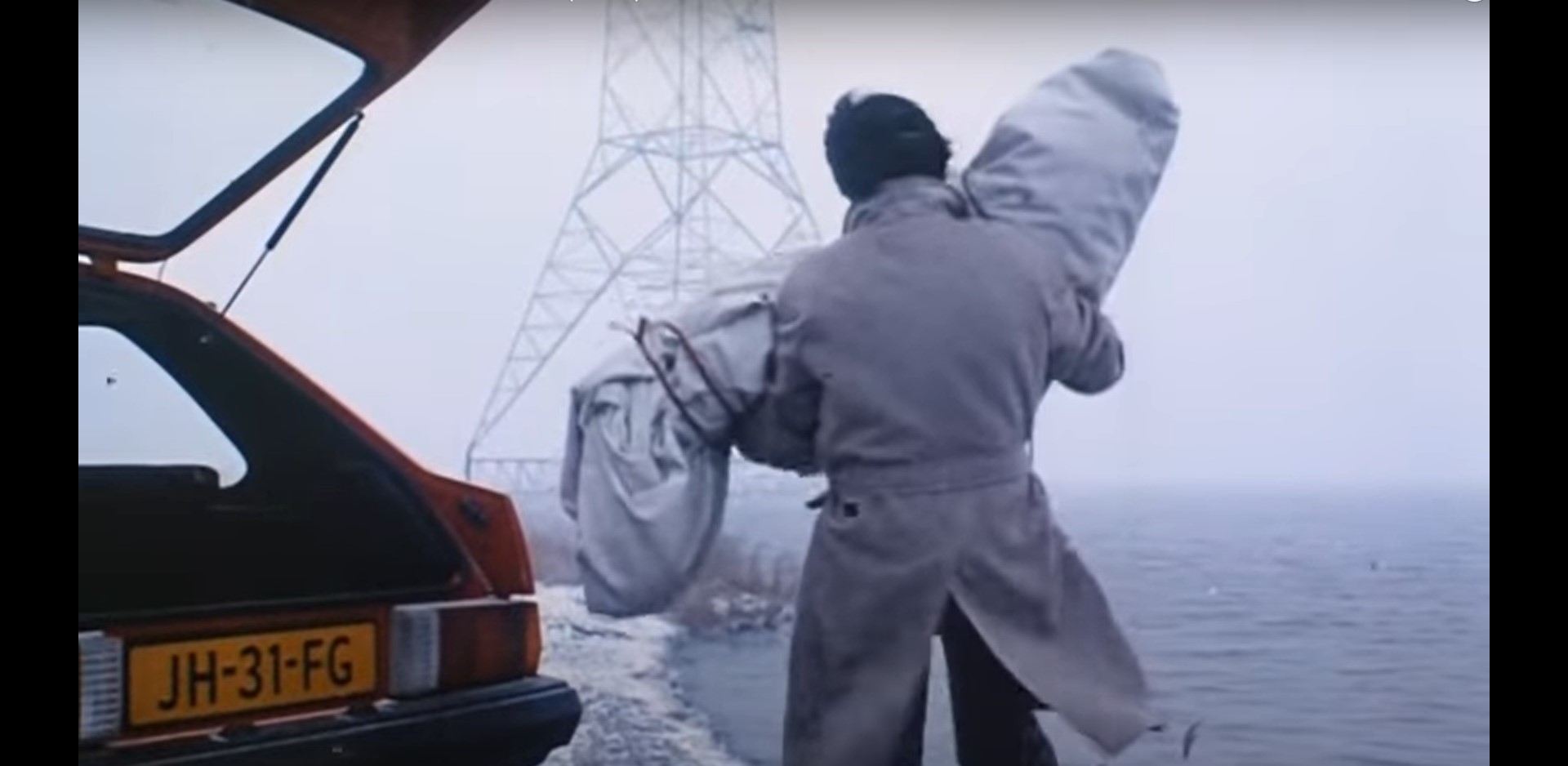
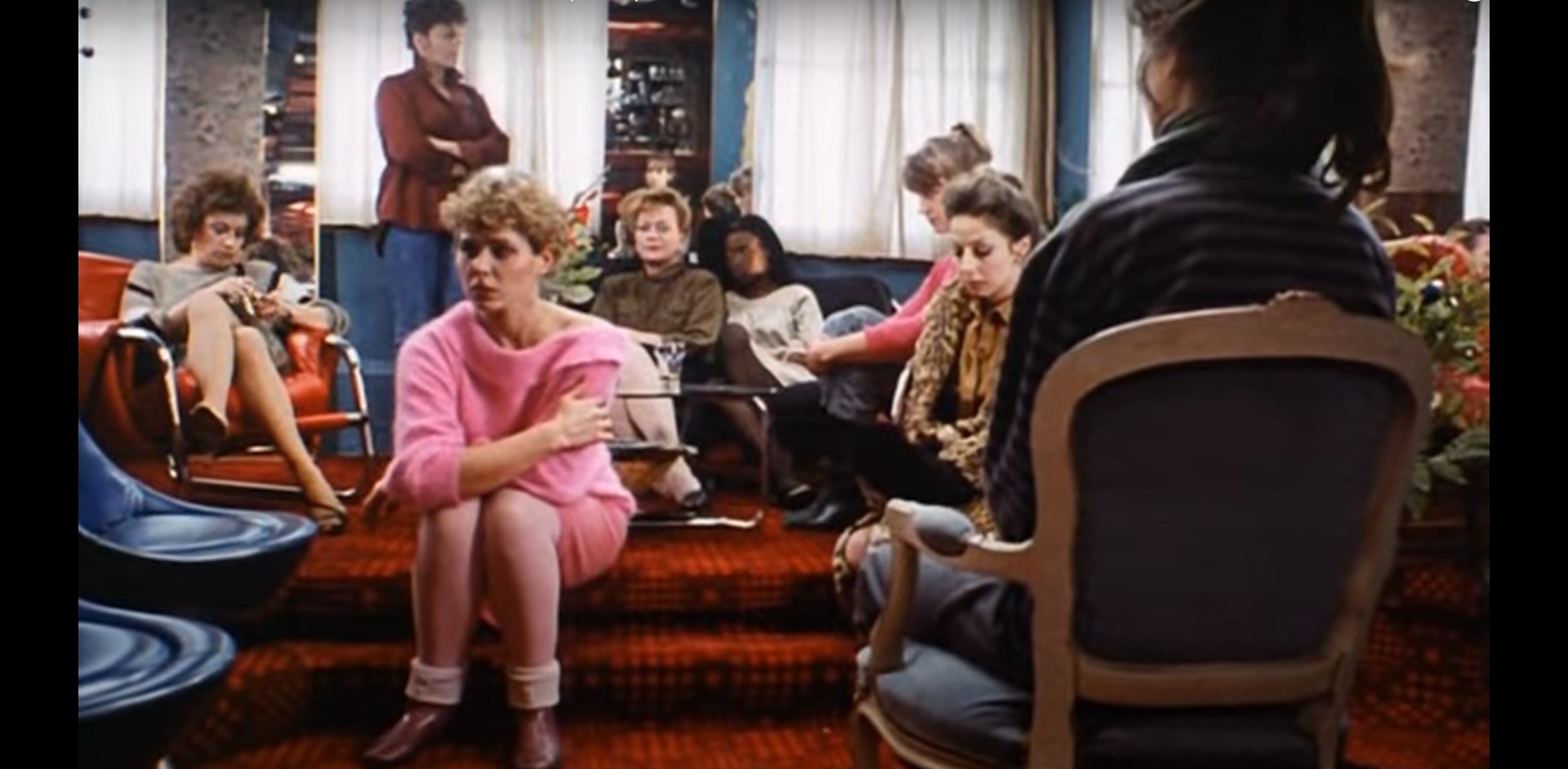
Three different in age and lifestyle women carry on with the routine of their normal lives until police offices arrest them on the charge of murdering a male owner of a clothing boutique.  Having seemingly no motive and have no connection to each other, never having met each other before, the confounded prosecution hire a psychiatrist to determine the women’s mental state for the brutal beating of the shopkeeper.  As the psychiatrist interviews and digs into their personal lives to give rationality to an irrational crime, she finds herself drawn to the women and their heinous act stemmed by a life history that paints a picture of dehumanizing neglect and of providing zero respect.  Subjectively overwhelms objectivity the deeper she looks into their case and her professionalism is put to the test when she has to decide whether being labeled insane fits the accusation or if a more gender bias systemic issue is at play.

After a rousing first part of feminist revenge with “Red Sun” from 1970, we fast-forward slightly over a decade later in 1982, and moving from out of Germany and into the Netherlands, with Marleen Gorris’s acclaimed crime drama “A Question of Silence.”  With little-to-no film prior film experience, Gorris becomes a provocateuse with her debut picture that stirs controversy amongst one side of the sexes.  “A Question of Silence,” natively titled “De stilte rond Christine M,” or “The Silence around Christine M.,” became the best Dutch film of the year with local accolades, including a Golden Calf for best film at the Netherlands Film Festival the year of release.  Along with the Rudolf Thome’s “Red Sun” and the German social commentary on women integrating into equal social and professional positions, Gorris comes at a time where the status of Dutch women were on the lower end of the gender equality scale, especially in the workforce.  Matthijs van Heijningen, who produced polemic features directed by women filmmakers, such as Nouchka van Brakel’s “A Woman Like Eve” and “The Cool Lakes of Death,” risked yet another credit to his name with the virtually unknown writer-director Marleen Gorris and her sizeable undertone story under his company, Sigma Film Productions.

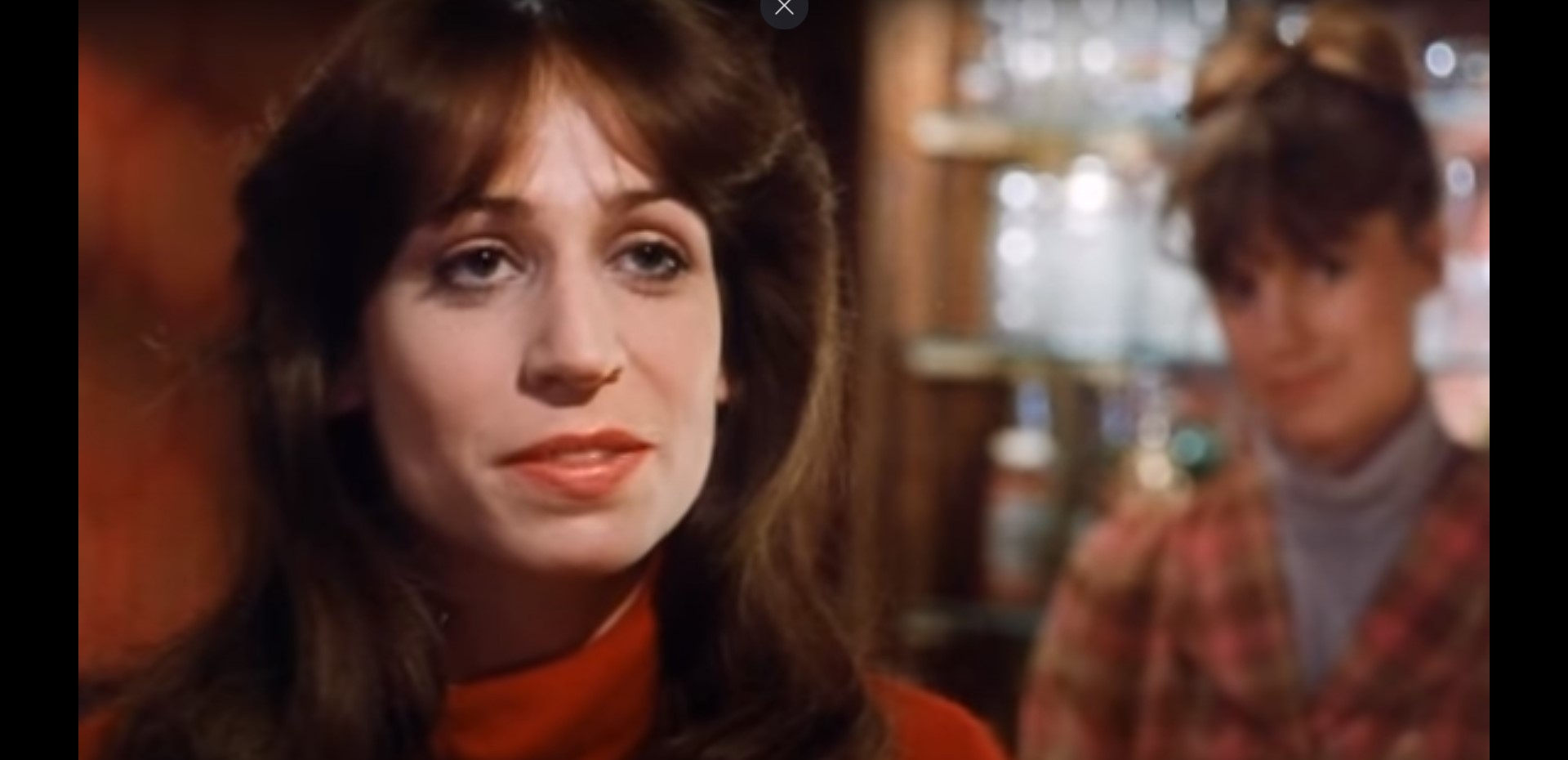
The narrative opens with Janine van den Bos and her husband Ruud having a flirtatious moment on the couch where Janine playfully annoys her book-reading husband with advances sexual foreplay.  Without knowing who these two people are exactly, other than they’re in a version of a relationship, Janine, played by Cox Habbema, and husband Ruud, played by Eddy Brugman setup metaphorically what’s inherently wrong with society with a woman seeking something and the man ignoring her and practically commanding her to stop the foolishness in a dismissive way.  This opening scene then cuts to the three women being arrested, led up to by intercuts of their daily routine before the police confront them.  We’re treated to some of the most idiosyncratic and grounded performances by Edda Barends as the muted housewife Christine, Nelly Frijda as the cackling coffee barista Annie, and Henriëtte Tol as the beautiful and intelligent secretary Andrea.  The three women never met before, never plotted before, and never killed before but a sudden epiphany while shopping became the straw that broke the camel’s back, turning watershed into bloodshed that unveiled something just as sinister as murder.  Cox Habbema engrosses herself into the psychiatric role as an educated woman analyzing and judging other women while also being judged herself by the opposite sex despite a higher-level of learning and professionalism.  Without exposition, characters express themselves through action while being ambiguous through dialogue, working to convey the lopsided gender equality across the screen perfectly without even one ounce of explanatory detail dropped. 

What’s most intriguing about Gorris’s film is it’s mirroring quality to society.  “A Question of Silence” doesn’t fabricate grand futures or alternate universes with eccentric, wily characters to be metaphorical fodder of expression; instead, Gorris remains earthbound, present, and timely by incorporating true-to-form examples that create derogatory silence on women.  The non-linear narrative, cutting back-and-forth from investigative present to the chronicled past visualizes the women’s struggles and frustrations living inside a male-dominated culture.  From being expected to handling all aspects of the household and childcare, to being brushed off and dismissed by colleagues, to forgotten and underappreciated, Gorris forces a frank contemplation on a patternized and patronized patriarchy.  Heightening the tension, Lodewijk de Boer and Martijn Hasebos’s giallo-esque and experimental soundtrack adds a layer of loadstone to see whether these extempore femme fatales executed a crime. 

Cult Epics, in association with the Eye Film Institute, continue their campaign on delivering thought-provoking, provocative, and controversial Dutch masterpieces onto the high-definition stage with their latest release, “A Question of Silence.”  The AVC encoded, 1080p, BD50 stored feature is presented in the 1:66:1 European widescreen aspect ratio.  The 2K HD scanned transfer and restoration is based off the 35mm print; however, judging by the grain levels and very little preserved detail, especially in a HD scan, I’d say the original negative was 16mm and then blown up for 35mm project, which was a fairly common process.  The noticeable enlargement of grain dampens picture details less favorable yet not the image quality is not a total wash with a stable graded rendering, with a natural skin tone and pigment of objects, and the presence of imperfections kept in a minimum – such as the occasional cigarette burns and dust/dirt.  What excels here mostly is the lack of compression issues so we’re only treated to the innate quirks of the original celluloid film.  The release offers two Dutch language audio options – a LPCM 2.0 mono and a DTS-HD MA 2.0.  Toggling between both tracks, there’s not much different between them until Nelly Frijda’s crone-cackle distinguishes itself with robust HD prominence projecting full-bodied through the dual channel.  Again worth noting, Lodewijk de Boer and Martijin Hasebos synthesizing score, coupled with Marleen Gorris’s tense and taut flashback storyline, casts a disquieting tone that’s very fitting for a film entitled “A Question of Silence.”  Dialogue, as well as the score and overall soundtracks, suffer very little from the slight hum of the running camera and some minor hissing but the general result has tremendous.  English subtitles are optional and synch well with error-free translation; however, upon watching the special features, the Cult Epics’ feature translations differ from the copious amount of snippet clips of the interview segments.  Roughly the same interpretation but the phrasing maybe clearer and less wordy in the snippets so I’d be interested in the, what I assume would be, the original English translation.  Special features include an audio commentary by film scholar Patricia Pisters, an archival Cinevise interview with Marleen Gorris from feature release year 1982, a sit-down, one-on-one interview with lead actress Cox Habbema and Cinevise host a year later, a Polygoon Journal Newsreel from ’82 that mentions the Golden Calf award from the Netherlands Film Festival, a promotional gallery, and trailers.  The clear Blu-ray cover comes with the tear-drenched and shadow-obscured face of Cox Hebbema with a reversible still image of the three accused women on the inside.  No insert included and the disc is pressed with the same front cover art.  Cult Epics Blu-ray comes with region free playback and the feature is 97-minutes and unrated.  Marleen Gorris first run as a filmmaker denotes her as a masterful storyteller with a timeless tale of close-quartered and subtle masculine tyranny in an attempt to open the unwilling eyes of the narrow focused. 

“A Question of Silence” Laughs Louder than Words on Blu-ray!

When Men Want More, They Receive More… EVIL! “Red Sun” reviewed! (Radiance Films / Blu-ray)

“Red Sun” on Limited Edition Blu-ray from Radiance Films!

Peggy, Sylvie, Christine, and Isolde have made a mortiferous pact to lure wanton men into their spider’s web before snuffing them out. Armed with guns and homemade explosives, the four women find themselves strapped for cash but managing to get by with their all-in scheme to take out as many licentious men as possible. When the nomadic loafer Thomas re-enters Peggy’s life, she initially sees him as just another mark to relieve from the mortal coil, but Thomas’ uninterest in sexual desires appeal to Peggy’s compassion and care for the man she once loved who just happened to show up in her life one night. As the two become closer, Peggy’s accomplices continue their deadly ideology, working their individual johns, but Christine and Sylvie find Peggy slipping under Thomas’ beguiling draw, an affect she can’t seem to comprehend, and pressures Peggy to be thorough with Thomas to the bitter end.

“Rote Sonne,” or “Red Sun” translated into English, is the 1970 feministic crime drama from German filmmaker Rudolf Thome and penned by the late Switzerland born screenwriter, Max Zihlmann.  Thought-provoking as it is enticingly cold, “Red Sun” tears open a void between lust and violence that separates the sexes of scorned scars.   The pre-European Union film looks at feminism during a highly patriarchal Germany time, West Germany to be specific, when women rights were essentially molded and determined by men.  Wives relied heavily on their husbands to make decisions for them on a permissible granted condition and even some marriage-related abuse crimes we’re not punishable under German law.  Thome helmed a politically anti-conservative and socially anti-inequality picture during the second wave of German feminism of the 1960s with ironfisted and revenge-seeking protagonists as an active cell blending into cultural norm.  “Red Sun” is produced by the director as well as Heinz Angermeyer of Independent Film productions and is part one of our double bill look at radical feminism with Marleen Gorris’ “A Question of Silence” to follow.

At the tip of the cast spear is a Rudolf Thome regular, Marquard Bohm, having had roles in another of Thome’s empowering women feature “Supergirl – The Girl from the Stars” as well as the skin-laden “Detektive,” and the narrative’s focal character stirs confounding interest in that it revolves around a male principal of a women liberation-by-force feature.  As Thomas, Bohm is not a traditionally depicted German man but has all the some of the minuscular familiar qualities of masculine behavior.  Thomas loafs into to life of Peggy, played by fellow “Detektive” star Uschi Obermaier, and her cohort of conniving men eaters – Christine (Diana Körner, “Barry Lyndon”), Sylviie (Sylvia Kekulé) and Isolde (Gaby Go) – simply by being at the right place at the right time or visa-versa, depending on how you look at it.  For Thomas, his nonchalant leeching onto Peggy morphs into something more than just freeloading off of already strapped for cash Peggy and friends, becoming a distraction and an attraction from his previously failed relationship in Munich.  The role is in a mirror reversal of the then current German society with Thomas being a stay-at-home man, running errands at the behest of the woman Peggy as she goes to work and earns to keep their clandestine killing chugging along, but Thomas does what he wants, whether be spending Peggy’s extra cash on cigars or eating all the food in ladies’ fridge.  Opportunistically asserting his needs onto their, often inimical, hospitality, Thomas is the Peggy beloved free-range chicken strutting his stuff around other hungry, more axe-wielding, farmers that put the pressure on Peggy to nix him before he insidiously collapses their pact.  Under the “Red Sun,” the cast fills out with Don Wahl, Peter Moland, and Henry von Lyck.

Unfortunately, Thomas has inadvertently sowed the seeds of destruction within the four women, dividing the group’s cause and on what to do with Thomas.  The women are arranged in a spectrum range of how to handle their contested guest; Thomas has caught the eye of Peggy and Isolde, though active in certain measures of man-slaughter, refuses to partake in the act of killing altogether where Sylvie pushes back against her indifference amiability for Thomas to continue the good fight and Christine just flat out owns her oppositional stance to eliminate the man many would find lackadaisical and nocuous to their friendship and plans, like an usurping boyfriend coming in between two best friends.  What Thomas represents is the potential squash, or delay of, the feminist movement against an arrogant and authoritatively unfair patriarchal society and each woman is a different perspective and reaction to the measures of feministic movement.  “Red Sun” is also a tragic love story that pits rightful duty against the heart’s urges and Thome is able to fashion a path through the commentary to depict both views in a sad, yet heartful conclusion.  What Thome doesn’t do well is the appropriate stitching of time passed.  Perhaps through editing or the within the confined text of the script, what feels like weeks passed is actually only a handful of days, but Thomas’s comfort level is so ingrained, coupled with the brief mentioning of how long he’s been around, the comings-and-goings of time blend into one jerky story that can’t properly materialize a granular tone and “Red Sun” becomes a bit sun blind at times when trying to keep with the characters’ narrative.

“Red Sun” blazes onto a world debut, limited edition Blu-ray release from independent cult film distributor, Radiance Films. The AVC encoded, high-definition release has been scanned in 2K from the original 35mm camera negatives, supervised by director Rulfe Thome, at the Cinegreti Postfactory in Berlin as well as additional touchup restoration work to spruce up the dust, dirt, and scratches. Radiance Films’ presentation features a brilliant quality that has restored to void out any celluloid cankers. Grading appears natural and vivid under the breadth of the welcomed 35mm grain. Aside from a handful of faint vertical scratches here and there, this Blu-ray has none the worse for wear with compression issues as the transfer is stored on an ample BD50 to reduce any compression artefact effects. The original German language LPCM 2.0 mono track vivaciously keeps up with a clean, clear, and robust post-production dialogue recording. No major issues with hissing or popping though minor specimens rear their ugly audibles sporadically to a negligible outcome. Since ADR is used, depth is lost amongst the dialogue track, but the environmental ambience nicely courses through the output with a small explosion and episodic skirmishes to keep the range from being too concentrated. English subtitles are available and are well-synced, well-paced, and are grammatically sound from start to finish. Bonus features include an audio commentary track with director Rudolf Thome and Rainer Langhans and also two visual essays with film academics Johannes von Moltke, in German with English subtitles, on the subject of cultural and social influences on “Red Sun” titled Rote Sonne: Between Pop Sensibility and Social Critique, and Margaret Deriaz exploring the developments on the New German cinema, titled From Oberhausen to the Fall of the Wall. The physical attributes are just as enticing with non-traditional and clear Blu-ray snapper case with a thicket, 51-page color booklet insert featuring the 2022 Guerrilla girls: Radical Politics in Rudolf Thome’s “Red Sun” essay by Samm Deighan, an interview with the director, Letters to the German Film Evaluation Office by Wim Wenders and Enno Patalas from 1969, film review extracts between 1970 and 1991, and transfer notes and full package release credits. Sheathed inside the case is a reversible cover art with a Bond-esque prime cover of Uschi Obermaier in a white, short-skirted outfit holding a revolver in front of a shoreline red sun. Alternate, inside cover notes the original German language title “Rote Sonne” with the 3 of the 4 femme fatales posed around Peggy’s VW bug. The disc press art is perhaps the less exciting aspect with just a plain, off-white disc with red letter of the title. Radiance Films’ release comes region free, has a runtime of 87 minutes, and is not rated. Limited to 1500 copies should not stop a film aficionado from looking directly into the “Red Sun,” a highly provocative and pulpy thriller full of contempt and full of ambivalence curated to pack a punch on a new Radiance Films Blu-ray.

“Red Sun” on Limited Edition Blu-ray from Radiance Films!