Men Beware of the “Vampyros Lesbos” now on 4K UHD and Blu-ray
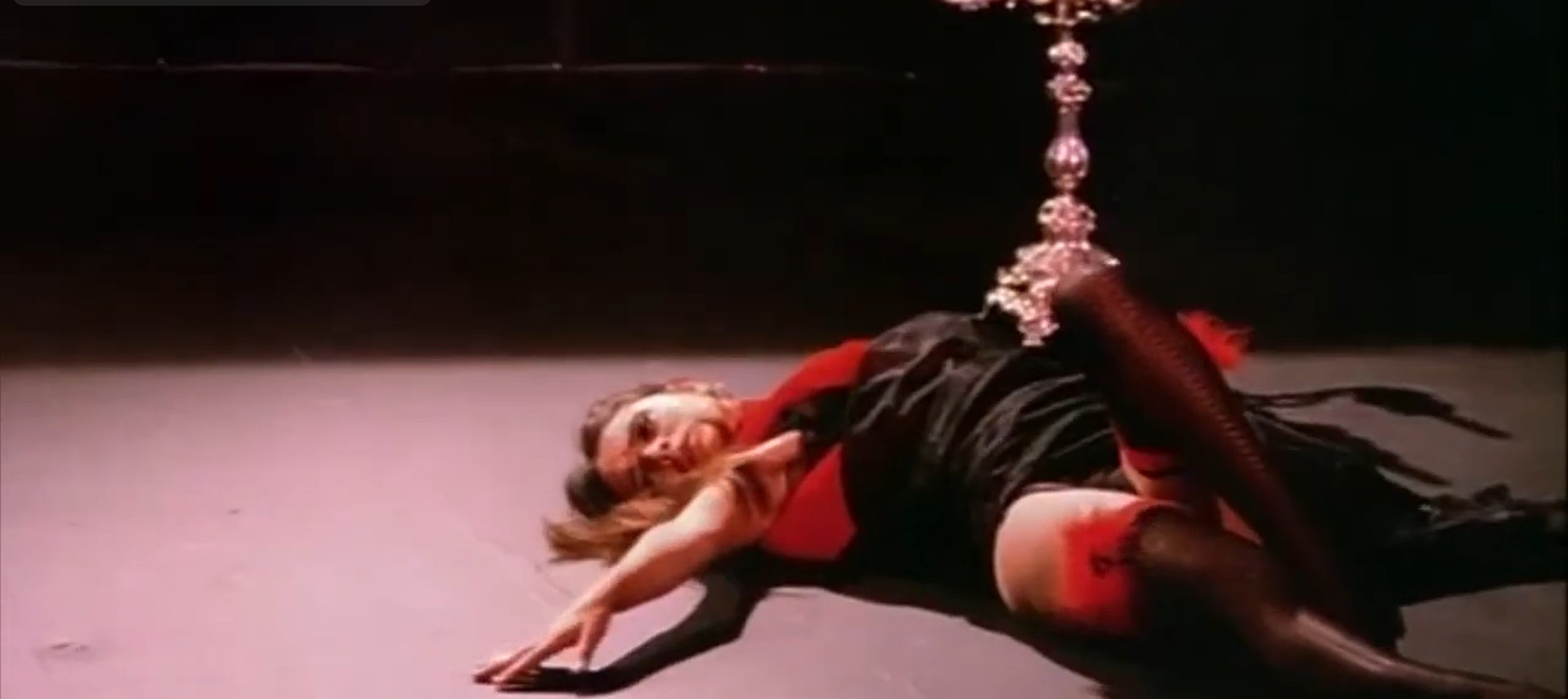
Linda’s dreams vividly disturb her with imagery of an idyllic island where blood rivulets watercourse down curtains while being in the romantic embrace of a swarthy beautiful woman. These dreams are so powerful she must see a therapist about them. When attending an nude performance art show with husband Omar, she’s shocked to see the woman on stage is the same woman from her dreams. The coincidence lingers with Linda on her business trip to a Turkish island where she meets Countess Nadine Carody to discuss a large inheritance from a Count Dracula. Come to her surprise, Countess Carody is the same woman from on stage. Immediately, Linda’s under Countess Carody’s suggestive sexual influence of a lesbian vampire. When Carody falls deeply for Linda, she will stop at nothing to have her whole, as one of her, to pass along the tradition of inherence as Dracula has done for her, but Omar, the psychiatrist Dr. Seward who’s familiar with vampirism, and a Memmet, a hotel clerk moonlighting as a rogue and vindictive vampire hunter, aim to help Linda from Carody’s grasp one way or another.
The director behind some of Europe’s sleaziest erotic-horrors, such as “The Sadist of Notre Dame,” “Ilsa, the Wicked Warden,” and “A Virgin Among the Living Dead,” Jesús Franco, aka Jess Franco, was a prolific cult icon of the past, the present, and will still be in the future. The Spanish born filmmaker grew up in the Francisco Franco dictatorship for over 30 years but that didn’t stop him from expressing his artistic freedom with the 1971 released “Vampyros Lesbos, “ a German production set in Turkey that mirrors the classic Bram Stoker tale but with teaks of character, scenery, and sexual orientation albeit “Dracula” is too thought to be a homoerotic tale to some filmic scholars. Compositely filmed in Turkey, Spain, and Germany, “Vampyros Lesbos” is a production of Tele-Cine Film und Fernsehproduktion, Central Cinema Company, and the Fénix Cooperativa Cinematográfica with Karl Heinz Mannchen as executive producer and Artur Brauner as producer, both of whom worked on Franco’s “The Vengeance of Doctor Mabuse,” and the story, based loosely off of Stoker’s tale, is penned by Franco.
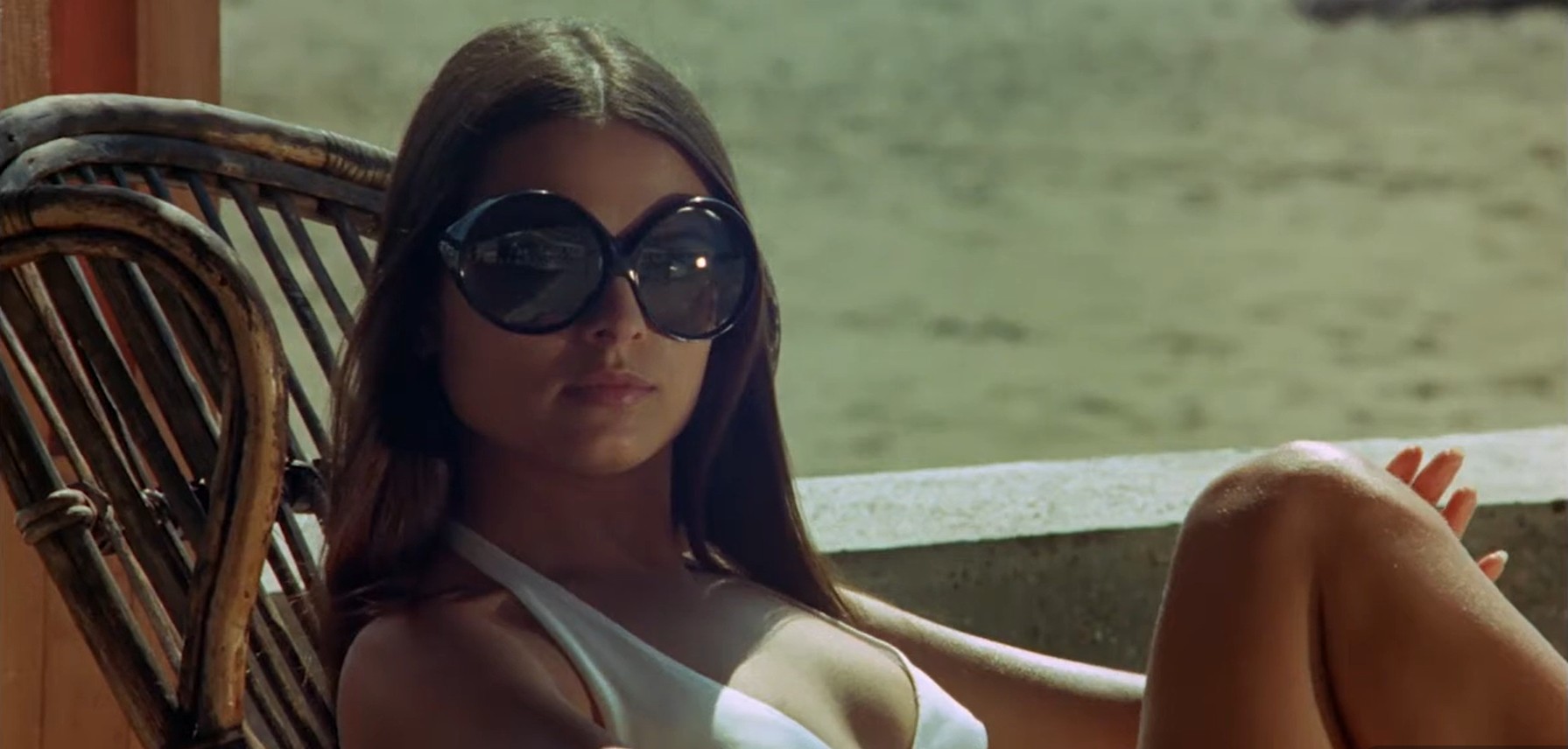
Like other Franco productions of this caliber, the cast is comprised of internationals, ranging from Spain to Sweden, from Britian to Switzerland, and to finally Germany without a single Turkish thespian in sight despite the story’s setting locale of Istanbul. As mentioned briefly above, “Vampyros Lesbos” follows a threadbare version of Bram Stoker’s iconic Gothic tale that trades the grotesque Gothicisms for sunnier skies and idyllic island houses. The basic principal characters are present from Stoker’s story but have been tweaked to fit Franco’s feverous surreal aesthetic that has a really sink its teeth into the homoerotic indulgencies. Swedish actress Ewa Strömberg (“The Devil Came from Akasava,” “She Killed in Ecstasy”) resembles something along the lines of a Jonathan Harker-type but instead of being in real estate, like Harker, her character Linda Westinghouse is an inheritance lawyer dispatched to Countess Carody’s island home where she is bewitched by Carody’s infatuation and lust for her lifeforce. Countess Carody is the obvious counterpart to Count Dracula but spun in a way that makes Bram Stoker’s story more like a tangent rather than remake as it’s Count Dracula’s fortune Countess Carody is inheriting. Spanish actress Soledad Miranda (who also costarred with Strömberg in “The Devil Came from Akasava” and “She Killed in Ecstasy”) is the sultriest creature on the screen in Carody’s nude and neck biting pastimes and coupled with the easy-going Linda, Strömberg and Miranda sizzle as lesbian lovers very comfortable with each other’s performances and bodies. Van Helsing is embodied by Dr. Seward but with reverse tendencies that do not require the doctor to be the stake to stop vampirism but rather entertain an unexpected twist trait that’s quite opposite. Seward is played by British actor Dennis Price (“Tower of Evil”) and is a comparable Van Helsing amongst the previous lot but definitely less harrowing and dramatic than most. Seward’s deranged patient Agra is the final piece to the Stoker narrative semblance as the story’s Renfield. German actress Heidrun Kussin (“The Swingin’ Pussycats”) does not eat or feign eat bugs and other nightcrawlers to aspire being a vampire but retains Renfield’s psychic connection while going hysteria topless as she squirms in bed for her master’s return to whisk her away into the night. “Vampyros Lesbos” rounds out the cast with new cast not familiar to Bram Stoker’s “Dracula” with Andrea Montchal (“Eugenie de Sade”) as Linda’s husband Omar, José Martínez Blanco as Countess Carody’s loyal bodyguard Morpho, Paul Muller (“Lady Frankenstein”) as Dr. Seward’s assistant Dr. Steiner, and Jesús Franco in the role of Memmet, a hotel clerk with a visceral vendetta against vampires.
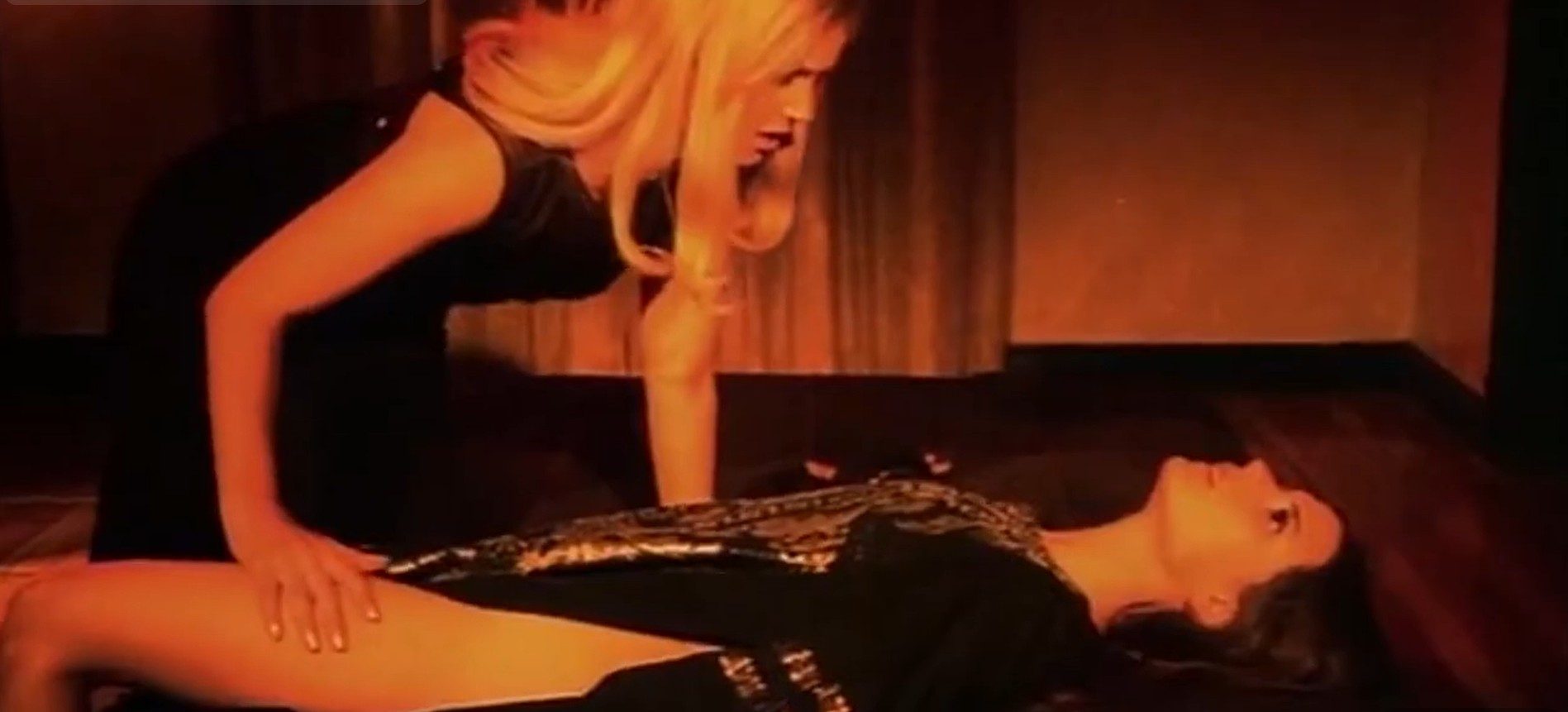
Arguably the most notable film out of the prolific Jesús Franco filmography, as I believe it to rival another outstanding piece of work from Franco, “Eugenie… The Story of Her Journey into Perversion, starring Christopher Lee and Maria Rohm based off the Marquis de Sade novel, “Vampyros Lesbos” is perhaps Franco’s most recognized piece film that has a sliver of notoriety while also spurring a remake years later in a 20-minute short film in 2008 by Matthew Saliba. Most of Franco’s repitoire can be said as messy, a mash up of other films recut to make a new film, hackeneyed, and a complete dull, but “Vampyros Lesbos” is different. It’s also not the same Eurosleaze one might be familiar with in regard to his catalogue; in fact, “Vampyros Lesbos,” despite the name, doesn’t even feel like sleaze. There’s a naturality about it underneat it’s Bram Stoker-homoericism message sans the gratuitous nudity that’s more of a playful exploration of sexuality. The only resemblance of sex is through the vampiric rite of seductive foreplay and subsequential drinking of the blood and with only Linda and Countess Nadine in scenes of embrace. Not even poor Linda’s husband, Omar, has conjugal interactions and that plays into the whole theme of the story that Oman and Linda have this sexless relationship and here comes along Countess Nadine and her oozing sexpot of Linda’s fantasies inside a one-side power dynamic. There’s no degenerate-filled debasement in this sexploitation, one the story’s traits that actually separates itself from “Eugenie,” and Franco, like with “Eugenie” on this element, actually helms an artistic aesthetic with good editing, crafty angles, and a varied cinematography blend of natural and stylized imaging.
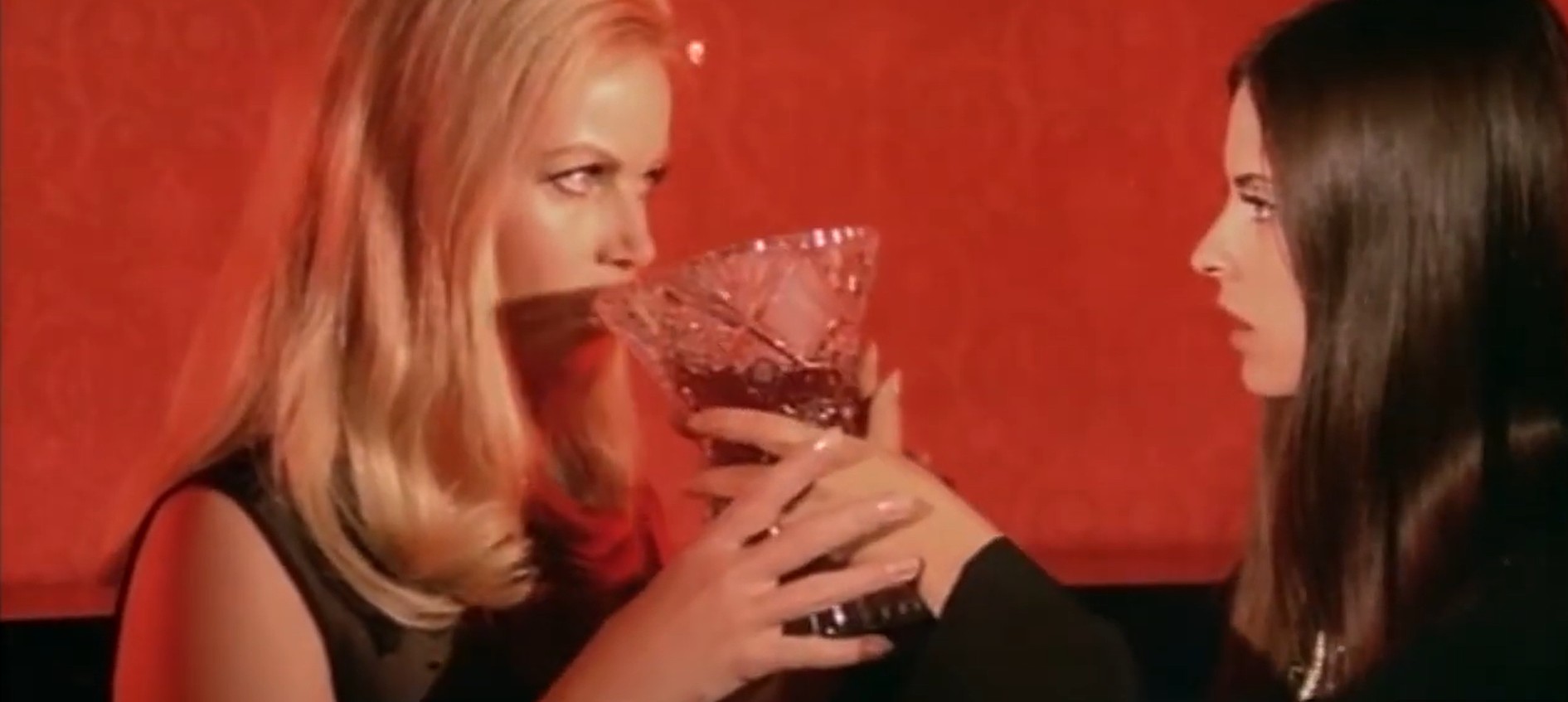
Provocative European sexploitation that isn’t busk European sleaze, “Vampyros Lesbos” is zenith Jess Franco, a social-political rebel and artist unafraid to tell a story that won’t tickle everyone’s interest but definitely be an archetype of the director’s caliber. Severin Films proudly presents “Vampyros Lesbo” onto a new 4K UHD and Blu-ray dual-format set with a 4K presentation scanned from the original 35mm negative. The 4K UHD is compressed with HVEC encoding onto a BD100 and the standard Blu-ray is AVC encoded onto a BD50 with respective resolutions of 2160p and 1080p. The European 1.66:1 widescreen is the aspect ratio on both formats, but the UHD uses DolbyVision to expand upon the already lush color pallet with a richer complexity within the color scheme even though Franco loves his most muted black dressings on characters and on sets. The extra pixels offer deeper textural, mostly auspiciously perceived in the club scenes that present a room of textures and in often brightly lit captures that don’t washout the details but rather define them more accurately. The standard Blu-ray offers the same approach but brought back a step or two due to format limitations on the color scale and pixel count but a lesser keen eye won’t take much notice. The original negative print shows no egregious mishandling damage or degrading emulsion wear. The only audio track available is the German Mono ADR track with optional English subtitles. This release does not contain the English dub that’s lost out there in physical media land. The mono track has a flat tone with no depth to speak of and is full of desynch between dialogue movements and audio overlay but never hides behind the other single output layers. German Manfred Hübler and Sigfried Schwab eclectic score is a fun listen with brass, piano, sentur, light drums, and bass compiled to an era swanky main score that’s quoted being a sexadelic dance party, and rightfully so. There’s even a distorted vocals on a slow beat jazz track that provides the unsettling and sultry notes for the underplayed horror side of this sexploitation. Special features on the UHD includes audio commentaries by Kat Ellinger, author of Daughter of Darkness, and a collab between film academic Aaron AuBuchon and Oscarbate Film Collective’s John Dickson and Will Morris. The UHD concludes with the German theatrical trailer. The standard Blu-ray has more wiggle room for bons features with all the above from UHD, plus an interview with Jess Franc just prior to his death Interlude in Lesbos, an interview with Stephen Trower, author of Murderous Passions: The Delirious Cinema of Jesús Franco, a Jess Franco career appreciation by “Anora” director Sean Baker The Red Scarf Diaries, the Stephen Thrower hosted In the Land of Franco, Part 12 looks at iconic locales from Franco’s films with a primary focus on “The Sadist of Notre Dame” which his set in Paris, France, an interview with Soledad Miranda historian Amy Brown Sublime Soledad, a 3-minute mini interview with Jess Franco labeled Jess is Yoda that provides some comedic flair and “Star Wars” references, and the German opening title sequence. Physically, Severin’s release has a stark, hard contrast cardboard O-ring slipcover with Soledad Miranda in a seductive position starring right aback at you in front of black background. The backside of the slipcover contains no technical information but does have review quotes, credit acknowledgments, and lingering stare between Countess Carody and Linda Westinghouse. Inside you’ll find the classic 4K UHD Amaray with Severin’s original Blu-ray art from 2015, commissioned by graphic artist Ben Benscoter. There is no reverse image on the sleeve. The discs are held separately with one each side of the interior. The 89-minute film is not rated and is region free for global enjoyment.
Last Rites: Jess Franco’s “Vampyros Lesbos” is on the select short list of how the Spanish director should be judged by existing and new fans of his work and remembered in his long career and legacy as a truly psychedelic, auteur driven, lesbian vampire film with plenty of women-centric allure and flesh.