When EVIL Won’t Let Go to “Those Who Walk Away” reviewed! (VMI Releasing / DVD)

Never Abandon Your Problems.  Face Them!  “Those Who Walk Away” on DVD!

When Max could no longer stomach the sight of his mother falling deeper into severe sickness, he abandons his mother’s side after a year of care.  A year-long hiatus from dating has put a temporary halt on his love life, but as he rejoins the socializing game, he connects with Avery on an online dating app.  Avery appears to be the perfect girl:  smart, witty, and really into him.  The start of their first date is a match made in heaven until the girl too good to be true decides to drive him to a supposed haunted house for uninhibited fun when their original plans fall through.  Inside, a dilapidated abode comes with an appalling story, surrounding a malevolent urban legend spirit known as Rotcreep.  Swallowed by house’s notoriety, Max and Avery grapple with their own personal demons that have come back to haunt them and with no escape, facing the trauma is the only path toward survival.
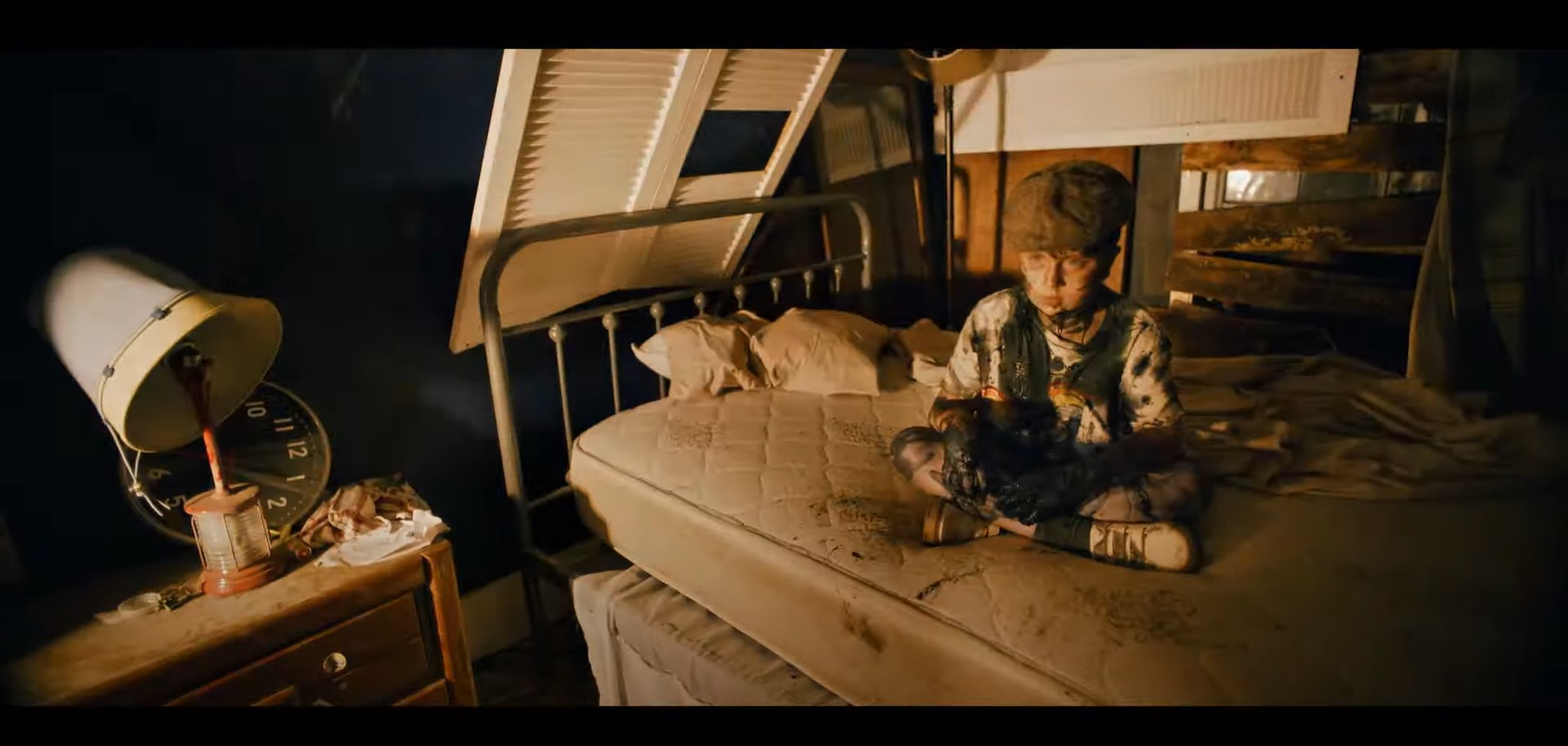
A lot of films, past and present, are drenched dripping in the trauma theme that the subtopic has become waterlogged in the independent and mainstream scene, but has there ever been a trauma touted full length feature film that was done in one long single take?  That’s the novelty concept to proof of product feature from writer-director Robert Rippberger, a documentary filmmaker who has only recently dipped his toes into fictional storytelling.  After the 2019 unsung release of “Strive,” an urban drama of perseverance starring Danny Glover (“Predator 2”), Rippberger’s latest “Those Who Walk Away” sets two personal distresses into a prevailing evasion of death.   Rippberger’s script, cowritten with Spencer Moleda, materializes one’s own baggage being personified as waking nightmares or a manifestation of shackling malevolence, manacled by past mistakes and centrifugal hurt.  The Chillicothe, Illinois shot picture is a production of Ripberger’s own Los Angeles based SIE Films, Argentic Productions, and is in association with Slated Productions and Sandeep Sekhar Films with Rippberger, Sandeep Skehar, and Argentic’s KT Kent producing. 
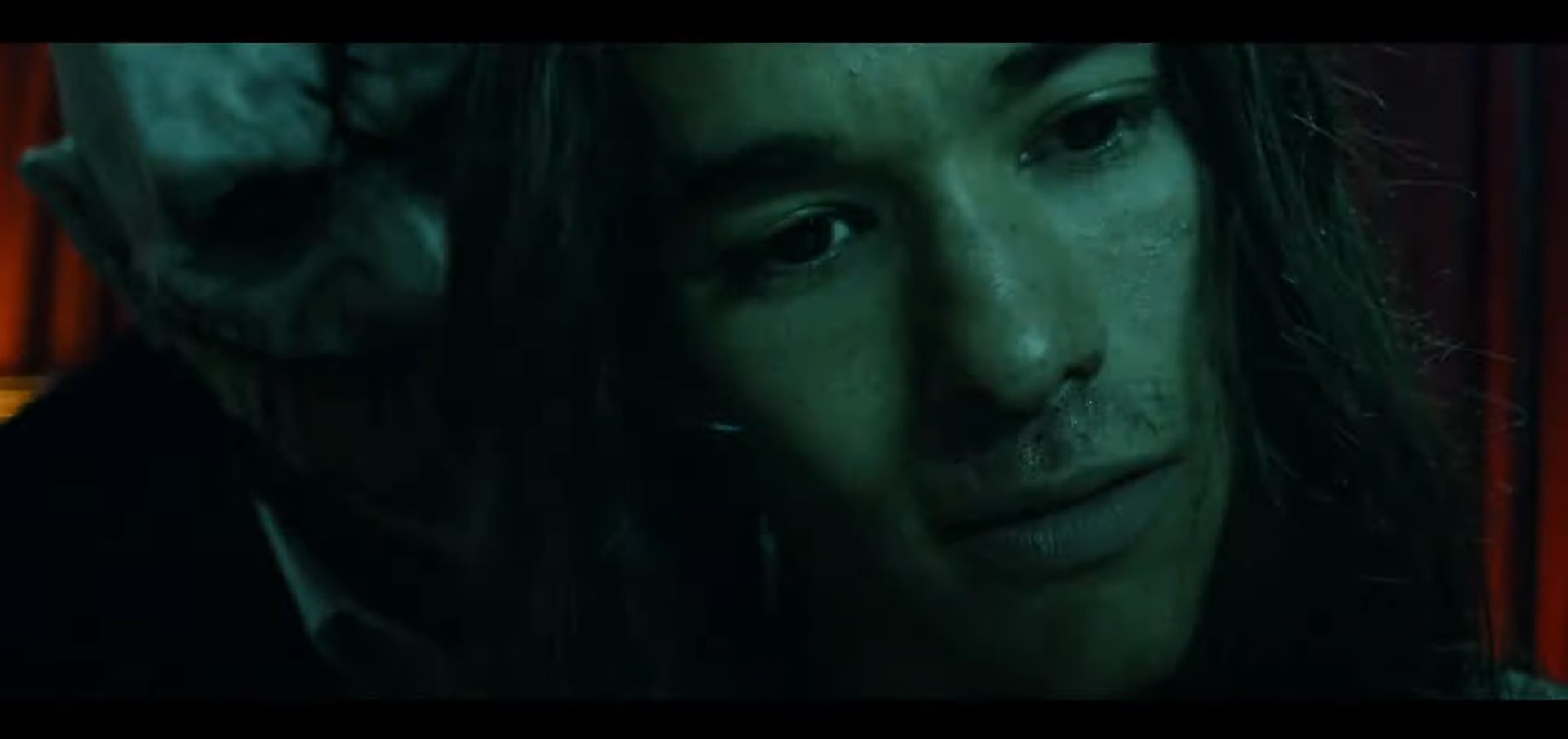
At the center of the story are Max, played by “Twilight” franchise’s Booboo Stewart (no relationship to Kristen Stewart), and Avery, played by Scarlett Sperduto (“Float”), as individuals looking for love or connection having met on a dating app.  Necessary lengthy exposition provides the footing for “Those Who Walk Away’s” climatic third act, giving Max and Avery a chance to go to town on their historical credentials during the date as we learn about Max’s ill mother and his sudden departure from her around the clock care before the heartache becomes soul consuming and about Avery’s fight or flight childhood, anecdotal and accounts that are kept closer to her chest,  with her close and adored brother.  The chemistry is palpable between them with nervous conversational exchanges and teasing jocularity that makes their one long scene seem like an actual first date, completely selling the dynamics with the audience who are induced with anxious butterflies and an eagerness to connect, emotionally and sexually, on Max and Avery’s behalf.  The narrative, ultimately, has to change because “Those Who Walk Away” is not a romantic-comedy but rather a dramatic-horror.  Whereas everything seemed to go swimmingly with the two young love birds really getting into the moment, we’re suddenly engaged with a different, if not darker, tone that has come out of the swindling shadows and into the light of a dimly lit, ramshackle haunted house that is the premier first date destination experience, if you’re a sociopathic survivor that is.  “Those Who Walk Away” works with a tight, small cast that finishes off the list with Grant Morningstar, Devin Keaton, Bryson Whereas, Connor McKinley Griffin, and former professional wrestler, veteran stuntman, and veteran actor of such films as “The Mask,” “Barb Wire,” “Hot Wax Zombies on Wheels” with Nils Allen Stewart, aka The Stomper, as the Rotcreep – again, not related to Kristen Stewart, but is father of lead actor Booboo Stewart.
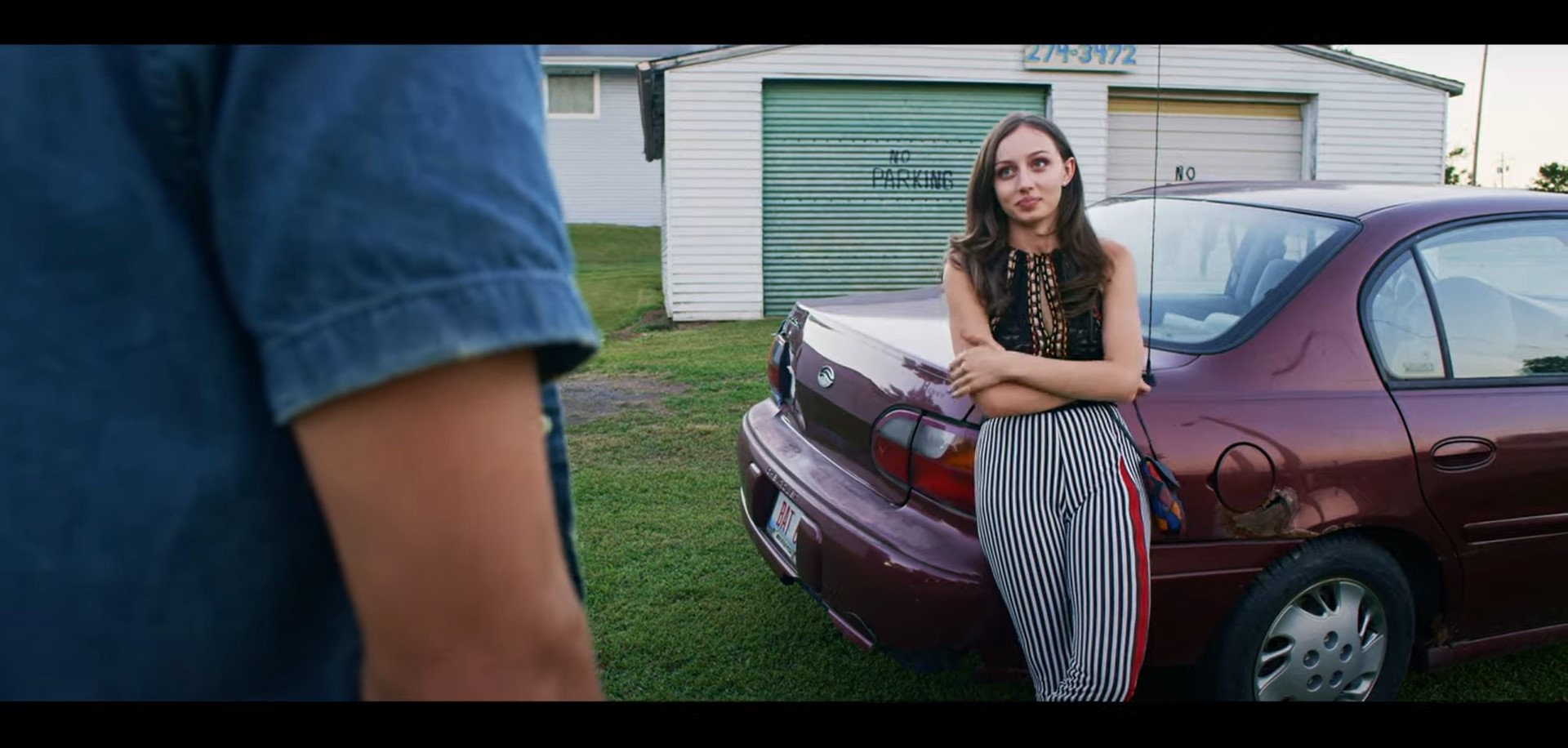
“Those Who Walk Away” has the concentrated acting chops to pull off the two-pronged plot and despite the obscure and incoherencies with the revelation climax, the turn of events still bids a gripping blank check on what to expect next.  Yet, the most interesting portions of the film are not those aspects that do have a degree of excellence for an indie project.  Instead, the single long take from opening-to-ending credits is a mind-blowing feat.  Unless there’s a seamless cut that I’m missing or blind to, “Those Who Walk Away” never edits or cuts away from the action that puts the actors in a position of having to perform to perfection.  Rippberger also doesn’t remain stationary to a single location for the first half of the film, coursing through the populated public park and bustling small town of Chillicothe during Max and Avery’s getting-to-know-you talk-and-walk, and as the story evolves toward more sinister circumstances in a one house setting, Rippberger can’t sit still and uses nearly every square inch of the creepy, boarded up house to his advantage, creating and changing up room interiors that fashion an illusionary creepy funhouse that Max scrambles from room-to-room avoiding Rotcreep and finding a way out of what could be perceived as Hell in a house, a metaphor for Max’s own mother-abandoning torment.  If that isn’t impressive enough, Diego Cordero’s camera handling to make the single take work isn’t bush league cinematography as having the frame trajectory move in tight, confined spaces without a bit of awkwardness, like moving from outside the car to inside the front of the cab then to the back between the driver and passenger seat while keeping characters in frame and keeping the characters acting is a tough, planned shot.  What’s also tough is achieving crisp dialogue in one take and that’s where the film falters a little with the pivotal exposition losing strength and clarity where it’s needed the most, essentially being muddled instead of meticulously articulate if actors are either not vigorously vocal enough, mic placement isn’t exact, or mic picks up other noises that scuttle overtop the dialogue.
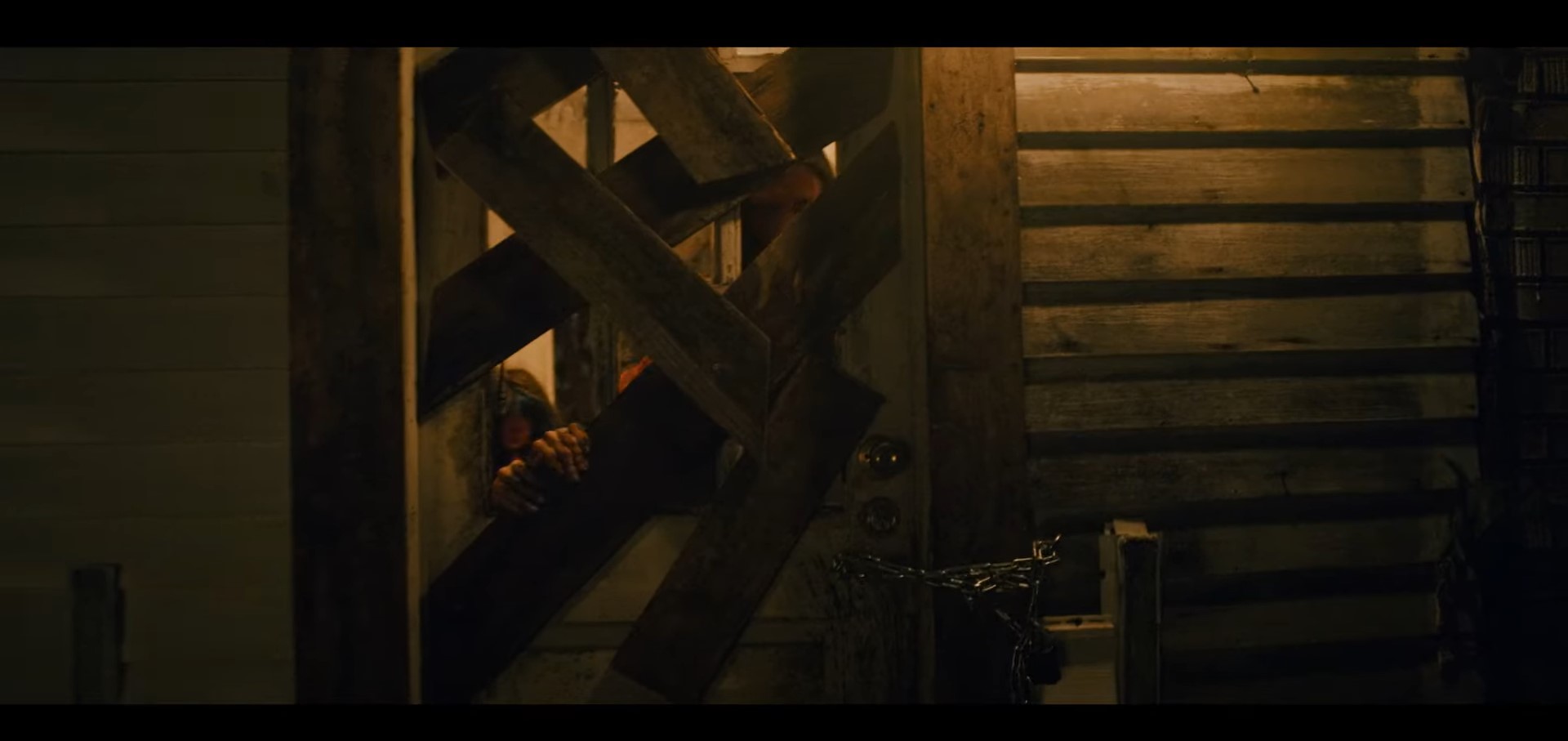
Courtesy of VMI Releasing and MVD Visual comes a chilling crucible in “Those Who Walk Away” on DVD.  Presented in 720p on a widescreen 1.78:1 aspect ratio, the film is distributed on a DVD5 with a reasonable compression rate to keep the image sharp without a lot of addition fluff to bog down the overall compacted digital transfer.  Instances of off and on lens focus works against the long take, much like the audio, where timely is key but as far as VMI Releasing’s handling of the storage, the resolution and image quality do the work to represent the best quality possible.  Although the DVD back cover states one audio option – an English Dolby Digital 5.1 – there is a second option with a English Dolby Digital 2.0 Stereo.  Unless you’re setup with a surround sound, the stereo option will have identical dialogue and ambience noise but there is an amplified finish on the soundtrack by video game composer Dmitrii Miachin with the drawn out violins and a brooding, sonorous pitch.  Dialogue is a minorly muddle as mentioned before with the tribulations on a feature length shot but mostly clean and clear to the point of satisfaction.  Aside from the static menu’s original trailer for the film, and the illustratively ghoulish opening sequence, the DVD comes with no other bonus material.  The DVD comes in a standard DVD tall case with a front cover of a bloodied Booboo Steward looking dazed walking through fire and the same image is used for the disc art.  Psychologically scything, “Those Who Walk Away’s” fillets guilt from the bone with scene shooting originality and a cast that nails every second lapse. 

Never Abandon Your Problems.  Face Them!  “Those Who Walk Away” on DVD!

Don’t Mess with Texas Unless You’re EVIL Going Up Against “Shanghai Joe” reviewed! (Cauldron Films / Blu-ray)

East Doesn’t Just Meet the West, It Kicks It’s Ass in “Shanghai Joe!”

A Chinese immigrant arrives into San Francisco looking to begin a life as an American cowboy.  Met with extreme prejudice, he pushes forward to avoid the Western stereotypes of his race by taking a stagecoach to anywhere Texas in order to become a true-to-form Cowboy.  Mocking monikered Shanghai Joe, even in Texas Joe is met with bigoted resistance in every way and in every exchange with the locals despite his uncanny fighting, intellect, and horse-riding skills that are far superior to his meanspirited rivals who think of him nothing more than a dumb foreigner.  When Joe become inadvertently involved with human traffickers and slave owners of downtrodden Mexicans, Joe aims to set things right against an oppressive and murderous rancher named Spencer who runs the entire region.  Spencer knows his usual hired posse can’t match the supernatural abilities of Joe and hires out the $5,000 bounty to the four most cunning and ruthless killers that will seek Joe’s head as well as possibly commit other atrocities to him for the sole joy of it.

The sun rises on the dawn of the East Meeting the West with “Shanghai Joe” at the center   of subgenre.  The Italian made spaghetti western helmed by “Nightmare Castle” and “Nazi Love Camp 27” director Mario Caiano who exhibits what happens when an unstoppable force hits an immovable object as quick hands and feet of the Asian East combat with the quick gunslinging showdowns of the American West.  Penned by Caiano alongside Carlo Albert Alfieri (“Sodoma’s Ghost”) and Fabrizio Trifone Trecca, credited as T.F. Karter, “Il mio nome è Shangai Joe” or “The Fighting Fists of Shanghai Joe,” as the film is originally entitled in Italian, keeps true to the graphic and vehement violence that ultimately lacked from the U.S. Western and sought to bring a martial arts foreigner into the fold of brute and barbarity as Kung-Fu flicks were up-and-coming with the rise of Bruce Lee and the Italian wanted a piece of that cinematic success without having to spend a fortune of turning sets appear oriental when already built saloons, corals, and spittoons were a plentifully available from previous films.  Producers Renato Angiolini and Robert Bessi serve under the production companies Compagnia Cinematografica Champion (“Torso”) and C.B.A. Produttori e Distributori Associati (“Emergency Squad”).

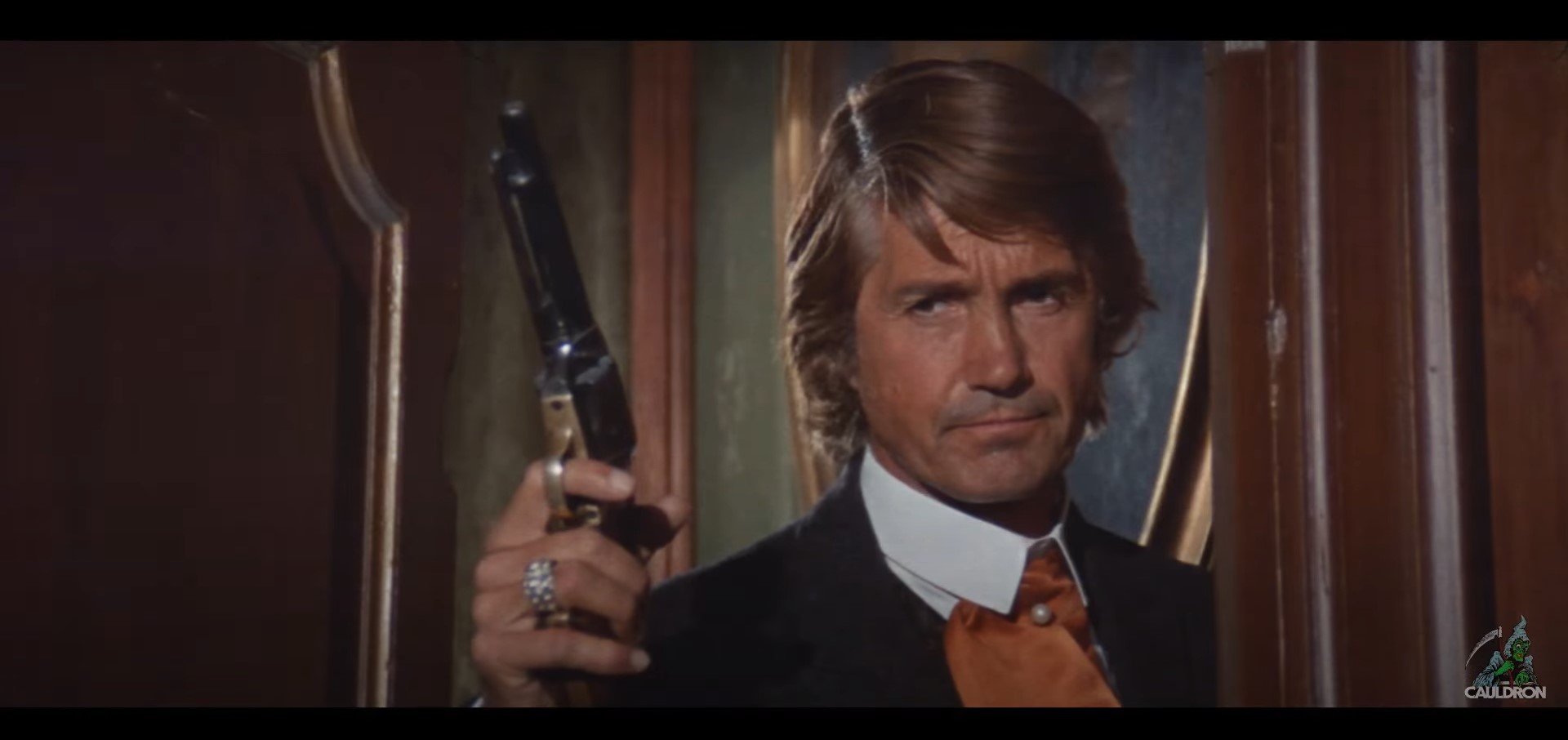
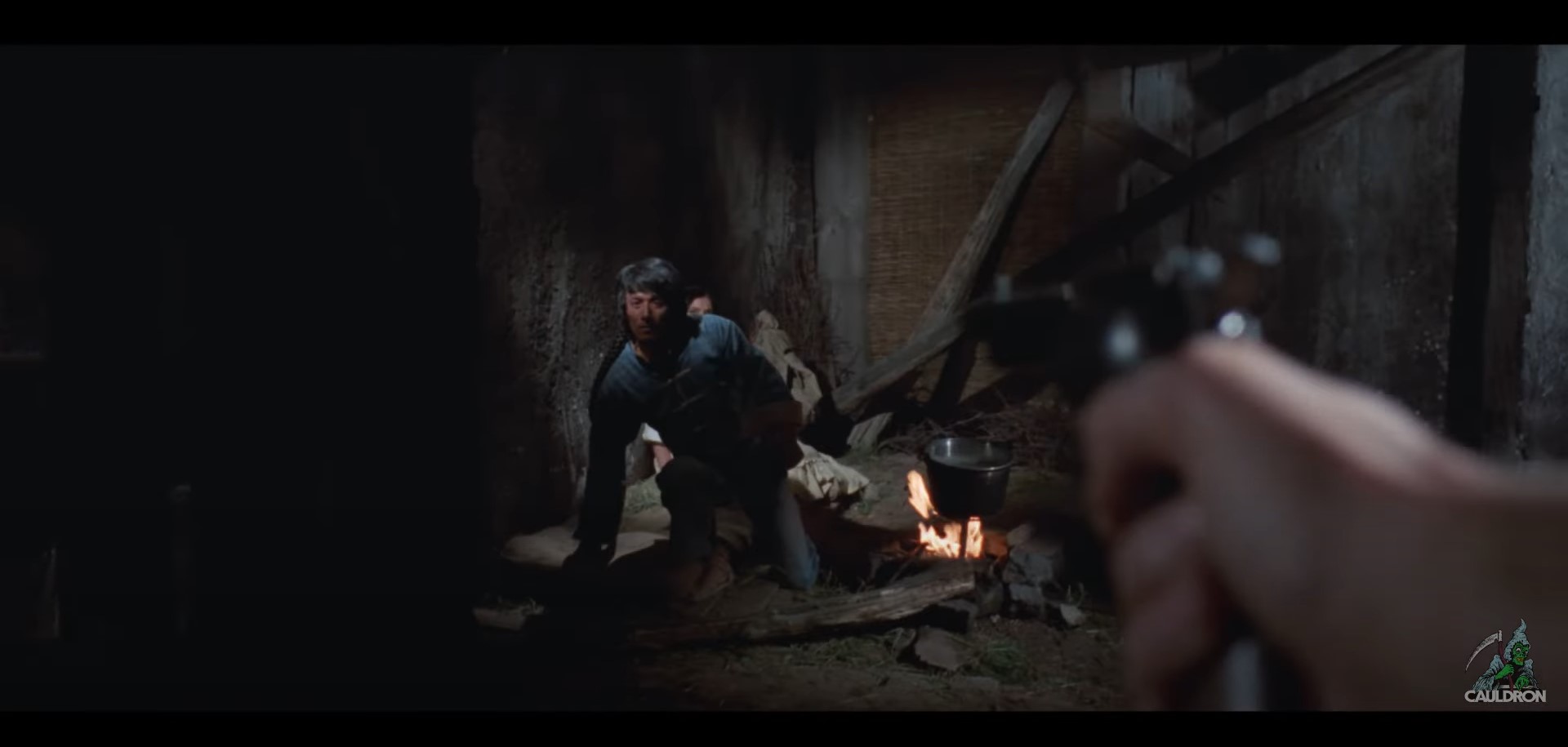
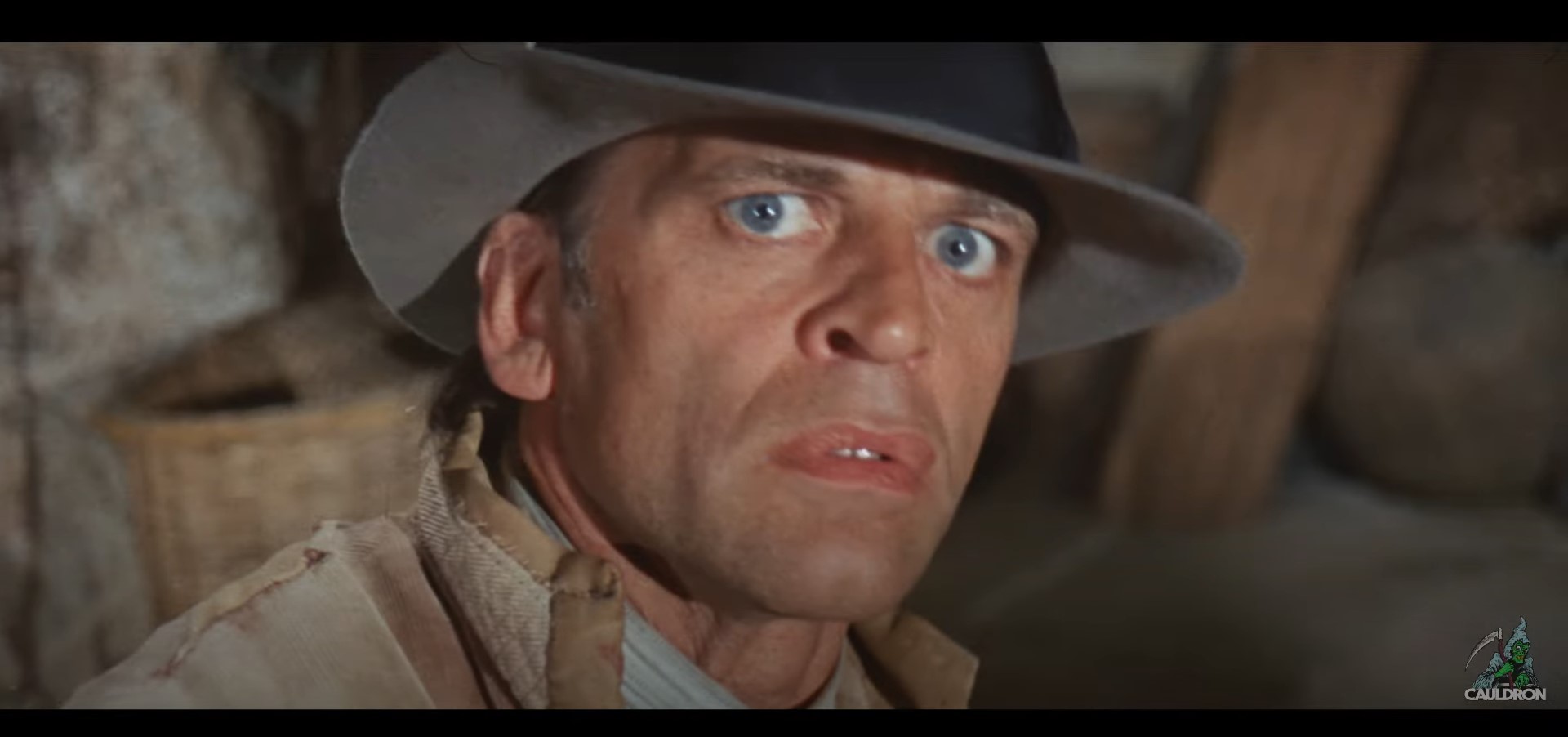
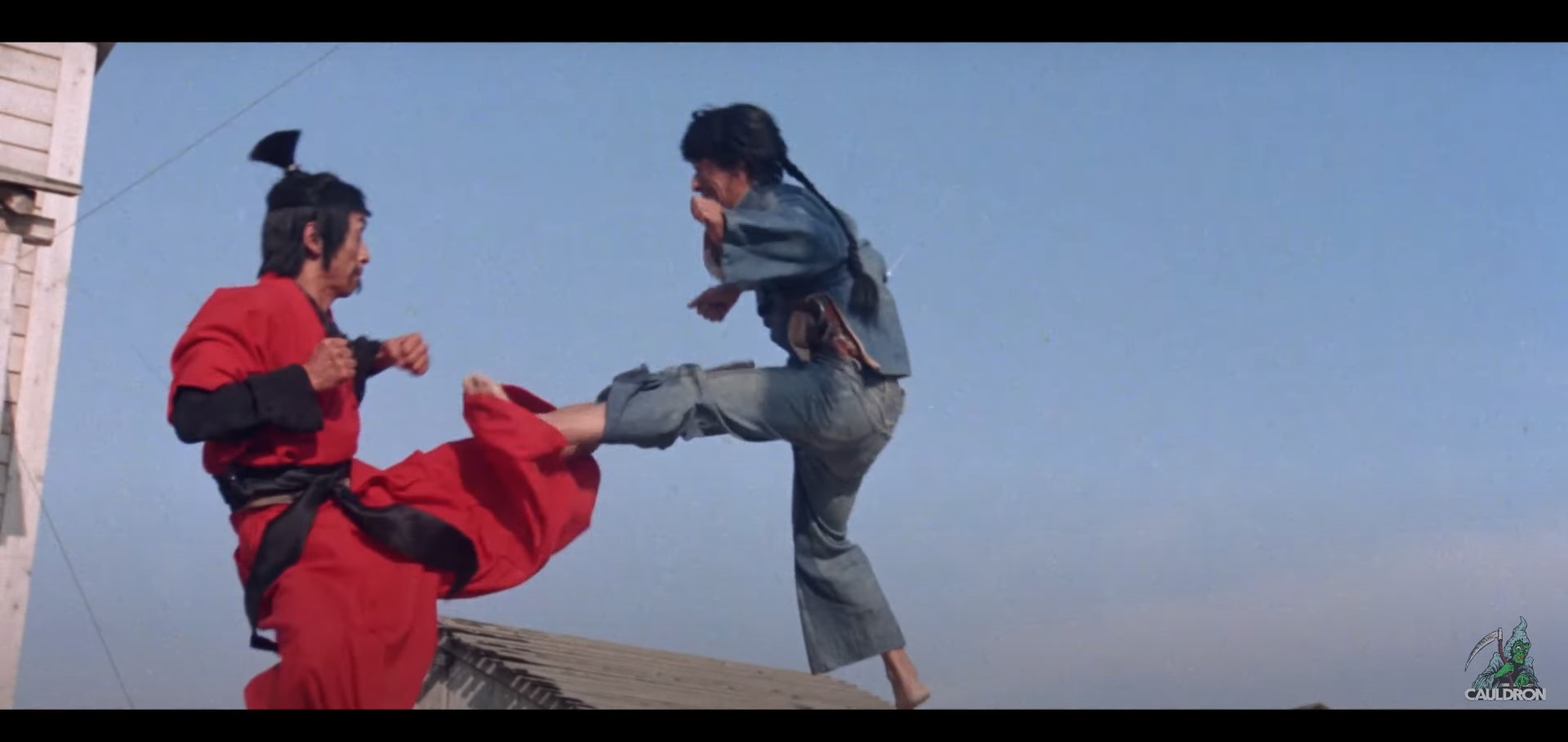
Leave it to the Italians to make a Western set in Texas and to have protagonist Chinese hero be played by a Japanese actor.  Performing under the stage name of Chen Lee, the Aichi, Japan born actor’s real name is Myoshin Hayakawa and he plays the role of Chin Hao, a nomadic Chinese immigrant, taught the rare fighting ways of an ancient martial arts, travels to America in hopes to reside in the American dream.  Lee’s certainly a presence on screen in his quiet and reserve composure but equally as self-assured and as competent to take on the worst-of-the-worst in the exploitative West where law has yet to reach it’s firm grasping hand.  Lee lands fight sequences with fierce finesse, though perhaps not on a Bruce Lee level, but does it so with his own distinct style of chopsocky flair with laws of physics breaking gliding through the air and tremendous accuracy in all areas of throwing weapons, even hyperbolizing his Yo-yo as a coconut splitting, head-cracking weapon.  When not wiggling his way out of impossible no-win situations with smarts and strength and when it comes to the interests of romantics, Chin comes to find solace being twisted into a paired fate with Mexican national Christina, played by Italian actress Carla Romanelli (“Lesbo”), after saving her father from being executed. As if destined to fall in love at first sight, the two outlanders are in each other’s embrace but before anything could be commutated by any sense of the term, head honcho rancher Mr. Spencer (Pierro Lulli, “Django Kill… If You Live, Shoot!”) hires out assassins to relieve him of a troublesome Shanghai Joe. The killers are just as colorful and individualizes as the titular character with quirky personalities and traits that make them indubitably daunting by their mere nicknames: Pedro, the Cannibal (Robert Hundar, “Cut-Throat Nine”), Burying Sam (Gordon Mitchell, “Evil Spawn”), Tricky the Gambler (Giacomo Rossi Stuart, “The Night Evelyn Came Out of Her Grave”), and Scalper Jack (Klaus Kinski, “Nosferatu the Vampyre). The eclectic bunch of Western-horror tropes level out Shanghai Joe’s uncanny abilities with their own big penchants for demise but the actors behind the characters also have bigger personalities, especially Kinski who is only in the film for a few scenes but is second billed in both before and after credits. “Shanghai Joe” fills out the cast with Dante Maggio, Andrea Aureli, George Wang, and another Japanese actor and martial arts master, Katsutoshi Mikuriya, as the showdown villain trained in the same ancient combat arts as Chin but turned his back against the teachings’ moral principles for his own greed.

Plot pointed by a series of bad case scenarios to showcase Shanghai Joe’s superior skillset as not only a fighter, but also an intelligent, almost con-like, mentalist as well as being good at just about everything else, the film is laced with repetitive derogatoriness from all races except white.  “Shanghai Joe’s” indelicacies, coupled with graphic, moderately bloodied violence, adds to the laundry list of idiosyncrasies of this unique old West spectacle.  The Caiano and team’s scripted narrative exacts the epitome of the label the Wild West where the unexplored, uncultured, and uncivilized country gives way to lawlessness and opportunity, especially the latter at the expense of others.  Joe becomes a beacon of moral hope, a foreigner who seeks, by way of a semi forced hand, to correct the system from within using his rare training only as a position of defensiveness or to right a terrible injustice.  Caiano has the eye to make a legitimate Italian spaghetti western that hits all the hallmarks and the director can also fashion a two-prong narrative with a unified purpose that builds up the hero first with a series of outlaw confrontations before immersing him into a rigorous roughhouse recruited by the rotten rancher.  While each face-off spars differently, Caiano letting the actors build upon and have fun in their villainy, the ultimately take the place of the tip of the spear antagonist, rancher Stanley Spencer, who doesn’t get what’s owed him by the roll of the end credits.  The high-flying combat wires, that you can plainly see during the air time fight sequences, and the personal and frame stylistic choices of the actors and Caiano tend to distract viewers from the unfinished business, concluding on a satisfactory note that what we just experienced was felicitously violent, engrossingly entertainable with appealing characters, and just waggish enough to provide levity amongst the harsh racism and the aforesaid brutality. 

“Shanghai Joe” is a must-have, must-see Italian Western for the subgenre aficionado and, luckily, Cauldron Films delivers the 1973 film onto Blu-ray for the first time ever in North America. The AVC encoded BD50 is presented in high definition, 1080p, with a widescreen aspect ratio of 2.35:1 of a 2K restoration scan from the original 35mm negative. Cauldron Films’ restoration is a labor of love for an atypical western of the obscure nature with a generous tactile intensification to bring the warm dust of the tumbleweed West down upon the anomalist Asian in a blue Tang suit and pants with a conical hat. A few and very faint scratches are the only issues observed that come and go as quickly as they came, but the there’s a nice richness to the coloring, a natural grain, and zero compression issues or unnecessary enhancements detected. The DTS-HD Master Audio 2.0 mono comes in two options – An English dub and an Italian dub. Preferably, I went with the English dub over the Italian despite “Shanghai Joe” being an Italian production. For one, Myoshin Hayakawa spoke English which you can tell by reading his lips so the English track paired better. Secondly, the Italian track is quite orotund to the point of losing some minor ambient detail as well as not feeling to be a part of the whole package team. Slight hissing at times during dialogued scenes but the clarity comes through with the decent dub pronunciations and the chopsocky ài yas are often repeated in the same audio tone and level in every evasive or attack flight by Joe but is not ostentatiously annoying. “Marquis de Sade Justine’s” Bruno Nicolai and his twangy score, channeling his best Ennio Morricone, has great purpose as “Shanghai Joe’s” main theme that rowels up and shapes Joe’s hero role. English and English SDH subtitles are available. The special features include an interview with Master Katsutoshi Mikuriya on how he was approached for the role and the martial artists also discusses the fight sequences in Samurai Spirit, film historian Eric Zaldivar puts together a visual essay with the topic East Meets West: Italian Style, an audio commentary by Mike Hauss from “The Spaghetti Western Digest,” the original trailer, and an image gallery. The physical portions of the release include a translucent Blu-ray snapper with a reversible cover art featuring two stylishly illustrative posters in contrast to the simple disc art of the red “Shanghai Joe” title set upon a black background. The early 70’s feature comes not rated, has a runtime of 98 minutes, and is region A locked. “Shanghai Joe’s” singularity scores high on the limited East meets West subgenre novelty but certainly aces as a versatile Kung-fu period piece with ridiculously good fight scenes, a handful of callously charming characters, and a disparaged hero, who embodies the good in all of us, you can gladly cheer for from beginning to end.

East Doesn’t Just Meet the West, It Kicks It’s Ass in “Shanghai Joe!”

Bruce Lee Fought EVIL for Justice. Mark Swetland Follows Lee’s Footsteps in “Blood and Steel” reviewed! (SRS Cinema / DVD)

Hiyah! “Blood and Steel” – the Lost Kung-Fu Film now on DVD!  

The brutal murder of his sister and her husband sends Mark Swetland into a vengeful fury.  Behind the heinous act, a drug smuggling organization, using a steel fabricating warehouse and a dojo school as a front, had sent a merciless assassin to take out Mark’s sister after a previous incident with the organization’s personnel that could bring down the whole drug shipment operation.  As Mark investigates for answers and track down those responsible, he’s greeted with hostility and uses his extensive martial arts experience, and a little help from a few of his closest allies, to bring the syndicate down once and for all, but the cruelty conscious conspirators don’t plan to go down without a fight as they kidnap Mark’s girlfriend and hire a mercenary fighter to bring the fight to them on their own terms. 

If you’re a martial arts film connoisseur or just an aficionado of the action-packed genre, here’s an obscure title from 1990 you desperately need to get your hands on, today if at all possible!  “Blood and Steel” is the Bruce Lee dedicated crime and martial arts actioner from producer, writer, and director, Mark Swetland.  Yes, Mark Swetland plays himself, Mark Swetland, as the unstoppable, vengeful vigilante hero in his own production that pits him going solo against a scumbag kingpin and his narcotic import-export empire.  Only recently discovered after being lost for decades, “Blood and Steel” breathes fresh 2023 air with a new DVD release and institutes a brand new, never-before-heard maxim, created by yours truly, of though white men can’t jump, they can certainly Kung-Fu.  Perms, handlebar mustaches, and tight fitting and unappealing fashion grace the screen as nunchakus and hook kicks pave the way for this seriously gratifying choreographed Kung-Fu spectacular to be resurrected from the cache of forgotten films of the cinematic cemetery, shot in and around upstate New York complete with the N.Y. accented, short-a phonological vernacular.

Mark Swetland, proprietor of a safe and vault cracking company in Cheektowage, New York, was once a martial arts instructor.  At the current age of 62, Mark has looked to cracking open safes instead of cracking open heads with his mixed martial art skills but Swetland also once dappled in film, developing his own low-budget Kung-Fu caper, inspired by his martial arts idol, the late and legendary Bruce Lee.   Ponying up much of the funds for what would be “Blood and Steel,” Mark poured every ounce of his soul and craft into the film that displays his range as a fighter as well as getting his chops busted in delivering lines and acting out emotions.  The former was more of his forte with asserting a magnetic presence as both an onscreen fighter and a competent choreographer to have the fight sequences appear realistic and quick against a slew of antagonistic opponents.  As a thespian, Mark often borrows too heavily from Bruce Lee with overzealous fist poses to even echoing Lee’s idiosyncratic short and elongated kiai sounds.    Swetland’s one-on-one scene with fellow martial artist David Bobnik, as the hired hitman Steiner, is well thought out coordination with lighting punch-kick combinations that would rival the best genre films of its time.  Neither Swetland or Bobnik are overly muscularly cut bodybuilders or the zero percent body fat of Bruce Lee’s rail frame as both men are in an ideal, physically fit shape to add to scenes test of time and doesn’t yell amateur hour of wannabe martial artist attempting half-hearted roundhouse kicks for their low budget movie.  “Blood and Steel” round out with a cast that includes Joanne Gargliardo as Mark’s girlfriend, David Male as drug kingpin Mr. Patterson, Elaine Arnone as the slain sister, Diane Zdarksky as the sister’s best friend, Rick Swetland as the sister’s slain husband, and cinematographer Al McCracken has the role of Mark’s best friend and sidekick to the end, Roy. 

Influenced by quintessential Bruce Lee films, “Blood and Steel” is entirely an homage to the exceptional action icon.  Mark Swetland’s film derives elements from “Enter the Dragon” with a plotline of the protagonists’ sister being killed by a drug trafficking enterprise as well as straight down to Mark Swetland’s yellow tracksuit, the same Bruce Lee wears in “Game of Death” with black lines down the arms and legs.  Despite the derivative aspects, Swetland still manages to output an entertaining reel in what has resulted as a passion project that has been stowed away and forgotten only to be unearthed as a transmogrified time capsule of awesomeness.  Swetland, who wore many productional hats, also edited, scored, and did sound design with a fair amount of adequate know-how.  Transitionally between scenes, “Blood and Steel” works to segue into the next scene with various connective images or fade away dissolve without appearing abrupt or muddled.  The additional Foley work, such as the whipping sound of the nunchakus, are done on a synthesizer with an unquestionable audio yield.   “Blood and Steel” has a little bit of everything that is very indicative of a Bruce Lee actioner.  Dirt bike chases that soar from off of a cliff into an exploding heap at the bottom of a ravine, forward and reverse car chases involving a 80’s Corvette Stinger, practical effects from throats being cut to spike cleats becoming lodged into the back of skulls, ridiculous over-the-head, over-the-knee backbreaking fatalities, helicopter entrances over the colossal Niagara Falls, shotgun squib explosions, and much, much more blood-churning excitement can engage the viewer into “Blood and Steel’s” edge of your seat conflict. 

Emerging victorious as a SRS Cinema home video release is the obscure revenge-action thriller “Blood and Steel” on DVD.  Presented in the boxy 1.33:1 aspect ratio, the standard definition 720p resolution, plus the type of camera being used seen in the bonus feature’s outtakes and the impurity characteristics of the image quality, all point to a super 8 shot feature.  Lined left with barely visible sprocket holes and occasionally lined right, a visible magnetic audio strip, often blue in hue, “Blood and Steel” is without a shadow of a doubt a glorified home movie in the right hands of Mark Swetland.  The washed look is a tell sign of no overlay grading, the tri-color emulsion layer remains as the original, natural grading, creating less shadowy contrast but remaining consistent and more-or-less delineated.  The English, single-channel mono track is about as flat as a pancake, if a pancake could make noise.  With hardly any depth, a steady crackling throughout, and depending on the camera mic placement in the shot, some scenes’ dialogue can barely be heard under what sounds like a soft breath or mumble while others are clearly audible and render no issue with understandability. SRS Cinema’s special features include a Fight Analysis with Mark Swetland and David Bobnik going over scene-by-scene, sometimes in slow-motion repeat, their fight sequences and explaining in commentary fashion how the crew set that all it up. Also included are outtakes, the original trailer, the new trailer, and other SRS trailers! The physical DVD sports the original “Blood and Steel” poster plastered inside a standard DVD case of an 80’s retro-rental mockup with color-coded round stickers of the genre action and of the Please be Kind & Rewind phrase. The disc art is a blowup of Mark Swetland from the original poster art. The film runs at a brisk 87 minutes, is region free, and is not rated. “Blood and Steel” has the independent spirit of the dragon, a fierce and fire-breathing martial arts film with fervent laudation for the late Bruce Lee, and is a white knight knockaround and Kung-Fu Flick that is vengeance glorious.

Hiyah! “Blood and Steel” – the Lost Kung-Fu Film now on DVD!  

The Death of a Daughter Leads Down to a Psychological Path of EVIL! “The Haunting of Julia” reviewed! (Imprint / Blu-ray)

Limited Edition of “The Haunting of Julia” Available at Amazon.com!

This morning was like any other as the Julia rustles up breakfast for her all-business husband Magnus and their lively vivacious daughter Kate, but when Kate violent chokes on a piece of apple and Julie performs a bloody, untried tracheotomy in a state of panic in order to save her daughter’s life, their lives are forever changed as Katie dies in Julia’s arms. For weeks, Julia’s melancholic depression commits her to hospital care. When she’s ready for release per the Doctor’s recommendation, Julia avoids returning to Magnus as their relationship was never a mutually loving one but rather a normal route connected by the presence of their daughter Kate. In order to restart her life, Julia separates from a controlling Magnus and purchases a magnificent London house only to then be plagued by ghostly occurrences she suspects is the work of her late daughter. What Julia comes to find out is the troubling history of her newfound home.

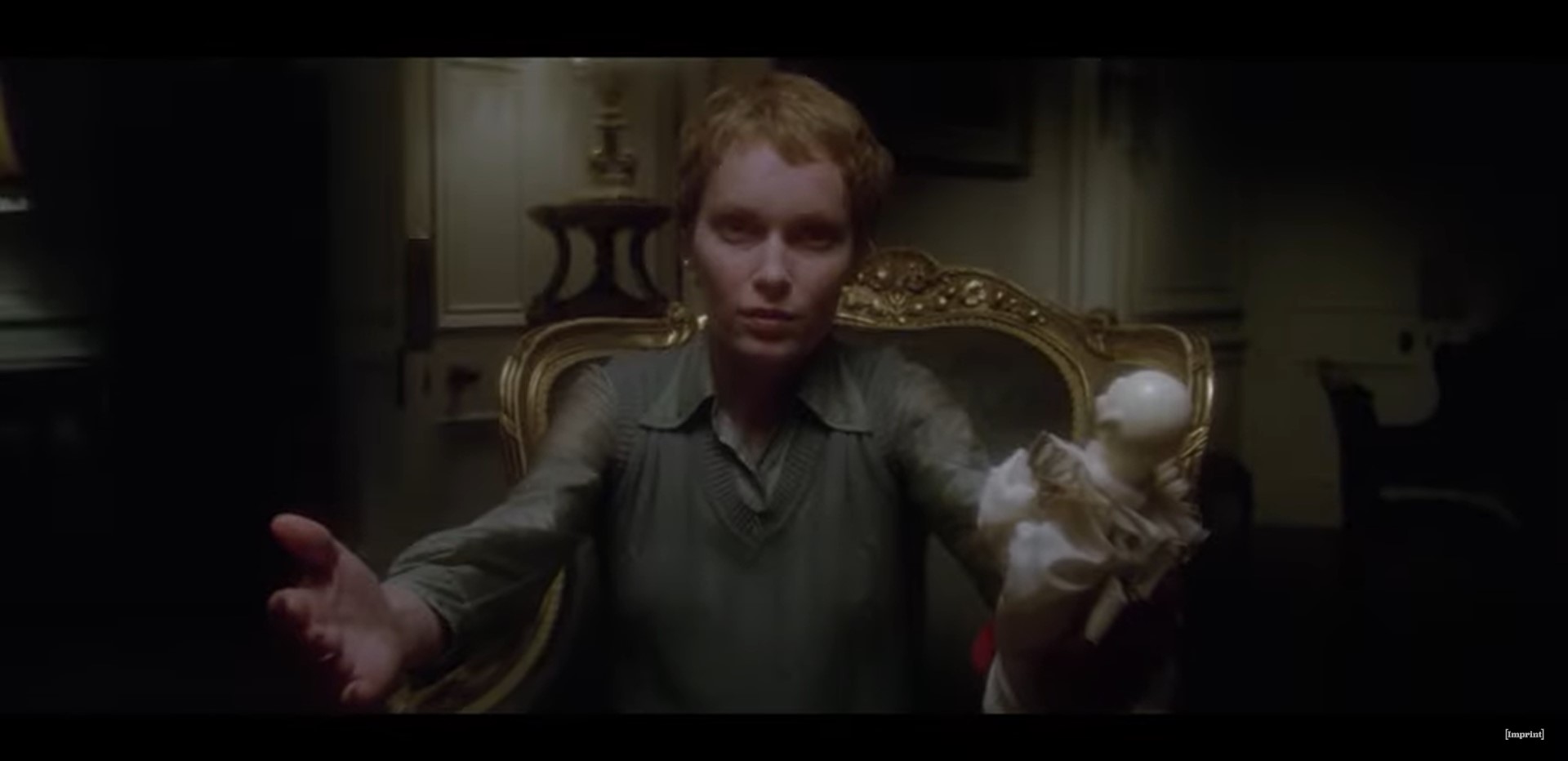
Mia Farrow solidified herself as a genre actress by starring in the archetype for films revolving around the prince of darkness, Satan, in 1968 with “Rosemary’s Baby.”  Unlikely seeing herself as a prominent woman of a notable rite horror, Farrow quickly understood her value in the genre as a complex female lead in the unsettling and gothic protuberance atmosphere style.  Nearly a decade later, Farrow stars in the Richard Loncraine directed “The Haunting of Julia,” similar only to the menacing supernatural child component but digs deeper in manipulative complacency, psychological guilt, and of that distorted reality created by the stout motherhood connection.  The “Slade of Flame” director set his sights off of Rock’N’Roll inspired dramas around the ugliness of the music industry and onto the filmic adaptation of the Peter Straub novel “Julia,” penned by the Dave Humphries and “Xtro” trilogy director Harry Bromley Davenport.  The joint United Kingdom and Canadian production, titled originally as “Full Circle” in the UK, is produced by Peter Fetterman (“The Exorcism of Hugh”), under Fetterman Productions, and Alfred Pariser (“Shivers”) of the Canadian Film Development Corporation. 

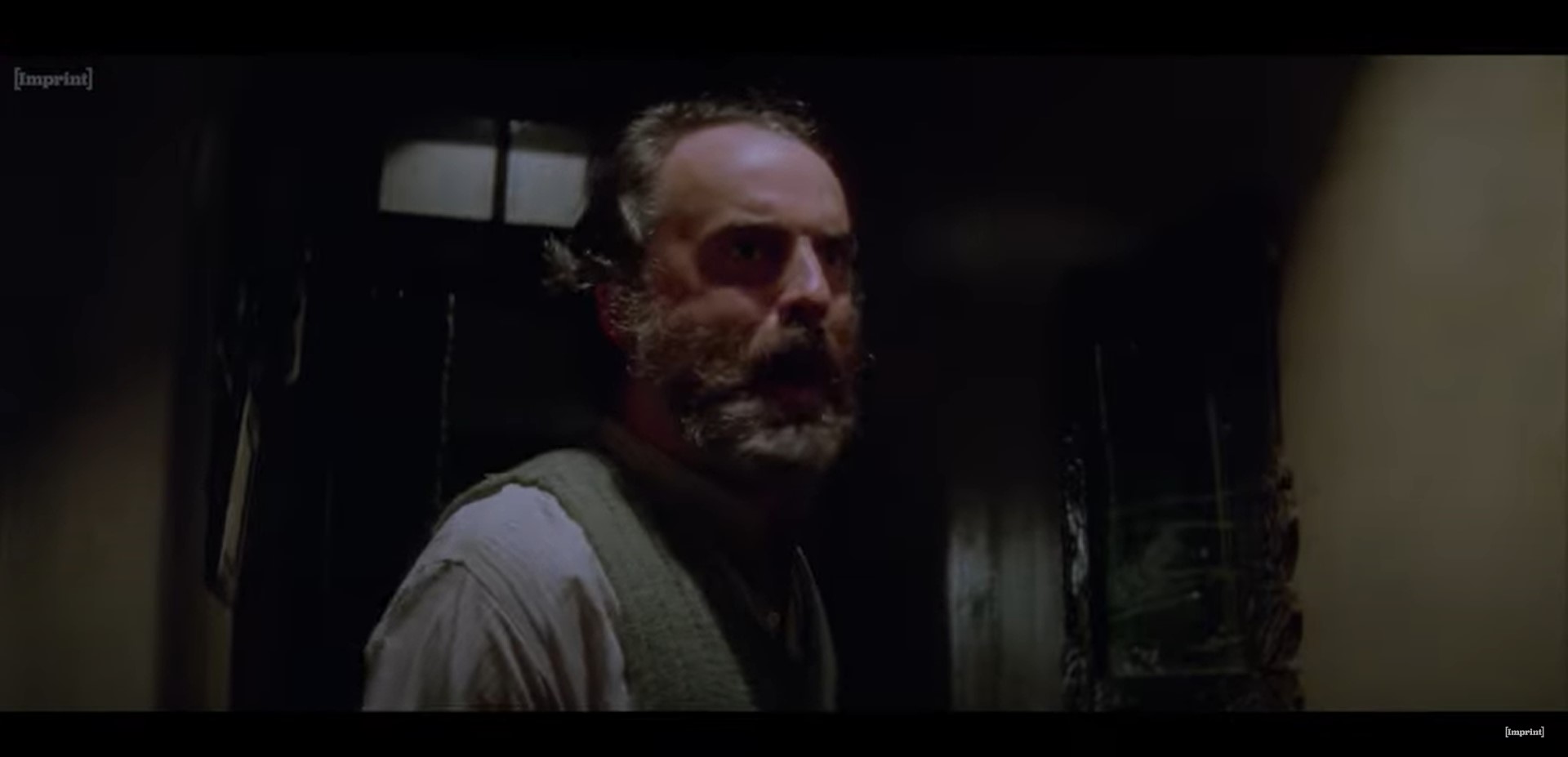
Mia Farrow’s distinct reactions and acting style very much engulfs the majority of horror experienced in “The Haunting of Julia,” as well as exhibited in “Rosemary’s Baby.”  The glassy eyed, long stares, the frightened, coiled emotions that swirl seemingly out of control, and the switch-gear ability to be strong and compliant in tense-riddled situations that just only involve herself in the scene.  While “Rosemary’s Baby’ and “The Haunting of Julia” may exact the same gothic aperture for child-themed horror and both are adapted literary works, “The Haunting of Julia” unfolds not in the anticipating of child birth but rather postmortem with the aftermath affliction of a child’s sudden and terrible demise that occurred in the frantic mother’s misguided embrace to take a knife right to her child’s jugular in hopes of dislodging an air denying obstruction.  This opening scene shocks us right into a grim framework that simultaneously divides trust and empathy for Julia as circumstances unveil what we might suspect all along, that Julia’s mental health suffered immensely.  What pushes Julia into undue stress is her controlling, dispassionate husband Magnus. Played by “Black Christmas’s” Keir Dullea.  Dullea pulls off the unsympathetic impassive father who just lost a child and can’t see the underlying psychological unrest his wife suffers.  In short, Magnus attempts to gatekeep Julia’s damaged psyche by trying to strong arm her back into normalcy, even going as far as manipulating Julia and his own sister Lily (Jill Bennett, “The Skull”) into slipping his foot into the door with a wife who fled from his grasp as soon as released from the hospital for essentially shutting down after their daughter’s death.  That toxic pressure is coupled with the seemingly unnatural incidences in her new home that clash her old life, chained to an unconsciously broken family, with her new life that seeks to decompress from a pair of diverse traumas.  “The Haunting of Julia” rounds out the cast with Tom Conti (“Blind Revenge”), Mary Morris (“Prison Without Bars”), Anna Wing (“Xtro”), Pauline Jameson (“Night Watch”), Peter Sallis (“Frankenstein:  The True Story”), Susan Porrett (“Plunkett & Macleane), Edward Hardwicke (“Venom”), and Sophie Ward (“Book of Blood”).

More or less forgotten by U.S. audiences due to no fault of the film’s own acclamatory measure or the audiences willing participation, the international produced “The Haunting of Julia” wasn’t publicized in the U.S. despite the two American leads – Mia Farrow and Keir Dullea.  Richard Loncraine’s film has incredible merit to the idea of a mother’s loss within the construct of gothic horror, which, in another aspect of unfathomable irony, resembled more closely to the American gothic style of the supernatural sequestered dark house.  Yet, this house is in London, wedged in like row homes, but as mentioned numerous times in the film, the house has distinction and grandeur that overlooks the buried ghostly history of the previous owners.  Julia absorbs the stories, filters through them, and comes to believe her own daughter is either trying to reach out to her or is hellbent on revenge for the amateur hour tracheotomy.  Loncraine does the phenomenal job of shocking our core with the early choking death scene of Julia’s daughter but once that dust settles, the pacing becomes more rhythmic to the point of building, slowly, Julia’s encounters with unknown forces that, at first, are just seemingly bizarre happenstances of left on bedroom plug-in radiators and playground visions of a girl that resembles her daughter cutting up another kid’s pet turtle.  These events play into their evident conspicuousness to push audiences deep into Julia’s mysterious milieu, officially sealing something isn’t right with the clairvoyant Ms. Flood’s scarred-screaming vision of a bloody child.  Julie become engrossed into learning the truth, eager to determine if that child is her late daughter and is fed tidbits of the house’s history that not only continues her own investigation but other research into other house tragedies that fork-split her presumptions.  As all this noise tornadoes around Julia, the stories, the occurrences, the deaths, viewers will never deduce to a reason closer to home, to Julia herself, until possibly too late at the end with a grisly open-ended finale that what Julia has been experience may have been done at her own forlorn hand. 

Atmospherically sound, undoubtedly creepy, and spearheaded by strong performances, “The Haunting of Julia” is the unspoken heroine of late 1970s supernatural horror – until now.  Imprint and Via Vision of Australia release a limited edition, high definition 1080p, 2-disc Blu-ray set with an AVC encoded BD50 of a new 4K scan transfer of the original 35mm negative. Presented in an anamorphic widescreen 2.35:1, the 4K scan is super sharp with virtually no compression issues on the formatted storage. Blacks, and negative spaces in general, are rich and void, despite Peter Hannan’s low-contrast and hazy surreal veneer that definitely plays into a psychotronic dreaminess. The resolution goes unaltered, and the natural grain maintains the original theatrical presentation for a revered 4k transfer. The English LPCM 2.0 mono track mix audibly delineates a viable one input split to make the dialogue and all other tracks comprehendible. Despite some slight here and there hissing, dialogue is amped up nicely for better resolved results that still remains mingled with the ambience in an all for one, one for all audio format. “Space Trucker’s” Colin Towns’s insidious and distinctly composed soundtrack reaches into the recesses of soul and strikes at the very nerve of fear with an unsettling score, perfectly suited for a mother drowning in the pitfalls of a supernatural sanctum. Optional English Hard-of-Hearing subtitles are available. The first disc special features include two audio commentaries – one with director Richard Loncraine and Simon Fitzjohn and the second, brand new, commentary with authors Jonathan Rigby and Kevin Lyons, new interviews with composer Colin Towns Breaking the Circle, cinematographer Peter Hannan Framing the Circle, and Hugh Harlow Joining the Circle, a new video essay by film historian Kat Ellinger Motherhood & Madness: Mia Farrow and the Female Gothic, the original trailer, and an option to play the film with either “The Haunting of Julia” or “Full Circle” opening title. The second disc is a compact disc of Colin Town’s 11-track score featuring 20 minutes of previously unheard music out of 60:52 of music. The limited-edition set comes with a neat lenticular cover on front of the hard box of what we assume is Julia’s ghost glaring at you from all angles as her eyes follow you. Inside is a clear Blu-ray snapper that’s a little thicker than your traditional snapper and comes with a built-in secondary disc holder. The cover art is simply Mia Farrow cowering outside the bathroom door but the reversible cover displays an original “Full Circle” poster as the front image. The disc arts are illustrative and compositions with the feature presentation disc the same as hard box lenticular without it being lenticular and CD pressed with Mia Farrow’s face in the background and a child’s cymbal banging toy in the foreground. Also in the hard box is a 44-page booklet feature an historical background essay by critic/writer Sean Hogan that has black and white and color photos and various poster art. The film, which comes in as Imprint catalogue # 218, runs at 97 minutes, is unrated, and, is assumed, for region A playback as it’s an Australian release – there is no indication on the package. “The Haunting of Julia” is Mia Farrow’s shining, yet lost effort post Roman Polanksi and is a remarkable look at subtle disconnection from extreme guilt when in every corner, every sign, is thought to be about your lost child.

Limited Edition of “The Haunting of Julia” Available at Amazon.com!


Break a Promise with EVIL And Pay the Little-Big Price! “Unwelcome” reviewed! (Well Go USA Entertainment / Blu-ray)

Not the Leprechauns This Time.  It’d Be Goblins that “Unwelcome” You!  

Trying desperately to become pregnant for some time, Jamie and Maya celebrate the news of learning they’re expecting but their jovial rejoice is cut short when three thugs break into their city apartment home, nearly bringing an end to their lives and the baby.  When Jamie’s great aunt Maeve wills him a rural cottage in Ireland, the married couple jump at the chance to start afresh away from the urban chaos and the trauma in hopes for a peaceful life with their child.  The friendly village residents take in Jamie and Maya unconditionally but one stipulation is highly encouraged to be met if living at great aunt Maeve’s cottage:  they must leave out a blood offering for the little people, the Redcaps, of the forest butted up against their home.   Just happy to be out of the city, Jamie and Maya shrug off what they believe to be folkloric wives tales of old Ireland and on such short notice, they hire Mr. Whelan and his children, who come with an unfavorable village reputation, to do much-needed repairs around the house.  When dealings with the Whelan clan go violently sideways, Maya invokes superstitious belief to draw the Repcaps out of hiding and implore their murderous mischievousness for dire neighborly assistance. 

Welcome to the “Unwelcome!”  Pint-sized evil continues to be mondo popular around the world, especially in the Full Moon empire that’s built a kingdom off the backs of supernatural ankle biters.  However, “Unwelcome” is not a Charles Band production that’s rushed straight through to a fast-tracked, direct-to-video release of shoddy, schlocky proportions.  Instead, this release comes from overseas, the UK specifically, with some quality production footing that lands the 2023 released film into a limited theatrical run before hitting the home entertainment market.  Behind the film is Jon Wright, director of dark humored revenge against high school bullies in the “Tormented,” who directs and co-writes “Unwelcome’s” grim fairytale-like narrative of personal growth, inner fight, and underfoot goblins gone wild with Mark Stay, reuniting with Wright for the first time since their script collaboration on the 2014 automaton invasion epic, “Robot Overlords.”  Under the once working title of “The Little People,” “Unwelcome” is a production of the Yorkshire based Tempo Productions Limited, with cofounders by Jo Bamford and Piers Tempest as executive producer and producer, and the private equity investment group, Ingenious Media, with producer Peter Touche along with Warner Bros. and Well Go USA Entertainment distributing. 

“Unwelcome” has such unusual casting in a good way.  The entire Whelan clan consists of actors plucked from successful, multi-seasonal television shows that have essentially shaped their careers from their well-known, fan-adored roles, but the unintended adverse effect in such triumph stamina is being recognized only for that performance.  In my mind, Colm Meaney will forever be embedded in my hippocampus as Engineer Chief Miles O’Brien from “Star Trek:  Deep Space Nine.”  “Con Air,” “Under Siege,” and even as a British Airways pilot doomed for landing in “Die Hard 2,” Chief O’Brien, I mean Colm Meaney, is still in space tinkering with transporter buffers.  Here in “Unwelcome,” Meany is Daddy, aka Mr. Whelan, a rough around the edge contractor who beats his kids, let them get away with whatever they please, and has a real notoriety around town.  When I say kids, I mean grown adults stuck in Daddy’s hooligan wake and are played by more outstanding and familiar faces from Ireland, such as Hodor from “Game of Thrones,” Kristian Naim, Netflix’s “Derry Girls’s” Jamie-Lee O’Donnell, and the “1917” actor and upcoming principals of “Last Voyage of the Demeter,” Chris Walley, make up the trio of terribly laid construction workers who have really no business being around a hammer, a ladder, or anybody’s valuables.  That brings me to “Unwelcome’s” lead actors as the scarred couple who hires out Whelan’s band of delinquent spawns to do the handiwork repairs.  I realize Wright and Stay wrote Douglas Booth (“Pride, Prejudice, & Zombies”) to be an overly optimistic and fairly useless good guy with Jamie, but the insecurities are just ostentatiously oozing out of the husband without a clue.  Jamie’s arc also doesn’t quite flesh out by the end of the film as he’s blocked by the baby mama instincts of Maya, played by “Resident Evil:  Welcome to Raccoon City’s” Hannah John-Kamen, with an unspoken I’ll-do-it-my-damn-self attitude that sends the narrative into a knife-brandishing gob of Redcaps eager to do her bidding for an unfavorable exchange.  Maya sacrifices all for a good man with good intentions who can’t do diddlysquat to save her and, in the end, that doesn’t seem balanced for this ferocious fairytale. 

If there is one aspect, above all us, to note about “Unwelcome’s” shin kicking goblins as a takeaway is that the rambunctious and ravenous Redcaps are not computer generated, are not puppets, and are not even animatronics.  Actors and stuntmen fill those small shows with a little help of disproportionate movie magic, heeding to the ways of a lost art in miniaturizing actors, such as in “Willow” or “Honey, I Shrunk the Kids,” and touching up with some CGI on the tangible face molds for a layered composition that’s super fun to see come to life on screen.  Unfortunately, the Redcaps make a late appearance into a yarn unspooled with mostly the pent up pile of frustrations of Jamie and Maya as an unlucky couple without a chance of peace in the world.  Trouble finds them wherever they go in what’s essentially a trade for city thugs for unfriendly country versions of the same type of ill-mannered.  “Unwelcome” plays very much into it’s title that no place feels welcoming for a couple on the verge of the already daunting premise of parenthood life and everything appears now alien as the world is being upended by concessions for your child in what has turned terrifying in what was supposed to be a warm, welcoming of a new adventure.  That’s the sensation setup for the pair who trust dip into trusting superstitions and magical beings to be their guardians.  Folklore then takes over; its has, in fact, been welcomed to save the day no matter how maligned the backstories.  Wright and cinematographer Hamish Doyne-Ditmas do, in fact, construct an ocular stage crafted out of an ethereal red and yellow fire lit sky with an overall color theory toned to contrast as a mystical storybook set in what is usually flush with greenery around an Irish village, reminiscent of late 70s-early 80’s European horror sets built to detailed scale, built with vibrant backlighting, and yet built to feel distant, apprehensively off, and strange like another world, a Redcap ecosphere.  “Unwelcome’s” ending also pulls from that unabashed time to be creatively mad in an innately mad universe with an unexpected Redcap reason that doesn’t clarify so much their hunger for blood offers, which the diet includes raw store-bought meat and the frothy flesh of felonious individuals, but better explains their twisted promises and intentions for their knife-jabbing services rendered.

With Goblins, there’s always a price to pay but for the Blu-ray release of “Unwelcome,” the price is worth the admission.  The single-layered, AVC encoded, high-definition 1080p Well Go USA Entertainment release presents the film in a widescreen 1.78:1 aspect ratio.  Slightly squeeze onto a BD25, there’s some minor irregular compression patches that degrade solid darker colors and the image loses a bit of sharpness in the background – you can see an example when the Redcaps pop up out of the keep tower appearing more like moving globules than well-defined humanoids.  Goblin facial features and skin and clothes textures have tactile appeal during closeups with the same being said with the cast in their natural color tones.  Computer-generated facial movements have seamless pertinence to the surrounding action and the motion of the Goblin actors themselves with layering of frames looking clean to create their smallness around principal characters.  The English DTS-HD 5.1 Master Audio mix maintains a stout dialogue track but deploys no depth into recordings resulting in all the dialogue tracks to be at the forefront, even when characters are in the background in the scene.  The weird spatiality with the dialogue doesn’t translate over to ambient noise as those tracks are well designed into the scheme with levels of depth that add richness to the storybook atmospherics.  English SDH are optionally available.  Bonus features include a behind-the-scenes cast and crew interviews discussing their time forming the idea and working on the project, a making the Redcaps segment with special effects supervisor Shaune Harrison (“Nightbreed,” “Attack of the Adult Babies”) discussing the step-be-step process of bringing these little devils to life, including showcasing their head and body molds, and the theatrical trailer. The physical property comes in a standard Blu-ray snapper with latch with one-sided cover art of a knife-out Goblin starring up at the new mistress of the house.  Inside, a single-leaf advert of Well Go USA films and the disc pressed art with a blue-graded Goblin looking menacing makeup the inner contents. “Unwelcome” runs at 101 minutes, is rated R for strong violence and gore, pervasive language, some drug use, and sexual material. From an ironic perspective, “Unwelcome” uses the mythological mischievous of Goblins as a gas pedal accelerator to mature a pair of genteel gulls faced with a parlous reality and to be factotum in life in general told inside in the linings of a dark and gory fairytale universe.

Not the Leprechauns This Time.  It’d Be Goblins that “Unwelcome” You!