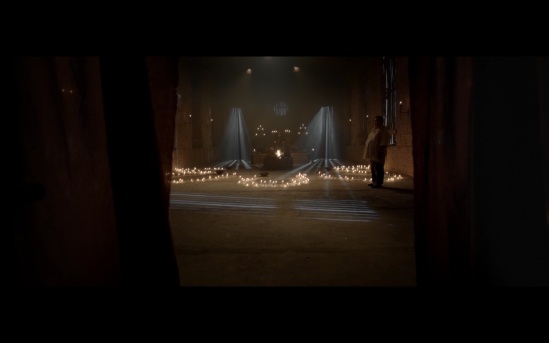
Milos, an aging porn star, struggles to provide for his wife and son. Though still working here and there with mediocre gigs, Milos longs for the glory days as the stud every starlet desires for a scene with, but for Milos, his family comes first and foremost. When an admiring former colleague offers him a meet and greet with a provocative director presenting a contract that would set his family stable for life, Milos assures himself doing the right thing along with the permission from his wife. He meets with Vukmir who captivates with progress pornography art, a new age of adult material, that will be novel and exciting that’s enshrouded with obscurities about who exactly the seasoned star is performing with and what exactly he is supposed to do in this project. What unravels before him is Vukmir’s mad vision that not only breaks every law and moral fiber know to mankind’s sexual nature, it completely obliterates the rules toward sexual deviances in an underground criminal industry that banks on the wealthy’s sordid tastes.

A long time has this reviewer been patiently waiting for the opportunity to screen Srdan Spasojevic’s written and directed multi-country banned film, “A Serbian Film.” Also known as “Srpski Film” in Serbia, the 2010 exploitation that features substantially graphic material with themes of necrophilia, pedophilia, and snuff rarely finds a suitable medium for an uncut presentation as Spasojevic’s feature consistently, and perhaps rightfully so, goes under the governing censorship board’s scalpel to selectively trim the excessive violence, the crude depiction of children, and all the other shocking material that’s rammed unwillingly into your backside. Fortunately, or unfortunately depending on how one perceives artful censorship, the most accessible copy of “A Serbian Film” has limited cuts that total approximately one minute worth of footage left on the cutting room floor to just eek one out from the ratings’ club. Though listed on the DVD back cover as unrated, this cut will be the one reviewed below from U.S. distributors Invincible Pictures and MVDVisual.

How does an actor run with a performance that incorporates vile and degrading perversive qualities and circumstances upon a character? I don’t know and I don’t know how, but somehow Srdjan Todorovic killed the performance as Milos. Todorovic’s veteran filmography credits establish him as a natural switch between characterizations and choking up on the reigns of each facet to achieve maximum reaction. Milos is a physically challenging role with many difficult scenes and Todorovic found inspiration out of thin air; I’m sure the Yugoslavian born actor needed a months’ worth of showers to remove the disgust from off his flesh when the film wrapped. Another complex character is Marko, Milos’ dangerously envious cop brother who chomps at the bit for Milos’ sexual longevity, stellar porn career, and his gorgeous wife. Slobodan Bestic could have passed for a Serbian Hugh Jackman from “Swordfish,” complete with little dangly earring. Bestic’s performance is unnerving, haunting, and downright salacious that waves in and out of a potentially dangerous man with a hankering for carnal informalities. Speaking of which, Vikmur epitomizes the very definition of being a lunatic. The lavish filmmaker has grandeur style with repugnant tastes in content. Sergej Trifunovic puts on the shiny shoes and fancy suits to become the venomous underground kingpin with a torrent of tasteless videos and the “Next” actor really plays the bad guy well, really does a showmanship disenfranchising Milos and those that love him their ability to enjoy free will. The remaining cast include Jelena Gavrilovic, Katarina Zutic, Luka Mijatovic, Miodrag Krcmarik, and Andela Nenadovic.

A unforeseen aspect of “A Serbian Film” that rings surprising is the engrained story of an extremely fallible hero. Srdan Spasojevic proved shocking, exploitation horror doesn’t have to be completely allegorically benign and the filmmaker has even mentioned that his film is a composite piece of abusive power from authoritative figures forcing people against their will, as if spellbound, to do atrocious acts and while these acts might not be atrocious as rape, sexual assault on children, or using an erect penis to kill someone, Spasojevic creates moments where his statements are affirmed. The transition between act 2 and act 3 backs Vukmir against a wall, trying to salvage his star’s contract by debating material that’s good for all. Spasojevic hones in on Vukmir’s raving soapbox speech to Milos about how he and his company govern the country and how they are the backbone of his of the sovereign Sebrian nation, the true delusion of power and the wool over the sheep’s eyes as the action point.

Invincible Pictures, the same folks who distributed Kevin Smith’s “Yoga Hosers,” and MVDVisual present “A Serbian Film” as a re-release onto DVD home video. Presented in a widescreen, 16:9 aspect ratio, the image warrants no mention of issues as a clean picture in a dry-yellowish tint while still maintaining some natural lighting and depth in the gruesome details pop every sensory nodes. Banding problems are faint at best and the edits are what they are sense the film is slightly trimmed anyway. The Serbian language 2.0 stereo mix pounds with a pulsating electronic-rock score and shows the ranging with the screaming, whimpering, crying, and the sloshing of blood and semen fluids. The English subtitles are error-free and have hardline text that make reading them more easily. Though usually bonus features are preferred, in this case, just having “A Serbian Film” alone on this DVD release didn’t feel necessary to have the share the film with the bonus features, creating an intimate moment between viewer and feature. “A Serbian Film” sears a glowing hot lasting impression right into the mind and soul, twisted and perverse in an unfathomable immoral compass too messed up beyond the most descriptive of descriptions. “A Serbian Film” is best viewed alone, without food, and with your sensitivity left outside.
Category Archives: Just fucking awesome
Satan’s Evil Indestructible, Hairy Servant! “Beast of the Yellow Night” review!

At the tail end of the second great war, Philippines based U.S. army deserter and Japanese sympathizer, Joseph Langdon, runs for his life as the Philippines police and guard track him down through the jungle for committed heinous acts that not only include treason, but also rape and murder. Exhausted and dying from his wounds, Langdon will do anything to stop the process of pain and death, including making a deal with Satan himself. In exchange for saving his life, Langdon commits himself to eternal servitude at the malevolent pleasures of Satan by inhabiting various souls and bodies through the decades and extracting the latent evil from his interactions with people, but Langdon finds himself again exhausted and exacts free thought and a rebellious stance against his master after inhabiting an American business man and given back his own face. The Dark Lord, as amusing as he wicked, bestows upon Langdon the ability to transform into a flesh hungry man-beast whenever his desires boil to the surface and he becomes the most wanted man in the Philippines, but how can they stop a monstrous fiend they can’t kill? The answer lies solely with the damned Langdon himself.

Rarely does a horror film birthed from the Philippines reach my critical virtual desk and, fortunately, “Beast of the Yellow Night” lands smack-dab in my lap as an absolute jewel from the early 1970’s from writer-director Eddie Romero. The 1969 “The Mad Doctor of Blood Island” director, who’s heritage is Pilipino, had visions of grandeur for his large scale features that stem from an infinitesimal budget, but with enthusiastic energy from former musician and beach party, teen heart throb John Ashley, the duo cofounded their theatrical finance company, Four Associates Ltd, to produce their very own horror feature films straight out of the Philippines which “Beast of the Yellow Night” was one of first to be released, if not the very first to be produced. Additional funding was provided by a little known distribution company, New World Pictures, jointly founded by the genre-setting Corman brothers, Roger and Gene, and thus forth “The Night of the Yellow Beast” was built upon a rich and solid cult foundation that began a Philipino-film circuit conversely well-known in the U.S. and put Eddie Romero on the proverbial map of relatively unknown and granular cult directors while providing a branching out of yet another successful credential façade for John Ashley that doesn’t involve country music or being just another pretty face in the beach party moviegoer crowd.

If you haven’t guessed by now or if you’re just as dense like myself, John Ashley also stars in his co-produced creature feature and Ashley, who goes without saying that he stands in his own rite, is also the Paul Naschy equivalent of the Philippine Islands with his all hands on deck attitude toward filmmaking and being the man behind the gnarly man-beast makeup that more than likely takes hours to apply. His performance as even tempered Joseph Langdon is a stark contrast from the wild and vicious beast with a flesh appetite and knack for mauling that herd this film into the werewolf category according many descriptive plots, summaries, and reviews, but “The Night of the Yellow Beast” actually resembles more of a Dr. Jekyll and Mr. Hyde familiarity as Langdon doesn’t transform when the full moon is high, but rather at the whims of his tormentor, in this case it’s Satan rather than an ill-fated elixir, and then he morphs more rapidly and explosively during exhilarating and endorphin stimulated moments like intimacy to further exacerbate his dreadful curse on Earth. Langdon and beast Langdon are befriended by a blind, long-tooth ex-con, Sabasas Nan, played by “The Big Bird Cage’s” Andreas Centenera and Centenera captures the gentle nature and extended wisdom of a man at the tail end of life and looking to right the wrong for his past mistakes. Sabasas Nan is similar to the blind man in the tale of Frankenstein that doesn’t judge, become frightened, or even shun the ugly shell of a monster, but though visionless, both blind men are able to clearly see into the soul of what used to be once a man. “Beast of the Yellow Night” also stars leading lady Mary Wilcox (“Love Me Deadly”), Leopoldo Salcedo, Eddie Garcia (“The Woman Hunt”), Ken Metcalfe (“TNT Jackson”), and labeled as the Filipino Peter Lorre, Vic Diaz (“Black Mama White Mama”) as the pot-belly Satan and Langdon’s mischievous master.

Eddie Romero’s deep and intellectual script sticks out amongst the fray of time lapse and post-skirmish makeup effects that teeters “Beast of the Yellow Night” on a B- to C- movie. Not that the special and makeup effects were completely awful or subpar by any means, but the directing filmmaker pushes the boundaries to scribe the pull strings of a man’s soul, really digging into the anguished flesh of redemption and mankind’s mortal coil, which puts a lightly coated dampening on Langdon’s transformations from man-to-beast that hasn’t yet reached the Paul Naschy level of editing and progressiveness toward his horror films. In fact, the “Yellow Beast’s” effects are merely one step below that aforementioned level. However, the beast is no wolf of any sorts, but nor it isn’t a man in a cheap leathery or latex rubber mask that materializes a rather mangled, mangy beheld fiend with razor sharp canine teeth shown through a ferociously hungry and breathy-snarling maw set below equally ravenous eyes that yearns for the blood of man. For 1971, the effects are exceptionally marvelous, but Romero’s script just blows the practicalities out of the water being ahead of its time and sorely overshadow the effects work.

MVDVisual and VCI Entertainment proudly gift to us “Beast of the Yellow Night” onto 2-disc all region DVD/Blu-ray home video. Produced from a 2K scan of the original 35mm negative, VCI Entertainment’s widescreen, 1.85:1 aspect ratio presentation in full Metrocolor is mondo cult cinema exhibited on a high level and despite some blotchy patches, the corrected coloring and cleaner picture are by far the best we’ll ever see while still sustaining a healthy amount of beneficial cinematic grain. The prologue has coloring issues with about 20% of the right side of the film strip in sepia harboring in sepia town, but becomes corrected after the title and credit sequence. The English and Tagalog, the national language of the Philippines, mono audio track has lossy bite that’s expected and yet, still maintains ample dialogue track and a solid and balanced in range ambient track. Optional English subtitles with SDH are also included. Bonus features include a 2018 commentary track by writer and filmmaker Howard S. Berger and the head of Mondo Digital, Nathaniel Thomspon, old and insightful video interviews about John Ashley and the Filipino films of the 19870’s with Eddie Romero, Sam Sherman, Patrick Wayne, Peter Tombs, Eddie Garcia, Gloria Hendry, Sig Haig, and Jan Martin, a Remembering John Ashley featurette that includes interviews with wife Jan Ashley, filmmaker Fred Olen Rey, Steve Stevens, and Andrew Stevens, original theatrical trailer and TV spots. Plus, a thorough inner liner essay from Howard S. Berger that goes examines “Beast of the Yellow Night” and the films of that era that are a metaphor for much, much more. “Beast of the Yellow Night” is a simple message cause and effect. If vileness becomes you, then villainy will forever run fluidly through your icy veins in this Eddie Romero and John Ashley monstrous picture that pulls at the tattered strings of a downtrodden soul.
Evil is an Oily Bullshit Artist! “The Greasy Strangler” review!

Ronnie, the owner of a Disco walking tour, works and lives alongside his hectored son, Big Brayden. Their disheveled and bigoted relationship becomes upended by the enticing Janet. With big eyes and an endless amount of sexual drive, Janet swoons the virginal Big Brayden that urges him to become his own man against a criticizing father, but when Ronnie sees an opportunity to swoop in and steal Janet under his son’s nose, the proclaimed disco king of Los Angeles ups the charm and bed’s Janet with little resistance. A back-and-forth ensues between a hopeless, if not hapless, romantic and his sexually aggressive, A-typical personality father for top dog. Meanwhile, those who even cross Ronnie in the faintest ends up brutally murdered by an inhuman killer lathered completely in grease, dubbed The Greasy Strangler, and the aberrant love triangle just might be related to the recent spike in deaths at the hands of the oleaginous murderer!

Just one big corn ball of engrossing black comedy horror, “The Greasy Strangler” is a one of a kind Jim Hosking directed film of abnormal quality and sensational crude storytelling of a father and son rivalry to rekindling with a greased up suited killer in between to connect them. Co-written with Toby Harvard, “The Greasy Strangler” marks the fourth project between Harvard and Hosking and the turnout is laugh out loud funny. The penning and pair filmmakers write scintillating characters with socially disapproving norms accepted in a cinematic universe that can only be imagined by the disturbed. “The Greasy Strangler” is the Tim Heidecker and Eric Wareheim version of a Wes Anderson film that can only be described as grotesque in content with an unflattering dry, if not something bathroom, humor and will not likely be accepted by the majority of popcorn audiences as their typical brand or cup of lard lavished tea. The horror element to all of this is a greased up manic strangling tourists and shearing the heads off blind car wash owners, but very much has a backseat the dynamic between Ronnie, Brayden, and Janet.

“The Greasy Strangler” revolves around the special relationship between father and son, Big Ronnie and Big Brayden. The disco passionate and pathological storytelling-embellisher Ronnie has an immensely rock solid hard on for any and all things that are greasy, oilier the better, and cathartically browbeats his adult aged son to the point of nowhere being near the parent of the year for years to come. “The Video Dead’s” Michael St. Michaels has an absolute screen presence. The Doc Brown hair and a wiry frame complete the compiled shell of a man to which a flaming ball of disgruntled and disillusioned kinetic and emotional energy calls home. Michaels’ oozing and brazen confidence equals Ronnie’s slimy thirst for internal and external grease addiction. Ronnie supports his 40-year-old something son, Brayden, ever since his wife parted ways for a fellow with ripped abdominal muscles, as Brayden would frequently state. Brayden’s the epitome of what a 40-year-old virgin should look like and not how Hollywood depicted the persona with Steve Carell. The stringy, greasy hair, unkempt physique, and a personality that’s stagnant with naïve humility, Sky Elobar (actor in the upcoming Tony Todd starring film “Candy Corn”) envelops himself as the big man child that is Big Brayden who doesn’t have much self-worth in life until a forward young woman, on one of Ronnie’s Disco Walking Tours, enchants Brayden with flirtatious eyes. Those eye below to Elizabeth De Razzo, the actress who portrayed the subjugated Stevie’s baby mama on Danny McBride’s “Eastbound & Down,” as Janet, the Rootie-Tootie Disco Cutie that causes an upheaval between Ronnie and Brayden’s already ragged relationship. From the HBO comedy series to the “The Greasy Strangler,” Razza has a knack for off-color comedy, exploiting routinely awkward circumstances to Janet’s advantage that wedge the father and son apart and amusing herself as a selfishly sexual and shameless monkey wrench. The remaining cast of colorful character actors include Gil Gex (“Dangerous Men”), Abdoulaye MGom, Holland MacFallister, Sam Dissanayake, and Joe David Walters.

Distasteful visuals enfilade the eyeballs that include one head-to-toe greased up strangler, two half naked speedo-sporting father and son duo, and three overly grotesque, if not a toon like whimsicality of genitals, but don’t worry, Ronnie’s mongoose-sized penis, Brayden’s shrimpy penis, and Janet’s afro-tastic bush are 100% prosthetics. The trade is with that is the actors are practically half nude for about half the film with Big Ronnie dangling his artificial junk from the spinning brushes of the drive-in car wash to the antiquated funky disco dance floor. In all honesty, the prosthetic take a backseat to the ingenious quirky comedy from Hosking and Harvard and with all the oddball body language, the bizarro back and forth banter, and witnessing Michael St. Michaels in a crude suit of grease is special enough.

MVDVisual and FilmRise present “The Greasy Strangler” onto a full HD, 1808p, special director’s edition Blu-ray in a widescreen, 1.85:1 aspect ratio format. Shot with an Arri Alexa camera, the digital image is super crisp and benevolently engrossing despite the explicit content of the narrative. Hardly any digital noise and colors pop with full flavor. The English 5.1 Dolby Digital track is prime steak, utterly tender when chewing and overly filling when done. Dialogue is balanced at the forefront while ambient tracks are equally subdued in tandem. Andrew Hung’s complete “The Greasy Strangler” score, a genetic makeup of nerdy synthesizing discordance, could be rendered as an upstaging character in itself. Extras on the release include an audio commentary with director Jim Hoskins and stars Michael St. Michaels and Sky Elobar, cast and crew interviews about the zany narrative and their opinions on the the zany characters, and the theatrical trailer. Kooky, full frontal, and the most unique best film I’ve ever seen, Jim Hoskins’ “The Greasy Strangler” has a bold and uninhibited cast full of character and full of oldfangled taste that dovetails with a too cool for school attitude and doesn’t give a horse shit about its unconventional cinematic discourse and anatomy. A must, must see cult classic!
The Devil’s Greatest Trick is His Evil Being a Part of You. “Luciferina” review!

Natalie’s dedication to her religious vocation has led her to become a nun. Her celibacy is a symptom of disgust with her family’s household, a home the young virgin could not bear to live in another second or much rather return to that stems from an uncomfortable inkling of unnatural circumstance, but when she is informed her parents were in a tragic accident involving the death of her mother and a father bedridden by shock, Natalie reluctantly returns home. She’s greeted by Angela, her university studying older sister, and her delinquently dangerous boyfriend, Mauro, and alongside a few of Angela’s classmate, the decision to track down a shaman on an secluded island on the outskirts of town has convinced the group to seek alternative and holistic treatments, such as a brew made from the mystical Ayahuasca plant, to battle their own self-complications. What they discover is that some inner demons should be left untapped and undisturbed or else their souls will pay the consequence.

“Luciferina” is a black rites narrative saturated with psychosexual tendencies and religious divergences from writer-director Gonzalo Calzada whose horror mystery footprint, the Argentinian filmmaker’s common foundation for his prior work in “Resurrection” and “The Clairvoyant’s Prayer,” maintains a strong foothold for his latest venture from 2018 with a story of solid foreboding and overshadowing complication that’s naturally opaque, guiding viewers seemingly toward one direction and then obliterating their conjectures in an in a blink of an eye about how characters or events might play out. Layered with themes and heavy with motifs, Calzada summons the internal demon, figuratively and literally, from within an indie picture budget that’s complete with accidental demonic conjuring, eye-devouring effects, and a climax involving temple fornication of various Kama Sutra positions.

Young, beautiful, and, yet, withdrawn and plain, Natalia has embedded herself into nun-hood, a means to escape the unexplainable discomfort inside her own home and even in herself as she’s haunted by visions of a disheveled woman with crooked arms popping unnaturally out of a white nightgown, but not all of Natalia’s visions are bleak as she’s able to, at times, define a person’s gleaming aura during a momentary spell. Sofia Del Tuffo stars as the troubled vocational woman, a role that demands much from the young actress who can easily transition from a screaming and scared postulate to taking charge of her destiny by gripping Satan’s horns. Tuffo opposites Pedro Merlo as Abel who is, well, more or less a potential love interest. Abel has fire inside him sparked by his desire for Natalia, but goes full inferno after downing the Ayahuasca juice. The light and dark of Abel has Merlo flipping the script continuously and the actor keeps up with relative ease. The opinionated downside to roles Natalia and Abel might be lost in translation, but there’s a sense of disconnect between their multiple purposes: shaman visit, the unspoken connection for each other, and their intertwined destinies. These aspects go fairly unexplored or are either, in the script, diluted in the details. The supporting cast also don’t add volume to the story and though not all of the cast are like this, a good chunk are rather auxiliary for the moment of pinnacle prominence and their sub-stories are quickly squished – that’s the Gonzalo Clazada affect. The remaining cast includes Marta Lubos (“Darkness by Days”), Melena Sanchez, Francisco Donovan, Stefania Kossl, Gaston Cocchiarale (“Terror 5”), and Desiree Gloria Salgueiro.

“Luciferina’s” themes bubble quite easily to the surface, the more obvious found in the religious field, but an interesting theme is a woman’s protective, if not problematic, stance toward copulation and the guarded uterus and their right to chose. Natalia has no experience with sex and she’s constantly under the pressure of having sex, even inside the chaste nunnery. Natalia nonchalantly pushes away one of the boys in the nun’s drug rehab program with not much oomph, she then comes under siege by the forcibly accosting Mauro and his verbal rape fantasies toward his girlfriend’s younger sister, and then Abel’s internal struggle with his Faustian under guise who enthusiastically confesses his hard on to score with Natalia to bring forth more evil spawn. A common motif from the baby making is the uterus that pops up in Natalia’s dreams and her late mother’s frantic paintings that circle around the pressures of motherhood and as Natalia procrastinates under the semblance of saving her own life to further prolong her inevitable destiny, she comes to the realization running will prove for naught and becomes empowered. One thing weird in relation is not the uterus in itself, but rather the computer generated baby in the womb; the impression is okay in construction as the baby has some realism in the detail, but the adverse effect is the use of the effect that seems pointless and ostentatious.

Artsploitation Films and Reel Suspects presents “Luciferina” onto Blu-ray home video. The anamorphic widescreen, 2.35:1 aspect ration, presentation is quite sharp with textures and details in a lossless image. Calzada uses much of the natural coloring in daytime sequences and the night scenes are moderately bluish and director of photography, Claudio Beiza, has immense range and depth that provide astonishing interior and exterior backdrops that can be subtly pleasing. The Spanish language Dolby Digital 5.1 surround sound substantially keeps with the tone and pacing of the story. Dialogue is balanced and verbose in the forefront. The release also comes with a Spanish language 2.0 stereo track. Both audio tracks come with English subtitles that saw minor issues with translation errors and timing. The only bonus feature available is the film’s theatrical trailer. “Luciferina’s” contemporary tale of possession and sexual innuendo is rabid. Director Gonzalo Calzada’s ambiguity of mystery horror is grossly engaging while “Luciferina” can also be glossy with splayed monstrous savagery and graphic sexual content, two genre commodities that churn easy entertainment.
Evil Sows With Others’ Body Fluids! “DIS” review!

Ariel Konk, A former soldier fleeing from his regrettable past, seeks refuge in an isolate cabin located deep in the forest, adjacent to a lagoon. Struggling to live off the land and coping with loneliness, the soldier marches on, exploring his new, secluded surroundings. His loneliness comes to an end when investigating the ruins of a dilapidating building structure, spotting a masked half naked female and as he pursues her, Ariel witnesses her voluntarily jump from the highest level of the opened air building. Wrought with anguish, Ariel attempts suicide only to be knocked out before he could pull the trigger on his rifle. He wakes up being chained to the wall with a mute, mask figure drugging him and extracting his blood and semen fluids as necessary nutrients for a nearby Mandrake garden. A practice that has been executed many times before Ariel’s arrival.

“DIS” is a bordering arthouse horror film from writer-director Adrian Corona (“Nariz Ioca”). A blend from a horror influenced literary poem and a mythological folkore, Corona crafts a lurid, hyperbolic story that pulls, as Cornoa describes as a prefix of sorts, from Dante Alighieri’s epic journey through hell told in Dante’s Inferno, using the City of Dis that’s described as a lower hell for sinners who’ve committed violent and fraudulent transgressions, and interlocks that inspiration with the archaic lore surrounding the Mandrake plant that involves superstitiously condemning those to hell after reaping the intensely narcotic plant with the human shaped root and that would, also superstitiously, scream when pulled. “DIS” is full of interpretative terror through the 61 minute runtime that’s virtually expressive. Corona provides little dialogue to his script, keeping most of the dialect scribal incased within flashback confines, and let his actors’ raw emotions and visceral eloquence provide the tale that’s peppered with moments of visual shock and cathartic abhorrence.

I’ve said it once and I’ll say it again, Bill Oberst Jr. is one hell of an actor. The upcoming Rob Zombie “3 from Hell” actor has become a prominent staple professional in the indie horror film circuit, tackling the bizarre, the inexplicable, and the most difficult of roles with such vigor and passion that his motivation is seemingly inhuman. Right up there with “Deadly Revisions,” “DIS’ tops or equals being one of the best performances of his career, from the perspective of this reviewers’ cache of Bill Oberst Jr films. There’s quite a bit of difficulty catching up to the man who roughly does, whether as a lead or as support, 10 films a year! As Ariel Konk, Oberst captures the essence of pain and anger that saturates the character’s own personal delirium and hell with his past mistake catching up to his self-battered soul. The faceless figure who opposites Ariel feeds off the ex-soldiers repugnant and guilt-riddled past actions in a seemingly perverse mission that’s actually mandated by the suspected demon’s Mandrake lot. The plants are held in a nursery for engendering creatures, but what kind of creatures exactly? Other demons from the seed of murdered vehement people?
Remaining cast include Peter Gonzales Falcon, “Prison Heat’s” Lori Jo Hendrix, Manuel Dominguez, and Anne Voitsekhova.

The casual viewer will inherently disavow the hour spent watching “DIS” due to a number of reasons, whether it’s Ariel wandering the forest for more than half the film, or dialogue is fairly infrequent, or the chaptered sequence of events don’t perfectly describe just what the hell is going, or, just perhaps, the motif of genital masturbation and mutilation is just too much to stomach. Either way, “DIS’s” traction will slip and only a few are willing to get dirty and push the story forward with open mindedness and artistic appreciation. Speaking of artistic appreciation, Rocco Rodriguez’s cinematography is a character upon itself. The top of a Cofre de Perote volcano in Perote, Veracruz, Mexico during principal photography has breathtaking visuals that Rodriguez captures exquisitely and becomes a backdrop against the coarse material. Outside is vivid, bright, full of life, but when in the belly of the rundown structure, the manmade confines are claustrophobic and crummy, infernally ablaze for ritual, much to the akin of Dante’s Inferno. Rodriguez, again, depicts lustrous imagery that assists in telling Corona’s nightmarish story and that’s a skill all can recognize.

MVD Visual and Unearthed Films present Adrian Corona’s enigmatic and surreal “DIS” from 1922 Films onto high definition Blu-ray. The region A release is presented in a widescreen, 1.85:1 aspect ratio, and has the near epitome of perfect with, again, Rocco Rodriguez stunning photography. The lighting really comes to the fold that upheaves the brilliancy in the textures, such as in the building’s illustrious graffiti, and dares to switch to black and white when appropriate. Skin tones are fresh looking and natural in colored scenes. Only a minor aliasing issue around Obsert flared up momentarily, but ceased going forward. The Dolby Digital 5.1 surround sound has forefront dialogue, but not a bit soft, especially with Peter Gonzales, that made following difficult. There was not enough examples of range or depth to necessarily comment as Oberst was essentially alone for much of the film. Bonus features include an explanation introduction by writer-director Adrian Corona, a behind-the-scenes featurette that exhibits three takes of two scenes, a wonky static menu Q&A formatted interview with Bill Oberst Jr., a short film entitled “Portrait,” still gallery, and Unearthed Films trailers. Bill Oberst Jr. is, basically, a one man show knitted into an Adrian Corona allegory of unknown terror through conduits of literary works and medieval folklore, making “DIS” prime real estate for viewers seeking a film as an open book toward abstract gardening.
Like Indie Horror and Want to Support Bloggers! Please Consider Purchasing this title from Amazon by Clicking Here! Thank you!!