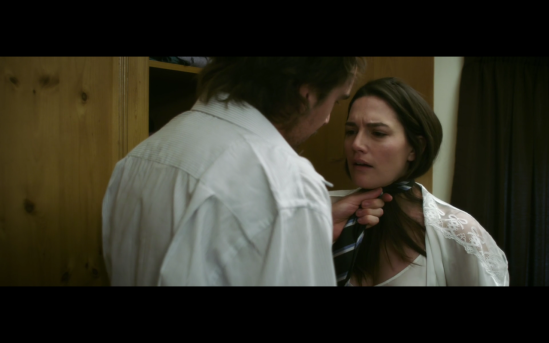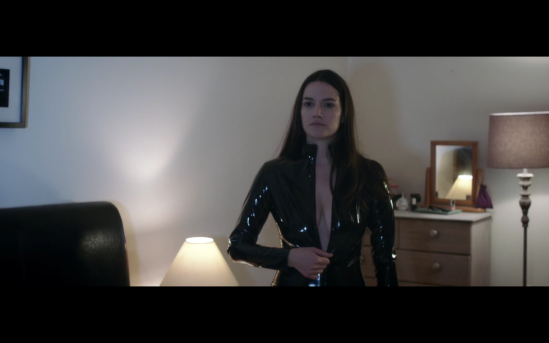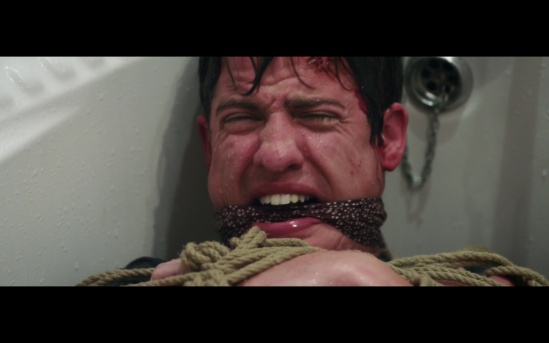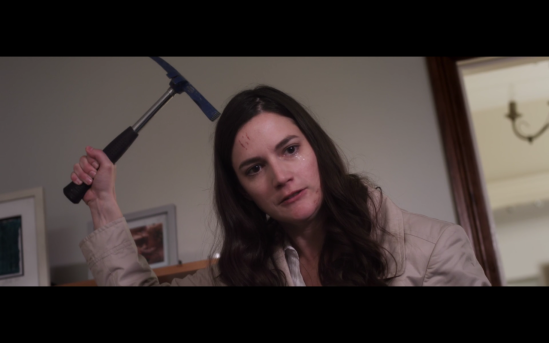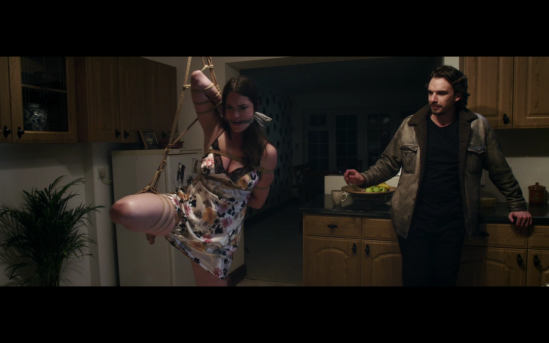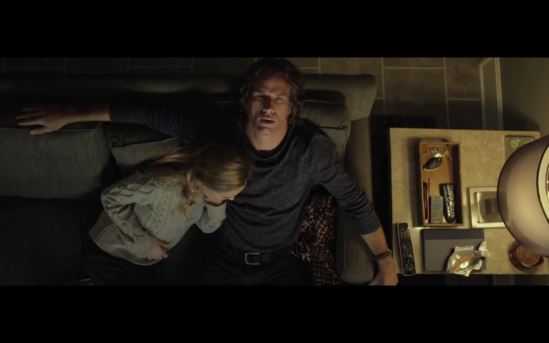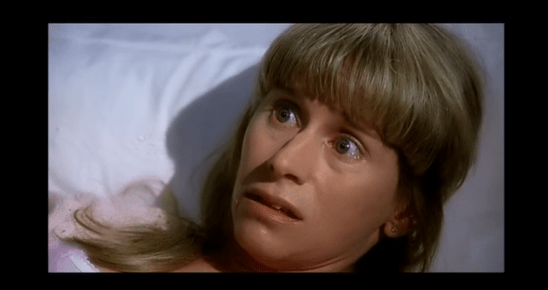
Grieving parents, Jessie and Mark, aim to heal the deep wounds of the tragic and accidental death of their young son by fostering an orphan boy named Cody. After the mysterious death of Cody’s mother and having been through two concerning foster parents prior to Jessie and Mark, Cody strives to be the most sweet and loving child to his new and pleasant foster parents, but Cody has a dark secret that keeps him up at night. When Cody falls into a dream state, his subconscious imagination manifests his awe-inspiring dreams and even his worst nightmares that become deadly with the presence of the malicious Cranker Man, a dream shadow who can pluck anyone into disappearance that happens to be near the slumbering boy.

“Before I Wake” director Mike Flanagan labors over all that is supernatural, churning out more than his fair share of specter-centered storied films including “Absentia,” “Occulus,” and the more favorable sequel to “Ouija,” entitled simply enough “Ouija: Origin of Evil,” that was produced alongside “Before I Wake” in 2016. Flanagan’s knack for suspenseful tall-tale horror doesn’t pigeonhole the Salem, Massachusetts born director into producing the same terrorizing story over-and-over and while “Before I Wake” has undoubtedly a few heart-pounding horror elements, fantasy more than so strong arms the genre into a branding submission. If I may be so bold by comparing “Before I Wake” to Guillermo del Toro’s “Pan Labyrinth” might be committing, perhaps, blogger career suicide, but the draw to resemblances can’t go ignored with what “Before I Wake’s” Cody creates from his overly stimulated dreams is much more familiar to what “Pan Labyrinth’s” Olivia character imagines when she escapes the horrors of a war bred sadistic maniac, if even only in a diluted version of events.

“Superman Returns” actress Kate Bosworth headlines with co-star Thomas Jane (“The Mist,” “Deep Blue Sea”) as the unwitting foster parents who are forcing themselves back into the parenting game. I specifically was not coming to terms with Bosworth’s performance as Jessie; her facial expressions and body language, along with her tone and line deliveries, were too lifeless with rigidity and repetitiveness. So much so that I compared Bosworth to Suzanne Cryer’s impassive Laurie Beam character from HBO’s “Silicon Valley.” Unless the inexplicable amount of grieving has voided her of all emotion, like the Borg drone from “Star Trek: The Next Generation,” the role of Jessie is written with a variety of mood driven circumstances that start with her insomnia, to her willingness to not leave their home, to being carelessly exploitive with Cody. Being a fan of Thomas Jane since 2004’s “The Punisher,” I might be a bit biased, but Jane had more range with the ability to switch back-and-forth between mixed attitudes and sentiments, making the dynamic between Jane and Bosworth clunky and awkward. To round off the trio of main actors, you might recognize the pint sized actor playing Cody as Jacob Tremblay from the 2015 Oscar Winning Brie Larson film “Room” portraying an innocently pitiful dreamer with an unquenchable thirst to be loved.

The Flanagan and Jeff Howard co-authored storybook script, intentionally or not, borrows heavily from psychoanalyst Sigmund Frued’s dream interpretation theory that wishful fulfillments are more common in children. Previous day activity, or day residue, has influential properties on a child’s dream, much like with Cody in this story, and Cody’s dreams are written to be an exaggerated fruition, fulfilling his desires and illuminating his emotions to the brightest or the darkest extent. Like many other films that involve the misunderstanding of children, adults Jessie and Mark blindly understand all the possibilities of Cody’s uncontrollable gift, exploiting Cody’s powers for their own greed. I did find that I love Jane’s Mark character as he tries to show Jessie the errors of her reasoning as he’s a bit of a kid himself, living vicariously through Cody with the video games and with the pizzas as if husbands, or men in general, are actually children at heart. Cody’s gift becomes a power struggle with Mark caught in the middle and the consequences of this struggle result in being the catalyst to unify Jessie and Cody as a strong bond between Mother and Son. Men totally receive the shaft in this picture where both dominant adult male figures are reduced to a forgotten or humbling state, left behind because mother knows best when it was really mother who dismantles the situation.

“Before I Wake” is a boogeyman fable of sleepless nights that independent Canadian distributor Mongrel Media presents on Blu-ray for the first time anywhere in North America on a home entertainment platform come January 10th. The film has been in a distribution limbo since U.S. theatrical distributor Relatively Media filed for bankruptcy, but, luckily for fans of the supernatural genre, Mongrel Media obtained home video rights. I was provided an online screener link, forcing my hand to not comment on the specs of the Blu-ray audio or image quality nor touch upon the bonus material, but what I can state is that the spin on the dream killer won’t stop here with “Before I wake.” Dreams, like conceptions of outer space, are vast with unlimited, unconstrained content that surrealist director Mike Flanagan has only partially tapped into by exploring the dangerously innocent perceptions fabricated from a child’s abstract mind.
Category Archives: psychological horror
Evil Gets to Cookin’! “Gran Bollito” review!

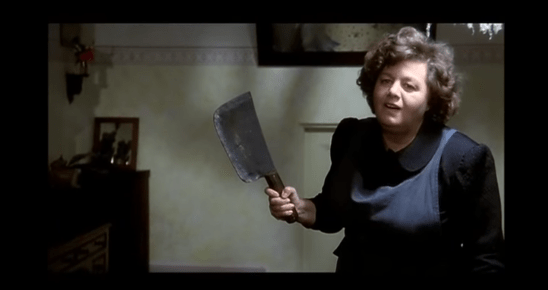
Journeying from the South to reside with her son Michele, Lea is a boisterously strong matriarch whose suffered through twelve miscarriages in fifteen years and has become insanely protective of her sole breathing progeny. Michele lives in a stately condominium that accommodates an eclectic bunch of women of various tastes, housing his mother Lea to mix as a lottery fortune teller of sorts. Lea’s talents go beyond just predicting winning lucky numbers as she’s also a fantastic cook in the kitchen, a superb soap maker, and an efficient killer that supplements the prior traits. Madness consumes a mother who seeks to absolutely protect her only child and a contractual deal with Death itself orders the end of minuscule lives, such as the other tenants of Lea’s apartment building, to fulfill her obligations to Death.

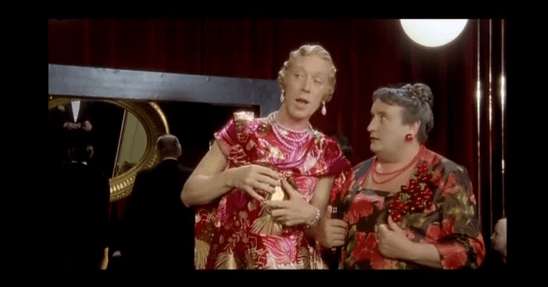
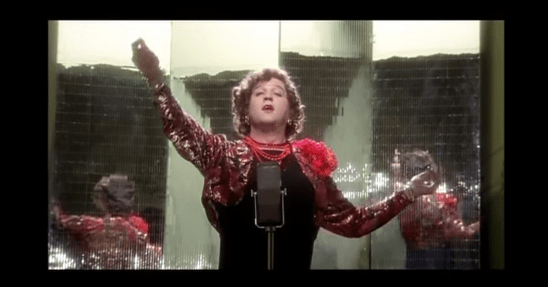
I promise you, you’ve never seen a Shelley Winters performance like this! “Gran Bollito,” otherwise known in the U.S. as “Black Journal,” is a 1977 Italian macabre from director Mauro Bolognini and has for the first time ever been slow cooked to Blu-ray high definition. “Gran Bollito” has been resurrected from the archives of production company Italfrance Films’ with Shelley Winters (“The Poseidon Adventure”, “Lolita”) exploiting her mother’s animal instincts to provide Death with as many souls as she can chop up and boil into a lathery substance. “Gran Bollito” loosely translate as very boiled, a form of murder that would top the charts and these heinous acts were, in fact, inspired by the true, inexplicable story of an Italian serial killer named Leonarda Ciancillui, a soap maker whom sacrificed three women in hopes to protect her war drafted son. Alongside mother mayhem are a trio of cross-dressing actors portraying the three victims; actors such as singer-actor-director Renato Pozzetto, Italian sex-comedy actor Alberto Lionello, and the legendary Max von Sydow (“The Exorcist,” “Game of Thrones”) go full blown drag, donning the period piece’s late 1930s conservative wardrobes while conducting themselves loosely with their intimate and delicate privacies.

As I mentioned, “Gran Bollito” tackles numerous undertones with multiple notations of the horrors of war and the inexplicable amount of death from it as well as from disease, to miscarriages, and to the actual beheadings to sustain a red soap bar factory and food processing plant Lea runs in her custom made kitchen. The Bolognini film also notes many facets of mental illness and health with merely Winters’ topping the psychological pyramid. Conditions consisting of states from a stroke, absentminded dementia, and severe delusions to name a select few are displayed throughout to which almost puts the perception of Lea, or maybe Lea’s perception, one of relative normalcy. Lea’s derangement stems from her fifteen years of pain and suffering through multiple miscarriages. Bolognini very conspicuously has Pozzetto, Lionello, and Sydow portray Lea’s victimized women. They represent Lea’s resentment for their wasteful contributions toward their natural given right to bear children as if the women were merely men without a womb and that strikes a sensitive nerve with Lea who would do anything to give her children life again.

Generally, Bolognini’s constructs a well paced film, seamlessly passing the days, weeks, or months from Lea’s condominium integration to the slow seep that eventually breaks into maddening despair and desperateness. The cinematography by Armando Nannuzzi is soft and lofty that appeases to angelic similarities akin to that of Tinto Brass films, but when the tide turns, her kitchen brights white and Lea is dressed in midnight black as if she’s the Grim Reaper herself. Nannuzzi’s an artist at his trade by enabling Shelley Winters to shed the wholesome of her prior performances and at the same time present a false sense of calm and good fortune. Composer Enzo Jannacci’s score underwhelms when accompanying said Nannuzzi’s style; the score’s flat and breathy tone just doesn’t leave an impression, lacking substance and girth that doesn’t quite fit the Bolognini’s mold. Though acting and performing not in her native country, the St. Louis born Shelley Winters extracts a true life serial killer from off the Italian crime section.

Twilight Time’s “Gran Bollito” is now on a Blu-ray High Definition 1080p transfer presented in a widescreen 1.85:1 aspect ratio. The limited edition release look impeccably detailed, sporting natural coloring and depth. Twilight Time, by far, has the best image quality compared to any release. The Italian 1.0 DTS-HD Master Audio is pretty good with balanced range and clarity in all aspects of audible tracks with only a minor pops in the tracks during transitional scenes. Bonus features include an audio commentary with film historians Derek Botelho and David Del Valte with also the original theatrical trailer. Twilight Time polishes “Gran Bollito” with the respect this obscure Shelley Winters film deserves; a horror-comedy that pushes the limits bordering insanity and disparity in a twisted display of narrative too intriguing to fathom.
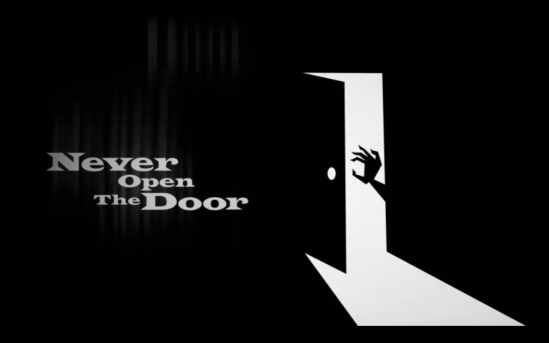
When Evil Lurks Outside… “Never Open the Door” review!

Six friends break bread for the holidays in a remote woodsy cabin. As their jovial and joyful conversation continues, a wicked evil lurks in the forest. A sudden and harsh knock at the door confuses the group on who would be calling at their isolated retreat and at the late hour. When Tess volunteers to answer the knocking, a stranger spews blood all over her and falls to the ground as she opens the door. With his dying breath, the aging stranger warns them to never open the door. stunned with complete shock and terror, the group doesn’t realize that the very moment the strange dies on their doorstep is the very moment of the beginning of the end as weird occurrences and odd behavior pits friend versus friend, girlfriend versus boyfriend, and spouse versus spouse when staying or fleeing the cabin becomes a life or death decision.

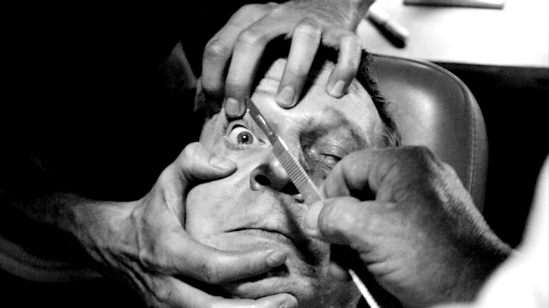
“Never Open the Door” strikes as an odd feature that marries projecting horror genres with resurrecting structures from the past into modern times. The Vito Trabucco directed 2014 released film, who also had producer Christopher Maltauro collaborate on to pen the script, stirs up vintage Alfred Hitchcock cinematography craftwork and mirrors the enigmatic nature of particular and peculiar “Twilight Zone” episodes. Trabucco and director of cinematographer Joe Provenzano voids the film of color to encompass the mood of bygone black and white thrillers and employs composer Carlos Vivas to enchant the story with a classically engaging score that embellishes upon harrowing pivotal moments in the story. Vivas and Trabucco have a prior working relationship under Trabucco’s previous nunsploitation slasher “Bloody Bloody Bible Camp.”

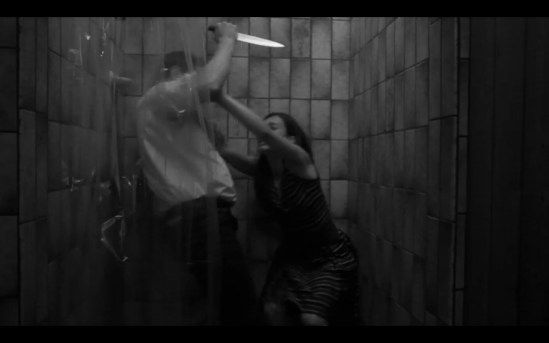
Vito Trabucco casted his staple entourage of actors. If you’ve ever seen “Bloody Bloody Bible Camp,” you’ll recognize many faces with the exclusion of George Troester, who plays the crude, unhitched Terrence. However, Troester does fit into the whole seven degrees of Kevin Bacon theory, being a co-star in “Crack Whore” along side Kristina Page and Steven Richards, Angel and The Stranger in their respective roles. Contemporary scream queen Jessica Sonneborn, the lead actress in “Never Open the Door’s” quasi-dual Tess performance, has a director’s credit under her name for her work on “The Haunting of Alice D” starring the iconic Kane Hodder. The 2014 film also rostered supporting actresses Kristina Page and Deborah Venegas, who portrays in Trabucco’s film as Maria, Luke’s wife. Luke is portrayed by Mike Wood with fellow “Bloody Bloody Bible Camp” co-star Matt Aidan as Angel’s fiance. Whew. Overall, the actors click as a group with a dinner room dynamic that’s natural with slightly pretentious moments that don’t really kill the mood. When the story ramps up, performances start to dwindle and overacting starts to unfold. Mike Wood absolutely murders the shower performance with ghastly exposition, but, again, this might be playing the retro card. Sonnerborn does well as the headliner. Her demon-like twin dominates, but just didn’t receive much screen presence in measly 66 minute runtime.

Continuing with the Tess demon, the black and white style fortunately masks most of the low budget special effects with the aid of some great uses of silhouettes and editing. Evil Tess’s pudgy demon sausage fingers dressed with cheap plastic looking fingernail attachments couldn’t fool a fool that they’re razor sharp, but with jagged teeth and glowing eyes encircled by a pitch black ring, she’s a nightmare inducing boogeywoman. Aside from a pair of demonic dispatches with one involving the razor blade finger caps, the effects were safely contained inside the realm of an independent feature. A few spurts of black blood and a handful of stabbings share a common bound of having being what remains of the effects which were executed well enough to serve the intended purpose. Mostly, “Never Open the Door” relied heavily on editing. Editing that involves characters’ hallucinating future or past events, attributing their frantic confusion and life threatening situation toward an endless loop of purgatory.

Yes, the characters are afflicted with a hell on repeat, switching identities on a continuous horizon that leaves fragments of prior rebroadcasts. From gathering information about the characters, none of them strike me as a damned souls. Tess is a veterinarian who performs the occasional neutering and spade and dates a man nearly twice her age. Terrence just doesn’t want to grow up, but no skeletons appeared from out of his closet. The couples, Angel and Isaac and Luke and Maria, grow suspicious of each others’ intentions that involve jealousy, paranoia, and hatred. Unlike a “Twilight Episode,” “Never Open the Door” leaves open doors of unsolved questions, such as answering the question of how the group came to acquire the house. Before the abrupt knock at the door, the person who located the isolated question seemed to befuddle the entire group. Another loose end lies with the person texting Luke messages about an illicit affair his wife’s having with one of their friends. Again, the loop doesn’t quite close on this interesting caveat.

Maltauro Entertainment presents in association with Baumant Entertainment the Vito Trabucco film “Never Open the Door” on Blu-ray. Unrated in a HD 1080p, the widescreen 1.78:1 is delectably sharp on a BD-25, but that really isn’t a surprise here with a black and white feature barely over a hour long. However, black-upon-black scenes define the Blu-ray with a low bitrate, displaying some blotchy, compression issues. Audio quality is quite fair. Carlos Vivas score channels through a Dolby Digital dual output that caters, again, to a vintage replication, but in creating an atmospheric feature, having surround sound would have boosted the result tenfold. The dialogue is a bit wish-washy, pending on the scene and character positioning, but forefront evident in the quality and that is what really matters. English subtitles are also available. “Never Open the Door” has grand potential in a small package, but trips over it’s own inconsistencies with erratic editing and walled details. Director Vito Trabucco’s vision in modernizing classic techniques and styles merely becomes just that, a vision, and was inches, or rather seconds, away from opening the door for potentially a far greater anxiety-riddled psychological thriller.
Evil Never Breaks, But Your Mind Will! “The ID” review

Feeling trapped inside her own childhood home, middle-aged Meredith Lane is stuck caring for her elderly and abusive father. Unable to live a life of her own beyond the house’s closing-in walls, Meredith uses her memories of her youth to create a world toward which she can escape. A world involving past loves, spinning them into what could have been, but as the years slip by and her youth fades in stasis, hope for a normal way of life seeps from her grasp…the same with reality. Meredith continues to humor her father’s oppressively verbal and physical mistreatment, sacrificing to his everlasting grip and blackmailed for when she tries to stand up for herself. When her judgement finally breaks down from complete desolation, the lines blur between what’s fantasy and what’s real. When a routine delivery woman starts to suspect Meredith’s instability in the midst of her father’s abrupt absence, Meredith’s real and fantastical world begins to crumble under the first, fine line cracks of psychosis.

“The ID” is a 2015 psychological narrative thriller from the “Never Sleep Again: The Elm Street Legacy” and “His Name Was Jason: 30 Years of Friday the 13th” documentarian producer Thommy Hutson. To keep with the “A Nightmare on Elm Street” theme, Amanda Wyss, who portrays Tina in the original Wes Craven film, headlines as the lonely and disturbed Meredith Lane, the sole caretaker of her limit pushing father, played unnervingly by an unkempt and unsympathetic Patrick Peduto. Initially, you have to compassionately feel for Meredith’s situation as her father, whether intentionally or not, absolutely tortures and demeans her to the fullest extent, but when getting down to the brass tax, Meredith has always held her father’s life in her hands. All she needs to do is act.

When Meredith’s quasi-levelness with reality is finally pushed over the brink, she does act, snapping toward a tone setting second half of the story that’s arguably more disturbing than her combative relationship between Meredith and her father. “The ID” morphs into full blown psychological horror and, not that Hutson’s film wasn’t a terror of the mind before, Meredith completely crosses that thick defined line between her father and her gentlemen caller from the past. These opposition of two worlds are in the beginning stages of a collision in which both can’t exist in the same space that’s familiar to a presentist perspective. Huston works diligently to deliver the inner workings of Meredith’s psyche, lingering her father’s vocal presence throughout the story even if his physical form vacates, and merging her wondrous past into an antagonistic present.

Amanda Wyss has a multifaceted performance that shouldn’t go without stating and Wyss should be praised for her representation of suffering from a delusional mental disorder, originating either from a family history, in this case her father’s state is quite the example, or from other external influences. Both factors could have contributed and Wyss’ precision in the character makes the result difficult to split the two possible origins for her breakdown. Wyss’s performance becomes overshadowed only by the fierce acting by Patrick Peduto, creating an uncomfortable hostile interaction that’s so alien to a father and daughter relationship, it should be illegal. There’s a lot of hate, disgust, regret, shame, and mistrust from Peduto’s character that one can certainly assume Meredith’s father is a few cards short of a full deck and Meredith’s intentions could have been absolutely sane. Only one character wasn’t impressive in the whole ordeal lies with Tricia played by Jamye Grant. The delivery care character felt overwritten to be the catalyst; her obsessiveness for Meredith and her father, as she notes getting close to the couple, felt right up there at stalker level with unnecessary cause and effect to bring Meredith in more trouble than she’s already in. Grant did what should could to absolve the character from being obscenely forthright, but Tricia’s unable to pull back just enough to allow comfortable separation of a concerned citizen.

CAV Releasing’s of the 87 minute runtime Blu-ray of “The ID” from the production companies Ranch Media and Panic Ventures is presented in the original 2.35:1 aspect ratio on a single BD-25 disc. The presentation doesn’t spin much of a colorful offering that’s slightly dull without a pop or a splash of vivid hues sans the split psychosis scenes that are hefty in blue while overly exposed. Prevalent details are far more unusually blotchy, glossy, and scattered under the lower bitrate encoding that isn’t necessarily noticeable because of the setting being isolated to just Meredith’s childhood home. “The ID” isn’t an action heavy or scenic riddled film that requires much detail. Under the Dolby Digital 5.0 mix, a fair amount of unmistakable clarity and range emits fully through each channel with solid LFE and balanced tracks to level out the video quality woes. An option for a LPCM 2.0 is also available. Plentiful bonus features include a feature length commentary with director Thommy Hutson and star Amanda Wyss, an interview featurette entitled Needs, Wants, & Desires, intercut behind-the-scenes segment, alternate and deleted scenes, audition footage, and official stills and trailer. Thommy Hutson’s “The ID” is far from his usually schtick of horror documentaries, but clearly showcases the director’s talents within the psychological horror subgenre and will be the building blocks of his narrative directorial career.
An Evil Short: “Love is Dead” review!

During a therapy session, Peter recounts the tragic last and painful moments with his distraught wife Mara before she commits suicide. Peter’s recollection is a raw and unadulterated look into the common and devastating marital strifes that plague to destroy connecting relationships and end tattered lives.

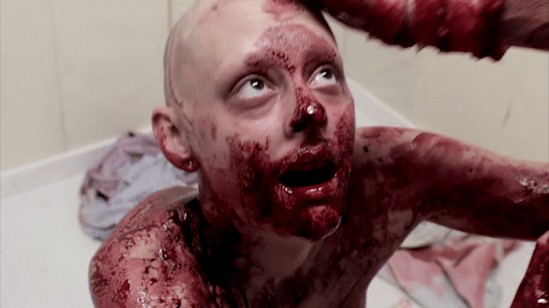
Frequent horror journalism Jerry Smith writes and directs “Love is Dead,” a short traumatic drama film stemmed from pieces of his own life brought to fruition, delivering an emotionally charged shower scene with adult stars Joanna Angel (“Evil Head,” “Re-Penetrator”) and her on-screen, off-screen lover Aaron “Small Hands” Thompson where Mara (Angel) confronts Peter (Thompson) with questioning infidelity while cornering and confining him in the shower. There’s a bit of back-and-forth that eventually lands Mara into the bargaining stages of the Kübler-Ross model, aka the five stages of grief, where she bets she can give better head than Peter’s undisclosed lover. As Mara proceeds to go downtown in an erotically uncomfortable moment of irrationality, Peter’s built up anger goes from hot-to-cold in a stinging moment of what should have been a gratifying release. Now for a side bar, being two professional adult film stars and a real life couple, the fellatio scene could have been not staged or could have been completely staged with some teasing cinematography accompanied with that familiar slurp and gag audio effect. Either way, the dynamic between the tattoo-riddled performers is fairly natural and passionate in their own Burning Angel regards, but does favor less like a ready to romp fantasy and more like a provocative insight of marital desperation and chapter ending turmoil.

Aside from Angel and Thompson, “Insidious” actor Ruben Pla tackles the outsider character looking in through the mindset of Peter’s therapist Michael. Michael is not only rightfully and objectively cold and stern, as many therapist are groomed to be, but he’s mechanically and brutally forward, dishing out the painful truth to Peter when Peter’s inner conflict comes to the forefront on whether he could have saved Mara or not. Though minor in screen time, Pla’s role partakes as a major contribution worth the respect of the short runtime.

The 10:50 minute short is a product of the independent film studio Sickening Pictures founded by BJ Colangelo and Zach Shildwachter. “Love is Dead” can be viewed from free over at Sickening Pictures Vimeo page, but beware, the film is definitely NSFW! Check out the Jerry Smith inspired “Love is Dead” short that’s full of overwrought pain, doused in uncomfortable situational nudity, and barred with incomprehensible loss tightly bottled inside a reality-checking one-sixth of a hour.