Earth’s Greatest Threat of Destruction is an EVIL Extraterrestrial Slug! “Slither” reviewed! (Visions Home Video / 2-Disc Steelbook 4K UHD and Blu-ray)

“Slither” Steelbook Can Be Yours! Buy it Here Today!

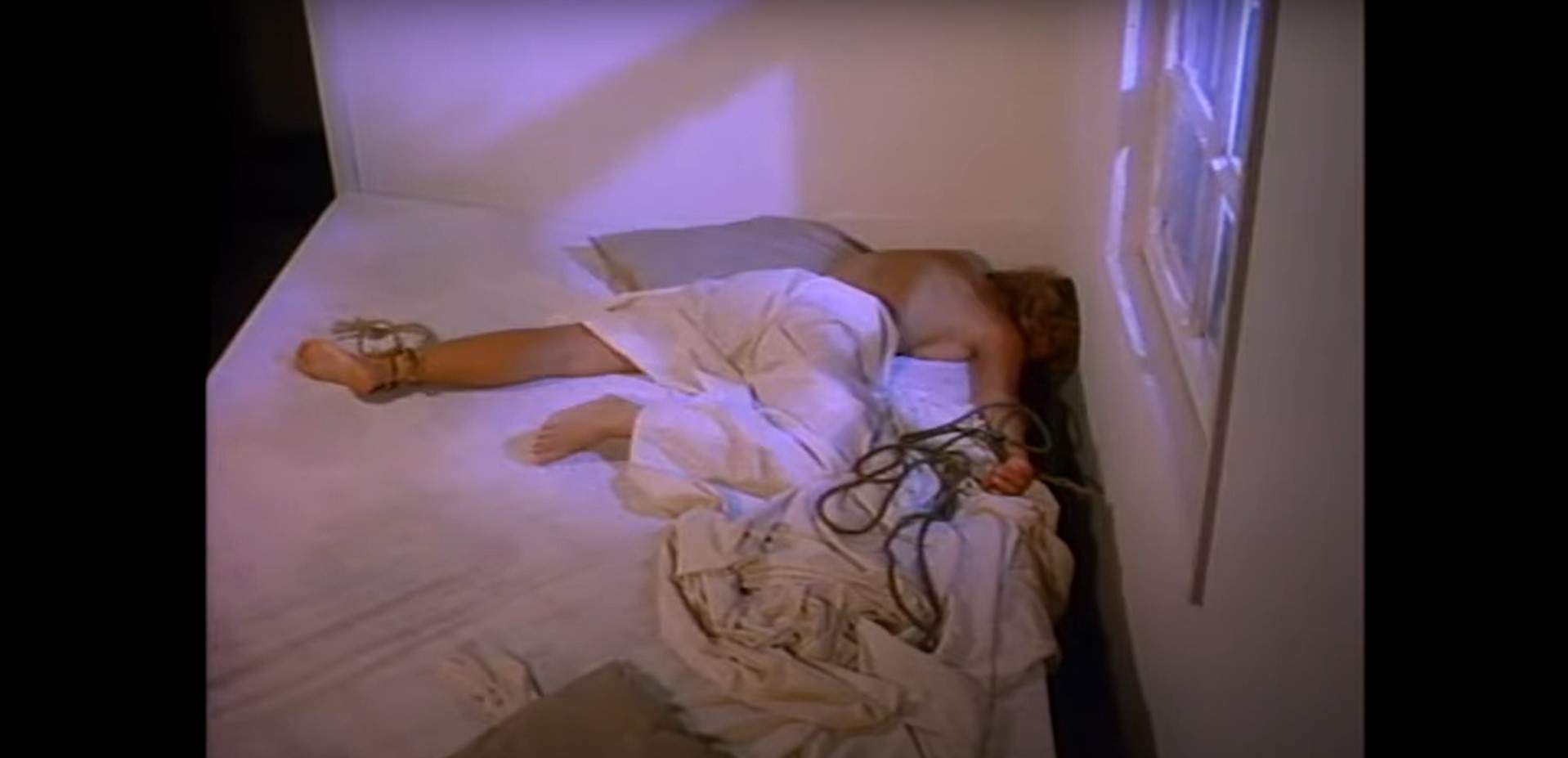
Wheelsy, South Carolina is a small town where the biggest event of the year is the countdown to deer hunting season.  On the eve to the start of the great hunt, an aggressive, parasitic alien entrenches itself inside a human host.  It impregnates a young woman to gestate thousands of its spawn, slug-like creatures that form telepathic link to the host and undertake its bidding.  Newly appointed Sheriff Bill Pardy, alongside his deputies, the eccentric town mayor, and longtime high school crush, Starla Grant, who’s husband was first infected by the invading extraterrestrial creature, must fight through the zombified hordes of alien controlled friends and neighbors townsfolk to stop the source from spreading and taking over the world but with their force numbers dwindling and the alien growing bigger and uglier by the second, Pardy must himself avoid being a host to the meat-hungry creature that has come to plague his small town community.
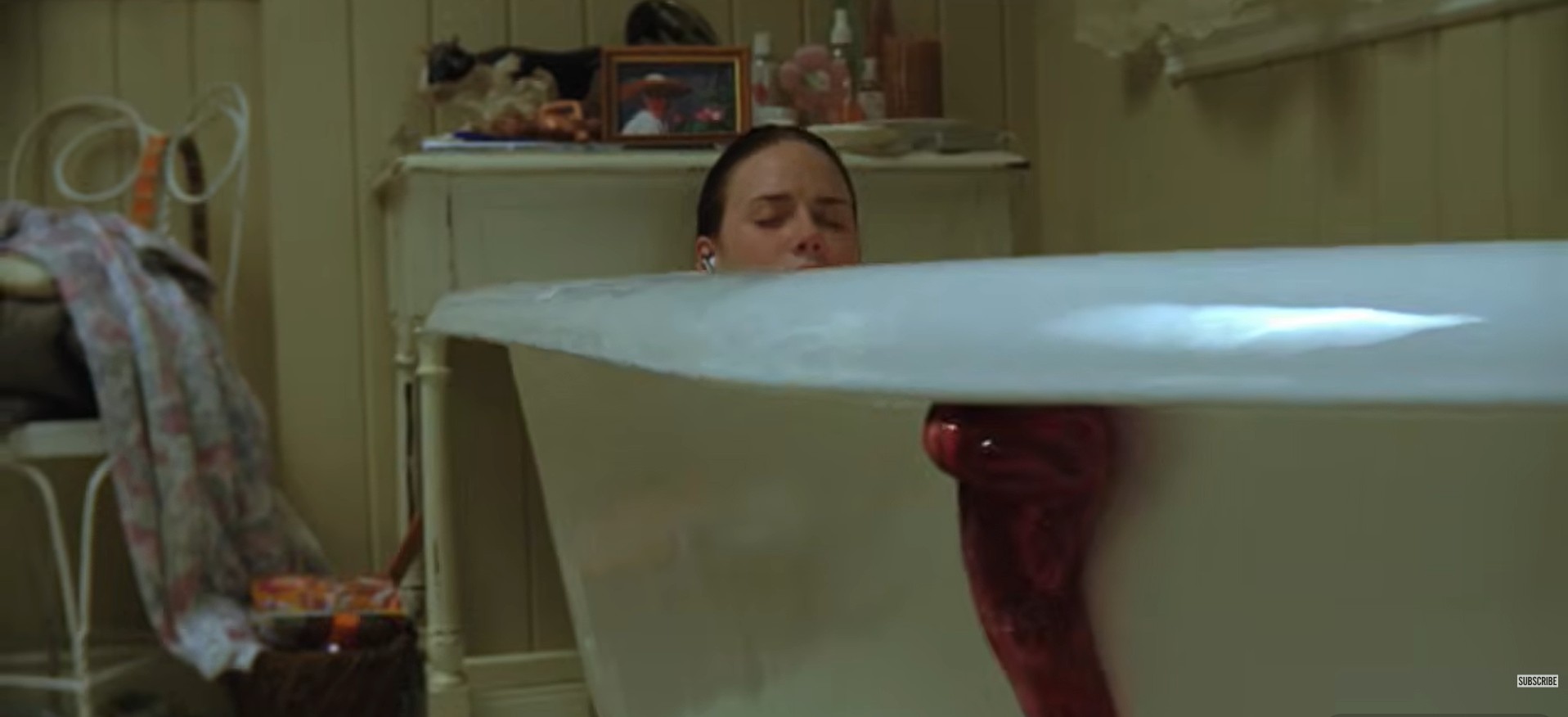
James Gunn, who has taken the MCU and DCU by storm with his creative involvement directing all of the “Guardians of the Galaxy” films, and upending the David Ayer and Zack Synder-universes with his divergent take on “Suicide Squad, and “Superman,” while also producing the just released “Supergirl,” use to bask in horror with “Slither,” a creature feature that captured the appreciation of 80’s monster movies and body horror with a zombie chaser and plenty of practical, tangible effects.  Gunn wrote and directed the now 20-year-old, 2006 movie filmed in a collective of portions of British Columbia, Canada doubling as a backwater town in South Carolina.  Brightlight pictures and Strike Entertainment produce the Gold Circle films presented movie with Paul Brooks (“White Noise,” “The Fourth Kind”), Eric Newman (“Dawn of the Dead” ’04, “The Thing” ’11), and Jeff Levine (“Shadow of the Vampire,” “ATM”) serving as producers. 
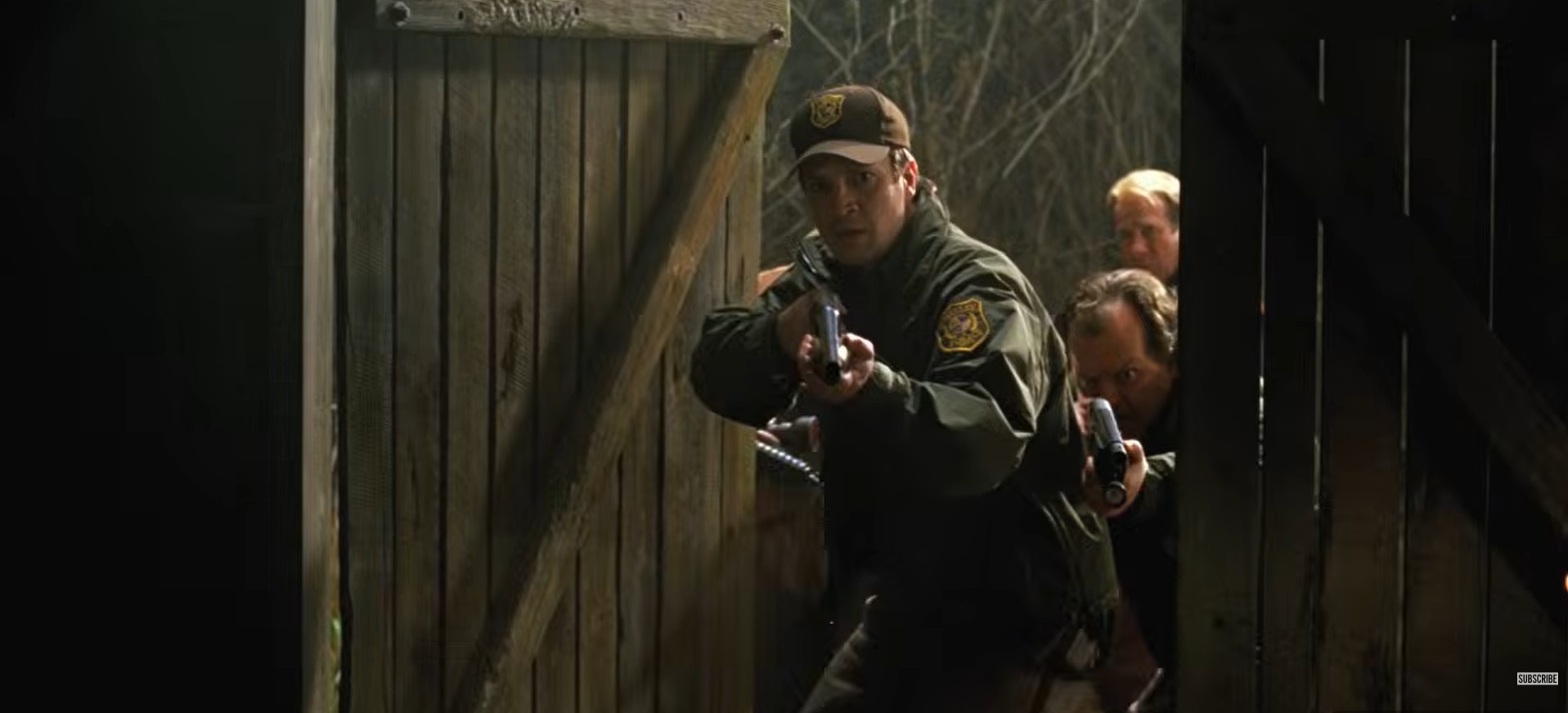
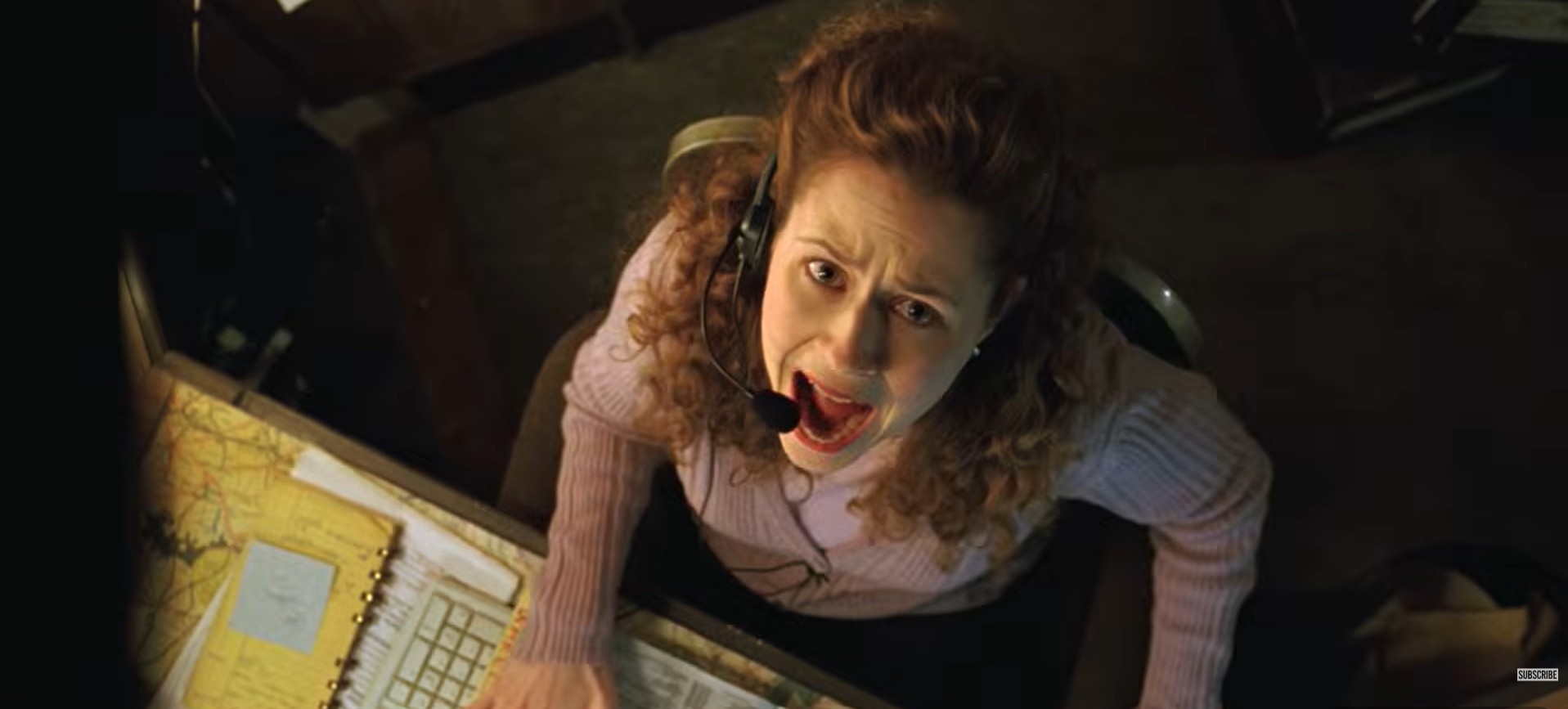
An established cast of talent comprises “Slither’s” eclectic character pool of townies being invaded by an outer space slug with a bad attitude.  “Firefly’s” Nathan Fillion is in the newly appointed Sheriff Bill Pardy and Fillion adds his usual spaceship captain comedic charm and swagger in the more grounded role as he stumbles into a world of slithering extraterrestrials that infest, digest, and gestate inside organic organisms.    Fillion’s hung up projection is for Elizabeth Banks’s Starla Grant, perhaps the most beautiful, and nicest, woman in all of Wheelsy, South Carolina,  The “Uninvited” actress adds pleasantries that are a compliment to Starla Grant but also a detriment as she’s unable to express how she really feels about her much older, well-off husband Grant Grant, played by “Henry:  Portrait of a Serial Killer” Michael Rooker.  Effectively, a love triangle ensues between the three with themes of true happiness, dissolution of a marriage, saving a marriage, love, and heartache coming into play amongst a body transformative horror that exceeds our solar system.  Rooker’s the rich Wheelsy resident who’s very protective of his trophy wife and is starting to feel the pangs of his wife pulling away from his advances but still loves her.  The fourth principal character in this quartet “The Darkling’” Tania Saulnier in what is essentially her debut protagonist role as a teen touched by the shared collective of the slugs and with her insight, provides pivotal information for the survivals to work against.  Each play their respective roles to perfection inside the chaos and mayhem of a more dominant species quickly spreading, even Gregg Henry (“Bodily Harm”) and his jaggedly crude role of town mayor fields a certain level of entertaining value to the frantic fray to keep “Slither” a light-hearted Hard-R creature feature.  The remaining cast includes Brenda Gutierrez (“Stone Cold”), Haig Sutherland (“Halloween:  Resurrection”), Jenna Fisher (“The Office”), and Don Thompson (“Horns”).
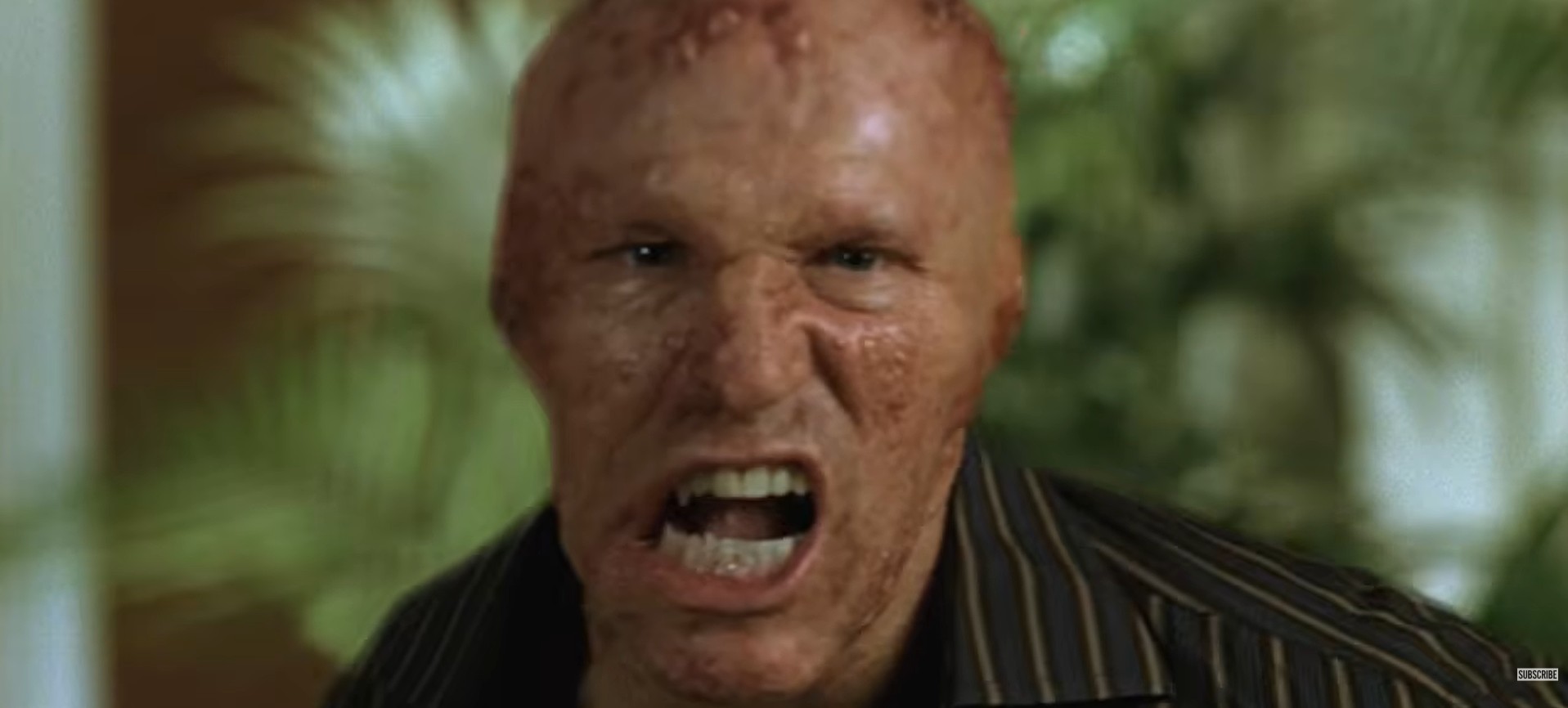
“Slither” is one of those seminal movies of the creature feature that could, or more accurately did, being a small fry horror movie that made a positive profit financially and amongst the audiences.  Of course, James Gunn found influence in his favorite horror works and borrowed, to an extent, key elements to spin his own craft that works to stand on its own two feet told mostly by its fine performances of the cast.  The down-to-Earth sci-fi action and gore is palpable and designed well in its composition of practical and computer-generated effects, especially for a mid-2000’s horror.  Gunn’s knack for black comedy works to the advantage of his brand of small-town satire and eccentric characters who can range from being charismatic and likeable to crude and inimitable.  Seeing the influences from John Carpenter’s “The Thing,” George Romero’s “Night of the Living Dead,” and Irvin S. Yeaworth Jr. and Russell S. Doughten Jr.’s “The Blob,” or maybe more so closer to  Chuck Russell’s 1988 remake of “The Blob,” won’t create a rift between the film and audiences as there’s too much to like and laugh about “Slither’s” slimy infiltration and invasion concept without it feeling hackneyed and reaching to strive to be something it’s not in its hark of a classic creature feature and science fiction monster movie.
The first time transferred in 4K, Visions Home Video, a subsidiary label of Vertigo Entertainment, releases “Slither” onto a new 2-disc, steelbook 4K UHD and Blu-ray set.  Disc specs include a 4K UHD HVEC encoded with 2160p resolution on a BD100 and a Hi-Def Blu-ray that’s AVC encoded with 1080p resolution on a BD50, and both films are presented in a widescreen 1.85:1 aspect ratio.  Image quality has been greatly found immersion with an image that pops off of the screen in the 4K option with the additional pixel count.  The Blu-ray holds its own and is also a fine presentation but in UHD, we’re treated to a little extra texture and a little extra clarity from the DolbyVision that can’t be achieved on the standard Blu-ray, especially around night sequences which most of the chaos and action takes place.  This is not to say the Blu-ray is unclear or obstructed as too has plenty of clarity and detail but what it doesn’t have is that deep sensory engagement of picture.  Coloring and grading are equal on both presentations that involve a more organic approach during the date and a bluish grading during night sequences to work in against the lighting.  No issues with the original 35mm elements as it’s kept clean and persevered well last 20 years, contributing to the natural resolution enhancement of the 4K transfer while also maintaining a healty but subtle grain.  The lossless English DTS-HD 5.1 Master Audio has no suppressive issues with fidelity and is just as immersive as the picture quality with distinctive directionals of the back and side channels and a balanced output of stereo, LFE, and central action.  Dialogue has no issues with clarity and is prominent above the audio layering.  The effects, such as slithering slugs sounds and gunfire, offer a good amount of bang for the cinematic budget and the overall main creature sound production eclectically engineered to be funny, in its whipping tentacles with that distinctive whip crack, as it’s scary and gross with its guttural growls and slimy trails.  English SDH subtitles are available for selection.  There’s also an uncompressed Stereo 2.0 audio format available.  Special features include an audio commentary with writer/director James Gunn and actors Nathan Fillion and Michael Rooker, featurettes The Sick Minds and Slimy Days of Slither and Bringing Slither’s Creatures to Life, Gunn discussions The Genesis of Slither in an interview with the writer/director, an interview with director of photography Gregory Middleton We’ve Got Worms, an interview with editor John Axelrad Feed the Fear, an interview with special make-up effects designer Todd Masters Just a Bee Sting, an interview with composer Tyler Bates What’s Gotten Into You, a location and set tour with actor Nathan Fillion, deleted and extended scenes, a blooper reel, and trailers for film.  The Visions Home Video set case comes in a steelbook with metallic luster and an exclusive, and uncredited from what I can tell, illustrated artwork of survivors in the throes of tentacle mayhem.  The backside also includes additional artwork that has the semblance of a veiny, Resident Evil-like giant eyeball.  Both sides are primarily colored in reddish orange with blue slithering in on the front cover.  Inserted inside is a dual-sided mini folded poster with the same front cover artwork plus alternative compositional artwork on the opposite side on its rigid heavyweight construction paperwork.  The 4K UHD is region free while the Blu-ray is region locked B as it’s a UK release.  The 95-minute film is certified 15 for strong gory violence and language.

Last Rites: An early 2000s oldie but a goodie, “Slither” gives a glimpse of James Gunn’s caliber of losers become winners and to not hold back much of the violence, gore, and rough dispositions of uncouth, unsavory, and unsophisticated characters. This new 4K UHD and Blu-ray release from Visions Home Video re-invades “Slither” into our lives, taking over our brains, and becoming part of our physical media collective.
“Slither” Steelbook Can Be Yours! Buy it Here Today!

Interrogating EVIL Mounts to Hundreds of Deaths. “Confessions of a Serial Killer” reviewed! (Unearthed Films / Blu-ray)

An Unearthed Classic Now Available on Blu-ray! “Confessions of a Serial Killer”

Daniel Ray Hawkins drives an unsettling, nomadic lifestyle as he travels across different parts of the country.  With no money, no place to call home, and little friends, Hawkins lives a life of mostly solitude, odd jobs, and equally as strange as him acquaintances spurred from his childhood, shaped by his promiscuously prostitute mother and a war veteran disabled father who gruesomely took his own life, both of which displaying their iniquities right in front of him.  Hawkins also lives a life of torture and murder, being one of the most prolific American serial killers ever of mostly young women.  When caught by authorities, Hawkins is willing to confess to everything and help unearth bodies from over decades on the road to ensure families he’s stolen from receive some sliver of solace.  His anecdotal accounts of individual disappearances and murders shock authorities to the core, so much so that Hawkins may just be unstable and not telling the truth.  That is until he informs them of and leads them to the cached polaroids and decaying corpses. 

Based on the American serial killer Henry Lee Lucas, who notoriously claims killing over 200 people has earned him a trio of film adaptations, at least, with “Henry:  Portrait of a Serial Killer,” directed by John McNaughton and starring Michael Rooker in the titular role, the subsequent lesser part II, and the more obscurely known Mark Blair written and directed production, “Confession of a Serial Killer.”  Much like “Armageddon” and “Deep Impact,” or “End of Days” and “Stigmata,” both movies fall into the paradoxical twin film phenomena of sharing the same them and having both been released approx. within a year of each other.  While “Henry:  Portrait of a Serial Killer” may have taken the top spot with a bigger budget played in more widespread venues, Blair’s rendition was released prior and closer to Lucas’s active killing spree that saw an end in 1983, just didn’t get released in America until a few years later to not duel with McNaughton’s film and thus didn’t succeed as much.  The Cedarwood Productions film was produced by Cecyle Osgood Rexrode, distributed by Roger Corman and his company, Concorde Pictures. 

While he was not the first choice for the titular character of Daniel Ray Hawkins, production designer, the late Robert A. Burns, filled in the sociopathic shoes with great monotonic conviction.  Burns, who has ties as Art Director and makeup effects on some of the most iconic and seminal genre films, such as “The Texas Chain Saw Massacre,” “The Hills Have Eyes,” and “Tourist Trap,” matches the makings of an unempathetic, unsympathetic, natural born killer with a glazed deadpan austere and matter-a-fact knowledge and every evil committed.  “Confessions of a Serial Killer” would not be as laced with depravity if Burns didn’t push the demented drugs to keep audiences hooked on overdosed deviancy.  Not a tall or broadly muscular stature, curly outstretched and receding hair, scruffily unshaven with a consistent 5 o’clock shadow, and wide rimmed glasses, Daniel Ray Hawkins epitomizes the very essence of a creep and accentuates the behavior even further with his leisurely composure and straight-faced simplicity.  Other side characters exist around Hawkins’ maniacal run with the bisexual Moon Lewton (Dennis Hill) and his sister Molly (Sidney Brammer), who marries the pansexual Hawkins out of necessity rather than sexual desire, and while Moon and Molly share Hawkins deranged apathy, they are completely overshadowed by the more controlling and interesting lead principal character due to half the murderous anecdotes are solo ran and all of the perception in the stories is through Hawkins’ recollection, giving him more power in the trio in perceptional self-interest, if Hawkins is capable of such consciousness.  The cast fleshes out with lawmen and victims in Berkley Garrett, Ollie Handley, DeeDee Norton, Demp Toney, Eleese Lester, Colom L. Keating, and Lainie Frasier in the opening stranded motorist scene that sets up Hawkins diabolical reach in turning a car into a trap. 

Bathed in realism, “Confessions of a Serial Killer” does not embellish with surrealistic temperament.  The story never dives into Hawkins’ head to show any indication or any kind of visual mental degradation or reality breakage toward being a coldblooded killer.  His violence is spartan, acidic, and raw to the bone, leaving a gritty taste in your mouth, with only a bleak childhood to blame for his adult obsessions to kill that he describes as necessary as breathing.  Blair distills the story to a “Mindhunter’” episode in trying to understand the killer and recover skeletons from his past, literally, through rational and respect ways rather than boiler room beatings and power-tripping threats.   Blair’s concept humanizes the inhuman and having Hawkins’s reminiscence each account is like recalling childhood memories with a smirk and fond remembrance splayed across his face adds another layer of iciness.  Grounded by pedestrian scenarios, “Confessions of a Serial Killer” disrupts the routine, the familiar, and the unscripted ways we live our lives unconsciously to the fiends living among us that look like you or me.  It’s a very palpable fear Blair conveys under the semi-biopic film.  The director does eventually let loose the reigns in the final third act with a finale account of Hawkins, Moon, and Molly shacking up with an amiable doctor, his suspicious assistant, and his shapely young daughter that boils to a head when one bad decision leas to another. 

For the first time on Blu-ray anywhere as a part of Unearthed Films’ Unearthed Classics sub-banner, “Confessions of a Serial Killer” receives a high-definition, 1080p release on an AVC encoded, single ring BD25.  Higher contrast and a lesser diffusion to create a harsher, flatter color scheme, the intention is to fully base the story in reality as much as possible, to structure an abrasive look of grain and low lighting that parallels the seediness the tale touts. inspired from the facts of an American serial killer without having to fully give recognition to the actual killer.  Shadows are key to Hawkins nightly runs, adding back-alley value to his viciousness, and the more lighter scenes, such as brighter-by-color interiors or day exteriors, are ample with natural grain that cut into the details but don’t necessarily knock them out entirely.  With the lesser capacity disc, compression doesn’t appear to be an issue with no sign of macroblocking, banding, or posterization. The English language LCPM 2.0 mono possesses lo-fi aspects kept true to the original audio master. The dual-channel conduit amasses the layers mostly in the forefront without ascendancy in the environment, creating a flat approach, rendering the audio mostly fixed and depthless with the action creeping onto the dialogue, but this also adds the realism of a real world chaos where cacophony reigns. William Penn’s effectively, inlaid soundtrack has hallmarks of Wayne Bell and Tobe Hooper’s “Texas Chain Saw Massacre in the minor key with added notes of an otherworldly tune fork keyboard and lingering bass elements that’s just infests with the sounds of deceit and death, reminding me also a lot of a George A. Romero’s “Night of the Living Dead’s” atmospheric arrangement. English SDH are an available option. The collector’s edition contents include a commentary with director Mark Blair, aka John Dwyer, director of photography Layton Blacklock, and actor Sidney Brammer (Molly), The Henry Lee Lucas Story by author and former TV news reporter James Moore, and a full-lengthy documentary Rondo and Bob examines Robert Burns being the foremost expert on uniquely deformed actor Rondo Hatton as well as examines Burns’ own career, a polaroid gallery, promotional gallery, and the trailer. Displaying the iconic poster, a profit from rip of Hannibal Lector with a devilishly masked killer behind bars, Unearthed Films’ releases the stark image onto a planar cardboard slipcover. Same image is used from the standard Blu-ray Amaray case with no reverse side. Disc is pressed with a memorable and anxiety-filled chase scenes. There are no inserts material included. The region A encoded Blu-ray has a runtime of 107 minutes and is unrated.

Last Rites: One of the better biopics on U.S. serial killers even if a little bit of speculation and sensationalism increases the already verbose notoriety of one Henry Lee Lucas. Scary and bleak, “Confessions of a Serial Killer” continues to remind us that no one is safe from the everyday sociopath.

An Unearthed Classic Now Available on Blu-ray! “Confessions of a Serial Killer”

In the Shadows, Evil Awaits to Rule. “Shadowbuilder” review!


In the fight against pure evil, the Catholic church trains champions to battle against the forces of hell and all that is unholy. Father Jacob Vassey is one of those very champions. The man of the cloth who wields dual 9mm handguns and has a penchant for penancing through the act of self-righteous wrongdoing in the name of Church and of God. When an treacherously evil Archbishop summons a shadow builder to undo all of God’s creation on Earth, Father Vassey pursues the demon to the small town of Grand River in search for a hunted pure soul; the demon tracks down young Chris Hatcher whose been through a sign of God’s passion, the stigmata, and is the key to demon’s ultimate goal. Once the shadow builder has collected enough souls and has laid sacrifice to the boy, the demon will reverse the creation of God, humanity will cease to exist, and the world would be ripe for restructuring at the whim of one of hell’s most demented minions. Humanity’s last hope lies with Father Vassey, a local sheriff, Chris’s veterinarian aunt, and the town loon to bring forth light toward the prospect of a dark and gloomy apocalypse.

“Shadowbuilder” is the 1998 apocalyptic horror film from director Jamie Dixon, steering his sole major production from a high octane and progressive anecdotal script by “Iron Eagle IV” screenwriter Michael Stokes and produced by Imperial Entertainment, who delivered some great films like “The Bikini Carwash Company” and The Bikini Carwash Company II.” Based off the short story in the “Under the Sunset” collection by Bram Stoker (author of “Dracula”), “Shadowbuilder” expands, develops, and morbidly seduces around Stoker’s tale that doesn’t necessary implement a Universal Studio’s “The Mummy” like tale progression and design, telling of a weak, yet venomous creature feeding on souls or people in order to regain world destruction strength. Stokes script goes right into the action with Vassey’s hunt for the beguiled Archbishop and the way Vassey is introduced is absolute 1990’s gold: a priest armed with two handguns with laser sights. Studios don’t make films like this anymore! Rivals as one of those films that has a doppleganger, like “Deep Impact” and “Armaggeddon” that coincidentally came out the same year as “Shadowbuilder. “End of Days” is that doppleganger film as the two share unholy similarities of a citizen of hell on a mission to sacrifice a human for above ground dominance.

No actor could pull off properly the gun-toting and shrewd role of a haunted and troubled priest that is Father Jacob Vassey. No actor except Michael Rooker (“Henry: The Portrait of a Serial Killer” and “The Walking Dead”). Rooker’s gravel pit voice is inarguably his best trademark trait that nails extra tension into the substantially bleak and world-ending situation; a tone that carries enormous weight and Rooker’s natural vocal gift, along with his lip snarling, square chin and piss-offstare, earns the actor to be the well armed and dangerous man of the cloth. “Bruiser’s” Leslie Hope joins Rooker as the Veterinarian aunt and the film’s love interest, but not of Father Vassey. Instead, the love interest belongs to the local town sheriff, Sam Logan, played by Shawn Thompson. Hope and Thompson’s on-screen chemistry can’t seem to puncture through as it’s defined as back burner material, overshadow by Vassey’s unwavering pursuit of the demon and the frantic search for the boy, Kevin Zegers (“Dawn of the Dead” remake), through the muck of the shadow builder’s poisoning of the town upstanding morality and ethics. Rounding out the cast is Andrew Jackson as the shadow builder, Hardee T. Lindeham (“Survival of the Dead”), Catherine Bruhier, and genre vet Tony Todd (“Candyman”).

“Shadowbuilder” is by far a perfect horror film. Dixon, new to directing, dives into the infancy stages of CGI and, for the most part, the turnout pans out with the effects despite being slight crude around the edges. Stokes script puts story development right into the fast lane and doesn’t let off the gas so if you walk out of the room for a coke and return, you’ll miss something pivotal. The design works well to keep up the pace for a story that has a lot to tell and to not give the viewers a chance to piecemeal pick apart a teetering concept. One aspect that really tilts toward the negative is actually Tony Todd’s performance as the town crazy, a one-eyed Rastafarian named Evert Covey who is completely aware of the demon’s presence, but goes unexplained. Todd sells crazy, and sells it really well, but the lack of exposition into purpose plunders the character into outside the lines oblivion that begs the question, why is this character here? A guess would place Covey as a means to keep the lights running as he’s some sort of convivial, jerry-rigging mechanic.

MVD Visuals Rewind Collection label sports a special edition Blu-ray of Bram Stoker’s “Shadowbuilder.” The 1080p resolution is presented in a widescreen 1.85:1 aspect ratio. Despite the the 1080p resolution that aims to bring a little more detail to the fold, the coloring on the transfer is quite faded with considerable noise that’s hard to ignore, but while the noise is underfoot it doesn’t necessarily cripple “Shadowbuilder’s” ominous and foreboding vehicle. The CGI looks better than expected being an early model from the millennial transition into more prominiment animation in the turn of the century. The English uncompressed 2.0 PCM sound track passes muster, leaving dialogue rightfully forefront and substantial ambience as support. Bonus features include a nifty poster insert, a visual effects tour, and a making of featurette with interviews that include with the director Jamie Dixon, screenwriter Michael Stokes, the demon himself, Andrew Jackson, and Tony Todd. Kevin Zegers has his own featurette, a commentary director Jamie Dixon, and the theatrical trailer alongside MVD trailers for other Rewind Collection films. Michael Rooker, Tony Todd, and a demon. A winning combination reamed with apocalyptic mayhem, destruction, and undiluted carnage and up on a pedestal with on the eclectic MVD Rewind Collection.

Buy it today at Amazon!

Takes Evil to Know Evil. “The Anatomy of Monsters” review!

screen-shot-2016-11-01-at-9-28-21-pm
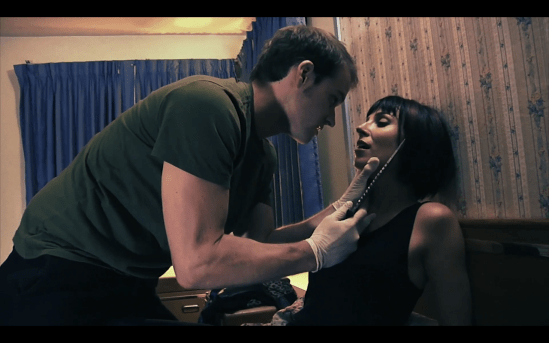
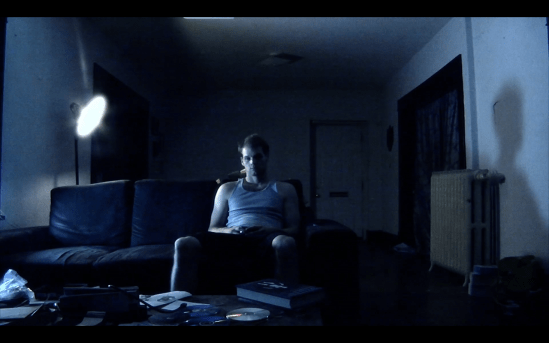
Timid sociopath Andrew patrons alone at a low-end bar, sipping delicately on straight whiskey and waiting for the perfect opportune moment to approach the right lonely woman. Andrew is not looking for a one night stand. Andrew is on the hunt for a victim, but when the night’s odds don’t seem to be in Andrew’s favor, a lovely young woman approaches him at the tail end of the night and begins to make small talk. After a night of coincided flirting, the woman seductively invites Andrew back to her motel room for some provocative foreplay, but before Andrew can move in for the kill, he suddenly realizes that the woman might just be as more of a sociopath than he could ever imagine by turning Andrew’s moment of a gratifying kill into her tragic tale of a more experienced and assured killer.
screen-shot-2016-11-01-at-7-38-12-pm
Suspense thriller “The Anatomy of Monsters” is the sophomore film from the multitalented writer-director Byron C. Miller and stars Tabitha Bastien, Jesse Lee Keeter, and Connor Marx in a twisted narrative involving love, death, and the struggle between the two. Miller, unfortunately, wrestles to keep buoyant the scope of his story contained as scenes teeter when holding an airtight structure as Bastien’s character, Sarah, asserts her mortal coil. Her plight doesn’t grasp the attention needed to draw in an audience; instead, the back and forth between her present plea with Andrew and her past of leading a double life of affliction with whether to act on her killer instinct with the love of her life or not either passively regresses or just stands completely in place, not moving a motivational inch to take the much needed mile in making us believe in Sarah’s tragic love story and the story is actually, well, tragic by not building the passion between Sarah and Nick, played coyly by Connor Marx, as they just hunker inside Nick’s quaint apartment, affixed to his bed or couch while contemplating their instantaneous love for each other.
screen-shot-2016-11-01-at-9-26-52-pm
A part of the film’s indelicate sting comes from Tabitha Bastien’s performance. Sarah, in the very definition of the character’s persona, is a sociopath which denotes a monotonous person to be without empathy, to have an ice cold demeanor, and to be calculating in their actions. While Bastien epitomizes a sizable amount of emotionlessness, her presentation leans a bit more toward being ingeniously staged, emitting a phoniness that doesn’t naturally crossover. If I didn’t know better, I would have guessed Bastien was a T-100 cybernetic organism underneath a flesh and blood outer layer from “The Terminator’s” apocalyptic bleak future. What Bastien does attribute very well to “The Anatomy of Monsters,” aside from her mechanical display, is a pair of piercingly bright eyes set upon a unique belle face akin to that of the nice looking girl next door you peeping tom on through the cracks of your window shades. Jesse Lee Keeter opposites Bastien with a more genuine approach that favors a Michael C. Hall similarity complete with a kill kit. Keeter’s Andrew is an example of well-written hesitation, exhibiting more of a killer’s struggle to maintain a low profile whereas Sarah leaves nothing to the imagination, baring it all out on the proverbial table with the extreme potency of egocentric cockiness.
screen-shot-2016-11-01-at-8-40-24-pm
Along with Miller’s stationary script, the industrial rocker’s sporadic editing technique can be best described having a short-sighted attention span and his shaky handheld camera visually impairs the viewing pleasure of one monster’s monstrous thirst for death. “The Anatomy of Monsters” feature does play the role of being the quintessential independent product, but without stability and patience, Miller’s artistic craftsmanship suffers heavily from the technical aspects with really the only exception stemming from the minor gore scene during Andrew’s brief description of past murders, committing to a solid neck piece mock-up that realistically seeps blood in order to get the good throat slit shot.
screen-shot-2016-11-01-at-7-25-30-pm
A fond blend of John McNaughton’s “Henry: Portrait of a Serial Killer” and Showtime’s “Dexter,” “The Anatomy of Monsters” is slated for a DVD and Video on Demand release on November 15th from the Philadelphian distributor Artsploitation Films. Certainly a film that’s an attestant to an American-horror, Byron C. Miller explores the corners of the dark and deranged minds associated with serial killers while meddling through the conventional intimate affairs of the masses, spurring an atomically explosive situation from a slowly, simmering boil. Though technically unattractive with arguably underwhelming and sulky performances, suggestions of a greater notion leaves behind an everlasting scar tissue from the necessary urges and the unquenchable desires of a killer can be appreciated.

Watch The Anatomy of Monsters on Amazon Video!