

Four dark and terrifying tapes tell tales of a petrifying horror through the camera lens of various found footage assets. Whether between the bleak, grim nature of disturbed mankind or the ominous, otherworldliness of menacing creatures, each story’s ultimate objective is to expose what lies behind the scenes, to shine a light upon what lives shrouded in shadows, and to unearth what lurks in the mind’s subconscious. At first glance, the dark tapes might seem uncorrelated, but at closer examination, the tapes share a deep rooted evil that connects every afflicted recorded event and makes one think twice about their perception on reality.

“The Dark Tapes” are a formidable found footage anthology that resembles a familiar “V/H/S” layout under the meticulously constructed eyes of co-directors Michael McQuown and special effects guru Vincent Guastini (Child’s Play 3). Scripted by the anthology creator, Michael McQuown, “The Dark Tapes'” four interlocking episodes will leave inside you a paralyzing case of nyctophobia as the genre-spliced anthology has no shortage of bone-chilling creepiness; in fact, “The Dark Tapes” epitomizes the very term and with an alternate universe mixture of ghastly ghouls, ghosts, and grisliness, the extremely exhausted found footage genre might have discovered some new, and much needed, life before being on the brink of a near death extinction in this quaint independent production from Michael McQuown.

The three internal tapes, directed by McQuown, are entitled, and in this order, “The Hunters and The Hunted,” “Cam Girls,” and “Amanda’s Revenge” with Vincent Guastini’s external wrap around segment, “How to Catch a Demon,” being broken into four parts between each tape and each tape should be viewed in complete and utter darkness to achieve maximum level of pants-pissing fright. Your overworked heart will skip with long deadly pauses in between, your lungs that keep you breathing will cease to provide breath, and your mind will warp to unfavorably play tricks on your eyes from an unrivaled nightmare witnessed on “The Dark Tapes.” The full body-stopping, comatose-inducing effect can’t be accomplished without the collaborating cast that includes Brittany Underwood, Tess Munro, Stephen Zimpel, Meredith Thomas, David Roundtree, “Sushia Girl’s” Cortney Palm, Anna Rose Moore, Shawn Lockie, Jo Galloway, and Michael Cotter to just name a few.

Much is right about Michael McQuown’s “The Dark Tapes.” Always welcoming practical effects are better than most indie ran features, especially in the anthology category, and the effects can best some lower-end Hollywood productions inside eye-glueing, on the edge of your seat narrative designs that are smart, gripping, and definitely heart-stopping scary, but to be somewhat of a devil’s advocate, the acting was overall a bit stiff across the plane with an awkward uneasiness in the vary of lackluster performances and overzealous deliveries that petered scenes from reaching full potentials. Production wise, “The Dark Tapes” impress inside the sets of bland reoccurring locations, but coincide them with a vast amount of timely, well placed special effects that quickly mutate the stark locations and the uninteresting backdrops turn into vivid portraits of hell.

The Thunder Road Incorporated produced, “The Dark Tapes,” has been slated for a worldwide video on demand distribution release come this mid-April after a theatrical stint this past March courtesy of the Epic Pictures Group. VOD platforms include Google Play, Vudu, iNDemand (Comcast- Xfinity, Time Warner, Cox, Bright House & more), Dish TV, Amazon, Vubiquity (Verizon Fios, Charter, Sudden Link, Media Com &more), Xbox, Playstation, Sling TV & Vimeo. Unfortunately, I was provided with an online screener of the festival favorite and can’t necessarily comment on the video or audio qualities nor any bonus features that might be available on a home entertainment release, but I can firmly state that, visually, “The Dark Tapes” is the Haribo of horror eye-candy with the different flavors of thrilling genres in a pint-sized package and while a little tame with the cherry red graphic content, director Michael McQuown seizes the opportunity to instill an open faucet of fear rather than tease with gore and sleaze with sex. If I had to recommend a horror anthology for 2017, “The Dark Tapes” would be on the very short list.
Category Archives: psychological horror
“The Blackcoat’s Daughter” from Lionsgate in May!

Terrifying and suspenseful, The Blackcoat’s Daughter arrives on Blu-ray Combo Pack (plus Digital HD) and DVD May 30 from Lionsgate. Emma Roberts stars as a troubled young woman who embarks on a journey to an isolated prep school while two stranded students (played by Kiernan Shipka and Lucy Boynton) face a sinister threat from an unseen evil force. Praised as “truly unsettling” by RogerEbert.com, the movie premiered at the 2015 Toronto Film Festival and the 2015 Fantastic Fest. From writer-director Osgood Perkins, The Blackcoat’s Daughter Blu-ray Combo Pack and DVD will be available for the suggested retail price of $24.99 and $19.98, respectively.
OFFICIAL SYNOPSIS
Beautiful and haunted Joan (Emma Roberts “American Horror Story” and “Scream Queens”) makes a bloody and determined pilgrimage across a frozen landscape toward a prestigious all-girls prep school, where Rose (Lucy Boynton) and Kat (Kiernan Shipka) find themselves stranded after their parents mysteriously fail to retrieve them for winter break. As Joan gets closer, Rose watches in horror while Kat suffers terrifying visions and becomes possessed by an unseen force.
Lionsgate will release “The Blackcoat’s Daughter” on Blu-ray Combo Pack (plus Digital HD) and DVD May 30!
Enter Into Your Darkest, Evilest Fantasies. “We Are The Flesh” review!

Struggling to survive the conditions of the outside world, a brother and sister locate shelter inside a desolated complex and stumble upon it’s strange inhabitant, a solitary middle-aged man named Mariano with a penchant for welcoming his insanity. The alcohol distilling and isolating embracing Mariano has a twisted offer for harboring the young siblings as he also puts the two to work, constructing Mariano’s trash-ridden home into a cavernous structure from taped scraps of lumber and cardboard. Mariano desperately needs them to explore unorthodox depravities upon themselves to become one with their unhinged host that forms, in more than one way, one flesh-ravenous happy family.

“We Are the Flesh,” aka “Tenemos la carne” in the original title, is an experimental art house feature from controversial Mexican director Emiliano Rocha Minter. The 2016 film harbors more than just three hermit individuals dipping their toes into a forbidden pool of acts, but also provides numerous metaphors and symbolisms that might be hard to swallow and difficult to sit through during the 79 minute runtime. “Sin Nombre” actor Noé Hernández stars as Mariano and there isn’t enough praise in the art house world from his performance that consumes his mortal being, transforming him into a well oiled psychotic machine with a blazing stare, a certifiable grin, and a defined muscular physique. Hernández steals scenes left and right from his young and novice co-stars María Evoli and Diego Gamaliel, whom are equally as brave as the more experienced Hernández in their respective roles. “We Are the Flesh” emits racy undertones by just hearing the title alone and, absolutely, lives up to the title’s very core by displaying non-simulated sex acts. Think about it. Minter’s film only has three main characters for most of the narrative and two of them are siblings. Yup, Minter went the incest route for the sake of art.

In the opening scene, heavy breathing creeps upon a black screen until the image pops open to a Mariano’s face, laboring over something. Next cut is Mariano hunched over with a high stack of baled cardboard, walking in the color tone of a dark cool blue with a slight haze engulfing him. This opening scene is one instance where Mariano is portrayed the Messiah prophet Jesus. Other religious symbolistic events that connect Mariano, who would be condemned for his actions in the Christian scope, to Jesus that occur throughout, such as being dying and being reborn, the cave aspect, the motifs of faith from the mysterious eye dropper liquid, and being the sacrificial body as if transpiring to be some sort of demented wafer during a crazed cannibal communion orgy. Of course, opening anybody’s eyes or mind to this notion can be immensely difficult and profanely sacrilegious to even spell it out in text because seeing the streaming drug use, the attempted murder, the cannibalism, and the sibling incest rule the majority of the narrative makes a case that affiliates more with an unholy antichrist rather than Christ, but I believe director Emiliano Rocha Minter, being a Mexican national and growing up in a Catholic, like the majority of Hispanics, culture aimed to blur the lines between the heavens above and the fires below and embodying them as a singular whole.

Intrinsically irrational and insatiably grotesque, “We Are the Flesh” has momentum in a colorfully abrasive form, quickly evolving from act to act with characters reemerging anew every second onscreen. What might seem as a visionless quest for the sole purpose of producing shock value can be re-construed as a message more aesthetically beautiful in man’s most detested nature. Yollótl Alvarado’s cinematic vision is absolutely dripping with gripping, mature atmospherics that are well doused in vividness while, at the same time, being despairing in a post-apocalyptic haze. The experience charges at you, pulls you into this cavernous womb, and scratches at your tender barrier lining, trying to sneakily slip into your soul. The sensation is as much unreal as the film’s avant-garde structure.

Produced by production companies Piano, Detalle Films, Sedna Films, Estudios Splendor Omnia, and Simplemente, “We Are the Flesh” is a poetic approach experimental wonder, gratifyingly brought to home entertainment fruition from Arrow Films in the United Kingdom and Arrow Films, in conjunction with MVD Visual, in the United States on Blu-ray and DVD. Between Lex Ortega’s brutal social commentary gore-flick “Atroz” and Emiliano Rocha Minter’s art house metaphor “We Are the Flesh,” Mexican filmmaking stands high and bold, unafraid to tell unapologetic stories in conservative societies; a mere taste of what’s to come, I’m positive. While recommending this type of film isn’t the easiest for status quo movie lovers, “We Are the Flesh” hopefully will expand minds, open eyes, and encourage skin-on-skin contact for the cinematic adventurers.

“We Are the Flesh” available in USA! and in the United Kingdom!

A Double Bill of Evil! “Murderlust” and “Project Nightmare” review!

During Sunday’s services, a calm and confident Steve Belmont heads the Christian Sunday school youth class and seeks to be the permanent director of the Church’s suicide crisis unit that’s coming to the end of the planning stage. On Sunday’s, Steve performs as the model citizen whose ready to serve and give back to his community. During the rest of the week, the horse race track security guard can barely sustain societal worth, arriving late for work, constantly drunk, and has disdain for people being a speed bump in his path to greatness. All Steve Belmont has in life is the potential director’s job and his thirst, his unquenchable thirst for strangling women and dumping their bodies in the excessive heat of the Mojave desert. The local newspapers label his killings that of at the hands of the “Mojave Murderer” and his lust for killing call girls and young women runs a thin line alongside his Sunday best and when he begins to trust a Church regular, Steve’s mistakes begin to catch up with him.

“Murderlust” is the first feature on the Intervision Picture Corp’s double bill DVD release from director Donald Jones and writer James Lane. The 1985 suspenseful horror-thriller comes to DVD for the very first time and doesn’t just boldly display a story of another run of the mill serial killer but does so with remarkable performances and a body of work that’s well crafted. Lane pens the center character focus on Steve Belmont and his delusion of power, being an overwrought sociopath with a belief he’s better than everyone else, and Belmont’s brazen lures to secure helpless victims is nothing short of a con artist’s trait. The ability of convincingly seducing the congregation to his benefit provides him pseudo mystical powers that pull the blinds over their God fearing eyes while he continues to slack through a meager life and holds tightly his reign of terror near the Mojave. Basically, in Belmont’s mind, he is God.

Eli Rich plays Steve Belmont, who can only be described as a twisted blend between Michael Beihn and Nick Offerman, and Rich canisters Belmont’s psychopathic tendencies in an terrifying performance of exact realism. Not many films can pull off the on and off switch of a serial killer, even Patrick Bateman in “American Psycho” was sensationalized, but the relatively small time actor produced a manufactured fearful reaction. Rich splits Belmont into two personalities while still managing to be contain a menacing aurora to feed audiences with dread, fear, and suspense and while Rich might be doing more than just one public service for his community by picking up and strangling local street walkers, Belmont never transitions into that role of the likable anti-hero as he manages to forthrightly ostracize himself from friends and family. As Steve’s square statured and responsible cousin Neil, Dennis Gannon epitomizes the upstanding citizen character, but maintains a soft spot for his unscrupulous next door neighbor cousin. Rochelle Taylor’s role is something of a love interest for Steve, who can’t bring himself to kill her even when the opportunity is present, but the one film and done actress Taylor can’t bring “Murderlust” to the promise land with an overzealous portrayal of an eager beaver, love struck Church girl that doesn’t fit the bill of Belmont’s world.

After a couple of quick Mojave Murderer victims, one including the scene illustrated for the DVD’s front cover with a topless and unchaste Ashley St. Jon, Steve, along with the flow of the story, banks into a suppressive funk. The narrative’s pace slows when Steve attempts to organize his life around his murderess hobby, turning the suspenseful thriller into a drama segment that is more or less of a laundry list on how to obtain rent money for an aggressive landlord, until the demand to hunt tugs heavily at his pant leg and he can no longer ignore the urge. “Murderlust”, despite the captivating title, is nearly a bloodless horror thriller. Steve uses his signature method of strangulation, leaving smartly no blood trail, and only at the finale does blood spill when Steve deviates from his unsympathetic hunt, kill, and dump program.

Woodland campers and best buds Gus and Jon wake up to discover their gear has been shredded and dispersed. They’re soon pursued by a frightening force of unknown origins. Lost and hungry, the two friends stumble upon a mountain cabin where cabin owner Marci shelters them for a night. Rested and resupplied, but haunted by their dreams, the two continue on foot in search of a town; instead, they become split up and Gus finds himself in the bizarre belly of a government facility that’s conducting an experiment and root of Gus and Jon’s predicament. Gus must confront the inner workings of his mind and take back control of his thoughts or else all that he knows, his friendship with Jon, and all that he desires, his passion for Marci, will soon be lost to the unchecked government secret known only as Touchtone.

The second film on the double feature, “Project Nightmare,” starkly contrasts in genre with “Murderlust.” “Project Nightmare,” otherwise known as “Touchtone,” is a science fiction thriller piggy backing as a bonus feature and the 1979 conduit for confusion showcases how scarily surrealistic director Donald Jones can achieve. An odd film that materializes shortly after Gus and Jon’s plight begins and doesn’t let up the enigmatic ambiance as the audience will surge deeply into the rabbit whole. Even though told linearly, “Project Nightmare” feels, in fact, like a nightmare, peppered with sporadic scenes of uncomfortable imagery and repetitive ambient noises and soundtrack that jar the senses. Jones’ direction and style denotes an appeal of black and white scenes, but, in color, the film works better to give an ominous a stimulating visual and without that color, the story just wouldn’t work.

Charles Miller and Seth Foster star as the baffled and lost campers Gus and Jon. They’re joined by Elly Koslo, as Marcie, and Harry Melching, as Carl the government scientist, who provide indifferent character roles or just products of the imagination to support the dreamlike atmosphere. As a whole, the actors’ dynamic was obsoletely rigged but in an unsettling Lynchian fashion causing your eye balls to stay with the scenes. “Project Nightmare’s” experience will make you feel you’re watching a film much older than produced with the costumes, the language, and the wood paneled elevator and granted that Jones’ isn’t big budget, but the director was able to deliver with the minuscule budget available to fruition a sci-fi odyssey.

Intervision Picture Corp has a snazzy, two-headed snake in “Murderlust” and “Project Nightmare” presented in full frame 1.33:1 aspect ratio with a single channel Dolby Digital mono track. The original prints looks great with “Murderlust” slightly heftier in the cyan department during it’s 98 minute runtime. The single channel had better luck with the 74 minute runtime in “Project Nightmare and “Murderlust” had moments of softness where dialogue became a strength in exercising one’s hearing. Both issues listed didn’t hinder the final product; in fact, I’m quite pleased with the end result on both features. “Project Nightmare” has a natural presence that’s appeasing and “Murderlust” blankets itself warmly in, well, the associated Mojave desert. The bonus content on the Intervision release include two audio commentaries with writer-producer James Lane. The “Project Nightmare” commentary has partial audio. In conclusion, “Murderlust” might not be this tour de force of bloodletting hookers. The sheer realistic characteristics of a serial killer among us are more alarmingly exploited and continue the terrifying ordeal with “Project Nightmare,” a sci-fi sensory conundrum overloaded with spastic psychological terror from the Golden Age of film.
Murderlust

Buy Murderlust on DVD at Amazon!

Opening Your Eyes Takes a Necessary Evil! “Deadly Virtues: Love.Honour.Obey” review!
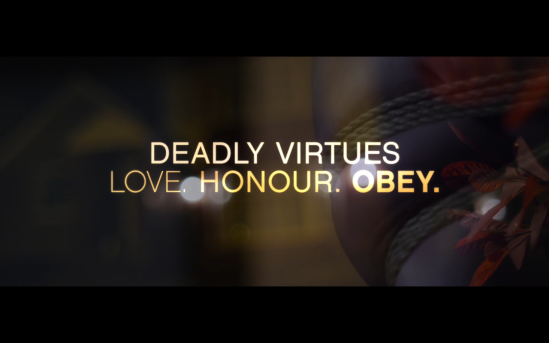
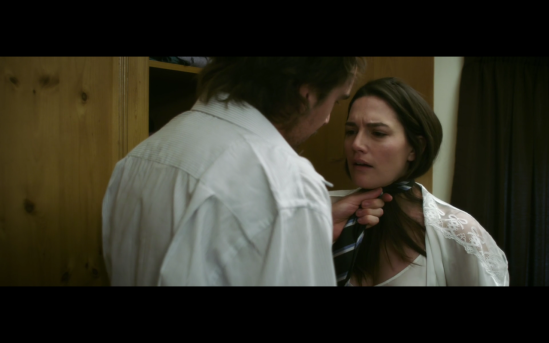
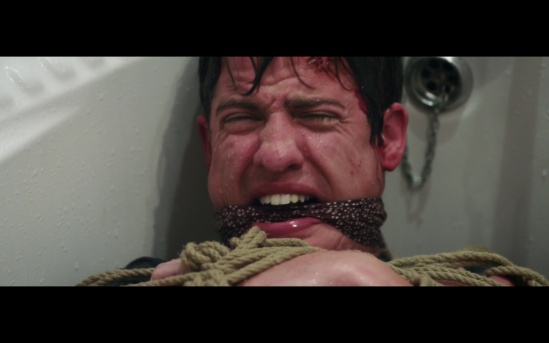
Friday night, A stranger breaks into the home of Tom and Alison. After tying up and torturing Tom, leaving him in the bathtub, he reveals a weekend long scheme that involves convincing Alison to genuinely want him by Monday morning. The stranger’s psychological game slowly breaks down Alison’s perception of her relationship with her husband through consequential threats toward a battered Tom, survival obedience, relationship morals, and untapped desires while Alison desperately attempts to squeeze away her captor’s maniacal grasp any way possible. With Alison’s husband undergoing continuous abuse throughout the weekend, the stranger persistently exhibits various versions of being the perfect husband to appease Alison’s preference in a partner, a striking contrast that begins the spiraling doubts about Tom and the life to which she’s submitting to with him.
The director who gave audiences a reason to believe in their zany childhood imaginary friend in “Drop Dead Fred” and who drove viewers through the depths of Satan’s domain on the epic retrieval of love journey that was “Highway to Hell” has resurfaced. Director Ate de Jong’s 2014 film has found a home for his British exploitation thriller eloquently entitled “Deadly Virtues: Love.Honour.Obey.” at the Philadelphian based home entertainment distributor Artsploitation Films. An intense eye-opening experience that makes couples’ therapy a cut rate rekindling process, the “Deadly Virtues” story comes from the talented, yet relatively unknown, drafter Mark Rogers whose characters contribute a fierce and engaging potency.
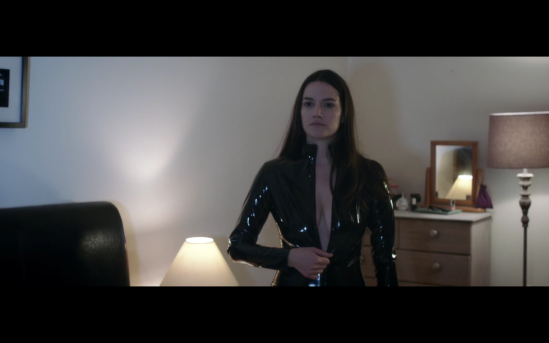
Characters can be written from head to toe with gargantuan electricity, but it takes the actors and actress portraying the characters to actually flip their switches on, vividly toggling their characters to shine. Edward Akrout’s puts forth a dangerously sophisticated Stranger excellently defining the term acting. Every unique touch of the binding rope used on Tom and Alison, every calculated sinister action taken against Tom, and every apt expression emits just enough information to state the Stranger’s purpose without spoiling the character’s mysterious motivations. Akrout is joined by American actress Megan Maczko with a selfless performance that pits her character Alison in a cat-and-game mouse against the Akrout’s Stranger. There are bits of unwanted sexual activity and nudity and role playing BDSM that might mistakenly place Jong’s film in the incorrect genre; instead, Akrout, Maczko, and, even Matt Barber as Tom, acutely pivots the subject matter, even with the provocative nude and bound woman graced film poster.
Not all is copacetic with “Deadly Virtues.” Some of the pacing slows down a bit where the motivation feels arguably aimless as Alison quickly becomes content and comfortable with a man who just softly raided their home and violently turned their lives upside down. Also, as a matter of character, Tom needed fine sprucing from being painfully forceful with how the character critically needed to know, to ultimately compute, trivial information at the most inappropriate moments. The story itself might have forced Tom’s inadequacies and insecurity issues to completely tell the story within the total 97 minute runtime, but in the end, the finale loses that little something something to put the final nail into an already furbished piece of work by director Ate de Jong.
Artsploitation Films’ latest release, “Deadly Virtues: Love.Honour.Obey,” surfaces deep rooted marital issues in an extreme, hostile manner, bringing to the forefront the versus struggle of adapting or fighting back, and also touches upon the beauty of the overlooked. The film’s poster, which I already remarked upon having some minor nudity, accentuates a woman’s other pleasant bodily features including the small of her back, her long neck, and her protruding deltas which Akourt’s portrayal of the Stranger similarly remarks briefly upon when more pigheaded men not noticing, or appreciating, other, less obvious, parts of women. I’m sure for most viewers, gazing at Megan Maczko strung up and suspended in an inviting position can stimulate a lot of interest. “Deadly Virtues” is currently only exclusively available in United States via VOD formats, such as Amazon, Vimeo, and GooglePlay, courtesy of Artsploitation Films.
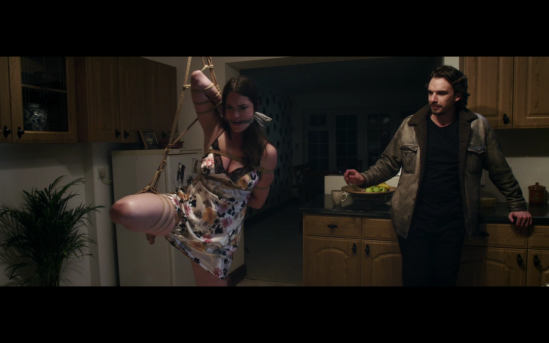

Watch “Deadly Virtues” on Amazon Video! Click Here to view!

 It's Bloggin Evil!