Beware the EVIL Bite of Silver Teeth! “The Cursed” reviewed! (LD Entertainment / Digital Screener)


Lord Seamus Laurent and the neighboring landowners show grave concern for the recent Gypsy encroachment upon their shared property.  In proactivity protecting the laboring residents and the pastoral farmland of the feudal system, Laurent and fellow landowners order the removal of the Gypsies by hiring ruthless mercenaries who slaughter every last Gypsy in cold blood and bury them in the land.  When every resident on the estate, from villagers to the lord’s family, share a common nightmare of silver teeth buried with the Gypsy corpses, an evil curse unleashes upon the farmland with a killer beast roaming, hunting every resident.  Gypsy chasing pathologist John McBride enlists himself helping Laurent and the villagers to not only relieve them of the cursed creature, but also face his own tragic past linked to the very same evil he pursues.  

Lycanthropy an allegory for the cholera outbreak in late 19th century Europe?  That’s the seemingly centric subject to Sean Ellis’s written-and-directed, folkloric supernaturally spun creature feature “The Cursed.”  Though narratively set and actually shot in France, “The Cursed,” or else better known internationally under the original title “Eight for Silver,” is comprised nearly of all English actors with very few from France and an American in the principal lead to wage war against a swift enemy that kills anyone without prejudice and without mercy.  No, I’m not talking about the wolfish creature that rips settlers and lords to shredded sacks of meat.  I’m speaking of the Cholera epidemics of the 19th century and while Ellis’s metaphoric intentions lean more toward the pains of broad-based additions, our modern pandemic plight felt more widespread linking both the past and present with an event that plagued countries like a curse with unsystematic cruelty and didn’t differentiate between the poor unfortunate and the opulent.  The Los Angeles based production company LD Entertainment finances and produces the feature under Mickey Liddell (“The Grey,” “Jacob’s Ladder” ’19) along with executive producers Alison Semenza (“Lost Boys:  The Tribe”) and Jacob and Joseph Yakob.

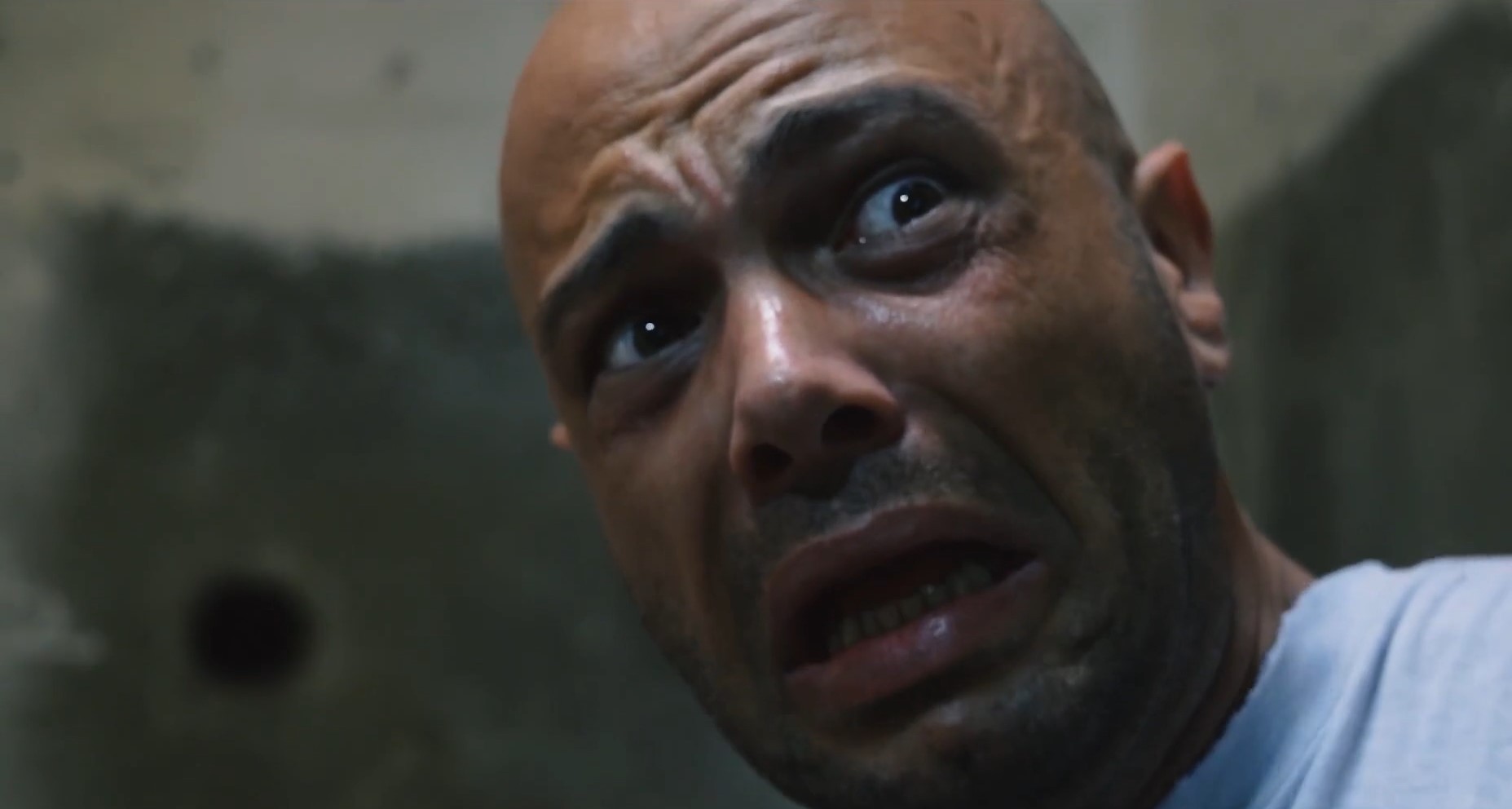
“The Predator’s” Boyd Holbrook walks the pathological shoes of John McBride, a man haunted by his past in his continuous pursuit of nomadic Gypsies, and it just so happens that McBride falls right into the thicket of, unknown at the time, Gypsy-made bedlam as missing children and ravaged dead bodies pop up.  Holbrook tries to corral in the pathologist’s inexplicable purpose as the character is often too withdrawn from his intent on what he’d actually do if he came across any Gypsies, which McBride never does.   Instead, McBride feels like a hero who’s dumped in the perfect place at the perfect time to be the hunter of what his pathological experience and instincts claim to be the death-dealings of a wolf while the village becomes the bewildered and unassuming hunted, led by the 2019 “Hellboy” actor Alistair Petrie as the noble estate lord Seamus Laurent stewing stoically in his own despair and desperate head space in search of his missing son (Max Mackintosh). The only character acting rationale in a conventionally proper manner in her reactions to the whole situation is Seamus’s wife Isabelle (Kelly Reilly, “Eden Lake”), with a blistering heartful longing for her son, and their daughter Charlotte (Amelia Crouch, “The Woman in Black 2: Angel of Death”), with a shock-induced and childlike response to her brother’s disappearance. Yet, Isabelle and Charlotte alter course. Isabelle weaves in and out of anguish to the point where her suffering is only implemented to benefit the story and Charlotte, well, Charlotte plainly disappears as a key supporting character who knows truly happened to her brother in the field and with a villager boy, Timmy (Tommy Rodge), who discovers the silver teeth etched with curse inducing rune symbols. The interactions between McBride, Seamus, and Isabelle never quite feel nature and complete, as if there’s an unspoken trust issue between McBride and Seamus or a mutual understanding or compassion between McBride and Isabelle that never leaves the hilt of the sword to see spark action. Nigel Betts, Roxane Doran, Richard Cunningham, Pascale Becouze, Simon Kunz, and Amazon’s “Hanna” star Áine Rose Daly, as farm hand girl turned white wolf, round out “The Cursed” cast.

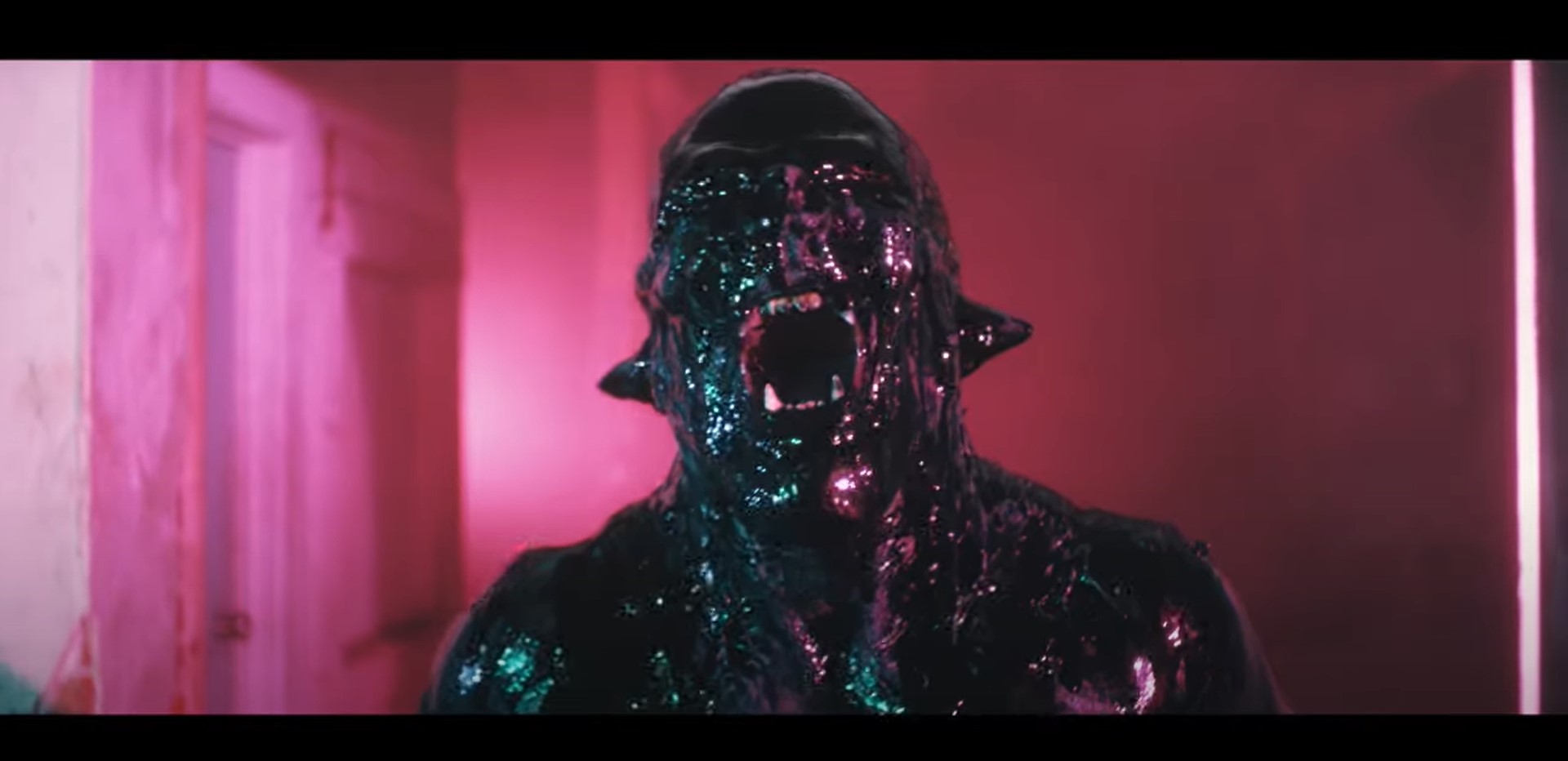
Sean Elliss tweaks the werewolf mythos to try and shake up the genre, turning it up on its head to dust off a tired narrative of man bitten by wolf, man turns into wolf, wolf terrorizes villagers, and villagers kill wolf with silver bullet. Instead of silver weaponized for good, “The Cursed” weaponizes it as Gypsy revenge, a calling card that leaves bite marks with lasting impression until every single inhabitant, guilty or innocent in the crime against the Romanian wayfarers, is laid to waste by its transformative power. Though unexplained in why the Gypsies forge silver fangs etched with a curse other than a storm is coming, as if perhaps they’re clairvoyancy provided them with a disturbance in the air instinct rather than exactly what to expect, the teeth are a nice cinematic touch of menacing terror literally inscribed on each tooth. “The Cursed” atmospherics of folkloric superstitions blended into a broodingly dense landscape of low-lying fog and uncomfortably vast empty fields surrounded by a thickset of trees comes close to the likes of a Hammer horror setting, especially with the period of time in which “The Cursed” plays out in that has been Hammer’s niche era. The setting might be the only controlled aspect of Ellis’s take on the werewolf genre as the werewolf, if that is what we can even call the abomination of mutation, is written from out of our traditionally known contexts and into a new breed of metamorphism. Hairless, white, and somatically encasing, Ellis’s monsters radically redefine our expectations with a beast that literally consumes our very being and turns us into an unrecognizable fiend amongst the flock. Fast, agile, and ruthless, this newfangled fang-bearer up until the end never received any insularity resentment from me, but the ending abruptly diminishes the near mindless brute strength of a beast with a hint of intelligence in its ability to sound like person to draw the hapless into a trap and that’s where a line needs to be drawn, especially when the technique is used as an out of the blue device toward an endgame.

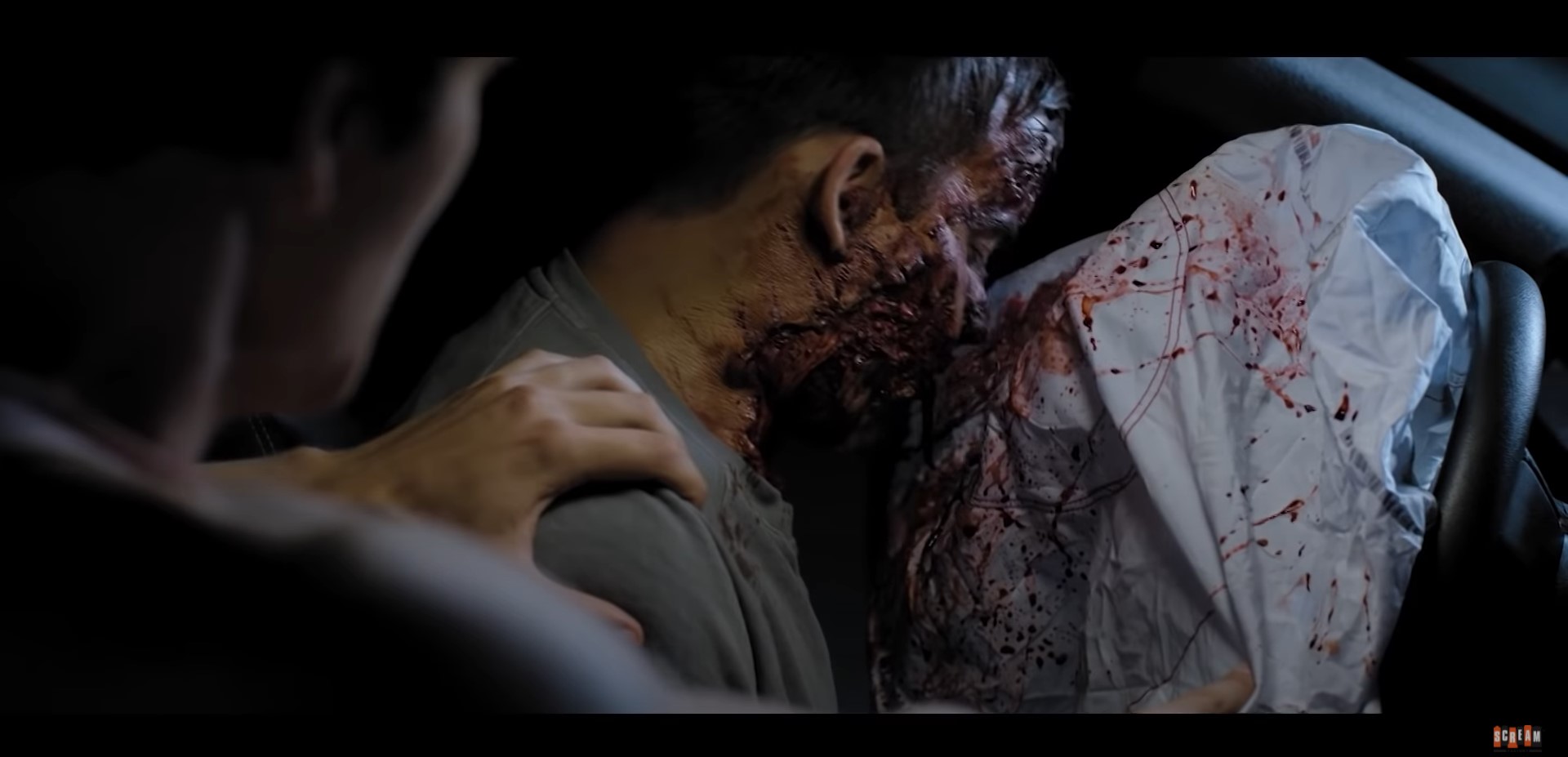
Whether be a narrative about an all-consuming addiction or about a precipitating plague of chaos in the time of cholera, the uniquity of “The Cursed,” semi-diverging from one of the most revered classic monsters in our history, may be an immediate turn off for many traditionalists, but the film does right by the savagery gore, the minatory threat that lingers in every scene, and that no one is immune from danger. LD Entertainment is set to release “The Cursed” this Friday, February 18th, in theaters. Since this was a digital screener, the audio and video will not be covered. No bonus mater or extra scenes during or after the credits were provided. Sean Ellis provides that creepy fog-laden and dense folky aesthetic of barnyard chic while still conditioning an upscale appearance of a beautifully crafted production from a native French crew of productions designers in Thierry Zemmour and Pascal de Guellec as well as costume designer Madeline Fountaine. “The Cursed” starts strong with visceral intent to be novel by offering callous over civility, a dysmorphic werewolf, and a new set of blingy chompers fit for Lil’ Wayne, but gaps riddle unignorable holes into the story and its characters that ultimately becomes the silver bullet obliterating the beastly nature this new breed of wolf desperately needed to survive unscathed.

Mindy Robinson Takes on EVIL Strippers in “Brides of Satan” reviewed! (Dark Side Releasing / Blu-ray)


“Brides of Satan” available at Amazon.com!  DVD and Blu-ray!

Engaged happy couple Mary and Charlie want to dip their toes into debauchery before tying the knot.  When they patron a dive strip club, looking to unwind a nervous Charlie down a notch with a sultry, on-stage lap dance, the club is suddenly seized by three well-armed Satanist strippers looking for quick cash and a virtuous sacrifice to conjure a demon.  Kidnapped for the dark ceremony, Mary and Charlie find themselves in their grip with Charlie being murdered to complete half the ritual, but Mary is able to escape when a rival gang claims rights over the territory that sidetracks the Satanists summons.  Mourning over her fiancé’s death, Mary is taken under the wing of a junkyard sensei who trains her to fight and to be fearless against all those in her path for vengeance. 

From horror enthusiast Joe Bizarro comes the filmmaker’s first written and directed feature film, the pastiche grindhouse revenge-thriller “Brides of Satan.”  Bizarro, who co-produced “Another Plan from Outer Space,” the Lance Pollard offshoot homage to the Ed Wood Jr.’s iconic science fiction-horror “Plan 9 From Outer Space,” co-writes his 2021 exploitation with “Take Shelter” cinematographer and first time screenwriter Noel Maitland penned to be a wild-and-strange ride through the various territories of genre landscapes.  Film in and around the greater Los Angeles area, “Brides of Satan” stitches the perceived strange and unusual charisma of L.A.’s alt-scene offerings around a familiar framework with a few arbitrary bits of bizarre.  Along with Bizarro and Maitland is fellow executive financier Lance Pollard, who we mentioned had previous dealings with Bizarro, and the jacks of all trades Victor Formosa (“Iron Sky:  The Coming Race”) along with William Wulff, Celeste Octavia, Lisa Mason Lee, and Mike Ansbach serving as producers on the Joe Bizarro Studios labeled production. 

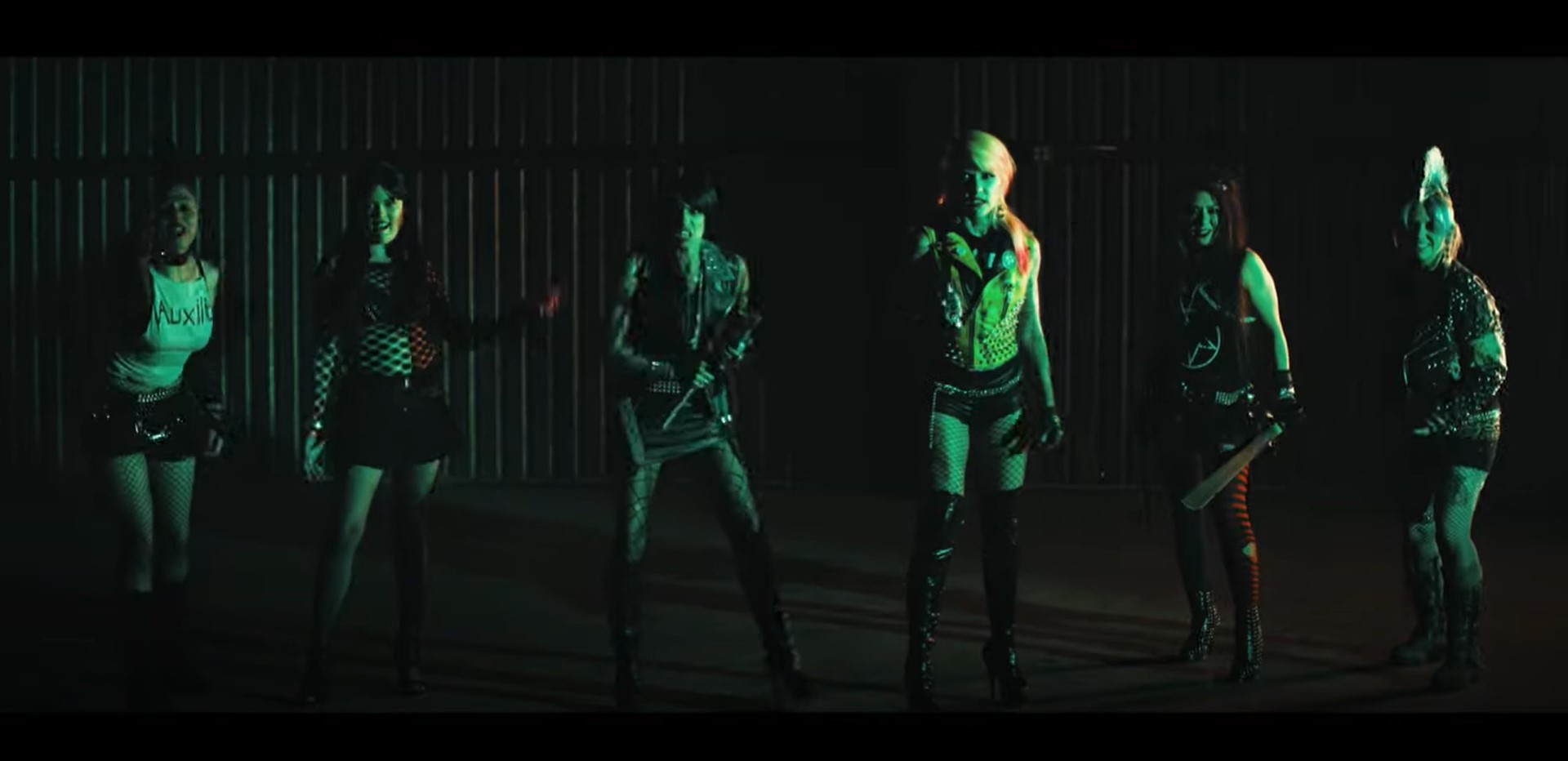
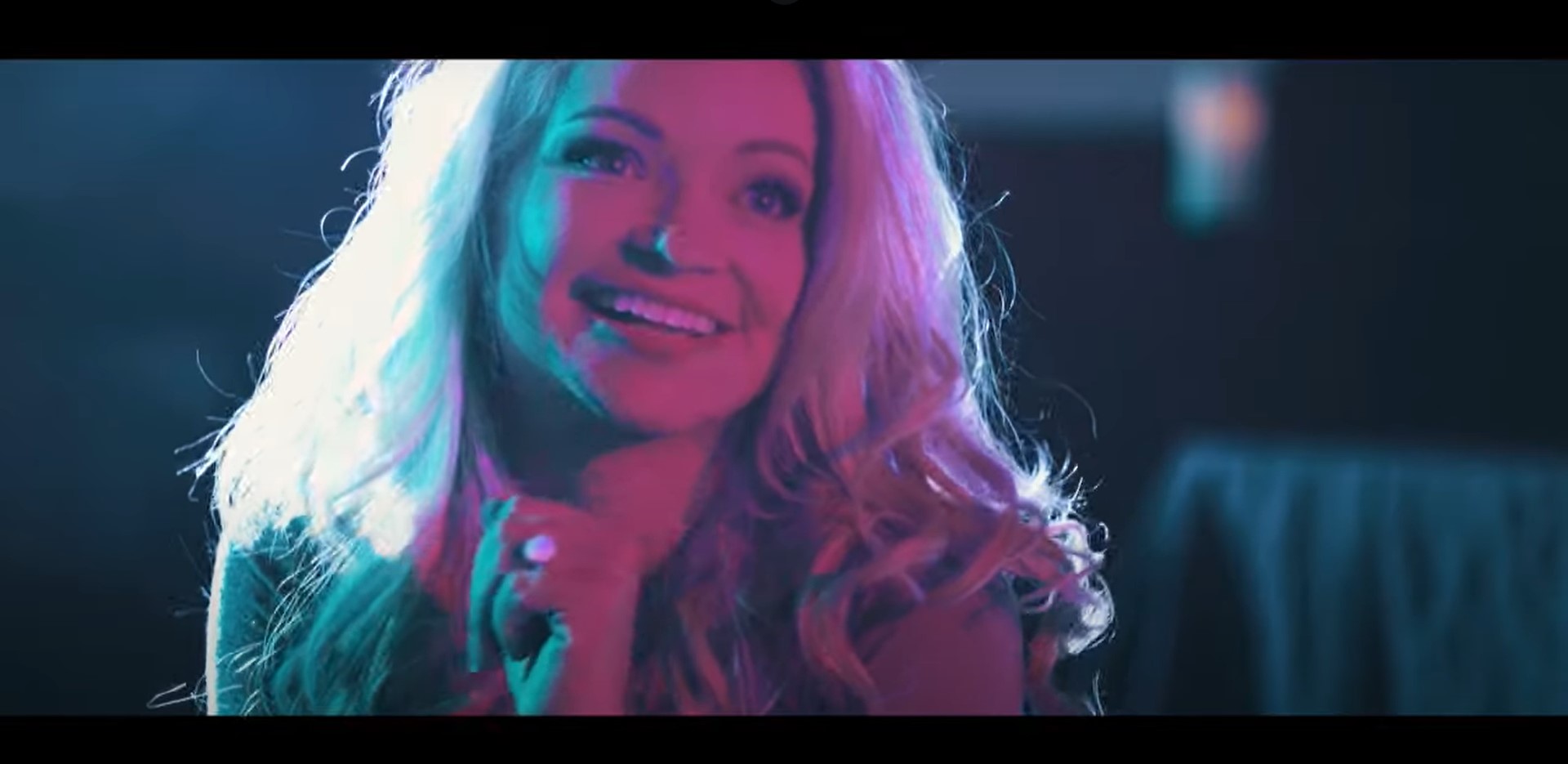
Right off the bat, the montage introduction of the tri-gang strippers, played by Alice McMunn, Joanna Angel, and Rachel Rampage, with sizzling eroticism and skin, seductively gazing into the camera and pole dancing captured in slow motion immediately sets the tone for the rest of the story. Laden from their colorfully neon-dyed hairstyles to their fishnet-led leathery platform heels with body ink, their focal opening is a bit of Joe Bizarro in a nutshell as well as an eclectic look into a cast comprised of goth, burlesque, body-mod, and fetish aficionados.  I was also hoping for a cameo from adult actress Joanna Angel’s husband Aaron ‘The Small hands’ Thompson, but alas, no such luck.  Though McMunn, Angel, and Rampage get the juices flowing and motivate the narrative into a plot point of character deconstruction, reconstruction, and revenge, neither of them are the top bill for lead role.  That responsibility falls solely on the “Evil Bong” franchise – wait, there’s an “Evil Bong” franchise? – actress Mindy Robinson that, through a (Joe) bizarro world, adds an interesting element of casting for the outspoken Republican commentator who happens to also be the girlfriend of former mixed martial artist and “Expendables” actor Randy Couture.  Robinson amiably plays a loving fiancé Mary to an equally amiably, yet unresolved, Charlie (Michael Reed, “The Disco Exorcist”). Eventually, Mary’s woman scorned vengeance becomes a juggernaut of kickass, learning geriatric kung-fu from a junkyard hobo, but Robinson disingenuously leaves her fluffy and bubbly self into a character who’s supposed to be this badass that beats half-naked Satan acolytes in one blow and can vanquish netherworld demons in the bat off an eyelash. Much of the film is Robinson promenading provocative and oddball locales, meeting more provocative and oddball characters, to track down her fiancé’s murderer in a forfeiture of commanding the scenes with scene-stealing presence. Though she bests an array of stud-cladded, garage punk baddies armed with arm drills, nail bats, and switchblades, their brief moments on screen leave more of an impact than the principal protagonist and much like the gang of three strippers, in which two-thirds of them cease to exist after approx. 15 minutes into the film, they’re built up as more prominent players in this psychos-ville showdown yet fizzle to literally just a passing moment in the narrative, giving way to a film full of nothing but near essentially cameos from Anatasia Elfman (“Shevenge”), Ellie Church (“Frankenstein Created Bikers”), Sarah French (“Art of the Dead”), and Damien D. Smith (“The Purge”). There are also true cameos from “Blood of the Tribades” filmmakers Sophia Cacciola and Michael J. Epstein, professional burlesquer Olivia Bellafontaine, and Madelyne Cruelly from the pirate punk band Yours Cruelly.

“Brides of Satan’s” gimmick is to live up to representing the yield of grindhouse cinema and for the most part, Joe Bizarro cultivates a passable resemblance by borrowing from the constructs and the ideals that came from them of the golden age of independent cinema decades between the 60’s and early 90’s and reworked them into his own passion project. “Brides of Satan” is undoubtedly derivative in most of designer elements, but I did find Bizarro’s concept of uniting the alternative network and B-movie troupers into a singular movement to be refreshing in it’s something you don’t regularly see or experience too often out of the shadows and living in the daylight. As disparaging as it may sound, the sensation becomes that carnival sideshow effect where the societal outcasted abnormalities entrance and pluck at your curiosity strings much to the same effect that ostentatious or surreal horror and sci-fi movies are a way to escape the harshness of one’s own bleak day-to-day reality. However, Bizarro didn’t quite achieve the paragon of his idea not because of his cast, who are mostly stupendously talented in their own rites, but rather more with a watery script barely sustaining flavor to its revenging aspects and supernatural rifts, the imbalance amongst characters, and a dialogue so intrusively oversaturated with hackneyed one-liners that the next words out of their mouths are predictable ones. That tiredness, that sparkless originality, that familiar taste again and again is what ultimately quells “Brides of Satan’s” fetching title and it’s weighted of promise.

Rowdy and burning with streaks of fluorescent colors, “Brides of Satan” is a come Hell and high-water tribute for exploitation film lovers and the Joe Bizarro debut is now on high-definition Blu-ray home video from Dark Side Releasing.  Presented in a widescreen 2.39:1 aspect ratio on a BD25, Bizarro and Maitland, whose technical trade in director of photographer is implemented here, opt for a tenebrously smoky and shadowy obscured grindhouse-noir that innately secretes tactile details but do offer that sense of mystique danger and a carnivalesque veneer at times, using lighting techniques to accomplish the desired look.  The English language Dolby Digital stereo has lossless quality from a 384kps bitrate that, despite its dual channel limitations, outputs decent robust tracks.  Dialogue is crisp and clear, ambient background noise and ransacking has ample range and depth, and the original soundtrack from Ausie Jamie Coghill (Jimmy C) of The Jimmy C Band offers a lounge-grunge-like Rock and Roll score hitting all the right notes apt to the narrative.  The opening monologue from Rick Galiher doing his best Vincent Price vocals.  If you closed your eyes and just listened to the tracks, you can distinctly hear every tone and note in everything from a wonderfully broad audible spectrum. The special features include an audio commentary with the director Joe Bizarro, a handful of deleted scenes and bloopers, a photo gallery of stills and alternate posters (which there are a ton of), and a short skit entitled “Rad Roommates,” a pseudo-sitcom produced by Bizarro about a man and his monstrous hairball of a lowlife roommate.  If you’re lazy and don’t feel like navigating through the menu options to the special features, wait until after the feature’s credits roll through as the special features will follow, beginning with “Rad Roommates.” The Dark Lord takes a bemusing backseat that drives “Brides of Satan” more toward solely being a revenge thriller with few incomplete spidering out subplots that belly up by its own creator. 

“Brides of Satan” available at Amazon.com!  DVD and Blu-ray!

Superpowers Can Be Just as EVIL as They are Good. “The Unhealer” reviewed! (Scream Factory / Blu-ray)

“The Unhealer” on Blu-ray home video from Scream Factory!

An old graverobber unearths the supernatural powers of an ancient Native American burial ground that gives him the ability to heal as well as to be resilient against injury with self-restoring powers.  When exploiting the local residents of his newfound “Godly” gift, a botched healing of a bullied teenage Kelly with severe pica disorder transfers the powers to him, curing his disorders and restoring his health while also leaving the old graverobber to die.  With a new lease on life, Kelly pursues his dreams, standing up to his relentless tormenters, and even finding the courage to ask out a girl, but when the powers prove to be addiction beyond control and the bullies never let up on their aggression on him, Kelly uses his newfound gifts to exact a deadly course of revenge. 

“Pet Sematary” meets “Christine” – a Stephen King-esque bully-revenge, supernatural thriller “The Unhealer” from the Argentinean born director Martin Guigui.  The music video and feature film director returns to American horror nearly a decade later after helming the 2011 “Beneath the Darkness,” starring Dennis Quaid, with a thrilling teen angsty script penned by first time screenwriters Kevin E. Moore and J. Shawn Harris that recalls a narrative very familiar to the late 80’s to early 90’s with oppressive high school bullying by the jocks and the turning point revenge by the receiving end pipsqueak.  Originally scripted under the title “Pica Boy,” “The Unhealer” reveals the dangers of severe polarities between one disorder to the next with the humbling fragilities trapped inside one’s own psychological disorder to the over-confidence of feeling invincible due to physical anomalies that result in no pain being suffered, losing one’s empathetic reasoning.  “The Unhealer” is produced by writer J. Shawn Harris and his sibling actress, “Night of the Demons 2” and “Night of the Scarecrow’s” Cristi Harris along with star Natasha Henstridge and “Why?” filmmakers Corbin Timbrook and Galen Walker with Horror Business Films and 7 Ideas serving as production companies.

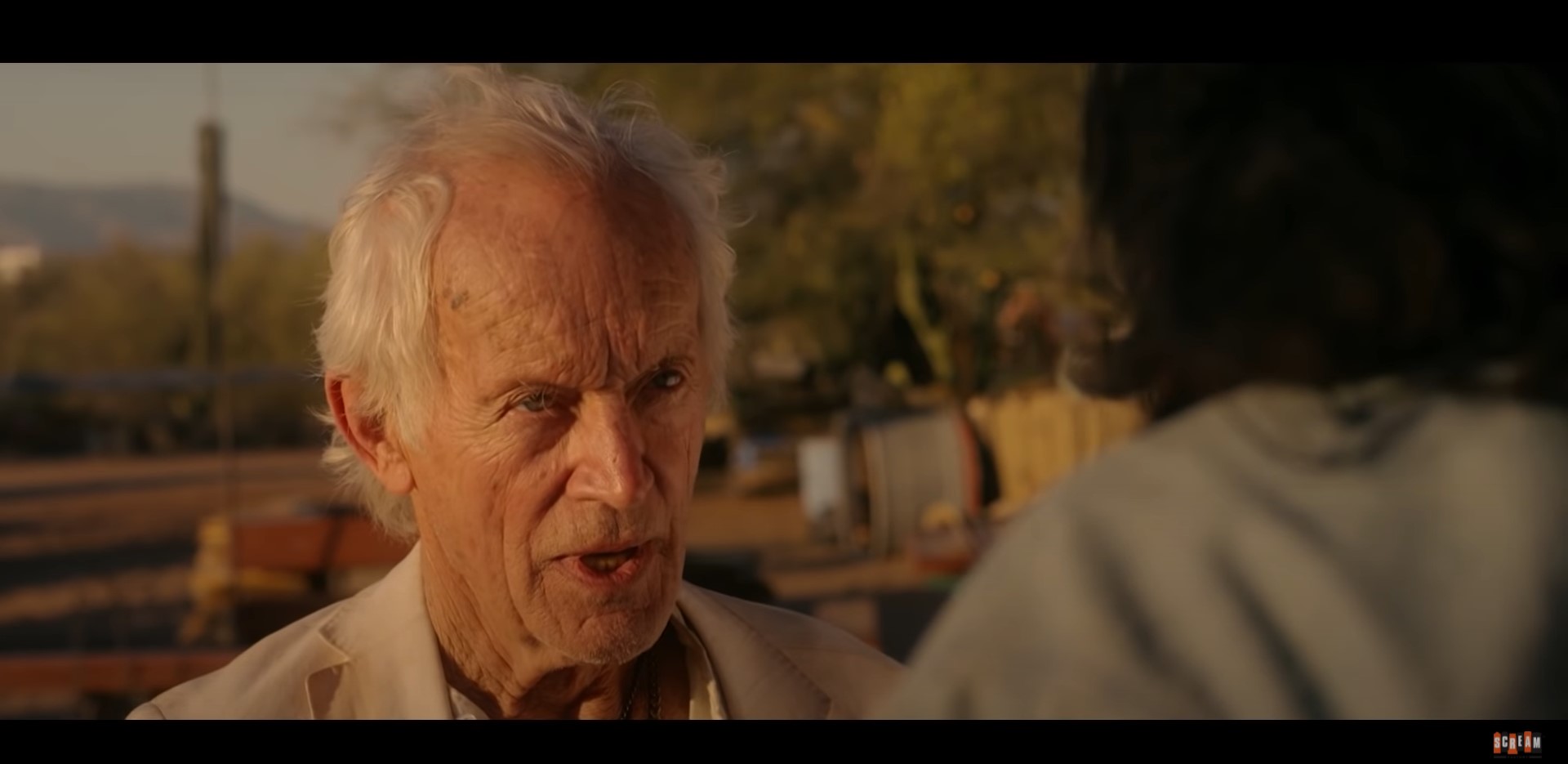
Headlined with three big and recognizable names inside the genre circles and out, the film stars Lance Henriksen (“Pumpkinhead,” “Aliens”), Natasha Henstridge (“Species,” “Ghost of Mars”) and Adam Beach (“Windtalkers,” “New Mutants”) playing variable degrees in their roles important to “The Unhealer’s” story progression and each performance never overlaps prominent personalities that can sometimes stall out and unbalance a production.   Henriksen plays a long in the tooth snakeoil salesman named Pflueger who exploits the locals with his newfound healing powers and when he’s hired by Kelly’s desperate mother, Natasha Henstridge, the scene becomes a passing of the torch as Pflueger unintentionally transfers his powers to Kelly (Elijah Nelson, “Chain of Death”) that magically heals him of his longtime psychological Pica disorder. Not so much a youthful soul anymore, Henriksen has tall tell signs of showing his age, but the 81-year-old New York City born actor can still sear memorable performances into our psyche with a wisecracking charlatan conman in Pflueger, dressed from head to toe in a shabby white suit and tossing up awkward hand gestures when deriding burial ground protecting Shaman Red Elk, played by long time serial supporting man Branscombe Richmond (“Commando,” “Hard to Kill”). More awkward in his reaction to receiving an unexplainable supernatural gift is Elijah Nelson who goes from deaths door to want to join the Navy Seals in a matter of minutes after the Pflueger plot point passes. The writing doesn’t exactly assist in Kelly’s transition with an acceptance of power without an inkling of trying to comprehend is as Kelly tries to hurt himself and tries to encourage being pounded by bullies as if he already fully understands the immense reality of his abilities. Even his mother, who under the understanding that she has tried everything possible scientific medicine man has to offer to cure her only child, is instantly okay with Kelly’s rushing into the unknown. A nearly unrecognizable Natasha Henstridge from her “Species” franchise days after a thyroid autoimmune disease diagnosis doesn’t stop the late 40’s blond beauty from being just that – a beauty – in an overly protective mother role desired by the local single men from the house visiting doctor to the Adam Beach’s Native American Sheriff Adler. Beach becomes the absent father figure for Kelly and a person who has a foot in both the Native American spiritual world and in the Anglo-Saxon realities and melodramatics. Beach proceeds as the main lead of the third act, following Henriksen and Henstridge to keep a constant, recognizable presence throughout and providing his own stamp as the voice of reason whereas the first two culminated extreme biases toward Kelly. Kayla Carlson, Angeline Appel, Gavin Casalegno, David Gridley, Mike Gray, Thomas Archer, Will Ropp, and one my new personal favorite actors in Chris Browning (“Agnes”) fills out the remaining cast.

Very early on initial reactions toward “The Unhealer” were poor mainly because of the luridly unflattering dialogue and perplexing transitions between scenes that don’t exactly hit the mark matching up character intentions, but the more I watched, the more an optimistic sensation started to arise in me. Starting small in the recesses of my cerebral film database then growing until metastasizing fully into my mind and, eventually, into my nostalgic-detecting ticker is “The Unhealer’s” robust recollection toward how fun bully-revenge-thrillers from two to three decades ago can be with a carbon copy simulation ingrained with a novel narrative surrounding Midwest Native American mysticisms carrying with it that age old “Spiderman” insinuation that with great power, comes great responsibility, but in “The Unhealer’s case, as the tagline suggests, comes great pain. Screenwriters Moore and Harris burden Kelly with a King Midas touch that no matter how hard the character tries to contain his nearly invincible power, outside forces influences and unforeseen happenstances steer Kelly toward self-destructing disaster. Between a group of buffed up and obnoxious high school jocks as unyielding tormenters, Kelly pushed into a self-protecting corner despite a generous passive attitude, especially being run over with car at one point, and the unpredictable and limitless avenues built as substory awry to make “The Unhealer” a joyful hidden gem, the Martin Guigui film on the outside appears to be a cheap, indistinguishable, B-movie, but if you dig deeper, dig until you unearth a medicine man’s ancient dusty bones, and you’ll discover deep seeded veneration, a gripping story, and dark magic carnage.

“The Unhealer” will undoubtedly fly under many viewers’ radars but is a must watch from (Shout!) Scream Factory’s distribution label in a cooperation release with VMI Worldwide (“Orphan Killer”). The full HD, 1080p Blu-ray of the 2020 production is an encoded region A release with unrated certification and a runtime of 93 minutes, presented in a widescreen 2.35:1 aspect ratio. Generally nothing to swing image quality from one spectrum to the next with a RED Weapon Dragon digital shot. Already decent at compression, the RED camera provides a crisp demarcating image in the forefront and capture the textures in a literal closeup with focus precision. “The Unhealer’s” lighting and set dresses cater less to the supernatural phantasmagoria with Massimo Zeri’s realistic Arizona landscapes and suburbia venues that don’t excite the camera with its cold truth realism rather than the mise-en-scene tropes of horror atmospherics. The English DTS-HD Master Audio 5.1 also has zip to complain about with high resolution quality with a surprising ample range of effects. Dialogue is prominent and clear as well. English SDH subtitles are an available option. Special features include one-sided individual cast/character behind-the scenes interviews which is basically cut and edited footage of the actors describing their characters in footnote fashion. The gag reel is a better feature that takes the same interview format, intertwines it with music, and lines up the gags with an instrumental soundtrack in one seamless show of goofs and hijinks throughout production. Deleted scenes and extended/alternate scenes, surrounding mostly around Kelly and Dominique’s coy love interest, cap the features. At first glance of the final package, “The Unhealer” looks totally like a rip off inside and out of the cardboard slipcover with a “Star Wars'” lightsaber color scheme and a character illustrated design underneath the title dressed in “Stranger Things” font, but don’t let parroting cover fool you as “The Unhealer’s” dark journey from being the bullied to the bully is an unabated and inescapable catch-22.

“The Unhealer” on Blu-ray home video from Scream Factory!

Meir Zarchi Returns With Another Round of EVIL Exploitation! “I Spit On Your Grave Deja Vu” reviewed! (Ronin Flix / Blu-ray)

Forty long years have passed since the sexual assaulting atrocities of Johnny Stillman and his gang were committed on the young and beautiful Jennifer Hills.  Empowered by her horrific tale of survival with the release of a new tell all book of how she outwitted and took homicidal revenge on her rapists by luring them in with her sexual persuasions, Hills finds herself back in familiar terrorizing territory being kidnapped by Johnny’s devoutly vindictive widow and three living relatives of the gang that once ganged raped and brutally beat her, but she’s not alone.  Captive with her as collateral damage is her famous supermodel daughter, Christy.  Both are caught up in an eye-for-an-eye revenge plot where being lethal is the only means of survival and with a long history of resentment, rooted deep inside Johnny’s kin, fighting back will take every ounce of resilience and strength against a community of hellbent sociopaths. 

Circa 2005-2006 is around the time I first bared witness to Meir Zarchi’s 1978 controversial exploitation shocker, “I Spit on Your Grave.”  Popping in the DVD popped open my eyes to the world of graphic vengeance and the submission to primal, carnal whims inside the human-on-human violence context.  Before Zarchi’s film, which is also known as “Day of the Woman,” and even Wes Craven’s “The Last House on the Left,” this neophyte’s description and knowledge of horror was limited to the stymies of broadcast television that only aired edited and censored slashers like the “Friday the 13th” and “Halloween” series or supernatural presences of “A Nightmare on Elm Street” and “Poltergeist.”  Never has the likes of “I Spit on Your Grave” been a red pill option into the vast horror matrix for this then college kid who glazed over with the façade of sleeping through studies and worrying over trivial matters involving the opposite sex.  In a way, Zarchi was a kind of Morpheus to me when I started purchasing physical media that opened my eyes and my mind to the rape and revenge facet in horror hidden behind the commercial veil.  In 2010, a Zarchi produced reboot saw more light in the commerciality and spawned two sequels in its wake, but not until 2019 did Zarchi get back to writing and sit back in his director’s chair to helm an official, yet less commercial, sequel entitled “I Spit On Your Grave Déjà Vu” or “Day of the Woman Déjà vu” that was produced by his limited company banner, Déjà Vu LLC with son Terry Zarchi and Jan O’Connell producing.

The long-awaited sequel reteamed Zarchi with original lead actress, and also ex-wife, Camille Keaton, distant relative of the famed comedy and stunt actor, Buster Keaton.  Camille Keaton, who looks phenomenal in her 70s during production, steps back into the infamous Jennifer Mills role that made her a household name amongst grindhouse-horror community.  Though completely nude for most of the 1978 film, that part of her performance takes a step back for a new actress to pave a new path in the saga.  Obscure indie scream queen Jamie Bernadette (“Axeman,” “The Bunnyman Massacre”) is ceremoniously passed the torched as the new riches to ragdoll as the Jennifer Mill’s unhappy supermodel daughter, Christy, who becomes haplessly snagged into her mother’s unforgotten past.  Bernadette offers a variable beauty and a diverse poise that doesn’t make Christy a carbon copy of Jennifer Hills, but the actresses deliver the same apathetic venom of a woman scorn.  More of a carbon copy is the four backwoods bumpkins fuming over Jennifer Mills’ vindictive dissecting of their dead relatives.  The gang is spearheaded by Beck, played by Maria Olsen who, like Bernadette, has made a name for herself in low-budget horror having roles in films such as “To Jennifer,” “Starry Eyes,” and “Gore Orphanage.”  Olsen projects Becky as the gas station attendant from Hell, someone you don’t want to interact too long with as you’re pumping gas in the middle of nowhere, but Becky is not a woman of a few words who constantly has to remind us, to the blistering point of annoying, that she must avenge her late husband’s sinful murderess.  The rest of the gang didn’t impress much after that.  Jonathan Peacy has a chance to shine from out of the extra and bit part shadows as the crazed and hyperactive Kevin, brother of Stanley from the original film, and while Peacy channels his best Al Leong look, Kevin is ultimate a big detrimental goof with small dog syndrome than actual menace.    The last two aren’t any better with a lackluster act by Jeremy Ferdman as Andy’s cousin and “Tales of Frankenstein’s” Jim Tavaré’s rather befuddling downplay of Matthew’s mentally disordered father, Herman, who teeters back and forth between morals with a jumbled underlay of piety.  There are not many sane performances in a rather loose and unbridled Zarchi follow up with a cast that rounds out with Alexandra Kenworthy, Roy Allen III, and Holgie Forrester.

Performances aside, “I Spit on Your Grave Déjà vu” is also a cacophony of yelling as the script, from paper to pronunciation, reaches top of the lung levels with every bit of dialogue from every player in this tussle of who’s right and who’s wrong when it comes down to justifications of killing.  Zarchi’s sequel lacks the tact his first film achieves so delicately with Mills post-assault softer approach to lay waste her assailants.  “Déjà vu” satisfies its own revenge kicks with little subtly in trying to be outrageous, outlandish, and off its rocker as the confrontation between Christy and the gang becomes a rancorous grudge match.  What concerns me most about “Déjà vu” is the year in which this sequel takes place.  Between the 1978 original and the 2019 follow up, 40 years have passed, but the characters don’t fit any of Father Time’s natural aging characteristics on the surface.  Becky looks okay as an early to mid-60s woman despite Maria Olsen’s actual age being early 50s at the time of filming and release.  Herman is another one that sneaks into fathomable constructs as a character living a farmer’s life in the latter half of middle age, but I question whether Kevin and Scotty were even born yet.  The two youngsters barely seem to be out of their 30s and the same can be said for Christy where much more of her life is revealed as the story progresses.   If following the script logic, I would assume the story takes place in the 90s, but certain technologic advances, like modern day touchscreen phones, suggests no earlier than late 2000s.  As a whole, time and space don’t appear to exist on any reasonable plane for the film with characters able to bump into each at random intervals despite being a densely wooded and rural location and, for all you cinematographers out there, if your location is supposed to be rural, don’t shoot in at a cemetery with a massive grave footprint with a stream of cars speeding down a busy suburban street.  You instantly lose the illusion.  Zarchi’s intentions were clear to only echo the original while allowing for individuality with a brasher onslaught of right versus wrong, eye for an eye, and misguided righteousness for injustice, but the execution crumbles with excruciating results, never reaching the same poetic justice the first film accomplishes so graphically grafted. 

As far as rape and revenge exploitation is considered, “I Spit on Your Grave Déjà vu” gets about as down and dirty and ugly as they come.  Cult movie curator, Ronin Flix, delivers the Meir Zarchi sequel onto Blu-ray home video, presented in 1080p, full high definition, with a widescreen 2.39:1 aspect ratio.  A+ for natural lighting, skin tones, and overall appeal, Pedja Radenkovic’s cinematography is about as uninspiring as they come artistically, but, as a personal preference, the shots are more organic, raw, and less distracting from the content that’s much more abrasive and interesting.  A more natural framework also more time for Russell FX’s practical effects to be showcased without enhanced imagery.  As long as the details are there (they are), no damage is concerning (there wasn’t), and the framing made sense (for the most part), “Déjà vu” can be considered a win for Radenkovic.  The English language DTS-HD 5.1 Master Audio soundtrack for “Déjà vu” is a blessing and a curse.  Dialogue clarity is excellent and there’s a wide range to exploit, forgive the punned term, each channel with great balance, but remember what I said about all the character yelling?  Also, with the higher bitrate DTS, the quality is too good for some of the applied ambient effects like the exhaust sputtering of an old Ford pickup that sounds way too fake and way too close despite its positioning in the scene. The region A, not rated Blu-ray is stored on a BD50 due in part to the film’s massive 148 runtime and the inclusion of special features that include a new audio commentary with film critic and “The Last Drive-In” host Joe Bob Briggs, select cast interviews, the making of the film, behind the scenes footage from producer Terry Zarchi, and the theatrical trailer. Is “I Spit on Your Grave Deja Vu” the long-awaited sequel to Meir Zarchi’s first film? I’d say they’re two totally different exploitation entities cut from the same cloth with ties only in names and some flashbacks alone, but both films would make for a great double bill that starts with a harrowing, nothing-to-lose, woebegone toned, revenge thriller complimented with a lukewarm and unfocused follow up to help come down off the original’s gripping ultra-violence high.

Ronin Flix’s “I Spit on Your Grave Deja Vu” Blu-ray available at Amazon.com!

Do EVIL, Get Dead! “A Day of Judgment” reviewed! (Severin Films / Blu-ray)


1930s rural America – the dejected town priest resigns his congregational duties after failing the local townsfolk who have all but returned to the Church and reclaim their faith in the savior lord Jesus Christ and God.  On his exit of the town’s border, the priest crosses paths with a shadowy figure riding an austere wagon and holding a scythe.  A town full of heartless schemers, adulterers, swindlers, and murders have their unforgiving stories told that leave their fellow townsfolk, their friends, and even their families left suffering in their wake.  The shadowy figure tracks each sinning stray down to face retributing judgment.  The righteous and terrible punishments send the unsavable souls to an eternal existence in Hell.

The Grim Reaper cometh. Screen cap courtesy of Severin.

What was once considered to be a Christian-centric educational project had turned into a Christian-centric damnation of horrors in the quasi-anthology “The Day of Judgment,” where the sinners of sin town deviate from the Godfearing path and into a vat of immorality and ungodly aberration.  “The Day of Judgment,” occasionally under the U.S. bootleg title of “Stormbringer,” is the one and only directorial from C.D.H Reynolds (aka Charles Reynolds), an academic educator turned briefly to film working under the legendary, North Carolina based Earl Owensby Studios that produced the 1981 released film.  The script is penned by Owensby Studios’ regular writer, Thom McIntyre, who inked the film between a pair of genre credits, including the incarcerated grindhouse actioner “Seabo,” also known as “Buckstone County Prison” a few years earlier and a snippy flick of a pack killer Rottweilers terrorizing a mountain resort in “Dogs of Hell” a couple of years later.   Owensby, obviously in regard to his own studio work, took part as the fire and brimstone tale’s producer along with associate producer and longtime “Power Ranger” director Worth Keeter curating the final touches as the creative architect of the script’s grimmest portions or more line as the assistant director of adding the bleaker, bloodier fates of the sinners.

William T. Hicks. Screen cap courtesy of Severin.

“A Day of Judgment” has a non-linear anthology-like structure that swings back and forth between different character scenarios of wickedness.  You may meet one character at the very beginning of the story and don’t meet them again, until you’re already through having sent a good chunk, if not all, of the sinners to Hell in a handbasket.  But McIntyre hones in well on setting up nicely each character’s backstory, those who the priest crosses paths with as he exits the town and delivering their ultimate demise (with an assistant from Worth Keeter’s gloomier approach).  The director himself Charles Reynolds plays the crestfallen Reverend Cage in a classic expository preacher riding out of town and crossing paths with soon-to-be-troublesome townies in William T. Hicks (“Death Screams”) as a greedy and heartless bank owner, Careyanne Sutton and Larry Sprinkle (“Trick or Treat”) as man slaughtering, pretense adulterers. Toby Wallace as the hometown disparaging mechanic scheming to steal the family business out from his parents noses to sell, Helene Tryon (“Dogs of Hell”) as the frettingly kook and paranoid old lady poisoning the local children’s pet goat, and Brownlee Davis (“Wolfman” ’79) as the delusional and disgruntled former employee of his best friend looking for a finality in revenge.  “A Day of Judgment” had this weirdly transitional acting style for an 80’s released horror that resembled the Golden Age of cinema through the 1950s and 1960s where everything is loud and pronounced without much reflection, pause, or change in tone.  Though the style sticks out like a sore thumb, perhaps Reynolds made a shallow attempt to recapture the 1930s as which the narrative period is set.  The acting isn’t terrible but is more staged and reactionary to the course of events.  The cast rounds out with Carlton Bortell, Richard Dedmon, Inga Dennis, Denise Myers, Jerry Rushing, Harris Bloodworth and Fred Roland.

C.D.H. Reynolds as Reverend Cage. Screen cap courtesy of Severin.

Earl Owensby produced films were not known to be big box office hits as they coursed the grindhouse, drive-in theater circuits with relatively unknown talent nearly strict to the back pockets of the Owensby Studios and still meeting profitable margins on low budgets.  “The Day of Judgment,” which doesn’t feel like a grindhouse film, carried meager success by way of production design and wardrobes alone.  Give credit where credit is due with an Owensby film that can dole out a variety of era appropriate automotive roadsters and specific period garments for the illusion.  Some sets are dressed scarcer than others with lots of blank spaces and sparse knickknacks to build upon the 1930’s décor but the overall impression is quite effective, transporting one out of the 80’s and into the depression era the narrative frequently suggests.  I also favored the non-linear anthology of individual hell bound circumstances as that structure rendered “A Day of Judgment” as a whole rather than a pie sliced into six-even segments with a common core connection that, at times with other films, individual stories can feel untethered to the main theme.  In today’s times, “A Day of Judgment” is severely antiquated but the more “bleaker” character demises often landed with underripe special effects and a fair amount of cheesiness that’s a Loony-Toons illustrated representation of Hell that looks more like Wile E. Coyote’s Southwest American desert home.  I was anxiously awaiting the beep-beep of Roadrunner, speeding across the screen, and the drop an ACME anvil on top of the sinners’ melons. 

Helene Tryon being dragged to Hell. Screen cap courtesy of Severin.

The overall message in “A Day of Judgment” is clear that sin and crime doesn’t pay, and the wrath of God’s retribution will come down hard in the form of a scythe.  Severin Films presents up a new Blu-ray, scanned in 2K of the original interpositive print now in full 1080p HD resolution of the widescreen 1.85:1 aspect ratio. Preserved pristine and having virtually no wear from age, “A Day of Judgment” is an amazing picture to behold for its first Blu-ray release with heightened resolution that extricates more details than possible than any other release can provide, especially when those other releases are the official VHS and DVD bootlegs. Here the color grading excellently pops with deeper hues of prime colors to provide more life into the death that’s onscreen. One thing to note about the release is the immense phosphorescence glow around whites and other lighter colors that can be eye-catchingly distracting when a piece of white paper becomes the main focus due to a conspicuous radiance. Other than that, the picture is clean, the grain is healthy, and no obvious signs of alterations to enhance the visual spectrum. The English language mono audio track, though emitting crystal clarity without any audio blemishes, is not terribly clear on whether Severin went with Dolby Digital or the DTS-HD. Other listings on the web offer up “A Day of Judgment” with a dual channel DTS-HD Master Audio while the back cover displays the Dolby Digital logo with a detached written description as a mono track, which coincides with Severin’s official site. With the film’s outmoded ingrained technology, Dolby Digital would be, to me, the obvious format that produces higher quality sound using a lower bitrate. Special features include a pair of new Severin exclusive interviews with British author Stephen Thrower of “Nightmare USA” in The Atheist’s Sins and snippet interviews from Worth Keeter and Thom McIntyre in Tales of Judgment. Final spec notes on the Blu-ray are a region free coding and has a runtime of 97 minutes. Stuck in stasis of prim and conservatism, “A Day of Judgment” has become this oddball labeled slasher of the 80s era that aimed to explore new and unusual stories and techniques on every avenue, but still leaves this impression of Bible-thumping Christian values that serve as a stern warning for all ye sinners!

“A Day of Judgment” on Blu-ray and DVD from Severin Films.  Click Here to Purchase at Amazon.com