A Gondola Ride of EVIL! “Gore in Venice” reviewed! (Full Moon Features / Blu-ray)

Check out “Gore in Venice” on Blu-ray at Amazon.com!

A man stabbed to death in the abdomen. A few feet away, a drowned woman, pulled from an adjacent Venice canal, wearing no underwear beneath her dress. A double murder of a husband and wife has baffled a young, hardboiled egg-eating Inspector named De Pol, but the inspector knows one thing for sure, drugs were certainly involved. As the inspector digs deeper into the horribly confounding case, he learns that husband and wife were into a wide variety of kinky perversions that may have led to their untimely demise. Unable to make sense of some of the case’s facts and as more bizarre murders flare up all over town, De Pol leans on the behavior expertise of the department’s medical examiner as well as anecdotes by key suspects to piece together a prurient plot of perversion-killings sought to be handled quietly and quickly before tourists catch wind of what’s happening, and more dead bodies are discovered in the unparalleled canal-laden landscape of Venice.

Sex, drugs, and eggs run rampant on the walkway bridges and watery canals of the beautifully conglomerated Venice, Italy in Mario Landi’s “Gore in Venice.”   Also known by other titles such as Giallo a Venezia, Mystery in Venice, and Thriller in Venice around the globe, the “Supersexymarket” and “Patrick Still Lives” director Landi helms one of the more controversial Italian crime mysteries to come out of the golden age of giallo horror during the turn of the decade of 1979.  A script that houses a hellbent killer in super cool and reflective aviator shades, a sex-crazed married couple, and a detective racking his brain to connect the motive dots is the last treatment penned by writer Aldo Serio in what’s a non-linear, flashback driven, sordid piece of salacious culprit candy that’s more sexually explicit than is a whodunit thriller.  “Gore in Venice” is one of the few productions of Elea Cinematografica produced by Gabriele Crisanti who has produced “Satan’s Baby Doll, “Malabimba,” “Burial Ground:  The Nights of Terror,” and many others notorious for their sleazy and gory controversial content.

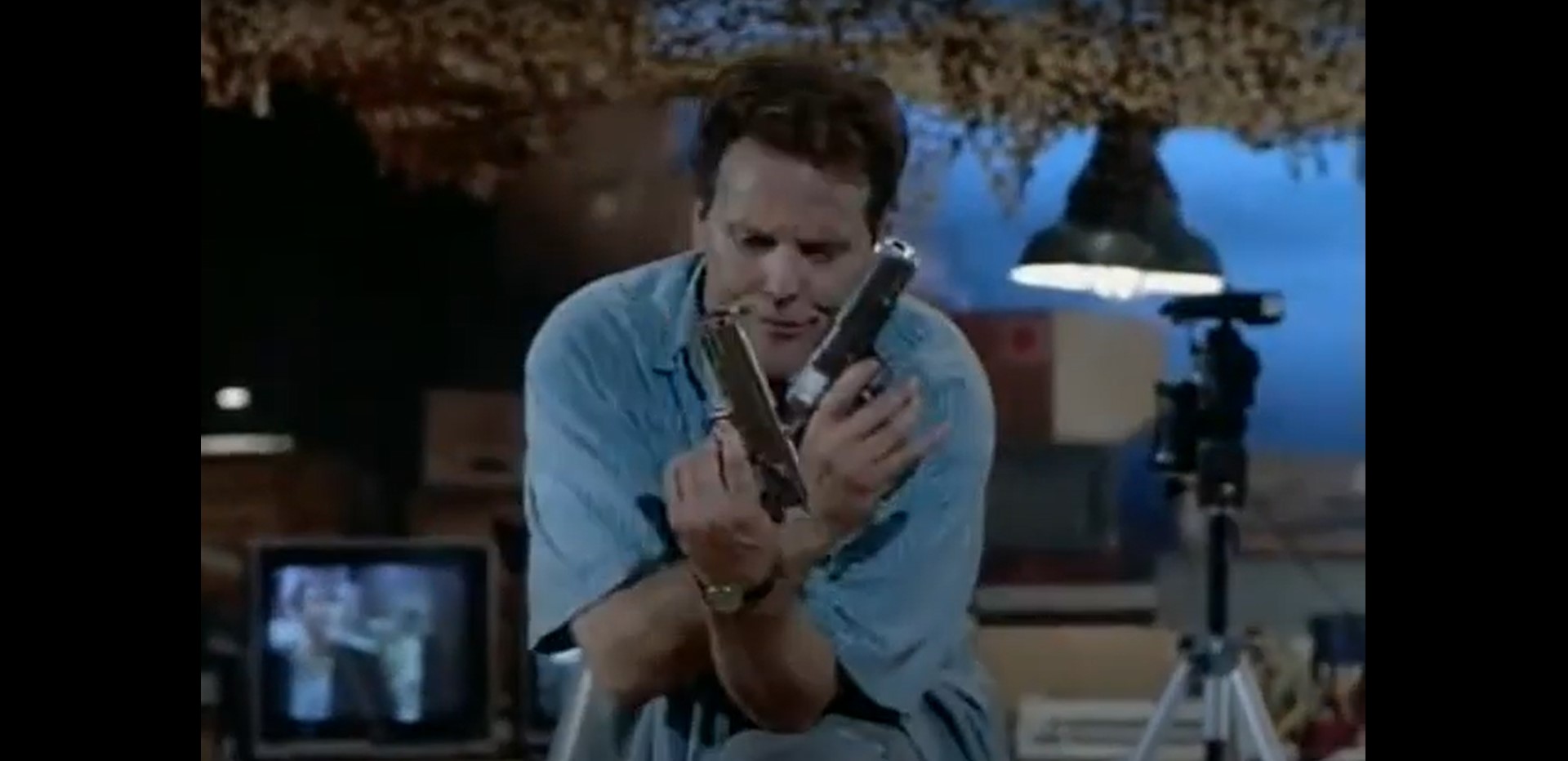
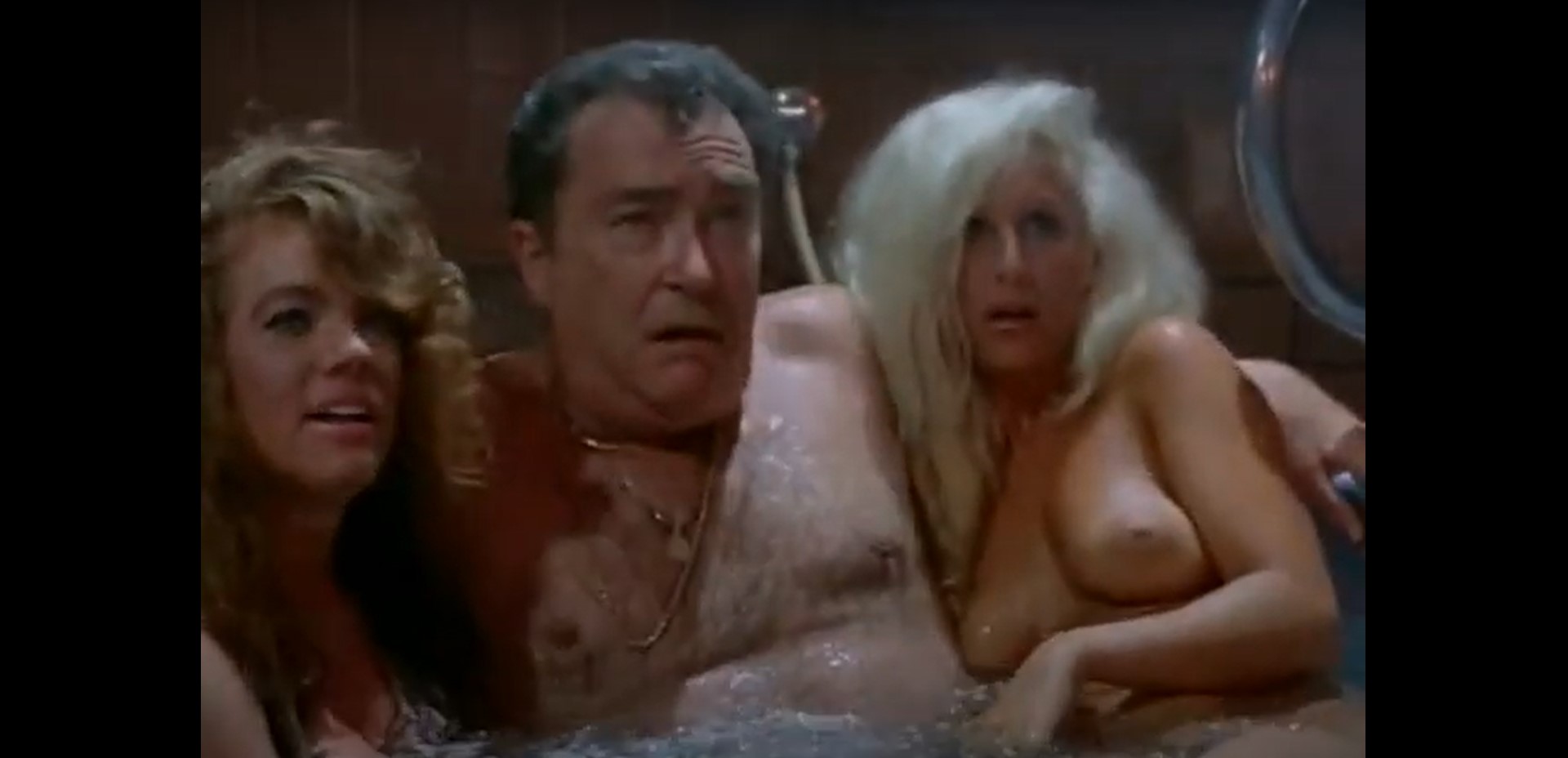
In the cast’s lead of this Italian production is an American actor.  The California-born, “Weapons of Death’s” actor Jeff Blynn has lived in Italy for much of his career and had become tapped to play youthful inspector De Pol, an arrogant prodigy of Venice sleuths with a habit of constantly cracking open and eating hard boiled eggs in the office, out of the office, at the crime scene, during the questioning in suspect’s home, and in just about every single scene Blynn is messing with an egg in a symbolic gesture of trying to trying to crack a strange case is to crack an egg strangely.  Blynn’s pale complexion, large perm afro, and thick caterpillar mustache make him stick out against his Italian counterpart costars that include Leonora Fani (“The House by the Edge of the Lake”) and Gianni Del (“Sex, Demons and Death”) as the deceased wife and husband, Flavia and Fabio.  Fani and Del’s impeccable Euro traits are flaunted all over Venice as sexual maniacs, exhibitionists, and voyeurs who take their relationship to the next level every time they step outside their character’s love nest full of erotica books and wall-to-wall mirror bedroom.  However, trouble in paradise sends the couple hurling toward jagged rocks with salacious orgy photos involving a prostitute (Maria Mancini), a drug-dealer named Marco (Maurizio Streccioni), and Flavia’s best friend Marzia (Mariangela Giordano, “Killer Barbys”) that omits no one from the suspect pool.  Not even Flavia’s ex-lover, a cartoonist Bruno Neilson (Vassili Karis, “An Angel for Satan”) is safe from Inspector De Pol’s investigation.  Unlike traditional giallo films, we’re already privy to the killer, a voyeuristic madman (Andrea Caron) with slick aviators and a complex hardon to kill everyone involved in the orgy and it’s up to Del Pol and his troupe of professional colleagues and chums, who provide not only the vigor (“Private House of the SS’s” Eolo Capritti’s gung-ho assistant to the inspector) but also sage, scientific guidance surrounding sexual deviancy (“Satan’s Baby Doll’s” Giancarlo Del Duca as the case’s pathologist).

As noted in the previous paragraph, “Gore in Venice” is less giallo than one would expect despite an alternate title denoting the film as such in Italy as “Giallo a Venezia.” Does the killer have gloved hands? Yes. Is Landi’s film stylish enough to pass criteria? Absolutely. Does “Gore in Venice” live up to the eponymous title? Blood flows freely. Yet, why doesn’t “Gore in Venice” feel like a traditional giallo? One of the more clinching reasons is the mystery dissolves roughly halfway into the story by exposing the unmasked, unconcealed killer, trailing off from that unsolved perplexity of who the killer might be at the conclusion. However, one could argue that though the killer is revealed, the question of why all the carnage still remains, leaving the giallo more or less intact. Violent tropes aside, Landi’s film abundantly saturates itself into carnal exploits that linger on-and-on more than necessary to get the point across. These scenes of masturbation, public exhibition, and raging erotic zigzag along a blurry, indistinct line of pornography, coming (and coming!) away from the intended murder-mystery subgenre with more skin and slaughter. That’s not the say “Gore in Venice” fails to live up to the moniker as the kills are as grisly as implicitly promised with a large blade to the vaginal cavity, one poor soul gas drenched and lit up like a bonfire, and a one gal having the naked legs cut out right from under her complete with an extreme closeup of the sawing pellicle perfection. Whether because of Mario Landi’s direction or Aldo Siro’s script, the explicit eroticism eats way too far into the story that, in turn, ultimately betrays any kind character development aside from the tragic perversive arc of Fabio and Flavia. Inspector De Pol often skirts around much of the action being only an investigator continuously trapped in the accounts of other people’s tales of debauchery and always one step late to the crime scene party that baffles his keen scrutinizing eye. I’m not one to deprecate graphic sexual content, especially in works that display actual fondling and masturbation in their art, but “Gore in Venice” mildly entertains as a low-end giallo albeit a spectacularly vivid and vehement blood show in front of the unique waterways of Venice.

Under one of the more slapped together and detailed shrouded cover arts I’ve seen this year comes “Gore in Venice” onto Blu-ray home video as one of the revisited classics purchased and redistributed by Full Moon Features. The Blu-ray is an AVC encoded, region free, 1080p presentation of an uncut (and uncensored) remastered feature exhibited in a full frame 1.66:1 aspect ratio. The Full Moon back cover mentions the transfer was compiled from the best available materials, but, honestly, the original 35mm print looks great with only sparse dirt specks and an occasional frame omission. Details look good as well despite the flat coloring. The Italian language LCPM 2.0 and 5.1 offer nearly identical outputs with no real composition distinction between the two others than a slightly more complex background track of motorboats ripping through the canals. There are no bonus materials with this feature only release that’s house in a standard blue snapper case and a red on black, cheesy, Eurotrash cover art for the 99-minute film. Libidinous with a capital L, expect more of sesso e depravazione with profound tidbits of gore than an engrossingly intelligent crime thriller in Mario Landi’s “Gore in Venice.”

Check out “Gore in Venice” on Blu-ray at Amazon.com!

Bestest EVIL in the Whole Wide World! “Clifford” reviewed! (Ronin Flix / Blu-ray)


“Clifford” is the Best Comedy of 1994 and Now on Blu-ray!

10-year-old Clifford wants to go to Dinosaur World in Los Angeles.  I mean, really, really, wants to go to Dinosaur World and will stop at nothing to get his heart’s desire, even if that means intentionally grounding his parent’s plane destined for Hawaii.  Clifford’s parents, on the verge of strangling their own relentless mischievous son, concocts a care plan that includes reaching out to Uncle Martin, an out-of-touch, workaholic, kid-adverse L.A. resident looking to impress upon longtime, child-longing girlfriend that he adores children.  It’s a win-win for everyone, even Clifford who’s chances to ride Larry the Scary Rex rollercoaster at Dinosaur World have significantly increased.  The perfect plan is swimmingly going well until Martin’s boss throws him a deadline curveball that sidelines Clifford’s theme park trip, breaking his promise to a more than impish little boy who has declared life-ruining war against the Bestest uncle in the whole wide world.

Yes, finally!  “Clifford” has arrived onto Blu-ray home video and just like that that mischievous little brat comes back into our nostalgic hearts.  The 1991-filmed, 1994-released PG-rated comedy is written by “Back to School” duo Steven Krampmann and William Porter and directed by Peter Flaherty, director of “Who’s Harry Crumb?” and Martin Short’s pseudo-late night talk show series “Primetime Glick.”  If you don’t see Krampmann or Porters’ names in the pre- and post-credits but notice Jay Dee Rock and Bobby van Hayes scrolling by than that’s because the writers used pseudonyms to quietly disown the finish final film that was embroiled in questionable approaches such as hiring Martin Short, a then 40-year-old comedian-actor, to portray a 10-year-old boy.  Yet, the bizarre comedy that has a talented cast as well as a demented and twisted side to it has gained a rather quiet cult following.  Larry Brezner (“The ‘Burbs”) and Pieter Jan Brugge (“My Demon Lover”) produces “Clifford” and is one of the last releases to trickle out from Orion Pictures before their unfortunate bankruptcy. 

Through extremely creative measures to ensure Martin Short can sell the physicality of a prepubescent boy on screen, “Clifford” is one of the former SNL performer’s best and memorable roles amongst his arsenal of personalities.  The naughtily tormenting persona with a Devil’s grin and absent eyes for sympathy brings Clifford to a level that’s analogous to a fixated horror villain setting a target goal of destruction, mayhem, and chaos. No one is safe from Clifford’s duplicitous trajectory, not even Uncle Martin played by the late, great Charles Grodin (“Midnight Run”) who provides his standard uptight and exasperated character at first but slides into a sinister nihilism when push beyond the point of return. Short and Grodin are centric to the story, phenomenal dynamically, and funny at very second despite how antiquated the content and comedy is at 30 years old. Seeing Short play a little boy doesn’t even register he’s a grown man in an adolescent role and that’s how good Martin Short can massage the material in his favor. You see Short, you see he’s a kid amongst the rest of the cast, you see his childish exploits, and, yet, none of that is troublesome, bothersome, or even a tiny bit weird as you’re drawn into an overexaggerating, yet highly relatable, parenting hardships in negotiating with out of control, scheming children and the pure, unabashed wackiness of Martin Short who, in my mind’s eye, is essentially in a step-down version of his iconic Ed Grimley personality. Bringing down Short’s antics and Grodin’s disgruntled demeanor is the measured Mary Steenburger (“Back to the Future III, “Powder”) subduing, in a good way, audiences as Uncle Martin’s lowkey love interest to bring us down from the eccentric shenanigans. The casting is overall tight on those three leads but Dabney Coleman (“Dragnet”) becomes the sleazy bigwig wedging between his employee, Uncle Martin, and Martin’s girlfriend, Richard Kind (“Stargate”) searching for patient with his insufferable Clifford, Jennifer Salvidge (“Evolution”) as Clifford’s yielding, but equally as exhausted, Clifford’s mother, and “Little Monster’s” Ben Savage as a troubled youth set to follow Clifford’s footprints.

How does “Clifford” hold up to today’s comedies? Rated PG, the 1994 film lacks the big hitting criteria that ultimately slaps stricter rating labels right onto the trailer and home video covers, that ultimately bring in audiences with sex, violence, and harsh language, but “Clifford” isn’t a kids’ film per se and subtly lands more adult oriented and sexually suggestive one-liners and scenes that wouldn’t fly by today’s standards. In fact, I personally believe the entire production would have been scrubbed if the first casting choice for a young boy was a 40-year-old man. Movies like “Clifford” are relics that should be treasured because we’ll never see comedy like this again and that’s what makes “Clifford” a part of cult cinema. “Clifford” doesn’t need itemized fixings to be a great story and to possess substance to be a phenomenal film. Instead, the idiosyncrasies of the plot and the singularity of talent glue the first draft of the inane script together in its finished product, rewinding that chunky gray and white brain matter and the bits of skin, tissue, and tufts of hair back into and onto the head after having its top blown thinking, how the hell do we pull off this script? The first two acts are character building and about the dynamics of two conflicting temperaments that ensue a series of tit-for-tat jail landing pranks and a slew of grating and passive insults, suggesting a character-driven, quirky slapstick story of growth and understanding between the two sides. However, the third act shows another, unexpected side of “Clifford” that revels in Uncle Martin’s vindictiveness after having his mind and spirit broken by a child’s chastising for breaking a promise and Flaherty goes big and berserk with the Larry the Scary Rex rollercoaster (which looks amazing to ride to this date) to which the calamity of events culminates an epiphany for one of them, abetted by the fact a run amok mechanical dinosaur nearly chomped down on a human-sized snack.

“Clifford’s” mischief and mayhem in hi-def never before has looked so good on this new U.S. release Blu-ray from Ronin Flix in association with Scorpion Releasing and MGM. The region A, 90-minute release is presented in 1080p and in an anamorphic widescreen, 1.85:1 aspect ratio, and much like the Blu-ray’s front cover of blown-up headshot closeups of Martin Short and Charles Grodin and a crumbling two-story home that’s not a component in the film, the picture quality also appears to be a bit stretched, leaving details slightly scattered and marginally pixelated. The transfer print is without a doubt clean and discernable but retains the original, untouched up MGM anterior. The English language DTS-HD Master Audio 2.0 is the only audio option that provides a good mix and balance of dialogue, chaos, and everything else in between to come together for a gratifying dual channel audio alloy. In extreme instances of bickering, high level pranking, and even the clamorous and deep dino-discharging climax, much of the details remain intact and clear without losing distinctiveness. The Ronin Flix Blu-ray is a feature only release with no software or hardware bonus content. With or without bonus features, the film itself is worth the cinematic calories as “Clifford” shines as arresting tale full of laughs, heart, and anarchy and is a hellraising life-amenity that shouldn’t be lived without.

“Clifford” is the Best Comedy of 1994 and Now on Blu-ray!

EVIL Spirits and Japanese Internment Camps in “The Terror: Infamy” reviewed! (Acorn Media International / Blu-ray)

Chester Nakayama floats through life living with his immigrant parents on Terminal Island in San Pedro, California during World War II. A photographer hobbyist who helps on his father’s fishing boat and studies at a university, Chester doesn’t have steady employment and has recently learned his girlfriend, Luz, is pregnant with his baby. But those are not the height of Chester problems, or his family’s, when the country of Japan declares war on the United States by bombing Pearl Harbor and mysterious deaths surrounding the Nakayama family point to ancient Japanese beliefs of a Yūrei, or a ghost, clinging to a grudge. As the years past, Japanese American citizens are move from one internment camp to the next with no end in sight being projected as potential spies for the country of the rising sun and for Chester, Luz, and his family and friends, the Yūrei’s scheme endangers Chester’s life and legacy.

Following the success of the Ridley Scott (“Alien”) produced AMC horror television series, “The Terror,” the second season aims to build a new path of dread with a storyline plucked from the late 1900’s of two stranded artic explorer British ships trying to navigate a Northwest passage and now placed in a whole new and different, massive turbulent story and setting laid out in the early-to-mid 20th century during World War II America with Japanese Internment camps.  The second season comes with a partially new title, “The Terror:  Infamy” along with a new cast and new crew as well.  The subtitle’s double entendre refers to the then era United States 32nd President Franklin D. Roosevelt’s Day of Infamy speech given to the public after the assault on Pearl Harbor and also refers to another American infamous time of the mistreatment of the country’s own citizens, the Japanese Americans, placed into internment camps and constantly scrutinized as potential Japan spies.  “Infamy” showrunners Guymon Casady, David Kajganic, Scott Lambert, Alexandra Michan, Jonathan Sheehan, and David W. Zucker, along with Ridley Scott, return to the AMC, Entertainment 360, EMJAG Productions, and Scott Free Productions series.

At the tip of the ensemble cast spear, most consisting of Japanese heritage actors and actresses, is Derek Mio as the Yūrei plagued Chester Nakayama.  Perhaps the biggest role for the Mio, the role transcends Chester from a stagnant part-time fisherman on the dead-end Terminal Island settlement of San Pedro, California to a responsible man of action that sees Chester fight for his family, his wife, his children, and even fight for his country despite the maltreatment in order to course his loved ways safely through a plethora of evil.  While the character grows in an arc of accepting responsibility as a son, husband, and father, Mio never expresses the range of a story of his magnitude that takes him across various domestic terrains and on the other side of the conflict-engulfed world as he’s afflicted by a malevolent spirit.  Constantly confident and seemingly unafraid, Chester just simply endures the hardships along “The Terror’s” bombardment of grim reality.  Comparatively, the younger Japanese American generation are culturally more expressive next to the immigrated older generations in Chester’s father (Shingo Usami) and eldest family friend Nobuhiro Yamato (“Star Trek’s George Takei”) who we witness keep mostly in line with their stoic composures.  Takei, born in 1937, and his family were actually forced into living in converted horse stables and official internment camps across the country during the War and that gives the series a morsel of 100 times it’s weight in authenticity with firsthand experience. Along with the deep sympathies and an infinite amount of shame for the wrongfully imprisoned citizens of war, there’s also immense compassion for Chester’s wife, Luz, played by Chrstina Rodlo (“No One Gets Out Alive”). Rodlo runs the gambit of emotions that convey happiness with her time with Chester, to despondent loss, and to fear while on the run from the American government as well as an evil spirit who threatens her child. Just like the first season of “The Terror,” character staying power is often short lived as the horror and, well, the terror catches up to them in one way or another, but we see fine performances from Miki Ishikawa (“I Don’t Want To Drink Your Blood Anymore”), Naoko Mori (“Life”), Alex Shimizu, Lee Shorten, Hira Ambrosino, and Kiki Sukezane as the incessantly stubborn Yūrei and C. Thomas Howell (“The Hitcher”) with another flimsy performance as a hardnose major serving as head of an internment camp.

Subtly contrasting two very different kinds of horror between the yore of the fantastical Kaiden ghost stories coming to fruition with the Yūrei and the very non-fictional blight on American history that was falsely imprisoning American citizens with Japanese roots no matter what age. Both unsettling constructs are unequivocally provided equal weight in dread much like with season one that showcased the dog-eat-dog desperation of man isolated and trapped in extreme terrain with the supernatural forces of nature with a monstrous, polar bear like creature hunting them down one-by-one. Though the same dance, but a different song, season two has a very welcoming different take of blending of yore with lore that separates itself into a new entity, a new engagement, and a new facet of terror very befitting to the anthological series. Eventually, “Infamy” starts to lose steam when the Yūrei side of the story insidiously infringes fully into the fold when Chester and Luz have fled the internment camps and are living in nowheresville New Mexico. The camps fade away from the story and also from our consideration with only bits and pieces to chew on just to check in on principal characters and has a resolution that’s about as cheated as the Japanese Americans survivors given $25 by the American government to start a new life. Yet, “The Terror: Infamy” is poignant and informative, a better picture of what really happened on the American home front better any textbook could ever properly depict, and exposes the mainstream into the Kaiden-verse of Japanese culture.

The 2-disc, 10-episode Blu-ray set comes from UK distributor, Acorn Media International, with each episode with a runtime on an average of 40 to 45 minutes long and a total runtime of 419 minutes. The region 2, PAL encoded release is presented in a standardized for television widescreen format of 16X9 and the Acorn release doesn’t present a flawless picture with noticeable issues with severe cases of banding and compression artefacts around the darker portions of the scene and trust me, “Infamy” is plenty dim and leaden between John Conroy and Barry Donlevy’s cinematography unlike the previous season’s artic white landscape that brightens much of the frame. The Dolby Digital soundtrack produces a better product with satisfactory quality in all categories of score, ambient noise, and dialogue and is accompanied by well-synced and timed English subtitles. Bonus features include a look at the series part 1 (for disc 1) and part 2 (for disc 2) and the biographical and inside the head look at the characters through the eyes of their portrayers. “Infamy” is UK certified 15 as it contains the AMC edginess of bloody graphic content as well as some offensive language. “The Terror” series as a whole has remarkable historical insight commingled with soul-stirring, skin-crawling old wives’ tales. “Infamy” may not supersede its predecessor but is still one hell of an engaging and unique story that salivates us into wanting a third season.

Weekend’s Over. Tomorrow’s an EVIL School Day! “Monday Morning” reviewed! (MVD Visual / Blu-ray)

Pick Up a Copy of “Monday Morning” Now on Blu-ray!

At Oceana High School, you’re either one of the local kids or you’re nothing. That’s how the aspired musician Bobby Parker and his friends are treated when their parents are transferred into town to build a powerplant. Shunned, ridiculed, and bully, Bobby can’t seem to catch a break even when he steals the heart of Noreen Hedges, a popular local and the sister of most bigoted bully of them all, James. To James who has essentially the entire town behind his way of obnoxious, intolerant thinking, Bobby Parker is no better than scum and is unwelcome anywhere in town, even at the local waterhole called The Shandy. After sneaking into The Shandy to see Noreen, Bobby is left in a heap of trouble with the law when a near fatal accident lands one of the local girls, James’s girlfriend, in the hospital. Looking to teach him a lesson he’ll never forget, James and his lackeys bring a gun to school to scare him but when a teacher is shot and James finds himself holding hostage his homeroom class with the gun, he’ll need to prove his innocence to his narrow-minded classmates as well as the police with itchy trigger fingers.

Mondays are the worst. When you’re a teenager coming off a weekend, that bell ringing at the start of the week is worse than fingernails on a chalkboard. When you’re a teenager who’s constantly bullied by popular jerk and the entire prejudging town that only sees you as an outsider, Mondays could shoot anyone’s nerves. Shoot being the key word in Don Murphy’s 1990 release feature film debut, or rather his only feature film credit, “Monday Morning.” Also known as “Class of Fear,” the cult drama with a classroom shooting at centerstage of the narrative feels awfully relevant in today’s tumultuous time of school and mass shootings. Where the topical issue of gun control is on the edge of every Red and Blue politician’s lips. For Don Murphy, who went on to produce notable blockbusters such as the “Transformer” films as well as cult hits with “Apt Pupil” and “Natural Born Killers,” “Monday Morning” is just a movie without any kind of political or social commentary behind the surface. In fact, Murphy has stated that production was initially a student film that evolved, but the theme behind reality and fantasy are the same in that children-bullying-children can push fragile minds beyond a breaking point. First A.D. of “Caged Heat 3000” Sheila Lightfoot produces the film alongside Murphy as executive producer under the production banner Team Angry Filmworks, Inc.

Noah Blake, the son of child star turned accused wife-murderer Robert Blake, steps into the constantly ragged on shoes of ostracized struggling high schooler Bobby Parker.  Bobby’s a never-say-die, never-give-up good guy given a cruddy hand in life as he’s dealt blows not only by his school peers, but also by his father who throws him out of the house for not living up to expectations and even by his band of like misfit friends for being traitorous for trying to live outside the confines of his unwanted status.  Bobby’s an extremely likeable and evolving character to almost a fault as he walks into foreknowledge adversarial situations without so much a clue on how to handle unprovoked hostility other than head on.  Perfect in the role that’s aggravatingly inspirational on how everyone should be pigheadedly neutral and able to see the good in everything, the “Piranhaconda” actor Blake takes Bobby Parker by the reins and lets the character be a subject of unbridled victimization.  One of the more conspicuously unhinged and douchey performances, landing this actor on the opposite end of the spectrum in contrast to Noah Blake, goes to Brandon Hooper as pretty boy bully James Hedges.  You really want to just punch James square in his pointy nose because of his incessant nitpicking and tunnel vision on making a crusade out of tormenting Bobby Parker for being in the platonic presence of his girlfriend (Shannon Absher, “Blood Nasty’) and having a romantic relationship with his sister Noreen (Julianne McNamara, “Saturday the 14th Strikes Back”).  What’s curious about “Monday Morning” is its ability to drop Bobby Parker’s friends from the principal lineup, with the exception of Bobby’s ride-or-die bestie Bill (Karl Wiedergott, a “The Simpsons” utility voice actor) though initially saturating the narrative with their bickering and turn the attention more on the town’s chief of police, played by “Sorority House Massacre’s” Fitz Houston fitting into his usual typecast role in law enforcement, by introducing one of the classroom hostages as his son (Vincent Craig Dupree, Julius from “Friday the 13th Part VIII:  Jason Takes Manhattan).  Rickey Dean Logan (“Freddy’s Dead:  The Final Nightmare”), Marta Marin (“Mindwarp”), Nicole Berger (“American Cyborg: Steel Warrior”), Jason Lively (“Night of the Creeps”), Brian Cole (“Mortuary Academy”), Paul Henry Itkin, Annie O’Donnell, and Lisa Rinna round out the cast.

How writer-director Don Murphy describes his film is “The Breakfast Club” with guns.  Granted, Murphy’s firsts draft contained more angst as an angry student holds the whole class hostage at gunpoint for the near entirety of the story, but “Monday Morning” is more akin to “Pretty in Pink” with A gun, isolating teenage cliques, trying to overcome their pressuring biases, and exposing differences in social classes and mistook attitudes.  Most of the film is building up to the clinching climatic classroom moment with Bobby trying his damn hardest to be a bridge between the gaps in a “Romeo & Juliet” type relationship that connects spurned outsiders with the spurning locals.   “Monday Morning” is a very contained narrative with only a handful of locations, primarily Oceana High and The Shandy, grounding the scale to a much more condense and story friendly design that’s easy to follow and digest.  That design isn’t turf war central.  We’re not talking about an all-out war between the Jets and Sharks.  Murphy, who often co-credits the final script to another screenwriter, rains down a supercell storm cloud’s rain and lightning on the downtrodden outliers to garner a tremendous amount of sympathy and to really beam lasers of hate into the local louts that essentially becomes a turf war just from their perspective for fear of losing their lionization over Oceana and the town.  “Monday Morning” embodies that quirky 1980’s teen melodrama with a very real, very terrifying, and very present-day topic that bumps Don Murphy’s movie up into the cult category.

We all agree that Mondays suck, but “Monday Morning” is a Monday associated gem of a film that is now available on a high definition 1080p Blu-ray from Angry Films and MVD Visual as part of MVD’s Rewind Collection banner.  The new transfer, taken from the original camera negative of a European based filmstock, is presented in a widescreen 1.85:1 aspect ratio.  The transfer release is reasonably well-dressed in color, with an ever so slight teal or gray tinge, and a good enough, above average decompression rate around 28mbps.  The transfer does display flashes of damage that look very much like tracking lines, but also could be light exposure on the negative.  The audio remains at an English LPCM 2.0 mono and contain static throughout with hissing in portions of the dialogue; however, the tracks are relatively clean enough for discerning dialogue.  Bonus features include a high-def, near feature length interview with writer-director Don Murphy doing a deep dive into his background, the film’s backstory, and his recollection of events throughout his career, a high-def, 24-minute Don Murphy from 2019 that looks at the producing career of the filmmaker, and the standard definition VHS version (1.33:1 aspect ratio) of “Monday Morning” under the alternate title “Class of Fear.”  The physical release comes with a reversible case cover art with alternate “Class of Fear” and a collectible mini-poster insert housed inside a clear Blu-ray snap case with a cardboard slipcover of the same primary cover except with faux cover damage to resemble a worn-torn rental.  Both versions of the film run at 105 minutes and is rated R.  A timely release for “Monday Morning” as a film that’ll reexamined and rethought of from its original entertainment purposes to be said that the issue has long since been prevalent and in the back of our minds.

Pick Up a Copy of “Monday Morning” Now on Blu-ray!

EVIL Won’t Let You Just Kill Yourself Even If You Wanted To! “Violator” reviewed! (WildEye Releasing / DVD)

“Violator” on DVD from Wild Eye Releasing and MVD Visual!

Desperate to track down her sister Naomi who becomes involved in an online social media forum about mass suicide, a woman’s investigation leads her on a train ride to a small village on the outskirts of the city.  There she meets Red Sheep, an internet handle for the mass suicide form greeter for those individuals seeking to give up their life willingly.  Returning her to the abandoned house where congregated patrons of their own demise wait for forum members from all over to gather before stepping into the afterlife, but the beneath the surface of simply drinking the Kool-Aid together is a wretched plan of death and self-inflicted suicide is not in the ill-fated stars for the group now sequestered in an isolated town. 

When the film is titled “Violator” and the very first images on the screen are flashing title cards, warning of violence and depravity from what you’re about to see, then a graphic intensity bar has been firmly set with the expectation that disturbing content is afoot.  The Japanese 2018 released horror-comedy comes from the cyborg-splattering mind of “Meatball Machine” writer-director Jun’ichi Yamamoto and is a continued part of the tokusatsu horror genre peppered with familiar Japanese motifs of mass suicide, samurai sword, oral fixations, and all with a pinch of Kabuki!  Yamamoto is no stranger to the Kabuki culture as he works in a callback scene and line from his 2008 actioner “Kabuking Z:  The Movie” into “Violator’s” evil eviscerating and executing entrapment.      

I wouldn’t call “Violator” aces in acting, but I’m not speaking to the general known fact that Japanese portrayals are often over-the-top exaggerated, and I’m referencing more toward the lack of selling the bizarre by any means possible.  The cast more than often feels like a rehearsal and robotic to the point where picking out cues can be almost a game.  Most of the cast are once overs or have a select history in the indie-tokusatsu market.  The biggest name in the film also has the shortest screen time with Nikkatsu Roman Pink film actor Shinji Kubo as the leader of the pact who lures lost souls to the abandoned house of doom.  Kubo doesn’t make or break “Violator,” but his character is pivotal in turn of events that alters the course of a few particular principals. Mai Arai plays the worried sick and searching woman tracking down her sister Naomi (Sora Kurumi) before she makes a grave suicidal mistake. Along the way, Arai’s character bumps into a mixed company of varying personalities revolving around their own death – one early 20-something young’un treats her suicide like the next cool thing, another ostentatiously can’t commit, and while another couldn’t be bothered by anything else surrounding her and plays it cool. The small village inhabitants are just as diversified and as quirky as the emotionally haphazard suicidals but with special, supernatural abilities to absolutely mess with their minds until satisfying their morbid, high-on-death munchies. Shinichi Fukazawa (“Bloody Muscle Body Builder In Hell”), Shun Kitagawa (“Prisoners of Ghostland”), Kanae Suzuki, Anna Tachibana (“Corpse Prison”), Ichiban Ujigami, and Rei Yatsuka round out “Violator’s” cast.

With a provocative title and a stern, flashing warning for taboo content, “Violator” starts off slow and continues so until about 3/4s into the film. Yamamoto glides not the sliced underbelly with murderous rage and profane callous through sexually and wicked means. No, Yamamoto builds each individual character, giving the what’s usually throw-away victims the time of day with a prolonged preface before their death that sets in who they are, what mindset they’re in, and, instead of just being collateral damage, what catalytic action becomes their ultimate undoing. By providing singular personalities, Yamamoto instills a breadth of subconscious care amongst the audiences that unintentionally react with the pangs of sympathy for the less naive during their demise to a straight up I’m glad they’re dead death because of their horrible unprincipled being and them dead makes the world a better place. Eventually, Yamamoto turns the keys to rev up the havoc as the death pact suicide squad disband into distinct, slasher-esque junctures to make good on the promise of building the character to give them a proper cutthroat curtain call and it’s about this time “Violator’s” pre-film turpitude caution actually applies with strange ritualistic kabuki decapitation, a virginal last-gasp cunnilingus before a protruding vaginal spear pierces through the skull, and a toy doll becomes a literal eye-opener for a suicide documentarian. Idiosyncratic in their own right, the kills are a violent spectacle that make “Violator” memorable enough to not forget it, but there’s far worse inflammatory material out there in the world of cinema that “Violator’s” handful of okay kills doesn’t exactly set off our internal omigod alarms.

“Violator” is the kind of off market brand and violence-laden film that fits like a glove with indie distributor, Wild Eye Releasing, in association with Tomcat Films (“The Amazing Bulk,” “Mansion of Blood”) and is perhaps one of the best releases out from the shlock usually produced from the latter company. With a muted colored and basic arranged DVD cover mockup that evokes every suspicion of an unauthorized release, I couldn’t love this cover any more than I already do with the promising depiction of a hysterical bloodbath and the singular moments represented in the collage of carnage and madness don’t stray away from the truth. The not rated DVD is presented in a widescreen 1.78:1 aspect ratio with a runtime of 72 minutes. DVD image quality is not terrible with a rate of decompression hovering around 6-7 Mbps, but still a little fuzzy in particular scenes with more than one character present and a in low-lit show production, that can hinder the viewing. The Japanese language PCM stereo track has no real flaw to speak of with a good synchronous English subtitle track and no detectable compression issues other than the lack of surround sound audio strength. The metal soundtrack also didn’t align, or rather clashed, with the mise-en-scene, added for just the sake of adding to make the story edgier. Bonus features include only a scene selection and trailers on a variable menu. Coy and different, “Violator” thinks outside the box with a simple supernatural revenge narrative that penetrates slowly at first but then really rams in the sudden disarray without a precautionary moment to lube up first.

“Violator” on DVD from Wild Eye Releasing and MVD Visual!