A Eurotrash Mosaic of EVIL. “Jailhouse Wardress” reviewed! (MVD Visual / Blu-ray)

“Jailhouse Wardress” now on Blu-ray!

After the fall of the Nazi Reich post-World War II, one of the more cruel SS-Officers, Muller, is dispatched to South America where he establishes a women’s prison camp and appoints a likeminded, lesbian female warden with strict punitive measures if the inmates don’t fall in line and follow the rules or instruction.  While Muller governs the area, disorder courses its way through the camp when a plea letter to the state, describing in detail the horrors inflicted upon the women at the camp, such as torture and private cells for sex with the inmates, is intercepted before leaving the premises.  At the same time, a young, newly processed inmate, who had killed her rapist uncle in self-defense, plans a daring except.  The once well-oil authoritarian sex prison quickly becomes unraveled by unruly prisoners who’ve had enough with the eternal inhumane debauchery and with the exterior assistance of Jewish liberators and assassins, freedom is all but knocking at the door.   

Hot off the heels of Neon Eagle Video’s Blu-ray release of “Kill Butter Kill,” a Taiwanese rape-revenge narrative that’s been jumbled up with re-edits to engender a whole new structure, we dip into another Blu-ray remix, soaring from Asiatic East to the Western Europe with “Jailhouse Wardress,” a Alain W. Steeve hardly directed women-in-prison schlocker pieced together from three earlier Nazisploitation and caged-women exploitation features with barely any new footage used a binding agent to construct a concentrated concentration camp plot.  Steeve, a pseudo-surname for Alain Deruelle, a pornographic director who did helm “Cannibal Terror” under the name Alain Thierry, hodge-podges a new sordid camp exploitation picture out of already near the bottom-of-the-barrel features that sparked very little lewd cheekiness of sleazy Nazi oppression and the perversities of a hard labor with hard bodies in a women’s prison camp.  France’s Eurociné is listed as the production company but unsure if there was any company backing or shooting the new spliced-in footage since Eurociné outfitted the trio of features used to make up more than half of “Jailhouse Wardress;” these films included “Barbed Wire Dolls,” “Last Train for Hitler,” and “Elsa Fraulein SS.”

Unlike “Kill Butterfly Kill,” much of the new material shot for “Jailhouse Wardress” incorporate different actors into already established roles of the component films and with the scenes going back and forth between new and archive footage, keeping up with a fluent narrative is more difficult than said.  For instance, two different actors play Nestor; Germany’s Eric Falk (“Blue Rita”) footage from sparingly used from the “Barbed Wire Dolls” and most of Nestor’s scenes lie with X-rated and softcore French actor Didier Aubriot (“Naked Lovers,” “They Do Everything”) barking the orders and taking what he wants from the freshly instilled and scantily uniformed actresses inside the cages with Pamela Stanford (“Blue Rita”) and Nadine Pascal (“Zombie Lake”).  You can tell their scenes are newer, fresher, with more color emitting from a different film stock and camera combination compared to the brief, desaturated appearing scenes of Eric Falk who never touches the women prisoners in Beni Cardoso (“Scalps”), Lina Romay (“Female Vampire”), and Martine Stedil (“Marquise de Sade”) who bare a lot of undercarriage bush as a gratuitous rite of exploitation culture.  Much is lost not only in a re-dubbed soundtrack of the source films but what’s also lost heavily are the character attributes that left behind from the original films, such as the prison director’s (Monica Swinn, “Love Camp”) brutish lesbian demeanor with “Last Train for Hitler’s” Ingrid Schüler.  This type of devolving reshapes the characters for worst, takes away much of their cruelty and passes it along to predominantly to the newer footage of Teresa and Lola at the naked mercy of the newer Nestor.  “Jailhouse Wardress” fills out the archive and new footage German, French, and English nationals cast with Eugénie Laborde, Bob Asklöf, Michel Charrel, Peggy Markoff, Paul Muller, Sylvie Darty, Ronald Curram, Maria Cavour, and the archive presence of Jess Franco in a normal camera speed slow-motion flashback death scene as Uncle Jess in this particular feature.

“Jailhouse Wardress’s” old, new, or however you wish or feel compelled to describe the mismatched footage ultimately compromises the plot by the cut-and-paste hack job.  A slight attempt can be seen made to align new and old footage for sequence editing but without a seamless grading and more similar costuming, the events never feel in the same space, creating more a schism between the two material footages rather unifying for a common narrative.  Subplots, such as the imposter prison doctor or the Jewish hit on the Governor, are more prominent than the actual foundational plot so there’s a hindrance of uncertainty to what should be the main premise, including the Nazi angle that seems to vanish without much of a fuss, and the brain works in overtime trying to follow one scheme to then have to jump to another without traversing that pivotal straight line that connects the dots, leading to a complete mental shutdown due to exhaustion and confusion.  What doesn’t help matters is the arterial lifeforce, the purposeful exhibition of exploitation, the whole reason why we watch through our subconscious sadistic eyes women become slaves to ruthless perverts, is severely castrated on a couple’s sexploitation scale.  Much of what is shown is solo work; women lying in bed bottomless or are stripped nude for only a few moments of touching or taking by force without much of a fight.    

The ”Jailhouse Wardress” receives the high-definition Blu-ray treatment from our friends at MVD Visual as part of their MVD Classics label.  The AVC encoded, 1080p, BD25 suits the patchwork Alain Deruelle (and Jess Franco in archive footage only) feature.  While the 2K scan looks pretty darn good for a schlocky eurotrash pastiche, the print used is a gut-punch to videophiles hard-pressed on image quality and preservation.  Presented in a more consolidated pixel count of 1.42 aspect ratio, the print, or at least the “Barbed Wire Dolls” was originally in the European aspect ratio of 1.66:1 as you can see the letterboxing during the titles and they eventually expand out, stretching the image.  The print is in rough shape in its spliced up format with its seam-showing different graded parts that creates a back-and-forth inconsistency.  “Barbed Wire Dolls” is shades darker, grittier, and less definable than inserted shoots.  There’s an abundance of print damage too from frame damage to vertical scratches, mostly early into the runtime.  With the inconsistent picture quality, grain never looks healthy as the amount fluctuates and, often times, becomes more an interference of higher contrast exposure in darker portions.  Both audio options are in an uncompressed PCM 2.0 mono format and you listen in with dubbed English or in the combined original and dubbed French.  Not the flawless audio to ever come across but neither is the worst but what’s inlaid is untouched mix that contains all the hissing, crackles, and pops that blight the audio thread.  Yet, dialogue remains intelligible, thanks mainly to the dub work I suppose, but if you don’t mind Pamela Stanford’s sounding like Smeagol than this audio dub is for you.  English subtitles are optionally available and they synch well enough with a couple of grammatical errors.  The theatrical trailer for “Jailhouse Wardress” is the only direct bonus content available with other eurotrash trailers accompanying.  The packaging is quite eye-catching of an illustrated Nazi-patronized burlesque show front cover inside the traditional Blu-ray Amaray case.  The back cover has the more confounding composite artwork with still captures from neither of the films used and stock image marketing that have little or nothing to do with the film itself.  Inside content is barebones with the BD25 disc stamped with the same front cover art.  The Blu-ray comes not rated, region free, and has a merciful 75-minute runtime. 

Last Rites:  Exploitation fans will find “Jailhouse Wardress” lacking that je ne sais quoi.  The interlocking of multiple prints is like unwelcome visible scar tissue, glad it’s there to heal the wound but unsightly to look at.  As for filling in one’s gap in the Naziploitation and Women-in-Prison collection, “Jailhouse Wardress” isn’t a must-have main ingredient for the diehard fans but for an aficionado completist, MVD supplies the goods with a Hi-Def option.

“Jailhouse Wardress” now on Blu-ray!

This is Not Taylor Swift’s “EVIL” Hit Song. “Cruel Summer” reviewed! (Scream Team Releasing / Blu-ray)

“Cruel Summer” on Blu-ray Home Video!

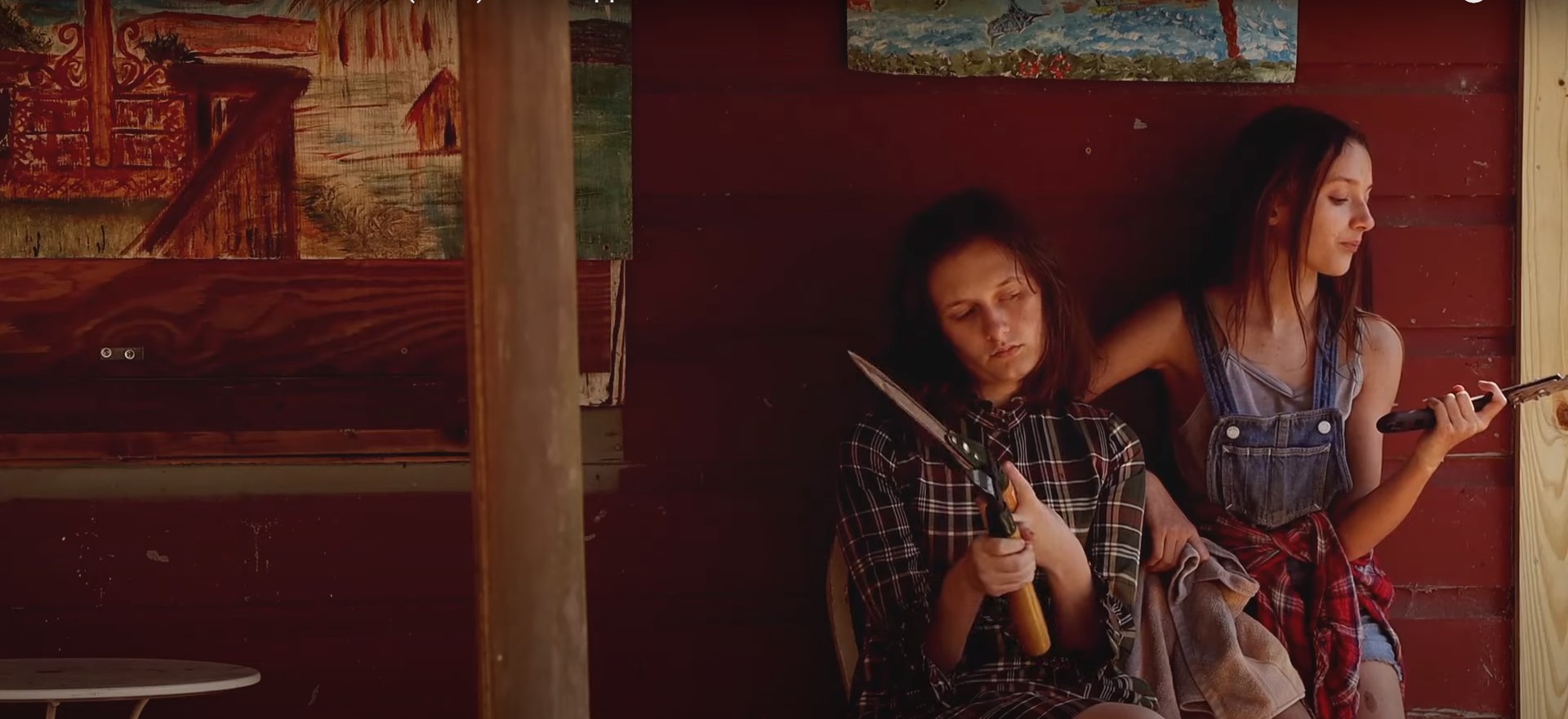
Heather and Felissa have planned the perfect weekend party for summer kickoff.  The custom invitations are set for their friends to cordially request their attendance for an 80’s themed murder mystery at Heather’s aunt and uncle’s cabin home.  Upon their arrival, the stock up on booze and groceries, fake knives and masks are in hand, and the game is about to begin, but little do they know, the surprises and terror in store for them are not manufactured by the rules of a party game.  A masked serial killer is heading straight for their night of fun and games, killing anyone who steps in his path, including other tourists, locals, and even the law enforcement called in to check on the party noise levels.  When friends suddenly disappear throughout the night, that strange feeling of derealization takes over and worry sets in that something other than being passed out from partying too hard has happened to them and that same fate will soon happen to them. 

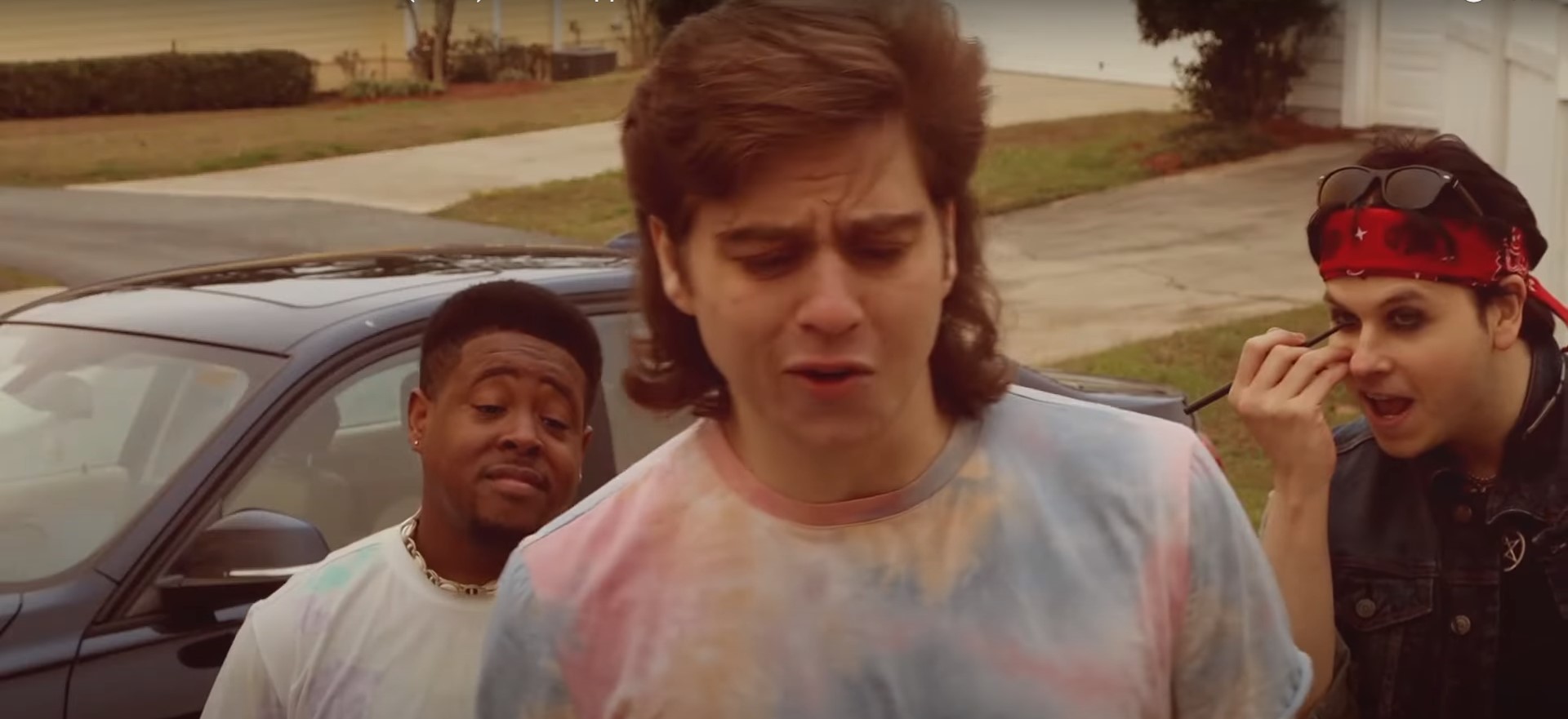
Let’s face it.  All horror nowadays is rooted by the inspiration from horror long ago.   Originality has all but faded from the conceptual ideas, script pages, and in what the camera records.  Independent horror filmmaking is basically devotion digitized and the easily accessible equipment has turned every kid, who grew up watching Todd Browning, George A. Romero, and Dario Argento, into splintered, hackneyed versions of their favorite directors.  Most indies either follow similar formulaic narratives and styles or cast and cameo acting icons to draw upon homage or headlined sales, but for Scott Tepperman’s 2021 Indiegogo-funded slasher “Cruel Summer” there lies little effort in either department despite the film’s throwback claim.  The “Nightblade” and “Hell’s Bells” director based in Tallahassee, FL is not opaque with the 80’s obsession he integrates into his COVID production under his cofounded Los Bastardz Productions with Jim O’Rear.

If looking up “Cruel Summer” on IMDB.com or any other online movie database that lists the cast and the associated character names, a trend might pop out at you but might not be evident at first.  Since I personally try to avoid looking up or researching films or watch trailers to sideline any kind of preconceived biases, I began to pick up halfway through the runtime the correlation between all the character names in that they’re nods to renowned horror actors and directors.  Some examples include Ashlyn McCain playing principal lead Heather (as in “A Nightmare on Elm Street’s” Heather Langenkamp), Bridget Linda Froemming plays Felissa (as in “Sleepaway Camp’s” Felissa Rose), Harold McLeod II plays Tobin (as in “Saw’s” Tobin Bell), Will Horton plays Vincent (as in “House on Haunted Hill’s” Vincent Price), and Scott Tepperman plays Gunnar (as in “Texas Chainsaw Massacre’s” Gunnar Hansen.  There’s also references to Barbara Crampton (“Re-Animator”), Doug Bradley (“Hellraiser”), Robert Englund (“A Nightmare on Elm Street”), Tony Todd (“Candyman”), Linnea Quigley (“Night of the Demons”), Katheryn Bigelow (director of “Near Dark”), and William Lustig (director of “Maniac”).  While not an entirely novel idea to use genre names as characters, what’s wholly impressive is this scale of use but the characters themselves more-or-less dawdle without progressing the story or adding much substance.  Once the friends arrive at the house, not much else happens between them and no individual or group character arcs take shape and flesh out, leaving just potential fresh kills for a family of whack jobs with a loose tragic and traumatizing backstory with an incongruitous twist in family relations.  “Cruel Summer’s” cast rounds out with Jimmy Maguire (“Hell’s Bells), Paul Van Scott (“Shark Waters”), Jim O’Rear, H. (Hannah) Marie, R.J. Cecott (“House of Whores”), Keith Bachelor Jr. (“Survival of the Apocalypse”), Kim Casciotti (“I Dared You! Truth or Dare Part 5”), Ashley Casciotti, Abby Graves, and Aria Renee Kenney.

Not to be confused with the popular titular track by the teen enthralling, mega popstar Taylor Swift or the teenage angsty and melodramatic, anthological seasoned series of the same title that once starred Kevin Smith’s daughter Harley Quinn Smith, “Cruel Summer” has loose ties to the other two media consumptions with a rudimentary display of teenage complications that turns full blown slasher in a matter of minutes, ranking the indie horror as bottom shelf goods.  Cruelty lies within the character treatment in an unsatisfactory means to character’s life and/or their demise among a slew of plot holes galore, such as where are Heather’s talked about Aunt and Uncle who own the house?  Why are the killers suddenly interested in the house and the current occupants if they’ve been living next door or in the area all this time?  Is it just happenstance that the killers have imbedded kin in the group of friends travelling to this very house?  My head spins with questions that don’t play out with answers in what is truly a cruel movie that really doesn’t display the ostensible season of Summer with characters in unseasonal jackets, sweats, and flannel and staying in-doors to play in-door games.  Returning to what seems to be an epicenter of importance, the house feels keystone to the merciless slaughter, yet in the same breath, the explanation of executions doesn’t make much sense in the grand scheme of insanity cases, pulling the lynchpin on the narrative structure to have the story collapse on itself by relying on a cock and bull outcome in a slack climax.   

Scream Team Releasing, a distributor who I’ve praised the positive reviewed releases of “Dude Bro Massacre III” and “Rave,” is also home to “Cruel Summer” on Blu-ray home video.  The AVC encoded, high-definition, 1080p resolution BD50 maintains detail composure fairly well with a decoding bitrate average of 30Mbps albeit some fluctuation in the bitrate between exterior lit night scenes and the interior lit scenes.  “Cruel Summer” is more reliant on natural lighting where possible without hyper stylizing with color grading and misfitting CGI blood, resulting in a natural veneer that looks uninspired but adequate for the budget.  There is some minor splotching/banding in darker spots that is the extent of compression issues. The English language Dolby Digital stereo 2.0 mix has difficulty with sealing the rough-and-ready sound design when splicing multiple takes. Dialogue renders over nicely enough but the filtering out of extra elements, such as wind and echoes, that sneak into the recording and though a little background adds a bit of verisimilitude, there’s just too much start and stop audio files and there too intertwined within a varying levels of volume amplitude and varying levels of depth delineation, sometimes muffled or stifled to a softer mix. There are no subtitles available on this release. Bonus features include A Not-So-Cruel Summer featurette with cast and crew interviews, a glimpse behind-the-scenes that goes around scene setups and getting some background on what they’re doing at that time, an audio commentary with director Scott Tepperman going deep into every scene and their backstory with opinions on his cast but eventually Tepperman cuts out near the unveiling climax and he’s just silently watching the film with some snickering or sinus clearings to keep us aware he’s still there, Scott Tepperman, Jim O’Rear, and some of the cast’s Indiegogo crowdfunding campaign fundraiser spiel for a new kind of 80’s slasher, another Indiegogo proof of concept video and pitch, the cast and crew divulge their favorite slasher flick, the grindhouse trailer, and the trailer. The Scream Team Releasing is not rated, runs at a slim 78-minutes, and has region free playback. Don’t sweat over “Cruel Summer” in what is a lukewarm, low-budget slasher with little-to-no curb appeal and the only thing going for the Scott Tepperman feature is the filmmaker’s enthusiasm for 80’s horror which has seemingly been misplaced from the 80’s inspired film itself.

“Cruel Summer” on Blu-ray Home Video!

Furry EVIL Bogies Go for the Flag! “Caddy Hack” reviewed! (Wild Eye Releasing / Blu-ray)

Special Edition Hole-in-One “Caddy Hack” On Blu-ray!

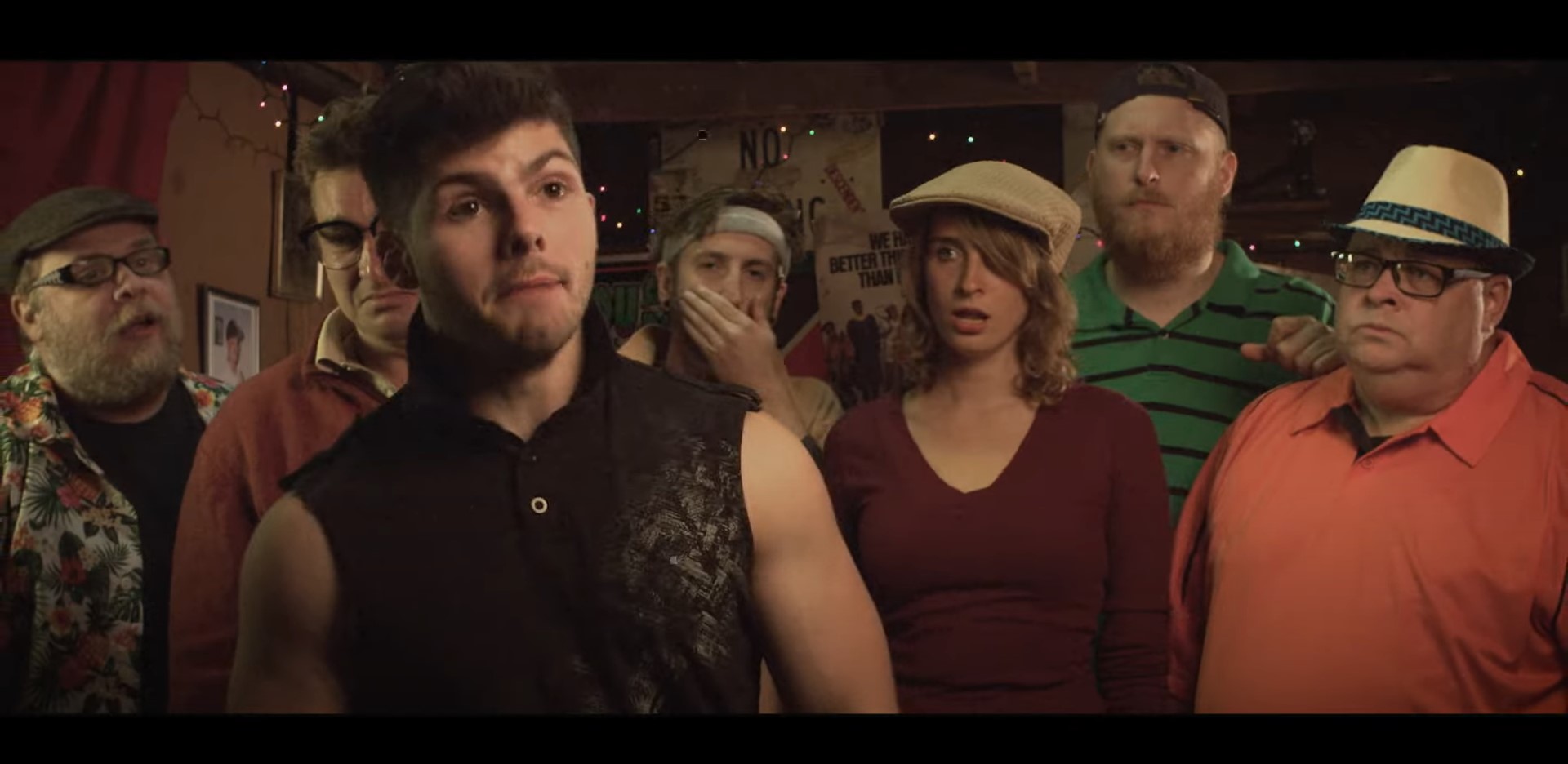
At the Old Glory Holes Golf Course, owner Wells Landon runs a tight ship under his garish wig before the weekend’s big money member’s tournament.  Hambone, Landon’s dimwitted and loyal groundskeeper, maintains the greens aesthetic tiptop shape with the help of his home brewed fertilizer, but the enriching fertilizer does more than just keep weeds from sprouting and keep the grass greener than Gumby, it also mutates the terrain terrorizing Gopher population into glowing-eyed, hairbrained killing machines offing the snobbish members, the party-hard caddies, and the course’s pretentious upper management in gruesome detail on all 18 holes.  Book nerd and greenhorn caddy Googie and his newly appointed and strict caddy manager Becky rally the caddy troops against a horde of impish, bloodthirsty rodents hellbent on shanking the golf course with more than just lumpy greens and unsightly mounds.  An all-out war between man and mammal tees off toward a fairway of carnage! 

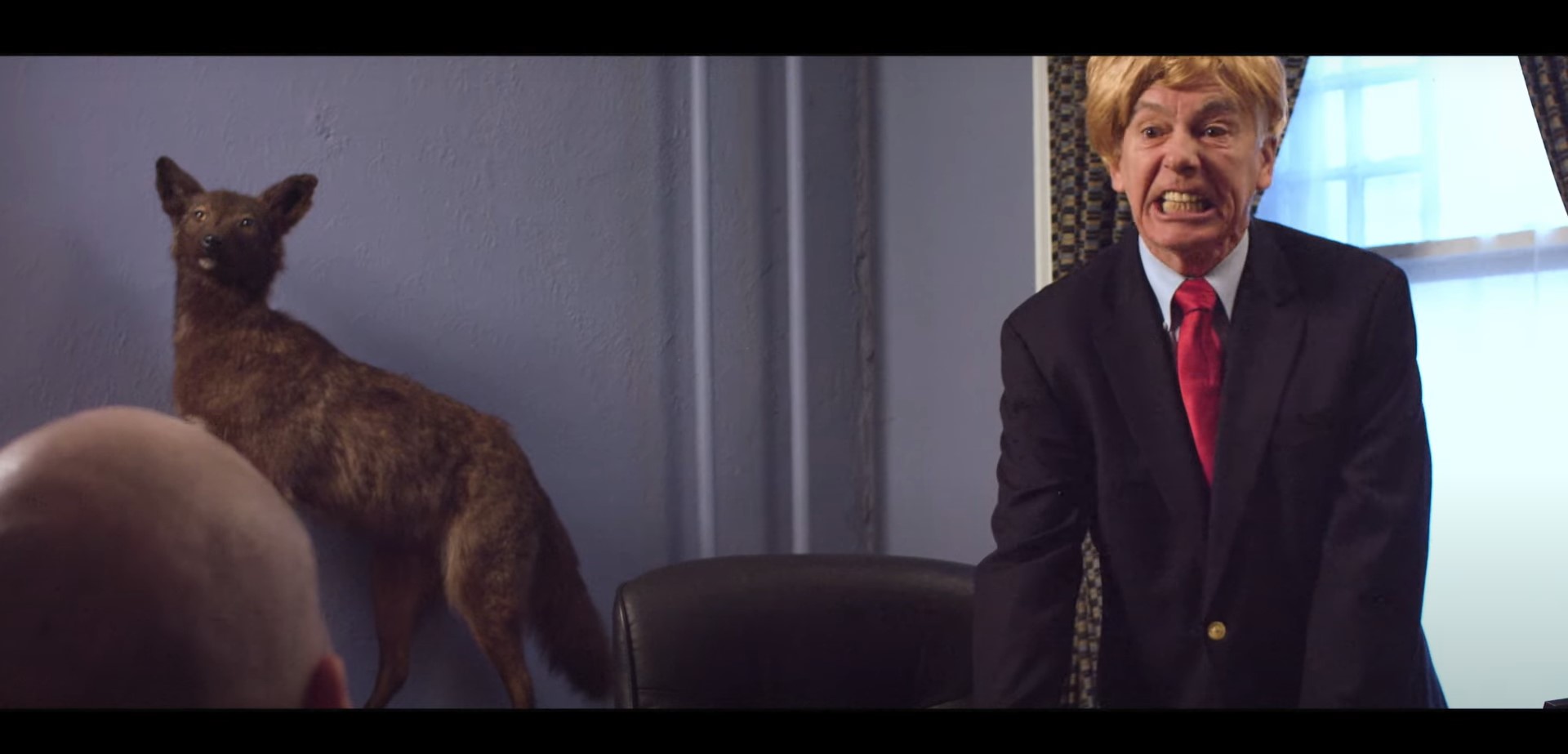
A comedy-horror satire based off the satirical sports-comedy “Caddyshack,” Anthony Catanese’s written-and-directed “Caddy Hack” (see what he did there?) continues the feud that started with Bill Murray’s groundskeeper character, Carl Spackler but instead of one pesky Gopher wreaking havoc, a multitude of furry, landscaping vandalizers rise from their subterranean burrows to take the offense battle against man.  The “Sadomanic,” “Hi-Death,” and music video director, of such bands as Doc Rotten and UgLi, helms the 2023 with great flair for the farcical and satire that not only madcap of mayhem but also rib-jabs an arrogant elitist wearing a bad hairpiece and expresses the building of a wall and having the gophers pay for it, if they could.  We all know that person and he shall not be named here for the sake of this review’s integrity.  “Caddy Hack” is filmed in Morrisville, PA and part of New Jersey (we get some really good Jersian accents here) and is produced by Catanese, Sara Casey, Jim Gordon, Joseph Kuzemka, and Scott Miller under Gordon’s Content Trenton and Catanese’s D.I.Why? Films along with Wild Eye Releasing’s Rob Hauschild as executive producer.

Not only is “Caddy Hack” a ridiculous horror-comedy of binging buffoonery, its also a story about unlikely romance between near middle-aged caddy of golf nerditude and a browbeating, yet ravishing, woman eager to be taken seriously no matter her qualifications.  Jake Foy and Chrissy Cavallo respectively play the likeable oil and water who commingle unexpectedly when Cavallo’s rigidity as the unqualified caddy manage takes a shine to Foy’s caddy-passionate and meek-lined Googie.  Foy and Cavallo, along with Jim Gordon (“Hi-Death”) as the unscrupulous, neon colored toupee-wearing course owner Wells Landon and Nick Twist (“Sadomaniac’) as the dimwitted groundskeeper who huffs his own fertilizer and has anachronistic Vietnam PTSD for his age, keep “Caddy Hack” from going into sandpits and water hazards with their on-point caricature performances of the assorted kind that pair well with this type of comedy-horror.  Ancillary moments with Googie’s boys-club, caddy cohort and an awkwardly horned-up Dolores Umbridge type secretary to Wells Landon pepper the cast with enough perpetual zaniness that the madcap madness never loses momentum but they pale terribly in comparison to the core four personalities to the point that “Caddy Hack” is downgraded a little in its laugh-out-loud lunacy with the dilution of many side-characters who don’t get the time of day and are overshadowed by the schlocky puffballs that are the gophers gone wild.  “Caddy Hack” tees up the remaining cast with John Evans, Joe Bierdron, Travis Frank, Cole Funke, Vincent Lockett, Scott Miller, Matt Reversz, Kirk Ponton, Mike Paquin, David Olsen Jr. and Ilene Sullivan (“Center City 2”) as Wells Landon’s pernicious, brown-nosing, admiring secretary. 

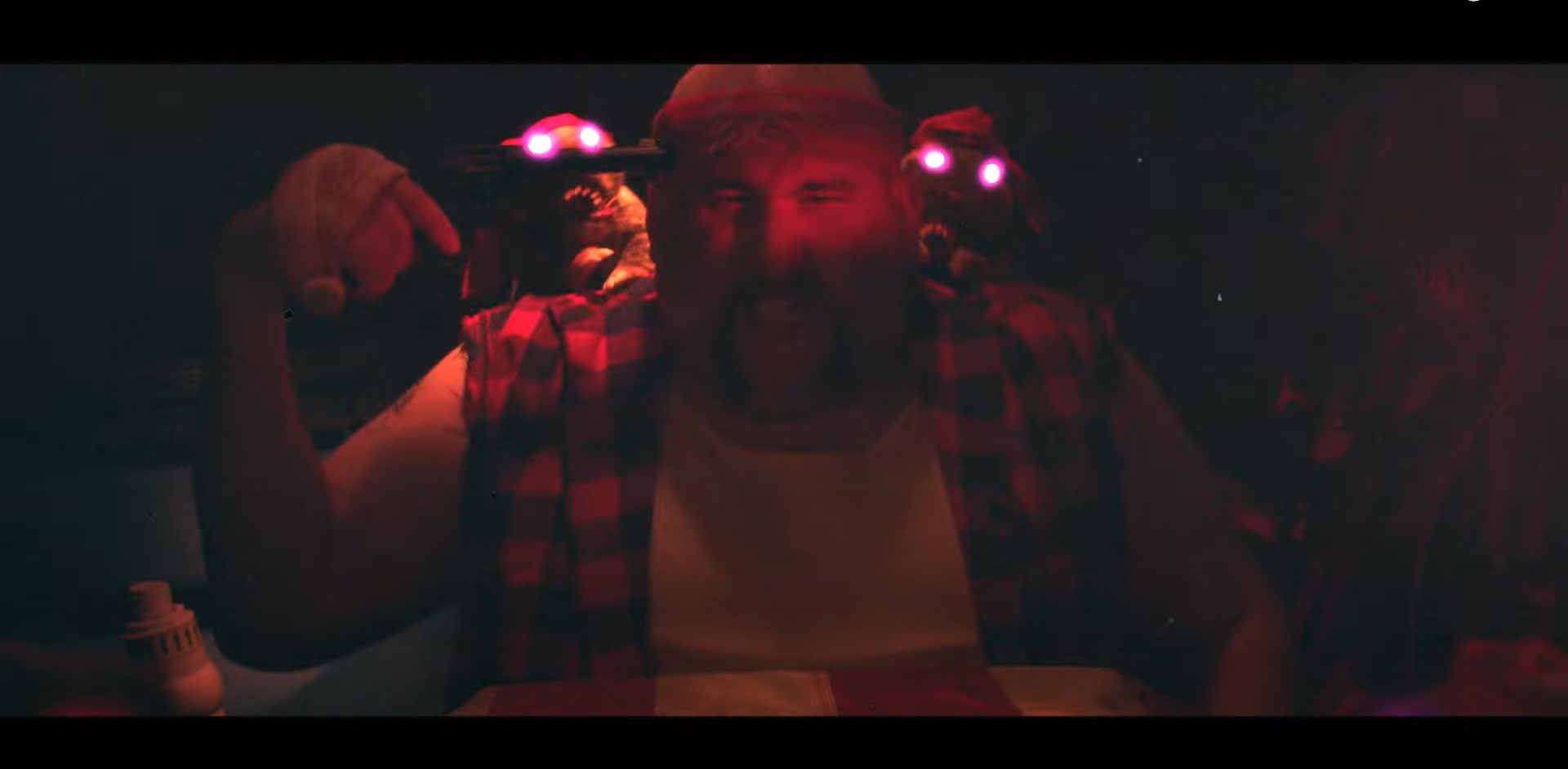
Some semblances of the 1980, Harold Ramis-directed and Chevy Chase, Rodney Dangerfield, and Bill Murray-starring gold-themed side-splitter barely lays up with Catanese’s comedy-horror spoof and homage.  There’s a catchy, 80’s-esque enough, opening credit song overtop areal views of a golf course with spliced in golf concatenations.  There’s also a dopey groundskeeper in warmonger mode against not one but a whole platoon of gophers.  That’s about where “Caddy Hack” draws the line in the sand, likely for legal reasons, in keeping tune with “Caddyshack” and from there on out, Anthony Catanese goes balls to the wall with his unapologetic creature-feature held in party mode that drops jabs of anti-Trump drollery.  The hand puppet, bloodthirsty gophers add to “Caddy Hack’s” shameless charm in a good way by layer compositing only a very little with VFX glowing eyes to give the burrowing rodents an evident behavior aberration.  Because they’re hand puppets, the gophers are very limited in frame and in action but that doesn’t hinder their mischief-maker flow and the angles, and composites, of which they’re filmed and constructed warrants credit in it hark back to the iconic “Caddyshack” dancing gopher and to make the scene somewhat tolerably evil.

Go for this gobbling and gobsmacking gopher horror “Caddy Hack” now on a special edition Blu-ray from Wild Eye Releasing. Presented on an AVC encoded, 1080p high-definition, BD50, in a widescreen 1.85:1 aspect ratio, “Caddy Hack” caters to the standard, low-budget independent mustering with a severe contrast in details and delineation between daytime and nighttime scenes. Generally, details thrive in well-lit exteriors with some softness due in part to the innate raw footage. The ungraded final product really shows its colors, or lack thereof, at night with a washed overlay and a noticeable of digital artefacts. There are some scenes that look cropped and blown-up for closeup purposes, degrading the image resolution a bit. The English LCPM stereo 2.0 has uncompressed, uninhibited thrust that’s decently shaped and arranged in sound design and layered. Dialogue can be detached at times but still in the forefront of the action with the occasional takeover by the cute or ferocious gopher grunts. Plenty of range diversity with no depth to add space leaving competing audio tracks to fight next in line behind dialogue, including fart gags which is becoming tiresome trope across indie comedy-horror in my opinion. There are no subtitles available with this release. The special edition release comes with an abundance of special features, including an audio commentary track with director Anthony Catanese and producer Sara Casey, Balls Deep karaoke pulled from the film’s main song on the soundtrack, a Brew Break drinking game, an Old Glory Holes commercial with Wells Landon, outtakes and behind-the-scenes footage, and the caddy rap track. The Blu-ray comes with exclusive physical lineaments too with a cardboard slipcase with an unacknowledged illustrated composite art, a clear traditional Blu-ray case with snapper that holds reversible cover art – a front cover that’s mixed composition between evil gophers and a happy foursome and the reverse side has an evil gopher laughing manically in a still frame, an Old Glory Holes VIP Card, and a folded mini poster of the slipcase cover art. The region free has a runtime of 75 minutes and is not rated. “Caddy Hack” chips divot-after-divot of missed fairways only to find a love for the game that is independent horror with a wildly and weaselly whackadoo of film about fur-lined pocket cheek gophers chewing on the golfers’ balls.

Special Edition Hole-in-One “Caddy Hack” On Blu-ray!

Prancing Forest EVIL Will Seduce You to Death! “Devil Times Two” reviewed! (SRS Cinema / DVD)

“Devil Times Two” on DVD from SRS Cinema

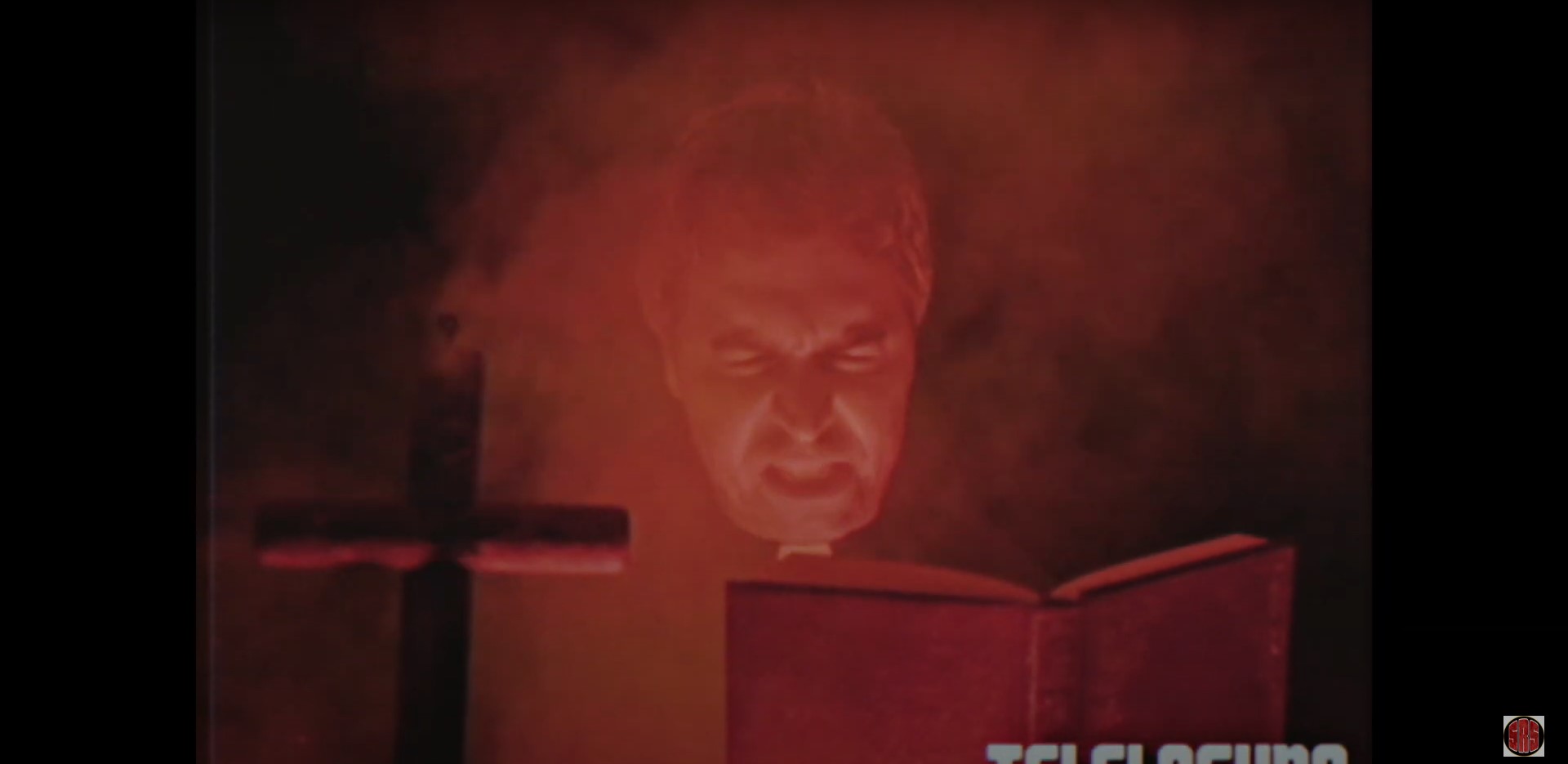
A forest encircled convent hidden away from the Milan population undertakes an occult responsibility to keep bloodthirsty and callous demons from entering the human world.  On the verge of retiring, Father Ernesto Taro, a once formidable force for good who exorcised a powerful demon decades ago that cost the lives of many in his fellow cohort except for Mother Dolores, takes on a younger understudy to be his replacement, the ambitious Father Chuck Bennet.  Father Taro and Bennet were summoned by Mother Dolores when grisly body of a young hiker is discovered.  A pair of former Nazi sadists turned Netherworld demons come to Father Bennet in a vision and are suspected to be the carnage culprits.  Souls are at stake and the world is on the brink of falling into darkness as the Returnees are only the right hand of a more profound evil itching for complete and utter omnipotence. 

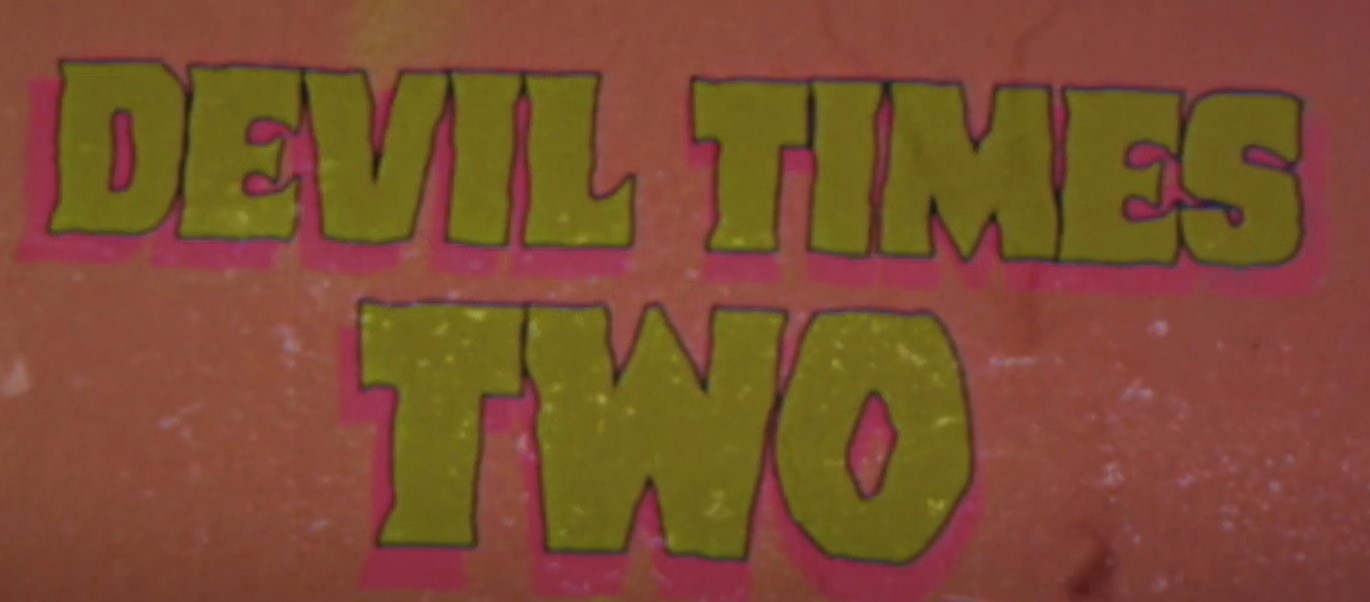
“Devil Times Two” is an Italian-made, demonology-contextualized horror from Italy writer-director Paolo del Fiol.  Having purveyed grindhouse horror in anthological means with previous films “Connections” and “Sangue Misto,,” del Fiol branches out into his solo feature-length narrative set in the 1970s as a faux lost film recovered onto VHS from the only known syndicate televised program on Telelaguna to account the terrible tale full of profane hostilities, sexual stimulating supremacy, and, of course, gore in the interlacing recognition between the popular devil, demon, or hell on Earth inspired movies and the obscenities connected to eurotrash and sleaze movement of the 70s topped a hint of Japanese adulation, a motif heavily sprinkled into the film carried over from the director’s previous work as well.  Underscored by the tagline Quado le Tenebre escono al Bosco, or When Darkness comes out of the Woods, “Devil Time Two” once again pits religious good versus irreligious evil in this Himechan Movie Production self-produced by Paolo del Fiol.

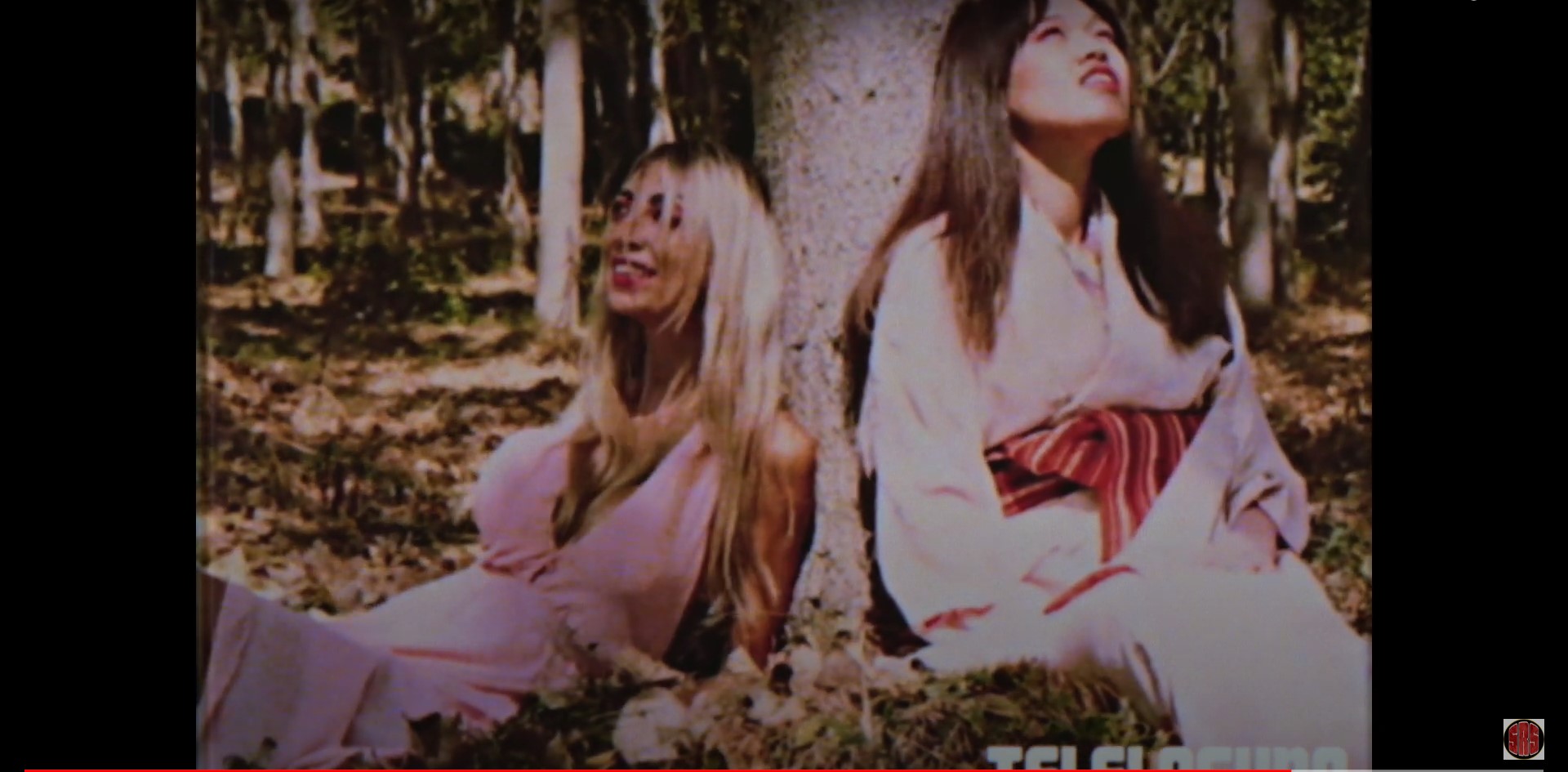
Characterized as the titular pair, Returnees Jasmine and Umeko are the ethereally evil duet of diabolical detriment who seemingly float in and out of the material world as alluring succubi, seducing prey into their web of demonic lust and languish.  Some turn up grotesquely inside out while some others disappear, saved for later for special ritualistic planning.  Erika Saccà, an Italian fitness instructor in her debut role, plays the blonde Returnee Jasmine in a sleeveless, lowcut gown and with nearly ever kill, exposes and massages her augmented bosom with underboob scarring in a change to showoff her toned physique, and Reiko Nagoshi (“Re-Flesh”) wears a kimono without any unveiling of skin but does a bit of thrust-damage on her quarry that initially and inexplicable appears to be a strange phenomena when everyone in the scene is a woman but becomes apparent there’s something unholy and very “War of the World’s” alien under that traditional Japanese garb.  Saccà and Nagoshi wear many hats in this product but also don’t have the dialogue to hoist their demonesses higher.  The dialogue is left with the trio of convent gatekeepers in Father Taro (Enrico Luly), Father Bennet (Paolo Salvadeo, “Occultus”), and Mother Dolores (Amira Lucrezia Lamour, “Re-Flesh”) in what becomes a deeper understanding of their backstories around Father Taro’s deadly bittersweet exorcism decades ago, his on the sly and subtle affection for Mother Dolores, and Father Bennet’s questionable rise to supersede Father Taro, laying a foundation of doubt within the current gatekeeper.  While I like the contrasting dynamics of the two factions within the cast, I found the discourse overly bulk and tedium between the trio of piety that strung on scenes way too long with way too much talk that it ultimately suppresses the pacing when every little detail has been uncovered and explained. All the casted bits in between are slaughter fodder with Denise Brambillasca, Alessandro Carnevale Pellino (“The Wicked Gift”), and Martina Vuotti in non-defying death roles.

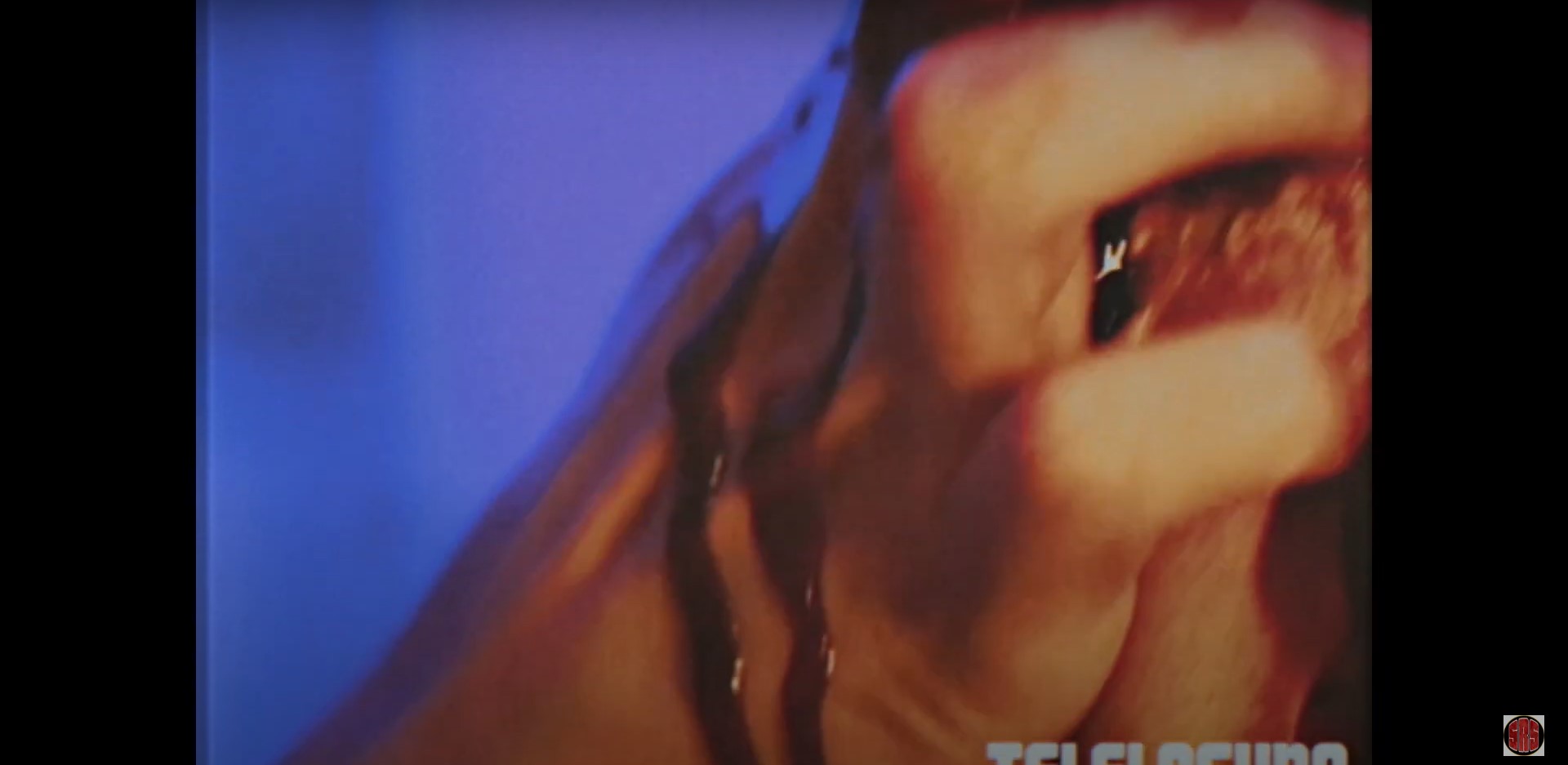
Paolo del Fiol’s unaccompanied and independent deluge of demonian debut has doses of phantasmagorical imagery sublet by its more shocking and odd immolation of incognizant individuals unlucky enough to cross paths with the Returnees. Likely to have never seen, Fiol’s film very similarly compares to James Sizemore’s “The Demon Rook” by creating unique mythos not reliant on a religious bedrock and use independency as an advantage for showcasing practical makeup and effects and while “The Demon Rook” would overwhelm with prosthetic made-up characters, “Demon Times Two” focuses attention more on the guts of the matter, the gore, but though not pernicious enough to the story, the eyeball sucking, throat lacerating, or intestine exposing bloodshed is prosaic panoply that won’t outshine in the sea of subgenre synonyms. Aforementioned dialogue scenes can be a slog to get through with many exchanges overstaying its course between the pious gatekeepers, especially between Father Taro and Dorlores, and that hurts the pacing to pick up the gore more frequently for more potency. Instead, exchanges are more elucidations that go around-and-around to where we’re lost on the mounting reveal of the Returnees’ mission and master which turns out to be visually more stimulating and visceral in the last ten minutes than in the first 100 minutes of runtime. The backlot lore is Fiol’s greatest achievement simulating a 70’s style grainy movie caveated as only broadcasted once on December 8th, 1983 (a few days before this reviewer’s birthday) and never seen again until it’s VHS recording is recovered.

Under a pretense of being a buried lost film, under the tribute of a grainy and scratched psychotronic celluloid, and under the falsity of genuine huge knockers, “Devil Times Two” is twice baked into a classic contemporary dish served by SRS Cinema on DVD. Arriving on the SRS Cinema: Extreme and Unrated Nightmare Fuel label, “Devil Times Two” is nothing short of being a modern-day emulator of once was with suitable grain overlay, a hazy, if not washed, overcast grading, and trope-laden atmospherics with dense fog, unnerving dissonances within earshot, and blood brilliantly cut with pseudo Telelagua commercial programming of brief adverts until returning to regular scheduled programed checked in and out by a gondola and it’s gondolier in dusk silhouette. Presented in a pillar box 1.33:1 aspect ratio, the fuzzy and non-delineated details are not a punch to the salient gut as the intent here is to be obscure, opaque, and ominous in nature and in technique bathed in 480p. The Italian PCM is the exact recreation of a time period post-dubbing with the actors re-dialoguing their performances as it was common practice in most motion picture industries, especially Europe, at the time. ADR is clear but not necessarily clean to recreate that shushing and crackling of an older recording. The subtitles are also forced or burned into the film with the sole Italian audio option. Bonus content includes what is called Backstage, a raw filming look into the production shoots and behind-the-scenes footage with no real direction or cosmetics, a photo gallery, a trailer with English subtitles, and other SRS Cinema released trailers. The SRS Cinema DVD front cover resembles mock-70’s, thick-red font with a bare woman’s back dressed in a painted Satanic symbol within the border of a VHS-esque rental casing with rental stickers. Inside the amaray case is a pressed disc with an extreme close up and crop of the same front cover with no insert in the adjacent slot. Pacing burdens this release, especially in its near 2-hour runtime with a clock-in at 114 minutes which is approx. 24-minutes too long in my opinion and the film comes not rated and has region free playback. No matter how much arcane the content is, or how grotesque the horror show, or how much perversity and skin can be unclothed, “Devil Times Two” has difficulty retaining a flow of fascination in a rather windbag approach to a rather devilishly good salvo construction.

“Devil Times Two” on DVD from SRS Cinema

Sucked Into Hell. Surrounded By EVIL! “Vampires and Other Stereotypes” reviewed! (Visual Vengeance / Blu-ray)

Hell Wants You To Stay for Dinner!  “Vampires and Other Stereotypes” on Blu-ray!

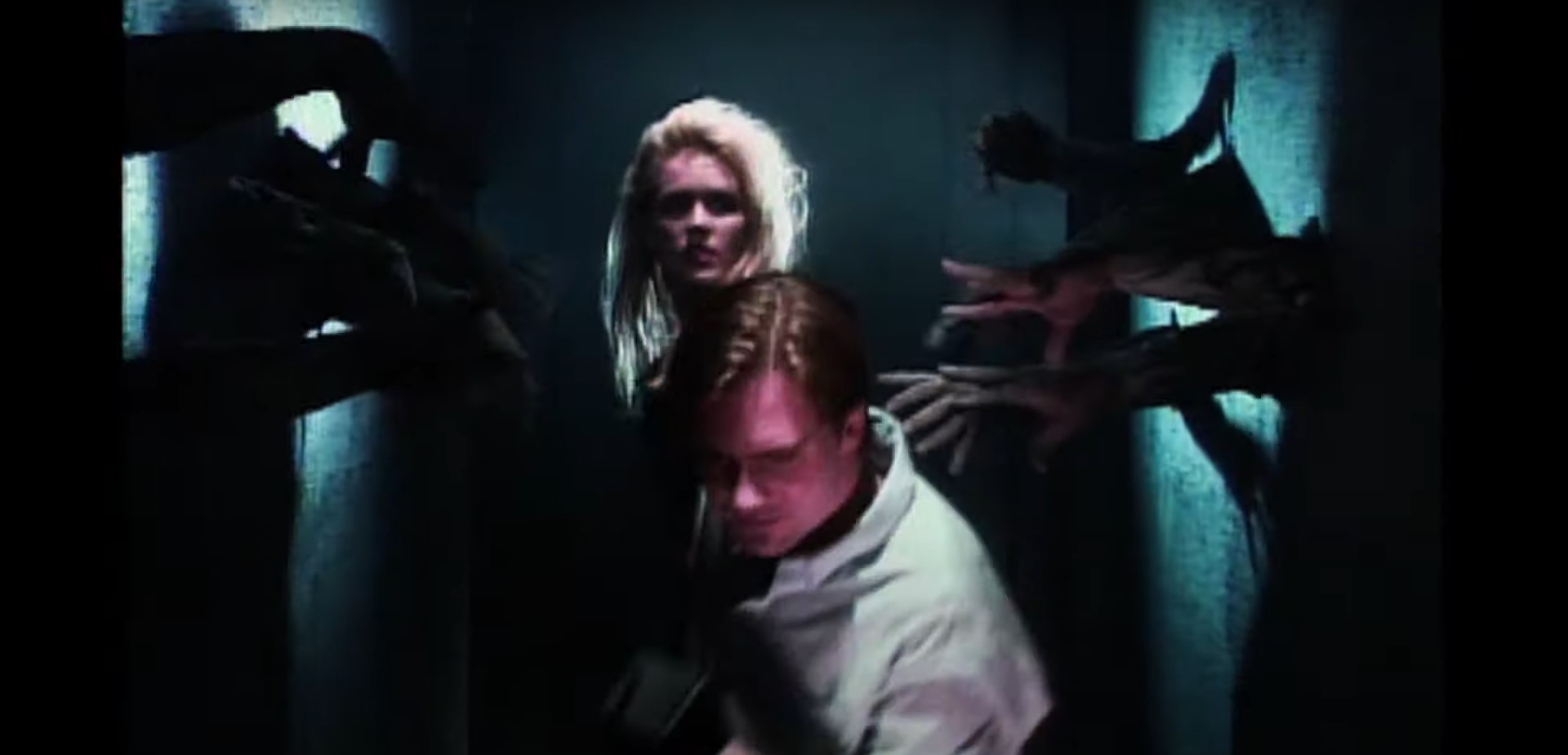
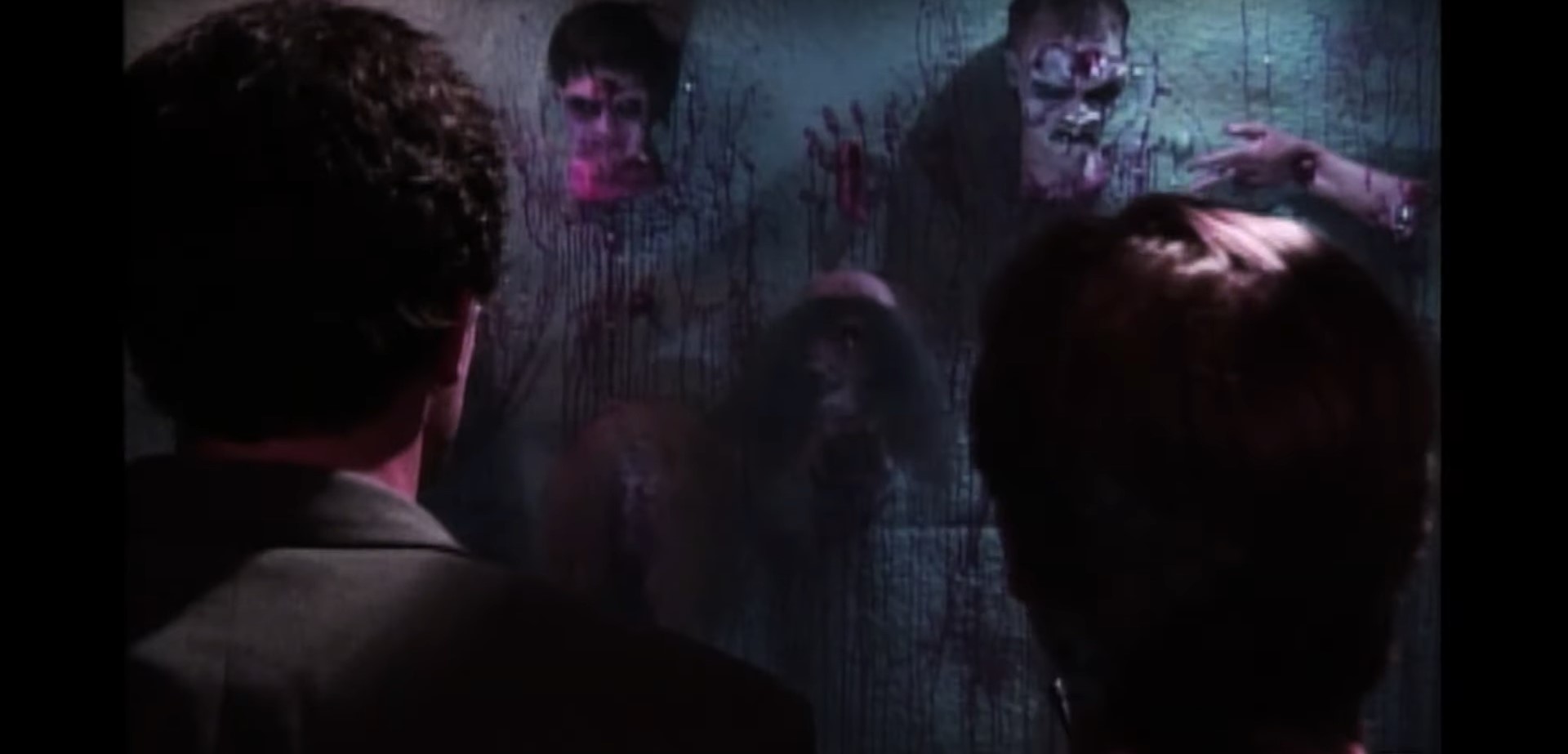
Ivan and his hard-nose partner Harry work between the shadows as protectors of the Earth realm.  The pair of paranormal guardians battle demons attempting to sneak from the Netherworld for more domain and power in the human world.  After thwarting a demon’s reneging plans with a wealthy businessman, they find themselves sucked into a portal to Hell after a group of young partygoers become lost and inadvertently crossover everyone in the abandoned warehouse to the underworld, including the warehouse itself.  Confined to a room with the portal opening, they must band together to survive the night where gnarly demons roam behind every door and are master tricksters with one goal in mind – to breed human women with half-breed demons to procreate more of Hell’s minions.  Its up to Ivan and Harry to see the survivors through until dawn but not everyone is who they seem and when the masks are dropped, real Hell will pounce upon them.  

The northeastern American horror-comedy, “Vampires and Other Stereotypes” is the topsy-turvy and totally-transcendental SOV feature from first-time writer-director Kevin J. Lindenmuth (“Twisted Tales,” “Monsterdocom”).  Shot primarily in Cherry Hill, New Jersey with some exterior city shots of New York City, the film alternatively known as “Hell’s Belles” sought ambitious Hell below Earth undertakings, creating a maze-like dwelling for disfigured dwellers of the demonic kind, and a down-the-rabbit hole story where the head-lopping queen is actually the devil in a leatherjacket playing procreator matchmaker and the Cheshire Cat is a overgrown rat looking to nibble on human flesh rather than cheese.  The rat, as ostentatiously cool as it sound, is simply a slither of one of “Vampires and Other Stereotypes” few themes, which is fear.  Kevin J. Lindenmuth’s production Brimstone Media Productions serves as the studio and Lindenmuth serves as sole producer of his self-funded venture into the vile mouth of the demon world.

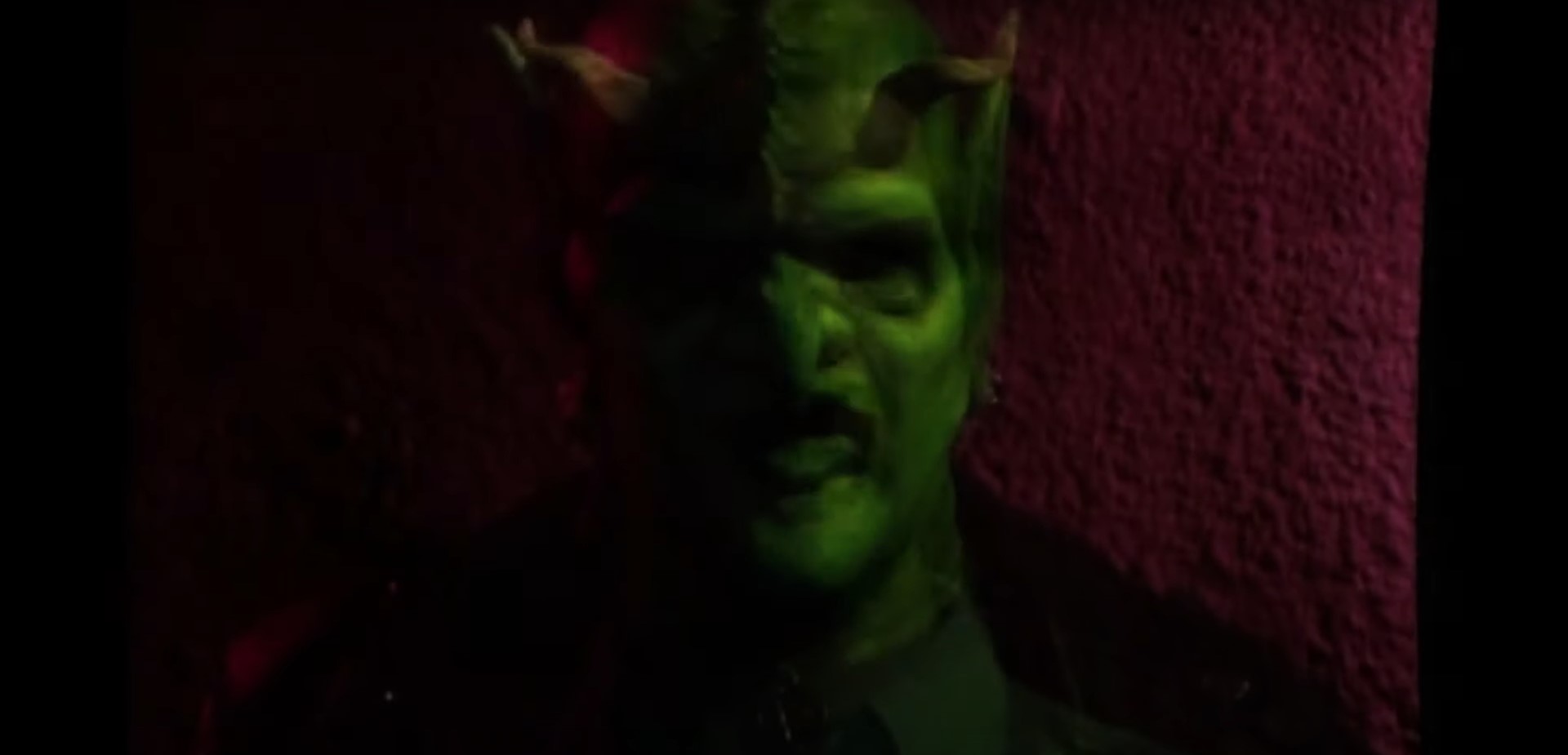
“Vampires and Other Stereotypes” follows two difference groups related to the existence of Hell, the demons that inhabit it, and the rogue demons splicing themselves into the human world. One group is the guardians Ivan (Billy White) and Harry (Ed Hubbard) who are very much aware of the esoteric magnitude of the abysmal situation and background while the other group, young Generation X’ers oblivious to the signs of Satan’s underworld seeping into their own. Lead by serial-dater and college girl Kirsten (Wendy Bednarz, “There’s Nothing Out There”) and her two tagalong best friends Linda (Anna Dipace) and Jennifer (Suzanne Scott, “Child of the Sabbat), the ready-to-party trio provide the state of affairs with Kirsten’s nonchalant taste in bad boy boyfriends, believing her courting apathy, treated as an impulse indulgence for the sake of fun, will one day run her out of luck. Enter Erik (Mike McCleery, “Deep Undead”), another misfit miscreant unearthed by Kirsten in her ever unquenching need to be wined, dined, and spoiled by the bottom layers of the dating pool. The two parties clash walking into the epicenter of an open investigation, denoted by an aperture in the middle of the room, where dead, decapitated bodies are strong upside down and Kirsten and her businessman father (Rick Poli, “Blitzkrieg: Escape from Stalag 69) are unexpectedly reunited in an air of something more happening behind the scenes other than Kirsten’s father’s flailing dealings with the demons and Erik’s party-sniffing nose leading them to astray and lost. The rest of the cast comes together with Laura Vale as Rosa the psychic, Monica Batavanis as the wife lost to the dark side, Mike Memphis as the Elvis impersonator, Bean Miller as the Lizard King aka Jim Morrison impersonator, and Sally Narkis as the demon waitress.

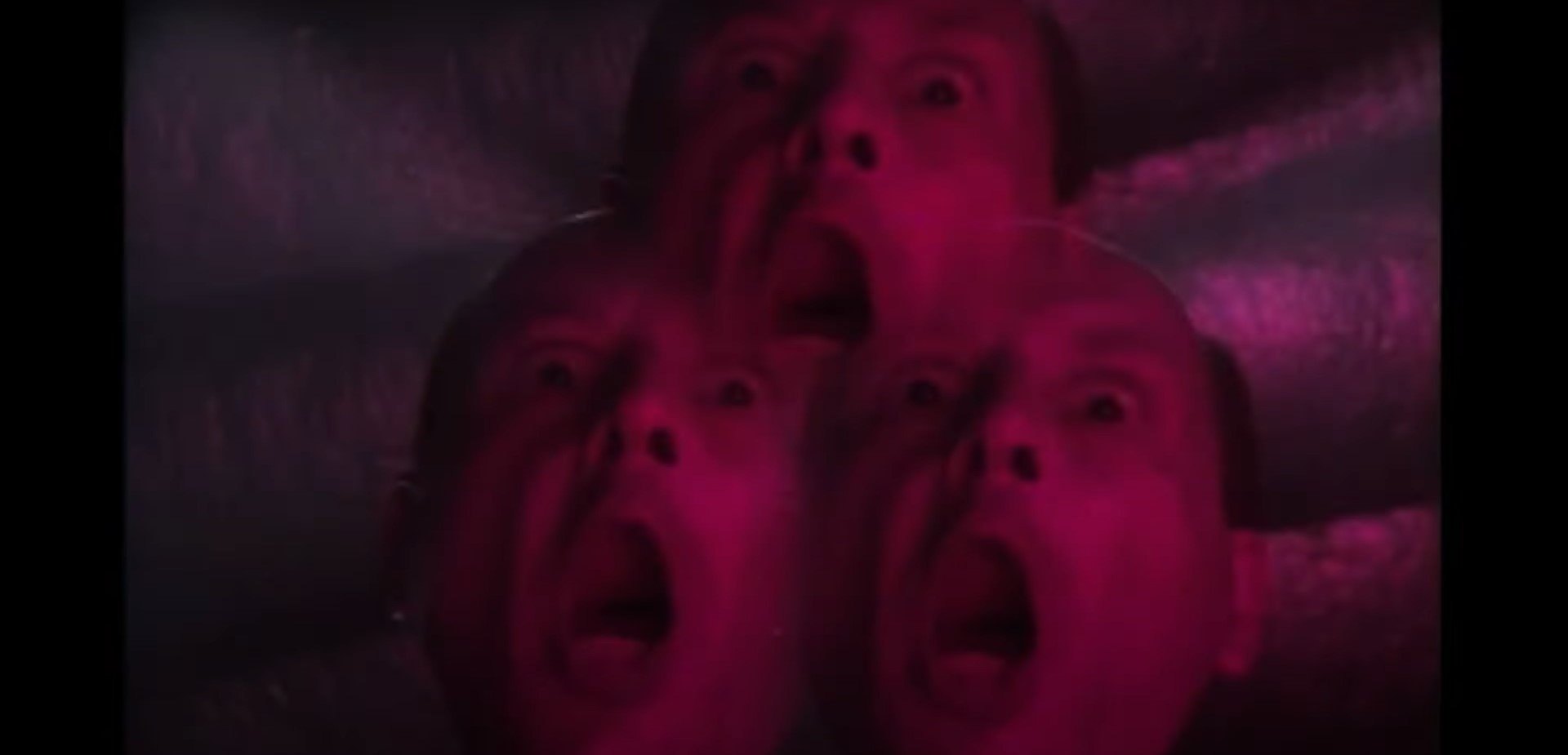
Lindenmuth’s dragged to Hell premise is a neat enough concept to peak the interests of the casual and diehard horror fan. However, the executed result is a whole other animal that tends to claw back, trying to maul away your viewership.  The special effects Scotts – Scott Hart and Scott Sliger – pull off practical prosthetics and latex with some side curb appeal that helps lift up “Vampires and Other Stereotypes” as best as possible, but the effects have a difficult time keeping up with the film’s innate ambitious concept to where much of the story relies on character exposition to fill in the gaps and where I note the exposition has a few cracks and leaks in themselves is in the very first word you see in the title that sets the expectation right off the bat before going far into a narrative that constantly and hurriedly builds upon the demonic construct.  That edifice evolves so high and so quick that the air becomes thin when the very first presence of a vampire insert comes late into the third act.  You nearly forget that the word Vampire was ever in the title.  Where Lindenmuth succeeds in this frenzy of fiends and folly is passively providing verbal cues of one of the character’s monotone-delivered pangs of extreme hunger.  Being a New Yorker and a rather large individual, you believe a NYC pizza or a greasy burger would be in mind here to feed the need but then the gag drops with well-timed revelation albeit the severe tardiness inside the narrative framework that suggests maybe the title should have been reworked or better thought through to really add upon that element of surprise and not sit waiting and waiting until bloodsuckers join the jittery jamboree.  While the demons are jovially wicked, their wily ways are playful to a fault compared to an “Evil Dead” Kandarian demon or a twisted and ugly demon from “Night of the Demons,” a class of demons that craft a special kind of deviance that maniacally fun as they rip you to shreds.  Not to say the “Vampires and other Stereotypes” demons are painfully dull or too good to be terrible, quite the opposite in the variety of severed head yappers or an oversized rodent, but they don’t offer that same fear-inducing merriment of playing with their food before they eat it. 

The 12th release on the Visual Vengeance line of dusted off sidelined SOV horror and cult films with a brand-new Blu-ray release with an AVC encoded, 1080p (note: off the original standard definition master 1-inch tape), BD50 presented in the original pillarbox of a 1.33:1 aspect ratio. Visual Vengeance provides the usual prefatory statement about the using the best possible elements out of consumer grade equipment, but I do think “Vampires and Other Stereotypes” has the best details within the Betacam SP camcorder, which was, at the time, the crème de la crème of videotape, and then have the video run through a millimeter gauge emulator to give it a 16, or even stretched to a 35 mm, appearance at times. Tullio Tedeschi cinematography is soft, light, and dreamy that forsakes stark details but does offer a sheen along the surfaces and textures that size up and adds to depth to the objects, even more so with the film’s hard lighting and deep shadows to provide a diversion away from the cheap sets but also a diversion away from what could be lurking from the horror-set tropes. The English language stereo 2.0 has decent dynamism between the dialogue, ambience, and soundtrack. Dialogue has a voice above the other sublayers, separating its prominence in front of the batty surroundings of a demon-riddled rodeo and against a soundtrack, or lack thereof, that’s repetitively uninspiring to takes away from the spirt of the level Lindenmuth attempts to reach with his debut. Optional subtitles are available. Special features include three new audio commentaries with director Kevin Lindenmuth, actor Mike McCleery and Lindenmuth, and Weng’s Chop Magazine’s Tony Strauss. Also included are new, brief interviews with Lindenmuth on the technical tangents of his film, actress Laura McLauchlin surrounding her role as Rosa and various recollection of principal photography, actor Mike McCleery as bad boy Erik fitting into his skintight, nonbreathable demon mask and having a good time on set overall, Suzanne Turner on playing Jennifer, Sally Narkis in her brief role as demon waitress and her sidetracking fashion career, and plus interviews with makeup effects artist Ralis Kahn, special effects artist Scott Sliger, photographer Sung Pak, and publicist Joe Mauceri with behind-the-scenes image gallery, original trailer, Visual Vengeance trailers, and Lindenmuth early Super 8 films along with commentary by the director. As always, the physical presentation is nothing short of a thing of pure beauty with a rigid slipcover graced with new illustration by Tom “The Dude Designs’ Hodge with a traditionally sized clear Blu-ray amaray case with reversible front cover that includes more new looming demon heads art and the original one-sheet on the reverse side that really relates to the dreaminess of the photography. In the insert pocket is stuffed a color trifold essay from Tony Strauss with behind-the-scene stills, a folded mini poster of the Blu-ray case cover art, and retro VHS stickers. Disc art is pressed with the slipcover art. Region free for the world to see, the Blu=ray is unrated and has a 87 minutes. Nominal and ambitious, “Vampires and Other Stereotypes” fights an uphill battle coming off the heels of an extremely gorified video nasties of the 1980s, but Lindenmuth fulfills with an indiscriminate spread of insanity at every turn with some vivid and vibrant vanward effects to drive this one home to the great people at Visual Vengeance, a boutique distributor of lost, but not forgotten, SOV buried treasure ready to be rediscovered.

Hell Wants You To Stay for Dinner!  “Vampires and Other Stereotypes” on Blu-ray!