EVIL is One Big Vagina Looking Stain on the Wall! “Dead Dicks” reviewed! (Artsploitation Films / Blu-ray)


Becca’s careworn life, concerning for her mentally unstable brother as well as maintaining her expenses through the up and down cashflow of a bartender’s tour, suddenly gleams with a ray of hope when a prestigious opportunity she’s earned calls for her to move across country in a matter of weeks, but when her brother, Ritchie, leaves multiple distressing messages on her phone, Becca’s continuing efforts to care for her troubled older brother forces her to abandoned the bar’s night shift duty and check on him. What Becca finds is Ritchie’s dead body strung up in the closet, and another Ritchie dead body electrocuted in the tub, and a very much alive Ritchie walking around naked. The perplexing phenomena all stems around a vaginal resembling wet stain on the bedroom wall that birth’s another copy of Ritchie after each death, but with every copy comes copious amounts of provocative questions that keep Becca from leaving Ritchie’s forlorn and tormented side or is it something much more paranormal detaining her?

Welcome back to our part two of the unofficial look at independent Canadian horror with a totally different and existential horror entitled “Dead Dicks” from the dynamic directing duo of Chris Bavota and Lee Paul Springer. Also possessing creative control of their own script, Bavota and Springer flex their filmmaking muscles by initiating themselves into the feature film market with an alternative impression on the lingering effects of mental illness and suicide, which Bavota and Springer preface the film responsibly with a public service announcement for audiences where those struggling with suicide or those who know someone struggling can reach out for information and help via a suicide prevention hotline telephone number. Believe it or not, ItsBlogginEvil has been exposed to some script work by Chris Bavota who penned the tyke-terrible, otherworldly beings in “Ghastlies,” helmed by Brett Kelly, and while I admire Kelly’s legendary practical effects ambitions on a microscopic budget and “Ghastlies” praise to the cult of small creature features villains, like “Gremlins” or “Critters,” I ultimately found the film and the screenplay to be fragmented and unflattering that doesn’t live up to honoring the retro creature ideals in a heavily slapstick and erroneous attempt. However, from 2016 to 2019, Bavota has shown to have an increased level of story maturity in his writing with, perhaps, an assist from his colleague Springer for their subject matter and execution of “Dead Dicks,” a production of Bavota and Springer’s Postal Code Films company in association with Red Clay Productions and distributed by Devilworks and Artsploitation Films.

The low-key cast brings a blanket of intimacy that’s synonymous with how suicide is often a loner’s internal battle with themselves. In this regard, Bavota and Springer needed an alleviator for the somber material with a pitch perfect front man in order to radiate the dry humor and convey the relatively taboo message of speaking up, speaking out, and speaking for suicidal tendencies. They found that man to be Heston Horwin who the filmmakers had had in mind to play the role of Ritchie. Bringing the quick wit and exact timing to Ritchie’s compromised soul, and serving also as executive producer on the film, Horwin becomes the vexed tinkerer trying to problem solve the causality of his own immortality who is stuck in a loop, a motif of in death there is life that continues to pop up, and also contorts his personality to make Ritchie a Rubik cube of anxiety, twisting and turning with tacit body language that serves as a roadblock to his frequently burdened little sister, Becca, played by newcomer Jillian Harris. The strong female role is outlined with meticulously sage from a new actress submersed for the first time credited in an existential and cosmic horror with a genitalia fascination. The duo becomes a trio when Matt Keyes enters the fold as the annoyed apartment neighbor one floor door to be jostled into Ritchie and Becca’s abundant death dilemma. Also known in character as Matt, Keyes deceives as a snarky, impatient prude masking his nice guy principles but when enough is enough, Keyes goes into angry neighbor mode whose fed up with Ritchie’s loud music and building shaking incidents.

“Dead Dicks” doesn’t boil down to simply suicide as the main theme to digest, but sharpens the graphite toward a much broader point that incorporates the lingering shockwave effects of severe mental illness while touching upon the bitter aftertaste of post-suicide. Becca’s caught in Ritchie’s woeful web that results in her always picking up the pieces left in her big brother’s wake. The act of unreciprocated love for Ritchie stems from almost losing him when they were younger, an anecdotal story brought up a couple of times between Becca and Ritchie, and the image of his lifeless body in the hospital has been forever seared in Becca’s mind and body matrix to the point she feels indebted to protect him. It took Ritchie to die, multiple times, for him to understand the inflexibilities of the loop Becca is coiled into with his own unhinged state and can’t proceed forward with her own life. Each copy of his former self slices away a layer of unstable irrationality that have become blinders detrimental to his and his sister’s life and once he’s reached the core of his true self, clarity forms around processing the chaos around him, but doesn’t ever remove the sadness and pain that has been imprinted onto him over the years from family and friends distrust and disdain and that makes his argument to die that much more logical to himself because for Becca to be free from the loop, which is represented by being trapped inside Ritchie’s apartment and objects around him that go into restart mode like the earshot cacophony of heavy rock music starting over after every death, one of them must die and the other be reborn. All of this is in encompassed with a display of in your face genitalia, a discolored wall that suspends death, and grimly funny gore that seamlessly blend computer imagery and practical effect, making “Dead Dicks” a taut downcast, dark comedy full of ostentatious and provocative symbolism from our Canadian neighbors!

The seismically cosmic “Dead Dicks” is intrinsic to the creative fluidity of the indie film culture and is now available on an Artsploitation Films’ Blu-ray release. The release is presented in in a widescreen, 2.39:1 aspect ratio, captured with an Arri Alexa camera providing a clean digital picture vivid in detail and distinct depth. The entire color package denotes warm atmospherics, more so from Ritchie’s off white and mustard yellow apartment to the hot soft pink of the vaginal canal scene, that becomes a consistent and engrossing product worked by cinematographer Nicolas Venne to still be able to find the humanizing angle of each individual character. The English language Dolby Digital 5.1 surround sound for the first half is quite wonky that perhaps stems from mismanaged discerning the vocals properly, leaving the dialogue depth obscured from background to foreground and from foreground to background. On the story’s flipside, the issues are worked out which would suggest the cluster of shots and audio takes were eventually adjusted or tweaked to sync appropriately. Julien Verschooris’ score and the introduction of Tusk and Bruiser on the soundtrack is an eclectic mix of dramatic synth and grunge rock that impeccably keeps the nearly one-location film from getting stale with a coagulating of an energizing and mellow temperment which would usually have a counter-effective result. Bonus features include commentary by directors Chris Bavota and Lee Paul Springer, four video diaries from the directors that span from pre-production to after the first week of production, a FX featurette that exhibits Matt Keyes going through a cast mold for his head and how his wonderfully gore scene was accomplished, and, lastly, four trailers from films distributed by Artsploitation Films. “Dead Dicks” is pneumatically bursting with the compressed scent of David Cronenberg; a deluxe doppelganger dark comedy bound with provoking the consequences surrounding death in a surrealistic effort to ease in and move past an inexorable acceptance.

“Dead Dicks” available on Blu-ray and DVD!

Neighborly Isn’t In EVIL’s Vocabulary in “Red Letter Day” reviewed! (Dread and MVDVisual / Blu-ray)


A divorce lands Melanie Edwards and her two teenage children, Madison and Tim, to redefine their live a new and quiet suburban community called Aspen Ridge. While adjusting to their new normal and becoming acquainted with their new neighbors, the Edwards receive a mysterious red letter in the mail, calling for each person to kill a neighbor from an algorithm, created by a masked anarchist group named The Unknown, has vied them against by working from the parameters set to calculate each individuals’ polar opposite personal, political, or religious beliefs. Every resident in Aspen Ridge has received a red letter with the same instructions that mounts tension amongst friends and neighbors until, eventually, all hell breaks loose and it’s kill or be killed.

Welcome to part one of my unofficial independent horror films out of Canada series where we take a look at Cameron Macgowan’s written and directed 2019 horror-comedy, “Red Letter Day.” Filmed entirely in Calgary, Alberta providence, Macgowan and his production crew claim numerous AirBnB rentals to exact the sleepy, suburban, sanctuary to instill the murderous wrath that simmers just beneath the surface of every mild-manner person living next door, seething with contrasting opinions and beliefs. As a sort of a permission granted for carnage, “Red Letter Day” aims to set itself a part from the typical archetypes that hide the horror in the dark shadows and obscured corners with a bright and sunny morning melee armed with shotguns, baseball bats, sledgehammers, and a kitchen knife with a transfixed cooked chicken on it. “Red Letter Day” is a product of Macgowan’s Calgary, Alberta based production company, Awkward Silencio” in association with Tanda Films.

“Red Letter Day” focuses around the Edwards family who have just gone through the trials and tribulations of divorce proceedings, settling into their new surroundings with relative ease in Madison finding love with an older boy, Tim rounding out a routine, and their mother Melanie shaping a safe haven environment as a soft cushion for her children from the spoils of her ex-husband, but their ease comes with some conventional teenager microscopic social nuisances beneath the surface that places the barely adult Madison as a defiant outlier and the 17-year old, almost in adulthood, Tim as a clinching mama’s boy. All the breakdowns of their everyday life becomes superficial and, at the same time, becomes thought provoking on how they view themselves as a family when a domestic terrorist group invokes hunting season on the neighbors to kill their specific opposite of themselves. Dawn Van de Schoot (“Ice Blue”) steps into a role she’s relatively familiar with in being the mother, Melanie, and while Van de Schoot is perfect as the down to Earth, cool mom with some loose ground rules and sizes up tolerably being a proactive mother, her overall performance is shaky at best as she never finds solid ground in the malicious circumstances that are unfolding around her. Despite being a good chunk of exposition, there isn’t much on-screen friction between Melanie and her daughter, Madison, played by Hailey Foss making her feature film debut. Foss well walks the shoes of a naïve and expressively angst teen that unfortunately does cross beyond that as her character is written to almost physically fade out of the story with an inaptitude toward re-bonding with her mother. The introduction as Kaeleb Zain Gartner as kind of a dorky, smart-mouthed, but overall nice kid, Tim, is perhaps the better of the three character and performance to not only be written as a dependent driven millennial who musters up an ounce of strength to defend his mother, but also acted well by Gartner’s boyish charm. Together, the three less inexperienced actors harness the story enough to push it forward, even if that bind is attached by a thread. Rounding out “Red Letter Day” is Roger LeBlanc (“Painkillers”), Arielle Rombough, Michael Tan, Peter Strand Rumpel (“Devil in the Dark”), and “Friday the 13th Part V’s” Tiffany Helm in a religiously passionate cameo.

“Red Letter Day” could be construed as an interesting social experiment if people were given the freedom to carry out their anger on another person due to their conflicting ideologies. The film feels very much like a part of a small world portion of “The Purge” universe in a sense that the premise allows individuals to blow off resenting steam in the most old testament way: murder. Being that the story’s setting locale is in Canada, a typecast for welcoming benevolence, adds to the already dark and dry humor charm director Cameron Macgowan has applied to his script paralleled with some terrific gory prosthetic work from Stacey Wegner (“Decoys 2: Alien Seduction”) involving a bloodbath drenched meat fork through the neck and a gnarly split down the middle jaw courtesy of a meat tenderizer, adding yet another layer of subtle comedy with household items turned into melee weapons. Macgowan’s adamancy about practical effects hones in on the fork to the neck and a prologue kill scene involving a shotgun being the only two scenes to receive a VFX treatment by adding touches of gore components to sensationally sell the effect and the result is simply and effective complement to the scene without the visual effect grossly absorbing the moment with an indelicate cringe of an ornate polish that becomes the unintended main focus. With a runtime of just 76 minutes, “Red Letter Day” jockeys right out of the gate in this don’t-mess-with-mama bear fighting frenzy.

Presented by Dread, “Red Letter Day” finds home onto a Blu-ray home video distributed by MVDVisual. The region free release is presented in widescreen 2.35:1 aspect ratio, and the digital image has no obvious imperfections or color obstacles to hurdle over in this vividly detailed hi-def release. The cinematography by Rhett Miller poises a neighborly atmosphere of a bright and sunny picturesque community in the throes uncuffed chaos. The English language Dolby Digital 5.1 surround sound displays a well-balanced layer between dialogue, ambience, and soundtrack with the dialogue in the forefront. Considering the material, range isn’t a big factor into the film’s repertoire built into the story, but is sufficient to pass with minor edits of videogame jingles, various gun shots, and a few whacks with a sledgehammer or meat tenderizer. This also translate well into the depth that some of the acts happen offscreen up or down stairs in these community’s houses and that’s reflected properly as well along with the minor random acts of implied violence in the distance outside. Bonus features includes a commentary by director Cameron Macgowan, a make-of documentary that charts pre-production through post-production with cast and crew interviews, an interview with Tiffany Helm who recollects her filmic career, and Dread trailers. File “Red Letter Day” as a social media thriller bordering on an episodic premise similar to that of “Black Mirror” that infuses technology with the deinstitutionalize of ethical niceties and neighborly good deed for miscreant terror and murdering.

“Red Letter Day” is on Blu-ray and Included in Prime Video!

EVIL Goes Metal! “Project Metalbeast” reviewed! (Invincible Entertainment and MVDVisual / DVD)


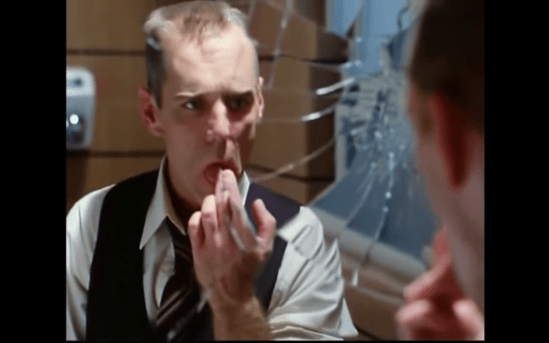
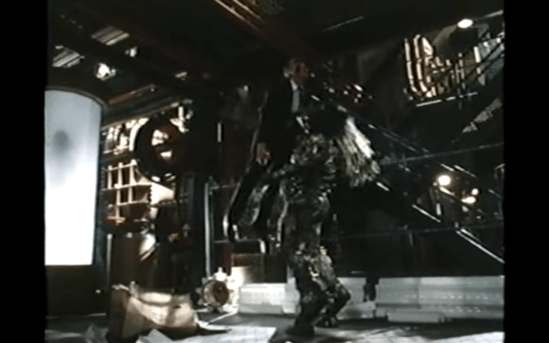
A top secret CIA operation, known as Operation Lycanthropus, leads two agents to a Hungarian castle where they must retrieve a sample of werewolf blood in order to create the prototypical ultimate super soldier. With his partner’s throat ripped out during the initial werewolf attack, agent Butler manages to retrieve a sample after plugging the werewolf with metal bullets, but upon returning to the secret operation headquarters in the States, his supervisor, Agent Miller, and a team of scientists pursue a more subdued approach in synthesizing an advantageous killing machine. The unhinged and impatient Butler injects himself with the remaining blood sample, transforming him into a blood thirsty werewolf. After attacking and killing a scientist, Agent Miller neutralizes the beast and places him in cryogenic suspension, hidden away in the secured basement, for future sinister endeavors. Twenty years later, a new secret operation headquarters building is erected after the first burns down, clearing the way for a new team of scientist developing game changing medical technology for burn and cancer victims by creating artificial skin out of metal, but when the project is suddenly taken charge by Agent Miller, the bewildered and upset scientists are impelled to work on human cadaver trials, placing Agent Butler’s inanimate body on the operating table for a metal skin transplant. When he suddenly awakes, the base of unsuspecting scientists and military personnel come under attack by a formidable and blood hungry beast now armored plated with a metal exterior and virtually no way in stopping it’s vicious wrath.

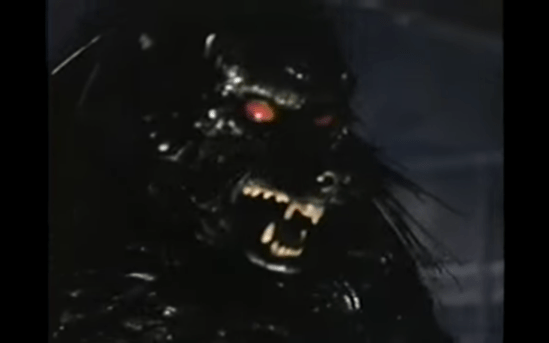
Talk about an archetypical blend of classic and tech horror, “Project Metalbeast” exemplifies the age-old theme of scientific research being usurped for control and power and the end result is fatally catastrophic. Also known as “Proect Metalbeast: DNA Overload” and just plain ole “Metalbeast,” the film was written and directed by Alessandro De Gaetano (“Bloodbath in Psycho Town”) who spun a 1995 unorthodox werewolf feature that presaged playing God in more ways than one and added a fresh and new elemental armament to an iconic, and already super, beast on the prowl. Tom Irvin, Brad Hardin, David Barrett and Wesley Wofford, who makeup (no pun intended) the special effects team of Magical Media Industries, have credits that include the “Carnosaur” killer dinosaurs and a couple of the “Halloween” franchise sequels and have applied their combined tapestry of creative talents to bring a practical, larger-than-life metalbeast to the screen that’s not only monolithic in size, but also fearsomely primal with a glint of “Terminator” characteristics in its glowing red eyes. “Project Metalbeast” was one of the last semi-cult releases of Prism Entertainment Corporation, a company that chugged out some great B-horror films mainly in the 70s and 80s with titles such as “Eaten Alive” and “Body Melt,” and one of only a few films from the associated production company, Blue Ridge Entertainment.

Before taking Jason Voorhees to space to metalize the already the indestructible carnage incarnate, Kane Hodder did a test run stepping inside the augmented paws of a gnarled werewolf. Instead of space, Hodder grounds his performance by barely able to walk on two hind legs in the fabricated prosthetic suit, but the veteran stuntman and character actor is the dynamo practical effects horror version compared to today’s CGI-guru, Andy Sirkis, thriving tangibly polar opposite on the character effect sake, but Hodder captures the metalbeast’s utmost power gait and stance despite the extremely limited range of motion. Another symbol success in his own right is Barry Bostwick as Agent Miller. Bostwick is best known for his hero role in “The Rocky Horror Picture Show,” but to me, he’ll always be the aloof mayor in Spin City opposite Michael J. Fox so it was challenging to accept Bostwick as a conniving cutthroat intelligence agent. Yet, the longtime actor has perfected the knack of being haughty in not only his performance, but in all his mannerisms, making Agent Miller a completely loathsome character undeterred by the sensitives of others. Opposite Agent Miller is the more rational and sensitive head scientist, Dr. Anna de Carlo, played by Kim Delaney who appeared in “Darkman II: The Return of Durant” that was released the same year. Delaney didn’t excel as the strong heroine one might expect her character to be thrust into a situation that calls for her to protect not only her life, but all the lives outside the base if the creature escapes and the scientist is more-or-less part of a splinter group derived from a team effort against the metalbeast. Costars include Musetta Vander (“Mortal Kombat: Annihilation”), Dean Scofield, Tim Duquette, Lance Slaughter, William G. Clark, and John Marzilli as the unhinged Agent Butler.

“Metalbeast” sounds like a metal title, but Gaetano works the orchestrated talents of Conrad Pope into the soundtrack and “Project Metalbeast,” at the time, was Pope’s scored feature as a composer, the classically trained musician has been the orchestrator on a variety of films, such as the films of “Jurassic Park,” “Star Wars,” and “Harry Potter.” Yet, Pope’s score is akin to Harry Manfredini, a character of the story, that maneuvers coincidingly with the metalbeast while simultaneously triumphantly denotes specific scenes of dread, victory, and intense suspense with the latter being reminiscent of Mandfredini’s “Friday the 13th” brashly intrinsic cello and violin composition when Jason Voorhees would startle victims on the screen and chase them down a moonlit forest path. While Pope’s score is invigorating, the story leans more toward less so with a tediously uninspired quality regarding the film’s semblance of a comprehensive secret operations base that has corridors stunk of a standard hospital setting and story structure that fortunes little against the beast’s point of view in which Gaetano merely removes a few frames and adds a distortion effect to the picture that peers out of the eyes of a drunkard’s discombobulated staggering as well as leaving some plot holes with the bit characters, such as the other military police who simply just vanish though the character pool has been whittled down near the climax. Plus, Bostwick’s Agent Miller doesn’t age in the 20-year gap in the story, leaving any tidbits of truth versus a metallic werewolf as dust in the wind. Even with the faults, “Project Metalbeast” without a doubt is a product of it’s decade with a touch of lycanthropy campiness illuminating a sardonically augmented military killing machine.

Resurrected from the video graveyard and for the first time on a home video release in the States, or at least officially, Alessandro De Gaetano’s “Project Metalbeast” lands onto DVD from independent entertainment distributor, Invincible Entertainment, and partnered with MVDVisual. Presented in a full frame, 1.33:1, the transfer looks like either a VHS rip or a scan from an unofficial DVD release with heavily lossy details amongst a washed hue overlay. There’s some transfer imperfection, such as slight scratches, but is less intrusive than the soft image. The English language mono audio is bombastic, but there’s no strength behind the explosions, beast growls, and such to emphasis the impactful scenes. Dialogue remains in the forefront behind the ambience and, even, Conrad Pope’s powerful, but non-subversive score. Depth and range are acceptable as the camera and sound relation viably work hand-in-hand. The Invincible Entertainment release is nearly bare bones without an significant transfer upgrade, no bonus features, and barely a static menu. “Project Metalbeast” lives and breathes as a poster boy of a 1990’s revamped creature feature genre that transforms a classic monster into a man’s weaponized wet dream, but the film stutters as a reserved case of conservative metal monster mayhem.

Own “Project Metalbeast” on DVD!

Available for free with a Prime Video subscription!

Sit Back and Enjoy EVIL’s Ride on the “American Rickshaw” reviewed! (Cauldron Films / Blu-ray Screener)


Scott Edwards, a struggling college student, works as a rickshaw runner on the vivacious streets of Miami. When a beautiful woman offers more than just the rickshaw fare for his service, Scott reluctantly accompanies her on a private boat secured at the local harbor for a night of sensual loving, but Scott finds himself in the middle of a voyeuristic scheme by being videotaped behind a two-way mirror and before fully copulating, Scott roughs up the secret cinematographer and the woman escapes. After realizing he forgot the tape, Scott returns to the boat to discover the man dead and all the evidence points to him, framing him for the murder. On the run and being hunted down by Miami PD and the actual killer, Scott embarks on a mission to clear his name, with the help from the woman on the boat, a stripper named Victoria, and a Chinese witch named Madame Luna, during a pivotal time of Chinese mythology that pits good versus evil entrenched sordidly around a renowned televangelist.

Perhaps one of the most offbeat action-fantasy-horror movies to come out of the U.S. in the late 1980’s, the “American Rickshaw” cinematic experience can be a mesmerizing 97 minutes of claptrap theology and clandestine villainy bedim by a witch’s obscured telepathy powers of fire, snakes, and unveiling evil with a human to pig physical transformation. Also known as “American Tiger” in the States and “American riscio” in Italy, the film has the sensation of a blend of various filmmaking abstracts and for very good reason, it is. Notable Italian filmmaker, Sergio Martino (“Torso” and “Slave of the Cannibal God”), helms the cultivation of a big-ticket American production with the ethereal supernatural essence invoked by the Europeans that results into being one of complex whirlwind of a story from a script penned by Martino, Roberto Leoni (“Sex Diary”), Maria Perrone Capano (Beyond Kilimanjaro, Across the River of Blood”), and Sauro Scavolini (Your Vice is a Locked Room and Only I Have the Key”). Dania Film, Medusa Distribuzione, and National Cinematografica serve as the Italian production companies responsible for the “Rickshaw’s” wild ride through Miami heat.

With a premise already on a high bonkers plane, “American Rickshaw’s” curiosity extends to the casting of an American Olympic gold medalist in gymnastics, the perfect 10 recording Mitch Gaylord, is cast as the male lead, Scott Edwards. The physically fit Olympic hero with little-to-no experience or exposure in acting to his name became the story’s prime suspect on the run from not only the law, but a merciless goon embodied by “Elvira: Mistress of the Dark’s” Daniel Greene. Greene already had an established relationship with Sergio Martino, having worked previously with the director on “Hands of Steel” and “The Opponent,” marking “American Rickshaw” as his first collaborated effort in being the story’s villain, Francis, who is seemingly more of the antagonist foe for Scott Edwards than his sect master, Reverend Mortom, a masquerading televangelist seeking to exploit an ancient Chinese relic for nefarious purposes and it’s “Halloween’s” Donald Pleasance to be the face of what would be established as quintessential evil. Pleasance seemingly goes along with the story even when has to snort like a pig during the character’s climatic ending, but is enveloped in a rather mundane, behind-the-scenes puppet master preaching a good biblical hellfire and brimstone game only to be castrated as a backseat bad guy with little to no vice exploration other than swindling the Chinese witch while dolled up in a kimono. The cast rounds out with Victoria Prouty, Darin De Paul, Roger Pretto and Regina Rodriguez and Michi Kobi as the young and old Madam Luna.

I’m one who never likes to research movies before watching them; I believe knowing the film in and out before viewing will more than likely become ruinous toward the quality of perception and cement a foundation of fixed judgement before the opening title credits roll. I don’t even like reading the film’s synopsis for the fear of spoiling too much on too little so I sat down with “American Rickshaw” knowing virtually nothing about the Marino anomaly and coming out relatively pleased, strangely piqued, and from start-to-finished bewildered. Off the bat, “American Rickshaw” could be grossly compared to be the East Coast variation of or, perhaps, the Italian answer to “Big Trouble in Little China” that channels less Chinese mysticism for more mysterious thriller. There are some noticeable similarities between the two films, such as for the obvious uncanny powers of Madam Luna, and then the not so obvious, but maybe more of a referential nod to John Carpenter’s film with the main character sporting a graphic tank top of a tiger that’s familiar with Jack Burton’s graphic yin-yang tank top, the young and old versions of Madam Luna resemble the young and old versions of Lo-Pan, and the scene where a prominent character gets runover by a big, red semi-truck. You know, the kind of rig Jack Burton mows down Lo-Pan with? “American Rickshaw” pales in comparison or, perhaps, shouldn’t be compared at all as Martino’s spellbinds his work by riddling it with cross cuts that attempts to discern solely by optics that swiss cheeses your mind as it tries to fill in the gaps of where the hell did that snake come from? Why did the key burn through his hand? Why is the stripper key to Scott’s Journey? What’s the reason behind Scott’s year of the tiger birth date significance toward his impelled Chinese zodiac destiny? There lies so many questions, but very few are answered; Yet, “American Rickshaw” is the wonderland tour Martino fabricates as some dysfunctional vision quest mapped with spontaneous witchery, horoscope horrors, and a devil pig in human clothing.

As the second half of the inaugural releases of Cauldron Films, “American Rickshaw” receives a limited edition Blu-ray release with a 2k restoration scan from the original camera negative. Since the review is based off a Blu-ray screener and not a physical copy, only 1500 copies being release, the A/V aspects of the package will not be critiqued, but this unrated 80’s hybrid action-fantasy-horror will receive the works, including a limited edition high quality slipcase with new artwork by Mattias Frisk, a reverse covering featuring the Italian artwork, and a booklet inside with writings by grindhouse comics writer and Tough to Kill co-author, David Zuzelo. The picture will be presented in a widescreen, 1.66:1 aspect ratio, with an English language LPCM dual channel audio track with optional English SDH subtitles. Bonus material aplenty with an one-on-one interviews with director Sergio Martino and production designer Massimo Antonello lamenting about the film while as providing a stark difference between Italian and American filmmaking in the late 1980s, a then and now look at filming locations, The Production Booth Podcast, including commentary from Samm Deighan and Kat Ellinger discussing the zaniness of “American Rickshaw,” and an image gallery. Distinct beyond anything else you’ll ever see and indelible with solid practical effects, “American Rickshaw” deserves the upgraded, horror-marketed update set apart from the poorly sultry, softcore porn “American Tiger” U.S. release that stiffens the story’s true self on retail shelves.

EVIL’s Infectious Paranoia and Fear Spreads Rampant in “She Dies Tomorrow” reviewed! (Neon / Digital Screener)


A despondent Amy is convinced she will die tomorrow. Wanting nothing more than to be useful in her death, she wishes for her skin to be sewn into a leather jacket, much like hardwood floors are elegantly fabricated from cut down trees. When her friend Jane checks in on her once alcoholic friend to ensure that Amy hasn’t fallen off the sober wagon, she brushes off Amy’s death talk as nonsensical, ruminating verbiage, but Amy’s intense convictions of imminent death spread like a contagion, serving up paranoia, fear, and hopelessness to every ear reached. Like wild fire, the prospect of death begins to infect a chain of people directly and indirectly connected to the source, Amy, and there’s no stopping the terror that looms knowing that’ll their fate is sealed in an ill-fated predestination that is seemingly coming tomorrow.

What if you knew you were going to die tomorrow? What sensations could possibly overwhelm your rationality? Are there differences in how we react between apparent death and actual death? These are all questions posed without much elucidation in Amy Seimetz’s 2020 sophomore full-feature film directorial, “She Dies Tomorrow,” coming eight years behind the writer-director’s 2012 debut road trip thriller, “Sun Don’t Shine.” Seinmetz, who has battled Xenomorph’s in Oliver Stone’s “Alien: Covenant,” tried to escaped animal masked killers in “You’re Next,” and burdened the supernatural forces of a Native American burial ground in the remake of Stephen King’s “Pet Sematary,” has wriggled her way in front of the camera with indie and big budget thrillers in the last decade, but has also found a small, but significant, auteur niche behind the camera as well, exploring the human dynamic in an avant garde veneer that involves the very core of what affects us all – death – in what Seinmetz describes it’s spread as an “ideological contagion” and how processing our determined for us death date can morbidly spill into what little life is left. “She Dies Tomorrow” is majorly self-funded project by Seinmetz, whose quoted that “Pet Sematary” paid for the film in full, and it gave the filmmaker nearly total autonomy in stylizing her vision of a dry, dark comedy with science fiction and horror elements that bridge the reality and fantasy gulf. Also, Rustic Film’s Aaron Moorhead and Justin Benson also serve as producer. Moorhead and Benson, two filmmakers who I admire quite a lot, have proven to invest and create new and fresh otherworldly features, such as “The Endless” and “After Midnight.”

Returning to collaborate with Seinmetz is the director’s lead star from “Sun Don’t Shine,” Kate Lyn Sheil, portraying “She Dies Tomorrow’s” first despaired, Amy. The New Jersey born actress has built a career working with Seinmetz, co-starring alongside her in such as “You’re Next” and in television with “The Girlfriend Experience,” the latter being co-created by Seimetz, but Sheil has also established a wealthy career on her outside the Seinmetz bubble, landing a reoccurring role on the Kevin Spacey turmoiled Nextflix series, “House of Cards” and staying steadily busy with filmic roles over the last five years that has been continues even into the new decade. As Amy, Sheil decompresses Amy’s gloom upon the world in a manner of a stumbling, lost soul trying to find ways of being useful after death. Amy’s alcoholic issues are relatively on the backbunner, adding past strife to her character, but not really the centric focus of Amy’s communicable mellow anxiety. Each of the infected express their contract in a multitude of different ways. “Poltergeist” remake’s Jane Adams engrosses Jane’s fear around how she’ll die that then spreads to her on-screen brother, Chris Messina (“Birds of Prey”) and his snarky wife, Katie Aselton (“Black Rock”) who process as a natural parental fear and duty to comfort and control what they conceive as the inevitable. As the spate of infections increase, the fear lineage evokes honesty, regrets, sympathy, acceptance, and wonder from the support cast that includes Josh Lucas (“Session 9), Michelle Rodriguez (“Resident Evil”), Adam Wingard (director of “The Guest” and “You’re Next”), Jennifer Kim, Tunde Adebimpe, Olivia Taylor Dudley (“Dude Bro Party Massacre III”), Kentucker Audley (“V/H/S”), and Madison Calderon.

“She Dies Tomorrow” cultivates responses to the spreading of the ideological contagion rather than express just exactly how these people will die. Are they so sure they’ll die tomorrow to the point of inflicting self-harm? The story never really takes it that far to exhibit where the individuals, riddled with anxiety, their mortal status will land, whether it’s gratuitous gruesome or just nature taking course. Seinmetz makes light their becoming stricken with dying. While I mean in a more dry humor context, I also literally mean the filmmaker makes light, like the luminescence emitting from a rainbow firefly, glow upon characters’ faces inside Jay Keitel’s cinematography when death strikes their senses like an epiphany. The grim future washes away everything in their past, a key point of obsession honed in by the filmmaker that platforms the short span till death overshadows much, if not all, of our past achievements in life. The obsession is so strong and overwhelming that you, yourself, will start thinking about your own demise, whether it’ll be tomorrow or another 50 years from now, to which then sympathy for each of these characters will begin to set in and remain until the credits roll. “She Dies Tomorrow” seethes as a colorfully cosmic thanatophobia amplified by the current pandemic climate and common death anxiety, furthering Amy Seinmetz’s growth as a gifted filmmaker.

Neon presents the distribution of Amy Seinmetz’s “She Dies Tomorrow,” coming to drive-in theaters on July 31st and landing on video on demand the following week, August 7th. Since this was a digital screener of an upcoming move, there are no home video specifications to review, but Jay Keitel’s scenes are softly lit, down to Earth, and turn ethereal during the flashing of lights. The score by the composing duo, Mondo Boys, reteams Seinmetz with the soft, haunting melodies that can invoke a classical sadness and presage inside princely compositions that included interweaving Mozart’s Requiem into the mix. There were no bonus features included with this screener nor were there any bonus scenes during or after the credits. “She Dies Tomorrow” is a well-crafted, well-timed harrowing allegory on the psychological properties of coping in the face of death.

[https://www.youtube.com/watch?v=hcMFjCPkP3M]

Buy the “She Dies Tomorrow” poster! Catch the film in Theaters and Video-On-Demand!