Break a Promise with EVIL And Pay the Little-Big Price! “Unwelcome” reviewed! (Well Go USA Entertainment / Blu-ray)

Not the Leprechauns This Time.  It’d Be Goblins that “Unwelcome” You!  

Trying desperately to become pregnant for some time, Jamie and Maya celebrate the news of learning they’re expecting but their jovial rejoice is cut short when three thugs break into their city apartment home, nearly bringing an end to their lives and the baby.  When Jamie’s great aunt Maeve wills him a rural cottage in Ireland, the married couple jump at the chance to start afresh away from the urban chaos and the trauma in hopes for a peaceful life with their child.  The friendly village residents take in Jamie and Maya unconditionally but one stipulation is highly encouraged to be met if living at great aunt Maeve’s cottage:  they must leave out a blood offering for the little people, the Redcaps, of the forest butted up against their home.   Just happy to be out of the city, Jamie and Maya shrug off what they believe to be folkloric wives tales of old Ireland and on such short notice, they hire Mr. Whelan and his children, who come with an unfavorable village reputation, to do much-needed repairs around the house.  When dealings with the Whelan clan go violently sideways, Maya invokes superstitious belief to draw the Repcaps out of hiding and implore their murderous mischievousness for dire neighborly assistance. 

Welcome to the “Unwelcome!”  Pint-sized evil continues to be mondo popular around the world, especially in the Full Moon empire that’s built a kingdom off the backs of supernatural ankle biters.  However, “Unwelcome” is not a Charles Band production that’s rushed straight through to a fast-tracked, direct-to-video release of shoddy, schlocky proportions.  Instead, this release comes from overseas, the UK specifically, with some quality production footing that lands the 2023 released film into a limited theatrical run before hitting the home entertainment market.  Behind the film is Jon Wright, director of dark humored revenge against high school bullies in the “Tormented,” who directs and co-writes “Unwelcome’s” grim fairytale-like narrative of personal growth, inner fight, and underfoot goblins gone wild with Mark Stay, reuniting with Wright for the first time since their script collaboration on the 2014 automaton invasion epic, “Robot Overlords.”  Under the once working title of “The Little People,” “Unwelcome” is a production of the Yorkshire based Tempo Productions Limited, with cofounders by Jo Bamford and Piers Tempest as executive producer and producer, and the private equity investment group, Ingenious Media, with producer Peter Touche along with Warner Bros. and Well Go USA Entertainment distributing. 

“Unwelcome” has such unusual casting in a good way.  The entire Whelan clan consists of actors plucked from successful, multi-seasonal television shows that have essentially shaped their careers from their well-known, fan-adored roles, but the unintended adverse effect in such triumph stamina is being recognized only for that performance.  In my mind, Colm Meaney will forever be embedded in my hippocampus as Engineer Chief Miles O’Brien from “Star Trek:  Deep Space Nine.”  “Con Air,” “Under Siege,” and even as a British Airways pilot doomed for landing in “Die Hard 2,” Chief O’Brien, I mean Colm Meaney, is still in space tinkering with transporter buffers.  Here in “Unwelcome,” Meany is Daddy, aka Mr. Whelan, a rough around the edge contractor who beats his kids, let them get away with whatever they please, and has a real notoriety around town.  When I say kids, I mean grown adults stuck in Daddy’s hooligan wake and are played by more outstanding and familiar faces from Ireland, such as Hodor from “Game of Thrones,” Kristian Naim, Netflix’s “Derry Girls’s” Jamie-Lee O’Donnell, and the “1917” actor and upcoming principals of “Last Voyage of the Demeter,” Chris Walley, make up the trio of terribly laid construction workers who have really no business being around a hammer, a ladder, or anybody’s valuables.  That brings me to “Unwelcome’s” lead actors as the scarred couple who hires out Whelan’s band of delinquent spawns to do the handiwork repairs.  I realize Wright and Stay wrote Douglas Booth (“Pride, Prejudice, & Zombies”) to be an overly optimistic and fairly useless good guy with Jamie, but the insecurities are just ostentatiously oozing out of the husband without a clue.  Jamie’s arc also doesn’t quite flesh out by the end of the film as he’s blocked by the baby mama instincts of Maya, played by “Resident Evil:  Welcome to Raccoon City’s” Hannah John-Kamen, with an unspoken I’ll-do-it-my-damn-self attitude that sends the narrative into a knife-brandishing gob of Redcaps eager to do her bidding for an unfavorable exchange.  Maya sacrifices all for a good man with good intentions who can’t do diddlysquat to save her and, in the end, that doesn’t seem balanced for this ferocious fairytale. 

If there is one aspect, above all us, to note about “Unwelcome’s” shin kicking goblins as a takeaway is that the rambunctious and ravenous Redcaps are not computer generated, are not puppets, and are not even animatronics.  Actors and stuntmen fill those small shows with a little help of disproportionate movie magic, heeding to the ways of a lost art in miniaturizing actors, such as in “Willow” or “Honey, I Shrunk the Kids,” and touching up with some CGI on the tangible face molds for a layered composition that’s super fun to see come to life on screen.  Unfortunately, the Redcaps make a late appearance into a yarn unspooled with mostly the pent up pile of frustrations of Jamie and Maya as an unlucky couple without a chance of peace in the world.  Trouble finds them wherever they go in what’s essentially a trade for city thugs for unfriendly country versions of the same type of ill-mannered.  “Unwelcome” plays very much into it’s title that no place feels welcoming for a couple on the verge of the already daunting premise of parenthood life and everything appears now alien as the world is being upended by concessions for your child in what has turned terrifying in what was supposed to be a warm, welcoming of a new adventure.  That’s the sensation setup for the pair who trust dip into trusting superstitions and magical beings to be their guardians.  Folklore then takes over; its has, in fact, been welcomed to save the day no matter how maligned the backstories.  Wright and cinematographer Hamish Doyne-Ditmas do, in fact, construct an ocular stage crafted out of an ethereal red and yellow fire lit sky with an overall color theory toned to contrast as a mystical storybook set in what is usually flush with greenery around an Irish village, reminiscent of late 70s-early 80’s European horror sets built to detailed scale, built with vibrant backlighting, and yet built to feel distant, apprehensively off, and strange like another world, a Redcap ecosphere.  “Unwelcome’s” ending also pulls from that unabashed time to be creatively mad in an innately mad universe with an unexpected Redcap reason that doesn’t clarify so much their hunger for blood offers, which the diet includes raw store-bought meat and the frothy flesh of felonious individuals, but better explains their twisted promises and intentions for their knife-jabbing services rendered.

With Goblins, there’s always a price to pay but for the Blu-ray release of “Unwelcome,” the price is worth the admission.  The single-layered, AVC encoded, high-definition 1080p Well Go USA Entertainment release presents the film in a widescreen 1.78:1 aspect ratio.  Slightly squeeze onto a BD25, there’s some minor irregular compression patches that degrade solid darker colors and the image loses a bit of sharpness in the background – you can see an example when the Redcaps pop up out of the keep tower appearing more like moving globules than well-defined humanoids.  Goblin facial features and skin and clothes textures have tactile appeal during closeups with the same being said with the cast in their natural color tones.  Computer-generated facial movements have seamless pertinence to the surrounding action and the motion of the Goblin actors themselves with layering of frames looking clean to create their smallness around principal characters.  The English DTS-HD 5.1 Master Audio mix maintains a stout dialogue track but deploys no depth into recordings resulting in all the dialogue tracks to be at the forefront, even when characters are in the background in the scene.  The weird spatiality with the dialogue doesn’t translate over to ambient noise as those tracks are well designed into the scheme with levels of depth that add richness to the storybook atmospherics.  English SDH are optionally available.  Bonus features include a behind-the-scenes cast and crew interviews discussing their time forming the idea and working on the project, a making the Redcaps segment with special effects supervisor Shaune Harrison (“Nightbreed,” “Attack of the Adult Babies”) discussing the step-be-step process of bringing these little devils to life, including showcasing their head and body molds, and the theatrical trailer. The physical property comes in a standard Blu-ray snapper with latch with one-sided cover art of a knife-out Goblin starring up at the new mistress of the house.  Inside, a single-leaf advert of Well Go USA films and the disc pressed art with a blue-graded Goblin looking menacing makeup the inner contents. “Unwelcome” runs at 101 minutes, is rated R for strong violence and gore, pervasive language, some drug use, and sexual material. From an ironic perspective, “Unwelcome” uses the mythological mischievous of Goblins as a gas pedal accelerator to mature a pair of genteel gulls faced with a parlous reality and to be factotum in life in general told inside in the linings of a dark and gory fairytale universe.

Not the Leprechauns This Time.  It’d Be Goblins that “Unwelcome” You!  

Doppelganger EVIL Shares a Deadly Family Secret. “AmnesiA” reviewed! (Cult Epics / Blu-ray)

Become Caught Up in the Mystery of “AmnesiA” on Limited Edition Blu-ray!

Alex, a meek photographer, is called back to his family home by his estranged identical twin brother, Aram, on the news of their mother’s severe illness.  Agreeing to help look after her for a while, Alex travels back home with his new girlfriend in tow, a pyromania epileptic named Sandra.  Upon his arrival in Amnesia, the home of the family business of tinkering on broken down cars around the property, Alex is met face-to-face with a past he’s long tried to forget.  Aloof Aram’s peculiar involvement with organized crime, his heart-healthy mother’s obsession with heart conditions, Sandra’s fire infatuation, and himself crippled by a imprinted, photographic fear swirls with ridicule tension around the crumbling junkyard estate.  The years long secrets between the brothers about their childhood past have taken a personalized toll on them and being in the same space together after a long time a part has loosed embedded raw emotions and dug back up the past again to finish what they started all those years ago.

“Amnesia” is a curious and mysterious black comedy thriller from the Netherlands and is the surrealistically bold effect of duality and family skeletons in the closet from filmmaker, the Hague native, Martin Koolhoven.  Taking similar household elements from the avant, 60’s inspired “Suzy Q,” writer-director Koolhoven pours another fractured glass of dysfunctional family-ade to sour perfection, squeezing every last drop out of neglected relationships in order for the truth to the be tasted.  With themes around secrets, guilt, processing that guilt, and family, “Amnesia,” or as originally spelled, “AmnesiA,” progresses a narrative of an irreversible broken family from through the looking glass of dark comedy and layered mystery to it’s ultimate destruction perceived as bittersweet.  Shot in Belgium, “Amnesia” is produced by Paul Verhoeven “Black Book” producers, Jeroen Beker and Frans van Gestel, under the partners’ 1995 established, Amsterdam-based production company, Motel Films. 

If unable to locate two suitable actors to play siblings, why not have one great actor to be both?  That’s the approach Martin Koolhoven erected when falling head over heels with Fedja van Huêt who could intuitively give Koolhoven the exactness of each brother’s personality.  Brothers Alex and Amar are so distinct in how they carry themselves as well as in their appearance that your mind and eyes can barely keep the registered fact that the brothers are inhabited by the one and the same Huêt.  Huêt, along with some good writing from Koolhoven, keeps insecurities close to the chest, blossoming a massive bubble of enigma that often repels the brothers against one another to keep audiences from homing in too close to the exact cause of their personal strife.  Tension works wonderfully despite not having the ability to act against the actual physical embodiment of the antithesis to spar with and the editing fully supports the duality with perfectly seamed visual effects touchup efforts.  Other support efforts come from a great supporting cast, including the international success Carice van Houten who starred in Verhoeven’s “Black Book” and won an Emmy for her high priestess role of Melisandre on HBO’s “Game of Thrones.”  Houten’s cagy, pyromaniac Sandra is just as odd as her appearing suddenly into Alex’s life, or rather into the backseat of his car, when things are beginning to feel complicated for Alex having to return home after many years away.  Sandra’s emotionally supportive, almost as Alex’s backbone or a buffer, when dealing with Aram but she’s interpreted as not normal by the brothers’ mother (Sacha Bulthuis) who herself is a representation of the past that keeps the individualized brothers connected and tries to keep both boys nearby without angering them; she even attempts to turn Alex into his mechanic father, whether done consciously or subconsciously goes unsaid, but in the end, the past always creeps back to the present and the unresolved coming to a close will put the final nail into the coffin of the Amnesia family business for good.  Theo Maassen, Cas Enklaar, Eva van der Gucht, and Erik van der Horst costar.

“Amnesia” is a thought-provoking puzzle box of rearranging clues and drop in visitants that instill an uneasy, surrealism surrounding chiefly these two brothers.  Bubbling to the surface through a series of baby step flashbacks is the root cause for much of the tension coursing the narrative. History becomes the driving force behind Alex’s apprehension in returning home, seeing his naive mother, and interacting with sycophantic brother who’s also jaded by the life’s little lurid lesson by turning toward a life of crime and holding onto not only a grudge against his brother’s abandonment but also against a decision his father made many times over that he now sees as unfinished and unsatisfied. What’s even more interesting is the lack of urgency and empathy surrounding them and to resolve what has been stayed stagnant for years from their adolescence and into their adult established lives. Immediate attention matters become secondary to the underfoot game that occupies mental space between them, infects those around them, and spills out of the shadows to eventually into the light. For example, Amar’s partner Wouter is critically injured after a botched heist and comes to Amnesia to wait for further instructions from Eugene, Amar and Wouter’s boss; yet, while Wouter bleeds from his abdomen, Amar saunters around the house and Wouter is equally leisured when it came down to his mortal wound. Eventually, Sandra and the brothers’ mother grow accustomed to Wouter’s state, just like Wouter, and though their mother’s deteriorating health inches itself back and forth into the conversation, the only thing that doesn’t shy from the forefront and never becomes accustomed is the lingering sense of that something isn’t copacetic between Alex, Amar, and their father in what transforms into a problem of masculinity affairs in which Amar steers the way in accordance to alpha theory. Koolhoven uses closeups and arranges characters in scenes that makes them feel right on top of each other, in various ways, that perpetuates the incommodious communalism of Amnesia.

With the associated restoration from the Eye Film Institute, Cult Epics introduces a new 4K HD transfer and restoration of Martin Koolhoven’s “AmnesiA” onto a limited edition, 2-Disc, dual-layered Blu-ray from the original camera negative. IMDB.com lists “Amnesia” as an Arriflex 16mm film blown up to 35mm, but the is incredibly sharp for 16mm and there doesn’t appear to be a ton of makeup work to cover 16mm’s sizzling grainy and jitteriness. However, the film is presented in the European standard 1.66:1 aspect ratio that’s shot in Super 16 and is particularly fascinating how Koolhoven’s color schemes and depth shadowing adds to the noir fashion of Menno Westendorp’s beautifully warm and splintering specious cinematography. Restoratively, “AmnesiA” is a perfectly graded film with a sharp, invigorating image that exhibits no compressions issues on the dual-layer BD50, available on both discs. The Dutch language audio options on the Cult Epics release has three options: a LPCM 2.0 stereo, a DTS-HD 5.1, and a Dolby Digital 5.1. Jumping back and forth between the audio choices, I settled upon the DTS-HD surround sound mix that produces a better full-bodied output, if only by a little better with notifiable sharper crackling of the tire and car fires to bring an audible warmth to the scene. Sometimes, it’s the smallest vibrations that make a biggest impact. Dialogue renders nicely on each of the three tracks with clarity and a cleanliness of the recordings. Tracks are dynamically distinct in each scene that creates a nice depth in many of the closeup scenes with more than one actor. English subtitles are available on all three audio options. Special features on the first disc include an optional presentation introduction by director Martin Koolhoven, audio commentary by Koolhoven and star Fedja van Huêt that’s moderated by Peter Verstraten, a 44-minute theater aisle retrospective conversation with Koolhoven and actress Carice van Houten, a making-of featurette, an archive behind-the-scenes with Carice von Houten from 2001, and the theatrical trailer. The second disc includes two bonus films from Martin Koolhoven’: “Suzy Q” from 1999 and “Dark Light” from 1997. The release itself comes in a clear traditional Blu-ray snapper case inside a cardboard slipcover with a new burning tire lens illustrative artwork from Peter Strain. The snapper cover art is a split screen of Alex and Amar with Sandra divisively in the middle and the reverse side of the artwork contains original poster reproductions for “Suzy Q” and “Dark Light.” Disc art is pressed with the same cover design on the feature presentation while the disc two is pressed with an image for “Suzy Q.” The 89-minute “AmnesiA” comes unrated and the both Blu-rays are tested region free. A real mind flayer that gets under your skin in a humorously surreal way, director Martin Koolhoven’s “AmnesiA” stuns as an official debut feature film, a real under-the-radar sleeper hit for the Netherland filmmaking canon, that only Cult Epics could deliver pristinely with a time-of-day restoration and high-definition scan.

Become Caught Up in the Mystery of “AmnesiA” on Limited Edition Blu-ray!

EVIL Will Suck on Your Menstrual Soaked Tampon. “The Hood Has Eyez” reviewed! (SRS Cinema / DVD)

An Early 2000s Exploitation With Lots of Infamy!  “The Hood Has Eyez” on DVD!

Attending a school ditch party was the last thing the obedient Kimmy wanted to do but the peer pressure from her fellow Catholic schoolgirl friends convinced her to the other side of the tracks of town.  On the way, a half-naked woman runs out in front of their car and in attempt to flee the scene on foot, to protect their innocent repute status, they run into two gangsters holding them at gunpoint in an alley.  The now frightened teens are forced into an isolated park area, joined by the now fully-clothed and not injured woman they hit earlier in what has been revealed to be a ruse to rob them, but the gang leader, Psycho, has more distasteful and violent plans to squeeze more out of his prize than cash.  Psycho brutally rapes Kimmy and is left for dead by not only the gangsters but also the one other surviving girl she had considered to be her friend.  Battered and broken, Kimmy’s morality and reality snaps, sending her down an unmerciful vengeful path against those who condemned her to die.

If filmmaker Terrence Williams set out to make an exploitation film of genital mutilation, forced sodomy, and a man sucking on a bloody tampon, then mission accomplished!  The straight-to-video, SOV rape-and-revenger of monstrosities, “The Hood Has Eyez,” pulls no punches, knows no limits, and cares to give no concern for the atrocities it depicts.  A bastardized yet familiar rephrasing of an early Wes Craven classic, “The Hills Have Eyes,” Williams uses Craven’s basic setup plot to write-and-direct his own version of uncivilized lowlifes exploiting and murdering out-of-their-element travelers in the most graphic and appalling ways.  Williams takes the fear out of the hills and drops it into a remote park plopped in-between the suburbs and urban grounds, swapping out inbred hillbillies for Latino gangsters and a nuclear family for schoolgirls in short skirts and one unlucky white dude.  Collaborating producer and wife of Terrence Williams, Nicole Williams, has previously and subsequently worked together other films, such as “Curse of La Llorona” and “Horno,” under their now defunct joint company, Cinema Threat Productions in Los Angeles. 

The 2007 released “The Hood Has Eyez” reunites a good chunk of the cast from Williams’ “The River:  Legend of La Llorona,” “Revenge of La Llorona, “Llorona Gone Wild” and “Curse of La Llorona” films completed and released within a couple years previously which created a certain level of comfortability and trust amongst the cast as well as the cast and director.  With some of the intimately graphic content of “The Hood Has Eyez,” those warm and cozy congenialities play key to selling a broken bottle scene being rammed up a vaginal cavity or a nail hammered down into penis urethra.  Without that delicate easiness in the air, scenes like the aforementioned won’t work, resulting in the entire project collapsing upon itself even before wrapping up principal photography.  At the tip of the spear are Cyd Chulte and Antonia Royuela as the principled Kimmy and her antithesis, the deranged Psycho.   Chulte, who cut her teeth with roles in “Curse of La Llorona,” takes one-half the lead of a young woman broken by the barbarity and succumbs to justified vehemence for torture, dismemberment, coat hanger abortions, and eventual death but before being pushed to the edge of her life and into a state of insanity, Kimmy’s presence melds into the group of a lemming unit and takes a backseat to the other lead half behind Royuela’s unhinged ultra-violence of a gangster gone rouge from the plan.  Psycho’s posse – Joker (Carlos Javier Castillo, “Axeman”) and She Girl (Anne Stinnett, “Revenge of La Llorona”) – truly reflect their handles as Psycho’s devil and angel on his shoulder, trying to either egg him on or have him withdrawal while withdrawing is still in his favor but, of course, we wouldn’t have a debauchery and savage movie if the angel over the shoulder had prevailed and so Psycho has his perverse way with Kimmy and friends – Susan (Jesselynn Desmond, “Horno”), Rachel (Jamielyn Lippman, “The Absent”), and Jerry (Tom Curitore, “Llorona Gone Wild”). 

The way I see it, Terrence William’s trashy exploitation nod “The Hood Has Eyez” has three distinct parts, much like the three-act structure of any narrative archetype.  Terrence Williams defines these acts tremendously clear in an almost too simple of a way that it feels rudimentary, maybe even old fashioned.  The setup is simple:  overweening teens doing what they’re not supposed to be doing become caught up in an unfavorable part of town with a maladjusted gang.  The confrontation squares the two factions to a literal position of facing each other while the teens coward in fright and disadvantage as they forcibly bend to the will of the gun-toting gang calling all the shots.  The resolution pivots the story 180 degrees, like any good rape-revenge thriller should, after misdeeds thin out whose left for dead and who’s intractable impulses are fully left satisfied and goes right into execution mode without passing go, without collecting $200, and without pause of a trauma processing moment as Terrence Williams wastes no time digging deep into the sludge of psychiatric stability with a hasty move right to rectifying an eye-for-an-eye balance.  Up until a point, “The Hood Has Eyez” carries a lot of dire weight within the confrontational girth that can be hard to stomach.  There’s a few casually lighthearted and fun witty moments peppered beforehand, such as a jokes at the expense of airhead Susan and her player boyfriend, but then after the grave assault that leaves Kimmy left to suffer all the post-traumatic syndrome results, things really go dark, and I’m’ talking black comedy dark.  Kimmy goes into full Rocky Balboa training mode, doing pushups and enthusiastically practicing staff spinning in the light of the falling sun.  Terrence Williams actually gives Kimmy a rousing montage before ripping the dick off a two-bit thug.  Where am I getting to with all this?  Well, I’m not sure how Terrence Williams wanted audiences to digest his brutal film that goes through touchpoints of opposing genres.  Usually, if comedy and gore are present in one narrative, slapstick typically is the go-to conduit – think “Evil Dead II” or “Dead Alive.”  For “The Hood Has Eyez,” the gore effects are hearty, the characters are vicious and victimizable, and Williams maintains an intact beginning-to-end narrative, but confounds with a few choice character actions that sully the overall presentation.

The Cinema Threat Production has now been integrated into SRS Cinema’s Extreme and Unrated Label – Nightmare Fuel – and unquestionably is underground extreme horror at its foulest.  Released with a widescreen aspect ratio of 1.85:1 of the 420p standard definition, camcorder tape footage and in a new director’s alternative cut, “The Hood Has Eyez” has relatively decent image clarity with a very subdued amount of lossy compression results, especially for progressive scan 480 pixels.  Details are soft as expected with the commercial equipment and lower resolution but though a slightly faded color scale, the coloring range renders intense enough for higher marks and can play a trick on the eyes by falsely delineating the objects to create a space based off the hue edging alone.  The English Dolby Digital 2.0 track props up the quality even more with Terrence Williams using a boom mic attachment instead of the built-in mic to gather meticulously the intended dialogue and skirmish kerfuffle.  As a result, dialogue is really sharp here, especially during Psycho’s off-the-rail verbal abuse, rants, and one-liners.  The post-production Foley stands apart from the inhouse sound with prefabricated sound bytes but that’s the way of micro-independent filmmaking.  The alternate cut includes a newly shot opening scene that was originally intended for the original script that was added back in to actualize the Williams’ vision after a cast sudden dropout departure.  Bonus features include a commentary with Terrence and Nicole, a raw, secondary cam behind the scenes footage in making certain scenes, a blooper reel, image slide show, two original cut trailers, a new trailer, and a Women in Horror vignette featuring Nicole Williams discussing the importance of women in horror and her contribution to the genre.  The release is presented in a traditional DVD snapper with a beautifully illustrated cover art based off the shoddy composited “The Hood Has Eyez’s” one sheet.  In the past few years, SRS has upped their game with cover arts and continue to impress with their new branding campaign that makes these films feel no longer cheap at first glance.  Inside, the DVD press art is the same as the cover with much of the RGB removed to a single layer red. There is no insert inside the case.  Terrence Williams set out to capture the inelegant essences of nitty-gritty exploitation and hits the nail on the head, literally, with this passion project of perversity. 

An Early 2000s Exploitation With Lots of Infamy!  “The Hood Has Eyez” on DVD!

Watch Out! EVIL is Coming for Your Dysfunctional Family! “The Bloody Man” reviewed! (Wild Eye Releasing / Blu-ray)

Better Behave or “The Bloody Man” Will Get You!  On Blu-ray at Amazon.com.

Set in the 1980s, Sam doesn’t cope well with life without his recently deceased beloved mother.  Getting along with his new stepmother proves to be challenging at best, his older brother continues to disregard him as an insignificant pest, his little sister gets under his skin in playing with his action figures without consent, and the school bully makes his life that much more difficult.  The young boy’s unhappiness spurs him into desperate measures by reciting a spell passage on the back of his favorite comic book, hoping the passage truthful to conjure up his deepest desire – to bring his mother back from the dead and fix a broken family.  The passage instead summons a demon, the Bloody Man, who seeks to rip fractured family apart even farther until their eventual dissolve and demise.  Able to possess and take shape of his stepmother, Sam must reunite his family in order to save not only his siblings but also his stepmother from fragmenting into nothingness and death at the hands of a demented demon trickster.

An homage to all things 1980s, “The Bloody Man” is a modern-day resemblance of one the more recent golden ages of cinema with a synth-laden soundtrack, all the popular play toy trinkets and new wave styles of the era, and a magazine loaded millimeter film stock shot in attempt to remove as much of the digital aerodynamics as possible in contemporary times.  Daniel Benedict, the director of the Halloween-themed slasher “Bunni” involving a sexy, leather-cladded, fishnet stockings wearing costume killer with bunny ears, takes a step back from extreme slashers and hops into more family-oriented terror with the protagonist heroes being kids stepping up against the forces of evil, think of films like “The Gate” or “Ernest Scarred Stupid.”  Not as slapstick as the “Ernest” droll-troll paragon of ritualized Halloween movie lineups, this crowdfunded project can be a little more vicious in delivering on the lines of the same heartwarming message that instilled into us from the Jim Varney 30-years-ago, that love is key in overcoming darkness.  Benedict pens and helms the 2020 production with wife Casi Clark, aka Casi Benedict, co-writing a script that loosely pulls in and indirectly references Benedicts’ collaborated efforts on a He-Man inspired fan made short “Fall of Grayskull” into their boogieman story.  The Benedicts’ production company Red Serial Films confects the film into fruition with Mercedez Varble, Jason L. Watson, Garrett M. Johnson, and Rihannon Crothers producing. 

Despite not having top bill on the film, David Daniel leads us through the angsty complications of a new family dynamic as well as being the centric force of rebuilding a crumbling household as the middle child, feeling every bit like the world is against him, Sam Harris.  Daniels debut feature and leading role depicts well the internal argumentative aspects of having to go along with a life-forming change no child should ever go through, the death of a mother, and that sends him and his family careening toward dissolution despite his cheerful father’s overly confident optimism.  The top bills go to a pair of “A Nightmare on Elm Street” alum who both play mother to Sam.  Lisa Wilcox (“A Nightmare on Elm Street:  The Dream Master” and “A Nightmare on Elm Street:  The Dream Child”) and Tuesday Knight (“A Nightmare on Elm Street:  The Dream Master”) switch back-and-forth, between flashback-and-present, Sam’s biological mother and his new, soon to be, stepmother.  Surely, it comes to reason that the Wilcox and Knight names not only provide a couple of “The Bloody Man” selling points for die hard Freddy Kruger acolytes but could also be seen as an homage to the Robert Englund franchise with a similar living between two planes of existence nightmare antagonists hunting down a house full of kids, using unhappiness as a vessel rather than dreams.  Though not scarred by full body burns, wielding a finger bladed glove, and sporting a dirty striped sweater and fedora, the Bloody Man has his own characteristics being a black magic sorcerer.  Dressed traditionally in a snug black Chinese robe and blood running down his wild eyed face, Nicholas Redd enlivens the Bloody Man on a playfully perturbing level but the script doesn’t allow Redd to deliver the Bloody Man’s full potential while also not cutting the villain fully into the fold until the nearly last act.  Instead, the Bloody Man is reduced to a few here-and-there appearances, some one-liners, with half of the character’s screen time awarded to Tuesday Knight in a duality role as the Bloody Man uses the caregiver’s looks to draw in the Harris children.  Redd has promising lunacy that’s sorely underutilized in more ways than one and in so much so, the film itself shouldn’t be titled after the character.  “The Bloody Man” remaining cast includes Sam Hadden, Olivia Sanders, Jeremy Carr (“Calm Before”), Dominick Wilkins (“6 Feet Below Hell”), Dan Eardley (“Retro Freaks”), KateLynn E. Newberry (“O9en Up”), and Ellie Parker (“Bones and All”).

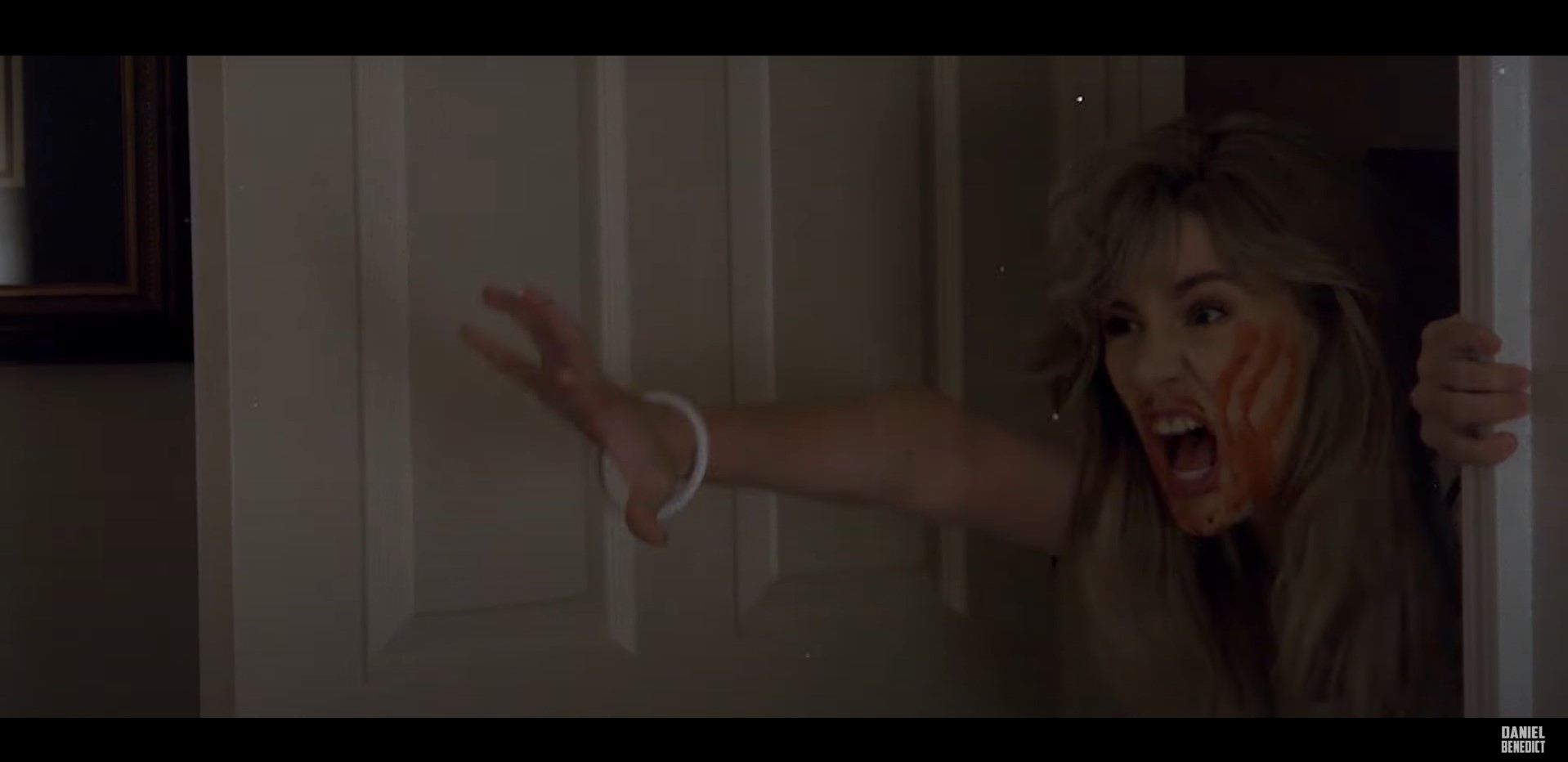
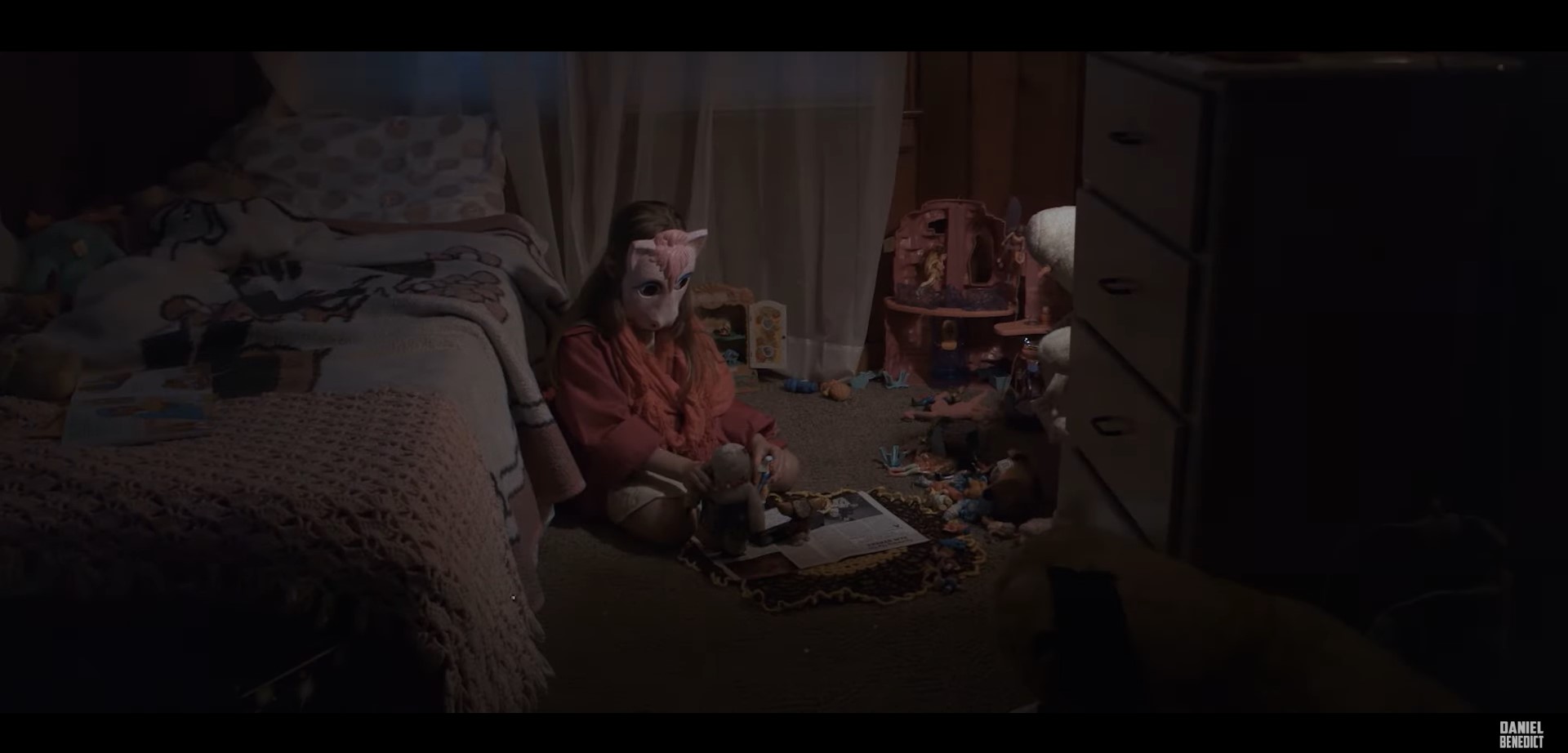
I’m all for a quasi-kid friendly horror of the same antithetical vein as “Monster Squad” or “Gremlins” where the subject matter borders the edge of being too risky, eking above the terror threshold for children who would be roughly the same age as the story’s principal leads battling for the very reconciliation of family before the Bloody Man kills them.  “The Bloody Man” lurks under the veil of being lighthearted in contrast to the brushing scenes of severed, sentient arms, blood streaking down various maniacal faces, a mildly gruesome decapitation, and moments of good ‘ole fashion terror that may induce nightmares for anyone under the age of 12.  A child’s lack of sleep because they’re waking up with fright-filled sweats will for sure not provide parents any favors, but Benedict skirts a fair amount of gore and does imply the significant damage and death offscreen almost as to shelter general audiences’ eyes for a broader invitation to watch the movie and, as mentioned previously, the titular bad guy doesn’t make an appearance until much later in the story that has been setup comically with a wrestling fanatic principal, Perry’s godawful verbal teasing, and a lot of 80’s inspired shots that nailed the decade’s analog paint job – a silver lining against the night terrors.  Honestly, the third act also drags out the culmination of events.  For such a small house, the Bloody Man chasing the Harris kids might as well taken place in a labyrinthine mansion, but the ground level with basement rancher slows down the hide-and-seek or maybe the Bloody Man is just really bad at childish game as the kids could stay in rooms for extended periods of time, even playing pretend with toys at one point, and in not once instance, does the Bloody Man bust in to snatch up a tyke to terminate.  Where “The Bloody Man” also struggles is buttoning up the summoning of the soulless sorcerer who’s conjured up by a mere passage reading off the back of Sam’s favorite Barbarian Man comic books.  The comic, which is introduced as a fairly over-the-counter object, holds this mystical darkness that must be conjoined with a family’s spiraling.  Yet, the story contradicts itself as the Bloody Man pursues another broken home that didn’t warrant the reading of the comic’s back cover passage, creating some confusion on how the cruel chaser of disconcerted children operates on a phantasmic plane.

As far as 80’s-inspired films go, “The Bloody Man” can run with the best of them, even with Netflix’s “Stranger Things,” and Wild Eye Releasing sees fit to drop a special edition Blu-ray of the Daniel Benedict comedic chiller.  The AVC encoded, high-definition 1080p, BD25 is presented in a widescreen 2.35:1 aspect ratio.  What makes the film feel decade authentic and that can suck you into it’s existence is Benedict’s decision to shoot either in 35mm or with a 35mm digital overlay that has characteristic dust speckles and a fine grain.  Image quality remain at a consistent color and black levels with a few flare ups of compression artefact issues, such as splotches in darker scenes, in squeezing this long runtime film onto a BD25 along with an atypical accompaniment of Wild Eye Release robust extras.  The bitrate does have large swings from lower teens to upwards of high 20s Mbps.  Yet, details generally come through with enough depth to create visual spacing between objects.  The English language Dolby Digital 2.0 stereo renders adequate for a narrative that doesn’t have a ton of range with an intimately tight story surrounding Sam and his siblings but is complimented greatly by Johnathan Fan Octo Evans retro-synth soundtrack with an oscillating pulse and a crescendo of tension, solidifying even more the 80’s inspiration. English subtitles are optionally available. The special features include a director’s commentary with Daniel Benedict, a gag-blooper reel, a local newscast behind-the-scenes segment, various promotional videos from Kickstarter, Indiegogo, Barbarian Man toys, an emulated One to Grown On based PSA show from the 80s, and a Showbox promo with the original trailer bringing up the tail. One last bonus scene is also at the end of the credits so stay to the very end. The physical features include a clear Blu-ray snapper case with latch that houses glow lit Harris kids geared up to tackle the looming Bloody Man, or that is my assumption of who that is on the front cover as that figure looks nothing like the Bloody Man on screen. A more true-to-form Bloody Man is on the cardboard slipcover in another retro illustrated, compositional mockup with a similar layout as the actual Blu-ray front cover. Inside the snapper case, the reverse front cover has a still image from the movie, typical of many Wild Eye Releases, a folded one-sheet with the additions of Tuesday Knight and Lisa Wilcox amongst the child leads, and a disc art pressed with the unknown version of Bloody Man. The region free release comes not rated and has an excessive runtime of 133 minutes, contributing to the pacing issues of the last act. “The Bloody Man” doesn’t exactly live up to the moniker in this tame throwback but what the film has is a mighty nostalgia that brings back feelings of a superlative horror age that was once, and still is, goosebump arousing.

Better Behave or “The Bloody Man” Will Get You!  On Blu-ray at Amazon.com.

Is He an EVIL Vampire or a Just a Disturbed Young Man? “Martin” reviewed! (Second Sight / 4K UHD & Blu-ray)

Note:  Screen Caps do not reflect the Second Sight's A/V on this release.

“Martin” Limited Edition Second Sight Release Available at Amazon.com! 

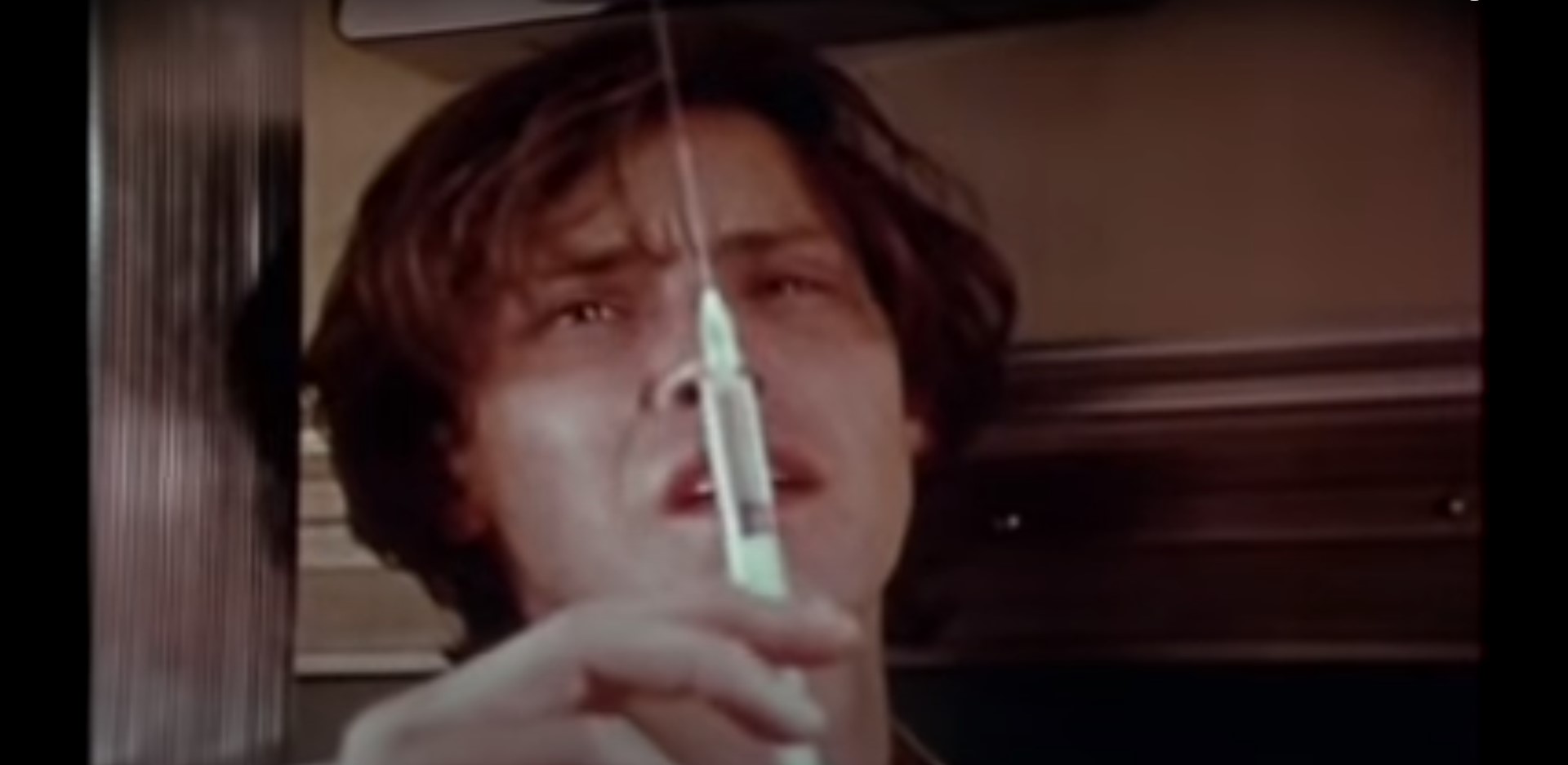
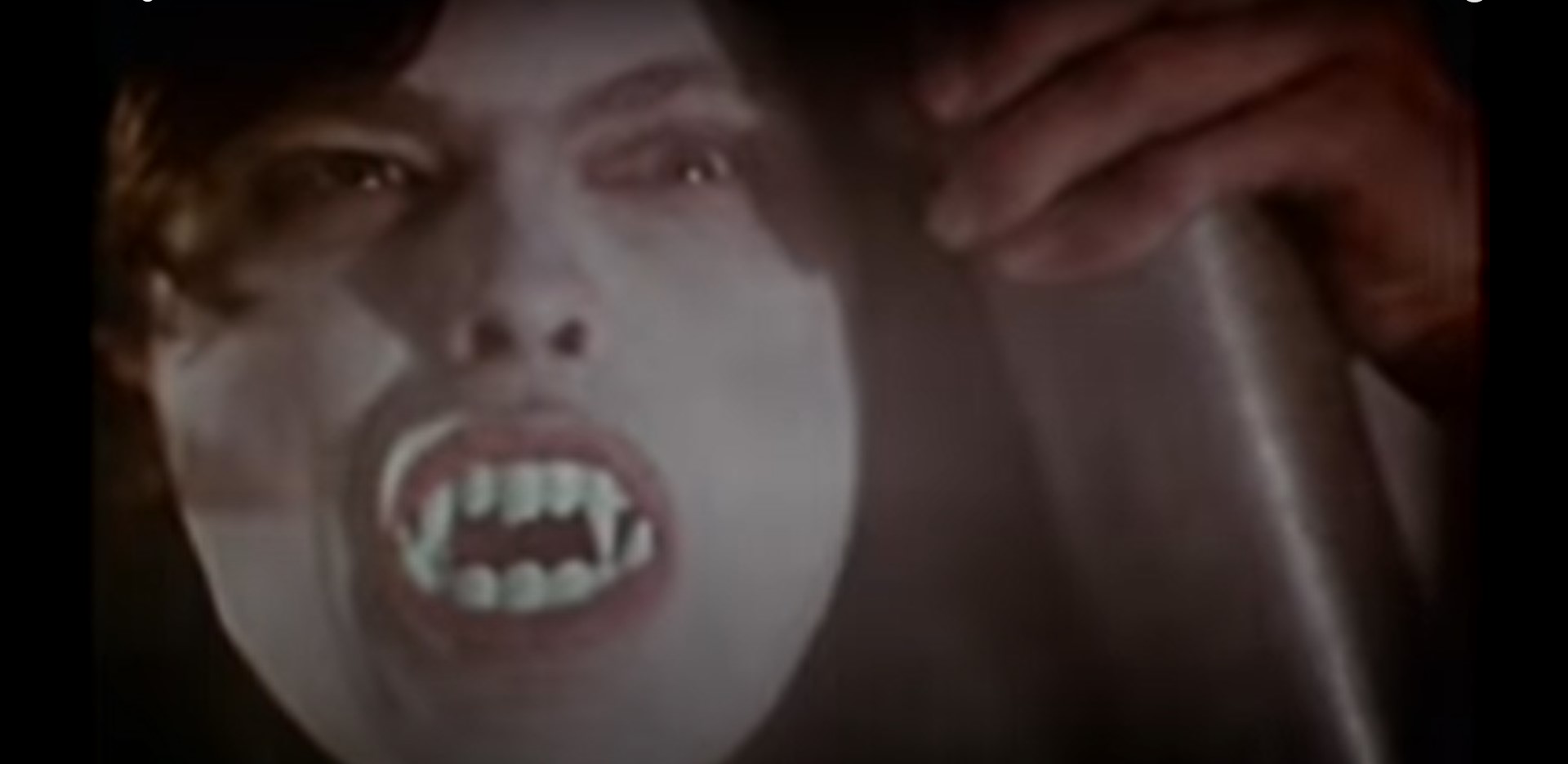
Martin, a young man from Indianapolis and upon recently lost his mother, travels by train to Braddock, Pennsylvania where he’s greeted by his elderly cousin Cuda, an old world believer that Martin has been selectively plagued by the family curse of vampirism and will take Martin in under his roof to cleanse his soul of evil, even if that means destroying him.  Though he doesn’t believe in the vampiric superstitions and the movie depictions, Martin truly believes he’s an 84-year-old vampire and does kill young, beautiful women to intimately drink their blood.  Being reserved and shy gives Martin an advantage to observe his potential victims from afar after gaining employment working as a delivery boy out of his cousin’s shop.  Cuda’s granddaughter, Christina, believes her lonely cousin’s mental illness is being exacerbated by grandfather’s archaic and draconian beliefs, fostered by a family history based off tradition rather than science.  When Martin meets an interested housewife on one of his delivery runs, the need to consume blood trickles when sex enters the picture, but also induces slipups in his well-oiled drug and drink operation whenever the need to feed becomes too much.

By now, “Martin” needs no introduction.  The father of the flesh-eating zombie, George Romero, delivered a neo-realism take on the vampiric mythology nearly 50 years ago in 1977.  “Martin” became the writer-director’s first all around filmic success after being royally screwed by the Walter Reade Organization for having failed to copyright the prints on the trailblazing and timeless classic “Night of the Living Dead,” the reason why you see so many Tom, Dick, and Harry remakes, revisions, sequels, and such of the 1968 black-and-white film that introduced zombies as flesh eaters, and a pair of box office failures that kept Romer in severe debt until slipping into business bed with producer Richard P. Rubinstein, the associate producer for Romero’s “The Amusement Park” and who would collaborate with Romero as a producer for the next subsequent decade years.  Filmed on location in the societal and industrial crumbling Western Pennsylvania town of Braddock, “Martin” remains one of George Romero’s quintessential and provocative pieces of work outside The Living Dead series under Rubinstein and Romero’s The Laurel Group production company.

In the titular role is the introduction of John Amplas who was discovered by Romero after watching Amplas in a play and the entire lead principal was reworked to accommodate Amplas boyish youth.  Amplas is instrumental to Martin’s success in a handful of ways:  the Pittsburgh native knew how to properly slink in an unsuspecting manner, he also didn’t overbear scenes and costars with a larger-than-life presence and could dip into this awkwardly retrieved guilt for the premediated murder to fulfill a need that either’s supernatural or unnaturally mental.  Amplas could walk that thin line that keeps the audience wondering how much Martin says and does is actually true or a misconception because of mental illness and this is coupled nicely with Romero’s direction, splicing in black-and-white scenes of gothic-laden, theater-esque vampire flashbacks that could either be a delusional reality or a very real backstory to Marin’s cursed heritage.  Polarizing external family forces in his elderly cousin Cuda (Lincoln Maazel, “The Amusement Park”) and age akin cousin Christina (Christine Forrest) combat on an emotionally taut and verbal levels between their corresponding character qualities of superstition and science that parallel Martin’s eventual damnation or salvation.  The principal trio are tightly compacted to strain the dynamic with a back-and-forth debate over which truth is behind Martin’s troubles.  Romero pens a good case for both by never fleshing out a legitimate truth all the way through to the end; instead, it’s a battle of save Martin from himself who understands the problem, wants to deal with it, but barely takes up arms to combat or even face his issues.  Special F/X legend Tom Savini, pre-trademark inky black mustache and goatee, makes his debut role as Christina’s boyfriend Arthur who serves only as a device to pull reason away from the table in a conflicted measure to pressurize Christina’s capacity beyond the limits of also caring for herself.  Eventually, Christina has to make a decision and, ultimately, choses herself to save, leaving Martin to fend against a sternly superstitious and old world Cuda.  Sara Venable, Roger Caine (“Dracula Exotica”), Donaldo Soviero, Francine Middleton (“The Love-Thrill Murders”), and Elyane Nadeau make up the supporting cast.

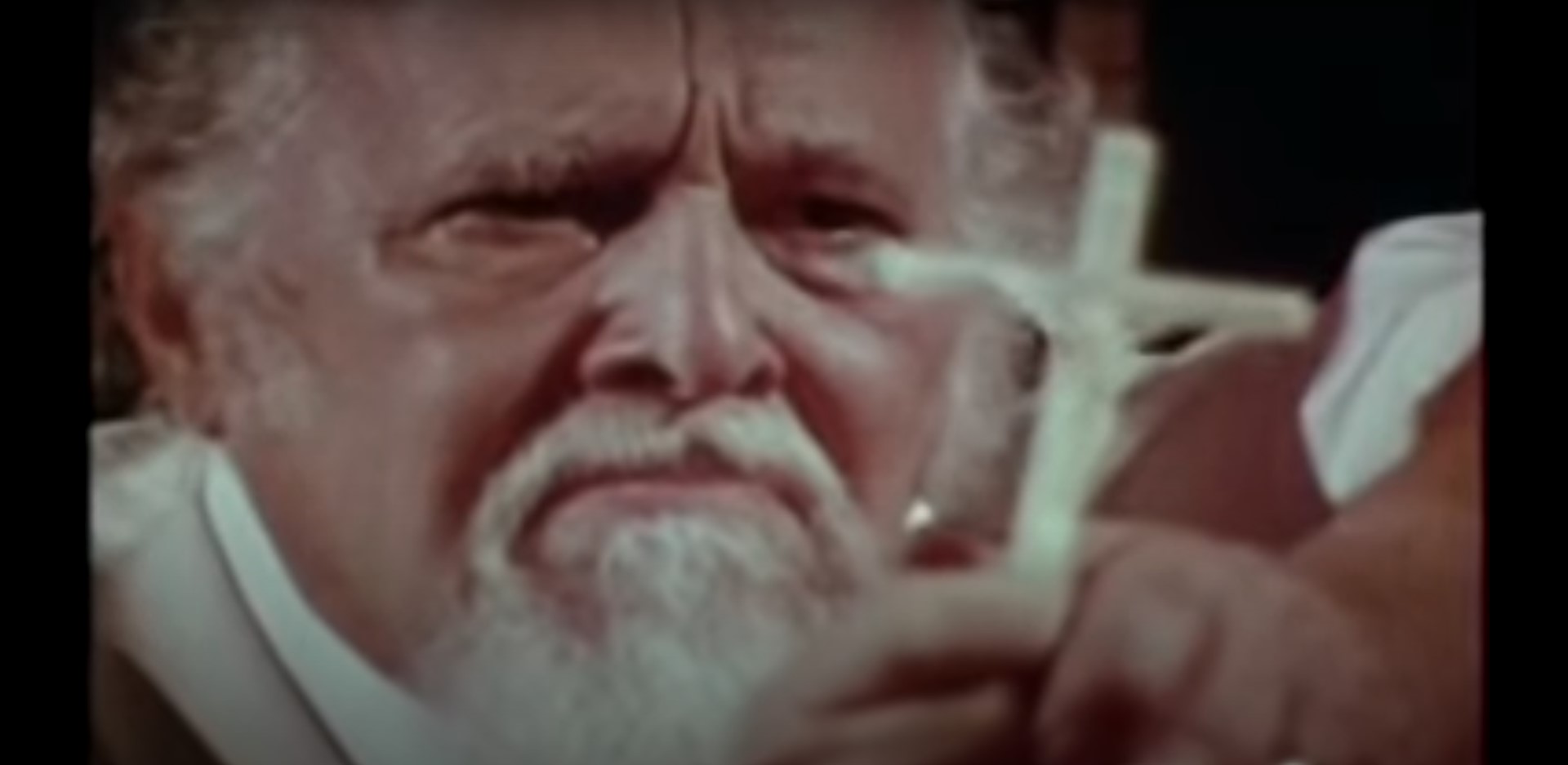
George Romero, again, redefines, or in a more fittingly descriptive – revamps, classic horror villainy that replaces the supernatural element with a realistic approach to weave the very fabric of horror into possibility while still hinting at something beyond the limits of reason.  “There is no real magic.  There’s no real magic, ever!” says Martin about the theatrical stereotypes used to display vampires in attempt by Romero to disenchant us from the ideologized mythos, the habitual characteristics, and the physiognomies of what we consider to be a night bloodsucker.  During that scene between him and Cuda, the words are potently effective in disapproving myths about vampires, but the words are supported with fact as Martin casually debunks garlic, crosses, and sunlight as vampiric weaponry at the expense of humiliating and entertaining Cuda.  “Martin” is at the forefront of being an allegory for loneliness and is a driving reason for presumably the real vampire’s gruesome habit to slice open wrists and drink blood.  Martin only targets young, beautiful women and becomes intimate with them while they are limp under sedation.  When he meets an equally lonely Mrs. Santini, a depressed housewife on the verge of an emotional collapse, and the two embrace each other with comfort against what dispirits them; disinterested in stalking her, Martin’s need to kill dampens and Mrs. Santini unhappy marriage in nullified by the young who listens more than speaks.  Maturity and youth meld together in a moment of peace between them but their bond still shows micro fissures of incompatibility that puts doubts into Martin’s 84-year, carefully planned practice and also doesn’t save Mrs. Santini completely from her too-little-too-late despair.  Braddock, Pennsylvania, a small town sinking into the slumps of becoming forgotten, is a once industrious backdrop integrated as a metaphor for being a forsaken place where things go to die.  Martin is sent to Braddock to paradoxically be cared for by a cousin determined to destroy him because of a family curse that afflicts select generations in what can be perceived as butting of heads between the defiance of angsty youth versus the traditions of an older individual set in the world with their linear ways of thinking.  

As aforementioned, “Martin” is a cult classic from one of the most notable masters of horror and as a film, “Martin” can stand on its own two feet on any format.  However, with that being said, UK home entertainment distributor, Second Sight, celebrates this early George Romero razor-edged thriller with a definitive 3-disc, 4K and Blu-ray release jammed back with software and firmware bonus content that fans can really sink their teeth into for a lifetime.  The limited edition UHD and Blu-ray O-slip box presents a 4K and 2K scan and restoration of a 35mm duplicate negative (note:  not from the original 16mm source) that has been supervised and approved by director of photography Michael Gornick and presented in the Academy aspect ratio of 1.37:1.  Considering the blown duplicated source of a 16mm grade, the 4K UHD scan on the BD66 won’t live up to 4K potential, as some may expect.  There’s quite a bit of varying levels detail discernibility, some shots look better than others, but the overall restoration renders a better than it’s ever looked product with natural grain and damaged reduced to some blue stock flaring around the side and edges, especially during night scenes.  Shadows looked deeper than previous versions, meaning that tenebrism isn’t lost amongst a softer image but rather creates depth with the additional of better sharpened edges to outline objects between the light source  Some speckle debris filters through at times but not enough to cause major concern with the overall experience watching and enjoying the restoration that has HD enhanced grading to make blood that richer technicolor coral color used in my subsequent Romero “Living Dead” films up to “Day of the Dead.”  The Blu-ray’s 2K works just as well due to the scrappy source equipment of what the budget allowed, delivering a fine product of the best transposed transfer known to fan kind and beating out the Lionsgate’s warming grading with a cooler, more hardline detail and delineation picture. The massive release comes with three audio options – an English DTS-HD 5.1 surround sound, an English DTS-HD 2.0 stereo, and an English DTS-HD 1.0. Though Martin audiophiles will likely gravitate toward a multiple channel output, “Martin” is one of those select features that does better in a less-is-more return by not forcing the limited and stronger signals, such as the dialogue and Donald Rubenstein’s experimentally spiritual score, to encoding competition with the milieu ambient and boom recorded sound effects, that for the most part, are background support for the bigger, better one-two punch of clean, clear, and presently full dialogue and a consciously curated soundtrack to walk with Martin every step of his journey. There’s a pinch of popping and a low-emanating droning that very discreet and negligible that won’t affect the experience on bite…I mean bit. English SDH are optional. Bonus materials are what shape the Second Sight releases to be greatly desirable amongst fans as the company continues to produce high-quality encoded bonus features as well as carefully and professionally organized tangible items inside the box. Both 4K UHD and Blu-ray have the same encoded bonus features that include four audio commentaries of old and new. The two archived commentaries include George Romero, John Amplas, and Tom Savini in one set and the other with Romero, Savini, Richard P. Rubenstein, and Michael Gorrick. The new commentaries are with Kat Ellinger, editor-in-chief of Diabolique Magazine, and the second with the recently deceased film curator, Travis Crawford. A vintage 2004 documentary from the Lionsgate release is included in the set with remarks from Romero, Savini, Gorrick, Donald Rubenstein, and Christine Forrest along with a new documentary echoing much of the 2004 doc, in collaboration with Severin Films, with John Amplas, Michel Gorrick, and Tom Dubensky strolling through Braddock, which hasn’t seemingly changed from the depths of poverty, on a raining day recalling nearly every moment of production during principal photography. The new doc includes other insights from Forrest, Savini, Tony Buba, and Sarah Venable in what feels like a complete celebration and overview of their entire journey through Romero’s personal favorite film. Donald Rubenstein also has a new interview discussing his score and meeting and working with Romero on a positive level. The disc features round out with one of Tony Buba’s short films “J. Roy – New and Used Furniture” revolving around the town of Braddock and the trailer, TV and radio spots. The third disc is the CD form of Donald Rubenstein’s soundtrack laid out in 22 distinct musical numbers. The limited-edition exclusive contents include a rigid O-slip case with a simple, yet effective sterile while and red font color contrast with MADE IN U.S.A. augmented razor blood with vampire teeth and blood dripping from the bottom right corner and a blood dripping cross squarely centered on the back. Inside the slipcase, a thick 104-paged color booklet with new in-depth essays and insights from Daniel Bird, Miranda Corcoran, Heather Drain, Kat Ellinger, Andrew Graves, Alexandra Heller-Nicholas, Elena Lazic, Stephen Thrower, Jon Towlson, Simon Ward, Tony Williams and an interview with Tony Buba by Travis Crawford. The booklet also contains colorized, behind-the-scenes photos of production and numerous one-sheets, promotion poster and ads, and a beautifully, expressionistic illustrated front and back cover. Adam Stothard illustrates 5 character lobby cards, including John Amplas’ Martin, Christine Forrest’s Christina, Tom Savini’s Arthur, Lincoln Maazel’s Cuda, and George Romero’s Father Howard. All 3 disc arts are the same as the front cover the release and contained a trifold, punch-lock case in reverse colors of the slipcase. The 4K UHD is region free but the Blu-ray is confirmed region locked B so you’ll need a region free or region B player. The runtime clocks in at 95 minutes and is certified 18 for sexualized violence and sexual threat. Second Sight must be a Disney fan with their monstrous beast of a limited edition that is also a thing of beauty; “Martin” deserves every square inch of this physical and digital display of expressionistic vampirism of underrated performances and from the mind’s eye of a dauntless George Romero, unafraid to take risks, show blood, and understand the human condition.

“Martin” Limited Edition Second Sight Release Available at Amazon.com!