Vengeance Knows No Price on EVIL’s Head Alive. “L.A. Bounty” reviewed! (Scorpion Releasing / Blu-ray)

“L.A. Bounty” on Blu-ray and Available to Purchase at Amazon.com

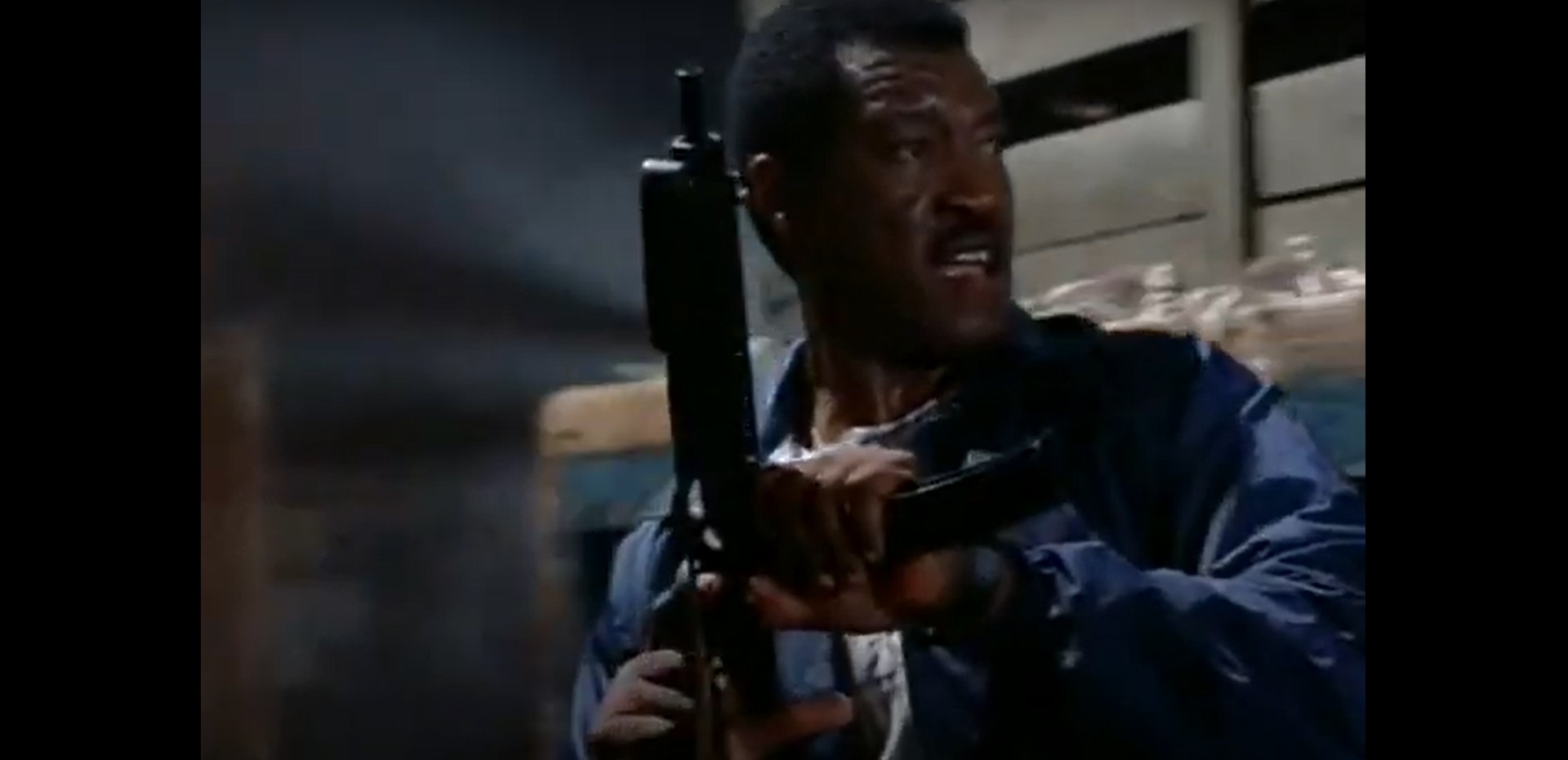
When a Los Angeles mayor candidate is kidnapped from his home at gunpoint, suspicions immediately turn to the incumbent mayor in what seems cheap move to remove a rival, but the abduction is no snatch and grab for a quick buck and political advantage.  All-around prevailing bad guy Tim Cavanaugh is the spiritually unhinged mastermind orchestrating the scheme behind the scenes.  When the police don’t have a clue what to do next other than to wait for kidnapper demands, bounty hunter Ruger steps into the fold with a coerced hot tip about the kidnapping plan.  With a score to settle in the death of her ex-partner, Ruger is hot on Cavanaugh’s tail, foiling multiple assassination attempts on a witness, the mayor candidate’s wife, by Cavanaugh’s men, and determined to put an end to Cavanaugh once and for all.

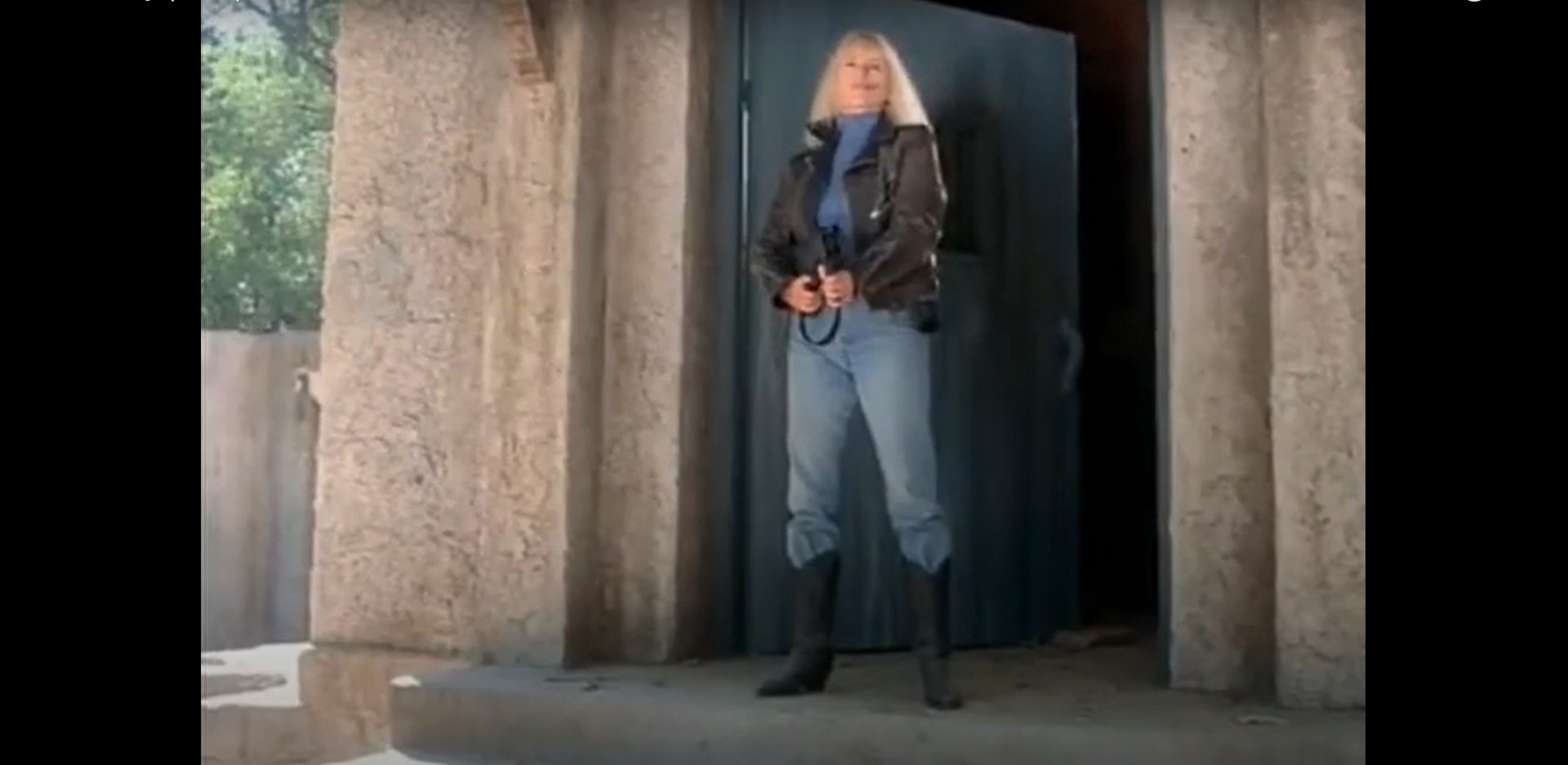
If you’re a Sybil Danning fan whose had enough of seeing the blonde genre film icon in skimpy, or even sans, clothing, then “L.A. Bounty” should be your next upcoming feature with a leather-cladded Danning, in a nearly dialogue silent performance, blasting away henchmen left-and-right with a pump action shotgun.  The 1989 action thriller is penned by Michael W. Leighton (“Rush Week”), based off a story from the “Chained Heat” and “Howling II …. Your Sister is a Werewolf” cult actress and directed by “Power Ranger” franchise director Worth Keeter.  Before made-for-TV round house kicks, Zordon, and Kaiju monsters and machines that has become the mega “Power Ranger” franchise, Keeter had made a modest life out of obscure indie horror with “Dogs of Hell,” worked with buxom blondes such as Pamela Anderson in the thriller “Snapdragon,” and even dabbled in the exploitation ventures of Earl Owensby productions with “Chain Gang.”  Filmed in and around the Los Angeles area, “L.A. Bounty” is the ex-con gone vigilante with a vendetta from the production team of the Danny, Robert Palazzo, and S.C. Dacy founded Adventuress Productions International as well as a production of Leighton & Hilpert Productions, with Michael Leighton producing, and presented by the Noble Entertainment Group.

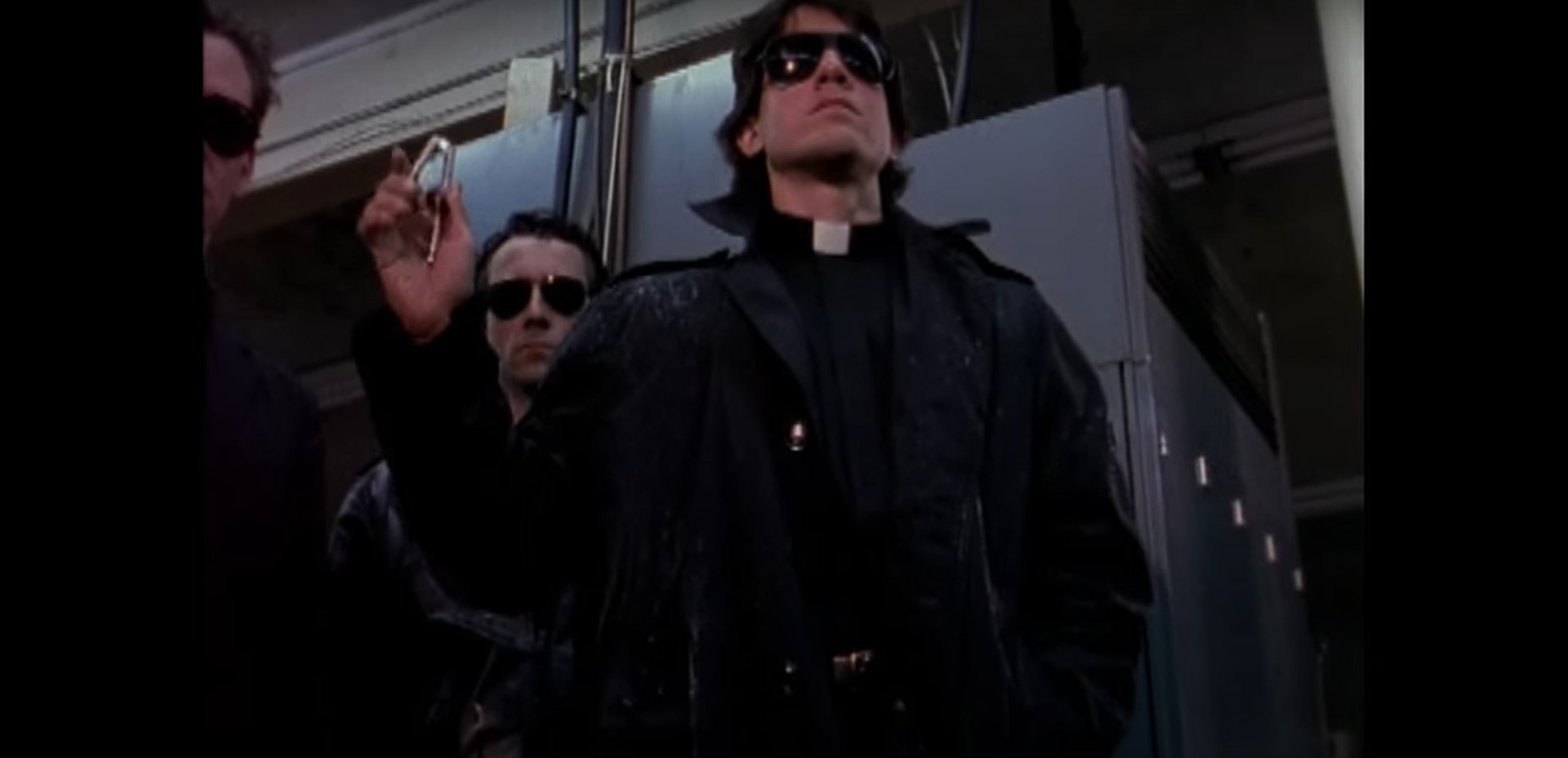
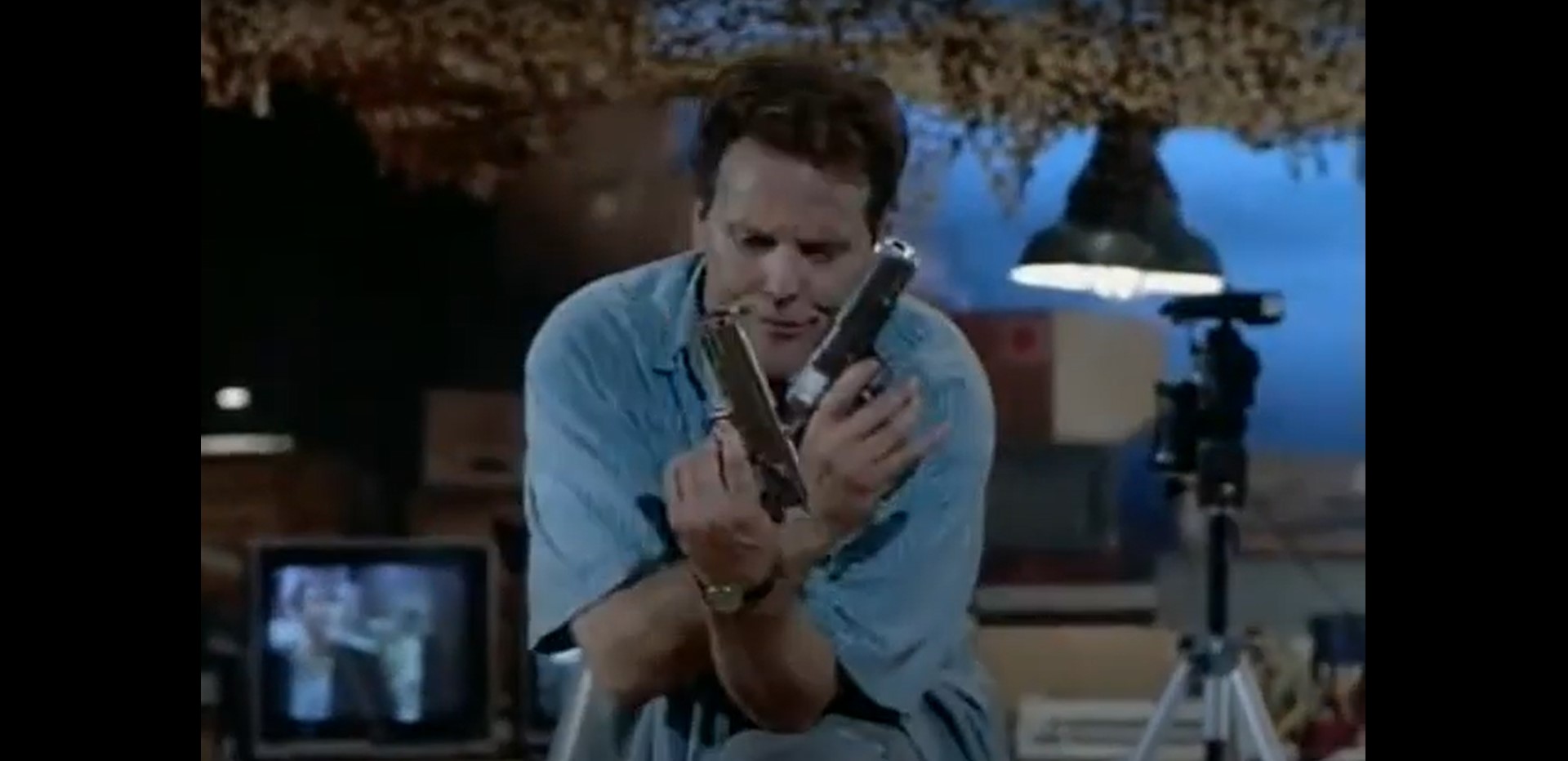
As one of renowned queens of scream, Sybil Danning, is a recognizable icon amongst low-budget horror fans as well as cheap thrill actioners and sexy thrillers.  So much so, that her fame has granted her the opportunity to work on a passion project where she can be the Sylvester Stallone or Chuck Norris shoot’em up action hero that was a popular juggernauting ilk in the 80’s.  Cladded in leather and denim, Danning plays the silent, strong type with emphasis on the silent. Her character, an ex-cop named Ruger now a bounty hunter looking to even the score with Cavanaugh who ruthlessly wasted her partner, has roughly three lines in the entire 1 hour and 25-minute runtime, but Ruger is in full blown view of being badass with a large gun and unafraid to use it on mindless grunts. Danning coldness compliments the contrary with Wings Hauser’s babbling, manic psychopath. The “Mutant” and “The Wind” actor’s sordid bad guy Tim Cavanaugh has a special relationship with God, warped by his twisted nature for organized chaos, but is unable to keep trusted entourage due to the fact he keeps killing them for not being able to nix Ruger. Hauser is fantastic to watch as the unconventional villain of unpredictability. For instance, Cavanaugh never leaves home base, a storage warehouse full of crates and containers and apparently inside those crates and containers are mechanism and gadgets to thwart off unwelcomed guests. As Hauser improves dancing through the hallways and displays erratic behavior while painting, we’re starting to realize Cavanaugh’s mindset is one we’ve seen before but without the Joker face paint and the act is entertaining and pairs well with Danning’s stoicism. While Ruger and Cavanaugh are obviously the main course, veteran TV actor Henry Darrow (“Tequila Body Shots”) and a slightly younger veteran TV actress Lenore Kasdorf (“Amityville Dollhouse”) appetize in between with sticking to the script of a routine kidnapper scenario, offering little to motivate the direction the story itself works toward itself. Robert Hanley, Van Quattro (“Agnes”), Bob Minor (“Commando”), Frank Doubleday (“Escape from New York”), Robert Quarry (“Count Yorga, Vampire”) and Maxine Wassa (“No Strings 2: Playtime is Hell”) as Cavanaugh’s nude muse for his art.

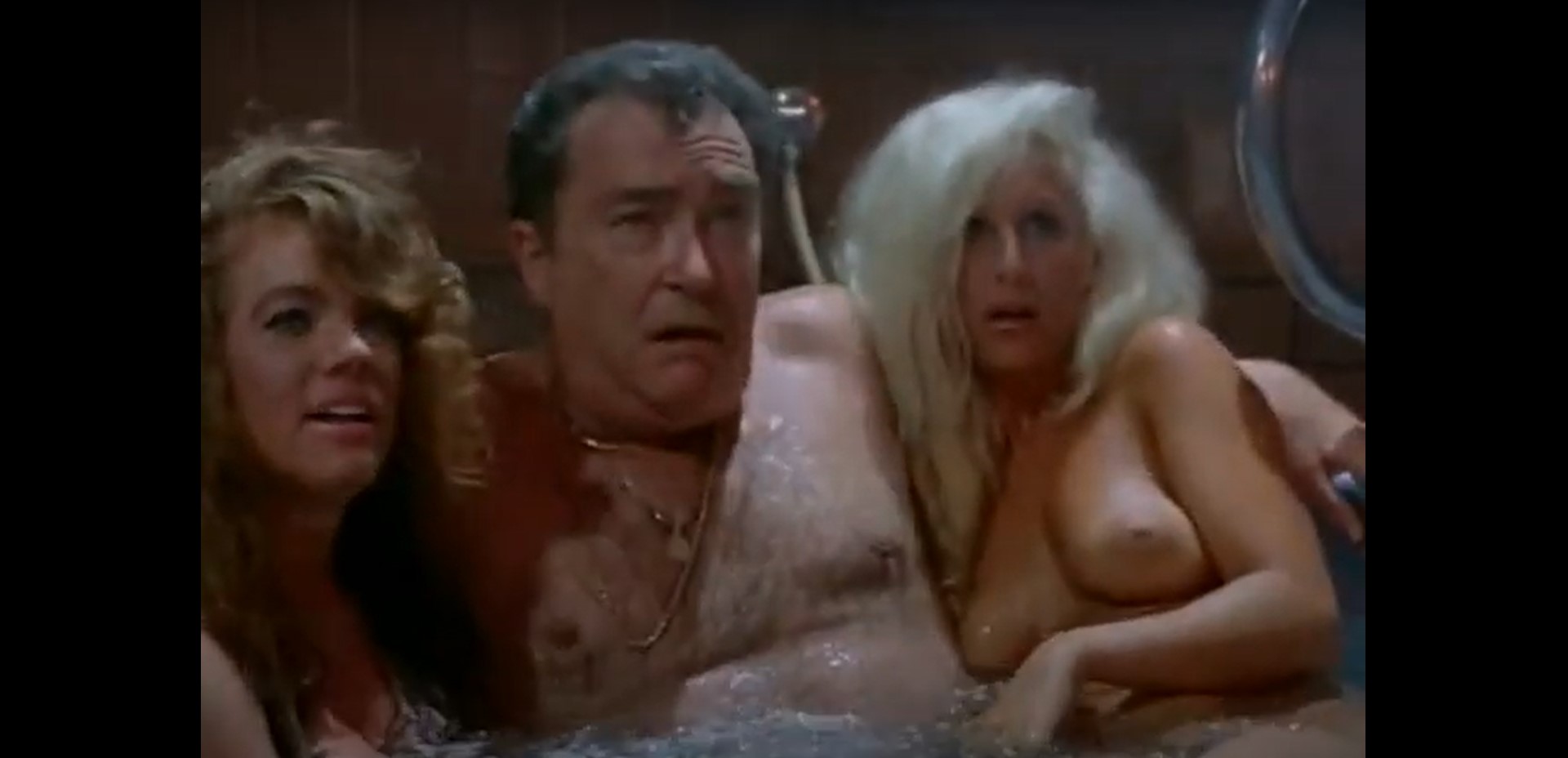
“L.A. Bounty” is about a bounty hunter tracking down an old adversary for retribution but other than a few pieces of wanted paper notices, there’s really no other indication that Ruger is like Dog Chapman the Bounty Hunter although the platinum blonde hair would suggest otherwise.  Sybil Danning is definitely sexier in leather and denim than Dog and sure does talk a whole lot less but as a part of general audience pool and with a title that suggest such a profession, wouldn’t it make more sense to build up Ruger’s caseload with a few introductory chases before we’re chin deep in the Cavanaugh obsession?  Also, that motivational drive that sends Ruger down a path of payback lacks substance and is sullied by a script snafu of Ruger having a flashback of Cavanaugh executed her partner despite not being present.  Fortunately, “L.A. Bounty” is not a feeble farce of an action flick.  Danning is a striking, statuesque presence, the squibs exhibit a bloody gun blazing firefight, and if you’re a disappointed perv in Danning keeping her clothes on this time around, there are a handful of brief nudity scenes from other actresses sprinkled throughout.  One of the other highlights is the eclectic score arrangement by then “Heart” guitarist Howard Leese and John Sterling of “Revenge of the Cheerleaders.”  With a Jan Hammer-esque synth-tense wave, a cop melodrama guitar riff, presumably provided by Leese, and a contemporary tribal beat, “L.A. Bounty” has immense range for every scenario with its own personal composition that’s high energy, catchy, and fits the action.

“L.A. Bounty” differs from any other role in the Sybil Danning canon that’s mostly action and barely any talk and is dead set on broadening the cult actress into the popular rogue cop role of the late 80’s-early 90’s. Scorpion Releasing presents the original MGM vault material of “L.A. Bounty” on a high definition, 1080p, AVC encoded Blu-ray release with an anamorphic widescreen 1.85:1 aspect ratio. The 35mm stock has retained its blue-ribbon quality from over the years and the transfer really accentuates the near timeless picture with a brilliant, well-balanced, color palette, an even contrast for production lighting to properly illuminate around the faint and dense shadows, and no noticeable meddling against a natural grain with a pleasant texture scheme. The English DTS-HD stereo mix is mighty donkey that might be lite but packs a punch when it kicks. The release could benefit from a multi-channel surround sound output to give a tumultuous sense of melee gun battles. Dialogue is clean, clear, and ample with good depth definition and plentiful range in ambience. Optional English SDH subtitles are available. What’s essentially a bare bones release, the Blu-ray only comes with chapter selection and setup options. The physical attributes echo the supplementary material with a traditional Blu-ray snapper with outer latch and cover art based off the film’s original one sheet. The film is rated R, is region A hard coded, and has a runtime of 85 minutes. “L.A. Bounty” remains a step or two above the Andy Sidaris guns, girls, and giant explosions fare with gilt-edge performances and stylistic avenues representing the best of the originating decade in what is the most divergent film of Sybil Danning’s typically typecasted career.


Hunt down “L.A. Bounty” into Your Sybil Danning Collection! Purchase here!


Forcing Conformity on EVIL is a Violent Cause. “Murder in a Blue World” reviewed! (Cauldron Films / Blu-ray)

“Murder in a Blue World” now available on Blu-ray!  Purchase a Copy Here at Amazon.com!

Nurse Ana Vernia lives in an authoritarian, dystopian world where she just received a commendation for her work, but beneath the archetype of a scrutinizing society seeking to acculturate deviants by way of involuntary electroshock treatments, Ana moonlights in her own violent behavior as an act of mercy. Under the pretense of disguises, Ana seduces men aberrant to the social norms, returns them to her luxurious mansion, sleeps with them, and to then only murder them with precision before they can be subjected to imperious judgement for being different. All the while, societal dissentient David, an exiled member of a brutal gang, witnesses Ana’s exploits and infiltrates her home, her life, to garner incriminating evidence in order to blackmail her for money, but when David is tracked down for his former gang and beaten to near death, he comes ironically under the care of nurse Ana who plans to fix David before his fate before the electroshock treatments.

Get ready to dial high on voltage on the social commentary scale, “Murder in the Blue World” is a fascinating, dystopian look at social disorder. Heavily influenced in more ways than one by Stanley Kubrick’s “A Clockwork Orange,” the Eloy de la Iglesia 1973 picture was once entitled “Clockwork Terror” in the U.S. to ride the lucrative coattails of Kubrick’s symphony to violence. Also known in other parts of the world as “To Love, Perhaps to Die,” “Satansbrut” (“Satan’s Fiend”), and “La clinique des horreurs” (“The Clinic of Horrors”), Iglesia’s original penned script and title actually “Una gota de sangre para morir amando” (“A Drop of Blood to Die Loving”), co-written with José Luis Garci (“El Teroso”), Antonio Artero (“El tesoro del capitán Tornado”), George Lebourg, and Antonio Fos (“Panic Beats”). The Spanish film goes internationally by many monikers but has one objective and that is to counter the dictation of free-thinking individuals with violence. “Murder in a Blue World” is produced by José Frade under his self-titled production company, José Frade Producciones Cinematográficas S.A.

“Murder in a Blue World” is so much so in the Stanley Kubrick wake, the film stars Sue Lyon who played the titular character in Kubrick’s “Lolita.”  More than a decade later, the “End of the World” and “The Astral Factor” actress enters another emotionally lacerating role of a woman, a nurse, sworn to do no harm who sees that a quick euthanization is the only possible mercy she can offer to spare societal downcast souls from a fate far worse than death in a cold and cruel condemnatory world.  Lyon’s excellent in curating her different disguises and looks, taking on a variety of personas with subtle mannerisms despite how comical or implausible they may appear on screen, such as the idea of being an old, gray-haired woman.  Lyon is fair and small in stature compared to her male counterparts but commands the screen with her confident approach to Ana’s advantageous beauty and eroticism that can turn a gay man straight apparently.  Former gang member David shares her ideology to an extent, to the extent of capitalizing off her nightly murder for mercy escapades in order to survive on the street alone.  Christopher Mitchum, son of the late Golden Age of Cinema actor Robert Mitchum (“El Dorado,” “The Longest Day,” “Scrooged”), plays the nihilistic gangbanger with aversion to any or all rules that tell him how to think.  Mitchum’s impressive motorbike skills are utilized for an impressive chase sequence that incorporates ramp jumps and car crashes at a high speed velocity, a talent Mitchum and film producers utilized often in his other credits, such as “Sumertime Killer” and “Big Jake.”  Lyon and Mitchum don’t have much screen time until later in the story but their interactions are playful, flirtatious almost, but in a predator-prey kind of way and we’re not really sure which-is-which in that shifty relationship.   French actor Jean Sorel (“A Lizard in a Woman’s Skin”) rounds out the three-prong principal characters as a diehard representative of the authoritarian body and a potential love interest for Ana.  Playing Victor Sender, a neurologist experimenting on the criminally insane with electroshock therapy and working at the same hospital as nurse Ana, Sorel is the epitome of the calculating stability and clean-cut coldness of the ruling class that’s doesn’t see what they’re doing to be a unjust, cruel, or even a problem at all. “Murder in a Blue World” rounds out the cast with Ramón Pons (“Scarab”), Charly Bravo (“The Cannibal Man”), Alfredo Alba, Antonia del Rio, Domingo Codesido Ascanio, and Fernando Hilbeck (“The Living Dead at Manchester Morgue”).

On the surface, director Eloy de la Iglesia carves a rib right out of Stanley Kubrick’s “A Clockwork Orange” with themes of exquisite, unprovoked violence sparked by the very basis of rebellion against authority. Not to also forget to mention the elaborately dressed gang of four, the electroshock treatment that aims to cure the criminal cerebrum, and the dystopian, futuristic guild with hints of fascism. “Murder in a Blue World” is a mixture that’s two-third post-Kubrick and one-third part pre-Paul Verhoeven, the latter reaching into fascist imagery as well as extreme commercialism that has surely inspired the “Robocop” and “Starship Trooper” director. Blue wellness drinks and panther-primitive men’s underwear are just a few the commercials fabricated for Iglesia’s coloring of an influential culture as the filmmaker uses the motif to symbolize and parallel brainwashing that becomes more severe when the government attempts to force a cure for criminality down incarcerated individuals’ throats. Even David announces to the world in multiple scenes how he doesn’t care what others think and he’s a free thinker. Homosexuality, prostitution, and physical imperfections suggest master race ideology amongst the domineering class hierarchy. Those who Ana seduce, as well as David, struggle in poverty and are considered inferior though not explicitly mentioned in the story. Iglesia integrates his trademark graphic violence, closeups of stabbings and throat slitting, but only really visualizes post-third act climax to keep more of an implied violence, off screen, and quickly edited to maintain an unclear vagueness of what’s right and what’s wrong in what Ana’s accomplishing.

A phenomenal companion piece and second bill to Stanley Kubrick’s “A Clockwork Orange,” Eloy de la Iglesia’s “Murder in a Blue World” finds Blu-ray love with a high definition, 1080p release from the genre film eternizing Cauldron Films. The Blu-ray debut is a 2K restoration of the 35mm transfer that has held up fairly well over the decades to only show pockets of wear and tear. Presented in a widescreen 2.40:1 aspect ratio, there’s no edge enhancement or digital noise reduction to clear out the natural stock grain, leaving the picture quality with more texture. Skin tones are, for the most part, natural and popping color grade doesn’t stray too far from its integrity until one brief scene goes full Oompa-Loompa orange before reverting back to normal. Light scratching is common throughout but not obtrusive to the viewing. Two audio options come with the release, an English dub dual mono and a Spanish dub dual mono. Since the cast is comprised of American, French, and Spanish native actors, neither track appears attractive from a lip-reading and audio-hearing perspective. Preferably, I went English dub as Sue Lyons and Chris Mitchum monopolize the lion’s share of screen time. There’s quite a bit of hissing and popping on the single channel output that can render dialogue almost indistinct but passes with a D+. The English subtitles synch well and show no sign of inaccuracy or grammatical issues. English SDH captions are available as well. Special features include a 2008 archive interview with Chris Mitchum, an interview with dubbing guru Ben Tatar Dubbing in a Blue World, a video essay read by Spanish Gothic film and literature scholar Dr. Xavier Aldana Reyes who dives into the themes and constructs of Iglesia’s film, audio commentary by film historian Kat Ellinger, the VHS cut of “Clockwork Terror” in 720p standard definition, and image gallery. The physical release comes in a clear Blu-ray snapper with a colorfully illustrated cover art that is reversible with one of the more notable and beautifully shot scenes on the inside. With a runtime of 97 minutes, the release is region free and is unrated. “Murder in a Blue World” receives a gorgeous Blu-ray restoration and debut as it’s an eclectic work of inspired and pioneering visual art from one of Spain’s most individualist directors.

“Murder in a Blue World” now available on Blu-ray!  Purchase a Copy Here at Amazon.com!

EVIL Told You Not to the First Time! “Don’t Fuck in the Woods 2” reviewed! (Wild Eye Releasing / Blu-ray)

“Don’t Fuck in the Woods 2” on a Special Edition Blu-ray!  Purchase Your Copy Here!

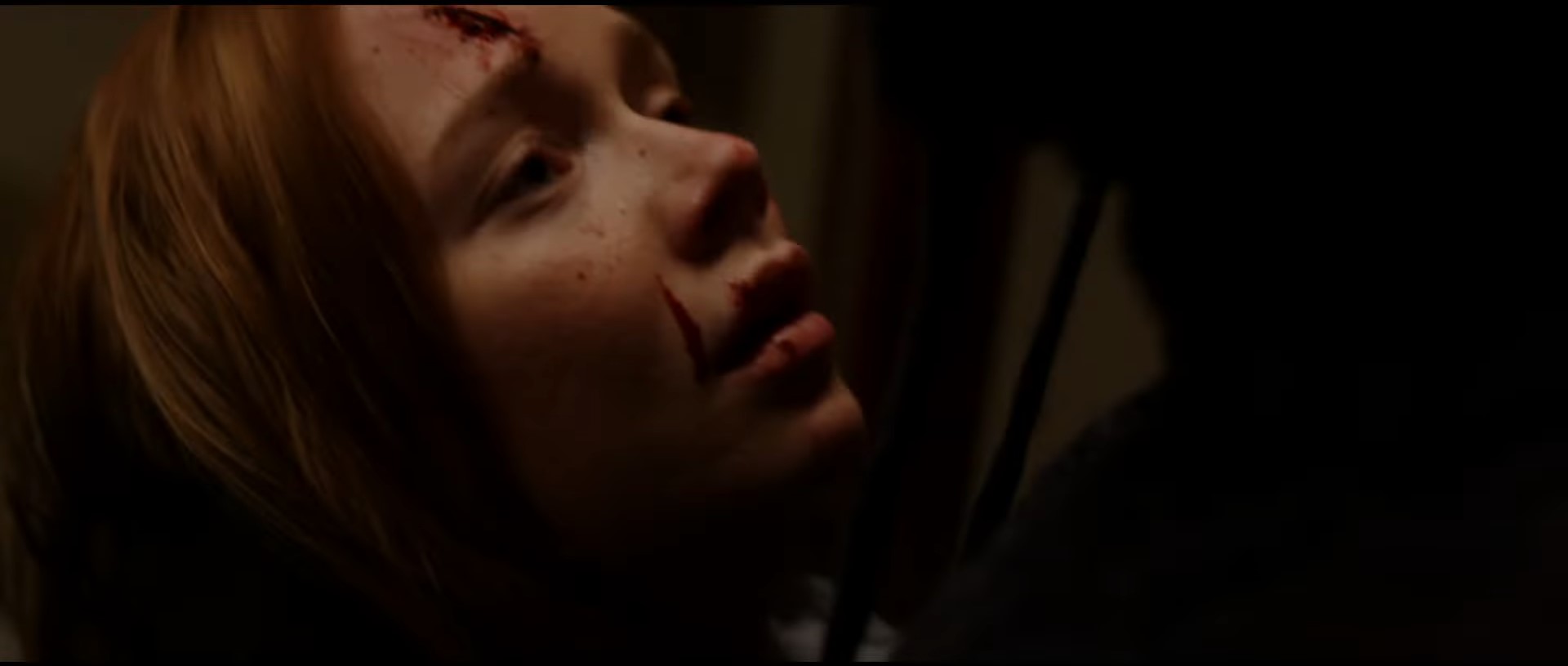
Beginning where the last film left off, alien attack survivor Jane, bruised and bloody, stumbles into the under-renovation Pine Hills Summer Camp where a group of newly hired and horny camp counselors, a nurse chaperone, and a handy-man ex-con spruce up the place.  Jane is met with hostility when sounding off about monsters and death, but when the Pine Hills staff realize that a few of their friends are missing and haven’t checked in, Jane’s story is beginning to resonate and take traction.  Out in the woods, the rape-impregnated sperm of the monster are parasitic and seek out human hosts to infect with raging hormones and adrenaline, transforming hosts into razor-sharp teethed, superhuman mutants hellbent on procreation of a new monster.  The invading parasites turn the isolated camp into a slaughter yard of bloodshed and chaos and it’s up to the remaining survivors to nut up and put violent stop to an alien’s insidious carnage. 

Well, by God, Shawn Burkett did it!  The director made a sequel to his straight-forward, out-of-nowhere, 2016 indie hit “Don’t Fuck in the Woods,” directly following up from where the first film left us off with a lone survivor having just blown up a sex-crazed, blood-lusting alien creature who clawed, tore, and banged his way through a bunch of naked women and some off-color guys doing the dirty in the woods.  The first film made such a splash of interest with the provocative and often controversial title as well as being one of the most pirated movie in the last decade due to said title, The Ohio-born Burket began to formulate the next step of “Don’t Fuck in the Woods 2” with a story co-written with one of the sequel’s principal stars, Cheyenne Gordon, writer of the Tory Jones directed films “The Wicked One” and “They See You.”  The enticingly crass, but greatly adored and sought after title aims to be gorier and even more nudity-laden as the first film with the story situated at an actual family-owned campground, Hannon’s Camp America, in College Corner, Ohio.  Shot in the Summer of 2019, the pre-pandemic film, “Don’t Fuck in the Woods 2,” is a production of Concept Media, Studio 605, Rising Fire Films, Taintbad Productions, and Head on a Stick Productions with Burkett producing and John Lepper (aka Johnny Macabre, executive producer of “Smoke and Mirrors:  The Story of Tom Savini” and “The VelociPastor”) as executive producer.

Though the sequel does not mark the return of the voluptuously captivating adult actress Nadia White, as her character (spoiler alert) was ripped apart by the creature (end spoiler alert), the sequel casts a whole new lot of ladies willing to let Mr. Skin archive and immortalize all their bare body parts forever…or at least until the servers crash, the internet dies, or the world ends.  It’s not like eternity or anything.  The one returning principal to return is the first film’s sole survivor, Jane, and returning to fill her blood-soaked shoes is Brittany Blanton that has officially solidified the Houston, Texas native as a scream queen, franchise final girl, and an overall badass slayer of otherworldly creatures.  Blanton is just one of several actresses to play into the popular campy motif and titular theme of open sexuality and nudity as a formulaic no-no in horror films.  B-to-Z horror movie regulars, starting with “RIP:  Rest in Pieces’” Kenzie Phillips, “Model Hunger’s” Kaylee Williams, “Slaughterhouse Slumber Party’s” Kayla Elizabeth, “5G Zombies’” Julie Anne Prescott, “Blood Moon River’s” Cara McConnell, and Nessa Moore, who I suspect used a body double for her bare all scene, follow suit (birthday suit that is) playing chopping block babes abreast of their outcome.  Burkett doesn’t completely make void his sequel of complex human emotions, supplying bitter love triangles, an oversexualized third wheel, and two more adult-ish characters running from their unpleasant past,  One of those two is ex-con Gil (co-writer Cheyenne Gordon) forced into a corner as the camp’s handyman while attempting to turn his life around for the better but finding the path to redemption difficult when being harassed and threatened by corrupt law enforcement officer.  Already down in the dumps being judged and juried by fellow campers and law enforcement, Gil is sympathetic role that earns his keep when going toe-to-toe with mutation spawn.  Mark Justice (“Atomic Shark”), Jason Crowe (“Dead Moon Rising”), Tom Komisar (“Slaughterhouse:  House of Whores 2.5), Alex Gottmann, and returning from the first film for a brief but memorable scene is Brandy Mason completes the cast. 

No contextual messages. No metaphors. No symbolizing themes. “Don’t Fuck in the Woods 2” pumps you full of the same obligatory creature feature construct as the first, those who have sex, get murdered….horribly. The only slight difference this time around is director Shawn Burkett gets himself out of the man-in-a-monster suit element and into a state of possession as the cast of characters become heinous hosts to parasitic alien slugs, essentially turning people on themselves in a battle to the death. The concept brings a new angle to the series to build upon the creature’s never say die multi-nefarious abilities that keeps it returning, in one form or another, from the grave. Blood runs rampant with the special effects team implementation of a blood gun into their bag of tricks that soaks the cast in more than one scene, but I would say between the two films, both are equally matched in blood shedding as the sequel, that doesn’t see the return of the first film’s SFX artist Deryk Wehrly but hires the 2016 film’s producer, Rob Collins to fill that void, doesn’t surpass the antecedent’s practical butchery. Looking through a technical critical lens, the indie feature has noticeable issues with crew mistakes, such as shadows of the boom operator in the frame, and scenes that hit the cutting room floor would have shed light on a few second and third act scenes that ended up not keeping the story smooth in a logical sense; one of the bigger scenes in question is one two large arms break through a wall and grab Gib from behind. The arrangement of character positions didn’t quite work out and the feature’s after credits bonus scene cements that misalignment even more. “Don’t Fuck in the Woods 2” might have filmic gaffe (there might be a cream for that) but what started as a straight-shooting, sex and slaughter, potboiler has become Shawn Burkett’s undeniable magnum opus and he’s only just beginning.

Wild Eye Releasing camp on one of the most campiness horror to date with “Don’t Fuck in the Woods 2” on a special edition Blu-ray release. Presented in high definition, 1080p, the transfer is exhibited with widescreen 2.35:1 aspect ratio. First thing I noticed about the independent film and distributor release is there are virtually no issues with compression. The black areas remain deep and inky, hues naturally come across without any fluctuation, and there are no visible banding or artefact issues. In comparison to the first film, the sequel is quite brighter with more lighting available and Burkett isn’t too heavy on gels or tints unless in slug-vision mode with a tinge of low opacity fuchsia. The release comes with a lossy English 2.0 stereo mix that’s every bit languid as it sounds with current releases. Dialogue is clean and clear of damage and interference but is too underweight for full-bodied effect. Sound design offers arm’s length depth but is ample in range with slimy sluggy-ness slithering about and skirmish associated hubbubs to make the action excitable. Optional English subtitles are available. The special features include a behind-the-scenes featurette that gives a walking tour of the Hannon’s family camp shooting location building-by-building, blooper reel which can be seen during the end credits, two deleted scenes, the original producer trailer, Wild Eye Releasing trailers, and a feature length documentary “What Happens in the Woods: The Story of Don’t Fuck in the Woods” that digs deep not only into the genesis of “Don’t Fuck in the Woods,” but also into the personal strifes of Burkett and how the story’s title was turbulent, controversial, and heated from the beginning but became a wildly great success that spurred greenlights for future sequels, such as the after credit scene that may or may not involve space and/or time travel! The clear Blu-ray snapper with latch has physical special features that include a folded-mini poster insert, reversable cover art with a composited image on the front and a bloodied Brittany Blanton screengrab snippet on the opposite, and cardboard slipcover with a mashup character collage on the front. The brisk 81-minute runtime compacts the blood and boobs in this region free, unrated disc. Shawn Burkett teases fans with a third picture that’ll surely bring the wanton woods into the world of tomorrow but, for now, bask in “Don’t Fuck in the Woods 2” unfettered maverick success.

“Don’t Fuck in the Woods 2” on a Special Edition Blu-ray!  Purchase Your Copy Here!

The EVIL Gutierrez Family Accommodations are to Die For! “Fucking Bastards” reviewed! (Wild Eye Releasing / DVD)

Those “F**king Bastards” on DVD at Amazon.com

On the walk path to Santiago, on an isolated stretch of the trail, hikers Richie and Lucia run into a bit of bad luck when Richie’s foot is severely injured by a speeding car driving recklessly on what’s typically a walking path.  Needing immediate aid, they’re forced down a offshoot path to the isolated Hotel Gutierrez, a local hostel ran by the eccentric manager, Arturo Gutierrez, and his family.  Unsure about the odd hostel manager and even more unsure about the temperamental cook serving questionable, gloopy slop but continue to entertain their hosts’ hospitality to not offend or make upset, Richie and Lucia quickly realize they’ve made a grave mistake in staying when the Gutierrezes are actually a deranged family of cannibals exploiting their guests for the one thing, to be the main course on the Gutierrez menu.  The path trekkers find themselves on the receiving end of a butcher’s block that might not have been an accident after all.

“Jordidos Kabrones” aka “Fucking Bastards” is the 2012 precursor film to Manolito Motosierra’s “Spanish Chainsaw Massacre” from 2017, introducing viewers to the morbid-madcap antics of the Gutierrez family. The comedy-horror uses the Camino de Santiago, or the walk to St. James, as the backdrop that ultimately leads to an unprovoked massacre of the pilgrims traversing to the shrine of the first martyred apostle St. James at the cathedral of Santiago de Compostela in Spain. Some believe that walking the trail is a part of a sinner’s expiation toward God. In Motosierra’s case, as seen in “Fucking Bastards,” the seemingly normal hiking trail is a gateway to Hell for all when a local family exploits the pilgrimage as a source of unconventional comestibles that has been a tradition passed down from generation to generation. Over-the-top with nauseating ordure and gore, Motosierra refuses to hold back in the mire situation that leaves Richie and Lucia being the unfortunate guests of the Gutierrez hostel. The feature is produced by Motosierra and Kiko Navarro, who’ve went on to collaborate on “The Corpse Grinders 3” and “Spanish Chainsaw Massacre,” assistant producers Santi Banjo and Fernando Montano Galvañ, and is a Spanish conglomerate production of AGP Productions in association with Olga Underground, Yosoyfande Reanaimator Association, Dark Times Visual, Esquizoide Productions, San Jorge School of Film and Audio, and the Alcoi Film Office.

If you’re like me and ended up watching the follow up film, “Spanish Chainsaw Massacre,” first, then you may recognize a couple of familiar faces in “Fucking Bastards” of the atrocity paving duo of Arturo and Guti Gutierrez, played by José Luís Tolosa and Manuel Rodriguez. Tolosa tall stature, wide, sinister grin, and antsy movements perfects Arturo’s wildly tormenting behavior as the collected, but not also cool and calm, head of the family. Then, there’s Guty, the clearly deranged imbecile delighted to follow Arturo’s direction and take verbal abuse times infinite as long as he gets to tenderize, fillet, and serve up guests for breakfast, lunch, dinner, and dessert. Rodriguez plays a derived goof that’s nothing really to note and write home about in his goon and goof performance that does support Arturo’s more sophisticated role as a deviant duo. While “Spanish Chainsaw Massacre” inundated viewers with extended family member of maniacs, “Fucking Bastards” starts out with slow with select immediate relations, such as their veiled and grunting grandmother played by Motosierra himself. The Gutierrez family’s pilgrim victims come in pairs. The main hapless marks are Richie and Lucia, played by Ricardo Pastor and Miriam Larragay and who both went on to have a new role in Motosierra’s “Spanish Chainsaw Massacre,” are suitable enough saps to be slaughtered by their own dimwittedness by ignoring that little voice inside their heads screaming at them to run for the hills upon meeting Arturo and Guti. Pastor and Larragay, compared to Tolosa and Rodriguez, are satisfying normal pilgrims without life infractions, without ulterior motives, and with nothing other than the backpacks on their back on what should have been a simple hike to pay respects to St. James and God, making their detour-to-death that much more nihilistic and grotesque. Sonia Ayala, Pedro García Oliva, Xima Perpinyá Mira, Marino, Yolanda Berenguer, Raúl Darío Gandoy, Jaime Martínez Moltó, and Jaime Martínez Moltó round out the cast.

By all means, “Fucking Bastards” is no great cinematic masterpiece. With an offensive title, not one person should expect it to be a great Spanish cine, but what should be expected from the Manolito Motosierra picture is a ton of gore and a load more of offensive and garbage slopped material to flaunt to shock the casual cinema consumer or speak the niche lurid language of gore film fiends around the world. Motosierra accomplishes both as “Fucking Bastards” will disgust the weakest of stomachs and will galvanize others to glue themselves to the story to see what happens next. Those viewers excited for the kills will find the gore effects to be inconstant at best from special effects artist Ruben Vallés Guerrero who has worked the movie grade gamut from the micro-indies, such as “Fresh Flesh,” to moderately budgeted films like “Down a Dark Path,” starring Uma Thurman (“Kill Bill”), and “A Monster Calls” with Sigourney Weaver (“Alien”) and Liam Neeson (“Darkman”). The Motosierra picture became a jumping point for Guerrero to show off his effects skills and delivers on some Tom Savini-inspired hand chopping and leg slicing but in the same breath also approves the use of an augmented plastic baby, with non-lifelike stiff arms and legs, in the bashing of a pregnant woman to force deliver. Whether due to limited funds, or the content was too shocking overall, or out of respect for depicting infant children in hugely Catholic culture, the scene sorely cheapens the already shoddy, low-budget production with artificial appearances. Refreshing is not a term I would say defines Manolito Motosierra’s “Fucking Bastards” but there’s a sense of unassuming relief from the lack of pretense because from front cover to end credits, you know exactly what type of vulgarity to expect.

Coming right in as spine number 69 on Wild Eye Releasing’s Wild & Extreme label, “Fucking Bastards” offers its sadistic viewing pleasure onto DVD home video. Presented in an open matte widescreen 1.78:1 aspect ratio, the feature is housed on a lower storage format, likely a DVD 5, that suffers tremendous compression pockmarks, such as smoothed out textures, blotchy-pixelated patches, banding, and contrast issues. Video presentation is watchable and not a terrible eyesore but definitely not the pretty picture around with a good portion of the issues stemming from commercial grade equipment. The Spanish language Stereo 2.0 audio tracks varies in dialogue levels, leaving depth unaccounted for and very little in range value as there’s not much of an ambient arrangement. Though varied, dialogue is clean and clear with English subtitles that have some synch/timing issues. There were a few occurrences where the subtitles on flashed and vanished in an instant. The English subs are also severely consolidated with characters’ throwing out much more than what is being translated…trust me, I know enough Spanish to tell. Bonus features only included the theatrical trailer plus other Wild Eye previews which, in my opinion, are worth checking out. No dialogue, just impressively edited, impressively scored, make-you-want-to-check-it-out handful of trailers that include “Death to the Ten Commandments,” “Gore Grind,” and “The Thrill of a Kill.” Stay tuned for an after credits bonus scene that displays the horrors of the Gutierrez children. The exterior features include a clear DVD snapper with a photoshop filtered act of asphyxiation on the front cover while the inside reveals a reverse cover of a screen grab of one of torturous moments of the story. The Wild Eye release of the film is unrated, has a runtime of just over an hour at 63 minutes, and is region free. Get your gonzo gore on with Manolito Motosierra’s humble beginnings in “Fucking Bastards” that could be considered the Rob Zombie’s Firefly family of Spain.

Those “F**king Bastards” on DVD at Amazon.com

This Relationship is a Complicated EVIL! “Blood-Red Ox” reviewed! (Breaking Glass Pictures / DVD)

Purchase “Blood-Red Ox” on DVD home video!

Writer Amir and his boyfriend Amat, whom have a hot-and-cold, off-and-on relationship, travel down to Bolivia on behalf of Amir’s friend seeking an expose on protecting the local endangered rainforest from land developers.  Upon arriving and settling into Amir’s friend’s childhood home set on the outskirts of town, Amat begins to experience reoccurring vivid nightmares that used to plague him prior to meeting Amir.  Disorienting, blood-soaked, and with a vicious-looking therianthropic beast – half-ox and half-human, Amat slowly begins to lose memories and even the memory of Amir fades.  Amir struggles to reconnect with Amat who’s continues his spiraling decent into paranoia and also struggles with juggling timelines as events of the past and present intersect in a surreal pattern of irrepressible madness.

For someone like me who has married into a Bolivian family and culture, you would think I would have been exposed to the entire cache of Bolivian cinema that could utilize the Earth-centric culture, a rich yet tumultuous history, and the vast number of landscapes that stretch from the Andes Mountains to the lush Rainforests to the desert plateaus.  However, the Bolivian film industry is microscopically small, and I’ve only ever experienced two Bolivian produced films in my 10+ years of marriage and my 39+ years of living on this Earth.  Both from 2021, the first was Kiro Russo’s “El Gran Movimient” aka “The Great Movement” about the destructive city life and how an unprincipled young man is saved by connecting himself back to mother earth by way of a Brujo, a male witchcraft practitioner living disconnected from modern society and living off the land.  The second was this film we’re about to cover, “Blood-Red Ox,” that was written and directed by Rodrigo Bellott, co-written alongside Nate Atkins (“Sinister Savior”).  Bellott bounces between native Bolivia and New York, having graduated from Ithaca College, and regularly uses the two locations in a broader sense in his films.  Bellott is also a part of the queer community and reflects a queer theme in much of his repertoire, including “Blood-Red Ox” where the two central characters are gay men in a relationship.  “Blood-Red Ox” is a production of Narrative Engineer, presented by Media Luna New Films, and is produced by Bellott, Andrea Componovo, Rodrigo A. Orozco, Kaolin Bass, and Yasser Casal Moreno with Nate Akins and Bernardo Ratto serving as executive producers.

Lebanese American Mazin Akar stars in his breakout feature length film as journalist Amir whose been called to write a story about the threat of an oil company deforesting and disrupting one of Bolivia’s natural and beautiful preservations, the rainforest.  Akar is accompanied by producer Kaolin Bass in what would be Bass’s debut feature film as well, playing Amir’s complicated love interest Amat.  Akar and Bass make a handsome couple, natural in on screen affections, and there’s a fair amount passion, compassion, and cathartic emotions to understand not only their love for each other, but also their surface issues of trust.  Bass provides an engaging performance as lover moving backwards in time in regard to his relationship with Amir while Amir remains the constant, stuck in the now but disoriented by his consciousness of Amat’s seemingly erratic actions but not conscious of the settings and timeframes that change and only noticeably by the audience.  All the while, Amir is encountering Bolivian and New York-based characters, some strange to them, some with changing personas, and others not terrifyingly abstract, such as the ox-headed naked man huffing and puffing like an ox.  Side principals Amancaya (Andrea Camponovo, “The Shades”), Amaru (Vitorio Lema) and Amro (Julián Mercado) have a parallel story of their own that becomes shadowed by Amir and Amat’s, leaving the story imbalanced by its perhaps narrowed focus on the queer aspect that relates better to Bellott, which the director had mentioned that “Blood-Red Ox” is a personal story to him in other articles.  Performances are raw with intimate and bold love scenes as well as makeup heavy and continuity intense details that really impress from the actors that requires of them full or partial nudity and to be able to be in the mindset of a swirling narrative.  If you haven’t noticed by now, all the character names begin with A that’s either a fun little characteristic or a far more trouble clue about characters as the cast rounds with Miguel Michel, Ana Dominguez, Idalmis Garcia, Shawn Brown, Toto Vaca, and Mary Ellen Liepins.

Atmospheric, surrealistic, and elevated horror, Bellot’s “Blood-Red Ox” feels like a labyrinth of the mind that’s partly eco-horror with the motifs of a looming ox figure reoccurring in and out of reality and the backdrop of Tarija’s rainforest threatened by industrial outsiders.  In 2017, Tarija suffered a large-scale forest fire that resulted in 3 deaths. many injured, and severe loss of ecosystem crucial vegetation, a fact that was incorporated into the dialogue and becoming the very foundation for the story built around it with a subtle theme of dependency that translates to the Amir and Amat relationship and we can see how that is all folded together when the finale reveals the truth. Before then, the seemingly straightforward mystery narrative following a rocky-at-best same-sex couple deep diving into the South American jungle, surrounded by unfriendly, perhaps slightly appalled locals that are either wary about outsiders or, what’s typical of South American culture, troubled to see two men in a relationship because of the male-dominated society. Much of the reactions are indirect and ambiguous but there, a hidden jab against noticed only by those being pelted by side-eyed glances, disapproval gestures, or curled lips of disgust. Bellott doesn’t chiefly focus on this nagging undertone but rather takes the narrative off road onto rocky, perilous terrain that increasingly becomes abstract and is riddled with conundrums. Timelines cross over one another as we’re teleported seamlessly, effortlessly back and forth between upstate New York and the colonialized-esque villas and mountain country of Tarija, Boliva. Bellott deconstructs Amir and Amat’s relationship by keeping Amir constant in the current and Amat moving backwards in time, creating friction as well as non-linear disorder leading to something just isn’t right with the whole situation. “Blood-Red Ox” descends into a lurid state that works until Bellott’s envoi of explanation that splits the story unevenly and without sensical justification as the story becomes too wrapped up and complicated where a less is more philosophy would have perfectly sufficed.

Provocative and boundary-pushing independent home release film distributor, Breaking Glass Pictures, strikes a deal with Media Luna New Films to release “Blood-Red Ox” onto DVD.  Presented in an unmated 1.78:1 aspect ratio, the wall-to-wall image is hotly lit gel and tinted for most of the fever dreams and hallucinations with the ox-irritating color – a deep shade of red or otherwise known as oxblood red.  However, there are obvious compression issues with fanned out dithered banding on the primary color and on certain negative spaces.  The feature, shot in 2K on a RED camera, is housed on a DVD5 and while a quite few scenes appear unfazed with measured detail, a DVD 9 would have better suited to render the sizeable color use and enhanced the textures, such as a skin to which there is plenty of in the film.  With any digital recording, the transfer is free from any kind of deterioration, wear, age, and other miscellaneous plights.  The audio is track is a lossy Spanish/English Stereo 2.0.  For a dual channel audio output, the result is reasonable enough with the ancillary ambience and dialogue is clear and clean.  The English subtitles are synched well and flawless up until one spelling error late in third act.  There are no bonus features included with this release and there are no bonus scenes during or after the credits. The physical DVD comes in a standard snapper case with a composite of the two principal men embracing each other from one scene with a large, augmented ox head with glowing red eyes and smoke coming out from the side looming above. Locked in a region 1 code, the DVD runtime is 94 minutes and is not rated. “Blood-Red Ox” can be labeled many things – a mental health story, a queer story, an eco-activist story, an avant-garde psychological thriller story – but what the film really symbolizes is the constant day-to-day struggle, in the thick of surrounding horrors, to live a normal life.

“Blood-Red Ox” on DVD home video!