
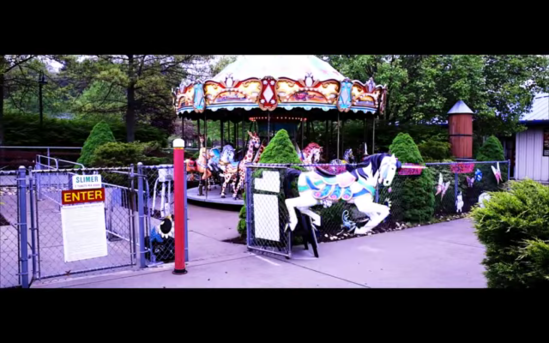
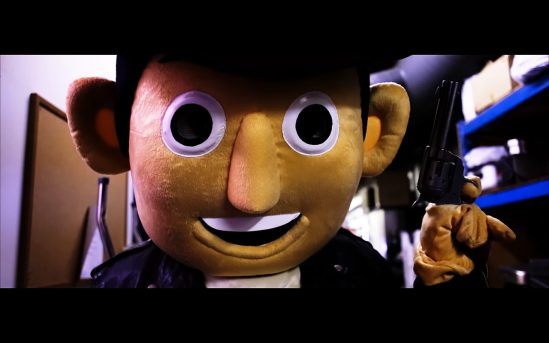
Extremely frustrated with the lack of respect from snot nose kids and the monotonous, round-the-loopy-loop that is his life existence, Duke, the carousel unicorn, has finally had enough the moment after a fat kid mounts him for a ride, smacks him like a giddy-up horse, and wiping his snot onto Duke’s glossy wooden eyeballs. The latter being the final straw that broke the unicorn’s back. Duke breaks free from the amusement park ride in search for a better quality of life when he happens to discover that killing makes him feel good, real good. With a newfound purpose, Duke vows to hunt down and end that fat brat, slaughtering anyone and everyone in his path of carnival-esque carnage that leads the unicorn not to water, but to a house party where the kid stuffs his chubby face full of cake and other goodies while his older sister and her friends order pizza and hit hard the alcohol as they discuss a love and hate for a popular kids show, My Tiny Unicorn. When Duke shows up at the front door, his statue-like presence is a big party hit amongst unicorn show fanatics who are unsuspecting of his murderous desires. The only person capable of stopping the mayhem is the amusement park mascot, a jovial warden cowboy named Cowboy Cool with his trusty, evil unicorn stopping six-shooter.
Step right up! Step right up! Behold and be amazed by the stupendous and the downright bonkers horror-comedy, “CarousHELL,” about a killer carousel unicorn from big top maestro, writer-director Steve Rudzinski. The “Everyone Must Die!” filmmaker helms a satirical slasher co-written by Aleen Isley in her first credited treatment. “CarousHELL,” a whimsical play on carousel and hell if you somehow couldn’t figure that out, inexplicably sprints with the inanimate killer concept that visually livens an old “Family Guy” wisecrack about the latest Stephen King novel being about a killer lamp! Instead of a bright bulb shining blood red and using the electrical cord as a noose, Rudzinski and Isley explore the macabre qualities of an inorganic unicorn by extending its cache of weapons beyond the obvious long, pointy horn to also being able to wield a machete without opposable thumbs, sharp shoot with a bow-and-arrow with hooves, and even have the capability to kill with ninja stars despite the sloping shoulder conformation. Impressive…
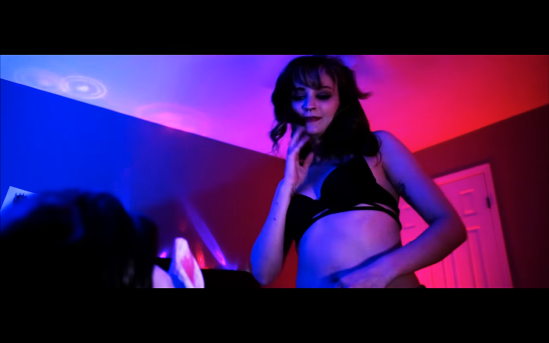
Rudzinski also co-stars as Joe, a diehard pizza delivery guy and passionate dog lover who is desperately trying to earn money for his ill-stricken four legged friend. Rudzinski, sustaining both roles as a director and a performer, solicitously molding Joe as an oblivious nice guy just looking to do his job and even though he’s a bit of an impatient spaz, Joe’s not the biggest spaz swimming in the character pool. Rudzinski could be considered the lead male in the one of many boisterous roles of “CarousHELL” who certainly manages to get the girl without having to lift an finger. That girl being the self-indulgent Laurie, big sister to the unicorn pissing off brother. With her face glued to her social media phone and being a spoiled brat herself, Laurie has little-to-no attachments to anything: she’s not tied down to one boy, weighs social media clicks heavily in life, and finds disrespect the choice of attitude even toward her pole–strapping stripper of a MILF mother. Pittsburgh, PA born Sé Marie (“Cryptids”) does bitchy well, finding a nice niche to nest in with this harebrained, but light-hearted slasher with bite. Joe and Laurie have excessive personalities, but nothing can top Preston who sets the field bar. The house party co-host starts off as a complete douchebag complete with popped collar and an unquenchable thirst for bare chests and the introduction of Chris Proud really makes a first impression in a truly unbearable, over-the-top role, but believe it or not, Preston is one of the few characters of the film to have what could be construed as an arch storyline. Preston, by the end, transforms into a likable character with penchant expertise for the My Tiny Unicorn universe (a spoof toward Hasboro’s “My Little Pony”) and is the only character to perceive the first hand danger from the infiltrating and evil unicorn from hell. Duke is hands down the best scribed character of the entire film. Voiced by veteran voice actor, Steve Rimpici, Duke can literally stand inanimate and still be a vital part of the story. The versatile Rimpici is like the movie trailer voiceover guy with an uncanny Duke Nukem-type voice who has movie credits including the Dustin Mills’ directed features, “The Puppet Monster Massacre” and “Easter Casket,” as well as stints in video games such as “Red Dead Redemption” and “Mafia III.” The cast rounds out with Sarah Brunner, P.J. Gaynard, Judy H.R. Kirby, Josh Miller (“Amityville” No Escape”), Teague Shaw, Haley Madison (“Haunted House on Sorority Row”), Cindy Fernandez-Nixon, Shawn Shelpman (“Red Christmas”), Corella Waring and Michael Mawhinney.
With a film like “CarousHELL,” killer special effects need to be a must as marketing an inanimate villain will be hard sell. Yeah, “CarousHELL” has catchy dialogue, witty enough banter, and gratuitous and non-gratuitous nudity. There’s even multi-positional sex with the unicorn. Thanks for that searing image Steve Rudzinski and Haley Madison! However, a slasher requires good kill moments and the special effects work by Cody Ruch meets the demand with a brutal that include a beautiful gored unicorn horn kill to the neck, a double impale followed by a goopy string entrails, and an Ronald Lacy melting scene with charring laser eyes! Even with a high body count and delectable moments of insanity at it’s peak, “CarousHELL” will undeniably find a general audience outside the scope of genre fans who will understand the context behind fashioning a unicorn slasher, those who are just easily entertained, and maybe a slither of fans of westerns.

MVDVisual and Wild Eye Releasing delivers the hell raising attraction, “CarousHELL,” onto DVD home video presented region free, unrated, and in widescreen format. The digitally shot video has a pleasing standard of quality. A few moments of brief aliasing but nothing to specifically note that matters. The dual-channel audio was the most disconcerting issue that’s affecting the release. More so with the exaggeration of performances with the screaming and the screeching, the feedback distortion is pesky and jarring. Dialogue is prevalent and forefront, but lacks range and depth and so the verbal tracks tend to blend together. The bonus features are a welcoming site with a commentary track, cast interviews that explain how the film came to fruition and that better explains what the “CarousHELL” they were thinking when creating this fun flick, a few deleted scenes that explain the disappearance of minor characters, bloopers, and Wild Eye Releasing trailers. Just like “JAWS” did with ocean, “CarousHELL” will cause hesitation when deliberating if riding a unicorn will endanger your mortality. “CarousHELL” is fun, campy, and a whole bunch of nonsense that has our full 100% support in the horror community.
Category Archives: Uncategorized


Evil Rips through the Whitechapel District. “Jack the Ripper” review!
On the streets of London’s Whitechapel district, women are afraid to walk the streets alone at night and angry mobs have begun to turn their backs on the police’s ineptness on catching a killer. Jack the Ripper is what the people of London label the maniacal murderer who, with surgical precisions, guts his victims and leaves their lifeless bodies on the dark, dank cobblestone streets. Scotland Yard Inspector O’Neill is joined by his friend and American counterpart, a New York police officer named Sam Lowry, to hunt down and stop Jack the Ripper’s killing spree. Deeper into the investigation, the officers are informed that the suspect they track would have medical background with a skilled blade hand, but even with that information, Jack the Ripper alludes authorities. Lowry’s romantic involvement with a young woman named Anne Ford, whose under the ward of the notable Dr. Tranter, might be very connective tissue between the constabularies and the secretive medical society needed to crack the case of the notorious Jack the Ripper before he strikes again!
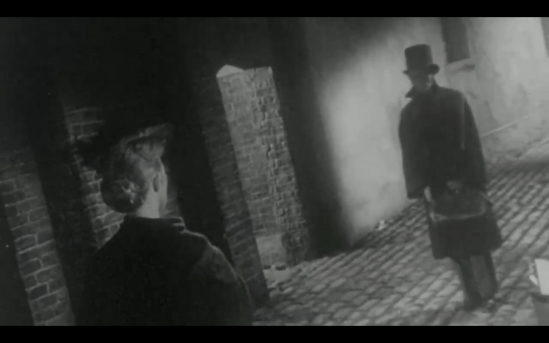
Jack the Ripper is a real and iconic villain that not only terrorized the streets of London, but had later graced the screen many times over from Bob Clack’s 1979 thriller “Murder by Decree” to the 2001 Allen and Albert Hughes gothic and graphic “From Hell,” starring Johnny Depp. Before the production of those films, before Jack the Ripper really had any kind of footprint in cinema, Robert S. Baker and Monty Berman directed the 1959 mystery-thriller “Jack the Ripper” from a screenplay by Jimmy Sangster and Peter Hammond based off the theory that Jack the Ripper had a medical practice history. Baker and Berman’s film hit the controversial market from right out of the gate with grisly and ghastly murders, for the circa 1950s, and bared topless actress frivolously to insinuate the lady drunkards, the showgirl dancers, and the lone walking women as ladies of the night. Prostitutes would have been burden the selling of an already certifiable X film from the BBFC and the MPAA. However, the filmmakers constructed alternate cuts, shorting the grisliness to just grim and sheathing bare breasts with articles of clothing in shot for shot censorship. Only on the continental, aka French, version does a truly uncut and complete film live to excite, but instead a complete feature, the unmolested scenes are only available on the bonus features of the Severin Films’ release. That’s not to say that the U.S. and British versions are a complete waste of time. The classic time is utterly timeless and gripping that offers up immense amounts of whodunit suspense, implied sensationalisms, and an adequate take on how incompetent law officials can be exhibited when politics and women are afoot. Plus, the U.S. version, bought and presented by legendary producer Joseph E. Levine, comes with a brassy score by Jimmy McHugh and Pete Rugolo. The British version, also known as more of the approved director’s cut of the film, is scored by Stanley Black.
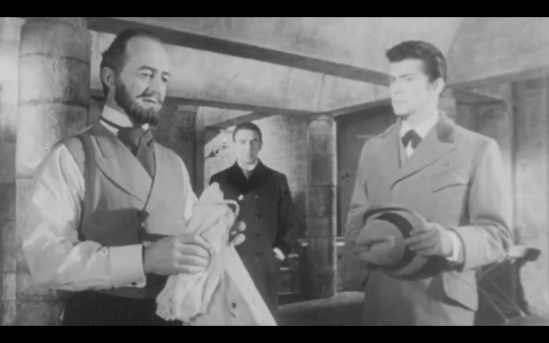
Tall, handsome, and walking into another country like he owns the land, detective Sam Lowry is introduced at about 10 minutes in, standing at a bar and reluctant to be rough and tough with a mob ready to lynch him for potentially being the Ripper because of his inquiries. Lowry’s charming persona with the women, like the bar maiden and Anne Ford, are only offset by his complete incompetence to be a police detective. Lowry does absolute zilch investigation and, instead, goes out on a date with Dr. Tranter’s niece and makes snarky comments at a merciless, ready to judge horde of scared Whitechapel residents. American hunk Lee Patterson stands out amongst the gothic rich atmosphere to the point where’s he, like his character, is an outcast and Patterson’s talents could only take him so far into a gloomy, morbid narrative that was unwilling to accept his chiseled chin and starry eyes. Eddie Byrne fit the mold better than Petterson as the Scotland Yard Inspector at rope’s end with not only Scotland Yard, but also the rest of London. As Inspector O’Niell, Byrne, who went on to star in “Island of Terror” and “Devil’s Darkness,” humbly accepts his restraint as the Irish born actor takes a wallop from all sides and still remains calm, collective, and ever present on the task at hand with a character being beat from all ends of the spectrum. Anne Ford opposites Lowry as the potential love interest who has come of age, as she notes a few times, to takeover temporary responsibilities at the hospital where her uncle performs dire surgeries. Being oppressed by her own family and seeing London being ripped a part by its own people, Anne latches onto Lowry, an outsider, to find a connection or a release from sullen cloud that hangs over Whitechapel. Unfortunately, Betty McDowall is sorely overshadowed by many of “Jack the Ripper’s” formidable characters and that Anne is not wholeheartedly written though her character is important to the story. Even the showgirls sizzle in more ways than one than does McDowall whose kept in check by Lowry, doused with someone’s problems, and only given an allusion of her worth in a moment of fright. Ewen Solon (“The Curse of the Werewolf”), John Le Mesurier (“The Jabberwocky”), Barbara Burke (“Blood of the Vampire”), Denis Shaw (“Curse of the Werewolf”), Bill Shine (“Burke & Hare”), and Anne Sharp (“Murder on the Campus”) round out the cast.
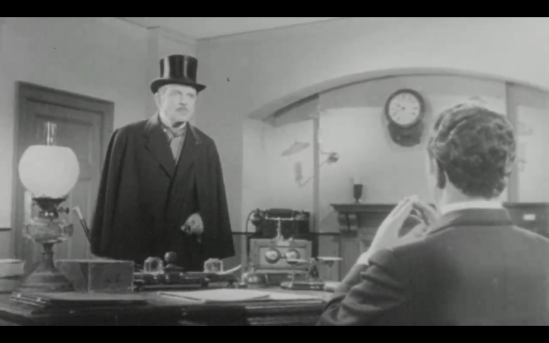
“Jack the Ripper” is a classic, literally and physically. The scaled down sets of the Whitechapel area bring to life the tenebrous soil of 19-century London. The elegantly painted backdrops of tall mast ships enshrouded by synthetic fog paint an archaic picture of how movie magic has progressed over the decades. Attention to detail in the set construction and the flavor of time period customers brought a sense of authenticity that nostalgically harps on the once was that now only exists as recorded cinema history. “Jack the Ripper” casts a forgotten beauty in the barbarism. By today’s standards, “Jack the Ripper” would be written off as banal and uninspired by critics and audiences, but if you can imagine yourself in 1959-1960, Robert Baker and Monty Berman just blew your mind with onscreen taboos and in America, Joseph Levine’s technicolor blood scene, with a duration of only a few seconds, would be the viral talk of the town.
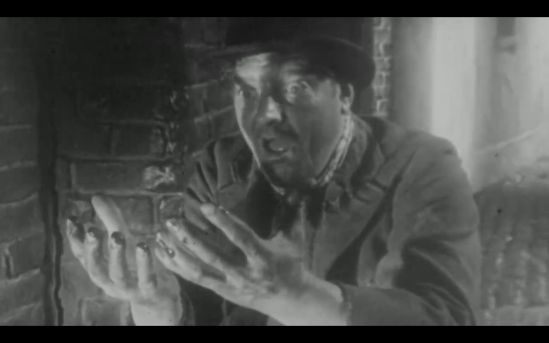
Severin Films presents “Jack the Ripper” onto a region free, 1080p Blu-ray for the very first time anywhere! Complete with two cuts of the film, the British and American version, Severin presents both in their released aspect ratios of a lossy standard 1:33:1 in the British version and 1.66:1 in the American version, both in B&W with a pop of technicolor in one scene in the American version. Severin’s transfer is perhaps the best we’ll see from an original print that’s laced with scratches, but a bit more light, or some brighter contrast, sheds some light in the inky corners while managing a rich appearance that’s not monochrome or sepia. The English 2.0 audio track maintains an equal quality with some static in dialogue and ambient tracks. Jimmy McHugh and Pete Rugolo’s brass-heavy score thunderously pack the scene that surely takes the lead amongst the tracks. Bonus features include snippets of the continental versions with the extended violence and nudity and the audio commentary with Robert S. Baker, screenwriter Jimmy Sangster, assistant director Peter Manloy is extracting and interesting helmed by horror historian Marcus Hearn. Also included is an interview with the author of “Jack the Ripper” The Murders of the Movies” Denis Meikle, “The Real Jack the Ripper” featurette, theatrical trailer, and poster and stills gallery. Exposed and disclosed, the various faces of Robert S. Baker and Monty Berman’s “Jack the Ripper” now have a hi-def upgrade and though a full continental version eludes this release, Severin provides the cliff notes in order to not overcook the same story a third time.
This Apartment Block is All About the Evil Beast with Two Backs! “Blue Movie” review!

After spending five years in incarceration for being convicted of having sexual relations with a 15-year-old girl, the now 25-year-old Michael has been released and is in the hands of a parole officer, Eddie. Eddie arranges housing for Michael in an apartment block, providing some pocket cash and job prospects to get the reserved demeanor parolee back on his feet and reintegrate him back into society that has radically changed in his favor in half a decade. Though having these advantages at his fingertips to start a new life, non-violent sexual urges still race through Michael’s blood and Eddie has nested him right smack in the middle of many young women with hefty promiscuous appetites. Michael must try to keep up the tiresome façade of clean living when Eddie’s sudden pops up as he continues his sexual escapades through the likes of married women, threesomes, and kinky block flat neighbors.

Viva la revolucion! Or should I say, “Lang leve de revolutie” in this censor ban breaking Dutch sex-comedy, “Blue Movie,” from breakthrough writer-director Wim Verstappen alongside cowriter Charles Gormley. Verstappen and Gormley’s experience on the 1971 feature forms a long time collaboration through an immense body of work of films in the 1970’s including “Dakota,” “Alicia,” and “Don’t Worry Too Much.” Masked an adult romance, “Blue Movie” exploits sex to be the symbolism of choice when exhibiting the Netherlands antiquated view on censorship that bogged down their local film industry and led a bold, new Dutch filmmaking expanse that goes onto dismantling the Dutch Censorship board.

Michael is a cool cucumber, who just step one foot free out of prison. On parole and looking to restart his life again from the generous assistance by a parole-like officer, Michael is set up an a apartment block with a view of the land, but the ex-con looks inward, at his neighbors, his beautiful, succulent, and promiscuous flat mates that hone in the fresh meat. Hugo Metsers captures Micheal’s essence, a gentle ex-con, even when Metsers’ sporting thick, under-jowl mutton chops. Then there’s Eddie, whose in a parole officer type position, yet tries eagerly to be puritanical guardian angel on Michael’s sordid shoulder. Seemingly part of some foundation that helps ex-cons get back on their feet, as I assume this to be a Netherlands’ societal reform program of sorts, Eddie solicits his steer clear and keep your nose clean advice, randomly checks in at all times of the day, and even makes furniture purchases for Michael’s bare flat. Eddie’s nose is so intrusive, he oversteps his position in an attempt to sweet talk a building tenant on Michael’s behalf, right out outside the parolee’s flat door. Helmert Woudenberg, another actor in Wim Verstappen’s cache of talent, does annoyingly helpful well. Woudenberg, who later had a role in Dick Maas’s “Amsterdamned,” portrays Eddie’s antiquated beliefs on Netherlands sex culture with such poised conviction that the character does feel like a lonely satellite cut off from progressing mothership. The women characters are extremely important in Blue Movie because they’re key to Michael’s motivation to not be only rooster in the hen house but to help him find actual love and while not one actress plays opposite to Michael, Ine Veen’s Julia stands out as the pivotal moment in Michael’s stagnant and sleazy stint. Julia is beautiful and coy as she’s casually noted to Michael upon their first exchange that she rather listen than to talk, but Julia comes with baggage – a child. The only child in Verstappen’s film is the main obstacle in Michael’s conquering of the opposite sex in the entire apartment block. He even backs out of a date with Julia upon seeing her tending to the child’s need first, transferring his needs into being very brash and childlike, but once Michael sustains and profits from his transient lifestyle, an obvious void is left unfulfilled until Julia strolls back into his life. Veen’s blue eyes are striking and could be theorized why this movie is titled “Blue Movie” as she’s truly the object of his affection. Ursula Blauth (“Sex is Not for Virgins”), Kees Brusse, Carry Tefsen (“Diary of a Hooker”), Marijke Boonstra (“Obsessions”), Monique Smal, and Mimi Kok from “De mantel del Liefe” costar.

While Verstappen’s film was an influential piece during the Netherland’s anti-censorship and freedom of expression movement that allow creativity and taboo material to flow less restrictively, the filmmaker, or rather Jan De Bont, was a technically careless cinematographer. Sure, “Blue Movie” was on produced on micro-budget shot in a cramped location that’s very intimate and authentic for the material, but Verstappen and Bont let slide various goofs in the final cut, such as boom mic shadows, the boom mic itself, and, I believe, the director’s hand going in and out of frame twice in one scene. Along with the crew and equipment mishaps, the script or scheduling shooting has perplexing timing issues that defy the natural order of passing time. Michael goes through a series of events in, what is assumed, his initial weeks at the apartment block and even the jump between having elicit affairs with a married women and being the third party of group sex in a romping montage have plausible time possibilities. Yet, Michael’s story teleports into his money-making scheme of selling the sexual lifestyles of the rich and horny. There was no brainstorm light bulb that sudden illuminates his status from no job bed wanderer to the CEO of variety sex shows staged in his 2 bed, 1 bath flat.

From the company that delivered “Frank & Eva,” Cult Epics presents another Netherlands film, “Blue Movie,” onto a Blu-ray/DVD combo release. Shot in a 1.37:1 aspect ratio, aka Academy Ratio, the original negative has remained virtually unvarnished and Cult Epics presents a new high definition restoration and transfer by the Eye Film Institute. Natural grain looks great. The coloring remains stable throughout and the hues border the natural and just below slightly too brilliant – Ine Veen’s blue eyes could be made a case. The Dutch and German Dolby Digital 2.0 audio track is, again, a fine transfer with clear dialogue and not a pinch of pops or crackles. The optional English subtitles are well synched without translational error. Bonus material includes pre-debut film interview with director Wim Verstappen, interview with producer Pim de la Parra at the Sex Wave Festival, interview with Hugo Metsers Jr. about his father later in life and his erotically charged moment on the first time he saw his father’s film, Eye Film Institute featurette, “Blue Movie” HD poster and photo video gallery, and the original Scorpio Films trailer of the film. Wim Verstappen pioneered the Dutch Sex Wave with “Blue Movie,” a controversial artistic brief rendition of the Netherlands’s breakneck cultural upgrade to a more fluid and modern lifestyles and cinema sauté.
Evil from the Sky! “Devil’s Gate” review!

In the small rural community of Devil’s Gate, Oregon, a boy and his mother disappear without a trace. FBI Special Agent Daria Francis spearheads the investigating to atone for a regretful previous child disappearance case. She’s accompanied by a local deputy, Colt Salter, to assist her. During her brief investigation upon arriving at Devil’s Gate, Agent Francis comes to the determination that Jackson Pritchard, the father and husband of the missing boy and mother, is directly involved in their sudden disappearance. The investigation turns from a seemingly straight forward, open and shut case to a colossal mystery that’s beyond their comprehension when arriving at the religious dogmatist’s boarded up and disturbing cladded farm house where unearthly forces lay claim to the Pritchard family home for sinister reasons. With one of the beings caged in his basement, the desperate Pritchard seeks an exchange with the creatures he labels as the fallen angels in attempt to regain his wife and son, but as the night falls, trapping Agent Francis and Deputy Salter with Prichard inside the residence, they become surrounded by the fire in the sky creatures aimed to reap not only the world, but their souls.

Like an enigmatic report straight from the non-redacted portions of a nail-biting X-Files case, “Devil’s Gate” is a we are not alone sci-fi horror film from 2017 under the apocalyptic eye of director Clay Staub and co-written by video game plot scriber, Peter Aperlo. The considerably financed project is the first feature film for both filmmakers in their respective roles with Staub having served as an assistant director on other paranormal plotted projects like Zack Snyder’s heavily praised remake of George Romero’s flesh-eating zombie classic, “Dawn of the Dead,” and Matthijs van Heijningen’s underrated “The Thing,” a prequel to John Carpenter’s film of the same title. One quality that we can all can be pleased about is that Staub carries over from his previous experience as a genre filmmaker participate is the use of gore in the “Devil’s Gate” because, honestly just by looking at the cover and reading the plot, the bloodletting expectation was low on the totem pole. Staub doesn’t unload a gratuitous splatterfest of alien and human entrails, but subtly sanctions the right amount of extrasensory chest bursting and finger snapping goo that plays an ill-fated role of circular or motivational circumstances for the characters.

Putting the pieces of the Pritchard mystery together is Agent Francis who is a to the point and tough national law enforcement officer with a bleeding heart complex after her very first assigned case went tragically sour that looms an unexplainable root cause cloud over her straight blonde hair. Desperate to cure her past, Agent Francis rushes into Devil’s Gate, bypassing the notable chicken fried steak meal offered by Deputy Salter upon her tarmac arrival and defying the local Sheriff’s heed to not interview husband Jackson Pritchard, that sorely causes her to land in the virtually the same predicament of just trying to get the right thing done no matter the unclear ancillary evidence. “12 Monkey’s” television star Amanda Schull spearheads the character with the characteristics aforementioned with drab appeal, lacking the emotion and the intensity her character is supposed to be exhibit when trying to solve a case of personal redemption as well as the fear from an higher ominous power that can shoot lightning down from the sky and flash velociraptor toe-claw sized fangs. Colt Salter might be a small time, Podunk deputy, but the born and raised Devil’s Gate officer can match wit with his FBI counterpart. Salter strikes me as a character who doesn’t stray far from home, mentioning various times, in various ways, his parallel path to high school friend Jackson Pritchard. Shawn Ashmore, from Joe Lynch’s “Frozen,” opposites his costar Schull like Mulder and Scully type as well as an all-around good guy who happens to stray from his protocol path once Agent Francis puts her federal fingers into his already investigated investigation. Like his performance in “Frozen,” “X-Men” franchise, and even in FOX’s television thriller “The Following,” Ashmore is a pretty solid actor, showing a range of emotion that transcends him from easygoing deputy to mortality fearing when mankind’s on the verge of extinction comes into the equation. An equally solid performance by Milo Ventimiglia, who recently starred in “Creed II,” really sells the crazy portray by Jackson Pritchard, a God-fearing man with a long lineage of misunderstood family heritage that leads him to the uncanny bombshell that has been bestowed upon his family farm. Ventimiglia, in his roughest, toughest country twang, creates such an anxiety-riddled and frantic character that unravelling his fate is not too clear which is refreshing to be able to retain mystery to a role as we can kind of figure out how Agent Francis and Deputy Salter when fair in the end game. Rounding out the cast is Bridget Regan (“John Wick”), Javier Botet (“Slender Man”), and “Star Trek: The Next Genergation’s” Jonathan Frakes, still sporting that iconic beard even if it has grayed, as the town Sheriff.

In spite of some really cool visuals, especially of the man underneath the mask, Javier Botet, inside a ghoulishly white extraterrestrial suit that only his elongated and thin body (and perhaps also Doug Jones’) could snuggly fit into, “Devil’s Gate” tells a narrative that hails from a lot of re-spun material. Whether intentional or not, viewers more than likely won’t be able to help themselves as they’ll eagerly point to the television screen and say, ““Independence Day” did that first,” or exclaim, “didn’t Donald Sutherland star in the same kind of thing???” I know I did. However, Staub and Aperlo don’t completely ape the concepts that surely haven’t inspiring them, making the effort more endearing, and visually crafted a well-blended plot into an enjoyable and captivating story; a story that has been mostly devoid of underlining messages and symbolism other than the themes of religious zealots are extremely bad for the world and living with past regrets can be hazardous for your health if not properly accessed. “Devil’s Gate” focuses more directly on just entertaining another version of visitors from another world and how those no-so-little-green-men play an assimilating role into humanity.

Umbrella Entertainment releases “Devil’s Gate” onto a region 4 DVD presented in widescreen 2.35:1 aspect ratio. The vast Midwestern landscape with the foreboding rolling clouds stretches from top to bottom with an exact sharpness and crisp from the digital picture. The textures in the broad, yet barren-esque fields look especially detailed, more so with the wind and brownish-yellow color. Speaking of color, the hue is a filter of shadowed purple and on a sepia side that works the dread atmosphere. The English 5.1 Dolby audio track has ample range and depth. Lightning strikes boom equally from the five channels, alien shrieks trembles through, and the dialogue is not obstructed. Surprisingly, there are no bonus features with this release as the Stateside counterpart even has a trailer in the extras. There isn’t a static menu either as the film goes right into play feature mode. c
Half-Woman, Half-Machine, All Evil! “SheBorg” review!

Brought before an intergalactic sentencing, a chaos-driven cyborg faces extreme persecution for committing heinous acts across of destruction and death amongst the galaxy, but desperately escapes on a small shuttle pod aimed directly for the planet Earth. The cyborg craves massive amounts of energy to contact others of it’s species for world domination and also needs to feed off of animal flesh to sustain. The local anarchist Dylan and her friend Eddie team up with a alien enthusiast and a provincial cop to thwart human annihilation as the cyborg assimilates the townsfolk into it’s own flesh hungry minions, doing the bidding of constructing a solar system reaching power source to create a space antenna. The world’s hope relies on a pair of anarchy subversives to stop a monstrous sheborg who believes chaos will provide for planetary obliteration.

Its Bloggin’ Evil has been around the bush a few times with director Daniel Armstrong, a name known very well here by previously reviewing two of the filmmakers films under his Strongman Pictures label, the 2015 wrestling-sploitation “Fight Like A Girl” and the slasher on blades “MurderDrome” from 2013, and there has been much appreciation for the ballistic, ass-kickin’ carnage and indie horror mayhem Armstrong is so strongly passionate about in his films. The 2016 “SheBorg” is no different as the film revels in many of the same feral totalities. The Australian writer-director favors the 80s-90s science fiction and horror cultural elements for not only his earlier works but also for “SheBorg,” cherry-picked specifically for the mechanical madness. From “Star Trek,” to “Ghostbusters,” and to “Back to the Future,” “SheBorg” affectionately homages these films through the dialogue in an explicitly melee narrative that oozes with crazy, feasts on the flesh, and gorges on heartily on dismembering and assimilating all in a path to geek fandom.

Dylan lives to subvert the establishment, even if that means derailing her politically obsessed, sorry for excuse father, Mayor Jack Whiteman, and the self-indulged agitator is played by Whitney Duff alongside “MurderDrome’s” Daisy Masterman as Dylan’s best Kung Fu knowing mate Eddie. Duff and Masterman are a solid budding duo who can expel eccentricity and calmness as a single, combative unit against an seemingly unstoppable mechanism of man killing, the Sheborg. The mechanical alien is mechanically performed by another “MurderDrome” casted and “Fight Like A Girl” actress Emma-Louise Wilson. Wilon’s robotic coldness sounds actually very Russian in performance, as if the Eastern Europeans were gearing up for war with killer, flesh eating cyborgs, but Wilson’s contrast to the uncouth Duff and Masterman tagteam is comedic bliss that symbolisms freedom over tyrannical subjection. Sean McIntyre, Mark Entwistle, Louise Monnington, Jasy Holt, and Tommy Hellfire fill in the rest of the “SheBorg” cast.

Labeled as a Neo-Pulp sci-fi, horror film, “SheBorg” encapsulates the essence of a schlocky B-horror, charmed with two-bit practical and visual effects. Yellow alien blood sprays and cascades like neon Kool-Aid, the assimilated have oversized and gaudy optical lens over one eye, and there’s also some eye popping, heart ripping, and dog eating gore to appease every facet of a modern sci-fi horror. Once titled “SheBorg Prison Massacre” and then retitled to “Sheborg Puppy Farm Massacre,” Armstrong drops the ancillaries and simply presents his Daisy Duke-cladded killing machine film as “Sheborg” that continues a trend, whether intentional and ill-conceived from selective viewings on my part, of having a heroine in the lead role, such as “Fight Like a Girl” and “MurderDrome” with the latter involving an all-woman roller derby gang. Armstrong’s seemingly trademarking his films with rebellious women, whom are at odds with the world around them, and are coming out on top hauling away being more of a kick-ass warrior than before the a nemesis made the scene.

“SheBorg” is now available on Blu-ray courtesy of WildEye Releasing and MVDVisual. The 1080p resolution in a widescreen 1.85:1 presentation release has an underwhelming image quality. Details flutter sporadically in the woodsy locale in and around the puppy farm and night scenes have coagulated blotches of the unsharp nature. A few sequences turn out brilliantly poetic like when SheBorg frightfully exits through a mist-cloaked, open aired windshield of one of her three junkers turned into a makeshift solar system communicator. The 5.1 Stereo works for the budget, but while the punk rock score by KidCrusher befitted the anarchist lead, syncing with the rest of the film was far from being symbiotic. Dialogue was clear enough and ambience was fine, even if it was slightly over-exaggerated. Bonus features include a medium-length Behind the Scenes documentary that has engrained interviews with director Daniel Armstrong and selective cast; the BTS-feature is more tell all of Armstrong’s visionary mechanics and where he pulls inspiration from. There are also music videos and trailers. Resistance is futile as “SheBorg” is a must-see cybernetics battle royal in the realm of Ozploitation.
 It's Bloggin Evil!