The Apocalypse is Four EVIL Active Shooters and the Hell They Create in “The Dead Ones” reveiwed! (Artsploitation Films / Blu-ray)

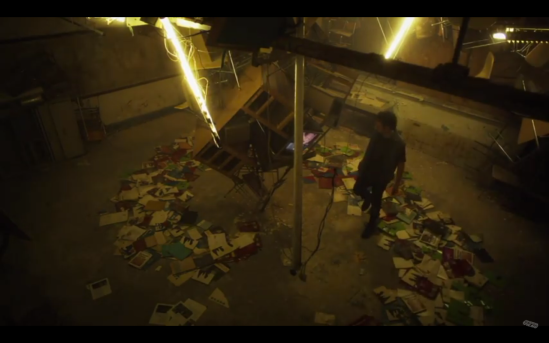
Four errant students are ordered to do a summer cleaning of their high school after a terrible tragedy that has left the hallways and classrooms in shambles.  As they meander around the closed school doing more chatting than they are cleaning, a masked and armed group calling themselves The Four Horsemen chain the doors and windows, barring every means of escape, and snake through the school’s layout setting a plan in motion to deliver a macabre message to the campus grounds.  Something just doesn’t feel right when the students try to track down the masqueraders who move around more like specters with an eerie clamor of theatrics that’s becoming more and more eternally harmful the longer they remain inside the school. 

“The Attic Expeditions” and “All Souls Day:  Dia de la Muertos” director, Jeremy Kasten, has a new ghoulish, outcast teen horror on the verge of release with the American made, calamity surrounding “The Dead Ones,” entailing a theme of choice on the wrong side of deviancy when influentially steered by the negative forces of the besieging cruel society.  The script is penned by Zach Chassler on his fourth collaboration with director Kasten, following their efforts on the vampiric allegory for drug use “The Thirst,” “The Wizard of Gore” remake, and “The Theater Bizarre,” a horror anthology, in over a span of a decade’s time.  “The Dead Ones” presents a two-timeline parable with an inciting, yet disturbing, core involving every parents’ worst nightmare and America’s most disgraceful statistic, a high school shooting.  Sick-O-Scope Motion Pictures serves as the listed production company behind the film.

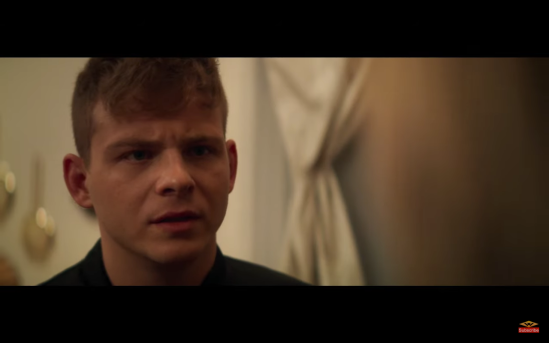
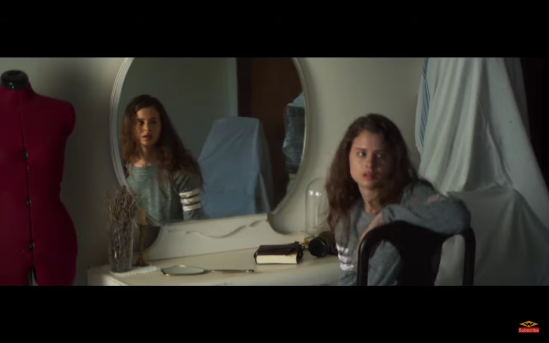
Detention attendees is comprised of four teenage outcasts who are also quasi-friends that seem to know each other well, but are personally rough around the edge, denoting more distinct tensions amongst their insoluble secrets.  In an introduction with the teens, we’re glimpsed into flashes of a nightmare images inside one of the teens’ head as their driven together to the school by their principal, Ms. Persephone, played by “The Thirst’s” Clare Kramer who is just as stunning as her in-story goddess inspired moniker.  Ms. Persephone’s passengers include the “The Dead One’s” core characters with a victim of relative abuse in Alice “Mouse” Morley (Sarah Rose Harper), a bullied nonconformist in Scottie French (Brandon Thane Wilson), an unhinged self-cutter in Emily Davis (Katie Foster), and an aggressive sociopath in Louis Friend (Torey Garza).  Performances are heavily relied upon as the cast of four are called forth by the story’s dual timeline where various plot points from two individual paths are needed to be crucially achieved for the unfolding to be organically ambiguous for it to converge in a blend of reality and, possible, damnation.  “The Dead Ones” round out the cast with Amelia Talbot, Michael James Levy, Shane Tunny, and “Dusk Till Dawn 2: Texas Blood Money’s” Muse Watson whose always a nice addition to any horror character set in an eviscerated and sleazy father figure role.

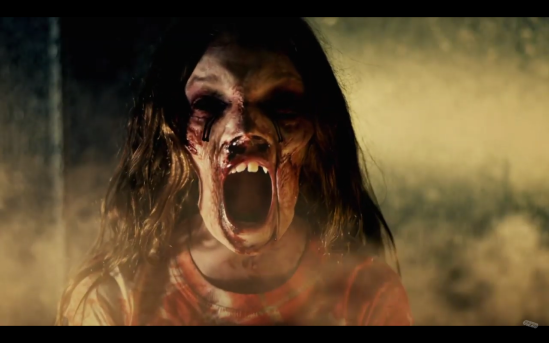
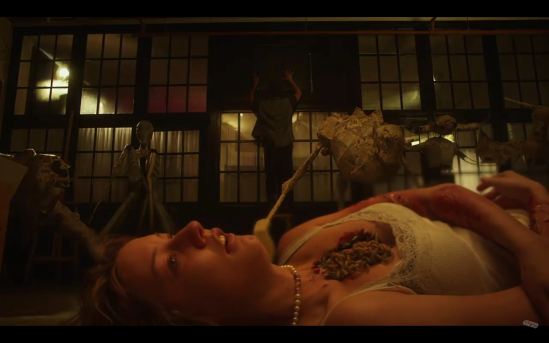
“The Dead Ones” is a film that’s always in a temporal flux, weaving back and forth between utter chaos of an active shooter situation in the normal light and the near totalitarian order saturated with an infernal hue inside a dislodged environment.  As the band of misfits reflect on their battered existence, one mentions, multiple times, his stint in Juvey while another can envisage the patterns to cut into her flesh, a bread crumb trail of hints and past misgivings lead them down a path of self-awareness, of remembering exactly how they landed into the ruined capillaries of the school in the first place.  Yet, “the Dead Ones” isn’t solely about paying for one’s sins, honing in toward more of a cause and effect choice for redemption, which begs an essential question, that goes slightly under the radar of Kasten’s direction, on whether the two timelines are rather parallel to each other instead of rendering past and present events?  It’s certainly one of those open ending conversations about what perils our souls could be fatefully curtailed under the corporeal spectrum by the choices we make while still living and breathing.  For myself, connecting with Kasten’s carnivalesque and ultra-sleek horror panache has been difficult to digest and become accustom to, especially with my own personal dissatisfaction with the remake of “Wizard the Gore” that starred one of my favorite eccentric actors, Chrispin Glover, but Kasten relishes an unorthodox methodology that goes against the traditional grain of filmmaking and while that usually isn’t the problem for him, or any director, to be discouraged from,  “The Dead Ones” ultimately tips over into the same disheartened gray area for one main reason – the editing.  “The Dead Ones” is edited by Maxx Gillman whose chief credits are on short films and documentaries, marking Kasten’s film Gillman’s debut into feature film market, but as like a good documentary editor, “The Dead Ones” is overtly choppy that cuts up the scenes in an egregious way, thwarting any sense of conveying emotions and shortening them to near nauseating back-and-forth cuts.  With a 73 minute runtime, the potential for lingering on the morose rhetoric or teetering compassion of the teens is lost and could have been stirred into their affixed affliction for a more targeted approach to their limbo circumstances. While timing might be less than desirable, Jeremy Kasten summons judgement for “The Dead Ones” to be convicted of unnerving decorum and executes psychological absolution with the tenderness of a Satan himself.

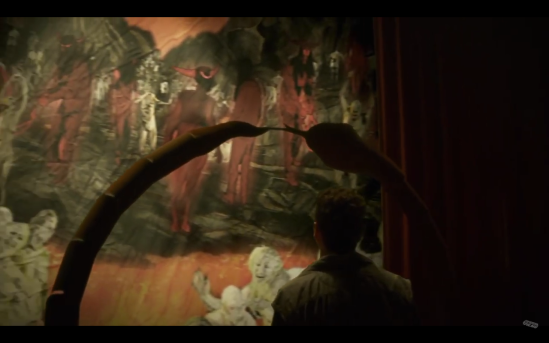
Surreal with a hard, open-hand slap of realism, the metaphysics of “The Dead Ones” shoots for an otherworldly life sentence as the September 29th release day for the Blu-ray and DVD is on the horizon courtesy of Artsploitation Films in association with Raven Banner. The Blu-ray was reviewed and is presented in high-def, 1080p with a 2.39:1, anamorphic widescreen, aspect ratio. The digitally recorded image is packed with visually popping nightmares under a slightly greenish warm tint while still propelling range into heavy fog, a seamless composite of scene transitions and matted visual effects, and copious amounts of rich shadows and shadowy characters. The overall tone of the “The Dead Ones” has a strong 90’s grunge manifestation with some CCTV black and white moments that would fit rightfully in before the turn of the century teen horror collective. The English language 5.1 DTS-HD master audio maintains clear dialogue pathways and a resounding, almost mechanical, score resembling that of an infernal machine at work. The ambient range and even a good chunk of the dialogue has a softer demeanor that sidesteps to the incessant score that would have rung about in Virgil’s Dante Inferno, as the school auditorium playbill show that’s transparent through the film. There is also optional Dolby Digital 2.0 audio. The bonus features include a special effects featurette of the special effects work by the late Elvis Jones, on one of his works with “The Dead Ones,” and his intern Jax Smith, a set tour with production designer Jeffrey Pratt Gordon to showoff his vision of hell, and two commentary tracks alongside the film with commentaries by the director, producer, and crew. Saving a soul damned to hell sounds like an enormous feat of only divinity interaction can accomplish, but Jeremy Kasten finds virtue in sinful acts, imbedding a safety net in the guise of a forked path, and opens an ingress to a putrid perdition for those under more severe scrutiny than just “The Dead Ones.”

Pre-Order “The Dead Ones” By Clicking the Poster!

Defy EVIL to Live! “Alone” reviewed! (Magnet Releasing / Digital Screener)

Six months after the suicide of her husband, Jessica struggles to cope living in the city that holds too many fond memories of her once happy life with her husband.  Jessica packs her things and quickly drives out to the wilderness, separating herself from the city as well as her unsupportive parents.   On the road, she encounters an incessant man following her every track before violently kidnapping her and hiding her away in a bare room of an isolated cabin deep within the woods.  Her escape opposes her not only against a calculating captor hot in pursuit, but also against nature’s unforgiving elements, showing little mercy to Jessica’s dire and desperate getaway. 

From eluding the flesh hungry, running zombies of Syfy’s “Z-Nation” and Netflix’s “Black Summer,” director John Hyams has us fleeing once again for our very lives against a more realistic monster in his upcoming abduction thriller, “Alone.” Screenwriter Mattias Olsson takes a backseat from directing “Alone,” which is a remake of his written and co-directed 2011 Swedish film, “Gone,” paralleling the premise about a woman fleeing a family tragedy only to be followed and kidnapped by a man driving a SUV.  Shot in Oregon’s silvan outskirts, “Alone” is a survival thriller with emerging themes of taking back one’s life in more ways than one and no more running from an unbearable past built into a conceivable terror situation that has unfortunately been a common episode all over the globe.  “Alone” will be the second feature film produced under Mill House Motion Pictures, under the supervision of founders Jordan Foley and Jonathan Rosenthal, the latter having a small role in the film, and is also a film from a second Jordan Foley company, Paperclip Limited, who has Lisa Simpson voice actress herself, Yeardley Smith, as one of the active partners, and, lastly, in association with XYZ Films.

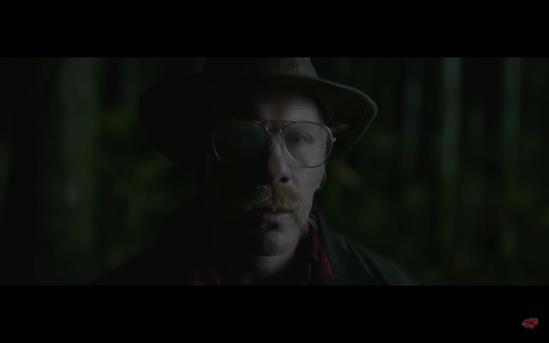
The up and coming young actress, Jules Willcox (“Dreamkatcher”) stars in the lead of Jessica who hasn’t have a friend in the world, alienating herself from her former life and her parents with a sudden escape to the Oregon wilderness.  The physically demanding role withstands the brunt of constant attack, whether from Marc Menchaca’s unnamed assailant character or the natural elements of the forest that include from the massive rapid rivers and torrential rains to the smallest of roots that spear her bare feet while on the run.  Willcox also brings to the role an indistinct mindset, jumbled with the lingering and complicated suicide of Jessica’s husband, paranoia, and an instinctual reaction to survive, especially through Willcox’s eyes that arch from fear to fortitude.  To really envelope Willcox in that unwarranted fear of harm and pushing her character into the unknown of the adversarial complex that is mother nature is Marc Menchaca as a conniving creep looking to do as much pleasurable damage on his bogus business trip as possible.  Menchaca also looks the part, resembling an out of place 70’s-80’s serial killer with round thin-framed glasses and a moderately bushy handlebar mustache overtop a sturdy frame.  Now while these attributes are not indicative to just serial killers, they sure as hell work well on screen to really sell the intensity that Menchaca delivers as a faux Ned Flanders type nice guy, a sheep in a wolf’s clothing so to speak, who acts a lure against his prey before venomously striking.  The small cast rounds out with Anthony Heald of the Anthony Hopkins “Hannibal” films in a small, yet uncharacteristic, good guy role as a hunter caught in the middle of Jessica’s situation.

While suicide might be the catalyst that compels Jessica to drive into the middle of nowhere, Matthias and Hymans only utilize the power theme as an instrument against Jessica’s psyche.  Jessica runs and hides from polite and comfortable society, but the recently widowed soon discovers that she can’t outrun her past as she hits a perverse wall constructed in the form of a man of sordid pleasures and sociopathic tendencies.  Her kidnapper becomes, in a way, her therapist who, at one point, pins her to the ground and scrolls through the personal photos on her tablet, forcing her to talk about her husband up to the point of his death, and consistently throughout the film that his actions were cowardly, removing the blame from her and onto him while emphasizing her tremendous guilt for not seeing the signs earlier.  “Alone” blossoms a wildly curative dynamic that encourages Jessica to then defend herself and her husband’s memory by standing up against not only the man’s relentless chase, but also her guilt.  The thick Oregon setting becomes a security blanket, sheathing her endless dismay, but the forest is actually does more harm than good for Jessica.  Only when does Jessica steps into a wide clearing of lumberjacked tree stumps does hiding from all the pain and torment become no longer an option as she makes her last stand against her attacker, unloading her fear, anger, and guilt upon the man by exposing him as an oppressive killer. While immersed in watching, “Alone” will deprive oxygen from your body that’s desperately gasping to fill your lungs with air in every harrowing chapter, but “Alone” is a breadth with a throng of digging out of despair overtones and a conduit for self-repair that’s unraveled symbolically through the afflictions of bona fide sadism.

“Alone” rises above the call of arms against predatory men in this thrilling remake from John Hyams, releasing into Theaters and VOD on September 18th from Magnet Releasing. The rated R, 98 minute feature will not have the A/V specs critique due to the digital screener, but Federico Verardi (“Z-Nation”) grasps the elegant threat of the woods by using drone shots to shoot the very tippy-top of the swaying trees that conceal the ground, as if obscuring the atrocity being committed below, and applying low-contrast to make insidious hard shadows against green lush that turn beauty dark and deceitful. *Director John Hyams has noted the rapid’s scene where Jessica temps fate to escape her pursuer was practical and performed by stuntwoman Michelle Damis and though looked a little off around the Jessica’s unsubmerged profile as she’s whisked away down the river, the effect is 100% legit. “The Pyramid” and “Becky’s” Nima Fakhrara scores a low-impact tremble for most of the feature with Jessica’s running through the woods is accompanied an equally low-impact drumming, letting the ebb and flow of resonating forest ambience engulf much of the soundtrack to solidify it as a correlative character; even the end credits is purely nature’s ambient noise. Since “Alone” is a brand new feature, there were no bonus material or bonus scenes during or after the credits. “Alone” knicks the core of vulturine power, but turns the tables toward more feminist revelation to fight and take back one’s life.

*Correction: Previously stated the rapids scene was CGI.


Crawldaddy and Her Two EVIL, Incestual Kids in “Skinned Alive” reviewed! (Tempe Digital and Makeflix / Blu-ray UE)


Crawldaddy and her two children, Violet and Phink, are psychopathic makers and sellers of fine leather apparel right off the backs of, well, literally ripped right off the fleshy backs of anyone they come across! When their van breaks down in a small, dumpy, low-bred Ohio town, Crawldaddy is forced to play nice with the town’s only mechanic, Tom, who offers a complete line of unreciprocated hospitality to the strange out-of-towners, but that doesn’t stop her and her children from committing slice and dicing of the local residents while bunkering in Tom and wife’s basement spare room. When Tom’s neighbor, Paul, an alcohol abusing ex-cop on the edge as a result of a brutal divorce, senses trouble and discovers Crawldaddy’s den of skin, the quiet small town explodes with bullets and blades in a macabre showdown.

Forget the Firefly family that has brought backwoods kin-in-arms killers to the masses in vogue fashion. Otis, Baby, and Captain Spaulding have nothing on Crawldaddy’s foul-mouth, foul-smelling skinner family who ranks as the top trash, living the nomad lifestyle with all the depraved trimmings of the criminally insane. Written and directed by Jon Killough, who after working on J.K. Bookwalter’s “The Dead Next Door” and “Robot Ninja” in multi-hat roles, “Skinned Alive” was bestowed a greenlight by Bookwalter to explore the creative side of Killough’s vile and offensive laden hillbilly horror that was released in 1990, before that very subgenre was coined and monetized years later. David DeCoutea, who envisioned the eviscerated virtuoso of the gruesome filmmaking talents from Todd Sheets to J.R. Bookwalter, served as executive producer and Bookwalter’s The Tempe Suburban Company tackled “Skinned Alive” with all the ingenious bloody pizzazz and outlandish death set financier and production company while filming the project in Ohio.

Since The Suburban Tempe Company is a tight-knit production company, familiar faces from Bookwalter’s previous films have been cast, beginning with Paul Hickox, the ex-cop with a drinking and ex-wife problem, played by Floyd Ewing Jr. The Hickox character crosses over from “Robot Ninja” into “Skinned Alive,” but exhibited in a dichotomous life position. While Ewing nails being a man dragged through the pig slop of divorce, Paul feels cut short with the amount of buildup written for the character that’s centered around ex-wife woes of losing his house and kids, depressed into drinking, and has to deal with a sleazy lawyer whose also litigating his former wife in a court of a sex. However, “Skinned Alive” is all about the bad guys.  In the majority of horror films, the bad guys are always the most interesting because of their rancid flavored persona and for our culturally-collective love of the eccentric, the offbeat, and the grim of villainy.  Crawldaddy embodies those despicable characteristics without so much of breaking a sweat with a abhorrent-welcoming performance by the late Mary Jackson.  Jackson, who went on later to work Bookwalter again in a minor role in “Ozone,” is transformed from a singing beauty to a basket case of a wretched, wheelchair bound hag, unearthing her uncouth Hyde at the flip of a switch.  Jackson is complimented by Susan Rothacker as the alluring-but-deadly Violent, a roll filled in the last minute by the film’s makeup artist when things didn’t work with Jackson’s daughter Lorie, and the one and only Scott Spiegel as Phink.  The energetic Spiegel has been a part of the longstanding Sam Raimi entourage, having minor roles in Raimi films, such as “The Evil Dead,” “Darkman,” and “Drag Me to Hell,” and when “Skinned Alive” became in need of a Phink, Spiegel may have just saved the film by his presence alone as the “Intruder” and “Dusk Till Dawn 2:  Texas Blood Money” director brings the manic ticks and callous charisma to Phink’s traits.  Rothacker ups the character dynamics with Phink as the pair’s love-hate relationship is a slap-stick of incest and homicidal cravings that fits right into the vile veneer of the story.  “Skinned Alive’s” cast rounds out with Lester Clark (“The Dead Next Door”), Barbara Katz-Norrod (“Kingdom of the Vampire”), Mike Shea (“Robot Ninja”), Mike Render (“Robot Ninia”), J.R. Bookwalter as a tortured Jehovah’s witness, and Jon Killough as an unlucky the hitchhiker.

As Killough’s indirect byproduct of Tobe Hooper’s “The Texas Chainsaw Massacre,” “Skinned Alive” is the skewed, bad dream version of the devious Sawyer family with heavy notes of black comedy chucked into the fold for an all-out odious assault on all fronts, but Killough’s first and only feature didn’t come out totally unscathed as a harmonious horror-comedy.  With little film stock left to shoot with and production controversial new scenes written by Killough and then altered by Bookwalter without consent, “Skinned Alive” became a rapid fire production of short shots compiled together that resulted in a choppy flow.  You could also discern which filmmaker wrote which dialogue in the filler scene between ex-cop Paul and his ex-wife with her sidepiece arrogant lawyer; Bookwalter adds witty, if not smart, dialogue to reinforce Paul’s degrading life while Killough’s dialogue for the rest of the feature is an expletive warzone without much of a strategy.  Both discourses work for the benefit “Skinned Alive,” but do cause a blatant, patchwork barrier between the conversing styles.  David Lange and Bill Morrison’s special effect makeup work is a complete continuation from “The Dead Next Door” and “Robot Ninja” of rendering gooey, gory visuals on a budget.  Sometimes, yes, you can see how unflattering the realism can be and easily securitize the flaws, but at the same time, the ingenuity trumps over cost and that elevates the effects beyond any dollar figure the film might cost.  That partial prosthetic of ripped flesh on Spiegel’s Phink when he’s hot in the face is one my favorite effects not only for the gruesome details, but for also its versatility.  It could easily be a bear claw swipe or a flesh eating bacteria, making the possibilities endless for Lange and Morrison.  Thirty-years later, “Skinned Alive” has preserved a rightful staunch cult following for it’s unparalleled grotesque veneer that will endure to linger for another 30 years plus thanks to technological advances and vehement filmmakers who are also filmic preservationist like J.R. Bookwalter.

Speaking of which, J.R. Bookwalter and his company, Tempe Digital, has painstakingly restored “Skinned Alive” and released it on a region free ultimate edition, dual-format Blu-ray/DVD, distributed by Makeflix.  The original 16mm A/B roll cut negative was scanned in 2K and is presented in the retained 1.33:1 aspect ratio.  The scan brought the transfer int a low-contrast in order to color correct and bring more life into the presentation from previous untouched versions and removed all of the white speckled dirt and scratches from nearly much of movie; a silver-lining made possible by COVID-19 quarantine that allotted the time to do so.   The color grading now has a much more vibrant appeal though slightly losing details from the high contrast with some of the more brilliant red glowing scenes in Tom and Whinnie’s basement.  Limited to 1000 pressings, “Skinned Alive,” the 30th Anniversary ultimate edition, by visuals alone, should be blipping frantically on any avid collector’s radar and sought by all genre aficionados.   The English 5.1 DTS-HD Master Audio surround sound stem from the DA-88 tape archives of the original 16-track audio masters and while much of the dialogue and musical score remained, a good chunk of the ambience and effects were rebuilt and remixed, defining a clearer, cleaner audio track presentation of balanced levels from all different file sets.  Aside from some small synchronization issues between the dialogue and the scenes, the range is pitch perfect and the depth is excellent.  There are optional English and Spanish subtitles included.  Bonus features, you say?  The ultimate edition has you covered with the BR disc one containing a 2020 commentary with writer/director Jon Killough and moderated by Tempe historian Ross Snyder of Saturn’s Core Audio and Video as well as a 2002 audio commentary with producer J.R. Bookwalter and makeup effects artist David Lange.  Other new material includes a 16 minute featurette entitled “Carving Up 30 Years of ‘Skinned Alive,'” featuring a number of interviews with the cast and crew recollecting good times on set, a remembering Mary Jackson featurette that includes Jackson’s son and daughter, among cast and crew, commemorating the Crawldaddy actress, an interview with Scott Spiegel, 2020 location tour, artwork and promotional gallery, behind the scenes gallery, production stills, and, my personal favorite, J.R. Bookwalter walking through the restoration process step-by-step giving insight on the time and effort into restoring the films such as “Skinned Alive.”  Disc 2, the DVD, includes a 2002 audio commentary with Doug Tilley and Moe Porne of The No-Budget Nightmares Podcast, the 1987 and 1988 “roommates” TV sitcom episode featuring the “Skinned Alive” cast and crew, the Joy Circuit “Love Turns to Darkness” music video, a making off featurette of “Skinned Alive,” behind the scenes, Camera and wardrobe tests, a short 2 minute segment about the 2002 remastering and the original DVD release trailer.  That’s not all!  Let’s not forget to mention the equally packed release package that includes a reversible wrap featuring original 1990 VHS artwork in the casing and new cover art by Alex Sarabia on the slip cover, plus an eight-page color booklet with liner notes by Ross Snyder.  The only thing missing is a soundtrack CD compact…wait, there is one!  Come September 18, the original motion picture soundtrack, featuring 29 tracks, will be released with scores composed and performed by J.R. Bookwalter, songs by Hang Dangle, Foxx, Virgil Pittman, Joy Circuit, Dave Jackson and Kenny Boyd, Seven Sez U, The Ninja Sequencers, and Willie and the Wagon Wheels.  This 2-disc set is the holy grail for die hard “Skinned Alive” fans who know and appreciate the unique, second to none hillbilly horror that’s flagrant on every level.

Pre-order the soundtrack!!! Click to go to Amazon.com

When EVIL Knocks at the Door, Don’t Answer It. “The Strangers” reviewed! (Second Sight / Blu-ray Screener)


Kristen and James return home late from a wedding reception to James’ isolated family home off the main road. The joyous occasion becomes an afterthought when an unprepared Kristen declines James’s subtle engagement proposal outside the reception venue, straining their once jovial relationship into uncertainty of where it stands now. Before the couple discuss relationship next steps, a strange knock on the door around 4am becomes the initial stirrings of a clouted atmosphere brimming of paranoia, fear, and confusion when three masked strangers menacingly toy with the couple. The fight for survival in the dark early morning hours will determine their fate against strangers compelled to kill them just for the sake of killing.

Call me 12 years behind as I catch up on getting caught up into the brutal home invasion thriller, “The Strangers,” from writer-director Bryan Bertino. “The Strangers” has been panned by critics for being nihilistic and fraudulent with no plot twist In a premise that pits two innocent people against three violent hungry intruders, finding common ground with Wes Craven’s more sadist-driven “Last House on the Left” and the Charles Mansion murders of the late 1960s while also pulling harrowing experiences from Bertino’s own small town suburbia. As Bertino’s debut film, “The Strangers” has become something of a cult film over the years with discussion upon Bertino’s themes, especially the act of pure random violence upon another person, that has become more relevant today than ever. Universal Pictures also saw an intriguing quality illuminating in it’s filmic soul and farming it out the spec to their offshoot, genre label, Rogue Pictures, in association with Vertigo Entertainment, Mandate Pictures, Intrepid Pictures, and Mad Hatter Entertainment.

Bertino’s script attracted it’s leading lady in “Heavy” and “Armageddon’s” Liv Tyler who had to stretch her vocal range to the max in order to scream her head off like her life depended on it. As the disenchanted Kristen, Tyler brings beauty and tenderness to the heartrending woe of the newfangled corroding relationship Kristen and James are experiencing while serving as a stark contrast to the barbarism oppressed upon her. Opposite Tyler, and equally as disenchanted stricken in character, is “Underworld’s” Scott Speedman as Kristen’s beau, James, who difficulty to express himself in an unpredictable moment is greatly felt. Tyler and Speedman exact a crystal clear your head moment of awkward silence, frustration, disappointment, and heart ache that’s suddenly ripped from them, stolen in a away, by masked psychopaths. We’re never privy to their faces, keeping the mystery alluring and suspenseful, but the three actors, Gemma Ward, Kip Weeks, and Laura Margolis, exude a haunting and chilling performance of random acts of violence.

While performance wise is solid, the character logic struggles slightly for a viewer to embrace their actions seriously. I find that when the couple, being the only two terrorized people isolated in a quiet house, split up thinking the act as a sensible way of survival and is completely logical when, in reality, is hell to the no it isn’t! Three versus two together is better odds than three versus two split up, but, thinking outside the box, what if the split is emblematic of their dissolving relationship; no longer will Kristen and James do things together that make them more stronger and more accomplished as a pair. “The Strangers” can be indicative of many themes, whether instilled by Bertino or not who had complete control over the script and direction. Is there a theme of nihilism? Yes. Is there a theme of grim, unprovoked violence? Yes. “The Strangers” purposefully deviates from conventional cinematic means and outcomes, leaving that gutted feeling of dread and psychological torment in an unsullied, overwrought terror film. That uncomfortable pit in the back of your throat is the thick tension your unable to swallow in every moment of breathtaking fear; a feeling that’s very real when the hot flash sweat, producing adrenaline beads down your hair-raised skin, senses danger. The sensation is the welcoming byproduct Bertino’s “The Strangers” fosters toward being a legacy cult film, pivotal by all means as a rightful modern horror.

For his first feature run, Bryan Bertino has captured fear in a bottle with is shocking home invasion thriller, “The Strangers,” that’ll receive the Blu-ray treatment from a Second Sight limited edition release come September 28th. The UK release will be a region B playback format and presented in a widescreen 1.85:1 aspect ratio that’ll include the theatrical cut and the extended cut of the film. Limited to only 3,000 copies, the package will include a soft cover book with new essays by Anton Bitel and Mary Beth McAndrews plus stills and behind-the-scenes images and also include a poster with new artwork. Tomandandy’s floating and distinctive one tones, stretched and strung with the occasional interweaving string and percussion, score is not anything I’ve heard from them being unlike their sonorous scores from “47 Meters Down” or “Resident Evil: Afterlife” that meld a static-electronic rock, sometimes injected with adrenaline, to the action or inaction of the scene. Since a Blu-ray screener disc was provided for review, there will be no critique on the A/V quality. However, the screener did come with special features, including new interviews with director Bryan Bertino, editor Kevin Greutert, actress Liv Tyler, and the masked Pin-Up girl, Laura Margolis; however, be aware and warned that all the interviews segue into the sequel, “The Strangers: Prey at Night,” so there might be some spoiler moments for those who haven’t seen the sequel…like myself. Plus, rehashed special features from previous releases that dive into the same material the interviews provided, but also some exhibits shot locations, technical challenges, and some other brief interviews with cast and crew. A pair of deleted scenes are also available, but, surprisingly, the release won’t have the cut extended climatic finale you hear a lot of about in the new interviews and was in fact filmed, which would give the masked characters more depth into their methodology. Yet, the overall bonus material is vast with wealth of insight from the lengthy new interview material coursing through ever facet from the story’s genesis to the current reception of a film after little more than a decade ago. “The Strangers” is an advocate for the underdog independent narrative told through the eyes of a major studio willing to market and take a chance on pure terror over just putting butts in theater seats.

Neighborly Isn’t In EVIL’s Vocabulary in “Red Letter Day” reviewed! (Dread and MVDVisual / Blu-ray)


A divorce lands Melanie Edwards and her two teenage children, Madison and Tim, to redefine their live a new and quiet suburban community called Aspen Ridge. While adjusting to their new normal and becoming acquainted with their new neighbors, the Edwards receive a mysterious red letter in the mail, calling for each person to kill a neighbor from an algorithm, created by a masked anarchist group named The Unknown, has vied them against by working from the parameters set to calculate each individuals’ polar opposite personal, political, or religious beliefs. Every resident in Aspen Ridge has received a red letter with the same instructions that mounts tension amongst friends and neighbors until, eventually, all hell breaks loose and it’s kill or be killed.

Welcome to part one of my unofficial independent horror films out of Canada series where we take a look at Cameron Macgowan’s written and directed 2019 horror-comedy, “Red Letter Day.” Filmed entirely in Calgary, Alberta providence, Macgowan and his production crew claim numerous AirBnB rentals to exact the sleepy, suburban, sanctuary to instill the murderous wrath that simmers just beneath the surface of every mild-manner person living next door, seething with contrasting opinions and beliefs. As a sort of a permission granted for carnage, “Red Letter Day” aims to set itself a part from the typical archetypes that hide the horror in the dark shadows and obscured corners with a bright and sunny morning melee armed with shotguns, baseball bats, sledgehammers, and a kitchen knife with a transfixed cooked chicken on it. “Red Letter Day” is a product of Macgowan’s Calgary, Alberta based production company, Awkward Silencio” in association with Tanda Films.

“Red Letter Day” focuses around the Edwards family who have just gone through the trials and tribulations of divorce proceedings, settling into their new surroundings with relative ease in Madison finding love with an older boy, Tim rounding out a routine, and their mother Melanie shaping a safe haven environment as a soft cushion for her children from the spoils of her ex-husband, but their ease comes with some conventional teenager microscopic social nuisances beneath the surface that places the barely adult Madison as a defiant outlier and the 17-year old, almost in adulthood, Tim as a clinching mama’s boy. All the breakdowns of their everyday life becomes superficial and, at the same time, becomes thought provoking on how they view themselves as a family when a domestic terrorist group invokes hunting season on the neighbors to kill their specific opposite of themselves. Dawn Van de Schoot (“Ice Blue”) steps into a role she’s relatively familiar with in being the mother, Melanie, and while Van de Schoot is perfect as the down to Earth, cool mom with some loose ground rules and sizes up tolerably being a proactive mother, her overall performance is shaky at best as she never finds solid ground in the malicious circumstances that are unfolding around her. Despite being a good chunk of exposition, there isn’t much on-screen friction between Melanie and her daughter, Madison, played by Hailey Foss making her feature film debut. Foss well walks the shoes of a naïve and expressively angst teen that unfortunately does cross beyond that as her character is written to almost physically fade out of the story with an inaptitude toward re-bonding with her mother. The introduction as Kaeleb Zain Gartner as kind of a dorky, smart-mouthed, but overall nice kid, Tim, is perhaps the better of the three character and performance to not only be written as a dependent driven millennial who musters up an ounce of strength to defend his mother, but also acted well by Gartner’s boyish charm. Together, the three less inexperienced actors harness the story enough to push it forward, even if that bind is attached by a thread. Rounding out “Red Letter Day” is Roger LeBlanc (“Painkillers”), Arielle Rombough, Michael Tan, Peter Strand Rumpel (“Devil in the Dark”), and “Friday the 13th Part V’s” Tiffany Helm in a religiously passionate cameo.

“Red Letter Day” could be construed as an interesting social experiment if people were given the freedom to carry out their anger on another person due to their conflicting ideologies. The film feels very much like a part of a small world portion of “The Purge” universe in a sense that the premise allows individuals to blow off resenting steam in the most old testament way: murder. Being that the story’s setting locale is in Canada, a typecast for welcoming benevolence, adds to the already dark and dry humor charm director Cameron Macgowan has applied to his script paralleled with some terrific gory prosthetic work from Stacey Wegner (“Decoys 2: Alien Seduction”) involving a bloodbath drenched meat fork through the neck and a gnarly split down the middle jaw courtesy of a meat tenderizer, adding yet another layer of subtle comedy with household items turned into melee weapons. Macgowan’s adamancy about practical effects hones in on the fork to the neck and a prologue kill scene involving a shotgun being the only two scenes to receive a VFX treatment by adding touches of gore components to sensationally sell the effect and the result is simply and effective complement to the scene without the visual effect grossly absorbing the moment with an indelicate cringe of an ornate polish that becomes the unintended main focus. With a runtime of just 76 minutes, “Red Letter Day” jockeys right out of the gate in this don’t-mess-with-mama bear fighting frenzy.

Presented by Dread, “Red Letter Day” finds home onto a Blu-ray home video distributed by MVDVisual. The region free release is presented in widescreen 2.35:1 aspect ratio, and the digital image has no obvious imperfections or color obstacles to hurdle over in this vividly detailed hi-def release. The cinematography by Rhett Miller poises a neighborly atmosphere of a bright and sunny picturesque community in the throes uncuffed chaos. The English language Dolby Digital 5.1 surround sound displays a well-balanced layer between dialogue, ambience, and soundtrack with the dialogue in the forefront. Considering the material, range isn’t a big factor into the film’s repertoire built into the story, but is sufficient to pass with minor edits of videogame jingles, various gun shots, and a few whacks with a sledgehammer or meat tenderizer. This also translate well into the depth that some of the acts happen offscreen up or down stairs in these community’s houses and that’s reflected properly as well along with the minor random acts of implied violence in the distance outside. Bonus features includes a commentary by director Cameron Macgowan, a make-of documentary that charts pre-production through post-production with cast and crew interviews, an interview with Tiffany Helm who recollects her filmic career, and Dread trailers. File “Red Letter Day” as a social media thriller bordering on an episodic premise similar to that of “Black Mirror” that infuses technology with the deinstitutionalize of ethical niceties and neighborly good deed for miscreant terror and murdering.

“Red Letter Day” is on Blu-ray and Included in Prime Video!