The Slammer is Full of Correctional Officer EVIL in “Lust for Freedom” reviewed!

The Jailed Chicks “Lust for Freedom” on Blu-ray!

Broken by the violent death of her partner, who she was also engaged to marry, after a drug bust goes south, undercover officer Gillian Kaites abandons law enforcement and drives across country in an internal turmoiled mess.  She’s pulled over by a Georgia County cop after she aids a frantic woman fleeing to escape two men in a black van.  Framed for narcotics possession by the corrupt officer, Gillian is drugged and locked away in the County’s women’s penitentiary overseen a strong-handed matron and an unscrupulous warden who dabbles in prostitution trafficking, drug smuggling, and even the occasional snuff filmmaking.  Back into a cellblock corner, Gillian must defend herself against the warden’s goons, protect other girls also falsely incarcerated, and lean into the sympathetic ear of the same corrupt cop that framed her after voicing his years of disgust with the warden’s malfeasance.

Part II of our bamboozled behind bars and following the 1986 examination of Eric Karson’s military simulation turned enslavement “Opposing Force,” is our next feature helmed by another director named Eric, notably Eric Louzil, with “Lust for Freedom.”  The debut film of Louzil, who went on to helm “Class of Nuke ‘Em High Part II and Part II” for Lloyd Kauman and Michael Herz of Troma Entertainment as well as slaving over standalone horror and sleazy schlockers in “Bikini Beach Race” and “Night of the Beast,” was also the first feature penned by the American-born, UCLA grad with a penchant for low-budget lewidies, cowritten alongside the “Shadows Run Black” writing duo, Craig Kusaba and Duke Howard.  With the working title of “Georgia County Lockup,” which in actuality the film was shot in various California and Nevada locations, such as Ely, Nevada, “Lust for Freedom” is an 8 x 8 cell of nudity, violence, and corruption under the co-production companies of Mesa Films and Troma Entertainment, with the latter reediting the original script and adding ADR adlibs to apply a sexed up and Troma-fied integration of product into their independent collection.  Louzil and Laurel A. Koernig produce the film with Troma bigwigs Lloyd Kaufman and Michael Herz as executive producers.

“Lust for Freedom” has many eccentric characters with many assorted plotlines in what is essentially an all women battle royal brawl in the cat-scratchin calaboose.  Stirring up trouble like a piece of scrap metal lodged in the gears of a well-oiled machine is tall and beautiful former cop, Gillian Kaites.  Played by Melanie Coll in her only known role, Kaites is only the bear in the bees’ nest, forced into confinement under false pretenses and to be subjugated by the likes of a wayward officialdom with lust in their eyes, greed in their pockets, and a disdain for disobedience.  Coll’s a bit flat footed with her performance and her Karate Kokutsu Dachi stance could use some improvement, but the tall, muscular, curly haired and light blonde actress can wield a multi-round popping automatic rifle with authority.  Stark against her Amazonian physique, not in a hard pressed and sexualized way, is main antagonist is the unbecoming Southern gentleman Warden Maxwell under the balding and overweight guise Howard Knight, but Kaites is more in tune against the procrustean penitentiary matron Ms. Pusker and Judi Trevor gives a Hell in a cell pastiche of early fascist women of Roger Corman produced WIP films, enforcing her will with prison muscle in the miscreant tough Vicky (Elizabeth Carlisle, “Evil Acts”) and the oversized guerilla (professional wrestler Dee “Matilda the Hun” Booher, “Spaceballs,” “DeathStalker II”).  Ultimately, Kaites sees her only path to escape through the very same person that wrongly confines her in the first place.  William J. Kulzer (“Class of Nuke ‘Em High Part II:  Subhumanoid Meltdown”) doesn’t quite fit the corrupted bill of Sheriff Coale, a mild manner and seemingly reasonable officer who goes with the despicable flow of sex trafficking amongst other indelicacies.  Yet, maybe that’s the purpose in Kulzer’s character, to be conflicted by the choices he and his callous cohort has made that made him stick out as the least repulsive individual behind the concreate and metal barred big house.  “Lust for Freedom” rounds out the cast with Donna Lederer, John Tallman, George Engelson, Rob Rosen, Shea Porter, Rich Crews, Raymond Oceans, Elizabeth Carroll, Lor Stickel, and Joan Tixei.

Gratuitous, full-frontal lesbian sex.  Yes, “Lust for Freedom” appeals to the very definition of its own title, like many other WIP productions and though a core element to the integrity of the subgenre, the creamy smoothness of two curvaceous, naked bodies getting it on shouldn’t always be the main selling point.  Luckily, Louzil ponies up more salacious material for his pinks in the clink caper.  An elaborate spiderweb of activity balloons and pulsates outward from the moment Kaites crosses path with an evening-dressed escapee being chased by a scary looking Native American and his sociopathic hooligan partner in a black van.  “Lust for Freedom” may be hammy and cheesy but what it’s definitely not is dull in its multifaceted approach to expose character layers.  Some characters grade more toward deviancy, such as Warden Maxwell and Ms. Pusker, while others are lifted toward a more redemptive means, such as with Sheriff Coale; that shepherd “Lust for Freedom” into a culminating jailbreak.  The narrative doesn’t necessarily focus around Kaites but she’s on a redemption arc to dig her out of a despair pit and into a fight worth fighting for purpose after the death of her finance, set up in the opening act.  As she evades the Vickey’s directed infringement to rough up the new girl, Kaites takes under her wing a fright clink chick named, another wrongly accused prisoner after being taken wandering the road, a theme that is a reoccurring motif from Kaites to Donna in thinking the young women can manage the world and their problems on their own accord but at a cost. However, whatever semblance is left of Louzil’s original script has likely been lost once Troma revamped it into the finished product you see today. Riddled with choppy cuts and incoherent segues, we have to wonder about Kaites’ role that may have been transmuted into a lesser core commodity in the final product.

Troma Entertainment releases a high-def, Blu-ray release of “Lust for Freedom.” The AVC encoded, 1080p resolution, widescreen release, in a 1.78:1 aspect ratio, compressed from its original aspect ratio of 1.85:1. Lloyd Kaufman mentions Louzil had shot the film on 16 mm and Troma subsequently blew up the negative to a 35 mm print that reframes the transfer for projection. Image-wise, the picture appears relatively clean albeit a plush grain and a few visible 16 mm cigarette burns with little-to-no age wear or exposure issue and the BD25 storage format has capacity aplenty to render an adequately compressed image with hardly any loss to the quality. Since the quality is heavily granulated, definitely no DNR implemented, the compression doesn’t suffer from a lack of a sharper, restored image. The audio is an English language Dolby Digital 2.0 Stereo can be echoey at times, as if the boom is catching warehouse reflection, but dialogue does topple in an appropriately laid out track mix that’s intertwined with hair metal band Grim Reaper’s titular “Lust for Freedom” single. We don’t get a ton of depth in the close quarters of the prison set but neither do we receive any depth in the exteriors either, sustaining most of the volume in a forefront stasis. Troma adds spotty ADR to kitschy up to Troma’s ludicrous level and its quite evident like a sore thumb that doesn’t quite match the ingrained audio mix. There are no subtitles available. Extras include the original DVD intro by Lloyd Kaufman, which also plays automatically at the startup of the feature, a directory’s commentary by Eric Louzil that is asynchronous with the feature in what is an approx. one-minute delay behind the Louzil’s retrospect, the original theatrical trailer, an interview with Lloyd Kaufman, a brief, brief clip of Eli Roth’s encouragement to just go and do a movie to the best of your ability, a Troma-themed showcase of one of their more modern Tromettes – Mercedes the Muse, the Radiation March, Gizzard Face 2: The Return of Gizzard Face, which has been on a slew of Troma’s releases over the past year, and coming attractions from the independent company. The Blu-ray comes in a tradition snapper with a guard tower, barbed wired, and Gillian Kaites with a semi-auto in her grip and barely cladded and torn clothes. No insert inside the case and the disc pressed art is the same as the cover illustration. This Troma release comes unrated, is region free, and has a runtime of 94 minutes. Plenty of desire for “Lust for Freedom,” busty babes behind bars barely bores and this vintage Troma keeps the WIP lacquer wet with self-satisfactory sadism and sexual spiciness.

The Jailed Chicks “Lust for Freedom” on Blu-ray!

Beckerland Fosters Deranged EVIL Upon POWs! “Opposing Force” reviewed! (Scorpion Releasing / Blu-ray)

“Opposing Foce” now in Control of Blu-ray Home Video!  

Air Force Lieutenant Casey has initiative, determination, and something to prove being the first woman to be approved for a special and notorious evasion and escape course on a remote U.S. base Philippine island.  The course simulates downed Air Force pilots behind enemy lines where they either have to evade capture or escape as POWs without divulging U.S. secrets.  The simulating is meant to break down the individual physically and mentally through psychological and physical torture that nearly blurs the regulation guidelines of the United States military, but has been proven to be an effective training to withstand the most brutal of POW conditions despite the course’s infamous reputation.  Casey joins the ranks of participants, a young group of eager male officers and one experienced Major Logan looking to requalifying for action, and are dropped into the simulated enemy combat zone controlled by General Becker, a calculating commanding officer who has succumb to his opposing force role.  Becker’s unconventional and illegal tactics exploit Casey’s gender in the name of training her, but his knowingly criminal activity puts the rest of the trainees in danger and it’s up to the Logan and Casey to stop him and his opposing force in an all hell breaks loose war.

POW exploitation has been missing in modern day cinema.  A subgenre that is a dark, degrading note of unscrupulous and vengeful action has been exclusive to the 1980s for far too long, barely being reprised throughout the proceeding decades.  Not to be restricted to the popularization films of Chuck Norris of the “Missing in Action” franchise or of Sylvester Stallone’s Rambo II and III, these camp from Hell films run the money and production gamut, pulling inspiration on conflict wars before the decade, such as Korea, Cambodia, and even as far as World War II.  For mainstream, the jungle entices with harrowing heroism that glorifies determined, strong-arming patriotism while showcasing America’s enemies as Geneva Convention ignoring villains who deserve every ounce of blow’em up, shoot’em up at the hands of escaped captees or an elite team, or a one-man, rescue mission.  Nazis saw more action in the low-budget Eurotrash market with sexploitative women-in-prison camps ran by the sleazy, inhumane, and experimenting Gestapo mostly.  American filmmaker Eric Karson, director of Jean-Claude Van Damme actioners “Black Eagle” and Lionheart,” moves away from the Muscles from Brussels and into Tom Skerritt’s mustache behind bamboo bars in the 1986, American-versus-America military-thriller “Opposing Force.”  Penned by Linda J. Cowgill, under the pen name of Gil Cowan in what’s likely a name change spurred by sexism in the industry, originally titled the script as “Hell Camp” but took the name “Opposing Force” based off the antagonistic enemy labeled as OPFOR right on their chest.  “Opposing Force” is coproduced by “Skinner” and “Final Mission” producer Tamar E. Glaser and “Sometimes They Come Back… for More” producer Daniel Zelik Bert under the theatrical distributors of Orion Pictures. 

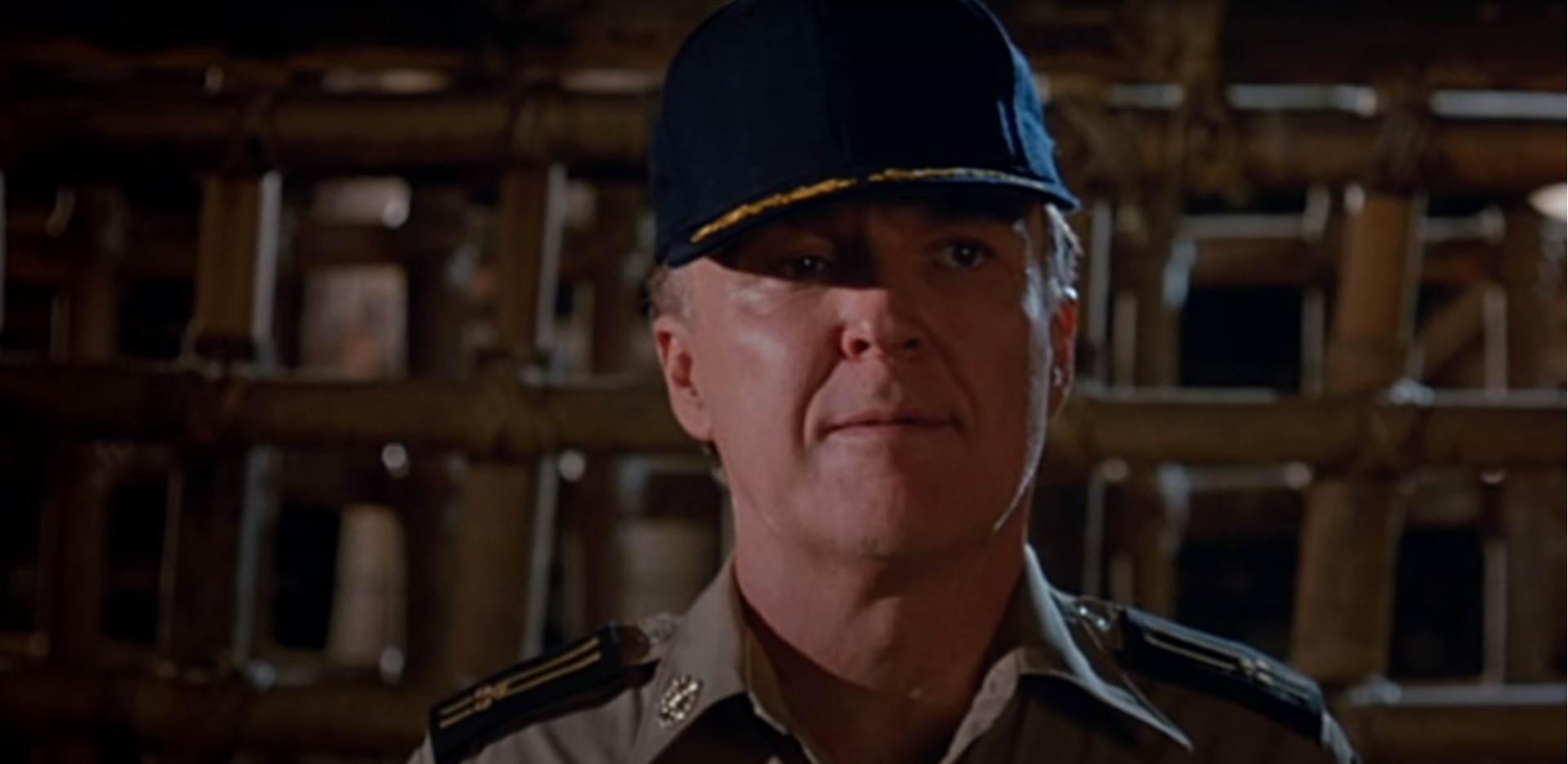
We already know Tom Skerritt’s world-renowned mustache is in the movie and is the star of the show, but Tom Skerritt is in there as well as the man behind the stache as the seasoned boot Major Logan.  The “Alien” and “Contact” actor become the patriarchal figure to a bunch of figurative sons in younger course participants and overprotective of one figurative daughter in Lt. Casey in a wildly uncharacteristic situation brazenly exploited in unconventional mainstream means in the uncomfortable skin of Lisa Eichhorn (“Deus”).  What Lt. Casey goes through is more on familiar ground with the low-budget sleaze of women-in-prison grindhouse and while it’s certainly jarring and unexpected, It’s a welcoming chance for an upper tiered independent film with big names attached.  A couple of the other big names attached are Anthony Zerbe (“The Omega Man”) and Richard Roundtree (“Shaft”) as Commander Becker and his staff sergeant Stafford.  Becker and Logan mirror each other as veterans that have graded into either being corrupted by power or to be righteous in doing what’s right.  Yet, but Zerbe and Skerritt play into what the experienced actors know best, their trademark stoicism.  Tack on Eichhorn’s equally endurable fortitude and a three way standoff erects a monumental solemn stalemate of relatively the same attitudes until the last straw breaks the proverbial camel’s back and war erupts.  Roundtree at least develops Stafford’s internal conflict when the job bites at his conscious, becoming the connection needing convincing of Becker’s crossing over to the darker side of power like a Sithlord in public face disguise.  The narrative physicality aspects piece together a grueling atmosphere that each actor undertakes appropriately by their determined military rank, but as eloquently as Lt. Casey puts it to the aging Major Logan, “You got a limp and I got tits; these aren’t great things ot have in the military,” sets up themselves as misfits-to-heroes that were being crapped on all their careers for their antithetical military image.  “Opposing Force” rounds out the cast with a bunch of moaning male air force participants in the middle of it all with performances from Paul Joynt (“Echos”), Robert Wightman (“Impulse”), George Cheung (“Rambo:  First Blood Part II”), and John Considine (“Circle of Power”).

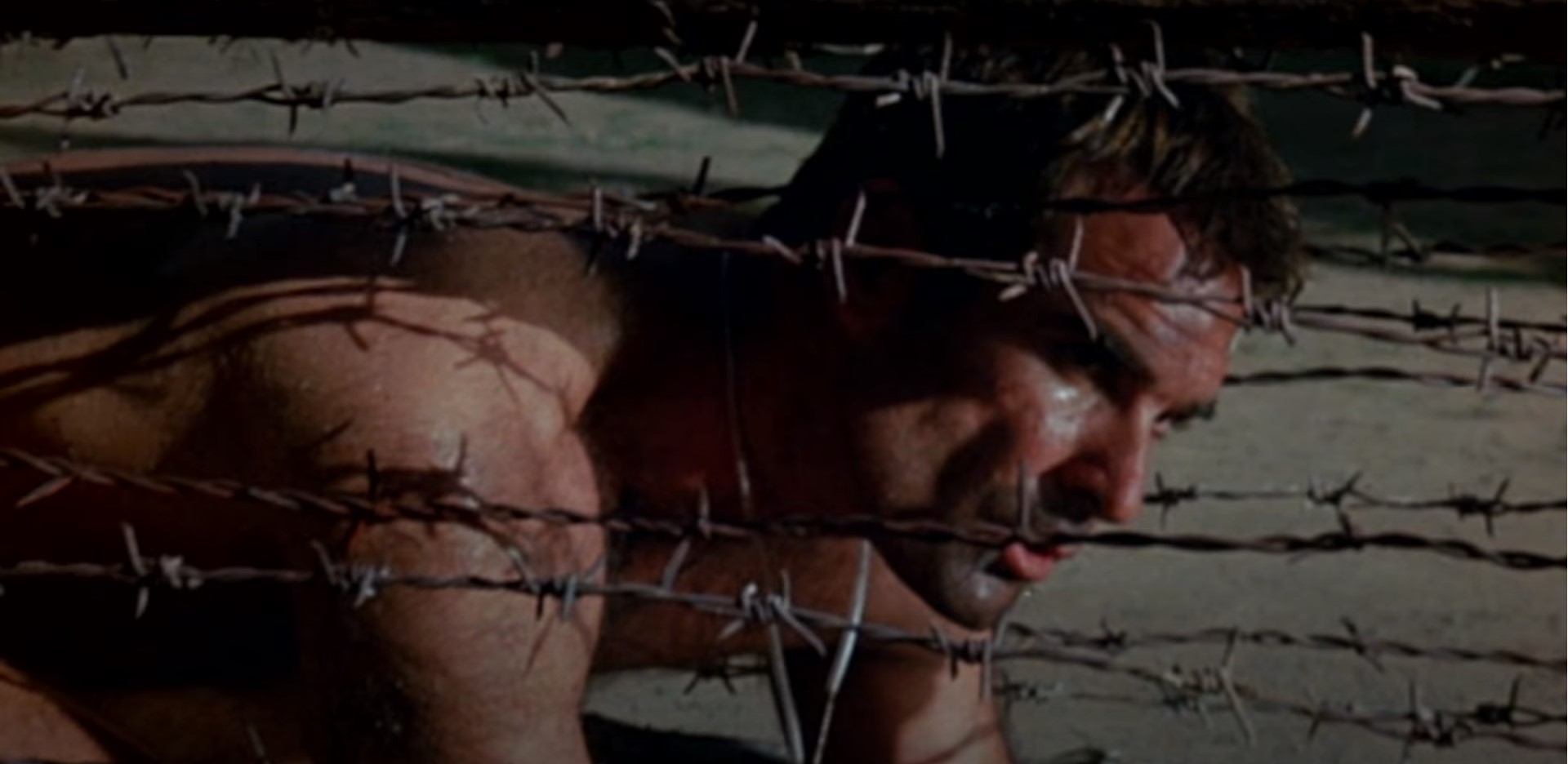
Influenced by the U.S. Military’s real life training program known as S.E.R.E. (Survival, Evasion, Resistance, and Escape.), Cowgill uses the program to formulate “Opposing Force’s” principle groundwork in setting up the jungle POW scenario on a remote island that goes through the motions of no chance of a rescue and aid of any kind.  Participants are throw into a survivalist gauntlet that turns surprisingly rough aggressive when physical and mental tortures are instilled upon those thinking the training would be a walk in the park.  This particular training simulation is unique to the OPFOR team with an aging officer looking to requalify for combat and the first woman to ever be accepted into the course due to a loophole, throwing new challenges to an embedded far too long commander who can easily break a man’s spirit but tiptoes around the possibilities of what to do with a woman until his insidious power and authority blurs right from wrong and takes the torturous tactics and enhanced interrogation techniques too far, beyond the limits of what’s necessary and beyond the limits of human decency all in the name of reinforce training.  The grueling torture and bush action is palpable enough to contrast the naked, sweaty, and battered bodies with the M1A1 bursts and munition explosions galore.  Only one aspect adds an out of place measure in the narrative and that is of the rest of the POW contingent and their seemingly wishy-washy decision on whether to escape, stay put, or join in the fight against Becker and his live-round shooting island battalion; the group disperses into the jungle only to fade from the climatic third act Major Logan, Lt. Casey, and Botts defending their lives against a treacherous throng and their wicked commanding warden.  Their disappearance doesn’t allow for closure for the acts against them during the entire ordeal and becomes a fizzling distraction.  Another distraction is the severely cut ending that freeze frames on Eichhorn’s final act with her voiceover exposition post-battle in what feels sorely rushed to complete.  The Blu-ray bonus features has an extended ending that’s more completist approach in wrapping up the story sutibly.  For a POW film, “Opposing Force” is an archetype of its originating decade that sates the subgenre’s need to pit an overreaching and ruthless camp head against the resiliency and determinate of the America fighting spirit. 

A re-release from the 2019 Scorpion Releasing Blu-ray comes “Opposing Force” reprising a presence on online retail shelves.  The AVC encoded, high-definition, BD25 is presented in 1080p resolution with a widescreen 1.78:1 aspect ratio.  Identical to the earlier Blu-ray 4 years prior, the image quality is freshened up quite a bit from the likely 35 mm print source into a detail-laden HD transfer that offers a lush jungle-scape to be in juxtaposition against the camp from within its center, a large guerilla compound bathed in browns and greens make for good POW-themed pageantry.  Skin tones and individual features flesh out nicely, adding detailed levels of salubrious status over the course of the day-to-day detainment. The English language DTS-HD master audio 2.0 leans toward a softer dialogue mix that, for the majority, is discernible despite favoring “Opposing Force’s” selling points: large explosions, pepper potshots, and militant vehicles running rampant around and above the island terrain. Dialogue’s clear enough to emerge without much hinderance with enough depth to provide a sense of position and the audio layer is remarkably clean with no hissing, popping, or static. English subtitles are an available option. Special features include an audio commentary with director Eric Karson, the trailer, and that extended ending I mentioned, and noted preferred, earlier in the review. The traditional Blu-ray snapper casing includes a rendition of the alternate titled “Hell Camp” poster with a more titillating illustrative lookalike of Lt. Casey in shredded rags and ride-up shorts with hands tied above her head and looking over her shoulder. The warm yellow with a hint of white stirs in an element of jungle heat ramped up by also providing the cage accommodations in the background to let it be known you’re about to watch an exploitation POW film. Locked on a region A playback, “Opposing Force” has a runtime of 98 minutes and is rated R. Eric Karson manages to find a place amongst a serrating subgenre that takes an ostentatious, yet not entirely fictious look, at prisoners of war with his “Opposing Force” actioner that goes to convey that not every unethical and malintent camp leader is a foreigner; evil can also be domestically grown.

“Opposing Foce” now in Control of Blu-ray Home Video!  

Southern EVIL Hospitality. “Girl on a Chain Gang” reviewed! (The Film Detective and Something Weird / Blu-ray)

Become Tethered to the “Girl on a Chain Gang” Blu-ray at Amazon.com!

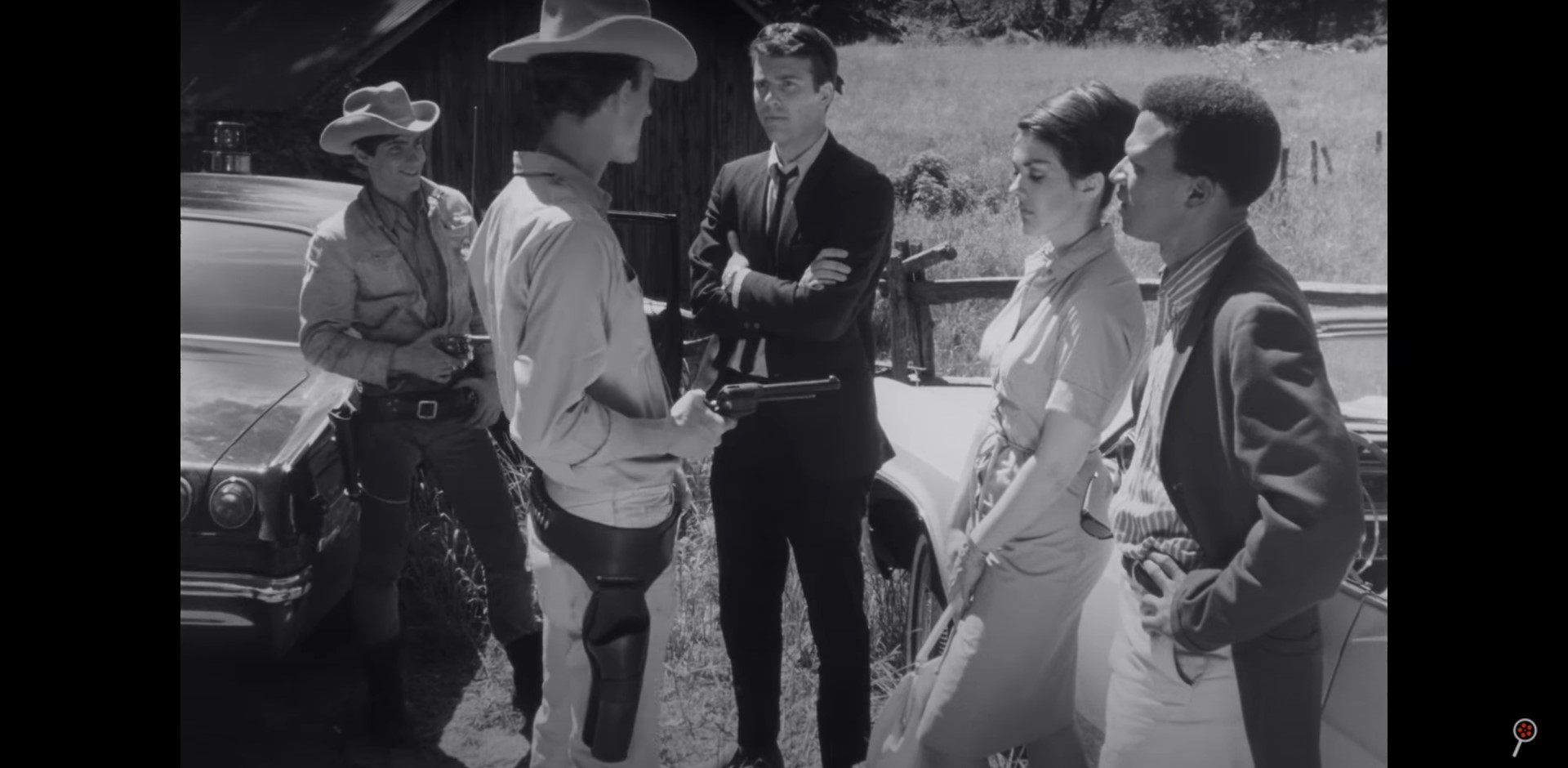
Three young Northerners travel down to the deep South city of Caron’s Landing for Civil Rights improvement on voter registration. Their convertible is pulled over by two sleazy deputies with a hankering to stick the activists with trumped-up charges and accost them with an official arrest that forces them to be before a drunk, aggressive named Sheriff Sonny Lew Wymer, Carson Landing’s very own unofficial head of the municipality between his unwavering loyal kin and those in his pocket with blackmail to gain an indefinite number of favors, for swift money-mulcting and to be the victims of Sonny Lew’s judge, jury, and execution sentencing of segregated injustice. An onslaught of abusive authority sends the lone woman of the three activists to do hard labor on a black chain gang and as she attempts to escape, she must survive Sonny Lew’s hound-led manhunt with intent to shoot-to-kill.

Hard to believe that we still live in a society where the surface level racism has improved over the centuries but systemic racism remains a vein-slithering and venomous asp prevalent still in not only public society but in education, justice system, and, well, just about everywhere you can think of and films like Jerry Gross’s “Girl on a Chain Gang,” though ostentatiously sleazy and exploitative as the title sounds, would still ring smidgens of truth profoundly, yet subtly, engrained across the nation even though the Gross’s film was released over half a century ago in 1966 when that pure hatred and ugliness was at peak efficiency, especially in the deep Southern U.S. The producer from New York City who promoted “I Drink Your Blood” and “Son of Dracula,” with Ringo Starr nonetheless, found a knack in presenting exploitation in his directorial feature debut – “Girl on a Chain Gang.” Originally called “Bayou” before a title and script rework, the Dan Olsen original story was penned by Gross and shot more locally to the auteur in Long Island, New York. Nicholas Demetroules cowrote the edgy-for-its-time script full of malversation under the Jerry Gross Productions banner with a logo that looks the hell of a lot like Warner Brothers.

Part of “Girl on a Chain Gang’s” suffocating sleaze success is due in part to William Watson’s rotten-to-the-core, corruption performance as the devilishly intelligent and despicable Sheriff, Sonny Lew.  The “It’s Alive III” actor, who made a name for himself in indie westerns as mostly playing a character on the wrong side of the law, debuted his forte into villainhood affairs with this particular Jerry Gross production by portraying an alcoholic lawman with dirt on the most townsfolk of Carson’s Landing and can persuade them like pawns or like lemmings to exact his will.  Watson’s good at what he molds for the cigar chewing Sonny Lew by never letting up  his foot off the lewdness gas pedal that drifts around internal state investigations into his distortion of the law and even around his own cronies and county bumpkins with secret banter codes that’s clear to them but ambiguous to the naked understanding.  The three young northerners are chosen to reflect the stereotypical justifications to be oppressed by racists eyes just for the way they look in skin and in dress despite their education and suitable for society behavior.  Because one man is African American and the other two whites consort with him, the activists become relentlessly targeted by the bigoted brigade led by Sonny Lew, colluded his deputies (Ron Charles and Peter Nevard), the town drunk (Matt Reynolds), the see-nothing, do nothing bar own (James Harvey), and the unlicensed town doctor (Phillip Vanyon) who is too frightened of Sonny Lew to act on his conscious.  The woman in the mix, Jean (Julie Ange, “Teenage Mother”) reduces down to being the principal object of exploitation inside the story as the titular girl in the chain gang and out being given illusionary promises of future leading lady roles by Gross yet that undertaking never fleshed out.  Between Watson and Ange, a genuine baseline of power over someone else is greatly disturbing and not terribly far from reality.  Most of the other performances are a bit ostentatiously cliched regarding small town Southerners complete with cowboy hats, being sloppy drunkards, and take with a gimmicky draw.  The cast rounds out with Arlene Farber (“Two Girls for a Madman”) as the town floozy, Sam Cutter as Sonny Lew’s public defender uncle and, also including, Ron Segal, Henry Baker, Horace Bailey, Wolf Landsman, Earl Leake, and Richard Antony.

For 1966, “Girl on a Chain Gang” is pretty dark.  Of course, some explicit and taboo subject material that were not acceptable to show on screen back then must be read between the lines, but nonetheless, there’s enough icky and sordid personalities to get your blood boiling and your palms sweaty because of how purely contentious these themes can strike at the heart of a morally conscious soul.  The hammy acting in the second half almost makes a joke out of the context and one can become caught up and lost in the blinding caricatures spouting off ridiculous renditions of the ignorant South population that isn’t supposed to have one funny bone in its body. Though the title is eye-catching and provocative, “Girl on a Chain Gang” is selling more sexism than racism. Jean is only shackled with the chain gang for the last 10-minutes or so, just enough time for a whipmaster’s disparaging remarks to be heard and for two black men to form an escape plan. The title doesn’t speak to much of the three Northerners as a whole being subjected to bigot atrocities and without reading the back cover, you’d think the 95-minute runtime would be entirely a woman in prison film of this poor and young fresh meat working the pickaxe, sweating, and chained to a row of harden convicts with both convict and guard having their way against her will. No. Jerry Gross knew how to market this film, to catch people’s attention, by selling savage social representation as dressed sexploitation.

The Film Detective and Something Weird Video unearthed the Jerry Gross debut long thought to be inspired by the murder of three civil rights activists in Mississippi in 1964 and gave it the special edition Blu-ray treatment. A well-preserved transfer is now cleaned-up eye-candy for a high-definition look this black and white feature presented in now the fairly archaic 1.37:1 aspect, aka Academy, ratio with only a few lingering thin scratch marks throughout. Trust me, we’ve seen far worse transfers and the scratches here are evident but only if you’re keeping an eye out for them. The high contrast and detail offer a good, delineated view of events on average, pulling an average of approx. 20 Mbps. Certain exterior scenes are poorer than others with a slightly more washed brightness. The English language DTS track wavers between a muted mono and a lossy 2.0 with the dialogue suffering the most and so will you know if you’re not wearing headphones as you’ll be up-and-down on the volume of your remote control. There’s a rife static hissing that does random clean up from time-to-time. The audio tracks are clearly unstable whereas the video files have fared better with Hi-Def upgrade. The not rated disc does come with bonus features including software material of a short history from genesis-to-death on Jerry Gross hosted by film historian Chris Poggiali and hardware material in the form a 14-page essay booklet by Something Weird Video’s head-honcho Lisa Petrucci and a novelty ticket of certification of jury service where you can fill in your own name to state you sat in judgement and witnessed the trail of “The People of Caron’s Landing vs. Miss Jean Rollins.” “Girl on a Chain Gang” abstracts only a fraction of deep-cutting prejudice but that makes this roughie old-timer no less important and still remains satisfyingly excessive in its violence.

Become Tethered to the “Girl on a Chain Gang” Blu-ray at Amazon.com!

A Concentration Camp of Desecrated Flesh and Pure EVIL. “The Gestapo’s Last Orgy” reviewed (Blu-ray / 88 Films)

After nearly escaping war criminal charges for his role as Commander of a bordello operated Nazi concentration camp that mistreated and murdered multiple thousands of Jewish women, former office Conrad Starker meets his lover Lise Cohen, a former Jewish prisoner of his he fell fond of during their time of occupation, at the same barbaric camp now in vacant ruin. Alone together and wandering the grounds, Lise recalls her first arrival at the camp and how the then ruthless Starker made it his mission to break Lise of her guilt-based nihilism by exacting cruel torture upon her and those close to her in camp. Commander Starker’s direct reports, a dominatrix SS officer named Alma and a sordid Lt. Weissman, serve as his deviant and sadistic right arm, assisting him in striking fear into his new pet project. While troves of Jewish women are being raped by a slew of German soldiers on leave, as well as being tortured and even tested as a source of delicacy, Lise’s alleviated guilt turns her to play Starker’s game, making her become his own mistress, but Lise will never forget the camp atrocities at the hands of the Gestapo.

Never in my life would there be the time I salivated over the thought – dang, what a poignantly awesome title. Far from a generic, uninspired appellation that has completely captured my attention, lured me in like a fish by a dangling sex and exploitation worm, is the 1977 Italian-made Naziploitation “The Gestapo’s Last Orgy.” Understanding that the Cesare Canevari written-and-directed exploitation extravaganza is fabricated fiction from the mind of the Italian filmmaker sexploitation films such as “The Nude Princess” and “A Man for Emmanuelle,” and amongst other popular genres of that particular Italian era, there still lies a contrite underlayer deep inside my bowels for knowing “The Gestapo’s Last Orgy” is inspired by a baseline of truths – aka – the rounding up of Jewish people, forcing them into work and slavery in some sort of servitude compacity, and ending their lives as many were murdered in concentration or extermination camps by incinerations while still alive; all of which are displayed in graphic detail by Canevari in his film. Also known as the “Last Orgy of the Third Reich” and co-written with fellow “The Nude Princess” collaborator, Antonio Lucarella, no words can describe the depictions of Aryan abomination better than Canevari with a display of a wide-range of depravities from the master race in this shocking Cine Lu.Ce. production that Canevari produces.

Only two main characters span the narrative’s timeline between the active war and in the post-war clampdown of former Nazi officers.  We’re first introduced to Commander Conrad Starker (Andriano Micantoni aka Marc Loud, “LSD Flesh of Devil”) in an unofficial capacity as a voice over of a heated war crime trial rages over his driving around a small village before arriving at a dilapidated camp to meet with his beautiful lover, Lise Cohen, an introductory feature film role for then model, and presently a UNICEF Goodwill Ambassador, Daniela Poggi (aka Daniela Levy, “Olga O’s Strange Story”).  From then on, the story goes back-and-forth between the camp horrors from most of Lise’s perspective and her present day melancholy strolling through the now empty camp.  Just between these two, a burdensome and destructive self-contained bubble ignites a prudent connection for a means to an end, whether be Commander Starker’s from merciless lust to love or Lise’s reversal of her exploitation to gain a survivalist’s upper hand by playing right into Micantoni’s sadistic impulses.  Micantoni and Poggi, despite their vast difference in age with Micantoni in his mid-50’s and Poggi in her early 20’s, have shuddering, knee-buckling chemistry in the more abhorrent scenes, one particular involving the fellatio act on a German Lugar.  There are other various scummy characters and if you like girls in uniform, the Doberman-loving Alma (“The Stepdaughter’s” Maristella Greco) is as beautiful as she is a gestapo femme fatale.  Greco’s domineering performance matches her male counterparts in enthusiasm but with a bonus side dish of sultry sadomasochism that can’t be forgotten as Alma whispers her viperous tongue into the camp Commander’s ear (while also sticking the blunt side of her whip into his rectum – ooph!).  “The Gestapo’s Last Orgy” is a perverse party with respectable size cast, including roles played by Fulvio Ricciardi (“Killing of the Flesh”), Vittorio Jorderi (“Gang War in Milan”), and Caterina Barbero (“Raptus”), enlarged by a grand amount of extras from German soldiers to the Jewish women creating the allusion of an inhuman love camp.

“Ilsa:  She Wolf of the SS,” “Love Camp 7,” “S.S. Experiment Camp,” “Nazi Love Camp 27,” “Achtung! The Desert Tigers,” S.S. Hell Camp.”   I’ve seen my fair share of Nazisploitation and, aside from Tinto Brass’s erotica-elegant “Salon Kitty,” Cesare Canevari’s wartime rape and ravager hails to be one of the more distressingly twisted and disturbingly beautiful entries in the exploitation subgenre.  For Canevari, every scene counts by not making every scene gratuitous.  Yes, “The Gestapo’s Last Orgy” has it’s preposterous moments where sex-crazed Nazis aggressively dominate unarmed, vulnerable women, especially when they decide to soak an unconscious naked woman in brandy and set her on fire to taste pork-like flesh; however, even in that instance of out of left field cannibalism, the atrocities are all in the name of progressing Germany in the wake of victory and to leave nothing to waste in Germany efficiency when utilizing inferior races, whether for labor or food, after Germany has conquered opposing forces.  Most of the second and third acts returns back to Earth with smaller scale plot devices surrounding Lise and Conrad locking horns in a battle of wills to extract fear from Lise’s, mostly nakeda nd suspended, fearless body.  “The Gestapo’s Last Orgy” can be said to be a film about challenging will power, enduring strength, and patience and for when the opportunity is right for the taking, strike while the iron is hot.  Or, for many, Canevari’s lopsided carnal lark can be viewed as a wicked sex fest reaped from the backs of other the people.   Canevari rides that thin line and never pushes the gratuitous full monty  down our throats.

For the first time on Blu-ray, anywhere, “The Gestapo’s Last Orgy” arrive onto a remastered in 2K transfer scan Blu-ray from UK distributor 88 Films who have crossed regions with one of their first North American releases!  Still currently banned in the UK, the stored film’s Blu-ray, remastered from the original print negatives, is region free and in full 1080 high definition, presented in a widescreen 1.85:1 aspect ratio.  The restoration is frankly flawless.  The composition of skin tones and textures and contrasting hue scheme offer a perceptible palate of every shadowy contrast and infinitesimal detail, especially in the impeccable facial diversities.  The release has offers two restored audio options:  An English dub 2.0 DTS-HD master audio and an Italian DTS-HD master audio with in-built English subtitles.  Both tracks share an ambient and soundtrack equality quality through the dual channel stereo; however the original Italian track is inherently smoother with the dialogue with accurately synched English subtitles. The Blu-ray snap case comes with reversible cover art, original poster art are in the inside along with a mini poster of the same art as one of two inserts. The other insert is a 21 page booklet brimming with stills, different country posters, and an essay from film historian Barry Foreshaw entitled Taking on the Censors: Italian Excess. All of this limited edition tangible goodness is housed under a limited edition cardboard slip cover with new art by illustrated Richard Davies. Inside the coding on the BD50 is also a work of art with audio commentaries by Italian film experts Tony Howarth and Nathaniel Thomason as well as a separate commentary with critic and author Samm Deighan. Special features also include an alternate Italian ending (rather an extension of the feature cut), an interview with Pierpaolo de Sanctis on Remembering Alberto Baldan Bembo the soundtrack composer, an interview with Luigi Cozzi in One Thing on His Mind in regards to director Cesare Canevari, and the English trailer. Movies like “The Gestapo’s Last Orgy” are completely in bad taste beyond a shadow of doubt. Luckily for me, and perhaps those reading this review, we’re a tasteless bunch of sleazy celluloid purveyors glad to see 88 Films praise Cesare Canevari’s most controversial and infamous film with a snazzy new Blu-ray treatment.

Don’t Miss Out on Owning 88 Films’ “The Gastapo’s Last Orgy” on Blu-ray!

Giving EVIL the Electric Chair Only Gives EVIL a Buzz! “Destroyer” reviewed! (Cheezy Movies/DVD)


The unspeakable 23 rape and murder crimes of psychopath Ivan Moser grant him a seat of honor at the electric chair. As soon as the switch is thrown, a massive prison riot ensues and what happens next becomes unexplainable, confusing, and indeterminable. One thing is clear, the prison’s Warden Kash loses his position as the trashed penitentiary is forced to shut down. Eighteen months later, a film crew acquire permits to shoot a women-in-prison exploitation film inside the prison with the help of it’s one time custodial employee, Russell, who is just as creepy as the abandoned maximum security penitentiary that housed the infamous Ivan Moser. As production grapples with townsfolk opposition, electrician’s timing miscues, and some seriously bad acting, there’s one unexpected obstacles not accounted for…a living, breathing Ivan Moser still living inside the iron cladded prison.

Horror fans from all walks of life to the age gaps of multiple generations can all agree on one thing, that the 1980’s is the gilded age of horror to which inspired and/or captivated us all. The decade was also an industrious change for political climates that saw the fall of the Berlin and saw musical artists like Michael Jackson break the conventional molds of how music was orchestrated, sung, and danced too. For movies, the change came with technical innovation in elaborate special effects, such as in John Carpenter’s “The Thing,” and undogmatic view of how we perceive plots which opened the flood gates to a slew of unexplored ideas no matter how far-fetched they may seems. One plot such as this would be from the 1988 prison massacre film, “Destroyer,” directed by Robert Kirk as is one and only non-fictional feature before an extreme career solidifying shift to historical movie and television documentaries. Written by Peter Garrity (“The Forgotten One”), Rex Hauck, and Mark W. Rosenbaum, “Destroyer’s” a gritty tale of endless, black obsession fueled by insanity, revved up with inexplicable half-alive malice, and juiced with strength of an indestructible force without being overtly supernatural.

With an 80’s movie comes an 80’s cast and the popular reteaming of Clayton Rohner and Deborah Foreman from 1986’s holiday themed horror, “April Fool’s Day.” “Destroyer” isn’t based on a certain holiday, but converges more toward meta approach where Clayton Rohner and Deborah Foreman play the romantic couple, grindhouse screenwriter David Harris and stuntwoman Susan Malone, on film set of their women in prison movie – Death House Dollies. A typecast switcheroo is engaged as the physicality falls upon the female role while Rohner takes a reserved backseat as a writer and that entails Foreman to face off against Lyle Alzado as the unspoken titular character Ivan “Destroyer” Moser. Alazdo’s crazy eyes and muscular football build provides the suitable basic elements of a crazed killer; probably doesn’t hurt that Alzado was also juiced up on steroids throughout his career in the NFL and beyond his exit from sports entertainment. Alzado has been quoted in Sports Illustrated having uncontrollable anger from roid-rage and that pressurized anger seethed, one could assumed, in the eyes of Ivan Moser, forging a superhuman monster under the parental guardianship of Richard Brake lookalike, Tobias Anderson (“Harvest of Fear”). “Psycho’s” late Anthony Perkins co-stars a the director of the WIP film as an unusual placemat only to serve as a hot moniker in horror to be contextual candy for one big scene and not providing much else. Lannie Garrett, Jim Turner (“Pogrammed to Kill”), Pat Mahoney (“Strangeland”), and four Death House Dollies in a gratuitous shower fight scene co-star!

A purebred American slasher of eccentric electrifying devices, “Destroyer” chooses punitive measures against the concept of capital punishment, sending the cryptic message that the dead will haunt you and those that you touch forever in some warped guilt trip nexus. The message is only further hammered in by the embossed haunting atmosphere of Robert Kirk’s opening sequence of a priest walking down the hazy cellblocks toward Moser’s cell, sitting with twitchy Moser while he madly raves and rambles about the game show that plays on a television set in front of his cell, and going through the steps of a chaired electrocution echoes a utilitarian dystopia that fathers in the cold, ungenial tone of the prison and Moser’s psychotically feral thirst to kill. Ivan Moser’s vitality is infectious, a hail-mary shot you’ll be rooting toward the finale, as the serial killer undertakes undertaker duties with extreme perversity while chocking up his body count with unsystematic eliminations, such as with a conveniently placed jackhammer in the prison basement. The jackhammer’s scene is “Destroyer’s” bread and butter, the showpiece of the whole film, but Moser only snag a couple of some real good on screen kills. All the rest are off screen or channeled through another device, such as an electric chair, and that softens and stiffens Moser’s, if not also Alzado’s, ultimate larger-than-life presence. Still, “Destroyer” rocks Lyle Alzado’s short-lived indelible monster making movie talent and confines the space to a breathless solitary confinement death house ready to devour more victims.

“Destroyer” shocks onto DVD home video release distributed from Cheezy Movies, MVDVisual, and Trionic Entertainment, LLC. If you’re not willing to shell out big bucks for “Destroyer” on Blu-ray from Scream Factory, check out Cheezy Movies’ economy region free DVD presented in an academy ratio, full frame 4:3. A beginning title card mentions that Cheezy Movies attempts to find the best transfer available when searching out titles and I believe that was done here with this release, but unlike Scream Factory, funds were not poured into an expensive upscale as moments of banding start right at the title credits. The transfer instances of dirt and cigarette burns are immaterial enough to not falter viewing, but there’s a bit of hefty color posterization in the basement scene that nearly blends the entire white scheme together and causing difficulties defining individual objects. The English language single channel mono mix maintains a lossy connatural sell topping out at the it’s as good as it gets ceiling with an economy release, but the dialogue is surprising clear, soundtrack sounds good, and the ambience, though needing a fine tuning, shapes out depth and range nice enough. With this release, no special features are available. Much like “Destroyer’s” tagline, Robert Kirk’s feature won’t shock you, but will give a great buzz with a nightmare coiling around your brain performance from Lyle Alzado and a super 80’s execution-from-the-grave slasher that’s just a guilty pleasure to behold.

Buy “Destroyer” on DVD! Or Watch on PRIME VIDEO!