Maisy and her socially reclusive brother, Bo, venture on a mountain getaway trip with Maisy’s former college friends. With Bo documenting with a handheld video camera as part of his way in comforting his anxiety, he captures the dynamic of how each of Maisy’s friends have changed over years, especially with Asher and his recently High School graduated girlfriend, Pam. After breaking down on the side of the road, falling behind the rest of the caravan, they encounter a strange man with an axe, harshly warning them to not continue up the mountain pass. Shrugging of the warning and returning to their now working vehicle, the group resumes their drive, but makes a wrong turn and becomes lost in the mountains’ thicket of the Sierra Nevada. They decide to setup camp for the night and continue their way back the next morning, but the discovery an ominous, skull-riddled altar in the woods unleashes a frightening presence that won’t allow them to leave. As tensions rise and night falls, Bo keeps his camera running as a soul inhabiting evil has fallen upon them that seeks to destroy them one-by-one.

“Altar” is the 2016 found footage horror from writer-director Matthew Sconce. Sconce is actually able to harness a fraction of the mysticism and presence that made the found footage genre a thing back in 1999 with the ground breaking flick “The Blair Witch Project” and does a well enough job implementing it into his very own version of an allusive satanic cult ghoul, but with more specials effects and screen time. Despite being titled “Altar,” the story barely wraps itself around the titular object with only a handful of brief scenes, one of the scenes being the thinly-connected introduction that intensely catches the attention, while mostly focusing on the friends’ road trip chatter, breathtaking scenic gasps, and becoming lost on the mountain without much peril in-between. Even the creature, whom makes the scene approximately the last 10 minutes, has more of a presence than the altar itself.

The plot follows around Maisy Marks and her Aspergers labeled brother, Bo Marks, played by Stefanie Estes and Jesse Parr who pull off the socially awkward brother and the cutesy overprotective sister well enough to pass muster. Maisy’s other “beau” is Ravi, played by Deep Rai, and along for the ride as well is muscle head Asher, Tim Parrish, and his ditzy, teenage girlfriend, Pam, played by Jessica Strand. Rounding off the group is Chelsea, a communications graduate who could only find work as a bartender who seems to be stuck in life, and she’s catered to by Brittany Falardeau. Michael Wainwright, Tina Johnson, Master Dave Johnson, and Catherine Wilcox make up the rest of the cast. As a whole, the acting wasn’t terrible even if the script was conventionally kitschy and with a group of young actors, I’m fairly encouraged to see more of their work.

However, acting is only a third of the battle when critiquing a film and “Altar” has falters more in it’s own story and script that’s peppered with cliche after cliche. The scenes leading up to the mayhem constantly hyped that something bad is going to happen; Bo finds an online article of two newlyweds missing for six months (part of the introduction), characters kept comparing their scenarios like horror films, or a daunting man, named Ripper, sternly warns them with a very large axe in his hand. Moments like these try to build tension, but when overtly and grossly laid out for views, sustaining the substance behind them is lost and waters down the effect toward campy foreshadowing. Special effects weren’t overly cinematic nor where they similar to video nasties and kept simple, much like “The Blair Witch Project, with a little more padding to them. The Evil Spirit, as it’s credited in the film and portrayed by Nicole Osborne, is a black and white nightmare that’s effective on camera; slightly cheesy with a hint of gooeyness, but edited in nice and sporadically for those eye-clenching jump scares.

Production company Movie Hero Studios partners with Distribber for a VOD nationwide release of Matthew Sconce’s “Altar,” including platforms such as iTunes, Amazon, Google Play, Xbox, PlayStation Network, and on Hulu. A DVD-R screener was provided and so commenting on video and audio quality will not be critiqued and there were no extras on the reviewed disc. “Altar” is, disappointingly, just another found footage casualty with hasty slivers of hope of not falling into the muck that has become an over-tapped genre. What Sconce has done with “Altar” makes the film enjoyable enough for a single viewing with little-to-no repeat value as everything lays out in the open and the only subtly in the entire film is the altar itself.
For All The Evil in the World, There is One Pint-Sized Hero! “The Search for Weng Weng” review!

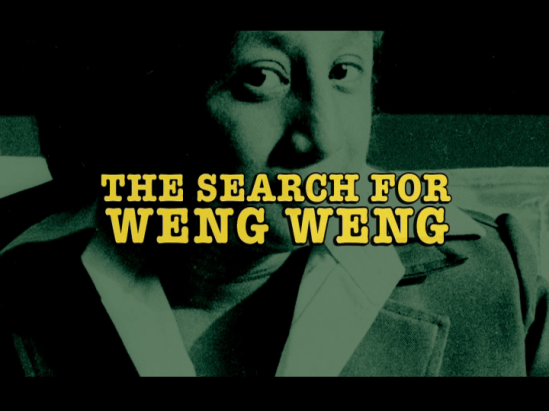
Australian filmmaker Andrew Leavold set forth on an adventure of answers to discover the legendary, the one-and-only, pint-sized actor known internationally as Weng Weng. In the early 1980’s, Weng Weng became the Guinness World Record’s smallest lead actor in a slew of rare, some never-before-seen, Filipino spy films and took the world by storm, creating a bizarre cult following on social media, and for Andrew Leavold, the only way to learn more about the Weng Weng, who could actually act and do his own stunts despite his small stature, was to create a documentary film that would take years in the making, but would hopefully answer three very simple, yet extremely difficult, questions: Who really was Weng Weng? How did he become Weng Weng? And where was Weng Weng now?

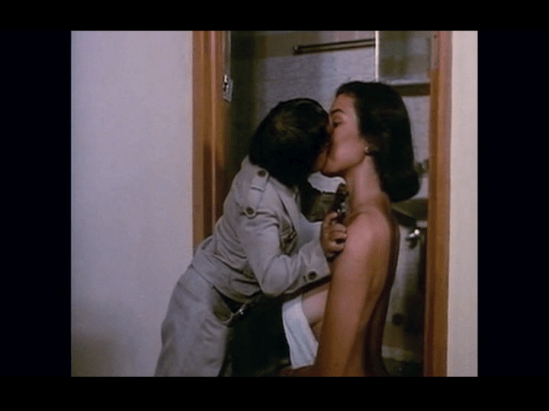
Weng Weng might be a humorous name for some, odd in fact, and his James Bond spinoffs as Agent 00 (double zero) flourished with zany stunts, practical special effects, and a tremendous amount of improbability – just like the Bond films themselves – but the Weng Weng films, even his Westerns, had an attractive aurora about them and not only because of the 2’9” sized actor. “The Search for Weng Weng’s” main focus was its titular star, but the film also displayed how the Pinoy films had engrained much of the Filipino culture and embraced their own charismatic star actors while, at the same time, being a byproduct of America’s Hollywood and other nation’s cinematic scenes. The Pinoy films were much akin to India’s Bollywood, replacing the musical and dancing segments with more action and comedy. Though Weng Weng’s films, including “For Y’ur Height Only” and “The Impossible Kid,” were whimsical and charming, Leavold’s documentary points out the darker side of the actor’s fame by comparing and explaining how Weng Weng’s “handicap” could be examined as a freak show gimmick that exploited Weng Weng out of cinematic earnings from his so-called adopted producers. The film also noted his lack of relationships with women and his health issues later on in life. Yet, “The Search for Weng Weng” highlighted much that was unknown about the actor, such as his real name, and that he was impressive and skillful at Karate; though small, Weng Weng wasn’t a traditional short person. He was fit and muscular and this helped him accomplish much of his own stunt work, which the Filipino stunt people have been claimed to be some of the best in the world.

Leavold doesn’t leave a stone unturned as he tracks down the persons involved in Weng Weng’s life. From the film crew who worked on the Agent 00 flms to his neighbors who grew up alongside him and from one of the five siblings, a brother whose the only surviving member of his impoverished family, to, perhaps, the wealthiest former first lady adored by all, Leavold checks every nook and cranny, every minute cubby hole to obtain that much more information about how Weng Weng lived and influenced their lives. In all, not a single person disliked the tiny personality as they appreciated much about him from his squeaking voice – that was always dubbed more masculine in the films – to his overall childlike serious, but calm nature. Weng Weng, in essence, was born a star guided by unscrupulous caregivers that was ultimately bittersweet for the childlike build and mentality.

“The Search for Weng Weng” hits the nail square on the head with the exactness of the title. Leavold’s impartialness leaves the wrongdoings against Weng Weng properly in the past as a good documentarian should impress. The editing is well done, taking a non-linear journey through Weng Weng’s short lived life and movie career and Leavold’s research and dedication to the project really amplifies through the film, giving Weng Weng the appreciation he rightfully deserves despite his height limitations.

Wild Eye Releasing in association with Monster Pictures presents “The Search for Weng Weng” on home video DVD. The region free, unrated DVD is shot in various formats from standard definition full screen to 16:9 widescreen with archival footage of the best of the best from the B-Asia film stock. Bonus features are plentiful with audio commentary from the director, Andrew Leavold, extended sequences of certain interviews, deleted scenes, the official “I Love Weng Weng” music video, and trailers. Who knew that there would be 92 minutes plus of content about a man not even three feet tall? Weng Weng was a mystery to us all and now, thanks to director Andre Leavold, everyone in the world can revel in that that is the amazing Weng Weng!
Visions of Evil From a Disturbed Mind. “Lung” review!

An unidentified man, wearing medical scrubs and gloves, wanders through town, encountering hellishly gruesome scenes of death. He wanders barefoot through a ghastly journey that might figuratively expresses his back story of how he came to witness such visions and be relatively undisturbed by the horror they represent. The filthy, gory, and ill-fated moments might also be hallucinations brought upon by a traumatic occurrence that wrenches him out of reality and into grisly purgatory. Either way, the nameless man is a lost soul with no ambition, no emotion, and no direction to guide him through an inner conflict of blood-soaked entombment.

Unearthed Films’ 2-disc collector’s edition of “Lung I” and “Lung II” continues with the distribution company’s legacy of delivering the best underground cinema to the forefront of home entertainment. Phil Stevens, director of positive-reviewed “Flowers,” writes, stars, and directs both feature films about the wandering man in a foggy, distorted haze, but “Lung II” is not a sequel to “Lung I.” Instead, “Lung I” is the softcore version of events whereas “Lung II” is a hardcore redux – think along the lines of “The Evil Dead” and “Evil Dead II” – that’s much more detached from rationality and by collaborating with “American Guinea Pig: Bloodshock’s” Marcus Koch seizing upon the special effects, you can damn well count on “Lung II,” and certainly “Lung I” as well, being bare-faced dark, violent, and twisted. In more a sequential reality, “Lung” is part of the Phil Stevens’ proposed trilogy entitled the Violence of Dawn with “Flowers” leading the horrific charge. This review will focus more on “Lung II.”

Stevens stars as the unnamed lead, waking up lost under a creek bridge, dressed in medical scrubs, and haunted by unspeakable, bloody post-violence mayhem while continuously battling his evil doppelgänger self. Is this just a strange nightmare or a telltale sign of this man’s troubled past? Then, again, Stevens’ impassive take feels more like wandering through one hell of a dream, an endless journey into one’s post-traumatic warped mind rather than spelunking into one of a murderous soul’s, even if one of the moments of trauma could be his wife – or girlfriend – cheating on him and he catches her in the act with ill-fated consequences. Characters also related to the medical profession, such as a psychologist (David Copping) and quick flashes of a nurse (Angela Jane), are a part of this visceral vision quest. Finally, we come to The Exile character. The Exile might sound familiar if you’ve read my review on “Flowers” as he’s the only character, portrayed once again by Bryan W. Lohr Sr., that connects the two films. The Exile continues to mystify us about his presence, an extremely large and intimating brute with a deathly blank stare and a “don’t fuck with me” attitude.

Unlike “Flowers,” Stevens went the devoid of color route, constructing a black and white feature that, like “Flowers, goes without as much as a sentence of dialogue. Actions, expressions, and every sense of the word “art” tell the story. Non-linear editing and brutally realistic scenes of savagery in the confines of special effects exercise and sparks your brain’s neurons to try spitfire pieces together to cement a coherent narrative. Stevens is almost able to re-tap into and revitalize the silent film genre with “Flowers” and “Lung”, and with the help of a vehement brooding score by Mark Kueffner, I believe this type of experimental horror story telling can fascinate just about anyone without a weak stomach.

Unearthed Films and MVDVisual’s 2-disc DVD collector’s set a beautifully monochrome piece of art with roached infested severed heads, a halfway decomposed homeless man, and a pile of refrigerated sexual organs meshed together like something out of Brian Yuzna’s “Society,” but more gnarly. Im interested to see how Paradis, aka Paradis III, comes to conclude the trilogy and see how Unearthed FIlms releases Phil Stevens’ visionary tales. The Borderline Cinema and Extreme Horror Cinema “Lung” is comprised of two discs that entail “Lung I” Feature Film, “Lung II” Feature Film, Directors Commentary, Editors Commentary, Isolated Sound FX Track, Making of Lung 2 (which is very informative and fun to watch underground cinema come to the fold), Mark Kueffner: Lung Composer Featurette, Martin Trafford: Artwork Featurette, “Cats” Short Film, “Descent” Short Film, and Unearthed Trailers. “Lung” will not tickle everybody’s taste; surely sick and part of a niche network of darkly persuaded and humored people will most likely get it, but there’s still very much to appreciate here from director Phil Stevens and his eye for detail and disturbia. This gore and shock is worth a look and worth a chance.
Evil Tempts With the Body and the Heart! “Inquisition” review!

In 17th Century France, the torturous and deadly persecutions of innocent lives at the merciless hands of the almighty Church coinciding with the vast number of ill-fated deaths from bubonic plague made the medieval era a ghastly and forsaken time. Religious pursuers, known as judges, sought to unearth those who hold contract with Satan, who lustfully weaponized their bodies, and faithfully serve the dark prince and burn them at the stake after vigorous torture to obtain a must-have confession. One particular and notable judge, Bernard de Fossey, travels to a small providence to serve similar inquisition standards, but falls in love for Catherine, the mayor’s eldest daughter who holds a secret affair with a passionate lover named Jean. When Catherine’s lover is suddenly murdered, Catherine’s uncontrollable melancholy thrusts her to shift loyalties toward the alluring power of Satan in order to reveal the person behind Jean’s murder. Bernard’s trapped between his brutal crusade and the love he has for Catherine and tries to protect her from persecution by his fellow judges and from the execution stake. While many innocent claimed women and the few who confess to witchery burn alive, the judge teeters carelessly through the conclave of trials as Catherine has her blazing eyes set to destroy the person responsible for her overwhelming grief.

The one and only Paul Naschy stars and directs, in his directorial debut under the moniker Jacinto Molina, the remarkable underrated “Inquisition,” an time-piece tale accompanied with Spain’s 1970’s macabre ornamenting from the beginning credits to the aflame tragic ending. Spanish horror generally has an unusual gothic knack that can’t be emulated. With the blunt visual cues and the in your face gratuitous sleaze that manages to be naturally appropriate in the same spatial existence, Spain’s horror scene was put on the worldwide map that cordially sat itself right next to Italian’s giallo and UK’s Hammer Horror. Putting aside the budget, Spain’s underground cinematic gems flourished in a time of governmental conservatism and, to the likes of “Inquisition,” were, If I may be so bold, well equipped with scenic locations and props, scored charismatically, shot beautifully, and even maintained some provocative acting from actors and actresses all over Europe and even the world who were willing to bare it all for the project.

A buff, and rather brutishly handsome, Paul Naschy stars as the ruthless witch hunter Bernard de Fossey, but that’s not all. Naschy dons another role as the formidable and all powerful Satan in a dual-role performance of good and evil, of sorts. As de Fossey, Naschy’s chiseled, if not slightly stoic, portrayal of a pious huntsman locks in that medieval aroma while as Satan, similarly stoic but often with a devilish charm that Naschy often pulls off well under the latex and makeup. “Your Vice is a Locked Room and Only I Have the Key’s” Daniela Giordano marvelously shapes her character. The leading actress’s Italiano dark features, piercingly cold eyes, and shameless willingness to bare it all, topped with an on-off switch of ferocity, makes Giordano a powerhouse antagonist against Naschy’s de Fossey. Mónica Randall, Ricardo Merino, Tota Alba in one of her last roles, Antonio Iranzo, Julia Saly (“Panic Beats”), Tony Isbert (“Tragic Ceremony”), and Loreta Tovar (“The Sinister Eyes of Dr. Orloff”) co-star.

Supporting the remarkable cast is the incredible work of special artists Francisco Garcia San José and Pablo Pérez. These two aren’t widely known for their talent, but their grit behind “Inquisition” shouldn’t go unspoken. Naschy’s Satan wouldn’t be a glowing-eyed, skull-staff carrying Baphomet without them nor would there be that pec-tensing nipple severing during a great torture scene. There’s something very simple about San José and Pérez’s work that speaks volumes that virtually delivers in the heinous acts of the inquisition to life and that give Satan an embodiment that has inspired many films even to today. For 1976, I’m in awe of the caliber of the effects, especially being a Spanish horror film that’s notoriously inherited being low-budget.

Mondo Macabro’s widescreen Blu-ray release of “Inquisition” deserves to be one of the best home entertainment releases of the year as it’s spectacularly gorgeous with an upgrade to a 1080p transfer from the original source material. Vibrant, natural coloring charms the pants of the depth and range in the image quality from various obstacles including such as night and day scenes. For a first time director, Naschy had the eye for cinematography and capturing the moment; Mondo Macabro takes his vision a step further by reducing the grain to a minuscule amount and without completely enhancing “Inquisition” with zooming and cropping to offset source material garbage. The Spanish dialogue and English dubbed 1.0 mono track score a high bitrate with flawless integrity from the source. Extras include a audio commentary with Rod Barnett and Troy Guinn, an interview with Paul Naschy and Daniela Giordano, a retrospect on Spanish horror from the 1970’s entitled “Blood and Sand,” and a lengthy Mondo Macabro marketing trailer.

In my opinion, Paul Naschy is the greatest Spanish horror film icon ever and “Inquisition” is some of his primo work. Mondo Macabro works miracles with original source materials, one of the best video distributors of cult cinema in the business, and continues to be a leader in releasing hidden and well-known gems of the genre. Together, “Inquisition” is powerful, is scary, is gritty, is detailed, and is sexy without being campy and schlocky. The mammoth amount of production value is well worth the price of admission alone. One of my personal favorite witch hunting films from the same decade is Vincent Price’s “Witchfinder General” as it has that same barbarity in the air, those merciless persecutions that led to the anti-Church movements, and that undeniable lead actor providing a strong performance. Nothing is scarier than fact and the “Inquisition,” though just a story on paper and reel, was based off real facts and that’s the kind of horror that sears into souls.
”The only way out is in.” The Evil Within 2 announced.

Well E3 has definitely started off great. I was already excited after watching the awesome Xbox conference, that I thought to myself how can this get any better? Well Bethesda came out and made my night even better with the announcement to ”The Evil Within 2.”
”The Evil Within 2” takes place 3 years after the first game. Players reprise the role of Detective Sebastian Castellanos as he must go back into STEM to rescue his daughter, who he thought had died years ago.
”The Evil Within 2” will be released on Octobar 13th, 2017 for Xbox One, Playstation 4, and PC.