EVIL Needs a Living, Breathing Vessel to be Destroyed! “The Mortuary Assistant” reviewed! (Acorn Media International / Blu-ray)

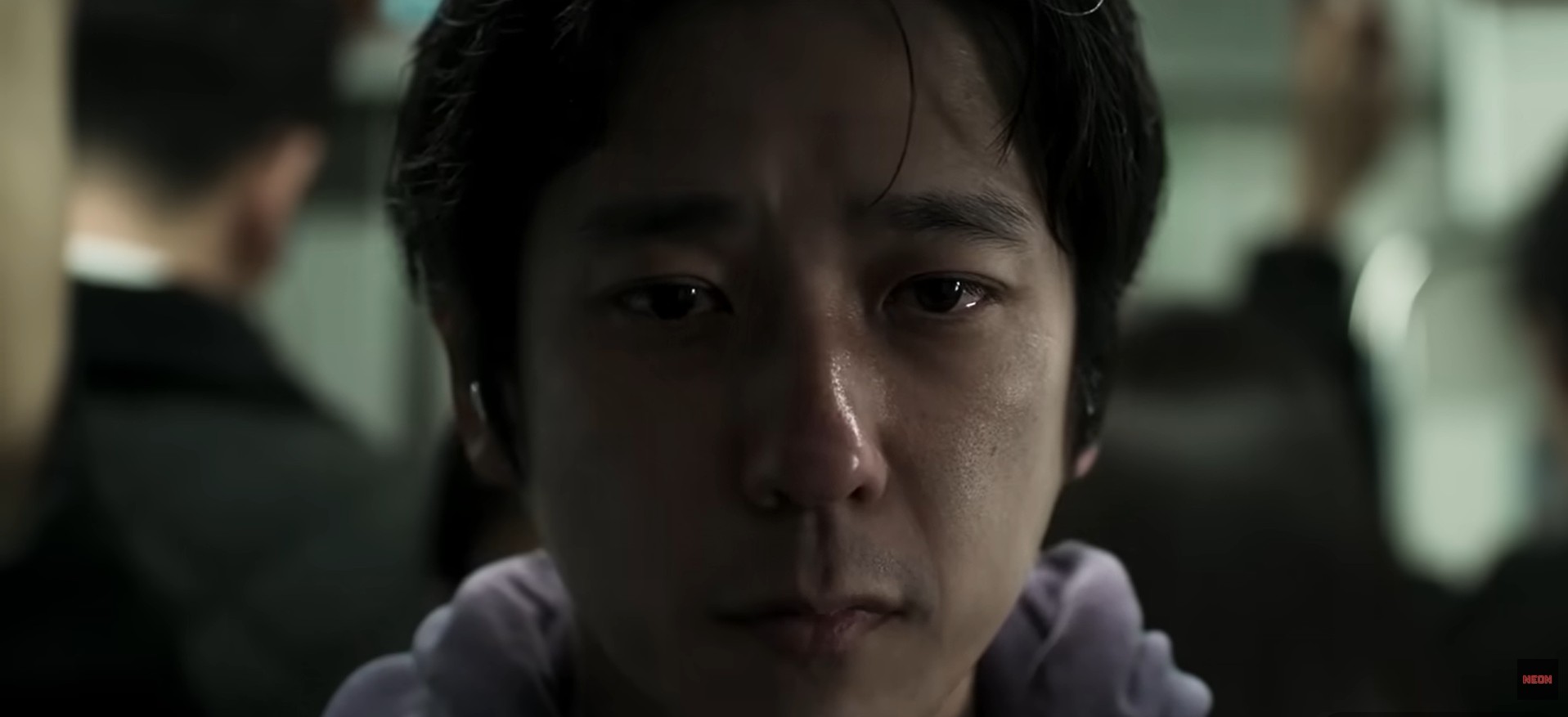
Recovering drug addict Rebecca Owens finishes her training as a mortuary assistant with praise from her tutor, the owner of the River Fields Mortuary.  On her first solo assignment, a late-night double embalming, Rebecca finds it unusual she must embalm as well as incinerate the corpses.  The bizarre aspects of the night don’t stop there as the corpses seemingly move in what seems to be very real and frightening hallucinations after she wakes up in her apartment bed.  Her employer, Raymond, owner of the River Fields Mortuary, ensures her what she’s experienced and the visions are very real as a demon possesses the mortuary, easily inhabiting the lifeless bodies but trying to permanently attach itself to one of the livings.  Having been targeted himself, Raymond’s been able to avoid possession by way of ritual but can’t fully banish the demon without Rebecca’s assistant with a reagent formula he must obtain from living people caught in the middle.  As Rebecca returns to the mortuary to try to unlatch herself from the demon’s grasp, she must attempt to capture the demon in a corpse by using her own ritualized-infused blood and then incinerate the corpse to ashes, but the demon won’t go down without a fight. 

Based on the 2022 popular horror role-playing game of the same title that was developed by Brian Clarke of DarkStone Digital and published by DreadXP, the video game department of the horror network and news outlet Dread Central, “The Mortuary Assistant” 2026 film adaptation brings virtual mortician madness to the big screen with all its demonic appurtenances with Clark penning the script alongside co-writer Tracee Beeb and “Slapface” director, Jeremiah Kipp, calling the shots.  The Dread presented movie is released under Dread’s parent company, Epic Pictures Group, since they already own the rights to the video game and attempt to bring the creepy mortuary atmospherics and terrifying twitching corpses from the first-person perspective game to a third person perspective film narrative.  Creative Capital and regular Dread co-production collaborator, Traverse Media, serve as production studios with Patrick Ewald, Jake Heineke, and Cole Payne in the producer role.
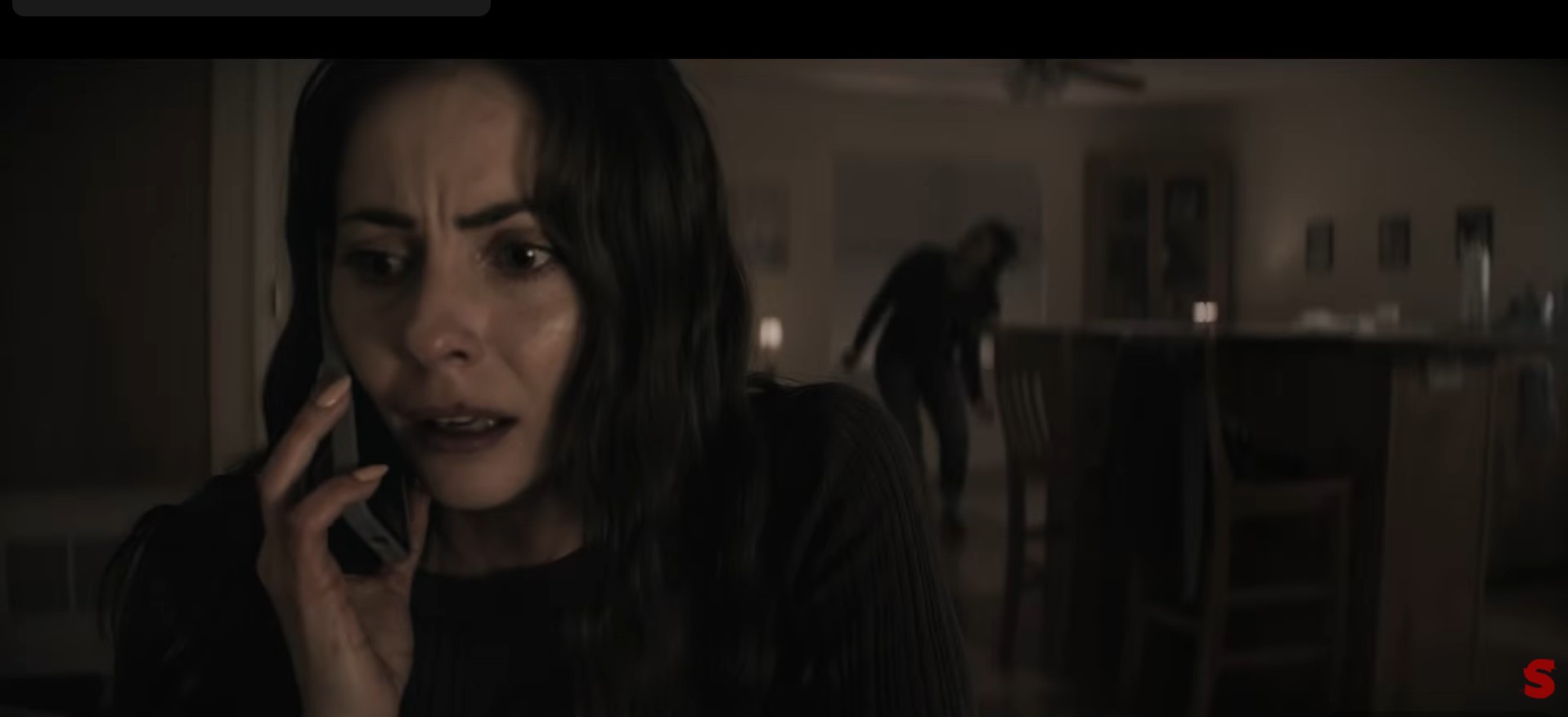
The video game characters, Rebecca and Raymond, and you can also through in the demon too, transition to the film with Willa Holland (“Straw Dogs,” “Legion”) as the green Rebecca Owens alone on her first shift, getting her hands dirty with the insides of corpses and dodging demonic aggressions with half-baked rituals and spells by her mortician employer/demon fighter Raymond, played by Paul Sparks (“Headspace”).  Sparks carries himself plainly through what should be a more interesting, puzzling peculiar as a deadpan mortician business owner with a rich background in demonology and a two-bit exorcist.  Instead, rooting for spark in Sparks’ performance can extinguishable hope for Willa Holland who has to carry much of the fanaticism and strength, as well as fear, as a woman battling demons metaphorically and literally, or perhaps literally battling her demons in an off-the-wagon experience that it becomes metaphorical in her own warped mind.  Either way, the game and it’s characters translate to screen one way or another, supported by pawn characters the demon exploits to gain advantage over Rebecca, such as her grandmother (Shelly Gibson) and her drug addict anonymous sponsor (Keena Ferguson Fraiser), to take powerful, matriarchal and influential people in her life, ones who guide a vulnerable woman, and distort them into traps and hellish visions to break down the young mortician’s self-assurance and ability to tell what’s real or not.   “The Mortuary Assistant” rounds out the cast with John Adams, Emily Bennett, Elisa Marti, Mark Steger, Sydney Haner, Brian Clarke, Gabrielle Mathews, Adam Woolley, and Michael W. Crowley.
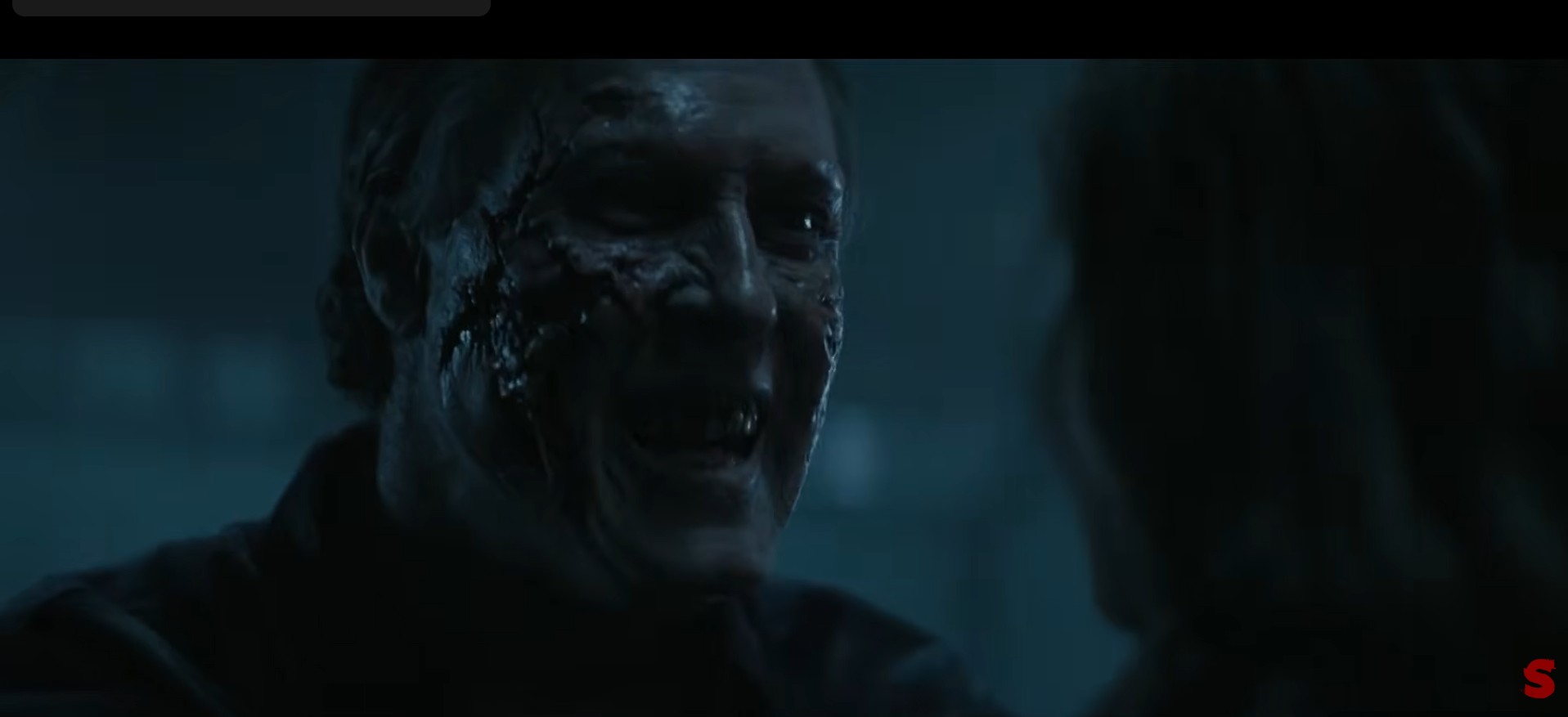
Having never played the video game, which is widely available on multiple consoles and platforms, such as PlayStation 4 and 5, XBOX One and Series X/S, Windows PC, and Nintendo Switch, the movie has all the hallmarks of what makes people’s fears tick: that innate fear of mortality of your corpse lying motionless on a cold, sterile table, environmental atmospherics of a stormy, dark night, demonic mischief that puppeteers and malevolently toys, paganistic folklore and ritual, the lack of hope, religion, and God, dark shadows and slithers of steely lighting, and an overall sense of cynical dread.  Yet, somehow, “The Mortuary Assistant,” the movie, feels terribly clunky after a satisfying disturbing creepy setup that includes the ghastliness of mortician embalming process.  The story’s second half, and more definitively in its third act, loses traction and falls to pieces in it’s trying to explain too much with too little information of the game’s evolving plotline.  The game works well because of it’s lingering through the narrative, letting fear settle in before unleashing bit-by-bit it’s unearthing of secrets.  The film adaptation rushes through climatic guts to make possible the many several hours’ worth of game endings to be comprehendible in under an hour and half.   Aside from the cliff fall finale, the atmospherics are palpable and the blood and gore, mostly perforating of corpses with a cannula and some of their exposed viscera, has sticky-icky and fleshy texture. 
The Shudder Original presentation comes to UK Blu-ray from Acorn Media International.  The AVC encoded, 1080p hi-def resolution, BD25 is on the smaller side of disc capacity for decoding and with an array of textures – from clammy skin of a corpse to the burnt amber of blood – “The Mortuary Assistant” Blu-ray teeters the meticulous detai line as if it wants to show you all the glossy and gooey innards but can’t quite flesh them out.  No issues with decoding albeit some negative spaces do seem lightly washed and not fully inky to create the possibility of the unknown within the blackness.  The Blu-ray has a 2.35:1 aspect ratio presentation to take the smaller confines of a quaint mortuary and have them seem more imposing and closeups a made to be like the surface of alien planets when covering cold corpses, really blowing up the image in greater, better detail.  The English DTS-HD 5.1 Master Audio provides crystal clear composition of layers with unobstructed and robust dialogue that can reproduce the resonating monotone of Paul Sparks, an eclectic layering of sounds between the storming elements of non-diegetic weather to the transfixing squishiness and cannula friction of the embalming process that can get under your skin, pun intended.  The soundtrack by Jeffrey Alan Jones, who did ADR mixing on “Obsession” as well as compose scores for many indie horrors over the last two decades, is a bit lackluster and doesn’t become its own distinctive character within its pedestrian horror tones.  English SDH and French subtitles are available for selection.  Special features only include a behind-the-scenes featurette on the static menu that goes briefly into the game and the making of the film.  The physical Blu-ray Amaray comes standard with monochrome sleeve art that’s blue and black and barely definable.  There are no other tangible elements in the exterior and interior of the release.  The UK certified 18 release has strong injury detail and has a runtime of 91 minutes in its region B playback only.

Last Rites: “The Mortuary Assistant” is one of those videogame adaptations that probably should have stayed as a videogame. Plenty of atmospheric tropes to make it haunting and spooky, but too many core story elements and not enough cohesive tape to make “The Mortuary Assistant” work.


As Videogame Adaptations Go, This Ones the EVILEST! “Exit 8” reviewed! (Blu-ray / Visions Home Video)

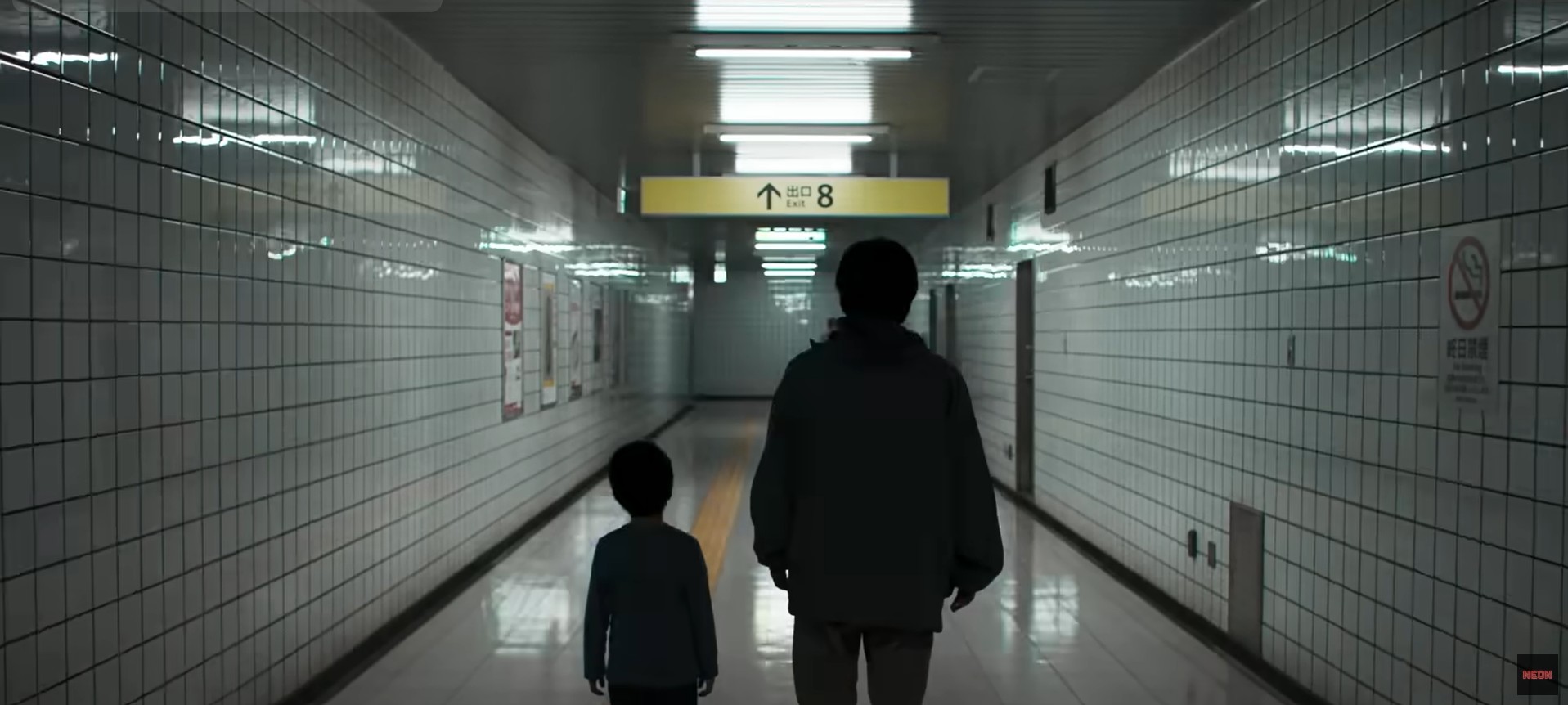
Keeping to himself and listening to music on a subway car, just like everyone else, a man exits the train car at his stop and learns his ex-girlfriend is pregnant with their child when she unexpectedly calls him.  Undecided how to feel about the news of being a father, he walks up a flight of stairs to exit the subway station only to find himself trapped in a zigzag hallway that loops the same series of advertisement images, directional signs, and a businessman walking intently down the seemingly sterile and ordinary, tiled corridor.  After reading the hallway’s information sign, noting specifically to not ignore any anomalies and providing the direction to take when an anomaly is discovered, the lost man realizes he’s trapped inside some sort of twisted game and must determine if 8 hallways are either anomalous or not to be free and exit.  If he misses an irregularity, he must start from zero again and not every anomaly is as harmless as a sign out of place.  The anomalies can psychological, monstrous, terrifying, and deadly.

Based off the Japanese horror and psychological video game of the same title, “Exit 8,” the film, also originates out of Japan.  Kotake Create is the indie video game developer behind the “Exit 8” concept and its sequel “The Platform” from 2023 and 2024.  The 2026 film is the sophomore directed film by Genki Kawamura who co-wrote the filmic adaptation “Sai:  Juchang ban” co-writer and director Kentaro Hirase.  Both the video game and movie indulge into the theme of the Noble Eightfold Path, a teaching core of Buddhism that serves a guide from suffering to enlightenment through eight corrected attitudes, such as mindfulness, intention, and effort.  A conglomeration of producers, including Yoshihiro Furusawa, Minami Ichikawa, Taichi Itō, Yuto Sakata, Taichi Ueda, Kenji Yamada, Akito Yamaoto, and director Kawarmura, bring the film to fruition under the Toho Film Corporation and AOI Pro. Inc. and in association with Story Inc. 

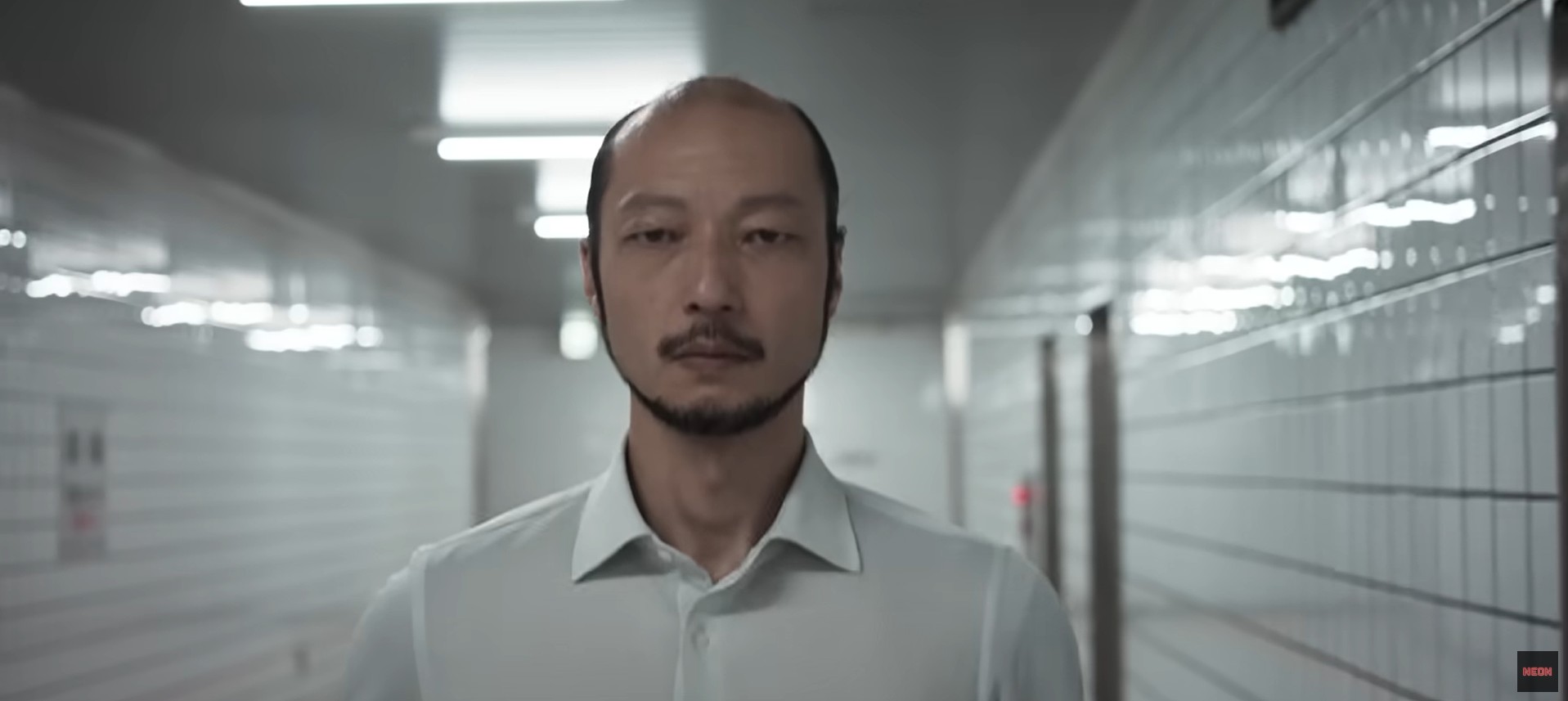
“Exit 8” has a limited cast of key characters, mostly trapped inside the sterile, tiled subway walls, playing real and unreal characters depending on the perspective in turn.  Mostly, the center focus is around a male character only known as The Lost Man, a young man who shrugs off responsibility to his fellow man as well as being undecisive when it comes down to important decisions; we see examples of this on the subway train of a businessman yellow at a mother who’s infant is crying and when his girlfriend phones him to inform him of her pregnancy in which she poises a pivotal question he can’t either fathom, process, or ultimate just decide upon.  “Letters from Iwo Jima” actor Kazunari Ninomiya plays the nameless Lost Man to character arc his way from skirting responsibility to fill him with purpose and round the character out as a person of great attention, detail, and decision.  The only downside to the Lost Man is with how he’s written on the initial experiences of the hallway loop in what’s an obvious disturbance in reality he quietly absorbs without freaking out, even to the point he’s able to quickly red and process the rules of the scenario and understand their purpose.  This, in itself, is an anomaly of human processing and rationality as the average person would be overwhelmed by surreal receptiveness and break down before they could build themselves up.  Ninomiya performance lifts the Lost Man with a more positive performance that sets the emotional rollercoaster back on track and when the audiences to get that break of the character’s mental state, its crippling effect translates and is greatly empathetic.  In the loop, the Lost Man meets the Walking Man (Yamato Kochi) who cycles passes through the anomalous-or-not corridor at an expressionless pace, but we also get his backstory too as he was once real and trapped just like our protagonist.  Another character the Lost Man meets is The Boy (Naru Asanuma), another victim playing the game, and has an eye for detail despite his quiet demeanor.  The Boy also represents the Lost Man’s future being the protector and parent to the boy as they try to escape together through the harsher anomalies.  “Exit 8” rounds out the cast with more minor parts from Kotone Hanase, Hirota Ôtsuka, Tara Nakashima, and Nana Komatsu. 

An uncanny and ambiguous horror, providing no explanation for why the man is trapped inside a loop, “Exit 8” serves to be a metaphor for life’s hard decisions, ones that affect fate in the futre.  Paying attention to the small things have the same direct result as paying attention to the much larger, obvious ones despite the being blatant and the threatening anomalies, no matter big or small, can have disastrous consequences.   Kentaro Hirase is an obvious fan of the game by rendering a faithful adaptation of Kotake Create’s creation that walks, talks, and acts just like the mystery horror and existential crises symbolizer.  There’s even a first-person perspective at the beginning of the film that provides more homage to Create’s first-person game.  After that, the switch to omnipresent third person has its own distinct brand of tension and it also achieves grabbing the fearfully fret expressions on the actors faces, that’s if they’re human or otherwise it’s creepier and menacing in the surround sterile environment that can be subtle or flooded with odd occurrences only to go back to normal in a matter of a few steps and one left turn away  Aside from vague purpose of the 8 level loop, there are more creepypasta anomalies that don’t make a lot of sense on its face but share an underlying connection to those cut off from the rest of normalcy in what’s can be considered a subconscious ensnarement of personal strife that has put them in a precarious position with unexplainable and terrifying results.  The acting carries with a repetitiveness about that that is not tired or mundane as the Walking Man walks the same corridor, at the same time, and in the same manner at least ten times in the duration, an exemplary one-note performance by Yamato Kochi to never break the automaton gait and persona no matter how involved the Lost Man gestures or speaks to him.

Visions Home Video’s “Exit 8” Blu-ray is a great addition to anyone’s collection of Japanese modern cinema or overall film library.  With a 1080p high-definition resolution, the AVC encoded BD50, presented in a widescreen 1.85:1 aspect ratio, has natural, run through digital brilliance meaning the walls are sterile white, the color saturation has an innate organic measure through primary grading, and skin tones render like they would off camera but all with the clean look of digital.  There is some noticeable aliasing on the tile that lose some of the definition and blurs as objects move through the scene, effecting in at least a couple of scenes the texturing.  The Japanese DTS-HD 5.1 Master Audio has a kick with a sound design that plays with the perspective of the Lost Man’s environment, providing excellent directional and immersive audio space from the diegetic and non-diegetic muffled and non-muffled sounds from first person perspective with earbuds in to the intensity depth of walking from background to foreground.  Dialogue has strong presence and is clear.  Subtitles are well paced and contain no noticeable grammatical mistakes in the UK English translation.  There may be some key vocabulary differences as anomalies is perhaps more British than the word used in Japan. The English subs come in two options:  SDH and audio descriptive.  The special features include a behind-the-scenes of “Exit 8,” an On the Carpet at Cannes Film Festival featurette, an On the Carpet Busan Film Festival featurette, the UK trailer and the Japanese trailer..  The stark physical presence of “Exit 8” is eye-catching with a mostly golden O-ring, cardboard slipcover with an illustrated figure eight, tiled like the subway corridor with illustrated story characters standing on it.  Sheathed is the clear Scanova case with the same primary image from the slipcover on the sleeve but drops the sheeny gold coloring for more canary yellow.  The reverse side of the sleeve has a creepy image of the Walking Man.    A double-sided, folded mini-poster and art cards of the corridor wall signs are inside the clear case with more yellow themed display pressed on the disc.  The UK 15 certified film lists two different explanations between the slipcover and the clear snaplock case.  The slipcover has strong horror while the clear case has infrequent strong language.  The region B locked region has a runtime of 95 minutes. 

Last Rites: Personal growth is hard. It’s even more difficult when a subway tunnel becomes the ultimate mind-messing and deadly trap to steer you in the right direction. “Exit 8” is a guileful guide of molding moral behavior done with a twisted circumference. This video game adaptation is one of the better ones in a long time!

Put a Quarter in the Slot to Play EVIL’s Game! “Arcade” reviewed! (Full Moon / Blu-ray)

Insert Coin for “Arcade” on Blu-ray!

Arcade, the future of advanced, virtual reality-based video games, piques the interest of a group of teenagers eager to beta test the system in an underground arcade.  Vertigo, who engineered and programmed the game, sends the project manager to also hand out at-home editions of the game for continued testing.  When Arcade sucks in Alex’s boyfriend, Greg, into the game, she pleads to video game aficionado and good friend Nick about the game’s sentient dangers.  Nick experiences firsthand the horrors as their friend Laurie becomes entranced by its manipulative power and disappears during Arcade’s reach into reality.  Alex and Nick must venture into Arcade’s world to save Greg and their friends from a malicious machine seeking to invade and takeover the world, but they must find the hidden keys in all seven stages to reach Arcade’s soul and that’s no easy task when the game becomes very real when dying in the game will not grant respawn in the game or reality.

A movie ahead of its time but not ahead of the game, the Full Moon production “Arcade” is a live-action in a CGI-world thriller that’s one part “Tron” and one part “Virtuosity” for independent cinema, directed by the cybernetic and dystopian familiar filmmaker Albert Pyun (“Nemesis,” “Cyborg”).  Charles Band, founder of Full Moon and of a number of low-budget hit franchises, such as “Puppet Master” and “Demonic Toys,” light bulbs “Arcade’s” concept while David S. Goyer, the same David S. Goyer behind “Dark City,” “The Dark Knight,” and the 2022 “Hellraiser,” penned the script, marking the second collaborative production between Pyun and Goyer (“Kickboxer II”) as well as between Band and Goyer (“Demonic Toys”).  Band serves as executive producer alongside Michael Catalano and is show running produced by Cathy Gesualdo, all of whom were involved in the back-to-back productions with Albert Pyun with “Arcade” and “Dollman.”

Early Full Moon films always had an interest cast mix of known and unknown actors and “Arcade” is no exception with the tragically inclined Alex, a teen with nightmares about her mother’s year ago gruesome suicide and her father’s inability to cope since, played by an early 90’s recognizable beauty and then Full Moon regular Megan Ward (“Crash and Burn,” “Trancers II,”), coming off her success costarring alongside Brendan Fraser, Polly Shore, and Sean Astin as the love interest in “Encino Man.”  Ward role isn’t a damsel in distress one as Alex isn’t afraid to take and dive into a game of certain death to be the lone riser up against all odds.  An interesting piece of casting is Peter Billingsley, a name and face that might be familiar as Ralphie from Bob Clark’s “The Christmas Story.”  Instead of pining over a Red Ryder BB Gun that will undoubtedly shoot his eye out, Billingsley embodies the serious gamer amongst his group of friends who pines for the next level of gaming but also pines secretly for Alex, a subplot that’s not explored as well as it was technically setup.  The lone survivors of Arcade’s acute takeover embark into virtual reality to save the rest of their friends, under the cast of Bryan Dattilo as boyfriend Greg, Brandon Rane, A.J. Langer (“The People Under the Stairs”), and Seth Green (“Idle Hands”) in his early years, all of whom either disappear at moment’s notice of the game’s turn to complete evil or have a moment to stand out with dialogue or a pyshical scene.  John de Lancie’s role is small in comparison to his costars but the Q actor for “Star Trek:  The Next Generation” and “Picard” has the gift to protrude positively amongst the cast with Lancie’s quick-wit and timed deliveries as the Vertigo gaming production representative Difford unaware of the game’s conscious, dark design.   Norbert Weisser (“The Thing”), Don Stark (“Evilspeak”), Sharon Farrell (“Night of the Comet), and the voice of Jonathan Fuller (“The Pit and the Pendulum”) as Arcade’s voice round out the film’s amazingly cult chic cast.

In terms of computer-generated graphics of the early 1990s just eking out of the last decade, “Arcade’s” virtual world is of a clunky, chunky enterprise that epitomizes the era’s current technology.  One could argue “Tron” had that same boxiness only forgiven by its award-winning cast.  “Arcade” may not have an accolade-laden cast but the Band and Pyun production does, too, receive a pass for its eclectic and curious cast of well-rounded and peculiar-implanted actors and actresses, and also crew, that gives “Arcade” not only a reason to subdue the heavily-contrasted and bulky CGI but also rises it up to be larger than life, more than perhaps it deserved to be in regard to the story’s influences.  However, this poor man’s version still has a gimmick coating and the third act editing is atrociously choppy to a point where nowhere could possibly know what’s going on as Alex flies through the seven-level pyramid, easily unearthing the hidden keys, and ending in the summit of Arcade’s human brain wave laced soul.  Pieces of the reel were left on the cutting room floor, pieces that would have depicted more rigorous opposition to thwart Alex’s climb in the levels and would explains a whole lot more why she appears bangs up by the end.  Albert Pyun resurfaces some of his best directional work to create unsettling moments of possession or of being unhinged as well as using smoke to diffuse the primary hue vibrance starkly contrasted against the computerized gaming world.

Newly remastered in high-definition with touched up color and detail refinement, “Arcade” now has a new Blu-ray release from the Full Moon Feature catalogue.  Compounding and restoring various elements, the Full Moon team pulls together the best pieces for the best, up-to-date version available encoded on a MPEG-2 AVC, 1080p, BD25 disc.  Honestly, a BD50 would have been better suited for the compression as “Arcade” runs the gamut of effects, coloring, and dark scenes in which, those scenes outside of virtual reality, aka green screen, Albert Pyun’s infuses smoke for the underground arcade to diffuse the colors, spreading them amongst the crowd and the room to create that dive bar atmosphere.  However, there’s a bit of artificial banding surrounding the natural banding that delineates the colors within the darkness.  Details are also impossible to gauge with the choice styles of hazy and CGI but there are moments of clarity that gives “Arcade” a clean bill of image health around the skin textures. “Arcade” must have been made from televisions as the label remasters the ’93 feature inside it’s full screen 4:3 aspect ratio. Full Moon offers two audio formats: an English PCM 5.1 surround sound and a Stereo 2.0. Dialogue has clear projection without any damage or interference for an independent, 30+ year old film from the early 90’s, but the track isn’t as hardy as desired, especially in the multi-channel that doesn’t diffuse anemically through the side and back channels. Separation also can’t decipher between reality and virtual reality with the layers melding together on a level playing field. Range decently plays a wide berth of tonal shades in computerized, “Tron”-like synth-cycling and in-game explosions and distortions. There are no English subtitles available. Special features include an audio commentary with Full Moon found and producer Charles Band and Alex star Megan Ward in a good one-on-one conversational piece about the past production and a little insight rom Ward’s thoughts and Band’s history as a child to a movie mogul but there’s also a lot of Band flirting with Megan Ward. There’s an archival interview with John De Lancie, a rare VFX reel that extends a few scenes plus displays the scrapped original CGI, the typical accompanying Videozone marketing of Full Moon’s streaming catalogue, other Full Moon trailers, and the original film trailer. Inside the blue Amaray case, the cover art features the original VHS composition artwork and a disc concentratedly pressed with one version of “Arcade’s” virtual villains. The region free release is rated R and has a runtime of 101 minutes.

Last Rites: “Arcade” respawns in a newly remastered high-definition transfer that’s greatly cleaned up the flecked rough patches in front of the computer-generated engine but doesn’t smooth out the rocky terrain of the last act that suffers erratic editing for quick pinch pacing instead of really fleshing out the story flow.

Insert Coin for “Arcade” on Blu-ray!

Press Start to Play EVIL. “First Person Shooter” reviewed!


A nasty viral plague eats and decays victims from the inside out, blood oozes from every poor in the skin and boils fester, and can be transmitted through the saliva and blood. The hot zone spreads fast among the nation’s crumbling society, but one isolated clinic, the also epicenter of the disease, experiments with a cure, testing the trials on the infected. Young, wife Linda, a nurse at the clinic, goes suddenly missing and her husband gears up to search for her at the clinic to only find out that his wife has fell into the grasps of a maniacal scientist exploiting the cure as a baleful booster to create the already plagued-ridden with another side effect – extreme violence. The playing level turns increasingly difficult with maximum carnage when finding himself trapped deep inside the callous clinic straight from hell and must use any melee weapon to his advantage in each ghastly stage if he wants to save his wife from the deranged creatures and the complete governmental noxious gas eradication of the disease in the next 24 hours.

For those of us who’ve fired up a DELL computer with Radeon gaming hardware installed, sat large noise-reduction earphones over our ears, and ran a CD-ROM through the disc drive to start up a MS-DOS video game, a bit of nostalgia will revert the senses back to a more primordial time of a young gaming culture and evoke the obsessive behaviors of our adolescent selves. A game that will inherently put you into the player’s shoes with a weapon at hand and many antagonists to cut down at the whim of a mouse click as the priding first person shooter. That’s what one German filmmaker, Andreas Luetzelschwab, who goes by the credit Andreas Tom, titled his script now film project, “FPS: First Person Shooter,” that harks back to the good, yet not so old days of 8-bit blood, command cheat codes, and with a hero bestowing a snarky, snide tongue. The 2014 action-horror recalls the disk operating system gaming graphics of the early 1990s that’s been long lost and seemingly forever forgotten for nearly 20 years.

Now, since Andreas Tom’s “First Person Shooter” puts the viewer in place as the player, a BDSM gimp dressed hero ready to face the mutated virus head on. No real character takes the stage with only the voice of the iconic voice actor, Stephan Weyte, resurrecting his distinctive and black vocal quips for the player hammering away at the ghoulish zombies. Weyte’s a famous name in the world of first person shooter games being the voice of the antihero Caleb in the excessively violent and demonic “Blood” and “Blood II: The Chosen” horror inspired FPS PC games from the late 90s. Weyte’s deep, sometimes raspy, tone suits the film’s temperament much the same of those gloriously carnage cult classic PC games and he’s essentially doing all the dialogue for the film, with the exception of some in and out characters. The genetic makeup of the remaining cast are relatives of Andreas Tom, including co-producer Atlanta Lützelschwab as the attic’s nurse zombie complete with barbed wire around the eyes, Hans Lützelschwab as a boss-level surgeon zombie, and assistant director Achim Lützelschwab as the cook who whips vats of stew made of human chunks. Obviously, these are German actors being voiced with an overlay language from English speaking actors, such as Stephen Weyte, and so other vocal and action performances come from Tobias Winkler as a tall clown zombie, Sebastian Kettner, Ines Klein, Rick Whelan, Rob Banks, Jürgen Sütterlin, and Sascha Strack.

This past August, another first person shooter was reviewed, Giulio De Santi’s “Hotel Inferno,” which delivered an energetic and chaotic run amuck bloodbath that really sold the experience of playing a FPS and though “First Person Shooter” was released after, the film still provides the same kind of gun-toting, ass-kicking euphoria while on a smaller scale and focusing more on making that connection to the audience that you’re the gamer playing the game. For example, the movie begins with the DOS game’s screen of a static menu and once all your difficult settings are set and in place and the press start button is pressed, a virtual newscaster delivers the backstory of the viral outbreak and dons a principal figure, in the form of a 8-bit man, going to the clinic to search for his missing wife. The, the video game seamlessly transitions into live action, but the attributes of the game are still abound with a life bar, the gaining of objects, autosave, and disappearing bodies (that are a symptom of the virus). At the surface level comparison of “First Person Shooter” and “Hotel Inferno,” both films are akin to characterization, but differ in executions with “Hotel Inferno” just outright more violent without referring to itself outside the context of just another movie whereas the focus here is centered on video game idiosyncrasies inside that very context. The patients in developing scenes out of the virtual combat simulation ethos exhibits remarkable talent to fathom-to-fruition all the nuances like weapon caching, ominous camera angles and interpersonal communications to push the story along menacingly, and splicing the recording of level playing video with the composition of a pair of gesturing and weaponized hands to simulate that type of game play. For a loyal gamer, “First Person Shooter” bares the berserk survival horror instincts while for the loyal cinema goer, the ostentatious design is unique and graphic, even for the casual horror fan.

For the first time on US DVD home video, “First Person Shooter” is distributed by Wild Eye under the Raw & Extreme banner, the same as “Hotel Inferno,” with a widescreen, 16:9 aspect ratio, presentation that’s clean and composed of a double recording, along with an 8-bit Wolfenstein or Doom gameplay edited in for some extracurricular slaughter activity. The colors reduced some, I’d say by 20-30%, to exact a bit of bleakness atmospherics and some details are smoothed over due exact a true video game effect, like in muzzle flashes. The English language stereo dialogue track is an obvious dub on the German made film and another good dead giveaway is that all actors have their mouths covered by surgical masks, gas masks, hockey masks, etc., but Stephen Weyte’s crystal clear derogatory comments show no sign of being muddled. The ambient track’s a little soft at times, especially with the gatling gun, that should be ripping bullets and fling casings with puncturing hundreds of holes into zombie girth. Bonus features include behind-the-scenes outtakes, a walkthrough examination of the set, composing the looming score, and trailers. Wild Eye’s illustrated DVD front cover also pays homage to Duke Nukem with a tall standing and beefy dark hero blasting holes through zombies at his feet. “First Person Shooter” markets goods sold as advertised of intense game play without the need for a single controller and without omitting one single ounce of blood to shed in this mercurial fascination of when gory cinema magic meets gory computer gaming.

Come Get Some!!! Available on DVD today!

”The only way out is in.” The Evil Within 2 announced.

2017-06-12_1450

Well E3 has definitely started off great. I was already excited after watching the awesome Xbox conference, that I thought to myself how can this get any better? Well Bethesda came out and made my night even better with the announcement to ”The Evil Within 2.”

”The Evil Within 2” takes place 3 years after the first game. Players reprise the role of Detective Sebastian Castellanos as he must go back into STEM to rescue his daughter, who he thought had died years ago.

”The Evil Within 2” will be released on Octobar 13th, 2017 for Xbox One, Playstation 4, and PC.