EVIL Trolls the Waters, Angling for a Kill. “Bood Hook” reviewed! (Troma Films / Blu-ray)

Troma’s 2-disc “Blood Hook” Available on Amazon!

Muskie Madness.  That’s the moniker for the locals’ fishing contest set as the background for a group of city slicker friends looking to unwind and do a little fishing themselves.  17 years earlier, Peter van Clease witnesses his grandfather suddenly fall into the lake and disappears without a trace.  Present day, Peter returns to his grandfather’s cabin with his friends but is still haunted by the memory from his childhood.  When locals and tourists engage in the contest for who can catch the biggest Muskie, a maniacal fisher casts his giant fishhook lure into the flesh of unexpected contestants on the lake and on the shore, dragging them violently into water and never to be heard from again.  The disappearances send Peter into not only an investigation of those currently missing but also into the cold case of grandfather’s demise whose fate was eerily similar. 

On the calm, glossy surface, “Blood Hook” resembles the quintessential severed tongue-and-cheek comedy and horror of Troma’s outrageously independent repertoire.  Tossed around as a crude idea about opulent society diluting the quality and the quietness of quaint lake resorts during their extravagant vacations outside city life, “Blood Hook,” once under the working title of “Muskie Madness,” is the first, if not the only that I can recall, American fisher-slasher from the unique imagination and vision stemmed from director Jim Mallon (producer, writer, and director of the “Mystery Science Theater 3000” series and movie) and producer David Herbert’s childhoods growing up in the summers of small town Wayward, Wisconsin.  Larry Edgerton and John Galligan were brought in to spruce up the script as the official screenwriters, adding bits of dry humor to an already unorthodox slasher in this catch-and-released in 1986 B-movie produced by Golden Charges and Spider Lake Films Ltd.

Like a Kleenex, the young cast falls into the fresh for one-use category of being mainly known for their role in “Blood Hook” and I hate to use that analogy because there are some really campy, genre-perfection talented acts here for a relatively large cast of a small, independent production about a killer fisherman.    Granted, a handful of the talent were able to snag up minor roles in bigger films, such as with Mark Jacobs (“Goodfellas) in the principal lead of Peter van Clease.  Jacobs, who is a dead ringer for David Schwimmer appearances and mannerisms, castrates van Clease’s manhood with extreme meekness more so than the character’s wishy-washy stance on his university music studies, romantic connections, and confronting homicidal maniacs when his abducted woman is in danger of becoming grinded up minnow chow.  What is more vexing about van Clease is the fact he essentially woes 2/3 of the principal ladies without even casting a line.  Beyond the frustrating namby-pamby, all other characters are depicted, in every sense of the term, more in accordance with those who portray them.    There is a side relationship building between van Clease’s friend Finner (Christopher Whiting), an enthusiastic fisherman who is new to the group of city friends, and Bev D. (Sandy Meuwissen), a single local with a toddler, that the audience can get invested in and takes an interesting turn when Bev D. plays the fishing rod at both ends, dipping her toes in another man’s lake with fellow local, and crazed military nut, Evelyn Duerst (Bill Lowrie).  Evelyn’s father, and yes Evelyn is a grown man with a beard, is played by Paul as the van Clease estate caretaker and a real stern pit for local purity.  A fan favorite will be the salty-looking bait shack owner Leroy Leudke complimenting his lovable persona, thick Minnesotan accent, and overall mysterious allure (with a lure) from Don Winters.  The cast rounds out with Lisa Jane Todd (“Playback”), Sara Hauser, Patrick Danz, Dale Dunham, Paul Heckman, Bonnie Lee, Don Cosgrove, Dana Remker, and Donald Franke.

Blood Hook” trawls through the familiarity of the 80’s slasher genre with an obscured hunter, a high body count, and a copiously campy campsite of carnage, but this peculiar fillet is sliced from a different kind of fish. While casted under darkness, the killer flings a cast of nylon fishing line with a large, sharp-hooked Suick lure distinguish itself as a unique weapon of choice that fills the icy blood cooler. There’s comedy in that diabolical device, largely so when making too much noise on the water that can scare fish away from patient fishers as Mallon hyperbolizes the idea of outsiders raising a ruckus amongst the sanctity of the local waters while paralleling a message about the aftereffect horrors of war; however, where we should be laughing at the idea of a fisher hooking a 150lb prize human, we’re only barely smirking at the irony as much of the dark comedy doesn’t precisely translate well from paper to screen. “Blood Hook” is about as big as the hook going into the gut as it’s no ordinary jonboat film as Mallon’s film looks serious, feels serious, and acts like a contender up against the iconic slasher-mega yachts of the time with a disconcerting sound design by Thomas Naunas of deafening cicada tymbal clicks all too familiar during summer days coupled with an eerie gelled and moody cinematography from Marsha Kahn that sets the slasher narrative as such. Both Naunas and Kahn exhibit perfect harmony in a disharmonious narrative context as a pair of feature film greenhorns looking for a launching point in their careers.

Muskie Madness turns into a Muskie Massacre. “Blood Hook” is the cinematic catch that almost got away, but Troma reels this trophy cult film back aboard onto a new 2-disc Blu-ray release distributed by MVD Visual. Presented in 16:9, “Blood Hook” holds up even to today’s standards against scrappy independent productions with a slight soft, yet noticeably clean presentation from the Super 16mm stock blown up to 35mm.  Some frames appear cropped and stretched on faces in extreme closeups, losing a bit of textural definition that leans more into a softer picture, but the contrasting is balanced which is unusual for a Troma film, the coloring is richer around the lush outdoor vistas without breaking stride of other color appropriate opportunities, like the vibrant red blood, and no evidence of any damage transferred over from the negative.  No formal mention of audio specifics on the back cover, but I suspect the track to be DTS-HD Master Audio Mono that’s clear but has issues with projecting low-talk dialogue.  Thomas Naunas’s soundtrack introduces a repetitive looming synth score kept well in check around more less-than-major problematic dialogue scenes.  Naunas’s sound design as a whole is paramount to “Blook Hook’s” envisioned success with an incessant cicada clicking combined, on the regular, with discord tones to jar the audio senses in relationship to an imminent threat.  First disc contains the feature plus scene selection menu.  The second disc is all special features clunkily arranged around the rehashing of Vinegar Syndrome produced interviews from their 2018 Blu-ray release with director Jim Mallon, actress Lisa Jane Todd, special effect artist Jim Suthers, and an audio interview with cinematographer/editor Marsha Kahm.  Along with the theatrical trailer, there’s also the usual Troma promos that accompany their re-release such as for Troma Now, Radiation March against pollution, and the Return of Gizzard Face 2 to promote Troma NOW’s streaming service.  The 2020 Metal + Hitchcock “Blood Stab” short, starring Lloyd Kaufman, finds its way onto the release too. “Blood Hook” is a tackle box of slasher tropes and anti-war and PTSD undertones though slightly dragged down by its weighted comedy; however, a killer sound design and a topnotch killer makes “Blood Hook” a perfect poster film for Troma heads.

Troma’s 2-disc “Blood Hook” Available on Amazon!

Is Deceptional Fraud More EVIL Than Psychopathy? “Paranoiac” reviewed! (Scream Factory / Blu-ray)

Get “Paranoiac” on the Collector’s Edition Scream Factory Blu-ray!

The parents of siblings Tony, Simon, and Eleanor Ashby die in a tragic plane crash. Two years later, Tony commits suicide by plunging himself off a cliff into a watery grave with his body never having been recovered from the ebb and flow of crashing waves upon the oceanic rocks. Eleven years later, the long thought dead Tony suddenly and unexpectedly returns to what’s left of his family: an overprotectively cold and matriarchal substitute in Aunt Harriet, a narcissistic and alcoholic brother Simon, and a sister, Eleanor, on the precipice of losing her mind from grief over Tony’s death. Shocked by this return, the surviving Ashby siblings split their concerns regarding Tony’s authenticity. Eleanor believes her brother is alive and has come back to rebuild the happy relationship between them whereas Simon denounces Tony’s validity and works underhandedly to either expose Tony as a fraud or to get rid of the imposter by any means necessary, especially when the conditions of receiving the Ashby family fortune have nearly come to an end and a hefty inheritance awaits his opulent tastes. Tony’s arrival causes complications with the inheritance, opens up old wounds, evokes new romantic sensations, and regresses transgressional guilt toward a fiery conclusion to the Ashby family mystery.

A ravishingly dark, mystery thriller inspired by Scottish author Josephine Tey’s crime novel “Brat Farrar” from 1949, the 1963 “Paranoiac” works from off of Tey’s dysfunctional and deceptional family building blocks and extending it into a gothic framework of demented greed in a brand-new of-shooting avenue of psychological thrillers from Hammer Films, hoping to branch off the traditional horror trunk and piggyback success off of the American released, 1960 Alfred Hitchcock film, “Psycho.” “Paranoiac” is the junior film of Freddie Francis (“The Skull,” “Torture Garden”) and penned by the longtime Hammer writer, who basically wrote all of Hammer’s classics, Jimmy Sangster (“Horror of Dracula,” “The Revenge of Frankenstein”). Anthony Hinds and Basil Keys served as producers.

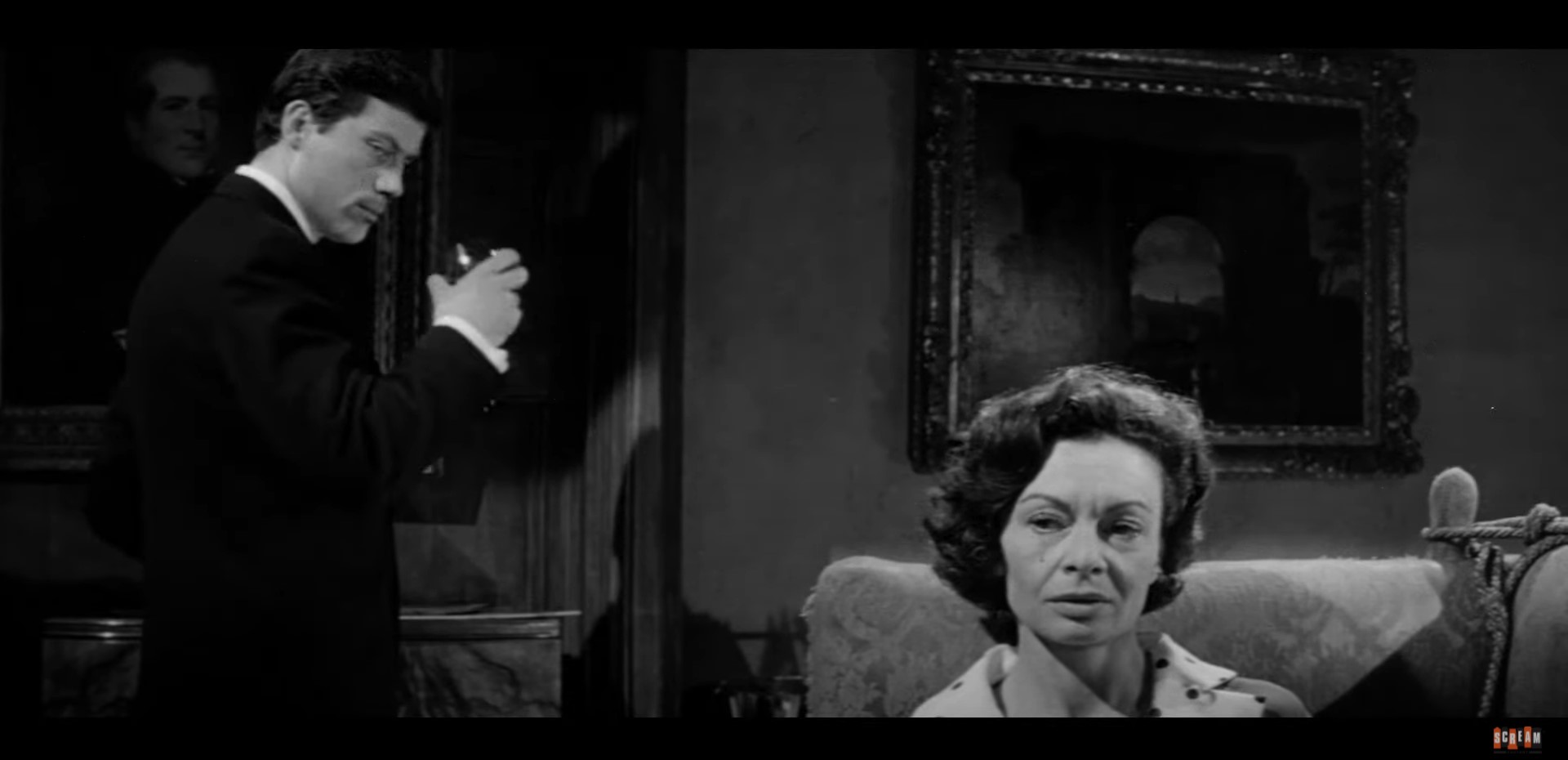
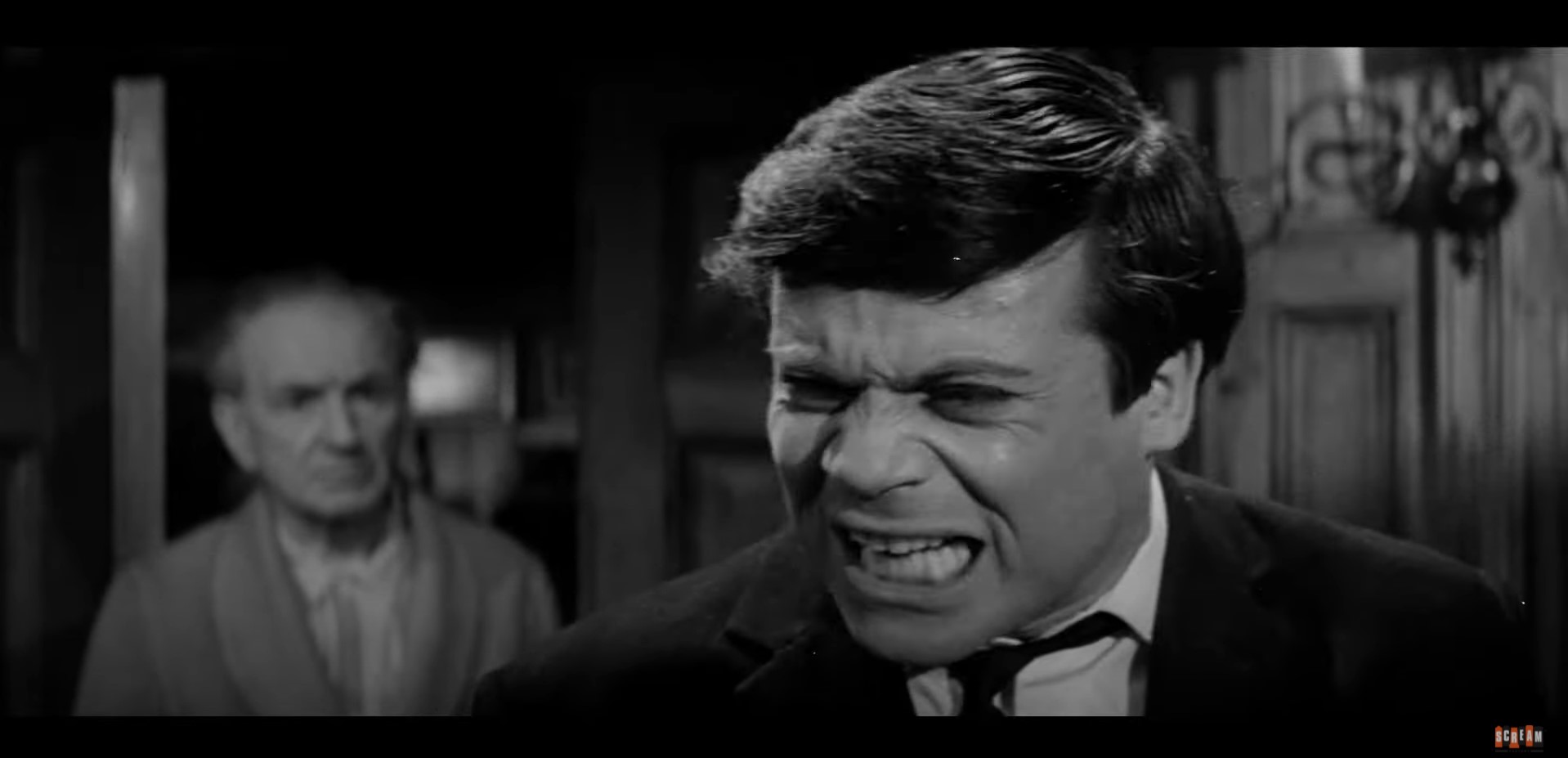
“Paranoiac’s” ensemble cast is quite brilliant in their respective roles.  Oliver Reed (“Curse of the Werewolf,” “Gladiator”) stands out immensely with a flamboyantly cruel and warped performance as the erratic Simon Ashby constantly under the influence of Brandy, Champagne, or whatever alcoholic beverage he can get his organ-playing hands on.  Reed puts out this hateful energy that can’t be ignored and outlines Simon with defined truth about where the character stands with his own flesh and blood – a callously cold and calculating black sheep.  Simon becomes fascinating in every scene, every scenario, and continues to unravel as a wild card that always leave us wondering what he’s going to do next.  Then there’s sweet and innocent but overly distraught Eleanor from Janette Scott in complete sibling behavioral polarity that sinks Eleanor further and further into madness designed by those close to her.  Scott, who also had a starring role in “The Old Dark House” that was released the same year, came aboard relatively new to Hammer but equates her status against Reed, who Hammer was grooming to be a prominent leading man for more of their productions, by selling Eleanor’s despair and the deep-seeded craving for her other, more sweeter, brother, Tony.  Encompassing the thought dead younger brother is Alexander Davion, another newbie to Hammers’ brand with, in my opinion, a neutral and bland face that doesn’t fit the Bray Studio’s swarthy and distinguished lot of male actors.  Davion’s also doesn’t do terribly much with Tony’s sudden resurrection as he folds himself back into Ashby manor.  While this could be Freddie Francis’s shrouding display of truth upon Tony’s legitimacy, there is literally no life or passion behind Alexander Davion’s eyes as he stares blankly at accusations and even Eleanor’s incestuous flirtations.  Yes, incest becomes a rummaged theme that walks a tightrope between more than just two family members.  “Alone in the Dark’s” Sheila Burrell is the stern protector in Aunt Harriet, “Blood Beast from Outer Space’s” Maurice Denham ruffles Simon’s feathers as the Ashby estate treasurer holding all of his inheritance, “The Maniac’s Liliane Brousse nurses a façade over the well-being of Eleanor and the love interests of Simon, and the cast wraps up with John Bonney as the treasurer’s fraudulent son.

Hammer had by 1963 already established itself as a horror powerhouse with the success of colorfully bold, violently stout, and sexually-saturated innuendo classic monster features, such as with “Horrors of Dracula,” “The Curse of Frankenstein,” and “The Mummy.”  Capitalizing on the coattails of Hitchcock’s “Psycho” and sitting on the adaptational rights for Josephine Tey’s “Brat Farrar,” Hammer decided to pivot into the crime and suspense thriller direction that alluded to the aftereffects of cerebral breaking blended into elements of collusion, creating an endless tense-filled turbine revolving around the whodunit particles and the who’s veneer is covertly smeared by corruption.  In a way other than the similar one word title and an unhinged theme, “Paranoiac” could be mistaken as a Hitchcockian-shot production with the larger than life and depth rich landscapes; the vast wide shots of Isle of Purbeck’s peaks and cliff steeps are engulfed oxymoronically as an idyllically menacing key peninsula landscape centric to Tony’s long thought demise as well as a place of hopelessness as the natural English Channel waves crash relentlessly onto the rocks below.  Francis and Sangster hinge the film success on the colossal subtext of brittle strength, guilt, and a vague but prominent suggestion of incest between sister and brother and brother and aunt that, in all honestly, was a personal surprise to myself that it passed the British Board of Film Certification (BBFC).  Yet, the insinuation did and paved a real pothole plague path for viewers in a good way that the story kept evolving, kept us on our toes, and when it spiraled, it spiraled quickly and sharp in a descent onto those very hopeless rocks below waiting for our emotions to be swept away lost in a mobile, violent current. 

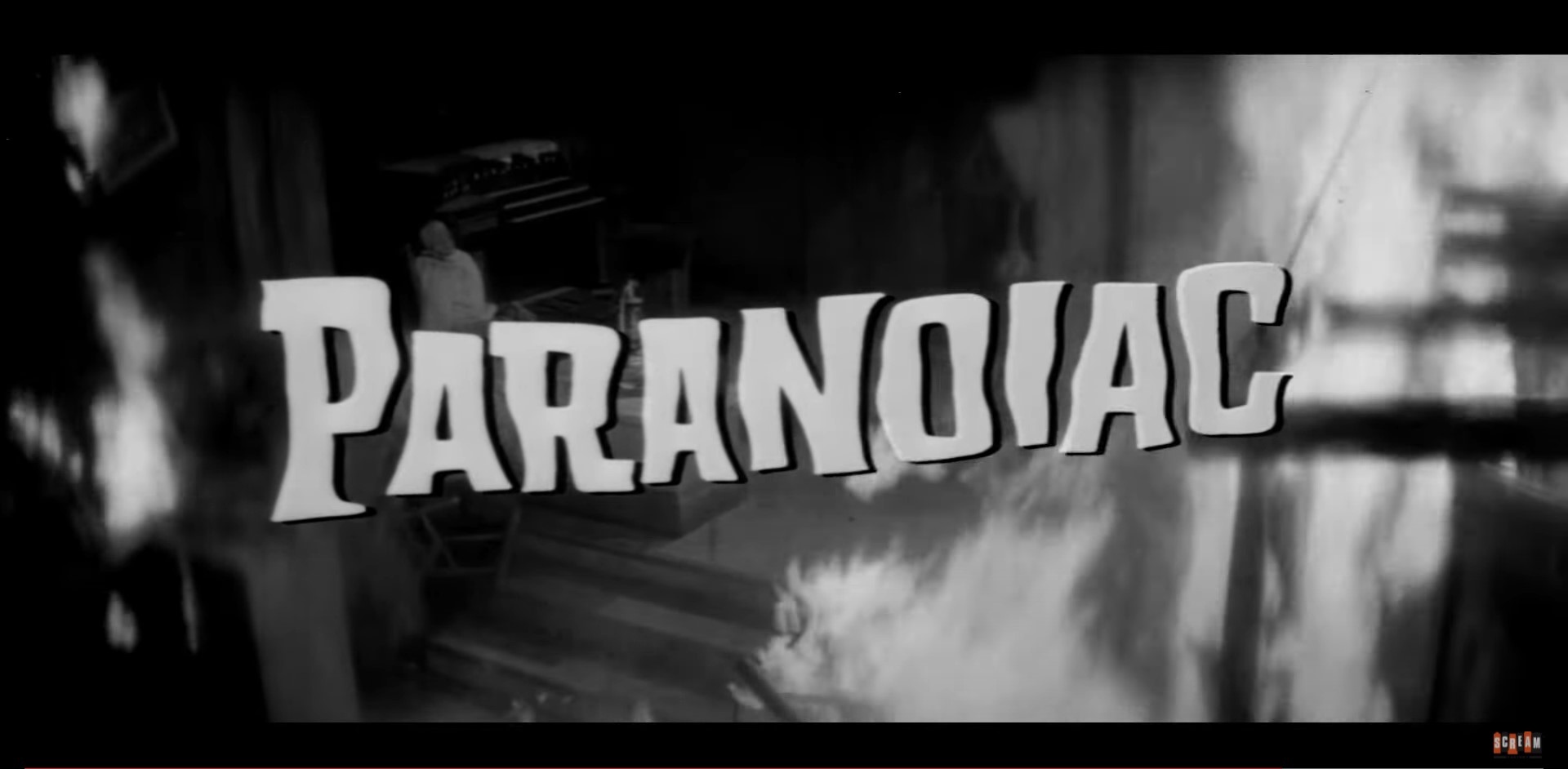
Paranoia runs rampant like an epidemic in this Freddie Francis aptly entitled sullen celluloid “Paranoiac,” the next Hammer film receiving a collector’s edition Blu-ray treatment from Scream Factory, the horror sublabel from Shout Factory! The region A locked encoded Blu-ray features a new 2K scan from the interpositive. By 1963, Hammer was well versed in technicolor, especially for Stateside releases of UK films, but “Paranoic” opts for the black and white picture in another subtle nod to “Psycho.” Under veteran Hammer Film’s cinematographer Arthur Grant, that famous gothic-cladded manor house is aesthetically fetching with in every detail captured by Grant’s 35mm camera as well as the broad wide shots in the bird’s eye view of Isle of Purbeck. Scream Factory releases the film in 1080p, full high definition of the original aspect ratio 2.35:1 with sterling results in extracting details and balancing the contrast without brightening or darkening where not needed or intended. There were no real damage spots to point out nor were any crops or enhancements made to touch up possible problematic or stylistic areas. The release comes with a single audio option in a DTS-HD Master Audio monaural track with slight static in the background. Dialogue is clean and mostly clear with an occasion hiss during more boisterous moments, but the range and depth of a faultless ambience and Elisabeth Lutyens brassy and bass soundtrack comes through symmetrically balanced. English SHD Subtitles are also optional. The special features include a new audio commentary with Film Historian Bruce Hallenbeck, two new interviews with author and critic Kim Newman in Drink of Deception and with film historian Jonathan Rigby in A Toast to Terror – two familiar faces seen in recent Scream Factory’s restorations of Hammer productions, a making-of segment that dives archive interviews with Jimmy Sangster and others going over the genesis of the story and into Hammer’s aspirations at the time, and a theatrical trailer. “Paranoiac” is more than just its creepy, bulbous mask that graces the Mark Maddox gorgeously green illustrated slipcover and snapper case cover art. Rarely does a film evolve from one narrative into another without crisscrossing the stitchwork, becoming overly convoluted beyond repair, yet “Paranoiac” digs in and dilates the already volatile chemistry with integrated and powerful performances from Oliver Reed and Janette Scott that makes this film high on the Hammer watch list.

Get “Paranoiac” on the Collector’s Edition Scream Factory Blu-ray!

EVIL Cowboys Up! “Ghostriders” reviewed! (Verdugo Entertainment / Blu-ray)

A small Texas town in 1887 took lynch mob tactics upon a jailed outlaw Frank Clements after a prominent resident and his family were slain.  In a last-ditch effort to save their gang boss, Clements’ men come in guns blazing but mob leader, the Reverend Thadeous Sutton, pulls the gallows lever to send Frank Clements to his doom.  Fast forward 100 years later to 1987, renowned historian Professor Jim Sutton researches the notorious murdering bandit, even owning a piece of Clements’ property with a cursed sawed-off double barrel shotgun, but the 100th year anniversary delivers good on the Clements’ curse as he and his men return from the dead and gun down all in the rural Texas backland.  Walking into a supernatural showdown with the undead is the professor’s son Hampton and his friends on a road trip to his father’s isolated estate where surviving the night of continuously respawning malevolent six-shooters will seemingly never happen.

Ghost cowboys.  That small and obscure piece of particular subgenre stemmed from the broad western horror pie can be and has been a hard product to peddle, bucking audiences off its hind side faster than a mechanical bull full of amateur rodeo saddlers.  Think about it.  Can one even name a handful of horror westerns involving cowboys, especially gunslingers back from the grave?  There’s Lee Vervoort “Gun Town” that’s more of a saloon town slasher.   “Ghost Brigade” might be the closer to the theme with Civil War soldiers possessed by evil voodoo spirits.  However, the relatively unknown TV movie “Ghost Town” from 2009, surrounding a group of college students pursued by ghostly outlaws in an abandoned western town, hits the nail on the head.  Again, these titles are rare and if you find one that does exists, more than likely the film’s a waste of cinematic space.  In any case, if you’re hellbent on a decent gunslinging ghoul film, Alan Stewart’s “Ghostriders” will saddle up just nicely.  Penned by Clay McBride (“Ghetto Blaster”) and James Desmarais (“Victim of Love”), the debut film of Alan Stewart resurrected a ruthless gang of gunslingers for pure retribution set on location at the Texas Safari Ranch in Clifton, Texas and was self-produced by Stewart, under Alan L. Steward Productions, along with fellow producers in cinematographer Thomas Callaway, who went on to be the DoP of “Slumber Party Massacre II” and “Deep Blue Sea 2,” as well as composer Frank Patterson, and Alan’s wife/production manager Susan Stewart. 

As you’ve probably noticed, the “Ghostriders” crew is small and wears many large brimmed hats by engaging themselves deeply into this 1987 released indie production.  Same can be certainly said about the cast.  Actor turned stunt man Bill Shaw was booked for dual performances between two characters stretching 100 years apart with the zealous Reverend Thadeous Sutton and the reverend’s grandchild, professor Jim Sutton.  The ancillary gunfighters, led by Frank Clements himself, Mike Ammons, are actually members of a roadside replica of a wild west town.  The actors, trained to shoot revolvers, take fake bullet hits, and learn to be rootin-tootin’ cowboys and townsfolk, took to the camera’s key antagonist roles that required them to also do some stunt work.  When considering the other cast, “Ghostriders” struggles to emerge a lead out of the various roles.  In the role of Professor’s Sutton’s son, Hampton, Jim Peters’ often subtle comedic timing, towering stature, and his cool-and-calm intellect as a stunt pilot points to lead man material, yet there are elements and qualities surrounding his young adopted sidekick Cory, played by Ricky Long, who went on to have a very long and extensive career working on the purple dinosaur kid show “Barney,” that qualifies the often inept and lovesick grease monkey to Hampton’s stunt planes as another candidate for lead man.  Even Bill Shaw could be considered principal.  Either way, for an 80’s flick, “Ghostriders” campy characters and dialogue flatten whatever substance McBride and Desmarais tries to wedge into their narrative.  Whether be the tragic bond that glues Hampton and Cory’s strong friendship or Cory’s inability to read his recent court Pam (Cari Powell) and her fascination toward Hampton, those moments of human depth are cannibalized by “Ghostriders’” round’em-up, shoot’em-down gang of ghosts.

Alan Stewart’s “Ghostriders” might be an intelligible film, but it’s certainly not an intellectual one due to budget and inexperience complications.  Pacing is good with the historical backstory opening transitioning into the present’s continued lawlessness of curse-resurrected 19th century killers after building up the prominent players with depth and humanism in order for us to care about their plight, but also in regard to the characters, there’s much left unsaid and undone to nearly every role for a complete and justifiable narrative arc.  Point in case, Clements and his gang’s ability to return 100 years after the hangman’s knot tightened around their throats goes very much unexplained along with their connection to Clements’ shotgun that seemingly holds the key to their supernatural slaying.  A lack of essence towards the titular antagonists’ return from the pine box to wreak havoc on the Sutton bloodline really has no merit to stand on, leaving a void in the crux that doesn’t serve well within the parameters of an imagination reasoning.  We need some sort of resolution for Clements return, whether it’s a deal with the Devil or perhaps stolen Native American necromancy rituals used to cheat an outlaw’s own foretelling of death, to make sense of the senseless driven chaos because, as far as we’re shown, Clements and his gang are no more than just abnormal bad dudes doing normal bad dude things.  “Ghostriders” also won’t knock your boots off with high dollar special effects.  There’s some superimposing of people and items disappearing and some solid stunt work (again – some of these hombres are moonlight as stunt people), but the most impressive practical special effects used are the blood squibs.  If you like firecracker pops making craters and spurting blood off of bodies, “Ghostriders” has you covered with plenty of squibs with a select few in slow-motion.  

“Ghostriders” rides into the black sunset with a rare cowboy horror from Alan Stewart and the film is receiving new life on an unrated Blu-ray from Verdugo Entertainment and MVD Visual.  Verdugo Entertainment’s an independent cult film distributor seeking to release forgotten retro features of the 70s and 80s, centralizing themselves mainly around westerns, horror, or in this case, a blend of both.   The region free Blu-ray converts the 16mm A & B negative into a 4K scan resolution that maintains impeccable image quality with little to fuss about, such as extremely faint and seldom vertical scratches.  There wasn’t any noticed forced enhancement or cropping which provides logical evidence to a pristine original negative. Though the original English language mono soundtrack bears the same unblemished qualities as the video, the difference lies within the soundtrack’s weak decibel levels that leaves the dialogue corridor stuffy and muddled behind a curtain a fairly perceivable static interference through the duration. The release labels the audio as remastered, and I’m certain the audio was spruced up from a worser quality, resulting in a much more palpable and persistent outcome that works at your attention rather than leaving caution to the wind. Verdugo offers up a nice selection of special features with an audio commentary with cinematographer-producer Thomas L. Calloway, writer-producer James Desmarais, and moderator Steve Latshaw, a brand-new original documentary “Bringing Out the Ghosts: The Making of “Ghostriders” with Desmarais and Calloway recollecting memories of being on set and talking about the cast and crew, an archived documentary “Low Budget Films: On the Set of “Ghostriders” is a Baylor University funded vintage doc about the makings of independent film, more so about this particular one, feature stills and behind-the-scenes photo gallery, the original trailer, and a new reissued trailer, which you can see below, all packaged nicely in a Blu-ray case with a cardboard slipcover with a cheeky illustration of three skeleton desperados cladded in cowboy attire and brandishing Winchester rifles. Nowhere near what the film is like but the comicbook-esque cover is eye-catching and whimsical enough to draw you in. Verdugo Entertainment could have easily chewed up this unknown cult film and spat it out with cheap distribution ease into the marketplace spittoon. Yet, the indie distributor dressed the late Alan Stewart film with respect, properly showcasing a neater, cleaner, and far from forgotten meaner spirited square off against the living and the dead.

One Man Takes on the EVIL Australian Crime Syndicate! “The Man from Hong Kong” reviewed! (Umbrella Entertainment / Blu-ray)

“The Man From Hong Kong” on the Ozploitation Classics Blu-ray from Umbrella Entertainment!

A newly formed Australian narcotics unit busts up a major drug deal that lands a crime syndicate pusher into the custody of the authorities.  The pusher, low on the totem pole of a larger drug organization, speaks no English and with the inexperience of the Australian unit, Hong Kong special branch inspector, Fang Sing-Leng, is requested for interrogation interpretation and be the escort of extradition back to the pusher’s native Hong Kong residence, but while in custody, the pusher is gunned down by an assassin.  Sing-Leng thrusts himself into Sydney’s criminal underworld the Hong Kong way, leaving a trail of destruction in his solo-takedown of formidable drug kingpin, Jack Wilton.

For film loving youngsters, would they know what cinema was like before green screens, motion capturing technology, and other computer imagery devices to create alien worlds and improbable fight sequences?  Would comprehending the idea that before the pre-implementation of these technological advances in film there was a just-do-it fortitude toward the physical and raw aspects of special effects and stunt work?  Those wee moviegoers’ heads would explode into itty-bitty chunks of brain matter by the very slight thought of a man jump kicking another man off a high-speed dirt bike without even one ounce of a tethered harness or helmet for safety.  Hazard upon dangerous hazard is what writer-director Brian Trenchard-Smith offers on the table from his debut martial arts film “The Man from Hong Kong,” the first martial arts film of its kind hailing out of Australia.  Trenchard-Smith’s working title “Yellow Peril” sought to sprinkle in between the high kicks and hyahs an amusingly intended, but greatly nearsighted, prejudice of the subtle racism in how Australian people viewed East Asia; however, Raymond Chow, the Hong Kong-side producer for this two-country co-production, ozploitation actioner, didn’t quite see the humor in “Yellow Peril” (and we don’t blame him).  Thus, “The Man from Hong Kong” title was born with some minor contentious distaste for its generic branding.  Trenchard-Smith’s The Movie Company Pty. Ltd (“Stunt Rock”) and Hong Kong’s Golden Harvest Company (“Sex and Zen”) served as co-productions, releasing the joint venture in 1975 with variable success across the globe.

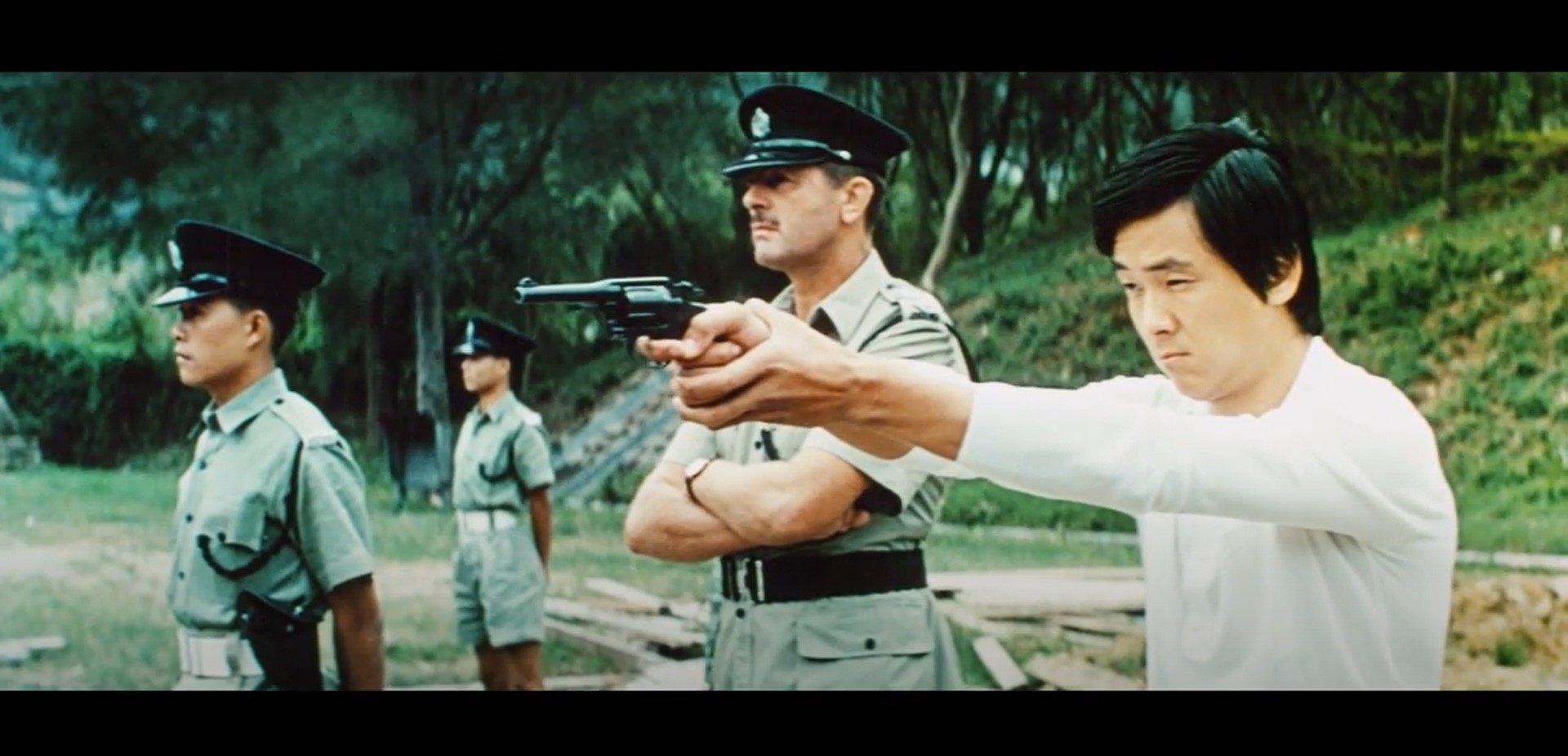
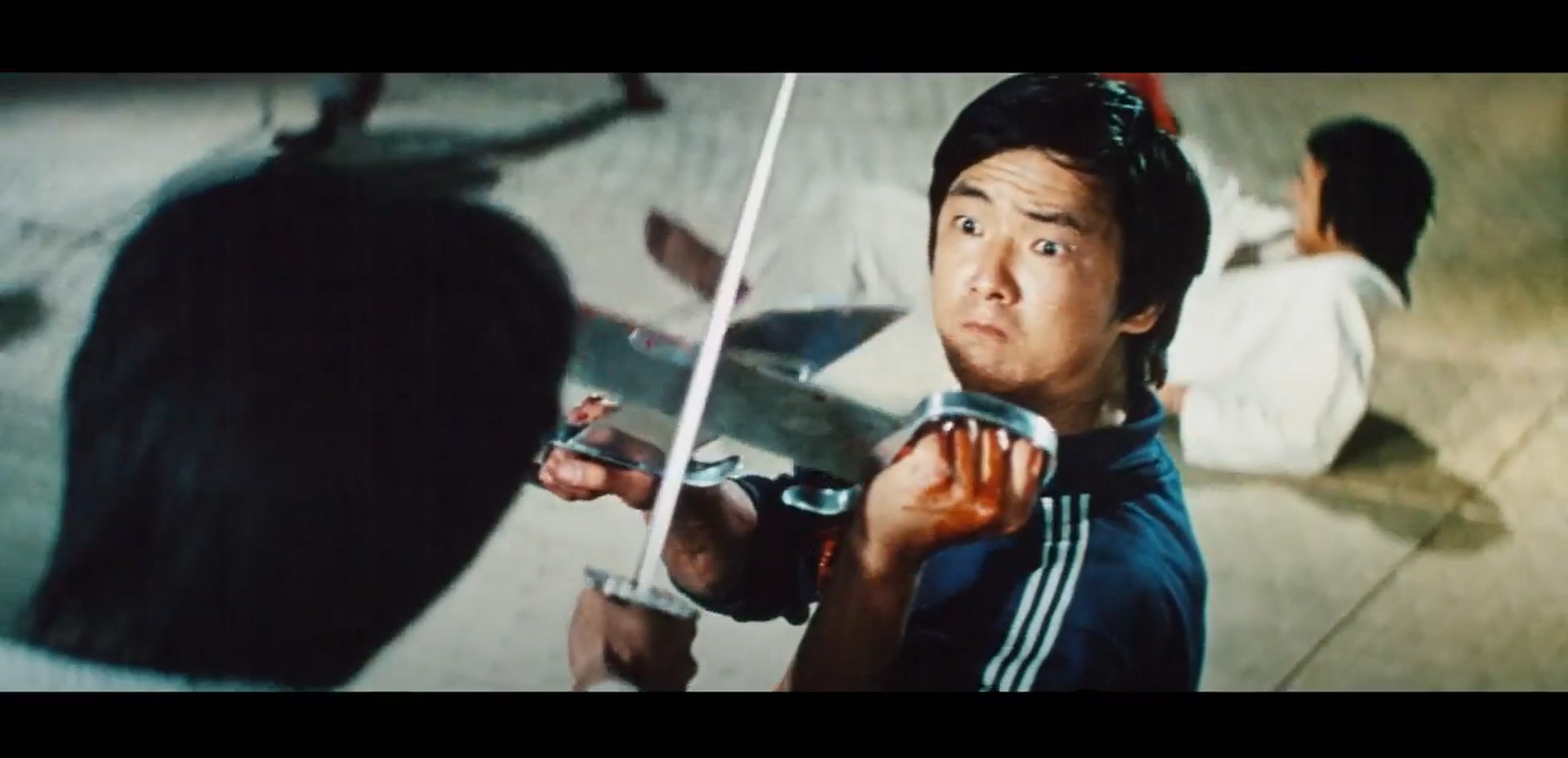
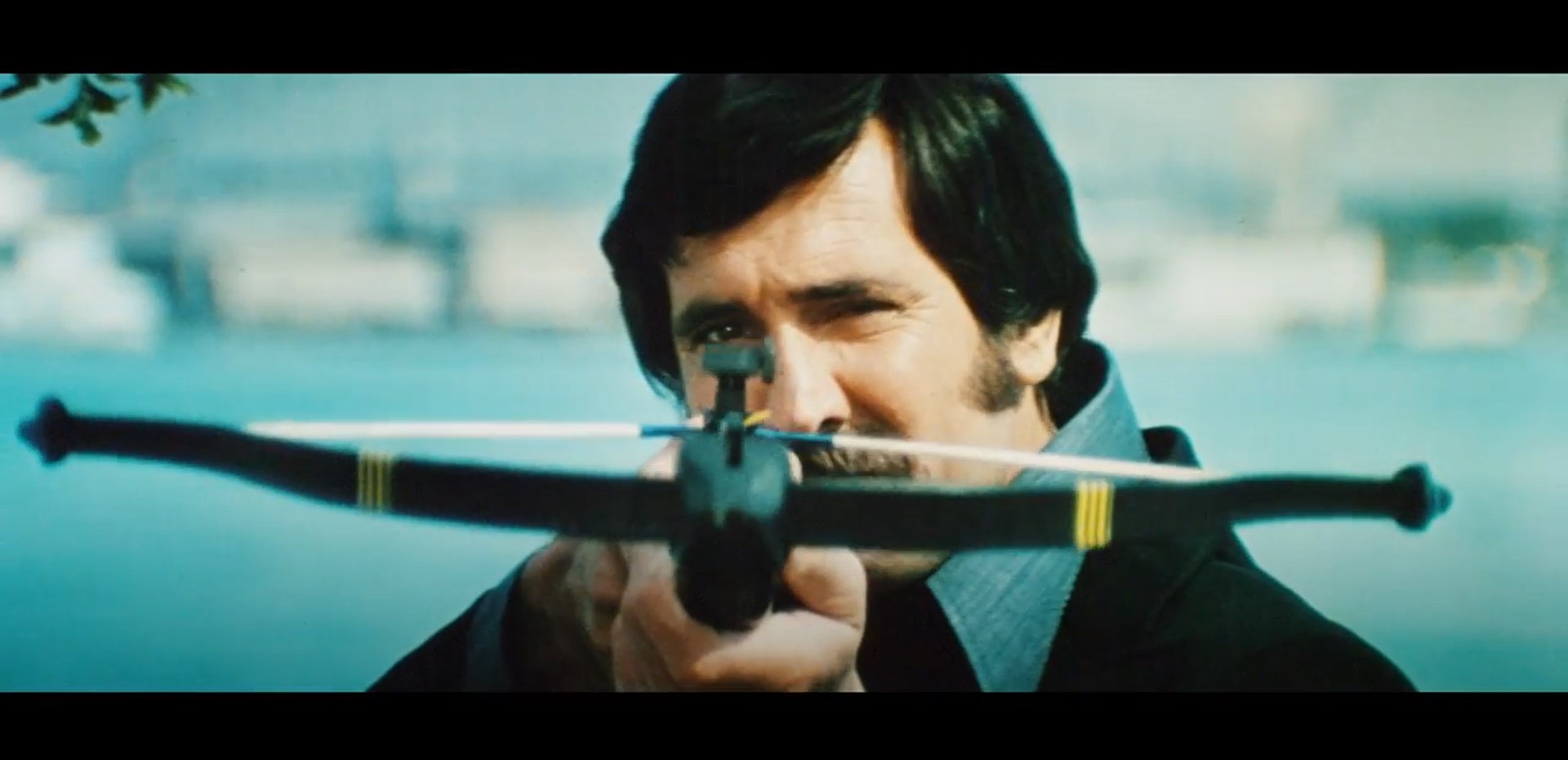
The first choice Brian Trenchard-Smith had in mind for the role of Fang Sing-Leng was mega-martial arts superstar Bruce Lee hot off the success of 1972’s “Fist of Fury,” 1972’s “The Way of the Dragon,” and 1973’s “Enter the Dragon.”  “The Man from Hong Kong” seemed to be a perfect segue into Lee’s next martial arts box-office hit that may have also reclaimed cinematic stardom for his soon-to-be co-star George Lazenby who fell into a blacklist slump after declining to reprise his 007 James Bond role from “Of his Majesty’s Secret Service.”  Unfortunately, and tragically, Bruce Lee suddenly died at the age of 32, leaving a void to fill not only Trenchard-Smith’s first film but also in the martial arts entertainment world.  In comes Jimmy Wang Yu, China’s former #1-turned-#2 after the quick rise of Bruce Lee.  The “One Armed Swordsman” series Wang Yu not only entrenches himself into the titular role at the behest of producer Raymond Chow as a suitable replacement, but Wang Yu also became Trenchard-Smith’s directorial counterpart of the Hong Kong shot scenes and the fight sequences, the latter being superbly thrilling by Wang Yu and his stunt team’s dedicated skillset to make the showmanship look authentic and bruising.  The extended chase through the streets of Sydney and into a no holds kitchen brawl with legendary stunt man Grant Page (“Stunt Rock”) is one of the best one-on-one rundown combat arrangements of its era.  Lazenby’s an effective villain with his towering height, broad build, and Tom Sellick mustache and has the ability to choreography not-so-half-assed kung fu, meeting and matching Wang Yu’s on screen moves without looking dopey or forced.   Australia’s film industry was so small at the time, there are number of recognizable actors mostly from the “Mad Max” series with the likes of Hugh Keays-Byrne (“Mad Max,” “Mad Max:  Fury Road”), Frank Thring (“Mad Max Beyond Thunderdome”), Roger Ward (“Mad Max”) in key or notable performance roles along with Bill Hunter (“Mad Dog Morgan”) and a pair of titular character love interests in Rebecca Gilling and Rosalind Speirs.

When judging a martial arts film, one critiques the hand-to-hand or melee weapon play contests, scrutinizing every punch thrown and kick taken, for complexity and believability.  If it looks real, it sure as hell feels real when conveyed from off the screen and to the audience.  Though “The Man from Hong Kong’s” scenes feel a little airy, pulling punches slightly too perceptibly, the choreography is quick and exhibits naturally enough through a variety of action and locations, including on top of Australia’s famous tourist attractions Ayers Rock for a wham-bam, drug sting and bust opening with a great-looking and thrilling car explosion shot that nearly takes the camera man’s head off with an unplanned, detonation jettison of a spinning car door toward the camera crew.  Those sorts of risky stunts are prevalent throughout that lends to “The Man from Hong Kong’s” enthralling physicality tone with Trenchard-Smith and his team’s wiliness to learn as they go in their death-defying acts.  The film is a tour de force of stunts, ranging from car chases, glider flights, skyscraper plunges, and an unforgettable kitchen skirmish with real melee weapons kneaded into its very fabric, with a Dirty Harry hero whose more of an anti-hero lawbreaker than the villains he’s up against by specializing in China’s miscreant brand of investigative police work. 

Perfectly suited as number 9 on the spine of the Umbrella Entertainment’s Ozploitation Classics banner is Brian Trenchard-Smith’s “The Man from Hong Kong,” now released on a region free, 2-disc AVC encoded Blu-ray.  Presented in a widescreen 2.35:1 aspect ratio with full 1080p, high-definition resolution, Umbrella has pulled out all the stops to release the best transfer to drool over.  Subtle vertical scratches here and there have no standing impact on viewing and the distinguished color palette is quite good and natural-looking for a film from nearly five decades ago.  There is a healthy amount of positive grain from the 35mm film stock, but the compression never comes into an issuance of sacrificing the quality, leaving darker scenes appearing bright and visible without the effect of enhancement or zealous contrasting.  My only substantiated gripe is with the subtitle cards that, in a way to not have to redo the English subtitles for the Mandarin dialect, the original frames were seemingly kept in and the image reverts back to a lesser quality degree.  Two audio options are available, an English-Mandarin language DTS-HD 5.1 Master Audio and a lossy DTS-HD dual channel.  Umbrella’s kbps output erratically fluctuations between 2400-3400 but even with the rollercoaster ups-and-downs, “The Man from Hong Kong” still had a robust action track and the dialogue came through discernibly clear.  Only goofy aspect about the audio is “Game of Death” and “Bloodsport’s” Roy Chiao’s English dubbing of Jimmy Yang Yu who obviously knew English or knew how to act like he knew English by watching his mouth articulate the native vernacular.  Umbrella also pulls out all the stops for the special features department in this limited to 3000 copies 2-disc set with the second disc a CD soundtrack arranged with Noel Quinlan funk-rock score and the main Billboard topping opening theme “Sky High” by the band Jigsaw.  Also included is a 2001 audio commentary from director Brain Trenchard-Smith, actor Hugh Keays-Byrne, and stunt director Grant Page, an all-new(ish) interview with Grant Page from 2008 entitled Real!Quick! pulled from Mark Hartley’s ozploitation documentary “Not Quite Hollywood,” extended interviews with the director, executive producer David Hannay, cast members George Lazenby, Roger Ward, and Rebecca Gilling, cinematographer Russell Boyd, 2nd unit cameraman John Seal, and first assistant director Hal McElroy from the same Hartley documentary, Trenchard-Smith’s 50-minute documentary “The Stuntmen,” a 75-minute “Kung Fu Killers” TV special directed by Trenchard-Smith and featuring Grant Page and George Lazenby, behind the scenes footage, opening night press conference footage, various and alternate  trailers and promos including a HD theatrical trailer, a cardboard slipcover with new illustrated design, and a reversible Blu-ray case cover art that also lists all 23-tracks on the CD.  The special features runtime outshines the 106-minute feature with a slew of interviews; however, much of the interviews really harp over-and-over upon George Lazenby’s set-on-fire coat mishap scene and Jimmy Wang Yu before the camera rolls catching and eating dragon flies ahead of a kissing scene with Rebecca Gilling.  “The Man from Hong Kong” isn’t notable because it’s Australia’s first martial arts film.  It isn’t notable for the attempt of resurgence of a former James Bond actor or because of its robbed promise of the late Bruce Lee.  What makes “The Man from Hong Kong” important to the film industry as a whole is its precursor value for being the example of a cast and crew to put life and limb on the line for the sake of motion picture art and be damn good at it.

“The Man From Hong Kong” on the Ozploitation Classics Blu-ray from Umbrella Entertainment!

EVIL Hangs Ten! “Surf Nazis Must Die” reviewed! (Troma Films / Blu-ray)


Check Out the New Price Drop for the New “Surf Nazis Must Die” on Blu-ray!

The waves of Power Beach wash ashore red with the blood of territorial gang war.  Wiping out is not an option for the Nazis, the largest and strongest wave riders consisting of new age Neo-Nazis led by Adolf, his lady Eva, and ingenious welding right hand Mengele.  As they surf for turf, the Nazis strong arm the rival gangs into a no choice option of calling a truce amongst themselves to attack and take down the Krauts and regain control over the towering waves and lucrative scores of Power Beach.  Caught in the middle is Leroy, a young black man who becomes gang war collateral damage on the unsafe beaches.  When Eleanor “Mama” Washington gets wind of those responsible for her son’s death, she’s blitzkriegs the surf Nazi’s of Power Beach with her own brand of grenade throwing justice.

Ever since being highly promoted at random on Alex Powers’ wannabe Troma film “Sadistic Eroticism” starring adult film actress Sophie Dee, perhaps as Powers’ favorite Troma release, seeing “Surf Nazis Must Die” tickled the curiosity of the olfactory snout and became one of those must watch titles canonized with outrageous, off-color content that’s routine for the Lloyd Kaufman and Michael Herz independent shock-and-comedy distributor, Troma Films.  Peter George directed his semi-serious, mostly satirical-toned debut film from a Jon Ayre script based off George’s original story idea of incorporating the territorial surfer scene of California with a laying siege, post-apocalyptic, gang and revenge narrative that’s a delectable smorgasbord buffet of low-budget subgenres.  Perfectly situated in front of deep-water oil rigs and the towering smokestacks of power plants and other various manufactories along California’s graffiti-cladded Huntington Beach, “Surf Nazis Must Die” is a production of Peter George’s The Institute alongside company co-owners in editor Craig A. Colton and producer Robert Tinnell (“Frankenstein and Me”).

Tennessee born actress Gail Neely receives her big break in a lead role of a feature film.  Lamentably, that film was full of bad taste and full of punk surfers with red painted swastikas on their black wetsuits who also paralleled nefariously notorious figures of bigotry and war crimes against anyone not white Anglo-Saxon.  Yes, Neely is a black actress pitted against and taking revenge on a group of racist thugs, a narrative we’ve seen before, but the “Naked Gun 2 ½:  The Smell of Fear” actress took an unjust backseat (an unfortunate and unintended Rosa Parks pun) in sharing the lead with the very Nazis she ruthless takes head on.  Trying to understand why Peter George and Jon Ayre decided to focus more on the strategic overthrows of gangland rather than to journey Mama Washington’s revenge in her death wish arch is beyond comprehension in a lopsided narrative that gives more screen time to Nazis and gangs than it does a grieving, nursing home-residing, mother hellbent on avenging her slain son with vigilantism.  The latter is a much better story that breaks up the stagnant gang mentality unwavering throughout.  Neely does her best to pull audiences back into the revenge fold with a grit and attitude that takes us back to 1970’s blaxploitation films of yore, but ultimately, “Maniac Cop’s” Barry Brenner and “Star Slammers’” Dawn Wildsmith and Michael Sonye inadvertently bleed out Neely’s full potential with their respective Nazi counterparts – Adolf, Eva, and Mengele – and their intercompany squabbles and beach brawls against rival gangs.  “Surf Nazis Must Die’s” cast rounds out with Robert Harden (“Dead Girls”) as Leroy, Joel Hile (“Deadly Friend”) as Hook, Gene Mitchell as Brutus, and Tom Shell (“Hard Rock Nightmare”) as Smeg.

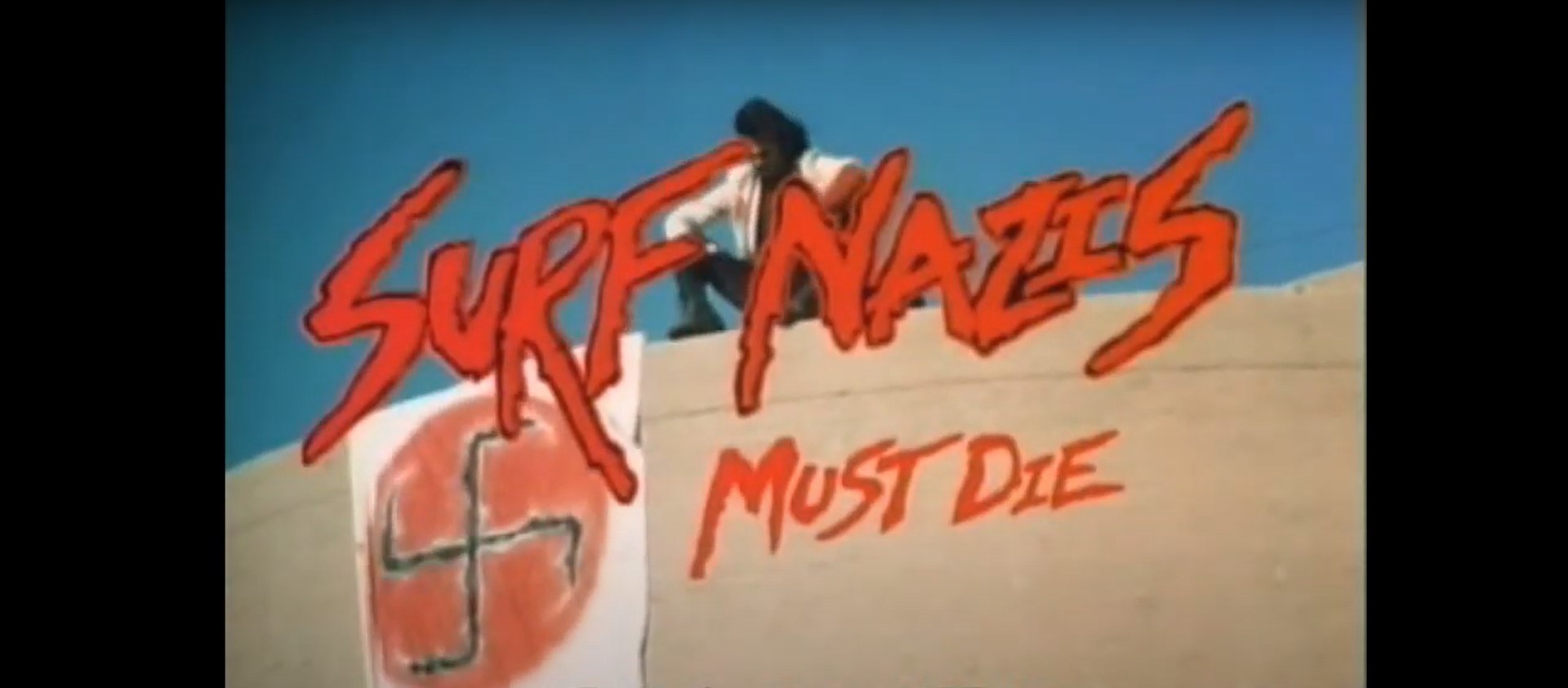
With a title like “Surf Nazis Must Die,” the expectation bar was high to bequeath audiences guaranteed politically incorrect exploitation and sizable good versus bad mayhem crashing like a cacophonic wave on the surf.  “Surf Nazis Must Die” does meet that brazen bar that associates surf territorialism to the likes of Nazism by way of excluding outsiders from their surf turf and be nasty about it as well.  Would I compare it to Nazism?  Probably not, but in the heat of control and power over others less fortunate in riding waves might draw a vague resemblance.  In a bit of satire and irony, 1940s Nazi Germany was ruled by an extremely authoritarian people running a tight ship in every facet from the meticulous armed ranks to innovative engineering to the ostentatious decorated halls and buildings of propaganda and flag hoisting pageantry, but Peter George’s Nazis, granted the new age variety, plague themselves about the beach, living off stolen goods while driving around in a makeshift shark modified van, tanning their mostly exposed bodies, or dressed in graffiti stylized wetsuits and trench coats with glitter-face painted swastikas.  The characters are cuter in caricatures than they are in terrorizing tyrants of the beach.  What’s even more interesting about “Surf Nazis Must Die” is that none of the gangs carry firearms despite one of the popular Troma cover arts displaying an archetypal lampooned Nazi riding a wave and wielding an Uzi.  The “Clockwork Orange” gangs meandering about with unprovoked violence carry traditional switchblades, nontraditional switchblade surfboards, nunchakus, staffs, a hook for an arm, and there’s even one guy with a speargun.  Only Mama Washington is armed to the teeth with conventional weaponry of grenades and a handgun that makes this film even more unfathomable at times.

Thirty-five years later, “Surf Nazis Must Die” continues to make waves a war zone with a new Blu-ray released from Troma Films and distributed by MVD Visual. The newly restored, newly remastered, high-definition region free Blu-ray is presented in a widescreen 16×9 aspect ratio from the original 35mm negative and is not quite the fully uncut version, running two minutes short at 83 minutes from the director’s cut that circulates overseas. The color matte lacks bounteous vision that fails to give range to the graffiti art amongst other aspects. The transfer has little-to-no blights with some transparent vertical scratches in a single frame but nothing else more to note. George and editor Craig A. Colton work their magic on a remarkable cutting room performance with splicing in Hawaiian surfing footage with the Huntington Beach narrative in a near seamless manner. The English language lossy LPCM 2.0 track doesn’t hook into you with a linear fidelity with no range or depth but does provide fair dialogue clarity and no impeding audible damage. “Terror Eyes” and “Future Shock’s” Jon McCallum has a fantastic synth score that pulsates life into the overabundance of stagnant moments and the film is worth a watch just for McCallum’s soundtrack alone. Gnarly special features include a new introduction by a locked down stricken Lloyd Kaufman diving into his pool to take a bath, a circa late 80s/early 90s interview with Peter Geoge conducted by the enthusiastic Lloyd Kaufman, another circa late 80s/early 90s snippet interview with producer Robin Tinell, a pair of deleted scenes with Peter George commentary, scenes from the Tromaville Cafe, Radiation March Promo against pollution, a pair of archived Troma NOW PSA announcements that are as sexually titillating as they are meaningful in their message, a Soul of Troma promo trailer,” “Latched” short, and various other Troma promos: Indie artists vs cartels, Lloyd Kaufman gets “fucked” by the Hollywood system, and Lloyd Kaufman’s Audiobiography. There’s also mention of a “Gizzard Face” promo, but I did not see it as an option in the bonus content. “Surf Nazis Must Die” inches along and loses a lot of key momentum along the way building around the striking title. Eventually, the undercutting of gang machoism crumbles away to leave an open path for Mama Washington’s full-blown assault as a true cinematic Nazi hunter extraordinaire.

Check Out the New Price Drop for the New “Surf Nazis Must Die” on Blu-ray!