EVIL Trolls the Waters, Angling for a Kill. “Bood Hook” reviewed! (Troma Films / Blu-ray)

Troma’s 2-disc “Blood Hook” Available on Amazon!

Muskie Madness.  That’s the moniker for the locals’ fishing contest set as the background for a group of city slicker friends looking to unwind and do a little fishing themselves.  17 years earlier, Peter van Clease witnesses his grandfather suddenly fall into the lake and disappears without a trace.  Present day, Peter returns to his grandfather’s cabin with his friends but is still haunted by the memory from his childhood.  When locals and tourists engage in the contest for who can catch the biggest Muskie, a maniacal fisher casts his giant fishhook lure into the flesh of unexpected contestants on the lake and on the shore, dragging them violently into water and never to be heard from again.  The disappearances send Peter into not only an investigation of those currently missing but also into the cold case of grandfather’s demise whose fate was eerily similar. 

On the calm, glossy surface, “Blood Hook” resembles the quintessential severed tongue-and-cheek comedy and horror of Troma’s outrageously independent repertoire.  Tossed around as a crude idea about opulent society diluting the quality and the quietness of quaint lake resorts during their extravagant vacations outside city life, “Blood Hook,” once under the working title of “Muskie Madness,” is the first, if not the only that I can recall, American fisher-slasher from the unique imagination and vision stemmed from director Jim Mallon (producer, writer, and director of the “Mystery Science Theater 3000” series and movie) and producer David Herbert’s childhoods growing up in the summers of small town Wayward, Wisconsin.  Larry Edgerton and John Galligan were brought in to spruce up the script as the official screenwriters, adding bits of dry humor to an already unorthodox slasher in this catch-and-released in 1986 B-movie produced by Golden Charges and Spider Lake Films Ltd.

Like a Kleenex, the young cast falls into the fresh for one-use category of being mainly known for their role in “Blood Hook” and I hate to use that analogy because there are some really campy, genre-perfection talented acts here for a relatively large cast of a small, independent production about a killer fisherman.    Granted, a handful of the talent were able to snag up minor roles in bigger films, such as with Mark Jacobs (“Goodfellas) in the principal lead of Peter van Clease.  Jacobs, who is a dead ringer for David Schwimmer appearances and mannerisms, castrates van Clease’s manhood with extreme meekness more so than the character’s wishy-washy stance on his university music studies, romantic connections, and confronting homicidal maniacs when his abducted woman is in danger of becoming grinded up minnow chow.  What is more vexing about van Clease is the fact he essentially woes 2/3 of the principal ladies without even casting a line.  Beyond the frustrating namby-pamby, all other characters are depicted, in every sense of the term, more in accordance with those who portray them.    There is a side relationship building between van Clease’s friend Finner (Christopher Whiting), an enthusiastic fisherman who is new to the group of city friends, and Bev D. (Sandy Meuwissen), a single local with a toddler, that the audience can get invested in and takes an interesting turn when Bev D. plays the fishing rod at both ends, dipping her toes in another man’s lake with fellow local, and crazed military nut, Evelyn Duerst (Bill Lowrie).  Evelyn’s father, and yes Evelyn is a grown man with a beard, is played by Paul as the van Clease estate caretaker and a real stern pit for local purity.  A fan favorite will be the salty-looking bait shack owner Leroy Leudke complimenting his lovable persona, thick Minnesotan accent, and overall mysterious allure (with a lure) from Don Winters.  The cast rounds out with Lisa Jane Todd (“Playback”), Sara Hauser, Patrick Danz, Dale Dunham, Paul Heckman, Bonnie Lee, Don Cosgrove, Dana Remker, and Donald Franke.

Blood Hook” trawls through the familiarity of the 80’s slasher genre with an obscured hunter, a high body count, and a copiously campy campsite of carnage, but this peculiar fillet is sliced from a different kind of fish. While casted under darkness, the killer flings a cast of nylon fishing line with a large, sharp-hooked Suick lure distinguish itself as a unique weapon of choice that fills the icy blood cooler. There’s comedy in that diabolical device, largely so when making too much noise on the water that can scare fish away from patient fishers as Mallon hyperbolizes the idea of outsiders raising a ruckus amongst the sanctity of the local waters while paralleling a message about the aftereffect horrors of war; however, where we should be laughing at the idea of a fisher hooking a 150lb prize human, we’re only barely smirking at the irony as much of the dark comedy doesn’t precisely translate well from paper to screen. “Blood Hook” is about as big as the hook going into the gut as it’s no ordinary jonboat film as Mallon’s film looks serious, feels serious, and acts like a contender up against the iconic slasher-mega yachts of the time with a disconcerting sound design by Thomas Naunas of deafening cicada tymbal clicks all too familiar during summer days coupled with an eerie gelled and moody cinematography from Marsha Kahn that sets the slasher narrative as such. Both Naunas and Kahn exhibit perfect harmony in a disharmonious narrative context as a pair of feature film greenhorns looking for a launching point in their careers.

Muskie Madness turns into a Muskie Massacre. “Blood Hook” is the cinematic catch that almost got away, but Troma reels this trophy cult film back aboard onto a new 2-disc Blu-ray release distributed by MVD Visual. Presented in 16:9, “Blood Hook” holds up even to today’s standards against scrappy independent productions with a slight soft, yet noticeably clean presentation from the Super 16mm stock blown up to 35mm.  Some frames appear cropped and stretched on faces in extreme closeups, losing a bit of textural definition that leans more into a softer picture, but the contrasting is balanced which is unusual for a Troma film, the coloring is richer around the lush outdoor vistas without breaking stride of other color appropriate opportunities, like the vibrant red blood, and no evidence of any damage transferred over from the negative.  No formal mention of audio specifics on the back cover, but I suspect the track to be DTS-HD Master Audio Mono that’s clear but has issues with projecting low-talk dialogue.  Thomas Naunas’s soundtrack introduces a repetitive looming synth score kept well in check around more less-than-major problematic dialogue scenes.  Naunas’s sound design as a whole is paramount to “Blook Hook’s” envisioned success with an incessant cicada clicking combined, on the regular, with discord tones to jar the audio senses in relationship to an imminent threat.  First disc contains the feature plus scene selection menu.  The second disc is all special features clunkily arranged around the rehashing of Vinegar Syndrome produced interviews from their 2018 Blu-ray release with director Jim Mallon, actress Lisa Jane Todd, special effect artist Jim Suthers, and an audio interview with cinematographer/editor Marsha Kahm.  Along with the theatrical trailer, there’s also the usual Troma promos that accompany their re-release such as for Troma Now, Radiation March against pollution, and the Return of Gizzard Face 2 to promote Troma NOW’s streaming service.  The 2020 Metal + Hitchcock “Blood Stab” short, starring Lloyd Kaufman, finds its way onto the release too. “Blood Hook” is a tackle box of slasher tropes and anti-war and PTSD undertones though slightly dragged down by its weighted comedy; however, a killer sound design and a topnotch killer makes “Blood Hook” a perfect poster film for Troma heads.

Troma’s 2-disc “Blood Hook” Available on Amazon!

How Far Will Three Detectives Go to Stop Evil? “Memories of Murder” (Neon / Digital Screener)

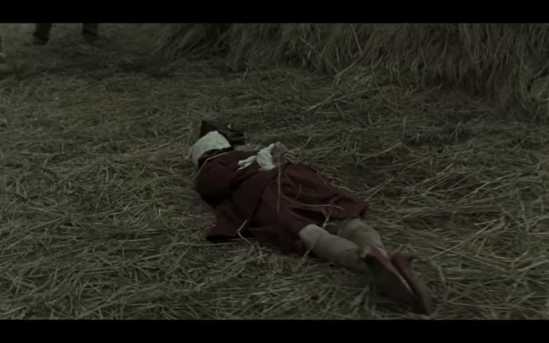
Two impractical detectives of the Gyunggi province of South Korea investigate a pair of rape and murder cases involving two beautiful and unrelated women found with their hands bound behind their backs, gagged with a rock tied into their mouth, and with their panties covering their heads.  Known around the province for their torturous interrogation tactics, the detectives bully a mentally handicap young man and the local pervert into confessing to the heinous crimes, but when a Seoul investigator arrives into the village, drawn in by the curiosity and coincidence of the murders, a larger scale serial rapist and murderer, calculating his every move, is unearthed, connected by series of events leading the small police force to reevaluate their handling of the murders that have become more gruesome than the next with every victim. 

Before his inevitable recognition from the 2019 Academy Awards for his socially skewed hierarchy thriller, “Parasite,” that historically won Best Picture, Directing, International Film Feature, and Original Screenplay categories, even before his breakout success amongst fans of the horror genre with the creature feature, “The Host,” and an introduction into the American film market with another social class commentary, the dystopian standoff that was “Snowpiercer,” starring the Captain America portrayer himself, Chris Evans, filmmaker Bong Joon-ho had an eye for crafting his vision on camera and a knack for nerve-shredding storytelling as a writer in the early 2000’s with his 2003 sophomore feature, a crime drama entitled “Memories of Murder.” Originally known as “Salinui chueok” and written by director, the film is an encryption of a murder mystery encoded from the real life serial crimes in the Hwaeseong province in the 1980’s, Bong Joon-ho’s film takes place in 1986, and renders an engrossing story structured like a modern day Jack the Ripper emerging out of the unpleasant anecdotes of Korea lore stirred with themes of consequences as a result of careless failures and the inadequacy of effort no matter the analyzed angle.  CJ Entertainment, Muhan Investment, and Sidus serve as production companies of this somber sleuth mystery.

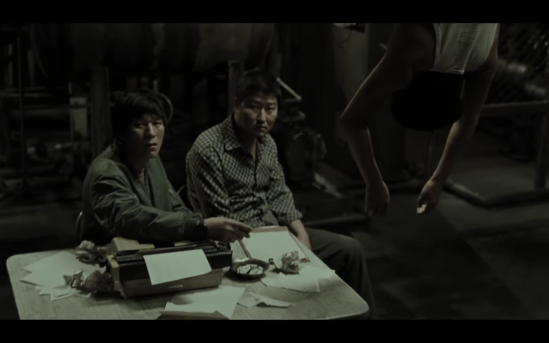
Despite their different methods of interrogations and investigation pursuits, the story hammers down on the three detectives’ across the board search for a methodical killer rather than a killer’s betokening perception of events as the detectives, individually flawed with ill repute and personally challenged, separately come unglued, make mistakes, and suffer the consequences of their public inanity, but when they click in harmony and rally on the same page, the truth almost hops into their laps rather than at a snail’s pace stemmed from internal competition for apprehension success. Song Kang-ho has played the constant, the unparalleled keystone, in Bong’s two decades of film credits, beginning his collaboration with the acclaimed director in “Memories of Murder” as the province’s ineffectual blowhard detective, Park Doo-man. With a deadpan stare, Song Kang-ho debones the Park Doo-man to his rudimentary base, a waggish con artist in an officer’s casual attire, and the actor defines Park’s arc so clearly, distinctly, and with ease that you can actually see Park Doo-man’s soul just become utterly crushed by not only the tough case but also when it’s clear that he must separate himself from his partner Cho Yong-koo (Kim Roe-ha) after a foolish bar fight of steadfast conviction and begin to accept his counterpart rival Seo Tae-yoon (Kim Sang-kyung) to no longer be the buffoon when bodies continues to pile up. “Memories of Murder” round out with Song Jae-ho, Byun Hee-Bong, Ko Seo-hie, Park No-shik, and Ryu Tae-ho.

In the battle to be top cop that nabs the worst criminal the province has ever seen, a disastrous paradox thwarts their oath to protect and serve the community as the two detectives, in their haste for swift justice, don’t see eye-to-eye on issues of evidence and actual detective work with a levelheaded outside investigator putting his foot forward delivering a working, if not more rational, model of a killer’s mind.  The innate detective, Park Doo-man, relies heavily on the circumstantial from gossip, relayed by the province investigator’s soothing nurse who he’s also seeing romantically, to superstition, visiting expensive shamans and claiming to have supernatural sleuth abilities himself, in order to cheat corners in hoping the information will present itself like an elegantly wrapped gift with a bow on top.  At the other end is the outsider, detective Seo Tae-yoon, from the metropolis area of Seoul and the big city detective, who sees more of these types of crime in his urban backyard, conducts a factual investigation based off research and relying on experience that gives him intuition into how the killer thinks.  Clarity in the contrast concedes more so when the third detective, another province resident, Cho Yong-koo, refuses to change his ways of brutal violence and torture as he continues his flying kicks right into the chests of suspects whereas his partner, Park Doo-man, relaxes his greed for admiration when the number of deceased women becomes unnerving and public trust in law enforcement rapidly diminishes; the reality sets when his counterpart, Seo Tae-yoon, produces results closer to an arrest based on fact.  Bong Joon-ho’s approach at the beginning would not be a conventional one that mingles rape and murder with the bumbling antics of a small town police force that’s outrageously zany at times.  The zaniness comedy subsides and is replaced with an air-letting dismal outlook of vulnerability and powerlessness in making little-to-no headway into a case that keeps getting grislier and grislier with the killer not inserting objects into his female victim’s vagina.  Trusting the system is even more disquieted so when the most latest and reliable crime solving techniques in the mid-1980s, from America none-the-less, proves to be astonishingly inconclusive, making the case seem like a no-win situation that then reverts back to the idea that sometimes even the most careful and meticulously handled cases, without the use of force, are not solvable. 

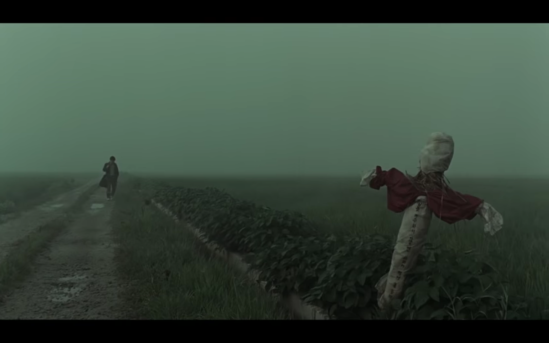
The powerful knuckle-biter “Memories of Murder” rattles with anxious tension and is chartered gracefully through the unrivaled eye of Bong Joon-ho.  Now making it’s grand return exclusively to theaters nationwide October 19th and 20th, “Memories of Murder” will be exhibited digitally remastered for U.S. audience for the first time since it’s initial release since 2003 courtesy of a partnership between Neon and Fathom Events.  The limited theatrical running with include exclusive content and a post-screening conversation between Bong Joon-Ho and “Shaun of the Dead” and “Hot Fuzz” director, Edgar Wright.  Since I’m unable to compare the digitally remastered with the initial release, all I can say is that the film presentation appears steady, tight, and clean with Bong’s sepia tone to incept a memory fragment of the past and shot to entice an unfathomable crime drama captured as beautiful gaslit dissonance between background societal unrest, the case at hand, and the audiences’ unsuspecting role as the potential suspect. The screener provided is a digital screening link and might appear different in a theater sitting. The English subtitles were clearly visible with some minor errors in spelling. Again, this might vary in theaters. There were no bonus material on this screener, but, remember, that the limited run event on October 19th and 20th will have the exclusive bonus content and the Wright and Bong conversation. Unforgettably wrung with wraith-like anecdotal properties, “Memories of Murder” can be labeled as Bong Joon-Ho’s exemplary film, even better than his current work that won him an Oscar.

A Lone Woman Takes On Three Evil Poachers in “Fair Game” review!


Jessica is a caretaker for a wildlife sanctuary located in the Australian outback. Her day-to-day challenges consist of refilling drinking water trowels in the midst of the heat and herding wandering animals away from a treacherous sinkhole with the help of faithful sheep dog, but Jessica’s way of life, and the lives of the sanctuary animals, becomes threated by three maniacal game poachers. Behind the wheel of a menacing modified truck, the poachers toy with the young woman: slaughtering the protected inhabited animals, destroying structures in her compound, and playing psychological games to mentally and physically break her will. When enough is enough, Jessica, whose nearly lost all that she has, decides to fight back against the well-armed and aggressive hunters that take their dangerous, back-and-forth game to a whole new life and death level.

Mario Andreacchio’s exploitation gem “Fair Game” makes a grand Blu-ray debut onto Umbrella Entertainment’s Ozploitation Classics collection line. Penned by screenwriter Rob George and headlined by the Brisbane beauty Cassandra Delaney, “Fair Game” is a lavishly brutal film about one isolated woman’s plight to righteously defend what’s hers at any cost against a blitzkrieg of assaults from three nasty, but very different, personalities. What’s utterly fantastic about Andreacchio’s film is the cinematography from the late “The Lord of the Rings: The Fellowship of the Ring” Oscar winner Andrew Lesnie. Lesnie, who worked on “Dark Age” that was also released on Blu-ray by Umbrella Entertainment, had a knack for vast landscapes and the director of photography made the already arid outback seem physically monstrous, especially during long shots of Cassandra Delaney running for her life through rocky, dusty terrain. There’s a stark contrast between his day approach and his night scenes that air a soft blue and white glow on the backdrop horizon, a familiar motif typically showcased in horror films, that immensely deepens the chase and stylizes the visual ambiance.

Cassandra Delaney stars as sanctuary overseer Jessica. The demanding role pits Delaney against the terrain elements as well as the three poachers in David Sanford, Garry Who, and Peter Ford as Sunny the trio’s relentless leader. Whereas Jessica’s as pure as they come, being an animal savior and contributor to the community with Delaney selling that to the fullest extent even when she’s pissed off and being a stoic like Sarah Connor, the antagonist are about as rotten as festering, worm-riddled apple with each actor portraying a very different type of character. David Sanford’s Ringo is an acrobatic young man with a punk rock look and attitude overlaying his athletic tone, marking him the versatile go-getter. Garry Who’s Sparks is a potbelly grease monkey and as the lone designated pit crew of his posse, Who enables the slightest probably of being the most sensible of the three thugs but still meager and mean when pushed by Ringo and Sunny. Sunny denotes himself the pit boss, an elite outback tracker with narcissistic tendencies in believing he’s invincible, and Ford’s hard nose and stern take on Sunny is pinpoint precision at it’s deadliest.

To be all fair about “Fair Game” reasonability, the big question that surfaces after viewing the film is who is the most certifiable between Jessica and Sunny’s gang of hoodlums. The answer to that riddle is ultimately Jessica. Though that might seem like a radical answer, Jessica is, by far, the craziest person with a severe death wish. Whenever Jessica retaliates against the poachers, the three inevitably response with something much worse. Here are some examples: Jessica dumps flour onto Ringo’s face and slaps a vegetarian bumper sticker on their truck that causes the ruffians to quietly invade her compound and take pictures of her while she sleeps naked, Jessica causes a small avalanche to temporarily trap them in a small cave and Sunny’s hoodlums respond by shooting her horse dead, and Jessica welds their assault rifles together in a heap of twisted metal and the poachers tie her half naked body to the hood of their truck and drive around until she passes out. The spat between them overwhelming seemed one sided, as Sunny as his hounds play with their live food before biting down hard to snap it’s neck, but made for kickass exploitation that echos genre classics such as “I Spit On Your Grave.”

Umbrella Entertainment releases 1986’s “Fair Game” onto high definition, 1080p Blu-ray with an all new transfer from a newly restored 2k master. Presented with a widescreen aspect ratio of 1.85:1, the transfer looks impeccable. The palette coloring isn’t vivid, but not surprising since the film is set in the arid outback with nothing but brown on top of brown or yellow on top of brown; however skin tones and the fine details are evidently splendid in Andrew Lesnie’s mise-en-scenes. There’s expected noise through out with some minor vertical scratches, especially earlier in some day time sequences and in the longer shots, but the restored transfer bares a cleaner and fresher take on the 30 year old plus film. The English 2.0 DTS-HD Master Audio track is a lossless transfer that reinvigorates the menacing aspects of the back-and-forth contest, an example would be the monster-like, if not personified, truck that rumbles and roars when trekking and chasing across the outback. Also enhance is the soundtrack that’s a concussed epiphany of acute and rough synthesized and blunt off key tones and melodies meshed together to form a mesmerizing score from composer Ashley Irwin. The release also contains a slew of special features including audio commentary by director Mario Andreacchio and screenwriter Rob George, an extended interview with Cassandra Delaney, a segment about “Fair Game’s” set location, A couple of local TV spots from 1985, a behind the scenes with Dean Bennett, the theatrical trailer, image gallery of still scenes and rare production and promotional materials, an animated storyboard, and five of Mario Andreachio’s short films. Whew. Talk about your full loaded package. “Fair Game” is the epitome of ozploitation with lucrative degenerate characters and a fair amount of gratuitous nudity that goes without being overly sleazy and downright violent like most collaborators in the subgenre. Packed with vicious machinery and a wicked sense of mind games, “Fair Game,” hands down, one of the best in the world of Australian cult cinema.