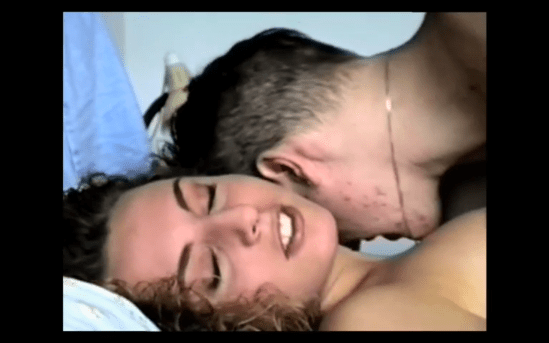
EVIL Ditches Satan, Picks Up a Camcorder. “Midnight 2: Sex, Death, and Videotape” reviewed! (SRS Cinema / DVD)

“Midnight 2:  Sex, Death, and Videotape” now available on DVD!

The sole survivor of the murderous, devil-worshipping cult family, Abraham Barnes, continues to kill under a new outward show as amateur videophile recording everything and everyone to gain their trust.   Instead of harboring his mother’s dark intentions of eternal life, Abraham simply thirsts for killing, documenting his premeditated methods using a camcorder.  When his latest victim goes missing, her friend initiates an investigation with a police detective, but Abraham is always recording, always one step ahead of them both, always on the hunt.  With the trap set and the play button pressed, the blood-lusting survivor of the maniacal, serial killing Barnes family preserves a lineage legacy of death. 
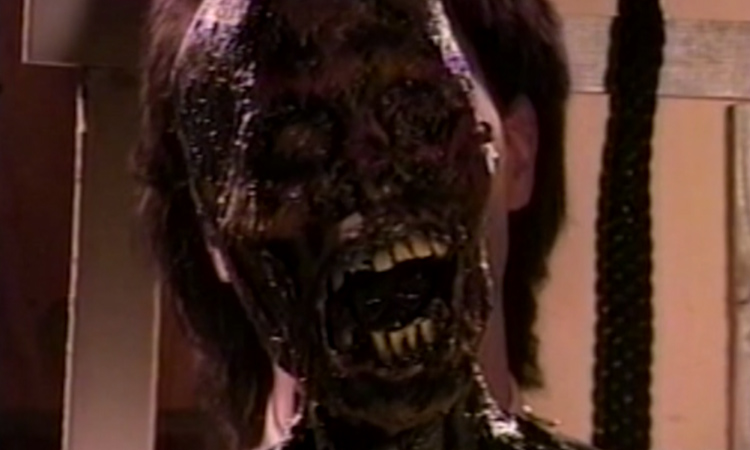
Screenshot from AGFA

Ten years after releasing his moderately successful All-American shocker, “Midnight,” John Russo returns with the Barnes family.  Well, at least one of them in the 1993 release of “Midnight 2:  Sex, Death, and Videotape.”  Also known as simply just “Midnight 2,” the secondary title references the widely popular 1989 Steven Soderbergh film of sexual testimonial video-tales in “Sex, Lies, and Videotape,” starring James Spader and Andie MacDowell.  The sequel gives way to a new motive and theme that’s very different from the satanic panic aspect of the original.  “Midnight 2” enters the mind of a serial murderer with every calculated and cold thought and whim that crosses the killer’s mind laid out in detail to paint a compulsive picture. Behind the scenes, conjuring up resources to make the sequel exist as it stands today, is “Dead Next Door” and “Robot Ninja’s” J.R. Bookwalter, the head-honcho in production and distribution of his own created company banner, Tempe Entertainment. Bookwalter, who also wears the director of photography and editor hat on this film amongst others, produces the Russo sequel that was shot on location in Bookwalter’s home city of Akron, Ohio.
If you’re expecting or anticipating seeing John Amplas (“Martin,” “Day of the Dead”) return to the Abraham role 10 years later, be prepared to be severely let down as Amplas does not return for “Midnight 2.” Instead, profound schlock horror screenwriter and composer, Matthew Jason Walsh, brings a whole new peculiarity to Abraham Barnes and I’m not just talking about his face or mannerisms. Walsh, who penned such David DeCoteau C-list gems as “Witchouse,” “Young Blood, Fresh Meat,” and “The Killer Eye,” goes face-to-face with the camera in a hybrid performance as lead actor and lead narrator of his own exposition into his own executions. Being a sociopath is never fleeting from Walsh who can sink into the sardonicism of the Abraham character naturally as one of the two only traits to carryover from the original film with the other being a killer. Aside from a boat load of archival footage and a verbal recap of nearly the entire first film, the whole Devil-worshipping aspect of the Barness family is dropped in favor of a more undisclosed truth in the hidden agenda of a person who thrives off the hunt and the kill. Abraham goes through verbatim his daily, stalking routine in a publicized manner of videorecording everything and everyone to capture as much detail as possible as well as capture their last moments. Russo does throw in escape clause caveat for Abraham in that if he meets the right girl, the love for her will be strong enough to break him away from killing and possibly start a family and while Russo plays into that tangent a little with Jane (“Killer Nerd’s” Lori Scarlett), nothing much more materializes significantly as a romantic conflict that circles back to that subtheme. Russo ultimately gives in to a more cat-and-mouse game with Jane’s worried friend Rebecca (“Chickboxer’s” Jo Norcia) and the detective who rather slip into Rebecca’s pants than actually solve the case in a stiffer than roadkill performance by Chuck Pierce Jr. (“The Legend of Boggy Creek”).
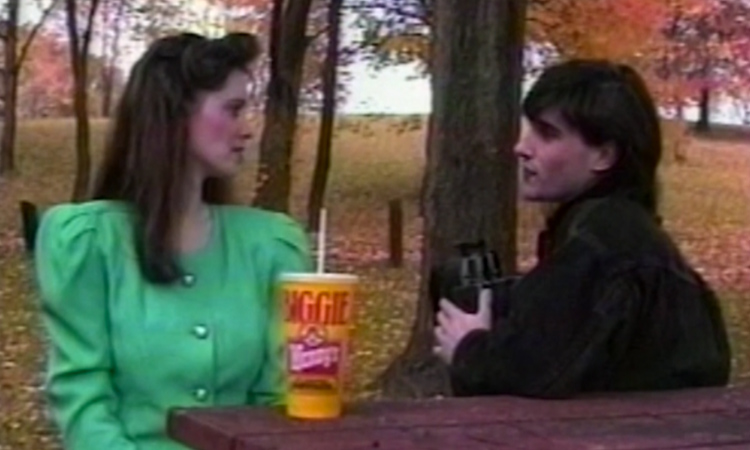
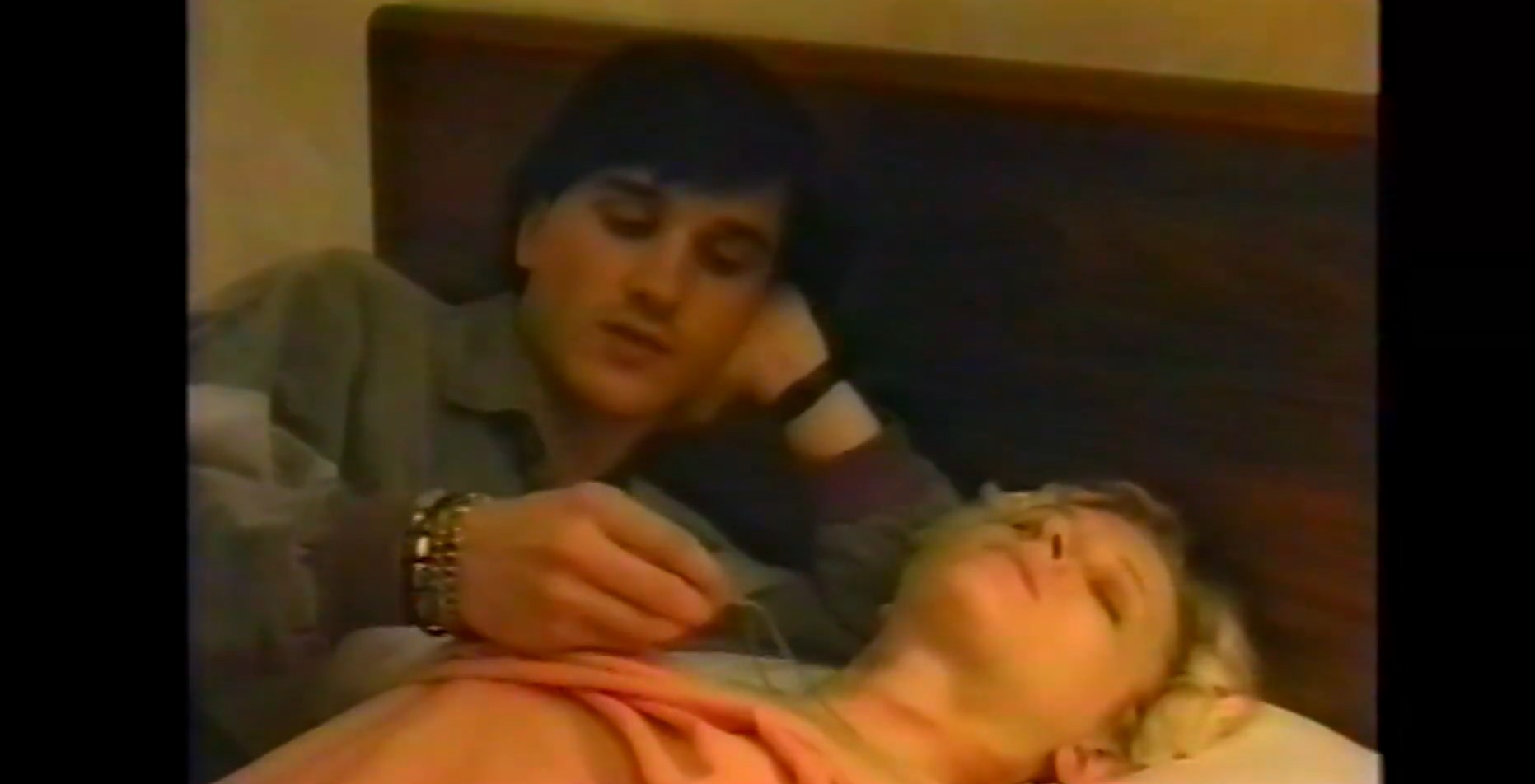
Screencap from AGFA

I wonder how much ‘Midnight 2″ is actually from the mind of John Russo or if it’s more of the J.R. Bookwalter show in calling the shots from the producer’s director’s chair as the film feels very much like Bookwalter’s usual fare, a SOV, DIY, home brew production of local Ohioan talent. “Midnight 2” also goes from the backwoods suburbia of Pittsburgh to the concrete structures of Akron, leaving behind any remnants of Abraham’s satanic past in the ground along with his dead siblings, but the sequel very dutifully leans into us with a heavy archival footage recap with Walsh narrating the entire damn thing. I kid you not, the recap is approx. a third of the runtime and so essentially, “Midnight 2” is a two for one straight-to-video special. Granted, the archival footage remains in its untouched up state so don’t expect the Severin grade video quality. In one way “Midnight 2” is discerned to be more of a Russo film is the very hesitancy of graphic, blood-shedding violence. Bookwalter’s a bit of gorehound in making some gruesome grisliness out of the singles from a Podunk stripper’s Kmart thong. There’s none of that imaginative ingenuity here with a surprising severe lack of that adored shot-on-video nastiness common of its era, especially from the likes of John Russo in filing a rated 13 release according to the DVD back cover, enervating “Midnight 2” as a inferior sequel that tries on a new pair of shoes but ends up limping with a lame gait.
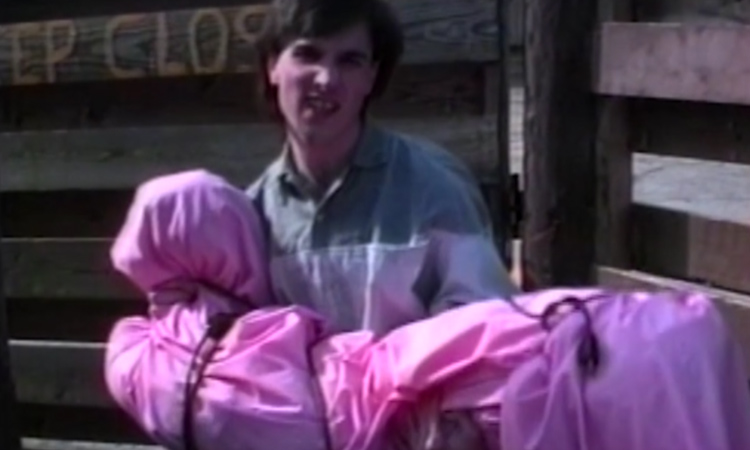
Screencap from AGFA

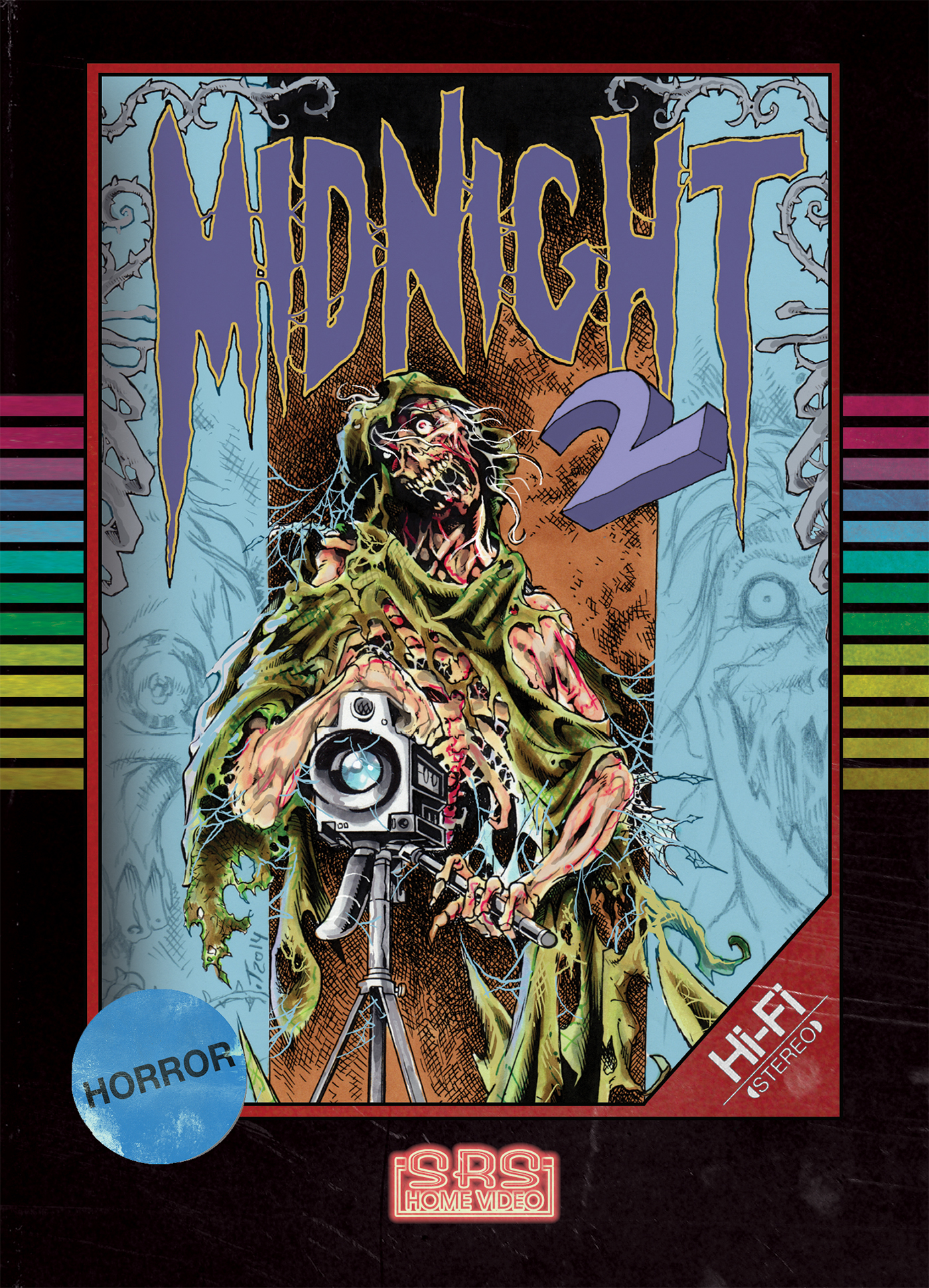
Russo might always be remembered for his contribution to the start of the “Living Dead” franchise. The cult legendary filmmaker surely found modest success with his first directorial run with “Midnight.” Yet, “Midnight 2” will have a tough time keeping out of the celebrated shadows of Russo’s credits, but the indie, underground horror label SRS Cinema pulls back the shrouding curtain with a newly released, MVD Visual distributed DVD featuring two cuts of the film. Fitted with a retro look and ghastly illustrated cover art, a superb upgrade from the VHS cover, the region free DVD is presented shot-on-video in a 4:3 aspect ratio on both cuts. Essentially, both cuts are the same with reworked scenes and narration with the except of the 90-minute rough cut having extended archival footage of the first film. The main version runs slimmer at 72-minutes. The lossy image quality abides within both versions with a flat color palette that, at times, had a singularity about its choice of unflattering hue, compression macroblocks consistently flare up, and dimly discernable innate tracking lines with video recording destabilize the image. The anemic English Language single channel mono mix is a bottom of the barrel budget sound design and that was to be expected. Dialogue does come over clear enough but lacks vigor and crispness as there is just too much electrical interference shushing in the background. Depth’s a bit awkward too with the actors conversing in the background but have foreground decibel levels. Aside from the two cuts of the feature, the only other bonus content is the theatrical trailer and other SRS home video trailers. “Midnight 2” works as a standalone in a different shot-on-video horror light but is crammed with unnecessary recapping on a story built around the destined, convoluted conjecture of a homicidal narcissist and his videotape addiction.

“Midnight 2:  Sex, Death, and Videotape” now available on DVD!

An EVIL Beast’s Carnivorous Addiction! “The Hidden” reviewed!


A sewer dwelling beast attacks and kills a cocaine fueled junkie. Now hooked on the drug and pained with addiction, the beast needs more cocaine. Every exchange meet up by the sewer entrances become a deadly encounter and as dealers and customers start to disappear, winding up dead, a drug cartel kingpin mourns the loss of his business. On the opposite side of the spectrum, the junkie’s older brother is also suffering a loss. Spiraling down a path of grief, he must find his brother’s killer at any cost, even if that means breaking up with the love of his life. A vindictive brother and a savvy drug dealer must team up to hunt the beast that stalks the sewers, looking for it’s next high, and put an end to a reign of terror.

Australia. Early 1990’s. Nathan Hill wrote and directed a crime thriller SOV, shot on a Video8 handheld, that just happened to have a bloodthirsty beast roaming the sewer system who unwittingly becomes addicted to cocaine after munching on a junkie. The 1993 film was entitled, “The Hidden,” which is not to be confused with the late 1980’s science fiction-horror, “The Hidden,” with “Twin Peaks'” Kyle MacLachlan. Hill’s film, also considered a sci-fi venture, had a minuscule, barely functioning budget and in a sense of unawareness, the filmmaker didn’t quite realize that a film, already popularizing the title, had the exact same moniker. In any case, Hill’s “The Hidden” has a premise far from the already established indulging in a vindictive creature feature with an internal turmoiled drug cartel subplot.

“The Hidden” comes to no surprise that the cast is constructed of no-named actors and actresses. Simon Mosley debuts as Michael Wilcott, a grief stricken brother looking for vigilantism vengeance. Mosley doesn’t have an acting bone in his body as he punches doors and pushes pushers around as if on command and carries a monotone, automaton performance throughout. He’s only rivaled by Daniel Rankin from another Nathan Hill directorial, 2011’s “Seance” (aka “6:66: Seance Hour: if that makes any more sense). Rankin’s a tall, muscular drink of water in comparison to Mosley and has a bit more acting chops that not only contemplates the hits he’s taking on his drug gig as dealer Guy Taylor, but also pulls a little more weight as a compassionate individual who takes a homeless boy as his surrogate father. As Mosley and Taylor team to battle the beast, the unlikely duo also have another foe to hurdle in the obstinate Steve, a junkie with a hard on for being bad, a role fit for the blonde haired and severely acned Chris Robbie. Paul Mosley, Chris Goodman, John Goodman, and Narelle Sinclair, as Michael Wilcott’s girlfriend, co-star.

Now while “The Hidden” has rough SOV quality, that’s is nowhere near the issue with Nathan Hill’s debut feature. Nick Goodman’s script spits out varying story tracks that never really shape subplots into being an unquenchable and flaccid tangent. For example, Guy Taylor’s adopted son, Carl. With the exception of a brief flashback of Guy and Steve working out together and coming across the boy. The scene’s brief but affective substance lies with setting up Guy to be a big softy on the inside and making Steve a complete jerk, yet keeps the relationship between Guy and Carl disjointed and ingenuous. There’s also the little (as in little of) mentioning of the special effects. No special effects technician is credited and it shows as the beast is absent in nearly the entire 77 minute runtime with the exception of the Predator first person infrared vision and it’s not until the climatic finale does “The Hidden” come visible and it’s a big whomp-whomp.

Nathan Hill Productions, under his NHProduction company, presents “The Hidden” distributed by SRS Home Video and MVDVisual onto DVD home video that’s encased in nostalgic, VHS cover art with a “Please Be Kind and Rewind” cherry sticker on top. The Video8 SOV image is quite washed and unstable in the 4:3 aspect ratio as if the color has been zapped right out, even after being re-animated, reduxed, and remastered. The limitations of the Video8 camcorder hinder the single channel audio, leaving the range and depth something to wonder rather than experience. Along with the anemic audio and video presentations, the bonus features doesn’t stray far as only the trailer and bonus trailers are included. “The Hidden” is unglamorous under the eye-catching cover art and more attuned to being an investigative thriller than a creature feature and a recommendation wouldn’t be hard-pressed for anything stellar.

“The Hidden” available on DVD

Evil Asks, Why Haven’t You Checked the Children? “When A Stranger Calls” and “When A Stranger Calls Back” review!


High schooler Jill takes a babysitting job, overseeing two sleeping children while the parents have date night. The phone rings and an assumed prankster tries to scare Jill, either asking why she hasn’t checked the children or doesn’t say a word, but as Jill fields calls throughout the night with the same terrorizing voice, the terrified sitter phones the police whom trace the call from inside the house. Jill barely escapes the deadly encounter that left two children victims to a psychopath; yet the now happily married, mother of two small children is faced with the same killer seven years later after he escapes from a mental institution. Hot on his trail is detective turned private eye John Clifford who will stop at nothing from stopping a maniac who will kill again. Years later, Jill and Clifford team up once more to investigate a similar case of a co-ed being specifically terrorized by an obsessive stalker through the span of five years to the point where his next move could be her last.

Perhaps one of the best, if not the best, openings to a horror movie ever, Fred Walton’s “When A Stranger Calls” puts a freeze on the heart, forces to choke down the breath, and tightens the already painfully clenched fists with sheer, thick tension bred from an urban legend of the babysitter and the man upstairs. Walton, and co-writer Steve Feke (“Mac and Me”), develop two successful thriller from script to screen, spanning over the course of 14-years. Walton’s uncanny ability to invoke fear through a conduit of simple objects, such as a telephone ring or in the thicket of dead silence, and leading a direction of motivational hesitation or slowness to the story and through it’s characters is dread absolute. There’s similarities between Fred Walton and “The Driller Killer” director Abel Ferrara with a scent of realism and grittiest blanketed with a knack for the abstract in certain facets. Though slightly fluffier to Ferrara’s shock value, Walton builds anticipation in not just his hit first film in 1979, but also in his made for TV movie in 1993.

Starring as the lead in both films is Carol Kane. The “Scrooged” actress shells out a white knuckling performance in Jill, the terrorized babysitter phoned inside the house by man upstairs. The harrowing night that will scar for Jill for life will continue through into the sequel, “When A stranger Calls Back.” As Jill grows through both films, so does Kane who builds the character a tougher exterior to match wits with second psychopath stalking a hapless co-ed. She’s teamed with legendary actor Charles Durning. Essentially in Walton’s “When A Stranger Calls,” Kane and Durning never have any scenes together, performing in almost two separate stories until the climatic that intertwined that collaboration. During’s a fine actor and can be the bull of any detective and/or private dick lead, but, to be honest, Durning always carried a hefty, front-heavy load that didn’t quite fit his character, John Clifford, chasing on foot a much leaner foe. “When A Stranger Calls” cast also includes Ron O’Neal (“The Final Countdown”), Tony Beckley (“In the Devil’s Garden”), and Colleen Dewhurst (“The Dead Zone”) while “When A Stranger Calls Back” also includes Jill Schoelen (“The Stepfather”) and Gene Lythgow.

A fleeting glimpse of brilliancy can go relatively unnoticed in Fred Walton’s “When A Stranger Calls.” Much of what makes the film so effective is essentially obsolete; for example, rotary phones are dinosaurs or even landlines for that matter. Also, the way Walton breaks up the film into a definitive three separate acts perfectly stretches the urban legend much more than warranted and the director also completes the story and character arcs. Dana Kaproff’s sophomore score can be characterized as menacing, suspenseful, and aesthetically unfit to the point of inspiring dreadful sensations that heighten the story’s already engrossing nature. In “When A Stranger Calls Back,” the opening is basically a mirror image of the original film with a slight (of hand) change and the narrative itself is captivating enough to get engrossed with, but there’s something about the made for TV movie that doesn’t quite sit right. Perhaps, the killer’s underdeveloped motives doesn’t make things crystal clear or just maybe the killer’s use of a ventriloquist and body art into his perverted and obsessive arsenal is too zany. Despite being a made for television movie, Walton’s followup film was premiere on Showtime back in 1993, giving the movie a not-so-diluted and PG-13 appeal; instead, bits of grittiness and some strip club nudity rivals the tone of it’s predecessor.

Second Sight presents “When A Stranger Calls” and “When A Stranger Calls Back” double feature on Blu-ray home video in the United Kingdom. Despite the upgrade, a DVD-R was provided for the review so technical aspects will not be reviewed. The disc did include bonus features such as Fred Walton’s inspirational short film “The Sitter” and interviews with director Fred Walton, Rutanya Alda, and Dana Kaproff, and Carol Kane. Carol Kane has more recently been the quirky and city-salty landlady that’s quick to whip sarcasms and clobber any hipster with a gentrifying agenda with a baseball bat in “The Unbreakable Kimmy Schmidt,” but Fred Walton saw Kane for how the actress could truly perform under a realistically terrifying moment, a moment that savors being on tenterhooks and frozen in time for almost the last 40 years as a classic and iconic scene in horror movie history. “When A Stranger Calls” and “When A Stranger Calls Back” is simple, yet deploys effective thrills with pure impending loom and dread in massive, lucrative quantities that may have been antiquated by time, but is epitomized as vintage and elegantly construed horror.