Gimme an E. Gimme a V. Gimme an I. Gimme a L. What’s that Spell? EVIL! “Cheerleaders’ Wild Weekend” reviewed! (MVD Rewind Collection / Blu-ray)

“Cheerleader’s Wild Weekend” Now Back Available on Blu-ray!

Three rival school’s cheerleader squads board a school bus heading to Sacramento to face off in an annual cheer competition.  Detoured to an isolated, less-traveled road late at night, the bus is hijacked by members of the National American Army of Freedom, a group of ex-football players given the shaft for their individualized reasons.  The play caller leading the group is Wayne Mathews, former star quarterback cut loose from his team because of a bum arm, kidnaps the bus full of teenage girls to extort a handsome ransom to get him and four of his terroristic teammates back into the game of life.  Not looking to harm one hair on girls’ heads, Wayne attempts to keep his colleagues from exploiting their bargaining chips while also keeping to the well-designed plan to evade capture and still obtain the cash prize, but when Wayne’s away, it’s up to the cheerleaders to put their differences aside, come together with their own plan, and give the kidnapper a school spirited taste of their own devious medicine.

An odd hybrid of a sexualized teen comedy, blackmail crime thriller, and sleazy exploitation, “Cheerleaders’ Wild Weekend,” also known as “The Great American Girl Robbery,” hails as a full out filching and fleshy feature from Jeff Werner as his debut feature before helming the dark comedy surrounding the atomic bomb formula-carrying monkey of “Die Laughing,” starring Charles Durning and Peter Coyote, and his subsequent move from fictional film to documentary for the remainder of his career.  The 1979 film is cowritten between D.W. Gilbert and costar and cult actor Jason Williams, “Flesh Gordon” himself.   Adult film executive producer Bill Osco (“Tijuana Blue,” “The Incredible Body Snatchers”) finances the lesser explicit skin flick after the success of “Flesh Gordon” and intense crime spree thriller “Cop Killers,” both films of which have Jason Williams in significant roles in their long time collaboration, and is produced by an onset Chuck Russell who would later go on to write and direct “The Blob” remake and “A Nightmare on Elm Street 3:  Dream Warriors.”

On the cusp adult film actor Jason Williams who didn’t mind showing some skin for “Flesh Gordon” or the parodical tune of the Lewis Carroll kid’s story with “Alice in Wonderland:  An X-Rated Musical Fantasy,” but “Cheerleaders’ Wild Weekend” was different for Williams who not only kept his clothes on for most of the picture but also tried to keep others from taking their clothes off as well.  As quarterback gone quintessential eyes-on-the-prize kidnapper Wayne Mathews, Williams co-drives the narrative from the perspective of the heist in a focused attention on staying one step ahead of the bumbling and birdbrain detectives (Marc Isaacs and Hugh Brennenman).  Kristine DeBell, who co-starred with Williams as the titular character Alice in “Alice in Wonderland:  An X-Rated Musical Fantasy, copiloted as Debbie Williams who became the representative portion of the defenseless, scared, and quite cheeky cheerleaders held captive in a rural cabin as Matthews hones in on the $2 million in ransom money.  While the black and white plan for Mathews is just that, crime comes in many shades of color, and sexuality, and in intelligence within his accomplice network of failed football teammates, a sexually pent-up buxom chaperone, and even the fleeting desires of his younger brother, Billy (Robert Houston, 77’s “The Hills Have Eyes”).  Mathews right hand man George Henderson (Anthony Lewis), Big John Hunsacker (John Albert), and Frankie (Courtney Sands) become the ultimate problem that buries the original crux of the kidnapping with sordid inclinations for physical abuse toward the girls than what Mathews has in mind and becomes the spur for the cheerleaders, including LaSalle (Tracy King, “Mansion of the Doomed”), Wally Ann Wharton (“Up In Smoke”), Deslyn Bernet, and others, to fight back against their deviant, hornier captors. 

Werner’s debut is literally a wavy rollercoaster of pulled back levity with good-time voluptuousness and a strong browbeating back-and-forth rivalry amongst of a few honkytonk barrels of laughs while, in the same breath, can be deeply troubling with its side dishes of attempted rape, verbal abuse, and sexual grooming of what’s supposed to be high school cheerleaders (or maybe College cheerleaders…it’s not very clear in the narrative).  You don’t know whether to laugh in relief or be tense with the unsettling advances.  Plenty of gratuitous nudity doesn’t help the matter as a handful of select leaders of the school packs are willing to bare skin albeit being held at gunpoint in this twofaced tale.  With lead principals Wayne Mathews and Debbie Williams, a firm position is held, a genuine felt love interest is formed, and their unspoken body language is clear to the end, providing much needed release from the grip of ebb-and-flow emotions.  Another push toward the accolades of comedy are the two detectives and a blatennt archetype of undercover cops who, in football terms, fumble their way through a sting operation to catch the crooks while the crooks, meaning the Mathews brothers, find reward and redemption, such as Wayne’s bum arm comes through tossing a bag full of $2 million through the air and into the getaway car, with their indifferent yet simultaneous compassion for the held cheerleaders.  $2 Million in $20 dollar notes is about 220lbs per my calculations so that’s one heck of a throwing arm! 

Rewind back to 1979 with MVD’s Rewind Collection label and check out “Cheerleaders’ Wild Weekend” on their new Blu-ray release.  The 1080p high-definition presentation comes onto an AVC encoded, BD25 with the widescreen aspect ratio of 1.78:1, cropped slightly from the original 1.85:1.  The print used for the transfer looks to be print from the now defunct label, Scorpion Releasing, for the company’s 2009 Blu-ray that’s been out of print for some time now.  Print care helps define a broader color palette with the occasional pop of red or yellow moments of higher contrast moments and details, such as glass speckling, groove shadows and textures of a varietal of hair color and consistencies, and other miniscule points of the milieu that emerge through, or pork through according to Courtney Sands’ large white shirt pokies, but leading into lesser light lends to a crushed blacks that swallow object definition and shape.  However, there is some print damage in the form of dust and dirt, a few instances of vertical scratching, and what looks to be cutting damage during a scene transition.  Unlike the Scorpion Releasing Blu-ray that encoded the DTS-HD MA audio codec, the MVD release uses an uncompressed English LPCM mono that sizes up fidelity of the original track.  Surprising being a 25Gig capacity, the uncompressed files appear to maximize the audio without compromising quality.  The verbose dialogue has elevated appeal without steeping to an imbalance, making every individual voice seem like they’re on the same plane of existence in the clean and clear rendition.  Ambience noise is inlaid with consideration for medium range and depth that’s required of this production, mostly close-range gunfire, tire screeches, engine noise, and chases through the brush, that are within arm’s length or a stone’s throw from the camera.  English subtitles are available for selection.  Special features are from the Scorpion Releasing’s archive with an audio commentary with director Jess Werner, actress Tracey King, and editor Gregory McClatchy, a second audio commentary with principal actress Kristine DeBell, an interview with Debell, an interview with principal actor Jason Williams, an interview with Tracey King aka Marilyn Joi, an interview with Leon Isaac Kennedy, an alternate title card sequence with “The Great American Girl Robbery,” a photo gallery, and the original theatrical trailer.  The primarily white and red colored, O-slip cover art has a retrograde façade of a VHS rental complete with mock peeling stickers and dirty edges overtop the film’s marketing of a half-naked cheerleader covered just in pom-poms.  Blu-ray Amaray case sports same image but cleaner without the faux VHS trappings. Inside is a folded mini poster of said art in the insert field and the disc is labeled pressed with the textured grooves of a VHS cassette.  The region free release comes not rated and has a runtime of 96 minutes.

Last Rites: Jeff Werner’s first feature is full of spirit and shapely misguided youth and frustrated former football players in this light sex comedy concealing darker, predatory behavior beneath the surface. “Cheerleaders’ Wild Weekend” will cause snickering and titillating excitement while also tense your gut in what’s an amalgamation of a jest and jostling, bare-chested, good-old-fashion American heist film.

“Cheerleader’s Wild Weekend” Now Back Available on Blu-ray!

Never Cry EVIL Unless You Mean It! “Night Visitor” reviewed! (Ronin Flix / Blu-ray)

“Night Visitor” Creeping Onto Your Doorstep!  Now on Blu-ray!

Never-on-time high school senior Billy Colton can’t seem to catch a break in arriving to class on time. To make matters worse, Billy makes up a lame excuse for every tardy to his surly history teacher, Mr. Willard. On thin ice with Mr. Willard with only a few weeks left to graduation, Billy must keep his nose clean in order to not make any more waves that’ll cost him his diploma. When a new, extremely sexy, call girl neighbor moves in next door, Billy becomes entranced by her casual sexual affairs. So much so, Billy sets up a telescope from out his bedroom window to spy on her and convince his naysaying friends of her profession by sneaking a rooftop picture catching her in the middle of a tryst. What Billy sees is his neighbor being stabbed to death and the culprit is none other than his history teacher, Mr. Willard, continuing his conducting of Satanic rituals and sacrifices on local prostitutes. Because of his reputation for making up stories, no one believes Billy, not even the police, and he’s forced to attend Mr. Willard’s class with both parties having the knowledge of what really occurred. Billy’s desperation sends him to seek the help of a retired detective, Ron Devereaux, a close friend of Billy’s late father, and extreme measures must be taken by Billy to prove a killer’s identity and to stop Mr. Willard from coming after him.

“Night Visitor” is the 80’s alteration of the classic Aesop fable, “The Boy Who Cried Wolf.” The 1989 teen-campy cult horror is the first venture into feature length films by Rupert Hitzig, producer of “Wolfen” and “Jaws 3-D.” The twisted, modernized story derived from the fable was penned by Randal Viscovich to sought to provide nods to other films, one film in particular, “Fright Night,” shares a story parallel or likeness of an older teenage boy spying on the carnal rendezvouses of his alluring neighbor and ends up becoming involved in something far more sinister. At one point in time the film was under the working title, “Never Cry Devil,” a spin on the fable idiom cry wolf, Hitzig’s final product eventually landed on “Night Visitor” and the graphic nudity and cannibalism pared down for general audience consumption. Premier Picture Corporation served as the production company with Alain Silver (“Kiss Daddy Goodbye,” “Mortuary Academy”) producing, Randal Viscovich and Richard Abramites associate producing, and Tom Broadbridge (“The 13th Floor”) and Shelley E. Reid (“Nine Deaths of the Ninja”) as executive producers with United Artists serving as film rights distributor.

At the center of the story is a coinciding dual lead. One might be more prominent in the beginning, but the second soon catches up to run alongside in an even dichotomy of good and evil. Derek Rydall (“Popcorn”) plays into the stereotype of a hang loose teenage boy named Billy Colton on the edge of adulthood with a penchant for voyeurism as he spies on the late-night sexual commerce of her blonde bombshell neighbor. Rydall introduces mis makings of an energized, poofy-haired hunk who might be a little bit naive as a closeted peeping tom and looks to score with an older woman despite exhibiting and declaring feelings for his longtime friend Kelly (Teresa Van der Woude, “Killer Workout”). Who can blame Billy when Billy’s new neighbor was a Playboy Playmate? Shannon Tweed (“Cannibal Women in the Avocado Jungle of Death”, “Of Unknown Origins”) seduces, arouses, and paints by the numbers in what she does best – to be the sexiest woman on screen. Having never really dug herself out of being typecasted, Tweed humble horror beginnings is about the extent of her range before being cornered in the sex-thriller market and the Playmate of the Year 1982 is great fun to watch onscreen as her sex-working-kittenishness character, Lisa Grace, causes Billy Colton to steam in his pants. As much as it was a joy to watch Rydall and Tweed chart a possible older woman, younger man fling (fun fact: Tweed was supposedly playing a 26-year-old but was actually 31-32 and very much looks her age in the film), I thought Allen Garfield (“Diabolique”) and Michael J. Pollard (“Scrooged”) as brothers rollicking as Satan acolytes or rather just Garfield’s character Mr. Willard is the Satanist and Pollard as brother Stanley is just insane and fancies mentally manipulating the furniture as he calls the working girls him and his brother abduct and hold in the basement. Pollard is absolutely demented! All of the snarky quirks, plus a slew of scampish facial expressions and remarks, turn the fun-loving eccentric into a total maniac of truly scary proportions. Garfield’s method approach offers a different kind of demented, one that’s calculating and cunning to counter his brother’s outward lunacy. “Night Visitor” rounds out the cast with more gifted, recognizable talent in Elliot Gould (“Dead Men Don’t Die”), Richard Roundtree (“Shaft”), Scott Fults (“Hide and Go Shriek”), Brooke Bundy (“A Nightmare on Elm Street 3: Dream Warriors”), Henry Gibson (“The ‘burbs”), and adult film actress Teri Weigel giving Shannon Tweed a run for her money in the skinemax department as the basement-bound prostitute.

If you had told me “Night Visitor” was a strictly a chilling cut thriller, I would have not believed you and would recommend psychiatric help. Aside from the opening scene of a hooker being violently snatched and grabbed into a gothic black car, “Night Visitor” has the hallmarks of a teen comedy amped up on sex-driving hormones, teenage melodramatic antics, and parades light-hearted teen comedy up until throats are slit, chests, are daggered and Michael Pollard wildly wields a chainsaw with an impish grin. The blithe spirit soon turns dark and grim as the carefree attitude of the hero goes toe-to-toe with stern and Satanic teacher, a wonderfully metaphorical relationship to the extreme that’s universally relatable as everyone has had an encounter with a discontented classroom instructor at least once growing up. Surprisingly stark how bleak the film turns, an overwhelming sense of dread lingers after that second prostitute meets her maker in a ghastly way that, as far as kills go, isn’t very radical but the true nature of the subject matter is shaded so well that the moment literally hooks you into the story as you start to connect what just might happen next to the new neighbor. One aspect that felt lacking was that there isn’t much depth to the Willard brothers’ Satanism; a few upside-down pentagrams, a goat’s head, Baphomet’s goat head statue, a topless sacrifice with chant, and Allen Garfield’s robe and elaborate horned masked, which is an excellent design, are all the thin layer of thematic elements but still retains sufficiently the Willards connection to Satanism. Whenever the story moves from Billy Colton’s obsession to expose Mr. Willard, much of the narrative then focuses on the interrelationship of Zachary and Stanley Williard which is mostly a nonaggressive superior and subordinate kinship. Stanley, who caters to Zachary’s every request and even squeezes for him fresh orange juice, plays along with his brother’s inadequate display of being a disciple just to get his own malevolent kicks out of tormenting women of the night. There’s this unexplained fixation with prostitutes that puts forward less a Satan worshipper and puts forward more a pair of mania driven maniacs quenching a thirst for blood by offing the lower class of society that no one will miss. A brief scene backs up this theory of an angry prostitute chewing Captain Crane’s ear off about protecting the girls on the street and he just casually strolls along, waving her off as if to say, yeah whatever.

Ronin Flix, in association with MGM and Scorpion Releasing, urges you to never cry wolf in this tale of terror as “Night Visitor” lands on a Blu-ray home video, distributed by MVD Visual. The 1080p, high-definition release comes with a brand 2019 transfer master that’s clean as Mr. Willard’s rap sheet with no 35mm celluloid impurities, no aged wear or tear, and a healthy amount of unadulterated grain, presented in a widescreen 1.78:1 aspect ratio. Color grading has excellent appeal and defines the natural color palette greatly amongst the delineated details and appeasing textures. The DTS-HD Master Audio 2.0 stereo is on the only audio mix on the release and while it provides clean and clear dialogue track, the depth is often disproportion to the characters on screen. Much of the dialogue is in the forefront channel of the dual outputs, making every sentence feel closer than it should actually be in the stationary location of the character. Other than that, transfer’s hyper free of hiss, pops, and other audio blights. Option SDH subtitles are available. Bonus content has the original theatrical trailer and brand-new interview with director Ruport Hitzig, editor Glenn Erickson, and writer Randal Viscovich who all share a commonality regarding “Night Visitor,” the story was trimmed down of all of Viscovich’s nasty bits and shocking ending and made more upbeat for a better sell. Physically, “Night Visitor” comes in the traditional blue snapper keep case with brilliant red and illustratively glowing cover art of the sacrificial mask. The back cover claims the cover art is reversible, but it is not. The Blu-ray is region A encoded, has a runtime of 93 minutes, and is rated R. The cast alone is worth the price of admission as “Night Visitor” preys on the inculpability of Satan’s most righteous worshipper and on the power position of a role model with a secret life who has it out for the boy who cried wolf too many times.

“Night Visitor” Creeping Onto Your Doorstep!  Now on Blu-ray!

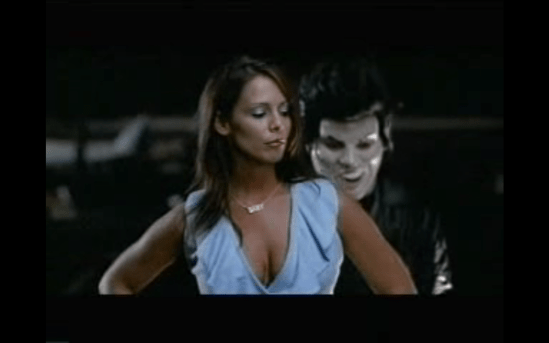
When Music Videos Go EVIL! “The Backlot Murders” reviewed! (Dark Force Entertainment and Code Red / Blu-ray)


After a night of drinking that ends in breaking a bottle over the bar owner’s head, a struggling and internally conflicted rock band kicks out the cancerously unhinged and troublesome member before their rise to stardom. Unfortunately, all the talent went out door along with the excommunicated band member, forcing the band to impress with an extravagant music video shot on Universal’s iconic backlot, sponsored by their agent and the lead singer’s girlfriend’s music mogul father. Instead of intense pyrotechnics and scantily cladded female groupies dancing on their crotch, the band, their girlfriends, and the crew find themselves caught in the gloomy, labyrinth-like movie lot, housing spooky interior and exterior sets, unaware the lurking murderous manic taking them out one-by-one.

By far a polar opposite polished genre film than the sadistically raw brutal rape and murder extravaganza that was “Chaos,” writer and director David “The Demon” DeFalco dabbles in the early 2000’s revival of the slasher genre with his 2002 released feature “The Backlot Murders” in the wake of the widespread success of the “Scream” franchise. In much of the same way “Chaos” came to fruition derived from “Last House on the Left,” DeFalco, once again, finds inspiration in the form of cult horror director Wes Craven. However, DeFalco strays away from the meta-horror and trope-reversal techniques and replaces it with a satirical façade of the music industry where glam is more important than meaningful substance. The slasher-comedy carves up nods to Van Halen, Pearl Jam, Aerosmith, and even Elvis Presley with a horrendously skewed mask version the killer wears. “The Backlot Murders” were co-written by Paul Arensburg and Steven Jay Bernheim with the latter writer serving also as co-producer with DeFalco in association with Dominion Entertainment.

A contributing factor to “Scream’s” success was the diverse in career cast that clicked together as well as twisting archetypical roles into atypical whammy that veered audiences to the edge of their seats. “Scream” shocked audiences with the immediate death of a well-known actress right out of the gate, nabbed “Friends’” star Courteney Cox, “SLC Punk” and “Hackers” actor Matthew Lilliard, teen heartthrob Skeet Urlich, one of the Arquettes with David Arquette, and, perhaps, would have guaranteed Neve Campbell a slab of concrete for the Hollywood Walk of Fame along with an already cemented label as a scream queen and a final girl. The same eclecticism could be transfixed by “The Backlot Murders’” acquisitions but on a more obscure scale with a cast from all walks of life that includes the Roger Rabbit voice actor himself, Charles Fleischer, “Three’s Company” star Priscilla Barnes, 1997’s Playboy Playmate Carrie Stevens, and the late Corey Haim (“The Lost Boys”) as the band’s guitarist in a role that seemed below his fame stature. Most gaps are plugged with interesting characters treated with some backstory buildup that becomes more stagnant than footfall companions in order to get to know them better before their demise, but their persona conductors include Brian Gaskill (“The Bloody Indulgent”), Tom Hallick, Jaime Anstead, Dayton Knoll, Lisa Brucker, Ken Sagoes (“A Nightmare on Elm Street 3: Dream Warriors”), LoriDawn Messuri, Angela Little, and Tracy Dali.

“The Backlot Murders” didn’t set out to revolutionize the slasher genre, but only relished in the after success and donned a more satire effort that purposefully retreated back into the conventional tropes to form an entertaining run of sex, drugs, and rock’n’roll gags, but the one thing missing, and it’s a doozy, is the actual killer presence in the film who is treated as an afterthought of slim importance and chucked into a insignificant plot twist that forces DeFalco’s hand to become a routine hack’n’slash lemming. One positive aspect of “The Backlot Murders” is the extremely high body count that produces a continuous stream of nixing off a slew of characters with their own death scenes inside the renowned confines of a Universal backlot backdrop that’s not only good-humored irony but also a sizeable effort by the Bernheim/DeFalco producing team. Yet, despite the high body count, the kills and gore felt sorely uninspired and underwhelming, rehashing into homage death scenes from “Friday the 13th” and “Scream” with a few forgettable approaches to call its own, until DeFalco breaks the damning goreless streak with a gruesome Columbian necktie effect that goes for the throat. I make “The Backlot Murders” seem unenjoyable and heartless when, in fact, the early 2000 slasher-comedy is immensely funny with a Charles Fleisher gold recorded, laugh track amongst the relentless mocking of the music industry from a far in this true to form slasher accessorized with a high body count kill dozer of a villain.

When things are quiet on set, “The Backlot Murders” evoke the slasher spirit on a new-to-Blu Blu-ray release in the U.S. from Dark Force Entertainment and Code Red with MVDVisual handling distribution. The 1080p, hi-def release is presented in an anamorphic widescreen from a brand new 4K scan of the original 35mm negative. The cool contextual colors render nicely amongst the shadowy gloom and foggy backdrop that’s reminiscent of a softly lit late 90’s and early 2000s slasher. The textures are sharper than the Razor Digital DVD release; the tactile feeling of asphalt when a bluish white glow hits the pavement or the gritty backlot sets vibrant with an ominous glow strike powerful chords of a lively presence from the transfer. There doesn’t seem to be any cropping, edge enhancing, or any other manipulation to the transfer present. The English mono track, which leans away from the LFE, has the opposite, lackluster appeal with a single channel blockade that doesn’t project the bands pyrotechnics, the screams of being chased, and settling for limitations on other wide range of girthy resounding audio. However, the dialogue is clear, unobstructed, and in the forefront. Bonus material includes a new audio commentary with director David DeFalco and Code Red’s Banana Man plus three new and very bizarre interviews with Carrie Stevens lingering from effects of the #MeToo movement to making home fudge, with Charles Fleisher and dissociative disorder or madman genius insight, and ending with a fairly regular interview with Brian Gaskill recollecting the film and his career through a tough industry standard. The Fleisher and Gaskill interviews end with a video op with The Demon himself, David DeFalco. “The Backlot Murders” had forefront potential of systemic slasher films of the time period, but pitter-patters for levity and a sweeping kill count that reconstructs the dread into death and comedy.

“The Backlot Murders” on Prime Video!

Small Town Evil Under a Full Moon! “Silver Bullet” review!


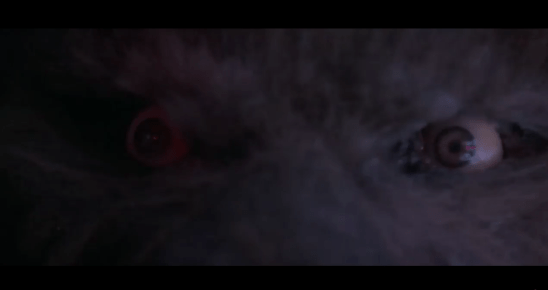
A small town is under sieged by a callous killer, ripping victims to bloody pieces and shreds without an ounce of mercy. As the town goes into a lockdown curfew, a paraplegic young boy named Marty decides to enact his own version of rebellious fun with a stroll in his gas-engine powered wheelchair for some nighttime fireworks, despite a killer on the loose and lurking in the moonlight. Marty’s fun turns into a terrifying nightmare when the killer stalks the boy and when Marty comes face to face with the killer and lives to tell the tale, he discovers that the town maniac is no ordinary deranged person but, in fact, a nasty, snarling werewolf whose also living in plain sight amongst them in the small town community. The only two to believe Marty’s harrowing tale is his older sister, Jane, and his drunk Uncle Red, whose still on the fence about Marty’s werewolf encounter. When the moon is high and full, the three devise a plan to lure out the monster to definitively put it down with a single shot from their one and only silver bullet.

A true piece of Americana horror, “Silver Bullet” remains a staple werewolf flick for those who grew up watching genre films in the 1980s. Daniel Attias, his first and only ever feature film, had embraced a larger-than-life monster movie from a script written by the legendary macabre novelist Stephen King, based off his novella “Cycle of the Werewolf.” Attias and King were practically novices when in regards to directing and screenplays; yet, “Silver Bullet” offers much in the way of comedy, drama, and the frightening scares with a practical effects wolf and snippets of gruesome, violent death at the hands of the beast. “Silver Bullet” goes beyond just being a thrilling story of good versus evil by also blurring the lines of the conventional establishment that spark up the old idiom, a wolf in sheep’s clothing, and dives into a satirical outlook of certain religious faiths and their viewpoints.

What makes “Silver Bullet” as one of the most recognizable and rememberable films, regardless of some microscopic sloppy screenwriting and first time directing woes, is the cast. Before his life altering motorcycle accident, Gary Busey (“Predator 2”) as Uncle Red brings flesh and bone, and booze, to akin King’s Uncle Al character from the novella. Busey fabricates a wonderful, heartwarming performance dynamic with Marty, whose played by the late Corey Haim (“Lost Boys”). Haim is fresh to the scene with his chubby cheeks and doughy soft eyes that would eventually make him a heartthrob idol later into his career and at the young age of thirteen, Haim’s paraplegic performance is respectable and empowering. Uncle Red and Marty are pitted against a sleeper antagonist in Revered Lester Lowe, a role who I could see no one else being in aside from Everett McGill (“People Under the Stairs”). McGill has a face for television, or the big screen in this case, as his chiseled, dark features make him a formidable foe that’s hidden behind a clerical collar. Longtime television and TV movie star Megan Follows plays big sister Jane whom factors in as Marty’s only ally despite their dysfunctional relationship which Follows portrays well with verbal jabs of adolescent wickedness toward her disabled little brother. Rounding out the cast is Terry O’Quinn (“The Stepfather”), Bill Smitrovich (“Manhunter”), and “Reservior Dogs” Lawrence Tierney.

Television cooking show host, Giada De Laurentiis’ grandfather, Dino De Laurentiis, produced the film who was no stranger to the horror genre, such as “Orca” and “Amityville II,” nor to films adapted from Stephen King’s work like the “Dead Zone.” Under Luarentiis’ wing, “Silver Bullet” delivered brutal, traumatizing werewolf kills spun from the werewolf suit creating hands of another Italian, Carlo Rambaldi (“The Hand That Feeds the Dead”), and together, the two Italian filmmakers, along with an apt cast and crew, saw their installment flourish amongst an overcrowded werewolf subgenre in the early 1980’s with competition from films such as John Landis’ “An American Werewolf in London,” “The Howling,” and, yes, even “Teen Wolf.” “Silver Bullet” didn’t just arrive on the scene without some challenges to the storyline. For instance, a killing spree has already established with more than five townsfolk dead and a strict curefew has been set in place, but Marty, ignoring his Uncle Red’s solicited advice about staying near the house to set off fireworks, sneaks out in the middle of the night to shoot off fireworks away from the house. Marty’s fairly bright through the entire story and a nice kid, but the initial encounter between him and the werewolf is by far one of the most unintelligent and dim-witted action any character to make in the history of horror films. What makes the scenario even worse is that Marty is handicapped.

Umbrella Entertainment presents Daniel Attias’ “Silver Bullet” on region B Blu-ray home video in a widescreen 2.35.1 aspect ratio. Image quality of the full high-definition 1080p picture has an agreeable color palette, sharpness, and pinpoint details that especially come to light during the memorable church of wolves scene. A very few scenes have transfer instability where, in a blink of an eye, a revert to a faded frame comes into the fold. The English 2.0 DTE-HD master audio poises and harmonizes the elements and the dialogue into a vat of consistency that isn’t flawed by track damage. Jay Chattaway rallying, chilling score is a candor testament to the quality of the soundtrack that follows suit right behind the beyond par quality of the dialogue and ambient levels. Special features include audio commentary with director Daniel Attias, interviews with special effects artists Michael McCracken, Jr (“Deep Blue Sea”) & Matthew Mingle (“A Nightmare on Elm Street 3: Dream Warriors”), an interview with actor Everett McGill, an Umbrella exclusive interview with producer Martha De Laurentii’s remembering “Silver Bullet,” isolated score selections and audio interviews with composer James Chattaway, theatrical trailer, TV Spots, radio spot, and still gallery. A complete and definitive set from Umbrella Entertainment! “Silver Bullet” is a howling success story of classic American horror that has timeless practical effects, a riveting narrative, and cast enriched characters that invest into the lycanthropy film paralleling David versus Goliath.