Return Home to Discover Dad’s An EVIL SOB! “The Abandoned” reviewed! (Unearthed Films / Limited-Edition Blu-ray)

Don’t Be Left Behind. Get Your LE Blu-ray Copy of “The Abandoned” from Unearthed Films

Marie Jones never knew her parents.  Born in Russian, raised in the London, and now lives in the U.S., the low-budget movie producer receives news from a Russian estate notary providing her details on her murdered mother back in 1966 and her existence entitles her to the isolated family farm.  Unable to resist the urge to find out about her mysterious past, Marie travels to her parents’ dilapidated farm settled on an island encircled by a river.  There she meets Nicolai claiming to be her twin brother and that he also, after a similar call from the notary, felt pulled to their family home on the verge of their upcoming birthday, but they’re not totally alone.  Trapped on land that won’t allow them to leave, Marie and Nicolai run into their undead doppelgangers that impel them to dig into their family history and uncover the gruesome truth to what happened to their mother.  All the while, the house around them rewinds back in time before age and weather have taken a toll and the souls living in what was once a home return to bring the family back together again.

A past drawing near story stretching from 1966 and 2008, “The Abandoned” is a haunted house, supernatural, and circular tale that bears down a forlorn ancestry nightmare onto ensnared curious lineage wanderers, bringing them back into a vicious cycle of a family history that should have been left alone.  “Aftermath” and “Genesis” short film director Nacho Cerdá tries his hand at less necrophilia and gore for more daring, open-to-interpretation horror with the Karim Hussain (“Subconscious Cruelty”) original script with some rewrites and sprucing done by “Dust Devil” and “Hardware’s” Richard Stanley.  Filmed in Bulgaria to double as the scenic landscapes and to use the country’s looming, enveloping trees as another margining aspect of being trapped, “The Abandoned,” initially title as “The Bleeding Compass” on Hussain’s original script, is produced by Julio and Carlols Fernández, Kwesi Dickson, Stephen Margolis, and Alexander Metodiev under Castelao Producciones, Filmax International, and Filmstudio Bojana with Future Films’ Carola Ash and Albert Martinez Martin serving as associate producers.
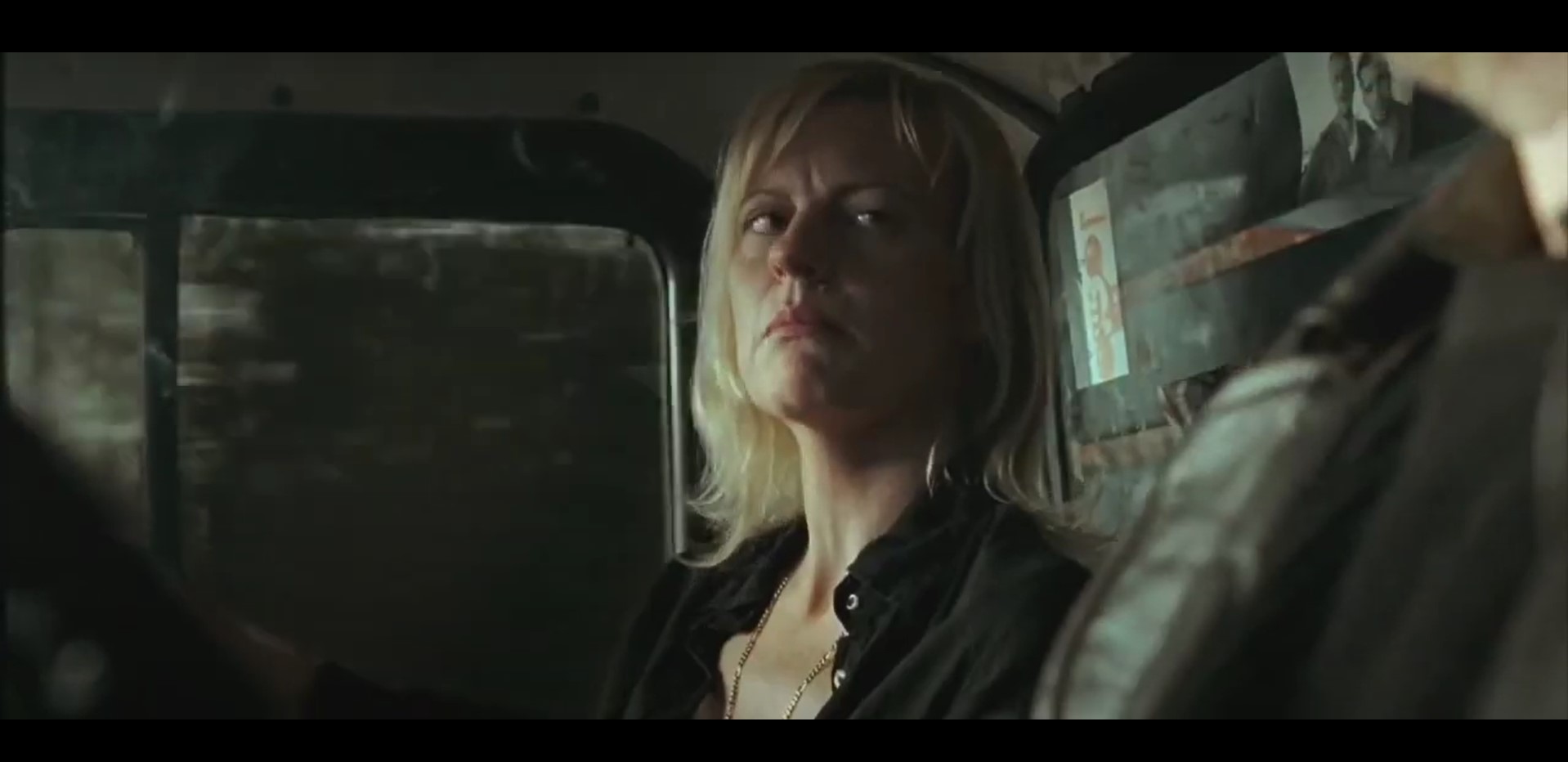
“The Abandoned’s” modest budget regulates casting to, at that time, relative unknowns for the U.S. market but certainly not an experienced lot between English actress Anastasia Hille (“Snow White and the Huntsman,” “Martyrs Lane”) and Karel Roden (“Orphan,” “Hellboy’) playing reunited brother and sister Marie and Nicolai who have not been together since infancy.  Separated at the demise of their mother, Marie and Nicolai have undoubted hesitation to their relation, especially both are met by grisly versions of themselves in the old family homestead.  The double versions of themselves represent a dual life, one connected to their current path, and one connected to their past, and Hille and Roden play into that theme with fortitude and fear in how the past haunts their characters connected to a shadow world in a very “Silent Hill” way.   Hille brings complexity to Marie’s own troubled relation with her daughter, a character we don’t necessarily see physically on screen, but we understand through phone conversations and brief interactions with Uncle Nicolai that the foundation the mother-daughter relationship stands on is shaky and that pushes Marie to pursue the truth about her own mother to avoid that disconnection with her daughter.  For Nicolai, Roden instills a more tragically inclined façade without overcompensating with tremendous evidence in the loss of a woman he loved, aside from their matching tattoos, and his melancholic state is staid by the newfound opportunity to discover his past until unless it also becomes his downfall.  Again, we’re back to the past should stay dead, or in the past.  Hille and Roden underpin “The Abandoned” and its ghostly enigma with brief interjections of supporting ancillaries in Valentin Ganev, Carlos Reig-Plaza, Paraskeva Djukelova, and Marta Yaneva. 

“The Abandoned” is one of those circular narrative stories working toward a revelational end, one that likely won’t be pleasant.  An endless loop of trying to leave Marie and Nicolai’s childhood home only for them to be brought right back into the same room from which they started lend into a couple of preconceived notions of their ringlet wretchedness, both in circumstance and in life, and that being either they’re already dead and in a purgatory or their grieved existence has warped them into a psychological break when returning to a decaying land left in the memories of the heinous death of their mother.  Both theories incorporate a supernatural element where time reverses and, coinciding with the twins’ upcoming birthday, a clock ticks down that will bring the family whole again, this time in the afterlife if the unnatural powers to be have anything to say about it.  That’s the definitive beauty of “The Abandoned’s” open air forbidding allegories with the more than one interpretational rivulets spreading in different directions, shaped idiosyncratically by Marie or Nicolai’s life.  What helps the impervious fate outcome of the principals is that “The Abandoned” also has strong, poignant visuals as a foothold into keeping audiences intrigued on what could be a slippery slope of symbolism.  A mix of practical and composite effects, done amazingly through the editing process, sell duality on every layer as if we’re experiencing two worlds during a collision and waiting with anticipation for one to engulf the other. 

Unearthed Films brings “The Abandoned” home on a limited-edition Blu-ray home video. The AVC encoded, 1080p high-definition, BD50 capacity houses plenty of breathing room for the claustrophobia details to writhe within. Middle-to-higher contrast levels that throw out good shadows without being extremely inky, there’s spectrum discoloration from blotchy-banding, suggesting a good encoded transfer that deciphers more details rather than squeezing everything in under a lossy codec. Range of the darker graded feature does favor a generous bluish green for the interiors while natural light swarms and illuminates into the exteriors, brighten up Anatasia Hille’s already blonde enough hair to almost pure yellow. Fine details pervade over much of the duration, only relinquishing details for dark, cavernous moments to scare up apprehension levels. The English DTS-HD 5.1 and the PCM 2.0 give viewers lossless fidelity and flexibility with audio setups. I preferred the stereo with robust dual channel dialogue; however, the 5.1 showed signs of directional awareness – rustling of leaves, ghostly voices, etc. – through the back and side channels. Dialogue is prominent and clear on both audio options and free of intrusion and interference. English and Spanish subtitles are optionally available. Special features include an abundant of new material exclusively produced by and curated from Unearthed Films, including new, individual interviews with director Nacho Cerdá, screenwriter Karim Hussain, and screenwriter Richard Stanley; there are also new furnished for this release alternate endings that more so involve Marie’s daughter, deleted and extended scenes cut for timing and flow, and outtakes. Archived bonus content has a Making of featurette, location vision in “The Abandoned’s” den, a featurette of Nacho Cerdá: The Trail of Death that looks at the director’s earlier horror inspirations of his trilogy of death shorts, The Little Secrets of Nacho Cerdá goes further into the director’s insights for his varied take on “The Abandoned” story, Nacho Cerdá has a conversational horror discussion with friend Douglas Buck, director of 2006’s “Sisters,” promotional and storyboards gallery, trailers, and a BD-ROM storyboard collection. The limited-edition release has a lissome cardboard slipcover with original poster art of the blood-crying doll from “The Abandoned” on the front. Inside, a standard Blu-ray Amary case has the same cover art image that’s also pressed on the disc. There are no inserts included. The rated-R release has region A playback only and a runtime of 99 minutes.

Last Rites: A step back from the gore and revulsion, Nacho Cerdá is able to scare stiff with “The Abandoned,” a dead and buried family abstrusity squaring the score for lost time by reversing time to welcome back those left living, and Unearthed Films’ limited-edition release is the best version to date that deserves a warm homecoming for its icy, taciturn atmosphere.
Don’t Be Left Behind. Get Your LE Blu-ray Copy of “The Abandoned” from Unearthed Films

Eventually, You’ll Have to Stand Up to EVIL. “The Retaliators” reviewed! (Quiver Distribution / Blu-ray)

Man Up and Take Back Your Life with “The Retaliators” on Blu-ray!  Click to Purchase from Amazon.

Having recently lost his wife, Pastor Bishop tries hard to keep his two school age daughters safe with an oversight thumb, but when his oldest daughter, Sarah, begs him for the car, God himself knows that the Pastor’s children can’t stay children forever. Bishop fears come reality when Sarah is chased by a sadistic man, ran off the road, and zip tied to her steering wheel as her car is pushed into a nearby ravine. Destroyed by another loss, there is seemingly no way out of the grief hole for the man of the cloth until a Detective, who once shared Bishop’s pain and suffering with a similar, personal experience, introduces him to his isolated former fallout bunker turned torture cabin in the woods with the man who killed Bishop’s daughter chained captive in the basement and next to him sits a variety of melee tools of affliction. Deeper into the Detective’s subterranean dwelling lies a more terrible, caged secret, one that is incidentally unleashed upon the world, and will wreak carnage upon the land and it’s up to the grin and bear it Pastor to take a stand against pure evil.

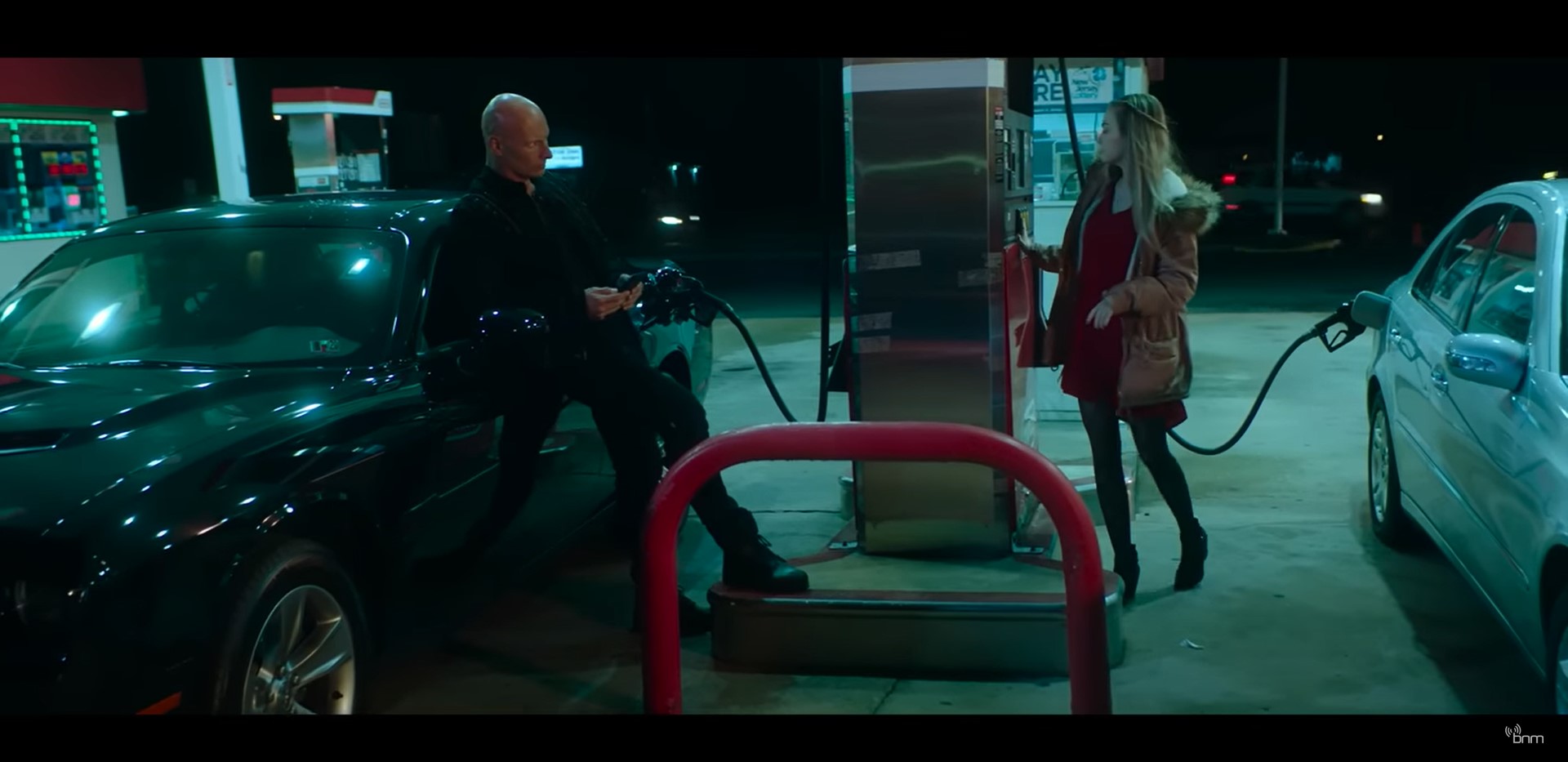
Frighting for yourself and for special persons in your life is crucial for any self-respecting person to be able to look at themselves in the mirror and say, “I did all I could.” Those who believe in understanding and forgiveness ultimately fall into being trampled on and biting the bullet because just surviving the other end of a contentious situation can be a false sense of security and an opaque veil to the ever-present dangers lurking in every crevice. The 2021 release of “The Retaliators” accouters that theme of following one’s combative conscious to protect what’s dear while also sporting a hefty amount of violence, blood, subhuman psychopaths, and a nearly all nu metal musician cast. Co-directed between from short and music video filmmaker, Samuel Gonzolas Jr., the film’s star and “Central Park” actor, Michael Lombardi, and music video director, Bridget Smith, “The Retaliators” aims to show an ugly, real truth that can affect and twist good men into the same abhorrence and villainy they’ve struggled to repel and resolve. “The Retaliators” mark the first screenplay from the Geare Brothers, Darren and Jeff Allen, is shot across various locations in the U.S., including states Nevada, New Jersey, and Connecticut, and is a production of Lombardi’s Better Noise Films with the company’s CEO, Allan Kovac, and Philly Born Film’s Mike Walsh also producing.

As a company that’s half part a music record label, the film was destined to showcase some of the independent rooted musical and elemental talent of the rock genre, but the narrative is convoyed by a fellow musician, who will humbly admit they are not trained or experienced actors, but rather actors who are rock artist sympathizers, in the case of principal leads Michael Lombardi and Marc Menchaca of Peacock’s new horror thriller “Sick” and who you may not have recognized in the third season of Amazon’s “Tom Clancy’s Jack Reason” as a high-and-tight, clean-cut naval captain. Menchaca is anything but burred cut as a bearded and wavy-haired, somber detective assigned to Pastor Bishop’s (Lombardi) case of his murdered daughter. Menchaca does his work in feeding off the dark energy cocktail of Lombardi’s grief, despair, and vengeance-stricken neo-pastor. Lombardi’s heartfelt performance definitely deserves praise for how one should react in losing a child and also reflects the helplessness that burdens the parent into a black hole of sorrow. As a character, Bishop struggles morally with seeping into and being swallowed by the grim circumstances gifted for him despite however the circumstances may seem to be in his favor. The gears Lombardi has to switch from a faithful person, to rancorous, to then finally a path of soul changing redemption goes smoothly enough to justify his position as principal lead. Menchaca’s demented detective almost feels left out to an extent, but the audience will get enough of a taste to satiate his unglued righteousness. While no love interest makes it into the fold of characters, the narrative does house spots for the nu metal and rock musicians in supporting or minor roles. Papa Roach’s Jacoby Shaddix, Mötley Crüe’s Tommy Lee, Ice Nine Kills Spencer Charnas, Escape the Fate’s Craig Mabbitt, From Ashes to New’s Matt Brandyberry, Lance Dowdle, Danny Case, and Matt Madiro, and Five Finger Death Punch’s Ivan L. Moody, Zoltan Bathory, and Chris Kael are just a select few of rockers you’ll see in “The Retaliator’s” lineup. Personally, I wanted to see more of Jacoby Shaddix as Quinn Brady, a homicidal madman in a horrific cat-and-mouse lark with the detective. Who knows, maybe we’ll see a prequel with Shaddix returning to the role. For the most part, like Shaddix, the musicians are well integrated with diverse roles that range from biker club, to strip club DJs, to bartenders, and to AA participants. “The Retaliators” round out the cast with Katie Kelly (“Deadly Seduction”), Abbey Hafer, Cree Kelly (“Aftermath”), and the massively built and scary-looking Joseph Gatt (“Titanic 666”) as the child-killer strapped and prepped for Pastor Bishop to physically and mentally break.

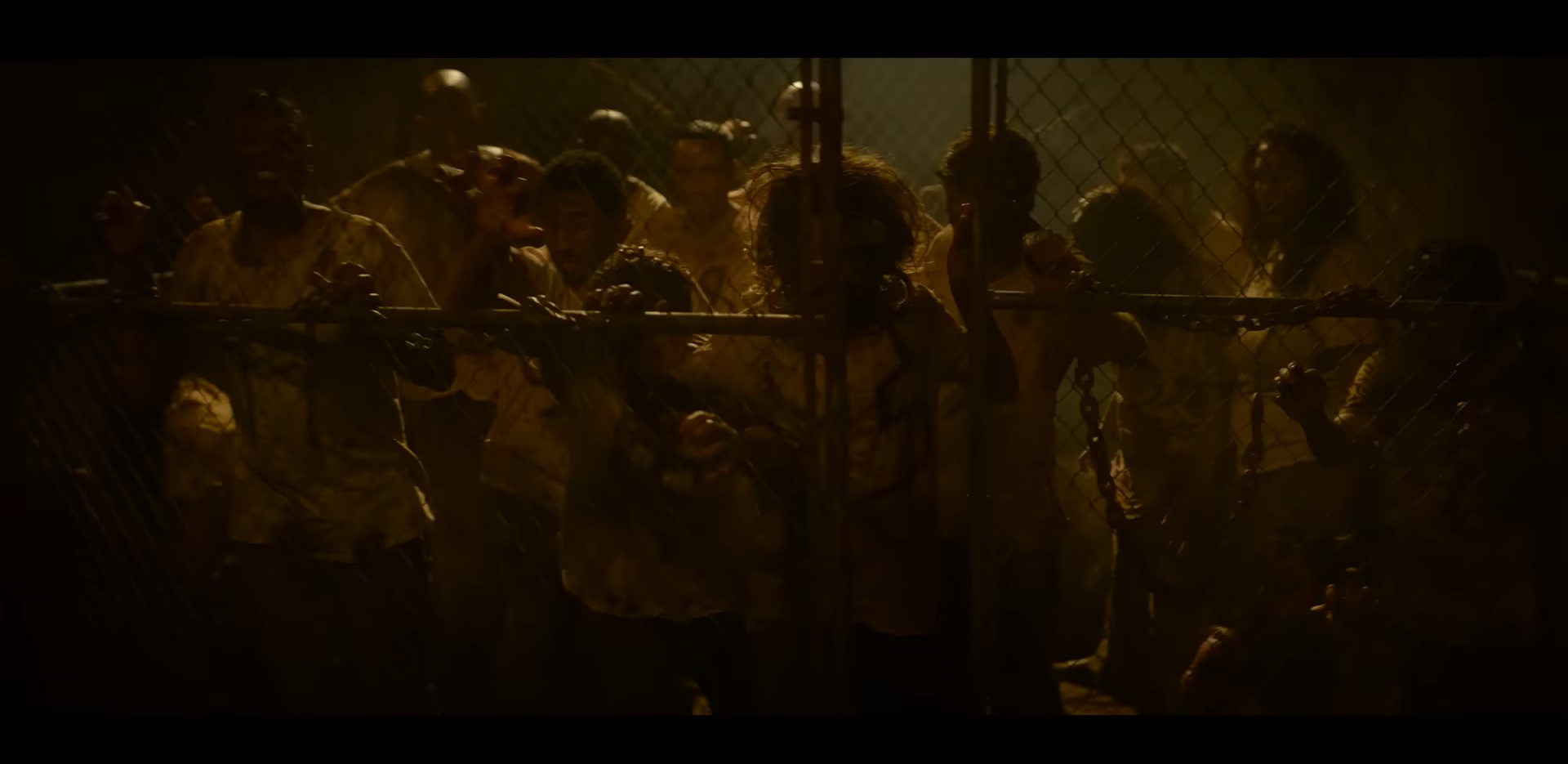
Better Noise Films is comparable to another divisional filmic offshoot of a larger parent music record label. Cleopatra Entertainment, of Cleopatra Records, often builds film structures and narrative plots around the company’s signed ensembles to promote and market their lyrical and thrash-heavy material as well as putting names to faces and thrusting them out into the world to those who may not have heard of their music. Aside from likely being a huge cost-savings benefit, these films are often scored by their artists, leading to a diverse sounding and electric soundtrack that typically works out less than desired. What the directors end up implementing, musically, yields result only half of the time while the other half is forced unto the audience for the sheer effect of promotion despite the off-putting composition. Not every intense scene needs a band backdrop to flourish raw emotion and pump up the blood but that’s what films, like “The Retaliator’s,” is bred to show off in a marbled genre that has categorical plot pivots all along the way to the grand finale of an all-out brawl, fight for your life skirmish with the criminally and tortured insane. That latter concept is perhaps one of the more interesting and original ideas of reinventing the psychopath that I’ve seen in a long time and the anticipatory excitement and thrills of their release to wreak havoc like barbaric rippers had found moments of great gore excess when Paster Bishop finds his divine strength to help the savage sadists meet their maker by way of machete, a shovel, and a woodchipper. “The Retaliators” make use of familiar horror tropes, such as the fog machine and a blend of lowkey and neon flushed lighting, to conjure an unconventional crypt of rock and homicide, putting its own unique stamp of indirect evil leading to up to another bigger, badder bedlam of things.

Chalked up to be an 80’s-stylized 90’s cinematic horror pulp, with early 2000’s soundtrack, “The Retaliators” arrives onto Blu-ray home video courtesy of Quiver Distribution. The AVC encoded, high definition, 1080p BD50 has a CinemaScope, aka anamorphic, widescreen 2.39:1 aspect ratio. The large storage formatted disc offers more variety as the capacity can handle the expansion of color and range of content. From complex, diversly lit, and heavily foot trafficked interiors to the great outdoors with trees fields, gravel terrain, and watery brooks, the quite a bit that’s going on looks pretty good on screen and the anamorphic widescreen doesn’t have that squeeze-it-in feel either but can’t escape a few scenes of lens flare. Details provide a tactile enamel, but the colors are quite soft with a lower dialed in color grading. The English DTS-HD 5.1 surround sound has more teeth in the soundtrack that overlaps and snuffs out any ambient sound design, essentially making “The Retaliators” a 96 minute, give-or-take a few scenes, music video. Dialogue doesn’t suffer the same backseat fate as the script-to-screen exchanges are in the forefront and though the soundtrack is a bit flat, the original, nebulous-electronic score in between by “Stranger Things” composers Kyle Dixon and Michel Stein does stand out to add a nice underlayer of questionability and suspense. Special features include cast interviews with actors and music artists speaking to their experience on the film, “The Retaliator’s” music video, and theatrical trailer. The physical release comes with a cardboard slipcover on the first pressing with a rendered pseudo-illustrated mockup of pyramid arranged character heads with Pastor Biship standing bloody and machete in hand right smack in the middle. The standard Blu-ray snapper includes the same cover arrangement art as the slipcover. Not listed on the back, the unrated film does support region A playback. “The Retaliators” pumps up the blood as well as the jams during an overhaul of one’s convictions in a baptism by hellfire.

Man Up and Take Back Your Life with “The Retaliators” on Blu-ray!  Click to Purchase from Amazon.

Hypothermia is EVIL’s Coldest Best Friend. “Frost” reviewed! (Cleopatra Entertainment and MVD Visual / Blu-ray)

Get the Bluray and Soundtrack for “Frost!”

Seeking to reconnect with her estranged father, Grant, after five years, pregnant Abby drives up the mountainous rural cabin.    Though not the warmest welcome she was expecting with the sudden pregnancy announcement dropped into her father’s lap, the two manage to find common ground and connect again while reliving memories of Abby’s mother.  Their threadbare bond sparks an impromptu finishing trip to the local creek and as the begin to open up a little more with each other, their car accidently runs off the road and declines down a gradual mountain decline before becoming wedged in a thicket of tree branches.   Abby, stuck in the passenger seat facing a steep cliffside dropoff, is trapped and injured.  As Grant goes for help up the mountain, a severe storm rolls in bringing harsh weather and freezing temperatures down upon Abby who desperately tries to keep warm and prays to not go into early labor before emergency rescue can come to her aid. 

Snowy winter thrillers can be harrowingly exciting as much of the plot is fused with the icy and treacherous environment that make lives at stake higher. The snow and the ice become threatening characters and when combined with, at times, a more conventional and concentrated story antagonists, foreseeing path for survival can often feel frigidly impossible. There’s little room for error, there’s little room for warmth, but there’s always an unpredictable heap of bone-chilling snow as far as the eye can see and the elements are only but nature’s natural attributes man has yet to confidently conquer. “Frost” plays into mother nature’s strength when squalling down below freezing wind and snow upon a woman trapped in her own car. The 2022 released, Brandon Slagle (“Attack of the Unknown”) directed “Frost” goes for the jugular in a woman versus nature survival suspenser penned by frequent Slagle aide-de-camp Robert Thompson. The “Aftermath” and “Crossbreed” screenwriter adapts “Frost” from a story by “From Jennifer” writer-director James Cullen Bressack. Shot during the winter in the San Bernardino mountains, “Frost” is produced by the film’s star Devanny Pinn and Cleopatra Music’s Vice President Tim Tasui under the bankroll and production support of Bressack’s JCB Pictures, Inc., Snow Leopard Entertainment, Sandaled Kid Productions, Multiverse Cinema, and Cleopatra Entertainment founders Brian and Yvonne Perera along with Pinn’s co-star Vernon Wells and The Asylum’s Jarrett Furst serving as associate producers.

“Frost” fits into the solo survivalist subgenre category and only characterizes with three actors and a trained wolf. At the tip of the cast spear is independent film producer and broad-brush horror actress and filmmaker Devanny Pinn (“Nude Nuns with Big Guns,” “The Dawn”) in the principal role of Abby, a woman seeking to rekindle her relationship with her reclusive father living in the mountains because of her pregnancy. Genre legend actor Vernon Wells (“Innerspace, “Commando”) opposites Pinn as Abby’s estranged father who’s happy to see his daughter but feels initially threatened by the pregnancy announcement. Understanding the dynamic between Abby and her father was easy as we’ve seen this type of teetering relationship before from a slightly rebellious, new age child returning home to find familiarity with a widowed and waning parent. Pinn and Wells pull off the several stages of reconnecting from the heated exchanges to the sappy moments of loss to the unexpected joy the two characters can bring out of each other, but what’s more difficult to comprehend is the source material. What causes the father and daughter to divide in the first place and how does that division’s role play out in the perilous predicament of an isolating car crash during a severe winter storm? For the sake of critique, one could say that their dissolving disputable divisiveness ends in irony as if the cosmos ultimately pulls them a part in a fitful storm of rage. Wells does what he can to make the initial crash scene comforting while exuding a positive outcome, but the veteran actor appears blank to severity, especially as a woodsman father soon to be a grandfather. Much of “Frost’s” edge of your seat trepidation is shouldered upon Devanny Pinn to take reins of providing the emotional embattlement against the unforgiving weather elements and animal food chain. Armed with nothing more than the dwindling car’s battery to provide heat and a charged lighter as well as whatever lures and first aid accompaniments in her father’s tacklebox, a rather lightly dressed, nearly to term pregnant Abby is pinned to her seat, backed to the edge of a cliff, and must face the cold and wolves until her father retrieves a rescue party. Pinn does what she can to fill in a quivering battle between life and death with a story that’s heavily reliant on a cigarette outlet to ward off a snarling wolf and can burn through seat belts in a single charge. That’s independent move magic for you, folks!

Any kind of solo act surrounding a single location, remote at that, with no other actor or other mobile organic object to feed off and bounce off its energy is a difficult task to undertake, especially on a hyper cost-efficient production.  Slagle’s “Frost” is certainly not immune to the difficulties and the filmmakers, and his crew and cast are well aware of the challenges to make the survival thriller engaging despite fluffing and padding the story with filler clichés and needless setup.  The production and location value are comparatively impressive against the limitations of the budget with a practical and computer-generated encroaching tundra of snow, ice, and wind that can insidiously invade a cold snap into the viewers bones, creating that intended atmospheric of a hell freezing over complete with the teeth of a hungry wolf, a biting rime, and deadly falling icicles.  More obvious than what perhaps Slagle and creative team realize is that “Frost” relies terribly on the shocking climatic scene, a scene so unimaginable and so appalling that it hits all the right gut-checking spots, but the setup to the scene and all the trials and trepidation Abby has to endure doesn’t quite mesh with a well-rounded plight that usually cradles an emotional pull string for the viewer to continuously root for and support those in the thick of the predicament.   Honestly, that heaviness for empathy never provides the emotional weight toward the character and never sparks that flame of hope to keep us warm and fuzzy on the inside to then quickly be extinguished by merciless mother nature. There’s also the plausibility of survival and the way that survival instinct is applied that makes “Frost” too far-fetched to be a strong contender in the subgenre. At near subzero temps, Hypothermia can set in in under an hour. In “Frost,” three days of severe snowstorm pummeling has past, segued by scene time stamps, before Abby becomes a popsicle and is delusional. I’m pretty sure with almost nothing to eat and very little warmth, Abby would have expired in under 48 hours. Yet, the 72-hour mark becomes the most chilling, literally and figuratively, in “Frost’s” invigorating third act snack that’s more abominable than it is nutritional!

Cleopatra Entertainment, the cinematic subsidiary of Cleopatra Records delivers a 2-disc Blu-ray set for Brandon Slagle’s icy thriller “Frost.” Presented in a widescreen 2.35:1 aspect ratio, the 91-minute film has a crisp, lively picture compressed without much to complain about. Banding issues are held to barely any and the details don’t whiteout during the wintery whiteout, leaving key delineations to be present in bold contrasts, especially during the severe snowstorm scenes. Foliage looks thick and green before for the storm with a lot of good textural details on the impaling branches that perforate the car and Abby. The English language 5.1 surround mix conveys the problematic sound design issues that have been consistently found in many of Cleopatra’s releases. Mostly in regard to the dialogue tracks, the dialogue tracks pick up static and other minute ambient noise during microtonal intervals, creating an unwelcoming and stark contrast with a dialogue mix that cuts obviously cuts in and out between character speak and isn’t simultaneous with the score. However, much like with other Cleopatra releases, the score is production and distributor company’s best trademark with a full album including music from various artists, such as L. Shankar, Big Electric Cat, Terry Reid, Rick Wakeman, and amongst others. The 2nd disc, an audio CD, contains the 15-song soundtrack. Other physical noteworthy aspects of the release include the double-sided cover art – one filmic and the other CD listing with both include different variations of the front cover as well as a translucent Blu-ray snapper cast that adds to the snowy theme. Software bonus features include only the theatrical trailer and a still gallery slideshow. Exposure to “Frost” is deep freezing frills for most of the picture but if able to withstand the coldshoulder of cliches, the mare peaks with a blood-filled and tasty horrific morsel that makes the frippery first half worth the wait.

Get the Bluray and Soundtrack for “Frost!”