The Apocalypse is Four EVIL Active Shooters and the Hell They Create in “The Dead Ones” reveiwed! (Artsploitation Films / Blu-ray)

Four errant students are ordered to do a summer cleaning of their high school after a terrible tragedy that has left the hallways and classrooms in shambles.  As they meander around the closed school doing more chatting than they are cleaning, a masked and armed group calling themselves The Four Horsemen chain the doors and windows, barring every means of escape, and snake through the school’s layout setting a plan in motion to deliver a macabre message to the campus grounds.  Something just doesn’t feel right when the students try to track down the masqueraders who move around more like specters with an eerie clamor of theatrics that’s becoming more and more eternally harmful the longer they remain inside the school. 
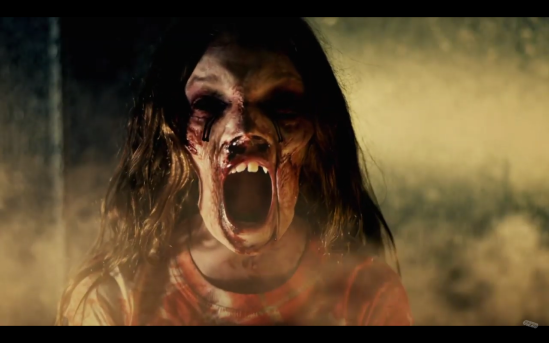
“The Attic Expeditions” and “All Souls Day:  Dia de la Muertos” director, Jeremy Kasten, has a new ghoulish, outcast teen horror on the verge of release with the American made, calamity surrounding “The Dead Ones,” entailing a theme of choice on the wrong side of deviancy when influentially steered by the negative forces of the besieging cruel society.  The script is penned by Zach Chassler on his fourth collaboration with director Kasten, following their efforts on the vampiric allegory for drug use “The Thirst,” “The Wizard of Gore” remake, and “The Theater Bizarre,” a horror anthology, in over a span of a decade’s time.  “The Dead Ones” presents a two-timeline parable with an inciting, yet disturbing, core involving every parents’ worst nightmare and America’s most disgraceful statistic, a high school shooting.  Sick-O-Scope Motion Pictures serves as the listed production company behind the film.
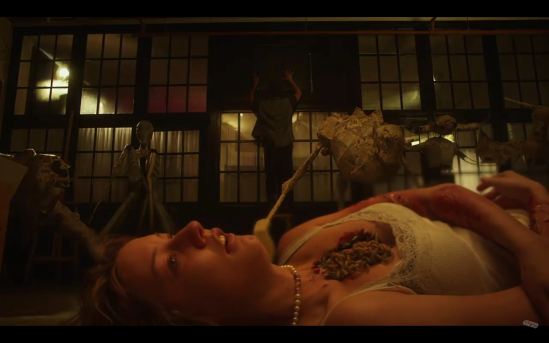
Detention attendees is comprised of four teenage outcasts who are also quasi-friends that seem to know each other well, but are personally rough around the edge, denoting more distinct tensions amongst their insoluble secrets.  In an introduction with the teens, we’re glimpsed into flashes of a nightmare images inside one of the teens’ head as their driven together to the school by their principal, Ms. Persephone, played by “The Thirst’s” Clare Kramer who is just as stunning as her in-story goddess inspired moniker.  Ms. Persephone’s passengers include the “The Dead One’s” core characters with a victim of relative abuse in Alice “Mouse” Morley (Sarah Rose Harper), a bullied nonconformist in Scottie French (Brandon Thane Wilson), an unhinged self-cutter in Emily Davis (Katie Foster), and an aggressive sociopath in Louis Friend (Torey Garza).  Performances are heavily relied upon as the cast of four are called forth by the story’s dual timeline where various plot points from two individual paths are needed to be crucially achieved for the unfolding to be organically ambiguous for it to converge in a blend of reality and, possible, damnation.  “The Dead Ones” round out the cast with Amelia Talbot, Michael James Levy, Shane Tunny, and “Dusk Till Dawn 2: Texas Blood Money’s” Muse Watson whose always a nice addition to any horror character set in an eviscerated and sleazy father figure role.
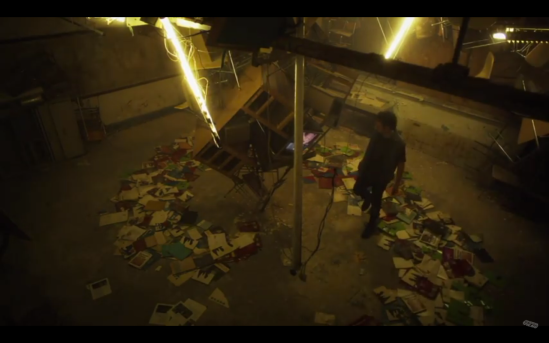
“The Dead Ones” is a film that’s always in a temporal flux, weaving back and forth between utter chaos of an active shooter situation in the normal light and the near totalitarian order saturated with an infernal hue inside a dislodged environment.  As the band of misfits reflect on their battered existence, one mentions, multiple times, his stint in Juvey while another can envisage the patterns to cut into her flesh, a bread crumb trail of hints and past misgivings lead them down a path of self-awareness, of remembering exactly how they landed into the ruined capillaries of the school in the first place.  Yet, “the Dead Ones” isn’t solely about paying for one’s sins, honing in toward more of a cause and effect choice for redemption, which begs an essential question, that goes slightly under the radar of Kasten’s direction, on whether the two timelines are rather parallel to each other instead of rendering past and present events?  It’s certainly one of those open ending conversations about what perils our souls could be fatefully curtailed under the corporeal spectrum by the choices we make while still living and breathing.  For myself, connecting with Kasten’s carnivalesque and ultra-sleek horror panache has been difficult to digest and become accustom to, especially with my own personal dissatisfaction with the remake of “Wizard the Gore” that starred one of my favorite eccentric actors, Chrispin Glover, but Kasten relishes an unorthodox methodology that goes against the traditional grain of filmmaking and while that usually isn’t the problem for him, or any director, to be discouraged from,  “The Dead Ones” ultimately tips over into the same disheartened gray area for one main reason – the editing.  “The Dead Ones” is edited by Maxx Gillman whose chief credits are on short films and documentaries, marking Kasten’s film Gillman’s debut into feature film market, but as like a good documentary editor, “The Dead Ones” is overtly choppy that cuts up the scenes in an egregious way, thwarting any sense of conveying emotions and shortening them to near nauseating back-and-forth cuts.  With a 73 minute runtime, the potential for lingering on the morose rhetoric or teetering compassion of the teens is lost and could have been stirred into their affixed affliction for a more targeted approach to their limbo circumstances. While timing might be less than desirable, Jeremy Kasten summons judgement for “The Dead Ones” to be convicted of unnerving decorum and executes psychological absolution with the tenderness of a Satan himself.
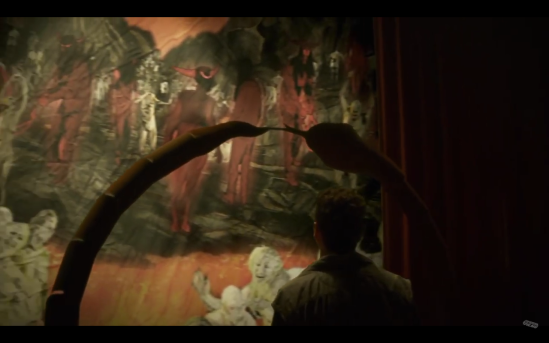
Surreal with a hard, open-hand slap of realism, the metaphysics of “The Dead Ones” shoots for an otherworldly life sentence as the September 29th release day for the Blu-ray and DVD is on the horizon courtesy of Artsploitation Films in association with Raven Banner. The Blu-ray was reviewed and is presented in high-def, 1080p with a 2.39:1, anamorphic widescreen, aspect ratio. The digitally recorded image is packed with visually popping nightmares under a slightly greenish warm tint while still propelling range into heavy fog, a seamless composite of scene transitions and matted visual effects, and copious amounts of rich shadows and shadowy characters. The overall tone of the “The Dead Ones” has a strong 90’s grunge manifestation with some CCTV black and white moments that would fit rightfully in before the turn of the century teen horror collective. The English language 5.1 DTS-HD master audio maintains clear dialogue pathways and a resounding, almost mechanical, score resembling that of an infernal machine at work. The ambient range and even a good chunk of the dialogue has a softer demeanor that sidesteps to the incessant score that would have rung about in Virgil’s Dante Inferno, as the school auditorium playbill show that’s transparent through the film. There is also optional Dolby Digital 2.0 audio. The bonus features include a special effects featurette of the special effects work by the late Elvis Jones, on one of his works with “The Dead Ones,” and his intern Jax Smith, a set tour with production designer Jeffrey Pratt Gordon to showoff his vision of hell, and two commentary tracks alongside the film with commentaries by the director, producer, and crew. Saving a soul damned to hell sounds like an enormous feat of only divinity interaction can accomplish, but Jeremy Kasten finds virtue in sinful acts, imbedding a safety net in the guise of a forked path, and opens an ingress to a putrid perdition for those under more severe scrutiny than just “The Dead Ones.”

Pre-Order “The Dead Ones” By Clicking the Poster!

EVIL is One Big Vagina Looking Stain on the Wall! “Dead Dicks” reviewed! (Artsploitation Films / Blu-ray)


Becca’s careworn life, concerning for her mentally unstable brother as well as maintaining her expenses through the up and down cashflow of a bartender’s tour, suddenly gleams with a ray of hope when a prestigious opportunity she’s earned calls for her to move across country in a matter of weeks, but when her brother, Ritchie, leaves multiple distressing messages on her phone, Becca’s continuing efforts to care for her troubled older brother forces her to abandoned the bar’s night shift duty and check on him. What Becca finds is Ritchie’s dead body strung up in the closet, and another Ritchie dead body electrocuted in the tub, and a very much alive Ritchie walking around naked. The perplexing phenomena all stems around a vaginal resembling wet stain on the bedroom wall that birth’s another copy of Ritchie after each death, but with every copy comes copious amounts of provocative questions that keep Becca from leaving Ritchie’s forlorn and tormented side or is it something much more paranormal detaining her?

Welcome back to our part two of the unofficial look at independent Canadian horror with a totally different and existential horror entitled “Dead Dicks” from the dynamic directing duo of Chris Bavota and Lee Paul Springer. Also possessing creative control of their own script, Bavota and Springer flex their filmmaking muscles by initiating themselves into the feature film market with an alternative impression on the lingering effects of mental illness and suicide, which Bavota and Springer preface the film responsibly with a public service announcement for audiences where those struggling with suicide or those who know someone struggling can reach out for information and help via a suicide prevention hotline telephone number. Believe it or not, ItsBlogginEvil has been exposed to some script work by Chris Bavota who penned the tyke-terrible, otherworldly beings in “Ghastlies,” helmed by Brett Kelly, and while I admire Kelly’s legendary practical effects ambitions on a microscopic budget and “Ghastlies” praise to the cult of small creature features villains, like “Gremlins” or “Critters,” I ultimately found the film and the screenplay to be fragmented and unflattering that doesn’t live up to honoring the retro creature ideals in a heavily slapstick and erroneous attempt. However, from 2016 to 2019, Bavota has shown to have an increased level of story maturity in his writing with, perhaps, an assist from his colleague Springer for their subject matter and execution of “Dead Dicks,” a production of Bavota and Springer’s Postal Code Films company in association with Red Clay Productions and distributed by Devilworks and Artsploitation Films.

The low-key cast brings a blanket of intimacy that’s synonymous with how suicide is often a loner’s internal battle with themselves. In this regard, Bavota and Springer needed an alleviator for the somber material with a pitch perfect front man in order to radiate the dry humor and convey the relatively taboo message of speaking up, speaking out, and speaking for suicidal tendencies. They found that man to be Heston Horwin who the filmmakers had had in mind to play the role of Ritchie. Bringing the quick wit and exact timing to Ritchie’s compromised soul, and serving also as executive producer on the film, Horwin becomes the vexed tinkerer trying to problem solve the causality of his own immortality who is stuck in a loop, a motif of in death there is life that continues to pop up, and also contorts his personality to make Ritchie a Rubik cube of anxiety, twisting and turning with tacit body language that serves as a roadblock to his frequently burdened little sister, Becca, played by newcomer Jillian Harris. The strong female role is outlined with meticulously sage from a new actress submersed for the first time credited in an existential and cosmic horror with a genitalia fascination. The duo becomes a trio when Matt Keyes enters the fold as the annoyed apartment neighbor one floor door to be jostled into Ritchie and Becca’s abundant death dilemma. Also known in character as Matt, Keyes deceives as a snarky, impatient prude masking his nice guy principles but when enough is enough, Keyes goes into angry neighbor mode whose fed up with Ritchie’s loud music and building shaking incidents.

“Dead Dicks” doesn’t boil down to simply suicide as the main theme to digest, but sharpens the graphite toward a much broader point that incorporates the lingering shockwave effects of severe mental illness while touching upon the bitter aftertaste of post-suicide. Becca’s caught in Ritchie’s woeful web that results in her always picking up the pieces left in her big brother’s wake. The act of unreciprocated love for Ritchie stems from almost losing him when they were younger, an anecdotal story brought up a couple of times between Becca and Ritchie, and the image of his lifeless body in the hospital has been forever seared in Becca’s mind and body matrix to the point she feels indebted to protect him. It took Ritchie to die, multiple times, for him to understand the inflexibilities of the loop Becca is coiled into with his own unhinged state and can’t proceed forward with her own life. Each copy of his former self slices away a layer of unstable irrationality that have become blinders detrimental to his and his sister’s life and once he’s reached the core of his true self, clarity forms around processing the chaos around him, but doesn’t ever remove the sadness and pain that has been imprinted onto him over the years from family and friends distrust and disdain and that makes his argument to die that much more logical to himself because for Becca to be free from the loop, which is represented by being trapped inside Ritchie’s apartment and objects around him that go into restart mode like the earshot cacophony of heavy rock music starting over after every death, one of them must die and the other be reborn. All of this is in encompassed with a display of in your face genitalia, a discolored wall that suspends death, and grimly funny gore that seamlessly blend computer imagery and practical effect, making “Dead Dicks” a taut downcast, dark comedy full of ostentatious and provocative symbolism from our Canadian neighbors!

The seismically cosmic “Dead Dicks” is intrinsic to the creative fluidity of the indie film culture and is now available on an Artsploitation Films’ Blu-ray release. The release is presented in in a widescreen, 2.39:1 aspect ratio, captured with an Arri Alexa camera providing a clean digital picture vivid in detail and distinct depth. The entire color package denotes warm atmospherics, more so from Ritchie’s off white and mustard yellow apartment to the hot soft pink of the vaginal canal scene, that becomes a consistent and engrossing product worked by cinematographer Nicolas Venne to still be able to find the humanizing angle of each individual character. The English language Dolby Digital 5.1 surround sound for the first half is quite wonky that perhaps stems from mismanaged discerning the vocals properly, leaving the dialogue depth obscured from background to foreground and from foreground to background. On the story’s flipside, the issues are worked out which would suggest the cluster of shots and audio takes were eventually adjusted or tweaked to sync appropriately. Julien Verschooris’ score and the introduction of Tusk and Bruiser on the soundtrack is an eclectic mix of dramatic synth and grunge rock that impeccably keeps the nearly one-location film from getting stale with a coagulating of an energizing and mellow temperment which would usually have a counter-effective result. Bonus features include commentary by directors Chris Bavota and Lee Paul Springer, four video diaries from the directors that span from pre-production to after the first week of production, a FX featurette that exhibits Matt Keyes going through a cast mold for his head and how his wonderfully gore scene was accomplished, and, lastly, four trailers from films distributed by Artsploitation Films. “Dead Dicks” is pneumatically bursting with the compressed scent of David Cronenberg; a deluxe doppelganger dark comedy bound with provoking the consequences surrounding death in a surrealistic effort to ease in and move past an inexorable acceptance.

“Dead Dicks” available on Blu-ray and DVD!

Pray EVIL Isn’t This Cruel. “Suffering Bible” reviewed! (Sub Rosa Studios/DVD)


Welcome to the Suffering Bible, a collection of violating and gory interpreted religious allegories digging into stark contrasts of sin and piety and illuminating the darker side of these allegories with a lacerating gruesome perspective. These short stories include the internal strife of a psychopaths strong urge for forbidden lesbian companionship with the contentious, bigoted teachings of finding forever friends inside God’s eyes, a visceral performing depiction of the Incredulity of St. Thomas, an extreme mortification of the flesh, the prideful consequences with a Devil’s pact, and the murderous portrayals of lost souls needing redemption into God’s good graces.

Right in time for the Easter holiday, where Jesus Christ has risen back from the dead for our salvation, comes Davide Pesca’s written and directed “Suffering Bible” of sinfully derived tales of reverent and irreverent perfervid images. The Italian made and produced anthology that’s a contexture of stories is forged together with a wraparound story of the Adam and Eve in the Garden of Eden apologue. “Suffering Bible” begins with a title card excerpt, Tear thy neighbor as thyself, from an unknown storyteller named saamang Ruinees with a skewed version of the second commandment, Love thy neighbor as thyself, subtly denouncing the evils in popular religious culture and then slithering them, not so subtly, into the shorts of those suffering at behest of the bible. Pesca’s shock efforts have come across ItsBlogginEvil.com’s radar once before with another short framed macabre tale, “Hemophobia,” from Artsploitation’s home distributed release of “A Taste of Phobia” anthology and “Hemophobia” is and feels more commercialized with less than salutary toward mutilation and variety body meat, but the filmmaker does fly on a parallel body horror plane and has had his shorts featured alongside with fellow Italian auteur and shock director, Domiziano Cristophario (“House of Flesh Manniquins,” “Red Krokodil”) with a more rudimentary, analogue-video-feel approach. “Suffering Bible” is self-produced by his independent production and distribution company – Demented Gore Productions.

Being an Italian made cast functioning on the performances grounds of a heel budget writing up about “Suffering Bible’s” actors and actresses past credits, influences, methods and so on is proving to be a challenging task. Most of the cast is comprised of alternative, half-naked women, such as Nicola Fugazza and Mary Rubes who are the sole credited on IMDB.com. Rubes, an erotic model, becomes “Suffering Bible’s” inadvertent poster girl that graces the Sub Rosa Studio’s DVD cover and static menu as her seductively deceptive solo performance of body and genital self-mutilation is the most unsettling story revolving around mortification of the flesh. Rubes has previously worked with Pesca on a 2017 short film entitled “Fame de Vampira,” which also co-stars Beata Walewska. Both Rubes and Walewska sizzle in the Italian action scene with “Rage Killers” by director Roger A. Fratter, who co-directed “Fame de Vampira.” As you can see, a casting inner circle is starting to form, but that’s the extent of the network with Simon Rocca, Simon Macleod, Catlin Strange, Pate Douce, Paolo Salvadeo, Emilio Stangalini, Paolo Borsa, Emanuela La Neve, Chiara Digonzelli, and Marilena Marmo.

On the surface, “Suffering Bible” has a unwieldly, pigeonhole affect that places the impervious shutters around one’s peepers and thinking cap for the pleasures of gore and nudity that run continuously rampant, but Davide Pesca has a connect-the-dot vision that aims to unveil the worst of religious culture, using graphic imagery in a reverse psychological and divinity experience that’s wildly novel inside a less commercialized parameters and the more I stew on this film, the more I like it. Without this review not seeming to be a theoretical paper on Davide Pesca and the “Suffering Bible,” examples of the filmmaker using gore as the pain and suffering vessel for those struggling to be closer to God can be modeled from the first short, “My Only God” aka “Friends Forever,” in which a woman stitches herself to her now dead friend to be closer to her, as if their friendship, which was severed insinuated by the dead woman, will continue in the afterlife. Same can be said about the last, if not more potently gristly, short, “The Redemption of Last Souls,” where a druggie, a terminal ill person, and a homeless man who has lost family connectivity have nothing left to lose, have lost faith, and seek redemption through being chair strapped subjects of a snuff film. While “My Only God” and “The Redemption of Lost Souls” caters to the barbaric rite of celestial passage, Davide Pesca’s specialty falls more within the lines of body horror as the filmmaker has saturated himself in the infatuation of the Body Modification culture, reflected in his “St. Thomas” and “In The Name of The Father” that include Doubting Thomas reaching protractedly into a crucified Jesus’s side slit and include the extreme mortification of the sinful flesh – eyes, breasts, and clitoris – by a devout devotee.

“Suffering Bible” is a throwback moxie livid on sin and body destruction and it’s a title coming to you on DVD home vide like a disastrous, break faith, miracle from SRS Home Video and MVDVisual. Though listed as a retro release by SRS, “Suffering Bible” released in 2018, shooting over the course of a few years prior more than likely, with a combination sepia-color approach and the result outputted a strained and digitally cursed image of a widescreen, 1.78:1 presentation that suffers from severe compression artifacts in conjunction with digital interference. The errs are absolved by the very label of a throwback “erotic art house horror” gracing the retro, faux-VHS DVD back cover. The single channel stereo has limited flexibility with some ostentatious, if not laughable, Foley work. Aside from a little dialogue in two of the shorts, “Suffering Bible” takes a vow of silence and speaks volumes in actions alone; this creative choice, along with some probable glitch art, saves much of the technical woes already plaguing Pesca’s stain on profane. The robust grunge-brood style of OKY’s prolong guitar distortions, delicate strum and percussion echoing, and reverse melodies bedazzles in a cathartic relief that no dense, run of the mill metal band is attached to the soundtrack. Special features include a short interview with Davide Pesca, which turned out to be more of a behind-the-scenes look at handful of shorts for the film, a lengthy ultra violent and gory showreel for Pesca’s “Tales from the Deep Hell,” and SRS trailers. More grimly poetic than sleazy gore-porn, the book of the “Suffering Bible” can open eyes to the unsettling infernal of holy virtue with transfixing horrid death rooms.

Shock, gore, profane! “Suffering Bible” DVD has it all!

Adolescence isn’t Innocence. Adolescence is Evil! “We” reviewed! (Artsploitation Films / Blu-ray)


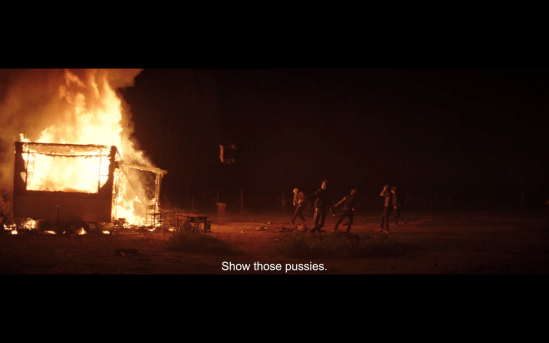
Four teenage boys and four teenage girls decide one summer to live free, without inhibition, and to make as much money as possible. Discovering an abandoned caravan in the middle of nowhere, they set up their home away from home where doing what they want, and who they want, becomes a way of life. Sexual freedom and adolescent independency quickly leads the friends down a path of miscreant wandering and sordid pornography and prostitution. When one of the teens accidently dies, four accounts of what happened are told aloud to the court and with each version, the truth becomes indistinct amongst the slander, exploitative sex work, and their anarchist ways that surround a seemingly corrupt politician.

Debased youth bored with the common fabrics of society stitch their own downfall into extreme moral degeneration in Rene Eller’s 2018 dramatic-thriller from the Netherlands entitled “We.” Also known as “Wij” in the Belgium tongue, Eller tackles the cinematic adaptation of an Elvis Peeters’ novel of the same name from 2009 with not only directing a compelling and frightening image of idle hand youth, but the filmmaker’s also credited as penning the non-linear script told in four chapters that highlight four out of the eight teens’ versions of events and how that fateful summer not only saw their ethics become shattered, but also their close-knit friendships. Eller also co-produces the film, working alongside production companies Pragma Pictures and New Amsterdam Film Company.

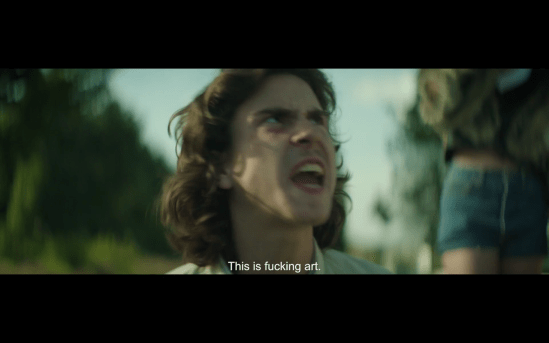
“We” consists of a young cast, in age and in experience, bred from the Netherlands and though virtually credit-less, powerful performances from the lot all around that touch not only the venereal stimulators, but also reaches the twisted knot inside the gut of how being human equals being depraved. The four chapters begin with Simone, a young man smitten by the Femke (Salomé van Grunsven) who becomes a catalyst for the trial, played by an Anton Yelchin lookalike, Tijmen Govaerts. Govaerts gleams in Simon’s adolescent jubilee of love, sex, and carefree attitude. His story is followed by Maxime Jacobs’ Ruth, a 16-year-old who can’t seem to step beyond the line into total reckless abandonment, Yet, Ruth’s game for risky her own body to gain approval from her friends and for her shadowed love for Simon. Jacobs gapped teeth act as imperfect perfection upon her slumping figure sheathed in plaid, screaming purity inside her outcast shell, but Jacobs proves she can be more naughty in her character than that of her co-stars. Liesl’s third chapter paints a more grotesque picture of her friends summer. Pauline Casteleyn acts in the role of Liesl, an aspiring artist with that tough inner and outer shell Ruth aspires to but ultimately lacks. Casteleyn can cast a deadpan stare with the best of them that offers more of a chilling vibe off of Liesl, but neither of these roles could outwit, out-dominate Thomas. Aimé Claeys concludes the fourth chapter as the ringleader of the friends, or, more accurate, as the pimp and the kingpin. Thomas’ manipulate hand fosters questions about his past left purposefully open for a subjective opinion on whether his actions were that of his own boredom or being pushed to his limit by external forces. “We” rounds out with Friso van der Werf, Folkert Verdoorn, Laura Drosopoulos, Lieselot Siddiki, Gaia Sofia Cozijn, and Tom Van Bauwel.

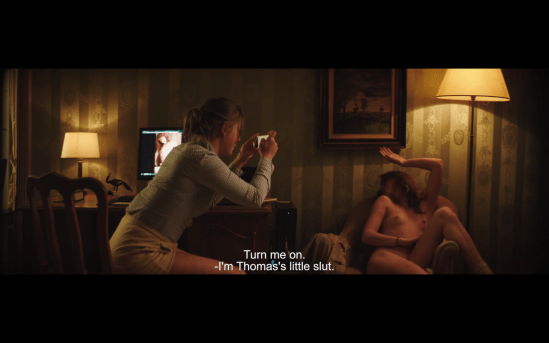
Let me start off by saying that when the teens’ entrepreneur pornography ambitions comes to fruition, these reviewers’ eyes widened at the surprising site of explicit penetrations and fellatios; however, the unexpected hardcore isn’t the act of our already very naked actors who probably stood out for stand-ins as the story leads the friends to think of using masks for anonymity and all explicit scenes of sex involve masked performers or implied scenes are angled just right from the cruel and smart tactics of Rene Eller and cinematographer Maxime Desmet. “We’s” unreserved sexual boot up the censorship’s tight behind is this junkie’s drug of choice that gets the blood pumping in all the right places; yet, “We” garnishes a heavy topical subject serrated with generational and societal gaps of corrosive virtue and speaks in volumes of what entitlement entails for a body of minors spoiled by the very community that either nurtured or tormented them and then, finally, turn on them all, parental or not, with harsh repudiation. As a sincere compliment to director Rene Eller, “We” belongs in the maladjusted family tree that also bears the rotten teenage fruit of Larry Clarks’ “Kids” and Catherine Hardwicke’s “Thirteen” and harks back to the Golden Age of Dutch Cinema with the Dutch Sex Wave from the 1970’s which produced controversial erotica with “Blue Movie” and “My Nights with Susan, Sandra, Olga and Julie” from Scorpio Films. “We” has a friendly look and feel of a 70’s film despite modern devices, making the resemblance to the Golden Age that much striking.

From the Netherlands’ festival circuit comes the highly engrossing, explicit drama “We,” distributed stateside by the Philadelphia based Artsploitation Films onto an unrated director’s edition Blu-ray home video release. Presented on BD-25 in full HD and in a widescreen, 2.65:1 aspect ratio, impressive textures flourish every inch of skin of the actors and in the panning ariel shots, which are, at times, hard to obtain. Despite some early on aliasing during the opening scene and a bit of warm washed coloring that doesn’t pop with a colorful hue range, I’ve still become satisfied with the end result that sells the illusion of Summer (you can see the hot breath during some outdoor scenes), the immense use of natural lightening, and the skin tones announce a fresh feel for the flesh aplenty. The Dutch language DTS-HD Master Audio mix holds nothing to ill speak of with a rendered clear dialogue, ample range and depth, and subtitles that sync fine with clear delineation and no mistakes. Other than a static menu, the only other bonus on this feature is the explicit reversible Blu-ray cover that displays the bare ass(ets) of half the cast from one particular scene. There’s also the PG cover that you’ll see below to not offend any sensitive souls. Coinciding with being a great story, “We” is also an important film of human callousness hidden within the prospect of free love, an age-old infiltration and exploitation concept captured by Rene Eller’s subversive eye and Elvis Peeters sage mind.

“We” Available for Artsploitation Films!


Writer’s Block is a Fictional Author’s EVIL! “Blood Paradise” review!


Flustered about the severe flop of her latest book, crime novelist Robin Richards encounters writers’ block as a result. Losing inspiration in the big city with her droll boy-toy, her publisher recommends a visit to the scenic Swedish countryside as a change of pace that’ll remove her out from the comfortable surroundings and, hopefully, begin to craft new ideas for a rebound book. Totally out of her element quartered inside a farm residence, Richards can’t help to investigate her peculiar hosts and a chauffeur, a super fan who is besotted with her while his wife voices her utter disdain for the writer, but their odd behaviors stimulate inspiration for her work beyond her ability to observe that something is dreadfully and dangerously wrong with them.

From a title that can be interpreted as an oxy-moron, “Blood Paradise” spills onto the screen as a sexy suspense-thriller with pinpoint-peppered dry comedy. The Swedish bred film is directed by Patrick von Barkenberg, who also has an important-minor role contribution to the narrative as well as co-written alongside the film’s lead, Andréa Winter, that proposes total control over the juxtaposition of not only the sane versus the insane, but also enthralls with a crime storyteller from the city thrust into her own calamitous tale of murder on the rural fringes. Barkenberg and Winter have poised chemistry weaving a story that’s mostly building the bizarre attributes of characters with even Robin Richards’ pooled into that group being a stranger in a strange land; the filmmakers’ past collaborations of short films, including “A Stranger Without” and “A Little Bit of Bad,” firmly establishes them as being the right kind auteurs for the job.

As stated in the above, Andréa Winter stars as Robin Richards, an adventurously alluring writer willing to try anything to get her career back on track. Winter, who is also an electro indie pop singer in Baby Yaga, is as stunning at her performance as she is in her natural beauty with a role that tenaciously exhibits her uneasiness with the locals and their bare necessities while also not being afraid to bare nearly all herself in compromising positions and places. While Robin is most solitary in conversation as she is interactions with other characters, there’s great dynamic contrast with Hans. Hans Bubi and, yes, if you say it out loud, a definite nod to a memorable line from “Die Hard.” Played by Christer Cavallius in his sole imdb.com credit, Cavallius’s wide-eyed and big smile below his shoulder length hair makes him a comical to a point and when you add Hans’ current hell of a marital status with a potted plants devoted woman and his mental blocking obsession with Robin Richards, the overly flawed and desperately optimistic character has hopes and dreams from a slim chance opening that he is hesitant in completely seizing, though we, and even perhaps Hans himself, knows the outcome if he took the risk. Another character highly involved in Richards’ circle of exchanges is with the farmer, Rolf, played by Rolf Brunnström. Rolf is a seriously complex character, an irresistible mystery to the author who spies on his enigmatic tasks involving a locked barn with windows covered with plastic. Rolf’s detached and impassive with his wife’s death that looms throughout the story and Brunnström, a middle-aged man, turns out to be more than his simple life implies. “Blood Paradise” remaining cast includes Martina Novak, Ingrid Hedström, Ellinor Berglund, and Frankie Batista.

Finding the comedy in a film like “Blood Paradise” might be a task suited for people with a dark sense of humor, but the quality is present and can be compared to the offbeat nature that Eli Roth subtly nurtured in his breakout flesh-eating squeamish-er “Cabin Fever.” Dry and restrained, the comedy is dialed down to a low-lying hum in “Blood Paradise,” honing in frequently on the sexualized suspense that’s audience attractive and runs parallel with Robin Richards profession as a crime novelist who pens tales involving gimp-cladded deviants, and the story simmers to a boil, reducing down story intricacies into an unraveled macabre of things once dead are now very much alive in transcendence, just like a good crime narrative should unfold.

Gripping with toe-curling tension, “Blood Paradise” arrives on a Blu-ray home video courtesy of the Philadelphia based distribution company, Artsploitation Films. Presented in HD, full 1080p anamorphic widescreen, 2.35:1 aspect ratio, Artsploitation Films has a remarkable looking release on their hands that’s soft where intended and detailed where necessary, registering a vast palette of rich colors thats typical with digital films recorded with an Arri camera, as listed on the internet movie data base. The English and Swedish 5.1 Dolby Digital surround sound has an equally good and clean facet of range and depth for a rather subdued thriller that’s more mystery, than panic stricken. Soundtrack by Andréa Winter adds a bit of lively-atrocity synth that doesn’t push through enough to be a factor in it’s assimilation between the ambience and dialogue tracks. Bonus material includes three deleted scenes and two music videos by Baby Yaga – “Dreamer” and “You and Me” – that feature artistic renders of the film. “Blood Paradise” is no tick sipping on sangre-sangrias on a beach somewhere. Patrick von Barkenberg’s “Blood Paradise” captivates in the inexplicable without sheering away from fraught character contexts while still maintaining a healthy dose of sex appeal and blood.

“Blood Paradise” available now for purchase!