Two People Living in Different Times Linked By an EVIL Secret. “Dead Air” reviewed! (Freestyle Digital Media / Digital Screener)

As a single parent of two teenage girls, William stows away the painful memories of the death of wife some two years ago.  When rummaging through boxed away belongings, he stumbles upon an old ham radio and a diary that once was his late father’s, who tragically was killed during William’s youth.  Psychiatric sessions aim to resolute a traumatic event from the past William can’t seem to recall and has plagued him over the decades and well into adulthood, but all his problems converge when he befriends another amateur radio user, a woman, that simmers a progression of unraveling his past rooted by an unfathomable secret the woman holds that will collide William’s past and present to alter his future. 

Not to be confused with the 2009 same titled film of bio-terrorism turned zombie horde starring “The Devil’s Reject’s” Bill Moseley or mixed up with 2000’s “Frequency” where Dennis Quaid’s character phenomenally reconnects with his deceased firefighter father over an old ham radio, Kevin Hicks’ “Dead Air” also shears linear time by embracing supernatural elements over the air waves of an archaic means of communication and though flesh eating maniacs don’t ravage the world, another terrible humanoid race in the Nazi’s are brought to the proverbial table.  Nazis, traumatic past, jumbled paranormal radio transmissions, clandestine spies – Kevin Hicks directs a multifaceted suspense mystery thriller penned by wife, Vicki Hicks, marking yet another notch in their collaboration history that includes a strong history of horror-thriller credits from 2010, such as “Paranormal Proof,” “Behind the Door,” and last years “Doppel.”  The husband and wife combo produce the “Dead Air” under their homegrown production company, Chinimble Lore.

However, Kevin and Vicki Hicks do a little more than just be a presence behind the camera, they’re also in front of the camera, co-starring across each other as the principle leads who never come face-to-face as they interact solely by tuning into the radio frequency of the ham radio.  Their respective roles of William and Eva douse “Dead Air” with plenty of cover-your-base exposition in building a long distance friendship that turns sour when truths are revealed by supernatural circumstances.  Before the pinnacle reveal, a stitch in time ripe to be altered, Hicks has to be a widowed husband and father of two teenage girls while parallelly secretly dealing with an unidentified trauma from his past.  The trauma doesn’t peak through in Hicks’ performance as William goes about his day either emotionally comforting his temperament diverse daughters with the loss of their mother or always sitting in front of the ham radio eager to speak with a newfound chat buddy, the adversely taut Eva.  Vicki Hicks shelters in place as the paranoid agoraphobic, though not yet understanding what that term means just yet, as the cagey Eva and Hicks cements Eva’s covert dealings with suspicious eyes and a cryptic gait that tells us she’s chin deep into counter intelligence.  “Dead Air” focuses nearly exclusively on the William and Eva radio hour, but minor characters are sprinkled for support traction with Luca Iacovetti, Chris Xaver, Ryan C. Mitchell, and real life sisters playing sisters on screen and co-producer Mark Skodzinsky’s daughters, Madison Skodzinsky and Mackenzie Skodzinsky. 

As far as indie films go, Chinimble Lore is well versed in the expense saving concept providing “Dead Air” with limited locations of about three or four primary small and conventionally decorated indoor sets, low-key in the little-to-no high-dollar, high-concept action, and having the filmmakers step into the shoes of the principle characters of William and Eva. Don’t expect “Dead Air” to be knocking socks off with mind blowing choreographed sequences or any type of painstaking visual or practical special effects in a story concentrated script constructed to be a fable filled with second chances and righting the wrongs through unexplained phenomena; yet, when blindly vehement to correct the past, the unintended butterfly effect could also take away what’s precious to you. Vicki Hick’s script meets that cautious tale bar, but doesn’t exceed the darn thing as the mystery element, William’s insights into who Eva’s true self and calling and how he’s supposed to stop her despite living decades a part, to which the film could only express verbally instead of plastering a veneer to show, can be quickly solved in “Dead Air’s” blueprints of foreseeable plot points. One thing that teased the imagination and should have been explored further is William’s psychiatrist performing hypnotherapy to unearth his trauma, but then opens the Pandora’s box of well, why the hell didn’t the psychiatrist try this in the first place?!? William notes spending $40 an hour on therapy sessions and we see him sit in at least 3 times with dialogue extending that to a higher number. Either William’s psychiatrist is a hornswoggling swindler or a daft healthcare worker with poor practice management. Either way, team Hicks, between their repertoire of directing, screenwriting, and acting, can’t smooth out the film’s rough patches enough to be an original twisty thriller backdropped with an ethereal external force communicating from beyond the grave to save more than one soul, leaving “Dead Air” radio silent.

Freestyle Digital Media sends signals from the dead with Kevin Hicks’ “Dead Air” available now on Video-On-Demand across North American digital HD, satellite and cable VOD through platforms Including streaming services iTunes, Amazon Video, and Vudu and cable services Comcast, Spectrum, and Cox.  The 91 minute runtime could have been cut to a leaner 70 to 75 minutes to not only dilute the impact of a dialogue-saturated narrative but also trim a forced subplot of William’s cancer-struck wife that doesn’t quite enact the depth to William’s background that it was intended to do.  Presented in a widescreen 1.78:1 aspect ratio, cinematography by Kyle Carr is digitally clean with a blanketed combination of hard and soft lighting in a rather warm glowing color palette of yellow, red, and jade, but the camera work and shots are standard in technique, not offering much in the way of style since most of the shots hover on medium closeups of William and Eva chit-chatting over the radio.  The light rock tracks composed by Kevin Hicks and performed by the versatile music man Lonnie Parks are sprinkled in to engage a sense of passing time correlated with the storyline events, but the soundtrack’s genre tone sounds like a transistor radio out of place of a story built on a ham radio’s static and garbled messages and would have been more poignant with more of Parks’ mellow-brooding engineered score.  The digital screener was not accompanied with any bonus features and there were no bonus scenes during or after the credits.  Part of “Dead Air’s” demise is the fact that “Frequency” established an already familiar foundation over 20 years ago with nearly the same plot studded with star power and a large pocketed budget, but the story’s engaging enough with supernatural radio waves and the clandestine ties to Nazi spies to keep a progressive interest despite our good hunch on the climax and the finale. 

Rent or Own “Dead Air” digitally on Amazon Video by Clicking the Poster!

Rock And Roll is the EVIL’s Music! “Dark Roads 79” reviewed! (Terror Films / Digital Screener)


Frontman Bobby Gray and his Southern rock band, Dark Roads, were supposed to be next big hit next to The Rolling Stones, but there fame and fortune started dwindling after some short-lived success. Barely surviving on a here-and-there gig in 1979, Dark Roads manager, Grace King, secures a secluded cabin in the woods for them to find their new sound before being dropped by their record label. Along with their female companions, chatty coach driver, their sensible roadie named Cash, and a handful of some hallucinogenic drugs, the trouble band members continue to squabble amongst themselves, especially more so against the vain and alcoholic Bobby Gray. Gray holds a terrible secret from his bandmates, a secret involving a pact he made with the Devil ten years ago and, now, the debt is due, placing the entire group in mortal danger…the price for fame and fortune.

Based loosely surrounding the tragic circumstances of the infamous 27 Club mythos, a moniker given for a collection of up and coming talented musicians who die unexpectedly and prematurely at the ripe young age of 27, “Dark Roads 79” incorporates into the fold the legendary tale of Blues musician, a 27 club victim named Robert (Bobby) Leroy Johnson, who sold his soul to the devil at a Georgia crossroads during midnight for to be the greatest blues musician, or so the story is told. The 2017 film is the fifth macabre picture from writer-director Chase Smith who co-wrote the film with documentarian filmmaker, Richard Krevolin, who no doubt kept the script on a historical accuracy path, as much as one supernatural storyline can stay on. “Dark Roads 79” is a production from Smith’s Georgia based independent filmmaking company, Spirit World Productions, and brought to viewers by “Old 37” executive producer “Jason Anderson” and co-executive producer Nicholas Frank Auger.

Already donning many hats, Chase Smith slips on one more broad brim and trashy cowboy mesh hat with Ian Cash, the level-headed, good natured roadie with a voice like an angel, but built like a Mack truck. Cash serves as narrator who sets up the story that swerves across the dotted line into spoiler territory just a tad, but Cash becomes the vehicle that brings the viewers up to speed on the legend of Bobby Johnson and the rise and fall of the Dark Roads, like a cowboy quick connect in case you needed help in establishing that Dark Roads’ success hinges on a fatal pact with the Devil himself. While Cash may seem like the focal point of the story, there’s a split with lead singer Bobby Gray (David A. Flannery, co-star from a few of the homoerotic thriller series “1313”) whose vanity flushes Dark Roads’s stardom down the toilet. Cash and Gray go toe-to-toe many times and Smith’s emits formidable tough guy appearance on screen while Flannery impresses with a complete loathsome veneer. Neither Smith or Flannery make top bill however as long as “Devil’s Rejects” Bill Moseley has a show stealing bit role as the wicked tongue Christian, Caretaker Williams. Moseley’s short, catchy tune of “Boys and Girls they’ll make some noise. They’ll all be burning in Hell” is a classic, archetypal Bill Moseley character idiosyncrasy. Though Moseley’s scenes are short, they’re definitely sweet and rememberable. “Dark Roads 79” rounds out with “Creature Feature’s” Austin Freeman, Lance Paul, Libby Blanton, and Chance Kelley alongside April Bogenshutz (“Attack of the Morningside Monster”), Jessica Sonneborn (“Never Open the Door”), Jennifer Masty (“Rabid”), Eddie George, Ramona Mallory (“Piranha Sharks”), and co-writer Richard Krevolin as the bands’ chatty driver, Thomas ‘Motormouth’ Jones.

“Dark Roads 79” is categorically a a mystery slasher with a supernatural edge that tinkers with blending lore and the theme of lost good times and friendships despite how unfriendly and uncouth they might be, but Smith and Krevolin purely tiptoe around the keynote of terrible, yet sense of family, camaraderie, failing to capture the coherency of the melancholic essence due to loss and despair built upon years of cathartic criticism, distrust, loathing, and continuous bickering between best buds. In fact, the band and it’s entourage displayed little love if it wasn’t under the influence of some drug, but we must remember that the narrative is told through the perspective of roadie Ian Cash who believed in the band, and, in so, believed in each band member albeit their merciless fair share of busting his balls. The editing, cuts, and transitions are, perhaps, some of the most interesting with “Star Wars”-like wipe transitions that effectively heightened as a hallmark of the swanky 1970s era and the emotion-extracting lingering shots, such as with the handheld super 8 cam that roams the room of an abiding jovial moment in time, capture more of the tender times between the group of bitter and weary druggies, alcoholics, and vain temperaments. Unfortunately, the positives do not outweigh the negatives with a scatterbrained and predictable story that comes off as another failed spawn of the 27 Club urban legend and shaves off the emotional baggage with cheap kills and too many unfulfilling characters.

Make a pact with the Devil himself by watching Chase Smith’s “Dark Roads 79” that’ll debut on stage with a wide digital release by the end of May from genre distributor, Terror Films. No set date has been announced. The film will be hosted on multiple digital platforms, such as TUBI TV, Google Play, Prime Video, ITunes, and various other streaming options. Since “Dark Roads 79” will be a digital release, the video and audio specifications will not be reviewed as it’ll be different for all personal devices, but I will note that some minor portions of the dialogue elements were echoey at times. The original soundtrack has strength behind it with Southern Rock tracks by Black Mountain Shine, Mark Cook, Benton Blount, and HK Jenkins, who composes the single “The Road You’re Going Down,” written by Chase Smith, for the film’s official music video. There were no bonus features with the digital screener. “Dark Roads 79” has the necessary ingredients of a backwoods-frat party gone awry slasher except with Southern Rock, but this Georgia based production is tuneless and tone deaf as it stutters through the Devil’s network of deadly deals.

There is no EVIL like the Firefly Family! “3 From Hell” reviewed!


A bullet-riddled shootout with police left Baby Firefly, Otis Driftwood, and Captain Spaulding full lead, but not dead! The trio barely survives despite getting shelled by 20 gunshot wounds a piece and are tried and incarcerated for over a decade in maximum security prisons. After Captain Spaulding’s wears out his welcome on death row and becomes the first one executed, a merciless escape carried out by Otis’ half-brother, Winslow Foxworth Coltrane aka The Midnight Wolf, leaves a trail of blood and violence in their wake up to freeing Baby Firefly who can’t wait to play and unleash her uncontrollable crazy cyanide upon the world. However, there’s only one itsy-bitsy problem – they’re faces are about as dangerous to themselves as they are dangerous to others. The three from hell vamoose to a dumpy Mexico town to start afresh, but little do they know, no place is safe for long.

Over the span of 16 years and 14 years since “The Devil’s Rejects,” shock rock and rockabilly, metal rocker Rob Zombie returns to write and direct the third and highly anticipated sequel film in the Firefly trilogy with “3 From Hell.” The 2019 continuation of the Baby, Otis, and Captain Spaulding rejuvenates interesting in returning hellions that’ll undoubtedly wreak havoc across the midwest plains, splatter some brains, remove some flesh, and, well, you get the gist of their unholy hobbies. “3 From Hell” had to literally dig out these characters from the grave since being shot to shreds at the end of,***spoiler alert***, “The Devil’s Rejects” and Zombie was able to sell Lionsgate and Saban Films on the story divergent from the last film, much like “House of a 1000 Corpses” horror show went straight into exploitation extravaganza with “The Devil’s Rejects.” “3 From Hell” is a whole new animal, an anti-hero’s indulgent fantasy of crime, action, and still barely kickin’ to kick ass through the rampaging blood.

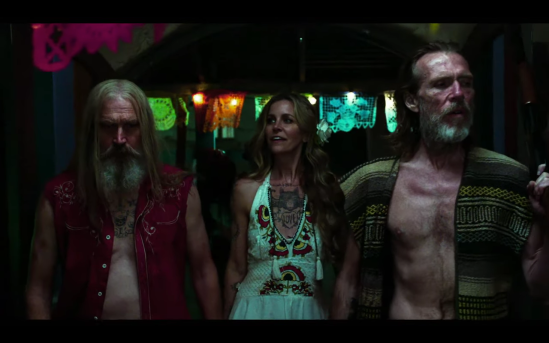
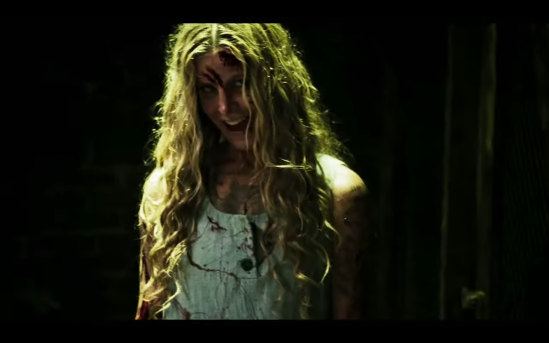
The three in “3 from Hell,” Baby Firefly, Otis Driftwood, and Captain Spaulding, return for one more three amigo misadventure through hell and brimstone and the original cast, respectively include Sheri Moon Zombie, Bill Moseley, and Sid Haig, suit up to be a depraved family once again. Sadly, Sid Haig’s health rapidly deteriorates in the midst of filming, leaving Zombie no other choice other than to write him quickly from the script and introduce a new character, a transgression tyrant to pass the torch to, with Winslow Coltrane played fittingly by “31’s” Richard Brake. As though like never missing a backwoods bumpkin beat, Richard Brake embraces the Midnight Wolf and breaks in the character with such ease and fortitude that the question never arises if the Midnight Wolf should be a part of the sacred Firefly pack. Sheri Moon Zombie steps out of a time machine and right into Baby Firefly, despite being a little aged around the eyes. The quirky and unpredictable Baby doesn’t reinvent the wheel, which should please the fandom, and is a wonderful sadistic mecha with Sheri Moon at the helm. The same can be said about Bill Moseley who, goes without saying, has a unique voice that’s been rebranded as Otis Driftwood. Every other movie, old or new, with Bill Moseley starring, or not starring, will forever be tainted by Otis Driftwood for when Moseley monologues or even just speaking one or two words of dialogue, the spine starts to twinge and tingle, the hairs shoots straight up, and that stepping on your grave feeling of cold desolation swallows you in an instant. The “3 From Hell,” plus Coltrane, face the world with a big knife and lots of guns and those who stand in their way are played by co-stars Danny Trejo (“Machete”), Jeff Daniel Phillips (“31”), Emilio Rivera (“Sons of Anarchy”), Richard Edson (“Super Mario Bros.”), Pancho Molar (“Candy Corn”), Dee Wallace (“Cujo”), Sean Whale (“The People Under the Stairs”), Clint Howard (“Evilspeak”) and Bill Oberst Jr. (“Dis”).

Rob Zombie has mentioned in a behind the scenes featurette that he didn’t want to recapture the magic of the previous Firefly cruelty and the rocker-filmmaker has done that just, straying away from the horror of “House of the 1000 Corpses” and the exploitation vehemence of “The Devil’s Rejects,” which the fans groveled for, and going bravely, or blindly, into crime action with the “3 From Hell” that still’s beholden to Rob Zombie’s hillbilly swank. Rob Zombie risks a new path and also gambling on more of Lionsgate’s capital with showing off more visual effects than in the former films. Bullets tearing through flesh and flying straight toward the camera lend to example of the computer imagery effects that, from a fan’s perspective, dilute Rob Zombie’s adoration for horror who takes less and less chances with this film that not only feels rather ordinary and just another piece of maize in the field, but “3 For Hell” also doesn’t feel to have substance to all the madness. Baby, Otis, and Coltrane go from point-to-point, aimlessly pondering what’s next, and just happen to fall into a barrage of bullets and blood, rather than being the epitome of evil bring vile upon mankind. Just being a Rob Zombie film that resurrects his beloved and beguiling modern iconic characters, “3 From Hell” coopers the longing with a fierce show of violence that opens the door for one more installment.

Lionsgate and Saban Films, along with Spookshow International, proudly presents Rob Zombie’s “3 From Hell” onto a R rated DVD and an unrated, 1080p Blu-ray sheathed inside a slipcover. The two disc, dual format release are both presented in a widescreen, 1.85:1 aspect ratio, and the image is about as sleek as they come with an ARRIRAW formatted 2.8k ARRI camera that shoots 48fps. Zombie reins back on the color palette and hones onto more natural coloring. The details are delineating, as aforesaid with Sheri Moon Zombie’s crows feet. The English language 7.1 Dolby TrueHD audio track is lossless with a crisp dialogue and ambient mix. The range and depth are robust with explosions and gunfire. The release comes with Spanish subtitles and English SDH subtitles. In accompaniment with the 115 runtime, bonus features include To Hell and Back: the Making of 3 From Hell which is a 4-part documentary on the Blu-ray only and both formats include an audio commentary from writer-director Rob Zombie. Also included is a digital copy to instantly stream and download onto personal devices. The horror element might be gone, but the inexplicable chaos surges through death row to desperado Mexico in Rob Zombie’s “# From Hell!”

Own “3 From Hell” on Blu-ray/DVD!

Evil’s Coming Out of the Closets! “Hunting Evil” review!


After an intense stand off with a powerful and playful demon during a supernatural expedition gone wrong, the unfortunate death of a young girl has Jonas Littleton facing skeptics that hand the ghost hunter a five year sentence behind bars ruling. His release from an Arizona prison offers him a second chance to start over with his wife and young son and Jonas makes promises to no more paranormal pursuits in hopes for a normal life. Miraculously, Jonas is offered a good paying job despite his manslaughter record that affords him seven years of suburban comforts and family growth, but little does Littleton know that his good fortune is the handiwork of the very same demon who bested him so many years ago, tricking him into a underhanded deal that requires his son’s soul with his wife being a casualty of war. Another seven years later, an obsessed Jonas fields every call that comes across his paranormal investigator’s desk as he tirelessly searches for his son and with the help of an eager investigator, Ron Tippard, and a green horn assistant, Ellie French, Jonas will come face-to-face with his rival evil again for one last time.

Welcome back to part two of our unexpected two part review segment of films that were disowned, supposedly, by their filmmakers. Today, we take a look at the 2010 supernatural thriller, “Hunting Evil,” or more commonly known under the title as “Closets” or “The Closet.” Already, the evidence is clearly powerful against “Hunting Evil” that alternate titles bares the potential markings of a repudiated film, aimed to cloak and shield the ramifications that would be supplied to unsuspecting audiences renting or blind purchasing. Director Charles Peterson has been reported to have disowned the Bob Madia (“You Can’t Kill Stephen King”) penned film because of too many chefs in the kitchen, if you smell what I’m cooking. Peterson, who has directed other indie horror projects such as “The Eleventh Aggression” and most recently, “A Killer Awaits,” which will be released this month, has ties with the investment group Old World Investors Group Incorporated a.k.a. OWIGI Films. Now, OWIGI Films is ran by “Hunting Evil’s” producer and star Lenny Rethaber (“Blood Moon Rising”). So, the lingering questions is this: Did star-producer Lenny Rethaber force the whip and reigns from Charles Peterson? Well, all this reviewer can say is that Lenny Rethaber also produced “The Eleventh Aggression” and the upcoming release “A Killer Awaits,” so seems like any adversity between the two has long since settled or just comes and goes with the industry territory.

However, what’s inherently curious about the DVD release from World Wide Multi Media is the three names headlined on the DVD’s front cover to which none are the film’s star Lenny Rethaber as the embattled Jonas Littleton. Knowing the type of distribution company WWMM is, more than likely the case is the first three credits, which are also in alphabetical order, and slapped them onto the front cover, one of which is just an unnamed barkeep who has approx. 5 minutes of screen time and not one other single credit to his name. As Jonas Littleton, Rethaber is soda flat with no bite and fizz to his performance and though his entertaining enough, the producer-star is also on the wrong side of the tracks in that category. There’s even whispering talk that “Major League’s” Corbin Bernsen, who has dappled in directing horror with “Dead Air” starring Bill Moseley (“Devil’s Rejects”), had issues with the producer (Rethaber), yielding to yet another instance of production problems. Though I’ve had verbal disagreements with Bernsen with his previous work, I find his performance as an enigmatic father of a missing child refreshing and complex, but the fate of his character poofs into thin air as if the writers, directors, or, most likely, producer didn’t know how to finalize the character. The sole best role comes from Patrick Adams as the enthusiastic paranormal investigator Ron Tippard. Not to be confused with “Suits” actor Patrick J. Adams, the Arizona resident Adams sparked life into a relatively unhinged project with an amusing and interesting performance in a side kick role who has substantial screen time and adds value to the situation. Rounding out this remaining cast in this conundrum is Darl Chryst (“Autopsy: A Love Story”), Dena Esquivel Frederickson, Jackson Furedy, Sallie Glaner (“The Visitant”), Davina Joy (“Death of a Ghost Hunter”), Pete Kelly, and Orchid Tao.

A twitching, tingly part of my soul yearned for “Hunting Evil” to come out on top, to be a solid supernatural saturation that a viewer, like myself, can sink into immensely, and with a script that precedes “The Conjuring” with the perceptive view of an unoriginal, yet sparsely used investigator concept, the appeal hyperdrives into salivation, but instead of salivation, “Hunting Evil” sluggishly drips slowly from the mouth’s corner crevices with script plotholes, badly layout composites, and undercooked characters. The story follows Jonas for nearly two decades, yet the man never ages despite already starting out looking middle aged to begin with so where are the streaks of grey, the loose and wrinkled skin, or maybe even a display a little physical ailments? Each of these natural flaws could have further enhance his lifespan evolution on Earth and speak to a little down to Earth as well. The composites look horrendously old fashion like from an antiquated video game platform. It’s as if the creators of 3D Realms not only provided the MS-DOS source code for those amazing Duke Nukem 3D levels also provided the visual worlds for “Hunting Evil” actors to humorously and painfully act against. the underwhelming, unfinished characters were slightly touched on before, but their arcs just ultimately poof into smoke without constructive reasoning or even to leave as fishhook into another movie.

“Hunting Evil” haunts onto DVD from World Wide Multi Media and MDVisual. Presented in a widescreen format and clocking in a 90 minute runtime, the DVD technically has little faults to discuss aside from the coloring looking a little desaturated and don’t visually pop. Some digital noise from the low end production quality during the night scenes that are accompanied by a little compression blotchiness, but the DVD passes muster in image quality. The English language 5.1 surround sound finds itself limited moderately to a two-channel output which is unfortunate with the amount of demonic tomfoolery being subjected to Jonas and his team. Low of the LFE and minimalistic on the depth and range, “Hunting Evil” couldn’t scare the pants off viewers audibly alone. There are no bonus features on this disc. Jonas Littleton’s troubles spread beyond a malevolent and playful demon destroying his family with “Hunting Evil” targeted as a suspect of an unfinished and problematic film. Whether turmoil driven or just the lack of rightfully placed funding, the spooky stories of paranormal investigators are left to the genre platonic professionalism of James Wan and not Charles Peterson and Lenny Rethaber.

Own "Hunting Evil" on DVD.  Amazon.com!

Evil Isn’t Home. “Death House” review!


Top law enforcement agents, Boon and Novak, achieve special access through steep sacrifice during job assignments and are permitted to tour their upcoming placement in the highly exclusive Death House, the ultimate maximum and multi-level penitentiary home to the nastiest criminals known to society and the deadly threat to mankind in a metaphysical way. Death Houses uses virtual reality to keep inmates stimulated to the point of calm submission as well as drugging the homeless and the unwanted to supply killers with victims upon victims in an their personalized virtual surroundings, but when an outsider uses an EMP to knock out all power within the facility, the cages are open and the ruthless animals are free to overrun, beating to death the guards and staff. Boon and Novak must fight their way to the bottom level that hold the Five Evils, criminals with grotesque supernatural abilities and a wickedly grisly past, where the two agents believe the Evils are their best hope for survial against a Five Evils acolyte named Sieg and his faithful jailhouse followers.

Considered as “The Expandables” of horror, “Death House” had gained almost instant fandom solely from the long-list of horror icons in the cast. Director B. Harrison Smith (“Camp Dread”) re-writes most of Gunnar Hansen’s original “Death House” story produced by Cleopatra Entertainment and Entertainment Factory. Cleopatra Entertainment is more notably a music label that has delved into films the last few years and, in my opinion, haven’t faired positively in the horror genre, but “The Texas Chainsaw Massacre” star fought tooth and nail to try and get his script off the ground, even in the face of death. “Death House” saw release after Hansen’s death, but from interviews with the filmmakers, Smith had almost totally revamped the original treatment, leaving The Evil’s at Hansen’s request if his script was to be entirely cleaned. Shot right in this reviewer’s backyard of Philadelphia, Pennsylvania at the historic Eastern State Penitentiary, the defunct prison is an ideal location as the “Death House” due in part to John Haviland’s separate cell design and gritty appeal that was once of the home of Al Capone, but more of the focus is on the interior than exterior with green scenes and Los Angeles shots constructing the story-lined scenes.

Like aforementioned, “Death House” has been called the “The Expendables” of horror. An immense, if not soaked, cast of horror fan favorites are peppered about around the main characters of Agent Boon and Novak. “Sushi Girl” and “Zombeavers” star Courtney Palm embodies the Agent Boon character with G-man toughness, but finds difficulty leaving that b-horror mentality with shakiness in working climatic scenes. Palm’s also roped into doing an extremely gratuitous shower scene with Cody Longo (“Piranha 3D”) as Agent Novak. Novak’s a hotshot and Longo has the looks and the talent to out perform his character, but Smith’s script doesn’t do justice to either Boon or Novak’s character that blatantly underwhelms their performances with cameo star power and a shoddy narrative. Dee Wallace (“Cujo”), Barbara Crampton {“Re-Animator”), and Kane Hodder (“Jason Goes to Hell”) have prominent roles that are pertinent to the story and are enjoyable to see them in more of a supporting capacity. Andrenne Barbeau {“The Fog”), Sid Haig (“The Devil’s Rejects”), Vernon Wells (“The Road Warrior”), Bill Moseley {“The Devil’s Rejects”), Lloyd Kaufman (Mr. Troma), Michael Berryman (“The Hills Have Eyes”), Tony Todd (“Candyman”), Sean Whalen (“The People Under the Stairs”), Debbie Rochon (“Killer Rack”), Bill Oberst Jr. (“Deadly Revisions”), Felissa Rosa (“Sleepaway Camp”), Danny Trejo (“Machete”), Tiffany Shepis (“Abominable”), Brinke Stevens (“The Slumber Party Massacre”), Camille Keaton (“I Spit On Your Grave”), Gunnar Hansen (“The Texas Chainsaw Massacre), and R.A. Mihailoff (“Leatherface: Texas Chainsaw Massacre”). Whew. Rounding out the remaining cast is Lindsay Harley (“Nightmare Nurse”), Vincent M. Ward (“The Walking Dead”), and Bernhard Forcher.

While the genre star-studded ensemble cast is a wet dream for horror fans, “Death House” fails in numerous filmmaking categories with the first being the most important, the script. Smith’s re-work of Hansen’s original story requires another drastic once-over, or two, as the final result attempts to push, stuff, and cram 100 lbs of multi-subgenre elements into a 10 lb, inflexible bag, cramping the ambitious project with dis-connective storyline tissue braced together with shoddy visual effects, like the two agents free-falling down a bottomless elevator shaft and able to precisely shoot their targets on each level. The overall result of “Death House” just endures an unfinished varnish and seems slapped together with pre-schooler glue and claggy spit. Singular moments surface as diamond specks amongst cubic zirconias, like the Mortal Kombat fatality-esque practical effects, but are too far and in between to muster up an enjoyable film. The Five Evils definitely and desperately needed more presence in the story instead of just flexing the talking heads muscle; well, the only two Evils to say anything at all were Bill Moseley and Vernon Wells. The Five Evils didn’t quite have that oomph to be a force to be dealt with as Gold-described beings who philosophical interpretations on the concept of good and evil.

Cleopatra Entertainment and MVDVisual present B. Harrison Smith’s long-anticipated “Death House” onto DVD home video. The unrated, all-region DVD is presented in a widescreen format that displays some frayed flaws like contrast; there’s way too much inky black in the dark scenes and little-to-no definition in more visible sequences. The compression suffers from blotchy artefacts at times too and lacks hues, which works with the gritty tone inside the Eastern State Penitentiary’s decomposing walls of rubble and decay. Visual effects are glossy with virtually no textures to give detail or, essentially, life amongst the continuous death. Bonus features include multiple interviews with director B. Harrison Smith, Courtney Palm, and more. Also included is a behind-the-scenes feather, a gallery slideshow, and theatrical trailer. Despite being true to the title and highly anticipated since it’s inception into the public market, “Death House” ultimately disappointments as an unfurnished mess enlisted with big names in the horror domain that’ll unfairly sell the film on it’s own, but all-star cameos won’t establish “Death House” as a solidified cult favorite, being unfortunately one of the biggest release flops of 2018.