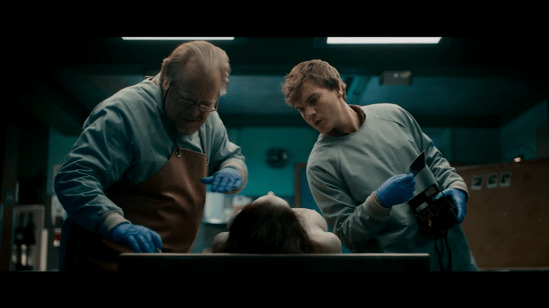
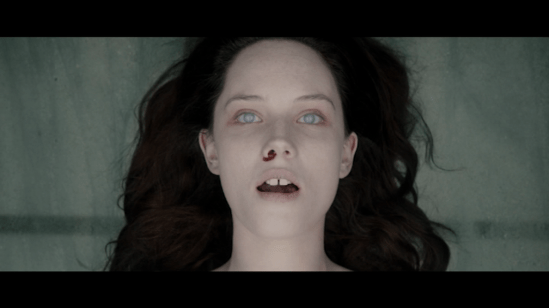
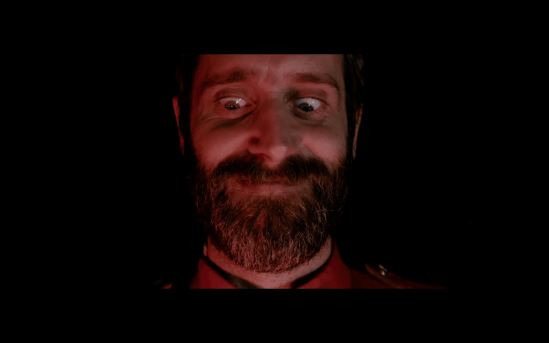
Cult Epics continues to bring the best in cult cinema right to your doorstep and this 2017 year won’t be any different with the announcement of the label’s first release – the 3 Disc Limited Edition Blu-ray/DVD/CD double-feature “Mondo Weirdo & Vampiros Sexos” by director Carl Andersen!
Here are the details:
3 Disc Limited Edition Blu-ray/DVD/CD Double-feature of 2000 numbered copies features Exclusive CD Soundtrack of Mondo Weirdo & Vampiros Sexos by Model D’oo, including 4 bonus unreleased tracks.
Carl Andersen’s “Underground” Vienna years
Carl Andersen’s films are the European answer to the Cinema of Transgression of Richard Kern and Nick Zedd, except more extreme, eccentric, surreal and genuinely erotic.
“The Hard-core version of Eraserhead” –Jan Doense (Weekend of Terror)
MONDO WEIRDO: A TRIP TO PARANOIA PARADISE aka JUNGFRAU IM ABGRUND wallows in smut, sleaze, gore, splatter, and dark comedy and is set in an underground world where both vampires and punk rockers engage in straight, lesbian & gay hardcore sex to the highly addictive and hypnotic electro music of Model D’oo. Dedicated to Jess Franco and Jean Luc-Godard and featuring Franco’s own daughter. Shot on 16mm stock, presented in a new High-definition transfer.
“Vampire Porno”
VAMPIROS SEXOS aka I WAS A TEENAGE ZABBADOING… is Carl Andersen’s debut film and is one of the weirdest movies ever, and it will certainly shock your mind. VAMPIROS SEXOS is the ultimate European underground punk rock hardcore sex vampire film. Stylish and trashy at the same time in the best sort of way, the film also features an endlessly entrancing no-wave score by Model D’oo. Cult Epics presents the rare only existing SD version.
WHAT’S SO DIRTY ABOUT IT? Bonus short film. Cut-up sex trance noise nihilistic short film, reminiscent of the work of Throbbing Gristle and Kenneth Anger. SD
SPECIAL FEATURES
New High-definition Transfer and Restoration (from original 16mm print)
Introduction by Erwin Leder (star of Angst)
The Making of Mondo Weirdo (2016)
The Making of I was a Teenage Zabbadoing aka Vampiros Sexos (2016)
Bonus film: What’s So Dirty About It? (1990)
One man becomes the unfortunate subject of ghastly experimentations performed by a sadistic and blood thirsty doctor. Wheeled by abiding orderlies back and forth from his sterile white and padded cell to the mad doctor’s dark and dingy operating room office, the man’s will to live quickly begins to fade, yearning for death before suffering anymore in an alternative Hell. That is, until the handwritten notes start appearing on his padded room floor. The notes seep through between the pads from another tortured soul, a female, in the adjacent room. Withstanding new atrocities done to her before the man receives them, she pleads with the man to not leave her and to make a pact to outlive the inhumanities together.
Welcome to the new American Guinea Pig series! “Bloodshock” is the 2015 follow up film, on the coattails of 2014’s “American Guinea Pig: Bouquet of Guts and Gore,” from writer-producer and Unearthed Films president Stephen Biro and directed by special effects guru Marcus Koch. Koch, whose effects credentials include the Barbara Crampton starring thriller “We Are Still Here” and Koch’s prior directorial work “Rot” and “100 Tears,” strays away from the straight forward concept with an ultra gore art house expressionistic horror film that aims to break your mind as well as your body. Open for interpretation, “Bloodshock” fits perfectly into the ever provocative Unearthed Films’ wide open cache of underground cinema and will alleviate Koch to the next level of filmmaking. My interpretation of what this poor man and woman are experiencing is simply a penancing purgatory that’s intended to cleanse their souls in the warmth of their own wretched blood; the two victims understand their pain, as if not feeling the invasive effects of being dissected while still yielding breath, and are willing to subdue themselves to a maniacal physician until they’re able to briefly thwart his tireless work to share pain and open wounds in blood-soaked passion of hopeless ecstasy.
Dan Ellis puts in a powerful performance as the mistreated male patient with Lillian McKinnay, as the female patient, co-starring in an equally bold performance, especially being McKinnay’s first major role. Andy Winton’s diabolical medical maltreatment compares to the similar magnitude of “The Human Centipede’s” Dieter Laser by conducting exploratory, invasive, and unnecessary surgeries for sport while being candor about his blood lusting necessity. Amongst the three main actors, Biro’s script contains little dialogue, banking laboriously on physical renditions since both tortured patients’ tongues have been severed and jarred. Every movement is precisely executed and surged with attention, tuned to tell the story without much verbiage. Ultra gore isn’t everybody’s cup of cinematic tea and with an extremely thin film of dialogue as an outer coating, Ultra gore becomes that much difficult to be entertained by, but, recently, I’ve been lucky enough to come across another gore and shock film, coincidentally enough another Unearthed Films’ release entitled “Flowers” by director Phil Stevens, that had proved to me, as well as Koch has just done, that unspoken gore can be ingeniously crafted and thought provoking.
“Bloodshock’s” gore holds nothing back and leaves nothing to the imagination. The meticulous bone-sawing, head-splitting effects from a talented special effects team, consisting of Marcus Koch’s Oddtopsy FX crew, paint a sordid picture with a blood brush. Koch’s decision to go with Donald Donnerson’s cinematography under the two-tone of black and white doesn’t stiffen the poignant sight of blood, inner layers of flesh, or the splintering bone fragments. The Japanese would be pleased with their American counterparts realistically depicting gore and death captured amongst an underlying meaning. Unearthed Films has already taken the steps to continue the series with their next installment, “American Guinea Pig: The Song of Solomon,” which will pertain to a graphic exorcism and, currently, there are preview images and video scenes available.
The 3-Disc Collector’s Set from Unearthed Films and MVD Visual has priceless collector’s value. Not only does the set have a Blu-ray transfer of the 1.85:1 widescreen presentation, but also contains a DVD presentation and a third disc containing a CD of the Kristian Day industrial-jarring soundtrack. The black and white image quality is sharp and solid for a majority of 91 minute runtime. Some scenes go soft, losing shape to blotchy interference, but the qualities only supplement to “Bloodshock’s” charming grit. Only during the course of the patients unifying do colorful hues gradually seep in, almost unnoticeably, during an ostentatious sex scene involving blood and intestine that’s effectively edited to slowly build the passionate boiling point. Despite two of the main characters have their tongues removed, the Dolby Digital 2.0 audio has the dialogue so sorely crushed under the weight of the Kristian Day soundtrack that at some scenes I can’t even understand what the good mad doctor is saying. Also, on the DVD, I noticed that all audio tracks delay a second behind the action and dialogue. The bonus features are immense with interviews with director Marcus Koch, writer-producer, Stephen Biro, actor Dan Ellis, actress Lillian Mckinney, and two commentary tracks with Marucs Koch and Stephen Biro on one and actor Andy Winton, Gene Palubicki, and Alberto Giovannelli on the other. There’s also a behind the scenes featurette, production videos, and a booklet with a review from Ultra Violent Magazine! Unearthed Films certainly has a definitive release in their collection with “American Guinea Pig: Bloodshock” that’s packed with bonus material and full of venomous content abiding by the guidelines set forth by the Japanese. I don’t foresee the underground cinema juggernaut or the explicitly snuff-like Guinea Pig series ever slowing the flow of blood. “Bloodshock” fulfills the qualifications of the series by having the guts to show the guts and being just as demented and sick for fans who can stomach and endure grisly content.
Isn’t the cover just gore-geous. Get it at Amazon!
Grieving parents, Jessie and Mark, aim to heal the deep wounds of the tragic and accidental death of their young son by fostering an orphan boy named Cody. After the mysterious death of Cody’s mother and having been through two concerning foster parents prior to Jessie and Mark, Cody strives to be the most sweet and loving child to his new and pleasant foster parents, but Cody has a dark secret that keeps him up at night. When Cody falls into a dream state, his subconscious imagination manifests his awe-inspiring dreams and even his worst nightmares that become deadly with the presence of the malicious Cranker Man, a dream shadow who can pluck anyone into disappearance that happens to be near the slumbering boy.
“Before I Wake” director Mike Flanagan labors over all that is supernatural, churning out more than his fair share of specter-centered storied films including “Absentia,” “Occulus,” and the more favorable sequel to “Ouija,” entitled simply enough “Ouija: Origin of Evil,” that was produced alongside “Before I Wake” in 2016. Flanagan’s knack for suspenseful tall-tale horror doesn’t pigeonhole the Salem, Massachusetts born director into producing the same terrorizing story over-and-over and while “Before I Wake” has undoubtedly a few heart-pounding horror elements, fantasy more than so strong arms the genre into a branding submission. If I may be so bold by comparing “Before I Wake” to Guillermo del Toro’s “Pan Labyrinth” might be committing, perhaps, blogger career suicide, but the draw to resemblances can’t go ignored with what “Before I Wake’s” Cody creates from his overly stimulated dreams is much more familiar to what “Pan Labyrinth’s” Olivia character imagines when she escapes the horrors of a war bred sadistic maniac, if even only in a diluted version of events.
“Superman Returns” actress Kate Bosworth headlines with co-star Thomas Jane (“The Mist,” “Deep Blue Sea”) as the unwitting foster parents who are forcing themselves back into the parenting game. I specifically was not coming to terms with Bosworth’s performance as Jessie; her facial expressions and body language, along with her tone and line deliveries, were too lifeless with rigidity and repetitiveness. So much so that I compared Bosworth to Suzanne Cryer’s impassive Laurie Beam character from HBO’s “Silicon Valley.” Unless the inexplicable amount of grieving has voided her of all emotion, like the Borg drone from “Star Trek: The Next Generation,” the role of Jessie is written with a variety of mood driven circumstances that start with her insomnia, to her willingness to not leave their home, to being carelessly exploitive with Cody. Being a fan of Thomas Jane since 2004’s “The Punisher,” I might be a bit biased, but Jane had more range with the ability to switch back-and-forth between mixed attitudes and sentiments, making the dynamic between Jane and Bosworth clunky and awkward. To round off the trio of main actors, you might recognize the pint sized actor playing Cody as Jacob Tremblay from the 2015 Oscar Winning Brie Larson film “Room” portraying an innocently pitiful dreamer with an unquenchable thirst to be loved.
The Flanagan and Jeff Howard co-authored storybook script, intentionally or not, borrows heavily from psychoanalyst Sigmund Frued’s dream interpretation theory that wishful fulfillments are more common in children. Previous day activity, or day residue, has influential properties on a child’s dream, much like with Cody in this story, and Cody’s dreams are written to be an exaggerated fruition, fulfilling his desires and illuminating his emotions to the brightest or the darkest extent. Like many other films that involve the misunderstanding of children, adults Jessie and Mark blindly understand all the possibilities of Cody’s uncontrollable gift, exploiting Cody’s powers for their own greed. I did find that I love Jane’s Mark character as he tries to show Jessie the errors of her reasoning as he’s a bit of a kid himself, living vicariously through Cody with the video games and with the pizzas as if husbands, or men in general, are actually children at heart. Cody’s gift becomes a power struggle with Mark caught in the middle and the consequences of this struggle result in being the catalyst to unify Jessie and Cody as a strong bond between Mother and Son. Men totally receive the shaft in this picture where both dominant adult male figures are reduced to a forgotten or humbling state, left behind because mother knows best when it was really mother who dismantles the situation.
“Before I Wake” is a boogeyman fable of sleepless nights that independent Canadian distributor Mongrel Media presents on Blu-ray for the first time anywhere in North America on a home entertainment platform come January 10th. The film has been in a distribution limbo since U.S. theatrical distributor Relatively Media filed for bankruptcy, but, luckily for fans of the supernatural genre, Mongrel Media obtained home video rights. I was provided an online screener link, forcing my hand to not comment on the specs of the Blu-ray audio or image quality nor touch upon the bonus material, but what I can state is that the spin on the dream killer won’t stop here with “Before I wake.” Dreams, like conceptions of outer space, are vast with unlimited, unconstrained content that surrealist director Mike Flanagan has only partially tapped into by exploring the dangerously innocent perceptions fabricated from a child’s abstract mind.
Journeying from the South to reside with her son Michele, Lea is a boisterously strong matriarch whose suffered through twelve miscarriages in fifteen years and has become insanely protective of her sole breathing progeny. Michele lives in a stately condominium that accommodates an eclectic bunch of women of various tastes, housing his mother Lea to mix as a lottery fortune teller of sorts. Lea’s talents go beyond just predicting winning lucky numbers as she’s also a fantastic cook in the kitchen, a superb soap maker, and an efficient killer that supplements the prior traits. Madness consumes a mother who seeks to absolutely protect her only child and a contractual deal with Death itself orders the end of minuscule lives, such as the other tenants of Lea’s apartment building, to fulfill her obligations to Death.
I promise you, you’ve never seen a Shelley Winters performance like this! “Gran Bollito,” otherwise known in the U.S. as “Black Journal,” is a 1977 Italian macabre from director Mauro Bolognini and has for the first time ever been slow cooked to Blu-ray high definition. “Gran Bollito” has been resurrected from the archives of production company Italfrance Films’ with Shelley Winters (“The Poseidon Adventure”, “Lolita”) exploiting her mother’s animal instincts to provide Death with as many souls as she can chop up and boil into a lathery substance. “Gran Bollito” loosely translate as very boiled, a form of murder that would top the charts and these heinous acts were, in fact, inspired by the true, inexplicable story of an Italian serial killer named Leonarda Ciancillui, a soap maker whom sacrificed three women in hopes to protect her war drafted son. Alongside mother mayhem are a trio of cross-dressing actors portraying the three victims; actors such as singer-actor-director Renato Pozzetto, Italian sex-comedy actor Alberto Lionello, and the legendary Max von Sydow (“The Exorcist,” “Game of Thrones”) go full blown drag, donning the period piece’s late 1930s conservative wardrobes while conducting themselves loosely with their intimate and delicate privacies.
As I mentioned, “Gran Bollito” tackles numerous undertones with multiple notations of the horrors of war and the inexplicable amount of death from it as well as from disease, to miscarriages, and to the actual beheadings to sustain a red soap bar factory and food processing plant Lea runs in her custom made kitchen. The Bolognini film also notes many facets of mental illness and health with merely Winters’ topping the psychological pyramid. Conditions consisting of states from a stroke, absentminded dementia, and severe delusions to name a select few are displayed throughout to which almost puts the perception of Lea, or maybe Lea’s perception, one of relative normalcy. Lea’s derangement stems from her fifteen years of pain and suffering through multiple miscarriages. Bolognini very conspicuously has Pozzetto, Lionello, and Sydow portray Lea’s victimized women. They represent Lea’s resentment for their wasteful contributions toward their natural given right to bear children as if the women were merely men without a womb and that strikes a sensitive nerve with Lea who would do anything to give her children life again.
Generally, Bolognini’s constructs a well paced film, seamlessly passing the days, weeks, or months from Lea’s condominium integration to the slow seep that eventually breaks into maddening despair and desperateness. The cinematography by Armando Nannuzzi is soft and lofty that appeases to angelic similarities akin to that of Tinto Brass films, but when the tide turns, her kitchen brights white and Lea is dressed in midnight black as if she’s the Grim Reaper herself. Nannuzzi’s an artist at his trade by enabling Shelley Winters to shed the wholesome of her prior performances and at the same time present a false sense of calm and good fortune. Composer Enzo Jannacci’s score underwhelms when accompanying said Nannuzzi’s style; the score’s flat and breathy tone just doesn’t leave an impression, lacking substance and girth that doesn’t quite fit the Bolognini’s mold. Though acting and performing not in her native country, the St. Louis born Shelley Winters extracts a true life serial killer from off the Italian crime section.
Twilight Time’s “Gran Bollito” is now on a Blu-ray High Definition 1080p transfer presented in a widescreen 1.85:1 aspect ratio. The limited edition release look impeccably detailed, sporting natural coloring and depth. Twilight Time, by far, has the best image quality compared to any release. The Italian 1.0 DTS-HD Master Audio is pretty good with balanced range and clarity in all aspects of audible tracks with only a minor pops in the tracks during transitional scenes. Bonus features include an audio commentary with film historians Derek Botelho and David Del Valte with also the original theatrical trailer. Twilight Time polishes “Gran Bollito” with the respect this obscure Shelley Winters film deserves; a horror-comedy that pushes the limits bordering insanity and disparity in a twisted display of narrative too intriguing to fathom.
Cult Epic founder Nico B. wants to spread the joy of cult cinema to not only the television sets at home, but to the world! The Dutch filmmaker and passionate cult cinema lover has employed me, and other social media coordinators and bloggers, as a servant of his word, delivering the following message to all fans of erotica, horror, and arthouse films!
“We are in our last week, and this is the week that counts. Some of you have contributed to our campaign, thank you so much! and we would ask all who are fans of our label or releases and want to secure its future in the new year, please pick a Perk to your liking and support us in our endeavor bringing you new releases in the years to come. One of the titles we have secured the rights as well for is the most interesting giallo DEATH LAID AN EGG, so there is much work to do, and for such we need funding, which current distributors no longer provide.
Also please give the campaign one more push on your social media:
CULT EPICS INDIEGOGO CAMPAIGN Cult Epics presents controversial art films with a cult following on DVD and Blu-ray. At its 25th Anniversary year Cult Epics needs your support to continue bringing you new releases. Find out more here: https://igg.me/at/cultepics
Please show your support! Every little bit matters and you may get a little something in return if you donate $20 or more! I got my eye on that Nekromantik T-shirt! Only 1 MORE WEEK TO GO!